Category: External Articles

  • What Might be Leading to the Rise of Conflict in Man-Woman Relationship

    What Might be Leading to the Rise of Conflict in Man-Woman Relationship

    Today due to the educational, economic and social changes, the erstwhile restricted spaces in terms of exclusive residential habitations and private caste-determined spaces are not functional any more. As a result, interactions between different caste and religious groups have indeed changed and increased.

    During recent times the collective conscience of civil society and the public, in general, has been severely shaken due to the occurrence of a number of bone-chilling incidents wherein husbands, boyfriends, or live-in male partners have brutally killed the women they cohabited with. These incidents have not just been plain killings but have led to the ruthless dismembering of the bodies of the women killed. The killers have done various things post the killings from refrigerating the dismembered pieces to throwing them into a tandoor. One wonders if apartment buildings have aided in providing privacy and anonymity that would not have been possible otherwise to indulge in such acts.

    [powerkit_button size=”lg” style=”info” block=”true” url=”https://www.moneycontrol.com/news/opinion/what-might-be-leading-to-the-rise-of-conflict-in-man-woman-relationship-10795141.html” target=”_blank” nofollow=”false”]
    Read More
    [/powerkit_button]

  • Consequences of the Manipur Conflagration

    Consequences of the Manipur Conflagration

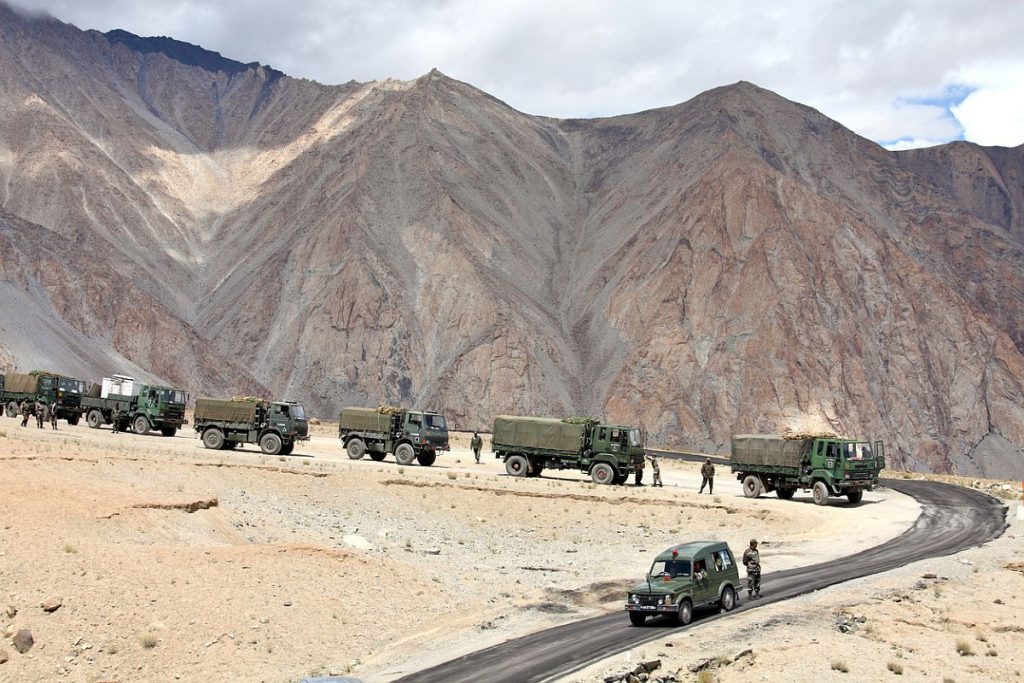
    By any measure, the situation is bleak and what makes it even worse is the fact that thousands of weapons have been looted from police armouries…

    In the summer of 64 AD, nearly 2000 years ago, Rome, more or less, was completely razed to the ground in a fire that lasted six days. The hapless citizens, in utter frustration, turned on their much-despised Emperor, Nero. He was a patron of the arts, fond of music, with a talent for playing the Cithara or Kithára, an ancient Greek string instrument, not unlike our very own Sitar. Clearly that old and well-known adage “Nero played the fiddle while Rome burned”, was grossly unfair to him, not least, because the fiddle was only invented 1500 years later.

    In a manner of speaking, one cannot avoid but feel that our political establishment has, in many ways, ended up playing the proverbial fiddle as Manipur burns, as the only matters they seemingly have time for, are elections and inaugurations. And burning it is, though one would get a distinctly different impression, if our wonderful mainstream media is to be taken at face value. Fortunately, it seems that after nearly a month of unmitigated violence, they have finally been shamed into at least mentioning violence and Manipur together, though their coverage remains scanty and cursory, to say the least.

    [powerkit_button size=”lg” style=”info” block=”true” url=”http://www.indiandefencereview.com/news/consequences-of-the-manipur-conflagration/” target=”_blank” nofollow=”false”]
    Read More
    [/powerkit_button]

  • A Fairy Tale that is The Kerala Story

    A Fairy Tale that is The Kerala Story

    The Kerala Story has been making waves ever since it opened in theatres but its content is far from reality, it is a fantasy at best.

    The central theme of the film revolves around three girls who fell victim to “manipulative conversion” to Islam that practically destroyed their lives. The main protagonist is Shalini Unnikrishnan, a convert to Islam. She narrates her ordeal from her prison in Afghanistan, of how she once wanted to become a nurse but was brainwashed and manipulated by religious vanguards, turned into an ISIS terrorist and sent on her way to Syria.

    It is loosely based on the accounts of three women from Kerala who converted to Islam and travelled with their husbands to join ISIS in Afghanistan between 2016 and 2018, along with two other women and their husbands. Their husbands were killed in the fighting and these women remain in an Afghan prison. Incidentally, only one of these women, Nimisha Nair alias Fathima Isa, was Hindu and married to a Christian, who subsequently converted to Islam as well. The other two women were Christians before their conversion. The Government of India has refused to repatriate them as they remain hardcore adherents of ISIS philosophy, unlike what has been depicted in the movie.

    [powerkit_button size=”lg” style=”info” block=”true” url=”https://www.dailypioneer.com/2023/columnists/a-fairy-tale-that-is-the-kerala-story.html” target=”_blank” nofollow=”false”]
    Read More
    [/powerkit_button]

  • Rs 2,000 Banknotes and the Mysteries of This Mini-Demonetisation

    Rs 2,000 Banknotes and the Mysteries of This Mini-Demonetisation

    None of the arguments that the RBI has given to justify the move are valid.

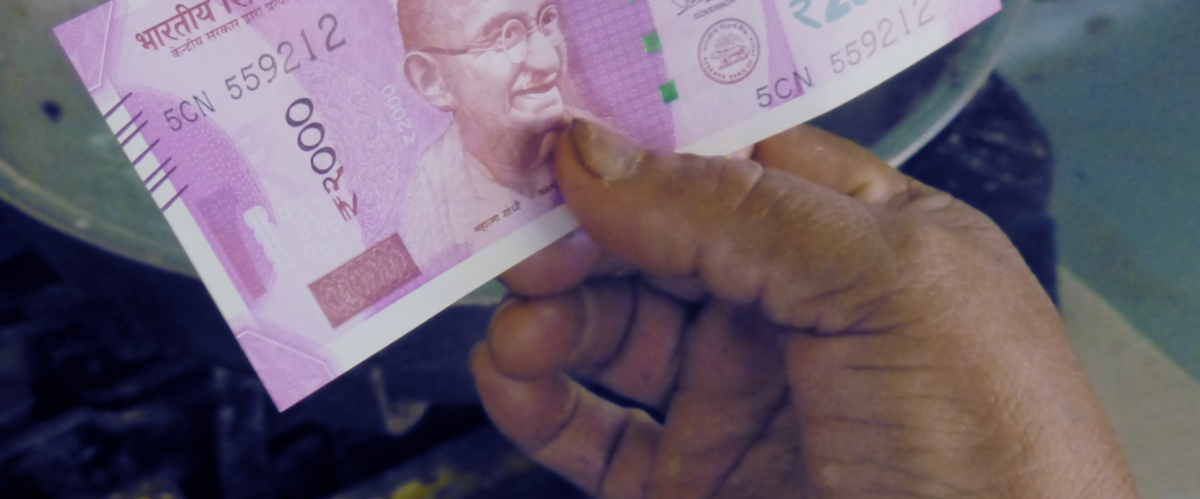
    In a sudden though not unexpected move, currency notes of denomination Rs 2,000 are being withdrawn from circulation. This is announced via a notification released by the Reserve Bank of India and not the government (as at the time of demonetisation). These notes are not being withdrawn from circulation, but actually, they will stop circulating right away given that they will have to be deposited in a bank or exchanged for lower denomination notes.

    So, no one will accept these notes in transactions which is as good as being withdrawn from circulation. This will create confusion in the public for a while.

    Further, as transactions face problems, especially for small businesses – producers and traders – the economy will be impacted.

    Arguments Given

    The RBI press release gives the logic of the move.

    First, the objective of introducing these notes at the time of demonetisation was met as smaller denomination notes became available in larger numbers. It is argued that the availability of these smaller notes is adequate.

    [powerkit_button size=”lg” style=”info” block=”true” url=”https://thewire.in/economy/rs-2000-rbi-demonetisation” target=”_blank” nofollow=”false”]
    Read More
    [/powerkit_button]

  • Squaring the Circle

    Squaring the Circle

    John Paul Rathbone, writing in the Financial Times, on the United Kingdom’s efforts to transform its military amid public spending constraints and growing strategic challenges, puts it extremely well when he wonders as to how its military will “square the circle of being everything, everywhere, all at once.” 

    This, however, is not just a problem that afflicts the UK or its European and NATO Allies, but the rest of the international community as well. The impact of the Russo-Ukrainian Conflict, in what increasingly appears to be an unwinnable war, is restricted not only to the geo-political or and national security spheres but also calls for a clear understanding of how future conflicts will play out and what kind of a military capability is essential if that country is to remain relevant in the changing global order.

    In our context, the challenges are far more complex and greater as we face two hostile neighbours, both nuclear armed, and unwilling to give any quarter. Indeed, it is quite ironic that while China poses the greater threat to our aspirations, ambitions and future prosperity, it is the dysfunctional and dystopian Pakistan, that threatens us with Armageddon, looking to take us down with it, as it seems intent on committing hara-kiri

    [powerkit_button size=”lg” style=”info” block=”true” url=”https://timesofindia.indiatimes.com/blogs/para-phrase/squaring-the-circle/” target=”_blank” nofollow=”false”]
    Read More
    [/powerkit_button]

  • Caste Census: India’s Affirmative Action Policy is Based on 90+ Years Old Data

    Caste Census: India’s Affirmative Action Policy is Based on 90+ Years Old Data

    “The data that we have for all castes as well as the Other Backward Classes is from the 1931 census. The population of the OBCs at that time was about 52 percent of the total population of India”.

    Congress president Mallikarjun Kharge is the latest to join the band of politicians and activists advocating caste census. However, the Bharatiya Janata Party-led central government has so far stonewalled all pleas and comes across as definitely averse to the idea. Before we delve into the ostensible reasons for the reluctance, a quick look at the genesis and history of the census in India.

    The census exercise was launched by the colonial government for various stated (and unstated) reasons in the realm of social engineering for their strategy of governance during the second half of the nineteenth century.

    Sociologist Michael Mann in his book South Asia’s Modern History avowed that the census exercise was more telling of the administrative needs of the British than of the social reality for the people of British India.

    [powerkit_button size=”lg” style=”info” block=”true” url=”]https://www.moneycontrol.com/news/opinion/caste-census-indias-affirmative-action-policy-is-based-on-90-years-old-data-10463611.html” target=”_blank” nofollow=”false”]
    Read More
    [/powerkit_button]

  • The Implications of Pakistan’s Implosions

    The Implications of Pakistan’s Implosions

    “Much like in Pakistan, religion and ethnicity are increasingly seen as tools to spread divisiveness aimed at fulfilling political agendas”.

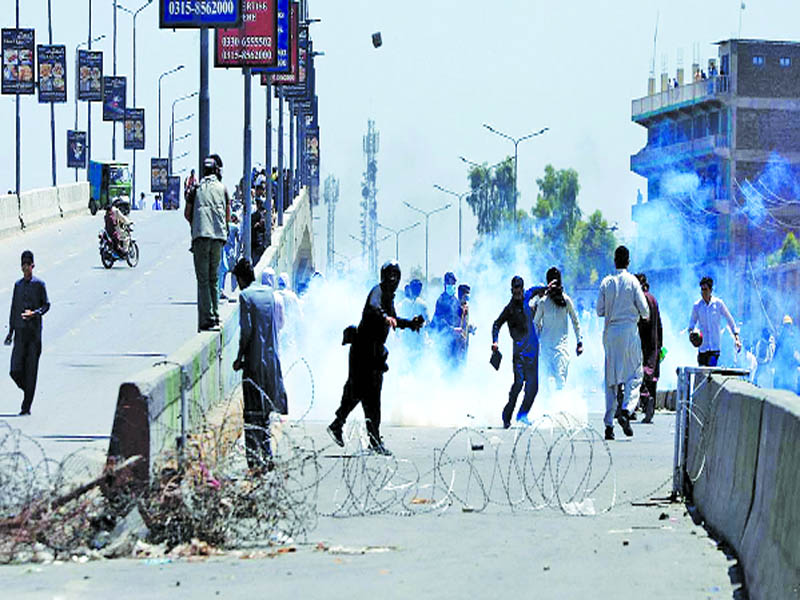
    As we watch Pakistan crash and burn on live television, it is too early to say if we are witnessing the beginning of the end or just the end of the beginning. Even in this age of misinformation and deep fakes what can be said with certainty is that, much in the manner of Humpty Dumpty, Pakistan has had a great fall and all the Imrans, Shariefs, Bhutto’s and Asims put together, can never make Pakistan whole again.

    Of course, none of this was unexpected. We have seen Pakistan slowly go bankrupt, with inflation soaring and its currency collapsing as the impact of climate change, the pandemic, endemic corruption and sheer mismanagement have taken their toll, leaving its economy in tatters. While always known for its rather rumbustious politics, with opposition parties at each other’s throats and the military always looming over their shoulders, this time things seem a bit different.

    For one, the Army’s image has been badly scorched with public accusations of corruption against the top brass, which has lost much of its public support and created cracks within its ranks. Now, as per unconfirmed reports, dissensions at the very top, have adversely impacted its cohesion. Add to that increasing terror attacks by the Pakistani Taliban (TTP), radicalisation within and troubles in the provinces, especially Balochistan. All in all, it has been lashed by a perfect storm for some time now, and something had to give. So, it did, with Imran Khan’s arrest becoming the hair that broke the proverbial Camel’s back.

    [powerkit_button size=”lg” style=”info” block=”true” url=”https://www.dailypioneer.com/2023/columnists/the-implications-of-pakistan—s-implosion.html” target=”_blank” nofollow=”false”]
    Read More
    [/powerkit_button]

  • India and the New Geopolitical Churnings

    India and the New Geopolitical Churnings

    In an interdependent world, India must manage both its internal pressures and external challenges with vision, a sense of balance and determination. The coming years project immense promise for India in diverse fields of human endeavour. Let’s capitalize on our innate strengths and an inclusive vision for all in our great nation and be a beacon for humanity.

    “Ukraine today may be East Asia tomorrow.”

    — Japanese PM Fumio Kishida at the 2022 Shangri La Dialogue

    Historically speaking, there usually remains an uneasy consistency in the geopolitical world order as the strategic interests of nations are not given easy alterability. Nevertheless, the traumatic geopolitical churning witnessed by the world in the last three years has no parallels since the end of World War II in 1945. Even by conservative standards, the overall impact on the world—political, economic, social and diplomatic— has been unmistakably tectonic.

    As all nations, including the major powers, endeavour to absorb the cataclysmic effects of the events of the last three years, the early months of 2023 also display a susceptibility for this adverse impact continuing in relations between nations and severe economic and health challenges remaining to the fore threatening the overall worsening of the established global order. It brooks no elaboration to state that the current and likely continuing geopolitical differences in the world community will drive geo-economic warfare and vastly augment the risk of multi-domain conflicts. By any standards, the future in geopolitical churns across the globe remains steeped in uncertainty!

    Recent Traumatic Events And Geopolitical Churnings

    The end of 2019 witnessed a global catastrophe with the outbreak of Covid19 pandemic also known as the coronavirus pandemic. Originating from the Chinese city of Wuhan, it could not be contained there and quickly spread to other Asian nations and in a few months from early 2020, virtually engulfed the entire globe. Reportedly, till date, this virus has affected 676 million cases causing over 6.88 million deaths. According to the WHO, this virus still exists in many parts of the globe in some form or the other. This Black Swan event affected the global economy, politics, health, ecology and environment besides adversely affecting many other aspects of life as never before. The globe is still reeling under the adverse impact of this virus.

    [powerkit_button size=”lg” style=”info” block=”true” url=”https://www.dsalert.org/DSA-Editions/2023/May/DSA_May-2023_Lt_Gen_Kamal_Davar_(Retd).pdf” target=”_blank” nofollow=”false”]
    Read More
    [/powerkit_button]

  • Citizenship Renouncers are the New Colonials. Call them ‘Desi’ Colonials

    Citizenship Renouncers are the New Colonials. Call them ‘Desi’ Colonials

    These are the ones who have enjoyed the best of everything in the country – highly subsidised education all through their schooling and college years, high-grade training in the top institutions, and might have gone abroad with State support and scholarships

    Irrespective of what all colonialism does, or does not, the most devastating thing that happens to a colonised country is that its resources are depleted to the extent that it borders on plunder. India, indisputably, happens to be one of the classic cases of having bled to a high degree due to the avarice of the British. The kind of exploitation that occurred in India has been multi-dimensional and multi-hued, wherein the colonisers filled their coffers to please and enrich their royalty, king, queen and the crown.

    During colonialism, and even after the independence of the former colonies, a different kind of exploitative process was in place whereby chunks of humans from the colonies were ‘recruited’ at low wages for underclass jobs in the ammunition factories, textile mills, railways and road transport, in the mother country of the colonials, not to talk of the other forms of ‘recruitment’ as slaves and indenture labour for other colonies.

    [powerkit_button size=”lg” style=”info” block=”true” url=”https://www.moneycontrol.com/news/opinion/citizenship-renouncers-are-the-new-colonials-call-them-desi-colonials-10353731.html” target=”_blank” nofollow=”false”]
    Read More
    [/powerkit_button]
  • Punjab: On The Boil Again

    Punjab: On The Boil Again

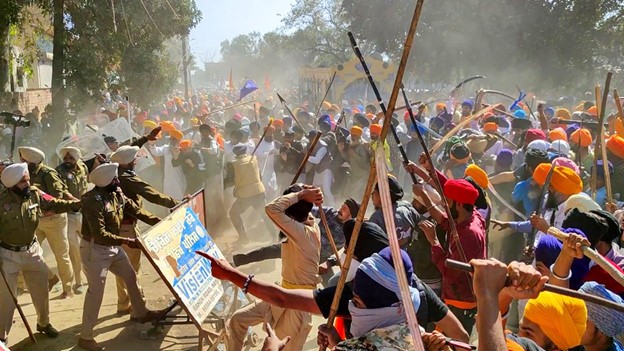
    Punjab—the land of saints and seers, the granary of India, nursery of the nation’s exceptionally gallant soldiers and outstanding sportspersons— appears to be once again, sliding to the brink of militancy largely attributed to religion-based secessionist motivations of a few extremists. That it is also fuelled by Pakistan’s sinister Inter Services Intelligence (ISI) and its well-funded stooges abroad brooks no elaboration.

    It will be prudent to recall that in the late 70s, Pakistan’s military dictator President Gen Zia-ul-Haq had conceived his infamous K-2 strategy (Kashmir and Khalistan) to foment trouble in two of India’s strategic border states of Kashmir and Punjab. Since then, till date, Pakistan has relentlessly strived to plant the seeds of terrorism, religious strife and lawlessness in these border regions. That turmoil and militancy did affect Punjab also in the 80s cannot be denied. Ultimately, the patriotism of the sturdy Sikhs coupled with firm handling by the Centre and state governments and embellished by strong and effective state police leadership under officers like Julio Ribeiro and KPS Gill had curbed the insurgency in Punjab. Those dark days did throw up vital lessons for all stakeholders to imbibe and implement to prevent such recurrences. But as usually happens with most establishments, a sense of déjà vu takes over till the next crisis occurs! The current state in Punjab is no exception.

    [powerkit_button size=”lg” style=”info” block=”true” url=”https://chanakyaforum.com/punjab-on-the-boil-again/” target=”_blank” nofollow=”false”]
    Read More
    [/powerkit_button]