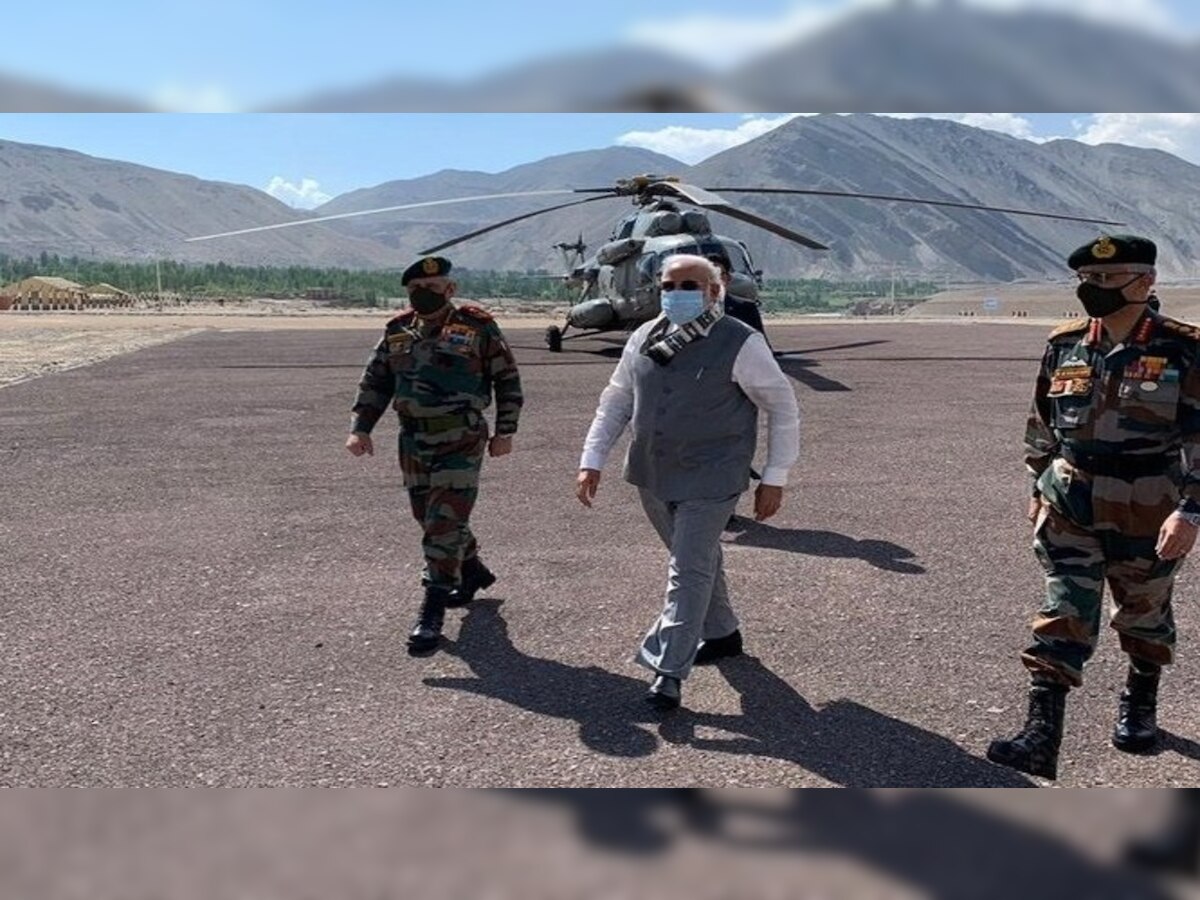
The Indian military has been seeking to build jointness among its services for decades, including through proposals to establish regional joint theatre commands with responsibility for different areas of the subcontinent and beyond. But those efforts hit a roadblock earlier this year when the Indian Air Force (IAF) objected to its capabilities being split across commands and relegated to providing tactical support to land operations. A truly joint Indian military may still be a long way off.
Category: External Articles
-

Manipur: Into the Abyss
Common sense tells us that all successful businesses are primarily driven by the profits they hope to earn. A possibility only in a peaceful and stable environment where law and order are not an issue. Therefore, the opening of the KFC restaurant at Churachandpur on 5th December last year, was a clear indicator that corporate honchos expected peace and prosperity to prevail in the State, as insurgency, which had lasted over five decades, seemed to have finally run its course.
There were other indicators of this as well. Earlier, from 1st April 2022, the Central Government had removed the Armed Forces Special Powers Act (AFSPA) from 15 Police Station limits, in six districts. This was followed a year later, on 24th March 2023, with its removal from four more Police Station limits; a total of 19 Police Station limits in seven districts. This implied that neither the Army nor the Assam Rifles could operate in these areas without a formal request for their assistance from the State Administration, or without a magistrate being present.
[powerkit_button size=”lg” style=”info” block=”true” url=”http://www.indiandefencereview.com/news/manipur-into-the-abyss/” target=”_blank” nofollow=”false”]
Read More
[/powerkit_button] -
Un-crowding India’s Capital and Decentralising of Power
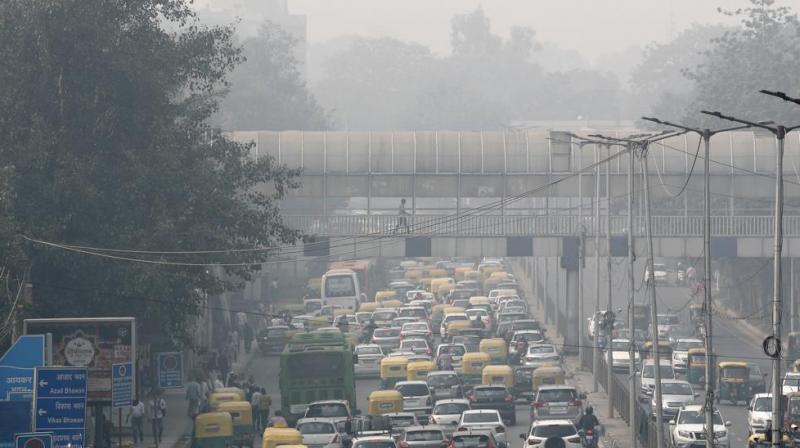
Dispersing offices across the nation will not only decongest Delhi, but will also become economic drivers that will modernise smaller towns.
One of the early textbooks I read on Political Economy started with a scenario set in Sao Paulo, Brazil, a city with huge traffic problems in the 1970s and 1980s, with a traffic jam at a major intersection on a hot summer day that turns into a gridlock, and then leads to people abandoning their cars, unable to bear the severe heat, only aggravating the problems. This then leads to outbreaks of road rage, fistfights and soon into a welter of riots and inflicting a severe breakdown of law and order, that then spreads to others parts of Brazil. But Sao Paulo still functions. I think India is now a better candidate to revolution coming out of a traffic jam.
[powerkit_button size=”lg” style=”info” block=”true” url=”https://www.asianage.com/opinion/columnists/240723/mohan-guruswamy-un-crowding-indias-capital-and-decentralising-of-power.html” target=”_blank” nofollow=”false”]
Read More
[/powerkit_button] -
What IAF Needs to Transform into to Develop as an Aerospace Power
Pakistan has also enunciated a “first-use” nuclear option against India, that cannot be taken lightly.
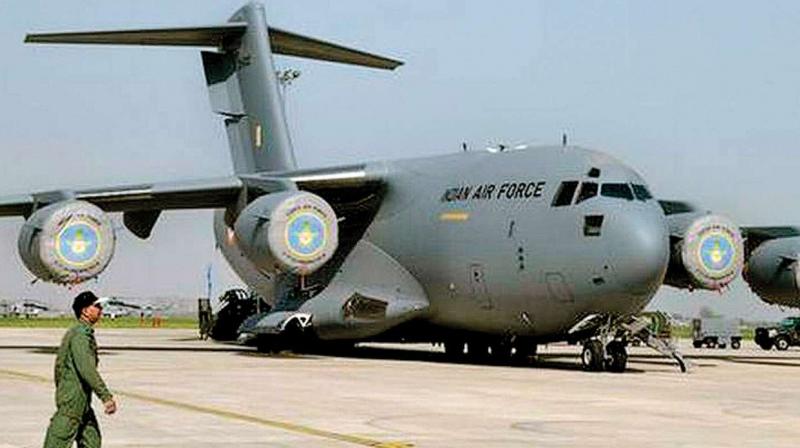
For the Indian Air Force to truly live up to its motto of “Touching the Skies with Glory”, some critical transformational imperatives are needed. While the IAF is sincerely trying to move from air power to being an aerospace power, these imperatives have to be implemented with vision and alacrity. Faced with China’s rapidly growing military assertiveness and its unbridled ambitions, supplanted by a traditionally hostile Pakistan, the challenge to the IAF by both nations, individually and collusively, in the aerospace domain are indeed formidable. Aerospace is unquestionably the domain of the future.
[powerkit_button size=”lg” style=”info” block=”true” url=”https://www.asianage.com/opinion/columnists/250723/kamal-davar-what-iaf-needs-to-transform-into-to-develop-as-an-aerospace-power.html” target=”_blank” nofollow=”false”]
Read More
[/powerkit_button] -
Let’s move from Unitary State to Union of States
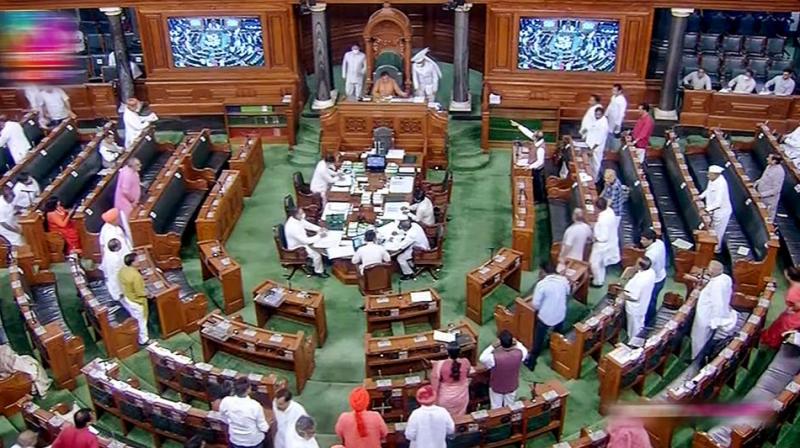
The delimitation exercise now underway will reduce the weightage in Parliament of the states that did better.
India’s Union of States has reached a critical impasse. Its diversity bound together by the Constitution that was meant to make us a modern, democratic and secular state based on equality and equal availability of justice, education, healthcare and social services, and division of government based on functions is now under grave challenge. India was never intended to be a saffron-hued monochromatic state, but a multi-ethnic, multi-cultural and multi-lingual state whose diversity made it a nation as never before. Its demographics compound its problems by threatening to swamp the non-Hindi/Hindutva belt into a saffronised dominion.
[powerkit_button size=”lg” style=”info” block=”true” url=”https://www.asianage.com/opinion/columnists/050623/mohan-guruswamy-lets-move-from-unitary-state-to-union-of-states.html” target=”_blank” nofollow=”false”]
Read More
[/powerkit_button] -
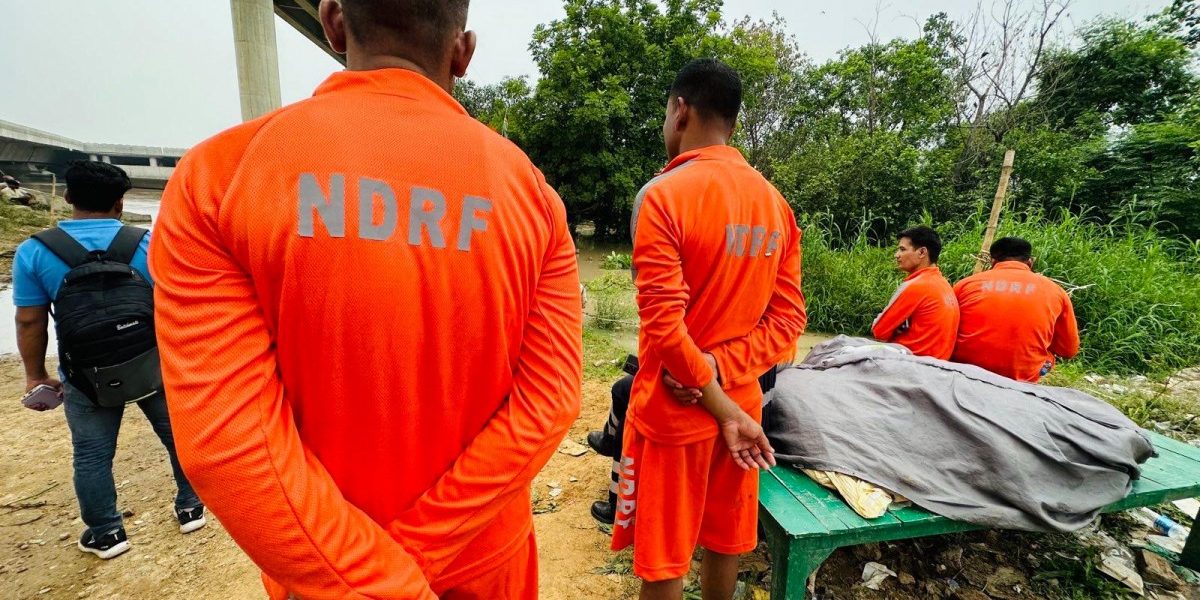
Development Gone ‘Rogue’ and the High Flood in Delhi
Development has come to be equated only with growing production and higher GDP growth. This is sought to be achieved via hugely expensive and environmentally damaging urbanisation, the effect of which Delhi is reeling from.
Over the past few weeks, many parts of North India have faced severe flooding, landslides and deaths. The unprecedented floods in Delhi have brought this crisis to national and international attention. The water level in the river Yamuna reached a record high of 208.66 metres, much above the last great flood in Delhi in 1978 – when it had reached 207.49 metres. Yamuna, before it changed its course, used to flow by the ramparts of the Red Fort and once again has arrived there. It has led to the flooding of several projects of ‘development’ – water treatment plants, the arterial ring road, rich and poor residential areas, drainage, etc.
[powerkit_button size=”lg” style=”info” block=”true” url=”https://thewire.in/environment/development-rogue-flood-delhi” target=”_blank” nofollow=”false”]
Read More
[/powerkit_button] -
A Taxing Tale: Assessing the Impact of Six Years of GST
Goods and Services Tax (GST) stands at a critical juncture six years after its implementation. Despite promising enormous benefits, it has fallen short and led to a decline in economic growth, especially for the unorganised sector.
Goods and Services Tax (GST) has completed six years since it was launched on the midnight of June 30, 2017. It was billed as India’s second freedom. In a repetition of the then Parliament’s midnight meeting on August 14, 1947, the Parliament met dramatically in 2017 to hear the Prime Minister announce the launch of GST.
It was said that the fragmented Indian market would be unified into one and a parallel was drawn with 1947, when free India had come together as a union of states.
[powerkit_button size=”lg” style=”info” block=”true” url=”https://theleaflet.in/a-taxing-tale-assessing-the-impact-of-six-years-of-gst/#:~:text=Goods%20and%20Services%20Tax%20(GST,especially%20for%20the%20unorganised%20sector.” target=”_blank” nofollow=”false”]
Read More
[/powerkit_button] -
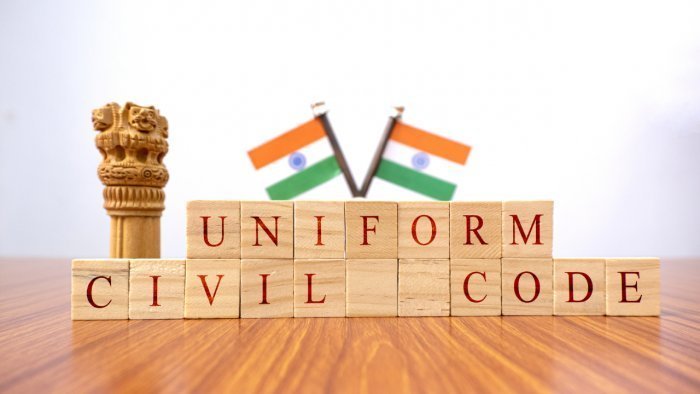
Uniform Civil Code | What Kind of Uniformity, Whose Code?
Should India’s linguistic diversity too be given a short shrift, as has been happening for years in promoting Hindi in preference to 21 other scheduled languages?
Though we do not have, as pointed out in this Deccan Herald opinion article, a draft Bill or a white paper on the Uniform Civil Code (UCC), there is a raging debate, as well as fear in many quarters, as to the intention of the ruling Bharatiya Janata Party (BJP) as expressed in the pronouncements of Prime Minister Narendra Modi concerning the UCC.
Quite forthrightly, Nobel Laureate Amartya Sen used decidedly strong words when he said, “I saw in the papers today that there should not be any further delay in implementation of Uniform Civil Code. Where did such a stupid thing come from? We have been without UCC for thousands of years and can also be without it in future”. Further, he asserted, “Hindu Rastra cannot be the only way in which the country can progress and one should look at these questions with a broader outlook. Certainly, there is an attempt to use… misuse the Hindu religion”.
[powerkit_button size=”lg” style=”info” block=”true” url=”https://www.deccanherald.com/opinion/uniform-civil-code-what-kind-of-uniformity-whose-code-1238537.html” target=”_blank” nofollow=”false”]
Read More
[/powerkit_button] -
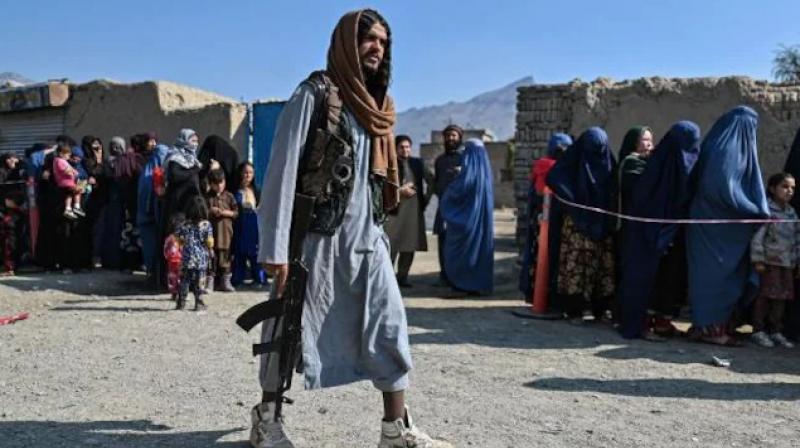
The Quagmire of Afghanistan… as Kabul, Kandahar in a Power Tussle
Afghanistan is now at the brink of a humanitarian disaster.
Down the ages, Afghanistan, the land where many “Great Games” have been enacted, continues to baffle its rulers and neighbours as it brings misery to its impoverished and fratricidal strife-torn suffering people. In the past two years, it has been ruled by its own fundamentalist regime, the Taliban, with no succour to its people but added fatalities, hunger and deprivation, besides the growing abuse of human rights.
Afghanistan is now at the brink of a humanitarian disaster. The hasty, inglorious American exit in August 2021 has contributed nothing but political instability for a people already plagued by various ethnic diversities. That the Taliban have reneged on most of its promises given to the US and the international community prior to the American exit, especially on freedom of speech, democracy and women’s rights is a cause of much turmoil within Afghanistan itself, apart from causing dismay to the nation’s well-wishers abroad.
[powerkit_button size=”lg” style=”info” block=”true” url=”https://www.asianage.com/opinion/columnists/200623/kamal-davar-the-quagmire-of-afghanistan-as-kabul-kandahar-in-a-power-tussle.html” target=”_blank” nofollow=”false”]
Read More
[/powerkit_button] -
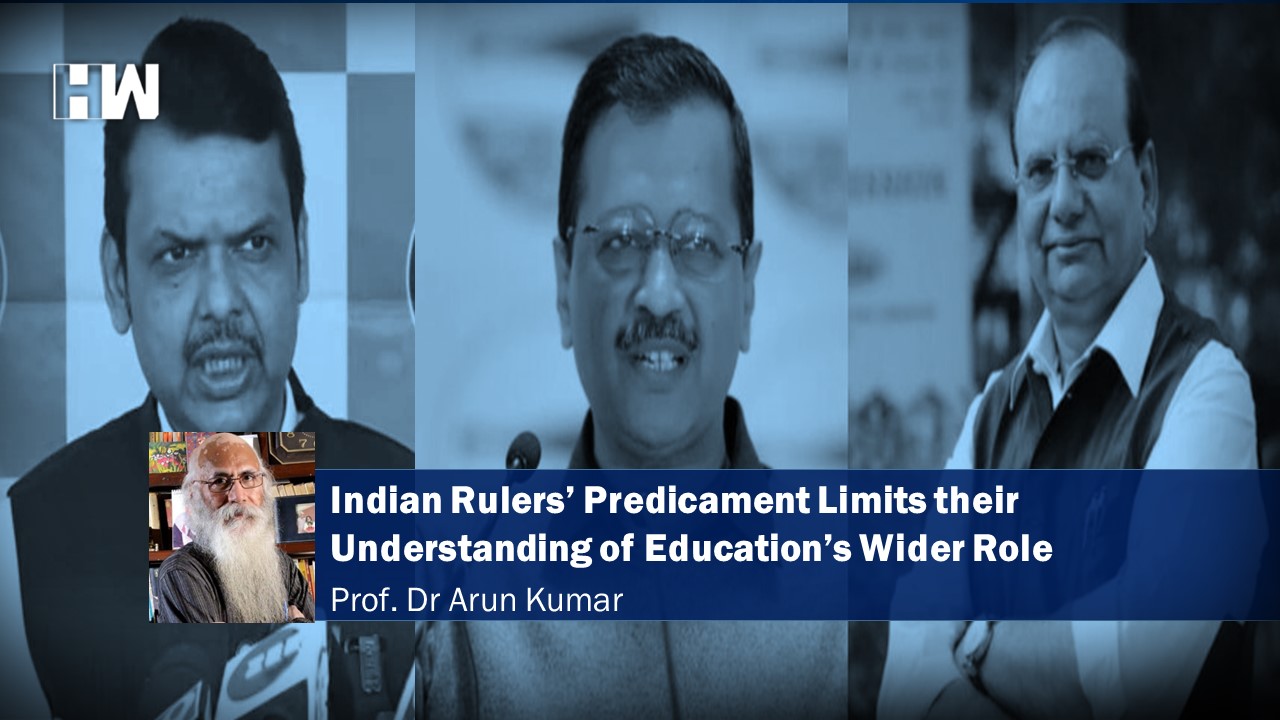
Indian Ruler’s Predicament Limits their Understanding of Education’s Wider Role
Mr. Fadnavis, Dy. CM of Maharashtra has exhorted the youth to come forward in foiling the attempts of urban naxals from getting into universities. Since anyone differing from the establishment is being called urban naxal these days, this is a call to curb dissent in the
universities.Earlier, Delhi’s Lt. Governor V K Saxena is reported to have said, “… degreeyan toh padahi ke kharch ki raseedein hoti hain. …” (… degrees are mere receipts of money spent on studies …). This was in response to the Delhi CM, Kejriwal’s reported barb that India needs an “… educated PM for the nation’s well-being”. So, the educational qualifications of leaders have become an issue.
These statements reflect the current Indian rulers’ skewed vision of education. For one dissent is not acceptable and for the other education is only about money spent and not the larger role it plays in society.
[powerkit_button size=”lg” style=”info” block=”true” url=”https://hwnews.in/news/opinion/indian-rulers-predicament-limits-their-understanding-of-educations-wider-role/” target=”_blank” nofollow=”false”]
Read More
[/powerkit_button]