Category: External Articles

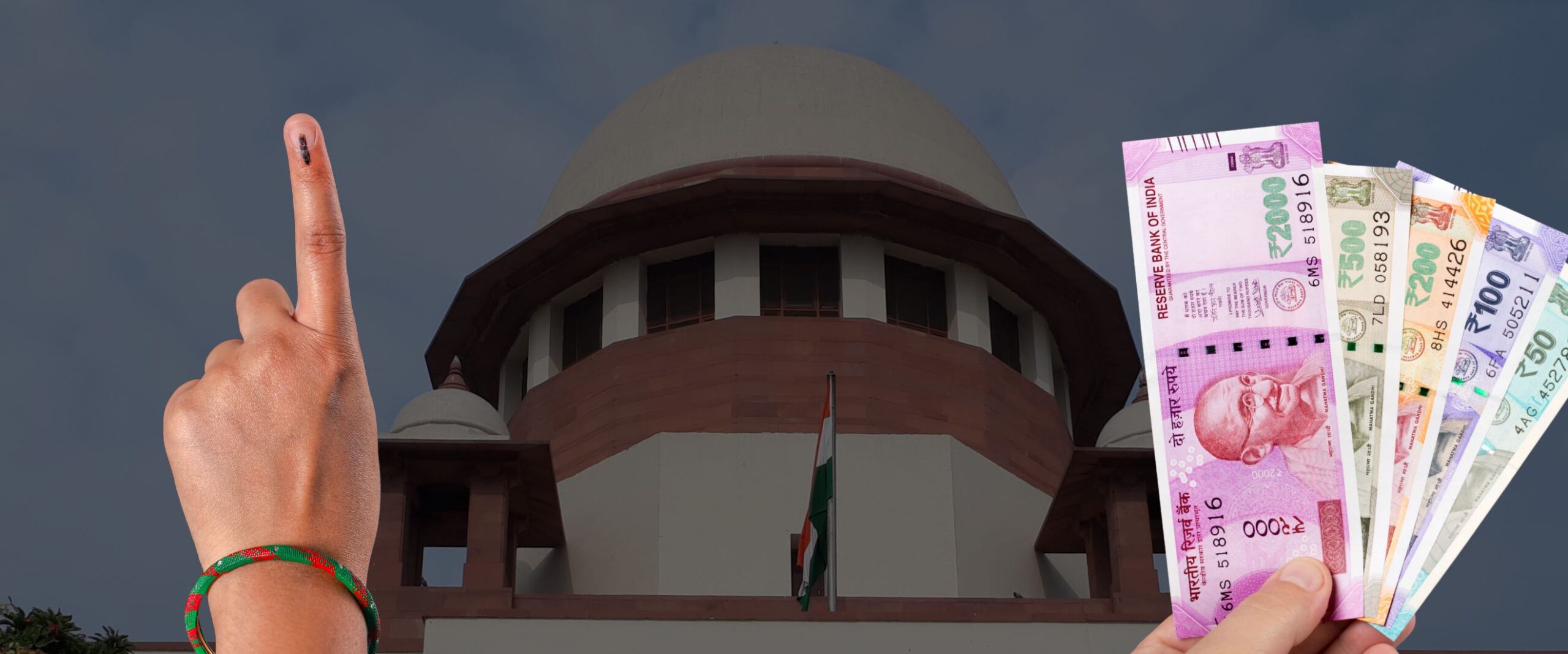
  • An Individual’s Guarantee As Party Manifesto Weakens Democracy, Feeds Instability, Uncertainty

    An Individual’s Guarantee As Party Manifesto Weakens Democracy, Feeds Instability, Uncertainty

    The last decade points to the individualisation of decision making in India leading to huge problems. As can be expected, these go unmentioned in the manifesto – after all the manifesto is supposed to create a feel good factor in the nation. The end result of ‘Modi’s guarantee’ could be contrary to the promises.

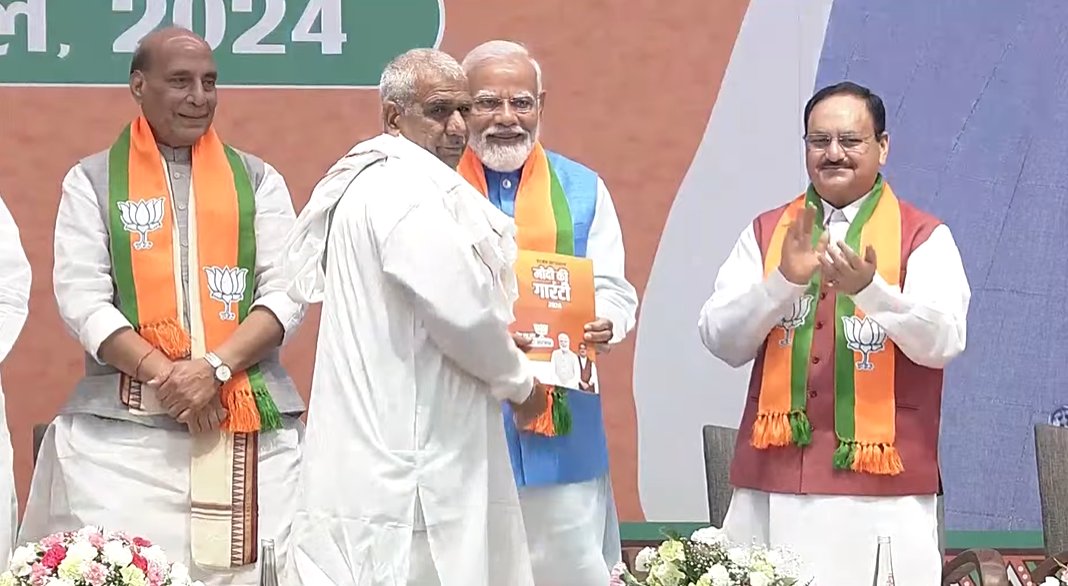
    The Bharatiya Janata Party’s (BJP’s) manifesto titled “Modi ki Guarantee 2024” promises much. It implies a guarantee that soon all will be well because of Narendra Modi. It reflects a) the state of affairs in the BJP and b) its reading of people’s mood.

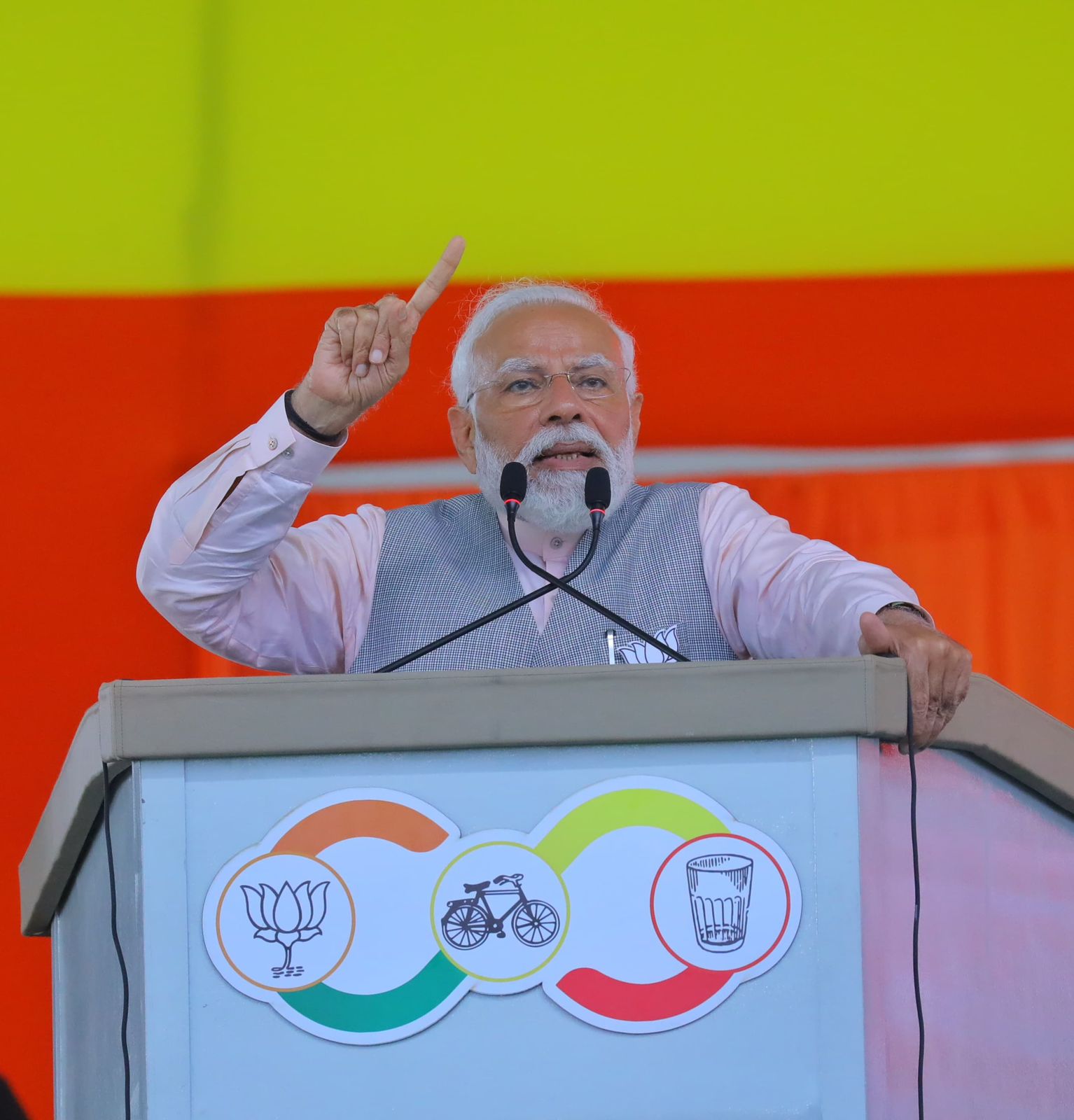
    It implies that people have more faith in Modi than in the party. Does this reflect the failure of the party? Like in a presidential form of election, vote is sought in the name of a leader, Modi.

    The contrast with the Congress manifesto, titled, `Nyay Patra’, promising justice to all, is stark. The BJP manifesto too promises justice. But, one depends on faith in an individual’s guarantee while the other seeks to deliver through strengthening society’s institutional setting. The instrumentality proposed by the two political parties is diametrically opposite.
    Read More

  • Elections 2024: Modi up a steep & slippery Slope

    Elections 2024: Modi up a steep & slippery Slope


    Be it a democracy or a dictatorship, governments are almost always changed by throwing out the incumbent. The former is called a democratic transition and the latter is inevitably a revolution. Even if it is, as usually is the case, more of the same. India’s electoral process that begins on April 19 will be concluded on June 4 when the results are announced. Most psephologists, commentators, astrologers and bazar gossips are sanguine that Prime Minister Narendra Modi will be easily re-elected to a third successive term. I do not agree with that sanguinity.I think Mr Modi has a hard hill to climb and the slope may be too steep and slippery for him. Look at the objective reality. In 2019, the BJP won 303 seats or almost 56 per cent of the Lok Sabha with 37.4 per cent of the popular vote. This skew is how it usually is in a first-past-the-post system. Even a minority mandate translates into an overwhelming outcome. But the problem with the BJP mandate is that it is concentrated in a minority of states. The saffron mandate is restricted almost entirely to the large Hindi-speaking states (202/235), as well as Maharashtra (41/48) and Karnataka (25/28). It got 268 out of its 303 in just this concentration. Winning these states is not the issue for the BJP. Repeating this performance is.


    Read More

  • Unravelling the national narrative

    Unravelling the national narrative

    There can be no denying the fact that the BJP under Mr Modi’s leadership has been able to, over this past decade, reinforce the perception of being seen as a focused and forward-looking party, intent on pushing our national interest to the fullest. This is in complete contrast to the rather dismal picture that our opposition presents with its inherent lack of focus, regressive emphasis on caste and the inability to work together. There is little doubt then, that Mr. Modi will once again lead the BJP and its allies to another win, though the margin of victory is difficult to predict.

    This result need not have been inevitable. As our foremost and shrewdest political strategist, Prashant Kishor, points out, despite their best efforts, the BJP alliance has historically never got more than 38% of the votes cast. That leaves a sizeable 60% plus, opposed to the BJP and its ideology, that the opposition has failed to use effectively. More so, since we still have a long way to go to becoming Viksit Bharat anytime soon. The Government’s economic claims are under a bit of a cloud given the existing scale of unemployment, middling growth and rising prices. However, in addition, there are a couple of other fundamental issues that must be tackled urgently, if we are to truly unshackle our potential as envisaged.


    Read more…

  • GDP data for Q3 2023–24: The mystery of a robust growth

    GDP data for Q3 2023–24: The mystery of a robust growth

    Recently released GDP figures have sprung a surprise, baffled experts and overturned the government’s own data and projections. What could be the reason

    GROSS Domestic Product (GDP) figures have sprung a surprise— showing a growth of 8.4 percent in Quarter 3 of 2023–24, on top of the previous two quarter’s growth of 8.2 percent and 8.1 percent.

    The annual growth for 2023–24 is projected at 7.6 percent. But given the growth rates in the first three quarters, it is likely to be above 8 percent, unless the economy decelerates sharply in Q4, of which there is little sign.

    The surprise

    Experts are embarrassed that how could they be so far off. In December 2023, the Reserve Bank of India (RBI) had upped its projected growth rate from 6.5 percent to 7 percent.

    Various foreign credit rating agencies had revised the expected growth rate to only around 6.5 percent. The International Monetary Fund (IMF) expected a 6.3 percent rate of growth.


    Read more…


    Read more…

  • Electoral bonds: No solution to illegal political funding

    Electoral bonds: No solution to illegal political funding

    How do donations via electoral bonds funded by legal or illegal money help curb undue influence on policy makers? Electoral bonds provide an additional of such funds

    THE Union Government initiated the Electoral Bonds scheme, which was announced in the Union Budget 2017–18, on January 2, 2018. The aim was “to cleanse the system of political funding in the country”. While many other issues are also germane, the moot question is will this goal be achieved.

    These are bearer bonds that private entities can buy from a designated bank (presently the State Bank of India) and donate them to a political party. They are supposedly an anonymous way of donating funds to political parties, since the identity of the donor is not disclosed. The bonds become available around the time of elections, presumably to provide ‘legitimate’ funds to political parties.

    Data shows that most of the funds go to the ruling party and help them consolidate their hold over power.


    Read more…

  • Kamal Davar | Raging turmoil in Myanmar poses security threat to India’s Northeast

    Kamal Davar | Raging turmoil in Myanmar poses security threat to India’s Northeast

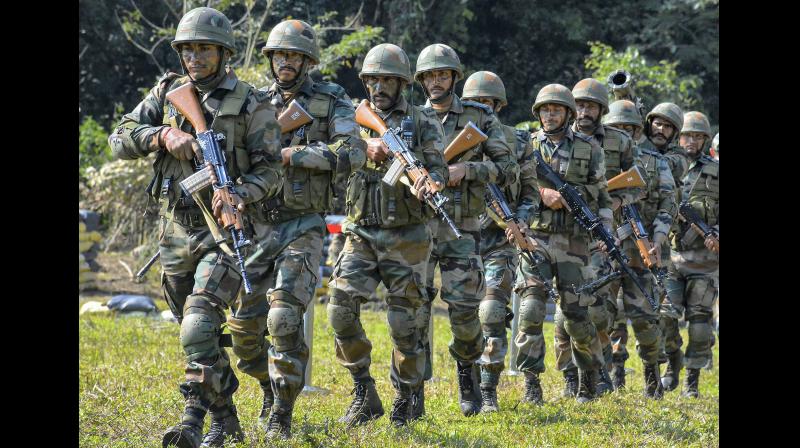
    The turmoil in neighbouring Myanmar that is almost turning into a civil war has prompted the Government of India to decide that the country’s border with Myanmar will be covered by barbed fencing, much like the India-Bangladesh border. The states of Arunachal Pradesh, Nagaland, Manipur and Mizoram share a 1,643-km border with Myanmar. There is also a rethink on the free movement agreement with Myanmar that allows people living 16 km on either side unfettered cross-border movement on the production of border passes. The fierce fighting raging in Myanmar has led to deep security concerns in India, besides the large influx of refugees, which will be a natural outcome of this turmoil.

    India’s Northeast, often regarded as a “distant frontier” is also described in the government’s Vision Document 2020 as a “rainbow country”. It is surrounded by Bangladesh, Bhutan, China, Nepal and Myanmar. It includes the “seven sisters” — Arunachal Pradesh, Assam, Manipur, Meghalaya, Mizoram, Nagaland and Tripura. Sikkim too is seen as a part of this region. It has wide disparity in cultures, customs, languages and traditions. A host of geopolitical, historical, political and social conflicts have afflicted this region for years and posed both external and internal security challenges to this country. Geographically distant and economic disparities have further widened the chasm between the Northeast with the rest of India.


    Read more…

  • Foreign Policy through the Prism of Hindsight

    Foreign Policy through the Prism of Hindsight

    It goes without saying that at one time or the other we have all been victims of that old adage “20/20 hindsight”– the ability to clearlypick holes on past choices! Incidentally, the phrase was first used in 1962, when the British aeronautical journal, Flight International, noted the newest expression in the US air transport business– namely, 20/20 hindsight”. While hindsight is a wonderful prism to critique the past, we cannot ignore the fact that inevitably, every choice is predicated on the situation being faced and the consequences of earlier choices. Moreover, it’s worth remembering that in choosing, as American lawyer and politician Joe Andrews so aptly put it, “the hardest decisions in life are not between good and bad or right and wrong, but between two goods or two rights”, which in some cases may well be choosing the lesser evil. Of course, it also goes without saying that the choices we make are to a great extent intrinsically moulded by our personalities, life experiences, ideological beliefs and preferences, and ‘primordial biases’.


    Read more…

  • Amid India-China friction, we need to set real LAC

    Amid India-China friction, we need to set real LAC

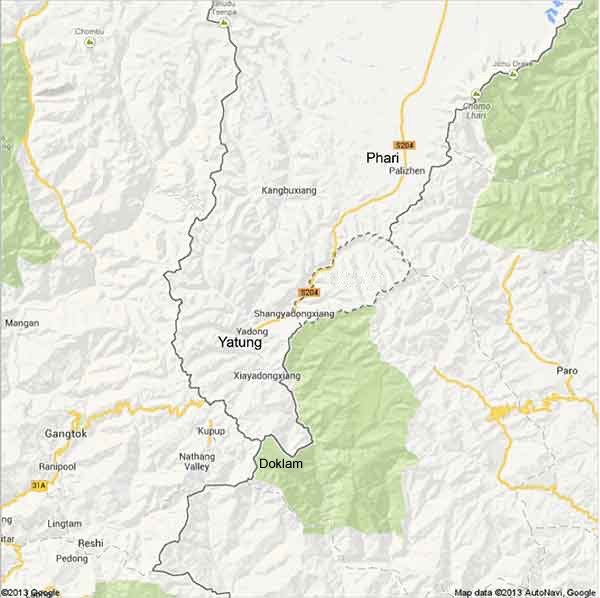
    We have two outstanding issues between India and China. The larger one is about the large tracts of territory in Ladakh and Arunachal Pradesh. These two territorial disputes are not going to be resolved even in the foreseeable long term. Hence, Deng Xiaoping sagaciously suggested to Rajiv Gandhi in their 1988 meeting in Beijing that it was best left to history. A hundred years ago, the situations in both countries and their frontiers were very different. What they will be after another hundred years can be anybody’s guess?
    The urgent and pressing dispute on hand is the issue of the two LACs. These LACs frequently overlap. The term Line of Actual Control, or LAC, was first used by then Chinese PM Zhou Enlai in November 1959 when he wrote to his India’s Prime Minister Jawaharlal Nehru defining it as “the so-called McMahon Line in the east and the line up to which each side exercises actual control in the west”. Nehru rejected this line even after the events of 1962. By this time, he was also saddled with a parliamentary resolution pledging to recover all territories occupied by China. Interestingly, this LAC did not change very much even after 1962.


    Read more…

  • Technological Challenges to Becoming a Developed Country by 2047

    Technological Challenges to Becoming a Developed Country by 2047

    For a developed India, bulkier investment and technological changes are required to keep up in the race with other developed nations. In doing so, the country should not be afraid of failure. After all, Chandrayaan 3 was made possible by the lessons from the failure of Chandrayaan 2.

    THE Prime Minister has set the goal of India becoming a developed country by 2047.

    On the way, India’s Gross Domestic Product (GDP) is soon going to surpass that of Germany and Japan, if the current official rates of growth are maintained.

    In today’s world, projecting five years or 24 years ahead is fraught with challenges. Who could have foreseen the Covid pandemic in 2020 and the war in Ukraine in 2022?

    Successful landing of Chandrayaan 3 near the South Pole of the Moon is undoubtedly a great achievement for the nation. But that does not make India a developed nation.

    Major challenges confront the nation, such as providing good education and healthcare. This can only be achieved if the number of schools and health facilities in rural and semi-rural areas is increased substantially.

    [powerkit_button size=”lg” style=”info” block=”true” url=”https://theleaflet.in/technological-challenges-to-becoming-a-developed-country-by-2047/” target=”_blank” nofollow=”false”]
    Read More
    [/powerkit_button]

  • G20’s New Delhi Declaration: Serving the Interest of the Global Landlords

    G20’s New Delhi Declaration: Serving the Interest of the Global Landlords

    The Delhi declaration’s achievement is preservation of the interest of the global elite (including the Indian elite). The global landlords enabled it while paying lip service to global good.

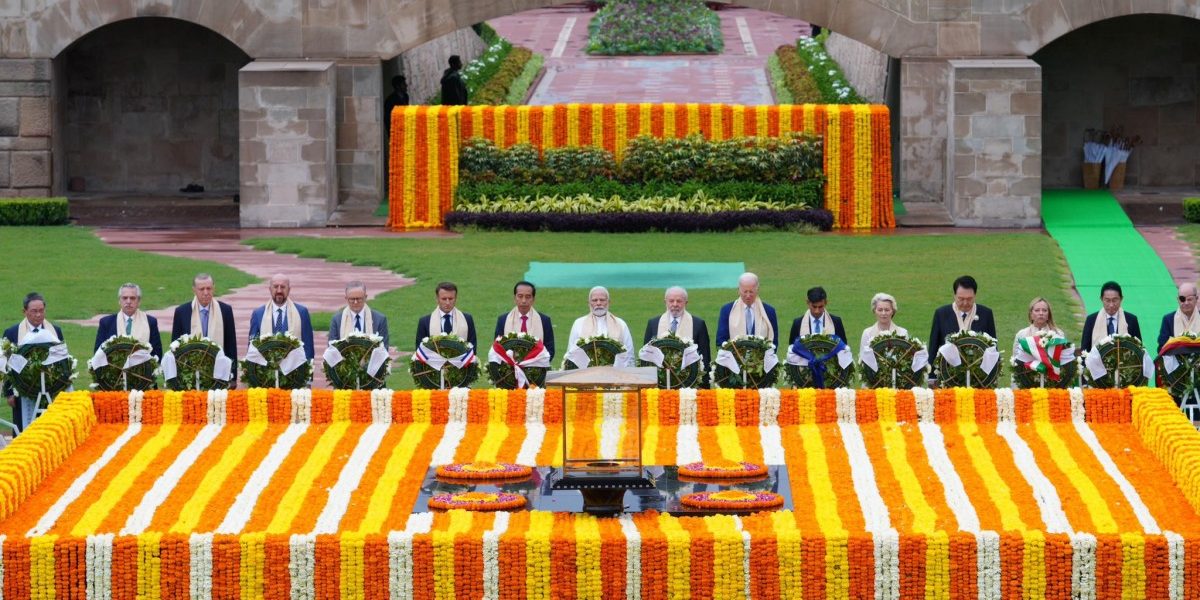
    The G20 summit in India ended on a high note with a New Delhi Declaration. This is a matter of immense satisfaction for the prime minister personally and for his entire team which had to struggle to arrive at a consensus among the warring elements of the grouping. It highlights India’s present pole position in the global order. Other nations are trying to draw it into their sphere of influence, or at least trying to prevent it from getting closer to the other side.

    India’s advantage is a result of the continuing Ukraine war and the aggravating Cold War between the G7 and China-Russia combine. It has required deft manoeuvring, more so because of India’s political problems with China which resulted in its president giving the meeting a miss. This caused considerable consternation, given China’s economic and political clout.

    [powerkit_button size=”lg” style=”info” block=”true” url=”https://thewire.in/world/g20s-new-delhi-declaration-serving-the-interest-of-the-global-landlords” target=”_blank” nofollow=”false”]
    Read More
    [/powerkit_button]