Category: Elections and Policies

  • India Elections 2019: Under-representation of Women Reflects Failure of Policy

    India Elections 2019: Under-representation of Women Reflects Failure of Policy

    Renuka Paul                                                                                           April 10, 2019/Analysis

    India, the world’s largest democracy, will witness the start of its general elections tomorrow, for constituting the 17th Lok Sabha. With 900 million eligible voters, it is expected to be the biggest electoral event and is scheduled to be held in 7 phases from April 11th to May 19th, 2019. The democratic exercise, however, does not appear to be fairly representative of women. For over two decades, the insufficient involvement of women in Indian politics has been largely debated, and measures to alter the status quo have been backed by nearly all major political parties. Despite the support, implementation of these proposals have stalled. Moreover, there has been no significant increase in women’s representation within party ranks nor in the number of female candidates being nominated for the upcoming election.

    India Fares Poorly in Comparison to its Neighbours

    Although women constitute nearly half of India’s population at present, female political representation remains at 11.8 percent in Lok Sabha and 11.2 percent in Rajya Sabha (global average, as of 2018, is 24.3 percent). In other words, nearly 9 out of 10 legislators in India are men. While women have held the roles of the President, Prime Minister and Chief Minister in India, these instances remain an anomaly rather than the norm, with most of the elected female leaders belonging to political families (43 percent). According to Inter Parliamentary Union (2019), India is ranked 149thout of 193 countries in terms of representation of women in Lower Houses. In comparison, Nepal (32.7 percent), Afghanistan (27.3 percent), Bangladesh (20.6 percent) and Pakistan (20.2 percent) perform far better and have political quotas in place. Furthermore, representation of women in state assemblies is even lower (8 percent), with the highest numbers in Bihar, Haryana and Rajasthan at 14 percent and lowest in Mizoram, Nagaland and Puducherry with no elected women representatives.

    The abysmal rate of women’s role in decision making and legislation was first acknowledged in 1976 after a report by the Committee on the Status of Women in India was published. Following this, 73rdand 74thconstitutional amendments were adopted in 1993 mandating 33 percent reservation for women in local governance. Later, in 1996, in order to correct the deeply skewed ratio of female electoral participation, the Women’s Reservation Bill was introduced in the parliament in order to extend reservation to Lok Sabha and state assemblies. As per the provisions of the bill, seats under the quota were to be allotted to different constituencies by rotation, as prescribed by the authority determined by the parliament. Importantly, the bill contained a clause stating that the reservation extended would be eliminated 15 years after its introduction. This clause was included upon determining that the estimated time period was sufficient to remove the political disadvantages faced by women. Further, some argued that following the 15 years, people would come to realise the capabilities of women leaders and, if the bill were to not be revoked, it would limit female candidates to contest elections from the reserved seats alone. Though the bill has been promoted by major parties, it has failed to get legislative approval.

    Patriarchal Mindset and the Absence of Political Will

    Both the NDA and UPA governments blamed failure of the bill’s passage on the coalition arrangement that made consensus impossible, despite the support of the leading party. Although the BJP were vocal about women’s marginalisation in politics while in opposition, upon coming to power in 2014 with a clear majority, the party has neither discussed nor passed the bill. Overall, a general lack of political will remains and the disinterest of parties in issues of inclusive representation is evident. This is highlighted by the fact that women representatives of all major parties in the general elections is less than 10 percent.

    Opponents of political quotas for women argue that it will further strengthen the gender imbalance at the top. According to them, “modern women” are capable of contesting elections on merit and do not require affirmative actions to win elections. Moreover, they argue that reserved seats restrict the choice of voters to only women candidates, thereby violating the rules of democratic elections. Others claim that rotation of reserved constituencies would reduce an MP’s incentive to work for their constituencies since they would not be eligible for contesting elections in the next term. Many have proposed alternatives such as reservations for women in political parties instead, dual member constituencies, etc. Interestingly, while these disagreements have stymied the bill for over two decades, they did not hinder the passage of the 73rdand 74thamendments (passed with a clear majority when introduced the first time). This may be because the latter does not pose any threats to the dominant position of male parliamentarians, as opposed to the former that challenges their own survival.

    Globally, it is established that men and women in leadership positions often have differing priorities and perspectives. An ideal mix of both the sexes in politics is necessary to ensure that the democratic process is truly representative and that demands of all categories are considered during decision making processes. Though open competition in constituencies may be preferred, reservation for women candidates is required until gender parity is achieved. This balance in elected bodies is crucial to establish a mechanism that allows women to actively engage and influence broader political and economic concerns, especially those that affect women.  In India, equal opportunities in terms of political participation and representation have been granted to women since independence. However, societal and historical biases against women have created rigid structures that have hindered women’s accessibility to positions of power. Equal political representation makes the democratic system more responsive to the needs of the people. In this sense, there is an urgent need to improve women’s involvement in politics for inclusive growth and development.

    Reservation for Women an Absolute Necessity

    The existence of reserved seats for women in elected bodies isn’t just a demand for fairness and equality. Various studies have highlighted the positive effects of bringing in female leaders. A report by the Ministry of Panchayati Raj has highlighted that reservation for women in PRIs has improved the self-esteem, confidence and decision-making skills of the candidates, which in turn has led to an increase in education for girls and consequently expanded the breadth of their future aspirations. Furthermore, it was found that the elected women also invested more in the handling public goods such as cleaner fuels, road connectivity and water accessibility- issues that often affect women at large. According to a study by UN University WIDER, constituencies with women leaders have 15 percent more luminosity growth in their regions than those headed by men, thereby improving productivity and employment rates. The study concluded that women leaders contributed 1.8 times more to economic growth than their male counterparts. Many studies have recorded considerable differences in policy priorities and solutions offered by both the sexes, with female leaders primarily emphasizing on issues aimed at improving the quality of life, conditions of women and children, health parameters and lives of minorities. Research indicates that this is possibly the result of traditional roles played by women as mothers or caregivers. A J-PAL research paper has also observed that the quota system in local governments have boosted child health and nutrition, female entrepreneurship and the responsiveness of police toward violence against women. Altogether, the inclusion of women in politics is not limited to changing gender relations in the nation but also greatly contributes to improving social welfare and economics.

    Many have noted that for women to substantially impact the policy scenario, they would need at least a 30 percent share in the parliament.  In fundamentally patriarchal Indian society, this highlights yet again the crucial need for the Women’s Reservation Bill. While many contend that this will limit and make women candidates dependent on the quota system, evidence shows otherwise. Despite quotas in local governments (33 percent), as of 2018, the national average of women in panchayats is around 44 percent and 14 states have more than 50 percent women leaders. In fact, Uttarakhand and Rajasthan have 56 percent female representation in PRIs. However, there are many other factors that require consideration. According to Economic Survey 2018, cultural attitudes towards women, domestic responsibilities, illiteracy, lack of confidence, inaccessibility to political funds, threat of violence, etc are some causes that limit women’s abilities to step forward in politics. Therefore, while women are offered opportunities through political quotas, inherent social structures and norms need to be altered in order to enhance balanced representation.

    Positive Impact on Society

    In recent years, the signs of increasing involvement of women in Indian politics are clearly visible. This is primarily manifested through voting and political activism (not figured into representation). According to leading election researchers, the upcoming general elections will see female voters surpassing the men. These trends show that there exists a demand to see more from political parties than hollow promises of female-oriented policy statements in election manifestos. For instance, Odisha has introduced a resolution in its state assembly for reserving one-third seats for women in parliament and legislative assembly, and the Biju Janata Dal (BJD), the ruling party, has proclaimed that 33 percent women candidates will contest elections. Trinamool Congress in West Bengal has announced that 41 percent of its candidates for Lok Sabha seats are women. While other parties have criticised these moves as opportunistic and an attempt to capture a larger share of the female electorate, these decisions certainly offer a better platform for women in the upcoming elections. Moreover, with the increase of women voters, other parties and states will be compelled to follow suit.

    For effectively including women in the elected leadership, in addition to affirmative action, there is a need for parties to prioritise women within their ranks, thereby cultivating a gender neutral political environment. These efforts should also be enhanced through comprehensive political education and gender sensitisation by the state and media. Since substantial female political empowerment necessitates a shift in people’s values and perceptions, it requires collaborative efforts from various players including leaders, political parties, civil society and the media alike.

    Renuka Paul is a Research Analyst with TPF.

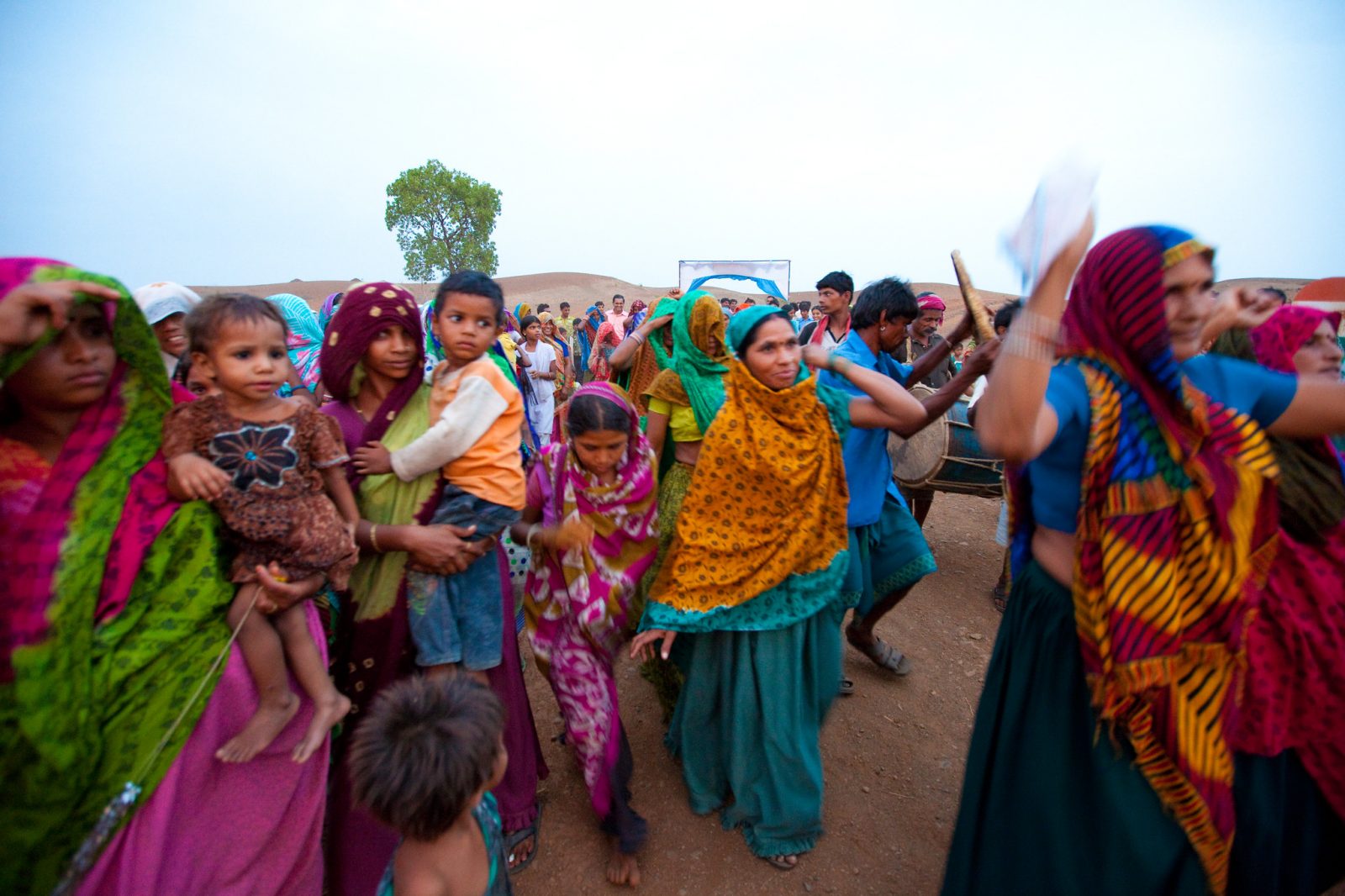
    Header Image: Welcome party at the Gram Sabha, Panchayat-Khaal Khandvi, District-Megh Nagar, Jhabua, MP (UN Women)
  • The state of Bihar!?

    The state of Bihar!?

    The Prime Minister in the run up to the Bihar assembly elections announced a Rs.50,000 crores package for the state. Just as he announced a Rs.100,000 crores package for Jammu and Kashmir that July. Bihar has a population of over 103 million and J&K has a population of 12.5 million.

    This is not a new story. Bihar has been systematically exploited by denying it its rightful and deserved share of central funds from the First Plan.

    That Bihar is India’s poorest and most backward state is undeniable. The facts speak for themselves. But what makes its situation truly unique is that Bihar is the only state in India where the incidence of poverty is uniformly at the highest level (46-70%) in all the sub-regions. The annual real per capita income of Bihar of Rs. 3650 is about a third of the national average of Rs.11, 625. Bihar is also the only Indian state where the majority of the population – 52.47% – is illiterate.

    But Bihar has its bright spots also. Its infant mortality rate is 62 per 1000, which is below the national average of 66 per 1000. But what is interesting is that it is better than not just states like UP (83) and Orissa (91), but better than even states like Andhra Pradesh and Haryana (both 66).

    Even in terms of life expectancy, the average Bihari male lives a year longer (63.6 yrs.) than the average Indian male (62.4 yrs) and the state’s performance in increasing life spans has been better than most during the past three years.

    Bihar has 7.04 mn. hectares under agriculture and its yield of 1679 kgs. per hectare, while less than the national average of 1739 kgs. per hectare is better than that of six other states, which include some big agricultural states like Karnataka and Maharashtra.

    Despite this, in overall socio-economic terms, Bihar is quite clearly in a terrible shape.

    As opposed to an All-India per capita developmental expenditure during the last three years of Rs.7935.00, Bihar’s is less than half at Rs.3633.00. While development expenditure depends on a bunch of factors including a state’s contribution to the national exchequer, no logic can explain away the per capita Tenth Plan size, which at Rs. 2533.80 is less than a third of that of states like Gujarat (Rs.9289.10), Karnataka (Rs.8260.00) and Punjab (Rs.7681.20).

    Simple but sound economic logic tells us that when a region is falling behind, not just behind but well behind, it calls for a greater degree of investment in its progress and development. It is analogous to giving a weak or sick child in the family better nutrition and greater attention. Only in the animal kingdom do we see survival of the fittest with the weak and infirm neglected, deprived and even killed.

    But instead of this we see that Bihar is being systematically denied, let alone the additional assistance its economic and social condition deserves, but also what is its rightful due.

    From the pitiful per capita investment in Bihar, it is obvious that the Central Government has been systematically starving Bihar out of funds. Quite obviously Bihar has also paid the price for being politically out of sync with the central government for long periods. The last one was for a dozen years from 1992 to 2004. For the last one year Bihar had a government in New Delhi that was supposed to be favorably disposed to the regime in Patna.

    Quite clearly states that are in political sync do much better in terms of central assistance. Lets take a look at how Andhra Pradesh, a state that has stayed largely in political sync with New Delhi, has fared in the past few years. In terms of grants from the Central Government (2000 to 2005), Bihar fared poorly receiving only Rs. 10833.00 crores while AP got Rs. 15542.00 crores.

    Bihar has also been neglected as far as net loans from the center are concerned. It received just Rs.2849.60 as against Rs.6902.20 received by AP from 2000-02. It’s only in terms of per capita share of central taxes do we see Bihar getting its due. This gross neglect by the central government is reflected in the low per capita central assistance (additional assistance, grants and net loans from the center) received by Bihar in 2001. While AP received Rs.625.60 per capita, Bihar got a paltry Rs.276.70.

    The results of the economic strangulation of Bihar can be seen in the abysmally low investments possible in the state government’s four major development thrusts. Bihar’s per capita spending on Roads is Rs.44.60, which is just 38% of the national average, which is Rs.117.80. Similarly for Irrigation and Flood Control Bihar spends just Rs.104.40 on a per capita basis as opposed to the national average of Rs.199.20.

    Now the question of how much did Bihar “forego”? If Bihar got just the All-India per capita average, it would have got Rs. 48,216.66 crores for the 10th Five Year Plan instead of the Rs.21,000.00 crores it has been allocated.

    This trend was established in the very first five-year plan and the cumulative shortfall now would be in excess of Rs. 80,000.00 crores. That’s a huge handicap now to surmount. Then it would have got Rs. 44,830 crores as credit from banks instead of the Rs. 5635.76 crores it actually got, if it were to get the benefit of the prevalent national credit/deposit ratio.

    Similarly Bihar received a pittance from the financial institutions, a mere Rs.551.60 per capita, as opposed to the national average of Rs.4828.80 per capita. This could presumably be explained away by the fact that Bihar now witnesses hardly any industrial activity. But no excuses can be made for the low investment by NABARD. On a cumulative per capita basis (2000 to 2002) Bihar received just Rs.119.00 from NABARD as against Rs.164.80 by AP and Rs.306.30 by Punjab. It can be nobody’s argument that there is no farming in Bihar.

    If the financial institutions were to invest in Bihar at the national per capita average, the state would have got Rs.40, 020.51 crores as investment instead of just Rs.4571.59 crores that it actually received.

    Quite clearly Bihar is not only being denied its due share, but there is a flight of capital from Bihar, India’s poorest and most backward state. This is a cruel paradox indeed. The cycle then becomes vicious. This capital finances economic activity in other regions, leading to a higher cycle of taxation and consequent injection of greater central government assistance there. If one used harsher language one can even say that Bihar is being systematically exploited, and destroyed by denying it its rightful share of central funds.

    To even make a dent on the abysmal state that Bihar is now in, Bihar will need at least twice what it gets from the Centre, as of yesterday.


    Mohan Guruswamy is a prolific commentator on politics, economics, development and governance. He is a trustee of TPF. The views expressed are the author’s own.

  • Poll Trail in India’s Backyard

    Poll Trail in India’s Backyard

    This article was published earlier in ‘The Tribune’.

    A DEVELOPMENT that has received scant notice in global politics is the democratisation of South Asia, where elected governments rule all the regional countries. An alliance of Maoists and the Communist Party (UML) was voted to power in Nepal in November-December 2017. Scheduled elections were held this year in Bhutan, where the enlightened monarchy voluntarily ceded power to elected governments. Pakistan saw a change in government recently, when the Imran Khan-led Tehreeq-e-Insaf party was voted to power, though there is evidence that the victory was ‘facilitated’ by the army. The Maldives saw a welcome change in government, with opposition parties joining hands to nominate the soft-spoken Ibrahim Mohammed Solih, to oust the authoritarian and anti-India government of President Abdullah Yameen.

    Bangladesh is now headed for general election on December 30. This will be followed by the General Election in India next year. Presidential elections are also scheduled in Afghanistan next year. Interestingly, it is President Ghani who is determined to hold these elections next year. The Trump administration, however, seems keen to thrust a government with Taliban participation on the Afghan people, to facilitate the expeditious withdrawal of its troops from Afghanistan, instead of backing a constitutionally mandated election.

    After going through the traumatic experience of having its elected government arbitrarily dismissed and its legislature dissolved by President Sirisena, Sri Lanka has seen its elected government and parliament being restored, with the judiciary asserting its constitutional authority. Presidential and parliamentary elections in Sri Lanka are scheduled in 2020. But given the continuing personal and policy differences between President Sirisena and PM Wickremesinghe, the island nation appears headed for uncertain times politically and economically in coming months.

    Developments in South Asia will also be seriously affected by what transpires in the elections in Bangladesh, the results of which will have a bearing on the security of India’s Northeast. The results could shape the contours of Pakistan-sponsored terrorism against India, by groups operating from Bangladesh. India has seen a vast improvement in relations with Bangladesh during the past decade, because of the cooperation and understanding of the Awami League government headed by Sheikh Hasina.

    The last decade saw the resolution of the long-pending problem of demarcation of India’s borders with Bangladesh and exchange of enclaves, which was completed in 2016. Likewise, the demarcation of the maritime boundary with Bangladesh was completed, with a UN tribunal awarding Bangladesh 19,467 sq km of the disputed 25,602 sq km in the Bay of Bengal. Sheikh Hasina’s two terms in office in recent years have also seen a remarkable strengthening of anti-terrorism cooperation with India. This involved firm action against Indian separatist groups, which were provided a haven by Khaleda Zia and her Bangladesh National Party, with Pakistani involvement. India and Bangladesh have acted jointly against Pakistan-sponsored terrorism on their soil by measures like the decision not to participate in the SAARC Summit to be held in Islamabad.

    India’s economic cooperation with Bangladesh has increased substantially in recent years, with projects for the supply of over 3600 MW hydroelectric and thermal power by India. This has been accompanied by substantial expansion in road and rail communication links. Moreover, under Sheikh Hasina’s leadership, Bangladesh achieved an unprecedented rise in economic growth, with a threefold increase in per capita income and a reduction of people living below the poverty line, from 19 per cent to 9 per cent. Bangladesh is no longer classified as a ‘least developed country’. A booming textile industry and moves to step up growth in areas like pharmaceuticals and IT have spurred optimism that Bangladesh could soon reach a 9 per cent growth rate.

    Hasina has virtually decimated her rival Khaleda and her party. Also, the formidable Jamat-e-Islami has been banned from participating in elections. Khaleda is in jail, convicted on charges of corruption. Accusations of authoritarianism against Sheikh Hasina have, however, resulted in the forging of opposition unity. The octogenarian Dr Kamal Hossain, who played a leading role in the Bangladesh freedom struggle and became a close associate of Sheikh Mujibur Rahman, engineered this development. The opposition parties, including Khaleda’s BNP and members of the Jamat-e-Islami, have joined this alliance, labelled as the Jatiya Oikya Front (National Unity Front), to take on the Awami League. Pakistan has maintained close ties with the BNP and Jamat-e-Islami.

    Sheikh Hasina has welcomed Chinese assistance, including financing of important projects. China has committed $38 billion in loans, though Bangladesh officials have made it clear that they have no intention of walking into a debt trap, like Pakistan and Sri Lanka. But Bangladesh has welcomed Chinese efforts to find an amicable solution to the Rohingya issue. Sheikh Hasina has averred that Bangladesh will not get involved in US-China rivalries, stating: ‘Our foreign policy is very clear. We want friendly relations with everyone. What China and US are doing is between them.’ But China let the cat out of the bag about its preferences in Bangladesh, when Khaleda met President Xi in 2016 during his visit to Bangladesh. A press note by the Chinese embassy in Dhaka noted: ‘President Xi Jinping appreciated that the BNP has firmly maintained a friendly policy towards China for years.’ Despite protestations of ‘non-interference’, China has given indications of its involvement in the internal politics of Sri Lanka and the Maldives, where Chinese and Pakistani preferences have been identical. Sheikh Hasina and the Awami League are approaching the electorate with a creditable record on economic development. The challenge by a united opposition can’t, however, be ignored.

    Ambassador G Parthasarathy is a former diplomat and a prolific commentator on geopolitics. He is a trustee of TPF. The views expressed are his own.

    Note: Since the time this article was published, Bangladesh went to polls and Sheikh Hasina has won a land-slide victory. This is bound to have a very positive impact on the region, and on India-Bangladesh relations in particular – TPF research team.