Category: Education

  • Let’s do away with marks, grades, and this façade of examination

    Let’s do away with marks, grades, and this façade of examination

    The Central Board of Secondary Education (CBSE) has cancelled examinations for Class 10 and postponed the one for Class 12. This adds to the uncertainty that had gripped the education sector ever since the pandemic broke out. Add to that the cascading effect it will have on entrance examinations and graduate courses.

    Currently, stakeholders, namely, the higher educational institutions such as colleges and universities, state governments, high courts, students and their parents, and the University Grants Commission (UGC), are also embroiled in the exams dilemma. This has to do with whether exams are to be held or not; and if yes, then in what way? Virtually or physically?

    The Examination Train

    The manifest justification for holding examinations are to test the pupils, award them marks/grades, rank them in an order of ‘merit’, or segregate them as per mediocrity. Away from the rather narrow confines of academics, who cares for marks/grades in the world outside? Hardly an organisation/institution gives any credence to marks awarded by colleges and universities. Public sector and private sector organisations, including the banks, the Union Public Service Commission (UPSC), and what have you, conduct their own examinations/tests to recruit personnel.

    If nobody outside of the academic realm cares for marks/grades and recruiting organisations devise their own way of assessing graduates, why do we go through the examination rigmarole? 

    The only thing they look for is the minimum qualification. Generally, graduation, at the most. Also, they have their own in-house training, orientation/refresher courses or workshops. Significantly, the UPSC has prescribed just graduation as the minimum qualification for the highly-desired and coveted civil services, to recruit personnel for the foreign, administrative and police, and other allied central services.

    Even ardent followers of Mahatma Gandhi who have passionately and zealously travelled in the ‘Third Class’ all through their academic careers, are eligible to appear at the prelims or the CSAT (Civil Services Aptitude Test) that the UPSC conducts. These Gandhians as well as those who have a second class, qualify in large numbers, and are in no way inferior to the self-styled first class passengers of/on our examination trains.

    Cracks and Fissure

    There appears to be hardly any correlation between the marks/grades/class awarded by our colleges and universities and those who get through the CSAT and make it to the civil services. Are there, going by what is obtained above, any chinks in the system that is so highly-skewed in favour of rote-learning, examination-based structure of our educational set-up? Of course, there appear to be multiple cracks and fissures, to say the least.

    Just look at the countless students awarded A+ or O (outstanding) grades, lots having secured 90 to 95 percent at the Master’s level (MA/MSc/MCom) struggling, if not failing, to get through the National Eligibility Test (NET) to become eligible for an assistant professor’s job.

    The UGC, the overarching Big Brother that avidly extends its leash over the state and central universities (also the deemed ones), itself has very little faith in marks/grades awarded by its various constituents. There is ample empirical evidence to uphold the misgivings of the UGC on this count. Just look at the countless students awarded A+ or O (outstanding) grades, lots having secured 90 to 95 percent at the Master’s level (MA/MSc/MCom) struggling, if not failing, to get through the National Eligibility Test (NET) to become eligible for an assistant professor’s job.

    It is another matter that many state governments contrived their own ways to dilute the stronghold of the UGC’s NET by devising alternative routes called SET (State Eligibility Test) and SLET (State Level Eligibility Test), and have succeeded in browbeating the UGC as regards recruitment to teaching posts in state/central universities.

    The Merit Myth

    Years back, the UGC wrote to various universities that those with really high marks at the postgraduate examinations performed abysmally in the NET. Moral of the story is that in spite of the UGC lurking in the background and looking over the shoulder, its affiliated constituents have been happy in dispensing the largesse of grades/marks over-generously. Unfortunately, this is perceived as merit.

    The facade of examinations that has taken generations of students, parents, and society in general, for a ride needs a serious revisit.

    The facade of examinations that has taken generations of students, parents, and society in general, for a ride needs a serious revisit. If nobody, virtually nobody, in the real world outside of the academic realm cares for the marks/grades and classes dished out by our universities, and each recruiting organisation assiduously tests and devises its own way of assessing our graduates and postgraduates (and doctorates too), why do we go through the examination rigmarole?

    Marks to what avail?

    Why not just handover certificates, listing courses/papers taught/learnt and assignments completed. At the end of the required term just make them qualify for the degree sought by them sans the drama staged pertaining to examinations. Some educational institutions, such as the Ducere Global Business School, in Melbourne, Australia, award graduate and postgraduate degrees without exams. It has been pointed out that “assessment is articulated through solution finding, improvisation, interrogation, interaction, integration and imagination — all of which shape change”.

    The agencies interested in employing these candidates have their own manner of assessing them through written, oral and associated tests. That they have been doing, anyway, for years, even to those students who have obtained grade sheets and marks cards testifying that they have been placed in A+, or had 90 to 95 percent and have been rank holders, or have obtained a first class.

    Are we ready and willing to deliberate and debate examinations and allied issues at different levels? For a start we could wake up the UGC to shed its lethargy and set it on an examination reform and course correction path.

    This article was published earlier in www.moneycontrol.com
    Featured Image: thewire.in


  • Tamil Civilisation and the Lost Land of Lemuria/Kumari Kandam

    Tamil Civilisation and the Lost Land of Lemuria/Kumari Kandam

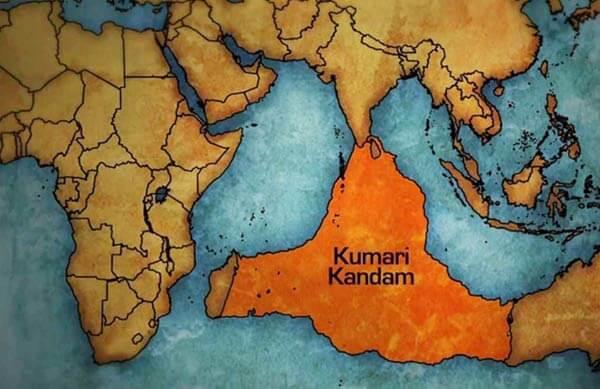
    Lemuria came to be identified as Kumari Kandam, the ancestral homeland of the Tamils, lost to the ravaging ocean in the distant past, due to what is called “Kadal Kol” in Tamil.

    The concept of the lost land of Lemuria hitherto a talking point in the west finds a new focus and interest in the study of the origins of Tamil Civilisation at the beginning of the 20th century. This was a direct result of the new consciousness of the ethnic and linguistic identity that emerged in Tamil speaking regions of South India. By the Tamil enthuse Lemuria came to be recast as the birthplace of the Tamil civilization. It came to be identified as Kumari Kandam, the ancestral homeland of the Tamils, lost to the ravaging ocean in the distant past, due to what is called “Kadal Kol” in Tamil.

    Tamil Nadu Government, during January 1981 at the Fifth International Conference of Tamil Studies held in Madurai, screened a documentary named “Kumari Kandam” both in Tamil and English. The documentary, produced with the financial support of the Tamil Nadu Government,  traced the roots of Tamil, its literature and culture, to the very beginning of time in Lemuria otherwise known as Kumari Kandam in Tamil. In this documentary, the Paleo history of the world is anchored around Tamil land and language. Thus Sclater’s[1] lost land of Lemuria was re-established in the timeless collective consciousness as a catastrophic loss of prelapsarian Tamil past. Even earlier to this, in 1879 Geological Survey of India brought out in the manual of GRGl, a discussion on the Mesozoic land bridge between Southern India and Africa. Dr.D.N. Wadia, a famed Professor of Geology, mentioned in 1990 “The evidence from which the above conclusion regarding an Indo-African land connection is drawn, is so strong and so many-sided that the differences of opinion that exist among geologists appertain to the main conclusion being accepted as one of the settled facts in the geography of this part of the world.[2]

    E.M. Forster in his famed novel ” A Passage to India “ (1984) begins his stunning stanza line “The Ganges, though flowing from the foot of Vishnu through, Siva’s hair, is not an ancient stream. Geology, looking further than religion, knows of a time when neither the river nor the Himalayas that nourished it existed, and an ocean flowed over the holy places of Hindustan. The mountains rose, their debris silted up the ocean, the gods took their seats on them and contrived the river, and the India we call immemorial came into being. But India is far older than anything in the world”.[3]

    In the ethnology chapter of the Manual, Maclean brought the findings of Ernest Haeckel about Lemuria as a primeval home of man. Maclean also draws a further conclusion from the German Biologist’s theory of the origin of various traces of mankind on the submerged Lemuria continent and reiterated that it was the primaeval home of the ancestors of India and Ceylon.

    Thus the fabled Kumari Kandam, which was based on Tamil Literary tradition, so far can receive immediate credibility through western studies. The foundation for this claim was laid by Charles D. Maclean Book “The Manual of the Administration of the Madras Presidency” published in 1835” Mr Maclean was an Officer of Indian Civil Services. In the ethnology chapter of the Manual, Maclean brought the findings of Ernest Haeckel about Lemuria as a primeval home of man. Maclean also draws a further conclusion from the German Biologist’s theory of the origin of various traces of mankind on the submerged Lemuria continent and reiterated that it was the primaeval home of the ancestors of India and Ceylon.[4] He suggested that Southern India was once the passage ground by which the ancient progenitors of northern and Mediterranean races proceeded to the parts of the globe which they now inhabit from Lemuria.[5]

    However, there is a distinct difference in perception of the Lemuria inhabitants from the point of view of Western Scholars and the Tamil enthuse. According to Western Scholars, the primitive inhabitants of Lemuria are barely human and do not represent the trace of civilization. However, the Tamil scholars hold Lemuria or Kumari Kantam as the birthplace of the Tamil Language and cradle of Tamil Civilisation. The antiquity of the Tamil language got a boost with the publication of Campbell’s Book “The competitive grammar of Dravidian Langauge”. J. Nellai swami Pillai wrote in the journal “The Light of Truth” or “Siddantha Deepika” that if you can believe in the tradition of there having been a vast continent south of Cape Comorin, all humanity and civilization flowed east and west and north, then there can be nothing strange in our regarding the Tamilians as the remnants of a pre-diluvian race. Even the existing works in Tamil speak of three separate floods which completely swamped the extreme southern shores and carried off with them all its literary treasures of ages.[6]

    Nella Swami Pillai gives a cautious conclusion that his theory stands on no serious historical or scientific evidence. The same was enthusiastically taken up fully by a well-known Tamil scholar Maraimalai Adigal.

    Though the name Lemuria came into the Tamil world only in 1903, it started gaining significance among the Tamil populous. Shri V.G.Suryanarayana Sastri started using the name Kumarinadu in his book “Tamilmoliyin varalaru. Thiru T.V.Kalyanasundaram the famous Congress Nationlist, and a noted Tamil scholar wrote emphatically that the Lemuria of “Western Scholars” like Ernst Haeckel and Scott Elliot was none other than the Kumarinadu of Tamil literature”.[7]

    The very name Kumari is suggestive of the pristine chastity and everlasting youth of the Tamil land. Later the legends linked the Devi Temple at Kanyakumari to Kumari Kantam or Kumar Nadu. The Kumari Kantam as mentioned in the old Tamil classics, has no reference to the Mesozoic continent of the Indian ocean. There is no reference to the old boundaries of Asiatic tablelands. The Tamil literature speaks of them as the original inhabitants of the great territory opened by two seas on the East and West, by Venkata hills and submerged rivers Pakruli and Kumari on the South.[8] Scholars like Somasundara Bharathi and others also invented hackers’ concept of Lemuria being the cradle of mankind, which implies that the ancient Tamil region is the birthplace of human beings and the Tamils were the first humans.

    Kumari Kantam was having a breadth of 700 kavatam south of Cape Cameron containing 49 principalities, 2 rivers called Pakruli and Kumari flowed there and it also had a hill called Kumari Koodu. The major cities in Kumari Kantam were Thenmadurai and Kapatapuram.

    The features of Kumari Kantam were referred to by Adiyarku Nallar, the commenter of Silapathikaram. Kumari Kantam was having a breadth of 700 kavatam south of Cape Cameron containing 49 principalities, 2 rivers called Pakruli and Kumari flowed there and it also had a hill called Kumari Koodu. The major cities in Kumari Kantam were Thenmadurai and Kapatapuram. This is also referred to in Tholkappia Orrai of Ilam Pooranar Nachinarkku Iniyan Perasiriyar.

    The Tamil Scholars, V.G. Suryanaryana Sastri and Abraham Pandithar lament the loss of works such as Mudunarai, Mudukurugu, etc, which had been swallowed by the ocean. These are derived from the fact that several poems in the Sangam anthology of later age refer to oceanic threat and consequent loss of lands and lives.

    The Tamil Scholar K.Anna Poorni delineates the extent of Kumari Kantam as she concludes in Tamilagham “ Today, the Tamilnadu that we inhabit consists of 12 districts within its limits. A few centuries ago. Cranach and a part of the Telugu land were part of Tamilnadu. Some thousands of years ago, the northern limit of Tamilnadu extended to the Vindhya mountain and the southern limit extended 700 Kavatam to the south of Cape Kumari which included regions such as Panainatu, mountains such as Kumari Kotu and Mani Malai, cities such as Muttur and Kapatapuram and rivers such as Pahruli. All these were seized by the ocean, so say scholars. That today’s the Indian Ocean was once upon a time a vast landmass and that that is where the man first appears has been stated by several scholars such as Ernst Haeckel and Scott Elliot in their books, History of Creation and Lost Lemuria. The landmass called Lemuria is what Tamilians call Kumarinadu. That which is remaining after this ancient landmass was seized by the ocean is the Tamil Motherland in which we reside today with pride.


    References

    [1] Philip Lutley Sclater was a zoologist and naturalist who studied extensively the presence of fauna and other species in different regions. He found that more than 30 species of Lemur monkeys inhabited Madagascar while they were hardly to be found in Africa but were seen in lesser number of species in India. Explaining the anomalies of the Mammal fauna of Madagascar, Sclater propounded that the Lemurs must have inhabited a lost continent in the Indian Ocean. Termed ‘Lemuria, this continent must have extended across the Indian Ocean and the Indian Peninsula to the further side of the Bay of Bengal and over the great islands of the Indian Archipelago. David Bressan, ‘A Geologists’ Dream: The lost continent of Lemuria’ in www.blogs.thescientificamerican.com

    [2] Wadia D.N. 1919, Geology of India for students, London: Macmillan – 1939, Geology of India, 2nd ed. London: Macmillan.

    [3] E.M.Forster, “A passage to India”: Harcourt Brace, New York 1984, pp 135-136.

    [4] Maclean Charles. D. “The Manual of the Administration of the Madras Presidency”, Vol.I, Asian Educational Publication, pp-33-43.

    [5] Ibid 111.

    [6] Nella Swami Pillai. J, “Ancient Tamil Civilisation in the light of truth” or Siddhanta Deepika. No. 5, pp 109-113.

    [7] T.V.Kalyanasundaram, “Indiyavum viduthalaiyum”, Charu Printing Press, Madras, P 106.

    [8] Sesha Iyengar K.G. Chera King of the Sangam Period, 1937, pp 658.

  • To Become Atmanirbhar, Bharat Needs Strong R&D

    To Become Atmanirbhar, Bharat Needs Strong R&D

    India has gone full circle from Gandhi’s days of Swadeshi to Nehru’s vision of self-reliant India to New Economic Policies of indiscriminate opening of the economy to Atmanirbhar Bharat. In between lip service was paid to Swadeshi in 1998 but the government continue with the indiscriminate opening up of the economy. Even agriculture was not left untouched with the opening up of 1400 commodities after the Seattle round of negotiations in 1999.

    What is Atmanirbharta?

    What do we understand by atmanirbhar – is it at the narrow level of producing most things that we need ourselves or at the wider philosophical level? If the latter, it implies independence of thought and development of socially relevant knowledge. It could lead to an alternate vision of development and prosperity for the nation.

    In an open economy people will then buy the foreign produced cheaper goods. So, the more important aspect of atmanirbharta is the philosophical aspect.

    The idea of producing most things ourselves runs into a contradiction in a globalizing world which is premised on marketization. Most things are being produced cheaper and better somewhere else, including our cultural symbols such as gulal, diyas and ganesh statue. In an open economy people will then buy the foreign produced cheaper goods. So, the more important aspect of atmanirbharta is the philosophical aspect.

    Opening up the Economy

    In 1991, with the New Economic Policies we gave up the idea of ourselves producing most things that we need. Our global trade increased dramatically with the percentage of export plus import of goods and services in GDP rising from around 17% in 1991 to about 55.8% by 2013. In 2019 it is down to about 40%.

    With the evolution of Washington Consensus in the 1980s, based on the idea of marketization, the world started to integrate in the 1990s with all countries showing a sharp rise in trade to GDP ratio. China captured a large share of the world markets and built a huge trade surplus. Its foreign exchange reserves rose to over $3.5 trillion. This gave it enormous clout globally not only with developing countries but also with the developed countries.

    The idea of atmanirbharta or self-reliance underwent a change. It became a matter of global competition to gain market share globally. One imported more to export more. Growth was supposed to depend on this. South East Asia and China were given as examples of success of such openness and rapid improvement in the living standard of the population. China post-Mao successfully adopted such a strategy. It was a large economy so it could not even be said that India cannot do what Singapore can do.

    Globalization is all about development of technology and India has lagged behind in that.

    Lessons from China

    What are the lessons India can learn from China’s achievements in the last thirty years? Apart from the fact that it is an authoritarian state with a strong sense of nationalism, its advances in research are stupendous.

    China has invested huge sums in building a strong infrastructure and research base in Universities, Institutions and Industry. It has one of the highest investment and savings rate in the world at 44 per cent in 2019. India’s comparative figure for 2019 is around 30%. It has developed the 5G technology faster than others and is willing to provide it cheaper than its competitors. This is also the case with many other lines of production such as, electronics, pharmaceuticals, automobiles and toys. It has moved rapidly in various fields such as development of artificial intelligence and applications of internet for commerce and financial sectors.

    Globalization is all about development of technology and India has lagged behind in that.

    China has had the long term vision to develop this rapidly by investing heavily in Research and Development. After getting technology from foreign companies, it has advanced the same by mastering it. Unfortunately, India has not done so and has repeatedly imported the next level of technology.

    Need for strong R&D

    India’s investment in R&D has been minimal. The private sector has been investing little in technology development. And, the public sector has been hamstrung in technology development by lack of autonomy, bureaucratization and corruption.

    Global competitiveness requires rapid development of technology. It requires massive investment in both absorption and development of technology. Instead, India’s investment in R&D has been minimal. The private sector has been investing little in technology development. And, the public sector has been hamstrung in technology development by lack of autonomy, bureaucratization and corruption.

    Research and Development require autonomy for researchers and a long term vision. Of course resources are also required but autonomy and vision are crucial and these have been weak in India. The same Indian researchers are able to do well in foreign lands but when in India they are not able to deliver. Our research establishment are rather feudal in approach and work within rigid hierarchies so that often talent gets suppressed.

    a culture of promoting independent and critical thinking is largely missing and that reacts back on research and generation of new ideas.

    Universities are the places where autonomy is greater and a long term vision can flourish away from the immediate profit motive. But unfortunately most of our universities are also bureaucratized and do not give autonomy to the academics. The authorities largely with bureaucratized and feudal mindset see independent thinking as a threat to themselves and, therefore, put up road blocks in the path of the independent thinkers thereby frustrating them and making their functioning difficult. Often the independent minded are seen as trouble makers and a challenge to the domination of the authorities. This is true not only in social sciences but also in the case of sciences in most universities. Thus, a culture of promoting independent and critical thinking is largely missing and that reacts back on research and generation of new ideas.

    Imperatives of Strengthening R&D

    Atmanirbharta in the present day world does not imply closing the economy but having the strength to face the challenge from other nations. This has to be based on a long term vision and cannot be achieved in the short run or by ad hoc measures.

    It requires high quality education right from the school stage. Thus, the education budget has to be expanded and teaching paid much higher attention than given at present. The status of teachers has to be enhanced so that talented people come in to academia.

    The world has been globalizing for thousands of years with trade and exchange of knowledge across nations and across continents. But earlier it was a slow two way process. Colonization turned into a one way process with western knowledge and thought establishing its hegemony globally and more so in India. That killed the internal dynamism of Indian society. It reinforced feudalism in India and decimated the quest for socially relevant knowledge generation.

    There has to be a continuum in knowledge generation but with an Indian perspective. India has to have the self-confidence that it can move ahead without denying the last few hundred years. Denial is only a sign of weakness.

    As Gandhi suggested, there is need for Indian modernity. Achieving that is crucial. Can it be based on denying what has happened over the last 250 years and going to what existed prior to that? Such a gap would undermine our understanding of social developments in India. That would be a recipe for repeating our mistakes. There has to be a continuum in knowledge generation but with an Indian perspective. India has to have the self-confidence that it can move ahead without denying the last few hundred years. Denial is only a sign of weakness.

    Denial would prevent us from understanding the nature of globalization we are undergoing and therefore we would not be able to work out any correctives that are needed. It would lead to much confusion in society. For instance, we would not be able to understand why consumerism is sweeping the world, including the poor in India or why our research lacks dynamism. In brief, Atmanirbharta requires India to move with self-confidence and not be in denial.


  • History – Thailand’s Golden Buddha

    History – Thailand’s Golden Buddha

    In the month of May 2007 I was invited to speak at the Mahidol University of Bangkok during the SSEASR Conference. I gave a talk on Yogachara Buddhism there. During this occasion, I had the opportunity to visit various Buddhist temples at Bangkok. They include the magnificent ones like Emerald Buddha, Golden Buddha, Buddha in his Maha nirvana time etc. It is very interesting to note that in the Sanctum Sanctorum of all Buddha temples, while the right side wall is covered with pictures depicting instances in Buddha’s life, the left side has paintings exclusively from Ramayana. For a Thai devotee, Hinduism is as important as Mahayana Buddhism.

    During the visit of one of the temple, I learnt this great truth about ignorance obscuring Reality.

    One of these famous temples has a Buddha icon nearly 17 feet tall, which is known till the beginning of 20th century as “Terracotta Buddha temple” . The temple was established in the 13th century with its huge icon of Buddha, for several centuries it was worshipped by the devotees as “Terracotta Buddha”. One day the authorities decided to shift the Terracotta Buddha image to a place several kilometers away, probably to do some repairs to the temple. They put the Terracotta Buddha on a truck and were moving it. When they were half way through, a heavy downpour started. The rain was so heavy that the clay image of Buddha started dissolving. They tried to protect the image with tarpaulins and umbrellas, but to no effect. There was a very heavy wind which blew away the tarpaulins and umbrellas. Due to the heavy rain, the Buddha icon in clay was dissolving fast. The devotees were grief-stricken. They were wondering whether it would have been wiser to have left the temple un-repaired rather than allowing the centuries old terracotta Buddha icon to get dissolved in the heavy downpour.


    Presto! A wonderful thing was happening. As the clay was dissolving, from within the clay was emerging a golden Buddha idol! as the idol there was of clay. After a short while all the clay, which was covering the idol got completely dissolved. The people were witnessing the presence of a resplendent “Golden Buddha” appearing before them in all its grandeur.

    What really happened? It was really a golden Buddha at the time of its installation in the 13th century. After some time Thailand was experiencing foreign invasions. Fearing that the invaders would take away the golden image, which was 5.5 tons of solid gold, the devotees covered the image with clay. Thinking that it was only a Terracotta Buddha, the invaders left it untouched. That generation knowing that it was a golden Buddha inside the clay, worshipped Buddha in that form. As many years passed by, the subsequent generations were not aware of this fact. They truly believed in what they saw externally and worshipped it as a Terracotta Buddha only. Thus their minds were conditioned by externalities. Once the clay dissolved what is truly inside came out with all its effulgence. It is today worshipped as the golden Buddha in Bangkok.

    It is happening to all of us everyday, we assume ourselves to be only a body-mind-intellect complex and nothing beyond it. We are conditioned by our awareness of our body, our thinking process and our analysis of the phenomena. These are only externalities within each one of us. It is only a clay that surrounds the wonderful Immanence within us. Within each one of us is the golden Buddha, the great immanent Lord who is also transcendent, he is the great Shiva, who is constantly performing his cosmic dance. In our hearts we not aware of it as our minds are conditioned by what we see, do and think. It is like the Thais seeing only the clay image and concluding it as only terracotta Buddha. As the rain dissolved the clay, the golden icon which is the true-one inside is revealed. Likewise when the spiritual sadhaha and devotion dissolves our mental conditioning, the Lord within ourselves is also revealed. This is the lesson we learn from the Golden Buddha temple.

    The same idea is beautifully explained in Thirumoolar’s Thirumantiram. A sculptor has carved out a beautiful elephant from a block of wood. When you see it as an elephant, you do not see the underlying reality of the wood. When you will be able to see the substratum, the underlying reality of the wood, with which all the objects of carving are made, you do not see the carved elephant; you see the substratum of the wood. Likewise, the ignorance enveloping our minds obscure the ultimate reality within us, when we are graded by the body-mind-intellect complex. When the revelation comes to us through god’s grace and gurus’ teachings coupled with our devotion to Him, the conditioning disappears. The phenomena abide in the ultimate. We experience the Divinity within us.

    Even in the area of management, the story of Golden Buddha has a great relevance. A competent Manager, with a penetrating mind, should be able to see what is the reality hidden in the numerous external information. The external covering only obscures the truth, which you will be able to get through. Once you see the substratum, the ultimate truth is revealed.


    Image Credit: Wikimedia Commons

  • Performance-Based Pay for Teachers: A viable solution for Schools in India’s Rural Sector?

    Performance-Based Pay for Teachers: A viable solution for Schools in India’s Rural Sector?

    Over the last two decades, India’s education priorities have changed substantially. From a major focus on enrolment ratios and reducing drop-out rates, the priority is now on learning and skill outcomes and employability after education, thus stressing the importance of the development of ‘Human Capital’ for the country. The New Education Policy (2020)focuses majorly on this aspect of education, set in tune with the SDG4 of the United Nations Sustainable Development Goals that India adopted in 2015.  The SDG4 seeks to ‘Ensure inclusive and equitable quality education and promote lifelong learning opportunities for all’, which forms a top priority in the 2030 Global Human Development agenda.

    While inequality between rural and urban schooling is vast and the learning outcome levels of students from such schools are dismal, and there is a need for reform in rural education policies, literature shows that simply adding resources and ‘Best Practices’ including comprehensive assessments, detailed ratings, and customised improvement plans have no proven impact on student learning

    Yet, things are gloomy for India in terms of education. According to ASER 2019 National Findings, while more than 90% of young children are enrolled in some type of educational institution, a huge proportion of them are unable to perform basic numeracy and early language.  Children from less advantaged homes are the worst affected. While inequality between rural and urban schooling is vast and the learning outcome levels of students from such schools are dismal, and there is a need for reform in rural education policies, literature shows that simply adding resources and ‘Best Practices’ including comprehensive assessments, detailed ratings, and customised improvement plans have no proven impact on student learning (K. Muralidharan, et al, 2020), (Pradhan et al. 2011). Evidence also shows that the right mix of teaching tools, pedagogy, and design can bring about an effective blended learning environment for students. ( M.J. Kintu, et al, 2017).

    But why are policies not getting implemented efficiently? The heart of the whole problem seems to be the poor delivery of teachers, especially public school teachers, who taught less, are less qualified, and deliver dismal outcomes. While on the other hand, evidence (E.A. Hanushek, et al., 2012) also highlights the importance of ‘Teachers’ in delivering better outcomes, and consequently students attend college and earn some revenue. Thus, the only viable solution to better rural education is the betterment of teacher quality.

    Teacher Pay and Job Satisfaction

    Teacher absenteeism and lack of job satisfaction among the teachers have been the most discussed agendas while analysing dismal student performances in the rural areas, especially those from public schools. Teachers’ pay is the major chunk of all expenditure made on education in India. Teachers’ salaries make up around 80% of total non-capital expenditure on education. Around 50% of them get paid regularly despite their irregular attendance and lack of teaching or even deserting schools forever.  While pay for teachers might seem like the right way to nudge them towards delivering better outcomes, that is certainly not the case with public schooling in India.

    The dismal performance of Public-School teachers, even after a handsome pay can be related to their satisfaction from job security. Research shows that Public School teachers who report high job satisfaction are more likely to not be in class, and thus there can be inferred a negative correlation between the pay and satisfaction a teacher reports and the likeness of him/her to attend school, and even if attending school, to teach or not teach. Increasing teacher pay, in this case, might seem absurd but it is primarily due to a lack of accountability. But evidence also shows an increase in teacher performance, and incentives in pay tend to be more effective when accountability is well addressed.

    The Public-Private Dichotomy

    While financial incentives seem like a good gimmick to increase teacher performance, and in-turn student output, things yet seem gloomy in the public education system. Private School teachers in fact overwork and are underpaid, according to reports. Though learning and teaching outcomes are far better in the private education scenario, Public School teachers are the ones that enjoy the most benefit out of the rest.

    Teacher pay in Public Schools across the country is higher than that of teachers from private schools. According to the Seventh Pay Commission, the basic salary of primary and high school teachers is between Rs. 29,900 and Rs. 100,000 with additional grade pay. While the teachers in various levels in Public Schools get paid their salary according to the scale, this is rarely the case with private school teachers. According to reports, 85% of private schools in Delhi don’t pay teachers as per the pay scale laid down by the commission. Non- Implementation of the seventh-pay commission recommendations, lack of balance between workload, outcome levels and pay disparity with the government or public schools haunt private school teachers, despite the various recommendations and policy amendments to correct the inequality.

    Long-standing debates on whether the ‘Minimum Wage’ rule applies to private schools or not continue to remain ambiguous. In the last decade, when private schools paid a pittance to their teachers, legislative wings have denied the availability of a ‘Minimum Wage’ system to teachers in Private Unaided Schools. Up until today, there’s no such legislation that specifies a salary structure for teachers employed in private schools, except for the non-teaching staff who have coverage under the ‘Minimum Wages Act’. Even if prevalent in certain states the ‘Minimum Wages Act’ is openly violated by schools. The Government of Kerala, in the year 2019 sought to bring legislation to ensure minimum wages for school teachers, which wasn’t very successful. Other states including Karnataka have stressed the importance of paying better salaries to the teachers, by fixing a stipulated minimum monthly salary for teaching and non-teaching staff, and this might bring in more burden to parents in the form of fees; several extra and co-curricular activities must be made optional for parents to be able to leverage their fee burden, alongside quality education to the children.

    While the private sector still stands as a model of performance-based pay, this is seen as a ubiquitous and powerful tool in the private sector. While teachers in public schools are already well paid, providing additional incentives would just weigh upon the already existing expenses on public education. This increased expenditure on teachers’ pay makes Public Schools more expensive than their private counterparts, with low teacher accountability. Interestingly, evidence shows that by implementing a performance-based policy, the government would have just saved under Rs. 2,000 Billion over the 25 years from 1987-2012.  This again brings us to the question of whether increased financial incentives to public school teachers are any good and feasible?

    Evidence on Performance-Based Pay

     A study by Barrera, O and Raju, D(2017) relating to the first three years of a randomised control trial of a government-administered pilot teacher performance pay program in Punjab and Pakistan proves yearly cash bonuses to teachers in a sample of 600 public primary schools with the lowest mean student exam scores is linked to an increase in schools’ average student exam scores, increase in school enrolment ratio and the level of student exam participation in the school. A long term study by K. Muralidharan (2012) shows that students who completed their primary school under the performance-based pay programme performed better than their peers in control schools by 0.54 standard deviation in Mathematics.

    However, interventions in the forms of performance pay had an impact neither on student performance nor on the teacher’s reported attitude or behaviour towards teaching and absenteeism. On the other hand, a study by Neal and Schanzenbach (2010) points out that performance-based pay might encourage ill practices such as cheating during exams, which doesn’t hold any good to both the entities. The cost-effectiveness of a performance-based pay model is studied by Muralidharan and Sundararaman(2011) and shows a relation between additional funds and performance-based pay.

    Pay Design and other Models

     The ‘Contract Teachers’ model can work well for public schools. In this Teachers employed for relatively shorter durations, bound by a contract that can be terminated easily, play an important role in extending education to an increased number of children in an affordable manner. Studies involving student learning in rural schools (Muralidharan and Sundararaman,2010) show that while contract teachers are relatively cheaper to acquire over the normal long-term teachers, their impact on students and their performance is comparatively better. While the evidence suggests that performance-based pay might be a difficult model to implement in the public education front, hiring ‘Contract Teachers’ might be the right way out. Recent trends emerging out of the pandemic suggests paying teachers based on the hours of work done. The pandemic disruption has given rise to online education but teaching online requires different skills. Additionally, paying teachers based on the number of hours they work on a day will also help in cutting costs and finances for the employer.

    Constraints in revenues and a need to increase student learning makes ‘Tenure-track for teachers’ a viable option for schools.

    On the other hand, an ideal model of performance-based pay would help in solving the basic problems and inequalities in the system. Constraints in revenues and a need to increase student learning makes ‘Tenure-track for teachers’ a viable option for schools. This model, largely in practice in the western universities, might just be what rural schools in India need. This model, somewhat similar to the ‘Performance Pay’ model, rewards teachers by extending their tenures based on their performance. Good on finances and learning, this model can be the next big thing in rural education, given the constraints in learning and teaching. On the contrary, the ‘Tenure-track’ model might only work in the presence of a good evaluation system to measure teacher and student performances. Given the state of public and rural education and evaluation in India, this might be daunting. Proper evaluation methods to measure and analyse teacher performance is imperative for this model to work in the country.

    A best-fit pay model, with proper tools to measure student performance alongside teacher’s accountability, would do well with teachers all over the country. Alongside, proper publicity of such a pay model would make people familiar with the options. A study by Leaver, et.al.,(2019) shows that the impact of such programmes is higher when it is well advertised and familiar with the ones falling in the bracket.

    Conclusion

     This finally brings us to the question of whether the performance-based pay model might be the best fit for schools in rural India, that are mostly run and maintained by states and district administrations. Performance-based pay, though proven in increasing student performance, also contains a major loophole. Teachers may resort to malpractices like – letting students cheat during exams to show better results and malpractices during evaluation. In Rural India, where proper systems to evaluate the performance of teachers is not in place, the Performance-based pay model may become counter-productive given the lack of accountability and implementation challenges.

    While performance-based pay models have earned good results in the developing nations alike, the remote corners of India might not be the best place for its implementation, until and unless the teachers and all the stakeholders are well-informed of its implementation and proper evaluation mechanism for both the teacher and the student. In India where most public schools are hampered by teachers’ absenteeism and dismal delivery, increasing the pay of the teachers would just result in increased risks of teachers staying at home, without actually resulting in any improvement in their commitment and work methodology. Besides, it may encourage malpractices to show improved performance of students.

    Making teachers accountable to their performance and delivery is the first step towards effective policy change.

    In conclusion, Performance-based pay models may not be a suitable model to increase teacher performance in public schools. Whereas, other methods, such as hiring contract teachers and tenure-tracking might work better in the long run, given a proper evaluation of teacher’s performance in schools. Making teachers accountable to their performance and delivery is the first step towards effective policy change. If proper mechanisms are in place, shifting to various effective models like – Tenure Tracking or Contract Teaching become easier and more effective.

    Image Credit: Poverty Action Lab
  • Comparing School Education in India and Singapore

    Comparing School Education in India and Singapore

    Introduction

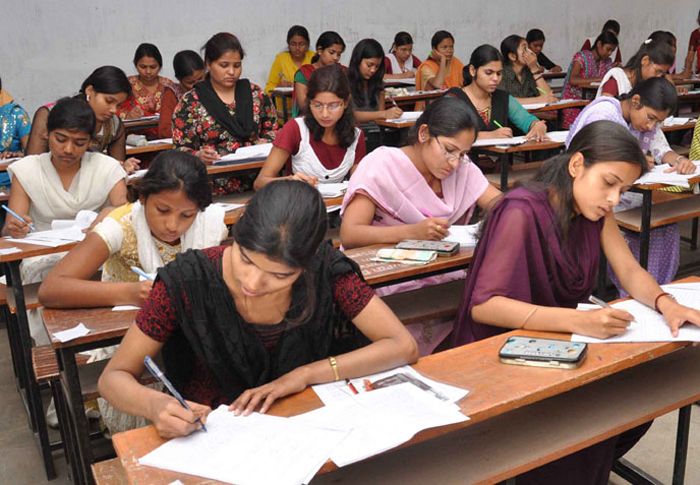
    The United Nations has recognised the right to education as a basic human right, and in most countries, education is compulsory up to a certain age. In India education is primarily provides education in India by private schools, which run independently of the government, and public schools administered and funded by the government at three levels; central, state and local. Under the Indian Constitution, education is a fundamental right to children aged 6 to 14, however, there is no law in place that makes education compulsory. India has a literacy rate of 74.04%, and according to the world bank, Indian schools face challenges in primary enrollment, quality of teachers and application-based learning. Comparatively, Singapore has a literacy rate of 98.3% where education is primarily in the public sector and is fully controlled by the government. Under the Laws of Singapore, every child needs to complete at least 6 years of education, not doing so is a punishable offence. Though the education system in Singapore can be competitive, it ensures every child is well rounded and balanced and can apply their learnings critically. Through this paper, I will explore the fundamental difference between the education system in India and Singapore.

    Singapore has evolved from a third world into a first world country within 10 years, and one of the main attributes to this rapid growth has been education. The Singapore education system is one of the most advanced systems in the world.

    Importance of Education in Development

    Singapore has evolved from a third world into a first world country within 10 years, and one of the main attributes to this rapid growth has been education. The Singapore education system is one of the most advanced systems in the world. The country consistently ranks at the top of the OECD’s Programme for International Student Assessment (PISA), a triennial test of 15-year-olds in dozens of countries, in the main three categories of maths, reading and science. Singapore also has very strict penalties for breaking the law. According to the Compulsory Education Act of 2000, all Singaporean students must attend 6 years of compulsory education, and it imposes a $5000 fine per year for failure to do so. According to the law, all local Singaporean students must attend schools run by the government to maintain equal education opportunities for all. Private schools in Singapore are predominantly for foreign students, while government schools are for the citizens, this incentivises the government to invest in public schools, which improves the overall quality of education.

    According to the Compulsory Education Act of 2000, all Singaporean students must attend 6 years of compulsory education, and it imposes a $5000 fine per year for failure to do so.

    India has a child labour rate of 3.9%, and yet there is no law in place that makes education compulsory. The Indian parliament passed the Right of Children to Free and Compulsory Education Act in 2009 (9 years after Singapore), wherein it’s a constitutional right for all children to attend school from ages 6 to 14, however, is not a law with penalties if not complied to. The lack of enforcement of education is one of the principal reasons India’s literacy rate, especially among women (65.5%), is so low. Local students can attend either public or private schools, however, government schools are usually considered predominantly for marginalized sections of the community. Hence, there is a lack of funding for public schools, which lacks in both quantity and quality. In 2018/19 India spent roughly 2% of its total GDP on education, which was US $72 billion, from a GDP of US $2.7 trillion, additionally one must take into consideration the high levels of corruption experienced in India. Comparatively, Singapore spent US $13 billion, which was 3.2% of its total GDP of US $372 billion, mostly spent on infrastructure development and updating the curriculum.


    Teachers: Quality, Training, Accountability, and Creativity

    The process of hiring teachers varies drastically in the two countries. Singapore has many regulations to hire teachers, for example, to become a primary school teacher one needs to be a graduate, with additional special teaching training given by the government. Subsequently, the government monitors their performances closely and continuously. The government also ensures that the teacher-student ratio is better than 1:20, to provide customised care and attention to each student. Teachers have strict rules on behaviour and etiquette, from the language they use to the style of teaching they adopt, the government monitors all teacher-student interactions. It also provides regular training to ensure they learn new skills to share with their students. A study by the Singapore Management University claims that the quality of teaching and teacher’s pay has a direct correlation. Thus, school teachers in Singapore are well paid where the average annual salary of a teacher is anywhere between US $31,539  to US $56,543. According to Imperial college, paying teachers more means more educated and talented people would want to become teachers, which improves the quality of education.

    According to the Indian NGO, Child’s Rights and You (CRY), the checks and surveys by the government to monitor the quality of education are very irregular, and teachers rarely face any consequences.

     India has no special requirements for becoming a government school teacher apart from having a graduate degree. The average teacher to student ratio in Indian government schools is 1:40, which is significantly higher than the recommended ratio suggested by the UN. According to the UN, the maximum teacher to pupil ratio should be around 1:30, to give each child the care and attention they need. According to the Indian NGO, Child’s Rights and You (CRY), the checks and surveys by the government to monitor the quality of education are very irregular, and teachers rarely face any consequences. The cases of child abuse by teachers i.e. hitting or sexual assault are reducing but the numbers are still quite high, because of lack of teacher accountability. This proves to be a major setback for government schools, since one of the principal reasons families do not send their kids to public schools is the fear of child abuse. Last, the average yearly salary of a teacher is anywhere between US $5,400 to US $7440, which is considerably low and can lead to teachers being frustrated and uninterested in the job. According to ‘The Hindu’, teachers being underpaid is one of the leading factors to the lack of quality in public education in India. Through this, it is clear why Singapore has a more advanced education system, not only is it well funded but also well monitored, the government ensures quality education for each child by investing in good teachers.

    Curriculum and Pedagogy

    According to Child physiology research by the University of California, which is more important than the curriculum itself, is the methods of teaching and the spirit in which the teaching is given. Singapore has moulded its curriculum to allow students to explore their interests through research-based projects and activities, rather than a strict textbook method of teaching. According to the Psychology department in UCL, project and research-based learning stimulates cognitive skills and boosts creativity and the ability for children to innovate, which is a much more effective way of education rather than traditional textbook-based learning. The government invests largely in labs and other technology to enable application-based learning to develop analytical skills in students, which is then paired with classroom theory-based learning. Singapore achieves application-based learning firstly through a flexible yet focused curriculum, wherein students may choose matters that interest them and are given a range of options on how they want to be tested. Second, through Pedagogy, which is most commonly understood as the approach to teaching, and to the theory and practice of learning, and how this process influences, and is influenced by the social, political and psychological development of learners. Examples would be where students and teachers produce work and learning together. The teacher becomes more of a mentor or coach helping students achieve the learning goal. Students also work together and use each other’s skills and expertise to accomplish a set of learning tasks. This enables students to feel like they are more involved in their education, which makes them more interested and invested in what they are learning and hence is one of the most effective methods of education. Lastly, by prioritising quality over quantity, which means that education is pedagogically and developmentally sound and educates the student in becoming an active and productive member of society. Quality education is not one that is measured purely by a test score or by how many words per minute a 5-year-old can read, but rather how many words it can understand. It involves critical thinking, learning to work with others independently and learning to face the realities of life applying the knowledge learnt in their academic life. Singapore does not require its students to take many subjects and activities, but rather focuses on a high standard of teaching and engagement, thus creating a more productive society.

    The fundamental difference between the Singaporean and Indian education system is creativity, while the creativity of children is barely given any importance in the Indian education system, Singapore cultivates the creative ability of its students.

    However, India has a system more focused on theory-based learning, rather than using the practical application. According to the Center for Child Research Singapore, the education system in India does not prepare most young adults for employability because of the lack of ability to critically think and solve unfamiliar problems. The system gives a disproportionate amount of importance to rote learning rather than creativity. The Indian education system hasn’t been updated in several years and thus seems extremely backward. The fundamental difference between the Singaporean and Indian education system is creativity, while the creativity of children is barely given any importance in the Indian education system, Singapore cultivates the creative ability of its students. According to former Singaporean Prime minister, Mr Lee Kuan Yew, Singapore could transition from the third world to a first world country within 10 years because of creativity. This creativity shows in new businesses, in groundbreaking policies, and even in city planning. Singapore is constantly innovating and adapting to better their standards of living, and research-based learning is extremely essential to produce an innovative community. The Indian system does not pay adequate attention to pedagogy, since there is a very rigid curriculum set in place with little room for students to mould according to their interests. Lastly, there is a lack of investment for technology-based learning which can help improve application and research-based teaching. For example, Singapore ensures laptops are available in all classrooms for research, they also use a cloud computing system with all the assignments and textbooks available for students to access even if they are unable to attend school.

    Education for Children with Special Needs

    Singapore has also invested in a speech to text option for blind students and ones who have any learning disabilities such as ADHD. Through these investments, every student has an equal opportunity to learn.

    Students with special needs often need more care and attention than the average student. Singapore ensures every school has a set of teachers specially trained to assist children with learning disabilities. However, Singapore still does not have enough public schools specialised for special needs students. According to the World Bank, 71% of children with autism still attend mainstream schools. Research has shown that mainstream schools are frequently neither fully educated nor equipped to deal with the needs of an autistic child and give them the support. There are over 2,500 schools for children with special needs in India some are run or supported by the government, while many are run by registered NGOs or private institutions. However, there are only 20 special needs schools in Singapore which offer different programmes that cater to distinct disability groups of children. However, Singapore has increased investment in building more schools and opportunities in the workplace for people with special needs or any learning disabilities.

    Conclusion

    In conclusion, one can argue that it is unfair to compare a city (Singapore) to a country like India, since Singapore is way smaller and has a higher GDP per capita. However, the comparison is mainly based on the methods of education. Through this paper, we understood the difference in teaching methods, which India could easily adopt by updating the curriculum. By updating the Indian system to enable kids to be more creative and research-oriented, India will produce generations of critical thinking and productive workforce that would eventually boost the Indian economy and the nation.

    Feature Image Credit: akshayapatrafoundation from pixabay
    Image Credit: A Singapore classroom  www.todayonline.com

  • Sanitation & Hygiene Concerns In Government Schools In Tamilnadu: Need For Digital Intervention

    Sanitation & Hygiene Concerns In Government Schools In Tamilnadu: Need For Digital Intervention

    Ensuring that there are proper health and hygiene facilities and awareness for girls at the school level is an extremely important building block for quality education.

    Introduction

    Achieving quality education at school level is a dynamic process that needs to revise the elements according to the needs of the social setting. One such element is a policy that promises an education system to promote gender equality from the grassroots. The problem needs an intervention with an enhanced infrastructure for maintaining sanitation and hygiene for girl students and a holistic understanding of gender issues through awareness that leads to organic social change. The state, undoubtedly, is responsible to ensure quality education and resolve the gaps in education using innovative methods. Tamil Nadu is one of the best performing states as far as literacy rate is concerned. However, realistic social barriers still exist that need intervention and customized strategy. According to the 2011 census, Tamil Nadu stood third after Kerala and Maharashtra. The male literacy rate was around 87% and the female literacy rate was around 73%.
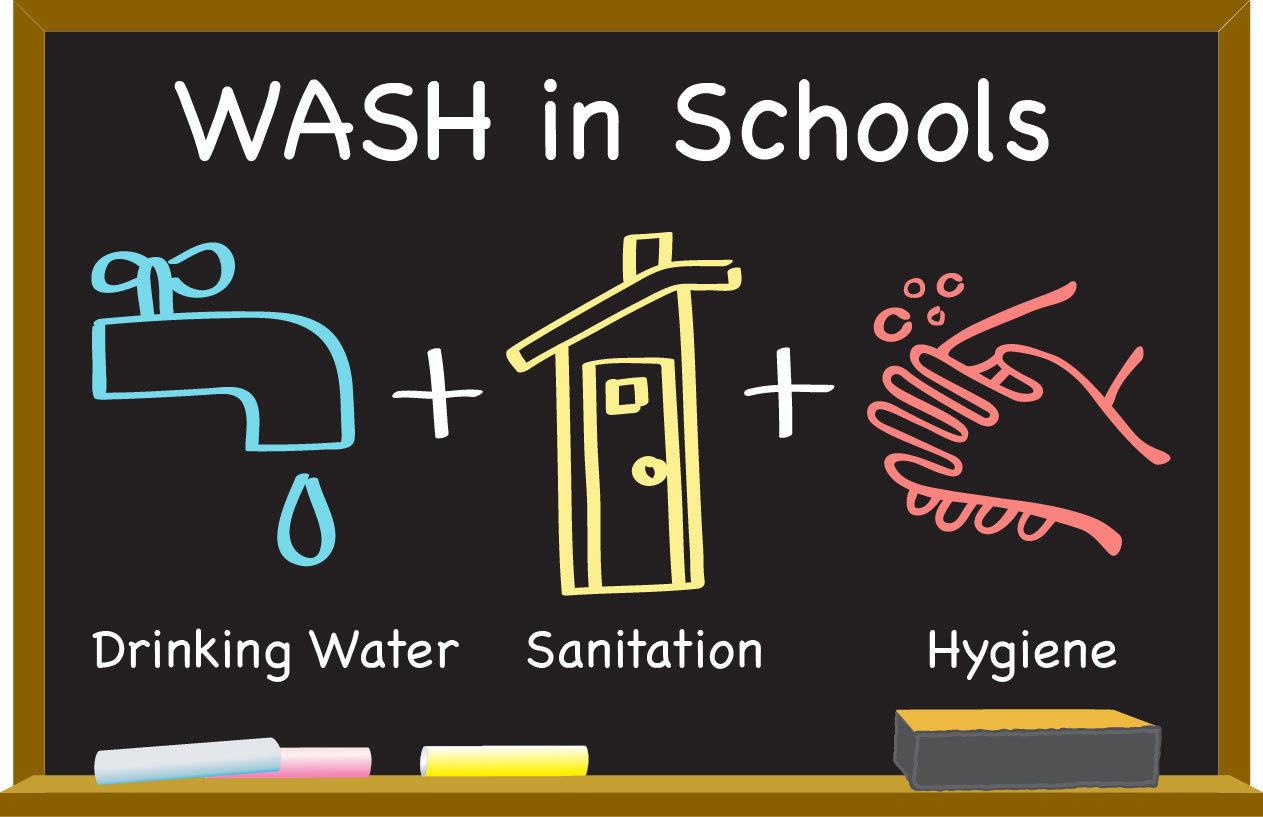
    This article attempts to decode the most important factors,sanitation and hygiene, in ensuring ‘quality’ of education for girls. This particular aspect encompasses three main Sustainable Development Goals (SDG) of the UN; Quality Education, Gender Equality and Water & Sanitation. The last goal of providing access to clean water, sanitation and hygiene (WASH) particularly in rural areas is the means to achieve the former two goals of gender equality and quality education.

    Need to prioritize WASH for quality education

    Tamil Nadu employs more than 50% of its women in remunerative labour. Girls tend to drop out of schools either because of customary practices or because of the demand for labour. In some cases The lack of awareness and knowledge on menstruation and menstrual practices are also major factors contributing to this drop out. Despite several initiatives and attempts at establishing proper sanitation and hygiene practices particularly in schools, most of these initiatives fail to gain attention across social barriers, especially those initiatives surrounding menstruation and their importance. This exposes the limitation of community-based initiatives and their impact. Specifically Water, Sanitation and Hygiene practices, commonly known as WASH. Tamil Nadu is estimated to have 6.1 million adolescent girls and yet around 7837 schools have either dysfunctional toilets or no toilet facilities at all. The implication of such poor infrastructure is an adverse impact on learning and results in drop out from schools in most of the cases. Ensuring that there are proper health and hygiene facilities and awareness for girls at the school level is an extremely important building block for quality education.

    The lack of awareness and knowledge on menstruation and menstrual practices are also major factors contributing to this drop out. Despite several initiatives and attempts at establishing proper sanitation and hygiene practices particularly in schools, most of these initiatives fail to gain attention across social barriers, especially those initiatives surrounding menstruation and their importance.

    Access to toilets and sanitation facilities is a privilege that only a few have access to particularly in rural areas where people practice open defecation owing to the lack of toilets. Tamil Nadu has performed brilliantly in this respect since the implementation of Swachh Bharat Abhiyan Scheme in 2014. Over 48 lakh toilets were built in rural areas since 2014, with Tamil Nadu becoming an open-defecation free state.
    The Government of India recognized the role played by sanitation and hygiene in ensuring that quality education is delivered. In 2014, the MHRD had launched the ‘Swachh Bharat Swachh Vidyalay’ initiative. The scheme was implemented to ensure that there were separate functional toilets for girls and boys. In addition to ensuring separate toilets, the scheme also focuses on maintaining a certain level of hygiene and sanitation. While it is not enough that this initiative has been implemented in schools across the country, it is also important that parents, teachers and children are aware of the same. Proper hygiene and sanitation does not end in school, it is imperative that this awareness is spread in local communities and villages as well. As a part of the scheme, government schools in rural and urban areas are eligible to nominate themselves for the ‘Swachh Vidyalay Puraskar’. This acts as an incentive for schools across the country to improve their WASH standards.

    Capitalizing the Digital Wave

    With Tamil Nadu’s rural internet penetration through mobile phones at 41.98%, there is a significant potential that can be tapped in the state’s ICT usage. While creating awareness is one side of the coin, spreading awareness is another. This is where the potential of ICT can be harnessed, in spreading awareness. The government of Tamil Nadu has made available textbooks, lessons and other educational material on their ‘DIKSHA’ portal which is essentially a YouTube channel. On this channel, students from different classes can access their study material. This could be one of the possible means through which awareness can be created across districts and villages on the importance of sanitation and hygiene.
    Some of the government schools in Tamil Nadu have demonstrated an exceptional WASH record, thereby proving the fact that if the administration is focused the results can be excellent as shown by Thiruvallur and Vellore districts. Schools in these districts have maintained excellent sanitation and hygiene standards and have been recipients of the SVP. The initiatives taken by these schools to spread awareness on the importance of sanitation and hygiene have largely been behaviour oriented. By involving parents and the larger community, these initiatives have been successful and effective as well. Community-based initiatives are to create and spread awareness on various social welfare schemes. Apart from creating awareness, such initiatives also tend to bring communities together. The implementation of the SBSV scheme has facilitated the use of ICT as well. While the integration of ICT in the process is a welcome change, there is a lack of clarity on what exactly it is being used for.

    Importance of awareness on Menstrual Hygiene

    It has been established that several initiatives were taken in the past and are being taken to improve ‘WASH’ practices in the country, particularly in schools to improve enrollment rates as well as reduce dropout rates. Educational institutions in the country, particularly schools have an inherent responsibility to educate adolescent girls on menstruation, talk about the changes it brings about in a girl’s body. A 2014 report by Dasra foundation posits that close to 23 million girls drop out of school annually due to a lack of awareness. 79% of girls and women in Tamil Nadu were not aware of menstrual hygiene and practices that are followed at the time of menstruation. Lack of awareness of menstrual hygiene and the practices that are required to be followed at the time of menstruation makes a girl/woman extremely susceptible to infections. This is largely attributed to the stigma that is created around menstruation and the notion that it is an ‘impure’ phenomena. A study conducted in 2015, in Padappai, points out that only 43.33% of girls were aware of menstruation when they experienced it the first time. The source of information in most of these cases was the mother while the teachers and schools had a very small part to play in the process. Therefore, a layer of stigma surrounding the issue is apparent that is far from being institutionalized. Institutionalizing the issue would lead to it being discussed in schools, which in turn would normalize it and break the stigma around it. There are a plethora of possibilities that ICT brings about. Schools could tap into this potential and make use of it to communicate effectively to their students. In rural India particularly, simply creating awareness and breaking the stigma around menstruation will not suffice. Often, this stigma is reinforced by women in the family. In order to move beyond this, schools must ensure that lessons on menstruation are conducted for both girls and boys alike. Not only does this induce awareness among boys but it also makes them more sensitive to the issue.

    A 2014 report by Dasra foundation posits that close to 23 million girls drop out of school annually due to a lack of awareness. 79% of girls and women in Tamil Nadu were not aware of menstrual hygiene and practices that are followed at the time of menstruation.

    Awareness through Digital Platform

    Tried and tested methods of spreading awareness in a community has generated results but is not enough. Improving sanitation and hygiene standards in learning institutions requires the participation of all the stakeholders involved in the process. While this may be an initial attempt at de-stigmatizing the issue, undoing centuries of discrimination and oppression requires a systemic approach. Tamil Nadu government’s ‘DIKSHA’ portal is a good place to start. In addition to developing online resources, there must also be some sort of portal that mandates uploading information related to the sanitation and hygiene measures that are being taken in schools. Additionally, it is important to use digital interventions to create awareness and reinforce the message in a timely manner. While infrastructure creation is a part of the goal, it is equally important to establish the need for it and educate people. This is where the digital intervention comes into the picture. One of the goals in Tamil Nadu’s Vision 2023 Project is to encourage PPP as a mechanism for infrastructure creation. This could be one of the potential means through which awareness is spread by introducing digital interventions in rural areas. It could either include installing a TV in Gram Panchayat offices which could display campaigns on the importance of sanitation and hygiene/menstrual hygiene, etc. With respect to creating awareness on menstrual hygiene which is a systemic issue because of the stigma attached to it – the solution needs to be systemic as well. For starters, creating conversation around menstruation is extremely important. Something called the ‘culture of silence’ exists in Kenya particularly in rural areas where girls refrain from speaking about menstruation and puberty. Identifying practices like this is a start when it comes to de-stigmatizing menstruation. While removing GST on sanitary napkins is one way to make the product more accessible, it is important to make people realize why there is a need for using one in the first place and the consequences of not using it. This brings us to the question of whether it is enough for the state to build infrastructure alone and if its responsibility ends there as opposed to also creating awareness on how to go about using the said infrastructure as well as educating people on its importance.

    Ensuring Effective Policies

    Some of the government schools in Tamil Nadu have demonstrated an exceptional WASH record, thereby proving the fact that if the administration is focused the results can be excellent as shown by Thiruvallur and Vellore districts. Schools in these districts have maintained excellent sanitation and hygiene standards and have been recipients of the SVP.

    Initiatives like the SBA, SBSV and SVP are focussed around creating infrastructure and incentivizing schools to implement hygiene practices. Sanitation happens to be a state subject, and each state faces its own challenges with respect to addressing the problem. For instance in a state like Tamil Nadu where there is decent infrastructure, the drop-out rate for girls is still on the higher side. A lack of awareness on menstrual hygiene has also contributed to the drop-out rates in the state. Evidence suggests that not all government schools in Tamil Nadu have toilets and the ones that have toilets, do not maintain them well. Perhaps now the state must implement initiatives that focus on capacity building and behavioural change in order to ensure that the results are more impactful and also long-lasting. The initiatives that the state implements in the future must focus on intrinsically motivating people to implement sanitation and hygiene practices in their lives. Apart from that, the state must also conduct follow-up workshops that engage with people and communities and teach them how to use toilets, etc. In addition, whenever a new initiative/scheme is launched, state governments must also make sure that there are bodies/committees in place in every district that happens to be a beneficiary of the scheme. As communication becomes easier and more efficient in the digital age, initiatives that are implemented in the future must focus on knowledge creation.

    References

    https://www.orfonline.org/expert-speak/gender-dimensions-of-school-closures-in-india-during-covid19-lessons-from-ebola-66643/https://poshan.outlookindia.com/story/poshan-news-strong-connect-between-sanitation-and-health/348492https://swachhindia.ndtv.com/23-million-women-drop-out-of-school-every-year-when-they-start-menstruating-in-india-17838/https://www.ncbi.nlm.nih.gov/pmc/articles/PMC6286883/http://sujal-swachhsangraha.gov.in/sites/default/files/Five%20schools-%20WASH%20in%20School%20-%20practices%2C%20Tamil%20Nadu-%20Clean%20school%20.pdfhttps://mhrd.gov.in/sites/upload_files/mhrd/files/upload_document/Swachh_Vidyalay_Puraskar_Guidelines.pdfhttps://www.researchgate.net/publication/294638502_Awareness_about_menstrual_hygiene_among_adolescent_girls_in_rural_area_of_Kancheepuram_district_-_Tamilnaduhttps://timesofindia.indiatimes.com/city/chennai/tn-second-in-rural-smartphone-use/articleshow/67291628.cmshttps://www.researchgate.net/publication/333561228_Availability_and_Utilization_of_Sanitation_Facilities_A_Micro_Study_from_Rural_Tamil_Naduhttps://swachhindia.ndtv.com/swachh-bharat-abhiyan-tamil-nadu-to-go-open-defecation-free-on-october-2-25278/#:~:text=Tamil%20Nadu’s%20Swachh%20Bharat%20Abhiyan%20Journey&text=The%20state%20has%20a%20total,declared%20free%20from%20open%20defecation.&text=Tamil%20Nadu%20has%20improved%20its,per%20cent%20in%20four%20years.&text=Over%2048%20lakh%20toilets%20(48,since%202014%20in%20rural%20areas.https://www.wsscc.org/2016/08/10/wsscc-menstrual-hygiene-management-training-kenya-breaks-silence-menstruation/

  • Sanitation & Hygiene Concerns in Government Schools in Tamilnadu: Need for Digital Intervention

    Sanitation & Hygiene Concerns in Government Schools in Tamilnadu: Need for Digital Intervention

    Ensuring that there are proper health and hygiene facilities and awareness for girls at the school level is an extremely important building block for quality education. 

    Introduction

    Achieving quality education at school level is a dynamic process that needs to revise the elements according to the needs of the social setting. One such element is a  policy that promises an education system to promote gender equality from the grassroots. The problem needs an intervention with an enhanced infrastructure for maintaining sanitation and hygiene for girl students and a holistic understanding of gender issues through awareness that leads to organic social change. The state, undoubtedly, is responsible to ensure quality education and resolve the gaps in education using innovative methods. Tamil Nadu is one of the best performing states as far as literacy rate is concerned. However, realistic social barriers still exist that need intervention and customized strategy. According to the 2011 census, Tamil Nadu stood third after Kerala and Maharashtra. The male literacy rate was around 87% and the female literacy rate was around 73%. 

    This article attempts to decode the most important factors,sanitation and hygiene, in ensuring ‘quality’ of education for girls. This particular aspect encompasses three main Sustainable Development Goals (SDG) of the UN; Quality Education, Gender Equality and Water & Sanitation. The last goal of providing access to clean water, sanitation and hygiene (WASH) particularly in rural areas is the means to achieve the former two goals of gender equality and quality education. 

    Need to prioritize WASH for quality education

    Tamil Nadu employs more than 50% of its women in remunerative labour. Girls tend to drop out of schools either because of customary practices or because of the demand for labour. In some cases The lack of awareness and knowledge on menstruation and menstrual practices are also major factors contributing to this drop out. Despite several initiatives and attempts at establishing proper sanitation and hygiene practices particularly in schools, most of these initiatives fail to gain attention across social barriers, especially those initiatives surrounding menstruation and their importance. This exposes the limitation of community-based initiatives and their impact. Specifically Water, Sanitation and Hygiene practices, commonly known as WASH. Tamil Nadu is estimated to have 6.1 million adolescent girls and yet around 7837 schools have either dysfunctional toilets or no toilet facilities at all. The implication of such poor infrastructure is an adverse impact on learning and results in drop out from schools in most of the cases. Ensuring that there are proper health and hygiene facilities and awareness for girls at the school level is an extremely important building block for quality education. 

    The lack of awareness and knowledge on menstruation and menstrual practices are also major factors contributing to this drop out. Despite several initiatives and attempts at establishing proper sanitation and hygiene practices particularly in schools, most of these initiatives fail to gain attention across social barriers, especially those initiatives surrounding menstruation and their importance.

    Access to toilets and sanitation facilities is a privilege that only a few have access to particularly in rural areas where people practice open defecation owing to the lack of toilets. Tamil Nadu has performed brilliantly in this respect since the implementation of Swachh Bharat Abhiyan Scheme in 2014. Over 48 lakh toilets were built in rural areas since 2014, with Tamil Nadu becoming an open-defecation free state. 

    The Government of India recognized the role played by sanitation and hygiene in ensuring that quality education is delivered. In 2014, the MHRD had launched the ‘Swachh Bharat Swachh Vidyalay’ initiative. The scheme was implemented to ensure that there were separate functional toilets for girls and boys. In addition to ensuring separate toilets, the scheme also focuses on maintaining a certain level of hygiene and sanitation. While it is not enough that this initiative  has been implemented in schools across the country, it is also important that parents, teachers and children are aware of the same. Proper hygiene and sanitation does not end in school,  it is imperative that this awareness is spread in local communities and villages as well. As a part of the scheme, government schools in rural and urban areas are eligible to nominate themselves for the ‘Swachh Vidyalay Puraskar’. This acts as an incentive for schools across the country to improve their WASH standards. 

    Capitalizing the Digital Wave

    With Tamil Nadu’s rural internet penetration through mobile phones at 41.98%, there is a significant potential that can be tapped in the state’s ICT usage. While creating awareness is one side of the coin, spreading awareness is another. This is where the potential of ICT can be harnessed, in spreading awareness. The government of Tamil Nadu has made available textbooks, lessons and other educational material on their ‘DIKSHA’ portal which is essentially a YouTube channel. On this channel, students from different classes can access their study material. This could be one of the possible means through which awareness can be created across districts and villages on the importance of sanitation and hygiene. 

    Some of the government schools in Tamil Nadu have demonstrated an exceptional WASH record, thereby proving the fact that if the administration is focused the results can be excellent as shown by Thiruvallur and Vellore districts. Schools in these districts have maintained excellent sanitation and hygiene standards and have been recipients of the SVP.  The initiatives taken by these schools to spread awareness on the importance of sanitation and hygiene have largely been behaviour oriented. By involving parents and the larger community, these initiatives have been successful and effective as well. Community-based initiatives are to create and spread awareness on various social welfare schemes. Apart from creating awareness, such initiatives also tend to bring communities together. The implementation of the SBSV scheme has facilitated the use of ICT as well. While the integration of ICT in the process is a welcome change, there is a lack of clarity on what exactly it is being used for. 

    Importance of awareness on Menstrual Hygiene 

    It has been established that several initiatives were taken in the past and are being taken to improve ‘WASH’ practices in the country, particularly in schools to improve enrollment rates as well as reduce dropout rates. Educational institutions in the country, particularly schools have an inherent responsibility to educate adolescent girls on menstruation, talk about the changes it brings about in a girl’s body. A 2014 report by Dasra foundation posits that close to 23 million girls drop out of school annually due to a lack of awareness. 79% of girls and women in Tamil Nadu were not aware of menstrual hygiene and practices that are followed at the time of menstruation. Lack of awareness of menstrual hygiene and the practices that are required to be followed at the time of menstruation makes a girl/woman extremely susceptible to infections. This is largely attributed to the stigma that is created around menstruation and the notion that it is an ‘impure’ phenomena. A study conducted in 2015, in Padappai, points out that only 43.33% of girls were aware of menstruation when they experienced it the first time. The source of information in most of these cases was the mother while the teachers and schools had a very small part to play in the process. Therefore,  a layer of stigma surrounding the issue is apparent that is far from being institutionalized. Institutionalizing the issue would lead to it being discussed in schools, which in turn would normalize it and break the stigma around it. There are a plethora of possibilities that ICT brings about. Schools could tap into this potential and make use of it to communicate effectively to their students. In rural India particularly, simply creating awareness and breaking the stigma around menstruation will not suffice. Often, this stigma is reinforced by  women in the family. In order to move beyond this, schools must ensure that lessons on menstruation are conducted for both girls and boys alike. Not only does this induce awareness among boys but it also makes them more sensitive to the issue. 

    A 2014 report by Dasra foundation posits that close to 23 million girls drop out of school annually due to a lack of awareness. 79% of girls and women in Tamil Nadu were not aware of menstrual hygiene and practices that are followed at the time of menstruation.

    Awareness through Digital Platform

    Tried and tested methods of spreading awareness in a community has generated results but is not enough. Improving sanitation and hygiene standards in learning institutions requires the participation of all the stakeholders involved in the process. While this may be an initial attempt at de-stigmatizing the issue, undoing centuries of discrimination and oppression requires a systemic approach. Tamil Nadu government’s ‘DIKSHA’ portal is a good place to start. In addition to developing online resources, there must also be some sort of portal that mandates uploading information related to the sanitation and hygiene measures that are being taken in schools. Additionally, it is important to use digital interventions to create awareness and reinforce the message in a timely manner. While infrastructure creation is a part of the goal, it is equally important to establish the need for it and educate people. This is where the digital intervention comes into the picture. One of the goals in Tamil Nadu’s Vision 2023 Project is to encourage PPP as a mechanism for infrastructure creation. This could be one of the potential means through which awareness is spread by introducing digital interventions in rural areas. It could either include installing a TV in Gram Panchayat offices which could display campaigns on the importance of sanitation and hygiene/menstrual hygiene, etc. With respect to creating awareness on menstrual hygiene which is a systemic issue because of the stigma attached to it – the solution needs to be systemic as well. For starters, creating conversation around menstruation is extremely important. Something called the ‘culture of silence’ exists in Kenya particularly in rural areas where girls refrain from speaking about menstruation and puberty. Identifying practices like this is a start when it comes to de-stigmatizing menstruation. While removing GST on sanitary napkins is one way to make the product more accessible, it is important to make people realize why there is a need for using one in the first place and the consequences of not using it. This brings us to the question of whether it is enough for the state to build infrastructure alone and if its responsibility ends there as opposed to also creating awareness on how to go about using the said infrastructure as well as educating people on its importance. 

    Ensuring  Effective Policies

    Some of the government schools in Tamil Nadu have demonstrated an exceptional WASH record, thereby proving the fact that if the administration is focused the results can be excellent as shown by Thiruvallur and Vellore districts. Schools in these districts have maintained excellent sanitation and hygiene standards and have been recipients of the SVP. 

    Initiatives like the SBA, SBSV and SVP are focussed around creating infrastructure and incentivizing schools to implement hygiene practices. Sanitation happens to be a state subject, and each state faces its own challenges with respect to addressing the problem. For instance in a state like Tamil Nadu where there is decent infrastructure, the drop-out rate for girls is still on the higher side. A lack of awareness on menstrual hygiene has also contributed to the drop-out rates in the state. Evidence suggests that not all government schools in Tamil Nadu have toilets and the ones that have toilets, do not maintain them well. Perhaps now the state must implement initiatives that focus on capacity building and behavioural change in order to ensure that the results are more impactful and also long-lasting. The initiatives that the state implements in the future must focus on intrinsically motivating people to implement sanitation and hygiene practices in their lives. Apart from that, the state must also conduct follow-up workshops that engage with people and communities and teach them how to use toilets, etc. In addition, whenever a new initiative/scheme is launched, state governments must also make sure that there are bodies/committees in place in every district that happens to be a beneficiary of the scheme. As communication becomes easier and more efficient in the digital age, initiatives that are implemented in the future must focus on knowledge creation. 


    References 

    https://www.orfonline.org/expert-speak/gender-dimensions-of-school-closures-in-india-during-covid19-lessons-from-ebola-66643/

    https://poshan.outlookindia.com/story/poshan-news-strong-connect-between-sanitation-and-health/348492

    https://swachhindia.ndtv.com/23-million-women-drop-out-of-school-every-year-when-they-start-menstruating-in-india-17838/

    https://www.ncbi.nlm.nih.gov/pmc/articles/PMC6286883/

    http://sujal-swachhsangraha.gov.in/sites/default/files/Five%20schools-%20WASH%20in%20School%20-%20practices%2C%20Tamil%20Nadu-%20Clean%20school%20.pdf

    https://mhrd.gov.in/sites/upload_files/mhrd/files/upload_document/Swachh_Vidyalay_Puraskar_Guidelines.pdf

    https://www.researchgate.net/publication/294638502_Awareness_about_menstrual_hygiene_among_adolescent_girls_in_rural_area_of_Kancheepuram_district_-_Tamilnadu

    https://timesofindia.indiatimes.com/city/chennai/tn-second-in-rural-smartphone-use/articleshow/67291628.cms

    https://www.researchgate.net/publication/333561228_Availability_and_Utilization_of_Sanitation_Facilities_A_Micro_Study_from_Rural_Tamil_Nadu

    https://swachhindia.ndtv.com/swachh-bharat-abhiyan-tamil-nadu-to-go-open-defecation-free-on-october-2-25278/#:~:text=Tamil%20Nadu’s%20Swachh%20Bharat%20Abhiyan%20Journey&text=The%20state%20has%20a%20total,declared%20free%20from%20open%20defecation.&text=Tamil%20Nadu%20has%20improved%20its,per%20cent%20in%20four%20years.&text=Over%2048%20lakh%20toilets%20(48,since%202014%20in%20rural%20areas.

    https://www.wsscc.org/2016/08/10/wsscc-menstrual-hygiene-management-training-kenya-breaks-silence-menstruation/