Category: Education

  • Study Abroad Surge: Why More Indian Students are Choosing Foreign Universities over Domestic Education

    Study Abroad Surge: Why More Indian Students are Choosing Foreign Universities over Domestic Education

    For decades, our education sector has been underfunded and has had restrictions; millions of brilliant minds have left the country to pursue quality education.

    Introduction

     The number of Indian students moving abroad for higher education has increased significantly in the past decade, and the number of students studying overseas reached over 1.3 million by 2024. The most popular countries are the USA, Canada, the UK, Australia, and Germany, and each has different study options, worldwide recognition, and post-study work authorisations.

    This holds true despite the plethora of premier Indian institutions such as the IITs, IIMs, and AIIMS, as it mirrors the increased demand for international qualifications, load-bearing or multidisciplinary education, and better career opportunities. This migration has several implications. Economically, we export the skills and capacities of our family units by sending many overseas for education. Meanwhile, the information and remittances of returnees from the diaspora can have a beneficial impact on India’s economy.

    However, the ongoing “brain drain” could cripple India’s knowledge pool, particularly in sensitive areas like healthcare, research, and technology. This drain also pushes Indian institutions to upgrade infrastructure, curricula, and global competition. There is only so much national gain in overseas exposure; the actual long-term national problem is how to value, sell, and buy global aspirations and hold on to skilled talent at home.

    Quality, Opportunities and Global Exposure

    Indian students are now opting to study in foreign universities because of the quality of education, the global accreditation they provide, and the fact that they will be exposed to different cultures and lifestyles. Universities in countries like the US, UK, Canada, Australia, and Germany offer top-class education, have state-of-the-art research facilities, and provide students with experience and learning that is more in line with what is required in the industries of today.

    Many Indian students go for niche fields such as artificial intelligence, space policy, and international law where Indian colleges and universities do not have much infrastructure or faculties to provide proper guidance. For example, in the case of medical students, many students opt for foreign countries such as Russia, Ukraine, and the Philippines to do MBBS as the cost is relatively less, there is less competition like the NEET exam in India, and the chances of getting a medical seat are much easier.

    Career Prospects and Immigration Incentives

    The global labour market, especially the STEM and healthcare sectors, attracts Indian students who further look to get a post-study visa, and many may eventually immigrate to a foreign country. Moreover, countries such as Canada and Australia are actively seeking skilled immigrants from other countries; thus, there is a high demand for foreign students. Students are attracted by the opportunities to earn high salaries, develop their careers, and gain international exposure, which are typically difficult to find in India due to a lack of research funds, local political classes, and a disconnect between studies and market requirements.

    In addition, many of the best Indian students may not even want to work in India because they have suffered through the Indian education system and do not wish to experience the same issues when working. Consequently, they prefer to work in foreign countries. Despite having world-class institutions such as the Indian Institutes of Technology (IITs), Indian Institute of Management (IIM), and the All-India Institute of Medical Sciences (AIIMS), Indian students prefer going abroad for higher education.

    National Education Policy (NEP)

    The National Education Policy 2020 is important for India, as it aims to make our education system global and imbibe an indigenous knowledge system that can benefit the local economy. India has taken different approaches by globalising through international collaborations, dual degree programs, and student exchanges, whereby Indian students can study abroad for a semester, and vice versa.

    The policy also discusses increasing research and innovation by increasing funding, providing more autonomy to educational institutions, and becoming more interdisciplinary. India is considered to be underdeveloped in these areas. However, it is unclear whether this is the right time to introduce these initiatives and whether it is sufficient. For decades, our education sector has been underfunded and has had restrictions; millions of brilliant minds have left the country to pursue quality education.

    The NEP aims to reverse this situation. But, unless the policy is implemented with a difference; unless the policy is implemented in all regions, taking into account all socio-economic groups, the reforms will be too late. Education should have been the fundamental building block of our nation post-independence, but we left it as a lesser priority. NEP 2020 may bring hope, but the change will depend on our political will and weeding out vested interests to provide quality education to every Indian, while also being global at the same time, which is important.

    Characteristics Traditional NEP 2020
    Structure Traditional Academic learning and Teaching New updated academic structure that differentiates curricular and extracurricular activities
    Phases 2 Phases 4 Phases
    Age Group Between 6 and 18 years Between 3 and 18 years
    Duration Complete 12 years of schooling 15 years (3 years for pre-schooling and 12 years for complete schooling)
    Focus To pass the knowledge from the previous generation to the next. Universal access to school education for all at all levels

    Comparison of traditional education policy and NEP 2020.

    Bringing back talent home

    India has provided many prestigious scholarships in academic education. They include the Inlaks Scholarship, Commonwealth Scholarship, Chevening Awards, Fulbright-Nehru Fellowships, and Rhodes Scholarship. This enables beneficiaries to study at the world’s best institutions, as well as imbibe leadership and global values.

    To encourage their return and contribution to nation-building, India can introduce a policy where recipients of such scholarships who come back and work in academia, research, or public service may get benefits such as fast-track jobs, grants for research, tax incentives, and the like. This helps not only in cutting down the brain drain but also in ensuring that the knowledge and expertise gained from the world’s best institutions are applied in the country.

    Conclusion

    The retention of talent and India’s education deficit can only be addressed by a strategy that aligns education with foreign policy. While the new education policy opens its door to internationalisation, India lacks a comprehensive agreement on the mobility of students between it and other countries like the EU. Furthermore, the Ministry of Education and the MEA are not in complete alignment.

    For instance, the UK and Australia use educational diplomacy to attract Indian students. Private universities overseas are preparing for the new wave of Indian students by attracting them with extensive marketing, making agreements with Indian agencies, and in the case of a couple of universities, setting up shops in Gujarat and Hyderabad to allow Indian students to acquire foreign degrees without leaving the country.

    Nonetheless, the Indian government’s reaction to the exodus has been more reactive than proactive. The administration has taken measures, including expanding scholarships, making international collaborations easier, and starting the Study in India program, but they are typically small scale. The rise in the outflow is an indication of the government’s failure to provide sufficient quality seats, research opportunities, and a curriculum that emphasises employment. If India does not make a significant investment and collaborates with other ministries, it risks becoming a feeder nation rather than a scientific hub. A proactive education-foreign policy interface is required to retain talent and deepen India’s global academic influence.


  • UARCs: The American Universities that Produce Warfighters

    UARCs: The American Universities that Produce Warfighters

    America’s military-industrial complex (MIC) has grown enormously powerful and fully integrated into the Department of Defense of the US Government to further its global influence and control. Many American universities have become research centres for the MIC. Similarly, American companies have research programs in leading universities and educational institutions across the world, for example in few IITs in India. In the article below, Dr Sylvia J. Martin explores the role of University Affiliated Research Centers (UARCs) in the U.S. military-industrial complex. UARCs are institutions embedded within universities, designed to conduct research for the Department of Defense (DoD) and other military agencies. The article highlights how UARCs blur the lines between academic research and military objectives, raising ethical questions about the use of university resources for war-related activities. These centres focus on key areas such as nano-technology, immersive simulations, and weapons systems. For example, the University of South California’s Institute for Creative Technologies (ICT) was created to develop immersive training simulations for soldiers, drawing from both science and entertainment, while universities like Johns Hopkins and MIT are involved in anti-submarine warfare and soldier mobility technologies. Sylvia Martin critically examines the consequences of these relationships, particularly their impact on academic freedom and the potential prioritization of military needs over civilian research. She flags the resistance faced by some universities, like the University of Hawai’i, where concerns about militarisation, environmental damage and indigenous rights sparked protests against their UARCs. As UARCs are funded substantially, it becomes a source of major influence on the university. Universities, traditionally seen as centres for open, unbiased inquiry may become aligned with national security objectives, further entrenching the MIC within academics.

    This article was published earlier in Monthly Review.

    TPF Editorial Team

    UARCs: The American Universities that Produce Warfighters

    Dr Sylvia J Martin

    The University of Southern California (USC) has been one of the most prominent campuses for student protests against Israel’s campaign in Gaza, with students demanding that their university “fully disclose and divest its finances and endowment from companies and institutions that profit from Israeli apartheid, genocide, and occupation in Palestine, including the US Military and weapons manufacturing.”

    Students throughout the United States have called for their universities to disclose and divest from defense companies with ties to Israel in its onslaught on Gaza. While scholars and journalists have traced ties between academic institutions and U.S. defense companies, it is important to point out that relations between universities and the U.S. military are not always mediated by the corporate industrial sector.1 American universities and the U.S. military are also linked directly and organizationally, as seen with what the Department of Defense (DoD) calls “University Affiliated Research Centers (UARCs).” UARCs are strategic programs that the DoD has established at fifteen different universities around the country to sponsor research and development in what the Pentagon terms “essential engineering and technology capabilities.”2Established in 1996 by the Under Secretary of Defense for Research and Engineering, UARCs function as nonprofit research organizations at designated universities aimed to ensure that those capabilities are available on demand to its military agencies. While there is a long history of scientific and engineering collaboration between universities and the U.S. government dating back to the Second World War, UARCs reveal the breadth and depth of today’s military-university complex, illustrating how militarized knowledge production emerges from within the academy and without corporate involvement. UARCs demonstrate one of the less visible yet vital ways in which these students’ institutions help perpetuate the cycle of U.S.-led wars and empire-building.

    The University of Southern California (USC) has been one of the most prominent campuses for student protests against Israel’s campaign in Gaza, with students demanding that their university “fully disclose and divest its finances and endowment from companies and institutions that profit from Israeli apartheid, genocide, and occupation in Palestine, including the US Military and weapons manufacturing.”3  USC also happens to be home to one of the nation’s fifteen UARCs, the Institute of Creative Technology (ICT), which describes itself as a “trusted advisor to the DoD.”4  ICT is not mentioned in the students’ statement, yet the institute—and UARCs at other universities—are one of the many moving parts of the U.S. war machine that are nestled within higher education institutions, and a manifestation of the Pentagon’s “mission creep” that encompasses the arts as well as the sciences.5

    Institute of Creative Technologies – military.usc.edu

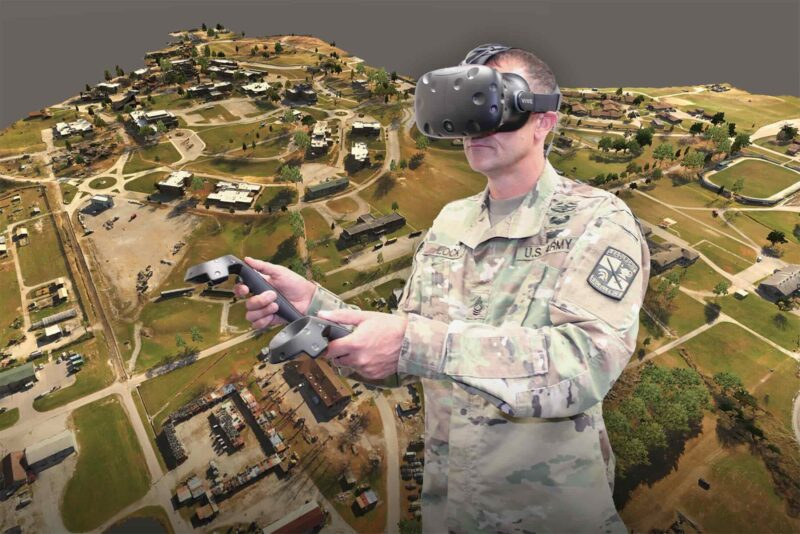
    Significantly, ICT’s remit to develop dual-use technologies (which claim to provide society-wide “solutions”) entails nurturing what the Institute refers to as “warfighters” for the battlefields of the future, and, in doing so, to increase warfighters’ “lethality.6 Established by the DoD in 1999 to pursue advanced modelling and simulation and training, ICT’s basic and applied research produces prototypes, technologies, and know-how that have been deployed for the U.S. Army, Navy, and Marine Corps. From artificial intelligence-driven virtual humans deployed to teach military leadership skills to futuristic 3D spatial visualization and terrain capture to prepare these military agencies for their operational environments, ICT specializes in immersive training programs for “mission rehearsal,” as well as tools that contribute to the digital innovations of global warmaking.7  Technologies and programs developed at ICT were used by U.S. troops in the U.S.-led Global War on Terror. One such program is UrbanSim, a virtual training application initiated in 2006 designed to improve army commanders’ skills for conducting counterinsurgency operations in Iraq and Afghanistan, delivering fictional scenarios through a gaming experience.8  From all of the warfighter preparation that USC’s Institute researches, develops, prototypes, and deploys, ICT boasts of generating over two thousand academic peer-reviewed publications.

    I encountered ICT’s work while conducting anthropological research on the relationship between the U.S. military and the media entertainment industry in Los Angeles.9  The Institute is located not on the university’s main University Park campus but by the coast, in Playa Vista, alongside offices for Google and Hulu. Although ICT is an approximately thirty-minute drive from USC’s main campus, this hub for U.S. warfighter lethality was enabled by an interdisciplinary collaboration with what was then called the School of Cinema-Television and the Annenberg School for Communications, and it remains entrenched within USC’s academic ecosystem, designated as a unit of its Viterbi School of Engineering, which is located on the main campus.10  Given the presence and power of UARCs at U.S. universities, we can reasonably ask: What is the difference between West Point Military Academy and USC, a supposedly civilian university? The answer, it seems, is not a difference in kind, but in degree. Indeed, universities with UARCs appear to be veritable military academies.

    What Are UARCs?

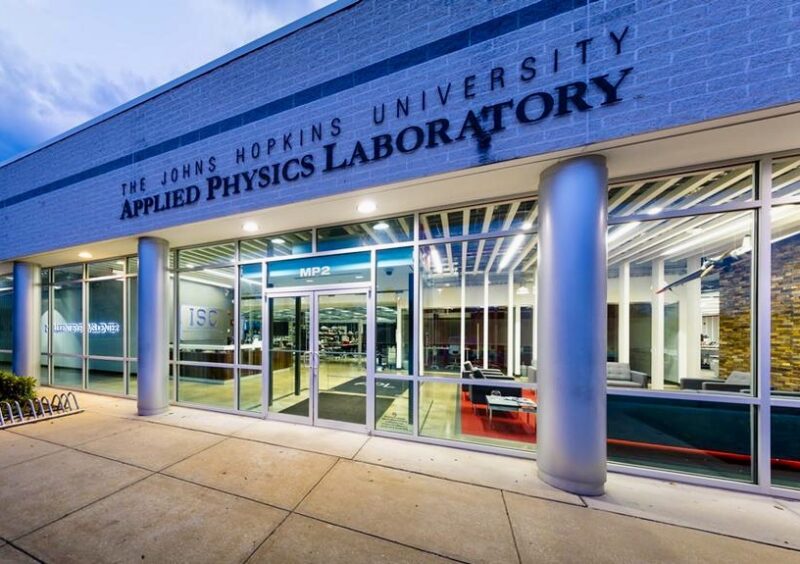
    UARCs are similar to federally funded research centres such as the Rand Corporation; however, UARCs are required to be situated within a university, which can be public or private.11  The existence of UARCs is not classified information, but their goals, projects, and implications may not be fully evident to the student bodies or university communities in which they are embedded, and there are differing levels of transparency among them about their funding. DoD UARCs “receive sole source funds, on average, exceeding $6 million annually,” and may receive other funding in addition to that from their primary military or federal sponsor, which may also differ among the fifteen UARCs.12  In 2021, funding from federal sources for UARCs ranged “from as much as $831 million for the Johns Hopkins University Applied Physics Lab to $5 million for the University of Alaska Geophysical Detection of Nuclear Proliferation.”13  Individual UARCs are generally created after the DoD’s Under Secretary of Defense for Research and Engineering initiates a selection process for the proposed sponsor, and typically are reviewed by their primary sponsor every five years for renewed contracts.14  A few UARCs, such as Johns Hopkins University’s Applied Physics Lab and the University of Texas at Austin’s Applied Research Lab, originated during the Second World War for wartime purposes but were designated as UARCs in 1996, the year the DoD formalized that status.15

    UARCs are supposed to provide their sponsoring agency and, ultimately, the DoD, access to what they deem “core competencies,” such as MIT’s development of nanotechnology systems for the “mobility of the soldier in the battlespace” and the development of anti-submarine warfare and ballistic and guided missile systems at Johns Hopkins University.16  Significantly, UARCs are mandated to maintain a close and enduring relationship with their military or federal sponsor, such as that of ICT with the U.S. Army. These close relationships are intended to facilitate the UARCs’ “in-depth knowledge of the agency’s research needs…access to sensitive information, and the ability to respond quickly to emerging research areas.”17  Such an intimate partnership for institutions of higher learning with these agencies means that the line between academic and military research is (further) blurred. With the interdisciplinarity of researchers and the integration of PhD students (and even undergraduate interns) into UARC operations such as USC’s ICT, the question of whether the needs of the DoD are prioritized over those of an ostensibly civilian institute of higher learning practically becomes moot: the entanglement is naturalized by a national security logic.

    Table 1 UARCs: The American Universities that Produce Warfighters

    Primary Sponsor University UARC Date of Designation (*original year established)
    Army University of Southern California Institute of Creative Technologies 1999
    Army Georgia Institute of Technology Georgia Tech Research Institute 1996 (*1995)
    Army Massachusetts Institute of Technology Institute for Soldier Nanotechnologies 2002
    Army University of California, Santa Barbara Institute for Collaborative Biotechnologies 2003
    Navy Johns Hopkins University Applied Physics Laboratory 1996 (*1942)
    Navy Pennsylvania State University Applied Research Laboratory 1996 (*1945)
    Navy University of Texas at Austin Applied Research Laboratories 1996 (*1945)
    Navy University of Washington Applied Physics Laboratory 1996 (*1943)
    Navy University of Hawai’i Applied Research Laboratory 2004
    Missile Defense Agency Utah State University Space Dynamics Laboratory 1996
    Office of the Under Secretary of Defense for Intelligence and Security University of Maryland, College Park Applied Research Laboratory for Intelligence and Security 2017 (*2003)
    Under Secretary of Defense for Research and Engineering Stevens Institute of Technology Systems Engineering Research Center 2008
    U.S. Strategic Command University of Nebraska National Strategic Research Institute 2012
    Department of the Assistant Secretary of Defense (Threat Reduction and Control) University of Alaska Fairbanks Geophysical Detection of Nuclear Proliferation 2018
    Air Force Howard University Research Institute for Tactical Autonomy 2023
    Sources: Joan Fuller, “Strategic Outreach—University Affiliated Research Centers,” Office of the Under Secretary of Defense (Research and Engineering), June 2021, 4; C. Todd Lopez, “Howard University Will Be Lead Institution for New Research Center,” U.S. Department of Defense News, January 23, 2023.

    A Closer Look

    The UARC at USC is unique from other UARCs in that, from its inception, the Institute explicitly targeted the artistic and humanities-driven resources of the university. ICT opened near the Los Angeles International Airport, in Marina del Rey, with a $45 million grant, tasked with developing a range of immersive technologies. According to the DoD, the core competencies that ICT offers include immersion, scenario generation, computer graphics, entertainment theory, and simulation technologies; these competencies were sought as the DoD decided that they needed to create more visually and narratively compelling and interactive learning environments for the gaming generation.18  USC was selected by the DoD not just because of the university’s work in science and engineering but also its close connections to the media entertainment industry, which USC fosters from its renowned School of Cinematic Arts (formerly the School of Cinema-Television), thereby providing the military access to a wide range of storytelling talents, from screenwriting to animation. ICT later moved to nearby Playa Vista, part of Silicon Beach, where the military presence also increased; by April 2016, the U.S. Army Research Lab West opened next door to ICT as another collaborative partner, further integrating the university into military work.19  This university-military partnership results in “prototypes that successfully transition into the hands of warfighters”; UARCs such as ICT are thus rendered a crucial link in what graduate student worker Isabel Kain from the Researchers Against War collective calls the “military supply chain.”20

    universities abandon any pretence to neutrality once they are assigned UARCs, as opponents at the University of Hawai’i at Mānoa (UH Mānoa) asserted when a U.S. Navy-sponsored UARC was designated for their campus in 2004. UH Mānoa faculty, students, and community members repeatedly expressed their concerns about the ethics of military research conducted on their campus, including the threat of removing “researchers’ rights to refuse Navy directives”

    USC was touted as “neutral ground” from which the U.S. Army could help innovate military training by one of ICT’s founders in his account of the Institute’s origin story.21  Yet, universities abandon any pretence to neutrality once they are assigned UARCs, as opponents at the University of Hawai’i at Mānoa (UH Mānoa) asserted when a U.S. Navy-sponsored UARC was designated for their campus in 2004. UH Mānoa faculty, students, and community members repeatedly expressed their concerns about the ethics of military research conducted on their campus, including the threat of removing “researchers’ rights to refuse Navy directives.”22  The proposed UARC at UH Mānoa occurred within the context of university community resistance to U.S. imperialism and militarism, which have inflicted structural violence on Hawaiian people, land, and waters, from violent colonization to the 1967 military testing of lethal sarin gas in a forest reserve.23 Hawai’i serves as the base of the military’s U.S. Indo-Pacific Command, where “future wars are in development,” professor Kyle Kajihiro of UH Mānoa emphasizes.24

    Writing in Mānoa Now about the proposed UARC in 2005, Leo Azumbuja opined that “it seems like ideological suicide to allow the Navy to settle on campus, especially the American Navy.”25 A key player in the Indo-Pacific Command, the U.S. Navy has long had a contentious relationship with Indigenous Hawaiians, most recently with the 2021 fuel leakage from the Navy’s Red Hill fuel facility, resulting in water contamination levels that the Hawai’i State Department of Health referred to as “a humanitarian and environmental disaster.”26  Court depositions have since revealed that the Navy knew about the fuel leakage into the community’s drinking water but waited over a week to inform the public, even as people became ill, making opposition to its proposed UARC unsurprising, if not requisite.27  The detonation of bombs and sonar testing that happens at the biennial international war games that the U.S. Navy has hosted in Hawai’i since 1971 have also damaged precious marine life and culturally sacred ecosystems, with the sonar tests causing whales to “swim hundreds of miles, rapidly change their depth (sometimes leading to bleeding from the eyes and ears), and even beach themselves to get away from the sounds of sonar.”28  Within this context, one of the proposed UARC’s core competencies was “understanding of [the] ocean environment.”29

    In a flyer circulated by DMZ Hawaii, UH Mānoa organizers called for universities to serve society, and “not be used by the military to further their war aims or to perfect ways of killing or controlling people.”30  Recalling efforts in previous decades on U.S. campuses to thwart the encroachment of military research, protestors raised questions about the UARC’s accountability and transparency regarding weapons production within the UH community. UH Mānoa’s strategic plan during the time that the Navy’s UARC was proposed and executed (2002–2010) called for recognition of “our kuleana (responsibility) to honour the Indigenous people and promote social justice for Native Hawaiians” and “restoring and managing the Mānoa stream and ecosystem”—priorities that the actions of the U.S. Navy disregarded.31  The production of knowledge for naval weapons within the auspices of this public, land-grant institution disrupts any pretension to neutrality the university may purport.

    while the UH administration claimed that the proposed UARC would not accept any classified research for the first three years, “the base contract assigns ‘secret’ level classification to the entire facility, making the release of any information subject to the Navy’s approval,” raising concerns about academic freedom, despite the fanfare over STEM and rankings

    Further resistance to the UARC designation was expressed by the UH Mānoa community: from April 28 to May 4, 2005, the SaveUH/StopUARC Coalition staged a six-day campus sit-in protest, and later that year, the UH Mānoa Faculty Senate voted 31–18 in favour of asking the administration to reject the UARC designation.32  According to an official statement released by UH Mānoa on January 23, 2006, at a university community meeting with the UH Regents in 2006, testimony from opponents to the UARC outnumbered supporters, who, reflecting the neoliberal turn of universities, expressed hope that their competitiveness in science, technology, engineering, and mathematics (STEM) would advance with a UARC designation, and benefit the university’s ranking.33  Yet in 2007, writing in DMZ Hawaii, Kajihiro clarified that while the UH administration claimed that the proposed UARC would not accept any classified research for the first three years, “the base contract assigns ‘secret’ level classification to the entire facility, making the release of any information subject to the Navy’s approval,” raising concerns about academic freedom, despite the fanfare over STEM and rankings.34  However, the campus resistance campaign was unsuccessful, and in September 2007, the UH Regents approved the Navy UARC designation. By 2008, the U.S. Navy-sponsored Applied Research Laboratory UARC at UH Mānoa opened.

    “The Military Normal”

    Yet with the U.S. creation of the national security state in 1947 and its pursuit of techno-nationalism since the Cold War, UARCs are direct pipelines to the intensification of U.S. empire

    UH Mānoa’s rationale for resistance begs the question: how could this university—indeed, any university—impose this military force onto its community? Are civilian universities within the United States merely an illusion, a deflection from education in the service of empire? What anthropologist Catherine Lutz called in 2009 the ethos of “the military normal” in U.S. culture toward its counterinsurgency wars in Iraq and Afghanistan—the commonsensical, even prosaic perspective on the inevitability of endless U.S.-led wars disseminated by U.S. institutions, especially mainstream media—helps explain the attitude toward this particular formalized capture of the university by the DoD.35  Defense funding has for decades permeated universities, but UARCs perpetuate the military normal by allowing the Pentagon to insert itself through research centres and institutes in the (seemingly morally neutral) name of innovation, within part of a broader neoliberal framework of universities as “engines” and “hubs,” or “anchor” institutions that offer to “leverage” their various forms of capital toward regional development in ways that often escape sustained scrutiny or critique.36  The normalization is achieved in some cases given that UARCs such as ICT strive to serve civilian needs as well as military ones with dual-use technologies and tools. Yet with the U.S. creation of the national security state in 1947 and its pursuit of techno-nationalism since the Cold War, UARCs are direct pipelines to the intensification of U.S. empire. Some of the higher-profile virtual military instructional programs developed at ICT at USC, such as its Emergent Leader Immersive Training Environment (ELITE) system, which provides immersive role-playing to train army leaders for various situations in the field, are funnelled to explicitly military-only learning institutions such as the Army Warrant Officer School.37

    The fifteenth and most recently created UARC, at Howard University in 2023—the first such designation for one of the historically Black colleges and universities (HBCUs)—boasts STEM inclusion

    The military normal generates a sense of moral neutrality, even moral superiority. The logic of the military normal, the offer of STEM education and training, especially through providing undergraduate internships and graduate training, and of course funding, not only rationalizes the implementation of UARCs, but ennobles it. The fifteenth and most recently created UARC, at Howard University in 2023—the first such designation for one of the historically Black colleges and universities (HBCUs)—boasts STEM inclusion.38  Partnering with the U.S. Air Force, Howard University’s UARC is receiving a five-year, $90 million contract to conduct AI research and develop tactical autonomy technology. Its Research Institute for Tactical Autonomy (RITA) leads a consortium of eight other HCBUs. As with the University of Hawai’i, STEM advantages are touted by the UARC, with RITA’s reach expanding in other ways: it plans to supplement STEM education for K–12 students to “ease their path to a career in the fields of artificial intelligence, cybersecurity, tactical autonomy, and machine learning,” noting that undergraduate and graduate students will also be able to pursue fully funded research opportunities at their UARC. With the corporatization of universities, neoliberal policies prioritize STEM for practical reasons, including the pursuit of university rankings and increases in both corporate and government funding. This fits well with increased linkages to the defence sector, which offers capital, jobs, technology, and gravitas. In a critique of Howard University’s central role for the DoD through its new UARC, Erica Caines at Black Agenda Reportinvokes the “legacies of Black resistance” at Howard University in a call to reduce “the state’s use of HBCUs.”39  In another response to Howard’s UARC, another editorial in Black Agenda Report draws upon activist Kwame Ture’s (Stokely Carmichael’s) autobiography for an illuminative discussion about his oppositional approach to the required military training and education at Howard University during his time there.40

    With their respectability and resources, universities, through UARCs, provide ideological cover for U.S. war-making and imperialistic actions, offering up student labour at undergraduate and graduate levels in service of that cover. When nearly eight hundred U.S. military bases around the world are cited as evidence of U.S. empire and the DoD requires research facilities to be embedded within places of higher learning, it is reasonable to expect that university communities—ostensibly civilian institutions—ask questions about UARC goals and operations, and how they provide material support and institutional gravitas to these military and federal agencies.41  In the case of USC, ICT’s stated goal of enhancing warfighter lethality runs counter to current USC student efforts to strive for more equitable conditions on campus and within its larger community (for example, calls to end “land grabs,” and “targeted repression and harassment of Black, Brown and Palestinian students and their allies on and off campus”) as well as other reductions in institutional harms.42  The university’s “Minor in Resistance to Genocide”—a program pursued by USC’s discarded valedictorian Asna Tabassum—also serves as mere cover, a façade, alongside USC’s innovations for warfighter lethality.

    the Hopkins Justice Collective at Johns Hopkins University recently proposed a demilitarization process to its university’s Public Interest Investment Advisory Committee that cited Johns Hopkins’s UARC, Applied Physics Lab, as being the “sole source” of DoD funding for the development and testing of AI-guided drone swarms used against Palestinians in 2021

    Many students and members of U.S. society want to connect the dots, as evident from the nationwide protests and encampments, and a push from within the academy to examine the military supply chain is intensifying. In addition to Researchers Against War members calling out the militarized research that flourishes in U.S. universities, the Hopkins Justice Collective at Johns Hopkins University recently proposed a demilitarization process to its university’s Public Interest Investment Advisory Committee that cited Johns Hopkins’s UARC, Applied Physics Lab, as being the “sole source” of DoD funding for the development and testing of AI-guided drone swarms used against Palestinians in 2021.43  Meanwhile, at UH Mānoa, the struggle continues: in February 2024, the Associated Students’ Undergraduate Senate approved a resolution requesting that the university’s Board of Regents terminate UH’s UARC contract, noting that UH’s own president is the principal investigator for a $75 million High-Performance Computer Center for the U.S. Air Force Research Laboratory that was contracted by the university’s UARC, Applied Research Laboratory.44  Researchers Against War organizing, the Hopkins Justice Collective’s proposal, the undaunted UH Mānoa students, and others help pinpoint the flows of militarized knowledge—knowledge that is developed by UARCs to strengthen warfighters from within U.S. universities, through the DoD, and to different parts of the world.45

    Notes

    1. Jake Alimahomed-Wilson et al., “Boeing University: How the California State University Became Complicit in Palestinian Genocide,” Mondoweiss, May 20, 2024; Brian Osgood, “U.S. University Ties to Weapons Contractors Under Scrutiny Amid War in Gaza,” Al Jazeera, May 13, 2024.
    2. Collaborate with Us: University Affiliated Research Center,” DevCom Army Research Laboratory, arl.devcom.army.mil.
    3. USC Divest From Death Coalition, “Divest From Death USC News Release,” April 24, 2024.
    4. USC Institute for Creative Technologies, “ICT Overview Video,” YouTube, 2:52, December 12, 2023.
    5. Gordon Adams and Shoon Murray, Mission Creep: The Militarization of U.S. Foreign Policy?(Washington DC: Georgetown University Press, 2014).
    6. USC Institute for Creative Technologies, “ICT Overview Video”; USC Institute for Creative Technologies, Historical Achievements: 1999–2019 (Los Angeles: University of Southern California, May 2021), ict.usc.edu.
    7. Yuval Abraham, “‘Lavender’: The AI Machine Directing Israel’s Bombing Spree in Gaza,” +972 Magazine.
    8. “UrbanSim,” USC Institute for Creative Technologies.
    9. Sylvia J. Martin, “Imagineering Empire: How Hollywood and the U.S. National Security State ‘Operationalize Narrative,’” Media, Culture & Society 42, no. 3 (April 2020): 398–413.
    10. Paul Rosenbloom, “Writing the Original UARC Proposal,” USC Institute for Creative Technologies, March 11, 2024.
    11. Susannah V. Howieson, Christopher T. Clavin, and Elaine M. Sedenberg, “Federal Security Laboratory Governance Panels: Observations and Recommendations,” Institute for Defense Analyses—Science and Technology Policy Institute, Alexandria, Virginia, 2013, 4.
    12. OSD Studies and Federally Funded Research and Development Centers Management Office (FFRDC), Engagement Guide: Department of Defense University Affiliated Research Centers (UARCs) (Alexandria, Virginia: OSD Studies and FFRDC Management Office, April 2013), 5.
    13. Christopher V. Pece, “Federal Funding to University Affiliated Research Centers Totaled $1.5 Billion in FY 2021,” National Center for Science and Engineering Statistics, National Science Foundation, 2024, ncses.nsf.gov.
    14. “UARC Customer Funding Guide,” USC Institute for Creative Technologies, March 13, 2024.
    15. Federally Funded Research and Development Centers (FFRDC) and University Affiliated Research Centers (UARC),” Department of Defense Research and Engineering Enterprise, rt.cto.mil.
    16. OSD Studies and FFRDC Management Office, Engagement Guide.
    17. Congressional Research Service, “Federally Funded Research and Development Centers (FFDRCs): Background and Issues for Congress,” April 3, 2020, 5.
    18. OSD Studies and FFRDC Management Office, Engagement Guide, 18.
    19. Institute for Creative Technologies (ICT),” USC Military and Veterans Initiatives, military.usc.edu.
    20. USC Institute for Creative Technologies, Historical Achievements: 1999–2019, 2; Linda Dayan, “‘Starve the War Machine’: Workers at UC Santa Cruz Strike in Solidarity with Pro-Palestinian Protesters,” Haaretz, May 21, 2024.
    21. Richard David Lindholm, That’s a 40 Share!: An Insider Reveals the Origins of Many Classic TV Shows and How Television Has Evolved and Really Works (Pennsauken, New Jersey: Book Baby, 2022).
    22. Leo Azambuja, “Faculty Senate Vote Opposing UARC Preserves Freedom,” Mānoa Now, November 30, 2005.
    23. Deployment Health Support Directorate, “Fact Sheet: Deseret Test Center, Red Oak, Phase I,” Office of the Assistant Secretary of the Defense (Health Affairs), health.mil.
    24. Ray Levy Uyeda, “U.S. Military Activity in Hawai’i Harms the Environment and Erodes Native Sovereignty,” Prism Reports, July 26, 2022.
    25. Azambuja, “Faculty Senate Vote Opposing UARC Preserves Freedom.”
    26. Kyle Kajihiro, “The Militarizing of Hawai’i: Occupation, Accommodation, Resistance,” in Asian Settler Colonialism, Jonathon Y. Okamura and Candace Fujikane, eds. (Honolulu: University of Hawai’i Press, 2008), 170–94; “Hearings Officer’s Proposed Decision and Order, Findings of Fact, and Conclusions of Law,” Department of Health, State of Hawaii vs. United States Department of the Navy, no. 21-UST-EA-02 (December 27, 2021).
    27. Christina Jedra, “Red Hill Depositions Reveal More Details About What the Navy Knew About Spill,” Honolulu Civil Beat, May 31, 2023.
    28. “Does Military Sonar Kill Marine Wildlife?,” Scientific American, June 10, 2009.
    29. Joan Fuller, “Strategic Outreach—University Affiliated Research Centers,” Office of the Under Secretary of Defense (Research and Engineering), June 2021, 4.
    30. DMZ Hawaii, “Save Our University, Stop UARC,” dmzhawaii.org.
    31. University of Hawai’i at Mānoa, Strategic Plan 2002–2010: Defining Our Destiny, 8–9.
    32. Craig Gima, “UH to Sign Off on Navy Center,” Star Bulletin, May 13, 2008.
    33. University of Hawai’i at Mānoa, “Advocates and Opponents of the Proposed UARC Contract Present Their Case to the UH Board of Regents,” press release, January 23, 2006.
    34. Kyle Kajihiro, “The Secret and Scandalous Origins of the UARC,” DMZ Hawaii, September 23, 2007.
    35. Catherine Lutz, “The Military Normal,” in The Counter-Counterinsurgency Manual, or Notes on Demilitarizing American Society, The Network of Concerned Anthropologists, ed. (Chicago: Prickly Paradigm Press, 2009).
    36. Anne-Laure Fayard and Martina Mendola, “The 3-Stage Process That Makes Universities Prime Innovators,” Harvard Business Review, April 19, 2024; Paul Garton, “Types of Anchor Institution Initiatives: An Overview of University Urban Development Literature,” Metropolitan Universities 32, no. 2 (2021): 85–105.
    37. Randall Hill, “ICT Origin Story: How We Built the Holodeck,” Institute for Creative Technologies, February 9, 2024.
    38. Brittany Bailer, “Howard University Awarded $90 Million Contract by Air Force, DoD to Establish First-Ever University Affiliated Research Center Led by an HCBU,” The Dig, January 24, 2023, thedig.howard.edu.
    39. Erica Caines, “Black University, White Power: Howard University Covers for U.S. Imperialism,” Black Agenda Report, February 1, 2023.
    40. Editors, “Howard University: Every Black Thing and Its Opposite, Kwame Ture,” The Black Agenda Review (Black Agenda Report), February 1, 2023.
    41. David Vine, Base Nation: How U.S. Military Bases Abroad Harm America and the World (New York: Metropolitan Books, 2015).
    42. USC Divest from Death Coalition, “Divest From Death USC News Release”; “USC Renames VKC, Implements Preliminary Anti-Racism Actions,” Daily Trojan, June 11, 2020.
    43. Hopkins Justice Collective, “PIIAC Proposal,” May 4, 2024.
    44. Bronson Azama to bor.testimony@hawaii.edu, “Testimony for 2/15/24,” February 15, 2024, University of Hawai’i; “UH Awarded Maui High Performance Computer Center Contract Valued up to $75 Million,” UH Communications, May 1, 2020.
    45. Isabel Kain and Becker Sharif, “How UC Researchers Began Saying No to Military Work,” Labor Notes, May 17, 2024.


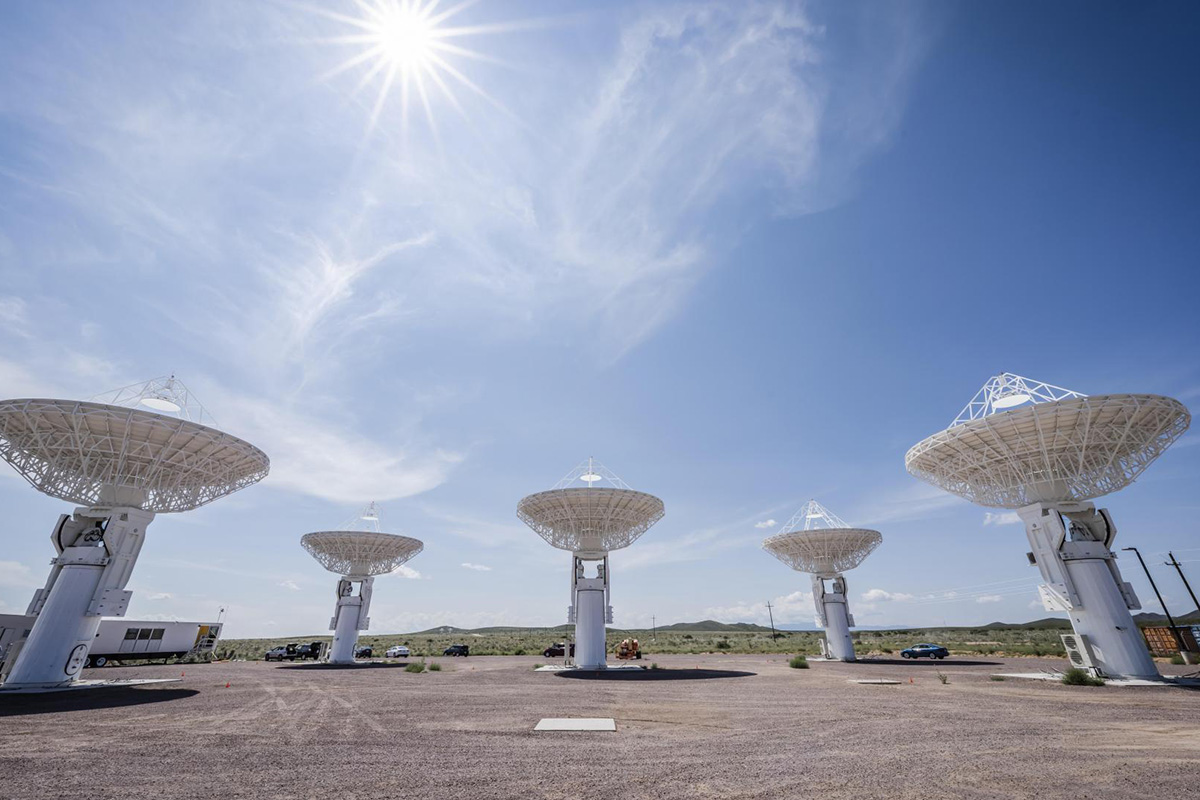
    Feature Image: Deep Space Advanced Radar Capability (DARC) at Johns Hopkins Advanced Physical Laborotory, A UARC facility – www.jhuapl.edu

  • An Education Policy for Colonising Minds

    An Education Policy for Colonising Minds

    Imperialist hegemony over the third world is exercised not just through arms and economic might but also through the hegemony of ideas by making the victims see the world the way imperialism wants them to see it. A pre-requisite for freedom in the third world, therefore, is to shake off this colonisation of the mind, and to seek truth beyond the distortions of imperialism. The anti-colonial struggle was aware of this; in fact, the struggle begins with the dawning of this awareness. And since the imperialist project does not come to an end with formal political decolonisation, the education system in the newly independent ex-colonies must continuously aim to go beyond the falsehoods of imperialism.

    This requires that the course contents and syllabi in Indian educational institutions must be different from those in metropolitan institutions. This is obvious in the case of humanities and social sciences, where it is impossible to understand the present of the country without reckoning with its colonised past; and metropolitan universities scrupulously avoid making this connection, attributing the current state of underdevelopment of the country to all sorts of extraneous factors like laziness, lack of enterprise, superstition, and, above all, excessive population growth. But even in the case of natural sciences, the syllabi and course contents in third-world universities cannot be identical with those in metropolitan universities, not because Einstein’s theory or quantum physics have any imperialist ideology in them, but because the range of scientific concerns in the third world is not necessarily the same as in the metropolitan countries. In fact, this was the view of JD Bernal, the British scientist and Marxist intellectual, one of the great figures of the twentieth century.

    To believe that the syllabi and course contents in third-world universities should be identical to those in metropolitan universities is itself a symptom of being hegemonised by imperialism. Education policy in the dirigiste period in India was aware of this; despite the obvious failings of the education system the education policy of that period could not be faulted for having a wrong vision.

    With neo-liberalism, however, things begin to change, as the Indian big bourgeoisie gets integrated with globalised finance capital, as the Indian upper middle-class youth looks for employment in multinational corporations, as the nation’s development is made dependent upon exporting goods to foreign markets and attracting foreign finance and foreign direct investment to the country. Significantly, even top functionaries of the government started talking about reinviting the East India Company back to India.

    Since the era of neo-liberalism entails the hegemony of globalised finance capital, and since this capital requires a globalised (or at least a homogeneous) technocracy, the emphasis shifts to having a homogeneous education system internationally to train such a technocracy; and obviously such a system necessarily has to be one that emanates from the metropolis.

    This means an education system not for decolonising minds but for recolonising minds. To this end, the UPA government earlier had invited several well-known foreign universities to set up branches in India and even to “adopt’ some Indian universities that could be developed in their own image. Oxford, Harvard, and Cambridge were obviously invited under this scheme not to follow the syllabi and course contents prepared within India but to replicate what they followed back home. The idea was to start a process whereby there would be a uniformity of course contents and syllabi between the Indian and metropolitan universities, that is, to roll back the attempt made earlier towards decolonisation of minds in Indian universities. In fact, an Indian Human Resource Development minister had openly stated in parliament that his objective was to provide a Harvard education in India so that Indian students would not have to go abroad for it.

    The NDA government has carried forward to a very great extent what the UPA government had started; and the National Education Policy it has enacted gives an official imprimatur to this idea of a uniform education system between India and the metropolis, which necessarily means the adoption of common curricula, course contents and syllabi between Indian and metropolitan universities.

    Towards this uniformity, it has taken two decisive steps: one is the destruction of those universities in India that were providing a counter to the imperialist discourse and that had, for this very reason, attracted worldwide attention; the obvious examples here are the Jawaharlal Nehru University, the Hyderabad Central University, Jadavpur University, and others.

    The other is the carrying out of negotiations under the pressure of the University Grants Commission between individual Indian universities and foreign universities to make the course contents in various disciplines in the former clones of those in the latter. The only caveat here is that the UGC insists on having some material on subjects like Vedic Mathematics included in the course contents of Indian universities, which the foreign universities do not always agree with.

    No doubt, some accord will be reached on these issues in due course, in which case the Indian universities would have curricula and course contents that represent an admixture of the demands of neo-liberalism and the demands of the Hindutva elements. It would be a colonisation of minds with a veneer of “how great our country was in ancient times”. Imperialism should not have any problem with that. As long as imperialism, which is a modern phenomenon that has emerged with the development of capitalism, is painted not as an exploitative system but as a benevolent civilising mission for countries like India, as long as the present state of underdevelopment of these countries is not in any way linked to the phenomenon of imperialism, which it would not be if there is uniformity of course contents with metropolitan universities, then what had happened in ancient times is not of much concern to imperialism, at least to the liberal imperialist viewpoint, as distinct from the extreme right which favours a white supremacist discourse.

    An alternative tendency with the same consequence of recolonising minds is to do away with the social sciences and humanities altogether or to reduce them to inconsequential subjects and substitute them with courses that are exclusively “job-oriented” and do not ask questions about society, like management and cost accountancy. In fact, both the Hindutva elements and the corporates have a vested interest in this since both are keen to have students who are exclusively self-centred and do not ask questions about the trajectory of social development. This tendency, too, is gathering momentum at present.

    An education system that recolonises minds is the counterpart of the corporate-Hindutva alliance that has acquired political hegemony in the country. Such a recolonisation is what the corporates want; and the Hindutva elements that were never associated with the anti-colonial struggle, that never understood the meaning of nation-building, that do not understand the role and significance of imperialism, and hence of the need for decolonising minds, are quite content as long as lip service is paid to the greatness of ancient India. An education system that purveys the imperialist ideology with some Vedic seasoning is good enough for them. This is exactly the education system that the country is now in the process of building.

    The corporate- Hindutva alliance, however, is a response to the crisis of neo-liberalism, when corporate capital feels the need to ally itself with the Hindutva elements to maintain its hegemony in the face of the crisis. The National Education Policy likewise is not for carrying the nation forward but for managing the crisis by destroying thought and preventing people from asking questions and seeking the truth. The “job orientation” that this policy prides itself on is only for a handful of persons; in fact, the crisis of neo-liberalism means fewer jobs overall. In sync with this, the education system excludes large numbers of persons; their minds are to be filled instead with communal poison within an altered discourse that bypasses issues of material life and makes them potential low-wage recruits for fascistic thug-squads.

    This education policy, therefore, can only be transitory until the youth starts asking questions about the unemployment and distress that has become its fate. And as an alternative development trajectory beyond neo-liberal capitalism is explored, the quest for an education system beyond what the NDA government is seeking to introduce will also begin; and decolonisation of the mind will again come onto the agenda, as it had done during the anti-colonial struggle.


    This article was published earlier in People’s Democracy.

  • The Philippines’ History Curriculum: Origins and Repercussions

    The Philippines’ History Curriculum: Origins and Repercussions

    Background

    The Philippines, a twice-colonized archipelago that achieved its complete independence in 1946, is a member of the ASEAN and an essential player in the geopolitics of the Southeast Asia region. Its status is owed mainly to its rapidly growing economy, of which the services industry is the most significant contributor, comprising 61% of its Gross Domestic Product (GDP) (Bajpai, 2022). Services refer to various products – for example, business outsourcing, tourism, and the export of skilled workers, healthcare workers, and labourers in other industries. In recent years, a growing demand for qualified professionals has grown as the economy has grown, thus necessitating more robust educational systems (Bajpai, 2022). Although the Philippines has a high literacy rate, hovering at around 97%, the efficacy of its educational system is often called into question (“Literacy Rate and Educational Attainment”, 2020). Administration oversight, infrastructural deficiencies, and pervasive corruption in the government that seeps into the entities responsible for educational reform are significant issues that legitimize these doubts (Palatino, 2023). However, reforming the current flaws in the system requires an understanding of the basic underlying structure of the country’s educational system as it is today. This fundamental understanding can help clarify specific political trends in the status quo and highlight the importance of proper historical education in developing a nation. Despite its ubiquity in nearly every curriculum, the study of history as a crucial part of the education system is often not prioritized, leading to an underdeveloped understanding of the society’s culture and previous struggles with colonial exploitation. Though it is present in the Philippines’ education today, it continues to change because of its historically dynamic demographic and political atmosphere.

    Origins of the Education System 

    To begin with, the educational system, and especially the modes of linguistic and history education in the country, have been heavily influenced by the major powers that occupied it – namely, the Spanish Empire and the United States. The impact of these periods of colonization can be seen most significantly in the historical education and consciousness of the general population, as well as the propagation of the English language. The Philippines possesses a great deal of linguistic diversity, especially among indigenous groups – an estimated 170 distinct languages in the country today (Postan, 2020). However, even in pre-colonial times – typically considered by historians to be the years before 1521 – the most common language in the country was Old Tagalog, and other indigenous languages are still spoken today (Stevens, 1999). Records suggest that the Spanish did not forcefully erase indigenous languages spoken in the country. However, they did conduct business and educational institutions in Spanish, leading to the language being used almost exclusively amongst the upper classes – the colonizers, business people in the country, and other influential figures in the empire. Though there were attempts to conduct education in Castilian Spanish, priests and friars responsible for teaching the locals preferred to do so in local languages as it was a more effective form of proselytization. This cemented the reputation of Spanish as a language for the elite, as the language was almost exclusively limited to those chosen to attend prestigious institutions or government missions that operated entirely in Spanish (Gonzales, 2017). In terms of popularising education to expose a broader audience to Christianity, the Spanish also established a compulsory elementary education system. However, restrictions existed based on social class and gender (Musa & Ziatdinov, 2012). Because of this, although the influence of Spanish on local languages can be seen through the borrowing of certain words, indigenous and regional languages were not supplanted to a large extent, though their scripts were Latinised in some instances to make matters more convenient for the Spanish (Gonzales, 2017). However, the introduction of Catholicism to a large segment of the population and a more organized educational system are aspects of Spanish rule that remain in Philippine society today, as do the negative ramifications of the social stratification that was a significant element of its occupation (Herrera, 2015).

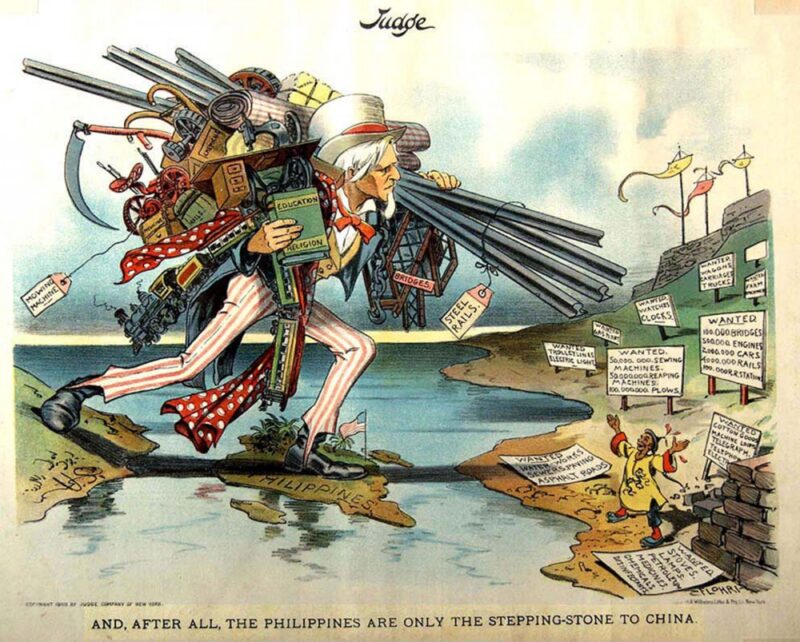
    Uncle Sam, loaded with implements of modern civilization, uses the Philippines as a stepping-stone to get across the Pacific to China (represented by a small man with open arms), who excitedly awaits Sam’s arrival. With the expansionist policy gaining greater traction, the possibility for more imperialistic missions (including to conflict-ridden China) seemed strong. The cartoon might be arguing that such endeavours are worthwhile, bringing education, technological, and other civilizing tools to a desperate people. On the other hand, it could be read as sarcastically commenting on America’s new propensity to “step” on others. “AND, AFTER ALL, THE PHILIPPINES ARE ONLY THE STEPPING-STONE TO CHINA,” in Judge Magazine, 1900 or 1902. Wikimedia.

    In contrast, the American occupation following Spain’s defeat in the Spanish-American War in 1898 significantly changed the country’s linguistic patterns and revolutionized the education system. Upon arriving in the country, the Americans decided to create a public school system in the country, where every student could study for free. However, the medium of instruction was in English, given that they brought teachers from the United States (Casambre, 1982). This differed from the Spanish system in that social class and gender did not influence students’ access to education to the same extent. Furthermore, the Americans brought their own material to the country due to a lack of school textbooks. As the number of schools in the country and the pedagogical influence of American teachers increased, the perception of the Americans’ role as colonizers ultimately changed. Education became a tool to exert cultural influence, leading to the propagation of American ideals like capitalism, in addition to subverting separatist tendencies that were cropping up in the country as one colonizer was replaced by another. It also led to the suppression of knowledge concerning the US’ exploitation of the nation.  Ultimately, the colonizers’ influence on the linguistic and educational landscape of the nation manifests itself in the general population’s understanding of their country’s history.

    The Current History Curriculum

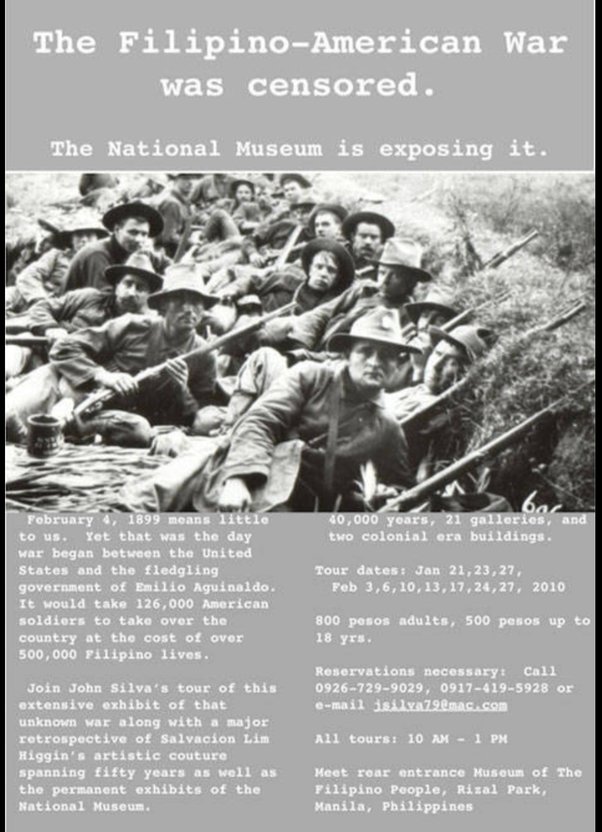
    The social studies curriculum in the Philippines, called Araling Panlipunan (AP), is an interdisciplinary course that combines topics of economics and governance with history, primarily post-colonial history (“K to 12 Gabay Pangkurikulum”, 2016). The topic of World War II takes up nearly 50% of the course, while other aspects of indigenous and pre-colonial history are included to a limited extent (Candelaria, 2021). This act of prioritization is a colonial holdover. Although the Philippines indubitably played a crucial role in the Pacific Theatre during WW II, its massive presence in the AP course signals the nation’s continued alliance with the US and reinforces a mentality amongst the general public that favours it. This bias occurs as a singular American perspective is promoted by the course, wherein the actions of other countries against the Philippines are highlighted. At the same time, the exploitation of the Philippines by the Spanish and Americans is not as widely discussed. For example, although the atrocities committed by the Japanese during World War II are taught extensively as part of the curriculum, the American actions during the Philippine-American War (1899-1902), during which the Americans burned and pillaged entire villages, are not emphasized (Clem, 2016). Furthermore, it leads to the sidelining of historical events that have created the political situation in the country today, such as the issue of the current president being related to the former dictator, Ferdinand Marcos.

    As the course is conducted chronologically, discussions of topics such as the Marcos Regime are left up to teachers’ discretion due to the subject’s controversial nature, given that the dictator’s son is the current president (Santos, 2022). This means that as much or as little time can be spent on it is as decided. Because of the American influence, even citizens who are taught about the atrocities that occurred during the dictatorship are not informed of the support provided to the Marcos dictatorship by the US government. During his presidency, which lasted from 1965 to 1986, the Philippines received significant economic aid from the US government in exchange for the continuation of its military presence in the country, which proved helpful to the US during the Vietnam War as it was able to utilize its bases in Subic Bay and Clark air base(Hawes, 1986). As a result of the necessity of these bases, a 1979 amendment to the 1947 Military Bases Agreement was signed, which increased the US’ fiscal contributions to security assistance. To further support this military objective, the Carter and Reagan administrations showed their diplomatic support to Marcos by visiting the Philippines and inviting him to Washington.

    Additionally, when Marcos was ousted from power in 1986 by the People Power Revolution, he spent his exile in ‘Hawaii’, in the US (Southerl, 1986). Therefore, while the US is credited for introducing democratic principles to the country through its program for expanding education while occupying the archipelago, it also played a significant role in supporting a despotic government that is not as widely acknowledged. Because of this, the Filipino perception of and relationship with the US has been heavily influenced by a lack of awareness amongst the general public about its involvement in a massively corrupt administration.

    Significant Developments 

    Despite the importance of a robust historical education in improving the public’s awareness of their own culture and geopolitical relationships, history as a subject has been transformed into a political tool in the Philippines, twisted when it can be useful and neglected when it does not support an agenda. Various bills passed in the House of Representatives (the lower house of parliament in the Philippines, below the Senate), as well as decisions taken by the Department of Education, have diminished the significance of history in the overall school curriculum and reinforced an American perspective in the historical content that continues to be taught. Department of Education Order 20, signed in 2014, removed Philippines History as a separate subject in high school (Ignacio, 2019). The argument for this decision was that Philippines History would be integrated within the broader AP social studies curriculum under different units, such as the Southeast Asian political landscape. However, educators opposing the abolition of Philippine History as a separate subject state that due to fewer contact hours being allocated for AP in total compared to English, maths, and science, it is unlikely that Philippine history can be discussed in adequate depth, considering the other social science topics mandated by the AP curriculum. In addition, House Bill 9850, which was passed in 2021, requires that no less than 50% of the subject of Philippine history centres around World War II (Candelaria, 2021). The bill’s primary concerns mention that it prioritizes the war over other formative conflicts in the nation’s history, such as the Philippine Revolution against Spain or the Philippine-American War. Furthermore, it requires modifying or reducing discussions surrounding other vital events in the Philippines, such as agrarian reforms and more recent developments like the conflict in Mindanao.

    Both of these policies face significant opposition. For example, a Change.org petition demanding the return of the subject of Philippine history in high schools has garnered tens of thousands of signatures. At the same time, numerous historical experts and teachers have spoken against HB 9850 (Ignacio, 2018). Despite this resistance from academics and teaching professionals, it is unlikely that history will be prioritized unless the general public also learns to inform itself. Around 73% of the total population (approximately 85.16 million people) have access to the internet, of which over 90% are on social media (Kemp, 2023). Because of the large working population in the country, social media companies like Facebook have set up offices there. Programs that offered data-free usage in 2013 have made the Philippines a huge market for Facebook, and many Filipinos trust the news they find on the website more than some mainstream media sources (Quitzon, 2021). Even though internet access is relatively widespread, signifying that information is readily available to the average Filipino, social media, especially Facebook, often functions as a fertile breeding ground for misinformation.

    Repercussions of the History Curriculum

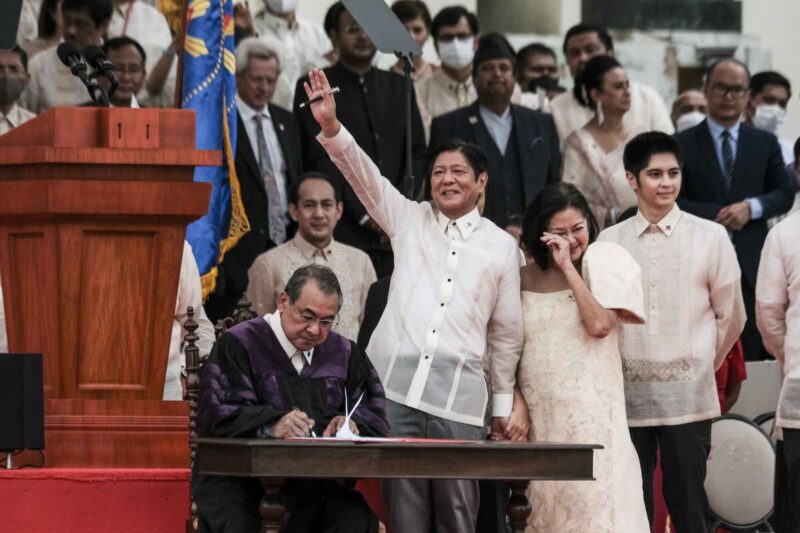
    In recent years, misinformation has become an important political tool to propagate ignorance and manipulate historical and current events to promote specific agendas. The most relevant example was the mass historical revisionism campaign leading to the 2022 general elections (Quitzon, 2021). Given that Bongbong Marcos, Ferdinand Marcos’ son, was running for president alongside vice presidential candidate Sara Duterte (former president Rodrigo Duterte’s daughter), the campaign focused on changing the public perception of both families and their period of rule. Preceding the elections, social media trolls and supporters of the campaign spread videos, doctored images, and fake news that minimized the atrocities and scale of theft that occurred throughout the Marcos regime and the Duterte administration, instead highlighting and exaggerating the perceived benefits they brought to the country. The prioritization of these political agendas is reflected in the history curriculum, as it does not sufficiently cover critical areas of Philippine history that have directly led to the political situation of today and the pre-colonial era that is an inseparable part of Filipino culture.

    Recommended Policy Measures 

    However, another by-product of this absence of consciousness is that the general public is desensitized to poor governance and neocolonialism as their education systems and news sources constantly feed them biased and inaccurate information about the history of their own country and its relationship to others. When dictators are portrayed as good rulers and previous colonizers are portrayed as historical allies, it results in a population that unknowingly votes against its interests as they are unaware of the past events that have shaped the current political atmosphere and the various deficiencies in the system. Considering that these political campaigns rely on the general public not having a solid understanding of historical events, especially those about the martial law era, it is unlikely that politicians will take meaningful steps to improve historical education in the country since they benefit from citizens lacking awareness. As such, the onus must, unfortunately, be placed on the general public to educate themselves on good citizenship and exercise their right to vote at the grassroots level responsibly so that future local politicians and members of parliament may at least be able to encourage the study of history in the government. Additionally, teaching students how to use the internet to conduct reliable research is imperative to reduce misinformation so they can counter the misinformation they find online.

    Conclusion

    In conclusion, the Philippine education system has been shaped by the periods of colonization the country has experienced. This has led to a history curriculum favouring the American perspective and thus disadvantages crucial elements of local history. The consequences of the lack of awareness this has caused in the general public are manifold: it has made them more susceptible to misinformation and historical revisionism. It has worked to the advantage of politicians who take advantage of it. Nevertheless, the Philippines can still reverse this trend by utilizing its high literacy rates and social media presence to promote reliable historical education. They can also push for better historical education policies through petitions and appeals to local government agencies and Senate committees related to education – such as the National Commission for Culture and the Arts (NCCA), the Committee on Basic Education and Culture, and the Committee on Education, Arts and Culture – amongst others (Ignacio, 2018). Overall, there are many deficiencies in the current history education system in the Philippines, but they still coexist with the potential for change. Citizens have the power to advocate and must continue using it to usher forth a more well-informed society and nation.


    References

    Bajpai, Prableen. “Emerging Markets: Analyzing the Philippines’s GDP.” Investopedia, 12 July 2023, www.investopedia.com/articles/investing/091815/emerging-markets-analyzing-philippines-gdp.asp#:~:text=The%20country.

    Casambre, Napoleon. The Impact of American Education in the Philippines. Educational Perspectives, scholarspace.manoa.hawaii.edu/server/api/core/bitstreams/f3bbc11f-f582-4b73-8b84-76cfd27a6f77/content#:~:text=Under%20the%20Americans%2C%20English%20was.

    Clem, Andrew. “The Filipino Genocide.” Series II, vol. 21, 2016, p. 6, scholarcommons.scu.edu/cgi/viewcontent.cgi?article=1138&context=historical-perspectives.

    Constantino, Renato. “The Miseducation of the Filipino.” Journal of Contemporary Asia, vol. 1, no. 1, 1970, eaop.ucsd.edu/198/group-identity/THE%20MISEDUCATION%20OF%20THE%20FILIPINO.pdf.

    Department of Education. K To12 Gabay Pangkurikulum. 2016, www.deped.gov.ph/wp-content/uploads/2019/01/AP-CG.pdf.

    “Education Mass Media | Philippine Statistics Authority | Republic of the Philippines.” Psa.gov.ph, 28 Dec. 2019, psa.gov.ph/statistics/education-mass-media.

    Gonzales, Wilkinson Daniel Wong. “Language Contact in the Philippines.” Language Ecology, vol. 1, no. 2, Dec. 2017, pp. 185–212, https://doi.org/10.1075/le.1.2.04gon.

    Hawes, Gary. “United States Support for the Marcos Administration and the Pressures That Made for Change.” Contemporary Southeast Asia, vol. 8, no. 1, 1986, pp. 18–36, www.jstor.org/stable/25797880.

    Herrera, Dana. “The Philippines: An Overview of the Colonial Era.” Association for Asian Studies, vol. 20, no. 1, 2015, www.asianstudies.org/publications/eaa/archives/the-philippines-an-overview-of-the-colonial-era/.

    Ignacio, Jamaico D. “[OPINION] The Slow Death of Philippine History in High School.” RAPPLER, 26 Oct. 2019, www.rappler.com/voices/ispeak/243058-opinion-slow-death-philippine-history-high-school/.

    —. “We Seek the Return of ‘Philippine History’ in Junior High School and Senior High School.” Change.org, 19 July 2018, www.change.org/p/we-seek-the-return-of-philippine-history-in-junior-high-school-and-senior-high-school.

    John Lee Candelaria. “[OPINION] The Dangers of a World War II-Centered Philippine History Subject.” RAPPLER, 20 Sept. 2021, www.rappler.com/voices/imho/opinion-dangers-world-war-2-centered-philippine-history-subject/.

    Kemp, Simon. “Digital 2023: The Philippines.” DataReportal – Global Digital Insights, 9 Feb. 2023, datareportal.com/reports/digital-2023-philippines#:~:text=Internet%20use%20in%20the%20Philippines.

    Musa, Sajid, and Rushan Ziatdinov. “Features and Historical Aspects of the Philippines Educational System.” European Journal of Contemporary Education, vol. 2, no. 2, Dec. 2012, pp. 155–76, https://doi.org/10.13187/ejced.2012.2.155.

    Quitzon, Japhet. “Social Media Misinformation and the 2022 Philippine Elections.” Center for Strategic & International Studies, 22 Nov. 2021, www.csis.org/blogs/new-perspectives-asia/social-media-misinformation-and-2022-philippine-elections.

    Santos, Franz Jan. “How Philippine Education Contributed to the Return of the Marcoses.” Thediplomat.com, 23 May 2022, thediplomat.com/2022/05/how-philippine-education-contributed-to-the-return-of-the-marcoses/.

    Southerl, Daniel. “A Fatigued Marcos Arrives in Hawaii.” Washington Post, 27 Feb. 1986, www.washingtonpost.com/archive/politics/1986/02/27/a-fatigued-marcos-arrives-in-hawaii/af0d6170-6f42-41cc-aee8-782d4c9626b9/.

    Stevens, J. Nicole. “The History of the Filipino Languages.” Linguistics.byu.edu, 30 June 1999, linguistics.byu.edu/classes/Ling450ch/reports/filipino.html.

    Stout, Aaron P. The Purpose and Practice of History Education: Can a Humanist Approach to Teaching History Facilitate Citizenship Education? 2019, core.ac.uk/download/pdf/275887751.pdf.

    Feature Image Credit: actforum-online.medium.com Filipino Education and the Legacies of American Colonial Rule – Picture from ‘Puck’ Magazine

  • Indian Economy at 75: Trapped in a Borrowed Development Strategy

    Indian Economy at 75: Trapped in a Borrowed Development Strategy

    In 1947, at the time of Independence, India’s socio-economic parameters were similar to those in countries of South East Asia and China. The level of poverty, illiteracy, and inadequacy of health infrastructure was all similar. Since then, these other countries have progressed rapidly leaving India behind in all parameters. ‘Why is it so?’ should be the big question for every Indian citizen in this time of our 75th anniversary celebrations.


    Introduction

    India at 75 is a mixed bag of development and missed opportunities. The country has achieved much since Independence but a lot remains to be done to become a developed society. The pandemic has exposed India’s deficiencies in stark terms. The uncivilized conditions of living of a vast majority of the citizens became apparent. According to a report by Azim Premji University, 90% of the workers said during the lockdown that they did not have enough savings to buy one week of essentials. This led to the mass migration of millions of people, in trying conditions from cities to the villages, in the hope of access to food and survival.

    Generally, technology-related sectors, pharmaceuticals and some producing essentials in the organized sectors have done well in spite of the pandemic. So, a part of the economy is doing well in spite of adversity but incomes of at least 60% of people at the bottom of the income ladder have declined (PRICE Survey, 2022). The great divide between the unorganized and organized parts of the economy is growing. The backdrop to these developments is briefly presented below.

    Structure and Growth of the Economy
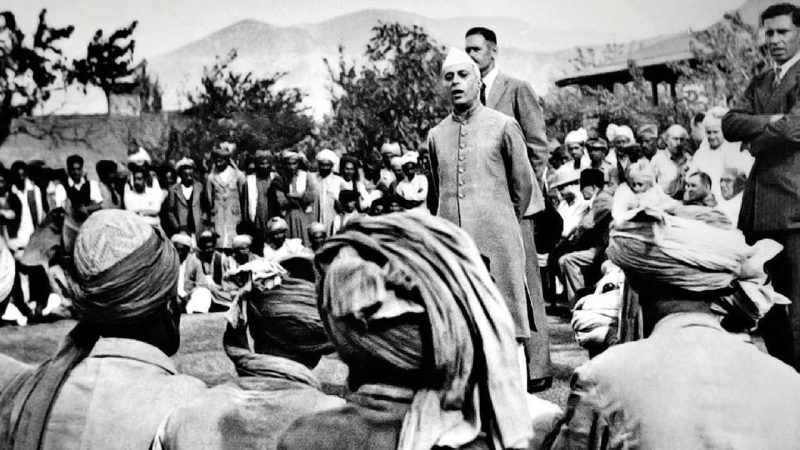
    In 1947, at the time of Independence, India’s socio-economic parameters were similar to those in countries of South East Asia and China. The level of poverty, illiteracy, and inadequacy of health infrastructure was all similar. Since then, these other countries have progressed rapidly leaving India behind in all parameters. So, India has fallen behind relatively in spite of improvements in health services and education, diversification of the economy and development of the industry.

    In 1950, agriculture was the dominant sector with a 55% share of GDP which has now dwindled to about 14%. The share of the services sector has grown rapidly and by 1980 it surpassed the share of agriculture and now it is about 55% of GDP. The Indian economy has diversified production `from pins to space ships’.

    Agriculture grows at a trend rate of a maximum of 4% per annum while the services sector can grow at even 12% per annum. So, there has been a shift in the economy’s composition from agriculture to services, accelerating the growth rate. The average growth rate of the economy between the 1950s and the 1970s was around 3.5%. In the 1980s and 1990s, it increased to 5.4% due to the shift in the composition. There was no acceleration in the growth rate of the economy in the 1990s compared to the 1980s. This rate again increased in the period after 2003 only to decline in 2008-09 due to the global financial crisis. Subsequently, the rate of growth has fluctuated wildly both due to global events and the policy conundrums in India.

    There was the taper tantrum in 2012-13 which cut short the post-global financial crisis recovery. Demonetization in November 2016 adversely impacted growth. That was followed by the structurally flawed GST. These policies administered shocks to the economy. Then came the pandemic in 2020. The economy’s quarterly growth rate had already fallen from 8% in Q4 2017-18 to 3.1% in Q4 2019-20, just before the pandemic hit.

    1980-81 marked a turning point. Prior to that, a drought would lead to a negative rate of growth in agriculture and of the economy as a whole. For instance, due to the drought in 1979-80, the economy declined by 6%. But, that was the last one. After that, a decline in agriculture has not resulted in a negative growth rate for the economy. The big drought of 1987-88 saw the economy grow at 3.4%. After 1980-81, the economy experienced a negative growth rate only during the pandemic which severely impacted the services sector, especially the contact services.

    Employment and Technology Related Issues

    Agriculture employs 45% of the workforce though its share in the economy (14%) has now become marginal. It has been undergoing mechanisation with increased use of tractors, harvester combines, etc., leading to the displacement of labour. Similar is the case in non-agriculture. So, surplus labour is stuck in agriculture leading to massive disguised unemployment.

    India is characterized by disguised unemployment and underemployment.Recent data points to growing unemployment among the educated youth. They wait for suitable work. The result is a low labour force participation rate (LFPR) in India (in the mid-40s) compared to similar other countries (60% plus).The gender dimension of unemployment and the low LFPR is worrying with women the worst sufferers.

    India’s employment data is suspect. The reason is that in the absence of unemployment allowance, people who lose work have to do some alternative work otherwise they would starve. They drive a rickshaw, push a cart, carry a head load or sell something at the roadside. This gets counted as employment even though they have only a few hours of work and are underemployed. So, India is characterized by disguised unemployment and underemployment.
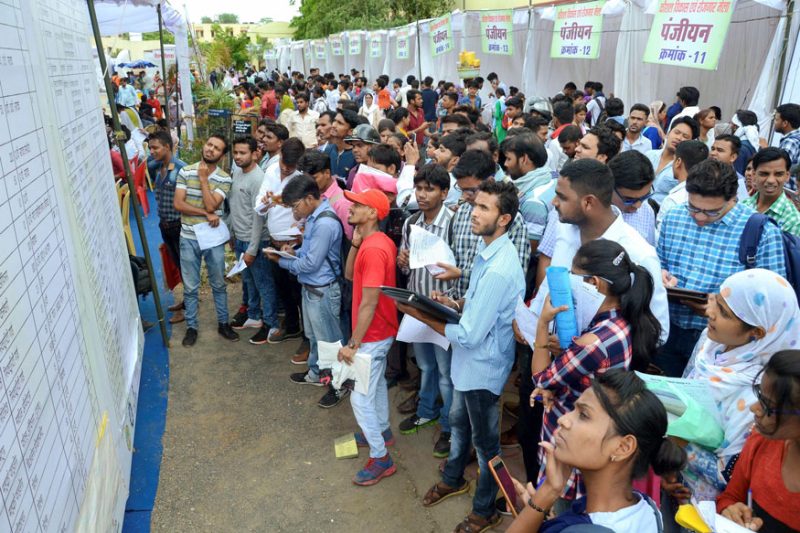
    Recent data points to growing unemployment among the educated youth. They wait for suitable work. The result is a low labour force participation rate (LFPR) in India (in the mid-40s) compared to similar other countries (60% plus). It implies that in India maybe 20% of those who could work have stopped looking for work. No wonder for a few hundred low-grade government jobs, millions of young apply. The gender dimension of unemployment and the low LFPR is worrying with women the worst sufferers.
    These aspects of inadequate employment generation are linked to automation and the investment pattern in the economy. New technologies that are now being used in the modern sectors are labour displacing. For instance, earlier in big infrastructure projects like the construction of roads, one could see hundreds of people working but now big machines are used along with a few workers.

    Further, the organized sectors get most of the investment so little is left for the unorganized sector. This is especially true for agriculture. Thus, neither the organized sector nor agriculture is generating more work. Consequently, entrants to the job market are mostly forced to join the non-agriculture unorganized sector, which in a sense is the residual sector, where the wages are a fraction of the wages in the organized sector. The unorganized sector also acts as a reserve army of labour keeping organized sector wages in check

    Lack of a Living Wage

    To boost profits, the organized sector is increasingly, employing contract labour rather than permanent employees. This is true in both the public and private sectors. So, not only the workers in the unorganized sector, even the workers in the organised sector do not earn a living wage. Thus, most workers have little savings to deal with any crisis. They are unable to give their children a proper education and cannot afford proper health facilities. Most of the children drop out of school and can only do menial jobs requiring physical labour. They cannot obtain a better-paying job and will remain poor for the rest of their lives.

    The Delhi socio-economic survey of 2018 pointed to the low purchasing power of the majority of Indians. It showed that in Delhi, 90% of households spent less than Rs. 25,000 per month, and 98% spent less than Rs. 50,000 per month. Since Delhi’s per capita income is 2.5 times the all India average, deflating the Delhi figures by this factor will approximately yield all India figures. So, 98 per cent of the families would have spent less than Rs.20,000 per month, and 90 per cent less than Rs.10,000 per month. This effectively implies that 90 per cent of families were poor in 2018, if not extremely poor (implied by the poverty line). During the pandemic, many of them lost incomes and were pauperized and forced to further reduce their consumption.

    Unorganized Sector Invisibilized

    In the unorganized sector, labour is not organized as a trade union and therefore, is unable to bargain for higher wages, when prices rise. It constitutes 94% of the workforce and has little social security. No other major world economy has such a huge unorganized sector. No wonder when such a large section of the population faces a crisis in their lives, the economy declines, as witnessed during the pandemic. India’s official rate of growth fell more sharply than that of any other G20 country.

    The micro sector has 99% of the units and 97.5% of the employment of MSME and is unlike the small and medium sectors. The benefits of policies made for the MSME sector do not accrue to the micro units.

    Policymakers largely ignore the unorganized sector. The sudden implementation of the lockdown which put this sector in a deep existential crisis points to that. The micro sector has 99% of the units and 97.5% of the employment of MSME and is unlike the small and medium sectors. The benefits of policies made for the MSME sector do not accrue to the micro units.

    Invisibilization of the unorganized sector in the data is at the root of the problem. Data on this sector become available periodically, called the reference years. In between, it is assumed that this sector can be proxied by the organized sector. This could be taken to be correct when there is no shock to the economy and its parameters remain unchanged.
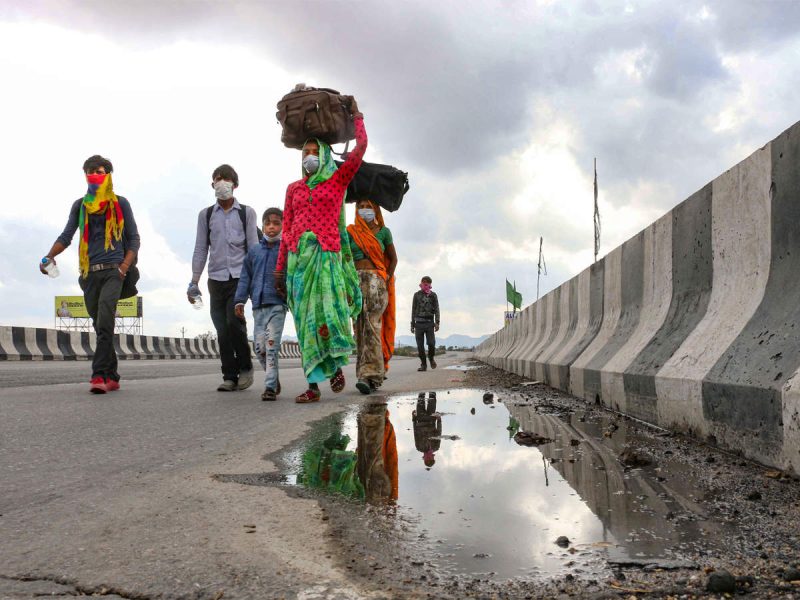
    Demonetization and the flawed GST administered big shocks to the economy and undermined the unorganized sector. Its link with the organized sector got disrupted. Thus, the methodology of calculating national income announced in 2015 became invalid.

    The implication is that the unorganized sector’s decline since 2016 is not captured in the data. Worse, the growth of the organized sector has been at the expense of the unorganized sector because demand shifted from the latter to the former. It suited the policymakers to continue using the faulty data since that presented a rosy picture of the economy. This also lulled them into believing that they did not need to do anything special to check the decline of the unorganized sector.

    Policy Paradigm Shift in 1947

    Growing unemployment, weak socio-economic conditions, etc., are not sudden developments. Their root lies in the policy paradigm adopted since independence.
    In 1947, the leadership, influenced by the national movement understood that people were not to blame for their problems of poverty, illiteracy and ill-health and could not resolve them on their own. So, it was accepted that in independent India these issues would be dealt with collectively. Therefore, the government was given the responsibility of tackling these issues and given a key role in the economy.

    Simultaneously, the leadership, largely belonging to the country’s elite, was enamoured of Western modernity and wanted to copy it to make India an ’advanced country’. The two paths of Western development then available were the free market and Soviet-style central planning. India adopted a mix of the two with the leading role given to the public sector. This path was chosen also for strategic reasons and access to technology which the West was reluctant to supply. But, this choice also led to a dilemma for the Indian elite. It had to ally with the Soviet Union for reasons of defence and access to technology but wanted to be like Western Europe.

    Both the chosen paths were based on a top-down approach. The assumption was that there would be a trickle down to those at the bottom. People accepted this proposition believing in the wider good of all. Resources were mobilized and investments were made in the creation of big dams and factories (called temples of modern India) that generated few jobs. They not only displaced many people trickle down was minimal. For instance, education spread but mostly benefitted the well-off.

    The Indian economy diversified and grew rapidly. An economy that for 50 years had been growing at about 0.75% grew at about 4% in the 1950s. But, the decline in the death rate led to a spurt in the rate of population growth. So, the per capita income did not show commensurate growth, and poverty persisted. Problems got magnified due to the shortage of food following the drought of 1965-67 and the Wars in 1962 and 1965. The Naxalite movement started in 1967, there was BOP crisis and high inflation in 1972-74 due to the growing energy dependence and the Yom Kippur war. Soon thereafter there was political instability and the imposition of an Emergency in 1975. The country went from crisis to crisis.

    Planning failed due to crony capitalism. The prevailing political economy enabled the business community to systematically undermine policies for their narrow ends by fueling the growth of the black economy.

    The failure of trickle-down and the cornering of the gains of development by a narrow section of people led to growing inequality and people losing faith in the development process. Different sections of the population realized that they needed a share in power to deliver to their group. Every division in society — caste, region, community, etc. — was exploited. The leadership became short-termist and indulged in competitive populism by promising immediate gains.

    The consensus on policies that existed at independence dissipated quickly. Election time promises to get votes were not fulfilled. For instance, PM Morarji Desai said that promises in the Janata Dal manifesto in 1977 were the party’s programme and not the government’s. Such undermining of accountability of the political process has undermined democracy and trust and aggravated alienation.

    Black Economy and Policy Failure

    The black economy has grown rapidly since the 1950s with political, social and economic ramifications. Even though it is at the root of the major problems confronting the country, most analysts ignore it.

    So, the black economy controls politics and to retain power it undermines accountability and weakens democracy.

    It undermines elections and strengthens the hold of vested interests on political parties. The compromised leadership of political parties is open to blackmail both by foreign interests and those in power. When in power it is willing to do the bidding of the vested interests. So, the black economy controls politics and to retain power it undermines accountability and weakens democracy.

    The black economy controls politics and corrupts it to perpetuate itself. The honest and the idealist soon are corrupted as happened with the leadership that emerged from the anti-corruption JP movement in the mid-1970s. Many of them who gained power in the 1990s was accused of corruption and even prosecuted. Proposals for state funding of elections will only provide additional funds but not help clean up politics.

    The black economy can be characterized as ’digging holes and filling them’. It results in two incomes but zero output. There is activity without productivity with investment going to waste. Consequently, the economy grows less than its potential. It has been shown that the economy has been losing 5% growth since the mid-1970s. So, if the black economy had not existed, today the economy could have been 8 times larger and each person would have been that much better off. Thus, development is set back. In 1988, PM Rajiv Gandhi lamented that out of every rupee sent only 15 paisa reaches the ground. P Chidambaram as FM said, `expenditures don’t lead to outcomes’.

    The black economy leads to the twin problem of development. First, black incomes being outside the tax net reduce resource availability to the government. If the black incomes currently estimated at above 60% of GDP could be brought into the tax net, the tax/GDP ratio could rise by 24%. This ratio is around 17% now and is one of the lowest in the world. Further, as direct tax collections rise, the regressive indirect taxes could be reduced, lowering inflation.

    India’s fiscal crisis would also get resolved. The current public sector deficit of about 14% would become a surplus of 10%. This would eliminate borrowings and reduce the massive interest payments (the largest single item in the revenue budget). It would enable an increase in allocations to public education and health to international levels and to infrastructure and employment generation.

    In brief, curbing the black economy would take care of India’s various developmental problems, whether it be lack of trickle-down, poverty, inequality, policy failure, employment generation, inflation and so on. It causes delays in decision-making and a breakdown of trust in society.

    Due to various misconceptions about the black economy, many of the steps taken to curb it have been counterproductive, like demonetization. Dozens of committees and commissions have analysed the issues and suggested hundreds of steps to tackle the problem. Many of them have been implemented, like reduction in tax rates and elimination of most controls but the size of the black economy has grown because of a lack of political will.

    Policy Paradigm Shift in 1991

    Failure of policies led to crisis after crisis in the period leading up to 1990. The blame was put on the policies themselves and not the crony capitalism and black economy that led to their failure. The policies prior to 1990 have been often labelled as socialist. Actually, the mixed economy model was designed to promote capitalism. At best the policies may be labelled as state capitalist and they succeeded in their goal. Private capital accumulated rapidly pre-1990. The Iraq crisis of 1989-90 led to India’s BOP crisis and became the trigger for a paradigm change in policies in favour of capital. The earlier more humane and less unequal path of development was discarded.

    Marketization has led to the ’marginalization of the marginals’, greater inequality and a rise in unemployment.

    In 1991, a new policy paradigm was ushered in. Namely, ’individuals are responsible for their problems and not the collective’. Under this regime, the government’s role in the economy was scaled back and individuals were expected to go to the market for resolving their problems. This may be characterized as ’marketization’. This brought about a philosophical shift in the thinking of individuals and society.
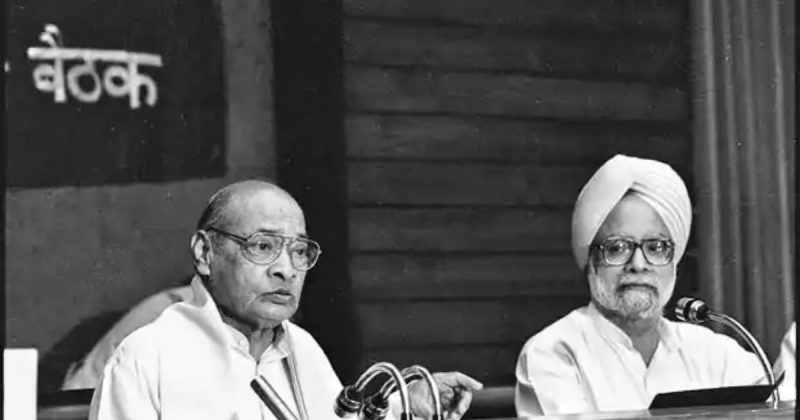
    Marketization has led to the ’marginalization of the marginals’, greater inequality and a rise in unemployment. These policies have promoted ’growth at any cost’ with the cost falling on the marginalized sections and the environment, both of which make poverty more entrenched. So, the pre-existing problems of Indian society have got aggravated in a changed form.

    Poverty is defined in terms of the ’social minimum necessary consumption’ which changes with space and time. Marketization has changed the minimum due to the promotion of consumerism and environmental decay imposing heavy health costs.
    The highly iniquitous NEP is leading to an unstable development environment. The base of growth has been getting narrower leading to periodic crises. Additionally, policy-induced challenges like demonetization, GST, pandemic and now the war in Ukraine have aggravated the situation. These social and political challenges can only grow over time as divisions in society become sharper.

    Weakness in Knowledge Generation

    Why does the obvious not happen in India? No one disagrees that poverty, illiteracy and ill health need to be eliminated. In addition to the problems due to the black economy and top-down approach, India has lagged behind in generating socially relevant knowledge to tackle its problems and make society dynamic.

    Technology has rapidly changed since the end of the Second World War. It is a moving frontier since newer technologies emerge leading to constant change and the inability of the citizens to cope with it. The advanced technology of the 1950s is intermediate or low technology today.

    Literacy needs to be redefined as the ability to absorb the current technology so as to get a decent job. Many routine jobs are likely to disappear soon, like, driver’s jobs as autonomous (self-driving) vehicles appear on the scene. Most banking is already possible through net banking and machines, like, ATMs. Banks themselves are under threat from digital currency.

    So, education is no more about the joy of learning and expanding one’s horizon. No wonder, the scientific temper is missing among a large number of the citizens.

    India’s weakness in knowledge generation is linked to the low priority given to education and R&D. Learning is based substantially on `rote learning’ which does not enable absorption of knowledge and its further development. So, education is no more about the joy of learning and expanding one’s horizon. No wonder, the scientific temper is missing among a large number of the citizens. Dogmas, misconceptions and irrationalities rule the minds of many and they are easily misled. This is politically, socially and economically a recipe for persisting backwardness.

    In spite of policy initiatives regarding education, like, the national education policy in 1968 and 1986, there is deterioration. This is because the milieu of education is all wrong. Policy is in the hands of bureaucrats, politicians or academics with bureaucratized mindsets. So, policies are mechanically framed. Like the idea that ’standards can be achieved via standardization’.

    Learning requires democratization. So, institutions need to be freed from the present feudal and bureaucratic control. Presently, institutions treat dissent as a malaise to be eliminated rather than celebrated. Courses are sought to be copied from foreign universities. JNU is told to be like Harvard or Cambridge. This is a contradiction in terms; originality cannot be copied. Courses copied from abroad tend to be based on the societal conditions there and not Indian conditions. Gandhi had said that the Indian education system is alienating and for many it still is.

    The best minds mostly go abroad and even if they return, they bring with them an alien framework not suited to India. So, as a society, we need to value ideas, prioritize education and R&D and generate socially relevant knowledge.

    Learning is given low priority because ideas are sought to be borrowed from abroad. So, the rulers have little value for institutions that could generate new ideas and inadequate funds are allotted to them. The best minds mostly go abroad and even if they return, they bring with them an alien framework not suited to India. So, as a society, we need to value ideas, prioritize education and R&D and generate socially relevant knowledge.

    Conclusion

    The growth at any cost strategy has been at the expense of the workers and the environment. This has narrowed the base of growth and led to instability in society — politically, socially and economically.

    India is a diverse society and the Indian economy is more complex than any other in the world. This has posed serious challenges to development in the last 75 years but undeniably things are not what they were. The big mistake has been to choose trickle-down policies that have not delivered to a vast number of people who live in uncivilized conditions. Poverty has changed its form and the elite imply that the poor should be grateful for what they have got. They should not focus on growing inequality, especially after 1991, when globalization entered the marketization phase which marginalizes the marginals.

    The growth at any cost strategy has been at the expense of the workers and the environment. This has narrowed the base of growth and led to instability in society — politically, socially and economically. The situation has been aggravated by the recent policy mistakes — demonetization, flawed GST and sudden lockdown. The current war in Ukraine is likely to lead to a new global order which will add to the challenges. The answer to ’why does the obvious not happen’ in India is not just economic but societal. Unless that challenge is met, portents are not bright for India at 75.

    This paper is based substantially on, `Indian Economy since Independence: Persisting Colonial Disruption’, Vision Books, 2013 and `Indian Economy’s Greatest Crisis: Impact of Coronavirus and the Road Ahead’, Penguin Random House, 2020.

    This article was published earlier in Mainstream Weekly.

    Feature Image Credit: Financial Express

    Other Images: DNA India, news18.com,  economictimes, rvcj.com

  • Is the sheen of overseas higher education still compelling?

    Is the sheen of overseas higher education still compelling?

    We may not have easy and clear answers as to when, why, and how Indian students began going abroad to study — particularly in the realm of higher education, but this process has been on for generations. It is essential to draw attention to the fact that ancient India has had at least two reputed ‘universities’, Nalanda and Taxila (the erstwhile Takshashila now located in Pakistan), which indeed attracted students from outside the subcontinent.

    Overseas education is a centuries-old phenomenon in India. Quality of education, variety of courses, and comparatively low fees are some of the influencing factors

    While during the ancient times the concept, as well as the content of education, was quite at variance and different from what evolved and spread widely during the modern period, the urge to seek knowledge has been ubiquitous and pervasive right from the time institutionalised form of imparting education emerged. However, we do have to recognise and acknowledge that ‘education’ in some form or the other has always been the sine qua non throughout the existence of Homo sapiens, howsoever family- or community-driven, and informal it may have been, and irrespective of the level of economic and socio-cultural development of a given society in any part of the world.

    The very first three ‘modern’ universities, namely Bombay, Calcutta, and Madras, got established in India during the colonial period in 1857, though some undergraduate degree colleges did precede the establishment of these universities in the three presidencies of Bombay, Calcutta, and Madras. For those aspiring for a higher degree, a kind of avenue existed, in general, in the British universities, because of the colonial scenario, though it was not uncommon for some to go to universities in the United States too.

    Thus, ‘studying abroad’ — that magic phrase in educational circles today — is not really a recent phenomenon; it has been an educational trajectory for at least some sections of students in India for at least 150 years.

    Those who could afford paid for these overseas ventures, and for the less privileged but talented scholarships came in handy. Today, however, it has become rather easy to obtain bank loans which many are able to pay back given the rise in the income of both the lower classes as well as the middle classes. Also, quite a few philanthropic organisations are coming forward to disburse scholarships as well as loans at really soft interest rates. This has strengthened many a student from the erstwhile underprivileged and minority groups, including women students, to benefit from such good deeds and opportunities.

    Unavailability of some courses, and the lack of appropriate ambience for higher education, in general, were indeed reasons for going abroad, at least during the very early period of the nineteenth and early twentieth centuries.

    It is also true that a lot of prominence and significance has all through been attached to the better quality of education prevalent abroad. It was invariably held that degrees from a foreign university were superior to those from the home universities

    Though this argument was true given the state of higher education in India during the said period, there, nevertheless, prevailed a notion that anything associated with the colonial rulers and their country was qualitatively better than things (including academic degrees) that were homespun. It is not out of place to point out that in some circles in India — in the contemporary context too — this notion of the superiority of a foreign degree is still given quite a high level of leverage. Some of the recently-established private universities swear by and recruit only faculty with a foreign doctoral degree!

    The surveys that rank universities in different countries as per their ‘performance’ have emerged rather recently, but do seem, at least in the present context, to add to the long-existing bias that exists in India in favour of better quality of outcomes vis-à-vis overseas universities. True, that though Indian universities do not feature anywhere in the top echelons in the ranking of higher educational institutions, and many an academic, not just in India but elsewhere too, question the methodology adopted in these processes, the fact remains that going by the various criteria and parameters adopted, most Indian universities do not make the cut.

    This is because there exists a truly uneven range of quality across departments and centres. Reasons for such a state are many but nepotism and corruption in the recruitment of faculty is indeed a prime reason.

    I must hasten to add that many higher educational institutions in India do have departments and centres that have done exceedingly well, and are undoubtedly abodes of excellence in the central and state university spheres; so also some departments in private universities. What our higher educational institutions suffer from in terms of not measuring up in totality when all the departments and centres are weighed together at the pan-institutional level. This is because there exists a truly uneven range of quality across departments and centres. Reasons for such a state are many but nepotism and corruption in the recruitment of faculty is indeed a prime reason.

    We also need to examine the developments during the last few decades, particularly as regards students going abroad for medical education to China, the Philippines, Russia, Ukraine, and other East European countries, and do not get surprised, even Pakistan! It is clear that the much sought-after medical degrees come at a much cheaper cost, almost at a fraction of what they would have to pay in private Indian medical colleges.

    The beeline that is made to go abroad for a medical degree in this particular realm is out and out a cost-cutting mechanism.

    Those who are after such medical degrees are mainly students who fail to obtain a high ranking in the currently prevalent National Eligibility Entrance Test (NEET) for admission to the MBBS and BDS courses, in State-run medical and dental colleges where the fees are substantially low. The beeline that is made to go abroad for a medical degree in this particular realm is out and out a cost-cutting mechanism.

    However, students who obtain a medical degree from an overseas institution must clear the Foreign Medical Graduate Examination (FMGE) if they wish to practice in India. So much for a foreign degree.

    So, today the lure of foreign universities is not just due to the sheen or quality alone, which probably was so some time back, but currently, there are many other reasons as delineated above.


    This article was published earlier in moneycontrol.

    Feature Image Credit: The Free Press Journal

  • National Education Policy, 2020 – Policy Brief

    National Education Policy, 2020 – Policy Brief

    [powerkit_button size=”lg” style=”info” block=”true” url=”https://admin.thepeninsula.org.in/wp-content/uploads/2022/04/Policy-Brief-NEP-2020.docx-1_compressed-1.pdf” target=”_blank” nofollow=”false”]
    Download – Policy Brief on National Education Policy, 2020
    [/powerkit_button]

    Executive Summary:

    In line with the New Education Policy (NEP) 2020 mandate, the UGC released the draft National Higher Educational Qualifications Framework (NHEQF) in February 2022. Its release has reignited the controversy over the policy that was criticized and even rejected by many state governments. The inclusion of Education in the concurrent list gives overriding powers to the centre. However, the sweeping changes the NEP is set to bring have raised concerns that the states would turn into mere implementing agencies while all the decisions regarding education will be taken by the centre. At the root of the controversy lies the federal structure of India which would be jeopardized by the implementation of the policy. Hence, significant and appropriate amendments to the draft are required to address the grievances of the states.

    What is NEP (2020)?

    The NEP, released in July of 2020 by the Union Government, seeks to overhaul the entire education system of the country by replacing the thirty four-year-old National Policy on Education (1986). In the domain of pre-University education, the new policy aims to transform the curricula structure from 10+2 to 5+3+3+4, mandates the Three Language Formula (TLF), reduces the syllabus to make board exams “easier” and gives thrust to vocational training and skill development. In the realm of higher education, it envisions a single regulator- the Higher Education Council India (HECI)- for Higher Education Institutes (HEIs) by merging UGC, AICTE and other regulatory bodies. The HECI is further divided into four verticals, namely the National Higher Education Regulatory Council (NHERC), National Accreditation Council (NAC), Higher Education Grants Council (HEGI) and General Education Council (GEC). 

    The policy introduces four-year undergraduate programmes with multiple exit options, along with proposing a national Academic Bank of Credit and a national entrance exam for all universities. It further allows higher education to be taught in regional languages. Additionally, it proposes the National Testing Agency (NTA) conduct a “high quality” common entrance test and a common specialized subject exam in sciences, humanities, language, arts, and vocational subjects, at least twice a year. It blurs the distinction between research-oriented and employment-oriented education, emphasizing a multidisciplinary approach to education. Additionally, it proposes facilitation to top global universities to set up campuses in India and to top Indian Universities to establish campuses abroad.

    The policy also touches upon the issue of Adult Education. It proposes strong and innovative government initiatives to achieve 100% adult literacy, educate about critical life skills (including financial literacy, digital literacy, commercial skills, health care and awareness etc.), impart vocational skills and provide basic education to adults. It also ensures providing the necessary infrastructure for adults to facilitate its implementation.  

    Why is it a problem? 

    Since its release, the policy has been opposed by a few states. Though other states have voiced their reservations, none have been as vocal and vehement as Tamil Nadu. 

    • The foremost reason pertains to the Three Language Formula. The policy states that out of the three languages that ought to be taught at the pre-University level, two must be Indian. This leaves the students from the southern states to learn Hindi, along with English and the regional language in their curriculum. The formula was brought forward in 1968 by the then Indira Gandhi government as recommended by Kothari Commission. All states adopted the policy except Tamil Nadu, which continued its two language policy.

    The Three Language Formula finds its explicit mention in Section 4.13 of the Draft policy. In order to promote multilingualism, the draft states that, “The three-language formula will continue to be implemented”. Moreover, a student is given the option to change one of the three languages only once- in Grade 6 or 7. Though the formula has been in continuance since the 1970s, an exclusive emphasis upon it raises eyebrows. The draft further falls short of assuring the states unwilling to implement the formula of any compulsion by the centre, instead offering “greater flexibility” in its implementation. 

    Learning Hindi has always been a controversial issue in Tamil Nadu. The state has seen numerous instances of violence and public protests against the imposition of Hindi. The state has also actively promoted Tamil learning in schools. In 2006, the state enacted Tamil Nadu Tamil Learning Act, making it compulsory for every school operating in the state to teach Tamil. The state government is also opposed to the establishment of Navodaya Schools by the centre in the state.

    • The draft also places an unprecedented emphasis on learning Sanskrit. Section 4.16 stresses the need for learning Sanskrit since most of the Indian other languages attribute “their origins and sources of vocabularies” to it. Section 4.17 emphasizes the importance of classical literature possessed by the language. It thus offers its teaching “at all levels of school and higher education”. Moreover, it promotes the teaching of the language through its classical literature in mathematics, philosophy, grammar, music, politics, medicine, architecture, metallurgy, drama, poetry etc.

    Laying such a huge emphasis upon an archaic language in schools and even HEIs at “all levels” would leave a student burdened with an unnecessary curriculum. Offering courses in Sanskrit to college students, for instance, in non-Hindi speaking states would decrease their grades. Worse still, in Central Universities- mostly dominated by Hindi speakers, such courses will make naked and even exacerbate the language barrier the non-Hindi speaking students face. Further, the postulate that most of the major Indian languages owe their “origins” to Sanskrit is not even remotely true. Additionally, the literature in Sanskrit can be discriminatory against varna, caste or group, especially in social sciences. 

    • However, the major concern relates to the federal structure of India. The policy proposes the establishment of the all-powerful HECI and its verticals. The NHERC, one of its verticals, reserves the power to regulate every facet of HEIs, including financial probity, good governance, and the full online and offline public self-disclosure of all finances, audits, procedures, infrastructure, faculty/staff, courses, and educational outcomes[Section 18.3]. It further envisions a “graded accreditation” system to be given by the NAC, that will “specify phased benchmarks for all HEIs to achieve set levels of quality, self-governance, and autonomy…to attain the highest level of accreditation over the next 15 years” [Section 18.4]. The GECI, another of its verticals, will frame “expected learning outcomes for higher education programmes” and mandate the identification of “specific skills that students must acquire during their academic programmes” [Section 18.6].

    Owing to its vague language, the draft lacks clarity on the extent of jurisdiction of HECI and its verticals. It reserves the power to regulate the faculty/staff, courses, educational outcomes etc., thus infringing upon the state’s rights on reservations and education. Moreover, the students are required to acquire “specific skills” and “learning outcomes” framed by the central government, making it difficult for them to cater to the needs of their respective states. Further, the vocabulary used, such as “good governance”, leaves room for significant manipulation in the future.

    • The policy veritably promotes the centralization of education at every level. For instance, it envisages a nation-wide “high-quality” common aptitude test for admission into the universities, as well as “specialized common subject exams in the sciences, humanities, languages, arts, and vocational subjects” [Section 4.42], which it assumes will reduce the burden on students. Moreover, an all-India test is to be conducted by NTA for admission into pre-service teacher preparation programmes of Teacher Education Institutions (TEIs) [Section 15.7], which it envisions to convert into multidisciplinary institutions [Section 15.4]. Moreover, it places an undue emphasis on centralized vocational training in all schools and HEIs which would be overseen by the National Committee for the Integration of Vocational Education (NCIVE) [Section 16.8]. In the field of academic research, the policy envisions the establishment of the National Research Foundation to provide funding for research [Section 17.9]. Further, it proposes to establish the National Research Foundation (NRF) which is meant to provide funding for research to the institutions, and “undertake major initiatives to seed and grow research at the state universities and other public institutions”[Section 17.9], centralizing disbursement of research-oriented funding. It is further empowered to ensure that the Research Scholars are “constantly made aware of the most urgent national research issues” to allow breakthroughs to be optimally brought into policy [Section 17.11(c)].

    Tamil Nadu’s objection to a country-wide entrance test is premised upon the recommendations of the M. Anandakrishnan committee. Constituted in 2006, it recommended the abolition of the Common Entrance Test (CET) in the state from the academic year 2007-08 (Srinivasan, 2016), due to the unaffordability of the high fees of coaching for the rural and underprivileged students. Furthermore, the NRF is empowered to fund the research on urgent “national” issues, thus again leaving the door ajar for manipulation of their jurisdiction, and depriving state-funded institutions of funding for research on regional issues.

    • The policy seizes the administrative autonomy from both public and private HEIs. It mandates every such institution to establish a Board of Governors (BoG) which would be empowered to govern the institution[Section 19.2], including the selection of leaders of the institution [Section 19.4]. Further, the policy subjugates the BoG to guidelines formulated by NHERC[Section 19.3]. Additionally, it makes it compulsory for every institution to formulate its own Institutional Development Plan [Section 19.5] to strategize its roadmap.

    In subjugating the administrative system of the colleges to a central body, the central government ignores the urban-rural divide and caste-based discrimination entrenched in them. Moreover, drafting the same guidelines for urban, rural, minority etc. institutions would, along with waning their autonomy, undermine the purpose they are meant to serve. 

    • The policy provides multiple exit and entry options to the students pursuing higher education[Section 11.9], along with the creation of an Academic Bank of Credits to digitally store credits earned by the student and different designs of Master’s programmes [Section 11.10].  

    The central government does not contemplate the unintended consequences of the above proposition, especially for the backward communities and female students. It leaves the students of the said groups with multiple exit options but few entry options. Multiple choices of exit will compel such students facing monetary or familial issues to quit their education in the middle. Further, it burdens a teenage student with critical life-changing decisions.  Moreover, the proposed system disallows a student to carry backlogs into the next year, bringing about the apprehension of exacerbation of the dropout rate, which currently stands at 12.6%.

    • Both the draft NHEQF and the draft policy suggest, in multiple instances, that all colleges either become multidisciplinary or merge with existing universities. However, both the documents do not provide any provision regarding how the same will be executed without any monetary assistance. This has raised concerns about many state government colleges becoming defunct due to a lack of finances to become multidisciplinary, thus depriving a large number of students of educational opportunities. 
    • The policy makes no mention of the Reservation System in educational institutions, both in admission and faculty recruitment, making it non-inclusive to all sections of the society. Further, it does not mention the drop-out rates among the backward communities, let alone ways to tackle them. The NEP policy-makers veritably fail to view education as a tool to uplift the poor and backward classes while formulating it.
    • The proposal also lacks a grievance redressal mechanism, either for the states or the institutions regarding any facet of the policy. The institutions and state governments are left with no choice but to follow the guidelines of the would-be central institutions. Institutions failing to comply with the guidelines are feared to become defunct. Moreover, the power of ‘light but tight’ regulation bestowed upon the central bodies also leaves the door ajar for manipulation of their jurisdiction. 

    Tamil Nadu’s response to NEP

    Since early on, Tamil Nadu’s policies have emphasized education as a modus operandi to uplift the backward castes. As early as 1919, certain legislations were in place to encourage and mandate local education authorities to establish schools at places that were accessible to everyone, thus broadening the social base of its educated bracket. The reasons for the Tamil Nadu government opposing NEP are manifold. 

    Tamil Nadu Chief Minister MK Stalin has explicitly stated that the policy will not be implemented in the state. He has called it a policy “for elites” and, if implemented, education “will be confined and limited to a few sections”. The state government has even set up a committee to formulate its own State Education Policy in a bid to replace the NEP. Furthermore, the state plans to implement only some ‘good aspects’ of the central policy (Sathyanarayana, 2021). It claims that the policy negates the efforts of more than a hundred years of social justice aspirations that were carefully envisaged in Tamil Nadu. State Education Minister K. Ponmudi noted that mandating entrance exams for getting admissions to arts and science colleges would affect the students from rural areas.

    Similar concerns were raised by L. Jawahar Nesan, head of the All India Save Education Committee, while complaining that the proposed Academic Bank of Credits (ABC) could result in “students dropping out of higher educational institutions before completing their course”. “The proposed system aims at furthering vocational education and creation of a workforce pool”, he added (“Academics call for the withdrawal of draft”, 2022). The State Platform for Common School System- Tamil Nadu (SPCSS-TN) termed the framework “a crude form of diarchy”(Sathyanarayana, 2022). Regarding the mandatory entrance test akin to NEET, PB Prince Gajendra Babu, General Secretary of the body, said that the students don’t have sufficient time and their family circumstances do not permit them to undergo separate coaching for entrance exams(ibid). In September last year, the Coimbatore-based Aram Seiya Virumbu Trust filed a writ petition in Madras High Court challenging the constitutionality of Section 57 of the 42nd Amendment that brought education in the concurrent list as a response to the policy, whose implementation, the trust alleged, will lead to “autonomy of the states in education be completely taken away thereby striking at the very root of the federal structure”(Imranullah S., 2021).

    The issue of centralization of education has always been a hot potato in the state. Back in 2006, M. Karunanidhi’s government constituted a committee under the chairmanship of M. Anandakrishnan to recommend measures for the abolition of the Common Entrance Test (CET) in the state from the academic year 2007-08. On the recommendations of the committee, the state government terminated its practice of conducting CET for admission into technical and medical courses, making it easier for underprivileged students to pursue the said graduate courses (Rajasekaran, 2021). Other policy decisions taken by the state for similar causes include the 50% ‘in-service’ super speciality seats quota in government medical colleges which was recently upheld by the Supreme Court. Prior to NEET, the quota had provided opportunities to the lower strata of society to enter the colleges which in turn helped the state government in providing an uninterrupted supply of doctors in primary health centres (P.M., 2019). 

    Other States’ Response

    Among other states, West Bengal has most emphatically opposed the implementation of the policy. Within a month of its release, Partha Chatterjee, the state Education Minister, announced the government’s unwillingness to implement the policy in the state “any time soon”, due to its undermining of the federal structure and non-inclusion of Bengali in the list of classical languages(“No NEP 2020 in West Bengal”, 2020). He also said that no one in the state government was consulted for its formulation. Kerala has also protested against the policy in the report of the six-member committee, chaired by Professor Prabhat Patnaik. 

    Delhi Education Minister Manish Sisodia accused the central government of encouraging the privatisation of education and reducing its responsibility as a government to provide quality education to all, while questioning the need to make board exams easier. Chhattisgarh CM Bhupesh Baghel termed it as centralization of education which goes against the federal structure of the country(Sharma, 2020). Rajasthan Education Minister Govind Datasra also criticized the draft for lack of clarity.

    Conclusion

    The policy possesses strong tendencies of centralization of education, contravening federalism as a basic structure of our constitution. It establishes bodies that are empowered to determine policies and curriculum for all educational institutions, including state institutions, with little or no role of the states in formulating them, turning them into mere implementing bodies. Moreover, it imposes teaching of Hindi and Sanskrit in all schools across the country with no consent of the states. The policy violates numerous Supreme Court rulings that have upheld federalism as a basic structure of the constitution. The central government must make significant changes to the draft policy to make it more reflective, just and fair to India’s diversity.

    Recommendations

    • The draft policy is an onslaught on federalism as a basic structure of our constitution. The concerned authorities, while acknowledging the competence of the states in educational planning and execution, and its role as a determinant of their development, must re-draft the policy to omit the provisions that dilute the federal structure.
    • The Three Language Formula must be waived off for the states unwilling to pursue it. Additionally, the students of the states that choose to implement the formula must be given the option to change any of the languages in secondary schooling.
    • In view of the large endemic socio-economic disparity in India, the states must be allowed to formulate their own processes of enrolling the students into higher education. Imposing a central exam on constituents of the backward community might disrupt the smooth process in which they have been uplifted from their backwardness in the last few decades.
    • The proposed provision of multiple exit options in higher education must be reformulated so as to prevent dropouts in the middle of the courses. The policy must also consider instating multiple options to clear backlogs to further reduce the number of dropouts.
    • The colleges must be given more autonomy in deciding their curriculum. To turn a vast number of government colleges into multidisciplinary ones might be expensive for the state governments, which could possibly result in these colleges being permanently closed.
    • The attempts to centralize education must be clamped down to address the grievances of various states. Moreover, the necessary central bodies proposed in the draft must be given adequate representation by all the states.
    • The policy must explicitly uphold the reservation system in educational institutions regarding admissions and jobs.
    • The draft lacks clarity on the extent of jurisdiction of the proposed central bodies. Hence, the government must elaborate on the roles of these institutions
    • The undue emphasis on vocational education must be dialled down. Instead, emphasis must be placed upon academic education and critical thinking.  

    References

    1. “Academics call for withdrawal of draft National Higher Education Qualification Framework”,(2022, March 9) The Hindu. https://www.thehindu.com/news/national/tamil-nadu/academics-call-for-withdrawal-of-draft-national-higher-education-qualification-framework/article65207193.ece
    2. Imranullah S., Mohamed. (2021, September 14) “Case in Madras HC challenges constitutional amendment shifting education from state list to concurrent list” The Hindu. https://www.thehindu.com/news/national/tamil-nadu/case-in-madras-hc-challenges-constitutional-amendment-shifting-education-from-state-list-to-concurrent-list/article36448046.ece
    3. “No NEP 2020 in West Bengal, it undermines role of states: Education minister”(2020, September 7) Livemint. https://www.livemint.com/politics/news/no-nep-2020-in-west-bengal-it-undermines-role-of-states-state-education-minister-11599477761391.html
    4. P.M., Yazhini.(2019, June 8) “Common Entrance Exams Like NEET Ignore India’s Gender and Social Realities”. The Wire. https://thewire.in/education/neet-tamil-nadu-caste-gender
    5. Rajasekaran, Ilangovan.(2021, May 29) “M. Anandakrishnan, an educationist who democratised technical education in Tamil Nadu, passes away”. Frontline. https://frontline.thehindu.com/dispatches/m-anandakrishnan-educationist-who-democratised-technical-education-in-tamil-nadu-passes-away/article34677215.ece
    6. Sathyanarayana, R.(2021, December 30) “Tamil Nadu to accept ‘good aspects’ of National Education Policy”. DT Next. https://www.dtnext.in/News/TopNews/2021/12/30135026/1336439/Tamil-Nadu-to-accept-good-aspects-of-National-Education-.vpf
    7. Sathyanarayana, R.(2022, February 22) “Experts flay draft higher education framework”. DT Next. https://www.dtnext.in/News/TopNews/2022/02/22022833/1354869/Experts-flay-draft-higher-education-framework.vpf
    8.  Sharma, Nidhi. (2020, August 18) “New Education Policy an attempt to centralise education: Opposition-ruled states” The Economic Times. https://economictimes.indiatimes.com/news/politics-and-nation/new-education-policy-an-attempt-to-centralise-education-opposition-ruled-states/articleshow/77604704.cms?from=mdr
    9. Srinivasan, R.(2016). Reservation in Educational Institutions: Who Gains from Abolishing the Common Entrance Test (CET) in Tamil Nadu. The Hindu Centre. https://www.thehinducentre.com/incoming/article23697651.ece/BINARY/Policy%20Watch%20No_3.pdf

    Featured Image: Deloitte

    [powerkit_button size=”lg” style=”info” block=”true” url=”https://admin.thepeninsula.org.in/wp-content/uploads/2022/04/Policy-Brief-NEP-2020.docx-1_compressed-1.pdf” target=”_blank” nofollow=”false”]
    Download – Policy Brief on National Education Policy, 2020
    [/powerkit_button]

  • Distress Migration: A case study of KBK districts in Odisha

    Distress Migration: A case study of KBK districts in Odisha

    The former districts of Koraput, Balangir and Kalahandi, also known as KBK districts, were reorganised into 8 districts of Koraput, Malkangiri, Nabarangpur, Rayagada, Balangir, Subarnapur, Kalahandi and Nuapada in 1992. These districts form the South-West part of Odisha comprising the great Deccan Plateau and the Eastern Ghats. These highland districts highly rich in mineral resources, flora and fauna remain as one of the most backward regions in Odisha

    Among the different forms of migration, distressed migrants remain the most impoverished and unrecognised. These migrants form the lowest strata of the society; disadvantaged by caste, poverty and structural inequalities. In Odisha, the underdeveloped region of KBK is one among the main sources of distressed migrants. They move to cities in search of employment and better wages, while in cities they are even more disadvantaged due to social, economic and linguistic barriers. Administrative and political apathy over their issues has only enhanced their distress.

    This paper attempts to address three questions:

    1. What are the characteristics of distressed migrants in KBK district, Odisha?
    2. What are the existing policies of the state to curb this form of migration?
    3. What form of government intervention is required to address this distress?

    The analysis is carried out through a review of published articles, government reports, e-books and newspaper reports.

    Defining distress migration

    Migration is a multifaceted concept driven by diverse factors. Migration can be internal or international, voluntary or involuntary, temporary or permanent. Depending on the pattern and choice of migration, each migratory trend could be characterised into different forms. Distress migration is one such form of migration.

    Involuntary migration is often associated with displacement out of conflict, environmental distress, climatic change etc. That is any sudden threat or event forces people to migrate. However, involuntary migration may also arise out of socio-economic factors such as poverty, food insecurity, lack of employment opportunities, unequal distribution of resources etc. This component of involuntary migration is addressed by the concept of distress migration (Avis, 2017).

    To understand distressed rural-urban migration in India, the broad definition used by Mander and Sahgal (2010) in their analysis of rural-urban migration in Delhi can be employed. They have discussed distress migration as:

    “Such movement from one’s usual place of residence which is undertaken in conditions where the individual and/or the family perceive that there are no options open to them to survive with dignity, except to migrate. Such distress is usually associated with extreme paucity of alternate economic options, and natural calamities such as floods and drought. But there may also be acute forms of social distress which also spur migration, such as fear of violence and discrimination which is embedded in patriarchy, caste discrimination, and ethnic and religious communal violence” ( Mander and Sahgal, 2010)

    In brief, the definition states that distress migration is caused by an array of issues. Environmental disasters, economic deprivation, gender or social oppression, lack of alternate employment opportunities and inability to survive with dignity are mentioned as the main drivers of distress migration (Avis, 2017).

    Thus, distress migration is a form of temporary migration driven by environmental and socio-economic factors and not based on an informed or voluntary choice.

    Profile of KBK districts

    The former districts of Koraput, Balangir and Kalahandi, also known as the KBK districts, were reorganised into 8 districts of Koraput, Malkangiri, Nabarangpur, Rayagada, Balangir, Subarnapur, Kalahandi and Nuapada in 1992. These districts form the South-West part of Odisha comprising the great Deccan Plateau and the Eastern Ghats. These highland districts highly rich in mineral resources, flora and fauna remain as one of the most backward regions in Odisha. The region is termed backward on account of rural backwardness, high poverty rates, low literacy rates, underdeveloped agriculture and poor development of infrastructure and transportation (Directorate of Economics and Statistics, 2021).

    The districts are home to primitive tribal communities such as Gonds, Koyas, Kotias etc. dependent on forest produce and subsistence agriculture for a living. KBK region registered a workforce participation rate of 48.06 % in the 2011 census. There was a significant occupation change noticed from the 2011 census.  The region witnessed a fall in cultivators from 33% in 2001 to 26.7% in 2011. However, the fall in cultivators was compensated with an increase in agricultural labourers from 44.24 % in 2001 to 48.87% in 2011. Employment in household industries also witnessed a downfall between the period of 2001 to 2011 (Sethy, 2020).

    The rise in agricultural labourers has a negative impact on the communities. As agriculture is underdeveloped owing to the arid nature of the region, crop failure, extreme calamities, low net irrigated area and falling government expenditure, these workers are pushed into abject poverty. In search of alternate employment options, these workers migrate to other areas of employment in rural or urban pockets. Such a form of seasonal migration during the lean period in agriculture is a predominant phenomenon in these districts. Their dependence on non-timber forest produce is hindered by the rapid deterioration and deforestation of forests for development projects and mining.

    Characteristics of distressed migrants in KBK region

    1. Who Are These Distressed Migrants?

    In the KBK region, distress migration has been a popular coping strategy during lean periods of agriculture. And this strategy is majorly adapted by disadvantaged and marginalised sections of the region. They are disadvantaged by caste, chronic poverty, landlessness, low levels of literacy and skills, increased dependence on forest and agriculture and debt-ridden (Meher, 2017; Mishra D.K., 2011; Tripathy, 2015, 2021).

    1. Why Do They Migrate

    Distressed migration in the region is induced by many interlinked factors. One such factor is that the region is highly under-developed in terms of social and economic infrastructure. Such under-development puts the communities at a disadvantage with low levels of literacy and skills. Their dependence on agriculture and forest produce for livelihood rises. However, agriculture is under-developed and forests are subjected to high levels of deforestation. With low levels of income, crop failure and non-availability of alternate employment opportunities, the communities are subjected to absolute levels of poverty, food and employment insecurities (Kujur, 2019).

    Landlessness is also identified as one significant push factor. As the region is highly dominated by tribal communities, they are more attached to and dependent on the forest cover. Globalisation and industrialisation resulted in deforestation and encroachment of farmlands for industrial and mining purposes. Eventually, a major proportion of land remains with a smaller group of wealthy people (Mishra D.K., 2011).   Relocation and involuntary displacement also result in the loss of their livelihood that is dependent on the local environment (Jaysawal & Saha, 2016).

    With falling income, people approach local moneylenders to meet their basic sustenance needs. With low incomes from agriculture and forest produce, families approach these informal creditors to meet emergency needs like marriage, birth and death rituals or medical treatment as well as to meet basic consumption needs with the expectation of cash flow from labour contractors during the lean season. Moneylenders exploit them by charging higher interest rates. Thus, the non-availability of formal credit facilities pushes them into a debt trap and further to adopt migration (KARMI, 2014; Mishra D.K., 2016).

    The region is also subject to extreme calamities and drought. Small and marginal farmers, poor in income and land, choose to migrate as they are unable to cope with the regular droughts and climate change. A study on historical analysis of the effect of climate on migration in Western Odisha mentions that the migratory trend saw a rise after the mega drought in 1965. Up until then, large-scale migration from the region was not a phenomenon (Panda, 2017).


    1. Channel of Migration

    Sardars provide an advance amount and in exchange, the debtor or any family member agrees to work for them for a stipulated period, usually six months. Hence, there exists a form of debt bondage. Large-scale family migration through this system is seen in the KBK region. The major stream of such bonded labour migration is witnessed towards brick kilns in Andhra Pradesh

    In the region, seasonal migration occurs through the channels of agents, locally known as Sardars, on a contractual basis. This form of migration is known as Dadan labour migration. The poor migrant labourers are known as Dadan and they are recruited by Sardars, who are usually local people who are familiar with residents in the region (KARMI, 2014). During the period of Nukhai, they go around the villages and contact prospective labourers. These Sardars are the intermediary between the employer and the migrant labourer. Sardars provide an advance amount and in exchange, the debtor or any family member agrees to work for them for a stipulated period, usually six months. Hence, there exists a form of debt bondage. Large-scale family migration through this system is seen in the KBK region. The major stream of such bonded labour migration is witnessed towards brick kilns in Andhra Pradesh. They are also a major source of labour in the areas of construction, handlooms and other forms of informal sector work across South India (Daniels, 2014). The problems they face in the destination are manifold. They are subjected to poor working conditions, poor housing and sanitation facilities and limited access to education and health facilities. They are recognised as cheap labour with limited bargaining power owing to their social, cultural and linguistic exclusion in the destination state. Upon entering the contract their freedom to move and freedom to express is denied (Acharya, 2020).

    1. Pull Factors to Migrate

    The hope of availability of better job opportunities and wages is the main pull factor. However, upon the analysis of the nature of migration, push factors have a higher weightage in inducing such distress migration. Migration to brick kilns and other informal sectors from the KBK region can be termed as distress migration as in this case, distress is caused mainly by socioeconomic factors. It is not an informed or voluntary choice. Debt migration remains the only coping strategy that they could adopt.

    Government intervention to curb such distress

    1. Policies Addressing Debt-Bondage Migration:

    The first attempt of the state government to address Dadan migration or debt migration is the enactment of the Dadan Labour (Control and Regulation) Act (ORLA) in 1975. The act had provisions for the registration of labourers and agents, ensuring compliance of minimum wages and favourable working conditions and appointing inspection officers and dispute redressal committees (Daniels, 2014).  However, the act remained on paper and no evidence of enactment was published until it was repealed in 1979 upon the enactment of the Interstate Migrant Workmen (Regulation of Employment and Conditions of Service) Act, 1979 (Nanda, 2017).

    The ISMW act has been criticised to be inadequate and failing to regulate and facilitate safe migration. According to the act, only those interstate migrant workmen who are recruited by licensed agents come under the ambit of the act. However, most agents involved in Dadan migration are not licensed and hence, these workers cannot avail of any of the provisions of the act (Singh, 2020). Though registration of labour contractors is mandatory in the origin state, there is no information about the names of these contractors and hence, further monitoring of the migration process is avoided (NCABL, 2016). Lack of adequate enforcement, under-staffing and poor infrastructure are identified as the reasons for poor implementation of the act in the state (Daniels, 2014).

    A positive attempt against distress migration was the Memorandum of Undertaking (MoU) initiated between the labour department of Odisha and Andhra Pradesh to ensure labour welfare measures of migrant workers in Brick Kilns. After the MoU, the state of undivided Andhra Pradesh took up various progressive measures in education, health, housing and PDS for migrant workers in Brick Kilns. ILO necessitated the need for states to enter into inter-state MoUs to effectively address the bonded labour migration. However, no further MoU was signed with other states like Tamil Nadu, Chhattisgarh etc. which are also among the major host states for migrants from the region (NCABL, 2016).

    The Bonded Labour System (Abolition) Act enacted in 1976 governs the provisions for identification, rescue and rehabilitation of bonded labourers across the country. The act has its loopholes in implementation. There is no information on whether vigilance committees have been set up in every district or whether the surveys have been periodically conducted or to what extent the act has been functioning in the state (Post News Network, 2019). The centrally sponsored scheme for Rehabilitation of Bonded Labour also has its setbacks. There have been reported cases of delay and denial of financial aid by district officials ( Mishra .S., 2016). In 2016, with restructuring and revamping of the Rehabilitation scheme, rescued workers could only avail the full amount of financial aid with the prosecution of the accused employers. With no database on the employer, the rates of prosecution have been low and the rescued bonded labour do not receive their funds (NACBL, 2016)

    1.  Ensuring Accessibility of Health Facilities in Destination

    The Rashtriya Swasthya Bima Yojana or RSBY launched by the central government in 2008 provides health insurance to BPL families. The scheme incorporates provisions to split smart cards so those migrant workers could avail health insurance in destination states. After signing of the MoU between Andhra Pradesh and Odisha, the two states took steps to spreading awareness among the migrant workers about how to use the smart cards (Inter-State Migrant Workman Act (ISMW), Labour Directorate, n.d.)

    1. Ensuring Education of Migrant Workers Children

    The state of Odisha has established seasonal hostels to ensure the education of children of migrant workers.  The children are enrolled in seasonal hostels during October-June, that is until their parents return home (Odisha Primary Education Programme Authority, n.d.).  The state has ensured the education of migrant children at their destination state by sending Odiya textbooks and Odiya teachers to residential schools in Andhra Pradesh (Inter-State Migrant Workman Act (ISMW), Labour Directorate, n.d.).

    1. Alternate Employment Opportunities: MGNREGA

    Mahatma Gandhi National Rural Employment Guarantee Act (MGNREGA) was introduced in 2006 to provide guaranteed employment to rural poor with the objective of uplifting them from poverty and restricting distress migration.  A study analysing the performance of MGNREGA through secondary sources of data suggests that based on physical criteria of 100 Days of Wage Employment, Person-days generated, ST and Women person-days and financial performance in terms of total expenditure, total wages, average cost and average wage rate per day person, the performance of MGNREGA in KBK districts is better compared to Non- KBK districts.  But the region is lagging in rural employability criteria based on average days of employment provided per household and job cards issued (Sahoo et al., 2018).  Labour in the region is not interested to work under MGNREGA due to its dismal implementation in the state. Workers complain about the delay in receiving payments and instances of the creation of non-existent workers’ names among MGNREGA’s beneficiaries (KARMI, 2014).  Uncertain and low wages make these labourers favour migration to Brick Kilns in hope of better wages (Deep, 2018).

    1. Development Policies in KBK Region

    The KBK region has a high incidence of poverty owing to regional disparities in development and social exclusion based on caste. The main initiatives implemented by the state government for the upliftment of the KBK region are the Special Area Development Programme, Revised Long Term Action Plan (RLTAP), Biju KBK Plan, Backward Regions Grants Fund, Gopabandhu Gramin Yojana (GGY), Special Central Assistance (SCA) for tribal sub-plan (TSP) areas, Western Odisha Development Council (WODC) and Grants under Article 275(1) of the Constitution. Development projects to reduce poverty and regional disparities are obstructed by economic, social and institutional factors (Mishra, 2020).


    The state of Odisha has done positive interventions in the education of migrant children and health facilities of the migrant population. However, the distress migration is still prevalent owing to the social and economic exclusion and debt bondage situations in the region. Land grabbing in the name of development left the tribal communities poor and in distress. Structural inequalities induced by caste discrimination are enhanced with such landlessness.


    Policy Recommendations

    The state of Odisha has done positive interventions in the education of migrant children and health facilities of the migrant population. However, the distress migration is still prevalent owing to the social and economic exclusion and debt bondage situations in the region. Several initiatives and schemes have been enacted to address distress migration; however, their failure in reducing distress can be linked to dismal governance, poor implementation and misappropriation of schemes.

    The state must ensure migration to be safe and a viable coping strategy. From this study it is suggested the state of Odisha follow a multipronged approach to address the distress.

    Origin state (Odisha) interventions

    •         Short Term Interventions:
    1. The system of debt bondage should be completely abolished by the proper implementation of legislation. Different loopholes in implementation such as the delay in the release of funds, prosecution of accused and identification and registration of middlemen should be addressed. Apart from the financial aid, the state should intervene in providing a comprehensive livelihood plan for the rescued labourers. Abolishing the bonded labour system is essential to reduce distress and make migration safe.
    2. Informal sources of credit should be eliminated and formal credit and microfinance facilities should be made available. Such facilities would reduce the exploitation and prevent the creation of absurd debt. Formal credit provides opportunities for small and marginal farmers to indulge in productive investments. This enables them to cope with extreme climatic changes.
    3. Land grabbing in the name of development left the tribal communities poor and in distress. Structural inequalities induced by caste discrimination are enhanced with such landlessness. The provision of land ownership enables the communities to enjoy land-based benefits which further supports them to sustain their livelihood. Ownership of land also provides the indigenous community with a sense of social and economic significance.
    •         Long term interventions
    1. The state should engage in enhancing the skills of the people in the region. Vocational skill training and development schemes can be introduced. This could expand the opportunities available for employment and distribute labour across all the economic sectors.
    2. Rural development should be given higher priority. The state of Odisha has already initiated many schemes for the development of the KBK region. However, the state should study the economic and social factors that stagnate the process of development in the region. Chronic poverty, poor infrastructural and rural connectivity and dismal education and health facilities are some of the important areas that require attention.

    Host state intervention

    1.   The host state needs to create a database of migrants entering their state. A statistically significant database on migrants solves a huge array of issues faced by the migrant in the destination state. A comprehensive database helps in identifying and recognising migrants. It also allows for understanding the different characteristics of migrants and the sectors in which they are employed. This would be beneficial for monitoring and ensuring safe and favourable working conditions. A database also helps in ensuring the availability and accessibility of social security and entitlements in host states.


    1.   Migrant labour is as important to the destination state as it is to the origin state. Both origin and host state should cooperate towards making migration a viable livelihood strategy.

    Another important area where both the origin and host state should intervene together is creating awareness among workers about the existing provisions and rights available to them. Access to the same should be made easy.

    Conclusion

    The highly backward districts of the KBK region remain a major source of distressed migrants. Years of state initiative in reducing distress have had negligible impact. The area remains underdeveloped and migration is the only viable choice of employment. Migration can only be a viable coping strategy for seasonal migrants when the channel of migration is made legal and safe. The major drawback in any initiative attempted to resolve distress is the poor implementation. Administrative apathy, corruption and misappropriation of schemes have stagnated the progress of every initiative.


    References

    1. Acharya, A. K. (2020). Caste-based migration and exposure to abuse and exploitation: Dadan labour migration in India. Contemporary Social Science, 1-13.
    2. Avis, W. R. (2017). Scoping study on defining and measuring distress migration.
    3. Bhatta Mishra, R. (2020). Distress migration and employment in indigenous Odisha, India: Evidence from migrant-sending households. World Development136, 105047.
    4. Daniels, U. (2014). Analytical review of the market, state and civil society response to seasonal migration from Odisha. Studies, stories and a canvas seasonal labour migration and migrant workers from Odisha, 106-115.
    5. Deep, S. S. Seasonal Migration and Exclusion: Educational Experiences of children in Brick Kilns. Ideas, Peoples and Inclusive Education in India. National Coalition for Education, India. 2018.
    6. Directorate of Economics and Statistics (2021). Odisha Economic Survey 2020-21. Planning and Convergence Department. Government of Odisha. http://www.desOdisha.nic.in/pdf/Odisha%20Economic%20Survey%202020-21-1.pdf
    7. Giri, J. (2009). Migration in Koraput: “In Search of a Less Grim Set of Possibilities” A Study in Four Blocks of tribal-dominated Koraput District, Odisha. Society for Promoting Rural Education and Development, Odisha, 1.
    8. Inter-State Migrant Workman Act (ISMW) | Labour Directorate. (n.d.). Labour Directorate, Government of Odisha. Retrieved August 10, 2021, from https://labdirodisha.gov.in/?q=node/63%27%3B.
    9. Jaysawal, N., & Saha, S. (2018). Impact of displacement on livelihood: a case study of Odisha. Community Development Journal53(1), 136-154.j
    10. Jena, M. (2018, July 21). Distress migration: land ownership can put a break. The Pioneer. https://www.dailypioneer.com/2018/state-editions/distress-migration-land-ownership-can-put-a-break.html
    11. KARMI. (2014). Migration Study Report of Golamunda Block of Kalahandi District of Odisha. Pp.13. Kalahandi Organisation of AgKriculture and Rural Marketing Initiative (KARMI), Kalahandi Odisha.
    12. Kujur, R. (2019). Underdevelopment and patterns of labour migration: a reflection from Bolangir district, Odisha. research journal of social sciences10(1).
    13. Mahapatra, S. K., & Patra, C. (2020). Effect of migration on agricultural growth & development of KBK District of Odisha: A statistical assessment. Journal of Pharmacognosy and Phytochemistry, Sp9(2), 162-167.
    14. Mander, H., & Sahgal, G. (2010). Internal migration in India: distress and opportunities, a study of internal migrants to vulnerable occupations in Delhi.
    15. Meher, S. K. (2017). Distress seasonal migration in rural Odisha A case study of Nuapada District.
    16. Mishra, D. K. (2011, April). Behind dispossession: State, land grabbing and agrarian change in rural Odisha. In International conference on global land grabbing(Vol. 6, No. 8).
    17. Mishra, D. K. (2016). Seasonal migration from Odisha: a view from the field. Internal migration in contemporary India, 263-290.
    18. Mishra, S. (2016, January 13). Rescued migrant workers get raw deal from Govt. The Pioneer. https://www.dailypioneer.com/2016/state-editions/rescued-migrant-workers-get-raw-deal-from-govt.html
    19. Mishra, S. (2020). Regional Disparities in Odisha–A Study of the Undivided “Kbk” Districts. Research Journal of Humanities and Social Sciences11(4), 261-266.
    20. Nanda, S. K. (2017). Labour scenario in Odisha. Odisha Review73(10), 20-25.
    21. NCABL. (2016). Joint Stakeholders’ Report on Situation of Bonded Labour in India for Submission to United Nations Universal Periodic Review III. NATIONAL COALITION FOR ABOLITION OF BONDED LABOUR (NCABL), Bhubaneswar Odisha.
    22. Panda, A. (2017). Climate change, drought and vulnerability: A historical narrative approach to migration from Western Odisha, India. In Climate Change, Vulnerability and Migration(pp. 193-211). Routledge India.
    23. Post News Network. (2019, April 30). Elimination of bonded labour calls for cohesive action plan. Odisha News, Odisha Latest News, Odisha Daily – OdishaPOST. https://www.Odishapost.com/elimination-of-bonded-labour-calls-for-cohesive-action-plan/
    24. Sahoo, M., Pradhan, L., & Mishra, S. (2018). MGNREGA and Labour Employability-A Comparative Analysis of KBK and Non-KBK Regions of Odisha, India. Indian Journal of Economics and Development6(9), 1-8.
    25. Sethy, P. (2020). Changing Occupational Structure of Workers in KBK Districts of Odisha. Center for Development Economic6(06), 17-28.
    26. Singh, V. K. (2020, April 22). Opinion | The ‘nowhere people’ of COVID-19 need better legal safeguards. The Hindu. https://www.thehindu.com/news/national/other-states/the-nowhere-people-of-covid-19-need-better-legal-safeguards/article31400344.ece
    27. Tripathy, S. N. (2015). Evaluating the role of micro-finance in mitigating the problems of distress out-migrants: A study in KBK districts of Odisha. The Micro Finance Review, Journal of the Centre for Micro Finance Research.
    28. Tripathy, S. N. (2021). Distress Migration Among Ultra-poor Households in Western Odisha. Journal of Land and Rural Studies, 23210249211001975.


    Feature Image: Tata Trusts

  • India’s Education: Sacrificing Scientific Temper and Academic Rigour for right wing Ideology

    India’s Education: Sacrificing Scientific Temper and Academic Rigour for right wing Ideology

    The Indian governmental apparatus has been making international headlines, but unfortunately not for the most positive of reasons.

    Most recently, the V-Dem institute based in Sweden has raised alarm about the rapidly deteriorating state of Indian democracy. Since 2017, this non-profit research organization has churned out data-heavy global democracy reports. In its 2021 report, it categorized India as an “electoral autocracy” rather than an electoral democracy.

    Considering such harsh international condemnation and national tumult, it is perhaps the need of the hour to analyse the present regime and its mechanisms that pose a threat to the constitutional values and democratic foundation of India. The developments in Education and Academia are a fitting avenue to carry out this analysis.

    Since the Bhartiya Janata Party came to power in 2014, India’s public policy formulation has changed dramatically. Most changes in educational policies can be divided into two categories: the first pertains to changes in educational institutes’ curriculum, and the second pertains to the violation of scientific integrity by advancing exclusively ideology-based interests.

    Changes in Course Content and Curriculum

    In a bid to lessen the pressure on students who had to adapt to an online mode of learning, the Central Board of Secondary Education announced a 30 percent reduction in the curriculum. Although at first glance, this exercise appears to be a rational and ingenious move catered towards the best interest of students, deeper scrutiny of this initiative presents many glaring issues and unveils a covert saffronisation agenda.

    Under this provision, chapters on federalism, secularism, democratic rights need not be taught, Class 10 political science syllabus also saw the removal of chapters such as “popular struggles and movements” and “democracy and diversity”. The content that these themes deal with has raised rightful concerns from critics that these cuts could have a political motivation.

    These omissions have invited considerable disapproval from scholars and experts across fields. Former director of the National Council of Education Research and Training, Krishna Kumar himself commented that the cuts have rendered some remaining topics “incomprehensible.” The removal of topics that many educators argue promote criticality and self-reflection, must compel one to question the motivations of the bureaucratic apparatus’s policies.

    The effort to rewrite textbooks has seen a parallel launch at both national and state levels. In BJP ruled states the administration is openly pursuing to propagate a counter idea of history, elevating the role of ideologically conservative Hindu organizations and subsequently minimizing the educational attention accorded to efforts made to nurture secularism in Free India.

    The state board in Rajasthan, for example, removed all references to Jawaharlal Nehru, India’s first prime minister and champion of a diverse and secular India, while adding numerous references to V.D. Savarkar, a staunch believer of Hindutva ideology. Dr B.R. Ambedkar, a leader of the Dalit community who converted to Buddhism has been referred to as a “Hindu social reformer and his work towards Dalit activism has been grossly minimized. In Gujrat too, as far back as 2000, there was a move that made it compulsory for teachers to attend Sanskrit training camps in preparation for when the subject would be made mandatory.

    The Indian political climate has taken a shape wherein the Bhartiya Janata Party’s government has created a perception of an Idea of India that is exclusionary, theocratic, and intolerant. The analysis of public policies and governmental initiatives thus must proceed in this context and be astutely informed by the idea that the policies of the state are not divorced from the charged Indian political climate. To that end, the association between BJP and the Rashtriya Swayamsevak Sangh can explain much of the government’s political orientation.

    The Rashtriya Swayamsevak Sangh is an ultranationalist organization that has long nurtured the idea of a Hindu Rashtra. The Bhartiya Janata Party, having had its roots in the political wing of RSS shares much of the same core values which invariably determine the shape and implications of the official government policies. The looming perils of such an association have made themselves visible at a variety of junctures in Indian political history from 2014 onwards- a manifestation of the same is abundantly visible in the violation of academic integrity and rigour under the current political regime.

    Violation of Academic Integrity and Scientific Rigour

    The appointment of ideological and political loyalists for important roles in academia is a pattern that the current regime has religiously followed. Without scholarly pedigree to their name, their appointment as heads of such prestigious institutions is a nod to the government’s priorities of installing right-wing stalwarts in arenas requiring objective intellectual leadership.

    This regime’s impact on academia has been one warranting pointed criticism.  The government’s policies have the effect of harbouring anti-intellectualism and in analysing the various policies during this tenure, one can identify a systematic erosion of academic integrity- new heads of acclaimed public institutions to HRD ministers all align with the core ideology of BJP rather than having any significant reputation and merit in education or academia. Simply put, those in important positions within the educational sector have come to occupy these positions only because of their socio-political location and ideological stance.

    Smriti Irani, the HRD minister from 2014-2016 was accused of heavy-handed approach and interference in dealing with the universities and higher education institutions. The controversy over the minister’s academic credentials claim made it worse, and ultimately, she was shifted from the ministry.  Similarly, the appointment of Gajendra Chauhan as the FTII chairman in 2015 was met with scorn and dissatisfaction from students and critics alike who alleged that he clamped down on artistic liberty of the institution and that his political affiliation with BJP landed him the role he was unfit for. In counter to these criticisms, the government has argued, not without some merit, that the past dispensations have neglected various nuances of Indian culture and civilisation under the rubric of liberalism, pseudo-secularism, and Marxist influence.

    The appointment of ideological and political loyalists for important roles in academia is a pattern that the current regime has religiously followed. Sudershan Rao’s appointment as the head of the Indian Council of Historical Researchand Braj Bihari Kumar’s appointment as the head of the Indian Council of Social Sciences were some other governmental decisions that raised grave concerns. Without scholarly pedigree to their name, their appointment as heads of such prestigious institutions is a nod to the government’s priorities of installing right-wing stalwarts in arenas requiring objective intellectual leadership.

    In the present scenario then, the inroads being made into the educational sphere by ultranationalist ethos are a cause of serious concern – be it changes to curriculum or violation of academic integrity through subverting requirements to become institutional heads. Open and overt- these trends all point to the one larger agenda: systematic saffronisation of education.


    Views expressed are those of the author.


  • Narcotic Jihad | Can science and reason defeat religious polarisation in Kerala?

    Narcotic Jihad | Can science and reason defeat religious polarisation in Kerala?

    It is surprising that in today’s Kerala the well-educated religious lot, who are expected to have had a smattering of science, and who are expected to be the ones who see reason, are the ones who are raising the bogeys of ‘love jihad’ and ‘narcotic jihad’.

    Bertrand Russell, the great mathematician-philosopher and polymath had famously held that “Religion is something left over from the infancy of our intelligence; it will fade away as we adopt reason and science as our guidelines”. When we reflect on Russell’s quotation and introspect the religious realm in India per se, not to talk about contemporary events in Kerala, it is quite disconcerting and distressing; and a few crucial issues ensue from there.

    First and foremost, either Russell was wrong in his assertion as regards the fading away of religion in the wake of the adoption of reason and science by humans, or his understanding and definition of ‘religion’, ‘intelligence’, ‘reason’, and ‘science’ were at variance with the general, and usually acceptable, notions/definitions that are prevalent in civic society at large.

    It is rather surprising that in today’s Kerala the well-educated religious lot, the clergy, who are expected to have had a smattering of science, and who are expected to be the ones who see reason, are the ones who are raising the bogeys of ‘love jihad’ and ‘narcotic jihad’, notwithstanding the fact that probes by different agencies, including the National Investigation Agency, have debunked such allegations.

    The clergy concerned, particularly the bishop of Pala and other priest(s) who have indulged in such rhetoric, may not necessarily have played on into the hands of the Sangh Parivar, but have certainly touched the hearts and endeared themselves to the latter to the extent that the latter are ecstatic. Also, they have, along with other Right-wing groups, extolled the bishop of Pala, and have extended their support to him.

    However, something that has been very heartening and positive in this dark and murky scenario has been the bold and defiant stand of a group of nuns who not only spoke out against the bishop but also walked out of the mass of the priest who preached hate by going to the extent of beseeching his flock to boycott Muslims traders as also Muslim autorickshaw drivers.

    One would not have been surprised if insinuations and allegations of ‘love jihad’ and ‘narcotic jihad’ were made by Right-wing extremist groups because it is, inevitably, their wont to do so. But coming from the clergy in a state which has historically seen relatively amicable and amiable relations between Muslims and Christians wherein they have prospered together, belies logic.

    Pre-Islamic Arab contact with Kerala and the rest of the west coast of India dates back to the ‘Before Christ’ era, which gradually transformed into the Islamic one from the seventh century AD onwards.

    The oldest mosque to be built in the Indian subcontinent was the Cheramaan Juma Mosque in Methala, Thrissur district, in 629 CE. It is significant to point out that the north-centric way of looking at and referring to Islam in India by certain historians is quite misplaced. By the time Islam made any impact in the northwest and north of India, full-fledged Islamic societies had been formed in Kerala that extended beyond and along the Coromandel Coast in Tamil Nadu and spread towards South East Asia.

    Similarly, the Christian connection and the advent of Christianity in Kerala go back to 52 CE. For centuries, these religious groups, namely, Christians and Muslims, have coexisted and inhabited common spaces all over Kerala, along with the pre-existing indigenous communities. Also, there has been a high degree of acculturation between the various religious groups in terms of language, food, clothing, and other cultural practices including in the religious realm.

    There were, no doubt, skirmishes between the Christians and Muslims with the arrival of the Portuguese during the late fifteenth and early sixteenth century, but these have to be treated more as aberrations for economic gains than something that disturbed the overall ambiance of peace and communal harmony. The erstwhile situation as regards peaceful coexistence between the different religious communities prevailed in Kerala in spite of quite a few communal riots in other parts of India, both before and after the Independence.

    It is felt in some circles in Kerala that due to the COVID-19 pandemic and the restrictions as regards congregations, the footfalls have declined to result in drastically reduced revenues in the churches, and that has made some clergy feel insecure; and one way of getting back the faithful could be to polarise the communities in the expectation that would help in consolidating their own followers.

    Of late, the anti-Muslim rant that has emanated in Kerala is not confined to the borders of the state. The overt and manifest support in social media and through videos, for Israel’s bombing of Gaza during the recent conflict vis-à-vis the Palestinians, too, is, at one level quite disturbing, and at another level, points to the mindset that such perpetrators are embedded in.

    The proclivity to reduce the Palestinian identity to just a Muslim/Islamic one is one of the most irrational ways of looking at a people and explicating their ethnicity. Christian Palestinians too are at the forefront in their resistance to Israeli imperialism, and the occupation of Palestine. The well-known academic and crusader for peace, late Professor Edward Said, was one such.

    This article was published earlier in moneycontrol.com

    Featured Image: keralakaumudi.com