Category: Economics, Trade, & Markets

  • India-China Trade In Ancient Times: Southern Silk Route

    India-China Trade In Ancient Times: Southern Silk Route

    To follow the Silk Road is to follow a ghost. It flows through the heart of Asia, but it has officially vanished leaving behind the pattern of its restlessness: counterfeit borders, unmapped peoples. The road forks and wanders wherever you are. It is not a single way, but many: a web of choices.

    Colin Thubron, Shadow of the Silk Road.

    Introduction

    India and China, two Asian giants, share a lot of similarities in terms of history and culture. Both countries represent age old civilizations and unique history. Cultural and economic ties between the two countries date back to about 2000 years ago. The Silk Route, which is an ancient network of trade routes, formally established by the Han Dynasty, served as a connection between the two countries. It was also through this route that Buddhism spread to China and East Asia from India. The routes were more than just trade routes; it was the carrier of ideas, innovations, inventions, discoveries, myths and many more.
    The earliest mention of China can be found in the Indian text “Arthashastra” which was written by Kautilya in the fourth century BC. Kautilya made a remark about Cinapattasca Cinabhumjia (Cinapatta is a product of China)[1]. Whereas, the earliest mention of India in Chinese records dates between 130 and 125 BC. Zhang Qian, a Chinese envoy to Central Asia, referred to India as Shendu, in his report about India to Emperor Wu of the Han dynasty.
    This article will look into the ancient trade route that existed between South Western China and India’s North East region via Myanmar and the future of the trade route.

    Ancient trade links between India and China

    Shiji, which is the first Chinese dynastic history, compiled between 104 and 87 BCE talks about the existence of a trading route between India and South West China. According to Chinese records, Emperor Wu of the Han dynasty, tried to establish a trade route from Changan, the Chinese capital to North East India through Yunnan and adjoining areas. However, the rulers of Yunnan were against the idea of establishing a direct trade between India and China and Emperor Wu failed to establish the trade route. Even though the trade route failed to take off, the trade in Cinapatta and Chinese square bamboo continued without any hindrance.

    Political Geography of the Southern Silk Route

    The Southern Silk route (SSR), one of the least studied overland route, is a trade route which is about 2000 km long and linked East and North East India with Yunnan Province of China via Myanmar. This is a relatively unknown, ancient trade route that is considered a part of the larger web of Silk Roads. This route existed before the Central Asian Silk route became popular. This trade route between Eastern India and China came to be known during the early 3rd century BCE, and it became popular by the 2nd century BCE. By 7th century AD various other branches of the SSR emerged to create web of trading routes.
    Traders carried silk from Yunnan through Myanmar, across India and joined the main silk route in Afghanistan. In addition, silk was also transported from South West China through the Shan states and North Myanmar into East India and then down to the Coromandel Coast.
    The Qing dynasty which ruled China from 1644-1912, recorded the cross cultural exchanges that took place across SSR. This route contributed to cultural exchanges between China and the West. It also promoted interactions among different nationalities.
    Indian sources have failed to provide abundant evidence about the SSR and the interaction that took place across this route but there is enough evidence that indicates that trade and migration did take place in the Eastern India-Upper Myanmar-Yunnan region. For example, modern scholars believed that the Tai Ahoms were originally from Yunnan but they migrated to North East India and founded a small kingdom around 13th century, which grew to become the powerful Ahom Kingdom of Assam.
    The areas through which the SSR passed were inhabited by various ethnic groups whose political, social and economic organizations were primitive and backward. As a result, the safety of the route was often questioned. Archeological evidences have been found along the Southern banks of Brahmaputra up to Myanmar border, which shows that trade did exist along this route.
    The main items that were exported from China via this route included Silk, Sichuan cloth, Bamboo walking sticks, ironware and other handicrafts items. Sichuan, a South Western province was the main source of silk. Glass beads, jewels, emeralds etc were some of the items that were imported to China.
    Another important trade route is the South West Silk route or the Sikkim Silk route, which connected Yunnan, and India through Tibet. A section of the route from Lhasa crossing Chumbi Valley, Nathu La Pass connected to the Tamralipta Port (present day Tamluk in West Bengal). From the Tamralipta port, this trade route took to the sea to traverse to Sri Lanka, Bali, Java and other parts of the Far East. Another section of the route crossed Myanmar and entered India through Kamrup (Assam) and connected the ports of Bengal and present day Bangladesh.
    Over time, the Southern Silk Route lost its prominence and it was in 1885 that it re- emerged as a strategic link as the British tried to control some parts of the route in order to access and gain control over Southern China.
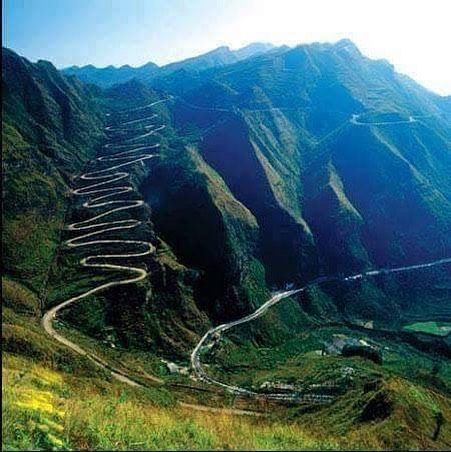
    The strategic importance of the route increased during World War II. In 1945, Ledo Road or Stilwell Road was constructed from Ledo, Assam to Kunming, Yunnan to supply aid and troops to China for the war with Japan. Ledo Road is the shortest land route between North East India and South West China. However, after the war the road was left unused and in 2010, BBC reported that much of the Ledo road has been swallowed up by jungle.
    The Assam-Myanmar-Yunnan road is very difficult to traverse not only in the present times but also during the ancient times. However, despite the hard conditions, it is through this route that a golden triangle of drug trafficking, movement of terrorist and smuggling functions today.

    Future Potential: Reviving the Southern Silk Route Economy

    North-East India and the Yunnan province share many similarities. Both are landlocked as well as under developed regions. Both are home to a large number of ethnic groups and have witnessed secessionist movement from time to time. Apart from this, Yunnan and North East India are geographically isolated from their political capitals.
    Yunnan and North East India, home to rich varieties of subtropical fruits with high nutritional values and medicinal plants, can cooperate and transform the hills of North East India and South West China into plantations, factories, laboratories to produce processed food products and lifesaving drugs that can find a huge market in developing and developed countries.
    In a bid to revive the Southern Silk route, Bangladesh, China, India and Myanmar, signed the Kunming Initiative, a sub-regional organization, in 1999. This initiative was replaced by the Bangladesh-China-India-Myanmar Economic Corridor (BCIM-EC) in 2015. The BCIM-EC was announced by China as a part of its Belt-Road Initiative, which has been boycotted by India since the beginning. In 2019, the BCIM-EC was dropped from the list of 35 projects that are to be undertaken under BRI, indicating that China has disreagrded the project. However, in the same year India has sought to keep the BCIM-EC project alive.
    If the BCIM-EC project does take place, it will reduce the travel time, cut transportation cost, open up markets, provide way for joint exploration and development of natural resources and create production bases along the way. Before the BCIM-EC takes off, it is important to develop the roadways infrastructure of India’s North East region.
    Even though the BCIM-EC promises to elevate the economic conditions of the backward North-East region of India, it has not gained sufficient steam as both China and India have different apprehensions. China sees India’s reluctance to support BRI as the barrier for any progress in the project. Given the current stand-off in Ladakh, India’s apprehensions about China seeking to exploit the insurgent groups operating in the region gains significance. Either way realizing the Southern Silk Road as a viable project in the form of BCIM-Economic Corridor looks distant now.
    [1]Haraprasad Ray, “Southern Silk Route: A Perspective,” in The Southern Silk Route : Historical Links and Contemporary Convergences (Routledge, 2019).

    References

    Ray, Haraprasad. “Southern Silk Route: A Perspective.” Essay. In The Southern Silk Route: Historical Links and Contemporary Convergences. Routledge, 2019.
    “Continental and Maritime Silk Routes: Prospects of India- China Co-operations.” In Proceedings of the 1st ORF-ROII Symposium. Kunming, 2015.
    Mukherjee, Rila. “Routes into the Present.” Essay. In Narratives, Routes and Intersections in Pre-Modern Asia, 37–40. Routledge, 2017.
    UNESCO. Accessed June 20, 2020. https://en.unesco.org/silkroad/content/did-you-know-great-silk-roads.
    “The Silk Route.” Accessed June 21, 2020. http://www.sikkimsilkroute.com/about-silk-route/.
    Ray, Haraprasad. Introduction. In North East India’s Place in India-China Relations and Its Future Role in India’s Economy, n.d.
    Chowdhury, Debasish Roy. “’Southern Silk Road’ Linking China and India Seen as Key to Boosting Ties.” South China Morning Post, October 23, 2013.
    “China Wants to Revive ‘Southern Silk Road’ with India.” The Times of India, June 9, 2013.

    Image: Stilwel Road from Ledo in Northeast India to Kunming in Yunnan province, China
  • India-China Trade in ancient times: Southern Silk Route

    India-China Trade in ancient times: Southern Silk Route

    To follow the Silk Road is to follow a ghost. It flows through the heart of Asia, but it has officially vanished leaving behind the pattern of its restlessness: counterfeit borders, unmapped peoples. The road forks and wanders wherever you are. It is not a single way, but many: a web of choices.

     Colin Thubron, Shadow of the Silk Road.


    Introduction

    India and China, two Asian giants, share a lot of similarities in terms of history and culture. Both countries represent age old civilizations and unique history. Cultural and economic ties between the two countries date back to about 2000 years ago. The Silk Route, which is an ancient network of trade routes, formally established by the Han Dynasty, served as a connection between the two countries. It was also through this route that Buddhism spread to China and East Asia from India. The routes were more than just trade routes; it was the carrier of ideas, innovations, inventions, discoveries, myths and many more.

    The earliest mention of China can be found in the Indian text “Arthashastra” which was written by Kautilya in the fourth century BC. Kautilya made a remark about Cinapattasca Cinabhumjia (Cinapatta is a product of China)[1]. Whereas, the earliest mention of India in Chinese records dates between 130 and 125 BC.  Zhang Qian, a Chinese envoy to Central Asia, referred to India as Shendu, in his report about India to Emperor Wu of the Han dynasty.

    This article will look into the ancient trade route that existed between South Western China and India’s North East region via Myanmar and the future of the trade route.

    Ancient trade links between India and China

    Shiji, which is the first Chinese dynastic history, compiled between 104 and 87 BCE talks about the existence of a trading route between India and South West China. According to Chinese records, Emperor Wu of the Han dynasty, tried to establish a trade route from Changan, the Chinese capital to North East India through Yunnan and adjoining areas. However, the rulers of Yunnan were against the idea of establishing a direct trade between India and China and Emperor Wu failed to establish the trade route. Even though the trade route failed to take off, the trade in Cinapatta and Chinese square bamboo continued without any hindrance.

    Political Geography of the Southern Silk Route

    The Southern Silk route (SSR), one of the least studied overland route, is a trade route which is about 2000 km long and linked East and North East India with Yunnan Province of China via Myanmar. This is a relatively unknown, ancient trade route that is considered a part of the larger web of Silk Roads. This route existed before the Central Asian Silk route became popular. This trade route between Eastern India and China came to be known during the early 3rd century BCE, and it became popular by the 2nd century BCE. By 7th century AD various other branches of the SSR emerged to create web of trading routes.

    Traders carried silk from Yunnan through Myanmar, across India and joined the main silk route in Afghanistan. In addition, silk was also transported from South West China through the Shan states and North Myanmar into East India and then down to the Coromandel Coast.

    The Qing dynasty which ruled China from 1644-1912, recorded the cross cultural exchanges that took place across SSR. This route contributed to cultural exchanges between China and the West. It also promoted interactions among different nationalities.

    Indian sources have failed to provide abundant evidence about the SSR and the interaction that took place across this route but there is enough evidence that indicates that trade and migration did take place in the Eastern India-Upper Myanmar-Yunnan region. For example, modern scholars believed that the Tai Ahoms were originally from Yunnan but they migrated to North East India and founded a small kingdom around 13th century, which grew to become the powerful Ahom Kingdom of Assam.

    The areas through which the SSR passed were inhabited by various ethnic groups whose political, social and economic organizations were primitive and backward. As a result, the safety of the route was often questioned. Archeological evidences have been found along the Southern banks of Brahmaputra up to Myanmar border, which shows that trade did exist along this route.

    The main items that were exported from China via this route included Silk, Sichuan cloth, Bamboo walking sticks, ironware and other handicrafts items.  Sichuan, a South Western province was the main source of silk. Glass beads, jewels, emeralds etc were some of the items that were imported to China.

    Another important trade route is the South West Silk route or the Sikkim Silk route, which connected Yunnan, and India through Tibet. A section of the route from Lhasa crossing Chumbi Valley, Nathu La Pass connected to the Tamralipta Port (present day Tamluk in West Bengal). From the Tamralipta port, this trade route took to the sea to traverse to Sri Lanka, Bali, Java and other parts of the Far East.  Another section of the route crossed Myanmar and entered India through Kamrup (Assam) and connected the ports of Bengal and present day Bangladesh.

    Over time, the Southern Silk Route lost its prominence and it was in 1885 that it re- emerged as a strategic link as the British tried to control some parts of the route in order to access and gain control over Southern China.

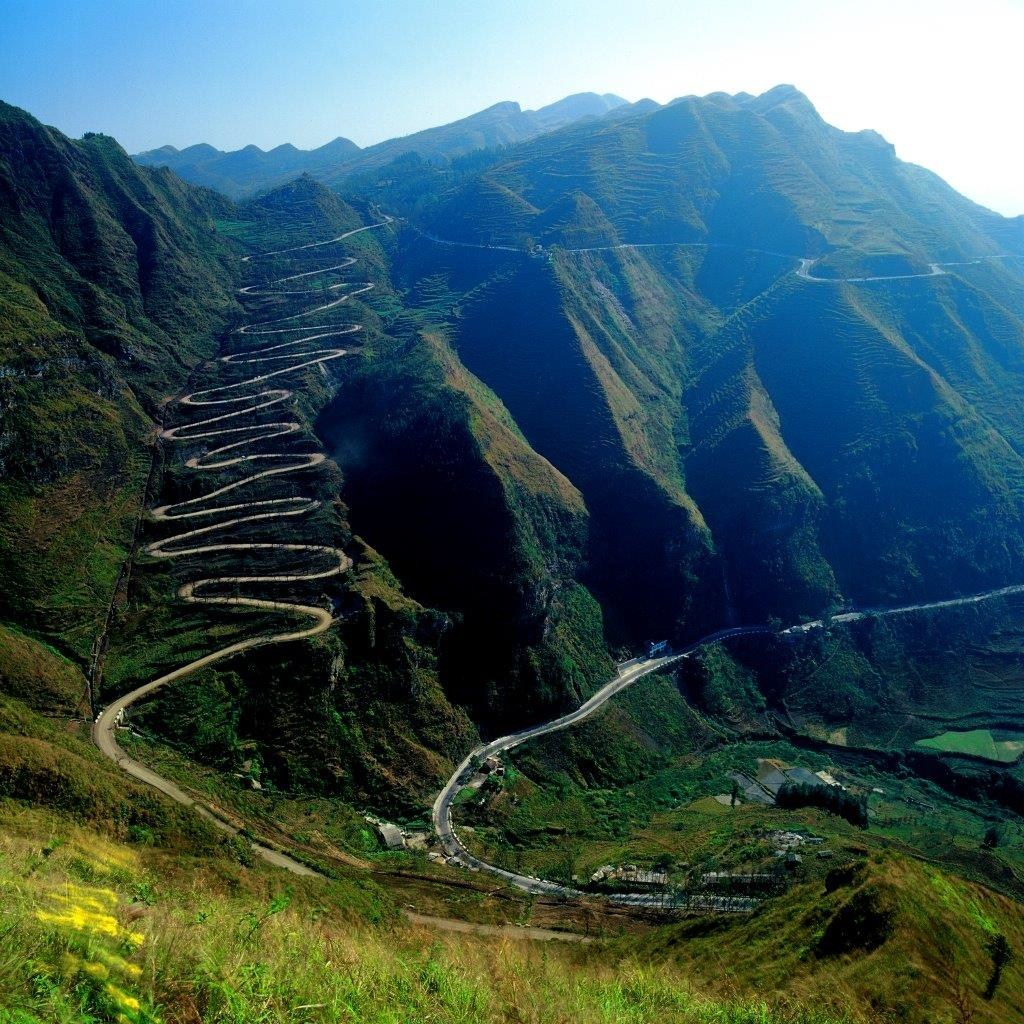
    The strategic importance of the route increased during World War II. In 1945, Ledo Road or Stilwell Road was constructed from Ledo, Assam to Kunming, Yunnan to supply aid and troops to China for the war with Japan. Ledo Road is the shortest land route between North East India and South West China. However, after the war the road was left unused and in 2010, BBC reported that much of the Ledo road has been swallowed up by jungle.

    The Assam-Myanmar-Yunnan road is very difficult to traverse not only in the present times but also during the ancient times. However, despite the hard conditions, it is through this route that a golden triangle of drug trafficking, movement of terrorist and smuggling functions today.

    Future Potential: Reviving the Southern Silk Route Economy

    North-East India and the Yunnan province share many similarities. Both are landlocked as well as under developed regions. Both are home to a large number of ethnic groups and have witnessed secessionist movement from time to time. Apart from this, Yunnan and North East India are geographically isolated from their political capitals.

    Yunnan and North East India, home to rich varieties of subtropical fruits with high nutritional values and medicinal plants, can cooperate and transform the hills of North East India and South West China into plantations, factories, laboratories to produce processed food products and lifesaving drugs that can find a huge market in developing and developed countries.

    In a bid to revive the Southern Silk route, Bangladesh, China, India and Myanmar, signed the Kunming Initiative, a sub-regional organization, in 1999. This initiative was replaced by the Bangladesh-China-India-Myanmar Economic Corridor (BCIM-EC) in 2015. The BCIM-EC was announced by China as a part of its Belt-Road Initiative, which has been boycotted by India since the beginning. In 2019, the BCIM-EC was dropped from the list of 35 projects that are to be undertaken under BRI, indicating that China has disreagrded the project. However, in the same year India has sought to keep the BCIM-EC project alive.

    If the BCIM-EC project does take place, it will reduce the travel time, cut transportation cost, open up markets, provide way for joint exploration and development of natural resources and create production bases along the way. Before the BCIM-EC takes off, it is important to develop the roadways infrastructure of India’s North East region.

    Even though the BCIM-EC promises to elevate the economic conditions of the backward North-East region of India, it has not gained sufficient steam as both China and India have different apprehensions. China sees India’s reluctance to support BRI as the barrier for any progress in the project. Given the current stand-off in Ladakh, India’s apprehensions about China seeking to exploit the insurgent groups operating in the region gains significance. Either way realizing the Southern Silk Road as a viable project in the form of BCIM-Economic Corridor looks distant now.


    [1]Haraprasad Ray, “Southern Silk Route: A Perspective,” in The Southern Silk Route : Historical Links and Contemporary Convergences (Routledge, 2019).

    References

    Ray, Haraprasad. “Southern Silk Route: A Perspective.” Essay. In The Southern Silk Route: Historical Links and Contemporary Convergences. Routledge, 2019.

    “Continental and Maritime Silk Routes: Prospects of India- China Co-operations.” In Proceedings of the 1st ORF-ROII Symposium. Kunming, 2015.

    Mukherjee, Rila. “Routes into the Present.” Essay. In Narratives, Routes and Intersections in Pre-Modern Asia, 37–40. Routledge, 2017.

    UNESCO. Accessed June 20, 2020. https://en.unesco.org/silkroad/content/did-you-know-great-silk-roads.

    “The Silk Route.” Accessed June 21, 2020. http://www.sikkimsilkroute.com/about-silk-route/.

    Ray, Haraprasad. Introduction. In North East India’s Place in India-China Relations and Its Future Role in India’s Economy, n.d.

    Chowdhury, Debasish Roy. “’Southern Silk Road’ Linking China and India Seen as Key to Boosting Ties.” South China Morning Post, October 23, 2013.

    “China Wants to Revive ‘Southern Silk Road’ with India.” The Times of India, June 9, 2013.


    Image: Stilwel Road from Ledo in Northeast India to Kunming in Yunnan province, China
     

  • US-China Trade Wars on IPR and what it means for India

    US-China Trade Wars on IPR and what it means for India

    Each incumbent in the White House since the entry of PR China into the WTO in 2001 has agonized over the protections provided by the Communist state to intellectual property rights. As China’s capacities increased and as Chinese enterprises continued to operate in an unrestrained fashion, the US Government along with other European countries raised the pressure on Beijing to change its behaviour. They refused to accept at face value Chinese protestations that these actions were compliant with WTO provisions. US responses covered the entire range of domestic law actions, bilateral pacts and approaching the WTO. A study of these actions, with the benefit of hindsight, shows it was lacking in both scope and determination. US President Donald Trump’s efforts which sparked the trade war has been the most dramatic and effective till date. Both US and China agree that their IPR differences are fundamental in nature and will be addressed in its entirety in the second phase. In this regard, the cat and mouse legal games being witnessed in the case of Huawei and its 5G ambitions  deservec scrutiny. Simultaneously the Trump Administration has doubled down on the WTO and reduced its dispute settlement body into a pale shadow of its original self. India is also a target of US actions on the IPR front, albeit of a lesser degree compared to PR China. WTO case law is instructive and there are lessons to be learned even outside of the US-China trade dispupte framework. In terms of the impact of the US-China IPR differences on India, three broad dimensions can be identified. The first one pertains to the WTO regime and other regional trade arrangements. Second, India needs to brace for further action at the WIPO and on the larger question of what US withdrawal from multilateral bodies means for the rest of the international community. Thirdly, Indian Government and companies need to try and leverage the opportunities that maybe created by China’s reforms in the IPR  fieldincluding the Pilot Free Trade Zone at Shanghai.

    Download Full Research Paper

    This paper is also published in AALCO journal.

  • Venezuela’s Collapsing Economy: Victim of Geopolitical Games

    Venezuela’s Collapsing Economy: Victim of Geopolitical Games

    Manjari Balu and M Matheswaran                                                                     June 23, 2019/Analysis

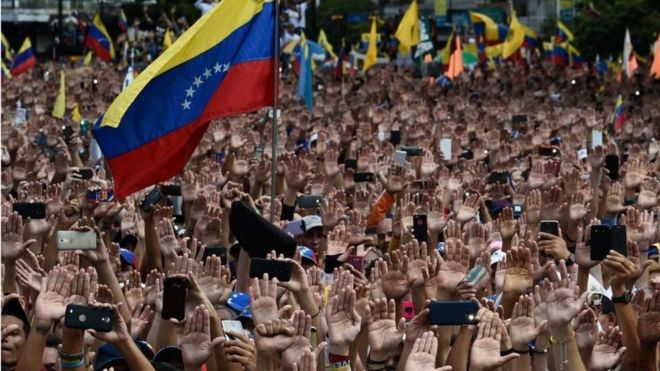
    The collapse of Latin America’s oil-rich country, Venezuela, epitomises the probable debacle of a socialist regime while the geopolitical strategies espouse the power struggle at the cost of the economy. After the death of Hugo Chavez in 2013, Nicolas Maduro, the hand-picked successor of Chavez took overthe office to preserve the “petrostate” status of Venezuela.  USA, backed by Brazil, Canada and many other countries, have recognized the opposition led by Juan Guaido as the interim president and have questioned the legitimacy of the Maduro government. Venezuela’seconomy depends to the extent of 95 per cent on oil exports and the dwindling oil prices in 2014 deepened the latent crisis, an inevitable consequence for a socialist government with illiberal economic agendas. Chavizmo rose to fame with a brand of Bolivarian revolution that promised to reduce poverty and deter the US in interfering in the country’s functioning.

    Economic Collapse: Paradox of Largest Oil Reserves and Economic Mismanagement

    Venezuela is a prime example of what economic mismanagement, impractical socialist measures, and corruption can do to a country that is wealthy with natural resources. At 300, 878 million barrels of proven oil reserves, Venezuela has the largest amount of proven oil reserves in the world. The country’s economy is largely tied to its oil wealth and was one of the richest in Latin America until a few years ago. Economic collapse has led to a huge humanitarian crisisunseen in the country’s modern history. IMF has predicted that Venezuela’s inflation rate will reach 10 million per cent in 2019, becoming one of the worst cases of hyperinflation in modern history.

    TheTransformation Index that evaluates the political and economic transformation of a country, has ranked Venezuela 110 out of 129 nations with a score of 3.27 out of 10. In addition to criticizing the poor state of the economy, it also reported that the state-sanctioned crime rates have spiralled. The current catastrophic economic crisis and political chaos is the result of a pervasive economic mismanagement and an economy rooted in a single commodity, petroleum.

    Inflation was 1,30,000 per cent in 2018 and the economy has contractedby 22.5 per cent, indicating the dire status of the economy. The economic future of the country continues to be bleak and the debate has converged to the geopolitical relevance of the issue. Data on money supply is a key element to understand the inflation rates in an economy and Venezuela has refused to publish money supply data in the past years. A recent data suggests that  12 trillion BsF (Bolivares Fuertes) were printed exposing the economic ruination.

    Initial denial by the Venezuelan government about the crisis never let aid flow in, recent acceptance of humanitarian aidhas tripled the aid budget. With poor socio-economic indicators as a major challenge, Venezuela is further saddled with huge external debt as a problem to be solved by the new dispensation, be it Maduro led government or any other successor. Currently, Venezuela’s external debt stands at  150 per cent of the total GDP.

    American Sanctions, Food Imports, and Falling Aid

    Few consider the problem to be homegrown in Venezuelaand many blame the US for artificially creating the hyperinflation.  The US justified the economic sanctions to bring down Maduro regime and accused him to have caused upheavals since 2014 and the controversies besieging election manipulation by Maduro’s party substantiate the allegation. Political funding for a coup against the regime change in Venezuela was extensively promoted by the Bush administration. The protraction of political interest led to imposition of anti-democratic sanctions,  and reiterates the hegemonic strategy that the US continues to pursue.

    The recent economic sanctions imposed on the state-owned oil company, Petroleos de Venezuela SA (PdVSA)  by the US has exacerbated Venezuela’s problems in its oil production- the output is expected to fall by 33 per cent in 2019. Investigation of Venezuela’s oil production before and after the economic sanctions suggests the production has been on downtrend even before the sanctions.  

    Private investments and productivity in agriculture dropped alarmingly as the socialist government led by Chavez nationalized agribusiness and industries and encouraged food imports.  Seventy per cent of the food requirements were met by imports. According to the United States Department of Agriculture, Venezuela is one of the potential markets for the US to export agricultural produce, and accounted for 21 per cent of total agricultural imports of Venezuela. However, as the economy collapsed, over-dependence on imports for food began to tell. In 2016, food imports fell by 72 per cent and reports state that people have lost an average of 8.6 kgs of weight due to food scarcity.


    China’s Extractive Relationship with Venezuela

    Majority of the loans are from China and Russia and their servicing or repayments are tied with its oil revenue. It is estimated that Venezuela owes around 13.5 billion USD to China as of 2019. Under Chavez leadership, China and Venezuela laid a financial foundation by crafting  “China-Venezuela Joint fund” known as the FCCV. The central bank of China alone loaned 42.5 billion US dollars from 2007-2012 to Venezuela. The compounded bilateral interest incentivized China to support even when the Venezuelan economy faltered in 2014. China further escalated its commercial interest byloaning a sum of $4 billion as cash for oil deal paying little attention to the projected contraction in the Venezuelan economy. In the year 2017, Maduro announced ambitious planning to spend 70 percent of the total budget on social schemes to address food scarcity. While the quixotic socialist paradigm was impressive during Chavez’s tenure the public soon realized the huge dent made in the economy by imprudent  social spending.

    The defensive lending strategy adopted by China post Maduro’s electoral victory shifted the focus of investments to oil and oil-related infrastructure. Although China’s recent intervention in Venezuela’s domestic affairs is evident from the endorsement for Maduro,  oil supply has always been its priority over political rivalry in Venezuela. As China became more sceptical about Venezuela’s ability to repay the loans because of low oil production and the adverse impact of US sanctions, its capital flow to Venezuela shrunk.  Maduro had viewed relations with China to be based on ideological common ground, but China was focused on leveraging its abundant resources, which, in turn, contributed to the crippling of the economy of Venezuela. This asymmetric relationship between Venezuela and China thwarted expectations of Maduro to acquire more credit from China.

    For China, endorsing Maduro is not an option as far as its economic interest is concerned; increasing rebellion of Venezuelan people portends a threat to the Maduro government that could bring in democracy in Venezuela, which could make it a potential defaulter of past debts. The Chinese government is considered culpable for Venezuela’s crisis by many American policymakers, and are accused to have followedthe “debt trap diplomacy”. The investment strategy in Venezuela resembles the Angola model- Chinese government extends credit tied with oil. However, in the case of Venezuela, China is bearing the cost of overestimating the performance of Venezuelan economy.

    Russia’s All-Weather Ties

    As we see a pragmatic China becaming more cautious about the failing economy of Venezuela, Russia’s interest and the relationship go beyond just the commercial narrative. Russia ties with Venezuela are deep-rooted since the time of Chavez, and it has continued to bolster the failing Venezuelan apparatus for clear geopolitical reasons. Vladimir Putin has invested strongly on  Russia’s international image and prestige, especially while rebuilding Russia post the Yeltsin years. The first credit line of arms relations between Russia and Venezuelawas signed in 2006. Although the export of military equipment to Venezuela have reduced drastically by nearly 96 per cent in the past few years, Venezuela has been the largest buyer of Russian arms in the Western Hemisphere with a total estimate of $4 billion during Chavez years. Russia has made consistent efforts to support Maduro by deploying military presence in Caracas even as Venezuela’s economy took a downturn.

    Chavez and Putin deepened their political ties on common grounds of  supporting a multipolar world order, and Chavez expected tangible benefits for Venezuela out of this agreement. Oil deals between both the countries advanced asRussia’s largest crude oil producer, Rosneft, partnered with PdVSA for several projects. Rosneft holds 40 percent shares and plays an instrumental role in pivoting Russia’s foreign policy through sound investments in the West. Venezuela agreed to commit 49.9 percent of its share in Citgo, American subsidiary company in exchange for credit from Rosneft. Russian emphasis on the “strategic” importance of the alliance with Venezuela reveals Russia’s intention to strengthen its geopolitical presence in USA’s backyard. Putin’s domestic political image has become sharper with his strategic take on Venezuela.

    However, sanctions on Venezuela has severely restricted the ability of Rosneft to borrow or invest, thus escalating tensions between Russia and the US.  Much like in Syria, Putin has sent a strong signal to the US by deploying a small contingent of Russian military personnel in Venezuela.

    Pawn on the Chessboard of Great Power Politics

    Venezuela has become the strategic battlegroundfor geopolitical struggle between the USA, Russia, and China. Collapse of the Venezuelan economy does not augur well for China in the long-term. However, China will look to strengthen its ties with Venezuela through economic support as its energy needs have a critical link with Venezuela. USA’s ‘Manroe Doctrine’ and its ‘Roosevelt Corollary’  has fiercely opposed any external powers’ strategic presence in the Western Hemisphere. This policy has led the USA to be an interventionist in Latin American countriessince the 1960s. Not much has changed since then. Chavez’s Venezuela has been a major opponent of US hegemony  Putin’s Russia is looking to strengthen its presence in South America, and support to Venezuela forms the lynchpin of this strategy. While international community looks for peaceful resolution of the rapidly deteriorating situation in Venezuela, geopolitical competition of external players has ensured  power tussle continues in Venezuela. Political Victory of either Maduro or opposition would represent the triumph of their Global supporters, Russia or the USA.  The socialist seed sown by Hugo Chavez is haunting Venezuela with a dented economy and a crisis in leadership. The “Petrostate” desperately needs economic reforms and international support to rebuild its economy. Structural reforms to remove the bottlenecks of growth in the post-crisis period and opportune investments in potential areas would rescue Venezuela in the following years.

    Manjari Balu is a Research Analyst at ‘The Peninsula Foundation’.

    Air Marshal M Matheswaran (retd) is the President of TPF.

    Image Credit: BBC News