Category: Disruptive Concepts & Innovation

  • Cryptos and CBDC: Is the RBI on the Right Track?

    Cryptos and CBDC: Is the RBI on the Right Track?

    “The history of money is entering a new chapter”. The RBI needs to heed this caution and not be defensive.

    Cryptocurrency will be discouraged by the government was the message from the FM during the budget discussion in parliament. There will be heavy taxation and no relief in capital gains for past losses. But, India has to contend with growing use of cryptos in these uncertain times. Russian kleptocrats are reportedly using cryptos to evade sanctions. Ukraine which has been a center for cryptos trading due to its lax rules is now using them to get funds.

    President Joe Biden recently signed an executive order requiring government agencies to assess use of digital currency and cryptos due to their growing importance. The Indian authorities have also been trying to bring legislation to deal with the issue since October 2021. Would the US clarifying its position help India also decide on cryptos?

    The SC has asked the government to clarify its position on the legality of cryptos. The FM in the Budget 2022-23 proposed taxing the capital gains and crypto transactions but did not declare them illegal. The RBI Governor was more expansive in February when he highlighted three things. First, “Private cryptocurrencies are a big threat to our financial and macroeconomic stability”. Second, investors are “investing at their own risk” and finally, “these cryptocurrencies have no underlying (asset)… not even a tulip”. Subsequently, a RBI Deputy Governor called cryptos worse than a Ponzi scheme and suggested that they not be “legitimized”. It is only recently that the RBI has announced that it will float Central Bank Digital Currency (CBDC)

    Difficult to Declare Cryptos Illegal

    The governor calling cryptos as cryptocurrency has unintentionally identified them as a currency. His statements indicate RBI’s worry about its place in the economy’s financial system as cryptos proliferate and become more widely used. This threat emerges from the decentralized character of cryptos based on the Blockchain technology which the Central Banks cannot regulate and which enables enterprising private entities (like, Satoshi Nakamoto initiated Bitcoins in 2009) to float cryptos which can function as assets and money.

    The total valuation of cryptos recently was upward of $2 trillion – more than the value of gold held globally. Undoubtedly, this impacts the financial systems and sovereignty of nations. So, the RBI rather than be defensive needs to think through how to deal with cryptos.

    Cryptos which operate via the net can be banned only if all nations come together. Even then, tax havens may allow cryptos to function defying the global agreement. They have been facilitating flight of capital and illegality in spite of pressures from powerful nations.

    The genie is out of the bottle. The total valuation of cryptos recently was upward of $2 trillion – more than the value of gold held globally. Undoubtedly, this impacts the financial systems and sovereignty of nations. So, the RBI rather than be defensive needs to think through how to deal with cryptos.

    Cryptos as Currency
    Source: Crypto-current.co

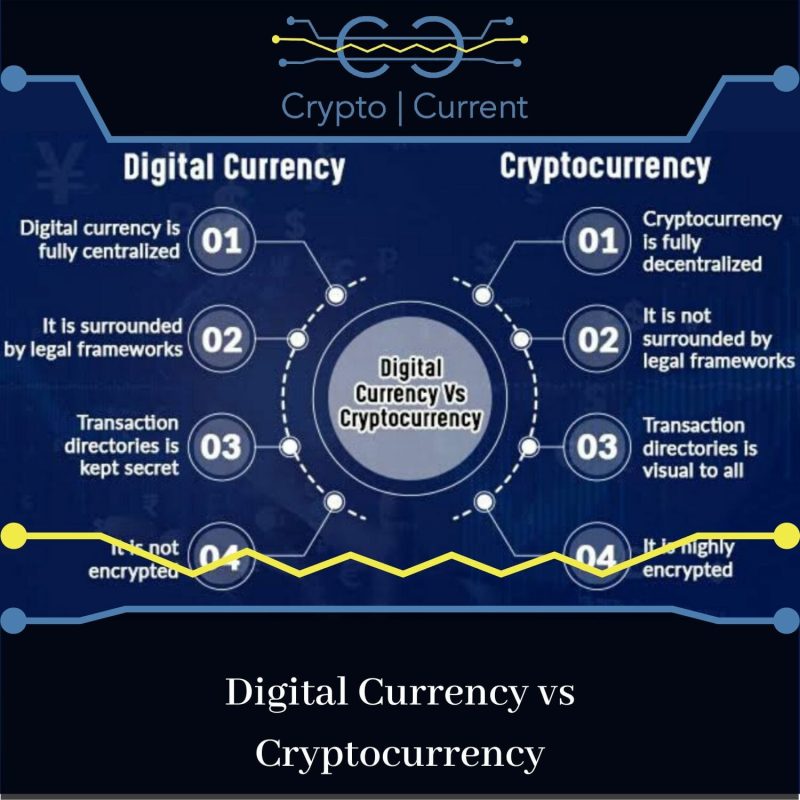
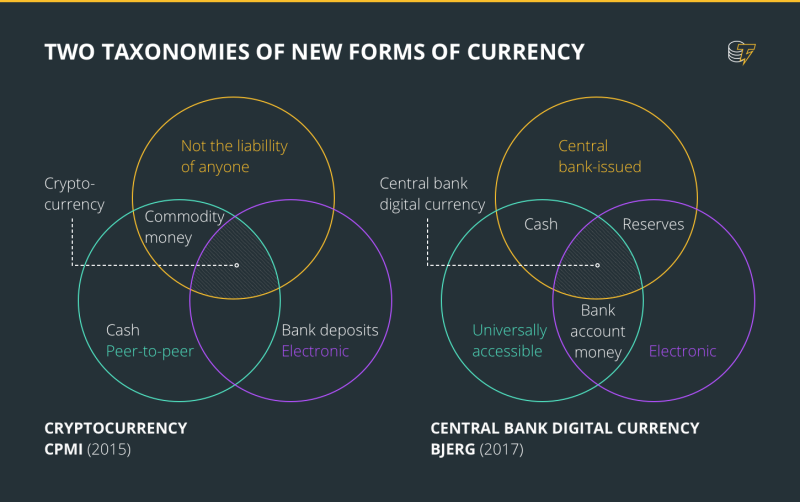
    Will a CBDC help tackle the emerging problem? Indeed not, since it can only be a fiat currency and not a crypto. However, cryptos can function as money. This difference needs to be understood.

    A currency is a token used in market transactions. Historically, not only paper money but cows and copper coins have been used as tokens since they are useful in themselves. But paper currency is useless till the government declares it to be a fiat currency. Everyone by consensus then accepts it at the value printed on it.

    So, paper currency with little use value derives its value from state backing and not any underlying commodity. Cryptos are a string of numbers in a computer programme and are even more worthless. And, without state backing. So, how do they become acceptable as tokens for exchange?

    Their acceptability to the rich enables them to act as money. Paintings with little use value have high valuations because the collectivity of the rich agrees to it. Cryptos are like that.

    Bitcoin, the most prominent crypto, has been designed to become expensive. Its total number is limited to 21 million and progressively it requires more and more of computer power and energy to produce (called mining like, for gold). As the cost of producing the Bitcoin has risen, its price has increased. This has led to speculative investment which drives the price higher, attracting more people to join. So, since 2009, in spite of wildly fluctuating prices, they have yielded high returns making speculation successful.

    Unlike the Tulip Mania

    The statement that cryptos have no underlying asset, not even a tulip refers to the time when tulip prices rose dramatically before they collapsed. But, tulips could not be used as tokens, while cryptos can be used via the internet. Also, the supply of tulips could expand rapidly as its price went up but the number of Bitcoins is limited.

    So, cryptos acquire value and become an asset which can be transacted via the net. This enables them to function as money. True, transactions using Bitcoins are difficult due to their underlying protocol, but other simpler cryptos are available.

    The different degrees of difficulties underlying cryptos arises from the problem of `double spending’. Fiat currency whether in physical or electronic form has the property that once it is spent, it cannot be spent again, except fraudulently, because it is no more with the spender. But, a software on a computer can be repeatedly used.

    Blockchain and encryption solved the problem by devising protocols like, the `proof of work’ and `proof of stake’. They enable the use of cryptos for transactions. The former protocol is difficult. The latter is simpler but prone to hacking and fraud. Today, thousands of different kinds of cryptos exist – Bitcoin like cryptos, Alt coins and Stable coins. Some of them may be fraudulent and people have lost money.

    CBDC, Unlike Cryptos
    Source: cointelegraph.com

    Blockchain enables decentralization. That is, everyone on the crypto platform has a say. But, the Central Banks would not want that. Further, they would want a fiat currency to be exclusively issued and controlled by them. But the protocols mentioned above theoretically enable everyone to `mine’ and create currency. So, for CBDC to be in central control, solve the `double spending’ problem and be a crypto (not just a digital version of currency) seems impossible.

    A centralized CBDC will require RBI to validate each transaction – something it does not do presently. Once a currency note is issued, RBI does not keep track of its use in transactions. Keeping track will be horrendously complex which could make the crypto like CBDC unusable unless new secure protocols are designed. No wonder, according to IMF MD, “… around 100 countries are exploring CBDCs at one level or another. Some researching, some testing, and a few already distributing CBDC to the public. … the IMF is deeply involved in it ..”

    Conclusion

    Issuing CBDCs will not only be complicated but presently cannot be a substitute for cryptos which will eventually be used as money. This will impact the functioning of the Central Banks and commercial banks. Further, it is now too late to ban cryptos unless there is global coordination which seems unlikely. The rich who benefit from cryptos will oppose banning them. Can the US work out a solution? The IMF MD has said, “The history of money is entering a new chapter”. The RBI needs to heed this caution and not be defensive.


    Slightly shortened version of this article was published earlier in The Hindu.

    Feature Image Credit: doralfamilyjournal.com
     

  • Mining the Moon

    Mining the Moon

    In view of our upcoming event on ‘Scramble for the Skies: The Great Power Competition to control the Resources of Outer Space’, TPF is happy republish this old but excellent article under the Creative Commons License 4.0. Establishing outer space colonies and ‘mining the moon’ is a very distinct possibility in the near future. However, commercial scale of this process may take decades. Space resources, in terms of materials to be mined, will become the major focus in the coming decades.

    This article by Paul K Byrne was published originally in The Conversation.

    If you were transported to the Moon this very instant, you would surely and rapidly die. That’s because there’s no atmosphere, the surface temperature varies from a roasting 130 degrees Celsius (266 F) to a bone-chilling minus 170 C (minus 274 F). If the lack of air or horrific heat or cold don’t kill you then micrometeorite bombardment or solar radiation will. By all accounts, the Moon is not a hospitable place to be.

    Yet if human beings are to explore the Moon and, potentially, live there one day, we’ll need to learn how to deal with these challenging environmental conditions. We’ll need habitats, air, food and energy, as well as fuel to power rockets back to Earth and possibly other destinations. That means we’ll need resources to meet these requirements. We can either bring them with us from Earth – an expensive proposition – or we’ll need to take advantage of resources on the Moon itself. And that’s where the idea of “in-situ resource utilization,” or ISRU, comes in.

    Underpinning efforts to use lunar materials is the desire to establish either temporary or even permanent human settlements on the Moon – and there are numerous benefits to doing so. For example, lunar bases or colonies could provide invaluable training and preparation for missions to farther flung destinations, including Mars. Developing and utilizing lunar resources will likely lead to a vast number of innovative and exotic technologies that could be useful on Earth, as has been the case with the International Space Station.

    As a planetary geologist, I’m fascinated by how other worlds came to be, and what lessons we can learn about the formation and evolution of our own planet. And because one day I hope to actually visit the Moon in person, I’m particularly interested in how we can use the resources there to make human exploration of the solar system as economical as possible.

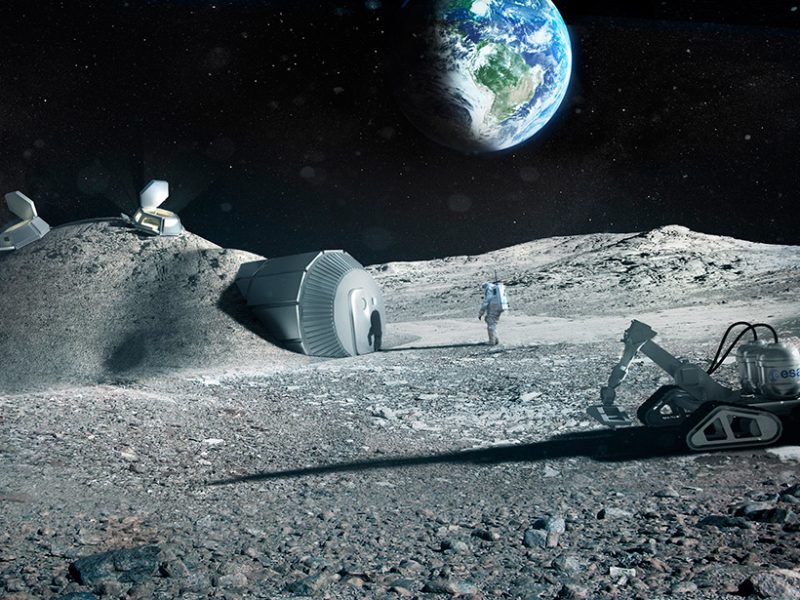
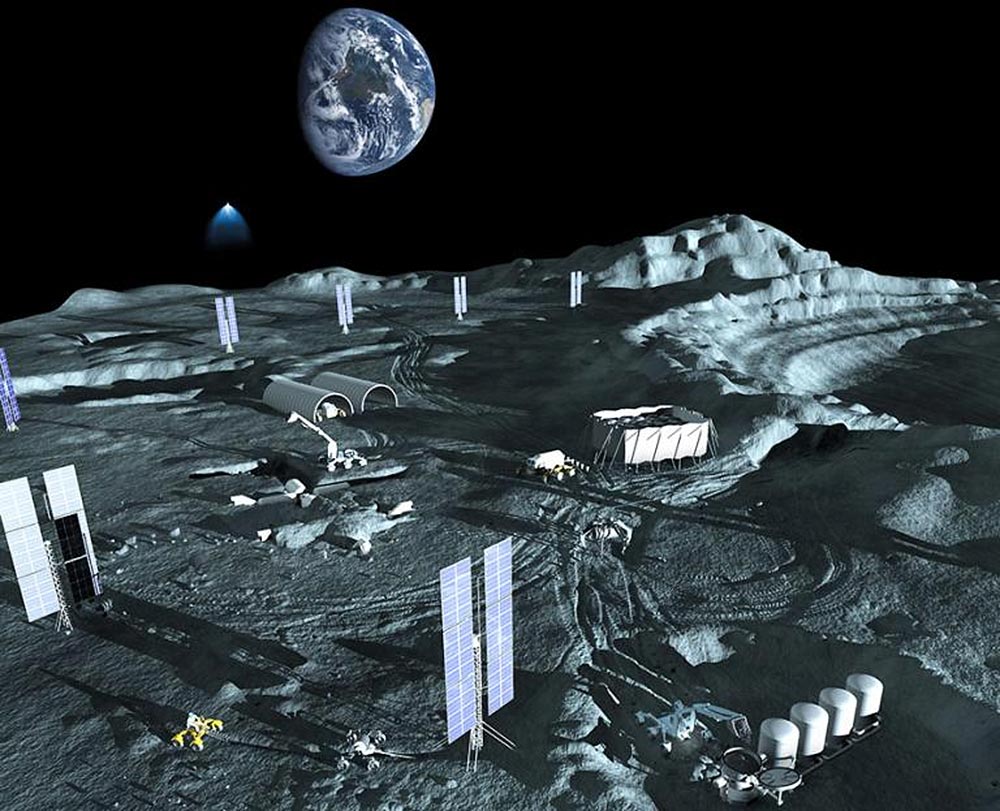
    A rendering of a possible lunar habitat. credit: Eos.org

    In-situ resource utilization

    ISRU sounds like science fiction, and for the moment it largely is. This concept involves identifying, extracting and processing material from the lunar surface and interior and converting it into something useful: oxygen for breathing, electricity, construction materials and even rocket fuel.

    Many countries have expressed a renewed desire to go back to the Moon. NASAhas a multitude of plans to do so, China landed a rover on the lunar farside in January and has an active rover there right now, and numerous other countrieshave their sights set on lunar missions. The necessity of using materials already present on the Moon becomes more pressing.

    Anticipation of lunar living is driving engineering and experimental work to determine how to efficiently use lunar materials to support human exploration. For example, the European Space Agency is planning to land a spacecraft at the lunar South Pole in 2022 to drill beneath the surface in search of water ice and other chemicals. This craft will feature a research instrument designed to obtain water from the lunar soil or regolith.

    There have even been discussions of eventually mining and shipping back to Earth the helium-3 locked in the lunar regolith. Helium-3 (a non-radioactive isotope of helium) could be used as fuel for fusion reactors to produce vast amounts of energy at very low environmental cost – although fusion as a power source has not yet been demonstrated, and the volume of extractable helium-3 is unknown. Nonetheless, even as the true costs and benefits of lunar ISRU remain to be seen, there is little reason to think that the considerable current interest in mining the Moon won’t continue.


    It’s worth noting that the Moon may not be a particularly suitable destination for mining other valuable metals such as gold, platinum or rare earth elements. This is because of the process of differentiation, in which relatively heavy materials sink and lighter materials rise when a planetary body is partially or almost fully molten.

    This is basically what goes on if you shake a test tube filled with sand and water. At first, everything is mixed together, but then the sand eventually separates from the liquid and sinks to the bottom of the tube. And just as for Earth, most of the Moon’s inventory of heavy and valuable metals are likely deep in the mantle or even the core, where they’re essentially impossible to access. Indeed, it’s because minor bodies such as asteroids generally don’t undergo differentiation that they’re such promising targets for mineral exploration and extraction.

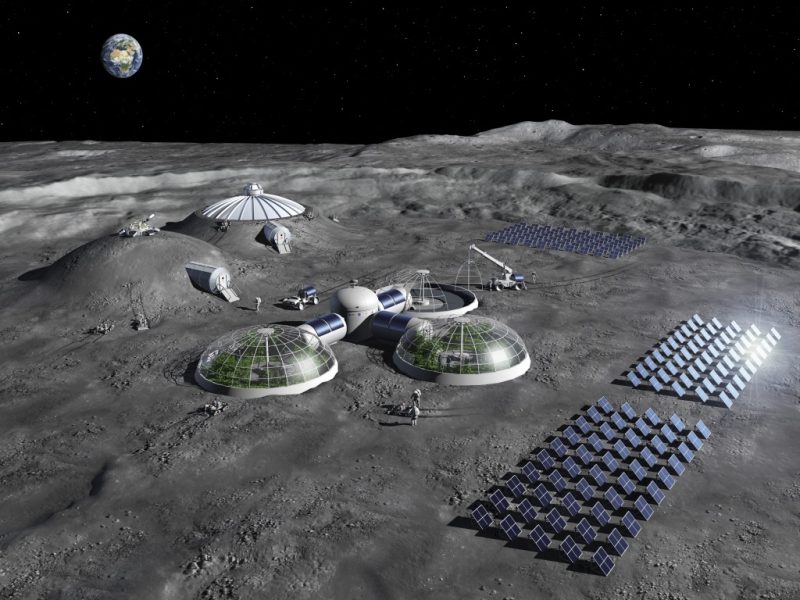
    Artist’s impression of In Situ Resource Utilisation. Credit: Universe Today

    Lunar formation

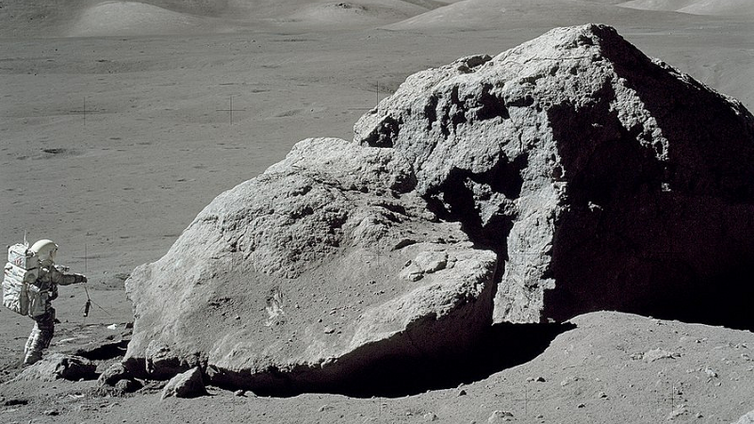
    Apollo 17 astronaut Harrison H. Schmitt standing beside a boulder on the lunar surface. NASA

    Indeed, the Moon holds a special place in planetary science because it is the only other body in the solar system where human beings have set foot. The NASA Apollo program in the 1960s and 70s saw a total of 12 astronauts walk, bounce and rove on the surface. The rock samples they brought back and the experimentsthey left there have enabled a greater understanding of not only our Moon, but of how planets form in general, than would ever have been possible otherwise.

    From those missions, and others over the ensuing decades, scientists have learned a great deal about the Moon. Instead of growing from a cloud of dust and ice as the planets in the solar system did, we’ve discovered that our nearest neighbor is probably the result of a giant impact between the proto-Earth and a Mars-sized object. That collision ejected a huge volume of debris, some of which later coalesced into the Moon. From analyses of lunar samples, advanced computer modeling and comparisons with other planets in the solar system, we’ve learned among many other things that colossal impacts could be the rule, not the exception, in the early days of this and other planetary systems.

    Carrying out scientific research on the Moon would yield dramatic increases in our understanding of how our natural satellite came to be, and what processes operate on and within the surface to make it look the way it does.

    The coming decades hold the promise of a new era of lunar exploration, with humans living there for extended periods of time enabled by the extraction and use of the Moon’s natural resources. With steady, determined effort, then, the Moon can become not only a home to future explorers, but the perfect stepping stone from which to take our next giant leap.


    Feature Image Credit: SciTechDaily


  • Retrofit Winglets for Wind Turbines

    Retrofit Winglets for Wind Turbines

    Retrofit Winglets for Wind Turbines

    Vijay Matheswaran1 and L Scott Miller2
    Wichita State University, Wichita, KS 67260
    Patrick J Moriarty3
    National Renewable Energy Laboratory, Golden, CO 80401

    The benefits of using winglets on wind turbines has been well documented. However, adding winglets to wind turbine blades leads to significant increases in blade root bending moments, requiring expensive structural reinforcement with cost and weight drawbacks. A unique design philosophy for retrofitting winglets on existing wind turbines is presented. These retrofit winglets offer an increase in power produced without the need for structural reinforcement. Predicted performance and cost benefits are illustrated via a study using the NREL 5MW reference wind turbine. The addition of winglets resulted in a 2.45% increase in Coefficient of Power (Cp) and 1.69% increase in Annual Energy Production (AEP).

    Nomenclature

    Cp = coefficient of power

    V¥ = freestream velocity

    𝑟i = blade section radius

    𝜃t = blade section twist

    𝐼$ = Initial Cost per year

    𝑀$ = Annual Operating Expense

    Et = Annual Energy Output

    I. Introduction

    The idea of winglets on wind turbines is one that has been periodically explored in the past few decades. The earliest studies incorporating blade tip devices on wind turbines were done by Gyatt and Lissamann1. Drawing from advanced tip shapes that were being applied to fixed wing aircraft to reduce drag, the authors tested four tip designs on a 25kW Carter Wind Turbine in San Gorgonio Pass, California. Further studies were carried out in subsequent decades. Van Bussel2 developed a simple momentum theory for blade winglet configurations. Imamura et al.3 analyzed the effects on winglets on wind turbines using a free-wake vortex lattice method. Guanna and Johansen4 developed a free wake lifting line model to compute the effects of winglets, comparing it with CFD results obtained using EllipSys3D. Johansen and Sorenson5 did further studies on increasing power coefficient with the use of winglets, showing that adding winglets definitely changes the downwash distribution, leading to an increase in the power produced by a wind turbine.

    While the benefit of adding winglets has been well documented, there are drawbacks to adopting the traditional method of doing so. The addition of large, heavy winglets to maximize aerodynamic benefit leads to significant increases in root bending moments. Imamura et al.6 analyzed the effects of winglets on wind turbine blades using a free-wake vortex lattice method. Their study showed that a winglet at an 80°cant angle and height of 10% of the rotor radius resulted in a 10% increase in the blade root flapwise bending moment. This situation may require blade structural reinforcement, making winglets an expensive and often infeasible proposition. In order to address this, a novel design philosophy has been developed, allowing the use of retrofit winglets that offer an increase in power produced, but without the need to structurally reinforce the blade. This paper outlines the design philosophy, tools

    used and results from initial simulations.

    II. Design Philosophy for Retrofit Winglets

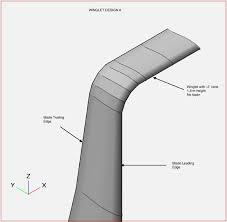
    The key differentiator between this study and prio winglet studies is the design philosophy: designing a lightweight winglet at minimum cost that, while providing an improvement in the turbine’s Coefficient of Power (Cp), does not require blade structural reinforcement. Such a winglet does not seek to maximize Cp, but rather minimize blade bending moments with an acceptable increase in Cp. This is accomplished by balancing the centrifugal force and aerodynamic normal force generated by the winglet. Balancing forces minimizes increases in blade root bending moment, negating the need for an exceptionally strong winglet and allowing it to be light, and requiring noreinforcement of the main blade. Savings in weight are strongly related to cost, so a lighter winglet implies a cheaper, more cost effective one. Accordingly, the best winglet is not one that offers the maximum increase in Cp, but rather offers an increase in Cp while ensuring forces are balanced within a threshold. Figure 1 presents a freebody diagram of the retrofit winglet. A qualitative plot highlighting the design philosophy and the optimal design space is presented in Figure 2. To be able to guage the effects of winglets developed using the mentioned design philosophy, it was decided to use the NREL 5MW wind turbine7 as a reference turbine, and implement a vortex lattice method and cost function to evaluate aerodynamic efficacy and feasibility. The NREL 5MW reference wind turbine is a conceptual three-bladed upwind turbine that was primarily designed to support concept studies. It is heavily based on the Repower 5MW wind turbine; however, in cases where detailed information is not available, data from publicly available conceptual studies is used.

    1 PhD Candidate, Department of Aerospace Engineering, AIAA Student Member

    2Professor and Chair, Department of Aerospace Engineering, AIAA Associate Fellow

    3Team Lead, Wind Plant Aerodynamics, AIAA Member


    Click here for access to the Paper

  • Analysing Denmark’s Offshore Wind Energy Sector: Lessons for India

    Analysing Denmark’s Offshore Wind Energy Sector: Lessons for India

    Globally, Europe has the highest capacity of power generated from offshore wind energy. Amongst the European countries, Denmark, the UK and Germany have been pioneers and are currently leading as the largest power producers from offshore wind energy. Danish assistance has been in high demand to help countries shorten their implementation time for offshore wind turbine projects. In 2019, India entered into a bilateral agreement with Denmark to develop an offshore wind market and related technical capabilities. According to a document published by the Danish government, their authorities have specialised technical knowledge that can help Indian authorities establish framework conditions for the rollout of offshore wind power.

    Denmark’s Offshore Wind Energy Sector  

    The Danish Government has set a target of reducing greenhouse gas emissions by 70%, as compared to 1990 levels, by 2030 and having 100% of Danish energy supplied through renewable sources by 2050, apart from achieving net-zero emissions by the same time. The scarcity of proper onshore sites and the abundance of shallow waters with wind resources drove its move to offshore wind, in the early 1990s,. In Denmark, there is a strong symbiosis between energy and industrial policy because of many leading offshore wind energy companies having Danish roots such as DONG, Vestas, Bladt, Siemens Wind, etc. India must achieve such a symbiosis in its offshore wind policies so that the industry can be successful in the long term.

    Denmark’s ambitious targets coupled with their evolving policies in terms of bureaucratic procedures, environmental safety, and finance, among others, have driven the growth of the offshore wind energy sector since the 90s. This analysis looks at each of these segments.

    Consent Procedures:         The Danish Energy Agency (DEA) has been a single point of access to all offshore wind energy companies when it comes to issues related to permits. Meaning, the DEA grants all permits which include permits from other appropriate government authorities such as the Danish Nature Agency, Ministry of Defence, and the Danish Maritime Authority. This is the one-stop-shop and has been adopted not only in Denmark but in many other European countries. Such a method ensures rapid and un-bureaucratic application processing and ease of doing business. This also avoids a lot of confusion.

    Grid Connectivity:             The financing of the grid connection for offshore wind farms depends on how it is established:

    • Enterprises can follow the Government’s action plan for offshore wind development wherein the DEA will invite bids to tender for pre-specified sites or
    • Enterprises can follow the ‘open-door principle’ wherein independent applications can be made for any site and upon complete assessment by the DEA, it will invite bids to tender for the site, given that the results of the assessment are positive.

    In the first case, the grid operator will finance the connection, including step-up transformers. Such socialisation of grid costs is an attractive feature for project developers in Denmark.

    However, in the second case, the responsibility falls on the developer. We may also expect costs of any necessary grid reinforcement to be borne by the developer. The three private offshore wind farms established in Denmark, following the ‘open-door principle’ – Samsø, Rønland, and Middelgrunden – have had no notable problems. These projects are, however, within 3km of the coast, which would imply that the grid connection costs were not exorbitant.

    Environmental Assessment:          In Denmark, an extensive environmental assessment takes place before the construction of an offshore wind farm. The DEA provides companies or enterprises a license to conduct preliminary studies, including environmental (Environmental Impact Assessment) and technical (ground investigation) studies, either directly after a tender (first process) or following the receipt of the first satisfactory planning documentation (second process).

    For instance, in the case of the Anholt farm, one of the largest offshore wind farms with a capacity of 400 MW, the project team performed an extensive environmental assessment that included the impact on marine animals in the area and their habitats, noise calculations, air emissions, and the potential risk to ship traffic. Using data from other wind farm projects like Denmark’s Nysted Wind Farm, and undergoing their analysis, the Anholt project team projected only minor, insignificant affects.

    Financial Incentives:          In Denmark, they support offshore wind farms through a feed-in tariff system, which is set through a competitive auction process. Power off-take in Denmark is largely managed through the DEA. There is no renewable purchase obligation in place in Denmark, but electrical power from renewable energy has priority access to the grid. In some cases, the owner may choose to sell the electrical power to utilities or other power suppliers through a Power Purchase Agreement (PPA). If the power price drops to zero or negative, there is an oversupply of electricity – then renewable projects do not receive any support. Hence this motivates generators to curtail output and help supply-side grid management.

    De-risking the development process:          The Danish Government undertakes geotechnical studies, wind resource assessment, and environmental surveys before a site being leased. The lease areas are then auctioned off to the lowest bidder. This hugely benefits developers as the site is effectively de-risked, leading to a lower tender price. If this were not the case, the developers would have to include risk provisions and contingency, owing to uncertainty regarding the ground conditions. Further, de-risking a site would increase willingness to plan and bid for the sites leased.

    Simply put, the Danish offshore wind energy policies developed by the DEA and the Government have evolved over the years to tackle situations as they occur. This has led to sustained growth in the sector and has succeeded in powering close to 50% of the country’s electricity demand. Besides successfully developing its sector, it has been an outstanding example to many countries in Europe such as the UK and Germany. The UK has adopted the one-stop-shop model to ease procedural difficulties. Germany has adopted the open-door procedure of establishing offshore wind farms.

    India’s Offshore Wind Energy Sector

    The offshore wind energy sector in India is in its nascent stage. Its 2015 National Offshore Wind Energy Policy shows that the Ministry of New and Renewable Energy (MNRE) will act as the nodal Ministry for the development of Offshore Wind Energy in India that will monitor offshore wind energy development in the country. It will also work closely with other government entities for the use of maritime space within the Exclusive Economic Zone (EEZ).

    The Ministry has set a short-term target of 5.0 GW of offshore wind installations by 2022 and a long-term target of 30 GW by 2030 which, according to government documents, is expected to give the confidence to project developers in the Indian market. Over 95% of commercially exploitable wind resources are concentrated in seven states – Andhra Pradesh, Gujarat, Karnataka, Madhya Pradesh, Maharashtra, Rajasthan, and Tamil Nadu. But the land resources required for onshore wind projects are gradually becoming a major constraint. This could very well cause an increase in the market-determined tariffs of onshore wind energy in the future. Offshore wind power, however, offers a viable alternative in such a scenario. The Indian government, like Denmark, has to make policies to the best of their effort that will bring confidence to developers and de-risk the development of the sector to further encourage developers.

    Although India has a huge potential in the renewable energy sector, the developers’ issues remain unresolved. For instance, Gujarat and Tamil Nadu have most of the high potential sites off their coasts to develop offshore wind energy. But a major concern for offshore wind developers would be the problem of grid integration. The two states already have a high degree of solar and wind renewables integrated into their power grid. By adding on power generated through offshore wind energy, they will face a significant hurdle with the evacuation and integration of this additional power. Without proper renewable energy storage systems, there is also the added burden to maintain an equilibrium between the supply and demand of power generated through the variable sources as otherwise, there will be a great deal of wastage and an unnecessary surge in the prices.

    Adding on to the problems faced by developers, benefits such as accelerated depreciation were recently withdrawn and as a result, investments have slowed down. Thus, project developers not only want accelerated depreciation to be reintroduced, but they also want assurance from the government that such fiscal benefits will continue for the long-term. If these fiscal benefits are reintroduced, developers will feel more optimistic about their prospects in the sector. Further, it would also encourage small developers to invest more in the sector.

    Another area that is causing considerable angst for the wind project developers in India is the delay in realising the payments due to them from the state electricity boards. These delays affect the cash flows, thereby threatening the viability of many of these projects. Such experiences will make offshore project developers cautious in venturing into making large investments into the sector.

    In terms of policies that Indian policymakers can adopt from Denmark are the one-stop-shop and an open-door procedure of establishing offshore wind farms. Having the MNRE as a single point of access would make the bidding and tendering process more efficient. This is because a developer has to coordinate with various departments such as the MNRE, the ministry of defence, the ministry of external affairs, nature and wildlife, etc before they can start producing in an offshore wind farm. It would also benefit to have an open-door procedure, but only in the long term. Initially, though, the government should identify possible sites and work on de-risking the development process to encourage more participation in the bidding process.

    Conclusion

    In line with its Paris Agreement commitments, India is working to ensure that by 2030, 40% of its power generation capacity will come from non-fossil fuel sources. Currently, renewable energy makes up 36% of India’s power capacity through mainly small and large hydro, onshore wind, and solar energy. Producing power through offshore wind energy will be a welcome addition to the existing sources.

    During the RE-Invest 2020 conference, the MNRE Joint Secretary announced that the Indian government is looking into setting up structures for power purchase agreements and offshore wind auctions. Thus, to successfully implement its plans, it will require further offshore wind resource data and analysis to identify viable project sites and, revive industry demand for this market.

    Feature Image Credit: www.renewablesnow.com

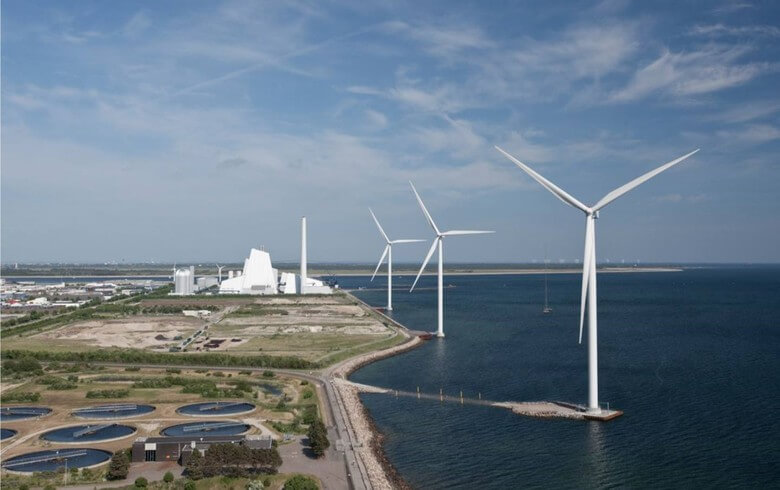
    Image: Anholt Offshore Wind Farm