Category: Culture & Civilization

  • Between Western Universalism and Cultural Relativism

    Between Western Universalism and Cultural Relativism

    TPF Occassional Paper – 01/2025

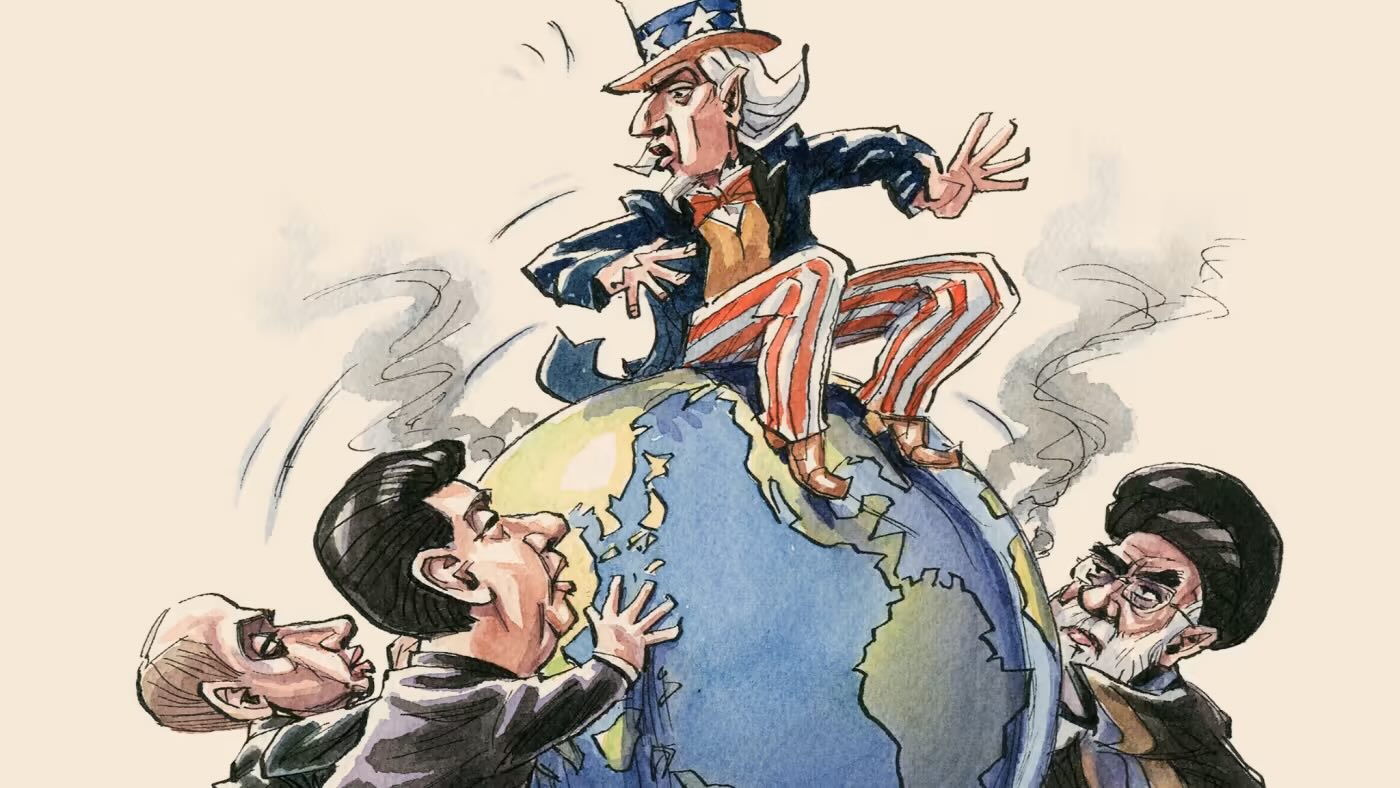
    Between Western Eurocentric Universalism and Cultural Relativism: Mutual Recognition of the Civilisations of the Earth as precondition for the Survival of Mankind


    Andreas Herberg-Rothe

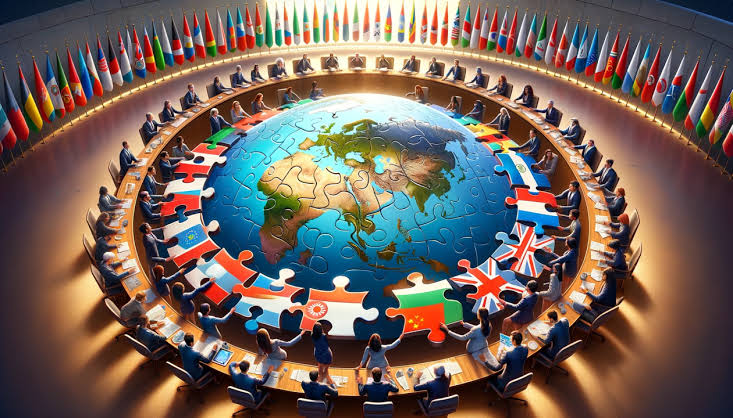
    In the 19th century, the Europeans conquered the whole world; in the 20th century, the defeated nations and civilizations had to live with the victorious West; in the 21st century, the civilizations of the earth must finally learn to live together.

    The Universal Declaration of Human Rights was codified by the United Nations in 1948. But the academic debate on the universality of the norms on which it is based is far from over. The question remains whether there are universal values other than those of the West. Western values alone are often implicitly regarded as universal. But whether this is scientifically justifiable is more than debatable. At the same time, few participants in the debate seriously doubt the need for universal human dignity.

    In the current debate, the binary positions of relativism and universalism are in a stalemate. A way out of this dichotomy would have to withstand the charge of ethnocentrism as well as particular relativism. Neither should dimensions of power and colonialism be ignored, nor should inhumane practices such as torture, humiliation and sexual violence be relativised by reference to another ‘culture’. If a universal approach is to be found, it should not be implicitly Westernised. This is a criticism of existing approaches, particularly in postcolonial theory.

    Historically, ethnocentrism, as a mere description of a state of affairs, has developed into a justification of ‘cultural superiority’ and, as a consequence, of oppression and exploitation.

    It is about the justifiability of universal norms on the one hand, and the inevitability of particular justifications of norms on the other. Historically, ethnocentrism, as a mere description of a state of affairs, has developed into a justification of ‘cultural superiority’ and, as a consequence, of oppression and exploitation. An initially unconscious preference for and belief in one’s own (cultural) perspective, the unquestioned truth and correctness of one’s own norms, values and patterns of behaviour, did not develop into ‘live and let live’. This form of ethnocentrism rejects the acceptance of cultural differences and represents an attitude that legitimises the destruction of the foreigner as a legitimate consequence of one’s own superiority. This, of course, refers mainly to the long-standing colonisation of supposedly ‘inferior’ peoples by European states and the associated cultural appropriation and cultural destruction or exploitation. These practices were morally legitimised on the basis of the conviction that one’s own way of life was superior to all other ways of life, not only militarily and politically, but also cognitively and morally. Ideologically, this argument is based on various elements, including the proselytising idea of the Christian message of salvation, the idea of the ‘progress’ of Western civilisation over other cultures and the idea of ‘racial doctrine’.

    In reaction to this unreflected, chauvinistic ethnocentrism, two main currents of contradiction developed: universalism and relativism. Universalism ‘assumes that it is possible to find standards of value that apply across cultural boundaries and are universally valid’, while the relativist position, in the absence of the possibility of an ‘extra-cultural’, objective judgement of a situation, all cultures, with everything that belongs to them, are ascribed the same value.

    Universalism

    The argumentative basis of Western universalism is the assumed fundamental equality of all human beings – both in their intellectual capacity (cognitive) and in their materiality (normative), which leads to a general insight into certain universal norms. The most obvious example of this is universal human rights, whose need for universality is clear from their very name.

    The cognitive premise of this kind of universalism goes back to the Enlightenment and the idea that all human beings have, in principle, the same cognitive capacities, even if they differ in individual cases. Only on this basis can the premise of normative universalism in the Enlightenment be realised. But this leads to various problems, paradoxes and points of criticism, because this conception is based on a particular understanding of rationality that is rooted in the thinking of Western modernity. For example, it excludes any kind of holism, although this conceptualisation is by no means irrational, but represents a different kind of rationality.

    The apparent paradox of the uniqueness of each culture lies in the claim to universality that all cultures are of equal value. We can therefore speak neither of a universalism that is purely independent of culture, nor of a norm that can be attributed to only one culture.

    One frequently pursued solution to the tension between universal norms, which nonetheless originate in only one culture, and different culturally determined norms has been to search for what is common to all cultures. This approach, which in itself goes further, was pursued above all in the project of the ‘global ethic’, which sought the common foundations of all religions. Western modern universalism had thus abandoned its claim to all-encompassing universality and limited itself to a kind of ‘core norms’. Instead of questioning specific cultural practices, the focus is on the fundamental premises of human coexistence. In my view, this project was doomed to failure after the initial euphoria, because the commonalities were based on an ever-increasing abstraction. This leads to two fundamental difficulties: the unresolved problem of drawing boundaries between different forms of norms, and the justification of particular norms on the basis of the universal assumption that all cultural norms are in principle equal. The apparent paradox of the uniqueness of each culture lies in the claim to universality that all cultures are of equal value. We can therefore speak neither of a universalism that is purely independent of culture, nor of a norm that can be attributed to only one culture.

    Strong normative relativism represents a ‘normative statement that all normative systems are fully justified in their diversity’ – a paradox since this is a statement with a claim to universal validity. In contrast, weak normative relativism is derived from the impossibility of universally valid normative statements, which merely means a ‘non-evaluability’ of normative systems  The demarcation between concrete social norms  is therefore very difficult

    Because of the difficulty of justifying strongly normative positions, ‘differentiated’ theories of relativism argue from a ‘weakened position’, albeit at the expense of unambiguity due to the lack of demarcation. Culture is then understood as ‘dynamic and hybrid’, while ‘normative overlaps’ are recognised without doubting the fundamental relativity of all norms.

    Paradoxical structure

    Relativism does not provide a ‘ground zero’ from which to make generally valid statements – this rules out the possibility of relativism being universally valid in itself, as well as the possibility of relativism being regarded as a ‘universal truth’.  Relativism cannot, therefore, justify itself out of itself, which it has in common with other theoretical currents in the age of postmodern critique (Herberg-Rothe 2025). Moreover, it does not necessarily apply universally, but can be limited in time or place: So the undecidability of normative conflicts might appear to be a particularly obvious contemporary phenomenon, without it being true for all times and places that normative conflicts are fundamentally undecidable. This concept of decidable and undecidable questions is based on the position of Heinz von Foerster’s radical constructivism. In his desperate attempt to leave behind all only apparent objectivity and the subjectivity of all norms, he resorts to a binary opposition between objectivity (in mathematics) and subjectivity.

    Due to the equivalence of all cultural standpoints and the lack of presupposed values, no well-founded criticism can take place, which makes relativism normatively arbitrary in relation to itself. Neither the persecution of minorities nor discrimination can be legitimately criticised if this is seen as a cultural particularity. The norm of ‘absolute tolerance of cultural differences’ is both empirically untenable and logically inconsistent, since here too there is a claim to universal validity. However, this point of criticism already presupposes the premise of universalism that there are conditions that are worthy of criticism despite their culture-specific justification.

    The observed norms and values appear to be specific responses to specific social problems but are in no way connected to the supposed ‘essence’ of a culture, as culture itself is perceived as hybrid, fluid and contradictory – instead of judging inhumane practices of one’s own culture, it is about understanding. In this context, the post-colonial reality should also be mentioned, in which there are no longer any cultures without interference.

    Relativism in its weakened form has moved away from normative statements. In the absence of a judgmental dimension, it no longer makes a statement about tolerance towards certain cultural practices. The observed norms and values appear to be specific responses to specific social problems but are in no way connected to the supposed ‘essence’ of a culture, as culture itself is perceived as hybrid, fluid and contradictory – instead of judging inhumane practices of one’s own culture, it is about understanding. In this context, the post-colonial reality should also be mentioned, in which there are no longer any cultures without interference.

    In order to be able to criticise on the basis of relativism in human practices despite all these objections, two possibilities need to be mentioned:  1. to establish ‘qualified norms’ without further justification in order to criticise on the basis of them, and 2. to practise a particular, culturally immanent criticism – of one’s own cultural norms on the basis of other norms of one’s own culture. For example, there are numerous culturalist justifications for gender equality, “general” human rights or democracy, which shows that a culturally immanent and particular critique of domination does not necessarily have to differ in content from a universalist critique (see for example Molla Sadra in Herberg-Rothe 2023). Both solutions are in no way ideal, because in the first attempt, we encounter a hidden enthnocentrism, and in the latter, the problem arises between contrasting norms within one culture.

    Covert Westernisation and reverse Ethnocentrism

    Relativism is also a theory of Western origin, which can be seen in the Western-influenced ‘idea of tolerance’ – but this point also applies mainly to a normatively strongly interpreted relativism.  Inverse ethnocentrism, on the other hand, means ‘labelling everything foreign as right’.

    What underlies both, universalism and relativism, is the struggle for knowledge: which norms can be taken for granted? Or, more philosophically, what can we know? Both positions have argumentative shortcomings that are not easily remedied.

    Knowledge is closely linked to power (the power to define, to enforce, to disseminate or to withhold knowledge) and thus to domination and often to violence. This connection is expressed in social tensions between the legitimation of domination and the subversion of existing conditions.

    The use of human rights to achieve social change raises the question of “whether this process is not itself, in terms of knowledge, a bureaucratic, almost classically ethnocentric process with an imperial claim to universality’ that spreads ‘Western culture’ and its models of action globally’.

    Transnational encounters since the colonial era have steadily increased due to globalisation and require reassessment. The use of human rights to achieve social change raises the question of “whether this process is not itself, in terms of knowledge, a bureaucratic, almost classically ethnocentric process with an imperial claim to universality’ that spreads ‘Western culture’ and its models of action globally’. At the same time, this process opens up a dialogue beyond culturally determined borders, which we must be aware in order to transcend them.

    How could this stalemate between ethno Universalism and cultural relativism be overcome, at least in perspective?

     A new approach to practical intercultural philosophy

    Intercultural philosophy can play an important role in this process of mutual recognition among the civilizations of the earth. Since Karl Jaspers, the godfather of intercultural philosophy, acknowledged the existence of four different civilizations (Holenstein 2004, Jaspers 1949), immense progress has been made in understanding the different approaches. Nevertheless, all civilizations have asked themselves the same question but have found different answers. Cross-cultural philosophy is thus possible because we as human beings ask the same questions (Mall 2014). For example, in terms of being born, living and dying, between immanence and transcendence, between the individual and the community, between our limited capacities and the desire for eternity, the relationship between us as animals and the ethics that constitute us as human beings – our ethical beliefs may be different, but all civilizations have an ethical foundation. In fact, I would argue that it is ethics that distinguishes us from animals, not our intellect (Eiedat 2013 about Islamic ethics). We may realize the full implications of this proposition when we relate it to the development of artificial intelligence.

    Detour via Clausewitz

    An alternative solution to the problem raised by Lyotard suggests another dialectic, as implicitly developed by Carl von Clausewitz based on his analysis of attack and defence. The approach of Clausewitz is insofar of paramount importance because it presupposes neither a primacy of identity in relation to difference, contrast, and conflict, nor to the reverse as in the conceptualizations of the post-structuralists (Herberg-Rothe 2007, Herberg-Rothe/Son 2018) or the adherents of a purified Western modernity in the concepts of Habermas and Giddens. In contrast to binary opposites, Clausewitz’s model of the “true logical opposition and its identity,” a structure-forming “field” (something like a magnetic field) allows us to think of manifold mediations as well as differences between opposites. If we formulate such an opposition in the framework of a two-valued logic (which formulates the opposition with the help of a negation or an adversarial opposition), there is a double contradiction on both sides of the opposition. From the assumption of the truth of one pole follows with necessity the truth of the other, although the other formulates the adversarial opposition of the first and vice versa. Hegel’s crucial concepts such as being and nothingness, coming into being and passing away, quantity and quality, beginning and ending, matter and idea are such higher forms of opposition which, when determined within the framework of a two-valued logic, lead to logical contradictions. Without taking into account the irrevocable opposites and their unity, a “pure thinking of difference” leads either to “hyper-binary” systems (such as the relation of system and lifeworld, of constructivism and realism) or to unconscious absolutizations of new mythical identities (such as Lyotard’s notion of plasma as well as Derrida’s chora).

    Clausewitz’s “true logical opposition” and its identity enables the thinking of a model in which the opposites remain irrevocable, but at the same time, in contrast to binary opposites

    1. both remain in principle equally determining; this model is therefore neither dualistic nor monistic, but cancels this opposition in itself and sets it anew at a new level.;
    2. structure a “field” of multiple unities and differences;
    3. enable a conceptualization, in which the opposites have a structure-forming effect, but do not exist as identities detached from one another,
    4. and in which there are irrevocable boundaries between opposites and differences, which at the same time, however, are historically socially distinct. The concrete drawing of boundaries is thus contingent, without the existence of a boundary as such being able to be abolished (Herberg-Rothe 2007, 2019 and Herberg-Rothe/Son 2018). Clearly, in the, albeit limited, model of a magnet neither the south nor north pole exists as identity, a (violent) separation between both even leads to a duplication of the model. At the same time, both poles are structures forming a magnetic field, without a priority for either side. And finally, Clausewitz’s model of the true logical opposition goes beyond the one of polarity, because it additionally allows us to think of manifold forms of transitions from one pole to the other (Herberg-Rothe 2007, Herberg-Rothe/Son 2018).

    This conception of an “other” dialectic is also the methodological precondition of thinking “between” Lyotard and Hegel (Herberg-Rothe 2005). It treatises above all categories such as mostly asymmetrical transitions and reversals as well as the “interspace” (Arendt) between opposites. With such an understanding of dialectics, it is possible to understand the apparent contradiction between the rejection of the highest meta-meta-language and the fact that the language used in this critique, theory, is itself this actually excluded “highest” level of language, not as a logical contradiction, but as a performative one. Such performative contradictions between what a proposition, statement, etc., says and what it is are at the heart of Hegel’s notion of dialectic. Of all things, Hegel’s criticized and rejected form of dialectic makes it possible to conceive of these contradictions not as “logical” ones, but as ones that ground, but also force, further development as distinct from mythical ways out. This form of dialectic, however, contains at the same time the demonstration of a principle of development without conclusion and thus puts Hegel’s “great logic” as “thoughts of God before the creation of the world” in its place (Hegel Preface to the Science of Logic, Wdl I, Werke 5). Nevertheless, these performative contradictions should also not be absolutized, they are just one aspect of a different dialectics.

       Although I advocate the development of an intercultural philosophy as part of transnational governance and mutual recognition among the civilizations of the earth, I would like to highlight the main problem, at least from my point of view. Aristotle already asked the crucial question of whether the whole is more than the sum of its parts. If I understand Islamic philosophy correctly, it starts from the assumption that the whole is indeed more than the sum of its parts – one could call this position a holistic approach (Baggini 2018). In contrast, Western thought is characterized by the approach of replacing the whole precisely by the sum of its parts. We might call this an atomistic approach – only the number of electrons, neutrons, distinguishes atoms etc. In terms of holism, I would argue that the task might be to distinguish the whole from mere hierarchies – in terms of the concept of harmony in Confucianism, I would argue that true harmony is associated with a balance of hierarchical and symmetrical social and international relations. Instead of the false assumption in Western approaches that we could transform all hierarchical relationships into symmetrical ones, we need to strike a balance between the two. Harmony does not mean absolute equality in the meaning of sameness but implies a lot of tension. Harmony can be characterized by unity with difference, and difference with unity, as already mentioned (Herberg-Rothe/Son 2018). I sometimes compare this perspective to a wave of water in a sea: if there are no waves, the sea dies; if the waves are tsunamis, they are destructive to society.

    I start from the following fivefold distinction of thinking, based on the fundamental contrasts of life (while Baggini 2018 and Jaspers 1949, for example, reduce different ways of thinking largely to the development of functional differentiation).

    1. Attraction and repulsion, closeness and distance, equality and freedom, love and hate,
    2. Beginning and ending (birth and death, finiteness – infinity),
    3. Happiness and suffering (in Greek and Indian philosophy
    4. Part-whole (individual-community, immanence-transcendence, holism-hierarchies).
    5. Knowledge (experience, positive sciences, extended sense impressions,

    and method – mathematics and logic) versus feeling/the concept of intuition, belief.

    The listed methodological approaches try to cope with unity and opposition. In my opinion, they are also necessary approaches and can be seen as differentiations within the idea of polarity.

    Differentiations in thinking

    1. Either – or systems, = Western modern thought, concentration on the method (since Descartes and Kant, Vienna Circle, Tarski), democracy, individualism, in Islam Ibn Sina and Ibn Khaldun, in Chinese thought the tradition of Han Fei and Li Se; Yan 2011, Zhang 2012).
    2. As well as – Daoism, early Confucianism, but also New Age approaches, Heißenberg’s uncertainty principle, and dialectics.
    3. Neither-Nor enables the construction of “being-in-between”; Plato’s metaxis plus Indian logic, the whole concept of diversity, difference thinking, de-constructivism, the post-structuralism, post-colonialism
    4. system thinking, structuralism – here I struggle with the distinction between holism (in the Islamic worldview) and pure hierarchies (in Islam Al Ghazali); inherent logic of systems (Luhmann) and functional differentiation; in Eastern philosophies, we find this approach mainly in highlighting spiritual approaches
    5. process thinking – in ethics this can be found e.g. in utilitarianism, stage theories (Piaget, Kohlberg; Hegel’s world history as the progress of freedom consciousness), Hegel’s becoming at the beginning of his “logic” as “surplus” of coming into being and passing away; cycle systems; enlightenment; Dharma religions, in China, Mohism.

    While there are probably already worked out methods for points 1, 4 and 5, I lack such for 2 and 3, which are always in danger of expressing arbitrariness. This becomes especially clear in the mysticism of the New Age movement.

    How can this fivefold distinction be derived from one model, which is not a totalizing approach (Mall 2014)? For this purpose I use  again the simplified model of polarity. This method is elaborated in my Clausewitz interpretation of his wondrous trinity and the dialectic of attack and defense (Herberg-Rothe 2007 and 2019).

    Differences in polarity as a unifying model.

    1. Either-Or systems: Each of the two poles is either a north or a south pole (= tertium non datur). We find those approaches in mathematics, logic, rationality and methods in general; such conceptualizations are also to be found in zero-sum games – what one side gains, the other loses (rationality, if then Systems, in Cina Lli Si and Han Fei);
    2. As well As (earlier Confucius, Daoism): the magnet as unity consists of the opposites of both poles and the magnet “is” both north pole and south pole. This is analyzed in detail in my Clausewitz interpretation on the basis of war as unity and irrevocable opposition of attack and defence. We find this thinking, especially in Chinese ideas of win-win solutions. Here, competition and conflict in one area do not exclude cooperation in another (Herberg-Rothe 2007, Chinese version 2020.)
    3. Neither North nor South pole exist as identities (Plato’s metaxis, Indian thought) – they are rather dynamic movements in between the opposites (see in detail again Clausewitz’s concept of attack and defense; this understanding is the methodological basis of diversity; Herberg-Rothe 2007; see the French theorists of post-structuralism).
    4. Structure (system theories, Islamic holism): North pole and south pole “construct” a magnetic field outside and inside the materiality of the magnet, a non-material structure.
    5. Process thinking: Here the simplified example of the magnet finds its end – but can be understood beyond the physical analogy easily as movement from the south pole to the north pole and “always further” (sine curve on an ascending x-axis). In this sense, Already Hegel had considered the discovery of polarity as of infinite importance but criticized it because in this model the idea of transition from one pole to the other was missing (Herberg-Rothe 2000 and 2007). Molla Sadra (1571-1636), the most important philosopher of the School of Isfahan, elaborated this progressive circular movement particularly clearly. Although he is mainly regarded as an existential philosopher who denies any essence, he actually postulated a kind of progressive circle as the decisive essence (for an overview see Yousefi 2016, for more details see Rizvi 2021).

    A unifying model – Virtuous Concentric Circles

    Starting from the premise that Western thinking is shaped by the billiard model of international relations and that of all other civilizations by concentric circles and cycles (Herberg-Rothe/Son 2018), the aim is to work out how extensively both models determine our thinking in the respective cultural sphere in order to develop a perspective that includes both sides. In doing so, I do not assume one-dimensional causes for violent action, nor do I assume pure diversity without any explanation of causes. Instead, I work in perspective with virtuous and vicious circles – in these circles, there are several causes, but they are not unconnected to each other but are integrated into a cycle. So far, this methodological approach has probably been applied mainly in the Sahel Syndrome. The methodological approach would involve trying to break vicious circles and transform them into virtuous circles – this is where I would locate the starting point of a new approach to intercultural philosophy.

    Ideally, a virtuous circular perspective would look like this:

    1. Understanding of discourses on how conflicts with cultural/religious differences are justified/articulated.
    2. Attribution of these differences to different concepts of civilization.
    3. Mutual recognition of the same issues in different ways of thinking.
    4. Self-knowledge not only as religion or culture, but as a civilization.
    5. the self-commitment to one’s own civilizational standards, norms (Jaspers 1949 and Katzenstein 2009) etc., which can also contribute to the management of intra-societal and international conflicts.

    At the infinite end of this process would be a kind of mutual recognition of the civilizations of the earth, accompanied by their self-commitment to their own civilizational norms. My colleague Peng Lu from Shanghai University has made the following suggestion: In the 19th century, the Europeans conquered the whole world; in the 20th century, the defeated nations and civilizations had to live with the victorious West; in the 21st century, the civilizations of the earth must finally learn to live together.  This is in my view the task of the century. Solving the problem of ethno-universalism and cultural relativism has nothing to do with wishful thinking, but is the precondition for the survival of humankind in the twenty-first century, unless we want to repeat the catastrophes of the twentieth century on a larger scale.

    References: 

    Baggini, Julian (2018), How the World Thinks. A global history of philosophy. Granta: London.

    Clausewitz, Carl von (2004) On War. Edited and translated by Michael Howard and Peter Paret. Princeton: Princeton University Press

    Fukuyama, Francis (2018), Against Identity Politics. The new tribalism and the crisis of democracy. In Foreign Affairs, Sept./Oct. Retrieved from: https://www.foreignaffairs.com/articles/americas/2 018-08-14/against-identity-politics; last accessed, Oct. 3, 2018, 10.21.

    Herberg-Rothe, Andreas (2003/2017), Der Krieg. 2nd ed., Campus: Frankfurt.

    Herberg-Rothe, Andreas and Son, Key-young (2018), Order wars and floating balance. How the rising powers are reshaping our worldview in the twenty-first century. Routledge: New York.

    Herberg-Rothe, Andreas (2023) Toleration and mutual recognition in hybrid Globalization. In: International Studies Journal, Tehran, Print version: September 2023; Volume 20, Issue 2 – Serial Number 78; pp 51-80.

    Also published Online: URL: https://www.isjq.ir/article_178740.html?lang=en; last access 4.11. 2023.

    Herberg-Rothe, Andreas (2024), Lyotard versus Hegel. The violent end of postmodernity. In: Philosophy and Sociology. Belgrade 2024/2025 (forthcoming)

    Jaspers, Karl (1949), Vom Ursprung und Ziel der Geschichte. Munich: Piper 1949 (numerous follow-up editions).

    Katzenstein, Peter J (2009). Civilizations in World Politics. Pluralist and pluralist perspectives. Routledge: New York

    Li, Chenyang (2022), “Chinese Philosophy as a World Philosophy”. In: Asian Studies, September 2022,  pp. 39-58.

    Yan, Xuetong. Ancient Chinese thought, modern Chinese power. Princeton: Princeton University Press, 2011.

    Zakaria, Fareed (2008), The Post-American World, New York/London: W. W. Norton, 2008.

    Zhang, Wei-Wei (2012), The China Wave: Rise of a Civilizing State. Hackensack: World Century Publishing Corporation.


    Feature Image Credit: www.ft.com
  • China and the Sunset of the International Liberal Order

    China and the Sunset of the International Liberal Order


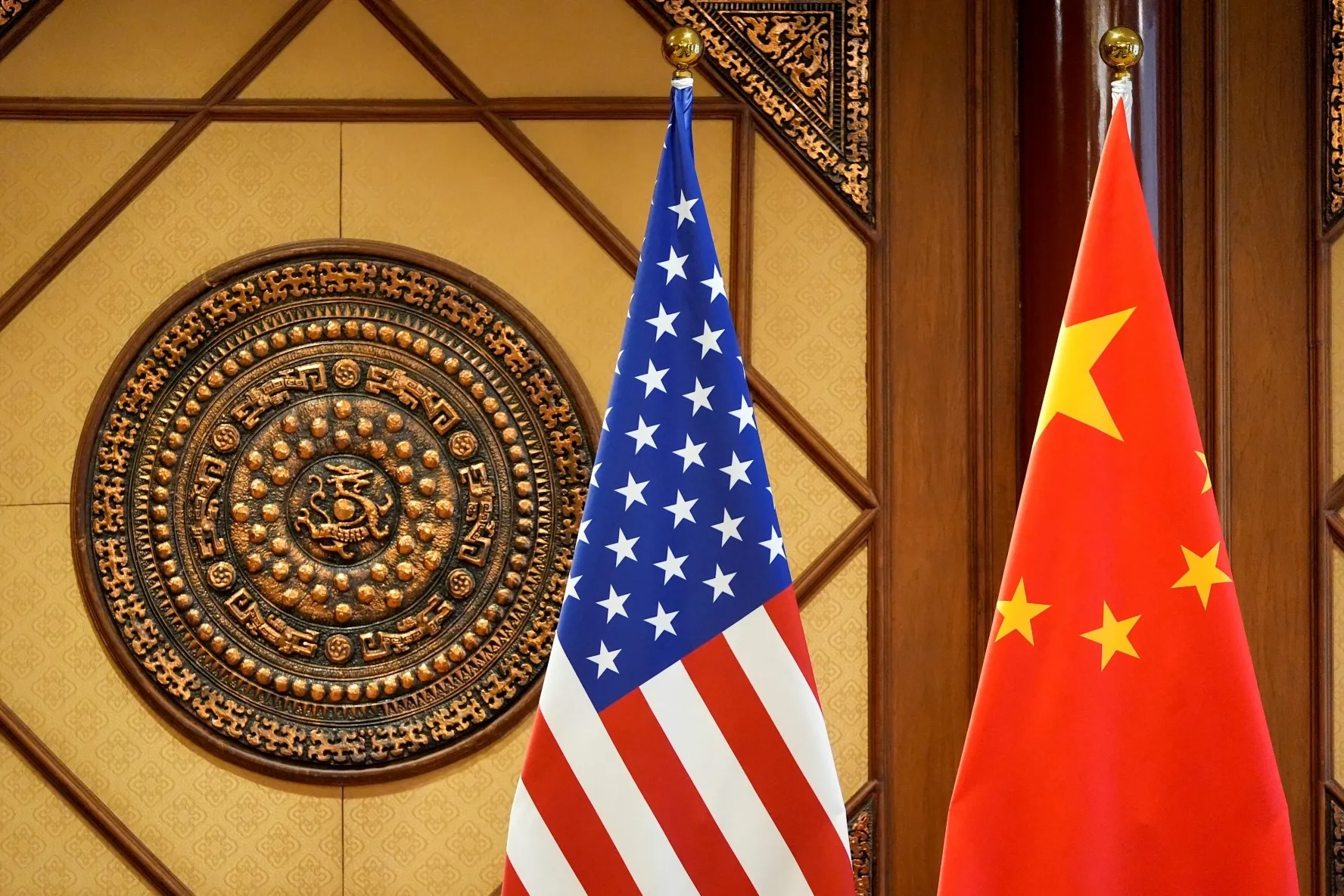
    Rise of Multipolar World Order – www.newsvoyagernet.com

           The irrational amounts that the Soviet Union allocated to its defense budget not only represented a huge burden on its economy, but imposed a tremendous sacrifice on the standard of living of its citizens. Subsidies to the rest of the members of the Soviet bloc had to be added to this bill.

             Such amounts were barely sustainable for a country that, as from the first half of the 1960s, was subjected to a continuous economic stagnation. This situation became aggravated by the strong decline of oil prices, USSR’s main export, since the mid 1980s. The reescalation of the Cold War undertaken by Jimmy Carter and Ronald Reagan, particularly the latter, put in motion an American military buildup, that could not be matched by Moscow.

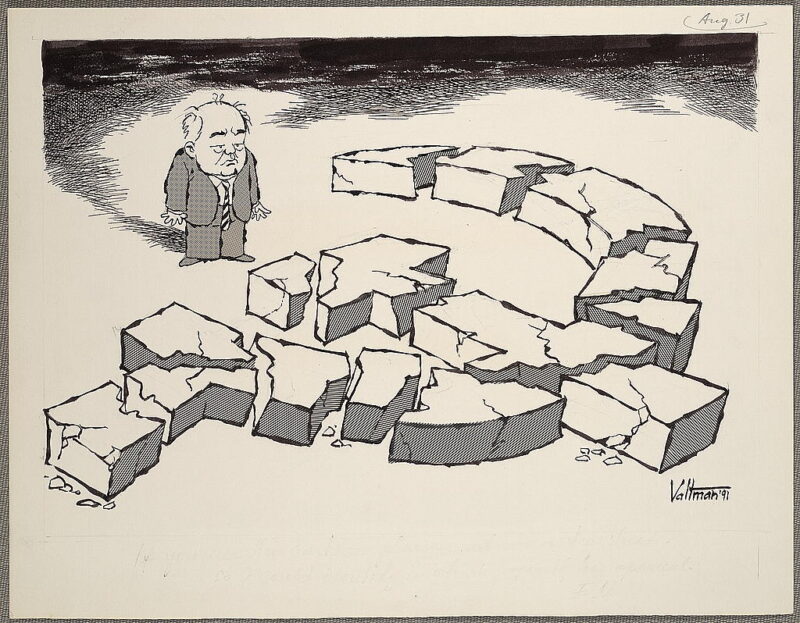
             With the intention of avoiding the implosion of its system, Moscow triggered a reform process that attained none other than accelerating such outcome. Indeed, Mikhail Gorbachev opened the pressure cooker hoping to liberate, in a controlled manner, the force contained in its interior. Once liberated, however, this force swept away with everything on its path. Initially came its European satellites, subsequently Gorbachev’s power base, and, finally, the Soviet Union itself. The Soviet system had reached the point where it could not survive without changes, but neither could assimilate them. In other words, it had exhausted its survival capacity.

              Without a shot being fired, Washington had won the Cold War. The exuberant sentiment of triumph therein derived translated into the “end of history” thesis. Having defeated its ideological rival, liberalism had become the final point in the ideological evolution of humanity. If anything, tough, the years that followed to the Soviet implosion were marred by trauma and conflict. In the essential, however, the idea that the world was homogenizing under the liberal credo was correct.

             On the one hand, indeed, the multilateral institutions, systems of alliances and rules of the game created by the United States shortly after World War II, or in subsequent years, allowed for a global governance architecture. A rules based liberal international order imposed itself over the world. On the other hand, the so-called Washington Consensus became a market economy’s recipe of universal application. This homogenization process was helped by two additional factors. First, the seven largest economies that followed the U.S., were industrialized democracies firmly supportive of its leadership. Second, globalization in its initial stage acted as a sort of planetary transmission belt that spread the symbols, uses, and values of the leading power.

             The new millennium thus arrived with an all-powerful America, whose liberal imprint was homogenizing the planet. The United States had indeed attained global hegemony, and Fukuyama’s end of history thesis seemed to reflect the emerging reality.

    But things turned out to be more complex than this, and the history of the end of history proved out to be a brief one. In a few years’ time, global “Pax Americana” began to be challenged by the presence of a powerful rival that seemed to have emerged out of the blue: China. How had this happened?

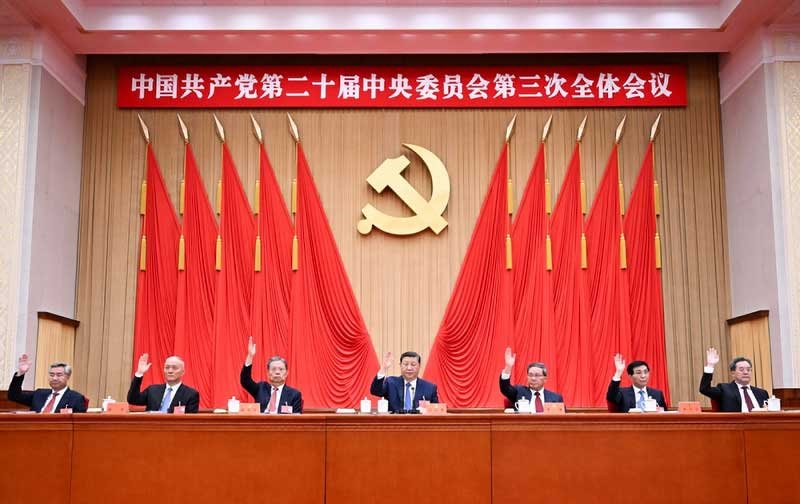
             Beginning the 1970s, Beijing and Washington had reached a simple but transformative agreement. Henceforward, the United States would recognize the Chinese Communist regime as China’s legitimate government. Meanwhile, China would no longer seek to constrain America’s leadership in Asia. By extension, this provided China with an economic opening to the West. Although it would be only after Deng Xiaoping’s arrival to power, that the real meaning of the latter became evident.

             In spite of the multiple challenges encountered along the way, both the United States and China made a deliberate effort to remain within the road opened in 1972. Their agreement showed to be not only highly resilient, but able to evolve amid changing circumstances. The year 2008, however, became an inflexion point within their relationship. From then onwards, everything began to unravel. Why was it so?

             The answer may be found in a notion familiar to the Chinese mentality, but alien to the Western one – the shi. This concept can be synthesized as an alignment of forces able to shape a new situation. More generally, it encompasses ideas such as momentum, strategic advantage, or propensity for things to happen. Which were, hence, the alignment of forces that materialized in that particular year? There were straightforward answers to that question: The U.S.’ financial excesses that produced the world’s worst financial crisis since 1929; Beijing’s sweeping efficiency in overcoming the risk of contagion from this crisis; China’s capability to maintain its economic growth, which helped preventing a major global economic downturn; and concomitantly, the highly successful Beijing Olympic games of that year, which provided the country with a tremendous self-esteem boost.

             The United States, indeed, had proven not to be the colossus that the Chinese had presumed, while China itself turned out to be much stronger than assumed. This implied that the U.S. was passing its peak as a superpower, and that the curves of the Chinese ascension and the American decline, were about to cross each other. Deng Xiaoping’s advice for future leadership generations, had emphasized the need of preserving a low profile, while waiting for the attainment of a position of strength. In Chinese eyes, 2008 seemed to show that China was muscular enough to act more boldly. Moreover, with the shi in motion, momentum had to be exploited.

             Beijing’s post-2008 assertiveness became much bolder after Xi Jinping’s arrival to power in 2012-2013. China, in his mind, was ready to contend for global leadership. More to the point within its own region, China’s centrality and the perception of the U.S. as an alien power, had to translate into pushing out America’s presence.

    Challenged by China, Washington reacted forcefully. Chinese perceptions run counter to the fact that the U.S.’ had been a major power in East Asia since 1854, which translated into countless loss of American lives in four wars. Moreover, safeguarding the freedom of navigation in the South China Sea, a key principle within the rules based liberal international order, provided a strong sense of staying power. This was reinforced by the fact that America’s global leadership was also at stake, thus requiring not to yield presence in that area for reputational reasons. The containment of Beijing’s ascendancy, became thus a priority for Washington.

             However, accommodating two behemoths that feel entitled to pre-eminence is a daunting task. Specially so, when one of them feels under threat of exclusion from the region, and the other feels that its emergence is being constrained. On top, both remain prisoners of their history and of their national myths. This makes them incapable of looking at the facts, without distorting them with the subjective lenses of their perceived sense of mission and superiority.

             War ensuing, under those circumstances, is an ongoing risk. But if war is a possibility, Cold War is already a fact. This implies a multifaceted wrestle in which geopolitics, technology, trade, finances, alliances, and warfare capabilities are all involved. And even if important convergent interest between them still remains in place, ties are being cut by the day. As a matter of fact, if in the past economic interdependence helped to shield from geopolitical dissonances, the opposite is the case today. Indeed, a whole array of zero-sum geopolitical controversies are rapidly curtailing economic links.

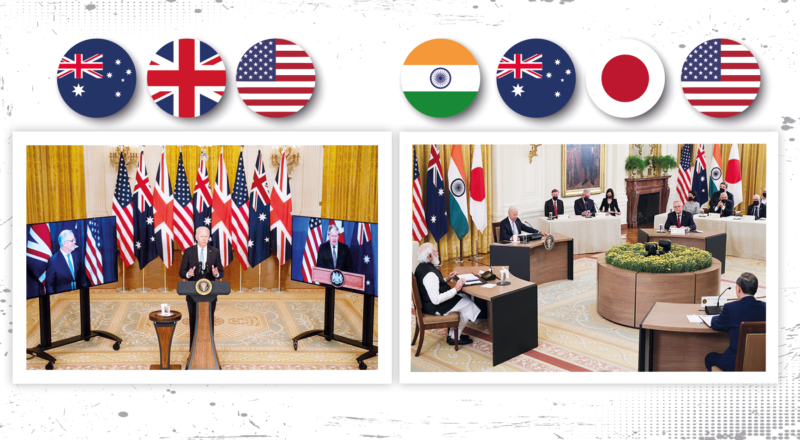
             The U.S., particularly during the Biden administration, chose to contain China through a regional architecture of alliances and by way of linking NATO with Indo-Pacific problems and selective regional allies. The common denominator that gathers them together is the preservation of the rules based liberal international order. An order, threatened by China’s geostrategic regional expansionism.


    However, China itself is not short of allies. A revisionist axis, that aims at ending the rules based liberal international order, has taken shape. The same tries to throw back American power and to create its own spheres of influence. This axis represents a competing center of gravity, where countries dissatisfied with the prevailing international order can turn to. Together with China two additional Asia-Pacific powers, Russia and North Korea, are part of this bloc.

    Trump’s return to the White House might change the prevailing regional configuration of factors. Although becoming more challenging to Beijing from a trade perspective, he could substantially weaken not only the rules based liberal international order, but the architecture of alliances that contains China. The former, because the illiberal populism that he represents is at odds with the liberal order. The latter, not only because he could take the U.S. out of NATO, but because his transactional approach to foreign policy, which favors trade and money over geopolitics, could turn alliances upside down.

    The rules based liberal international order, which became universal over the ashes of the Soviet Union, could now be facing its sunset. This, not only because its main challenger, China, may strengthen its geopolitical position in the face of its rival alliances’ disruption, but, more significantly, because the U.S. itself may cease to champion it.

    Feature Image Credit: www.brookings.edu


  • Cinema as a tool of National narratives and Geopolitics

    Cinema as a tool of National narratives and Geopolitics

    ABSTRACT

    This paper aims to understand how world politics, the geopolitical environment in the international arena, and economic relationships between countries are portrayed in films and entertainment media. This paper attempts to understand the portrayal of the themes through varied parameters, namely, the geopolitical timeline of when the film was released, the theme or the event that the film is trying to address, the region the movie was produced in and the audience it would cater to. As films are pretty nuanced and very interpretative, these themes might overlap. Nevertheless, it will attempt to identify and understand the themes as best possible. This paper also aims to understand the active relationship between films and the various global interactions among nation-states. It will also examine the impact of these films on the foreign policy decisions made by the State and how the narratives change with changing leadership. This paper will understand films through the lens of international politics and not just as a medium of entertainment.


    INTRODUCTION

    Beyond the fiction of reality, there is the reality of the fiction.

    – Slavoj Žižek

    Let’s ask a simple question. How much of the reality that we live in do we see in fiction? This question seems to have a complex answer. The main reason for the existence of films is their ability to transport viewers to a world of imagination or fiction where anything can happen, unlike the rigid realities we live in. However, upon closer examination, one might find that fiction interacts with present, everyday realities and fosters an ideology within itself. Films and ideology have a deep-rooted connection, and it is impossible to analyse films without encountering the ideology they inevitably promote. This is particularly evident in films that fall under the genre of politics or political commentary. Politics is often described as a struggle for power, where ideology plays a crucial role. Films have the power to influence the masses, making them a potent tool for those in power to wield. This is why ideology is embedded in films. According to Slavoj Žižek’s documentary ‘The Pervert’s Guide to Ideology’, ideology is a socio-economic and political apparatus that is created and propagated by humans. He argues that ideology is a social reality, and attempting to escape it is also an ideology.

    Ideology has a significant impact on the superstructure, shaping our perception of political reality. Unfortunately, this often results in a distorted or biased portrayal of events that goes unchallenged due to the disclaimer that it is a work of fiction. This allows ideologies to spread without being acknowledged. Films with political themes are particularly susceptible to this, as they are shaped by the prevailing ideology of the time and place in which they are created and discussed. These films serve as a means of propagating state-sponsored ideologies, which can then be used to legitimise state propaganda. They are essentially used as a trial run to measure the public’s reaction to certain ideas before implementing them. These films function as a symbolic order, swaying public opinion in line with the desired political narrative. The depictions in these movies, being fictional, are often exaggerated and used to evoke feelings of patriotism and nationalism, making it easier for political leaders to shape the status quo in their favour.

    Films are generally regarded as a source of entertainment, but they also have a profound impact on the realities of our lives. Even movies with superhero themes, which are purely fictional, have the power to shape political realities. For instance, the Marvel Cinematic Universe, a franchise that features individuals with exceptional abilities, highlights the inability of governments to address significant issues or credible threats. These governments tend to view those who can effect change as a greater threat than the aliens themselves. This commentary reflects on the governments’ and leadership’s propensity to prioritize personal insecurities and power politics over the greater good. This, in turn, questions the relevance of democratic institutions and government, which is ironic given that the films originate from a country that has historically promoted democracy. This paper aims to explore how these films portray global politics and economic relations, and the rationale behind these depictions.

    RELATIONSHIP BETWEEN POLITICS AND THE FILM INDUSTRY

    Before examining the portrayal of political institutions in films, it is important to consider the extent to which these institutions influence the film industry, as this relationship will greatly determine the narrative or nature of the films. It is crucial to understand the independence of the film industry when it comes to politics. During the Cold War era, also known as the era of ideological conflict, films played a significant role in fostering a sense of nationalism among the population. They served as an effective means of disseminating an ideology that would advantage the host country. Films became a tool of soft power, and both sides utilized them to the fullest.

    Independence Day, a motion picture released in 1996 and starring Will Smith, exemplifies the interconnection between politics and cinema. The film centres around an alien assault on Earth and the United States of America’s leadership and military’s endeavour to exact retribution and obliterate the extraterrestrial ships, thereby preventing further attacks. This reflects the ‘saviour of the world’ narrative that the United States of America champions and takes pride in. The movie’s portrayal of the United States as the epicentre of the world is strikingly evident. The Cold War period in Hollywood was greatly influenced by the United States’ aspiration for global dominance. It sought to establish US supremacy across the globe. The Cold War was a critical juncture in US political history, and it was essential to emerge victorious in ideological warfare. Consequently, the United States utilised film as a medium to rally the masses and legitimise its actions through an exalted portrayal of patriotism and nationalism. Depicting the US as the only state capable of addressing global threats was a recurring theme in these films. Although the movie is more than a decade old, it accurately portrays the nature of the international arena. It depicts the US at the centre, emphasising that the US is a superpower today and an economically advanced nation with immense financial resources and the ability to carry out military operations. However, compared to the present reality, this portrayal might not be entirely accurate, as the US is currently grappling with enormous debt and bearing significant costs for its interventions around the world.

    Nonetheless, it maintains a significant influence and directs economic ties in some manner or form. Hence, one can argue that the depiction is a fictionalized exaggeration of reality, despite the presence of some factual elements. How autonomous is the film industry -from any location or time frame- in creating or presenting narratives that challenge the established order? This study will delve into specific films as case studies and scrutinize them meticulously to glean a clearer understanding of the portrayal and to what extent it reflects the true picture of the global arena.

    Analysis

    Part 1 of the paper examined films as tools of ideological expression and explored the relationship between the film industry and the State. Moving forward, the paper will delve into regional cinema to investigate its narratives and discourses. Entertainment media has emerged as a powerful socio-political institution that wields influence over the state and individuals through the stories and ideologies it presents. Media has the capacity to depict social realities in accordance with the norms, values, and laws of society at a particular time (Zelizer and Allan, 2011). By comparing and contrasting films from different eras with the social realities of their respective times, it becomes possible to uncover the interconnections between reality and representation. During the Cold War era, films were utilized to foster domestic patriotism, thereby granting the State the legitimacy to pursue its ambitions and achieve greatness. Independence Day is an illustration of this phenomenon.

    The way in which the domestic audience receives information about foreign policy through portrayals of interstate relations is complex, and these portrayals are often influenced by state-centred bias and ideology, which can result in the transmission of biased information (Baum, 2007; Cohen, 1963; Entman, 2004; Chomsky, 1989; McChesney, 2008; McQuail, 2005). The role of the media as a discourse-producing entity and as an entity that defines the complex but symbiotic relationship between the government and the media is central. However, while the media should work independently, it is often commercially motivated and, therefore, promotes the ideas and beliefs of the status quo due to the intertwining of vested interests with the corridors of power (Bagdikian, 2004; Bettig and Hall, 2003; Norris, 1990; Vivian, 2006). This results in the media and government submitting to the interests of a small section of the community being propagated, rather than serving the socio-cultural aspect of the institution.

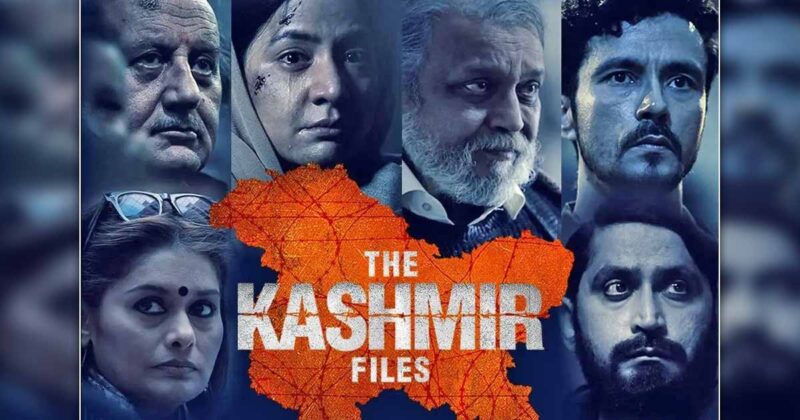
    In the 21st century, propaganda and ideology have become increasingly pervasive. This is due to the rise in content production that aligns with state agendas and the status quo. In India, the movie “The Kashmir Files” has sparked debates regarding whether it is a right-wing propaganda. The movie recounts the exodus of Kashmiri Pandits in Kashmir and the bloodshed that occurred during the 1990s. In today’s context, where right-wing ideologies are gaining momentum, it is evident that ideology and statecraft are interconnected. The portrayal of world and domestic politics is not devoid of an underlying ideological intent. For instance, Bollywood movies like “Raazi” and “LOC Kargil” play a crucial role in propagating India’s foreign policy stance within the domestic political arena. These movies depict India as a progressive global entity, while also propagating the Indian “Big Brother Syndrome” towards its neighbours.

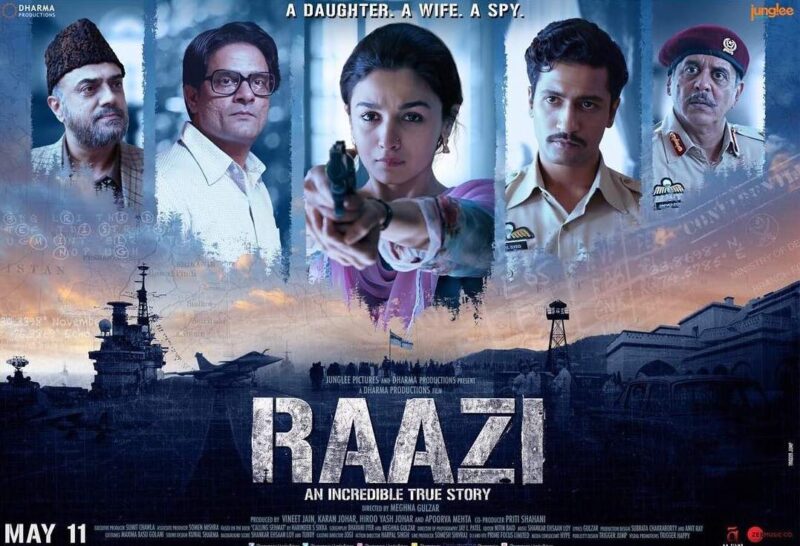
    In the movie “Raazi,” released in 2018 and starring Alia Bhatt and Vicky Kaushal, an undercover RAW agent is married to a Pakistani army official to retrieve crucial information regarding Pakistani moves in Bangladesh and India in 1971. The movie portrays India as a superior state trying to liberate Bangladesh (then East Pakistan) from the “Enemy.” This theme of Indian superiority among its neighbours is prevalent in most films that deal with world and domestic politics. Similarly, the developed West promotes capitalism through films and other visual media.

    Hollywood emerged as a centre for state-sponsored and ideology-driven content during the Cold War. Movies like Wall Street, released in 1987 during an ideological conflict between the United States and the USSR, reflected capitalist ideologies and demonized the USSR and its communist system. The film depicted the ruthless and often exploitative nature of capitalism that prevailed during the 1980s. One of the lead characters, Gordon Gekko, portrayed by Michael Douglas, advocated for the greed and highly capitalistic nature of businessmen. In the context of the Cold War, this promoted a specific type of capitalist ideology to counter the Soviet or communist threat. The glorification of the businessman and the discontentment of the businessman played a significant role in the domestic economic output. The 1980s glorified greed, and this movie accurately represented it. Wall Street explicitly conveyed the notion that morality should not be prioritized over money. The film also featured a speech by Gordon Gekko, in which he declared, “Greed is good.” Movies like this projected a sense of American exceptionalism in the political and economic sense.

    “Don’t Look Up” is a satirical film released in 2022 that critiques the global response to the impending climate crisis. Although the movie aimed to address the issue on a worldwide scale, it primarily focused on Western perspectives. A film that seeks to tackle an international issue should address it on a more comprehensive level. The film, produced in the United States and released on an Over-The-Top (OTT) platform, failed to address the problem it intended to address due to the country’s state-centred ideology and propaganda, which portrays the United States as the saviour of the world. Even though countries like Russia and India were mentioned, the film’s Western bias was evident in the portrayal of these countries as technologically inadequate in stopping the comet from colliding with Earth. This bias is also reflected in movies produced globally, where the notion that national interest takes precedence over all else is a recurring theme.

    Therefore, it can be asserted with confidence that when motion pictures address world politics and economic relationships either currently or historically, the narrative is not unconnected to the state’s agenda. It is permeated with ideology that continually resurfaces. The only solution is the establishment of an autonomous media institution. It is crucial to distinguish between art and the state, as art has proven to be revolutionary in the past. The art produced in India during its quest for independence embodies that essence of truth and authenticity which appears to be lacking in today’s profit-driven, capitalistic world. It is vital to view things objectively, removing the tint of ideology, and acknowledge reality for what it is. This is where the political economy comes into play, exposing the exploitative, biased, and dismissive workings of the industry and institution. Numerous academic studies have examined and concluded that films have significantly influenced the public’s perspective on the State and its actions, making a thorough analysis of contemporary films even more necessary. In a world where false information spreads rapidly, independent media is indispensable.


    Feature Image Credit:  Wikimedia Commons
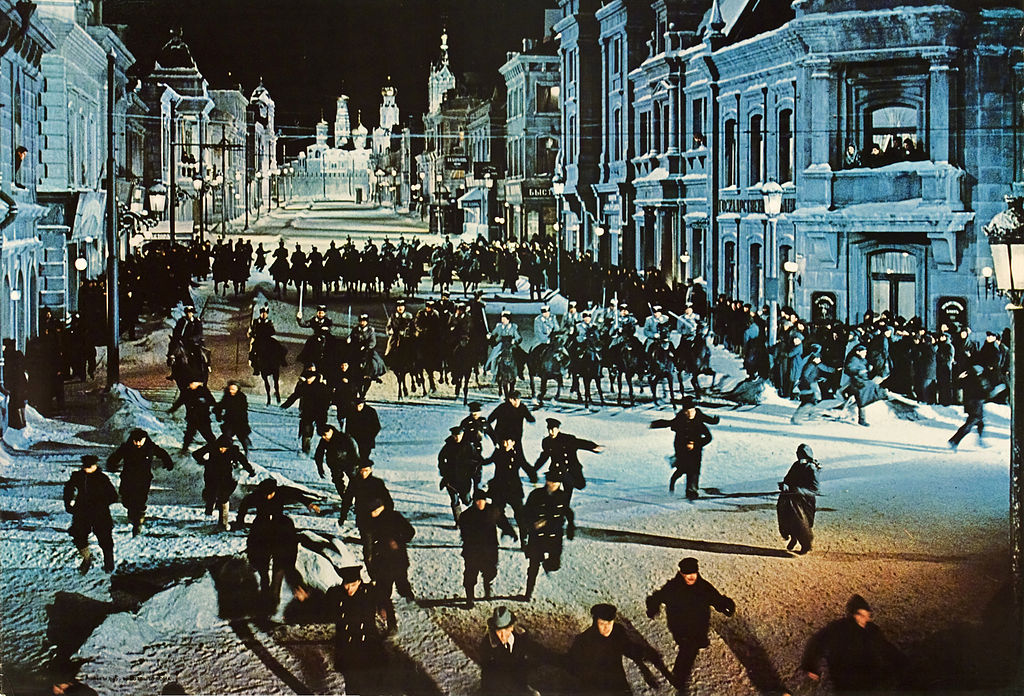
    Scene from Dr Zhivago depicting the Cossacks attacking peaceful demonstrators, a prelude to the Russian Revolution.  Dr Zhivago was a book written by Boris Pasternack, with the plot set in the last days of the Second World War and the break out of the Russian revolution. The book was banned in the USSR, was smuggle out into Europe and translated into English and other European languages. It was made into a classic movie by David Lean during the peak of the Cold War. The movie became a weapon in the cultural component of the Cold War, for its depiction of a totalitarian tendency inherent in the Russian revolution from the start. Boris Pasternack was awarded the Nobel prize (for his book ‘And Quite flows the Don’) but refused to receive it due to the pressure of the ideological  contest between the communist USSR and the capitalist West.    

    Kashmir Files poster Image: koimoi.com

    Raazi poster Image: Mumbai Mirror  

    Bibliography

    Bagdikian, Ben H. 2004. The New Media Monopoly. Boston: Beacon. https://library.uniteddiversity.coop/Media_and_Free_Culture/The_New_Media_Monopoly-Ben_H_Bagdikian.pdf.

    BAUM, MATTHEW A. 2007. “Soft News and Foreign Policy: How Expanding the Audience Changes the Policies.” Japanese Journal of Political Science 8 (1): 115–45. https://doi.org/10.1017/s1468109907002502.

    Bettig, Ronald V., and Jeanne Lynn Hall. (2003) . Big Media, Big Money : Cultural Texts and Political Economics. Lanham, Md.: Rowman & Littlefield Publishers, Inc.

    Chomsky, Noah. 1991. “Necessary Illusions: Thought Control in Democratic Societies, Noam Chomsky. 1989. Sough End Press, Boston, MA. 432 Pages. ISBN: 0-89608-366-7. $16.00.” Bulletin of Science, Technology & Society 11 (3): 183–83. https://doi.org/10.1177/027046769101100328.

    Cohen, Bernard C. 1963. The Press and Foreign Policy. The American Historical Review. https://doi.org/10.1086/ahr/69.3.805.

    Entman, Robert. 2005. “Robert M. Entman. Projections of Power: Framing News, Public Opinion, and U.S. Foreign Policy. Chicago: University of Chicago Press. 2003. .Public Opinion Quarterly 69 (2): 324–26. https://doi.org/10.1093/poq/nfi017.

    Mcchesney, Robert Waterman . 2008. The Political Economy of Media : Enduring Issues, Emerging Dilemmas. New York: Monthly Review Press.

    McQuail, Denis . 2005. McQuail’s Mass Communication Theory. Sage Publications Ltd., London. https://www.scirp.org/reference/referencespapers?referenceid=1839060.

    Norris, Pippa. 2002. “Studying the Media and Politics in Britain: A Tale of Two Literatures?” The British Journal of Politics and International Relations 4 (2): 359–73. https://doi.org/10.1111/1467-856x.t01-1-00009.

    Vivian, John. 2006. The Media of Mass Communication. Allyn & Bacon.

    Zelizer, Barbie, and Stuart Allan. 2011. Journalism after September 11. Taylor & Francis.


  • Lessons for today? Why did Europeans conquer the world while other civilisations did not?

    Lessons for today? Why did Europeans conquer the world while other civilisations did not?

    There is no question that India, China, Egypt, and Persia, in particular, produced flourishing civilisations long before the Europeans. The axial period around which world history revolves, as constructed by Jaspers, between the 7th and 3rd centuries B.C., does not refer to Europeans but to the three great civilisations of China, India, and Persia.

    There is no question that India, China, Egypt, and Persia, in particular, produced flourishing civilisations long before the Europeans. The axial period around which world history revolves, as constructed by Jaspers, between the 7th and 3rd centuries B.C., does not refer to Europeans but to the three great civilisations of China, India, and Persia (see also Katzenstein). Nevertheless, Europeans conquered and colonised the world in the 18th and 19th centuries, not the other way around. There are essentially four explanatory approaches, which are not only mutually exclusive but also determine the self-image of large parts of the world to this day. Put simply, the twentieth century saw a political and, in large parts of the world, an economic decolonisation, but by no means a decolonisation of thought and self-understanding. Moreover, there is a danger that the Eurocentrism that needs to be overcome will only be replaced by ethnocentrism (as is currently the case in Russia and, to some extent, in Israel) or even a civilisational-cultural centrism that is no less problematic than Eurocentrism. China, in particular, is in danger of repeating the mistakes of the West.

    the twentieth century saw a political and, in large parts of the world, an economic decolonisation, but by no means a decolonisation of thought and self-understanding

    So, what are the four explanatory approaches mentioned above? There are two Eurocentric approaches: an Asia-centric approach and a globalist approach. The first Eurocentric approach explains the worldwide colonisation of Europeans in terms of an intellectual superiority that began either in the development of Greek thought or in the Middle Ages. However, since the European Middle Ages were extremely “dark,” there is no direct connection between Greek rationality and the supposed intellectual superiority of the Europeans. Rather, this connection was made possible only by the translations into Arabic of the most important Greek philosophers, such as Plato and Aristotle, and by further translations into Latin. From my point of view – and a little local patriotism is allowed here, as I live near Fulda – the rise of the Europeans began with a letter from Charlemagne to the monastery in Fulda, in which he praised the religious zeal of the monks, but harshly criticised their intellectual understanding of religion. This gave rise to the so-called Carolingian Renaissance of work, which for the first time saw physical and manual labour as equal value to spiritual development – although it is debatable whether this was the first time this happened. Still, the facts remain undisputed in this explanatory approach. As a result, inventions were made in ever-new waves, the sciences developed, and this ultimately led to spurts of individualisation, the struggle for freedom and human rights that characterised the entire 18th and 19th centuries in the European-American world. This intellectual advantage led to a military superiority that enabled the Europeans to colonise the world despite being vastly outnumbered. To this day, Euro-American civilisation considers itself superior to all others. As for violent colonisation, it is admitted that Europeans are “sorry” for it but that it has nothing to do with the essence of Euro-American civilisation, which is characterised by human rights, democracy, and freedom (see Kant, Hegel, Marx, Weber: for an overview see Stark).

    The second Eurocentric position also assumes European superiority but places it not in the intellectual but in the purely military sphere. The consequence is that Europeans owe their relative prosperity, democracy, and human rights not to themselves but to the violent exploitation of the entire world. Here, too, there are two variants, referring to the Spanish-Portuguese conquests and the Orange army reform in Holland. Since the Muslim armies’ extensive conquest of the Mediterranean region, the Iberian Peninsula had been engaged in a defensive struggle for almost seven hundred years, which ended with their conquest. This created a caste of highly skilled warriors who sought a new vocation after defeating the Muslim armies, which they found in the conquest of Central and South America. The reform of the Orange army, in turn, made modern warfare possible. Based on both, the Europeans first plundered the gold and silver in both Americas.

    Still, they soon introduced enslaved Africans, as they were more likely to survive the plantation work on the Caribbean islands than the indigenous peoples, who were nearly wiped out. The gold and silver shipped to Europe and the products of slave labour created a demand in Europe that was not met by Spain and Portugal but by England and the Netherlands – the Industrial Revolution was thus triggered by a demand created by the exploitation of large parts of the world, precious metals and the “black gold” of slave labour. “Incidentally, the discovery of the sea route to China and India also caused the decline of the Muslim empires and civilisations, as they were no longer the link between Europe and South and East Asia but stood isolated. Political decolonisation was eventually replaced by mostly indirect rule, in which the respective elites were supported militarily and economically to continue exploiting the population.

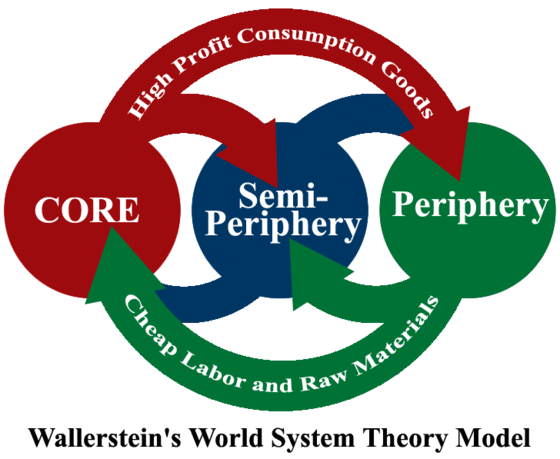
    In most cases, partial military intervention was sufficient for the industrialised states to maintain this system. In the world systems theory of Immanuel Wallerstein and Samir Amin, this practice was conceptualised by dividing the world into centres, semi-peripheries, and peripheries and defining it as a continuous influx of raw materials, goods, and people (brain drain) from the periphery to the mostly Western centres (Amin and Wallerstein).


    A third explanation, however, is Asia-centric. In this view, the dominance of the Europeans and the hegemony of the United States are nothing more than an accident of world history. In this view, East and South Asia have always been the centre of the world economy and intellectual and civilisational development. More precisely, on the shores of the North Pacific and the Indian Ocean (including the Arabian Sea), a power shift has been taking place for thousands of years between China, India, and the Arab-Persian powers. Coincidentally, the retreat of China from about 1500 created a power vacuum in this area, into which the Europeans were gradually able to move. However, they could not compete with these civilisations. The current rise of the great empires and civilisations that were destroyed by European colonisation and Euro-American hegemony is nothing more than a return to the centre of the world, to the countries on the shores of the North Pacific and both parts of the Indian Ocean. In this view, the Europeans and the great powers that emerged from them are in no way superior, but rather the barbarians who caused an unprecedented bloodbath in colonisation and two world wars, including the Holocaust. Now, the centre of the world is returning to where it has always been (Abu-Lughod)

    Another approach is the globalisation approach. It assumes that every five hundred years or so, there has been a shift from one global political centre to the next, i.e., hegemonic empires’ rise, peak, and decline. For the late Andre Gunder Frank, we need to review the last 5000 years, not just the previous 500). At times, individual civilisations succeeded in becoming such hegemonic empires twice. Examples include the Egyptian society, the Chinese Empire of the Han dynasty, the Roman Empire, the Sassanid Empire (Persia), the Muslim Empire until its destruction by the Mongols, and finally European colonisation from about 1500.

    we need a floating balance and mutual recognition of the world’s civilisations

    The crucial question for today is whether globalisation will override this succession of great powers and civilisations or whether there will be a renewed, now genuinely global, struggle for world domination. In my view, we need a floating balance and mutual recognition of the world’s civilisations (Herberg-Rotzhe/Son). The rising civilisations are again faced with whether they will merely repeat the past mistakes and the ethnocentrism of the Europeans under different auspices or contribute to an equal coexistence of the world’s civilisations. And conversely, will the Europeans and the settler colonies they founded also learn to regard other civilisations as equals? Both perspectives will determine the fate of the 21st century if we do not want to experience yet another “bloody century”!

    References:

    Abu-Lughod, Janet: Before European Hegemony: The World System A.D. 1250-1350. Reprint edition. Oxford University Press: Oxford. 1991.

    Amin, Samir: Accumulation on a World Scale: A Critique of the Theory of Underdevelopment. (2 Volumes). Monthly Review Press: New York. 1974.

    Frank, Andre Gunder, The World System: Five Hundred Years or Five Thousand? Routledge: New York. 1996.

    Herberg-Rothe, Andreas and Son, Key-young: Order wars and floating balance. How the rising powers are reshaping our worldview in the twenty-first century. Routledge: New York. 2018.

    Jaspers, Karl: The Origin and Goal of History. Routledge: New York 2021 (original in German 1949).

    Katzenstein, Peter J.” Civilizations in World Politics: Plural and Pluralist Perspectives. Routlöedge: New York 2009.

    Stark, Rodney: How the West Won: The Neglected Story of the Triumph of Modernity. ‎ ISI Books: NewYork. 2015.

    Wallerstein, Immanuel: World-Systems Analysis: An Introduction. Duke University Press: Durham. 2004.


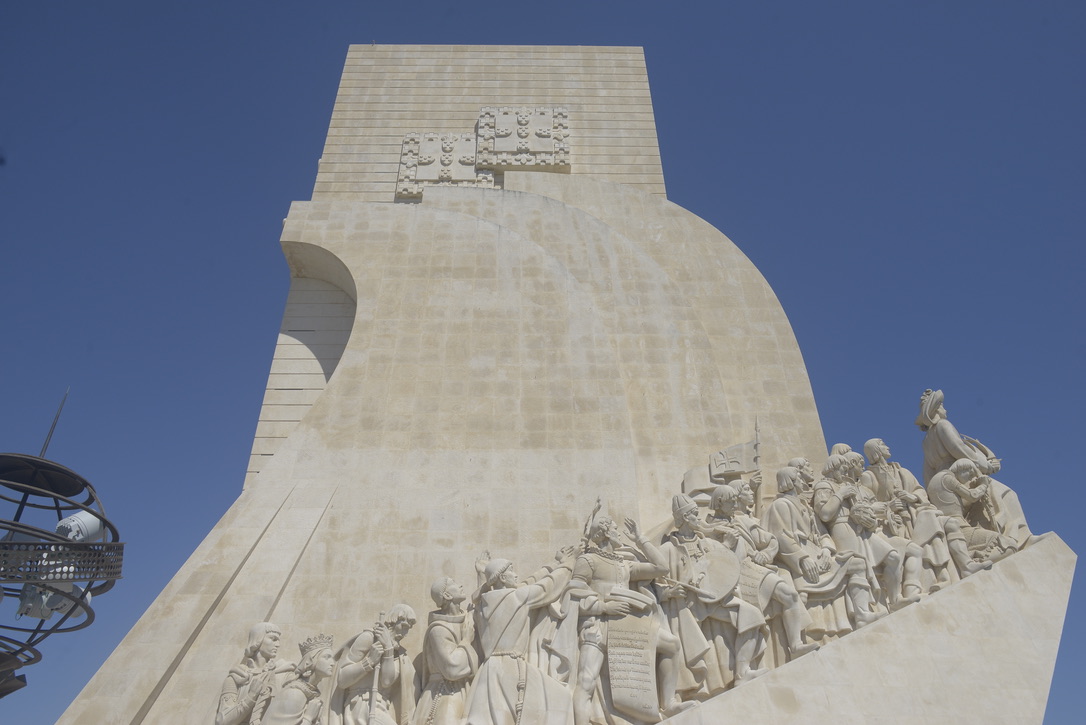
    Feature Photo Credit: Photo of ‘Monument of Discoveries’ in Lisbon. Photo by M Matheswaran. The Monument depicts Henry the Navigator followed by 33 pioneers, including Vasco-da-Gama whose exploration voyages were instrumental in establishing the Portuguese colonial empire, and thus begin the age of colonialism and imperialism.

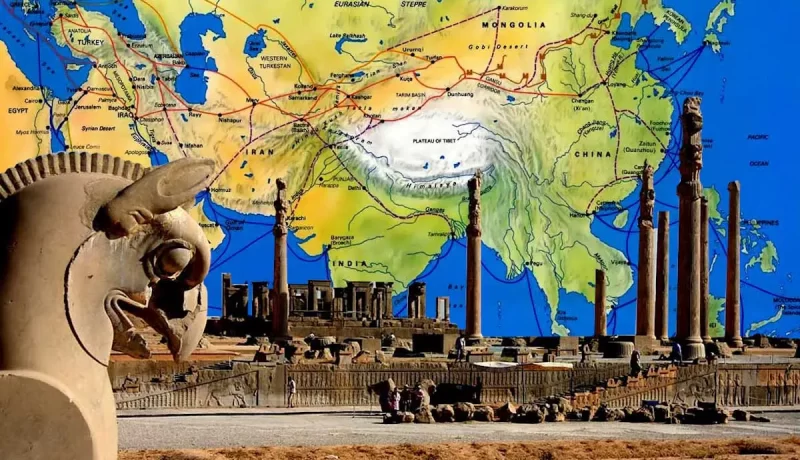
    Image 1-Map: Asian empires and trade routes – the collector.com

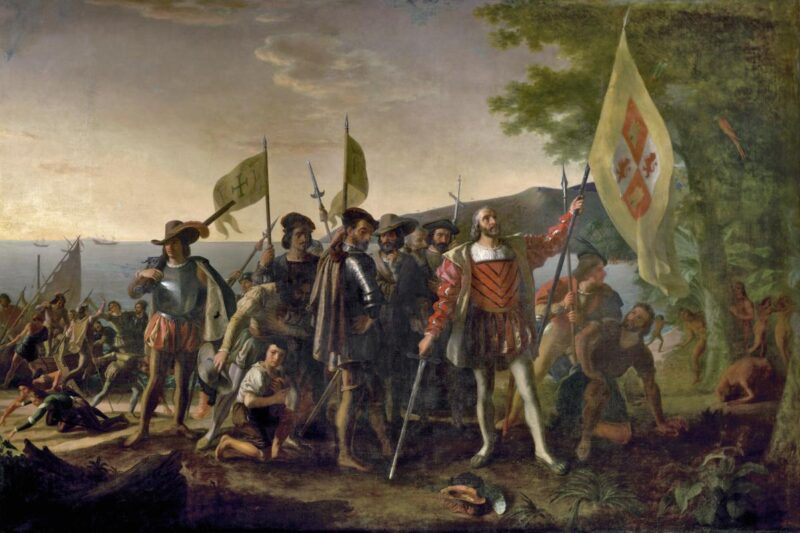
    Image 2: Columbus reaching the Americas (actually the Caribbean) in 1492 – Wikimedia Commons

    Image 3: The story of the colonial looting of Africa – Photo of exhibit in African American Museum, Washington D.C. (Photo – M Matheswaran).

    Image 4: Robert Clive meeting Mir Jaffer in Battle of Plassey 1757 – the beginnings of the British Indian Empire – Wikimedia Commons.


  • An Education Policy for Colonising Minds

    An Education Policy for Colonising Minds

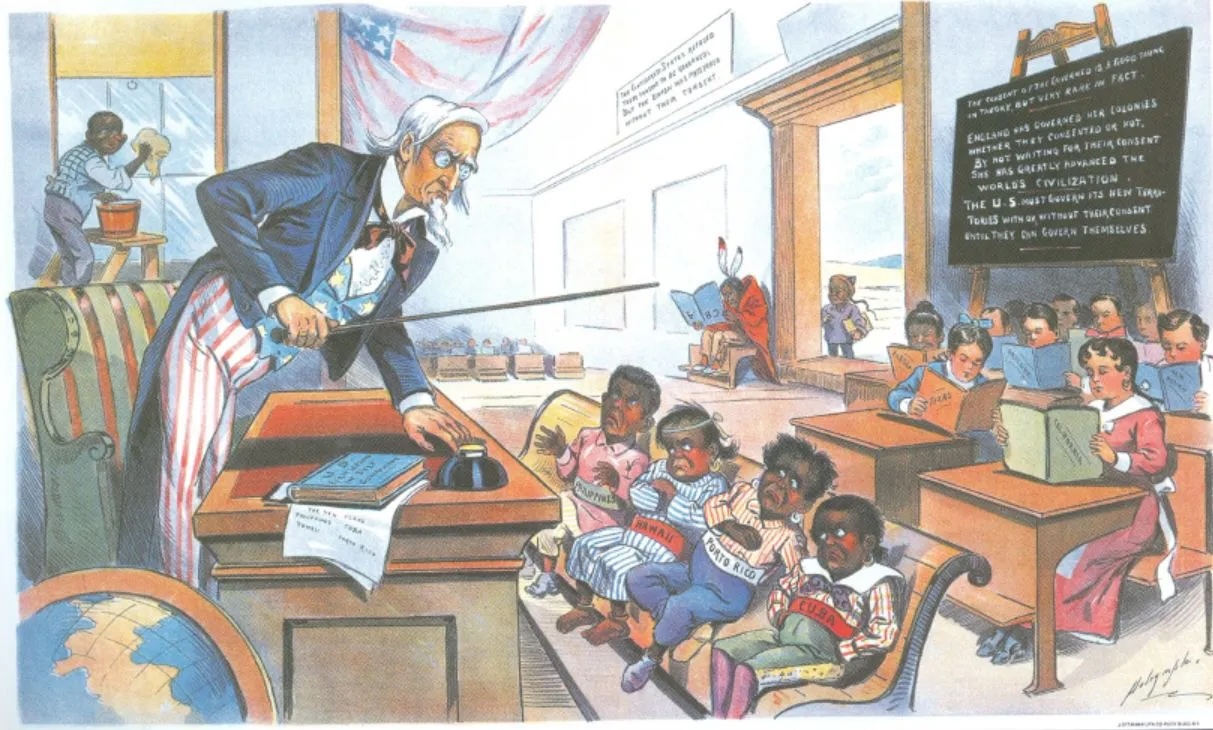
    Imperialist hegemony over the third world is exercised not just through arms and economic might but also through the hegemony of ideas by making the victims see the world the way imperialism wants them to see it. A pre-requisite for freedom in the third world, therefore, is to shake off this colonisation of the mind, and to seek truth beyond the distortions of imperialism. The anti-colonial struggle was aware of this; in fact, the struggle begins with the dawning of this awareness. And since the imperialist project does not come to an end with formal political decolonisation, the education system in the newly independent ex-colonies must continuously aim to go beyond the falsehoods of imperialism.

    This requires that the course contents and syllabi in Indian educational institutions must be different from those in metropolitan institutions. This is obvious in the case of humanities and social sciences, where it is impossible to understand the present of the country without reckoning with its colonised past; and metropolitan universities scrupulously avoid making this connection, attributing the current state of underdevelopment of the country to all sorts of extraneous factors like laziness, lack of enterprise, superstition, and, above all, excessive population growth. But even in the case of natural sciences, the syllabi and course contents in third-world universities cannot be identical with those in metropolitan universities, not because Einstein’s theory or quantum physics have any imperialist ideology in them, but because the range of scientific concerns in the third world is not necessarily the same as in the metropolitan countries. In fact, this was the view of JD Bernal, the British scientist and Marxist intellectual, one of the great figures of the twentieth century.

    To believe that the syllabi and course contents in third-world universities should be identical to those in metropolitan universities is itself a symptom of being hegemonised by imperialism. Education policy in the dirigiste period in India was aware of this; despite the obvious failings of the education system the education policy of that period could not be faulted for having a wrong vision.

    With neo-liberalism, however, things begin to change, as the Indian big bourgeoisie gets integrated with globalised finance capital, as the Indian upper middle-class youth looks for employment in multinational corporations, as the nation’s development is made dependent upon exporting goods to foreign markets and attracting foreign finance and foreign direct investment to the country. Significantly, even top functionaries of the government started talking about reinviting the East India Company back to India.

    Since the era of neo-liberalism entails the hegemony of globalised finance capital, and since this capital requires a globalised (or at least a homogeneous) technocracy, the emphasis shifts to having a homogeneous education system internationally to train such a technocracy; and obviously such a system necessarily has to be one that emanates from the metropolis.

    This means an education system not for decolonising minds but for recolonising minds. To this end, the UPA government earlier had invited several well-known foreign universities to set up branches in India and even to “adopt’ some Indian universities that could be developed in their own image. Oxford, Harvard, and Cambridge were obviously invited under this scheme not to follow the syllabi and course contents prepared within India but to replicate what they followed back home. The idea was to start a process whereby there would be a uniformity of course contents and syllabi between the Indian and metropolitan universities, that is, to roll back the attempt made earlier towards decolonisation of minds in Indian universities. In fact, an Indian Human Resource Development minister had openly stated in parliament that his objective was to provide a Harvard education in India so that Indian students would not have to go abroad for it.

    The NDA government has carried forward to a very great extent what the UPA government had started; and the National Education Policy it has enacted gives an official imprimatur to this idea of a uniform education system between India and the metropolis, which necessarily means the adoption of common curricula, course contents and syllabi between Indian and metropolitan universities.

    Towards this uniformity, it has taken two decisive steps: one is the destruction of those universities in India that were providing a counter to the imperialist discourse and that had, for this very reason, attracted worldwide attention; the obvious examples here are the Jawaharlal Nehru University, the Hyderabad Central University, Jadavpur University, and others.

    The other is the carrying out of negotiations under the pressure of the University Grants Commission between individual Indian universities and foreign universities to make the course contents in various disciplines in the former clones of those in the latter. The only caveat here is that the UGC insists on having some material on subjects like Vedic Mathematics included in the course contents of Indian universities, which the foreign universities do not always agree with.

    No doubt, some accord will be reached on these issues in due course, in which case the Indian universities would have curricula and course contents that represent an admixture of the demands of neo-liberalism and the demands of the Hindutva elements. It would be a colonisation of minds with a veneer of “how great our country was in ancient times”. Imperialism should not have any problem with that. As long as imperialism, which is a modern phenomenon that has emerged with the development of capitalism, is painted not as an exploitative system but as a benevolent civilising mission for countries like India, as long as the present state of underdevelopment of these countries is not in any way linked to the phenomenon of imperialism, which it would not be if there is uniformity of course contents with metropolitan universities, then what had happened in ancient times is not of much concern to imperialism, at least to the liberal imperialist viewpoint, as distinct from the extreme right which favours a white supremacist discourse.

    An alternative tendency with the same consequence of recolonising minds is to do away with the social sciences and humanities altogether or to reduce them to inconsequential subjects and substitute them with courses that are exclusively “job-oriented” and do not ask questions about society, like management and cost accountancy. In fact, both the Hindutva elements and the corporates have a vested interest in this since both are keen to have students who are exclusively self-centred and do not ask questions about the trajectory of social development. This tendency, too, is gathering momentum at present.

    An education system that recolonises minds is the counterpart of the corporate-Hindutva alliance that has acquired political hegemony in the country. Such a recolonisation is what the corporates want; and the Hindutva elements that were never associated with the anti-colonial struggle, that never understood the meaning of nation-building, that do not understand the role and significance of imperialism, and hence of the need for decolonising minds, are quite content as long as lip service is paid to the greatness of ancient India. An education system that purveys the imperialist ideology with some Vedic seasoning is good enough for them. This is exactly the education system that the country is now in the process of building.

    The corporate- Hindutva alliance, however, is a response to the crisis of neo-liberalism, when corporate capital feels the need to ally itself with the Hindutva elements to maintain its hegemony in the face of the crisis. The National Education Policy likewise is not for carrying the nation forward but for managing the crisis by destroying thought and preventing people from asking questions and seeking the truth. The “job orientation” that this policy prides itself on is only for a handful of persons; in fact, the crisis of neo-liberalism means fewer jobs overall. In sync with this, the education system excludes large numbers of persons; their minds are to be filled instead with communal poison within an altered discourse that bypasses issues of material life and makes them potential low-wage recruits for fascistic thug-squads.

    This education policy, therefore, can only be transitory until the youth starts asking questions about the unemployment and distress that has become its fate. And as an alternative development trajectory beyond neo-liberal capitalism is explored, the quest for an education system beyond what the NDA government is seeking to introduce will also begin; and decolonisation of the mind will again come onto the agenda, as it had done during the anti-colonial struggle.


    This article was published earlier in People’s Democracy.

  • The Philippines’ History Curriculum: Origins and Repercussions

    The Philippines’ History Curriculum: Origins and Repercussions

    Background

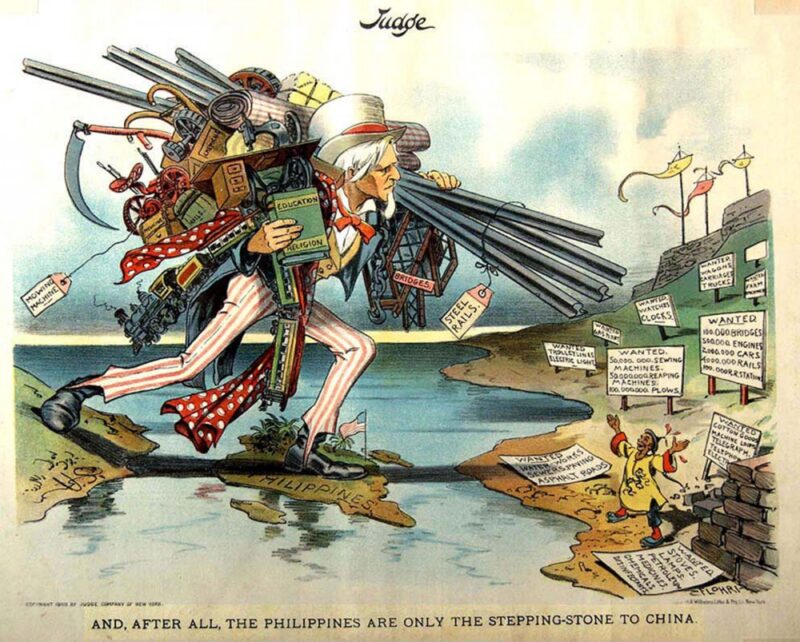
    The Philippines, a twice-colonized archipelago that achieved its complete independence in 1946, is a member of the ASEAN and an essential player in the geopolitics of the Southeast Asia region. Its status is owed mainly to its rapidly growing economy, of which the services industry is the most significant contributor, comprising 61% of its Gross Domestic Product (GDP) (Bajpai, 2022). Services refer to various products – for example, business outsourcing, tourism, and the export of skilled workers, healthcare workers, and labourers in other industries. In recent years, a growing demand for qualified professionals has grown as the economy has grown, thus necessitating more robust educational systems (Bajpai, 2022). Although the Philippines has a high literacy rate, hovering at around 97%, the efficacy of its educational system is often called into question (“Literacy Rate and Educational Attainment”, 2020). Administration oversight, infrastructural deficiencies, and pervasive corruption in the government that seeps into the entities responsible for educational reform are significant issues that legitimize these doubts (Palatino, 2023). However, reforming the current flaws in the system requires an understanding of the basic underlying structure of the country’s educational system as it is today. This fundamental understanding can help clarify specific political trends in the status quo and highlight the importance of proper historical education in developing a nation. Despite its ubiquity in nearly every curriculum, the study of history as a crucial part of the education system is often not prioritized, leading to an underdeveloped understanding of the society’s culture and previous struggles with colonial exploitation. Though it is present in the Philippines’ education today, it continues to change because of its historically dynamic demographic and political atmosphere.
    Origins of the Education System 

    To begin with, the educational system, and especially the modes of linguistic and history education in the country, have been heavily influenced by the major powers that occupied it – namely, the Spanish Empire and the United States. The impact of these periods of colonization can be seen most significantly in the historical education and consciousness of the general population, as well as the propagation of the English language. The Philippines possesses a great deal of linguistic diversity, especially among indigenous groups – an estimated 170 distinct languages in the country today (Postan, 2020). However, even in pre-colonial times – typically considered by historians to be the years before 1521 – the most common language in the country was Old Tagalog, and other indigenous languages are still spoken today (Stevens, 1999). Records suggest that the Spanish did not forcefully erase indigenous languages spoken in the country. However, they did conduct business and educational institutions in Spanish, leading to the language being used almost exclusively amongst the upper classes – the colonizers, business people in the country, and other influential figures in the empire. Though there were attempts to conduct education in Castilian Spanish, priests and friars responsible for teaching the locals preferred to do so in local languages as it was a more effective form of proselytization. This cemented the reputation of Spanish as a language for the elite, as the language was almost exclusively limited to those chosen to attend prestigious institutions or government missions that operated entirely in Spanish (Gonzales, 2017). In terms of popularising education to expose a broader audience to Christianity, the Spanish also established a compulsory elementary education system. However, restrictions existed based on social class and gender (Musa & Ziatdinov, 2012). Because of this, although the influence of Spanish on local languages can be seen through the borrowing of certain words, indigenous and regional languages were not supplanted to a large extent, though their scripts were Latinised in some instances to make matters more convenient for the Spanish (Gonzales, 2017). However, the introduction of Catholicism to a large segment of the population and a more organized educational system are aspects of Spanish rule that remain in Philippine society today, as do the negative ramifications of the social stratification that was a significant element of its occupation (Herrera, 2015).

    Uncle Sam, loaded with implements of modern civilization, uses the Philippines as a stepping-stone to get across the Pacific to China (represented by a small man with open arms), who excitedly awaits Sam’s arrival. With the expansionist policy gaining greater traction, the possibility for more imperialistic missions (including to conflict-ridden China) seemed strong. The cartoon might be arguing that such endeavours are worthwhile, bringing education, technological, and other civilizing tools to a desperate people. On the other hand, it could be read as sarcastically commenting on America’s new propensity to “step” on others. “AND, AFTER ALL, THE PHILIPPINES ARE ONLY THE STEPPING-STONE TO CHINA,” in Judge Magazine, 1900 or 1902. Wikimedia.
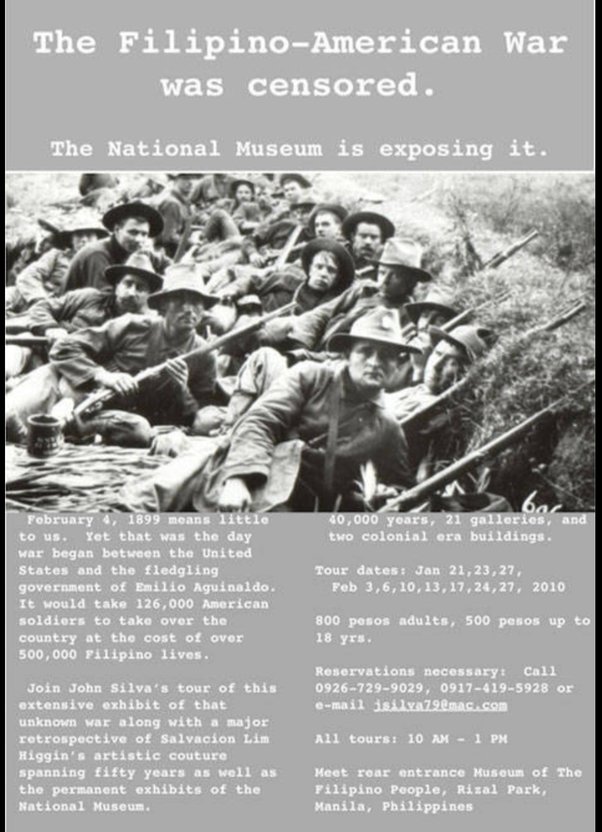
    In contrast, the American occupation following Spain’s defeat in the Spanish-American War in 1898 significantly changed the country’s linguistic patterns and revolutionized the education system. Upon arriving in the country, the Americans decided to create a public school system in the country, where every student could study for free. However, the medium of instruction was in English, given that they brought teachers from the United States (Casambre, 1982). This differed from the Spanish system in that social class and gender did not influence students’ access to education to the same extent. Furthermore, the Americans brought their own material to the country due to a lack of school textbooks. As the number of schools in the country and the pedagogical influence of American teachers increased, the perception of the Americans’ role as colonizers ultimately changed. Education became a tool to exert cultural influence, leading to the propagation of American ideals like capitalism, in addition to subverting separatist tendencies that were cropping up in the country as one colonizer was replaced by another. It also led to the suppression of knowledge concerning the US’ exploitation of the nation.  Ultimately, the colonizers’ influence on the linguistic and educational landscape of the nation manifests itself in the general population’s understanding of their country’s history.

    The Current History Curriculum

    The social studies curriculum in the Philippines, called Araling Panlipunan (AP), is an interdisciplinary course that combines topics of economics and governance with history, primarily post-colonial history (“K to 12 Gabay Pangkurikulum”, 2016). The topic of World War II takes up nearly 50% of the course, while other aspects of indigenous and pre-colonial history are included to a limited extent (Candelaria, 2021). This act of prioritization is a colonial holdover. Although the Philippines indubitably played a crucial role in the Pacific Theatre during WW II, its massive presence in the AP course signals the nation’s continued alliance with the US and reinforces a mentality amongst the general public that favours it. This bias occurs as a singular American perspective is promoted by the course, wherein the actions of other countries against the Philippines are highlighted. At the same time, the exploitation of the Philippines by the Spanish and Americans is not as widely discussed. For example, although the atrocities committed by the Japanese during World War II are taught extensively as part of the curriculum, the American actions during the Philippine-American War (1899-1902), during which the Americans burned and pillaged entire villages, are not emphasized (Clem, 2016). Furthermore, it leads to the sidelining of historical events that have created the political situation in the country today, such as the issue of the current president being related to the former dictator, Ferdinand Marcos.

    As the course is conducted chronologically, discussions of topics such as the Marcos Regime are left up to teachers’ discretion due to the subject’s controversial nature, given that the dictator’s son is the current president (Santos, 2022). This means that as much or as little time can be spent on it is as decided. Because of the American influence, even citizens who are taught about the atrocities that occurred during the dictatorship are not informed of the support provided to the Marcos dictatorship by the US government. During his presidency, which lasted from 1965 to 1986, the Philippines received significant economic aid from the US government in exchange for the continuation of its military presence in the country, which proved helpful to the US during the Vietnam War as it was able to utilize its bases in Subic Bay and Clark air base(Hawes, 1986). As a result of the necessity of these bases, a 1979 amendment to the 1947 Military Bases Agreement was signed, which increased the US’ fiscal contributions to security assistance. To further support this military objective, the Carter and Reagan administrations showed their diplomatic support to Marcos by visiting the Philippines and inviting him to Washington.

    Additionally, when Marcos was ousted from power in 1986 by the People Power Revolution, he spent his exile in ‘Hawaii’, in the US (Southerl, 1986). Therefore, while the US is credited for introducing democratic principles to the country through its program for expanding education while occupying the archipelago, it also played a significant role in supporting a despotic government that is not as widely acknowledged. Because of this, the Filipino perception of and relationship with the US has been heavily influenced by a lack of awareness amongst the general public about its involvement in a massively corrupt administration.

    Significant Developments 

    Despite the importance of a robust historical education in improving the public’s awareness of their own culture and geopolitical relationships, history as a subject has been transformed into a political tool in the Philippines, twisted when it can be useful and neglected when it does not support an agenda. Various bills passed in the House of Representatives (the lower house of parliament in the Philippines, below the Senate), as well as decisions taken by the Department of Education, have diminished the significance of history in the overall school curriculum and reinforced an American perspective in the historical content that continues to be taught. Department of Education Order 20, signed in 2014, removed Philippines History as a separate subject in high school (Ignacio, 2019). The argument for this decision was that Philippines History would be integrated within the broader AP social studies curriculum under different units, such as the Southeast Asian political landscape. However, educators opposing the abolition of Philippine History as a separate subject state that due to fewer contact hours being allocated for AP in total compared to English, maths, and science, it is unlikely that Philippine history can be discussed in adequate depth, considering the other social science topics mandated by the AP curriculum. In addition, House Bill 9850, which was passed in 2021, requires that no less than 50% of the subject of Philippine history centres around World War II (Candelaria, 2021). The bill’s primary concerns mention that it prioritizes the war over other formative conflicts in the nation’s history, such as the Philippine Revolution against Spain or the Philippine-American War. Furthermore, it requires modifying or reducing discussions surrounding other vital events in the Philippines, such as agrarian reforms and more recent developments like the conflict in Mindanao.

    Both of these policies face significant opposition. For example, a Change.org petition demanding the return of the subject of Philippine history in high schools has garnered tens of thousands of signatures. At the same time, numerous historical experts and teachers have spoken against HB 9850 (Ignacio, 2018). Despite this resistance from academics and teaching professionals, it is unlikely that history will be prioritized unless the general public also learns to inform itself. Around 73% of the total population (approximately 85.16 million people) have access to the internet, of which over 90% are on social media (Kemp, 2023). Because of the large working population in the country, social media companies like Facebook have set up offices there. Programs that offered data-free usage in 2013 have made the Philippines a huge market for Facebook, and many Filipinos trust the news they find on the website more than some mainstream media sources (Quitzon, 2021). Even though internet access is relatively widespread, signifying that information is readily available to the average Filipino, social media, especially Facebook, often functions as a fertile breeding ground for misinformation.

    Repercussions of the History Curriculum

    In recent years, misinformation has become an important political tool to propagate ignorance and manipulate historical and current events to promote specific agendas. The most relevant example was the mass historical revisionism campaign leading to the 2022 general elections (Quitzon, 2021). Given that Bongbong Marcos, Ferdinand Marcos’ son, was running for president alongside vice presidential candidate Sara Duterte (former president Rodrigo Duterte’s daughter), the campaign focused on changing the public perception of both families and their period of rule. Preceding the elections, social media trolls and supporters of the campaign spread videos, doctored images, and fake news that minimized the atrocities and scale of theft that occurred throughout the Marcos regime and the Duterte administration, instead highlighting and exaggerating the perceived benefits they brought to the country. The prioritization of these political agendas is reflected in the history curriculum, as it does not sufficiently cover critical areas of Philippine history that have directly led to the political situation of today and the pre-colonial era that is an inseparable part of Filipino culture.

    Recommended Policy Measures 

    However, another by-product of this absence of consciousness is that the general public is desensitized to poor governance and neocolonialism as their education systems and news sources constantly feed them biased and inaccurate information about the history of their own country and its relationship to others. When dictators are portrayed as good rulers and previous colonizers are portrayed as historical allies, it results in a population that unknowingly votes against its interests as they are unaware of the past events that have shaped the current political atmosphere and the various deficiencies in the system. Considering that these political campaigns rely on the general public not having a solid understanding of historical events, especially those about the martial law era, it is unlikely that politicians will take meaningful steps to improve historical education in the country since they benefit from citizens lacking awareness. As such, the onus must, unfortunately, be placed on the general public to educate themselves on good citizenship and exercise their right to vote at the grassroots level responsibly so that future local politicians and members of parliament may at least be able to encourage the study of history in the government. Additionally, teaching students how to use the internet to conduct reliable research is imperative to reduce misinformation so they can counter the misinformation they find online.

    Conclusion

    In conclusion, the Philippine education system has been shaped by the periods of colonization the country has experienced. This has led to a history curriculum favouring the American perspective and thus disadvantages crucial elements of local history. The consequences of the lack of awareness this has caused in the general public are manifold: it has made them more susceptible to misinformation and historical revisionism. It has worked to the advantage of politicians who take advantage of it. Nevertheless, the Philippines can still reverse this trend by utilizing its high literacy rates and social media presence to promote reliable historical education. They can also push for better historical education policies through petitions and appeals to local government agencies and Senate committees related to education – such as the National Commission for Culture and the Arts (NCCA), the Committee on Basic Education and Culture, and the Committee on Education, Arts and Culture – amongst others (Ignacio, 2018). Overall, there are many deficiencies in the current history education system in the Philippines, but they still coexist with the potential for change. Citizens have the power to advocate and must continue using it to usher forth a more well-informed society and nation.


    References

    Bajpai, Prableen. “Emerging Markets: Analyzing the Philippines’s GDP.” Investopedia, 12 July 2023, www.investopedia.com/articles/investing/091815/emerging-markets-analyzing-philippines-gdp.asp#:~:text=The%20country.

    Casambre, Napoleon. The Impact of American Education in the Philippines. Educational Perspectives, scholarspace.manoa.hawaii.edu/server/api/core/bitstreams/f3bbc11f-f582-4b73-8b84-76cfd27a6f77/content#:~:text=Under%20the%20Americans%2C%20English%20was.

    Clem, Andrew. “The Filipino Genocide.” Series II, vol. 21, 2016, p. 6, scholarcommons.scu.edu/cgi/viewcontent.cgi?article=1138&context=historical-perspectives.

    Constantino, Renato. “The Miseducation of the Filipino.” Journal of Contemporary Asia, vol. 1, no. 1, 1970, eaop.ucsd.edu/198/group-identity/THE%20MISEDUCATION%20OF%20THE%20FILIPINO.pdf.

    Department of Education. K To12 Gabay Pangkurikulum. 2016, www.deped.gov.ph/wp-content/uploads/2019/01/AP-CG.pdf.

    “Education Mass Media | Philippine Statistics Authority | Republic of the Philippines.” Psa.gov.ph, 28 Dec. 2019, psa.gov.ph/statistics/education-mass-media.

    Gonzales, Wilkinson Daniel Wong. “Language Contact in the Philippines.” Language Ecology, vol. 1, no. 2, Dec. 2017, pp. 185–212, https://doi.org/10.1075/le.1.2.04gon.

    Hawes, Gary. “United States Support for the Marcos Administration and the Pressures That Made for Change.” Contemporary Southeast Asia, vol. 8, no. 1, 1986, pp. 18–36, www.jstor.org/stable/25797880.

    Herrera, Dana. “The Philippines: An Overview of the Colonial Era.” Association for Asian Studies, vol. 20, no. 1, 2015, www.asianstudies.org/publications/eaa/archives/the-philippines-an-overview-of-the-colonial-era/.

    Ignacio, Jamaico D. “[OPINION] The Slow Death of Philippine History in High School.” RAPPLER, 26 Oct. 2019, www.rappler.com/voices/ispeak/243058-opinion-slow-death-philippine-history-high-school/.

    —. “We Seek the Return of ‘Philippine History’ in Junior High School and Senior High School.” Change.org, 19 July 2018, www.change.org/p/we-seek-the-return-of-philippine-history-in-junior-high-school-and-senior-high-school.

    John Lee Candelaria. “[OPINION] The Dangers of a World War II-Centered Philippine History Subject.” RAPPLER, 20 Sept. 2021, www.rappler.com/voices/imho/opinion-dangers-world-war-2-centered-philippine-history-subject/.

    Kemp, Simon. “Digital 2023: The Philippines.” DataReportal – Global Digital Insights, 9 Feb. 2023, datareportal.com/reports/digital-2023-philippines#:~:text=Internet%20use%20in%20the%20Philippines.

    Musa, Sajid, and Rushan Ziatdinov. “Features and Historical Aspects of the Philippines Educational System.” European Journal of Contemporary Education, vol. 2, no. 2, Dec. 2012, pp. 155–76, https://doi.org/10.13187/ejced.2012.2.155.

    Quitzon, Japhet. “Social Media Misinformation and the 2022 Philippine Elections.” Center for Strategic & International Studies, 22 Nov. 2021, www.csis.org/blogs/new-perspectives-asia/social-media-misinformation-and-2022-philippine-elections.

    Santos, Franz Jan. “How Philippine Education Contributed to the Return of the Marcoses.” Thediplomat.com, 23 May 2022, thediplomat.com/2022/05/how-philippine-education-contributed-to-the-return-of-the-marcoses/.

    Southerl, Daniel. “A Fatigued Marcos Arrives in Hawaii.” Washington Post, 27 Feb. 1986, www.washingtonpost.com/archive/politics/1986/02/27/a-fatigued-marcos-arrives-in-hawaii/af0d6170-6f42-41cc-aee8-782d4c9626b9/.

    Stevens, J. Nicole. “The History of the Filipino Languages.” Linguistics.byu.edu, 30 June 1999, linguistics.byu.edu/classes/Ling450ch/reports/filipino.html.

    Stout, Aaron P. The Purpose and Practice of History Education: Can a Humanist Approach to Teaching History Facilitate Citizenship Education? 2019, core.ac.uk/download/pdf/275887751.pdf.

    Feature Image Credit: actforum-online.medium.com Filipino Education and the Legacies of American Colonial Rule – Picture from ‘Puck’ Magazine

  • Consumption as a Substitute Religion – A Critique of Capitalism

    Consumption as a Substitute Religion – A Critique of Capitalism

    Consumption is becoming the new substitute religion. This is certainly progress for former poor countries, but in the long run it dissolves the cohesion of society and is only apparently covered up by aggressive enemy declarations. The newly industrialised nations should take the dissolution of social cohesion in the West as a warning example.

    With the triumph of neo-liberalism, all forms of identity worldwide are becoming fluid, uncertain or even dissolved. It is true that it was right to leave behind the binary oppositions of Western modernity to “non-modern” societies, which were associated with static, entrenched forms of identity. But the orientation towards models of consumption does not lead to a real pluralisation, but reproduces ever new rigid identities and thinking in tribal opposites: “us against the others”, whoever the others are. The Chinese dream, New Russia, make America great again, the rise of right-wing populism in Europe and the USA, the division of Israeli society and the temporary triumph of the extreme religious right there are all reactions to the dissolution of identities through the transformation of citizens into consumers. Consumption is becoming the new substitute religion. This is certainly progress for former poor countries, but in the long run, it dissolves the cohesion of society and is only apparently covered up by aggressive enemy declarations. The newly industrialised nations should take the dissolution of social cohesion in the West as a warning example.

    If about 6 people have as much property as 3.6 billion “others or in the near future 1% of the world’s population as much as the “remaining” 99%, then this is an absolutely obscene inequality, which we only accept becauseö the ideology of consumption, capitalism and neo-liberalism has become the new world religion. As Walter Benjamin already pointed out, it serves the same basic need as the monotheistic religions. “Then said the Lord unto Moses, Thus shalt thou say unto the children of Israel, Ye have seen that I have spoken unto you from heaven. Ye shall set nothing by my side: silver gods and gold gods ye shall not have.” (Exodus 20:22). “And when the people saw that Moses came not down from the mount so long, they gathered themselves about Aaron, and said unto him, Arise, make us a god to go before us: for we know not what is befallen this man Moses. (…) And Aaron took the gold out of their hand and poured it into a clay mould, and made it a cast calf. Then they said: This is thy God, O Israel, which brought thee up out of the land of Egypt.” (Ex 32:1) We today may think ourselves exalted at the idea of worshipping a golden figure. But in reality, aren’t we merely replacing it with Wall Street or the Frankfurt Stock Exchange, or even globalisation, which is supposed to lead us to the promised land, i.e. prosperity and wealth? It is true that we do not entrust our wives’ and daughters’ earrings to the stock exchange, but often all our savings, individual fates as well as those of entire countries are determined by the price of coffee, bananas and other commodities. Gunter Henn, the architect of the VW Autostadt, one of the new temples, underlined the claim for the creation of meaning by companies: “Who else offers orientation, where does that leave us with our childlike religiosity? The churches are dead, the state is withdrawing, and the ideologues have lost their power. What remains are the companies.”

    This story of the Golden Calf, which was put in the place of God at the very moment when he had revealed his will to the people of Israel in the Ten Commandments, illustrates a fundamental problem of religion, of the religious. For religion is obviously based on a two-way relationship. On the one hand, there is a need for a god or gods to reveal themselves, to show themselves, and on the other hand, there is an ineradicable need, an insatiable human desire for the divine, for the religious. This deep-seated longing can have many different reasons. In the sociology of religion and philosophy, it is described in such a way that religion, the religious, has fundamental functions for individual people as well as human societies, for example, the endurance of the fear of one’s own death, the embedding in communities that outlast death, the giving of meaning to life, the transcending of one’s own boundaries in an ordered whole, the construction of something sacred, untouchable.  The problem that arises from this, however, is that this insatiable longing can obviously also refer to something other than the revealing God, precisely to a golden calf, but also to the God of reason, to one’s own nation or race, to the world-historical mission of the proletariat, or even to science and technology. Science and technology may relegate the religious to the very back seats – often with the sole effect of putting themselves in its place. Carl Schmitt, one of the most important as well as most controversial theorists of political theory, emphasised, for example, that at the beginning of the 20th-century religious belief in God was replaced by religious belief in technology and the omnipotence of man. With regard to National Socialism, this has been proven in many cases, as there was a deliberate and purposeful instrumentalisation of religious practices for party congresses and mass marches – incidentally an essential aspect of why this inhuman ideology could nevertheless be so successful.  “Führer, our daily bread give us today.”

    ‘As Walter Benjamin already noted, capitalism is a pure cult religion that has neither a dogma nor a theology’

    But let’s move on to the gods of the market, consumerism and cult marketing when brand companies and belonging to this community take on cultic, religious proportions. And let’s put it bluntly: This cult marketing appeals to religious feelings much more simply and directly than a reflected faith ever can, religious feelings that at best come to the fore in community experiences at church conventions. Their religious character is also not always overt, since there is an essential difference between consumption, cult marketing and the Christian understanding of religion. Substitute religions are usually polytheistic, but Christianity is monotheistic. For followers of monotheistic religions, polytheistic ones often do not appear as a religion at all, but as something that one shrugs off or is amazed at, but considers oneself to be superior to this preform of religion. Such a view fails to recognise that these polytheistic forms of religion nevertheless serve religious feelings, without which their success is difficult to explain. Moreover, as Walter Benjamin already noted, capitalism is a pure cult religion that has neither a dogma nor a theology – unless one also wants to understand the currently dominant neoclassicism as a substitute religion. A cult religion, in any case, is directly practically oriented, just like the archetypes of pagan religiosity, which practises its rite without God’s word, without revelation. Pagan is to be defined in such a way that the cult takes precedence over the doctrine, which only appears implicitly. Capitalism is a form of neo-paganism, Benjamin concludes.

    Just as religion tries to help life succeed by conveying a meaningful way of living, so advertising tries to do by suggesting to customers that they can only live fulfilled lives or belong to the in-group by buying, owning and using a certain product. It is striking that in many cases advertising no longer presents the real advantages of a product, but values such as friendship. Advertising instrumentalises religious motifs to turn people into customers and customers into brand believers. In doing so, it builds on the religious basis still dormant in the hidden human being, tries to appeal to this sacral subconscious and therefore creates new forms of cult marketing, through which modern man is supposed to find cosy, warm places for his longings. In the spiritual desert of modernity, marketing strategies fill the vacant position of religion with advertising in general and the positions previously held by God and the sacred with products in particular and everything connected with the use of such a product: instead of religious practice, consumption; instead of gods, idols of consumption; instead of churches, temples of consumption; instead of religious faith communities, those of consumption. In this context, belonging to the ingroup is considered constitutive in the choice of brand and ex-communication is threatened in an equally consistent manner if the wrong brand is chosen. The myth created around a brand gives its products a spiritual added value that is supposed to set them apart from the mass of competing products of the same quality.

    Consumerism was aggressively propagated as an alternative and implicitly as a substitute for religion vis-à-vis traditional religions by the media theorist Norbert Bolz in his Consumerist Manifesto. For him, consumerism is the immune system of world society against the virus of fanatical religions. Consumerism promises neither the goal nor the end of history, but “only the ever-new”.  Independent of the implicit and recurring criticism of monotheism, the question arises as to the price that must be paid for the production of the ever-new.

    Not only are quite normal products being elevated far beyond their utility value to cult brands, to a substitute for religion. In the new marketing, the customer is not only king, as it used to be called, but god-like. In largely saturated markets, it is mainly about creating ever-new desires. Customers are told that, compared to whatever they may already have, there are still many, many more possibilities, infinitely new possibilities. This amusement park has not yet been visited, that trip has not yet been taken, this hair shampoo could be cheaper or even better than that one, you can shop better in Frankfurt than in Kassel or vice versa or somewhere else. In the meantime, you can also fly to London in one day to go shopping, “how have you not yet been to Paris to go shopping?”

    The decisive factor is not whether one actually uses this or that offer, but that there are always even better, even fancier POTENTIAL possibilities that one has not yet realised…. “Anything goes” used to be a slogan of resistance against repressive social structures – today it is the symbol for the market of limitless possibilities. Due to this limitlessness of possibilities of consumption, a constant depressive feeling arises in MANY people that they have not yet exhausted any consumption possibilities – and if one were to devote one’s whole life to consumption, there would still be something that would have to be done without.

    This pressure of seemingly limitless possibilities to live like “God in France” is exacerbated for those whose financial possibilities are limited, such as in the case of unemployment, because here the tension between the real limited and the potentially infinite consumption possibilities is particularly great.

    From this tension follows a clinical picture that characterises modern capitalism, our market society, and depression as an awareness of what is potentially possible and what is actually possible. Depression threatens the individual who only resembles himself, just as sin pursues the soul turned towards God or guilt pursues the human being torn apart in conflict. It arises both when the awareness of potential possibilities far exceeds that of the real ones and in those cases where the consumer is called upon to constantly reinvent himself.

    This last problem can be illustrated by a cigarette advertisement that virtually signals the reversal of traditional advertising promises because it boldly states that this particular brand of cigarettes does not taste good to everyone – and that is portrayed as a good thing, according to the slogan. At the same time, of course, this advertising is aimed at the largest possible group of buyers, the more the better. This gives rise to the deliberate paradox that one is all the more an absolutely unique individual if one consumes exactly what everyone is buying.

    The individual here is not something self-evident, born or given by nature, but a laboriously constructed social role. As an individual, man makes himself the cult centre of a religion of uniqueness. That’s why Buddhism is often in vogue today – as a doctrine of self-redemption without a saviour god. And for those who find that too spiritual, self-excitement and self-challenge remain. You take drugs, get high on the body’s own endorphins – or best of all: on the drug “I”. But it would be a misunderstanding to believe that the cult of the ego is a step towards liberating the individual from the shackles of society. In the cult of the ego, the human being is less a sovereign individual than an unhappy prosthetic god. He surrounds himself with auxiliary constructions from the world of fashions, drugs and distractions.

    The emancipation of the sixties and seventies has often freed us from the dramas of guilt and obedience, but it has brought us new dramas of responsibility and action in an uncertain and conflicting world.

    In this invention of a seemingly unique individuality through the consumption of branded products, individuals are overburdened without limits – the customer is no longer king, but god-like in marketing strategies – we fulfil their most secret wishes, everything they desire, there are no limits to their desires. But people remain humans, they are not gods and often break down at this imposition of being equal only to themselves. Only God, who in the Old Testament logically demands that there should be no gods beside Him, is equal only to Himself. The emancipation of the sixties and seventies has often freed us from the dramas of guilt and obedience, but it has brought us new dramas of responsibility and action in an uncertain and conflicting world. Thus, through human self-empowerment and the marketing strategy of the individual responsible only to himself, depressive exhaustion accompanies neurotic anxiety not only on an individual level but could be also witnessed in Western societies as a whole. The alternative to rigid forms of identity and political systems is not consumerism, which only leads to new forms of such ideologies. What is needed is a floating balance of the individual and the community.

  • Indian Philosophy and religion: Abolishing the caste system as an attempt in Intercultural Philosophy

    Indian Philosophy and religion: Abolishing the caste system as an attempt in Intercultural Philosophy

    We start the year 2023 with an examination of philosophy and society and through it the social evil of caste. The origin of the caste system in Hindu society lies buried in many myths and misconceptions. Caste is often linked by many to the core of Hindu philosophy. This is a deeply flawed understanding. The caste system has been and continues to be a tool of power and economic exploitation by oppressing large segments of the population. It is largely an invention by the clergy to establish their power and domination through rituals and codes and by ascribing to them a forced religious sanctity. As it also becomes convenient to the rulers, caste and class are prevalent in all societies. Philosophy and true religion, as Andreas points out in this working paper,  have had nothing to do with caste or class.                                        – TPF Editorial Team


    Introduction

    Intercultural philosophy is absolutely necessary in order to cope with the current and new phase of hybrid globalization, which is dissolving all kinds of traditional identities. Whereas the current reaction to this process is the development of ideologies centred on the idea of “we against the rest”, whoever the “Rest” might be, we need to construct positive concepts of identity, which does not exclude but include the other. These can be based on the mutual recognition of the civilizations of the world and their philosophies. According to Karl Jaspers the godfather of intercultural philosophy, between the sixth and third century BC the development of great cities, and the development in agriculture and sciences led to a growth of the populace that forced humankind to develop new concepts of thinking. He labelled this epoch as the axial age of world history in which everything turned around. He even argued that in this time the particular human being or human thinking was born with which we still live today – my thesis is that all human religions, civilizations and philosophies share the same problems and questions but did find different solutions.

    A vivid example might be the relationship between happiness and suffering. In the philosophy of the Greek philosopher Aristotle, to achieve eudemonia or happiness in your earthly life was the greatest aim whereas in a popular understanding of Karma, life is characterized by suffering and the aim is to overcome suffering by transcending to Nirvana. You see, the problem is the same, but there are different solutions in various philosophies. Although Jaspers didn’t share the reduction of philosophy and civilization to the European or even German experience and included mainly the Chinese and Indian civilization, he nevertheless excluded the African continent and both Americas, Muslim civilization as well as the much older Egyptian civilization. So, although he enlarged our knowledge and understanding of civilizations his point of reference was still “Western modernity” and within it, the concept of functional differentiation played the major role.

    Another solution is embodied in the belief of the three monotheistic religions, that an omnipotent god is the unifying principle despite all human differentiations and even the differences between the living and the dead, love and hate, between war and peace, men and women, old and young, linear and non-linear understanding of time, beginning and ending, happiness and suffering.  In this belief system, we are inevitably confronted with unsurpassable contrasts, conflicts and contradictions – but an all-powerful and absolute good god is the one who is uniting all these contrasts.

    In principle in Chinese philosophy, we have the same problem – but instead of an all-powerful God, we as humans have the task to live in harmony with the cosmic harmony. So, I really think that we humans share the same philosophical problems – how to explain and overcome death, evil, suffering, and the separation from transcendence. Although Karl Jaspers could be seen as the founding father of intercultural philosophy, I think he put too much emphasis solely on the functional differentiation that an ever-growing populace could live together without violence. In my view, the questions of life and death are running deeper. I would not exclude functional differentiation as one of the driving forces of human development but at least we also need an understanding of human existence that is related to transgressing the contrasts of life.

    In this draft, I would like to give some impressions concerning this same problem based on my limited knowledge of Indian philosophy and religion and try to show that both are opposing the caste system as well as any kind of dogmatism. An Indian student asked me in the run-up to this draft how one could understand Indian philosophy if one had not internalized the idea of rebirth since you are a baby. From her point of view, the whole thinking on the Indian subcontinent is thus determined by the idea of rebirth – this problem will still occupy us in the question of whether the terrible caste system in India is compatible with the original intentions of the Indian religions, whether it can be derived from them or contradicts them. I will try to give a reason for the assumption that Indian philosophy is quite universal and at the same time open to different strands of philosophical thought, retaining its core.

    In its essence, it is about Karma, rebirth, and Moksha. An understanding of Atman and Brahman is essential. Atman is the soul, indestructible, and is part of Brahman (omnipresent God). When Atman continues to reform and refine itself through rebirths aspiring to become one with Brahman, that is Moksha. To attain Moksha is the purpose of each life. Moksha is being one with God…a state where there is no more rebirths. Of course, differences are there in interpreting Atman and Brahman, depending on the Advaita and Dwaita schools of philosophy. Ultimately both narrow down to the same point – Moksha. Karma is the real part. True Karma is about doing your work in life as duty and dispassionately. Understanding that every life form has a purpose, one should go about it dispassionately. Easier said than done. Understanding this is the crux. In an ideal life where one has a full understanding of Karma and performs accordingly, he/she will have no rebirth. Indian philosophy is careful to separate the religious and social practices of the common folks and the high religion.  Hence Caste and hierarchy are not part of the philosophical discourse, although many make the mistake of linking them. Caste, like in any other religion, is a clergy-driven issue for power and economic exploitation.

    Indian Philosophy (or, in Sanskrit, Darshanas), refers to any of several traditions of philosophical thought that originated in the Indian subcontinent, including Hindu philosophy, Buddhist philosophy, and Jain philosophy. It is considered by Indian thinkers to be a practical discipline, and its goal should always be to improve human life. In contrast to the major monotheistic religions, Hinduism does not draw a sharp distinction between God and creation (while there are pantheistic and panentheistic views in Christianity, Judaism, and Islam, these are minority positions). Many Hindus believe in a personal God and identify this God as immanent in creation. This view has ramifications for the science and religion debate, in that there is no sharp ontological distinction between creator and creature. Philosophical theology in Hinduism (and other Indic religions) is usually referred to as dharma, and religious traditions originating on the Indian subcontinent, including Hinduism, Jainism, Buddhism, and Sikhism, are referred to as dharmic religions. Philosophical schools within dharma are referred to as darśana.

    Religion and science

    One factor that unites dharmic religions is the importance of foundational texts, which were formulated during the Vedic period, between ca. 1600 and 700 BCE. These include the Véda (Vedas), which contain hymns and prescriptions for performing rituals, Brāhmaṇa, accompanying liturgical texts, and Upaniṣad, metaphysical treatises. The Véda appeals to a wide range of gods who personify and embody natural phenomena such as fire (Agni) and wind (Vāyu). More gods were added in the following centuries (e.g., Gaṇeśa and Sati-Parvati in the fourth century CE). Ancient Vedic rituals encouraged knowledge of diverse sciences, including astronomy, linguistics, and mathematics. Astronomical knowledge was required to determine the timing of rituals and the construction of sacrificial altars. Linguistics developed out of a need to formalize grammatical rules for classical Sanskrit, which was used in rituals. Large public offerings also required the construction of elaborate altars, which posed geometrical problems and thus led to advances in geometry.

    Classic Vedic texts also frequently used very large numbers, for instance, to denote the age of humanity and the Earth, which required a system to represent numbers parsimoniously, giving rise to a 10-base positional system and a symbolic representation for zero as a placeholder, which would later be imported in other mathematical traditions. In this way, ancient Indian dharma encouraged the emergence of the sciences.

    The relationship between science and religion on the Indian subcontinent is complex, in part because the dharmic religions and philosophical schools are so diverse.

    Around the sixth–fifth century BCE, the northern part of the Indian subcontinent experienced extensive urbanization. In this context, medicine became standardized (āyurveda). This period also gave rise to a wide range of philosophical schools, including Buddhism, Jainism, and Cārvāka. The latter defended a form of metaphysical naturalism, denying the existence of gods or karma. The relationship between science and religion on the Indian subcontinent is complex, in part because the dharmic religions and philosophical schools are so diverse. For example, Cārvāka proponents had a strong suspicion of inferential beliefs, and rejected Vedic revelation and supernaturalism in general, instead favouring direct observation as a source of knowledge. Such views were close to philosophical naturalism in modern science, but this school disappeared in the twelfth century. Nevertheless, already in classical Indian religions, there was a close relationship between religion and the sciences.

    Opposing dogmatism: the role of colonial rule

    The word “Hinduism” emerged in the nineteenth century, and some scholars have argued that the religion did so, too. They say that British colonials, taken aback by what they experienced as the pagan profusion of cults and gods, sought to compact a religious diversity into a single, subsuming entity. Being literate Christians, they looked for sacred texts that might underlay this imputed tradition, enlisting the assistance of the Sanskrit-reading Brahmins. A canon and an attendant ideology were extracted, and with it, Hinduism. Other scholars question this history, insisting that a self-conscious sense of Hindu identity preceded this era, defined in no small part by contrast to Islam.  A similar story could be told about other world religions. We shouldn’t expect to resolve this dispute, which involves the weightings we give to points of similarity and points of difference. And scholars on both sides of this divide acknowledge the vast pluralism that characterized, and still characterizes, the beliefs, rituals, and forms of worship among the South Asians who have come to identify as Hindu.

    Here I would like to mention some of the scriptures in Hinduism: The longest of these is the religious epic, the Mahabharata, which clocks in at some 180000 thousand words, which is ten times the size of the Iliad and the Odyssey of Homer combined. Then there’s the Ramayana, which recounts the heroic attempts of Prince Rama to rescue his wife from a demon king. It has as many verses as the Hebrew bible. The Vedas which are the oldest Sanskrit scriptures include hymns and other magical and liturgical; and the Rig-Veda, the oldest, consists of nearly 11 000 lines of hymns of praise to the gods.

    But the Rig Veda does not only contain hymns of praise of God but a philosophical exposition which can be compared with Hegel’s conceptualization of the beginning in his “Logic”, which is not just about logic in the narrow sense but about being and non-being:

    In the Rig Veda we find the following hymn:

    Nasadiya Sukta (10. 129)

    There was neither non-existence nor existence then;
    Neither the realm of space nor the sky which is beyond;
    What stirred? Where? In whose protection?

    There was neither death nor immortality then;
    No distinguishing sign of night nor of day;
    That One breathed, windless, by its own impulse;
    Other than that there was nothing beyond.

    Darkness there was at first, by darkness hidden;
    Without distinctive marks, this all was water;
    That which, becoming, by the void was covered;
    That One by force of heat came into being.

    Who really knows? Who will here proclaim it?
    Whence was it produced? Whence is this creation?
    Gods came afterwards, with the creation of this universe.
    Who then knows whence it has arisen?

    Whether God’s will created it, or whether He was mute;
    Perhaps it formed itself, or perhaps it did not;
    Only He who is its overseer in highest heaven knows,

    Only He knows, or perhaps He does not know.

    —Rigveda 10.129 (Abridged, Tr: Kramer / Christian)

    Nasadiya Sukta begins rather interestingly, with the statement – “Then, there was neither existence nor non-existence.” It ponders over the when, why and by whom of creation in a very sincere contemplative tone and provides no definite answers. Rather, it concludes that the gods too may not know, as they came after creation. And maybe the supervisor of creation in the highest heaven knows, or maybe even he does not know.

    The philosophical character of this hymn becomes obvious when stating that there was something or someone who created even the gods. This question might be similar to the one that created the big bang thirteen billion years ago. In my view, the Rigveda is the most elaborate Veda opposing any kind of dogmatism, any ideology. Instead, it gives reason for the assumption which is of paramount importance in an ever-changing world, that there is no absolute knowledge, there is an increasing sense of unsureness, and we can’t rely on fixed rules – but that we are responsible for our actions.

    Müller made the term central to his criticism of Western theological and religious exceptionalism (relative to Eastern religions) focusing on a cultural dogma which held “monotheism” to be both fundamentally well-defined and inherently superior to differing conceptions of God.

    The second problem is related to the question of whether this hymn should be interpreted as monotheistic, dualistic or polytheistic. Some scholars like Frederik Schelling have invented the term Henotheism (from, greek ἑνός θεοῦ (henos theou), meaning ‘of one god’) is the worship of a single god while not denying the existence or possible existence of other deities. Schelling coined the word, and Frederik Welcker (1784–1868) used it to depict primitive monotheism in ancient Greeks. Max Müller (1823–1900), a German philologist and orientalist, brought the term into wider usage in his scholarship on the Indian religions, particularly Hinduism whose scriptures mention and praise numerous deities as if they are one ultimate unitary divine essence.  Müller made the term central to his criticism of Western theological and religious exceptionalism (relative to Eastern religions) focusing on a cultural dogma which held “monotheism” to be both fundamentally well-defined and inherently superior to differing conceptions of God.

    Mueller in the end emphasizes that henotheism is not a primitive form of monotheism but a different conceptualization. We find a similar passage in the gospel of John in which it is stated:

    1In the beginning was the Word, and the Word was with God, and the Word was God. 2 He was with God in the beginning. 3 Through him all things were made; without him, nothing was made that has been made. 4 In him was life, and that life was the light of all mankind. 5 The light shines in the darkness, and the darkness has not overcome it.

    It is clearly written that in the beginning there was the word – not God. In the original Greek version of this gospel, the term logos is used, and Hegel made this passage the foundation of his whole philosophy. Closely related to the Rig Veda is the concept of Atman. Ātman (Atma, आत्मा, आत्मन्) is a Sanskrit word which means “essence, breath, soul” and which is for the first time discussed in the Rig-Veda.  Nevertheless, this concept is most cherished in the Upanishads, which are written precisely between the 8th to 5th centuries B.C., the period in which according to Jaspers the axial age began. Again, this concept is an attempt to reconcile the various differentiations which were necessary for the function of a society with an ever-increasing population.

    I want to highlight that Hinduism – in its Vedic and classic variants – did not support the caste system; but that it rigorously opposed it in practice and principle. Even after the emergence of the caste system, Hindu society still saw considerable occupational and social mobility. Moreover, Hinduism created legends to impress on the popular mind the invalidity of the caste system – a fact further reinforced by the constant efflorescence of reform movements throughout history. The caste system survived despite this because of factors that ranged from the socio-economic to the ecological sphere, which helped sustain and preserve the balance among communities in a non-modern world.

    It would be absolutely necessary to demolish the myth that the caste system is an intrinsic part of Hinduism as a religion as well as a philosophy.  Although, there is a historically explainable link between both but not one which I would label a necessary or logical connection. Of course, the proponents of the caste system tried to legitimize the caste system by using references from the ancient scriptures – but as we maintain we must not understand Hinduism just in relation to Dharma if we would understand it just as jati or birth-based social division.

    The myth of the caste system being an intrinsic part of Hinduism is a discourse in the meaning in which Foucault has used this concept as just exercising power.

    I’m not sure whether this interpretation represents the major understanding in India, but I think it might be essential in a globalized world to debunk this only seemingly close relation, which has just a historical dimension and would therefore be a vivid example just of a discursive practice. The myth of the caste system being an intrinsic part of Hinduism is a discourse in the meaning in which Foucault has used this concept as just exercising power.

    This discourse is believed by orthodox elements in Hinduism as well as propagated by elements outside of Hinduism who are trying to proselyte Hindus. I would like to treat this problem a little bit more extensively because it might be used for other religions and civilizations, too, in which suppression and dominance are seemingly legitimized by holy scriptures but by taking a closer look this relation is just a discourse of power.

     Nevertheless, there is a very old text of Hinduism in which the caste system is legitimized. It is called  Manusmṛiti (Sanskrit: मनुस्मृति), also spelt as Manusmruti, is an ancient legal text. It was one of the first Sanskrit texts to have been translated into English in 1794, by Sir William Jones, and was used to formulate the Hindu law by the British colonial government.

    Over fifty manuscripts of the Manusmriti are now known, but the earliest discovered, most translated and presumed authentic version since the 18th century has been the “Calcutta manuscript with Kulluka Bhatta commentary”.

    How did caste come about?

    Manusmriti, widely regarded to be the most important and authoritative book on Hindu law and dating back to at least 1,000 years before Christ was born, seems to “acknowledge and justify the caste system as the basis of order and regularity of society”. The caste system divides Hindus into four main categories – Brahmins, Kshatriyas, Vaishyas and the Shudras. Many believe that the groups originated from Brahma, the Hindu God of creation.

    At the top of the hierarchy were the Brahmins who were mainly teachers and intellectuals and are believed to have come from Brahma’s head. Then came the Kshatriyas, or the warriors and rulers, supposedly from his arms. The third slot went to the Vaishyas, or the traders, who were created from his thighs. At the bottom of the heap were the Shudras, who came from Brahma’s feet and did all the menial jobs. The main castes were further divided into about 3,000 castes and 25,000 sub-castes, each based on their specific occupation. Outside of this Hindu caste system were the achhoots – the Dalits or the untouchables.

    How does caste work?

    For centuries, caste has dictated almost every aspect of Hindu religious and social life, with each group occupying a specific place in this complex hierarchy. Rural communities have long been arranged on the basis of castes – the upper and lower castes almost always lived in segregated colonies, the water wells were not shared, Brahmins would not accept food or drink from the Shudras, and one could marry only within one’s caste. The system bestowed many privileges on the upper castes while sanctioning repression of the lower castes by privileged groups.

    New research shows that hard boundaries between the social groups were only set by British colonial rulers who made caste India’s defining social feature when they used censuses to simplify the system, primarily to create a single society with a common law that could be easily governed.

    Often criticized for being unjust and regressive, it remained virtually unchanged for centuries, trapping people into fixed social orders from which it was impossible to escape. Despite the obstacles, however, some Dalits and other low-caste Indians, such as BR Ambedkar who authored the Indian constitution, and KR Narayanan who became the nation’s first Dalit president, have risen to hold prestigious positions in the country. Historians, though, say that until the 18th Century, the formal distinctions of caste were of limited importance to Indians, social identities were much more flexible, and people could move easily from one caste to another. New research shows that hard boundaries between the social groups were only set by British colonial rulers who made caste India’s defining social feature when they used censuses to simplify the system, primarily to create a single society with a common law that could be easily governed.

    So, the caste system in its strict interpretation is an invention of British rules – of course, it existed already in some form around three thousand years ago. However, it is disputed whether in ancient times it was more of a kind of functional differentiation in the meaning of Karl Jaspers, whereas since colonial times it became a separation boundary between the various groups. I assume that the colonial rulers transformed an existing variety of functional differentiations of identities into strictly separated castes for reasons of securing their rule. As in other colonial rules like in Africa, the colonizers were puzzled by the plurality of social groups, their ability to change from one group to the other and transformed social groups based on functional differentiation into castes and classes to facilitate their own rule. Overcoming the caste system thus involves overcoming colonialism.

  • Liquid Globalization and Intercultural Practical Philosophy

    Liquid Globalization and Intercultural Practical Philosophy

    This essay is based on a lecture given by the author at the German Jordanian University in Amman on the 18th of November 2021.

    Abstract

    We are witnessing the birth pains of a new global order. The previous order based on the hegemony of the Western states is in tatters and the newly industrialized nations are no longer seeking to imitate Western modernity but to rely on their own civilizational achievements. They are trying to combine a kind of modernity with an identity of their own. Nevertheless, opposing the declining West is not enough to initiate a global order, which is surpassing the previous one. The most successful challengers of Western modernity are relying on authoritarian or even totalitarian (IS, Taliban) conceptions of identity. But the alternative to the (neo-)liberal world order should not be an illiberal order. In order to design such an alternative, we need to conduct a discourse of the civilizational foundations of our different approaches by further developing intercultural philosophy. Intercultural philosophy has had already its height after the demise of the USSR but remained mainly a theoretical enterprise; it is of paramount importance in the conflicts about the new world order.   Assuming that we are witnessing a new phase of globalization, which can be characterized by the simultaneous processes of the rise (Zakaria) as well as the demise of the other (Herberg-Rothe), intercultural philosophy is becoming a practical philosophy designated to mitigate conflicts about interests.

    Intercultural Philosophy as a Practical Approach

    The Western model of society is viewed to be in crisis and for many people, nations and civilizations it is no longer an attractive role model.

    Intercultural philosophy has had already its height after the end of the Cold War but was mainly a theoretical enterprise. Assuming that we are witnessing a new phase of globalization, which can be characterized by the simultaneous processes of the rise (Zakaria, 2008) as well as the demise of the other (Herberg-Rothe and Foerstle, 2020), intercultural philosophy is becoming a practical philosophy designated to mitigate conflicts about interests and culture to cope with this process. The current phase of globalization, which in the footsteps of Zygmunt Bauman could be labelled hybrid globalization (Bauman, 2000), is accompanied by emotions (Moisi, 2010) like insecurity, uncertainty and dissolution of identities. Hybrid globalization is characterized by the ongoing process of globalization and local resistance against it. The Western model of society is viewed to be in crisis and for many people, nations and civilizations it is no longer an attractive role model. But all nations and civilizations need to find a balance between their civilizational traditions and coping with hybrid globalization. Mutual recognition of the civilizational foundations of the Western and Non-Western world may be a possible means to cope with this process. I’m assuming that the alternative to Western modernity and the global order which is based on it should not be illiberalism or even authoritarian rule but a new balance of the normative foundations of all civilizations (Katzenstein, 2009).

    What we need, therefore, is to initiate a virtuous circle as follows:

    1. Research on the subject of how conflicts are articulated in terms of culture and religion.
    2. Relating these concepts to different understandings of civilization.
    3. Mutual recognition of the civilizational foundations of Islam and Western thinking.
    4. Self-recognition is not only as religion or culture but as a civilization.
    5. Self-binding to civilizational norms in order to be recognized as equally valued civilization.

    Based on our interpretation of Clausewitz (Herberg-Rothe, 2007) we think that mutual recognition among the great civilizations of the earth is the prerequisite of settling disputes over diverging interests. 

    What we need, therefore, is the initiative of a discourse of mutual recognition of the great civilizations on earth and even a discourse, where the diverse understandings of central concepts like order, self-determination, emancipation, identity, dignity and so forth differ. At the same time, a closer look at the civilizations’ common grounds is essential, to eventually provide a basis for a meaningful dialogue. We think that we must find a balance between the Western model of the billiard game and the Eastern model of the concentric circles (Qin, 2016 and Yan, 2011).

    Additionally, most countries of the Non-Western world are no longer seeing the Western world as a role model they must follow but are seeking to find their own identity as a balance of their traditions and civilizational achievements – be it the Chinese dream of Xi Jinping, Hindu nationalism in India, and the revival of Confucianism in East Asia.

    We assume that there is a close linkage of struggles for recognition, the question of identity and increasing radicalization (Herberg-Rothe and Foerstle, 2020). The fundamental problem existed in the assumption that the uprooted, redundant, and excluded members of society would come to terms with their destiny on an individual level. We assume that these excluded are forming violent groups, in which they find a kind of stable identity through recognition by exercising violence. Only by recognizing the contributions of the civilizations of the world to the heritage of mankind, it is possible to enable a stable identity contrary to violent actions (Herberg-Rothe and Son, 2018). Additionally, most countries of the Non-Western world are no longer seeing the Western world as a role model they must follow but are seeking to find their own identity as a balance of their traditions and civilizational achievements – be it the Chinese dream of Xi Jinping, Hindu nationalism in India, and the revival of Confucianism in East Asia. Especially in China, the concept of harmony in Confucianism serves the purpose of balancing the other two C’s, communism and capitalism (Herberg-Rothe and Son, 2018).

    The denial of recognition versus mutual recognition

    The denial of recognition and the struggle for recognition play an ever-increasing role in intra-state conflicts in a globalized world as well as the international sphere, which is characterized by the “Rise of the Other” (Zakaria, 2008). We live in an increasingly globalized world, in which we assume that difficulties concerning recognition (between individuals, groups, ethnos, religious communities, nations or even civilizations) are a major source for radicalization. If mutual recognition is non-existent or cannot be built, conflicting interests are much more likely to escalate. There is a broad consensus (in the field of socialization research and increasingly also within social sciences in general) that the urge for recognition is the important factor for forming and stabilizing identity (personal, group, national, and civilizational) (Daase, 2015)

    Samuel P. Huntington was widely criticized for his assumption that we are facing a clash of civilizations (Huntington, 1996). What the liberal critics of Huntington were highlighting was that there should not be a clash of civilizations, but even more important that there could not be a clash of civilizations because in their view there was only one civilization, the Western one. The others were in their view religions or cultures, but no civilizations, because they did not undergo the process of secularization, which is in the Western discourse a dogma (Katzenstein, 2009).

    So, my first proposition for the mutual recognition of the civilizations of the earth is that most are based on religion, not in opposition to or separation from their related religions. For example, the Han dynasty created Confucianism as a civilization three centuries after Confucius, similarly Buddhist culture and civilization was constructed and expanded on a worldwide scale by Emperor Ashoka in India, nearly three centuries after Buddha. 

    Through the achievement of mutual recognition, the rapidly growing radicalization tendencies are supposed to be reduced and in the long run, peaceful coexistence is more likely. However, recognition requires awareness for differences and communalities (ontological perspective) or is otherwise produced within a process (epistemological approach). The outlook is thus the development of a third way in between universalization of only one culture or civilization (in the form of “We against the Rest”; Herberg-Rothe and Son, 2018), be it eurocentrism or any other kind of ethnocentrism and cultural relativism to stimulate peaceful cooperation and to limit the dramatic tendencies of radicalization throughout the world (Herberg-Rothe and Foerstle, 2020).

    Given the absence or non-maturity of Chinese, Russian, African, Islamic, or Indian IRTs, the mainstream IRT originated almost exclusively from the Anglo-Saxon world, for example, realism, neo-realism, neo-conservatism, liberal institutionalism, and theories of democratic peace (although in connection to Kant).

    In the wake of globalization, many pundits articulated whether the theoretical concepts developed from the era of nation-states (Beck, 1992) are still tenable for the portrayal of twenty-first century international relations. Furthermore, many concepts regarded as central in the IRT came to be perceived as a mere form of American political science (Acharya, 2000 and 2014). Given the absence or non-maturity of Chinese, Russian, African, Islamic, or Indian IRTs, the mainstream IRT originated almost exclusively from the Anglo-Saxon world, for example, realism, neo-realism, neo-conservatism, liberal institutionalism, and theories of democratic peace (although in connection to Kant). The reason is that in most Non-Western countries’ societies, cultures and civilizations are more important than the state, whereas in the Western understanding the state is the most important institution.

    My second proposition for the mutual recognition of the civilizations of the earth is, therefore, to be aware that in the Western world the state has the dominant role – international relations are relations between states – whereas in the Non-Western world the state is a variable of society, culture. In the process of globalization this separation between the Western World and all other civilizations is dissolving (Herberg-Rothe and Son,  2018)

    The problem of identity in a globalized world

    One’s identity is shaped through a difficult and open-ended interplay and mutual interdependency of personal performance and societal consideration. Recognition is thus the result of an exchange, during which the failure of a human being is feasible. No given script through societal framing is existent anymore, whereby risk and insecurity increase significantly. It is not necessarily the need for recognition that is “new” and for this reason just generated through modernity, rather the conditions are new in this context. An unsatisfactory identity-building leads to rage and an imminent loss of identity leads to fear – both hold enormously destructive potentials. The paradox of all rebellious attempts to create an identity is thereby that a conspicuous or provocative behaviour of young persons is often, citing Erik Erikson, just a “request for brotherly recognition” (Herberg-Rothe and Son, 2018). Although I share the critique of identity politics put forward by Francis Fukuyama in general, in which identity is related to a fixed core, my consequence is to conceptualize identity as a balance of conflicting tendencies within individuals, societies and communities (Herberg-Rothe, 2007; Herberg-Rothe and Son, 2018 and  Fukuyama, 2018)

    Through the social change in rendering globalization, the individual, as well as collectives, face increasing societal pressure. Zygmunt Bauman speaks of the transition from a “solid” into a “fluid” modernity (Bauman, 2000). Former stable identities (determined through solid social and spatial borders which offer, despite quite critical aspects of these borders, still a secured room for identity shaping) become insecure, if not destructed (Beck, 1992). The outcome of this is a high demand on individuals as well as collectives to cope with the obstacles of identity building in constant active work. The continually transforming social, cultural and political spaces and contexts hinder this process additionally. If the obstacles appear to be insuperable or if no realistic options for action exist, societies with a multiplicity of fragmented identities develop. 

    To sum up, the big identity question has such importance because radicalization drifts are an increasing phenomenon in heterogeneous societies.

    To sum up, the big identity question has such importance because radicalization drifts are an increasing phenomenon in heterogeneous societies. Globalization represents profound structural changes that are accompanied by momentous crises (Moisi, 2010). Anyway, existing social inequalities become more and more intensified and find expression in intra-societal tensions. Adjustment processes appear almost impossible, as the promises based on modernity are broadly seen as unrealistic or not reasonable. According to this, an alternative to cope with the rapidly changing transformation must be discovered (Herberg-Rothe and Son, 2018)

    The developments and assumptions regarding identity, recognition and radicalization serve as the basis for our research project. To enable unstable individuals or collectives to recover their identity, it is necessary, by focusing on the macro level, to foster mutual recognition between the world’s civilizations. Dialogue and with it an associated discourse of mutual recognition is supposed to contribute as a crucial component of avoidance of radicalization. The aim is to establish dialogues and to find practical approaches for inter-civilizational agreement. Under the overall scheme of mutual recognition versus radicalization, it is, for now, the purpose to elaborate differences and similarities of the world’s civilizations. The focus lies on the understanding of societal and international relations in order to initiate a dialogue in which the denial of recognition does not transform conflicts about interests into struggles for recognition, which are again the main source for radicalization processes (Herberg-Rothe and Foerstle, 2020).

    One can view this kind of balancing and harmonizing as a form of limited plurality or as articulated by Hannah Arendt, unity of multiplicity and multiplicity within unity.

    According to this, the focus lies on mutual understanding and recognition as powerful tools to prevent vanished and unstable identities in the globalized world, to see the last resort in radical thinking and acting. Yet the question arises, how much plurality and variety in thinking and acting is really desirable, respectively rated as positive in principle. It is therefore also an important element of our research, to find a way in between the fundamental contrast, on the one side of the universalism of values of just one civilization and cultural relativism on the other. Amitav Acharya’s concept of “universal pluralism” is in this respect ground-breaking, but still insufficient in our eyes (Acharya 2000 and 2014). We advocate the development of a process, in which the concepts of Clausewitz’s “floating balance” (Clausewitz, 1976), Confucian’s “harmony”, and Hegel’s “mutual recognition” are examined closely (Herberg-Rothe and Son, 2018). One can view this kind of balancing and harmonizing as a form of limited plurality or as articulated by Hannah Arendt, unity of multiplicity and multiplicity within unity. In this way, we aim to devise ways to effectively cope with or govern differences and contrasts facing the international society of the twenty-first century. All in all, we seek to adopt a harmonious mutual recognition of Western and East Asian thoughts and devise a better set of theories and methodologies to analyse the contemporary world.  It is our deepest conviction that the Western and like-minded states could only hold on to such values as freedom, equality, emancipation, and human rights if these could be harmoniously balanced with the contributions of other civilizations (Zhang, 2012) and cultures.

    Intercultural philosophy as a foundational approach for mutual recognition

    Intercultural philosophy can play an important role in this process of the mutual recognition of the civilizations of the earth. Since Karl Jaspers, the godfather of intercultural philosophy acknowledged the existence of four different civilizations, immense progress has been made concerning understanding of the different approaches (Katzenstein, 2009). Nevertheless, I strongly believe that all civilizations have posed the same question but did find different answers. So, intercultural philosophy is in my view possible beyond the acknowledgement of a mere multiplicity of philosophies, because we as humans are posing the same questions. For example, concerning being born, living and dying, between immanence and transcendence, between the individual and community, between our limited abilities and the desire for eternity, the relation of us as being to some degree animals and ethics which constitutes us as humans – our ethical convictions may be different, but all civilizations have an ethical foundation. I would even argue that it is ethics, which distinguishes us from animals, not our intellect. We might get aware of the full realization of this proposition when relating it to the development of artificial intelligence.

    Although I’m advocating the development of intercultural philosophy as a part of transnational governance and the mutual recognition of the civilizations of the earth, I would like to highlight the main problem, at least in my view.

    Aristotle already posed the decisive question, whether the whole is more than the sum of its parts? If I understand with my very limited knowledge of Islamic philosophy rightly it is based on the assumption that the whole is more than the sum of its parts – we might label this position a holistic approach. On the contrary Western thinking is characterized by the approach of exchanging the whole exactly through the sum of its parts. We might label this an atomistic approach – atoms are just differentiated by the number of electrons, neutrons and so on. Concerning holism, I would argue that the task might be how to distinguish the whole from mere hierarchies – concerning the concept of harmony in Confucianism I would argue that true harmony is related to a balance of hierarchical and symmetrical societal and international relations. Instead of the false assumption in Western approaches that we could transform all hierarchical relations into symmetrical ones, I think that we need to construct a balance between both (Herberg-Rothe and Foerstle, 2020). If I’m not misguided there is also a concept in Islam that might be comparable to that of balance and harmony. Harmony is not sameness but implies a lot of tensions: to be clear: harmony can be characterized by “unity with difference and difference with unity” (Herberg-Rothe and Son, 2018). I compare this perspective sometimes with a water wave in a sea: If there are no waves at all, the sea is dying, if the waves are Tsunamis, they are destructive for society.

    My colleague Peng Lu from Fujian university made the following proposition: In the 19th century, the Europeans conquered the whole world, in the twentieth century the defeated nations and civilizations needed to live with the victorious West, in the twenty-first century the civilizations of the earth finally need to learn to live with one another.  This is the task of the century.

    References: 

    Acharya, Amitav. The End of American World Order. Cambridge: Polity Press, 2014.

    Acharya, Amitav, The Quest for Identity: International Relations of Southeast Asia. Oxford: Oxford University Press, 2000.

    Bauman, Zygmunt, Liquid Modernity. Cambridge: Polity Press, 2000.

    Beck, Ulrich, Risk Society. Towards a New Modernity. Thousand Oaks: Sage publications, 1992.

    Clausewitz, Carl von, On War. Edited and translated by Michael Howard and Peter Paret. Princeton: Princeton University Press. 1976

    Daase, Christopher et. al. (eds.), Recognition in International Relations. Rethinking a Political Concept in a Global Context. New York: Palgrave, 2015.

    Fukuyama, Francis (2018), Against Identity Politics. The New Tribalism and the Crisis of Democracy. In: Foreign Affairs, Sept./Oct. Retrieved from: https://www.foreignaffairs.com/articles/americas/2018-08-14/against-identity-politics-tribalism-francis-fukuyama; last access, 3.10.2018, 10.21.

    Herberg-Rothe, Andreas, Clausewitz‘s puzzle. The political theory of war. OUP: Oxford 2007.

    Herberg-Rothe, Andreas und Son, Key-young, Order wars and floating balance. How the rising powers are reshaping our world view in the twenty-first century. Routledge: New York 2018.

    Herberg-Rothe, Andreas und Foerstle, Miriam, The dissolution of identities in liquid globalization and the emergence of violent uprisings. In: African Journal of Terrorism and Insurgency Research – Volume 1 Number 1, April 2020 b, pp. 11-32.

    Huntington, Samuel. The clash of civilizations and the remaking of world order. New York: Simon & Schuster, 1996.

    Katzenstein, Peter J, Civilizations in world politics. Plural and pluralistic perspectives. Routledge: New York 2009.

    Moisi, Dominique, The Geopolitics of Emotion: How Cultures of Fear, Humiliation, and Hope are Reshaping the World, New York: Doubleday, 2010.

    Qin, Yaqing. “A Relational Theory of World Politics.” International Studies Review 18 (2016): 33-47.

    Yan, Xuetong. Ancient Chinese Thought, Modern Chinese Power. Princeton: Princeton University Press, 2011.

    Zakaria, Fareed, The Post-American World, New York/London: W. W. Norton, 2008.

    Zhang, Wei-Wei, The China Wave: Rise of A Civilizational State. Hackensack: World Century Publishing Corporation, 2012.

    Feature Image Credit: Harvard Business Review

  • The power of poetry in politics and indigenous people of India

    The power of poetry in politics and indigenous people of India

    O ancestral spirits!
    How now do we escape,
    From the conspiracies of time,
    Concocted on the flames
    That from the sweltering earth rise?
    Where all is slowly being roasted alive,
    The air, the forests, and the soil,
    And man – in body and in mind?

    – Lament in Songs (Geeton Ke Bilaap) through Jacinta Kerketta

    A profound political philosopher of ancient Athens whose administrational academics left people in admiration and aghast protested against poets and critiqued poetries. He feared the passion or public emotion evoked by poets, and he reckoned that rational thought could be ravaged by public passion.

    “For a poet is an airy thing, winged and holy, and he is not able to make poetry until he becomes inspired and goes out of his mind and his intellect is no longer in him.”

    ― Plato

    Poetry is one of the ancient art forms, the earliest kinds of poems were recited and passed on orally before the evolution of scripts. Administrative and ancestral accounts were more merely to remember due to the poem’s rhythmic and repetitious nature.

    Influence of poetry in politics

    Through triumph and terror or from pain to power, poetry allows people to paint different shades of human emotions. Poetry has served as a significant tool to convey meanings and messages since the beginning. It is also used as a channel to cast awareness on sound socio-economic concerns and personify political questions. Poems play a pivotal role in collective resonation to specific themes and it embraces the efficiency of words which could be serene as a sea or sharp as a sword.

    In the year 1821 Percy Bysshe Shelley wrote eloquently in his essay A Defence of Poetry that the poet creates humane values and imagines the forms that shape the social order and“Poets are the unacknowledged legislators of the world.” Political poetries pave a path to discuss injustice in the societies and build a bridge between the emotive expression of the state administrators and its citizens. Political poetries are not definitive they are not bureaucratic blueprints or literary balms either, they imprint the cyclic endurance of the past, present, and future. They massively represent the public’s fear and anguish or equip the endangered with empowerment.

    Adrienne Rich compellingly stated in a commentary that –

    “I’m both a poet and one of the “everybodies” of my country. I live with manipulated fear, ignorance, cultural confusion and social antagonism huddling together on the faultline of an empire”.


    Profile and position of indigenous people of India

    Histories have created many poets and many poets have influenced histories, traditionally archiving their histories through songs, folklore, and myths. Adivasis have aced their way through their ancestral accounts accumulation. Adivasis are folks who function their lives through flourishing flora and fauna encapsulated with enriching cultures and practices and lives among the areas of the Indian sub-continent. Adivasi is a common term that was coined in the 1930s to address the indigenous groups of India, while the legal term ”scheduled tribes” is used in the constitution. They are the most prehistoric inhabitants of the sub-continent who are a heterogeneous group with diverse ethnicity and linguistics. Post the Aryan intervention the Adivasis began to trade with people of the plains, it was during the mid-eighteenth century that the indigenous people of the east revolted against the political British and its intrusive regulation upon the mainlands of the indigenous folks.

    This renounced the defenceless position of the land and its people. Even, today the Adivasis encounter various forms of social discrimination, political power lash, and remain economically stagnant.

    Balance between battles and banquets- Political poetries of the past and the present

    Songs, myths, and folklore revolving around landscapes, political relations among the Adivasis or with the non-Adivasis, human emotions were all oral histories being passed on to the next generation. The stories of Adivasis were massively written by people who did not belong to the Adivasi community, the literary endeavours of the tribes were not adequately acknowledged due to the lack of recognition of languages amongst the state. The poems written by the poets or writers of the community have an extensive influence over the political lives of Adivasis in terms of the political periphery.  In most poems by the Adivasis, the muscles of metaphors were majorly merged with nature or the environment. The largest of them are written in their indigenous languages like Kotas, Santali, and Ho & others where some are translated to other vernacular languages and some are not. Many political poetries raise questions against the havoc harboured by a biased notion of “progress”. The following are a few poetical works of indigenous people of India which brought out Adivasi’s political proximity.

    The editor of Chandini Magazine, Susheela Samad was one of the earliest Adivasi writers in the 1920s, where two of her poetry were published in the 1940s. In the year 1960 several stories of Alice Ekka were published in the Adivasi Patrika who was also the first female Adivasi writer.

    The very famous Temsüla Ao an Ao Naga tribal poet and an ethnographer who worked on Oral histories published plenty of poetry from 1988 to 2007 shedding light on the word “song” in all her titles emphasizing the essence of poems in tribal song culture and expressing the voices of her community against land & cultural alienation.

    Referring to the violence in the valley, the poet says

      ” But to-day

       I no longer know my hills,

       The birdsong is gone,

       Replaced by the staccato

       Of sophisticated weaponry. ” (“My Hills” 19-23)

    The poet laments the loss of peace and verdure in her region.

    The director of Adivasi Bhasha Shodh Sansthan (Tribal Language Research Institute) Ushakiran Atram is a Koitur poet and a writer who held compelling narratives on patriarchal injustice and political vocalization from a woman’s scope of the lens.

    “Bata maan, main kiski hun? Baba-Bhaiya ki? Mere Shauhar ki? Sawkaar-Ranger-Patil ki? Jameendaar-Darzi-Sonaarki? Kiski hun main?”—Tell me, mother, whose am I? Father’s or brother’s? My husband’s? Moneylenders-Rangers-Patils? Landlords-Tailors-Goldsmiths? Whose am I?

    the mentioned poem is from one of her books named ‘Motiyarin’ A Gonti term which means a position given to a woman leader who supervises the overall activities in Gotul.

    “Unless you speak their dialect, you’re an outsider,” says Lakshmanan who accompanied Tamil Nadu Pazhankudi Makkal Sangam, a movement that worked for indigenous welfare. In 2010, he also wrote an anthology of poems titled ‘Odiyan’ which means the evil spirit through which he paints the colours of pain and anguish of the Irular community which was partly in their language.


    Jacinda Kerketta a young poet and a journalist of the Oraon tribe raises questions about the standpoint on “development” on tribal lands, In the poem “Oh Shahar” (Oh City) she writes

    Leaving behind their homes,

    Their soil, their bales of straw,

    Fleeing the roof over their heads, they often ask,

    O, City!

    Are you ever wrenched by the very roots?

    In the name of so-called progress?

    The author brings out the intensity of anthropocentrism imposed upon the Adivasi arena and all her poems do not victimize their position instead evokes thought-provoking questions.


    Recently, Arivu a resounding rapper and a political poet brought out many problematic political practices of history and the present against his community through his album called ‘Therukural’ (voices of the streets), and in 2021 the song “Enjoy Enjaami” which is a blend of Rap and ‘oppari'(lament song sung during mourning )took over the stage of multi-media, the artist poetically and politically protested in all his works intending to enlighten the traces of civilization before caste and issues of inequality.


    Waharu Sonavane, a Bhilli poet and an activist whose “Stage” was an icebreaker that questioned the leadership of a major movement – Narmada Bachao Andolan and indigenous representation in bearing the torch.


    Will the mainstream history intersect Adivasi’s ancestral accounts? or will they contradict? Poetical poems fade along with time, they lose their essence of eventual happenings but strikingly hold the public psychology of the period. Political poems of indigenous tribes of India pose their position into viewing history from a different lens – meaning to revisit the history not just from conventional collectives but also to learn from our oral archives, songs and stories.

    The following poem was written by Waharu Sonavane; translated by Bharat Patankar, Gail Omvedt, and Suhas Paranjape –

    Stage

     We didn’t go to the stage,

    nor were we called.

    With a wave of the hand

    we were shown our place.

    There we sat

    and were congratulated,

    and “they”, standing on the stage,

    kept on telling us of our sorrows.

    Our sorrows remained ours,

    they never became theirs.

    When we whispered out doubts

    they perked their ears to listen,

    and sighing,

    tweaking our ears,

    told us to shut up,

    apologize; or else…


    Feature Image Credit: www.climatescorecard.org