Category: COVID-19

  • “Aapada mein Avasar”: Examining India’s Engagement with the International Community Amidst the Pandemic

    “Aapada mein Avasar”: Examining India’s Engagement with the International Community Amidst the Pandemic

    [powerkit_button size=”lg” style=”info” block=”true” url=”https://admin.thepeninsula.org.in/wp-content/uploads/2022/05/TPF-Issue-Brief-Aapada-mein-Avasar-1_compressed-2.pdf” target=”_blank” nofollow=”false”]
    Download PDF
    [/powerkit_button]

    Abstract

    Health security has often been considered an issue of “low politics”. However, in the past two years, the global economy has suffered the most since the Great Depression and global supply chains have been hampered. The developed countries were caught off-guard at par with the rest of the world with global resource inequities at display. As the developed world resorted to “medicine nationalism” and “vaccine nationalism,” their credibility as “global leaders” was sharply questioned. Amidst this, the allegations of the pandemic’s origins generated reactions from an emergent China which stopped concealing its geopolitical ambitions and adopted an unapologetically aggressive posture. Moreover, the credibility of a prominent international organization, the World Health Organization, in terms of its inability in notifying and managing the pandemic was heavily criticised. Each of these occurrences having emerged from a global health crisis has unexpectedly altered the prioritization of matters in the international order, and thereby international diplomacy.

    With the developing and least developed countries deprived of critical medical supplies due to hoarding by developed countries – India’s active engagement in medical diplomacy in the initial phase garnered international appreciation. While it cannot be looked at in a transactional sense, it visibly helped India push for its geopolitical interests in the middle of a global crisis – finding the adequate avasar (possibilities) in the ongoing aapada (crisis). Although flaws on the domestic front existed during the first wave, their impact on India’s medical diplomacy was limited. However, a domestic crisis during the second wave turned out to be an eye-opener and prominently impacted foreign policy initiatives. Considering the lessons so learnt and applied in managing the third wave, this paper examines the tremendous domestic potential of India, while also looking at its historical legacy. In doing so, it emphasises the relevance of domestic affairs as a determinant of successful medical diplomacy outreach – thereby impacting the larger foreign policy objectives.

    Introduction

    While health security has often been relegated as a low-priority issue in the geopolitical landscape, the last two years have unprecedentedly changed everything. A majority of developed nations have appeared helpless in managing the human catastrophe thereby resorting to vaccine and medicine protectionism. To put this on record, over six million people worldwide have lost their lives (COVID Live – Coronavirus Statistics, 2022) during these two years – with the maximum number of lives lost in the United States of America. The global economy has suffered the most since the Great Depression as a fallout of extended total lockdowns that hampered global supply chains. Moreover, an unexpected, unrealised over-dependency of global supply chains on a single country’s economy – China – caught the international community unprepared. Gradually, newer possibilities and threats have emerged through a changing character of the global economy, society, as well as politics and warfare – each of these shifting to the virtual domain.

    [powerkit_button size=”lg” style=”info” block=”true” url=”https://admin.thepeninsula.org.in/wp-content/uploads/2022/05/TPF-Issue-Brief-Aapada-mein-Avasar-1_compressed-2.pdf” target=”_blank” nofollow=”false”]
    Read More
    [/powerkit_button]

    Feature Image Credits: ABC

  • Responsible Decision-making in the Face of Corona – A Need for a Metric

    Responsible Decision-making in the Face of Corona – A Need for a Metric

    [powerkit_button size=”lg” style=”info” block=”false” url=”https://admin.thepeninsula.org.in/wp-content/uploads/2022/02/Issue-Brief-TPF_Corona-Metric-2_compressed-1-12-1.pdf” target=”_blank” nofollow=”false”]
    DOWNLOAD PDF
    [/powerkit_button]


    Abstract

    The asymmetry of the human mind in treating the information that is currently available and the information we do not have is remarkable. During the Covid-19 pandemic, many people have been conscious to take precautions to prevent contracting the virus oneself or their family members. However, the consequences of a person infecting another are not consciously considered by everyone while going on about their ‘new normal’ life making daily transactions that involve the labour of a multitude of people. Nobody pauses to wonder whether anyone in the supply chain of the product or service consumed by an individual has contracted the virus or died due to the virus in the process of its production. This is because that information is unavailable to us in a tangible form for our minds to perceive and hence it chooses to ignore it. Although the number of cases increases with every wave, people have started accepting it or rather have become desensitised to the number of lives lost to Covid-19, mainly because these deaths are unseen. This article explores whether such a pondering – number of people infected and consequently lives compromised – would be a consideration in the decision-making in the production and consumption of products and services. If so, is there a need to develop a metric to inform us of this number? Would it be feasible to have such a metric? This article attempts to quantify these unseen deaths, so as to sensitise people to the consequences of a person getting infected.

    Introduction:

    Now, two years after the onset of the Covid-19 pandemic, most people reading this would have lost one or more relatives, friends, colleagues or an acquaintance due to the infection. I am no exception. But the trigger for this article is the death of a couple, Razia and Nasir (names changed) that happened in the summer of 2021. Their small fruits and vegetable outlet, by a synergic arrangement, was situated within the spacious premises of another outlet – a cold storage that dispenses meat, poultry and fish for the upwardly mobile residents living in a posh locality of Bangalore. 

    [powerkit_button size=”lg” style=”info” block=”true” url=”https://admin.thepeninsula.org.in/wp-content/uploads/2022/02/Issue-Brief-TPF_Corona-Metric-2_compressed-1-12-1.pdf” target=”_blank” nofollow=”false”]
    READ MORE
    [/powerkit_button]

    Featured Image Credit: OSORIOartist

  • 2021-22 Q1 GDP Data Overestimates: Economic Shocks Question Methodology

    2021-22 Q1 GDP Data Overestimates: Economic Shocks Question Methodology

    2021-22 Q1 GDP Data Overestimates: Economic Shocks Question Methodology: The demonetisation shock impacted the unorganised sector far more adversely than it did the organised sector

    There are methodological errors in estimating annual and quarterly GDP data, especially when there is a shock to the economy, by using projections from the previous year, dividing the annual estimates into the four quarters and using production targets as if they have been achieved, explains Professor Arun Kumar


    The Reserve Bank of India (RBI) has maintained its growth projection for 2021-22 at 9.5% while the World Bank has retained it at 8.3%. These are based on the union government’s growth estimate of 20.1% for first quarter of 2021-22—an unprecedented growth rate based on the low base in the same quarter of 2020-21, which witnessed a massive decline of 24.1%.

    A sharp rise in growth after a steep fall in the preceding year is not a new phenomenon for the economy. Prior to 1999, only annual, not quarterly, data was available. Official data shows that the economy has risen sharply several times since independence: 1953-54 (6.2%), 1958-59 (7.3%), 1967-68 (7.7%), 1975-76 (9.2%) 1980-81 (6.8%), 1988-89 (9.4%) and 2010-11 (9.8%). The data after 2011-12 base revision was controversial. For instance, the new series shows a high growth rate of 8.3% for 2016-17 though it is well known that demonetisation devastated the economy

    Methodological Issues

    If the new series, using 2011-12 as the base year, shows a high growth rate for 2016-17, the methodology is not right. This has been extensively discussed since 2015, when the series was announced. A major change has been the use of the data provided by the union ministry of corporate affairs, called the MCA-21 database, since 2015. But it has been pointed out that many of the companies in this database are shell firms and the government shut down several of them in 2018. Further, many companies were found to be missing.

    Another problem pointed out, starting the year of demonetisation, is that the measurement of the contribution of the unorganised sector—which constitutes 45% of the GDP—is not based on independent data.

    The data for the non-agriculture sector is collected during surveys every five years. In between these years, the organised sector is largely used as a proxy and projections are made from the past. Both these features of estimation pose a problem when there is a shock to the economy.

    The demonetisation shock impacted the unorganised sector far more adversely than it did the organised sector. Hence, after demonetisation, the organised sector data should not have been used as a proxy to measure the contribution of the unorganised sector. Further, due to the shock, projections from the past will not be a valid procedure. This problem was accentuated by the implementation of the Goods and Services Tax (GST), which again impacted the unorganised sector more adversely

    Demand started to shift from the unorganised sector to the organized, making the situation even more adverse. For instance, e-commerce has severely impacted the neighbourhood stores and taxi aggregators have displaced the local taxi stands.

    Due to the shocks, the earlier procedure of calculating GDP becomes invalid and should have been changed. Since this has not been done, in effect, the GDP data is measuring the organised sector and agriculture.

    Thus, 31% of the economy is not being measured, and by all accounts, this part is declining, not growing. Therefore, GDP growth is far lower than what has been officially projected since 2016-17.

    The pandemic and the lockdown have administered the biggest shock to the economy. But the organised sector was hit far less than the unorganised sector. The split between the two sectors has been far greater than due to demonetisation or GST. Therefore, there is an urgent need to revise the method of calculating GDP—also, projections from the past do not make sense.

    Quarterly Data Issues

     The problem is even greater when projecting quarterly GDP growth. The data used is sketchier than the annual data. Not only most of the data for the unorganised sector is unavailable (except for agriculture), even the organised sector data is partial. For instance, the data for businesses is based on companies that declare their results in that quarter. Only a few hundred companies out of the thousands might be declaring such data.

    Worse, the estimation is based on a) projections for the same quarter in the preceding year same quarter, b) in many cases, the projection is not just for the quarter but for the year as a whole and then it is divided into four to get the data for one quarter and c) cases where targets, not actual production data. are used to estimate the contribution to GDP.

    Worse, the estimation is based on a) projections for the same quarter in the preceding year same quarter, b) in many cases, the projection is not just for the quarter but for the year as a whole and then it is divided into four to get the data for one quarter and c) cases where targets, not actual production data. are used to estimate the contribution to GDP.

    Fishing and aquaculture, mining and quarrying, and quasi-corporate and the unorganised sector are a few sectors which belong to the first group. Some sectors belonging to the second category are other crops, major livestock products, other livestock products and forestry and logging. Livestock belongs to the third category, where annual targets/projections are used.

    This procedure is clearly inadequate but maybe acceptable in a normal year. But when there is a shock to the economy, does it make sense? If there is a projection from the previous year, it is likely to give an upward bias since the economy was performing better in the preceding year. Further, projections have to be based on some indicators and the data on these indicators were only partially available due to the lockdown.

    Finally, how can the annual projection be made and then divided into four to obtain the quarterly estimate when the economy is highly variable from quarter to quarter. In 2020, each quarter was very different from the previous one.

    Next, if the data for 2020-21 is erroneous, when there was a massive slump in the economy, the shock continues into 2021-22. How can projections be made from the 2020-21 to 2021-22? Thus, there would be large errors in the quarterly data for the current year. This will then be fed into the data for 2022-23. Therefore, the shock to the economy will play itself out for several years.

    Impact on other Macro Variables

    Quarterly data are also published for other macro variables like consumption, and investment by public and private sectors. The government-related data is available in the Budget documents, but the private sector data poses a huge challenge. These estimates are, again, based on projections from the previous year, and in some cases, annual estimates are divided between quarters. Production data is also used to project consumption and investment by the private sector. So, if the former is incorrect, as pointed out above, then the estimates for the latter will also be erroneous.

    The RBI’s survey of the organised sector showed that capacity utilisation was down to 63% in January 2021, but the official quarterly data was showing a growth of 1.3% rather than a decline of 10%. Thus, the quarterly data was not representative of even the organised sector.

    Similarly, consumer sentiment was down to 55.5 compared to 105 a year back, implying that even the organised sector consumption had not recovered to the pre-pandemic levels. Both these variables were further dented in the second wave of COVID-19 in Q1 of 2021-22. The implication is that the data on these variables is also not reliable.

    If the production data is an overestimate due to the use of projections from the last year, the consumption and investment data would also be over projections. The further implication is that if the data for 2020-21 is not right, the quarterly data for 2021-22, projected from the previous year, will also be erroneous and overestimate.

    Analysis of Macro Variables for Q1 of 2021-22

    For the moment, let us analyse the Q1 data leaving aside the errors pointed out above. When the economy was in decline in the preceding year, comparing rates of growth makes less sense than comparing the level of GDP.

    On a low base of 2020-21 (-24.4%), the rate of growth for 2021-22 looks impressive (+20.1%). But it is 9.2% less than the pre-pandemic Q1 of 2019-20—i.e., the economy has not recovered to the pre-pandemic level.

    Further, if the economy was growing at the pre-pandemic rate, the economy would have expanded another 7.5% in two years. Thus, compared to the possible level of GDP in 2021-22, it is down by about 16%.

    Except for agriculture and the utilities sectors, data shows that none of the other sectors have recovered to the levels in 2019-20. Private final consumption expenditure is down by 11.9% and gross fixed capital formation by 17.1%. Government consumption expenditure and exports have increased compared to their levels in 2019-20. The former does give a boost to the economy by increasing demand but the latter does not since imports remain much higher than exports.

    Therefore, out of the four sources of demand, only government expenditure has increased—but this is not enough to compensate for the decline in the other three and that is why the economy is still down compared to 2019-20.

    It may be argued that over time, data undergoes revision as more data becomes available. But the situation now is unusual due to the pandemic. This necessitated a major revision in the methodology itself due to lack of data and consequent non-comparability across quarters and years.

     The views expressed are those of the author.

    This article was published earlier in NEWSCLICK.

    Image Credit: The Federal


  • International Migration in Pandemic Times: Disrupted Links, Remittances and Migrantophobia

    International Migration in Pandemic Times: Disrupted Links, Remittances and Migrantophobia

    The COVID-19 pandemic has severely limited international migration due to border closures and has forced millions of people to return home. According to expert estimates, the pandemic reduced the number of international migrants by the middle of 2020 by about 2 million people: to 281 million people instead of the expected 283 million people.

    In 2020, immigration to the countries of the Organisation for Economic Cooperation and Development (OECD) was half what it had been in 2019; in Canada the number of immigrants decreased by 45%, and in Australia – by 70%.

    To compensate the negative impact on its economy, Canada launched a recruitment programme to bring in 400,000 immigrants in 2021, 2022 and 2023. The number of migrants who came to Saudi Arabia decreased by 90%.

    The pandemic partly realised a hypothetical situation long idealised among migrantophobes: “how much better it would be if the migrants went back where they came from.” Although some, rather than all migrants returned to their homelands, the host countries were able to really feel what it was like to do without them.

    COVID-19 has greatly affected territorial mobility both between countries and regions, and within specifi c states. As a result, migration fl ows and remittances declined, accompanied by a rise in migrantophobia and xenophobia in the main destination countries. These crises overlapped with the fact that migration has been a major political issue in North America and Europe over the past years.


    Click here for the Valdai Discussion Club Report

  • Viability of Universal Healthcare in India: Case Study of Sonipat

    Viability of Universal Healthcare in India: Case Study of Sonipat

    The Covid-19 pandemic is a global catastrophe that has disrupted the economies and national health of countries and the livelihood millions across the world. In India, the impact in 2020 was presumably well controlled, and the beginning of 2021 saw the Indian government projecting prematurely the return of normalcy. This sense of normalcy led to a lowering of the precautions, and the month of April saw the rise of the second wave. The second wave was vicious, crippling the healthcare system and resulting in a huge number of deaths, primarily attributed to the shortage of oxygen supply in most states. This crisis exposed the shortcomings of the Indian healthcare system and the wide disparities that exist in access to healthcare between different sections of the society, a result of the shockingly low investment in healthcare and human resources. The catastrophe has led many to question the efficacy of the healthcare system and the level of expenditure incurred on it, and whether universal healthcare would have allowed the country to tackle these events. Analysis of the impact of universal healthcare requires insight into the structure and efficacy of healthcare in India, given our history and experiences.

    The principle behind universal healthcare states that every individual who is a citizen of the country must have access to essential health services, without the obstruction of financial hardship. Among the most efficient methods of ensuring that this principle is adhered to is bringing it under the constitutional mandate. Although the Supreme court has, in its various judgements, recognized health as a fundamental right, it is not yet recognized in the constitution. Article 21 of the constitution reiterates the right to life, with the landmark judgment of Maneka Gandhi v The Union of India specifying that the article also includes the right to live a dignified life and access to all basic amenities to ensure the same. This statement has been given a new context in light of the recent crisis, in which most of the fatalities caused were due to respiratory problems caused by the virus where providing oxygen availability became an essential requirement for the cure. In such a scenario, the oxygen availability constitutes part of basic amenities, which the government failed to supply in adequate quantity. The government fulfils its obligation towards healthcare in the form of government hospitals and healthcare centres, but their situation was synonymous with the private sector. The government claims that the hospitals under their control are sufficient, but the recent predicament has proven that the aforementioned claim is not true. The healthcare services provided by the government will be meaningful only if access to such hospitals is convenient for the common people and the hospitals are well-endowed with investment and human resources. An analysis of our constitution, especially Article 21, which guarantees protection of life and personal liberty, makes it evident that the principles on which our democracy is founded dictate that healthcare is one of the most important obligations of the government, and the most efficient method for fulfilling said obligation is the introduction of Universal healthcare in India.

    An attempt at examining the applicability of universal healthcare was made by the Planning Commission through the 12th Five-Year plan. The first-ever framework for universal health coverage was developed by a High-Level Expert Group, which planned to develop a system that was in accordance with the nation’s financial capabilities. The primary objective of these reforms was to reduce the out-of-pocket expenditures incurred by lower-income groups on healthcare services and increase the number of people covered under the Rashtriya Swasthya Bima Yojana. Around this time the Rashtriya Swasthya Bima Yojana was scrutinized by many due to its low enrolment rates, high transaction costs due to insurance intermediaries, and allegations that the government was using it as a pathway to hand over public funds to the private sector. The objective of reducing out-of-pocket expenditure even though expressly mentioned did not come to fruition because of the lack of extensively funded facilities, especially in rural areas which were covered by RSBY. These facilities were lacking not only in medical infrastructure but also the medicines required for treatment, which compelled the patient to bear the expenses of medicines on their own. The 12th Five-year Plan also proposed an increase in Budget allocation for health from 1.58% to 2.1% of the GDP, which was again criticized because it was very low in relation to the global median of 5%, despite the population size of the country. The healthcare reforms also failed to take note of the important role played by nutrition and the Public Distribution System in aiding the advancement of healthcare. The 12th five-year plan is not considered successful due to the poor implementation of the reforms introduced and provides valuable lessons for the implementation of universal healthcare coverage in the future.

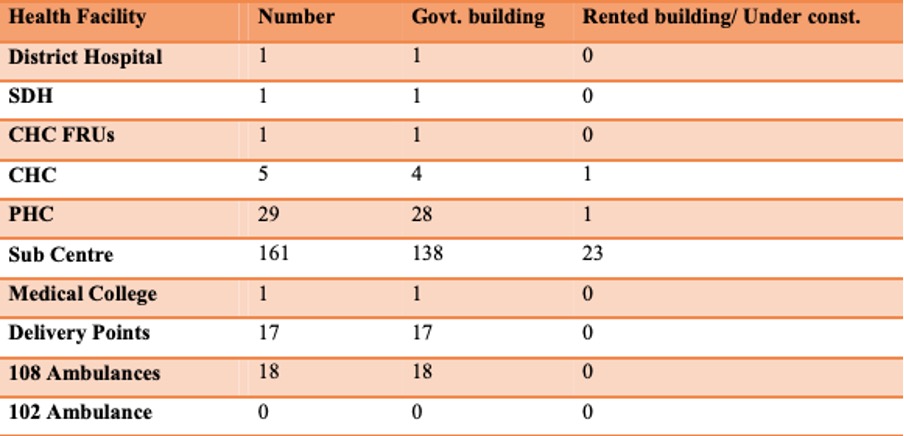
    The need for implementation of universal healthcare coverage can be made evident through a case study of the town of Sonipat, which is near Delhi and is a rural area. The case study is done through the observation of a survey conducted by the Institute of Economic Growth in 2017. The table below shows the data that became available as a result of the last survey conducted.

    CDMO Office, Sonipat District (2017)

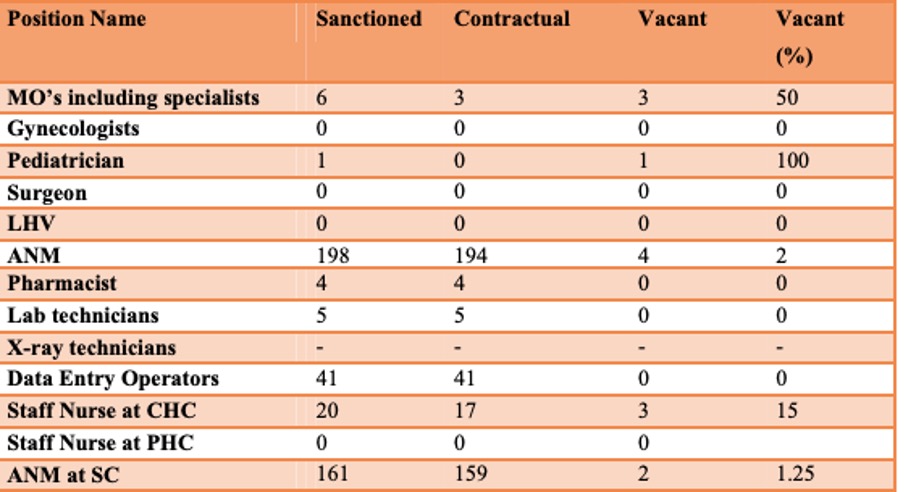
    CDMO Office, Sonipat District (2017)

    An analysis of the data portrays that even though the resources and infrastructure are adequate to the population of Sonipat, the facilities are lacking in human resources. The data shows that 6 posts for the Medical Officers (MO) were sanctioned, but only 3 were filled. Despite the high number of deliveries, there was no sanctioned post of a gynaecologist, which can probably be a reason behind the high number of maternal deaths in the area. It was also found that the Non-Communicable Disease (NCD) program was not functioning in the district for the past 2 years. O.P. Jindal University, which is in the heart of Sonipat, houses a total of 7482 individuals, and has an adequate number of facilities, with 5 in-house doctors and 10 nurses. It has an isolation facility ward for cases of communicable diseases. It has an ambulance and referral service to hospitals in the NCR. These facts show that there is an acute shortage of human resources for healthcare in the area. Even though an adequate number of posts were sanctioned, there was no qualified personnel to fill them, and there were no sanctions for important positions. The case of O.P. Jindal university shows that good healthcare requires good investment and incentive for the staff, which the Sonipat administration has failed to provide to the staff of healthcare centres owned by the state.

    The arguments mentioned above portray the acute necessity of universal healthcare in India. The ideals of our constitution implore for the right to health to be established, which gives universal healthcare constitutional support. The failure of the 12th Five-year Plan showcases the failures that can happen if the framework for such a plan is not well-thought-out or well-invested. The example of Sonipat further portrays the need for increased investment in healthcare, which can be achieved by the utilization of universal healthcare. Although there is no concrete data available for the crisis which the nation recently endured, it can be concluded that the approach of universal healthcare could have allowed us to endure this crisis better, as there would have been lesser chances of shortage of supplies like oxygen because of the increased investment. The first step towards the policy of universal healthcare should be to strengthen existing institutions of insurance and learn from the mistakes in the implementation of the RSBY.


    References

    1.http://iegindia.org/upload/uploadfiles/Sonipat%20Haryana%202017.pdf

    2.http://ijariie.com/AdminUploadPdf/RIGHT_TO_HEALTH__A_CONSTITUTIONAL_MANDATE_IN_INDIA_ijariie5596.pdf

    3.http://jsslawcollege.in/wp-content/uploads/2013/12/RIGHT-TO-HEALTH-AS-A-CONSTITUTIONAL-MANDATE-IN-INDIA.pdf

    4.http://nhsrcindia.org/sites/default/files/Twelfth%20Five%20Year%20Plan%20Health%202012-17.pdf

    5.https://www.hindustantimes.com/health/why-india-s-national-health-insurance-scheme-has-failed-its-poor/story-6TIXYO0A8CyxTfGYPRdkYK.html


    Image Credit: www.financialexpress.com

  • Wage theft plagues India’s  migrant workers

    Wage theft plagues India’s migrant workers

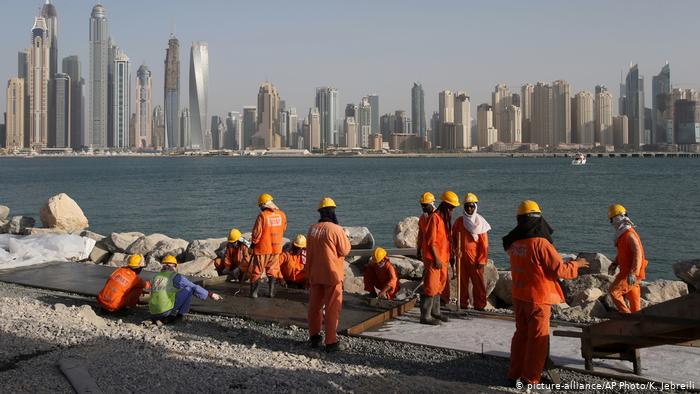
    Though the South Asian country has relied heavily on remittances from its international migrant workers, the government has been remiss in ensuring their protection and welfare. As labor violations spike amid the COVID-19 pandemic, these workers are left to fend for themselves.

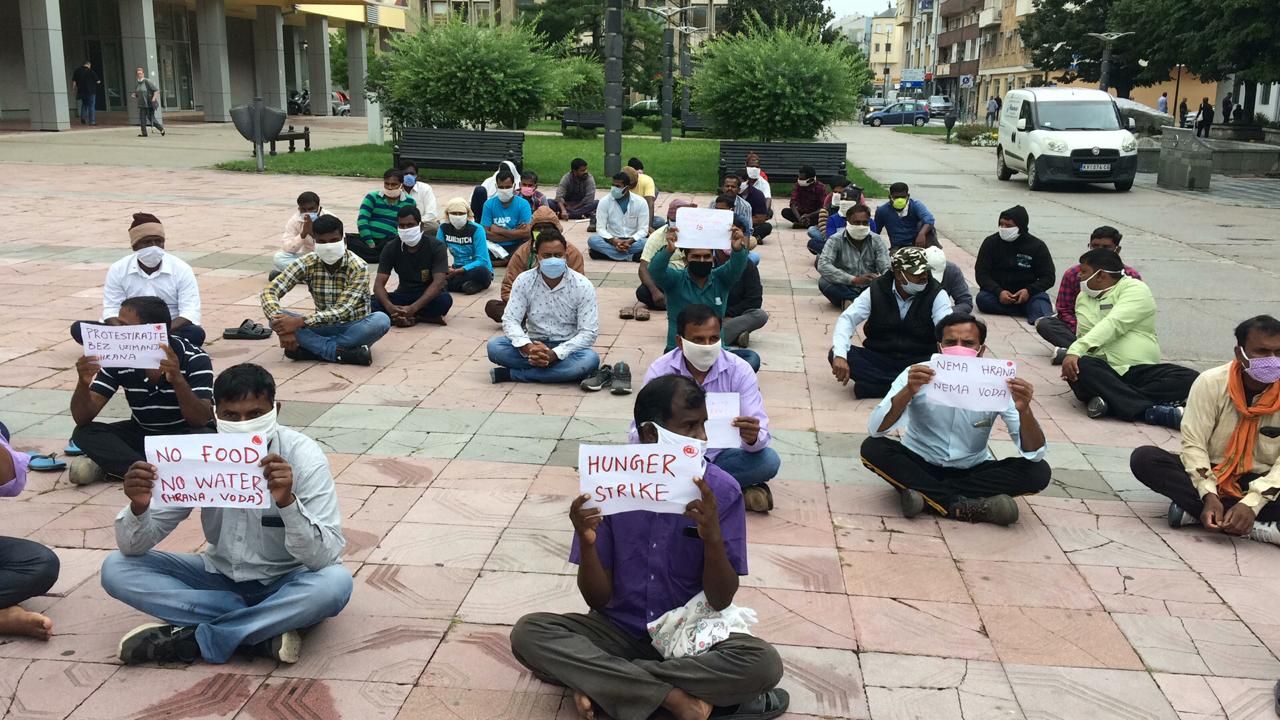
    In August 2020, a group of around forty Indian construction workers staged a hunger strike in Kraljevo, Serbia, demanding to be paid. In addition to not receiving months’ worth of wages from their employer, they had been working 10-12 hours a day without proper food or access to healthcare and were living in cramped, unhygienic quarters during the COVID-19 pandemic.

    The migrant workers from across India first arrived in Serbia in mid-2019. According to the Building and Wood Workers’ International (BWI), a global union federation, around 150 Indians were employed across the Balkan country for the construction of the Corridor 11 project. In a Zoom interview, two of the workers recounted how their troubles with getting paid had begun soon after arrival. When their situation didn’t improve, the first group was repatriated to India in January and February 2020. The rest, including those protesting in Kraljevo, were repatriated by September 2020.

    Much of the Indian government’s efforts have been focused on Gulf countries, where, based on data from the International Labour Organization (ILO), around 9 million Indians live and work. However, the BWI warns that Europe is fast becoming a hub for the exploitation and trafficking of third-country nationals. In Serbia, other reports of exploitation of migrant groups from China and Turkey have recently come to light.

    When he heard about the stranded Indian workers, Ramachandra Khuntia, chair of the BWI Indian Affiliates Council and a former Member of Parliament (MP) contacted the Indian Ministry of External Affairs (MEA) and the Indian embassy in Belgrade multiple times.

    the BWI warns that Europe is fast becoming a hub for the exploitation and trafficking of third-country nationals.

    What followed was a cross-border initiative involving labor unions, the Indian government, and Serbian anti-trafficking organization ASTRA. “We were finally able to bring the workers back home. But ‘til today, they have yet to receive their wages from the employer,” says Khuntia.

    “The payment of arrear wages is usually dealt with by the labor department in the host country, but the matter can be pursued through the Indian embassy,” explains Khuntia, adding that despite assurances from the Indian government and the Indian embassy in Serbia, the payments seem nowhere in sight.

    Indian construction workers stage a hunger strike in Kraljevo, Serbia, in August 2020. Amid the COVID-19 pandemic, wage theft has soared across the world, and often, the victims are migrant workers from India, who receive patchy support from their own government and have to rely on unions or non-profits for help. (Photo credit: BWI/Boobalan D) 

    Job loss and other ordeals

    Wage theft — the illegal practice of denying workers the money that they are rightfully owed — has dramatically increased during the COVID-19 pandemic. In addition to the non- or incomplete payment of wages, employees have to deal with job loss, non-payment of termination benefits, poor working conditions, and hurried repatriation without the chance to register their grievances.

    Migrant workers’ troubles begin in their country of origin, not abroad. “It is a new form of slavery that begins before they even leave the country in the form of recruiting fees. Recruiting agents and others involved are selling dreams to migrant workers.”

    Ponkumar Ponnuswamy, president of TKTMS, a construction workers’ union in Tamil Nadu that was directly involved in the process of repatriating the stranded workers, says that each of the workers is owed anywhere between the equivalent of US$1,300 and US$2,600 by the aforementioned company, depending on how long they were in Serbia. For the workers who were put through this trying ordeal, their unpaid wages represent a substantial amount of money that would have otherwise gone towards debt repayments, medical treatments, and basic subsistence.

    “I think it is a huge loss not only at the individual level but also at the country level,” says S. Irudaya Rajan, an expert on Indian migration and member of the Kerala government’s COVID-19 expert committee. Migrant workers constitute an integral part of the global economy, with their remittances adding up to over three times the amount of international aid and foreign direct investment combined. India, the world’s largest source of international migrants, received US$82 billion in remittances in 2019 according to World Bank data, a sum that has helped keep millions out of poverty.

    “COVID-19 has become a great opportunity for exploitation,” says Rajan, who is currently heading a study on counter-migration from the Gulf to assess wage theft.

    But according to him, migrant workers’ troubles begin in their country of origin, not abroad. “It is a new form of slavery that begins before they even leave the country in the form of recruiting fees,” he says. “Recruiting agents and others involved are selling dreams to migrant workers.”

    The Indian government requires recruiting agents to register themselves with the Protector General of Emigrants. Despite this, many illegal agents continue operating across the country. (Photo credit: Yamuna Matheswaran)

    Is the Indian government doing enough?

    In theory, the Indian government offers various resources for those who emigrate for work: registration portals, insurance schemes, awareness programs, and helplines. They also provide a list of registered recruiting agents (RAs) across the country.

    But the reality of emigration is far more complex, even confusing. For instance, it would be safe to assume that only a fraction of the RAs operating in India is registered with the MEA. A 2018 investigation by the Migrant Forum in Asia (MFA), with the support of ILO, found that in the state of Punjab alone the number of unregistered agents ran into several thousands, despite the 2014 Punjab Travel Professionals Regulation Act requiring mandatory registration of all consultants, agents, and advisors involved in sending people abroad.

    These unscrupulous agents make emigrants more vulnerable to exploitation by charging illegal fees and pushing unfair contracts. Some workers arrive in a foreign country only to learn that the job they were recruited for doesn’t exist, says Rajan. Others end up without appropriate visas or permits and are never registered in the system.

    The MEA limits the service fees RAs can charge their clients, which caps at INR 20,000 (around US$270). But Rajeev Sharma, Regional Policy Officer at BWI’s South Asia office, says that many of the workers have paid far more depending on the state they hailed from.

    “Workers from Punjab, for instance, paid up to INR 100,000 (US$1,365) to 150,000 (US$2,048) to the agent,” he says. “We don’t know how they managed to fund their journey, they may have run into debt – so it’s not just the salary, so many other issues are involved.” When asked about this practice, one of the agencies involved – an unregistered ‘Shakti Tread Test Centre’ run by Muktinath Yadav in Deoria, Uttar Pradesh – gave no response.

    “Covid-19 has become a great opportunity for exploitation” – Dr. S Irudaya Rajan, an expert on Indian Migration

    Indian missions abroad are tasked with ensuring the welfare of overseas Indian nationals. The migrant workers and union members state, however, that the Indian embassy in Serbia failed to even register their grievances properly. The Embassy of India in Belgrade did not respond to requests for comment. In response to an inquiry about grievance redressal mechanisms for repatriated migrant workers, the MEA’s Protector General of Emigrants instead pointed to the Pravasi Bharatiya Sahayata Kendra, a general helpline.

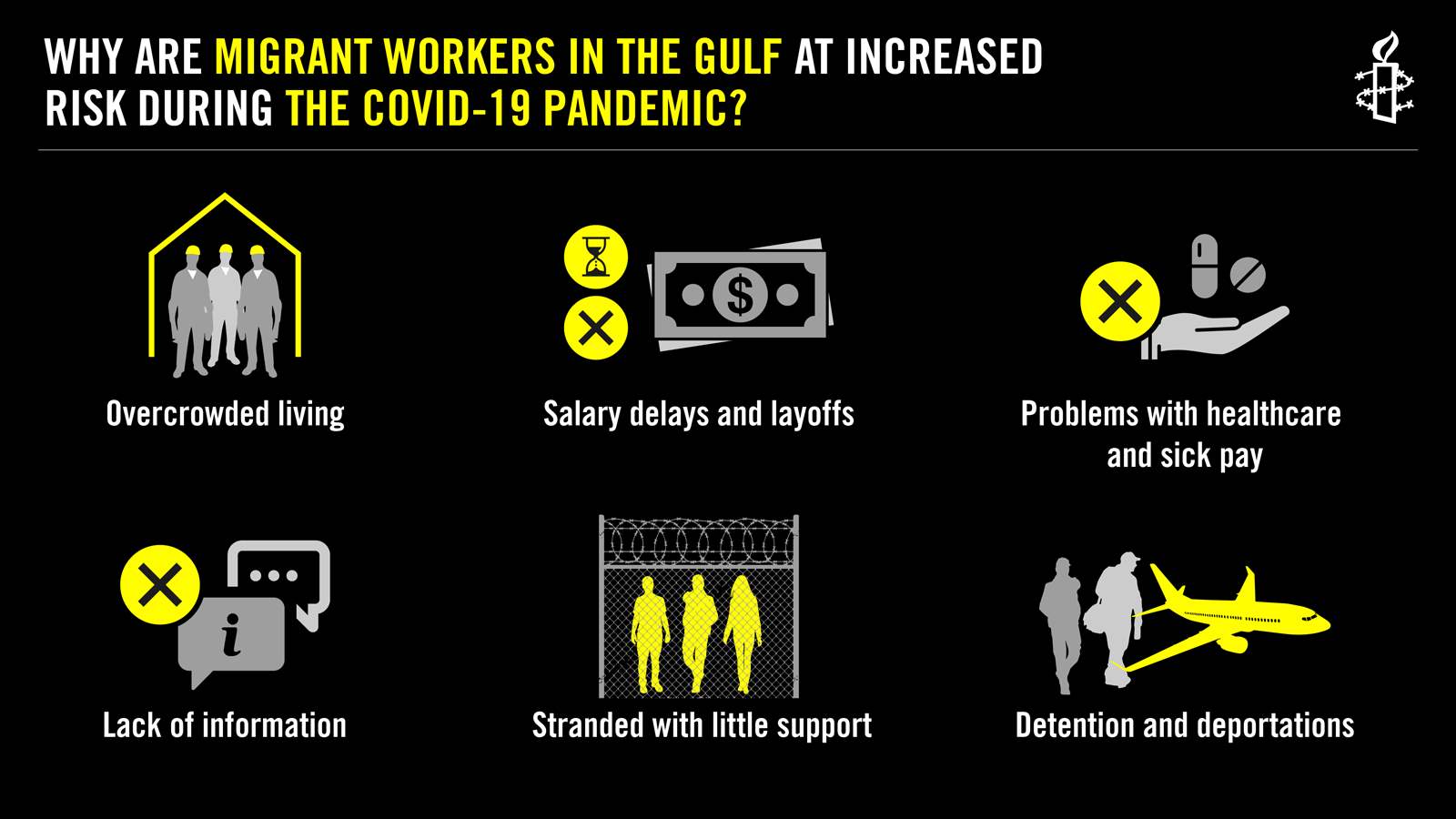
    Amnesty International raised concerns about the state of migrant workers under Covid-19 in the Gulf.
    Image Credit: amnesty.org

    “Grievance portals address a lot of topics, including pre-departure issues. However, there needs to be a specific focus on wage theft, particularly during COVID-19,” says Rajan. He stresses the importance of collective bargaining by various governments at the South Asia level, as well as proper grievance registration by Indian embassies in order to pursue the necessary legal steps.

    Recognizing the lack of global mechanisms to address wage theft, Congress MP Shashi Tharoor stated during a panel discussion last year that an escrow fund could be set up, with employers depositing six months’ worth of wages in order to protect workers against non-payment.

    Need for awareness building

    In the case of the Indian migrant workers in Serbia, it was labor unions that initially came to their rescue, following through until they had arrived safely back to their respective homes. When asked if there is enough awareness among migrants themselves about their rights and the resources available to them, Rajan says: “Absolutely not, and I think that is where we are failing.”

    “Migration has three cycles,” he explains. “The first — pre-migration cycle — happens in our country,” and steps to protect migrant workers need to start here. Rajan believes that the government should make pre-departure orientation programs, including skills training, mandatory. “Most workers don’t even know the currency of the host country. They know, in rupees, how much they expect to make and in how much time.”

    Khuntia, of the BWI Indian Affiliates Council, highlights the utter importance of signing bilateral agreements with host countries regarding wages, healthcare, and social security so that those emigrating can feel secure. “And if anything were to happen, by virtue of this bilateral agreement, the Indian government can negotiate with the host country and provide relief to the workers,” he concludes.

    “If everybody were cheated, there would be no migration,” says Rajan. But it’s important to share not only success stories but also those of struggles, he continues, to raise awareness among prospective migrants. It’s not about “how many people we send” but about how well-informed our migrant workers are when they are deployed abroad, he says.

    This article was first published on Asia Democracy Chronicles.

    Feature Image: dw.com

  • Vietnam’s Future Strategy to fight COVID-19

    Vietnam’s Future Strategy to fight COVID-19

    Vietnam’s experiences with fighting the COVID-19 pandemic has been highlighted not only as a success story but a good model. It pursued an aggressive containment policy, rigorous contact tracing procedures and effective quarantine regimes. It successfully contained the three waves of the Pandemic that infected 9,635 Vietnamese people including 55 deaths and 3636 have recovered since February 2020.  The majority of these have occurred from April to June 2021. Besides, effective public communications and awareness campaign, and availability of testing kits were instrumental in limiting the spread of the virus.

    However, Vietnam is now witnessing the Fourth Wave which has impacted at least three major cities and some provinces. Perhaps the most worrying part of this wave is that new variants of the Coronavirus are being detected among people. This variant is known to spread more quickly especially in areas where there is a high concentration of people such as industrial parks.

    Given the severity of the Fourth Wave of Covid-19, there is visible concern among the political leadership, and Prime Minister Pham Minh Chinh has called upon the entire political machinery and Vietnamese people to take extreme steps to “fighting the pandemic” similar to situations where they would be fighting an enemy.  Prime Minister Chinh did not shy away from warning the people that any deliberate attempts to disregard “national regulations on pandemic prevention and therefore, spread the virus to the communities, against the joint efforts of the whole nation and people, should be strictly punished.”

    It is now widely accepted that vaccine production is both technology-intensive and cannot be developed overnight. While the developing countries led by India and South Africa have been pushing for waving off Trade Related Intellectual Property Rights (TRIPS) protection for COVID-19 vaccines, and have been supported by the U.S. and EU at the World Trade Organization, yet countries must build national capacities to produce vaccines. In this context, the Vietnamese government hopes to not only buy COVID-19 vaccines but set up a production plant and supply to other needy countries.

    There are four vaccines under development in Vietnam at (a) Nanogen Pharmaceutical Biotechnology JSC; (b) Institute of Vaccines and Medical Biologicals; (c)  Vaccine and Biological Production Company No 1’ and (d) Polyvac. The Vietnam Military Medical University is actively participating in COVID-19 vaccine development at home.

    Vietnam is also has a forward-looking vaccine import strategy pivoting on “patent-based production and local research and production”. This, it is believed would help the country achieve “herd immunity in late 2021 or mid-2022”. This strategy is significant given that Vietnam has nearly 100 million people including children who would require COVID-19 vaccination.  Nearly 30 million doses were acquired from the British-Swedish AstraZeneca vaccine and the vaccination programme started in March 2021. There are plans to acquire 20 million Russian Sputnik V vaccines; may buy 5 million doses from Moderna and 31 million from Pfizer. Meanwhile, Vietnam has also approved China’s Sinopharm for emergency use. Also, homegrown vaccines are expected to fill in the gap of 30 million doses.

    Similarly, vaccine production infrastructure is a financially demanding activity. The Vietnamese government plans to apportion VND 16 trillion for the vaccination program. It plans to procure 150 million doses of vaccines in 2021 to cover 70 per cent of its population and this is estimated to cost VND25.2 trillion ($1 billion). In June 2021, the government launched the Fund for Vaccination and Prevention of Coronavirus Disease 2019.

    As per the Finance Ministry’s state budget department,  in “addition to the [public] budget, it is necessary to mobilize more resources from the voluntary contributions of domestic and foreign organizations and individuals, to join with the state,”  During a live broadcast to launch the campaign for public participation in raising funds to acquire/locally produce Covid-19 vaccine, Prime Minister Pham Minh Chinh called on the Vietnamese people to financially support a mass vaccination roll-out. This call has attracted a positive response and several companies, organizations and individuals have come forward. According to the Ministry of Finance, as of 05 June 2021, i.e., ten days since the announcement of the fund, as many as 950 organizations and more than 124,600 individuals had contributed VND 928 billion ($40.2 million). Besides domestic contributors, several foreign companies such as Hanwha Life Insurance and Daewoo of South Korea, Japan’s Tokio Marine and Taiwanese insurer Cathay Life have announced contributions. Minister of Finance Ho Duc Phoc has underscored transparency in the management of the fund and stated that his ministry is “committed to using this fund publicly and transparently,”

    Vietnam’s preference to import as also set up domestic infrastructure to set up production are indeed noteworthy; however, the challenge would be to run an accelerated mass vaccination program and achieve a high degree of herd immunity.

    Image Credit: www.dw.com

  • Fighting the Invisible Enemy with Vaccines:  Beginning of the End of the COVID-19 Pandemic

    Fighting the Invisible Enemy with Vaccines: Beginning of the End of the COVID-19 Pandemic

    Fighting the Invisible Enemy with Vaccines Beginning of the End of the COVID-19 Pandemic [powerkit_button size=”lg” style=”info” block=”false” url=”https://admin.thepeninsula.org.in/wp-content/uploads/2021/06/Fighting-the-Invisible-Enemy-with-Vaccines-Beginning-of-the-End-of-the-COVID-19-Pandemic-8-1.pdf” target=”_blank” nofollow=”false”]
    Download
    [/powerkit_button]

    Authors:  Avanti A Srinivasan (1st-year Biology Honors College Student, New Jersey, USA); Keerthika Gnanasegaran (MBBS, Puducherry, India); Vishu Priya (MBBS, Puducherry, India).

    Keywords:

    COVID, Coronavirus disease; COVID-19, SARS-CoV-2, Severe Acute Respiratory Syndrome Corona Virus 2 identified in 2019 that causes COVID; Flattening the curve, The longer it takes for the coronavirus to spread through the population, the more time the health care systems (hospitals) have to prepare and treat patients, but not be overwhelmed by the pandemic; Herd immunity, when most of a population (70-80%) becomes immune to COVID-19, they provide indirect protection to those who are not immune to the disease; Immunity, protection from an infectious disease. If a person is immune to COVID that person can be exposed to the virus without becoming infected; Immunization, the process by which a person becomes protected against an infectious disease by vaccination; Vaccine, a biological preparation or substance (also known as antigen) that is used to stimulate the production of antibodies and provide immunity against COVID-19, without inducing the disease. Vaccines are usually administered by needle injections; Vaccination, the process of introducing a vaccine (prepared from the COVID, its products such as protein or DNA, or a synthetic substitute such as mRNA) to act as an antigen, into the body to induce immunity against COVID-19 disease.

    COVID-19 Pandemic

    Corona Virus disease (COVID-19) was first identified in Wuhan, China, in December 2019. It is caused by Severe Acute Respiratory Syndrome Corona Virus 2 (SARS-CoV-2). The highly contagious coronavirus has spread rapidly around the world exponentially, causing a pandemic.

    As of June 04, 2021, there were over 172,231,339 confirmed cases and 3,703,522 deaths globally according to Johns Hopkins University (JHU) COVID-19 Dashboard. The USA alone has accounted for over 33,327,112 confirmed cases with over 596,444 fatalities reflecting the heavy toll inflicted by the pandemic. India has reported over 28,574,350 confirmed cases and 340,702 deaths, which is likely a low estimate.

    The US Government at the beginning of the pandemic embarked on the “Operation Warp Speed” program to accelerate testing, supply, development, and distribution of safe and effective vaccines, therapeutics, and diagnostics for COVID-19 by January 2021. The program has led to the development of several effective vaccines against COVID-19 by commercial enterprises. The new US administration has focused all its efforts to vaccinate the US population starting January 2021 with the goal of reaching herd immunity by July 4, 2021; it is on its way to successful completion by the target date.

    Initially, the number of confirmed COVID-19 cases reported by India was less, which was probably due to the quick action taken by the Indian Government to implement a total lockdown of the country to control the community spread of the virus. This was a very successful strategy for the short term and helped to flatten the curve and slowed the infection rate (Fig. 1). However, without an effective vaccine, with the Indian economy stagnating, with a population of 1.3 billion most of whom are poor, and a highly mutating virus, mitigation efforts alone proved to be grossly inadequate over the long term.


    Fig 1: USA Center for Disease Control (CDC) graphic on flattening the curve

    Over the past two months, India’s coronavirus daily infections have averaged over 400,000 and 4,000 deaths. They have come down recently, averaging daily infections of less than 200,000 and 2,800 deaths. Vaccinating the Indian population and reaching herd immunity, may be the only option left to fight the invisible enemy and to successfully put an end to the pandemic. India so far has inoculated only about 3% of its 1.3 billion people. India has a long way to go to get 70-80% of its population vaccinated and reach herd immunity.

    What is immunity?

    Humans are constantly exposed to disease-causing pathogens such as viruses, bacteria, fungi, and parasitic worms. Our body has two lines of defence against these threats: innate immunity and adaptive immunity, which together constitute the immune system. Their collective defence against pathogens makes up the immune response. The two components of the immune system interconnect and communicate at chemical and cellular levels to provide powerful protection against pathogens.

    Innate immunity provides an immediate, nonspecific response against any invading pathogen and has no memory of prior exposure to the pathogen. Innate immunity relies on the recognition of certain foreign molecules to stimulate inflammatory responses and phagocytosis. Innate immunity is the first line of defence against pathogens, representing a critical systemic response to prevent infection and maintain homeostasis. It also contributes to the activation of an adaptive immune response. It does not adapt to a specific external stimulus or a prior infection but relies on genetically encoded recognition of molecular patterns.

    The innate immune system recognizes pathogen-associated molecular patterns that are associated with pathogenic organisms but are absent in the host. The patterns are recognized by pattern recognition receptors of phagocytic cells such as toll-like receptor that are found on the cell surface and within the cell on various membrane-bound compartments. Cell surface receptors on macrophages (white blood cells) recognize and bind to surface molecules on the pathogen, activating the macrophage to phagocytize (engulf) the pathogens. Activated macrophages secrete cytokines, which bind to receptors on other host cells to trigger a successful immune response.

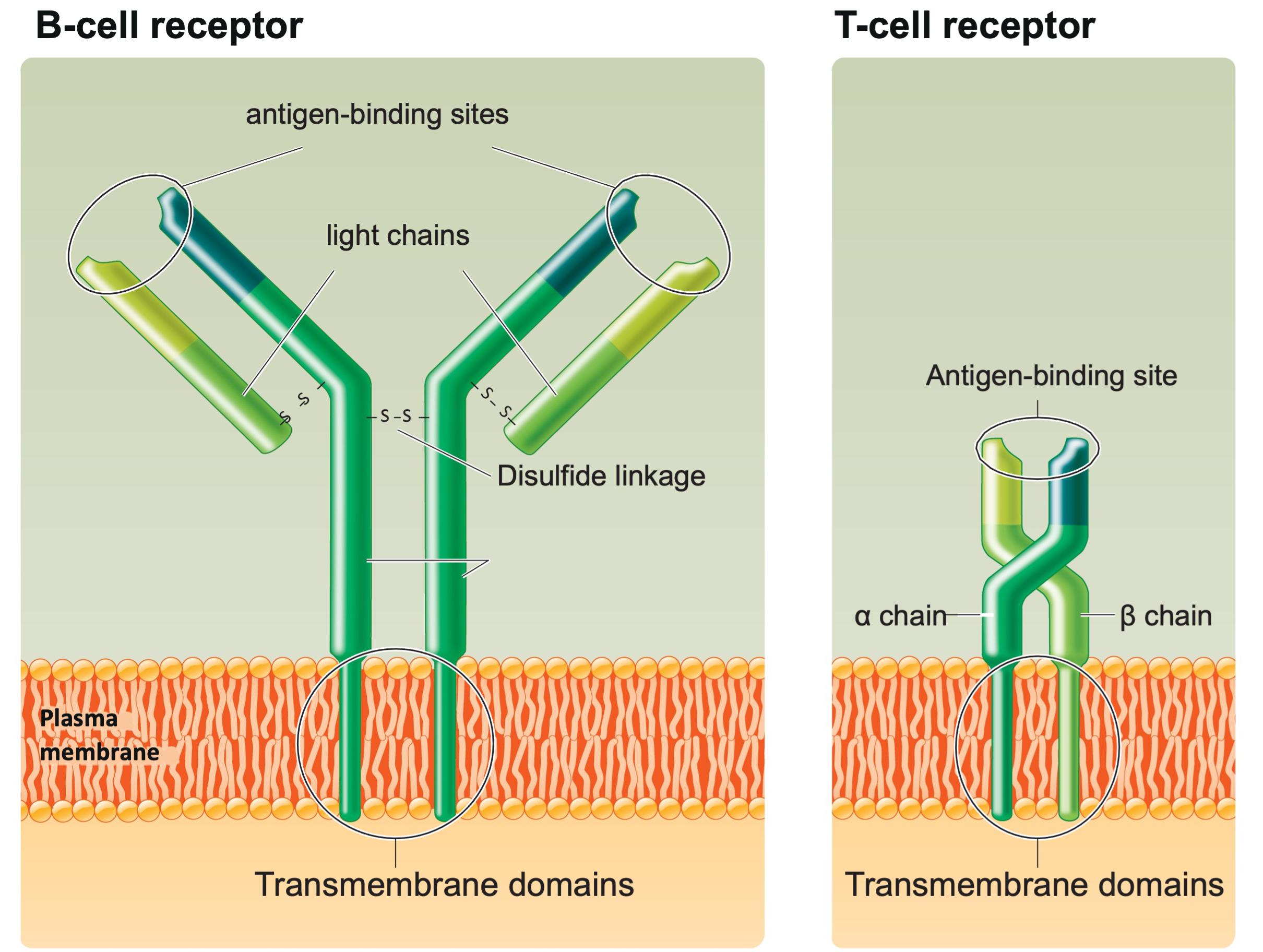
    Adaptive (or acquired) immunity is specific; it recognizes individual pathogens and mounts an attack that directly neutralizes or eliminates them and retains a cellular memory of a pathogen; it reacts quickly upon second exposure to the same pathogen. The innate immune system provides some immediate protection against invading pathogens while the more powerful, specific, adaptive response system is mobilized that can take several days. Adaptive immunity, also known as acquired immunity, is a host immune response that is mediated by antigen-specific lymphocytes. Unlike innate immunity, the acquired immunity is highly specific to a particular pathogen, including the development of immunological memory. Like the innate system, the acquired system includes both humoral immunity components and cell-mediated immunity components. T cells differentiate from stem cells in the bone marrow and are carried in the blood to the thymus to generate two types of T cells (helper T cells and cytotoxic T cells) that are involved in adaptive immunity. Humoral immunity arises from B cells that differentiate from stem cells in the bone marrow and are carried in the blood to capillary beds serving the tissues and organs of the lymphatic system. In antibody (humoral)-mediated immunity, B-cell derivatives called plasma cells to secrete antibodies – highly specific protein molecules – that circulate in the blood and lymph recognizing and binding to antigens and clearing them from the body. In cell-mediated immunity, a particular type of T cell becomes activated and, in conjunction with other cells of the immune system, attacks foreign cells directly and kills them. Specific receptors on the plasma membrane of one B cell or T cell (B-cell receptors or T-cell receptors) bind to one specific antigen structure, also known as epitopes (Fig. 2).

    Fig. 2: Structure of B-cell and T-cell receptors

    The adaptive immune response includes four key steps: 1) Antigen encounter and recognition: lymphocytes encounter and recognize an antigen; 2) Lymphocyte activation: lymphocytes are activated by binding to the antigen and divide to produce clones; 3) Antigen clearance: large clones of activated lymphocytes clear the antigen from the body; and 4) Development of immunological memory: memory cells circulate in blood and lymph, prepared for a rapid response in a future encounter of the same pathogen. The entire population of B cells and T cells in the body includes about 100 million different kinds of receptors – enough of a repertoire to recognize and destroy any type of antigen. Importantly, these cells are present even before the body has encountered the antigens.

    Adaptive immunity can be acquired either naturally by infection or by vaccination. Adaptive immunity can be active or passive. Active immunity is acquired through exposure to a pathogen, which triggers the production of antibodies by the immune system. Passive immunity is acquired through the transfer of antibodies or activated T cells derived from an immune host either artificially or through the placenta from the mother.

    What is a vaccine?                                                    

     In 1796, Edward Jenner infected healthy individuals with cowpox, which prompted their immune systems to protect them against smallpox, a more deadly viral disease. Jenner’s technique became the basis for worldwide vaccination against smallpox, which now has been eradicated from the human population. This forms the basis for vaccination against other deadly pathogens.

    An antigen is a foreign molecule that triggers an adaptive immune response. A vaccine is usually made from weakened or killed forms of the microbe, or typically contains an antigen from the disease-causing microorganism such as its toxins, or one of its surface proteins. The antigen stimulates the body’s immune system to recognize it as a threat and destroy it and to further recognize and destroy those microorganisms in a future encounter. Vaccines can be prophylactic (to prevent or ameliorate the effects of a future infection by a pathogen), or therapeutic to fight a disease that has already occurred. The administration of vaccines is called vaccination or inoculation. Vaccination is the most effective way to prevent infectious diseases. Widespread immunity due to vaccination is largely responsible for the worldwide eradication of smallpox and the restriction of diseases such as polio, measles, and tetanus.

    Molecular structure of SARS-CoV-2

    SARS-CoV-2 is a large, enveloped, spherical virus that contains a positive-sense, single-stranded RNA genome (30 kb in size), which is packed inside the nucleocapsid protein (N) and surrounded by an envelope. The RNA genome has a 5′ capped structure and a 3′ poly-A tail. The 5′ terminal two-thirds of the genome encodes a polyprotein, pp1ab, which is further cleaved into 16 non-structural proteins that are involved in genome transcription and replication. The 3′ terminus encodes 3 different structural proteins.

    Membrane proteins (M) and envelope proteins (E) are involved in virus assembly. The M protein (~30 KDa) is the most abundant structural protein in the virion. The E protein (~12 KDa) is found in small quantities within the virion.

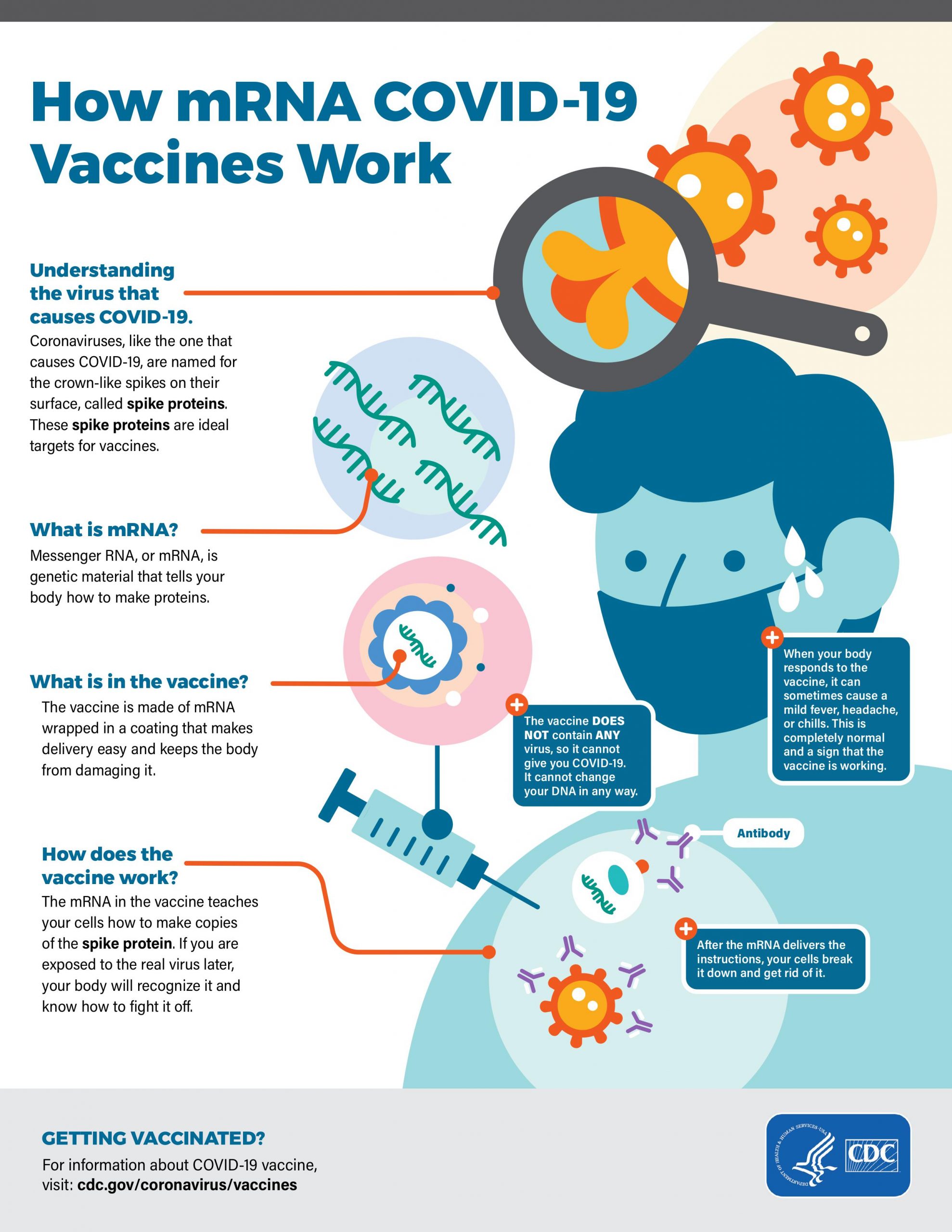
    Spike protein (S1) that mediates virus entry into host cells, is the target of all COVID-19 vaccines. The spike protein forms large protrusions from the virus surface, giving it the appearance of having crowns (Fig. 3). Spike protein contains an S1 subunit that is a Receptor Binding Domain (RBD) and a membrane-fusing spike S2 subunit; The entry receptor utilized by SARS-CoV-2 is Angiotensin Converting Enzyme II (ACE II). Upon binding S1 is processed into S2, which induces fusion of the host and viral membranes.

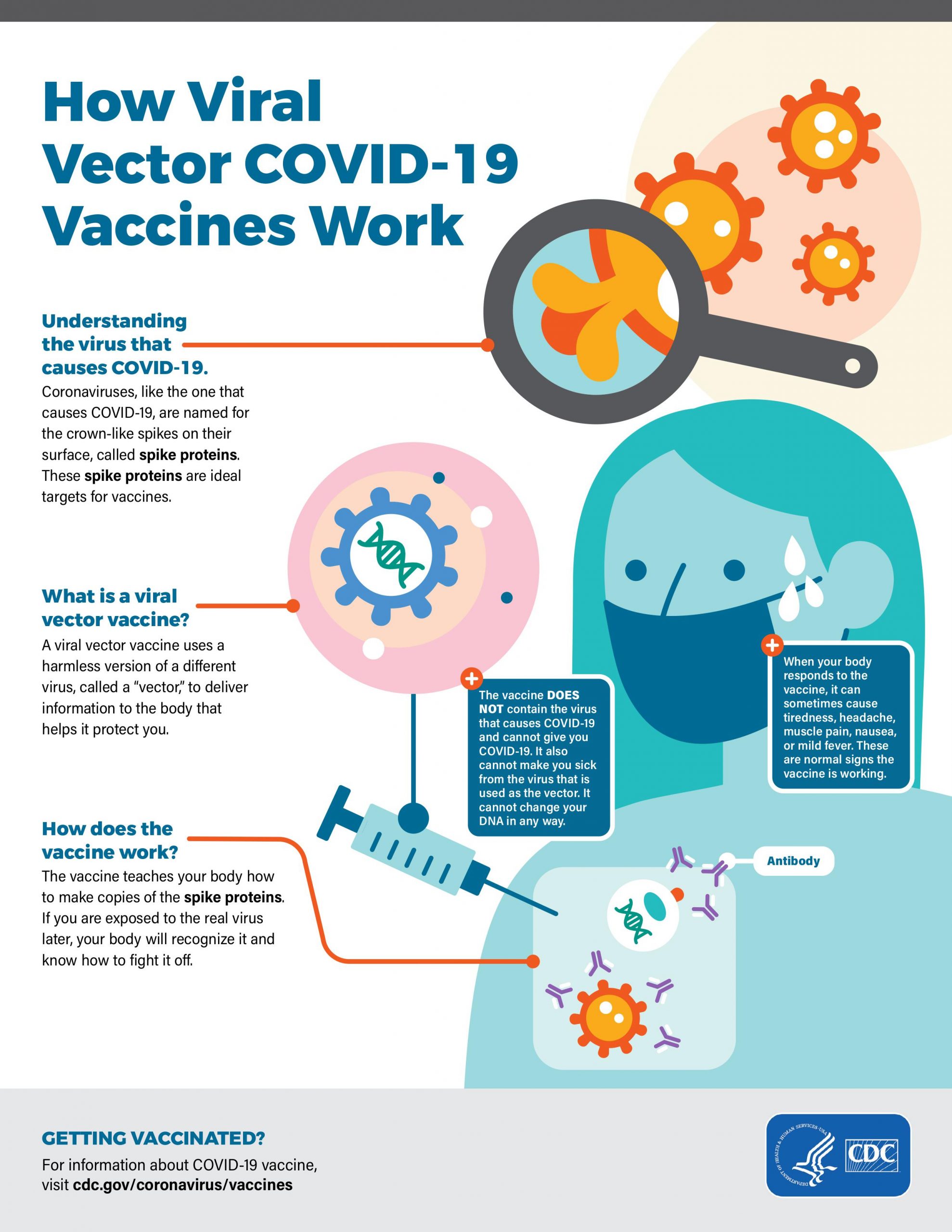
    Fig. 3: Structure of the coronavirus, SARS-CoV-2 that causes COVID-19 [adapted from Centers for Disease Control (CDC) and Prevention, USA].

    COVID-19 viral vector vaccines

    Viral vector vaccines are a modified version of a different virus to deliver instructions to the cell to make the antigen against coronavirus spike protein. People vaccinated with viral vector vaccines gain protection without ever having to risk the serious consequences of getting sick with COVID-19. Several important characteristics of the viral vector need to be pointed out that include: 1) The vector is not the virus that causes COVID-19; it is a different harmless virus that is engineered to carry the gene coding for the spike protein, a harmless piece of the coronavirus. The modified version of the virus will be injected into the body and the cells will produce the spike protein that is found only on the surface of coronavirus. The cells display spike protein on their surface, triggering an immune response against the spike protein antigen. The immune cells produce antibodies and activate T cells to fight off the infection. The net result is the body has learned to recognize spike protein and to protect us against any future infection by the virus that causes COVID-19. The vaccine protects us, without ever having to risk the serious consequences of getting sick with COVID-19. Any temporary discomfort (side effects) experienced by us immediately after getting the vaccine is a natural part of the process and indicates that the vaccine is working to stimulate our immune system. Viral vector vaccines have been around for a while; they are safe and effective. COVID-19 viral vector vaccines were developed using adenoviral vector by two commercial entities, namely AstraZeneca and Johnson & Johnson (Appendix I).

    COVID-19 messenger RNA (mRNA) vaccines

    mRNA vaccines are a new type of vaccine to protect against infectious diseases. To trigger an immune response, most vaccines inject a weakened or inactivated pathogen into our bodies. mRNA vaccines, on the other hand, teach our cells how to make a protein antigen (or even a piece of a protein) within cells to induce an immune response in our bodies. The focus of the mRNA COVID-19 vaccine is to teach cells how to make spike protein, and thereby, trigger an immune response in our bodies. Like the viral vector vaccines, people vaccinated with mRNA COVID-19 vaccines gain protection without ever having to risk the serious consequences of getting sick with COVID-19. The mRNA vaccines are some of the first COVID-19 vaccines that were authorized for emergency use by the US Government. mRNA vaccines can be developed easily in a laboratory using readily available materials. Furthermore, the process of making mRNA vaccines can be readily standardized and scaled up, making vaccine development much faster than the traditional methods of making vaccines. As soon as the genome sequence of the virus that causes COVID-19 became available, scientists began designing the mRNA instructions for cells to build the unique spike protein into an mRNA vaccine. Effective COVID vaccines became available in less than a year to vaccinate the US population from two commercial enterprises, namely Moderna and Pfizer-BioNTech (Appendix II). The US Government has been very successful in administering the COVID-19 vaccines to its population. The USA is on the verge of reaching herd immunity by July 4, 2021. The success of the vaccination effort can be seen from the fact that several states in the USA have started lifting all mandatory mitigation efforts including the mask mandate.

    CDC (USA) Guidelines for Side Effects of COVID-19 Vaccines

    COVID-19 vaccines are highly effective, but they are also “reactogenic”, meaning that they are likely to cause a noticeable immune response or side effects. Side effects may vary with the type of COVID-19 vaccine. The most common side effects include soreness at the site of injection, fatigue, headache, muscle aches, chills, joint pain, and fever (Table 1). The side effects usually last 24 to 48 hours, and no more than a few days. Side effects were more frequent after the second dose in the vaccine trials. These side effects are typical of the inflammation induced by vaccines and are a sign of the body’s immune response to the vaccine. Some people have more severe reactions than others. Side effects have been less frequent and less severe in adults older than 55 years in the vaccine trials.

    The first dose by itself will not provide complete protection, and it will take about seven days after the second dose before one achieves a full protective level of immunity that develops in about 95% of vaccine recipients. If one is exposed to SARS-CoV-2 before this time, it is possible that the person could develop COVID-19. Even once a person has received both doses of the COVID-19 vaccine, it will still be important to continue practising public health mitigation strategies like masks and social distancing until the pandemic is under control and till we know more about how the vaccines prevent transmission. The side effects of the vaccine typically start within 12 to 24 hours of vaccination. If you experience side effects that last beyond 48 hours, you should contact your doctor or medical provider for advice.

    COVID-19 vaccination will help to protect you from getting COVID-19. You may have some side effects, which are normal signs that your body is building protection. Side effects may affect your ability to do daily activities, but they should go away in a few days.

    Common side effects:

    On the arm where you got the shot:

    • Pain
    • Swelling

    Throughout the rest of your body:

    • Fever
    • Chills
    • Fatigue & tiredness
    • Headache

    Helpful tips:

    If you have pain or discomfort, talk to your doctor about taking over-the-counter medications, such as ibuprofen or acetaminophen.

    To reduce pain and discomfort where you got the shot:

    • Apply a clean, cool, wet washcloth over the area.
    • Use or exercise your arm.

    To reduce discomfort from fever:

    • Drink plenty of fluids.
    • Dress lightly.

    When to contact a doctor:

    In most cases, discomfort from fever or pain is normal. Contact your doctor or healthcare provider:

    • If the redness or tenderness where you got the shot increases after 24 hours
    • If your side effects are worrying you or do not seem to be going away after a few days.

    Some things to remember:

    • Side effects may feel like flu and even affect your ability to do daily activities, but they should go away in a few days.
    • With most COVID-19 vaccines, you will need 2 shots for them to work effectively. Get the second shot even if you have side effects after the first shot unless a vaccination provider or your doctor tells you not to get a second shot.
    • It takes time for your body to build protection after any vaccination. COVID-19 vaccines that require 2 shots may not protect you until a week or two after your second shot.

    It is important for everyone to continue using all the tools available to help stop this pandemic as we learn more about how COVID-19 vaccines work in real-world conditions. Cover your mouth and nose with a mask when around others, stay at least 6 feet away from others, avoid crowds, and wash your hands often.​

    SARS-CoV-2 variants

    Viruses are constantly mutating and changing, that includes SARS-CoV-2, the virus that causes COVID-19. These genetic variations occur over time and can lead to the emergence of new variants that may have different properties. The SARS-CoV-2 genome encodes instructions organized as genes, to build the virus. Genomic sequencing allows scientists to identify SARS-CoV-2 and monitor how it changes over time into new variants, understand how these changes affect the characteristics of the virus, and use this information to better understand how it might impact health.

    It is important to monitor circulating viruses for key mutations that happen in important regions of the genome like the gene coding for spike protein. For instance, variants of the spike protein gene sequence can alter the amino acid sequence of the spike protein, which could alter the effectiveness of the antibody treatment and the immunity developed through vaccination. Many mutations do not affect the virus’s ability to spread or cause disease because they do not alter the major proteins involved in infection; eventually, these are outcompeted by variants with mutations that are more beneficial for the virus.

    As per CDC (USA), surveillance of emerging variants can help detect coronavirus variants with:

    • Ability to spread more quickly in people.
    • Ability to cause either milder or more severe disease in people.
    • Ability to evade detection by specific diagnostic tests. 
    • Decreased susceptibility to medical therapies that employ monoclonal antibodies. (Such therapy involves specifically designed antibodies that target regions of the virus to block infection. Because these treatments are more specific than natural immune response-generated antibodies, they may be less effective against variants that emerge).
    • Ability to evade natural or vaccine-induced immunity (Both natural infection with and vaccination against SARS-CoV-2 produces a polyclonal antibody response that targets several parts of the spike protein. The virus would need to accumulate significant mutations in the spike protein to evade immunity induced by vaccines or by natural infection).

    Among these, the ability to evade vaccine-induced immunity would be the most concerning. Several coronavirus variants have evolved mutations to spread more easily, make people sicker, escape immune responses, evade tests, or render treatments ineffective. These are called “variants of concern” by WHO. There are four coronavirus variants that experts around the world are particularly worried about. These variants were first identified in South Africa, the UK, Brazil, and India respectively (Table 2).

    COVID-19 variants of concern

    1) B.1.1.7, first found in the UK (WHO name: Alpha)

    B.1.1.7 was first detected in two people in South-East England. It has been identified in 123 countries worldwide, including the US. It became the most common variant in the US. Tennessee has the highest proportion of B.1.1.7 cases of any state, accounting for 73% of sequenced cases. B.1.1.7 is between 30% to 50% better at spreading from person to person than other coronavirus variants, according to UK scientists. B.1.1.7 could be more deadly. However, two studies published in the Lancet Infectious Diseases and the Lancet Public Health indicated that B.1.1.7 was more infectious, but didn’t cause worse illness in hospitalized patients. COVID-19 vaccines from Pfizer-BioNTech, Moderna, Jonson & Johnson and AstraZeneca all provide protection against B.1.1.7. all provide protection against B.1.1.7.

    2) B.1.351, first identified in South Africa (WHO name: Beta)

    B.1.351 was first detected in South Africa, in samples dating back to the beginning of October 2020. It has been found in 84 countries, including the US. B.1.351 is thought to be 50% more contagious than the original strain. Data suggests that the variant may evade the body’s immune response. Antibodies work best when they bind well to the virus and stop it from entering our cells. The B.1.351 variant has mutations called E484K and K417N at the site where antibodies bind. In lab tests, antibodies produced by Pfizer and Moderna’s COVID-19 vaccines could not bind well to B.1.351, compared to the original coronavirus. In a real-world study, Pfizer’s vaccine was 75% effective at preventing infection of varying severity caused by the variant first found in South Africa, called B.1.351, after two doses. Johnson & Johnson COVID-19 vaccine was 64% effective at preventing COVID-19 in trials in South Africa, where 95% infections are caused by B.1.351, and 72% effective in the US, where B.1.351 accounted for less than 1% of sequenced coronavirus tests. This suggests that vaccines will not become completely useless against variants. Existing vaccines could be updated and tailored to a new variant within weeks or months, or you may require a booster shot.

    3) P.1, first identified in Brazil (WHO name: Gamma)

    The variant found in Brazil was first detected in four people in Japan, who had travelled from Brazil on January 2,. It has been found in 45 countries worldwide, including the US. P.1 is twice as contagious as the original coronavirus. P.1 has similar E484K and K417T mutations as B.1.351, which means it can evade antibody responses. This could be the reason P.1 reinfects people who have already caught coronavirus. A recent study published on April 14 showed that previous coronavirus infection only offered between 54% and 79% of the protection for P.1 than for other virus strains. P.1’s mutations could also mean that vaccines work less well. COVID-19 vaccines from Pfizer and AstraZeneca work against P.1. Johnson & Johnson’s COVID-19 vaccine was 68% effective in trials in Brazil, where the variant is the most common strain, compared with its 72% efficacy in the US, where P.1 at the time accounted for 0.1% of sequenced coronavirus tests.

    4) B.1.617, first identified in India (WHO name: Delta)

    The variant first found in India, B.1.617, is in fact three distinct viruses. Collectively, they have spread to more than 17 countries. All three have been detected in the US. The WHO and UK have designated it a “variant of concern” because it is more infectious than the original virus. The mutations include: L452R, may make the virus more infectious or it may avoid the antibody response; P6814, may make it more infectious; and E848Q, may help the virus avoid the antibody response. Health officials in England recently reported that two doses of the COVID-19 vaccines made by Pfizer-BioNTech or AstraZeneca are highly protective against variants first detected in India and the United Kingdom. The data also underscored the need for two doses, as both vaccines were significantly less effective after only one shot. The vaccines were similarly effective at protecting against the UK variant. Moderna vaccine also appears to protect against COVID variants, B.1.617 and B.1.618 that were first identified in India.

    Moderna reported that its COVID-19 vaccine was 100% effective in a trial involving 3732 adolescents aged 12-17, with no major safety concerns. Among adolescents who received two doses, there were no cases of COVID-19 compared with four cases among those who received a placebo. After only one dose, the vaccine was 93% effective in the age group. Side effects were similar to first reported in earlier studies, including headache, fatigue, body ache, fever and chills. Rare cases of a few adolescents and older teenagers developing myocarditis (mild heart problems) after receiving the COVID-19 vaccines was reported. CDC is investigating whether this is a possible side effect of vaccination or if they are merely a coincidence. The relatively few cases seem to have occurred approximately four days after the second dose of mRNA vaccines made by either Pfizer-BioNTech or Moderna. Symptoms have been more common in males than females. Some rare cases of females developing blood clots after receiving the AstraZeneca vaccine has also been reported. Moreover, it appears that COVID-19 survivors with lingering symptoms can safely be vaccinated against the coronavirus.

    More recently, WHO has named the four variants of concern, known as the UK (B.1.1.7), South Africa (B.1.351), Brazil (P.1) and India (B.1.617.2) with Greek alphabets Alpha, Beta, Gamma, and Delta, respectively.

    “Breakthrough” infections after vaccinations

    Based on roughly 101 million Americans fully vaccinated against COVID-19, CDC reported that breakthrough infections occurred in 0.01% of them. Approximately, 27% of breakthrough infections were asymptomatic, while in 2% of the cases, patients died. The CDC sequence data for virus samples from 555 breakthrough infections indicated that mutated variants of the coronavirus, those were first seen in the UK and South Africa, accounted for 64% of the breakthroughs. Moderna and Pfizer are developing booster shots to combat COVID-19 variants.

    COVID-19 disease & black fungal infection

    A rare and potentially deadly infection by mucormycosis (also known as black fungus), has been observed in several coronavirus patients, or those who have recently recovered from COVID-19, whose immune systems have been weakened by the virus or who have underlying conditions, most notably diabetes. Over 6000 black fungus cases have been reported across India, with hundreds hospitalized and at least 100 dead.

    Black fungus is caused by mould found in damp environments (like soil or compost) and can attack the respiratory tract. It is not contagious and does not spread from person to person. Black fungus commonly affects the sinuses or lungs after a person inhales fungal spores in the air and can also affect the skin following a surface injury like a cut or burn. Symptoms depend on where in the body the fungus is growing but can include facial swelling, fever, skin ulcers and black lesions in the mouth. Black fungus disease begins to manifest as skin infection in the air pockets located behind our forehead, nose, cheekbones, and in between the eyes and teeth. It can then spread to the eyes, lungs and can even spread to the brain. It leads to blackening or discolouration over the nose, blurred or double vision, chest pain, breathing difficulties and coughing of blood. If it is not controlled or treated, the mortality rate could be from 20% to 50%. The mortality rate also depends on which part of the body is affected; it is less deadly for people with sinus infections but more deadly for those with lung infections.

    Immunocompromised people are more susceptible to infection who include COVID-19 patients, diabetic patients, people who take steroids, and those with other comorbidities like cancer or organ transplants. COVID-19 patients are particularly susceptible because not only does the virus affect their immune system, drugs used to treat the disease can also suppress their immune response. Due to these factors, COVID-19 patients face a renewed risk of failing the battle against attacks mounted by the black fungus. This does not mean that every COVID-19 patient will get infected by the black fungus as it is uncommon among those without diabetes. The prevalence of diabetes in India is as high as 12% to 18% of the adult population, especially in urban areas.

    Black fungus is treated with antifungal medicines such as Amphotericin B that is given intravenously. Patients may need up to six weeks of anti-fungal medicine to recover. Their recovery depends on how early the disease was diagnosed and treated. Often, surgery is required to cut away dead or infected tissue. For some patients, this may mean loss of the upper jaw or sometimes even the eye. Black fungus is 70 times more prevalent in India, possibly due to several factors that include: 1) higher rate of “undiagnosed” and “uncontrolled” diabetes; 2) tropical humid climate that promotes fungal growth; and 3) delays in seeking medical attention and diagnosing the disease, and challenges in managing the advanced stage of infection. COVID-19 pandemic has worsened the situation in India, by promoting opportunistic infection by the black fungus.

    Authors personal experience with COVID-19 vaccine side effects

    Avanti Srinivasan (1st-year Biology Honors College Student and working a part-time summer job at Penn Medicine Princeton Health): It is evident that COVID-19 has turned the world upside down. After almost a year of quarantine, death and chaos, the pandemic has also now opened a new era in vaccine development with new technologies. As a college student, when I heard about the vaccine I was delighted as I was ready to return to normalcy and resume my life where I left off one year ago after finishing my senior year of high school. I received the Pfizer-BioNTech COVID-19 vaccine on April 18th, 2021. I was quite nervous before receiving the shot as my friends had warned me about various side effects they felt from the vaccine after getting their first dose. Luckily, unlike many others, I did not feel any side effects from the vaccine. One day after vaccination, I felt a slight pain at the injection site, but this is a common immune response to receiving any vaccine as it shows that our immune system is working properly. Three weeks later, I received my second dose of Pfizer-BioNTech COVID-19 vaccine on May 9th, 2021. Just like the first dose, I did not feel any harsh side effects. The usual pain near the injection site and tiredness were there, but it got better after 2-3 days. Overall, I would encourage everyone to get vaccinated as soon as possible. After receiving both doses of the vaccine, I feel more confident and protected and have resumed normal activities without fear of the coronavirus. I know that even if I do get infected with coronavirus, I will not become seriously ill, as the vaccine will provide me with a layer of protection from the deadly virus. After getting vaccinated I also feel that I am playing my role as a good citizen and community member in my state by helping to prevent the spread of COVID-19. I am also encouraging those around me to get vaccinated and by doing so, we will reach herd immunity at which point we can finally put the pandemic behind us and move forward with our lives.

    Dr Keerthika Gnanasegaran (currently working in a multi-speciality hospital in Pondicherry and an INICET aspirant): I got vaccinated with COVISHIELD at my hospital on March 10, 2021. At first, I was very scared about getting the COVID-19 vaccine. I surfed many websites and got advice from many health care professionals, which convinced me to change my mind about getting vaccinated. One day after vaccination of the first dose, I got injection site pain, severe headache, fever >102⁰ F, and fatigue. I consulted my Chief at the Hospital and he said not to worry and advised me to take a Paracetamol tablet once every 6 hours. The following day, I felt alright except for some mild injection site tenderness. Unfortunately, just before I was about to take my second dose of inoculation, I tested positive for COVID-19. I did not have any symptoms except mild body ache. My father, who is obese, diabetic, and suffers from hypertension, also tested positive for COVID-19 after the first dose of vaccination. He also had only mild body ache and we both were under home isolation. Finally, I realized, getting COVID-19 vaccination very likely prevented us from a serious illness. I plan to get my second dose of COVID-19 vaccination after six weeks. Based on my personal experience, I request and encourage everyone to go ahead, shed their inhibition about getting COVID-19 vaccination.

    Dr Vishnu Priyaa Radjassegarane (a medical student doing her postgraduate studies in Pediatrics in Pondicherry): As a medical student, I came to know about the seriousness of the COVID-19 disease at the hospital. During the early phase of the COVID-19 pandemic, I became infected with the virus, and thankfully I recovered from the infection after treatment. Initially, like many others, I had many doubts regarding the COVID-19 vaccine and was afraid of its side effects. But upon reflecting some more, I decided to get the COVID-19 vaccination done. I reasoned that even if I get reinfected again with the coronavirus, I could avoid a severe illness like getting admitted to ICU or being on a ventilator. I got my first dose of COVISHIELD inoculation on March 15, 2021. With the information that I gathered from my fellow postgraduates regarding the side effects of the vaccine, I took my pain killers prophylactically even before the symptoms could appear. After vaccination, I had some side effects: low-grade fever, injection site pain, myalgia and difficulty in lifting my arm. But these lasted for only 2 days and then subsided. After 6 weeks, I got my second dose of the COVISHIELD vaccine on April 24, 2021. But luckily, I did not experience any side effects after the second dose like the first. After getting the two doses of the COVID-19 vaccine, I feel very confident and safe to go back to work at my hospital, even looking after patients with COVID-19. I will never say that I will not be reinfected with the coronavirus again, but with the COVID-19 vaccination, I feel that I will not get a severe form of the COVID-19 disease that requires oxygen supply or ventilator support. In my opinion, I believe that most of the Pondicherry and Tamil Nadu citizens and the Indian population should be vaccinated as soon as possible to reach herd immunity when we can together put an end to this deadly pandemic and return to our normal life and walk outside confidently without masks.

    Summary

    COVID-19 vaccines offer the best way to fight the invisible enemy and overcome the COVID-19 pandemic. US President Biden has focused all his efforts to get at least 65-70% of the US population vaccinated in the first 180 days of his administration with at least one dose to reach herd immunity. The US is well on its way to successfully achieve this goal by July 4, 2021. Vaccinating the Indian population and reaching herd immunity, may be the only option left for the Indian Government to fight the invisible enemy and to successfully end the deadly COVID-19 pandemic. India so far has inoculated only about 3% of its 1.3 billion people, has a long way to vaccinate 70-80% of its population to reach herd immunity. COVID-19 variants could pose a problem by reducing the effectiveness of the vaccines. This could be addressed by giving booster shots against new COVID-19 variants.

    Acknowledgement

    This article was put together using the information from the Center for Disease Control and Prevention (CDC, USA), World Health Organization (WHO), CNN and from various news articles (too numerous to list them all here). As a disclaimer, we must emphasize that this article is meant to serve solely as an informational resource for the readership. People affected by the coronavirus should consult with their physician for advice and treatment as well as for information about COVID-19 vaccination.

    Table 1: COVID-19 vaccines and their side effects

    Vaccine Status Dosing Efficacy Potential Side Effects
    Pfizer Vaccine has been authorized for emergency use Two doses, delivered three weeks apart 95% effective at preventing serious illness Injection site pain, fatigue, 

    headaches, chills

    Moderna Vaccine has been authorized for emergency use Two doses, delivered four weeks apart 94% effective at preventing serious illness Injection site pain, fatigue, 

    muscle aches, joint pain, 

    headaches, chills

    Johnson & Johnson Awaiting emergency use authorization by the FDA One Dose 72% effective at preventing severe illness Injection site pain, fatigue, 

    headache, muscle pain, joint pain

    Novavax Vaccine trials are ongoing Two doses, delivered three weeks apart Injection site pain, rash, 

    headaches, muscle pain, fever

    Covishield (AstraZeneca/Serum Institute of India) Central Drug Standard Control Organization (CDSCO) India granted Emergency Use Authorization (EUA)  Two doses, delivered 12 to 16 weeks apart 63% effectiveLonger dose intervals with 12 weeks range associated with greater vaccine efficacy Injection site pain, headache, 

    fatigue, myalgia, fever rarely 

    one-sided facial nerve palsies, 

    demyelinating disorders

    Covaxin (Bharat Biotech) Central Drug Standard Control Organization (CDSCO) India granted Emergency Use Authorization (EUA) Two doses, delivered four to six weeks apart 78% effective in preventing serious illness Injection site pain, headache, 

    fatigue, myalgia, fever, body ache, 

    tremors, giddiness, cold, cough


     Table 2: SARS-CoV-2 variants


    Name


    Spike Protein Substitutions First Detected
    B.1.525  

    Spike: A67V, 69del, 70del, 144del, E484K, D614G, Q677H, F888L


    United Kingdom/Nigeria – December 2020

    B.1.526  

    Spike: (L5F*), T95I, D253G, (S477N*), (E484K*), D614G, (A701V*)


    United States (New York) – November 2020

    B.1.526.1  

    Spike: D80G, 144del, F157S, L452R, D614G, (T791I*), (T859N*), D950H


    United States (New York) – October 2020


    B.1.617


    Spike: L452R, E484Q, D614G


    India – February 2021

    B.1.617.1  

    Spike: (T95I), G142D, E154K, L452R, E484Q, D614G, P681R, Q1071H


    India – December 2020

    B.1.617.2  


    Spike: T19R, (G142D), 156del, 157del, R158G, L452R, T478K, D614G, P681R, D950N


    India – December 2020

    B.1.617.3  

    Spike: T19R, G142D, L452R, E484Q, D614G, P681R, D950N


    India – October 2020


    P.2


    Spike: E484K, (F565L*), D614G, V1176F


    Brazil – April 2020


    (*) = detected in some sequences but not all

     Appendix I


    Appendix II


    Editors’ comments

    While it is difficult for any government to be fully prepared for a pandemic that occurs once every hundred years, it is important for a task force to review and put policies in place for future preparedness to deal with such a deadly pandemic. While India had successfully contained the coronavirus infection rate in the short term by mitigation efforts and complete lockdown, it failed to prepare for all possible contingencies, such as the emergence of a deadlier and more contagious COVID-19 variant. Furthermore, failure to curtail large gatherings for religious festivals and election-related activities may also have contributed to the rapid spread of the virus all over the Indian subcontinent. Consequently, the rate of infection soared; the Indian health care system was overwhelmed, leading to increased Indian mortality and morbidity. In hindsight, the Indian Government should have mobilized to vaccinate its population as soon as effective vaccines became available in early January 2021, to reach herd immunity and to make the Indian population immune to COVID-19. Overseas export of vaccines should have been curtailed immediately as the US Government did unilaterally with the export of raw materials (supply chains) needed to make the vaccines.  India, though late and after catastrophic deaths, has ramped up its vaccination program. Vaccine shortages are gradually being addressed. Currently, 20 crores (200 million) people have been vaccinated at least with one shot, which is second only to the US. In terms of percentages, it is low because of the huge Indian population. The Indian government is increasing its efforts to ramp up vaccination to 30 crores (300 million) people a month by August 2021.

    One bright spot that has emerged out of the misery of the pandemic is that it has helped us to recognize and laud the “real” heroes. They are many among us worldwide: doctors, nurses, first responders who risk their own lives to take care of the COVID-19 patients. The young authors of this article are representative of such real heroes worldwide.


    Edited by S Chandrasegaran PhD and M Matheswaran PhD.

    Dr S Chandrasegaran is Professor Emeritus at the Bloomberg School of Public Health, Johns Hopkins University, Baltimore, USA.

    Air Marshal M Matheswaran (Retd) is the President of The Peninsula Foundation. 

  • Online Justice and the Pandemic: Impact on Procedure

    Online Justice and the Pandemic: Impact on Procedure


    Abstract

    The move towards digitization of the judiciary and the adoption of video-conferencing preceded the pandemic. However, the pandemic has necessitated their mainstream adoption. While Indian courts have been prompt in issuing their SOPs, these have been inadequate due to their non-implementation and the inability of traditional legal tools to address unprecedented procedural issues, emerging from the mainstreaming of video conferencing.

    Firstly, there are due process concerns, centred around inadequate hosting platforms, sub-standard organizational practices, inefficient ancillary processes, and non-inclusive technical requirements. Secondly, there is a lack of accountability and transparency because of derogation from the rule of open court, without any effective alternative measures. Thirdly, there are privacy concerns as regards unauthorized participation, the secrecy of data exchanged, and commercial exploitation of data.

    Adopting a design-based approach not only addresses areas conventional legal tools can’t, but also improves efficiency and automates compliance. To this end, several technological and organizational design changes are suggested that can be made to effectively address emerging procedural issues.

    Keywords: online justice, virtual courts, pandemic, design-based approach, digitization, standard operating procedure.


    Introduction

    The unprecedented COVID-19 pandemic has necessitated social distancing to be the norm. To this end, courts, across the world, have started resolving disputes through virtual conferencing. While limited physical hearings with rigorous rules have commenced,[i] our courts have limited infrastructural capacity to house adequate daily hearings. Additionally, the surge in COVID-19 cases and the wait for a vaccine mean that virtual conferencing is nevertheless here to stay. The pandemic has decreased the average disposal rates of high courts by 50% and subordinate courts by 70%,[ii] with pendency in the Supreme Court increasing by 3,287 cases.[iii]

    Therefore, at this point, it is opportune to realize that the revolutionary potential of virtual courts can help improve judicial efficiency. Apart from facilitating remote access to justice, virtual courts are cost-effective and time-effective, reduce carbon footprint and the employment of dilatory tactics by parties.[iv] These benefits are particularly important given that annually one billion people require basic access to justice, but close to 30 per cent of them do not even take action.[v] Moving forward, this access to justice problem has to be solved through Information & Communications Technology (“ICT”), which will render courts to function as a ‘service’ and not a ‘place’.[vi] In cognizance of this, India launched the e-Court Mission Mode Project (“MMP”), to implement ICT in the Indian judiciary in 3 phases over 5 years.[vii]

    However, this increasing change in the medium of our court processes will inevitably impact civil procedure in unprecedented ways. A survey found that 44.7% of participants experienced technical difficulty during the hearing, with a majority feeling that remote hearings were overall worse than physical hearings and less effective in terms of facilitating participation.[viii] The skill and digital divide will further compound power imbalances among parties, and thus their access to justice.[ix]

    In light of this, it is important to understand the adequacy of the current response plans from the Court and governments. Therefore, in this paper, I will enumerate the legal and policy developments in India on virtual courts, both pre and post COVID-19. Subsequently, I will critically analyse these developments to elucidate implementational failures, and three procedural concerns: impact on due process, accountability and transparency, and privacy. Recognizing the inadequacy of legal tools in addressing these concerns, ultimately, I will utilize a technological and organizational design-based approach to propose solutions.

    Tracing Legal and Policy Developments on Virtual Courts

    India’s attempts to digitize the judiciary and associated processes predate the pandemic. However, the scale of impact has certainly increased since virtual conferencing has now become the dominant norm. Therefore, in this section, I will analyse how law and policy on virtual courts have evolved. However, before we proceed, it must be noted that virtual courts are broader than just virtual conferencing. Other than virtual conferencing, related processes of digitisation and automation, like e-filing and e-listing, need to be implemented alongside.

    Pre-Pandemic:                      In February 2007, the government approved the Supreme Court E-Committee’s (“E-Committee”) strategic action plan to implement ICT in the Indian judiciary in 3 phases over 5 years.[x] It was co-opted as a ‘Mission Mode Project’ of the National e-Governance Plan,[xi] with the objective of re-engineering processes to enhance judicial productivity, and make the system more affordable, accessible, cost-effective, transparent and accountable. To this end, it launched 4 services: automation of case management, online provision of judicial/administrative services, information gateways between courts and government, and creation of judicial data grids.[xii]

    Virtual courts, and associated processes, have found recognition and regulation in jurisprudence too. In State of Maharashtra v Dr Praful Desai, the Supreme Court allowed video conferencing for the recording of evidence.[xiii] It even observed that technological developments have enabled the possibility of virtual courts. This position has found, subsequently, substantial affirmation.[xiv] Courts have allowed video conferencing on conditions of health[xv] and geographical proximity.[xvi] However, under the revised position, parties cannot resolve matrimonial conflict through video conferencing.[xvii]

    To safeguard these proceedings, courts have issued numerous guidelines. These include authenticating the identity of the witness and examiner, administration of the oath, acquainting non-party witnesses with the case, recording demeanour of witnesses on-screen, notarization of witness testimony/statement, and bearing of costs.[xviii] When video-conferencing is global, the foreign party must record evidence in the presence of an Indian embassy officer member.[xix]

    Post-Pandemic:         To comply with social distancing guidelines, the Supreme Court passed an order, under Article 142 of the Constitution, to suspend the physical hearing.[xx] However, recognizing the importance of access to justice, it identified the duty of courts to use ICT like video-conferencing for dispensation of justice, in urgent matters. Accordingly, it issued directions: empowering itself and all high courts to adopt measures for the functioning of video-conferencing, instructing district courts to follow their respective high courts, for providing videoconference facilities and an amicus curia to the deprived, prohibiting recording of hearing without the mutual consent of parties, and requiring prompt reporting of technical glitches during the video call.

    Pursuant to this, the apex court issued its standard operating procedure (“SOP”) mentioning the instructions for joining/conduct during virtual hearings and the technical requirements as well as the procedure for listing, mentioning, and e-filing.[xxi] Parties can choose between getting virtual links or availing the facility in the Court’s premises. However, only two appearance links and one viewing link is provided to parties. While the hearings are hosted on the “Vidyo” platform available either as a desktop application or on Android or iOS app store, parties are advised against using mobile phones for connectivity reasons. Communication between the registry and participants happens through private WhatsApp groups, with links being shared 30 minutes prior. Parties are forbidden from sharing these links, engaging in indecorous conduct, and recording the hearings. Furthermore, they are expected to ‘mute’ themselves, except when making submissions or responding to questions from the bench, and must ‘raise hand’ to indicate an intention to speak. The Court has also mandated the use of e-filing even if parties file physically at the registry and reduced the cost of filing by half, thus promoting digitization.[xxii]

    Currently, virtual hearings are inaccessible to the public, but limited journalists can attend the Court’s physical video-conferencing room, to report on cases. The Court has now started hearing non-urgent matters too.[xxiii] The E-Committee has also resolved to institutionalize technology even after the pandemic ends.[xxiv]

    While high courts can employ their own rules, 11 of them have adopted the model rules developed by the E-Committee.[xxv] Even those with unique rules broadly convey the same instructions,[xxvi] with the only difference being the hosting platform. The most popular is Vidyo, followed by Zoom, Jitsi, and Cisco Webex.[xxvii] However, pursuant to the Union Ministry of Home Affairs’ advisory declaring Zoom as unsafe, most high courts discontinued using it.[xxviii] Remarkably, the Delhi High Court issued comprehensive legislative rules covering not just the aforementioned matters, but also the procedure for service of summons, examination of persons, sharing of documents, and access to legal aid. It statutorily establishes a “remote point coordinator”, entrusted with ensuring seamless functioning and ingenuity of the hearing.[xxix]

    However, other than Chandigarh District Court and a few others, district courts have failed to organize virtual hearings, given their infrastructure limitations.[xxx] Most tribunals are following the procedure established by the apex court.[xxxi]

    Critically Analyzing Indian Developments on Virtual Courts

    The Mission Mode Project

    The implementation of Phase-II of the MMP has been sluggish, with only 3477 courtrooms having video-conferencing, and 14443 more courtrooms requiring this facility.[xxxii] 2992 sites are yet to still get WAN connectivity.[xxxiii] Only states like Delhi, Karnataka and Madhya Pradesh have started the digitisation of both disposed and pending case records in the high courts and district courts.[xxxiv] E-filing is currently available only in four high courts,[xxxv] and in the NGT, NCLAT, and ITAT.[xxxvi] Even in these courts, only 50-600 cases were instituted through e-filings, as against the 1.9 lakh cases instituted through regular filings.[xxxvii] Despite listing being digital, the process involves significant human input, rather than the use of algorithms.[xxxviii] The implementation of this project will further stagnate because courts have been instructed to utilize their unused funds from Phase-II for meeting immediate needs.[xxxix]

    The failure in technology up-gradation is also at the litigant and advocate’s end. The internet penetration in India is only 40%.[xl] 30% of the population lacks basic literacy, and nearly 90% lack digital literacy.[xli] At least 50% of advocates, mostly at the district and lower levels, do not own relevant devices and lack the requisite skills for virtual proceedings.[xlii] Thus, there is a clear digital, connectivity, and skill divide.

    Evaluating SOPs- Emerging Legal Issue

    • Due Process

    The paradigm shift consequent to virtual hearings has raised numerous unprecedented due process concerns. The smoothness of accessing and using virtual court facilities, along with available facilities, has an inextricable impact on one’s right to properly present their case.

    Technical Issues with the Platform:                       The most popular platform, Vidyo has received an extremely negative response. Reportedly, the platform frequently crashes,[xliii] and participants struggle to log in or are automatically logged out during court proceedings due to bandwidth issues with the platform. There were also difficulties in re-joining the hearing, once logged out.[xliv]

    The screen sharing feature on Vidyo is ineffective, and thus advocates are precluded from even presenting documents before the bench.[xlv] There is also no means for the attorney and client to engage in private discussion during the hearings.[xlvi] The Control Room is tasked with managing the entire process flow. In several cases, advocates have complained of not being unmuted, despite raising their hands, or their chat messages going unread, thus affecting their opportunity to present arguments. This is especially the case in matters involving a large number of parties.[xlvii]

    This adverse impact is compounded since there is no clarity on who to contact for technical issues.[xlviii] The authorities provided in the SOP are extremely unresponsive. Moreover, links for hearings are shared last minute, with communications on WhatsApp being inefficiently followed.[xlix]

    The Court has been ignorant of these technical inefficiencies, passing adverse orders against at least 19 advocates who were unable to attend/connect due to technical issues.[l]

    Issues with Associated Digital Process:      The processes of e-listing and e-filing are not user-friendly and unnecessarily verbose.[li] Under the current e-listing mechanism, there is uncertainty over acknowledgement of their filings, because the diary numbers are not immediately generated. Even the procedure for curing defects is inefficient, voluminous, and confusing. There is also a delay in the listing of matters, despite pleas of urgency in petitions.[lii] Support from the Registry in this regard is inadequate. There is also a need for improving coordination between sections of the Registry, with procedures being more consistent and transparent.[liii]

    Furthermore, court records are not fully digitized, and when so, they cannot be remotely accessed in a centralized server.[liv]

    Technical Requirements as Impediments:             The minimum technical requirements determine who can even access the platform, and therefore, determine who even has the opportunity to present their case, to begin with. Presently, the SOP of all Indian courts require a minimum of 2 MBPS broadband connection or 4G connections, and the onus is on the participant to ensure seamless connectivity. Given that 20% of the internet users in India are still dependent on 2G and 3G,[lv] this directly leads to their exclusion. Even digitally advanced nations like Singapore have stipulated 3G as the minimum requirement.[lvi] Moreover, even the 4G connections in India are relatively slow, with no service provider crossing the 70% LTE threshold.[lvii]

    Even in data-intensive platforms like Skype, the minimum download speed requirement for a high-quality video call is only 400 KBPS, with group calls of up to 3 people supported at 512 KBPs, and 5 people at 2 MBPS.[lviii]

    Additionally, all video-conferencing platforms have only been made available as desktop apps, or on Android or iOS app stores. The over 55 million users with KaiOS, operating mostly on Jio Phones,[lix] are denied access to videoconferencing, despite their phones supporting video calls.

    (Dis)Comfort with Virtual Testimony and Demeanour Assessment:      The process of testimony, along with cross-examination, are in themselves strenuous for witnesses. The unfamiliar nature of virtual conferences can cause severe anxiety among witnesses while appearing, especially if they’re children, foreigners, or persons with disabilities.[lx]

    During video conferencing, courts are allowed to assess the credibility of parties through their demeanour.[lxi] This is problematic because in a virtual setting it is extremely difficult for the judge to accurately understand the body language and emotions of the witness.[lxii] Studies find that one’s social and economic background has a heavy correlation with one’s perception, which plays out in the form of subtle choices like lighting and camera angles.[lxiii] Given these inaccurate and disproportionate adverse impacts, demeanour assessment during virtual hearings must be disallowed.

    • Transparency and Accountability

    The Supreme Court has repeatedly recognized the importance of the rule of ‘open court’ in preserving and promoting accountability and transparency, and thus guaranteeing a fair trial.[lxiv] Presently, virtual hearings are not recorded, except for witness testimony in some cases,[lxv] even by the court. While theoretically limited journalists are allowed to attend these hearing, this is severely inadequate because this facility is accessible only to reporters who can make it to the Supreme Court’s video-conferencing chamber. Moreover, no such facility has been provided in most high courts. Therefore, there is no effective means of ensuring even a shadow of public pressure, which would bind the judge’s actions. This is contrary to jurisdictions like the UK, Australia, and Singapore where public participation has been allowed through live links or even live streaming.[lxvi]

    Virtual conferencing presents an opportunity to eliminate the practical physical, informational, and temporal barriers to open courts. If hearings are online and broadcasted, then a large number of people can access them. For instance, over 3,500 people viewed a YouTube live stream of oral arguments taking place in the Kansas Supreme Court over Zoom. The digital landscape can even house much more people than the court logistically can.[lxvii]

    However, we must be mindful that live streaming for virtual hearings is distinct from the cameras in the courtroom context.[lxviii] In the latter, even if live streaming is not allowed, the public and media can anyway access the trial. However, if there is no public access to virtual hearings, which entirely supplant in-person proceedings, only then participants to the proceedings have knowledge of events.

    Livestreaming virtual proceedings do raise some legitimate privacy concerns because there is a loss of ‘practical obscurity’. This concept recognizes that there is a privacy interest in the information that is not secret but is otherwise difficult to obtain.[lxix] Public online hearings could make access to personal data easier because the process of transferring information from physical documents to a digital format will not have to be done.

    • Privacy;

    There are serious concerns regarding video-conferencing platforms, which are apps owned by foreign companies. The terms of use of these apps mandate cross-border transfer, and the business model of most of these companies involves selling their consumer’s data.[lxx] Therefore, there is the risk of commercial exploitation of data, either for general profiling of the individual or blackmailing them.[lxxi] This is indicated by the Globe24h.com incident, wherein a Romanian man downloaded judgements in bulk and indexed them so they would be optimized on Google results. Then, he charged people for removing embarrassing personal information from this website.

    The biggest privacy challenges stem from authentication of the participants to the video conference and security of the data exchanged over the platform.[lxxii] Furthermore, the weak data security features of Vidyo and Zoom render them susceptible to unauthorized third-party access.[lxxiii] Inadequate training among Control Room members has also resulted in them engaging in risky practices, like using non-updated versions of the software, thus compromising privacy.[lxxiv]Such weaknesses may allow parties to illicitly obtain information to the detriment of their opponents, which they wouldn’t have gotten under civil discovery.

    There is a petition before the Supreme Court that argues that transfer of such judicial and government data prima facie impacts national security, and violates laws such as the Public Records Act, 1993, and the Official Secrets Act, 1923.[lxxv]

    Utilizing a Design-based Approach

    The courts have so far used conventional legal tools to address the concerns of due process, accountability, and data security. There are inherent limitations to these tools, in that the scope of control is merely through prescriptions, which may not necessarily be followed.[lxxvi] The shift to video-conferencing leads to the emergence of unprecedented issues, which the law itself cannot redress.[lxxvii] On the other hand, using design as a policy tool not only expands the scope of control over the participants but ensures mandatory compliance due to technological automation.[lxxviii] Moreover, as an interdisciplinary and innovative approach, design-based approaches allow anticipation of risks and baking of countermeasures into the systems and operations, throughout the entire lifecycle of the product/service.[lxxix] Notably, this approach extends to only technological operation, but to organizational practices too.[lxxx]

    Therefore, in this section, I will propose design-based changes that need to be implemented to address the aforementioned challenges to civil justice.

    ·      Due Process

    The Platform:                        To address the aforementioned technical issues, there is a need for designing certain features onto the video-conferencing platform. Alike UK, USA, Australia, and Singapore, there must be designated and accessible icons for a private waiting room and a private pop-up chatbox.[lxxxi] During such private communication, the court proceedings must be paused, and no ex-parte discussion must occur. A more nuanced and effective screen sharing option must be introduced, wherein on clicking a designated button, the documents are first shared with the judge(s). Once approved, then this must be shared with other parties. Once any button has been clicked,[lxxxii] there should be a real-time notification that pops up in the centre of the court staff and/or judge’s screens. When participants are kept in the waiting room before the commencement of the hearing, real-time updates should be provided via the chat option. This is similar to the practice in Singapore, where constant updates are provided during the pre-hearing stage.[lxxxiii]

    Given the extent of concerns from Vidyo, courts must move towards adopting a different platform altogether. In the medium-term, they can use Cisco Webex,[lxxxiv] or Microsoft teams given that most of these features exist herein. However, if the court intends to mainstream video-conferencing, it must indigenously develop its platform that consolidates best practices. Thankfully, the Supreme Court has started moving in this direction by inviting tenders for “a comprehensive plan for video conference hearings including hardware and support”.[lxxxv]

    Organisational Practice;                      The video-conferencing screen must contain a help button, which opens a pop-up window that shows a user guide with relevant features available to a participant at their access level. If a participant finds this inadequate, there must be a support button, which allows them to connect to a helpline number. Most importantly, there should be designated officers assigned to each court who uninterruptedly serve as single points of contact.[lxxxvi]Before the platform is re-designed, the coordinators/members of the Control Room must be trained to be more proactive and responsive to the process flow. Anyhow, given peculiar circumstances, courts must largely refrain from passing adverse orders against litigants/advocates claiming to miss hearing due to technical issues.

    Associated Digital Processes:                       Unlike the current system which relies on the physical generation and sharing of links, courts can publish the links for different virtual courts along with the cause list or send automated e-mails to advocates in advance. This will improve efficiency, and reduce anxiety for advocates.[lxxxvii]

    As for e-filing, the Delhi High Court’s model should be adopted nationally.[lxxxviii] The only substantial information that required manual entry is the details of the parties. Thereafter, the entire case file can be uploaded as a single PDF. Even the diary numbers are immediately generated. For curing of defects, advocates are only be required to submit the entire final PDF file, as against separately uploading each page on which defect is secured.

    Technical Requirements;     The video-conferencing platforms must also be available for KaiOS users. Additionally, the bandwidth requirement can be lowered to 512 KBPS or 1 MBPS. To provide access to litigants with lower speeds, the court can always reduce the number of participants on an ad-hoc basis, when required. Even in the worst case, to ensure wider inclusivity, courts can adopt the practice that one bench of the Delhi High Court did. Parties can be asked to submit a 15-minute-long video clip of their arguments within a week of the order. Thereafter, within a week, they must be asked to submit an additional brief note along with a 10-minute-long video clip in rebuttal.[lxxxix]

    ·      Transparency and Accountability

    All virtual hearings should be recorded and stored using cryptography by the courts for a limited period. Additionally, voice-to-text transmission tools can be used for text records of hearings. To preserve privacy, automated redaction software can be used, which automatically redacts sensitive data fields. This is similar to the approach of certain courts like Florida, Pennsylvania, and Michigan.[xc]

    While live streaming promotes greater accountability, there are privacy concerns, as outlined earlier. These concerns can be balanced using the following three-fold approach: (1) Where the case does not involve sensitive information or witnesses, then these can be live-streamed;[xci] (2) When this cannot be done, limited broadcasting can be followed in two ways. While live-streaming is permitted, subsequent dissemination of the hearing, especially by media, is prohibited.[xcii] While public broadcasting may be forbidden, a screen at the courthouse can be provided where these proceedings are broadcasted for people at the court to view;[xciii] and (3) Providing a separate viewing room were advocates, journalists, and CSOs can observe and report on court proceedings, without participating in them.

    Lastly, to promote public awareness the digital portals of court websites must be regularly updated with weekly operational summaries of the working of the court and relevant policy updates, like in the UK.[xciv]

    ·      Privacy

    Technological Design;          The platform must generate unique meeting IDs, which expire after a limited time. The entry to the hearing must be verified using two-factor authentication. This entails OTP verification in addition to entering the unique ID and password of the meeting. The host must have the option of “locking” the meeting once all participants have joined, to ensure unauthorized entry does not subsequently take place.[xcv] All communication on the platform must be end-to-end encrypted using SSL/TLS, which will obfuscate the message and prevent third parties from accessing personal data. Even the entire video session must be encrypted. The servers storing the data must be secure to prevent any end-point vulnerabilities. To this end, advanced threat protection features can be used to protect against sophisticated malware or hacking attempts.[xcvi] Developing an indigenous government-backed platform will also mitigate concerns of data commercialization.

    Organisational Design:        Human errors still contribute to data leaks, despite advanced security designs.[xcvii] Thus, a safe user policy needs to be developed. Participants must be instructed to not connect through unsecured WiFi, or use weak password codes. The video-conferencing software must be routinely updated to ensure only the latest version is used. The coordinators/members of the Control Room must be trained on the necessary steps and contingency plans they must adopt to secure privacy.

    Conclusion

    The move towards digitization of the judiciary and the adoption of video-conferencing preceded the pandemic. However, the pandemic has necessitated their mainstream adoption. Indian courts have been prompt in issuing their SOPs, but these have been inadequate due to non-implementation and the inability of traditional legal tools to address unprecedented procedural issues, emerging from the mainstreaming of video conferencing.

    Firstly, there are due process concerns, centred around inadequate hosting platforms, sub-standard organizational practices, inefficient ancillary processes, and non-inclusive technical requirements. Secondly, there is a lack of accountability and transparency because of derogation from the rule of open court, without any effective alternative measures. Thirdly, there are privacy concerns as regards unauthorized participation, the secrecy of data exchanged, and commercial exploitation of data.

    Adopting a design-based approach not only addresses areas conventional legal tools can’t, but also improves efficiency and automates compliance. To this end, several technological and organizational design changes, as suggested, can be made to effectively address emerging procedural issues.


    End Notes:

    [i] PTI, ‘Supreme Court to begin physical hearing of cases in limited manner, releases SOP’ (The Print, 31 August 2020` <https://theprint.in/judiciary/supreme-court-to-begin-physical-hearing-of-cases-in-limited-manner-releases-sop/492699/> accessed 14 January 2021.

    [ii] Sruthisagar Yamunan, ‘Covid impact: Cases disposed of by High Courts drop by half, district courts by 70%’ (Scroll, 4 September 2020) <https://scroll.in/article/971860/covid-impact-cases-disposed-by-high-courts-drop-by-half-district-courts-by-70> accessed 14 January 2021.

    [iii] ‘Court Data: Quantifying the Effect of COVID-19’ (Supreme Court Observer, 29 April 2020) <https://www.scobserver.in/court-by-numbers?court_by_number_id=quantifying-the-effect-of-covid-19> accessed 14 January 2021; Given that the National Judicial Data Grid does not provide statistics on pendency for the Supreme Court, calculating impact on pendency due to COVID-19 is tricky. One metric that can be used is number of judgements delivered, which was 88 in March 2020, the same as March 2018, i.e., when the swine flu outbreak paralyzed the court. While this doesn’t accurately account for situational peculiarities, it provides an indication that the court has managed to fair well, by its own past metric. This discussion is notwithstanding the general impact the pandemic will have on case institution and disposal in the apex court.

    [iv] Nikitha, ‘Impact of Video Conferencing on Court Proceedings with Respect to Litigants and Lawyers’ (BnB Legal, 14 August 2020) <https://bnblegal.com/article/impact-of-video-conferencing-on-court-proceedings-with-respect-to-litigants-and-lawyers/> accessed 14 January 2021.

    [v] Richard Susskind, Online Courts and the Future of Justice (OUP 2019) 27.

    [vi] Anuradha Mukherjee, Amita Katragadda, Ayushi Singhal, & Shubhankar Jain, ‘From the Gavel to the Click: COVID 19 poised to be the inflection point for Online Courts in India’ <https://corporate.cyrilamarchandblogs.com/2020/04/gavel-to-click-covid-19-online-courts-in-india/> accessed 14 January 2021.

    [vii] Ibid; ‘Indian Courts and e-Governance initiative’ (Vikaspedia) <https://vikaspedia.in/e-governance/online-legal-services/how-do-i-do> accessed 14 January 2021.

    [viii] Dr Natalie Byrom, Sarah Beardon, & Dr Abby Kendrick, ‘The impact of COVID-19 measures on the civil justice system’ (2020) Civil Justice Council, 9 <https://www.judiciary.uk/wp-content/uploads/2020/06/CJC-Rapid-Review-Final-Report-f.pdf> accessed 14 January 2021.

    [ix] ‘Standing Committee Report Summary’ (PRS Legislative Research, September 2020) <https://www.prsindia.org/report-summaries/functioning-virtual-courts> accessed 14 January 2021.

    [x] Shalini Seetharam & Sumathi Chandrashekaran, ‘E-Courts in India: From Policy Formulation to Implementation’ (2016) Vidhi Center for Legal Policy, 6-8 <https://vidhilegalpolicy.in/wp-content/uploads/2019/05/eCourtsinIndia_Vidhi.pdf> accessed 14 January 2021; Vikaspedia (n 7).

    [xi] Seetharam (n 10) 8-9.

    [xii] Phase-II of the project already contemplates video-conferencing and recording facility for courts and jails. So far, as many as 3,388 court complexes and 16,755 court rooms across India have been computerised, with video-conferencing equipment available in 3,240 court complexes and 1,272 jails, see: Mukherjee (n 6).

    [xiii] (2003) 4 SCC 601.

    [xiv] Twentieth Century Fox Film v NRI Film Production Associates AIR (2003) Kar 148; Amitabh Bagchi v Ena Bhagchi AIR (2005) Cal 11; Sujay Mitra v State of West Bengal (2015) SCC Online Cal 1191.

    [xv] Alcatel India Limited v Koshika Telecom Ltd (2004) SCC Online Del 705.

    [xvi] Bodala Murali Krishna v Smt Badola Prathim AIR (2007) AP 43; Dr. Kunal Saha v Dr. Sukumar Mukhurjee (2006) SCC Online NCDRC 35.

    [xvii] Santini v Vijaya Venketesh (2018) 1 SCC 62.

    [xviii] Bagchi (n 14).

    [xix] Desai (n 13).

    [xx] Suo Motu Writ Petition (Civil) No. 5/2020; Jai Brunner & Balu Nair, ‘Switching to Video’ (Supreme Court Observer, 6 April 2020) <https://www.scobserver.in/the-desk/switching-to-video> accessed 14 January 2021.

    [xxi] ‘Standard Operating Procedure for Ld. Advocate/Party-in-person for e-Filing, Mentioning, Listing and Video Conferencing Hearing’ (Supreme Court of India, 4 July 2020) <http://scobserver-production.s3.amazonaws.com/uploads/ckeditor/attachments/477/SOP_04072020.pdf> accessed 14 January 2021.

    [xxii] SCO Editorial Team, ‘COVID Coverage: Court’s Functioning’ (Supreme Court Observer, 28 July 2020) <https://www.scobserver.in/the-desk/covid-coverage-court-s-functioning> accessed 14 January 2021.

    [xxiii] Ibid.

    [xxiv] ‘Use of technology must be institutionalised even after Lockdown: Justice Chandrachud in video conference with HC judges manning E-committees’ (Bar and Bench, 4 April 2020) <https://www.barandbench.com/news/use-of-technology-must-be-institutionalised-even-after-lockdown-justice-chandrachud-in-video-conference-with-hc-judges-manning-e-committees> accessed 14 January 2021.

    [xxv] Debayan Roy, ‘Supreme Court allows High Courts to frame own rules for virtual hearings, says media access “should only be for output and not input”’ (Bar and Bench, 26 October 2020) <https://www.barandbench.com/news/litigation/supreme-court-allows-high-courts-to-frame-own-rules-for-virtual-hearings> accessed 14 January 2021.

    [xxvi] The main changes involve differing instructions for differing e-filing and e-listing. Others are minor additions in instructions relating to conduct during the hearing, and differing steps, for differing platforms, for joining a video-conference using the virtual link.

    [xxvii] Amulya Ashwathappa, Arunav Kaul, Chockalingam Muthian, et al, ‘Video Conferencing in Indian Courts: A Pathway to the Justice Platform’ (2020) Daksh Whitepaper Series on Next Generation Justice Platform Paper 4, 62-67 <https://dakshindia.org/wp-content/uploads/2020/06/Paper-4-_Video-Conferencing-in-Indian-Courts.pdf> accessed 14 January 2021.

    [xxviii] ‘Impact of COVID19 on functioning of the Indian Judiciary – Weekly Update on Virtual Courts’ (Khaitan & Co, 4 May 2020) <https://www.khaitanco.com/thought-leaderships/Impact-of-COVID19-on-functioning-of-the-Indian-Judiciary-Weekly-Update-on-Virtual-Courts-1242020_2042020> accessed 14 January 2021.

    [xxix] Notification No. 325/Rules/DHC dated 1 June 2020.

    [xxx] Gautam Kagalwala, ‘Just Virtually’ (India Business Law Journal, 19 August 2020) <https://law.asia/video-conferencing-lockdown/> accessed 14 January 2021.

    [xxxi] PTI, ‘NCLAT issues standard operating procedure for virtual hearings from June 1’ (Financial Express, 30 May 2020) <https://www.financialexpress.com/industry/nclat-issues-standard-operating-procedure-for-virtual-hearings-from-june-1/1976249/> accessed 14 January 2021; For ITAT and NGT, see: Nikitha (n 4).

    [xxxii] Department Related Parliamentary Standing Committee on Personnel, Public Grievances, Law and Justice, Functioning of Virtual Courts(Rajya Sabha 2020, 103) 15.

    [xxxiii] Ibid.

    [xxxiv] Amulya Ashwathappa, ‘The Parliamentary Standing Committee On Virtual Courts In India’ (Daksh, 16 September 2020) <https://dakshindia.org/the-parliamentary-standing-committee-on-virtual-courts-in-india/> accessed 14 January 2021.

    [xxxv] These are the High Courts in Delhi, Bombay, Punjab and Haryana, and Madhya Pradesh.

    [xxxvi] Ashwathappa (n 27) 17.

    [xxxvii] Deepika Kinhal, Ameen Jauhar, Tarika Jain, et al, ‘Virtual Courts in India’ (2020) Vidhi Center for Legal Policy Strategy Paper, 20 <https://vidhilegalpolicy.in/wp-content/uploads/2020/05/20200501__Strategy-Paper-for-Virtual-Courts-in-India_Vidhi-1.pdf> accessed 14 January 2021.

    [xxxviii] Ashwathappa (n 27) 18.

    [xxxix] Bar and Bench (n 24).

    [xl] Digbijay Mishra & Madhav Chanchani, ‘For the first time, India has more rural net users than urban’ (The Times of India, 6 May 2020) <https://timesofindia.indiatimes.com/business/india-business/for-the-first-time-india-has-more-rural-net-users-than-urban/articleshow/75566025.cms> accessed 14 January 2021.

    [xli] Ashwathappa (n 27) 20.

    [xlii] Murali Krishnan & Smriti Kak Ramachandran, ‘House panel backs e-courts’ (Hindustan Times, 12 September 2020) <https://www.hindustantimes.com/india-news/house-panel-backs-e-courts/story-F5GNGVNcYT3dTHHdx4uMHJ.html> accessed 14 January 2021.

    [xliii] Dipak Mondal, ‘Coronavirus lockdown: Fear of data security over video-conference apps Indian courts use’ (Business Today, 7 May 2020) <https://www.businesstoday.in/current/economy-politics/coronavirus-lockdown-fear-of-data-security-over-video-conference-apps-indian-courts-use/story/403154.html> accessed 14 January 2021.

    [xliv] Murali Krishnan, ‘Supreme Court should migrate from Vidyo app: Survey’ (Hindustan Times, 23 September 2020) <https://www.hindustantimes.com/india-news/supreme-court-should-migrate-from-vidyo-app-survey/story-S5mMZD3K29bYTfoUvZUi2J.html> accessed 14 January 2021.

    [xlv] Bhabna Das, D. Abhinav Rao, Harsh Parashar, et al, ‘Survey Report on the Virtual Systems Adopted by the Hon’ble Supreme Court’ (29 August 2020) <https://images.assettype.com/barandbench/2020-09/05eb71ca-d07f-4ef1-9e6c-9d49ae0f64eb/Survey_Report_on_Virtual_Courts_System_adopted_by_SC.pdf> accessed 14 January 2021.

    [xlvi] Krishnan (n 44).

    [xlvii] Das (n 45).

    [xlviii] Krishnan (n 44).

    [xlix] Das (n 45).

    [l] Ibid

    [li] Ibid

    [lii] Krishnan (n 44).

    [liii] Das (n 45).

    [liv] Kagalwala (n 30).

    [lv] Sandhya Keelrey, ‘Internet access across India in 2019, by type of mobile network’ (Statista, 16 October 2020) <https://www.statista.com/statistics/1115260/india-internet-connection-by-type-of-network-mobile/> accessed 14 January 2021.

    [lvi] Neeraj Arora, ‘Serving Justice in COVID-19 Pandemic, only option is Virtual Court: an Indian Prospective’ (2020) Cyber Research and Innovation Society, 34 <https://cyberpandit.org/wp-content/uploads/2020/04/Virtual-Court-Room_HandBook.pdf> accessed 14 January 2021.

    [lvii] ‘State of Mobile Networks: India’ (Open Signal, April 2018) <https://www.opensignal.com/reports/2018/04/india/state-of-the-mobile-network> accessed 14 January 2021.

    [lviii] ‘How much bandwidth does Skype need?’ (Skype) <https://support.skype.com/en/faq/FA1417/how-much-bandwidth-does-skype-need> accessed 14 January 2021.

    [lix] Simon Sharwood, ‘India’s contact-tracing app unleashes KaiOS on feature phones’ (The Register, 17 May 2020) <https://www.theregister.com/2020/05/17/contact_tracing_on_feature_phones/#:~:text=Aarogya%20Setu%20App%20is%20now,join%20the%20fight%20against%20COVID19.&text=Jio%20currently%20offers%20two%20phones,Blackberry-like%20%2440%20model%202> accessed 14 January 2021.

    [lx] Arunav Kaul, ‘Examining The Use Of Video Conferencing In Indian Courts’ (Daksh, 30 April 2020) <https://dakshindia.org/examining-the-use-of-video-conferencing-in-indian-courts/> accessed 14 January 2021.

    [lxi] Paragraph 8.6, Notification No. 325/Rules/DHC dated 1 June 2020.

    [lxii] Nikitha (n 4).

    [lxiii] Meredith Rossner & David Tait, ‘Courts are moving to video during coronavirus, but research shows it’s hard to get a fair trial remotely’ (The Conversation, 8 April 2020) <https://theconversation.com/courts-are-moving-to-video-during-coronavirus-but-research-shows-its-hard-to-get-a-fair-trial-remotely-134386> accessed 14 January 2021.

    [lxiv] Naresh Shridhar v State of Maharashtra (1966) 3 SCR 744 [The primary dispute arose out of a civil defamation case filed against the petitioner, who was a journalist, by the Thackerys. The petitioner challenged the lower courts decision on the ground of its in-camera nature. The Court affirmed the importance of open courts in ensuring objective and fair administration of justice as well as preservation and growth of our democracy. Subsequently, it examined the cases where exceptions can be made, such as in rape trials or matrimonial disputes.]; Swapnil Tripathi v Supreme Court of India (2018) 10 SCC 639 [The petitioners, as public-spirited persons, petitioned the Court to direct that cases of national and constitutional importance must be live streamed in a manner accessible to the public. The Court recognized the importance of open justice in ensuring accountability, transparency, and freedom of speech. As an extension of this principle, it noted that live streaming should be allowed. It then amended its own rules, and provided detailed guidelines on live streaming.]

    [lxv] Paragraph 8.9, Notification No. 325/Rules/DHC dated 1 June 2020.

    [lxvi] Mukherjee (n 6).

    [lxvii] Amy Salyzyn, ‘“Trial by Zoom”: What Virtual Hearings Might Mean for Open Courts, Participant Privacy and the Integrity of Court Proceedings’ (Slaw, 17 April 2020) <http://www.slaw.ca/2020/04/17/trial-by-zoom-what-virtual-hearings-might-mean-for-open-courts-participant-privacy-and-the-integrity-of-court-proceedings/> accessed 14 January 2021; While the Supreme Court has expressed support for limited livestreaming matters of constitutional/national importance in Swapnil Tripathi v Supreme Court of India (n 63), nothing has ever come of this, see: Parliamentary Standing Committee Report (n 32) 7-10.

    [lxviii] Salyzyn (n 67).

    [lxix] Jane Bailey & Jacquelyn Burkell, ‘Revisiting the Open Court Principle in an Era of Online Publication: Questioning Presumptive Public Access to Parties’ and Witnesses’ Personal Information’ (2017) 48(1) Ottawa LR 147, 167-178.

    [lxx] Arora (n 56) 44.

    [lxxi] Graeme Hamilton, ‘How a now-defunct Romanian website exposed tension between privacy and openness in Canadian courts’ (National Post, 6 April 2017) <https://nationalpost.com/news/canada/how-a-now-defunct-romanian-website-exposed-tension-between-privacy-and-openness-in-canadian-courts> accessed 14 January 2021.

    [lxxii] Arora (n 56) 23.

    [lxxiii] Arora (n 56) 23-24.

    [lxxiv] Ibid.

    [lxxv] Mondal (n 43).

    [lxxvi] Woodrow Hartzog, Privacy’s Blueprint: The Battle to Control Design of New Technologies (HUP 2018) 7-11.

    [lxxvii] Ibid.

    [lxxviii] Ibid.

    [lxxix] Ann Cavoukian, ‘Privacy by Design: The 7 Foundational Principles, Implementation and Mapping of Fair Information Practices’ (Information and Privacy Commissioner, 2011) <https://iapp.org/media/pdf/resource_center/pbd_implement_7found_principles.pdf> accessed 14 January 2021.

    [lxxx] Ibid.

    [lxxxi] Ashwathappa (n 27) 28.

    [lxxxii] This could include the ‘raise hand’ or ‘screen share’ or ‘text in chat box or ‘request to move to private breakout room’.

    [lxxxiii] Arora (n 56) 34-36.

    [lxxxiv] In a survey, this emerged as the most popular choice among advocates of the Supreme Court.

    [lxxxv] Krishnan (n 44).

    [lxxxvi] Das (n 45).

    [lxxxvii] Ibid.

    [lxxxviii] Practice Direction for Electronic Filing in the High Court of Delhi, accessible at http://delhihighcourt.nic.in/writereaddata/upload/Notification/NotificationFile_LC0S0PP0.PDF.

    [lxxxix] Ashish Prasad & Rohit Sharma, ‘Delhi HC’s VC Hearing Rules – Taking the Virtual Courts System Forward’ (Law Street India, 5 June 2020) <http://www.lawstreetindia.com/experts/column?sid=398> accessed 14 January 2021.

    [xc] Ashwathappa (n 27) 46.

    [xci] Colette Allen, ‘Open justice and remote court hearings under the UK’s Coronavirus Act’ (International Bar Association 2020).

    [xcii] This is similar to the position taken up by the Canadian Supreme Court in Canadian Broadcasting Corporation v Attorney General of Canada[2011] 1 SCR 19 [In this case, Stephen Dufour was charged with aiding suicide, and at his trial a video, containing a statement by him, was admitted as evidence. Journalists were permitted to view the film. But the Canadian Broadcasting Corporation petitioned the Court requesting that it should be allowed to broadcast this video. It denied this request but held that this is not a blanket rule. In granting this request, factors such as “the serenity of the hearing, trial fairness, and the fair administration of justice” should be considered. Most importantly, it noted that there is a difference in having to testify in open court and having said testimony telecasted into the houses of Canadians.].

    [xciii] This is similar to what the New York City Court has done, see: Jamiles Lartey, ‘The Judge Will See You On Zoom, But The Public Is Mostly Left Out’ (The Marshall Project, 13 April 2020) <https://www.themarshallproject.org/2020/04/13/the-judge-will-see-you-on-zoom-but-the-public-is-mostly-left-out> accessed 14 January 2021.

    [xciv] Jeff Galway & Dr. Urs Hoffmann-Nowotny, ‘Impact of COVID-19 on Court Operations & Litigation Practice’ (International Bar Association Litigation Committee 2020) 33.

    [xcv] Arora (n 56) 23-24.

    [xcvi] Nate Lord, ‘What is Advanced Threat Protection (ATP)?’ (Digital Guardian, 17 July 2020) <https://digitalguardian.com/blog/what-advanced-threat-protection-atp> accessed 14 January 2021.

    [xcvii] Arora (n 56) 31-33.
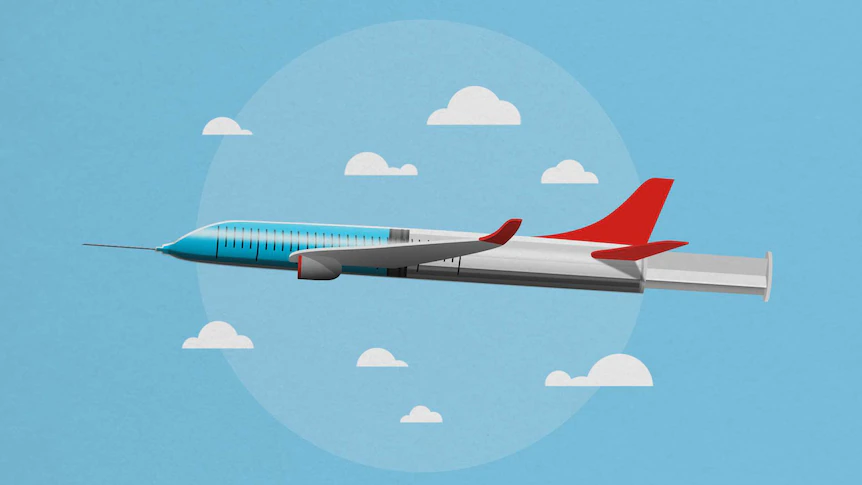
  • Bengal’s thinking is clear: will rest of India follow?

    Bengal’s thinking is clear: will rest of India follow?

    The second wave of Covid-19 began on February 10 when India reported 11,000 new cases. In the next 50 days, the daily average was 22,000 cases. In the following 10 days the daily average touched 89,800. We are now adding over 400,000 a day. India has never been engulfed by a crisis of this order.

    We are woefully short of hospital beds, oxygen, Remdesivir and Tocli-zumab, vaccines, ambulances and sadly even space in our crematoria. The growth and spread are expected to scale to almost a million a day. In two months, India has become the world’s basket case. Yet, on January 28 this year, speaking to the World Economic Forum in Davos, Prime Minister Narendra Modi showed a blissful and disturbing ignorance of the perfect storm looming. The committee of scientists monitoring the virus warned the PMO of the gathering storm. He was not interested. He was crowing about his perceived “achievement” of beating back the much-mutated “Chinese virus”. He was so wrong, and the country is paying a huge price. There is no Modi image of competence left.

     Prime Minister Modi’s inability to defend India against the second Covid-19 wave, and his inability to cajole the Chinese from withdrawing from areas they occupied in Ladakh now make him an easy target.

    The elections to the four states and Puducherry, which he was so focused on, have been his undoing. He began campaigning on February 5 and 7 in Assam and West Bengal. After that he addressed 20 more rallies in West Bengal and six more in Assam. He also addressed 10 rallies in Tamil Nadu, three in Kerala and one in Puducherry, in all around 40 giant rallies criss-crossing across in IAF Boeings. I wouldn’t even hazard the true cost to the exchequer, but I have heard it said the PM himself is liable to a charge of Rs 6 per air km. Other costs are borne by the PMO.  But the cost is not important. The time spent on huckstering is important. He lost almost a month campaigning, instead of managing the engulfing crisis. I always had a low opinion of his intellect, but even he could have surmised the risks posed to the nation by the renewed pandemic. Clearly, he factored winning West Bengal was more important and worth the cost. Mr Modi himself cheerfully paraphrased what Gopal Krishna Gokhale said almost 100 years ago: “What Bengal thinks today, India thinks tomorrow”!

    West Bengal has unambiguously expressed what it is thinking. It has rejected Mr Modi and his message and campaign-style, lock, stock and barrel. A subservient Election Commission helpfully broke up West Bengal’s polls into eight phases starting March 27 and closing April 29. During this period the daily Covid-19 cases rose in West Bengal from 812 to 17,403. Breaking it into eight phases didn’t help the BJP either. It lost in every phase and got double digits only in four. West Bengal has a sizable Muslim electorate and Mr Modi didn’t mince words in targeting them by making it appear they were Mamata Banerjee’s personal votebank. He didn’t bother to even conceal what he thought of them. His electoral style touched a new low, even by his standards and most certainly by the standards expected of a PM, when he jibed her by catcalling “Didi-O-Didi”. Urban Bengal responded to this by defeating the BJP soundly in all urban constituencies. There is a message here. All over the country the BJP and RSS have strong urban bases, but urban and urbane Bengal administered a resounding slap to gutter politics. With no record to show, Mr Modi’s politics are nothing but that now.

    There was no surprise in Assam. The BJP was returned by almost the same margin as in 2016, getting a majority with the AGP’s nine seats. The Congress lacked a visible local leadership who could match wits with the BJP’s Hemanta Biswa Sarma. Tamil Nadu was as expected. The two so-called national parties were clinging to crumbs thrown by the two so-called Dravidian parties. In Kerala, Pinrayi Vijayan showed why he’s India’s topmost and only surviving commissar. The DMK’s Stalin made no bones about what he thinks of Mr Modi’s Hindu and Hindi-centric politics. The Modi government used every means, including ED raids, to slow down Stalin. The ED even raided Stalin’s daughter.

    So where does our politics go from here? One clear conclusion is that both the BJP and Congress were dealt severe blows. It’s interesting the BJP’s campaigns were entirely shouldered by Narendra Modi and Amit Shah. None of the other top BJP leaders even bothered to show up anywhere. What shouldn’t be missed is that the Raksha Mantri, a former BJP president, was the first from the party to congratulate Mamata Banerjee. In Assam, Mr Sarma’s supporters have gone public crediting the victory to their leader. Mr Sarma has already fired a shot across Sarbananda Sonowal’s bow, saying he was no longer interested in being just a minister in someone’s Cabinet. The numbers might work for him, as he needs just a dozen MLAs to cross over and give Assam a new government. Mr Sarma was a Congress satrap till Rahul Gandhi insulted him by playing with his dog rather than listening to him. Rahul will be all ears now.

    Mamata Banerjee’s stunning victory puts her squarely on the centre stage of Opposition politics. Joining her there will be Lalu Prasad Yadav, released on bail by the Supreme Court despite the government’s strenuous objections. Tejashwi Yadav has shown he’s capable of leading a party when the RJD came so close to upstaging the BJP-JDU alliance in Bihar. Rajasthan’s Ashok Gehlot and Punjab’s Amarinder Singh have emerged as fairly independent Congress satraps. Uddhav Thackeray has shrugged off the Shiv Sena’s pariah status by providing Maharashtra with good leadership and a penchant for making politics the art of the possible. In Telangana, KCR has put the BJP in its place by a resounding win in Nagarjunasagar after its surprise showing in the Dubbaka and GHMC polls. YSRC scored a resounding win in Tirupati with the BJP candidate, a retired chief secretary, losing her deposit. The anti-BJP lineup now has seven chief ministers, excluding Naveen Patnaik. Seven CMs will mean the election and propaganda machines can be kept well-greased and the powder kegs dry and replenished. Prime Minister Modi’s inability to defend India against the second Covid-19 wave, and his inability to cajole the Chinese from withdrawing from areas they occupied in Ladakh now make him an easy target. The Gujarat model has been long exposed as bogus. There is light seen at the end of the tunnel.

    Image Credit: Patrika.com