Category: Constitution, the Law & Judiciary

  • Migrant or native, we are all out of Africa

    Migrant or native, we are all out of Africa

    No human group can make a concerted claim as regards nativism and try to make an ‘other’ an immigrant, foreigner or outsider

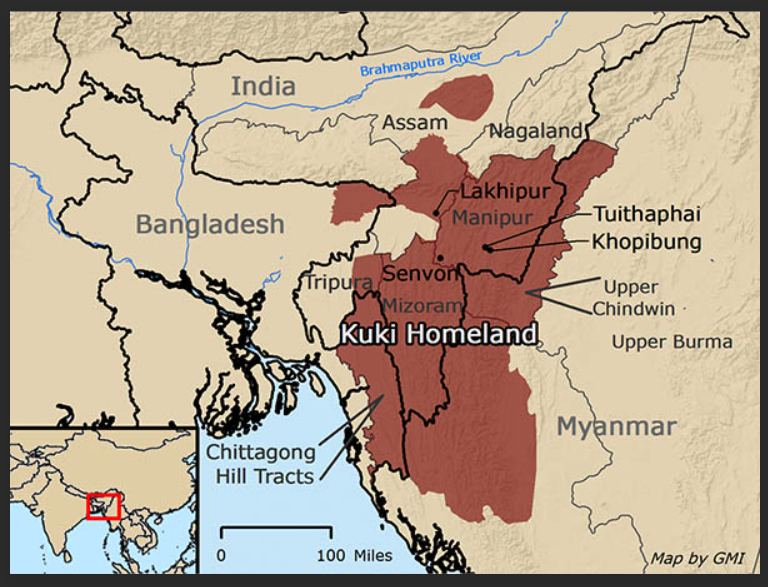
    Why, and how, does Mizoram get involved in the ongoing ethnic (and religious) strife that has been on for over three months in Manipur? The Kukis and Zomis in Manipur are ethnically related to the Mizos, the dominant community in Mizoram. The Mizos, in turn, are ethnically related to the Chins in Myanmar and the Kuki-Chins in Bangladesh.

    Together they all belong to the greater Zo community, speak a similar language, have common ancestry and parallels as regards their cultures and traditions. These latter groups are predominantly Christian and hence have a strong bond with the Mizos in Mizoram, a ‘Christian state’, like Nagaland. The Chief Minister of Mizoram, Zoramthanga, is a Mizo.

    In Manipur, the Meiteis, a Hindu community, are the majority and overwhelmingly numerically dominant. But it is interesting that the Meiteis are found in small numbers in Mizoram too, and many have started fleeing from the state. A similar fleeing of the Kukis from Manipur to Mizoram has happened. Also, there are the Naga groups in different pockets of Manipur. The neighbouring state of Nagaland has 17 officially recognised Naga groups.

    It is exasperating, and quite disquieting, to note the presence of ethnic groups that are dominant in one state, being minorities in a neighbouring state. Such existence has given rise to very foreboding situations and added to the already prevailing ethnic conflicts in India’s North-East.

    It is not just that the Indian states in the region share common borders. There are international borders too in the area, as Bangladesh and Myanmar adjoin the Indian states. Different communities/tribes/groups of people have lived in the regions that are the focus of our discussion for aeons. Such inter-state and international habitations of ethnic groups across states/countries are come across elsewhere in the world too.

    One of the most interesting and classic instances of a single ethnic group, who regard themselves as a single nation, and inhabit more than one country, is that of the Bedouin (found in Syria, Algeria, Morocco, Libya, Egypt, Israel, and so on). Such situations come about because free-ranging groups of people, or partially or fully settled groups of people, got divided into different states or countries because of the coming in of boundaries and division of territories.

    What would have been the scenario if these borders between states and countries had not come up? We would undoubtedly have diverse groups living in enclaves, either quite separated or adjoining each other either as small groups or larger ones, but sans the borders dividing them; the question of majority/minority or dominance/subservience would not, probably, have had the same kind of meaning or effect as has happened due to the drawing of borders between states and countries.

    Borders that formed between enclaves of diverse inhabitants and made groups of people dominant and/or majority groups have resulted in hegemony, where the traditions, customs, practices, and mores of that group have gained significance. These traditions and customs prevail extensively when compared to the practices of the smaller groups in that same area. Invariably, the dominant group makes claims to being the ‘original inhabitants’ and the ‘natives’ of the state/country concerned.

    Quite often co-habitants develop similar institutions and social and cultural practices despite the differences and diversity between them, and this is quite apparent in multicultural societies. Amitav Ghosh argues that “it is … the vitality of the place itself that creates commonalities between the people who dwell in it, no matter what their origin” (The Nutmeg’s Curse, page 221). But sadly, it is the differences that often come to the fore, and similarities remain latent.

    Here, it is pertinent for us to dwell on the facets of claims that groups make as regards being the autochthons and natives of a given state/country. By extension, the non-dominant groups are labelled ‘immigrants’, ‘foreigners’, and ‘outsiders’. Prior to ‘Out of Africa’, and the spread of Homo sapiens to the different parts of the world, somewhere between 80,000 and 50,000 years ago, there were no fully evolved human beings in any part of the world. Subsequent to a group of them leaving Africa, different parts of the Earth got populated gradually.

    All the physiognomic and phenotypical differences that we find among humans today, including skin colour, hair texture, and colour of the eyes came about as a result of where people settled.

    To put it tersely, no human group can make a concerted claim as regards nativism and try to make an ‘other’ an immigrant, foreigner or outsider. Ghosh endorses this when he says “Except for one small part of Africa, nowhere on Earth can people be said to be truly native, in the sense of having come into being on that soil” (The Nutmeg’s Curse, page 221).


    This article was published earlier in Deccan Herald.

    Feature Image:Kuki women leave after attending a protest against the alleged sexual assault of two tribal women, in Churachandpur district in Manipur. Credit: Retuers Photo


  • Manipur Violence: Understanding North East India is essential for viable Solutions

    Manipur Violence: Understanding North East India is essential for viable Solutions

    Whenever an ethnic clash or terrorist attack occurs in India’s Northeast, there is a beeline of “national media” reporters to the region for a quick report. Many energetic journalists move to the site of the incident to get “firsthand” information while many others air all kinds of” Breaking News” from cities like Guwahati or even from the national capital. In such a situation one can even see the emergence of “experts” who give their views from the comfort of their homes. These experts who had gained experience by serving in the region at some time in their careers do have adequate background knowledge, but they are at times out of sync with the ground realities. Ministers and political leaders also descend on the violence-hit region but many have political agenda and very often end up making unsolicited, unrealistic, and even provocative remarks. This trend is not new and is an increasing tendency for the past several decades.

    Unfortunately, such flying visits do not help. Sometimes such reporting that makes headlines in electronic and print media and is generally accepted as authentic may not convey the ground reality as some inputs may be biased or doctored depending upon the source of the information.


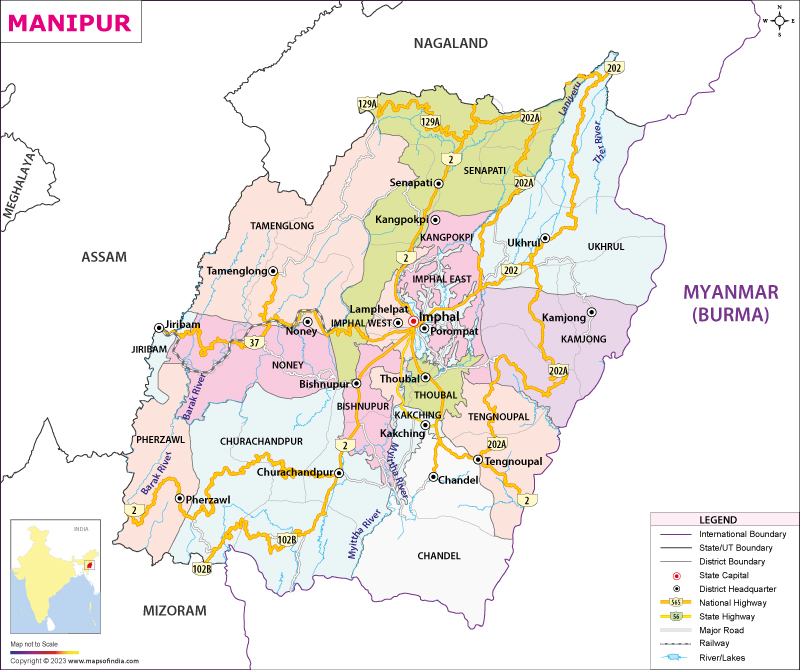
    Unlike other states of the country, the Northeast of India is unique with its cultural and geopolitical characteristics. The region shares 96% of its border internationally with four countries including China, and is an extremely complex region with more than 200 ethnic groups with distinct cultures, food habits, languages, or dialects. Amongst all the northeastern states, Manipur is the most complex state with more than thirty-five ethnic groups. The state shares a large part of its boundary with Myanmar (398 Kilometers) presently ruled by the Military junta.  Manipur also shares a boundary of 96 Km with Mizoram,205 km with Assam and 204km with Nagaland. The state has a diverse demography.  Nagas (24%) and Kukis (16%) are mostly Christians whereas Hindu Meities and Muslims constitute 53% and 6% of the population respectively.

     While India’s border with Pakistan and Bangladesh is fenced, the border with Myanmar is not. There is also a policy of Free Move Regime (FMR) which allows Citizens of both countries to come up to 16 Kilometers within each other’s territory without a visa or passport documentation. Though the aim of FMR is noble as it allows better interaction amongst people who are mostly from the same ethnic tribe,  it is prone to exploitation by militants, as well as smugglers.

    Myanmar military’s operations against rebel groups have forced many tribals particularly Chin-Kuki to enter Indian states particularly Mizoram and Manipur for safety. However, Meities allege that infiltration of Chin-Kuki, as well as rebels to Manipur from Myanmar, is part of a grand design to occupy land and carry out nefarious activities like land grabbing, arms smuggling, drug trafficking etc.  As per an unconfirmed report, approximately 35000 Chin/Kuki refugees from Myanmar have taken shelter in Mizoram and another about 5000 have taken refuge in Manipur.

    The smuggling of drugs, timber, areca nut, cheap Chinese clothes, and electronic items from Myanmar into Manipur and further to other parts of the country is a lucrative business. There is fierce competition to control the lucrative drug trade. While Kuki tribes are primarily involved in poppy cultivation, almost all other ethnic groups are involved in the drug trade in some form or other. It is learnt that fertilizer (urea) provided for distribution to farmers is diverted for poppy cultivation by vested interests with the connivance of Government officials.

     There are a large number of small or big militant groups active in Manipur, each vying for influence and claiming to be the “protectors” of the interest of the respective ethnic groups. Many of these groups, particularly Kuki militant groups, are under Suspension of Operation (SoO) with the Central Government.  Approximately 2000 Kuki militants representing about 26 different Kuki Militant groups are lodged in Designated Camps set up in various Hill districts of the state. The allegations by Meities that the Kuki militants are abetting and instigating Kukis to carry out violence against them cannot be ruled out. Similarly, Kukis allege the involvement of Meitei militants in the ongoing ethnic violence. The ethnic violence which has been continuing since 3rd May 2023 has not seen a substantial reduction despite Union Home Minister Amit Shah and others’ appeal. The Nagas are closely observing the emerging situations. In such a delicate environment all that is needed is just a spark to aggravate an already volatile situation.

    Despite many differences, the various ethnic groups have learnt to live together in Manipur. However, a number of actions in the recent past by the present ruling dispensation in the state has led to resentment amongst tribals mainly Kukis. These include eviction of Kuki encroachers from forest land, action against Kukis involved in poppy cultivation etc.    While these appear to be genuine actions of an elected Government, Kukis feel that they have been deliberately targeted. A section of Meities has now demanded that NRC (National Register of Citizens) should be made for Manipur state as they feel that immigration of Chin/Kukis from Myanmar has substantially increased. Thus, the trust deficit between Kuki and Meities had already reached a peak. It will take substantial effort from everyone from the Government machinery to the common citizen to restore confidence and goodwill amongst the ethnic tribes.

     The direction of the Imphal High Court on 27 March 2023  given out publicly on 19th April directing the Manipur Government to consider  ST status for Meities triggered a  large-scale violence on 3rd May. Incidentally, Muralidaran who was appointed Acting Chief Judge of Manipur High Court on 6th February 2023 had given the very important judgment within two months of his assuming office. The Supreme Court however on 17th May 2023, criticizing the Manipur High Court judgement as ‘factually wrong’, expressed the need to nullify the order of the Manipur High Court. It is worth noting that the President of the country is the constitutional authority vested with the power of declaring a Caste or Tribe as SC or ST. The case to declare Meities as ST was first filed in 2013 (MutumChuramaniMetitei versus the State of Manipur).

    According to the census records of 1891, 1901 and 1931, the Meitei was listed as a Scheduled Tribe, however, since 1951 were removed from the ST list of the Indian Union without any information or communication to the people of Manipur. In 1949, the Ministry of Tribal Affairs, Government of India constituted a minority commission to verify the social status of Meities. There are reasons to believe that many Meities were not keen on the ST tag as they probably felt that they were of a higher class and being accepted as tribal will lower their social status. However, a faction of low caste Meities enjoys OBC and SC status.

    Meities are probably now realizing the folly committed by their elders for not advocating for ST status.  Incidentally, like Nagas and Kukis, Meities are also from Mongoloid genetic backgrounds. However, in the 19th century, under the influence of Bengali Hindus, Meities adopted Hindu culture, accepted Vaishnavism, and hence, are influenced by caste and social stratification patterns.

    The pressure on land in the Manipur valley where other tribes (being ST) could own land as well as enjoy other benefits in terms of education and employment made the present generation of Meities feel insecure.  They realized that only if they were granted ST status could they buy land in the hills or compete in jobs with other tribes. In a civil writ petition filed by a section of Meites in Manipur High Court in April 2022, the High Court on 27th March 2023 had directed the state government to submit the recommendation to the Ministry of Tribal Affairs to include the Meities in the ST list.

    While both the tribes, namely Kukis and Nagas protested on 3rd May against the High Court’s directions, the protest by Kukis turned violent. It is also a singular failure of Biren Singh’s Government for not anticipating the law-and-order breakdown and accordingly taking effective measures to prevent the chaos.

    In Manipur, the tribals enjoy some benefits under Article 371C of the constitution as well as the Manipur Hill Area District Autonomous Council Act of 1972. However, Kukis have been demanding a separate Autonomous Council on similar lines of the Bodoland Territorial Council operative in Bodo-dominated areas of Assam.  Some Kukis have gone to the extent of demanding “Kuki land”, a separate state to be carved out of Manipur.  On the other hand, the demand of the Nagas is for the integration of Naga Areas of Manipur with Nagaland (Greater Nagaland). Therefore, the issues in Manipur are very complex.   Many other tribes in the Northeast have been raising demand either for ST status or Autonomous council or even for separate states.  Hence, the Centre needs to be very cautious in resolving the current Manipur imbroglio as the decisions can have ramifications in the other Northeast states.

    The Central Government, though sincere in its efforts at solving the problems of the Northeast, has made many mistakes in the past simply because of the politicians’ lack of patience to understand the intricacies of the region. One glaring example was the extension of the Ceasefire with NSCN (IM) to the state of Manipur in 2001. The Government had signed a Ceasefire agreement with dominant NSCN (IM) groups in 1997 which was confined to the state of Nagaland. However, under pressure from the NSCN (IM), the Govt in 2001 extended the Ceasefire to Manipur by incorporating the words “Without Territorial Limits”.  The Central Government’s decision, taken without understanding the psyche of Meities and without consulting the Manipur government, led to large-scale violence leading to the killing of thirteen protestors in police firing on 18 June 2001. The Government had no option but to withdraw the Ceasefire from Manipur. However, it took decades to normalize the relations between the Nagas and the Meities.

    Similarly, the “Assam Accord” signed by the Central Government with the All-Assam Student Union (AASU) in 1985 has been a non-starter even after almost forty years of signing the accord. The Assam Accord talks of “Detection, Deletion (from Voters List) and Deportation of illegal Bangladeshis who have entered Assam post-1971.  These illegal Bangladeshis cannot be deported to Bangladesh as there is no deportation agreement with Bangladesh. Moreover, Bangladesh denies that her citizens have infiltrated Assam or any other state. The government has signed an accord which it finds difficult to implement.

    The Manipur situation is becoming tricky with neighbouring state Mizoram getting involved in the Manipur issue. Mizos belonging to Chin tribes just as Kukis are providing all help to their brethren who have taken refuge in that state. Now a section of the people particularly from Mizoram are trying to bring a religious angle to the issue saying that Christians have been deliberately targeted in Manipur.   A section of Mizo politicians is now supporting the Kukis’ demand for Autonomous Council/ separate state that will further complicate the issue. Incidentally, a few newspapers published in Israel have also talked about the safety and security of the Jews in Manipur. Similarly, the role of RSS in the present violence has become conspicuous.

     Both Kukis and Meiteis are attempting to internationalise the issue which is essentially an internal issue of the country. On 30th June 2023, World Kuki-Zo Intellectual Council (WKZIC) submitted a memorandum to the Prime Minister of Israel seeking urgent intervention for the protection of the Kuki people. On 6th July 2023, the US Ambassador to India, Eric Garcetti, stated that the United States is ready to assist India in resolving the current ongoing issue.

     It is creditable that other ethnic tribes, particularly Nagas of Manipur have shown great restraint however, they are concerned about the possible political fallout of the ethnic clashes.  Their concern is that any solution between Kukis and Meities should not in any way put the Nagas in any disadvantageous position.

     The allegation by a section of Meitie leaders that Assam Rifles has been partial to Kukis appears to be politically motivated to malign India’s oldest Para Military Force.  The security forces, particularly the Assam Rifles, have been working round the clock to maintain peace in the state.  Assam Rifles has rescued Meities from Kuki-dominated hill districts and similarly had rescued Kukis from Meitei-dominated valleys. It is hoped that the Central Government does not give in to the demand of some BJP leaders of Manipur to withdraw Assam Rifles from the state. On the contrary, there are allegations that at times Manipur Administration, in particular, the state police have been biased. It is pertinent to note that sizeable arms were looted from many police stations by miscreants which indicates the nexus of police with the miscreants, especially at the lower level.

      Despite Home Minister’s appeal to surrender arms looted from many police stations, only a few have been deposited. COCOMI (Coordinating Committee of Manipur Integrity), in a statement on 07th June 2023, rejected Home Minister Amit Shah’s appeal to surrender looted arms and resolved not to allow Security Forces to launch operations to recover looted weapons. Such actions at this critical time are bound to aggravate the situation. The organization COCOMI has recently declared “Manipuri’s National War against Chin Kuki Narco terrorism”. Terming the entire Chin- Kukis as a narco-terrorist group will further widen the gap.  It is to be noted that the spoils of the drug trade are enjoyed by most of the tribes including smugglers based in places outside the Northeast region,

    The immediate aim, particularly of the Governments at the Centre as well as at the State, should be to win back the trust and confidence of people of all communities.  The civil society, the media and common Meitei as well as the Kuki people must play a responsible role keeping in mind the sensitivities of all communities. Panel discussions are good but putting one tribal group against another in the TV debate will further antagonize the common people. Similarly, people on social media must exercise utmost restraint.   A long-term solution will need great deliberation.  Patience and restraint are the key words at his juncture.


    The views expressed are the author’s own.

  • For Democracy to be real and vibrant it needs  people with impeccable Integrity at the Helm

    For Democracy to be real and vibrant it needs people with impeccable Integrity at the Helm

    Democracy at its core is the power of the people. But all over the world, it is becoming anything but that. Truly the fear is that democracy is dying, as most nations that call themselves democracies are in effect controlled by capitalist oligarchs and majoritarian fascists. The power of money and vested interests have vitiated democratic processes worldwide. Michael Hudson calls the USA, once the beacon of democracy, a deep state controlled by three main oligarchic groups: Military Industrial Complex (MIC); Oil, Gas, and Mining (OGAM); and Finance, Insurance, and Real Estate (FIRE).  Add the new emerging giant group – Big Tech – as the fourth. The UK, the world’s oldest parliamentary system, is in shambles as a democracy. India, seen as the world’s largest democracy, is heading the majoritarian way. Majoritarianism is not democracy but tyranny. This is what the Father of the Nation had to say about democracy at the height of the freedom struggle:

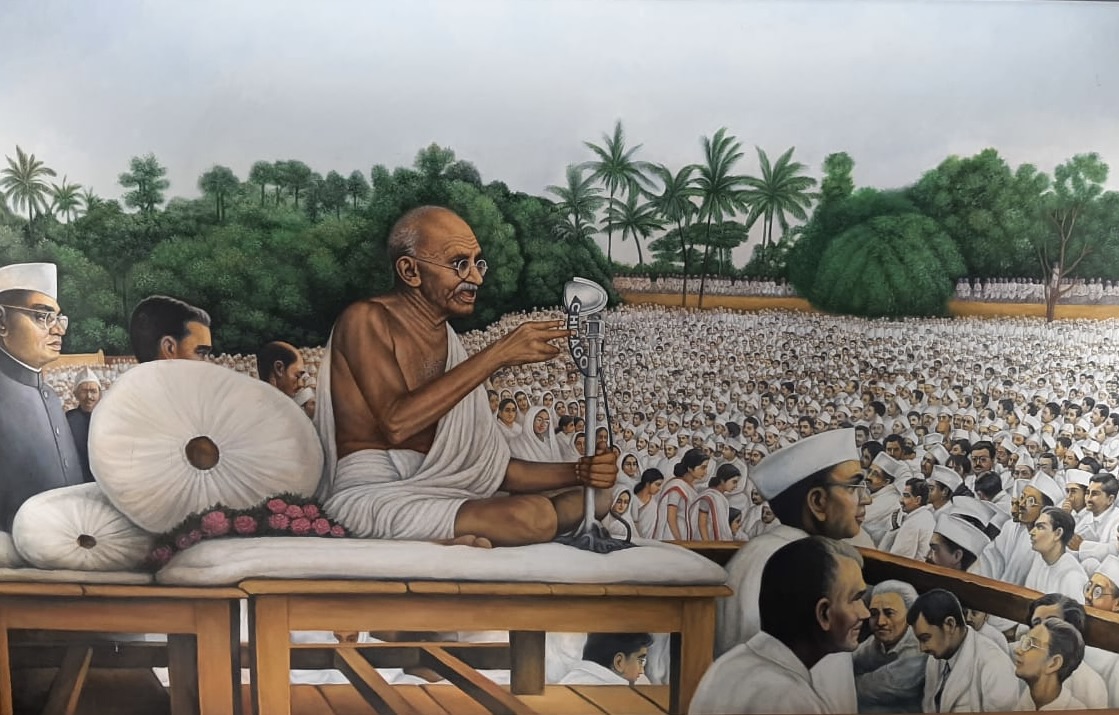
    My notion of democracy is that under it the weakest should have the same opportunity as the strongest….No country in the world today shows any but patronising regard for the weak….Western democracy, as it functions today, is diluted fascism….True democracy cannot be worked by twenty men sitting at the centre. It has to be worked from below by the people of every village.”    – Mahatma Gandhi

    His words could not have been more apt for the times we live in. This quote is placed in the Sabarmati Ashram. One wonders how many take a moment to stop by to read it carefully and take in the import of his words. The Mahatma is the shining example of personal integrity, character, and moral courage. Since democracy is primarily driven by people and politics, it is vital that those at the helm of governance display impeccable integrity to ensure real democracy.

    Professor Arun Kumar PhD, an eminent economist and our adjunct Distinguished Fellow, writes eloquently on the subject and says ‘absence of persons with impeccable integrity is the bane of India’s democracy’. TPF is happy to republish this article.

    A version of this article was published earlier in theleaflet.in

    TPF Editorial Team


    Gandhiji said that institutions reflect what the people are, and that they cannot function as they are intended to unless those manning them are people of integrity.


    A Supreme Court Constitution bench recently said that the Chief Election Commissioner should be one “with character” and who would not get “bulldozed” – a self-evident truth. Further, it suggested that the selection committee for the post should consist of an independent person like the Chief Justice of India (‘CJI’). It added that people and bureaucrats like the former Chief Election Commissioner late T.N. Seshan, who could act independently, “happen once in a while”.

    Perhaps without meaning to, these comments indict the election commissioners appointed since Seshan’s time. Therefore, they have given voice to recent public concerns about the independence of the institution.

    Integrity of Constitutional authorities

    Will the CJI’s presence in the committee to appoint the Election Commissioners make a difference? The CJI is a member of the committee to appoint the Director of the Central Bureau of Investigation (‘CBI’). But the Supreme Court itself has called the CBI a “caged parrot”. The problem arises since the party in power would prefer a sympathetic person as an Election Commissioner, not an independent person.

    The appointment of Supreme Court judges has become contentious, with the judges and the Union Law Minister currently at loggerheads. Judges themselves have talked of pressures and counter pressures from within and from the government. Appointments of some who are seen to be inconvenient have been withheld. Earlier this week, a division bench of the Supreme Court mentioned that by delaying appointments, good people are dissuaded from becoming judges. It is suspected that the appointment of certain judges is delayed so that they do not become CJI in due course of time. It appears that pliability is a desirable attribute to becoming a judge.

    The Supreme Court, by raising the issue of the appointment of the Election Commissioner, has also brought into question the integrity of the Prime Minister (‘PM’), who is key to the appointment. Thus, doubt has been raised about the country’s constitutional authorities, including the judiciary. The executive, in any case, does the bidding of the political masters. So, where are the people of integrity in the corridors of power in India?

    Defining integrity

    Institutions can run as they ought to only if they are manned by people with integrity. Its absence from the top down is a societal challenge. Mahatma Gandhi in ‘Hind Swaraj’ (Indian Home Rule), more than a century back, said, “As are the people, so is their Parliament.” Since the Parliament is key to the functioning of a democracy, this flaw afflicts institutions down the line.

    PMs heading the government are political persons. Since politics is about power, they try everything to keep themselves and their party in power. Their election depends on the support of vested interests who fund both them and their party and therefore, dominate the working of the party. So, staying in power is a high stake business which requires manipulation of the systems in their favour.

    The Supreme Court, by raising the issue of appointment of the Election Commissioner, has brought into question the integrity of the Prime Minister, who is key to the appointment. Thus, doubt has been raised about the country’s constitutional authorities, including the judiciary. 

    There is then a separation of the interest of the nation, and of the party and its head, the PM. Consequently, for the party, integrity means that which serves its interest, which is not necessarily what the nation needs. This separation is what Gandhi implies in Hind Swaraj. No wonder, it is only a rare PM who has the moral integrity to select independent people for important Constitutional positions like the Election Commission and the judiciary.

    Politicians go through years of such conditioning before becoming PMs and it becomes their second nature. It cannot be expected to change upon becoming the PM. The opposition in a democracy is supposed to check the misuse of power. But the leaders of the opposition also go through the same conditioning as leaders of the ruling party and therefore, act no differently. Politicians often pride themselves on managing conflicts by making compromises and accepting the manipulation of power. So, politicians take a pliable stand, based on the chair they occupy – in power or out of it.

    Gandhi on parliamentary democracy

    Gandhi, commenting on the British Parliamentary democracy in Hind Swaraj, wrote, “The Prime Minister is more concerned about his power than about the welfare of Parliament … [and] upon securing the success of his party.” He added that they may be considered to be honest “because they do not take what is generally known as bribes… [but] …they certainly bribe the people with honours.” Therefore, “… they neither have real honesty nor a living conscience”.

    Regarding the Members of Parliament who could keep the PM in check, he wrote, “… Members are hypocritical and selfish. Each thinks of his own little interest. … Members vote for their party without a thought.” Regarding the media, another institution that could help check misuse of public authority by creating public awareness, he wrote that they “are often dishonest. The same fact is differently interpreted … according to the party in whose interest they are edited.” Gandhi was also scathing about the legal profession when he wrote, “… the profession teaches immorality …”.

    Gandhi was pointing to the fundamental flaws in the functioning of democracies. It also applies in the current Indian context. He was pointing to weak public accountability of those in power since public awareness was low. The public has little choice but to accept the existing imperfect political system. The British Parliamentary democracy may be the best available system, but it is highly flawed and its defects appear more starkly in weak democracies like that in India.

    We may be called the largest democracy in the world and we have succeeded in preserving it in the last 75 years, but it is frayed, as made clear by the current political problems facing us.

    Feudal attitudes and democracy

    Indian democracy’s weakness is a result of the persistence of feudal consciousness among a majority who easily accept authority. This is true even in institutions of higher education, where people are expected to be the most conscious. Most of these institutions are headed by academics with a bureaucratised mindset, who expect compliance and treat dissent as a malaise to be eradicated. In turn, they yield to politicians and bureaucrats.

    A feudal system has its own concept of integrity. The ruler’s interest is broadly the nation’s interest. This congruity breaks in a parliamentary democracy where the consciousness is feudal. In such a case, integrity as defined by national interest is likely to be subverted, as is visible in India.

    In 1947, India with its feudal consciousness ingrained and copied parliamentary democracy, not because people were ready for it, but because the leadership desired it since they wanted to copy Western modernity. People blindly accepted it since it came from their leaders, not because they understood it. Liberality at the top frayed post mid-1960s, as retaining power became more difficult and leaders turned increasingly authoritarian. So, while retaining the façade of democracy, it increasingly got hollowed out.

    In 1947, India with its feudal consciousness ingrained and copied parliamentary democracy, not because people were ready for it, but because the leadership desired it since they wanted to copy Western modernity. People blindly accepted it since it came from their leaders, not because they understood it.

    The political economy also pushed policies that marginalised the majority in the interest of the few. The black economy grew rapidly, making elections formalistic and draining them of their representational character. Most importantly, the rulers realized that neither the people ask for liberality nor do they demand accountability from leadership.

    Need for accountability at the top

    Accountability has to come from the top, whether in politics or in the government or the courts. It is not going to automatically come about without public pressure. A few freebies are enough to divert public attention. So, is accountability a luxury when basic issues are many?

    The lack of integrity in public life is costly. The nation’s energy is diverted. Reforms favouring the marginalised are circumvented. Laws are framed ostensibly to improve matters, but when the spirit is not willing they fail to deliver. Perfect laws are not possible, since human ingenuity can circumvent any law. The result is more complex laws and growing cynicism.

    What Gandhi pointed out is playing itself out in India. He said institutions reflect what the people are, and that they cannot function as they are intended to unless those manning them are people of integrity. But, can people with integrity emerge when it is missing all around, feudal consciousness pervades and people bend to authority?

    Reform requires us to resolve the contradiction between parliamentary democracy and the prevailing feudal consciousness. This cannot happen from above. It requires the transformation of the people’s consciousness – Gandhi’s unfinished agenda.


    Opinions expressed are those of the author.

    Feature Image Credit: Gandhi in a public address – Painting at Sabarmati Ashram.
  • Roe overturned: What you need to know about the American Supreme Court abortion decision

    Roe overturned: What you need to know about the American Supreme Court abortion decision

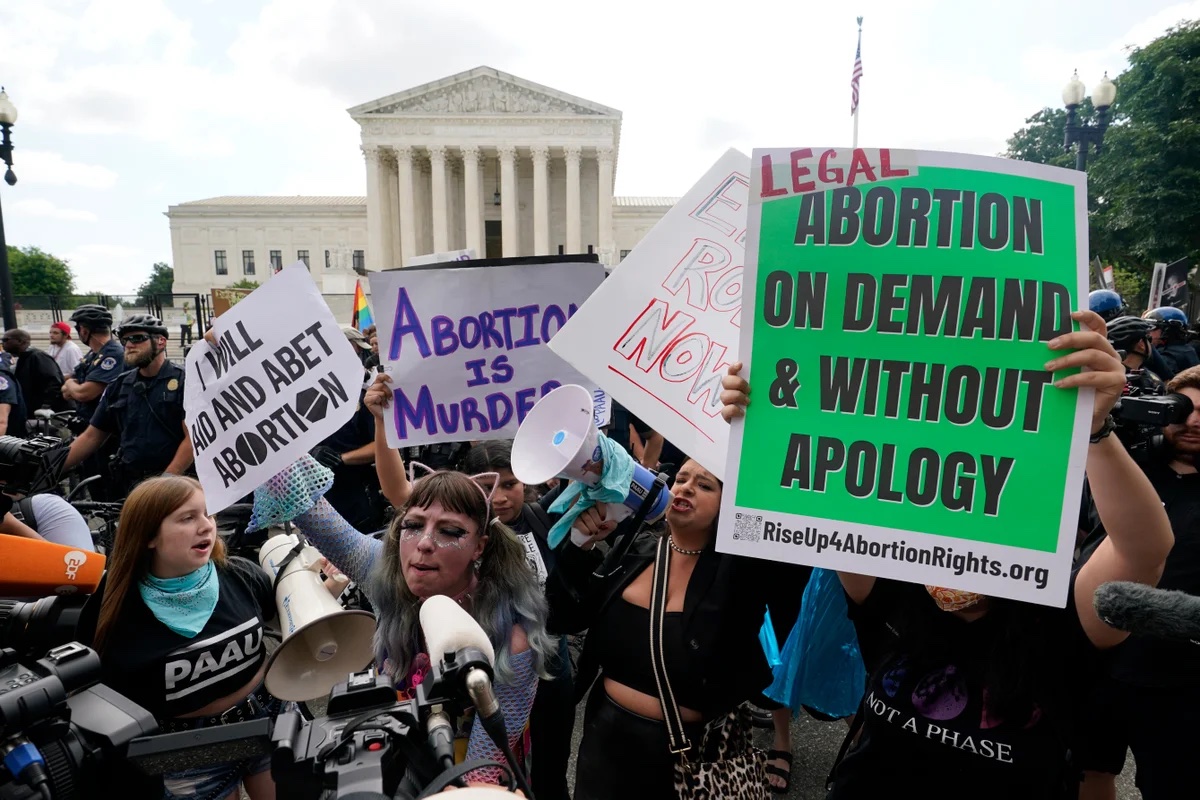
    Despite the terminal decline of the American Empire or the Deep State, the American Republic still remains an inspiration for people across the world, for reasons of its vibrant democracy and peoples’ liberty ensured through robust institutions, law and order, and the strong constitutional process. To paraphrase Johan Galtung – ‘the US is a fabulous Republic but a terrible empire’. But even that seems to be changing as society’s democratic values, ethics, and morals are in serious decline.  The rise of right wing politics has led to a decline in the standards and values, and in the independence of institutions most notably the Judiciary. Separation of the Church and the State is a core tenet of the American Constitution and governance. That seems to be compromised as many judges bring their personal and religious beliefs in to their work. This was in demonstration in the American Supreme Court’s judgement that ends one of the most critical fundamental rights of women to their bodies and their choices for abortion. 

    After half a century, Americans’ constitutional right to get an abortion has been overturned by the Supreme Court.The ruling in Dobbs v. Jackson Women’s Health Organization – handed down on June 24, 2022 – has far-reaching consequences. There is a strong religious influence to this judgement. This could influence many other countries, particularly in an environment where right wing politics, influenced by narrow religious overtones,  is on the upswing in many countries across the world, including the world’s largest Democracy, India. Fortunately, India’s abortion laws are governed by medical advice and womens’ safety (and so it is termed MTP – Medical termination of Pregnancy). The MTP Act of 1971 was further liberalised through an Amendment Act of 2021 wherein the gestation limit for abortions is raised from 20 to 24 weeks. While India’s laws are considerate by supporting abortion decision to rape and incest survivors, the American judgement will deny this freedom or choice to the victim women.

     Nicole Huberfeld and Linda C. McClain, health law and constitutional law experts at Boston University, explain what just happened, and what happens next. This article was published earlier in The Conversation. TPF is happy to republish this article under the Creative Commons Attribution-No Derivatives 4.0-International (CC BY-ND 4.0).

    – TPF Editorial Team

    What did the Supreme Court rule?

    The Supreme Court decided by a 6-3 majority to uphold Mississippi’s ban on abortion after 15 weeks of pregnancy. In doing so, the justices overturned two key decisions protecting access to abortion: 1973’s Roe v. Wade and Planned Parenthood v. Casey, decided in 1992.

    The court’s opinion, written by Justice Samuel Alito, said that the Constitution does not mention abortion. Nor does the Constitution guarantee abortion rights via another right, the right to liberty.

    The opinion rejected Roe’s and Casey’s argument that the constitutional right to liberty included an individual’s right to privacy in choosing to have an abortion, in the same way that it protects other decisions concerning intimate sexual conduct, such as contraception and marriage. According to the opinion, abortion is “fundamentally different” because it destroys fetal life.

    The court’s narrow approach to the concept of constitutional liberty is at odds with the broader position it took in the earlier Casey ruling, as well as in a landmark marriage equality case, 2015’s Obergefell v. Hodges. But the majority said that nothing in their opinion should affect the right of same-sex couples to marry.

    Alito’s opinion also rejected the legal principle of “stare decisis,” or adhering to precedent. Supporters of the right to abortion argue that the Casey and Roe rulings should have been left in place as, in the words of the Casey ruling, reproductive rights allow women to “participate equally in the economic and social life of the Nation.”

    The ruling does not mean that abortion is banned throughout the U.S. Rather, arguments about the legality of abortion will now play out in state legislatures, where, Alito noted, women “are not without electoral or political power.”

    States will be allowed to regulate or prohibit abortion subject only to what is known as “rational basis” review – this is a weaker standard than Casey’s “undue burden” test. Under Casey’s undue burden test, states were prevented from enacting restrictions that placed substantial obstacles in the path of those seeking abortion. Now, abortion bans will be presumed to be legal as long as there is a “rational basis” for the legislature to believe the law serves legitimate state interests.

    In a strenuous dissent, Justices Stephen Breyer, Elena Kagan and Sonia Sotomayor faulted the court’s narrow approach to liberty and challenged its disregard both for stare decisis and for the impact of overruling Roe and Casey on the lives of women in the United States. The dissenters said the impact of the decision would be “the curtailment of women’s rights, and of their status as free and equal citizens.” They also expressed deep concern over the ruling’s effect on poor women’s ability to access abortion services in the U.S.

    Where does this decision fit into the history of reproductive rights in the U.S.?

    This is a huge moment. The court’s ruling has done what reproductive rights advocates feared for decades: It has taken away the constitutional right to privacy that protected access to abortion.

    This decision was decades in the making. Thirty years ago when Casey was being argued, many legal experts thought the court was poised to overrule Roe. Then, the court had eight justices appointed by Republican presidents, several of whom indicated readiness to overrule in dissenting opinions.

    Instead, Republican appointees Anthony Kennedy, Sandra Day O’Connor and David Souter upheld Roe. They revised its framework to allow more state regulation throughout pregnancy and weakened the test for evaluating those laws. Under Roe’s “strict scrutiny” test, any restriction on the right to privacy to access an abortion had to be “narrowly tailored” to further a “compelling” state interest. But Casey’s “undue burden” test gave states wider latitude to regulate abortion.

    Even before the Casey decision, abortion opponents in Congress had restricted access for poor women and members of the military greatly by limiting the use of federal funds to pay for abortion services.

    In recent years, states have adopted numerous restrictions on abortion that would not have survived Roe’s tougher “strict scrutiny” test. Even so, many state restrictions have been struck down in federal courts under the undue burden test, including bans on abortions prior to fetal viability and so-called “TRAP” – targeted regulation of abortion provider – laws that made it harder to keep clinics open.

    President Donald Trump’s pledge to appoint “pro-life” justices to federal courts – and his appointment of three conservative Supreme Court justices – finally made possible the goal of opponents of legal abortion: overruling Roe and Casey.

    What happens next?

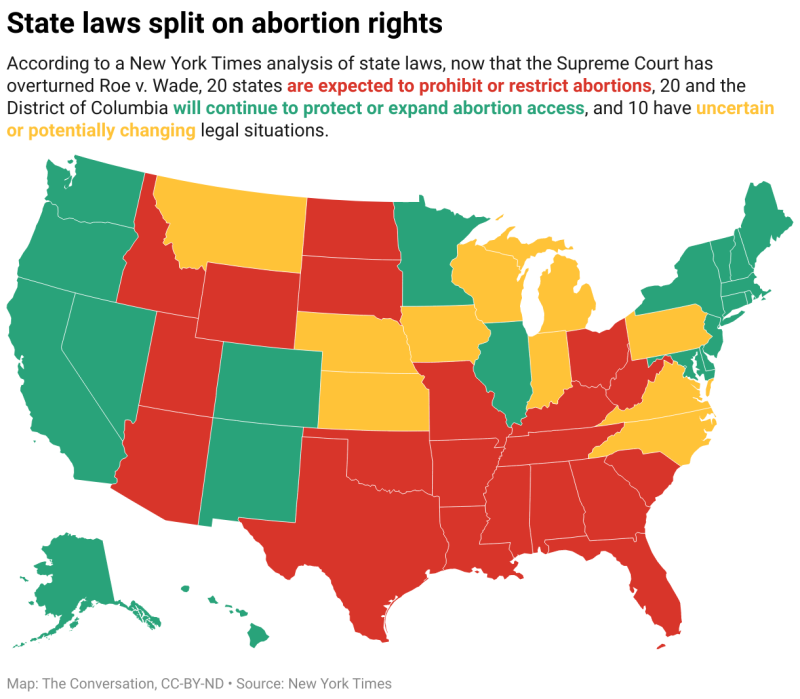
    Even before Dobbs, the ability to access abortion was limited by a patchwork of laws across the United States. Republican states have more restrictive laws than Democratic ones, with people living in the Midwest and South subject to the strongest limits.

    Thirteen states have so-called “trigger laws,” which greatly restrict access to abortion. These will soon go into effect now that the Supreme Court has overturned Roe and Casey, requiring only state attorney general certification or other action by a state official.

    Nine states have pre-Roe laws never taken off the books that significantly restrict or ban access to abortion. Altogether, nearly half of states will restrict access to abortion through a variety of measures like banning abortion from six weeks of pregnancy – before many women know they are pregnant – and limiting the reasons abortions may be obtained, such as forbidding abortion in the case of fetal anomalies.

    Meanwhile, 16 states and the District of Columbia protect access to abortion in a variety of ways, such as state statutes, constitutional amendments or state Supreme Court decisions.

    None of the states that limit abortion access currently criminalize the pregnant person’s action. Rather, they threaten health care providers with civil or criminal actions, including loss of their license to practice medicine.

    Some states are creating “safe havens” where people can travel to access an abortion legally. People have already been traveling to states like Massachusetts from highly restrictive states.

    The court’s decision may drive federal action, too.

    The House of Representatives passed the Women’s Health Protection Act, which protects health care providers and pregnant people seeking abortion, but Senate Republicans have blocked the bill from coming up for a vote. Congress could also reconsider providing limited Medicaid payment for abortion, but such federal legislation also seems unlikely to succeed.

    President Joe Biden could use executive power to instruct federal agencies to review existing regulations to ensure that access to abortion continues to occur in as many places as possible. Congressional Republicans could test the water on nationwide abortion bans. While such efforts are likely to fail, these efforts could cause confusion for people who are already vulnerable.

    The Supreme Court’s rolling back a right that has been recognized for 50 years puts the U.S. in the minority of nations, most of which are moving toward liberalization.

    What does this mean for people in America seeking an abortion?

    Unintended pregnancies and abortions are more common among poor women and women of color, both in the U.S. and around the world.

    Research shows that people have abortions whether lawful or not, but in nations where access to abortion is limited or outlawed, women are more likely to suffer negative health outcomes, such as infection, excessive bleeding and uterine perforation. Those who must carry a pregnancy to full term are more likely to suffer pregnancy-related deaths.

    The state-by-state access to abortion resulting from this decision means many people will have to travel farther to obtain an abortion. And distance will mean fewer people will get abortions, especially lower-income women – a fact the Supreme Court itself recognized in 2016.

    But since 2020, medication abortion – a two-pill regimen of mifepristone and misoprostol – has been the most common method of ending pregnancy in the U.S. The coronavirus pandemic accelerated this shift, as it drove the Food and Drug Administration to make medication abortions more available by allowing doctors to prescribe the pills through telemedicine and permitting medication to be mailed without in-person consultation.

    Many states that restrict access to abortion also are trying to prevent medication abortion. But stopping telehealth providers from mailing pills will be a challenge. Further, because the FDA approved this regimen, states will be contradicting federal law, setting up conflict that may lead to more litigation.

    The Supreme Court’s rolling back a right that has been recognized for 50 years puts the U.S. in the minority of nations, most of which are moving toward liberalization. Nevertheless, even though abortion is seen by many as essential health care, the cultural fight will surely continue.

    Featured Image Credit: Evening Standard

  • Online Justice and the Pandemic: Impact on Procedure

    Online Justice and the Pandemic: Impact on Procedure


    Abstract

    The move towards digitization of the judiciary and the adoption of video-conferencing preceded the pandemic. However, the pandemic has necessitated their mainstream adoption. While Indian courts have been prompt in issuing their SOPs, these have been inadequate due to their non-implementation and the inability of traditional legal tools to address unprecedented procedural issues, emerging from the mainstreaming of video conferencing.

    Firstly, there are due process concerns, centred around inadequate hosting platforms, sub-standard organizational practices, inefficient ancillary processes, and non-inclusive technical requirements. Secondly, there is a lack of accountability and transparency because of derogation from the rule of open court, without any effective alternative measures. Thirdly, there are privacy concerns as regards unauthorized participation, the secrecy of data exchanged, and commercial exploitation of data.

    Adopting a design-based approach not only addresses areas conventional legal tools can’t, but also improves efficiency and automates compliance. To this end, several technological and organizational design changes are suggested that can be made to effectively address emerging procedural issues.

    Keywords: online justice, virtual courts, pandemic, design-based approach, digitization, standard operating procedure.


    Introduction

    The unprecedented COVID-19 pandemic has necessitated social distancing to be the norm. To this end, courts, across the world, have started resolving disputes through virtual conferencing. While limited physical hearings with rigorous rules have commenced,[i] our courts have limited infrastructural capacity to house adequate daily hearings. Additionally, the surge in COVID-19 cases and the wait for a vaccine mean that virtual conferencing is nevertheless here to stay. The pandemic has decreased the average disposal rates of high courts by 50% and subordinate courts by 70%,[ii] with pendency in the Supreme Court increasing by 3,287 cases.[iii]

    Therefore, at this point, it is opportune to realize that the revolutionary potential of virtual courts can help improve judicial efficiency. Apart from facilitating remote access to justice, virtual courts are cost-effective and time-effective, reduce carbon footprint and the employment of dilatory tactics by parties.[iv] These benefits are particularly important given that annually one billion people require basic access to justice, but close to 30 per cent of them do not even take action.[v] Moving forward, this access to justice problem has to be solved through Information & Communications Technology (“ICT”), which will render courts to function as a ‘service’ and not a ‘place’.[vi] In cognizance of this, India launched the e-Court Mission Mode Project (“MMP”), to implement ICT in the Indian judiciary in 3 phases over 5 years.[vii]

    However, this increasing change in the medium of our court processes will inevitably impact civil procedure in unprecedented ways. A survey found that 44.7% of participants experienced technical difficulty during the hearing, with a majority feeling that remote hearings were overall worse than physical hearings and less effective in terms of facilitating participation.[viii] The skill and digital divide will further compound power imbalances among parties, and thus their access to justice.[ix]

    In light of this, it is important to understand the adequacy of the current response plans from the Court and governments. Therefore, in this paper, I will enumerate the legal and policy developments in India on virtual courts, both pre and post COVID-19. Subsequently, I will critically analyse these developments to elucidate implementational failures, and three procedural concerns: impact on due process, accountability and transparency, and privacy. Recognizing the inadequacy of legal tools in addressing these concerns, ultimately, I will utilize a technological and organizational design-based approach to propose solutions.

    Tracing Legal and Policy Developments on Virtual Courts

    India’s attempts to digitize the judiciary and associated processes predate the pandemic. However, the scale of impact has certainly increased since virtual conferencing has now become the dominant norm. Therefore, in this section, I will analyse how law and policy on virtual courts have evolved. However, before we proceed, it must be noted that virtual courts are broader than just virtual conferencing. Other than virtual conferencing, related processes of digitisation and automation, like e-filing and e-listing, need to be implemented alongside.

    Pre-Pandemic:                      In February 2007, the government approved the Supreme Court E-Committee’s (“E-Committee”) strategic action plan to implement ICT in the Indian judiciary in 3 phases over 5 years.[x] It was co-opted as a ‘Mission Mode Project’ of the National e-Governance Plan,[xi] with the objective of re-engineering processes to enhance judicial productivity, and make the system more affordable, accessible, cost-effective, transparent and accountable. To this end, it launched 4 services: automation of case management, online provision of judicial/administrative services, information gateways between courts and government, and creation of judicial data grids.[xii]

    Virtual courts, and associated processes, have found recognition and regulation in jurisprudence too. In State of Maharashtra v Dr Praful Desai, the Supreme Court allowed video conferencing for the recording of evidence.[xiii] It even observed that technological developments have enabled the possibility of virtual courts. This position has found, subsequently, substantial affirmation.[xiv] Courts have allowed video conferencing on conditions of health[xv] and geographical proximity.[xvi] However, under the revised position, parties cannot resolve matrimonial conflict through video conferencing.[xvii]

    To safeguard these proceedings, courts have issued numerous guidelines. These include authenticating the identity of the witness and examiner, administration of the oath, acquainting non-party witnesses with the case, recording demeanour of witnesses on-screen, notarization of witness testimony/statement, and bearing of costs.[xviii] When video-conferencing is global, the foreign party must record evidence in the presence of an Indian embassy officer member.[xix]

    Post-Pandemic:         To comply with social distancing guidelines, the Supreme Court passed an order, under Article 142 of the Constitution, to suspend the physical hearing.[xx] However, recognizing the importance of access to justice, it identified the duty of courts to use ICT like video-conferencing for dispensation of justice, in urgent matters. Accordingly, it issued directions: empowering itself and all high courts to adopt measures for the functioning of video-conferencing, instructing district courts to follow their respective high courts, for providing videoconference facilities and an amicus curia to the deprived, prohibiting recording of hearing without the mutual consent of parties, and requiring prompt reporting of technical glitches during the video call.

    Pursuant to this, the apex court issued its standard operating procedure (“SOP”) mentioning the instructions for joining/conduct during virtual hearings and the technical requirements as well as the procedure for listing, mentioning, and e-filing.[xxi] Parties can choose between getting virtual links or availing the facility in the Court’s premises. However, only two appearance links and one viewing link is provided to parties. While the hearings are hosted on the “Vidyo” platform available either as a desktop application or on Android or iOS app store, parties are advised against using mobile phones for connectivity reasons. Communication between the registry and participants happens through private WhatsApp groups, with links being shared 30 minutes prior. Parties are forbidden from sharing these links, engaging in indecorous conduct, and recording the hearings. Furthermore, they are expected to ‘mute’ themselves, except when making submissions or responding to questions from the bench, and must ‘raise hand’ to indicate an intention to speak. The Court has also mandated the use of e-filing even if parties file physically at the registry and reduced the cost of filing by half, thus promoting digitization.[xxii]

    Currently, virtual hearings are inaccessible to the public, but limited journalists can attend the Court’s physical video-conferencing room, to report on cases. The Court has now started hearing non-urgent matters too.[xxiii] The E-Committee has also resolved to institutionalize technology even after the pandemic ends.[xxiv]

    While high courts can employ their own rules, 11 of them have adopted the model rules developed by the E-Committee.[xxv] Even those with unique rules broadly convey the same instructions,[xxvi] with the only difference being the hosting platform. The most popular is Vidyo, followed by Zoom, Jitsi, and Cisco Webex.[xxvii] However, pursuant to the Union Ministry of Home Affairs’ advisory declaring Zoom as unsafe, most high courts discontinued using it.[xxviii] Remarkably, the Delhi High Court issued comprehensive legislative rules covering not just the aforementioned matters, but also the procedure for service of summons, examination of persons, sharing of documents, and access to legal aid. It statutorily establishes a “remote point coordinator”, entrusted with ensuring seamless functioning and ingenuity of the hearing.[xxix]

    However, other than Chandigarh District Court and a few others, district courts have failed to organize virtual hearings, given their infrastructure limitations.[xxx] Most tribunals are following the procedure established by the apex court.[xxxi]

    Critically Analyzing Indian Developments on Virtual Courts

    The Mission Mode Project

    The implementation of Phase-II of the MMP has been sluggish, with only 3477 courtrooms having video-conferencing, and 14443 more courtrooms requiring this facility.[xxxii] 2992 sites are yet to still get WAN connectivity.[xxxiii] Only states like Delhi, Karnataka and Madhya Pradesh have started the digitisation of both disposed and pending case records in the high courts and district courts.[xxxiv] E-filing is currently available only in four high courts,[xxxv] and in the NGT, NCLAT, and ITAT.[xxxvi] Even in these courts, only 50-600 cases were instituted through e-filings, as against the 1.9 lakh cases instituted through regular filings.[xxxvii] Despite listing being digital, the process involves significant human input, rather than the use of algorithms.[xxxviii] The implementation of this project will further stagnate because courts have been instructed to utilize their unused funds from Phase-II for meeting immediate needs.[xxxix]

    The failure in technology up-gradation is also at the litigant and advocate’s end. The internet penetration in India is only 40%.[xl] 30% of the population lacks basic literacy, and nearly 90% lack digital literacy.[xli] At least 50% of advocates, mostly at the district and lower levels, do not own relevant devices and lack the requisite skills for virtual proceedings.[xlii] Thus, there is a clear digital, connectivity, and skill divide.

    Evaluating SOPs- Emerging Legal Issue

    • Due Process

    The paradigm shift consequent to virtual hearings has raised numerous unprecedented due process concerns. The smoothness of accessing and using virtual court facilities, along with available facilities, has an inextricable impact on one’s right to properly present their case.

    Technical Issues with the Platform:                       The most popular platform, Vidyo has received an extremely negative response. Reportedly, the platform frequently crashes,[xliii] and participants struggle to log in or are automatically logged out during court proceedings due to bandwidth issues with the platform. There were also difficulties in re-joining the hearing, once logged out.[xliv]

    The screen sharing feature on Vidyo is ineffective, and thus advocates are precluded from even presenting documents before the bench.[xlv] There is also no means for the attorney and client to engage in private discussion during the hearings.[xlvi] The Control Room is tasked with managing the entire process flow. In several cases, advocates have complained of not being unmuted, despite raising their hands, or their chat messages going unread, thus affecting their opportunity to present arguments. This is especially the case in matters involving a large number of parties.[xlvii]

    This adverse impact is compounded since there is no clarity on who to contact for technical issues.[xlviii] The authorities provided in the SOP are extremely unresponsive. Moreover, links for hearings are shared last minute, with communications on WhatsApp being inefficiently followed.[xlix]

    The Court has been ignorant of these technical inefficiencies, passing adverse orders against at least 19 advocates who were unable to attend/connect due to technical issues.[l]

    Issues with Associated Digital Process:      The processes of e-listing and e-filing are not user-friendly and unnecessarily verbose.[li] Under the current e-listing mechanism, there is uncertainty over acknowledgement of their filings, because the diary numbers are not immediately generated. Even the procedure for curing defects is inefficient, voluminous, and confusing. There is also a delay in the listing of matters, despite pleas of urgency in petitions.[lii] Support from the Registry in this regard is inadequate. There is also a need for improving coordination between sections of the Registry, with procedures being more consistent and transparent.[liii]

    Furthermore, court records are not fully digitized, and when so, they cannot be remotely accessed in a centralized server.[liv]

    Technical Requirements as Impediments:             The minimum technical requirements determine who can even access the platform, and therefore, determine who even has the opportunity to present their case, to begin with. Presently, the SOP of all Indian courts require a minimum of 2 MBPS broadband connection or 4G connections, and the onus is on the participant to ensure seamless connectivity. Given that 20% of the internet users in India are still dependent on 2G and 3G,[lv] this directly leads to their exclusion. Even digitally advanced nations like Singapore have stipulated 3G as the minimum requirement.[lvi] Moreover, even the 4G connections in India are relatively slow, with no service provider crossing the 70% LTE threshold.[lvii]

    Even in data-intensive platforms like Skype, the minimum download speed requirement for a high-quality video call is only 400 KBPS, with group calls of up to 3 people supported at 512 KBPs, and 5 people at 2 MBPS.[lviii]

    Additionally, all video-conferencing platforms have only been made available as desktop apps, or on Android or iOS app stores. The over 55 million users with KaiOS, operating mostly on Jio Phones,[lix] are denied access to videoconferencing, despite their phones supporting video calls.

    (Dis)Comfort with Virtual Testimony and Demeanour Assessment:      The process of testimony, along with cross-examination, are in themselves strenuous for witnesses. The unfamiliar nature of virtual conferences can cause severe anxiety among witnesses while appearing, especially if they’re children, foreigners, or persons with disabilities.[lx]

    During video conferencing, courts are allowed to assess the credibility of parties through their demeanour.[lxi] This is problematic because in a virtual setting it is extremely difficult for the judge to accurately understand the body language and emotions of the witness.[lxii] Studies find that one’s social and economic background has a heavy correlation with one’s perception, which plays out in the form of subtle choices like lighting and camera angles.[lxiii] Given these inaccurate and disproportionate adverse impacts, demeanour assessment during virtual hearings must be disallowed.

    • Transparency and Accountability

    The Supreme Court has repeatedly recognized the importance of the rule of ‘open court’ in preserving and promoting accountability and transparency, and thus guaranteeing a fair trial.[lxiv] Presently, virtual hearings are not recorded, except for witness testimony in some cases,[lxv] even by the court. While theoretically limited journalists are allowed to attend these hearing, this is severely inadequate because this facility is accessible only to reporters who can make it to the Supreme Court’s video-conferencing chamber. Moreover, no such facility has been provided in most high courts. Therefore, there is no effective means of ensuring even a shadow of public pressure, which would bind the judge’s actions. This is contrary to jurisdictions like the UK, Australia, and Singapore where public participation has been allowed through live links or even live streaming.[lxvi]

    Virtual conferencing presents an opportunity to eliminate the practical physical, informational, and temporal barriers to open courts. If hearings are online and broadcasted, then a large number of people can access them. For instance, over 3,500 people viewed a YouTube live stream of oral arguments taking place in the Kansas Supreme Court over Zoom. The digital landscape can even house much more people than the court logistically can.[lxvii]

    However, we must be mindful that live streaming for virtual hearings is distinct from the cameras in the courtroom context.[lxviii] In the latter, even if live streaming is not allowed, the public and media can anyway access the trial. However, if there is no public access to virtual hearings, which entirely supplant in-person proceedings, only then participants to the proceedings have knowledge of events.

    Livestreaming virtual proceedings do raise some legitimate privacy concerns because there is a loss of ‘practical obscurity’. This concept recognizes that there is a privacy interest in the information that is not secret but is otherwise difficult to obtain.[lxix] Public online hearings could make access to personal data easier because the process of transferring information from physical documents to a digital format will not have to be done.

    • Privacy;

    There are serious concerns regarding video-conferencing platforms, which are apps owned by foreign companies. The terms of use of these apps mandate cross-border transfer, and the business model of most of these companies involves selling their consumer’s data.[lxx] Therefore, there is the risk of commercial exploitation of data, either for general profiling of the individual or blackmailing them.[lxxi] This is indicated by the Globe24h.com incident, wherein a Romanian man downloaded judgements in bulk and indexed them so they would be optimized on Google results. Then, he charged people for removing embarrassing personal information from this website.

    The biggest privacy challenges stem from authentication of the participants to the video conference and security of the data exchanged over the platform.[lxxii] Furthermore, the weak data security features of Vidyo and Zoom render them susceptible to unauthorized third-party access.[lxxiii] Inadequate training among Control Room members has also resulted in them engaging in risky practices, like using non-updated versions of the software, thus compromising privacy.[lxxiv]Such weaknesses may allow parties to illicitly obtain information to the detriment of their opponents, which they wouldn’t have gotten under civil discovery.

    There is a petition before the Supreme Court that argues that transfer of such judicial and government data prima facie impacts national security, and violates laws such as the Public Records Act, 1993, and the Official Secrets Act, 1923.[lxxv]

    Utilizing a Design-based Approach

    The courts have so far used conventional legal tools to address the concerns of due process, accountability, and data security. There are inherent limitations to these tools, in that the scope of control is merely through prescriptions, which may not necessarily be followed.[lxxvi] The shift to video-conferencing leads to the emergence of unprecedented issues, which the law itself cannot redress.[lxxvii] On the other hand, using design as a policy tool not only expands the scope of control over the participants but ensures mandatory compliance due to technological automation.[lxxviii] Moreover, as an interdisciplinary and innovative approach, design-based approaches allow anticipation of risks and baking of countermeasures into the systems and operations, throughout the entire lifecycle of the product/service.[lxxix] Notably, this approach extends to only technological operation, but to organizational practices too.[lxxx]

    Therefore, in this section, I will propose design-based changes that need to be implemented to address the aforementioned challenges to civil justice.

    ·      Due Process

    The Platform:                        To address the aforementioned technical issues, there is a need for designing certain features onto the video-conferencing platform. Alike UK, USA, Australia, and Singapore, there must be designated and accessible icons for a private waiting room and a private pop-up chatbox.[lxxxi] During such private communication, the court proceedings must be paused, and no ex-parte discussion must occur. A more nuanced and effective screen sharing option must be introduced, wherein on clicking a designated button, the documents are first shared with the judge(s). Once approved, then this must be shared with other parties. Once any button has been clicked,[lxxxii] there should be a real-time notification that pops up in the centre of the court staff and/or judge’s screens. When participants are kept in the waiting room before the commencement of the hearing, real-time updates should be provided via the chat option. This is similar to the practice in Singapore, where constant updates are provided during the pre-hearing stage.[lxxxiii]

    Given the extent of concerns from Vidyo, courts must move towards adopting a different platform altogether. In the medium-term, they can use Cisco Webex,[lxxxiv] or Microsoft teams given that most of these features exist herein. However, if the court intends to mainstream video-conferencing, it must indigenously develop its platform that consolidates best practices. Thankfully, the Supreme Court has started moving in this direction by inviting tenders for “a comprehensive plan for video conference hearings including hardware and support”.[lxxxv]

    Organisational Practice;                      The video-conferencing screen must contain a help button, which opens a pop-up window that shows a user guide with relevant features available to a participant at their access level. If a participant finds this inadequate, there must be a support button, which allows them to connect to a helpline number. Most importantly, there should be designated officers assigned to each court who uninterruptedly serve as single points of contact.[lxxxvi]Before the platform is re-designed, the coordinators/members of the Control Room must be trained to be more proactive and responsive to the process flow. Anyhow, given peculiar circumstances, courts must largely refrain from passing adverse orders against litigants/advocates claiming to miss hearing due to technical issues.

    Associated Digital Processes:                       Unlike the current system which relies on the physical generation and sharing of links, courts can publish the links for different virtual courts along with the cause list or send automated e-mails to advocates in advance. This will improve efficiency, and reduce anxiety for advocates.[lxxxvii]

    As for e-filing, the Delhi High Court’s model should be adopted nationally.[lxxxviii] The only substantial information that required manual entry is the details of the parties. Thereafter, the entire case file can be uploaded as a single PDF. Even the diary numbers are immediately generated. For curing of defects, advocates are only be required to submit the entire final PDF file, as against separately uploading each page on which defect is secured.

    Technical Requirements;     The video-conferencing platforms must also be available for KaiOS users. Additionally, the bandwidth requirement can be lowered to 512 KBPS or 1 MBPS. To provide access to litigants with lower speeds, the court can always reduce the number of participants on an ad-hoc basis, when required. Even in the worst case, to ensure wider inclusivity, courts can adopt the practice that one bench of the Delhi High Court did. Parties can be asked to submit a 15-minute-long video clip of their arguments within a week of the order. Thereafter, within a week, they must be asked to submit an additional brief note along with a 10-minute-long video clip in rebuttal.[lxxxix]

    ·      Transparency and Accountability

    All virtual hearings should be recorded and stored using cryptography by the courts for a limited period. Additionally, voice-to-text transmission tools can be used for text records of hearings. To preserve privacy, automated redaction software can be used, which automatically redacts sensitive data fields. This is similar to the approach of certain courts like Florida, Pennsylvania, and Michigan.[xc]

    While live streaming promotes greater accountability, there are privacy concerns, as outlined earlier. These concerns can be balanced using the following three-fold approach: (1) Where the case does not involve sensitive information or witnesses, then these can be live-streamed;[xci] (2) When this cannot be done, limited broadcasting can be followed in two ways. While live-streaming is permitted, subsequent dissemination of the hearing, especially by media, is prohibited.[xcii] While public broadcasting may be forbidden, a screen at the courthouse can be provided where these proceedings are broadcasted for people at the court to view;[xciii] and (3) Providing a separate viewing room were advocates, journalists, and CSOs can observe and report on court proceedings, without participating in them.

    Lastly, to promote public awareness the digital portals of court websites must be regularly updated with weekly operational summaries of the working of the court and relevant policy updates, like in the UK.[xciv]

    ·      Privacy

    Technological Design;          The platform must generate unique meeting IDs, which expire after a limited time. The entry to the hearing must be verified using two-factor authentication. This entails OTP verification in addition to entering the unique ID and password of the meeting. The host must have the option of “locking” the meeting once all participants have joined, to ensure unauthorized entry does not subsequently take place.[xcv] All communication on the platform must be end-to-end encrypted using SSL/TLS, which will obfuscate the message and prevent third parties from accessing personal data. Even the entire video session must be encrypted. The servers storing the data must be secure to prevent any end-point vulnerabilities. To this end, advanced threat protection features can be used to protect against sophisticated malware or hacking attempts.[xcvi] Developing an indigenous government-backed platform will also mitigate concerns of data commercialization.

    Organisational Design:        Human errors still contribute to data leaks, despite advanced security designs.[xcvii] Thus, a safe user policy needs to be developed. Participants must be instructed to not connect through unsecured WiFi, or use weak password codes. The video-conferencing software must be routinely updated to ensure only the latest version is used. The coordinators/members of the Control Room must be trained on the necessary steps and contingency plans they must adopt to secure privacy.

    Conclusion

    The move towards digitization of the judiciary and the adoption of video-conferencing preceded the pandemic. However, the pandemic has necessitated their mainstream adoption. Indian courts have been prompt in issuing their SOPs, but these have been inadequate due to non-implementation and the inability of traditional legal tools to address unprecedented procedural issues, emerging from the mainstreaming of video conferencing.

    Firstly, there are due process concerns, centred around inadequate hosting platforms, sub-standard organizational practices, inefficient ancillary processes, and non-inclusive technical requirements. Secondly, there is a lack of accountability and transparency because of derogation from the rule of open court, without any effective alternative measures. Thirdly, there are privacy concerns as regards unauthorized participation, the secrecy of data exchanged, and commercial exploitation of data.

    Adopting a design-based approach not only addresses areas conventional legal tools can’t, but also improves efficiency and automates compliance. To this end, several technological and organizational design changes, as suggested, can be made to effectively address emerging procedural issues.


    End Notes:

    [i] PTI, ‘Supreme Court to begin physical hearing of cases in limited manner, releases SOP’ (The Print, 31 August 2020` <https://theprint.in/judiciary/supreme-court-to-begin-physical-hearing-of-cases-in-limited-manner-releases-sop/492699/> accessed 14 January 2021.

    [ii] Sruthisagar Yamunan, ‘Covid impact: Cases disposed of by High Courts drop by half, district courts by 70%’ (Scroll, 4 September 2020) <https://scroll.in/article/971860/covid-impact-cases-disposed-by-high-courts-drop-by-half-district-courts-by-70> accessed 14 January 2021.

    [iii] ‘Court Data: Quantifying the Effect of COVID-19’ (Supreme Court Observer, 29 April 2020) <https://www.scobserver.in/court-by-numbers?court_by_number_id=quantifying-the-effect-of-covid-19> accessed 14 January 2021; Given that the National Judicial Data Grid does not provide statistics on pendency for the Supreme Court, calculating impact on pendency due to COVID-19 is tricky. One metric that can be used is number of judgements delivered, which was 88 in March 2020, the same as March 2018, i.e., when the swine flu outbreak paralyzed the court. While this doesn’t accurately account for situational peculiarities, it provides an indication that the court has managed to fair well, by its own past metric. This discussion is notwithstanding the general impact the pandemic will have on case institution and disposal in the apex court.

    [iv] Nikitha, ‘Impact of Video Conferencing on Court Proceedings with Respect to Litigants and Lawyers’ (BnB Legal, 14 August 2020) <https://bnblegal.com/article/impact-of-video-conferencing-on-court-proceedings-with-respect-to-litigants-and-lawyers/> accessed 14 January 2021.

    [v] Richard Susskind, Online Courts and the Future of Justice (OUP 2019) 27.

    [vi] Anuradha Mukherjee, Amita Katragadda, Ayushi Singhal, & Shubhankar Jain, ‘From the Gavel to the Click: COVID 19 poised to be the inflection point for Online Courts in India’ <https://corporate.cyrilamarchandblogs.com/2020/04/gavel-to-click-covid-19-online-courts-in-india/> accessed 14 January 2021.

    [vii] Ibid; ‘Indian Courts and e-Governance initiative’ (Vikaspedia) <https://vikaspedia.in/e-governance/online-legal-services/how-do-i-do> accessed 14 January 2021.

    [viii] Dr Natalie Byrom, Sarah Beardon, & Dr Abby Kendrick, ‘The impact of COVID-19 measures on the civil justice system’ (2020) Civil Justice Council, 9 <https://www.judiciary.uk/wp-content/uploads/2020/06/CJC-Rapid-Review-Final-Report-f.pdf> accessed 14 January 2021.

    [ix] ‘Standing Committee Report Summary’ (PRS Legislative Research, September 2020) <https://www.prsindia.org/report-summaries/functioning-virtual-courts> accessed 14 January 2021.

    [x] Shalini Seetharam & Sumathi Chandrashekaran, ‘E-Courts in India: From Policy Formulation to Implementation’ (2016) Vidhi Center for Legal Policy, 6-8 <https://vidhilegalpolicy.in/wp-content/uploads/2019/05/eCourtsinIndia_Vidhi.pdf> accessed 14 January 2021; Vikaspedia (n 7).

    [xi] Seetharam (n 10) 8-9.

    [xii] Phase-II of the project already contemplates video-conferencing and recording facility for courts and jails. So far, as many as 3,388 court complexes and 16,755 court rooms across India have been computerised, with video-conferencing equipment available in 3,240 court complexes and 1,272 jails, see: Mukherjee (n 6).

    [xiii] (2003) 4 SCC 601.

    [xiv] Twentieth Century Fox Film v NRI Film Production Associates AIR (2003) Kar 148; Amitabh Bagchi v Ena Bhagchi AIR (2005) Cal 11; Sujay Mitra v State of West Bengal (2015) SCC Online Cal 1191.

    [xv] Alcatel India Limited v Koshika Telecom Ltd (2004) SCC Online Del 705.

    [xvi] Bodala Murali Krishna v Smt Badola Prathim AIR (2007) AP 43; Dr. Kunal Saha v Dr. Sukumar Mukhurjee (2006) SCC Online NCDRC 35.

    [xvii] Santini v Vijaya Venketesh (2018) 1 SCC 62.

    [xviii] Bagchi (n 14).

    [xix] Desai (n 13).

    [xx] Suo Motu Writ Petition (Civil) No. 5/2020; Jai Brunner & Balu Nair, ‘Switching to Video’ (Supreme Court Observer, 6 April 2020) <https://www.scobserver.in/the-desk/switching-to-video> accessed 14 January 2021.

    [xxi] ‘Standard Operating Procedure for Ld. Advocate/Party-in-person for e-Filing, Mentioning, Listing and Video Conferencing Hearing’ (Supreme Court of India, 4 July 2020) <http://scobserver-production.s3.amazonaws.com/uploads/ckeditor/attachments/477/SOP_04072020.pdf> accessed 14 January 2021.

    [xxii] SCO Editorial Team, ‘COVID Coverage: Court’s Functioning’ (Supreme Court Observer, 28 July 2020) <https://www.scobserver.in/the-desk/covid-coverage-court-s-functioning> accessed 14 January 2021.

    [xxiii] Ibid.

    [xxiv] ‘Use of technology must be institutionalised even after Lockdown: Justice Chandrachud in video conference with HC judges manning E-committees’ (Bar and Bench, 4 April 2020) <https://www.barandbench.com/news/use-of-technology-must-be-institutionalised-even-after-lockdown-justice-chandrachud-in-video-conference-with-hc-judges-manning-e-committees> accessed 14 January 2021.

    [xxv] Debayan Roy, ‘Supreme Court allows High Courts to frame own rules for virtual hearings, says media access “should only be for output and not input”’ (Bar and Bench, 26 October 2020) <https://www.barandbench.com/news/litigation/supreme-court-allows-high-courts-to-frame-own-rules-for-virtual-hearings> accessed 14 January 2021.

    [xxvi] The main changes involve differing instructions for differing e-filing and e-listing. Others are minor additions in instructions relating to conduct during the hearing, and differing steps, for differing platforms, for joining a video-conference using the virtual link.

    [xxvii] Amulya Ashwathappa, Arunav Kaul, Chockalingam Muthian, et al, ‘Video Conferencing in Indian Courts: A Pathway to the Justice Platform’ (2020) Daksh Whitepaper Series on Next Generation Justice Platform Paper 4, 62-67 <https://dakshindia.org/wp-content/uploads/2020/06/Paper-4-_Video-Conferencing-in-Indian-Courts.pdf> accessed 14 January 2021.

    [xxviii] ‘Impact of COVID19 on functioning of the Indian Judiciary – Weekly Update on Virtual Courts’ (Khaitan & Co, 4 May 2020) <https://www.khaitanco.com/thought-leaderships/Impact-of-COVID19-on-functioning-of-the-Indian-Judiciary-Weekly-Update-on-Virtual-Courts-1242020_2042020> accessed 14 January 2021.

    [xxix] Notification No. 325/Rules/DHC dated 1 June 2020.

    [xxx] Gautam Kagalwala, ‘Just Virtually’ (India Business Law Journal, 19 August 2020) <https://law.asia/video-conferencing-lockdown/> accessed 14 January 2021.

    [xxxi] PTI, ‘NCLAT issues standard operating procedure for virtual hearings from June 1’ (Financial Express, 30 May 2020) <https://www.financialexpress.com/industry/nclat-issues-standard-operating-procedure-for-virtual-hearings-from-june-1/1976249/> accessed 14 January 2021; For ITAT and NGT, see: Nikitha (n 4).

    [xxxii] Department Related Parliamentary Standing Committee on Personnel, Public Grievances, Law and Justice, Functioning of Virtual Courts(Rajya Sabha 2020, 103) 15.

    [xxxiii] Ibid.

    [xxxiv] Amulya Ashwathappa, ‘The Parliamentary Standing Committee On Virtual Courts In India’ (Daksh, 16 September 2020) <https://dakshindia.org/the-parliamentary-standing-committee-on-virtual-courts-in-india/> accessed 14 January 2021.

    [xxxv] These are the High Courts in Delhi, Bombay, Punjab and Haryana, and Madhya Pradesh.

    [xxxvi] Ashwathappa (n 27) 17.

    [xxxvii] Deepika Kinhal, Ameen Jauhar, Tarika Jain, et al, ‘Virtual Courts in India’ (2020) Vidhi Center for Legal Policy Strategy Paper, 20 <https://vidhilegalpolicy.in/wp-content/uploads/2020/05/20200501__Strategy-Paper-for-Virtual-Courts-in-India_Vidhi-1.pdf> accessed 14 January 2021.

    [xxxviii] Ashwathappa (n 27) 18.

    [xxxix] Bar and Bench (n 24).

    [xl] Digbijay Mishra & Madhav Chanchani, ‘For the first time, India has more rural net users than urban’ (The Times of India, 6 May 2020) <https://timesofindia.indiatimes.com/business/india-business/for-the-first-time-india-has-more-rural-net-users-than-urban/articleshow/75566025.cms> accessed 14 January 2021.

    [xli] Ashwathappa (n 27) 20.

    [xlii] Murali Krishnan & Smriti Kak Ramachandran, ‘House panel backs e-courts’ (Hindustan Times, 12 September 2020) <https://www.hindustantimes.com/india-news/house-panel-backs-e-courts/story-F5GNGVNcYT3dTHHdx4uMHJ.html> accessed 14 January 2021.

    [xliii] Dipak Mondal, ‘Coronavirus lockdown: Fear of data security over video-conference apps Indian courts use’ (Business Today, 7 May 2020) <https://www.businesstoday.in/current/economy-politics/coronavirus-lockdown-fear-of-data-security-over-video-conference-apps-indian-courts-use/story/403154.html> accessed 14 January 2021.

    [xliv] Murali Krishnan, ‘Supreme Court should migrate from Vidyo app: Survey’ (Hindustan Times, 23 September 2020) <https://www.hindustantimes.com/india-news/supreme-court-should-migrate-from-vidyo-app-survey/story-S5mMZD3K29bYTfoUvZUi2J.html> accessed 14 January 2021.

    [xlv] Bhabna Das, D. Abhinav Rao, Harsh Parashar, et al, ‘Survey Report on the Virtual Systems Adopted by the Hon’ble Supreme Court’ (29 August 2020) <https://images.assettype.com/barandbench/2020-09/05eb71ca-d07f-4ef1-9e6c-9d49ae0f64eb/Survey_Report_on_Virtual_Courts_System_adopted_by_SC.pdf> accessed 14 January 2021.

    [xlvi] Krishnan (n 44).

    [xlvii] Das (n 45).

    [xlviii] Krishnan (n 44).

    [xlix] Das (n 45).

    [l] Ibid

    [li] Ibid

    [lii] Krishnan (n 44).

    [liii] Das (n 45).

    [liv] Kagalwala (n 30).

    [lv] Sandhya Keelrey, ‘Internet access across India in 2019, by type of mobile network’ (Statista, 16 October 2020) <https://www.statista.com/statistics/1115260/india-internet-connection-by-type-of-network-mobile/> accessed 14 January 2021.

    [lvi] Neeraj Arora, ‘Serving Justice in COVID-19 Pandemic, only option is Virtual Court: an Indian Prospective’ (2020) Cyber Research and Innovation Society, 34 <https://cyberpandit.org/wp-content/uploads/2020/04/Virtual-Court-Room_HandBook.pdf> accessed 14 January 2021.

    [lvii] ‘State of Mobile Networks: India’ (Open Signal, April 2018) <https://www.opensignal.com/reports/2018/04/india/state-of-the-mobile-network> accessed 14 January 2021.

    [lviii] ‘How much bandwidth does Skype need?’ (Skype) <https://support.skype.com/en/faq/FA1417/how-much-bandwidth-does-skype-need> accessed 14 January 2021.

    [lix] Simon Sharwood, ‘India’s contact-tracing app unleashes KaiOS on feature phones’ (The Register, 17 May 2020) <https://www.theregister.com/2020/05/17/contact_tracing_on_feature_phones/#:~:text=Aarogya%20Setu%20App%20is%20now,join%20the%20fight%20against%20COVID19.&text=Jio%20currently%20offers%20two%20phones,Blackberry-like%20%2440%20model%202> accessed 14 January 2021.

    [lx] Arunav Kaul, ‘Examining The Use Of Video Conferencing In Indian Courts’ (Daksh, 30 April 2020) <https://dakshindia.org/examining-the-use-of-video-conferencing-in-indian-courts/> accessed 14 January 2021.

    [lxi] Paragraph 8.6, Notification No. 325/Rules/DHC dated 1 June 2020.

    [lxii] Nikitha (n 4).

    [lxiii] Meredith Rossner & David Tait, ‘Courts are moving to video during coronavirus, but research shows it’s hard to get a fair trial remotely’ (The Conversation, 8 April 2020) <https://theconversation.com/courts-are-moving-to-video-during-coronavirus-but-research-shows-its-hard-to-get-a-fair-trial-remotely-134386> accessed 14 January 2021.

    [lxiv] Naresh Shridhar v State of Maharashtra (1966) 3 SCR 744 [The primary dispute arose out of a civil defamation case filed against the petitioner, who was a journalist, by the Thackerys. The petitioner challenged the lower courts decision on the ground of its in-camera nature. The Court affirmed the importance of open courts in ensuring objective and fair administration of justice as well as preservation and growth of our democracy. Subsequently, it examined the cases where exceptions can be made, such as in rape trials or matrimonial disputes.]; Swapnil Tripathi v Supreme Court of India (2018) 10 SCC 639 [The petitioners, as public-spirited persons, petitioned the Court to direct that cases of national and constitutional importance must be live streamed in a manner accessible to the public. The Court recognized the importance of open justice in ensuring accountability, transparency, and freedom of speech. As an extension of this principle, it noted that live streaming should be allowed. It then amended its own rules, and provided detailed guidelines on live streaming.]

    [lxv] Paragraph 8.9, Notification No. 325/Rules/DHC dated 1 June 2020.

    [lxvi] Mukherjee (n 6).

    [lxvii] Amy Salyzyn, ‘“Trial by Zoom”: What Virtual Hearings Might Mean for Open Courts, Participant Privacy and the Integrity of Court Proceedings’ (Slaw, 17 April 2020) <http://www.slaw.ca/2020/04/17/trial-by-zoom-what-virtual-hearings-might-mean-for-open-courts-participant-privacy-and-the-integrity-of-court-proceedings/> accessed 14 January 2021; While the Supreme Court has expressed support for limited livestreaming matters of constitutional/national importance in Swapnil Tripathi v Supreme Court of India (n 63), nothing has ever come of this, see: Parliamentary Standing Committee Report (n 32) 7-10.

    [lxviii] Salyzyn (n 67).

    [lxix] Jane Bailey & Jacquelyn Burkell, ‘Revisiting the Open Court Principle in an Era of Online Publication: Questioning Presumptive Public Access to Parties’ and Witnesses’ Personal Information’ (2017) 48(1) Ottawa LR 147, 167-178.

    [lxx] Arora (n 56) 44.

    [lxxi] Graeme Hamilton, ‘How a now-defunct Romanian website exposed tension between privacy and openness in Canadian courts’ (National Post, 6 April 2017) <https://nationalpost.com/news/canada/how-a-now-defunct-romanian-website-exposed-tension-between-privacy-and-openness-in-canadian-courts> accessed 14 January 2021.

    [lxxii] Arora (n 56) 23.

    [lxxiii] Arora (n 56) 23-24.

    [lxxiv] Ibid.

    [lxxv] Mondal (n 43).

    [lxxvi] Woodrow Hartzog, Privacy’s Blueprint: The Battle to Control Design of New Technologies (HUP 2018) 7-11.

    [lxxvii] Ibid.

    [lxxviii] Ibid.

    [lxxix] Ann Cavoukian, ‘Privacy by Design: The 7 Foundational Principles, Implementation and Mapping of Fair Information Practices’ (Information and Privacy Commissioner, 2011) <https://iapp.org/media/pdf/resource_center/pbd_implement_7found_principles.pdf> accessed 14 January 2021.

    [lxxx] Ibid.

    [lxxxi] Ashwathappa (n 27) 28.

    [lxxxii] This could include the ‘raise hand’ or ‘screen share’ or ‘text in chat box or ‘request to move to private breakout room’.

    [lxxxiii] Arora (n 56) 34-36.

    [lxxxiv] In a survey, this emerged as the most popular choice among advocates of the Supreme Court.

    [lxxxv] Krishnan (n 44).

    [lxxxvi] Das (n 45).

    [lxxxvii] Ibid.

    [lxxxviii] Practice Direction for Electronic Filing in the High Court of Delhi, accessible at http://delhihighcourt.nic.in/writereaddata/upload/Notification/NotificationFile_LC0S0PP0.PDF.

    [lxxxix] Ashish Prasad & Rohit Sharma, ‘Delhi HC’s VC Hearing Rules – Taking the Virtual Courts System Forward’ (Law Street India, 5 June 2020) <http://www.lawstreetindia.com/experts/column?sid=398> accessed 14 January 2021.

    [xc] Ashwathappa (n 27) 46.

    [xci] Colette Allen, ‘Open justice and remote court hearings under the UK’s Coronavirus Act’ (International Bar Association 2020).

    [xcii] This is similar to the position taken up by the Canadian Supreme Court in Canadian Broadcasting Corporation v Attorney General of Canada[2011] 1 SCR 19 [In this case, Stephen Dufour was charged with aiding suicide, and at his trial a video, containing a statement by him, was admitted as evidence. Journalists were permitted to view the film. But the Canadian Broadcasting Corporation petitioned the Court requesting that it should be allowed to broadcast this video. It denied this request but held that this is not a blanket rule. In granting this request, factors such as “the serenity of the hearing, trial fairness, and the fair administration of justice” should be considered. Most importantly, it noted that there is a difference in having to testify in open court and having said testimony telecasted into the houses of Canadians.].

    [xciii] This is similar to what the New York City Court has done, see: Jamiles Lartey, ‘The Judge Will See You On Zoom, But The Public Is Mostly Left Out’ (The Marshall Project, 13 April 2020) <https://www.themarshallproject.org/2020/04/13/the-judge-will-see-you-on-zoom-but-the-public-is-mostly-left-out> accessed 14 January 2021.

    [xciv] Jeff Galway & Dr. Urs Hoffmann-Nowotny, ‘Impact of COVID-19 on Court Operations & Litigation Practice’ (International Bar Association Litigation Committee 2020) 33.

    [xcv] Arora (n 56) 23-24.

    [xcvi] Nate Lord, ‘What is Advanced Threat Protection (ATP)?’ (Digital Guardian, 17 July 2020) <https://digitalguardian.com/blog/what-advanced-threat-protection-atp> accessed 14 January 2021.

    [xcvii] Arora (n 56) 31-33.
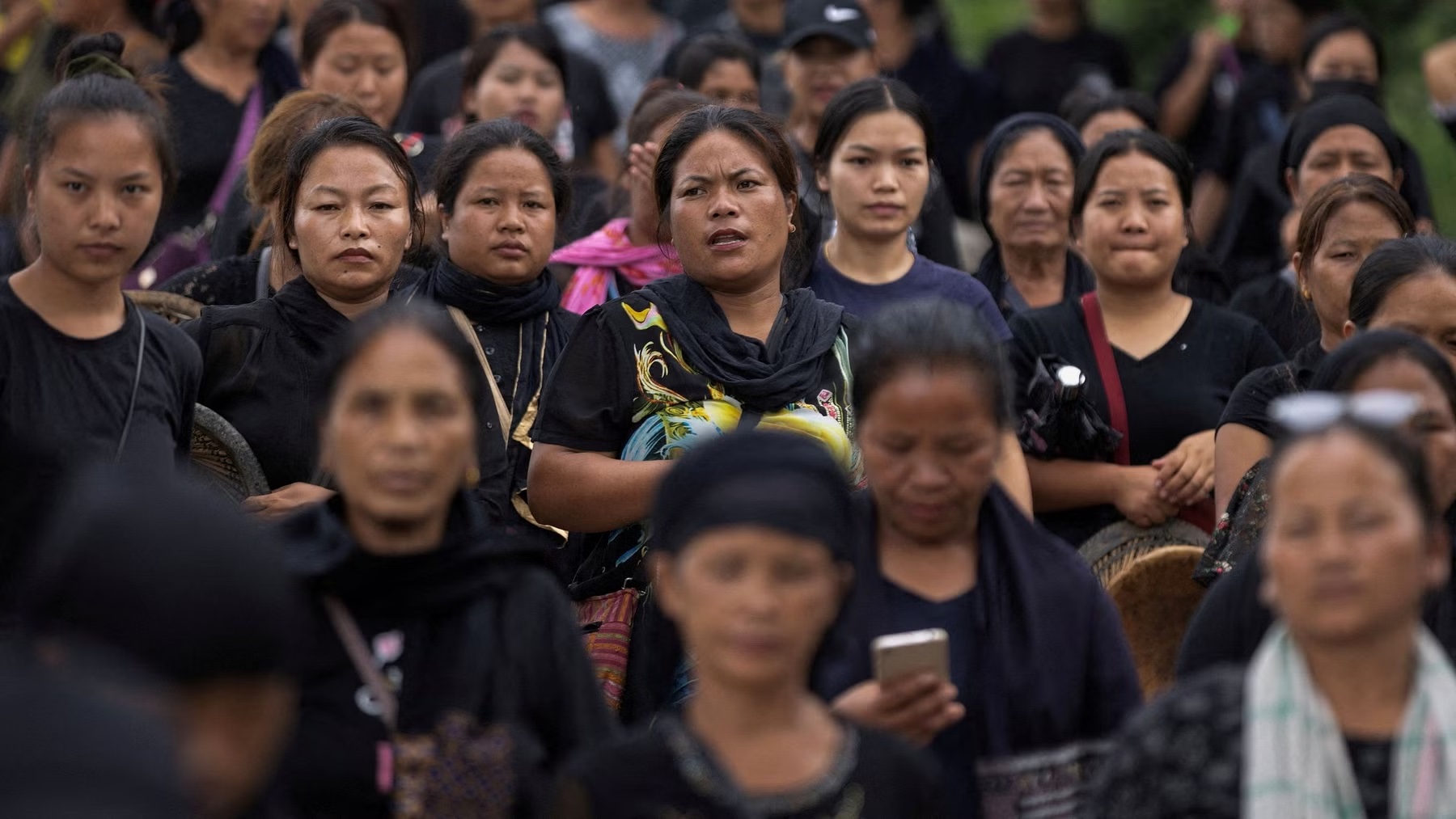
  • e-SLA and the Delhi Act 2011 (Right of Citizen to Time-bound delivery of Services)- Policy Analysis

    e-SLA and the Delhi Act 2011 (Right of Citizen to Time-bound delivery of Services)- Policy Analysis

    Introduction

    As the functions of the modern welfare state expand and the dependency of citizens on it increases, its services must be delivered in timely manner. To this end, the Delhi government developed a robust policy. Through the Delhi Act of 2011 (Right of Citizen to Time Bound Delivery of Services), referred to as “the Act”, and the Delhi (Right of Citizen to Time Bound Delivery of Services) Rules, 2011 [“the Rules”], it has guaranteed timely delivery of 361 services.[1] Delhi is not the only state to confer such a right. However, in these other states, the enforcement of this right requires physical presence. Delhi has used an e-Service Level Agreement [“e-SLA”] to digitise the entire enforcement process. Digitisation has enabled greater accountability, performance review, and convenience, whilst also reducing the invested time and cost of every stakeholder. Thus, through this e-governance tool, Delhi has developed a ‘new ecology’ for the citizen-state relationship.

    In this paper, I will first provide a primer on both the Act and the e-SLA. In the second section, I will examine the constitutionality of the Act. Last, I will test the Act against the principles of good governance and citizen-centric administration.

    Understanding the Act and e-SLA

    The Act and e-SLA are deeply interrelated. While the Act defines the legal rights, procedures, and obligations, e-SLA is the mechanism for their execution. The Act comprises four major components: defined rights and corresponding liabilities, procedural prescriptions, the delegation of rulemaking, and the monitoring platform.

    Every citizen is conferred with the right to time-bound delivery of services,[2] and a liability of compliance imposed on government servants.[3] In cases of default, the government servant is liable to pay the compensatory cost of ₹10 per day for the period of delay, subject to a maximum of ₹200 per application.[4] Correspondingly, citizens are entitled to recover the compensatory costs.[5]

    The Act makes three different but interrelated procedural prescriptions. First, it provides the appointment process, eligibility criteria, and powers of the “competent officer”.[6] He/she must not be below the rank of Deputy Secretary or its equivalent rank and is empowered to impose a compensatory cost on the defaulting government servant. Second, it establishes the procedure governing fixation of liability.[7] If there is a delay, the aggrieved citizen can approach the competent officer, who immediately pays the cost that has been automatically calculated by e-SLA.[8] At a second stage, the officer issues show-cause notice to the concerned servant. If justifiable grounds exist, then the payment is debited from the government exchequer. Otherwise, it is reimbursed from the concerned servant. Third, it prescribes the appointment process, eligibility criteria, and powers of appellate authority as well as a 30-day time limit for filing an appeal. He/she must not be below the rank of Joint Secretary or its equivalent rank and has final authority on the matter.[9]

    The Act provides for delegation of legislative authority in two senses. There is a power to make rules,[10] and the power to remove difficulties.[11] However, the exercise of these powers is subject to Parliamentary scrutiny.

    It is the duty of departments and local bodies to process the application of every citizen and provide an application number. Furthermore, these authorities are obligated to maintain and update the status of applications online.[12] The e-SLA monitoring system has been designated as an online database.[13] To the government, it provides detailed information on the number of disposed or pending cases, which helps in performance evaluation and corrective measures. To the citizens, it provides online facility to track their applications.[14] The information flow is explained below:


    Figure 1: Information flow between government officials under e-SLA


    Figure 2: Information flow between government officials and citizens under e-SLA


    Constitutionality of the Act

    The Constitution provides certain safeguards to “civil servants”.[15] At the outset, it must be noted that these employees are only a sub-set of the “government servants” defined in the Act.[16] Thus, the applicable scope of protection, if any, is not to the entire class of employees enumerated in the Act, but only to civil servants.

    The legal issue herein is the constitutionality of imposing a compensation cost on the civil servant. This is a two-fold question:

    1. Whether there is the power to impose such a cost?

    Appropriate legislatures are empowered to regulate the service conditions of civil servants.[17] As the cost relates to a service condition (i.e., timely delivery), the Delhi Legislative Assembly was empowered in imposing it.

    1. If so, has this exercise violated any constitutional safeguard?

    However, this power is subject to constitutional safeguards guaranteed under Article 311.[18] The protection offered under Article 311(2) is exhaustive and with specific reference to the imposition of three penalties: dismissal, removal, and demotion.[19] Accordingly, the imposition of compensatory cost on the civil servant is beyond the scope of three-fold protection offered by Article 311. Thus, no constitutional safeguard has been violated herein.

    As the imposition of compensatory cost on the civil servants is both within the power and compliant with safeguards, it is constitutional.

    Testing the Act against principles of Good Governance and Citizen-Centric Administration

    Governance refers to the process of decision-making, and the process of implementing those decisions.[20] Good governance is when these processes are tested against a normative standard. Citizen-centric administration refers to governance that places citizens at the centre of all administrative functions.[21] In this section, I will use the characteristics of good governance and the principles of citizen-centric administration as a collective standard[22] to analyze the process of formation and implementation of the Act, its Rules, and e-SLA.

    Assessing Compliance in Formation and Implementation

    a) Participatory. In the absence of statutory provisions, the administrative authorities are not bound to comply with any procedural norms, including notice and prior consultation with the interested parties. The Delhi Act, 2011 does not provide for any such consultation or ante-natal publicity. In the process of policy-making, there was participation only from the relevant government ministries and departments. The government did not take any active steps to broaden consultation to stakeholders such as the civic society organizations, labour unions, or even the general public.

    The lack of participatory policy-making has directly impacted its awareness and enthusiasm among citizens. It was found that only 50% of the people know that their unique ID can be used to track their applications online. Further, only 15% of the people used their ID to track their application.[23]

    b) Transparency. The e-SLA allows for complete transparency to the citizen as to the status of all his applications. The information is not only easily comprehensible but also accessible. However, the transparency does not extend to releasing statistics of operations to the public domain. Currently, these statistics, such as the figures on the number of applications, pendency, disposal rate, performing/underperforming departments, are accessible only to government officials.[24]

    c) Responsiveness. The e-SLA system does not provide for any feedback mechanism. Thus, there is no avenue for the citizens availing these services to share their experiences. As feedback is the basis on which the system continually improves, this deficiency hinders the potential effectiveness of e-SLA.[25]

    1. Accountability

    The right to time-bound service delivery through the mechanism of compensatory cost has, in theory, ensured that the government and its officials are accountable to citizens. This is buttressed by the fact that the Act seeks to develop a culture of timely delivery among the government servants by additionally punishing habitual offenders and providing cash incentives for those without a single default in a year.[26] However, the liability of government servant has been capped at ₹200, compared to other state legislation that penalizes in thousands. Further, the cash incentives are only up to ₹5000. Thus, the quantum is inadequate to cause attitudinal changes in the servants.

    Moreover, there is no culture among public servants to hold their non-performing colleagues in disrepute.[27] There is no indication that this non-performance is factored into promotions. Anyhow, such public servants are typically complacent and not seeking promotions. The security of their present job and status is adequate incentive to persist with present behaviour. Thus, promotions and reputational loss among peers are not adequate incentives for performance either.

    Furthermore, by releasing all relevant statistics of operations to the public domain, the government can broaden its accountability. These statistics can be used by stakeholders, such as news and media agencies and policy think-tanks, to supplement the government in identifying issues and corrective measures. This would also pressurize the government to be more proactive.

         2.  Consensus orientation

    Through reasonable and extensively deliberated timelines, the Act sufficiently balances the interests of citizens in securing timely delivery with the government’s limited capacity.

         3.  Effectiveness and Efficiency

    The usage of e-governance to guarantee the right to public service is a revolutionary process reform. This must be gauged at two levels:

    • For the citizen, this system has reduced the number of physical visits required, thus saving time and cost. In a survey, 66.6% reported that they are not required to visit government offices more than once after submitting their applications.[28]
    • For the government, it eliminates systemic errors and inefficiencies.[29] The statistics help in assessing performance and preparing corrective action.[30] However, if the system can track internal departmental processes too, it would allow determining the exact level at which service delivery is being delayed. Furthermore, the Act ignores the quality of timely delivered services.[31] To provide a comprehensive right to public service, the legislature must develop standards to assess the quality of services rendered on time.


        4.  Equitable and Inclusive

    Under the Act, while the citizen is immediately compensated, the government servant is not immediately penalized for default. The procedure allows him/her to provide justified grounds that could excuse liability. For greater inclusivity, the government can prescribe a pro-rata calculation of the penalty. As the amount is automatically calculated by e-SLA, even complex formulas are acceptable.

       5.  Rule of Law

    The Act provides for a fair legal framework and impartial enforcement.

    Conclusion

    Executing the right to time-bound service delivery through an online portal is truly revolutionary. It has emerged as model legislation for other governments. The Act is constitutionally valid. However, when tested against standards of good governance, this policy suffers from problems of non-participation, transparency, responsiveness, accountability, and effectiveness at the government-level. But it scores par excellence on the principles of consensus orientation, effectiveness at the citizen-level, inclusiveness, and rule of law. To embrace the truly revolutionary potential of this policy, the government must make the suggestions recommended in the last section of the paper, vis-à-vis each principle.


    References:

    [1] IANS, ‘245 services brought under Delhi time-bound delivery act’ (Business Standard, 24 August 2014) <https://www.business-standard.com/article/news-ians/245-services-brought-under-delhi-time-bound-delivery-act-114082400707_1.html> accessed 17 January 2021.

    [2] The Act, s. 3.

    [3] The Act, s. 4.

    [4] The Act, s. 7.

    [5] The Act, s. 8.

    [6] The Act, s. 9.

    [7] The Act, s. 10.

    [8] The Rules, r. 4(1).

    [9] The Act, s. 11(1).

    [10] The Act, s. 15.

    [11] The Act, s. 16.

    [12] The Act, s. 5.

    [13] The Rules, r. 2(c).

    [14] Arjun Kapoor & Niranjan Sahoo, India’s Shifting Governance Structure: From Charter of Promises to Services Guarantee (ORF Occasional Paper No 35, 2012).

    [15] Constitution of India 1950, Art. 309, 310, 311.

    [16] The Act, s. 2(g).

    [17] Constitution of India 1950, Art. 309.

    [18] Union of India v. S.P. Sharma (2014) 6 SCC 351.

    [19] Yashomati Ghosh, Textbook on Administrative Law (1st edn, Lexis Nexis 2015) 416.

    [20] UN Economic and Social Commission for Asia and the Pacific, ‘What is Good Governance?’ <http://www. unescap.org/sites/default/files/good-governance.pdf>.

    [21] Ghosh (n 19) 14.

    [22] Second Administrative Reforms Commission, Citizen-Centric Administration (Report No 12, 2009) p. 8.

    [23] Audit of Functioning of Government of Delhi’s e-SLA Scheme, by Management Development Institute, Gurgaon (2012).

    [24] Ibid.

    [25] Rohit Sinha, ‘Delivering on service guarantee: A case of Delhi’s e-SLA’ (ORF, 29 December 2012) <https://www.orfonline.org/research/delivering-on-service-guarantee-a-case-of-delhis-e-sla/> accessed 17 January 2021.

    [26] The Act, s. 12.

    [27] Kapoor & Sahoo (n 14); Amit Chandea & Surbhi Bhatia, The Right of Citizens for Time Bound Delivery of Goods and Services and Redressal of their Grievances Bill, 2011 (CCS, 2015) p. 25-26.

    [28] Sinha (n 25).

    [29] Chandea & Bhatia (n 27).

    [30] Ibid.

    [31] Kapoor & Sahoo (n 14).


    Image Credit: Forbes India

  • Sedition Law: Sensitivity and trepidations of the State

    Sedition Law: Sensitivity and trepidations of the State

    This article was published earlier in moneycontrol.com

    A few activists and intellectuals, some of them octogenarians, are in jail for varied periods having been arrested for sedition. A question being asked since then is: can intellectuals and activists who fight for the rights of the deprived, underprivileged and downtrodden be seditious and subversive? The law of sedition is a remnant from the days of colonial rule in India.

    Should the State feel helpless and orphaned if the law of sedition is to be repealed? The fact that for seven decades and more the State has staunchly held on to this law suggests so

    The (British) colonial administration was constantly apprehensive and on tenterhooks that the ‘natives’ (the dominated subjects) would rebel against it in conduct, speech, or action. Hence, the sedition law was introduced through Clause 113 of the Draft Indian Penal Code in 1837 by Thomas Macaulay.

    The colonialists wanted to guard themselves against any kind of protest. Any activity that was unpalatable to the colonialists was conceived of as ‘treason’ and ‘subversion’. In order to maintain an untrammeled stronghold on the populace, the colonial administration thought it essential to promulgate a sedition law; an overarching law to protect what it thought was its sovereignty and suzerainty.

    Interestingly, in the 1860 Indian Penal Code (IPC) the law of sedition was not included. However, due to an ‘increase’ in ‘revolutionary’ activities and ‘unrest’ on the part of the Indian ‘rebels’, in 1870, the British inserted Section 124A and amended the IPC to include the law.

    Suppression and subjugation through draconian measures were resorted to by the foreign power for its political and economic gains and ends, in a system that was tyrannical, authoritarian, and dictatorial, and ran through its course till 1947

    Though the Constitution of India (with its oft-quoted Preamble) was to come a bit later, India did become a sovereign, socialist, democratic republic when it got rid of the colonial yoke. So, how come the Law of Sedition got carried over into a republic that became a free country and a democratic political entity?

    On the one hand, why the need for a law of sedition in a free, sovereign country. On the other hand, a look at the way sedition is being interpreted currently.

    In 1929, Mahatma Gandhi called sedition a “rape of the word law” and asked the people to go in for a countrywide agitation to demand the repeal of Section 124A. He said, “In my humble opinion, every man has a right to hold any opinion he chooses, and to give effect to it also, so long as, in doing so, he does not use physical violence against anybody.”

    Subsequently, after Independence, during the debate on the first amendment to the Indian Constitution in 1951, then Prime Minister Jawaharlal Nehru, called the law of sedition fundamentally unconstitutional and declared “now so far as I am concerned [Section 124A] is highly objectionable and obnoxious and it should have no place both for practical and historical reasons. The sooner we get rid of it the better.”

    Intriguingly, the Law of Sedition was not repealed, as it should have been, ideally, during the first Parliament session itself; and has been retained during Nehru’s government and subsequent governments too.

    Should the State feel helpless and orphaned if the law of sedition is to be repealed? The fact that for seven decades and more the State has staunchly held on to this law suggests so; more so today as during the last nearly seven years the number of times that the State has resorted to the use of this law is disturbing, to say the least. Besides, the State is arming itself with yet another draconian handle in promulgating the Unlawful Activities (Prevention) Amendment Act (UAPA).

    Was there ever such a low in independent India in terms of lack of tolerance on the part of the State? Any sort of criticism against the government seems to automatically get interpreted as anti-national. This manufactured binary — anti-government equals anti-national — has been the dominant credo ever since the Bharatiya Janata Party (BJP) came to power in 2014.

    In a recent article, Amartya Sen says, ‘The confusion between “anti-government” and “anti-national” is typical of autocratic governance’.

    Intellectuals, opposition leaders, activists in different realms, are all swept into the hold-all like sedition law. Also, international voluntary organisations, as also Indian NGOs, have been targeted and attempts are made to stifle them whenever there has been any criticism of the government, however, legitimate or valid the censure be.

    The government’s actions have prompted UN Human Rights Chief Michelle Bachelet to raise issues of a crackdown on CAA protesters, UAPA, Hathras case, and marching orders given to Amnesty International. New Delhi’s response in its lame defence to the criticism has been: ‘The framing of laws is obviously a sovereign prerogative. Violations of law, however, cannot be condoned under the pretext of human rights.’


  • Creation of Statelessness in India: an Analysis of the Crisis and the way Forward

    Creation of Statelessness in India: an Analysis of the Crisis and the way Forward

    Introduction

    Over the last few decades, migration has become a global norm. Although a substantial part of the global population migrates for economic and personal reasons, it is undeniable that migration as a phenomenon is exacerbated by factors such as armed conflicts, ethnic or politico-social tensions, climate change and others. The effect that migration has on global economic, social and political transformations is widely recognized.[1] Naturally, in contrast to migration policies, all States have specific laws to regulate the acquisition of nationality by birth, descent and/or naturalization. While most of us realise the significance of the concept of nationality, we tend to overlook the fact that inclusion by nationality often brings the phenomenon of statelessness with it. In this context, the latest developments in the Indian laws regulating nationality raise several social and legal conundrums. However, the lack of any legal framework on statelessness or India’s abstinence from signing the 1954 Convention relating to the Status of Stateless Persons or the 1961 Convention on the Reduction of Statelessness is a clear indication of India’s unpreparedness to deal with the potential long-term consequences of its new laws.

    Deprivation of Citizenship and Statelessness in the Contemporary Era

    The concepts of nationality and citizenship have attracted great attention for raising several contemporary politico-legal and social issues. Citizenship confers an identity on an individual within a particular state. Consequently, a citizen is able to derive rights and is assigned obligations by virtue of this identity.[2] Political Philosopher, Hannah Arendt, terms this as “the right to have rights”.[3] Citizenship is what entitles a citizen to the full membership of rights, a democratic voice and territorial residence. While we understand the significance of being a citizen of a country, we often fail to ponder upon the consequences of losing it. Immanuel Kant argues that citizenship by naturalisation is a sovereign privilege and the obverse side of such privilege is the loss of citizenship or “denationalisation”.[4] Arendt has also identified the twin phenomena of “political evil” and “statelessness”.[5]

    This condition of statelessness is not only a harmful condition which makes the person vulnerable to violation of human rights, but it also works in delegitimising a person in the socio-legal order of a State.

    An introspect into the right to have the right to a nationality goes on to throw light on the issue of statelessness. Although history has proven the existence of both de facto and de jure statelessness, this chapter is only concerned with de jure statelessness, specifically within the Indian context. The Convention Relating to the Status of Stateless Persons defines a “stateless person” as ‘a person who is not considered as a national by any State under the operation of its law’.[6] This condition of statelessness is not only a harmful condition which makes the person vulnerable to violation of human rights, but it also works in delegitimising a person in the socio-legal order of a State.[7] The number of stateless persons globally in the year 2018 was 3.9 million.[8] This number is still regarded as a conservative under-estimation owing to the fact that most of the affected population reside precariously within the society and most countries do not calculate comprehensive statistics of stateless persons within their territory. UNHCR estimates at least a global figure of 10 million stateless persons globally.[9]

    Statelessness hinders the day-to-day life of a person by depriving them of access to the most rudimentary rights like education, employment or health care to name a few.  It may be attributed to multiple causes inter-alia discrimination, denationalization, lack of documentation, climate change, forced migration, conflict of laws, boundary disputes, state succession and administrative practices.[10] Discrimination based on ethnicity, race, religion or language has been a constant cause of statelessness globally. Currently, at least 20 countries uphold laws which can deny or deprive a person of their nationality in a discriminatory manner.[11] Statelessness tends to exaggerate impact of discrimination and exclusion that minority groups might already be facing. It widens the gap between communities thus deepening their exclusion.[12]  The phenomenon of statelessness has been the more prominent in South and South East Asian countries. The Hill Tamil repatriates in India from Sri Lanka and the Burmese refugees in Cambodia are examples of Asian Stateless populations who are vulnerable to human rights abuses. The 1954 Convention relating to the Status of Stateless Persons and the 1961 Convention on the Reduction of Statelessness are the two most important conventions addressing this issue. The former has 94 parties and 23 signatories, and the latter has 75 parties and only 5 signatories. Albeit international legal norms on the issue of statelessness have restrained the States’ denationalisation power, it has however not erased the use of discrimination as a tool for denationalization.[13] This has been particularly relevant in the case of naturalization of nationals from Muslim-majority countries.[14]  It can be argued that India’s Citizenship Amendment Act has also joined this bandwagon.

    Interplay of the NRC and Citizenship Amendment Act, 2019

    The Citizenship Amendment Act which was passed by the Indian Parliament on 11th December 2019 has caused a lot of uproar and outbreak of protests all over the country. This Act has attracted wide international condemnation[15] for being discriminatory[16], arbitrary and unconstitutional.[17] Before we go on to scrutinise the role of Citizenship Amendment Act in statelessness creation, an analysis of the National Register of Citizens (NRC) is warranted. The NRC process has been the source of several issues regarding migration, citizenship and polarisation of political support in the state of Assam. It has culled out a distinct space in mobilising the political discourse in Assam specifically during the 2014 and 2019 parliamentary elections.[18]

    The NRC is a register containing names of Indian Citizens. This register was prepared for the very first time in the year 1951 based on the data collected during census. This process was done subsequent to various groups[19] causing agitation in Assam over the non-regulation of immigrant inflow into the region. This resulted in resorting to laws like the Foreigners Act, 1946 and Foreigners (Tribunal) Order, 1939. The contrast in India’s approach to disregard the aforementioned laws to accommodate people escaping violence in West Pakistan[20] is to be noted here.  The NRC process in Assam determines illegal migrants based on their inability to prove the nexus between their documented ancestral legacy to the Indian State. The NRC process defined such illegal immigrants irrespective of their religious affinity. The cut-off date used to determine a person’s ability to prove ancestral legacy was set to March 24, 1971 which is in line with Bangladesh’s war of liberation.

    Despite the criticisms and drawbacks, the NRC process is  in fact a much needed exercise in the State of Assam. Owing to its shared border with Bangladesh, Assam has been the gateway for refugees, economic and illegal migrants who come to India.

    As Assam has been a hub for labour migration right from the colonial era, the ethnic Assamese have been insecure about the potential demographic shifts in favour of the ethnic Bengali migrants, for a long time.[21] This concern was exacerbated by the mass influx of Bengali migrants after the birth of Bangladesh. This mass migration which aggravated the already anti-immigrant sentiment culminated in a student-led movement in the 1970s and 1980s.[22] A series of protests broke out in the Assam to pressure the government to identify and expel illegal immigrants. In the year 1985, the Union government and the AASU signed the Assam Accord by which the government assured the establishment of a mechanism to identify “foreigners who came to Assam on or after March 25, 1971” and subsequently take practical steps to expel them.[23] Consequent to a Public Interest Litigation[24] filed in 2009. In the year 2014, the Supreme Court assumed the role of monitoring the process of updating the NRC to identify Indian citizens residing in Assam in accordance with the Citizenship Act of 1955. The very first draft of the process was published in December 2017 and 1.9 million people were left out of the register from a population of 3.29 million people in Assam.[25] In August 31, 2019, the final list was published which left out 4 million residents from the NRC.[26] Neither drafts of the NRC specifically mention the religion or community of the non-included applicants, although certain commentators[27] and media outlets[28] have alleged  that five out of nine Muslim-majority districts of Assam had the maximum number of rejections of applicants.[29] Out of the 4 million applications which were excluded from the final list, 0.24 applicants have been put on ‘hold’. These people belong to categories: D (doubtful) voters, descendants of D-voters, people whose cases are pending at Foreigners Tribunals and descendants of these persons.[30] The NRC process has for long attracted mixed reviews. Scholars have suggested that the process has been an arbitrary one that is aimed more at exclusion[31] than inclusion.[32] It has also been regarded as an expensive process, the brunt of which is borne substantially by the people of India.[33] Despite the criticisms and drawbacks, the NRC process is  in fact a much needed exercise in the State of Assam. Owing to its shared border with Bangladesh, Assam has been the gateway for refugees, economic and illegal migrants who come to India. This not only led to the cultural identity crises of Assamese people but it also significantly influenced the political operations in the State.[34] It is also important to note that, owing to the absence of a concrete refugee law in place and due to the general population’s lack of awareness about refugees in India, the distinction between refugees, illegal migrants and economic migrants often get muddled. This is reflected in the anti-migration narrative that brews in the State. Although we maintain that the NRC process is not necessarily a communal exercise, it does have seem to have such repercussions when read together with the Citizenship Amendment Act which was passed by the Indian Parliament last year.

    The Preamble of the Indian Constitution recognises the India as a secular state. This has also been reiterated in landmark Supreme Court decisions, whereby the principle of secularism has been recognised as one of the basic structures of the Constitution.Therefore, the fact that the Citizenship Amendment Act discriminates migrants based on their religion, makes is fundamentally unconstitutional.

    According to the Indian citizenship Act of 1955, an “illegal migrant” is a foreigner who enters India without a valid passport or such other prescribed travel documentation.[35] The Citizenship Amendment Act, amends this definition. The Citizenship Amendment Act, 2019 is not just discriminatory, but it also goes against the basic principles of the Constitution of India. This Act provides that ‘any person belonging to Hindu, Sikh, Buddhist, Jain, Parsi or Christian community for Afghanistan, Bangladesh or Pakistan’, who entered into India on or before December 31, 2014 who have been exempted by the central government by the Passport Act, 1920 or the Foreigners Act 1946, shall not be treated as an illegal migrant.[36] Further, the Act has reduced the aggregate period of residence to qualify for naturalization from 11 years to 5 years for the aforementioned communities.[37] This Act has attracted worldwide criticism from various human rights groups and international organizations. The alleged raison d’etre for the Act is two fold – the alleged religious persecution of minorities in the three Muslim-majority countries mentioned before and rectifying the misdeeds of partition.[38] However, on a careful scrutiny, both these reasons fail to stand the test of rationale and reasonableness. Firstly, it has to be noted that prima facie the Act violates Art.14 of the Indian Constitution by specifically enacting a law that discriminates based on a person’s religion. Documented evidence of persecution of the Islamic minority sects such as the Shias[39] [40], Baloch[41] and Ahmadis[42] [43] in Pakistan, Bangladesh and Afghanistan is existent. Therefore, the contention that people belonging to Islamic sects would not have faced persecution in Muslim-majority countries is misconceived and simply wrong. Unlike Israel[44], India does not have a ‘Law of Return’. The Preamble of the Indian Constitution recognises the India as a secular state. This has also been reiterated in landmark Supreme Court decisions, whereby the principle of secularism has been recognised as one of the basic structures of the Constitution.[45] Therefore, the fact that the Citizenship Amendment Act discriminates migrants based on their religion, makes is fundamentally unconstitutional.

    Further, the Act seems to operate vis-à-vis three Muslim-majority countries. However, India hosts a large number of refugees and migrants from other neighbouring countries also, particularly Myanmar, Nepal, China and Sri Lanka.[46]There has been no clarification rendered as to the rationale behind including only Pakistan, Afghanistan and Bangladesh. Finally, unlike the cut-off date mentioned in the Assam Accord, the date of December 31, 2014 lacks rationale and therefore comes across as arbitrary. While the NRC process is already criticised for being exclusionary, the effect of NRC combined with the operation of provisions of the Citizenship Amendment Act seems to benefit the non-Muslim communities mentioned in the Act while disadvantaging the Muslim migrants whose names did not figure in the list. This essentially pushes the latter into a predicament of statelessness. It has to be noted here that this legislation is not merely discriminatory, but also wildly inconsistent with India’s obligations under International law.

    India’s Approach to Statelessness in the Past

    The outcome of NRC-CAA is not the first time India had to deal with the issue of statelessness. India has taken steps to mitigate the risks and consequences of statelessness in the past. The situation of enclave dwellers being a key example. Chittmahal or enclaves are pieces of land that belonged to East Pakistan (now Bangladesh), yet remained in India, and vice versa. After the India-Pakistan partition in 1947 and the boundary limitations thenceforth, the enclave dwellers were essentially cut-off from access to their country of nationality as they were surrounded by foreign land, eventually pushing them into a state of de facto statelessness. Therefore, crossing borders for daily engagements became an illegal activity.[47] The hostility that ensued from the Partition reflected in the control of these enclaves. In the year 1952, both countries tightened visa policies, making their borders rigid. This trapped the enclave dwellers in a state of virtual lockdown.[48]Despite the sovereignty shift in 1971, with the creation of the independent nation state of Bangladesh, the plight of enclave dwellers remained unaddressed. On the other hand, the Bangladeshi enclave dwellers in India also lived under the constant fear of being arrested under the Foreigners Act of 1946.[49] The very first headcount in enclaves was conducted by state authorities only in the year 2011.[50] After decades of failed negotiations between India and Bangladesh, a Land-Boundary Agreement  was finally implemented on 31 July 2015 at the Indo-Bangladesh border.[51] Despite this being a significant step towards progress, several scholars[52] have noted the continuity of the plight of erstwhile enclave-dwellers even after the Land-Boundary Agreement.[53] Since census had never been conducted in these area, the issue of identity crisis is quite prominent. Enclave dwellers are reported to own false voter ID cards and educational documents to “avoid becoming an illegal migrant”.[54] At this point, it is important to note the potential effects of an NRC process being implemented in the State of West Bengal (as promised by the ruling government) and its implications for enclave-dwellers. The identity crisis already existing within the enclaves, the errors in their identity cards, the threat of being suspected as a foreigner has been exacerbated by the looming NRC-CAA process.[55]

    Another group of people that was forced to face the plight of statelessness due to the post-colonial repercussions, are the Hill Tamils from Sri Lanka. The Shrimavo-Shastri Pact of 1964 and the subsequent Shrimavo- Gandhi Pact 1974 were significant steps taken towards addressing the problems of the Hill Tamils.[56] However, there are a group of Hill Tamils who are stateless or at a risk of becoming stateless in India. The change in legislation in Sri Lanka, their displacement to India and their lack of birth registration and documentation has continued to add to their plight.[57] Despite qualifying for citizenship by naturalization under Sec.5 of the Citizenship Act, the fact that the Amendment Act has overlooked the plight of Hill Tamils is disappointing.[58]

    In 1964, owing to the construction of the Kaptai hydroelectric project over the river Karnaphuli,  the Chakmas and Hajongs were displaced and forced to migrate to India from the Chittagong Hill Tracts of East Pakistan (now Bangladesh).[59] Although the Indian government encouraged them to settle in the Area of North East Frontier Agency (now Arunachal Pradesh), they have not been granted citizenship. With neither States claiming them as nationals, these indigenous people have essentially been pushed into a state of de jure statelessness. In the case of Committee for Citizenship Rights of the Chakmas of Arunachal Pradesh (CCRCAP) v The State of Arunachal Pradesh, the apex court upheld the rights of the Chakmas to be protected by the State of Arunachal Pradesh under Art. 21 of the Indian Constitution and also said that they “have a right to be granted citizenship subject to the procedure being followed”.[60]Now, the Citizenship Amendment Act would help in materialising the right to be granted citizenship of the Chakmas as upheld by the Supreme Court.

    Just the fact that the CAA offers comfort and chaos respectively depending on the religious inclinations of the stateless populations in India, is a major red flag.

    India has undeniably taken various steps towards protection of refugee populations and mitigating the risks of statelessness under several circumstances. In the year 1995, India also became a member of the UNHCR Executive Committee and has been playing an important part in reformulating international legal instruments concerning refugees and stateless persons. However, despite assuming such a pivotal position in the Executive Committee, the fact that India lacks a framework regulating the treatment meted out to refugees and stateless persons, thereby resulting in the absolute reliance of socio-politically motivated ad-hoc governmental policies, is worth criticising. Just the fact that the CAA offers comfort and chaos respectively depending on the religious inclinations of the stateless populations in India, is a major red flag.

    International and National Legal Framework on Statelessness in India

    The definition and standard of treatment for a Stateless person is enumerated in the 1954 Convention relating to the Status of Stateless Persons.[61] This convention is the most comprehensive codification of the rights of stateless persons yet. It seeks to ensure the fundamental human rights of a person and freedom from discrimination against stateless persons. Although the Convention does not entitle a stateless person to acquire the nationality of a specific state, it does require state parties to take steps towards facilitating their naturalization and integration.[62] On the other hand, the 1961 Convention on Reduction of Statelessness provides a directive to States for the prevention and reduction of statelessness.[63] However, as India is a party to neither conventions, as in the case of refugees, we are left to resort to other international human rights instruments that India has signed and ratified.

    The Universal Declaration of Human Rights, although a non-binding instrument, has been recognised for contributing to customary international human rights. Art. 15 of the UDHR provides that ‘everyone has the right to a nationality’[64] and that ‘no one shall be arbitrarily deprived of his nationality’.[65] Although the principles enshrined under the UDHR are not legally binding, it is pertinent to note that the CAA directly contravenes the right to nationality mentioned above. Further, the International Covenant on Civil and Political Rights, 1966 mandates the parties to the convention to ensure that the rights recognized in the Covenant be upheld without any discrimination of any kind in terms of race, colour, sex, language, political or other opinion, national or social origin, property, birth or other status.[66] The Convention also guarantees the right of every child to acquire a nationality.[67]The Convention provides that State parties must ensure the protection of the rights of stateless people, without discrimination including under the law.[68] Despite having acceded to the Convention on April 10, 1979, by virtue of enacting the Citizenship Amendment Act and the operational effects of the NRC process combined with the Act is in clear violation of India’s obligations under the ICCPR.

    Art. 12(4) of the ICCPR can be used particularly in favour of India’s obligations to protect stateless persons. Art. 12(4) states that, ‘No one shall be arbitrarily deprived of the right to enter his own country’. The phrase ‘no one’ under this provision allows scope for inclusion of nationals and aliens within its ambit. Therefore, we ought to analyse the phrase ‘own country’ in order to determine the beneficiaries of this provision. The General Comments of the Human Rights Committee remain the most authoritative interpretation of the ICCPR that is available to State Parties. With regard to Art. 12(4) of the Covenant, the General Comment reiterates that the phrase ‘own country’ does not refer to the concept of nationality alone. It also includes individuals who by virtue of their special ties or claims in relation to a given country, cannot be considered an alien.[69]The General Comment specifically mentions that this interpretation is to be applied in case where nationals of a country are stripped of their nationality in violation of international law.[70] It also states that the interpretation of Art. 12(4) might be read to include with its scope, ‘stateless persons arbitrarily deprived of the right to acquire the nationality of the country of such residence’.[71] In order to understand the concept of special ties and claims as mentioned in the General Comment on Art. 12(4), we may also refer to the concept of ‘genuine and effective link’ as dealt by the International Court of Justice in the Nottebohm Case.[72] The ICJ upheld that although different factors are taken into consideration in every case, the elements of “habitual residence of the individual concerned”, “the centre of his interests” i.e. “his family ties, his participation in public life, attachment shown by him for a given country and inculcated in his children, etc.”[73] are significant in determining a “genuine and effective link” between the individual and the State in question. In India, the people who are facing or at a risk of facing the plight of statelessness are long term residents in India who may be both religiously and ethnically similar to Indian communities and therefore maintain a socio-cultural relationship with India.[74] Under such circumstances, the individuals in question evidently qualify for protection from arbitrary deprivation of the right to enter their own country (India), under Art. Art. 12(4) of the ICCPR.

    Further, by denying citizenship or nationality to people based on religion, India risks effectively excluding stateless persons from the loop of human rights itself. This also goes on to violate India’s commitments under the International Covenant on Economic, Social and Cultural Rights, 1966. Besides Section 3 of the Indian Citizenship Act[75] which deprives a child Indian citizenship by birth in case of either of his parents being an illegal immigrant, the NRC process has also rendered several children Stateless. This violates India’s obligations under the United Nations Convention on the Rights of a Child (CRC), to which India has acceded. Article 7 of the Convention mandates state parties to provide nationality to the children immediately after birth.[76]Thus, the Indian citizenship policy runs contrary to a number of international legal obligations of India. Article 51(c) of the Indian Constitution mandates the government to foster respect for international law and treaty obligations.

    Despite the very evident gap in India’s legal framework on statelessness, Indian Courts have not dealt with the issue in detail. Nevertheless, the Courts have taken innovative approaches to avoid the occurrence of statelessness by applying principles of equity and justice.[77] In the case of Namgyal Dolkar vs. Government of India[78], in 2011, the Delhi High Court upheld, as per Sec.3 of the Citizenship Act that people born in India cannot be denied citizenship and the right to nationality based on their description in the identity certificate. In the case of Sheikh Abdul Aziz vs. NCT of Delhi[79], a ‘foreigner’ in India was detained in Kashmir for entering the country illegally. He was later shifted to the Tihar Central Jail to await deportation proceedings. The deportation proceedings were not executed for several years. In the year 2014, on the basis of the Delhi High Court’s direction to identify the nationality of the Individual, the state identified him to be stateless. Consequently, the State declared that the petitioner could approach the passport office to acquire identification papers and thereby apply for a long-term visa later on.[80] While this case indicates the role of Indian judiciary in identifying and providing relief to stateless persons, it also serves as an illustration of the attitude of the State towards stateless persons. This can be alluded to the fact that a concrete legal framework or mechanism to deal with stateless persons and the data and awareness on stateless persons is practically non-existent. The impact of such lacuna is also evident in the NRC-CAA process in Assam.

    Plight of Stateless People in Assam

    Although the Indian Ministry of External Affairs has communicated that the people excluded from the final draft of NRC would not be put in detention centres until their case is decided by the Foreigners Tribunal[81], the future of people whose cases are rejected by the Tribunal has been left mysteriously evaded. The Detention centres in Assam were originally intended for short-term detention of undocumented immigrants. In the case of Harsh Mander vs. Union of India[82], the Supreme Court of India dealt with important legal questions on the condition of detention centres and indefinite detention of ‘foreigners’. The government of Assam presented a plan to secure the monitored release foreigners who had been in detention centres more than five years on paying a hefty deposit and signing a bond. Ironically, this case which was filed to draw the attention of the apex court to the inhumane conditions in detention centres in Assam, turned into exhortation[83] to the government to work proactively on deporting individuals.[84] Although India does not have any legislation to protect stateless people from being deported to regularise their status or grant them citizenship, it does have legislation in place to deport illegal migrants. The Illegal Migrants (Determination by Tribunal) Act 1983, which gave the migrants a right to appeal and placed the burden of proof on the government was declared ultra vires by the Supreme Court of India in 2005 and is no longer valid.[85] In the Harsh Mander case, the Supreme Court directed “the Union of India to enter into necessary discussions with the Government of Bangladesh to streamline the procedure of deportation”[86]. Deportation, however, is not a unilateral exercise. Such processes usually follow negotiations and bilateral agreements for the readmission of nations of relevant country.[87] There has been no documented of India entering into diplomatic talks with Bangladesh regarding the issue of statelessness. Also, as recently as October 2017, it has been reported that the Bangladesh Information Minister, Hasanull Haq Inu denied any unauthorised migration from Bangladesh to Assam in the past 30 years.[88] According to the data produced before the Parliament, over 117,000 people have been declared foreigners by the Foreigners Tribunal in Assam up to March 31, 2019, of whom only four have been deported until now. Across the six detention centres in Goalpara, Kokrajhar, Silchar, Dibrugarh, Jorhat and Tezpur in Assam, 1005 people reportedly remain jailed according to the data produced before the Assam Legislative Assembly on July 29, 2019.[89] As detention camps are located within the jail premises, persons marked as illegal immigrants are locked up along with those jailed for criminal offences or who are undertrial. The country’s largest detention camp in the Goalpara district of western Assam, in addition to 10 proposed camps in the state.[90] In the case of P. Ulaganathan vs. The Government of India[91], the Madras High Court deciding on a case concerning the plight of Sri Lankan Hill Tamils in India who have been held in detention camps for about 35 years, upheld that, “keeping them under surveillance and severely restricted conditions and in a state of statelessness for such a long period certainly offends their rights under Article 21 of the Constitution of India”.[92] In the absence of any bilateral agreement dealing with deportation of the stateless persons who are allegedly Bangladeshi nationals, the detention of illegal immigrants seems short-sighted and ill-planned. Additionally, the lack of adequate documentation also makes it unlikely for the individuals to be deported to neighbouring countries in the near future. In addition to the apex court’s ratio in the P. Ulaganathan case on long periods of detention of stateless people, such an indefinite period of detention also violates India’s obligations under the ICCPR to uphold right to life,[93]right to dignity in detention[94] and the right against arbitrary deprivation of the right to enter his own country.[95]In their Guidelines on the Applicable Criteria and Standards relating to the Detention of Asylum-Seekers and Alternatives to Detention, the UN High Commissioner on Refugees emphasize the importance of setting a definite period of detention. The Guideline states that, without a cap on the period of detention, it can become prolonged and indefinite, especially for stateless asylum-seekers.[96] In the absence of any legal regulation of detention of the people who are rendered stateless in India, the UNHCR guidelines on detention might serve as a good starting point. Although the guidelines explicitly state that they only apply to asylum seekers and stateless persons who are seeking asylum, it also states that the standards enshrined therein may apply mutatis mutandis to others as well.[97]

    Conclusion: The Way Forward

    Customary international law has placed certain limitations on a state’s power of conferment of citizenship. Article 1 of the Hague Convention 1930, states that “it is for each state to determine under its own law who are its nationals. This law shall be recognised by other states in so far as it is consistent with international conventions, International custom, and the principles of law generally recognised with regard to nationality”.[98] As explained above, this is not the case with regard to the NRC-CAA process in India. Firstly, in order to deal with the problem of statelessness in India, it is absolutely necessary to identify and acknowledge the gravity of it. The data on the number of stateless persons in India is practically non-existent. It is important for the government to undertake efforts to facilitate data collection on stateless persons in India. This would not only help in mapping the extent of the problem, but it would also facilitate legal professionals, researchers, humanitarian works and practitioners to reach out and offer help where necessary.

    Also, the presence of half-information and non-existence on specific data on the number of stateless persons and government policies vis-à-vis their treatment has allowed room for over-reliance on media sources and resulting confusion and frenzy. It might be important for the government to establish information hubs accessible to the common public to demystify data on statelessness and the rights that stateless persons are entitled to in India.  A database of legal professionals, human rights activists and government representatives should be available in all such places. This would go a long way in reducing unlawful and illegal detention. It would also force the government into exercising transparency in their detention policies.

    the combined effect of NRC and the Citizenship Amendment Act seems to be exclusionary and discriminatory. The Act is violative of the Indian constitutional principles and India’s international legal obligations.

    The absolute lack of a national and international legal framework on statelessness operating in India is a major drawback. While the rights enshrined under the international bill of human rights and other human rights instruments that India is a party to may be referred, it is not sufficient to fill the lacuna. This absence of a concrete legal framework may leave room for adverse predicaments such as arbitrary detention, human rights abuses, trafficking and forced displacement. Especially considering the number of people who have been disenfranchised by the latest draft of the NRC, the need for a law promising the basic human rights of the people who are rendered stateless is dire. India has also abstained from ratifying the First Optional Protocol to the ICCPR 1976 and has thereby denied its people the access to the Individual Complaints Mechanism of the UNHRC. The International Court of Justice which is also vested with the power to address ICCPR violations, cannot investigate into the issue of India’s discriminatory and exclusionary Citizenship law as it is a sovereign act of the State.[99] Without the same being disputed by one or more States, the ICJ cannot exercise its power in this case.[100]

    Finally, as explained above, the combined effect of NRC and the Citizenship Amendment Act seems to be exclusionary and discriminatory. The Act is violative of the Indian constitutional principles and India’s international legal obligations. While reviewing the purpose and objective of the Citizenship Amendment Act is important, it is also important for the government to undertake negotiations with the Bangladesh government on the plight of the people who would soon be stateless. The indefinite detention of “foreigners” without a long-term plan in place, would result in grave human rights violations and would also be an expensive affair for India.

    Image Credit: opiniojuris.org 


    Notes

    [1] See generally IOM, WORLD MIGRATION REPORT 2020 (IOM, Geneva, 2019), available at https://publications.iom.int/system/files/pdf/wmr_2020.pdf , [accessed on 15 Feb 2020].

    [2] See generally Emmanuel Kalechi Iwuagwu, The Concept of Citizenship: Its Application and Denial in the Contemporary Nigerian Society, INTERNATIONAL JOURNAL OF RESEARCH IN ARTS AND SOCIAL SCIENCES, Vol. 8 No. 1.

    [3] Seyla Benhabib, THE RIGHTS OF OTHERS – ALIENS, RESIDENTS AND CITIZENS, (Cambridge University Press, Cambridge, 2004) P. 49-52

    [4] Ibid at P. 49

    [5] Ibid at P. 49, 50

    [6] Art. 1, Convention relating to the Status of Stateless Persons, 1954.

    [7] David Owen, On the Right to Have Nationality Rights: Statelessness, Citizenship and Human Rights, NETHERLANDS INTERNATIONAL LAW REVIEW 2018, (65),  P. 301.

    [8] Supra note 1, P. 47.

    [9] Lily Chen et al, UNHCR Statistical Reporting on Statelessness, UNHCR STATISTICS TECHNICAL SERIES 2019, available at https://www.unhcr.org/5d9e182e7.pdf, [accessed on 17 Feb 2020].

    [10] See generally Nafees Ahmad, The Right to Nationality and the Reduction of Statelessness- The Responses of the International Migration Law Framework, GRONINGEN JOURNAL OF INTERNATIONAL LAW, Vol. 5 No. 1.

    [11] UNHCR, “This is our Home”- Stateless Minorities and their search for citizenship, UNHCR STATELESSNESS REPORT 2017, available athttps://www.unhcr.org/ibelong/wp-content/uploads/UNHCR_EN2_2017IBELONG_Report_ePub.pdf, P. 1, [accessed on 17 Feb 2020].

    [12] Ibid

    [13] Mathew J. Gibney, Denationalization and Discrimination, JOURNAL OF ETHNIC AND MIGRATION STUDIES 2019, available at https://doi:10.1080/1369183X.2018.1561065 [accessed on 17 Feb 2020].

    [14] Antje Ellermann, Discrimination in Migration and Citizenship, JOURNAL OF ETHNIC AND MIGRATION STUDIES 2019, available at https://www.tandfonline.com/doi/pdf/10.1080/1369183X.2018.1561053?needAccess=true, P. 7, [accessed on 17 Feb 2020].

    [15] Human Rights Watch, India: Citizenship Bill Discriminates Against Muslims, (11 Dec, 2019),  available at https://www.hrw.org/news/2019/12/11/india-citizenship-bill-discriminates-against-muslims, [accessed on 18 Feb 2020].

    [16]OHCHR, Press briefing on India, (13 Dec, 2019), available at https://www.ohchr.org/EN/NewsEvents/Pages/DisplayNews.aspx?NewsID=25425&LangID=E, [accessed on 18 Feb 2020].

    [17] USCIRF, USCIRF Raises Serious Concerns and Eyes Sanctions Recommendations for Citizenship Amendment Bill in India, Which Passed Lower House Today, (09 Dec, 2019), available at https://www.uscirf.gov/news-room/press-releases-statements/uscirf-raises-serious-concerns-and-eyes-sanctions, [accessed on 18 Feb 2020].

    [18] Manogya Loiwal, India Today, Assam NRC and BJP’s challenge: The votebank politics of NRC,  (31 Aug, 2019), available at https://www.indiatoday.in/india/story/assam-nrc-bjp-challenge-votebank-politics-1593711-2019-08-31, [accessed on 18 Feb 2020].

    [19]All Assam Students Union (AASU) and All Assam Gan Sangram Parishad (AAGSP) were the major groups involved in this movement.

    [20] Sanjay Barbora, National Register of Citizens: Politics and Problems in Assam, E-JOURNAL OF THE INDIAN SOCIOLOGICAL SOCIETY 2019, (3)2, available at  http://app.insoso.org/ISS_journal/Repository/Article_NRC.pdf, P. 14, [accessed on 19 Feb 2020].

    [21]Harrison Akins, The Religious Freedom Implications of the National Register of Citizens in India, USCIRF ISSUE BRIEF:INDIA 2019, available at https://www.uscirf.gov/sites/default/files/2019%20India%20Issue%20Brief%20- %20Religious%20Freedom%20Implications.pdf, P.1, [accessed on 19 Feb 2020].

    [22] Ibid at P.2.

    [23] Assam Accord, Clause 5.8, available at https://assamaccord.assam.gov.in/portlets/assam-accord-and-its-clauses, [accessed on 19 Feb 2020].

    [24] Assam Public Works v Union of India and Ors. [Writ Petition (Civil) No. 274 of 2009]

    [25] Alok Prasanna Kumar, National Register of Citizens and the Supreme Court, LAW & SOCIETY 2018, (53)29, available at https://www.academia.edu/37909102/National_Register_of_Citizens_and_the_Supreme_Court, P. 11, [accessed on 19 Feb 2020].

    [26]Tora Agarwala, The Indian Express, Assam Citizenship List: Names missing in NRC final draft, 40 ;akh ask what next,  (30 Jul 2018), available at https://indianexpress.com/article/north-east-india/assam/assam-citizenship-list-names-missing-in-nrc-final-draft-40-lakh-ask-what-next-5283663/, [accessed on 20 Feb 2020].

    [27] Amit Ranjan, Assam’s National Register of Citizenship: Background, Process and Impact of the Final Draft, ISAS WORKING PAPER 2018, No. 306, available at https://www.isas.nus.edu.sg/wp-content/uploads/2018/09/ISAS-Working-Papers-No.-306-Assams-National-Register-of-Citizenship.pdf, P.2, [accessed on 20 Feb 2020].

    [28] Sangeeta Barooah Pisharoty, The Wire, Both the BJP and the Trinamool Congress are Stirring the Communal Pot in Assam, (05 Aug 2018), available at https://thewire.in/politics/bjp-tmc-nrc-assam-communalism

    [29] Supra note 27, [accessed on 20 Feb 2020].

    [30]Abhishek Saha, The Indian Express, Assam NRC List: No person will be referred to Foreiners’ Tribunal or sent to detention centre based on final draft, (30 Jul 2018),  https://indianexpress.com/article/north-eastindia/assam/assam-nrc-list-final-draft-foreigners-tribunal-detention-centre-5282652/, [accessed on 20 Feb 2020].

    [31] Ditilekha Sharma, Determination of Citizenship through Lineage in the Assam NRC is Inherently Exclusionary, ECONOMIC AND POLITICAL WEEKLY, Apr 2019, available at https://www.epw.in/node/154137/pdf, [accessed on 20 Feb 2020].

    [32] Angshuman Choudhury, National Register of Citizens (NRC): A Synonym for Deep Anxiety, THE CITIZEN , 2019, available at https://www.academia.edu/40257016/National_Register_of_Citizens_NRC_A_Synonym_for_Deep_Anxiety, P. 3, [accessed on 20 Feb 2020].

    [33] Anusaleh Shariff, ‘National Register of Indian Citizens’ (NRIC) – Does the Assam Experience help Mainland States?, ECONOMIC AND POLITICAL WEEKLY, 2019, available at  https://www.researchgate.net/publication/337366837_’National_Register_of_Indian_Citizens’_NRIC_-_Does_the_Assam_Experience_help_Mainland_States, P. 18, [accessed on 20 Feb 2020].

    [34] Supra note 27 at P. 8-11.

    [35] The Citizenship Act 1955, No.57 of 1955, Sec. 2(1) (b).

    [36] The Citizenship (Amendment) Act, No. 47 of 2019, Sec. 2.

    [37] The Citizenship (Amendment) Act, No. 47 of 2019, Sec. 6.

    [38] Narendar Nagarwal, Global Implications of India’s Citizenship Amendment Act 2019, (Jan 2020), available at https://www.researchgate.net/publication/338673204_Global_Implications_of_India’s_Citizenship_Amendment_Act_2019, P. 3, [accessed on 2 Mar 2020].

    [39] Human Rights Watch, “We are the Walking Dead” – Killings of Shia Hazara in Balochistan, Pakistan, Jun 2014, available athttps://www.hrw.org/sites/default/files/reports/pakistan0614_ForUplaod.pdf, [accessed on 2 Mar 2020].

    [40] Anon, The State of Minorities in Afghanistan, SOUTH ASIA STATE OF MINORITIES REPORT 2018, available at http://www.misaal.ngo/wp-content/uploads/2019/02/afghanistan.pdf, P. 282, [accessed on 2 Mar 2020].

    [41] Human Rights Watch, “We can Torture, Kill, or Keep Your for Years” – Enforced Disappearances by Pakistam Security Forces in Balochistan, Jul 2011, available at https://www.hrw.org/sites/default/files/reports/pakistan0711WebInside.pdf, [accessed on 2 Mar 2020].

    [42]UK: Home Office, Country of Origin Information Report, Aug 2019, available at  https://www.refworld.org/cgi-bin/texis/vtx/rwmain?page=search&docid=5209feb94&skip=0&query=Ahmediyas%20&coi=PAK, P. 142, [accessed on 2 Mar 2020].

    [43] Human Rights Watch, History of the Ahmadiyya Community, n.d., available at https://www.hrw.org/reports/2005/bangladesh0605/3.htm, [accessed on 2 Mar 2020].

    [44] The Law of Return, 1950 in Israel established Israel as Jewish State based on the Zionist Philosophy which is also reflected in their citizenship policies.

    [45] Keshavananda Bharati v State of Kerela, AIR 1973 SC 1461

    [46] Supra note 38.

    [47] Deboleena Sengupta, What Makes A Citizen: Everyday Life in India-Bangladesh Enclaves, ECONOMIC AND POLITICAL WEEKLY (53), 15 Sep 2018, available at https://www.epw.in/engage/article/chhit-spaces-a-look-at-life-and-citizenship-in-india-bangladesh-enclaves [accessed on 17 Mar 2020].

    [48] Prachi Lohia, Forum Asia, Erstwhile enclaves in India: A post-LBA Analysis, 10 Dec 2019, available at https://www.forum-asia.org/uploads/wp/2019/12/Enclave-Report-Final-2.pdf, P. 7, [accessed on 17 Mar 2020].

    [49] Ibid

    [50] Ibid

    [51] For the current state of erstwhile enclave-dwellers in India, see supra note 48 and also Prasun Chaudhari, The TelegraphThe same old story in Chittmahal, (12 May 2019), available at https://www.telegraphindia.com/india/the-same-old-story-in-chhitmahal/cid/1690343 [accessed on 17 Mar 2020].

    [52] Supra note 48.

    [53] Sreeparna Banerjee et al., The 2015 India-Bangladesh Land Boundary Agreement: Identifying Constraints and Exploring Possibilities in Cooh Behar, ORF OCCASIONAL PAPER, Jul 2017, P.5, available at https://www.orfonline.org/wp-content/uploads/2017/07/ORF_OccasionalPaper_117_LandBoundary.pdf  [accessed on 17 Mar 2020].

    [54] Ibid.

    [55] Supra note 48, P. 45.

    [56] V. Suryanarayanan, Challenge of Statelessness- The Indian Response, IIC Occasional Publication  (88), , (n.d.), available at http://www.iicdelhi.nic.in/writereaddata/Publications/636694277561224320_Occasional%20Publication%2088.pdf, P. 3, [accessed on 17 Mar 2020].

    [57] See UNHCR, Submission by the United Nations High Commissioner for Refugees: UPR 27th Sessions, Aug 2016, available at https://www.refworld.org/cgi-bin/texis/vtx/rwmain?page=search&docid=5a12b5420&skip=0&query=stateless&coi=IND, P. 2, [accessed on 17 Mar 2020].

    [58] Supra note 56, P. 16.

    [59] Mahanirban Calcutta Research Group, Executive Summary of the Report on ‘The State of Being Stateless: A Case Study of the Chakmas of Arunachal Pradesh, (n.d.), available at http://www.mcrg.ac.in/Statelessness.pdf [accessed on 17 Mar 2020].

    [60] Committee for Citizenship Rights of the Chakmas of Arunachal Pradesh (CCRCAP) v The State of Arunachal Pradesh, [WRIT PETITION (CIVIL) NO.510 OF 2007]

    [61] Convention relating to the Status of Stateless Persons 1954, Art. 1, 7.

    [62] Convention relating to the Status of Stateless Persons 1954, Art. 32.

    [63]  See generally Convention on Reduction of Statelessness 1961.

    [64] The Universal Declaration of Human Rights, 1945, Art. 15(1).

    [65] The Universal Declaration of Human Rights, 1945, Art. 15(2).

    [66] International Covenant on Civil and Political Rights 1966, Art. 2.

    [67] International Covenant on Civil and Political Rights 1966, Art. 24

    [68] International Covenant on Civil and Political Rights 1966, Art. 26

    [69] CCPR General Comment No. 27: Article 12(Freedom of Movement), (Nov 2, 1999), ¶ 20 available at https://www.refworld.org/pdfid/45139c394.pdf

    [70] Ibid

    [71] Supra note 69.

    [72] Liechtenstein v. Guatemala (Nottebohm Case) 1955

    [73] Ibid, Second Phase, Judgment, I.C.J. reports 1955, Rep 4.

    [74] Unnati Ghia, Suddenly Stateless: International law Implications of India’s New Citizenship Law, OPINIO JURIS, Feb 5, 2020, available at http://opiniojuris.org/2020/02/05/suddenly-stateless-international-law-implications-of-indias-new-citizenship-law/ [accessed on 16 Mar 2020].

    [75] The Citizenship Act, 1955, Act  No.  57  of  1955,  Sec. 3.

    [76] Convention  on  the  Rights  of  the  Child 1989, Art. 7.

    [77] Sitharamam Kakarala, India and the Challenge of Statelessness – A Review of the Legal Framework relating to Nationality, 2012, available at  http://nludelhi.ac.in/download/publication/2015/India%20and%20the%20Challenges%20of%20Statelessness.pdf, P. 61, [accessed on 5 Mar 2020].

    [78] Namgyal Dolkar vs. Government of India, [Writ Petition (Civil) 12179/2009]

    [79] Sheikh Abdul Aziz v. NCT of Delhi, [Writ Petition (Criminal) 1426/2013]

    [80] Aneesha Mathur, The Indian Express, ‘Stateless man’ to get visa, ID to stay in India, (29 May 2014), available at https://indianexpress.com/article/cities/delhi/stateless-man-to-get-visa-id-to-stay-in-india/, [accessed on 5 Mar 2020].

    [81]Indian Ministry of External Affairs, Statement by MEA on National Register of Citizens in Assam, (02 Sep 2019), available at https://www.mea.gov.in/Speeches-Statements.htm?dtl/31782/Statement+by+MEA+on+National+Register+of+Citizens+in+Assam, [accessed on 5 Mar 2020].

    [82] Harsh Mander v Union of India, [Writ Petition (Civil) No.1045/2018].

    [83] Colin Gonsalves, Human Rights Law Network, Stateless and Marginalised in Assam, (18 Sep 2019), available at https://hrln.org/reporting_publications/nrc-violates-constitutional-morality-principles-of-international-law/, [accessed on 6 Mar 2020].

    [84] Supra note 82.

    [85] Sarbananda Sonawal v. Union of India, [Writ Petition (civil) 131 of 2000]

    [86] Supra note 82.

    [87] See generally, the Shrimavo-Shastri Accord, 1964 (1992).

    [88]Sanjib Baruah, The Indian Express, Stateless in Assam, (19 Jan 2018), available at https://epaper.indianexpress.com/c/25513604, [accessed on 10 Mar 2020].

    [89]The Economic Times, 1.17 lakh people declared as foreigners by tribunals in Assam,  (16 Jul 2019), available at https://economictimes.indiatimes.com/news/politics-and-nation/1-17-lakh-people-declared-as-foreigners-by-tribunals-in-assam/articleshow/70244101.cms?from=mdr, [accessed on 10 Mar 2020].

    [90] Nazimuddin Siddique, Inside Assam’s Detention Camps: How the Current Citizenship Crisis Disenfranchises Indians, ECONOMIC AND POLITICAL WEEKLY (55)7, Feb 2020, available at  https://www.epw.in/engage/article/inside-assams-detention-camps-how-current, [accessed on 10 Mar 2020].

    [91] P.Ulaganathan vs The Government Of India, [Writ Petition (MD)No.5253 of 2009]

    [92] Ibid

    [93] International Covenant on Civil and Political Rights 1966, Art. 6.

    [94] International Covenant on Civil and Political Rights 1966, Art. 10.

    [95] International Covenant on Civil and Political Rights 1966, Art. 12(4)

    [96] UNHCR, Detention Guidelines – Guidelines on the Applicable Criteria and Standards relating to the Detention of Asylum-Seekers and Alternatives to Detention 2012, available at https://www.unhcr.org/publications/legal/505b10ee9/unhcr-detention-guidelines.html, P. 26, [accessed on 17 Mar 2020].

    [97] Ibid, P. 8.

    [98] Nafees Ahmad, The Right to Nationality and the Reduction of Statelessness – The Responses of the International Migration Law Framework, GRONINGEN JOURNAL OF INTERNATIONAL LAW (5)1, Sep 2017, available at https://www.researchgate.net/publication/320244117_The_Right_to_Nationality_and_the_Reduction_of_Statelessness_-_The_Responses_of_the_International_Migration_Law_Framework, P. 3, [accessed on 16 Mar 2020].

    [99] Supra note 74.

    [100] International Court of Justice, Frequently Asked Questions, available at https://www.icj-cij.org/en/frequently-asked-questions , [accessed on 16 Mar 2020].

  • An unmitigated disaster

    An unmitigated disaster

    Category : Democracy & Governance/Governance, Law & Order

    Title : An Unmitigated Disaster

    Author : Deepak Sinha 04.03.2020

    The ill-conceived CAA act and the fears induced by it and the issues of National Population Register have led to nation-wide protests. The resultant police actions at various places culminated in the Delhi violence and police inaction that has given rise to world-wide condemnation. That it coincided with US President Trump’s visit should be even more worrisome for the government. Deepak Sinha analyses the issue in his Op-Ed.

    Read More