Category: Climatology & Environment

  • China’s Role in reducing the Global Carbon Footprint: The 2060 Promise and Geopolitics on the Climate Front

    China’s Role in reducing the Global Carbon Footprint: The 2060 Promise and Geopolitics on the Climate Front

    Introduction

    The devastating role carbon plays in climate change cannot be underestimated. The rise in global surface temperatures, air pollution, and sea levels are visible effects of a rapidly changing environment. China, the world’s second most populous country, is also the largest emitter of greenhouse gases[i]. According to the CAIT database, in 2020, China emitted what amounted to 27% of the total greenhouse gas emissions in the world[ii]. Under President Xi Jinping, China has moved to position itself as an “ecological civilization”, striving to advance its role in global climate protection[iii]. China’s endeavours received acclaim when it became one of the first major countries to ratify the Paris Agreement in 2015, pledging to attain peak emissions by 2030 and net zero carbon emissions by 2060. This article aims to delineate China’s strategies and motivations for addressing carbon emissions and contrast these with the measures implemented by Western and developing countries to diminish their carbon footprint.

    China’s Image and Geopolitics in the Climate Sector

    Considering China’s position on the world stage as one of the largest and fastest-growing economies in the world, it has faced international pressure to take accountability for its contribution to climate change. China has previously argued that as a developing country, it should not have to share the same responsibilities of curbing climate change that developed countries, whose emissions went “unchecked for decades”, have[iv]. Nonetheless, they have pledged to lead by example in the climate sector. A large part of President Xi’s campaign to amplify China’s climate ambitions may come from appeasing the West while also setting up leadership in the clean energy sector to better cement its role as a superpower. According to a New York Times article, their promise to contribute to climate protection could be used to soothe the international audience and to counterbalance the worldwide anger that China faces over their oppression of the Uyghur Muslims in the Xinjiang province and their territorial conflicts in the South China Sea and Taiwan[v]. President Xi’s pledge at the UN to reach peak emissions before 2030 may have been an attempt to depict China as a pioneering nation striving to achieve net zero carbon emissions, serving as an alternative powerful entity for countries to turn to in lieu of the United States. This holds particular significance, as the USA remained mute about taking accountability for its own carbon emissions and withdrew from the Paris Agreement during Donald Trump’s presidency[vi]. This also shows China’s readiness to employ the consequences of climate change on its geopolitical agenda[vii].

    The future actions of China may significantly influence the climate policies of both developing and developed nations, potentially establishing China as a preeminent global force in climate change mitigation.

    China has endeavoured to shape its image in the climate sector. In 2015, despite being classified as a developing country, China refrained from requesting climate finance from developed countries and instead pledged $ 3.1 billion in funding to assist other developing countries in tackling climate change[viii]. As per the World Bank’s Country Climate and Development Report for China, China is poised to transform “climate action into economic opportunity.”[ix] By transitioning to a net zero carbon emissions economy, China can generate employment opportunities while safeguarding its non-renewable resources from depletion. China’s economy is also uniquely structured to seize the technological and reputational benefits of early climate action[x]. The future actions of China may significantly influence the climate policies of both developing and developed nations, potentially establishing China as a preeminent global force in climate change mitigation. Nonetheless, if China fails to fulfil its commitment to attain net zero carbon emissions by 2060, it may suffer substantial reputational damage, particularly given its current status as a pioneer in “advancing low carbon energy supply”[xi].

    Domestic Versus International Efforts in the Clean Energy Race

    However, domestic and international factors could affect China’s goal to peak emissions and the deadlines it has set for itself. A global event that may have affected their efforts to peak carbon emissions was the COVID-19 pandemic, in which the rise in carbon emissions from industries and vehicles was interrupted[xii]. However, after the pandemic, China’s economy saw swift growth, and in 2021, China’s carbon emissions were 4% higher than in the previous year[xiii]. Not only is China back on track to peak carbon emissions by 2030, but the International Energy Agency and World Energy Outlook 2023 also found that “China’s fossil fuel use will peak in 2024 before entering structural decline.”[xiv]
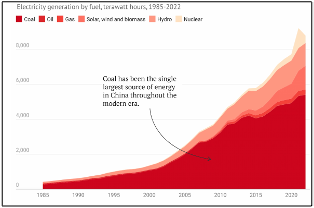
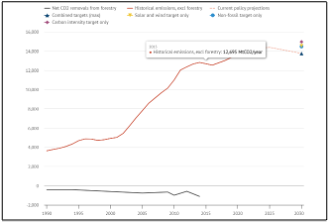
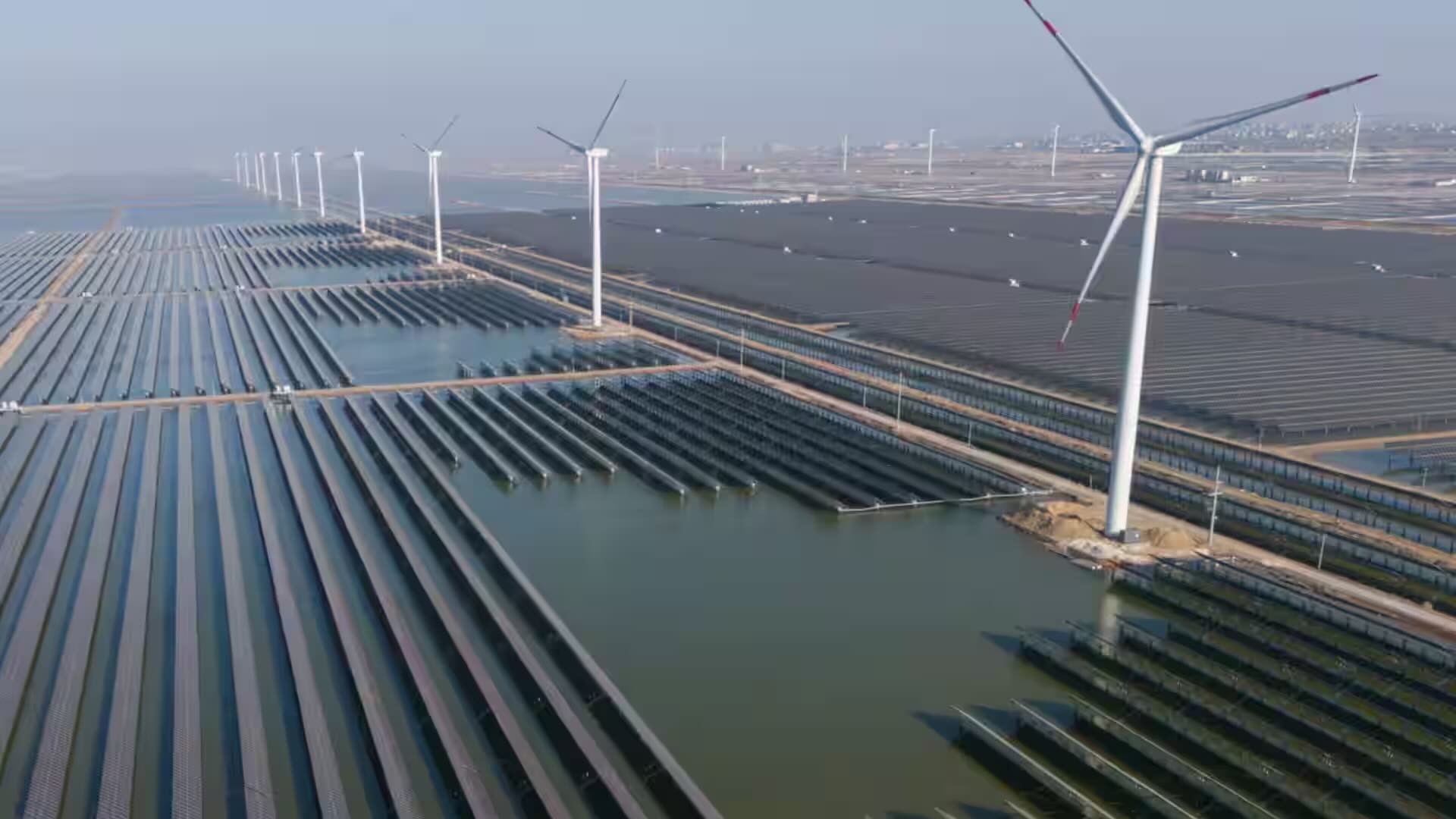
    Although China’s industrial sector is heavily reliant on coal and fossil fuels, it also boasts the world’s largest production of electric vehicles and is a leader in manufacturing solar panels and wind turbines[xv]. In contrast, developed countries, particularly the US, which withdrew from the Paris Agreement in 2017 during the Trump presidency, appear to be making less of an effort towards environmental protection.

    Developing countries, while not entirely possessed of the immense sprawl of China’s economy and population, are nonetheless not at the level of transitioning to clean energy that China is. India, too, has pledged to be carbon neutral by 2070 and to have emissions peak by 2030. Given its increasing economic growth rate, India must decrease its carbon intensity at the same pace. India lags behind China when it comes to manufacturing solar panels and other renewable energy sources. India’s central government is preparing to push energy modernization to “align with global energy transition trends.”[xvi] According to the Economic Times, particular emphasis has been laid on renewable energy sources like solar capacity and e-vehicles in the 2024-25 budget.[xvii]

    China and International Cooperation for Climate Protection

    With China producing sufficient solar capacity in 2022 to lead the rest of the world considerably and the deployment of solar power expected to rise until 2028, it is essential that the West does not make the mistake of isolating China

    Given that China has emerged as the leading manufacturer of electric vehicles (EVs), it remains to be seen whether developed and developing countries will leverage their supply chains to combat their own climate crises. While opportunities are plentiful for Western businesses to integrate with China’s cutting-edge alternatives for traditional energy sources, the United States has adopted a hardline stance towards China[xviii]. The US has imposed 100 per cent tariffs on Chinese-made e-vehicles, and solar cells face tariffs at 50 per cent.[xix] Simultaneously, rivalry and competition between the two countries on the climate front may help combat the climate dilemma and ever-increasing carbon emissions by avoiding the collective action problem. However, this will depend heavily on smooth cooperation and effective communication between Chinese authorities and developed nations within the EU and the USA[xxi]. Empowering domestic groups within countries can raise awareness of climate crises. A poll conducted in China revealed that 46% of the youth considered climate change the “most serious global issue.”[xxii] According to a survey conducted by the United Nations, 80% of people worldwide say they want climate action[vii]. With China producing sufficient solar capacity in 2022 to lead the rest of the world considerably and the deployment of solar power expected to rise until 2028, it is essential that the West does not make the mistake of isolating China[xxiii].

    Conclusion

    China has a significant advantage in its renewable energy sector. Western countries and other developing economies rely heavily on China’s green exports to address climate change urgently. China’s stringent measures to curb emissions from its coal-based industries and the growing output from its alternative energy sources reflect its proactive stance in becoming a global leader in addressing climate change — a position that surpasses other nations’ efforts. While it is debatable whether China’s commitment to reduce its carbon emissions was a political strategy to appease Europe, it is undeniable that tackling climate change is a pressing issue. With the public’s overwhelming support for implementing change in the climate sector, governments worldwide must prioritise their citizens’ needs and cooperate to develop policies that ensure a sustainable future for our planet.


    Notes:

    [i] Saurav Anand, “Solar Capacity, EVs, and Nuclear SMRs to Get Budget Boost for Energy Security – ET EnergyWorld,” ETEnergyworld.com, July 11, 2024, https://energy.economictimes.indiatimes.com/news/renewable/solar-capacity-evs-and-nuclear-smrs-to-get-budget-boost-for-energy-security/111648384?action=profile_completion&utm_source=Mailer&utm_medium=newsletter&utm_campaign=etenergy_news_2024-07-11&dt=2024-07-11&em=c2FuYS5zYXByYTIyMUBnbWFpbC5jb20.

    [ii]Saurav Anand, “Solar Capacity, EVs, and Nuclear Smrs to Get Budget Boost for Energy Security – ET EnergyWorld,” ETEnergyworld.com, July 11, 2024, https://energy.economictimes.indiatimes.com/news/renewable/solar-capacity-evs-and-nuclear-smrs-to-get-budget-boost-for-energy-security/111648384?action=profile_completion&utm_source=Mailer&utm_medium=newsletter&utm_campaign=etenergy_news_2024-07-11&dt=2024-07-11&em=c2FuYS5zYXByYTIyMUBnbWFpbC5jb20.

    [iii]Shameem Prashantham and Lola Woetzel, “To Create a Greener Future, the West Can’t Ignore China,” Harvard Business Review, April 10, 2024, https://hbr.org/2024/05/to-create-a-greener-future-the-west-cant-ignore-china.

    [iv]“Fact Sheet: President Biden Takes Action to Protect American Workers and Businesses from China’s Unfair Trade Practices,” The White House, May 14, 2024, https://www.whitehouse.gov/briefing-room/statements-releases/2024/05/14/fact-sheet-president-biden-takes-action-to-protect-american-workers-and-businesses-from-chinas-unfair-trade-practices/?utm_source=dailybrief&utm_medium=email&utm_campaign=DailyBrief2024May14&utm_term=DailyNewsBrief.

    [v]Noah J. Gordon et al., “Why US-China Rivalry Can Actually Help Fight Climate Change,” Internationale Politik Quarterly, March 24, 2023, https://ip-quarterly.com/en/why-us-china-rivalry-can-actually-help-fight-climate-change.

    [vi] Simon Evans Hongqiao Liu, “The Carbon Brief Profile: China,” Carbon Brief, November 30, 2023, https://interactive.carbonbrief.org/the-carbon-brief-profile-china/.

    [vii]“Climatechange,” United Nations, accessed July 18, 2024, https://www.un.org/en/climatechange#:~:text=The%20world’s%20largest%20standalone%20public,to%20tackle%20the%20climate%20crisis.

    [viii]Martin Jacques, “China Will Reach Climate Goal While West Falls Short,” Global Times, accessed July 19, 2024, https://www.globaltimes.cn/page/202402/1306788.shtml#:~:text=There%20has%20been%20constant%20low,than%202050%20for%20carbon%20zero.

    [ix] Steven Lee Myers, “China’s Pledge to Be Carbon Neutral by 2060: What It Means,” The New York Times, September 23, 2020

    [x] Simon Evans, Hongqiao Liu et al, “The Carbon Brief Profile: China,” Carbon Brief, November 30, 2023, https://interactive.carbonbrief.org/the-carbon-brief-profile-china/.

    [xi] China | nationally determined contribution (NDC), accessed July 17, 2024, https://www.climatewatchdata.org/ndcs/country/CHN?document=revised_first_ndc.

    [xii] Simon Evans, Hongqiao Liu et al, “The Carbon Brief Profile: China,” Carbon Brief, November 30, 2023, https://interactive.carbonbrief.org/the-carbon-brief-profile-china/.

    [xiii] Steven Lee Myers, “China’s Pledge to Be Carbon Neutral by 2060: What It Means,” The New York Times, September 23, 2020,https://www.nytimes.com/2020/09/23/world/asia/china-climate-change.html.

    [xiv] Steven Lee Myers, “China’s Pledge to Be Carbon Neutral by 2060: What It Means,” The New York Times, September 23, 2020, https://www.nytimes.com/2020/09/23/world/asia/china-climate-change.html.

    [xv] Simon Evans, Hongqiao Liu et al, “The Carbon Brief Profile: China,” Carbon Brief, November 30, 2023, https://interactive.carbonbrief.org/the-carbon-brief-profile-china/.

    [xvi] Matt McGrath, “Climate Change: China Aims for ‘Carbon Neutrality by 2060,’” BBC News, September 22, 2020, https://www.bbc.com/news/science-environment-54256826.

    [xvii] Simon Evans, Hongqiao Liu et al, “The Carbon Brief Profile: China,” Carbon Brief, November 30, 2023, https://interactive.carbonbrief.org/the-carbon-brief-profile-china/.

    [xviii] World Bank Group, “China Country Climate and Development Report,” Open Knowledge Repository, October 2022, https://openknowledge.worldbank.org/entities/publication/ef01c04f-4417-51b6-8107-b688061a879e.

    [xix] World Bank Group, “China Country Climate and Development Report,” Open Knowledge Repository, October 2022, https://openknowledge.worldbank.org/entities/publication/ef01c04f-4417-51b6-8107-b688061a879e.

    [xx] World Bank Group, “China Country Climate and Development Report,” Open Knowledge Repository, October 2022, https://openknowledge.worldbank.org/entities/publication/ef01c04f-4417-51b6-8107-b688061a879e.

    [xxi] Steven Lee Myers, “China’s Pledge to Be Carbon Neutral by 2060: What It Means,” The New York Times, September 23, 2020.

    [xxii]  Steven Lee Myers, “China’s Pledge to Be Carbon Neutral by 2060: What It Means,” The New York Times, September 23, 2020.

    [xxiii] Simon Evans, Hongqiao Liu et al, “The Carbon Brief Profile: China,” Carbon Brief, November 30, 2023, https://interactive.carbonbrief.org/the-carbon-brief-profile-china/.


    Feature Image: wionews.com  China leads the charge: Beijing develops two-thirds of global wind and solar projects.
     

  • India’s National River Linking Project: Will it work or end up a Disaster?

    India’s National River Linking Project: Will it work or end up a Disaster?

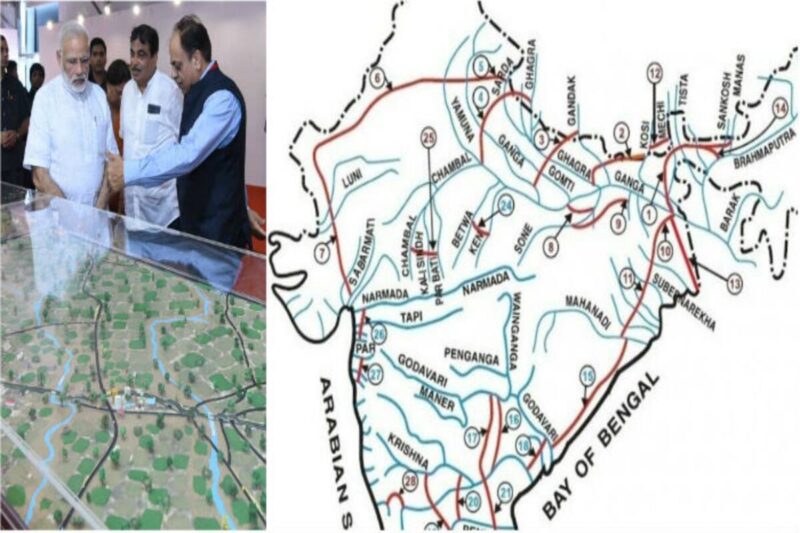
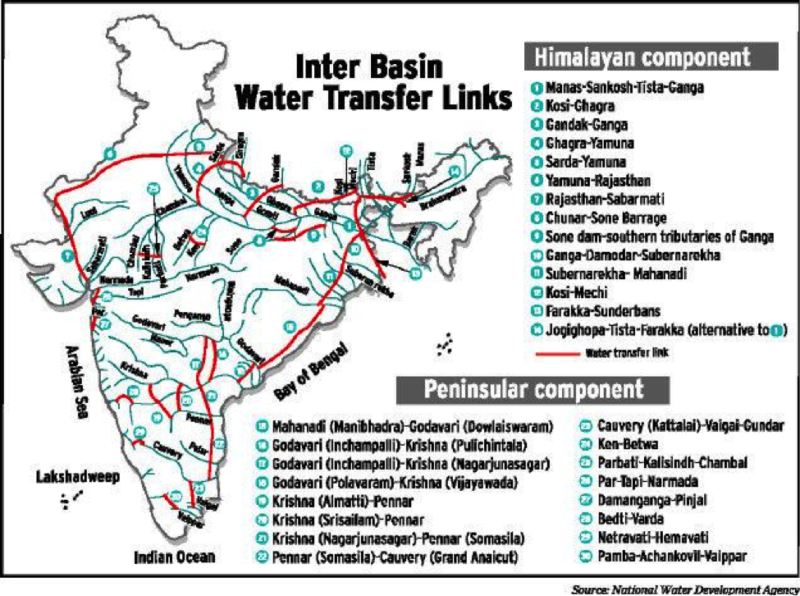
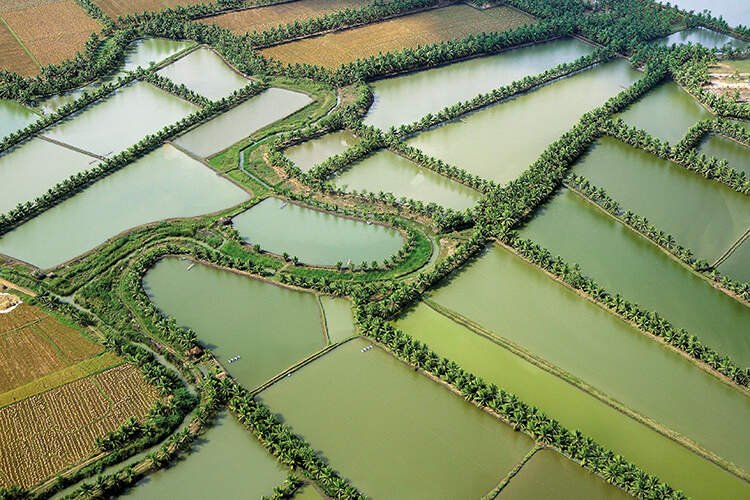
    In October, India’s ambitious scheme to build a 230-kilometre canal between the Ken and Betwa rivers was finally approved. It’s the first of many projects planned for implementation under the National River Linking Project (NRLP), which aims to connect 37 Himalayan and peninsular rivers across the country via some 3,000 reservoirs and 15,000 kilometres of dams and canals. The government has touted the NRLP, which was first mooted more than four decades ago, as the solution to drought-proofing the country. But new research suggests the US$168 billion project could actually make the drought worse. 

    – From a study by the ‘Geographical‘ – Dec 2023.


    I keep hearing that Modiji is going to unveil the often-spoken and then shelved Rivers Link Up Scheme as his grand vision to enrich the farmers and unite India. In a country where almost two-thirds of the agricultural acreage is rainfed, water is wealth. Telangana has shown the way. Once India’s driest region has in just eight years been transformed into another granary of India. Three years ago, he had promised to double farmers’ incomes by 2022, and he has clearly failed. He now needs a big stunt. With elections due in 2024, he doesn’t even have to show any delivery. A promise will do for now.

    This is also a Sangh Parivar favourite, and I am quite sure the nation will once again set out to undertake history’s greatest civil engineering project by seeking to link all our major rivers. It will irretrievably change India. If it works, it will bring water to almost every parched inch of land and just about every parched throat in the land.

    On the other hand, if it doesn’t work, Indian civilization as it exists even now might then be headed the way of the Indus Valley or Mesopotamian civilizations destroyed by a vengeful nature, for interfering with nature is also a two-edged sword. If the Aswan High Dam turned the ravaging Nile into a saviour, the constant diversion of the rivers feeding Lake Baikal have turned it into a fast-receding and highly polluted inland sea, ranking it as one of the world’s greatest ecological disasters. Even in the USA, though the dams across the mighty Colorado have turned it into a ditch when it enters Mexico, California is still starved for water.

    I am not competent to comment on these matters, and I will leave this debate for the technically competent and our perennial ecological Pooh-Bahs. But the lack of this very debate is cause for concern. It is true that the idea of linking up our rivers has been afloat for a long time. Sir Arthur Cotton was the first to propose it in the 1800’s. The late KL Rao, considered by many to be an outstanding irrigation engineer and a former Union Minister for Irrigation, revived this proposal in the late 60’s by suggesting the linking of the Ganges and Cauvery rivers. It was followed in 1977 by the more elaborate and gargantuan concept of garland canals linking the major rivers, thought up by a former airline pilot, Captain Dinshaw Dastur. Morarji Desai was an enthusiastic supporter of this plan.

    The return of Indira Gandhi in 1980 sent the idea back into dormancy, where it lay all these years, till President APJ Abdul Kalam revived it on the eve of the Independence Day address to the nation in 2002. It is well known that Presidents of India only read out what the Prime Ministers give them, and hence, the ownership title of Captain Dastur’s original idea clearly was vested with Atal Behari Vajpayee.

    India’s acute water problem is widely known. Over sixty per cent of our cropped areas are still rain-fed, much too abjectly dependent on the vagaries of the monsoon. The high incidence of poverty in certain regions largely coincides with the source of irrigation, clearly suggesting that water for irrigation is integral to the elimination of poverty. In 1950-51, when Jawaharlal Nehru embarked on the great expansion of irrigation by building the “temples of modern India” by laying great dams across our rivers at places like Bhakra Nangal, Damodar Valley and Nagarjunasagar, only 17.4% or 21 million hectares of the cropped area of 133 million hectares was irrigated. That figure rose to almost 35% by the late 80s, and much of this was a consequence of the huge investment by the government in irrigation, amounting to almost Rs. 50,000 crores.

    Ironically enough, this also coincided with the period when water and land revenue rates began to steeply decline to reach today’s zero level. Like in the case of power, it seems that once the activity ceased to be profitable to the State, investment too tapered off.

    The scheme is humongous. It will link the Brahmaputra and Ganges with the Mahanadi, Godavari and Krishna, which in turn will connect to the Pennar and Cauvery. On the other side of the country, it will connect the Ganges, Yamuna, with the Narmada, traversing in part the supposed route of the mythical Saraswathi. This last link has many political and mystical benefits, too.

    There are many smaller links as well, such as joining the Ken and Betwa rivers in MP, the Kosi with the Gandak in UP, and the Parbati, Kalisindh and Chambal rivers in Rajasthan. The project, when completed, will consist of 30 links, with 36 dams and 10,800 km of canals diverting 174,000 million cubic meters of water. Just look at the bucks that will go into this big bang. It was estimated to cost Rs. 560,000 crores in 2002 and entail the spending of almost 2% of our GNP for the next ten years. Now, it will cost twice or more than that, but our GDP is now three times more, and it might be more affordable and, hence, more tempting to attempt.

    The order to get going with the project was the output of a Supreme Court bench made up of then Chief Justice BN Kirpal and Justices KG Balakrishnan and Arjit Pasayat, which was hearing a PIL filed by the Dravida Peravai, an obscure Tamil activist group. The learned Supreme Court sought the assistance of a Senior Advocate, Mr Ranjit Kumar, and acknowledging his advice, recorded: “The learned Amicus Curiae has drawn our attention to Entry 56 List of the 7th Schedule to the Constitution of India and contends that the interlinking of the inter-State rivers can be done by the Parliament and he further contends that even some of the States are now concerned with the phenomena of drought in one part of the country, while there is flood in other parts and disputes arising amongst the egalitarian States relating to sharing of water. He submits that not only these disputes would come to an end but also the pollution levels in the rivers will be drastically decreased, once there is sufficient water in different rivers because of their inter-linking.”

    The only problem with this formulation is that neither the learned Amicus Curiae nor the learned Supreme Court are quite so learned as to come to such sweeping conclusions.

    Feature Image Credit: geographical.co.uk

    Opinions expressed are that of the author and do not reflect TPF’s position on the issue.

  • Seabed: “to mine or not to mine”

    Seabed: “to mine or not to mine”

    Seabed mining offers new vistas for business partnerships and joint ventures among different industries in the offshore mining supply chains.

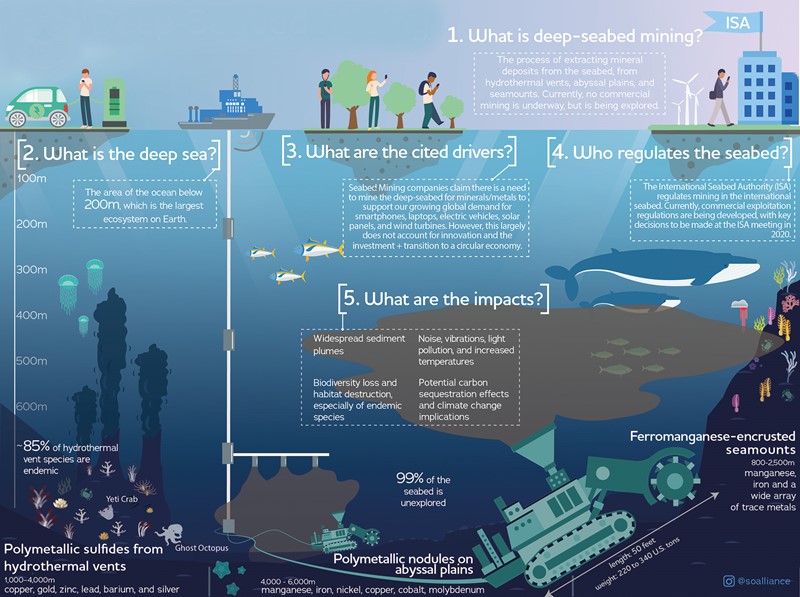
    The month-long debate “to mine or not to mine” has ended inconclusively at the 28th session of the International Seabed Authority (ISA) Assembly from 28 June to 28 July 2023 in Kingston, Jamaica amid calls for a “ban /suspension/precautionary pause” on any extractive activities.

    Figure Credit: eandt.theiet.org

    The ‘naysayers’ vehemently argued for the protection of the oceans given that these large bodies of water are already experiencing multiple and diverse nature and human-induced challenges such as climate change, unsustainable fishing, marine pollution etc. Furthermore, any attempt to mine the seabed will have far-reaching adverse impacts on marine life and result in biodiversity loss keeping in mind that human knowledge about the deep sea ecosystems is very little.

    Those in favour of seabed mining attempted to convince that energy transition is critical for sustainable development and for that a sustained supply of nickel, manganese, cobalt, and copper, is inescapable. These metals/minerals would have to be sourced from the seabed. For the time being, the representatives of the ISA Member States and other stakeholders have returned home to mull over the issue of seabed mining.

    The sudden hyper-activity at the ISA is a result of the June 2021 submission by Nauru, a Pacific island nation which submitted an application for approval from the ISA to commence extraction activities relying on the “two-year rule,” under which the “Council shall complete the adoption of the relevant rules, regulations, and procedures (RRPs) within two years from the submission”. The two-year deadline expired on 9 July 2023, but the ISA Council, a 36-member body executive arm responsible for approving contracts with private corporations and government entities, among other things, announced that it would “continue the negotiations on the draft exploitation regulations”.

    Meanwhile, at home, the Government of India is all set to exploit oceanic resources. Earlier this month, the Indian Parliament (Rajya Sabha and Lok Sabha) passed the Offshore Areas Mineral (Development and Regulation) Amendment Bill 2023 which enables extraction activities in offshore areas for mineral resources.

    It is true that offshore resource development has been a much-neglected area other than the oil and gas sectors. This is notwithstanding the seminal contributions made by the Geological Survey of India (GSI) which has been leading offshore scientific research and survey activities since the early sixties. The Marine and Coastal Survey Division (MCSD) of the GSI conducts numerous related activities including seabed mapping and exploration within the Indian EEZ and is supported by three ocean-going vessels.

    According to the GSI, as of January 2023, nearly 95 % of India’s EEZ of 2.159 million square kilometres has been surveyed. Since 2022, the GSI has been carrying our seabed mapping in international waters and has covered over 70,000 square kilometres till December 2023 for “generation of baseline data along with the search for possible mineral occurrences in the Ninety East Ridge near the Equator, Indian Ocean and the Laxmi Basin (Block-I, II and III), Arabian Sea by deploying its vessels”.

    The Indian EEZ is endowed with 1,53,996 million tonnes of live mud particularly off Gujarat and Maharashtra coasts, and 745 million tonnes of construction-grade sand has been found along the Kerala coast. The Bay of Bengal coast (Odisha, Andhra Pradesh and Tamil Nadu) and the Arabian Sea coast (Maharashtra and Kerala) are rich in heavy mineral and Polymetallic Ferro-Manganese nodules are available in the Andaman Sea and waters off Lakshadweep islands.

    Polymetallic nodules (Copper, Cobalt, Nickel, Manganese, Rare earth, etc.) are particularly important to support India’s mission to promote the use of clean energy. In November 2022, during the G20 summit in Indonesia Prime Minister Narendra Modi told the participating countries that by 2030, half of India’s electricity will be “generated from renewable sources,”

    The Offshore Areas Mineral (Development and Regulation) Amendment Bill 2023, among many issues, has introduced a number of initiatives including the “auction” of offshore mineral exploration sites and mining rights to companies, including from the private sector, thus creating a level playing field for business competition. The Bill provides for two types of operating rights through auction to the private sector (a) production lease and (b) composite license. It merits mention that the provision for “renewal of production leases has been scrapped with a 50-year lease period to remove uncertainty for operators” which will “give confidence to investors by bringing in transparency and fair play,”

    Seabed mining offers new vistas for business partnerships and joint ventures among different industries in the offshore mining supply chains. For instance, lifting of the extracted ore and carrying it to storage sites ashore is an opportunity for the maritime transportation sector. Similarly, environmental impact assessment, and restoration techniques when needed is a unique industry. Likewise, Industry 4.0 technology developers have opportunities to support Marine Spatial Planning (MSP), bio-remediation, bio-prospecting, and a variety of other seabed mining sectors.

    This article was published earlier in kalingainternational.com

    Feature Image Credit: euronews.com

  • Most of the world’s ocean is unprotected: This is why that needs to change

    Most of the world’s ocean is unprotected: This is why that needs to change

    • More than three billion people rely on the ocean for their livelihoods, most of them in developing countries.
    • Only 7% of the world’s ocean, a vital resource for fighting climate change, is under any protection, and just 3% is highly protected.
    • The ‘Blue Leaders’ campaign urges countries to join international treaties that would protect the ocean and all the benefits it provides to humanity.

    The ocean is a vital life support system for the planet, and we are running out of time to preserve the marine biodiversity that it is home to and upon which we all depend.

    Having played a key role thus far in the mitigation of climate change, our blue ally is quickly running out of steam. With water temperature and sea levels rising, acidification, pollution, unsustainable exploitation of marine resources, depletion of fish stocks, the near disappearance of coral reefs, and the destruction of fragile ecosystems, the ocean is being disproportionately impacted by human activities.

    Now, more than ever, we must consider the possible implications of its demise.

    The ocean plays an indispensable role in providing and regulating resources that are vital to sustaining life on Earth — from rainwater to drinking water, and as a source of our food, weather, and the oxygen we breathe

    Securing our ocean’s future

    Recognizing the key role that the ocean plays for people all over the world, the United Nations has adopted a sustainable development goal focused on conserving the ocean, with targets for action on an array of problems. While some progress has been made, more is yet needed to secure our ocean’s future.

    Scientists have called for securing at least 30% of marine waters as fully or highly protected sanctuaries, free from damaging human activities like bottom trawl fishing and seabed mining. By doing so, we can give the ocean a fighting chance in the face of climate change.

    Today, just 7% of the world’s ocean is under protection, and only 3% is highly protected. Moreover, there is no legal mechanism in place to establish fully protected marine areas in the high seas and deep seabed areas, our shared international waters that constitute nearly two thirds of the global ocean.

    Marine coastlines are home to 2.4 billion people — approximately 40% of the world’s population. More than three billion people rely on the ocean for their livelihoods, most of them in developing countries. Degradation of coastal and marine ecosystems threatens the physical, economic, and food security of communities around the world.

    Continuing along our current path towards ocean destruction will impact human lives and livelihoods.

    The role of the ocean and coastal and marine ecosystems in climate change mitigation is often overlooked. Protecting and restoring ocean habitats such as seagrass beds, salt marshes, and mangroves, and their associated food webs, can sequester carbon dioxide from the atmosphere at rates up to five times greater than tropical forests.

    Choosing not to prioritize the protection of our ocean is depriving us of the tools we desperately need to achieve our climate mitigation goals.

    Commitments are needed

    With multiple high-level ocean negotiations planned in 2022, this year is one filled with opportunity for the preservation of our oceans. Our only hope for a better future lies in the adoption of unprecedentedly bold ocean conservation commitments.

    The science is clear: to maximize the health and resilience of the global ocean, at least 30% of it must be protected through a network of “highly” and “fully” protected Marine Protected Areas (MPAs) by 2030.

    To achieve this goal, a new treaty for the conservation and management of marine life in the high seas must be concluded to ensure that human activities are managed to prevent significant adverse impacts, with robust oversight mechanisms and provisions to establish fully protected MPAs in the high seas.

    Governments who have joined the “Blue Leaders” campaign call on all countries to rally behind these commitments at the upcoming meeting of the Conference of the Parties to the Convention on Biological Diversity (CoP15), expected to take place in Kunming, China in August 2022.

    Another key moment is the UN Ocean Conference, which is scheduled to be held in Lisbon, Portugal, from 27 June to 1 July. Each of these meetings offers an opportunity for countries to come together, join the Blue Leaders, and take the action that our ocean desperately needs.

    The ocean knows no boundaries: it unites us all as a physical link between coastal countries, communities, and individuals, and as the source of our food, water, and air. We all face similar challenges and similar opportunities. Let us be bold for the ocean together.

    Feature Image: pewtrusts.org
    This article was published earlier in weforum.org  and is republished under the Creative Commons 4.0 International Public License.
  • The “loss and damage” agenda at COP27

    The “loss and damage” agenda at COP27

    The dialogues on Climate Change Action have failed to produce effective measures. At the heart of the problem is the refusal of the developed countries to accept the reality that they were the beneficiaries of the industrial revolution, colonialism, and imperialism and have contributed the maximum to the current problems humanity faces on account of climate change. Hence, two-thirds of the world’s assertion that developed nations bear the costs of implementing corrective measures is very valid and logical.

    The 27th Conference of Parties (COP) of the United Nations Framework Convention on Climate Change (UNFCCC) was hosted by the Government of the Arab Republic of Egypt from 06 November to 18 November (extended to 20 November). This conference comes at a time when the world witnessed massive heatwaves, flooding in Pakistan, wildfires across Spain and California, and droughts in East Africa. The mission of the conference is to take collective action to combat climate change under the Paris agreement and the convention. After a decade of climate talks, the question is, “are countries ready to take collective action against climate change”?

    Developed Nations’ Responsibility and Accountability

    Financial compensation remains a huge contestation point between developed and developing countries. Developing countries or the Global South face the adverse effects of climate change and demand compensation for the historical damage caused by colonialism and resource extraction that aided in the development of the Global North. This includes countries in the EU and the United States. Developed countries bear the most responsibility for emissions leading to global temperature rise — between 1751 and 2017, the United States, the EU and the UK were responsible for 47% of cumulative carbon dioxide emissions compared to just 6% from the entire African and South American continents. At COP15 in Copenhagen in 2009, Global North nations agreed to pledge $100 billion (€101 billion) annually by 2020 to help developing countries adapt to the impacts of climate change, for example, by providing farmers with drought-resistant crops or paying for better flood defences. But according to the Organization for Economic Cooperation and Development (OECD), which tracks funding, in 2020 wealthy countries pledged just over $83 billion.

    Developed countries bear the most responsibility for emissions leading to global temperature rise — between 1751 and 2017, the United States, the EU and the UK were responsible for 47% of cumulative carbon dioxide emissions compared to just 6% from the entire African and South American continents.

    Such compensation for loss and damage has been a focal point in all climate summits since 1991. In terms of institutional developments, the COP19 conference in 2013 established the Warsaw Mechanism for Loss and Damage, which is supposed to enhance global understanding of climate risk, promote transnational dialogue and cooperation, and strengthen “action and support”. At COP25, the Santiago Network on Loss and Damage (SNLD) was set up to provide research and technical assistance on the issue of loss and damage from human-induced climate change. The meeting did not discuss the working process of the network and hence it was taken up in COP26, where no elaborate changes were made. Although in COP26, the Glasgow facility to finance solutions for loss and damage was brought by G77 countries, developed countries such as the US and the EU bloc did not go beyond agreeing to a three-year dialogue.

    Developed countries constantly focus on holding dialogues rather than coming up with solutions for climate risk mitigation.

    The US’s stance on financing vulnerable countries to find solutions against climate change is constantly shifting. The trend indicates that the US wants to focus on curbing global warming rather than dwell on past losses and damages that have already occurred. The Global North is reluctant to acknowledge the mere definition of loss and damage, as an acknowledgement will make them liable for 30 years’ worth of climate change impact.  Developed countries constantly focus on holding dialogues rather than coming up with solutions for climate risk mitigation. In a statement prior to COP27, U.S. climate envoy John Kerry expressed concern about how the shifting focus on loss and damage “could delay our ability to do the most important thing of all, which is [to] achieve mitigation sufficient to reduce the level of adaptation.”

    USA’s leads Evasive Tactics

    The Bonn Summit held in June 2022 which set a precedent for the COP27 agenda ended in disagreement as the US and EU refused to accept funding for loss and damage as an agenda. Although, during the conclusion of COP27, the countries were successful in agreeing to establish a fund for loss and damage. Governments also agreed to establish a ‘transitional committee’ to make recommendations on how to operationalize both the new funding arrangements and the fund at COP28 next year. The first meeting of the transitional committee is expected to take place before the end of March 2023.

    Parties also agreed on the institutional arrangements to operationalize the Santiago Network for Loss and Damage, to mobilise technical assistance to developing countries that are particularly vulnerable to the adverse effects of climate change. Governments agreed to move forward on the Global Goal on Adaptation, which will conclude at COP28 and inform the first Global Stocktake, improving resilience amongst the most vulnerable. New pledges, totalling more than USD 230 million, were made to the Adaptation Fund at COP27. These pledges will help many more vulnerable communities adapt to climate change through concrete adaptation solutions.

    Despite a groundbreaking agreement, the most common question asked by the public is “are the climate summits any good?”

    The question arises due to the absence of effective leadership to monitor or condemn nations over the destruction of the environment. The summits have created a sense of accountability for all nations, irrespective of the stage of vulnerability. While vulnerable states bear a higher cost due to climate change, all states collectively pledge to reduce carbon emissions and achieve net-zero emissions by 2050. While a monitoring mechanism is absent, non-governmental organisations (NGOs) and civil societies actively advocate for climate change mitigation measures and also criticise both state and non-state actors for their lack of initiatives against the cost. Incidentally, COP27 partnered with Coca-Cola for sponsorship and many activists slammed the move as Coca-Cola is one of the top five polluters in 2022, producing around 120 billion throwaway plastic bottles a year.

    Apart from that, many other funding networks and initiatives have been introduced to support vulnerable countries against climate change. Under Germany’s G7 presidency, the G7 along with the vulnerable 20 countries or V20  launched the Global Shield against Climate Risks during COP27. The Shield gathers activities in the field of climate risk finance and preparedness together under one roof. Under the Shield, solutions to provide protection will be devised that can be implemented swiftly if climate-related damages occur. At COP27, Chancellor Olaf Scholz announced Germany’s contribution of 170 million euros to the Shield. Of this, 84 million euros are earmarked for the central financing structure of the Shield, the other funds for complementary instruments of climate risk financing, which will be implemented towards concrete safeguarding measures over the next few years.

    On 20 September, Denmark became the first developed country in the world to provide financial compensation to developing countries for ‘loss and damage’ caused by climate change. The country pledged approximately EUR 13 million (100 million Danish krone) to civil society organisations based in developing nations working on climate change-related loss and damage. Germany and Denmark are so far the only financial supporters of the initiative launched at COP27.

    What can India do?

    India has launched Mission LiFE, an initiative to bring a lifestyle change that reduces the burden on the environment. During the event, the MoEFCC – UNDP Compendium ‘Prayaas Se Prabhaav Tak – From Mindless Consumption to Mindful Utilisation’ was launched. It focuses on reduced consumption, circular economy, Vasudhaiva Kutumbakam, and sustainable resource management. India has also signed the Mangrove Alliance for Climate (MAC), determined to protect mangroves and create a carbon sink of 3 billion CO2 by expanding the forest cover.

    India has maintained a stance where it has neither advocated for nor against financial compensation for loss and damage. However, it has always called on developed countries to provide finance for developing technology or sharing technical know-how to reduce climate risk. Such an approach can help other countries to push for financial aid to develop technology instead of using their own resources.

    Further, India holds a unique position among developing countries as an emerging economy. With its diplomatic prowess under the Modi government, India can play an ideal role in negotiating with developed countries. India has maintained a stance where it has neither advocated for nor against financial compensation for loss and damage. However, it has always called on developed countries to provide finance for developing technology or sharing technical know-how to reduce climate risk. Such an approach can help other countries to push for financial aid to develop technology instead of using their own resources. India is also focused on phasing out the use of fossil fuels and not just the use of coal, which is another consistent move that adds to the country’s credentials. With the weaponization of energy by Russia since the onset of the Ukraine war, India’s call for action has garnered intensive support from both developed and developing nations. With the support of the Global South, India can assume a leadership role in establishing south-south cooperation with respect to climate risk mitigation and shift to renewable energy such as solar power.

    Conclusion

    Climate funds are important for designing and implementing solutions as developing and vulnerable countries find it difficult to diversify resources from developmental activities. The question largely remains whether the COP27 countries will adhere to the agreement concluded at the summit. There is no conclusive evidence on when the fund will be set up and the liability if countries fail to contribute to the fund. Eventually, it comes down to the countries- both state and non-state actors to effectively reduce fossil fuel consumption and reduce wastage, as many countries still focus on exploiting African gas reserves to meet their energy requirements. Ambitious goals with no actual results are a trend that is expected to continue till the next summit, and with such a trend the world has a long way to go to curb the temperature at 1.5 degree Celsius at pre-industrial levels.

    Feature Image Credit: www.cnbc.com

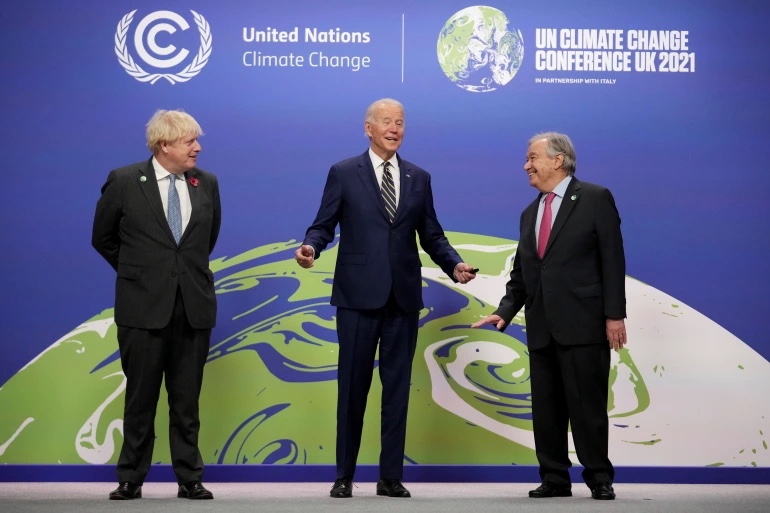
    Article Image: aljazeera.com 

  • Reality of India’s Performance as put Forth by the Environmental Performance Index (EPI)

    Reality of India’s Performance as put Forth by the Environmental Performance Index (EPI)

    India ranked 117 out of 180 countries as per the latest “The State of India’s Environment Report 2021” released by the Centre for Science and Environment (CSE) in June 2021, while it ranked 87th out of 115 countries in the Energy Transition Index (ETI) released by the World Economic Forum in 2021

    Taking adequate measures to combat climate change and global warming has become a key priority of nation-states today. With a global understanding that reducing greenhouse gas emissions, achieving carbon neutrality, and switching to renewable sources of energy are the ways forward for sustainable development, countries around the world, including India, have made various pledges and commitments to achieve defined targets in respect of climate change and environmental protection. While developing countries have called for the adoption of the principle of ‘Common but Differentiated Responsibilities and Respective Capabilities’ (CBDR–RC), India, as the third largest carbon emitter in the world, has considerable responsibility in enacting the much-needed changes. In the budget presented for 2022-23, the Indian government has pledged to reach net-zero carbon emissions by 2070, and achieve a non-fossil fuel energy capacity of 500 GW by 2030. It further seeks to meet 50% of the energy requirements from renewable sources, while also reducing the total projected carbon emissions by 1 billion tonnes and reducing the carbon intensity of the economy to less than 45%. These are stiff targets to achieve, maybe even impractical in the view of some analysts.

    While the Indian government has celebrated the inauguration of various policies and schemes which would contribute to these lofty goals, India’s performance according to global indices reveal an immediate need for a change of tactics.  India ranked 117 out of 180 countries as per the latest “The State of India’s Environment Report 2021” released by the Centre for Science and Environment (CSE) in June 2021, while it ranked 87th out of 115 countries in the Energy Transition Index (ETI) released by the World Economic Forum in 2021. Similar positions have been held by the country in other notable indices like the Climate Change Performance Index (CCPI) where India was ranked 10th out of 60 countries and the European Union released by German Watch. Thus, India’s rank of 180 out of 180 countries in the Environment Performance Index came as a surprise to many. 

    The Environment Performance Index presents a data-driven summary of the state of sustainability around the world using 40 performance indicators based on climate change performance, environmental health, and ecosystem vitality. It is released biennially by the Yale Centre for Environmental Law and Policy and the Columbia University Centre for International Earth Science Information Network in partnership with the World Economic Forum. India’s position in the latest 2022 report is a step down from EPI-2020 where it ranked 168th with a score of 27.6. 

    India’s aggregate score according to EPI -2022 is 18.9 with the report stating that “India slips to the bottom of the rankings for the first time, with increasingly hazardous air quality and quickly rising greenhouse gas emissions.” Further, according to EPI, India also ranks poorly in terms of rule of law, corruption control, and government performance. On its release, the results have been contested by the Indian government which claimed that many of the indicators used are based on “unfounded assumptions” and that these were based on “surmises and unscientific methods”. 

    According to the concerns raised by the Indian government, Projected GHG Emissions Levels in 2050 which is the new indicator in the Climate Policy Objective,  is calculated in the Environment Performance Index using the average rate of change in emissions over the previous ten years rather than modelling that takes into account a longer time period and which considers other factors like the level of renewable energy capacity and usage, extra carbon sinks, energy efficiency and the like in the individual nations. While the principle of ‘Common But Differentiated Responsibility and Respective Capabilities’ (CBDR–RC) has been enshrined in the United Nations Framework Convention on Climate Change (UNFCCC) acknowledges the different capabilities and differing responsibilities of individual countries in addressing climate change, the EPI report’s emphasis on data and statistics have led to the overlooking of this principle in the course of its analysis. The time period used by the EPI of 10 years with regards to projected Greenhouse Gas emissions is unlike other indices like the CCPI (Climate Change Performance Index) which uses a timeframe of 5 years for its calculations (to take into consideration the new and renewed commitments made by countries at the 2015 Paris conference). The CCPI in comparison also uses a past trends indicator under the category of GHG emissions (with a 40 % weightage) where historical GHG emissions (Co2, Methane, Fluorinated gases, Nitrous Oxide) are considered with reference to the base year of 1990 as put forth by the Kyoto Protocol. The absence of acknowledgement of India’s historical emissions which have been minimal i.e.:  from 1870 to 2019, its emissions have added up to a minuscule 4 percent of the global total is also noticeable in the EPI findings. 

    The exclusion of the Indian Forest cover, which is far greater than many countries, as a vital carbon sink is a significant downfall of the EPI analysis

    Forests and wetlands have been globally acknowledged as vital carbon sinks with great effectiveness in controlling carbon levels. The world’s forests absorb a total of 15.6 gigatons of CO2 per year although these figures are threatened by threats like deforestation, natural disasters, and forest fires. According to the latest Forest Survey of India report, the total forest cover in India (2022) is 7,13,789 square kilometres which are 21.71% of the total geographical area. In comparison, Denmark, which topped the EPI rankings 2022, officially possesses  608,078 ha or 6080.78 square kilometres of forest corresponding to 14.1% of the land area. The exclusion of the Indian Forest cover, which is far greater than many countries, as a vital carbon sink is a significant downfall of the EPI analysis. 

    Wetland ecosystems have been scientifically proven as one of the most biologically productive areas on the planet. They provide a wide range of important services, such as food, water, groundwater recharge, water purification, flood moderation, erosion control, microclimate regulation and landscape aesthetics outside of being viable carbon sinks. According to the National Wetland Inventory and Assessment compiled by the Indian Space Research Organisation (ISRO), wetlands are spread over 1,52,600 square kilometres (sq. km) in India which is 4.63 percent of the total geographical area of the country. The difference in topography of the high-ranking countries in the index with India can mean that the effect of wetlands and forests can have a significant impact on India’s rankings as opposed to countries like Denmark where wetlands make up only 0.6 % of the land area where the impact is comparatively much lower. 

    The government further argues that the equity principle is given relatively little weightage in the form of statistics such as GHG emission per capita and GHG emission intensity trend which can be found to be grounded in the EPI’s disregard of the CBDR principle. The EPI rankings with regards to GHG emissions are also in contrast to other indices like the CCPI where seven G20 countries received a very low rating for their performance, including Russia (with 165 ranking with respect to GHG emissions and an overall ranking of 112), Australia (with 171 ranking with respect to GHG per capita and an overall rank of 17), the United States (with 167 ranking with respect to GHG per capita and overall rating of 43), and Canada (with 169 ranking with respect to GHG emissions and overall rating of 49). 

    While the EPI utilises indicators like Pesticides and N mgmt index under the category of agriculture and solid waste, recycling and ocean plastics under the category of waste management, other indicators such as agricultural biodiversity, soil health, food loss and waste are also not included in the report despite the fact that these are critical for developing nations with significant agrarian populations. Furthermore, the index computes the geographical distribution of various ecosystems but makes no mention of their efficiency and functioning with regard to climate change which can have a significant impact when gauging factors like biodiversity, waste management, air quality and fisheries. 

    India installed 15.4 gigawatts (GW) of renewable energy projects in 2021 alone but operations of these projects remain a fraction of these capacities

    Thus, it can be found that certain critiques of the Environment Performance Index are well founded and must be acknowledged, and respective changes must be introduced to improve the reach, relevance, and functionality of the index. However, even with the addition of these factors, the fact remains that India’s performance on climate action is still underwhelming with significant gaps between capabilities and action in reality. India installed 15.4 gigawatts (GW) of renewable energy projects in 2021 alone but operations of these projects remain a fraction of these capacities. Therefore, the government must concentrate on redoubling its efforts to meet its 2030 targets and use the reports of various indices including the Environment Performance Index as a gauge of the country’s closeness to achieving its promised goals. 

    Feature Image Credits: The New York Times

  • The Rich World’s Climate Hypocrisy

    The Rich World’s Climate Hypocrisy

    Many people around the world already consider the United Nations Climate Change Conference (COP26) in Glasgow a disappointment. That is a massive understatement. Global leaders – especially in the developed world – still fail to grasp the gravity of the climate challenge. Although they acknowledge its severity and urgency in their speeches, they mostly pursue short-term national interests and make conveniently distant “” emissions pledges without clear and immediate commitments to act.

    Many of the statements by developed-country leaders at the COP26 summit in Glasgow are at odds with their actual climate policies, and with what they say in other settings. Their short-sighted strategy ultimately benefits no one – including the powerful corporate interests whose immediate financial interests it serves

    For example, could the real US government please stand up and declare itself? In his recent address in Glasgow, President Joe Biden said that “as we see current volatility in energy prices, rather than cast it as a reason to back off our clean energy goals, we must view it as a call to action.” Indeed, “high energy prices only reinforce the urgent need to diversify sources, double down on clean energy deployment, and adapt promising new clean-energy technologies.”

    But just three days later, the Biden administration claimed that OPEC+ is endangering the global economic recovery by not increasing oil production. It even warned that the United States is prepared to use “all tools” necessary to reduce fuel prices.

    This is one of the most blatant recent examples of climate hypocrisy by a developed-country leader, but it is by no means the only one. And the duplicity extends to the proceedings at COP26 itself, where developing-country negotiators are apparently finding that advanced economies’ positions in closed-door meetings are quite different from their public stances.

    Rich countries, which are responsible for the dominant share of global carbon-dioxide emissions to date, are dithering on longstanding commitments to provide climate finance to developing countries. They are also resisting a proposed operational definition that would prevent them from fudging what counts as climate finance. And they are still treating adaptation to climate change as a separate stream and refusing to provide finance to avert, minimize, and address the loss and damage associated with climate change in the worst-affected countries.

    The declared COP26 promises also reveal the developed world’s double standards. A group of 20 countries, including the US, pledged to end public financing for “unabated” fossil-fuel projects, including those powered by coal, by the end of 2022. But the prohibition applies only to international projects, not domestic ones. Significantly, the US and several other signatories refused to join the 23 countries that separately committed to stop new coal-power projects within their borders and phase out existing coal infrastructure.

    But even if the pledges in Glasgow had been more solid, rich-country governments, in particular, face a major credibility problem. They have previously made too many empty climate promises, undermining the interests of developing countries that have contributed little to climate change. Advanced economies have made emissions-reduction commitments that they have not kept, and reneged on their assurances to developing countries regarding not only climate finance but also technology transfer.

    The climate finance commitment is now 12 years old. At COP15 in Copenhagen, advanced economies promised to provide $100 billion per year to the developing world, and the 2015 Paris climate agreement made it clear that all developing countries would be eligible for such financing. This amount is trivial relative to developing countries’ need, which is in the trillions of dollars, and also when compared to the vast sums that rich countries have spent on fiscal and monetary support for their economies during the COVID-19 pandemic.

    But the developed world has not fulfilled even this relatively modest pledge. In 2019, total climate finance channeled to developing countries was less than $80 billion; the average amount each year since 2013 was only $67 billion. And this figure massively overstated the actual flows from developed-country governments, because bilateral public climate finance (which should have been provided to the developing world under the Paris accord) averaged less than $27 billion per year. The remainder came from multilateral institutions – including development banks – and private finance, which rich-country governments sought to take credit for mobilizing. Compared to this paltry sum, global fossil-fuel subsidies amounted to an estimated $555 billion per year from 2017 to 2019.

    Likewise, the rich world’s promises of green technology transfer have become mere lip service. Developed-country governments allowed domestic companies to cling to intellectual-property rights that block the spread of critical knowledge for climate mitigation and adaptation. When countries like China and India have sought to encourage their own renewable-energy industries, the US, in particular, has filed complaints with the World Trade Organization.

    This short-sighted strategy ultimately benefits no one, including the firms whose immediate financial interests it serves, because it accelerates the planet’s destruction and the revenge of nature on what now appears to be terminally stupid humanity. The student and activist marches in Glasgow against this myopic approach are important but are nowhere near enough to force governments to change course.

    The problem is that powerful corporate interests are clearly intertwined with political leadership. People around the world, and especially in the Global North, must become much more vociferous in insisting on meaningful climate action and a real change in economic strategy that resonates beyond national borders. Only that can end the rich world’s green hypocrisy and save us all.

    This article was published earlier in project-syndicate.org

  • Drought or Floods? : Tamil Nadu Needs An Integrated Water Management Policy

    Drought or Floods? : Tamil Nadu Needs An Integrated Water Management Policy

    Tamil Nadu not only requires a more sustainable and scientific approach to water management but an integrated development model that no longer separates the human environment, basic needs, ecological justice and public accountability   

    Every time we are faced with drought or floods, we all complain about the absence of a more sustainable water management policy in the state.  Politicians and the political parties blame each other and present competing narratives of their achievements when people are caught in deep crises of survival either due to bad drought or worse floods.  The bureaucrats, police, public charity and the brave hearts work round the clock while the government monitors the rescue, relief and resettlement of the victims though patterns and intensity of engagements differ between the floods and drought situation.

    We then return to our normal selves when the floods recede and the victims of extreme drought disappear from our sight.  What happened to the excessive water during the floods and the thirsty/hungry people in drought situations who seemed to have gone out of sight? It is important to argue for a more sustainable water management policy and at the same time explore the challenges in developing and executing such a policy. We do not have an open and democratic media/socio-political environment to discuss and debate between the ministers, bureaucrats, experts, non-state actors and creative members of the civil society beyond the blame game. A curious gap is that there are no solutions emerging while causes are either understated or overemphasized by different experts and groups depending on their professional background and personal worldview.


    The government appears to be in a catch-22 situation over urbanization, industrialization, population growth, migrations, and the urban slums.  The impact of rural poverty, state of agriculture, unemployment, migrations as well as the level of the rural-urban divide has not been studied adequately even in a developed state like Tamil Nadu.  But there is no escape from the truth that the government is the major violator and path setter for more violations of environmental principles and laws of nature by the greedy builders and corporate interests.

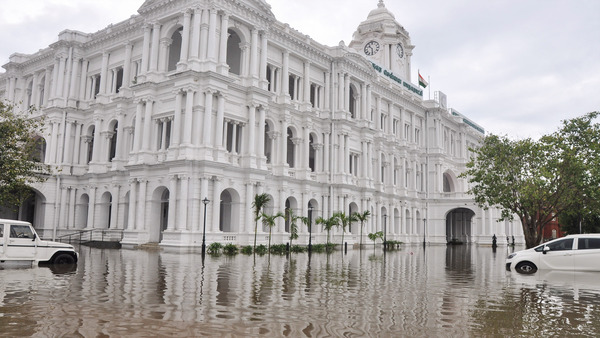
    It may be relevant to recall here the Chennai floods in 2015 and the worse water shortage in less than four years time in 2019.  Besides rapid industrialization and massive urbanization issues, Chennai is also faced with the challenges of climate change which is altering the weather patterns resulting in deadly floods and prolonged droughts.  Given the nature of challenges, there is a need to move beyond developing an appropriate water management policy and strengthening climate change resilience towards addressing core concerns of our democracy such as the absence of public accountability and rights without responsibilities.


    Chennai’s water bodies have shrunk at an alarming rate without much public attention. Every lake that has disappeared in Chennai had been part of our ecological system. Pallikaranai marshland has unfortunately been forced to yield land to hospitals, government buildings and educational institutions including (paradoxically) the Indian Institute of Technology – Madras (IIT-M) and National Institute of Ocean Technology.

    Chennai’s water bodies have shrunk at an alarming rate without much public attention. Every lake that has disappeared in Chennai had been part of our ecological system. Pallikaranai marshland has unfortunately been forced to yield land to hospitals, government buildings and educational institutions including (paradoxically) the Indian Institute of Technology – Madras (IIT-M) and National Institute of Ocean Technology. Today, Ennore creek faces a much bigger threat than ever before.  It is time we discuss more openly about our public policy, political culture, and abuse of social power, corruption in public life and the lack of environmental ethics. In intrinsic terms, this reveals about a political society without a conscience for environmental justice which forms the basis of social justice, distributional justice and good governance.

    The percentage culture and corruption prevalent among the politicians cutting across the party and political loyalties and the nexus between the politicians, bureaucrats and the business interests are one of the most unfortunate but successful stories of decentralization of public administration in Tamil Nadu.  If these arguments appear unreasonable, then how do we explain the rise and role of sand mafias, stone quarry contractors, timber lobbies, water industry and corporate bodies engaged in mineral extraction and exploitation?  These are not unspecified and general observations because of the fact that these individuals and the corporates control the lakes, rivers, forests, seashores, land access and ultimately the policy process within the government. Although slum dwellers, settlers along the river banks and seashores as well as forest people appear as main violators of the laws of State, yet the truth is vastly different.  The Palar River in the north, Cauvery River flowing through the west to east and the Tamiraparani River in the south of Tamil Nadu bear testimonies to this brutal reality of sand quarrying and criminal nexus between politicians, bureaucrats, industrialists and the sand mafia in Tamil Nadu.

    We need to question our materialistic approach to progress in the name of growth and development.  It is not adequate to boast about our progress in social justice and the inclusive model of development without environmental justice and responsibility to our future generations.  Tamil Nadu not only requires a more sustainable and scientific approach to water management but an integrated development model that no longer separates the human environment, basic needs, ecological justice and public accountability.

  • Environmental Impacts of the Belt And Road Initiative

    Environmental Impacts of the Belt And Road Initiative

    China’s Belt and Road Initiative (BRI), initially known as One Belt One Road (OBOR), was first announced in 2013 by President Xi Jinping. It aims to interconnect Asia, Europe, and Africa through two interlinked projects: the Belt as the land route, and the Road as the maritime route. The BRI aims to contribute significantly to overall economic or monetary development, as well as in the power generation area, it can further develop energy access and unwavering reliability in regions with quickly developing energy demand. Nonetheless, the BRI’s financial advantages and development of power frameworks might come at the cost of significant  environmental degradation. The sheer size of the BRI has ignited increasing global concerns about the potential environmental damage. These concerns include ecologically sensitive areas, concern about the large amounts of raw materials needed, and locking in of various environmentally detrimental forms of infrastructure, for example, non-renewable energy (fossil fuel) related framework.

    The BRI projects are instrumental in meeting the global CO2 emission targets; if all the BRI member states fail to reach the CO2 emission targets, that would result in a 2.7° C increase in the average global temperature.

    There are numerous BRI projects which would pass through ecologically sensitive areas, thus compromising on such fragile regions. Some have even described BRI as the “riskiest environmental project in history”. The BRI has far-reaching influence, and it is estimated that the BRI investments are impacting over 60 per cent of the global population. The BRI projects are instrumental in meeting the global CO2 emission targets; if all the BRI member states fail to reach the CO2 emission targets, that would result in a 2.7° C increase in the average global temperature.

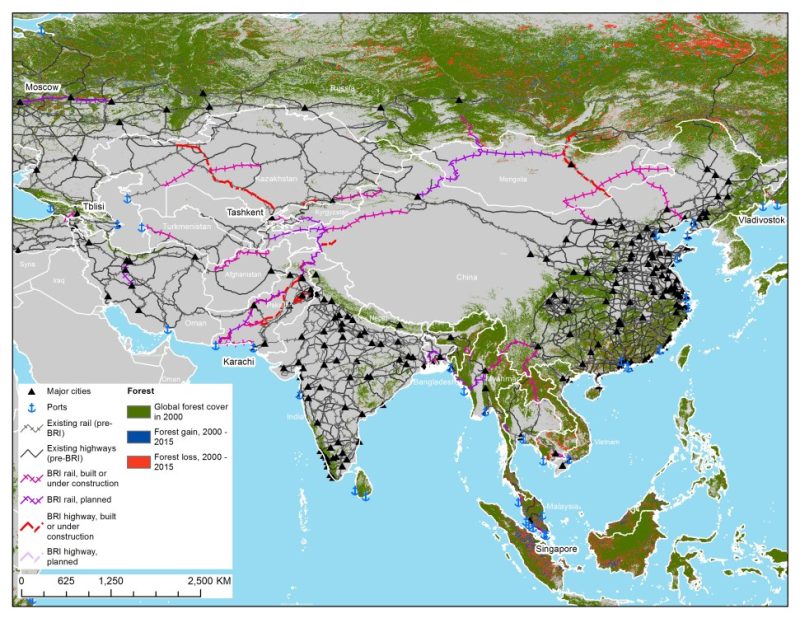
    Securing and protecting the environment while encouraging financial advancement under the BRI will be extremely difficult and challenging, as the initiative crosses a different scope of fragile and delicate environments. Biophysical conditions range from woods and steppes in Russia; to ice, snow, and permafrost across the Tibetan Plateau; and tropical rainforests in Malaysia. Observers are worried about the natural threat that the BRI presents. Infrastructure advancement, trade, and investment ventures under the BRI could bring negative ecological impacts that might offset its economic gains. The possible effects of the BRI are complex and manifold. Foundation projects affect biological systems and wildlife, yet in addition aberrant impacts like logging, poaching, and settlement, adding to deforestation and other land related changes. The BRI could result in biodiversity loss because of fragmentation and debasement of various habitats, and cause increment in greenhouse gas emission due to the development and upkeep of transportation infrastructures and further Chinese interest in coal-terminated power plants. It could likewise speed up extraction of natural resources, like water, sand, and ferrous metal minerals and ores in nations along the BRI.

    One such danger from BRI is the Russia–China Amur Bridge transport corridor, which takes apart two nature reserves with old growth forests. BRI framework will influence practically all of Eurasia’s biggest stream frameworks. Also, numerous BRI courses, for example the Karakoram Highway, go through geo-dynamically active regions. The Karakoram Highway linking the Xinjiang province in China to Gwadar Port in Pakistan, goes through Himalayan areas known for “extremely high geodynamic action” like seismic tremors, avalanches, frigid disintegration and erratic storms, but alternative pathways are even worse. In the Aral Sea, Central Asia, combined effects from the socio-ecological communications between misadministration, over-water system and serious contamination causing water shortage are amplified by truly dysfunctional transboundary management which can possibly result in armed conflicts. Heavily polluting Chinese concrete plants migrating to Tajikistan has been referred to as one illustration of this. Also, a logging ban in China’s Heilongjiang area caused spill-over impacts for forests overseas. Additionally, trade changes methods of production and utilization, changing income and along these lines contamination levels. As indicated by the Kuznets curve, pollution increments at first as income develops, yet over a defining moment, contamination falls as higher earnings bring innovative upgrades and expanding interest for ecological conveniences. Financial development might build the modern contamination base, known as scale effects. Negative scale effects and positive effects for the climate are hard to separate observationally, and quantitative examinations differ on whether the scale or procedure impact is bigger. Various toxins likewise respond diversely to exchange related changes. For instance, a Chinese report joining scale and method effects proposed that trade expanded SO2, and dust fall, however, decreased substance oxygen interest, arsenic and cadmium.

    Arranging and resolving natural issues related with the BRI is colossally complex and multi-scaled. Understanding the attributes of the effects of BRI on the environment is the initial step for conceiving strategy and plans for addressing its effects on guaranteed sustainable development. The main mechanism to achieve the sustainability objectives of the BRI is cooperation, “characterized by governance guidance, business commitment, and social participation”. In any case, environmental governance accompanies different difficulties, first, BRI specific and related approaches are not unyielding, but rather dependent on intentional and corporate self-administrative instruments. China’s vision of a “green BRI” is probably not going to be acknowledged without any stricter approaches that set out concrete and substantial set of activities. Second challenge, for the environmental governance of the BRI is to address tele couplings.

    The Chinese government is taking a functioning, yet delicate way to deal with the environmental governance of the BRI. China utilizes the BRI as a stage to introduce itself as the rule-maker/rule-taker in global ecological administration as it further mobilizes existing environmental governance organisations and assembles new ones. Be that as it may, the environmental stability of the BRI doesn’t just rely on the environmental governance endeavours of Chinese actors, however, strikingly on the implementation, checking, and authorization of environmental laws and guidelines in BRI host nations. Finally, and most importantly the most significant errand for future research is to exactly explore whether environmental standards or norms be subject to California or Shanghai effects.


    References


    Callahan, William A. China dreams: 20 visions of China’s future Oxford University Press, 2013, p. 1

    Adolph, C., Quince, V., & Prakash, A. (2017). The Shanghai effect: Do exports to China affect labor practices in Africa? World Development, 89, 1–18. https://doi.org/10.1016/j.worlddev.2016.05.0091

    Andrews-Speed, P., & Zhang, S. (2018). China as a low-carbon energy leader: Successes and limitations. Journal of Asian Energy Studies, 2(1), 1–9. https://doi.org/10.24112/jaes.02010123

    Abbott, K. W. (2017). Orchestration: Strategic ordering in polycentric climate governance. In A. Jordan, D. Huitema, H. Van Asselt, & J. Forster (Eds.), Governing climate change (pp. 188–209). Cambridge: Cambridge University Press. https://doi.org/10.1017/9781108284646.01221

    Cefic 2011 Cefic (2011) Guidelines for Measuring and Managing CO2 Emission from Freight Transport Operations, http://www.cefic.org/Documents/RESOURCES/Guidelines/Transport-and-Logistics/Best%20Practice%20Guidelines%20-%20General%20Guidelines/Cefic-ECTA%20Guidelines%20for%20measuring%20and%20managing%20CO2%20emissions%20from%20transport%20operations%20Final%2030.03.2011.pdf?epslanguage=eni

    Randrianarisoa, Laingo M., Anming Zhang, Hangjun Yang, Andrew Yuen, and Waiman Cheung. “How ‘belt’and ‘road’are related economically: modelling and policy implications.” Maritime Policy & Management 48, no. 3 (2021): 432-460.

    Cockburn , Henry. “China’s $8 Trillion ‘Silk Road’ Construction Programme ‘Riskiest Environmental Project in History’.” The Independent. Independent Digital News and Media, May 20, 2018. https://www.independent.co.uk/climate-change/news/china-belt-and-road-initiative-silk-route-cost-environment-damage-a8354256.html.

    “Decarbonizing the Belt and Road Initiative: A Green Finance Roadmap.” Vivid Economics. Accessed October 1, 2021. https://www.vivideconomics.com/casestudy/decarbonizing-the-belt-and-road-initiative-a-green-finance-roadmap/.

    Ascensão, F.; Fahrig, L.; Clevenger, A.P.; Corlett, R.T.; Jaeger, J.A.G.; Laurance, W.F.; Pereira, H.M. Environmental challenges for the Belt and Road Initiative. Nat. Sustain. 2018, 1, 206–209.

    Teo, Hoong C., Alex M. Lechner, Grant W. Walton, Faith K.S. Chan, Ali Cheshmehzangi, May Tan-Mullins, Hing K. Chan, Troy Sternberg, and Ahimsa Campos-Arceiz. 2019. “Environmental Impacts of Infrastructure Development under the Belt and Road Initiative” Environments 6, no. 6: 72. https://doi.org/10.3390/environments6060072


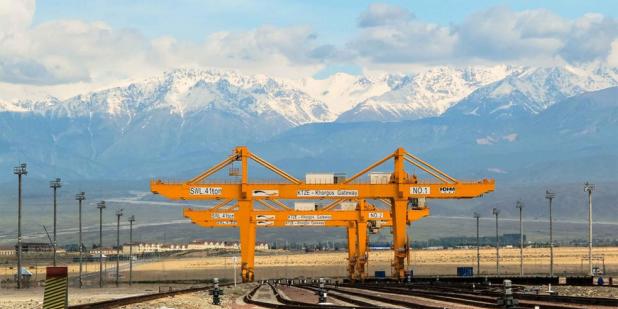
    Feature Image Credit: USC US-China Institute

    Map Credit: Brookings Institution


  • Climate Change: A Review of the Rural Electrification Policies and Barriers to adopting Renewable Energy in Rural India

    Climate Change: A Review of the Rural Electrification Policies and Barriers to adopting Renewable Energy in Rural India

    Energy is crucial for a country’s growth and sustainable development. But over one-third of the world’s population, mostly consisting of people in rural areas of developing countries, do not have access to clean, affordable energy.

    The climate crisis is a battle that countries have been fighting for decades now. The policies and strategies developed by different countries have helped in small ways in achieving their energy and climate goals. One strategy among all countries is the development and improvement in the use of renewables. Various studies, across different fields, have shown us the need for countries to shift to this alternative set of energy sources that will sustain life in the long run. The use of renewable energy in both urban and rural areas should be monitored and developed to achieve the sustainable development goals that countries have vowed to achieve.

    Energy is crucial for a country’s growth and sustainable development. But over one-third of the world’s population, mostly consisting of people in rural areas of developing countries, do not have access to clean, affordable energy. This is an important factor contributing to the low standards of living in rural areas of developing countries.

    In India, more than two-thirds of the population live in rural areas whose primary source of income is agricultural activities. But a large proportion of the rural population does not have consistent access to energy. To this population, new alternative sources of energy remain unaffordable and inaccessible due to poverty and lack of adequate infrastructure, respectively. Hence, we find that the rural populations continue to use traditional sources of energy such as coal, fuelwood, agricultural waste, animal dung, etc. Not only do these cause pollution and quick erosion of natural resources, but they impact negatively on people’s health. The need for transitioning to the use of renewable energy, especially in the country’s rural areas is of prime importance. But, to achieve this, the government must bring out policies that will guide this transition. Moreover, it is important that the government positively supports companies – both private and public – that generate the required technology and research that transforms the available renewable energy sources into energy that the public can consume.

    Rural Electrification in India

    The Electricity Act of 2003 enabled the building of electricity infrastructure across the rural and remote regions of the country and thus, easy access to electricity for most of the people. The Indian Government launched the Rajiv Gandhi Grameen Vidyutikaran Yojana (RGGVY) in 2005, to extend electricity to all unelectrified villages. The programme focused largely on developing electrification infrastructure across villages in India and providing free connections to all rural households living below the poverty line. Further, state governments received a 90% grant from the central government which aided in extending electrification infrastructure to over one lakh villages during the period 2005–2013. Moreover, the central government worked towards increasing implementation efficiencies by engaging central PSUs in some states.

    In 2015, the NDA Government launched the Deen Dayal Upadhyaya Gram Jyoti Yojana (DDUGJY) under which, the villages that remained un-electrified under the RGGVY, were electrified. The scheme has also been significant in supporting distribution networks in rural areas, largely concerning metering distribution transformers, feeders, and consumers in rural areas (Gill, Gupta, and Palit 2019).

    The central government further introduced standalone mini-grids programs, under the DDUGJY in 2016. Guided by the National mini-grid policy, State governments also contributed through various mini-grid policies to promote decentralised renewable energy solutions. Further, the Unnat Jyothi Affordable LEDs for All was introduced to encourage the efficient use of energy and under this scheme, LED bulbs were distributed to all households with a metered connection at subsidised rates. The Ujwal DISCOM Assurance Yojana was also introduced under the DDUGJY to allow a financial turnaround and operational improvement of Discoms. According to the UDAY scheme, discoms were expected to improve operational efficiency and bring AT&C losses down to 15%.

    While the schemes were successfully implemented then, the rate of rural household electrification was still slow. Evaluations of the schemes found various limitations, such as high upfront connection costs, poor quality of supply, poor maintenance services, to name a few. Additionally, some states had also started initiating their electricity-access programmes to accelerate the electrification process, such as the West Bengal Rural Electrification Programme, the Har Ghar Bijli scheme in Bihar, the Bijuli Bati mobile-based app to enable last-mile connectivity and household connections in Odisha (Gill, Gupta, and Palit 2019). To address this issue, the central government then launched the Pradhan Mantri Sahaj Bijli Har Ghar Yojana (PM Saubhagya) in September 2017, with the ambitious target of providing electricity connections to all un-electrified rural households by March 2019. Under this scheme, the government has electrified all of 597,464 census villages in the country (Bhaskar 2019).

     Barriers to adopting Renewable Energy in Rural Areas

    This section focuses on the issues that restrict the efficient adaptation of renewable energy in rural areas. As the government continues to promote renewable energy in rural communities, it should keep in mind these following limitations and develop mechanisms to overcome them as and when they arise. While employing renewables to supply electricity, the problem of grid integration arises. Most electricity grids and the technology used, are designed and placed around fossil fuels. However, when they transition now to more non-conventional forms of energy such as wind and solar, the designs and placements of power generation systems have to change rapidly. Thus, heavy emphasis should be placed on improving the research and infrastructure required to make this transition as smooth as possible. That is, the government should research the most optimal locations for wind turbines and solar panels, as not all lands in rural areas can be employed for this purpose. Otherwise, it may negatively impact the quality of agricultural lands. Upon conducting the required research, the infrastructure to connect all areas to the electricity grids must be developed and well-financed by the government to satisfy the energy demands of the rural population. For instance, in Germany, while the wind power potential is in the northern regions, major demand for it is in the southern region. Thus, the country’s energy transition process emphasizes upgrading the electricity grid infrastructure that would make it possible for power to flow from north to south (UNCTAD 2019). Further, the planning should also focus on balancing the energy mix in the power grid. The transition to renewables will not be a quick one, which implies that for the short term the power grid will be a mix of different sources of energy. Thus, the plans should design the grids in such a way that the proportion of each energy source balances one another so that there is no leakage or wastage in the system, especially given the fact that energy storage technology is still underdeveloped in the country.

    For many years now, there has been an emphasis on the potential of decentralised electricity comprising off-grid or mini-grid systems to help with rural electrification. The government introduced a national mini-grid policy in 2016 to promote decentralised renewable energy. With the increase in the use of solar energy, solar-powered mini-grid systems were found to be more economical and accessible to rural households (Comello et al. 2016). These systems could substantially improve the people’s standard of living and eliminate the use of harmful fuels such as kerosene oil for simple household appliances such as lamps and cooking stoves. However, an IEA report found evidence that this potential is limited, and would not be beneficial for large, productive, income-generating activities. Thus, mini-grids are often considered a temporary solution, until grid connectivity is achieved (IEA 2017).

    Whether a grid system or an off-grid system is implemented, high connection charges will automatically limit the rural population’s ability to connect to the grid.

    A major challenge that the government must keep in mind is affordability. Whether a grid system or an off-grid system is implemented, high connection charges will automatically limit the rural population’s ability to connect to the grid. On the one hand, better access to electricity will increase productivity and lead to the growth and development in the region but on the other hand, most of the rural communities live below the poverty line and will not be able to afford the connection, even if they have access to it. While decentralised energy sounds economical and sounds like an obvious solution, it is also limited in capacity.

    Another factor that the government must keep in mind for the adaptation of renewable energy in rural areas is the situation of state and private distribution companies (discoms) in India that play a pivotal role in the rural electrification process. While the government set the goals and adopted a strategy to electrify all rural households under the Saubhagya scheme, it was the discoms’ responsibility to implement these strategies and achieve the goals. A TERI report found that the discoms had difficulty carrying out the electrification process because the strategy adopted by the government had not considered the difference in demographics in the rural areas (Gill, Gupta, and Palit 2019). That is, each area differs in population size, density, and topography and the discoms found it hard to implement a similar strategy to all places alike. Moreover, the financial status of many state-run discoms has been stressed over the past year due to increasing losses and lack of adequate support from the respective State governments. Over the past year, dues to power generators have increased to Rs 1.27 trillion (Economic Times 2021). The annual 2021 budget’s outlay of over Rs 3 trillion, to be spent over five years, to improve the viability of state-run discoms, is a step in the right direction. The TERI report also found that discoms face institutional burdens in the electrification process (Gill, Gupta, and Palit 2019). The companies are most often strapped for time and must deal with huge amounts of paperwork. Simultaneously, they have to be physically present to install the necessary infrastructure and manage the labour employed in different states. In the end, it remains to be seen how the discoms will manage to monitor and review the electricity infrastructure in the rural areas, especially given the huge amounts of debt that they are trapped in.

    The government must also work towards increasing and incentivising private sector participation. While the private companies were interested in taking up tenders for the production of electricity through renewable energy sources in the past, the recent withdrawal of benefits such as accelerated depreciation has been a cause for concern. Companies like Suzlon Energy Ltd. face lower returns on their investment, thus deterring them from investing in future projects. Removal of benefits also discourages smaller companies that are looking to invest in this sector as it increases not only the cost but uncertainty about the government’s policies. Companies will refrain from investing if they do not anticipate a high return in the future. For grid connection systems to be successful and efficient in the long term, the government must ensure a strong governance structure, and a stable and enabling policy environment that constantly encourages fresh private sector participation. Concerning the rural electrification process, the government must encourage private sector participation because it would complement the public sector companies thus sharing the burden of production, installations, and technology as well as the process of maintenance and regular checks once the grid connection is complete.

    A shift to renewable energy in rural areas will no doubt have a positive impact on the health and well-being of the population. It will also improve the standard of living and in most cases, the productivity of the people. But the change has to be a gradual process. Even if renewable energy and electricity are affordable and accessible to the people, alternative cooking fuels and technology will take time to be accepted in practice as they may not have the same performance quality as traditional stoves and appliances that the people are used to. To overcome this hurdle, the government must ensure that the policies formed will guide the adjustment to renewables for many years to come. Moreover, the government must spread knowledge and awareness about the benefits of shifting to appliances that are sourced through renewable sources of energy. Besides, some rural households collect firewood for not just individual consumption but also to sell it (IEA 2017). This is a source of income for these households hence, the government should tread carefully when they implement programs that seek to reduce the collection and use of firewood. For years now, the government has promoted and subsidised the use of LPG within rural communities, as an alternative for other harmful sources of energy. While it has helped improve people’s health to some extent, it would be beneficial for the government to gradually nudge the decrease in the use of LPG and increase the use of renewable alternatives. Apart from the definite benefits to the environment, such a change would serve to reduce the rural-urban energy gap in India.

    The shift to renewable energy sources holds huge amounts of risks and uncertainty. But, despite this, there is a need to make long-term, accurate forecasts of energy demand and develop drafts of policies beforehand that would guide the process of supplying energy to satisfy the demand. Energy supply projects necessitate this because they have long gestation and implementation periods. With the climate crisis advancing rapidly, it would serve the government well to be prepared.

    International Collaboration

     International cooperation can play a crucial role in expanding the distribution of renewables. It can help countries benefit from shared infrastructure, technology, and lessons. The challenge thus lies in designing policies that will facilitate this technology and infrastructure transfer, especially in countries where the renewable energy sector is emerging. International organizations such as the Commission on Science and Technology for Development can play an important role in supporting such collaborations. Policies should also facilitate mechanisms that will help improve the current capabilities in developing countries.

    For instance, the Indo-German Energy Programme – Access to Energy in Rural Areas was signed to create a favourable environment for rural renewable energy enterprises so that they can provide easily accessible energy services to the rural population.

    The bilateral collaboration brought in local and international professional expertise to support private sector development, to identify and improve viable sources of finance, and to help design government schemes to achieve sustainable energy security and provide clean cooking energy solutions to the rural population. The GIZ – the German Corporation for International Cooperation – worked closely with India’s Ministry of New and Renewable Energy (MNRE) to successfully implement the program. The program succeeded in training more than 10,000 professionals to qualify as energy auditors. It has also helped increase private sector investment and develop a calculation to determine the CO2 emissions for the Indian electricity supply grid.

    Way Forward

     Research and innovation are essential to improve renewable options for producing clean cooking fuel. There is also a need for location-based research to produce appropriate workable technologies. Long-term policies and outcomes are important to consider. So, conducting significant research will not only help understand the present conditions but will also help policymakers make informed decisions in the future. It is also important to educate and communicate to the rural population about the relative advantages of using modern energy sources over traditional sources. For instance, consumers may be unaware of the health impacts of using traditional sources of energy for cooking. Moreover, they may distrust conventional alternatives due to their unfamiliarity with them. Thus, the responsibility falls on the government to properly inform them of the need for the shift to renewables and curb the spread of misinformation.

    Further, alternative solutions will only succeed if they are established in cooperation with the local users. “The women in rural areas play an important role when it comes to energy transition” (IEA 2017). Several initiatives such as the Global Alliance for Clean Cookstoves, SEforALL, and ECOWAS address the joint issues of gender empowerment, energy poverty, health, and climate (IEA 2017). Training and capacity building are key to the shift to renewable sources of power. And in rural energy applications, this can be improved by taking into account the gender issues that plague society. There is a high possibility that rural engineers, once trained, might migrate to urban areas in search of more lucrative work. In response to this, the Barefoot College International Solar Training Programme takes a different approach to capacity-building in rural areas and trains the grandmothers in villages who are more certain to stay and help develop the community.

    a shift to clean energy in rural areas that houses the section of the population that lives below the poverty line will be more successful if it is seen as a strategy to broaden community development.

    Thus, a shift to clean energy in rural areas that houses the section of the population that lives below the poverty line will be more successful if it is seen as a strategy to broaden community development. This includes higher employment, better infrastructure, roads, and telecommunications.  This process requires careful design of policies and the establishment of a supportive environment that includes not just innovative business models but also maintenance systems that will sustain the development in the long run.

    Conclusion

     To summarize, rural electrification and the transition to renewable energy in rural areas have been a part of the government’s agenda for many years now, irrespective of the ruling party at the centre. Necessary policies have been introduced to guide the process. While it is great that the government recently achieved universal electrification, it remains to be seen whether the quality of power provided to these villages meets the needs of the population. Further, in this process, state-owned discoms have taken a serious financial hit and it is a tough road to recovery from here. Adding on, the COVID pandemic has slowed down the development and recovery of these discoms. The government should first increase budget outlays in the following years and create a system to monitor the use of these finances. Second, it could turn to privatisation. Privatising discoms on a larger scale would reduce the financial and risk burden on the government and ensure efficient functioning of the companies. Additionally, it is important that while policies are being designed, the deciding parties have a complete understanding of the socio-economic situation of the communities within which they will make changes. To do this, experts who have studied the layout of these rural areas extensively should be involved in the process, along with leaders from the respective districts who are bound to be more aware of the situation and the problems in their areas. More importantly, the government should keep the process of the transition to alternative energy sources transparent and keep an open line of communication with the rural population to earn their trust before they make significant changes. Finally, India is one of the largest consumers of different renewable sources of energy. While it is important to make changes to the policies in this sector, it is also imperative that the government tries to maintain stability in policies that support the companies which help satisfy the growing energy demand in the country.


    References

    1. Bhaskar, Utpal. 2019. “All villages electrified, but last-mile supply a challenge.” mint, December 29, 2019. https://www.livemint.com/industry/energy/all-villages-electrified-but-last-mile-supply-a-challenge-11577642738875.html.
    2. Comello, Stephen D., Stefan J. Reichelstein, Anshuman Sahoo, and Tobias S. Schmidt. 2016. “Enabling Mini-grid Development in Rural India.” Stanford University. https://law.stanford.edu/wp-content/uploads/2016/04/IndiaMinigrid_Working_Paper2.pdf
    3. Economic Times. 2021. “Discom debt at Rs 6 trillion; negative outlook on power distribution: ICRA.” The Economic Times. https://economictimes.indiatimes.com/industry/energy/power/discom-debt-at-rs-6-trillion-negative-outlook-on-power-distribution-icra/articleshow/81431574.cms?from=mdr.
    4. Gill, Bigsna, Astha Gupta, and Debajit Palit. 2019. “Rural Electrification: Impact on Distribution Companies in India.” The Energy and Resources Institute. https://www.teriin.org/sites/default/files/2019-02/DUF%20Report.pdf.
    5. IEA. 2017. “Energy Access Outlook: From Poverty to Prosperity.” International Energy Agency. https://www.iea.org/reports/energy-access-outlook-2017.
    6. UNCTAD. 2019. “The Role of Science, Technology and Innovation in Promoting Renewable Energy by 2030.” United Nations Conference on Trade and Development. https://unctad.org/system/files/official-document/dtlstict2019d2_en.pdf.

    Feature Image: The Better India 

    Image 1: www.alliancemagazine.org

    Image 2: indiaclimatedialogue.net