Category: Civil Wars

  • Crimson Cows and Indian Sensibilities

    Crimson Cows and Indian Sensibilities

    That Israel, in addition to being an apartheid state, has gone completely rogue is no longer in doubt. As Israel digs itself into a deeper hole, in the belief that it can kill its way to success, it finds that this year its GDP has collapsed from 4.8% in 2022 to 1.5%, with over 46000 small businesses having shut down. By some estimates, between 500,000 to 1 million Israelis have permanently emigrated.
     

    Approximately 7 million Jewish Israelis and an equal number of Palestinians live cheek-by-jowl between the Mediterranean Sea and the Jordan River. The area encompasses Israel, the occupied territories of the West Bank, including East Jerusalem, and the Gaza Strip.  Nominally, the Palestinians in the West Bank do have limited self-rule, but defacto have no control over the movement of people and goods, or taxes. Agreements signed in the 1990’s, permit the Israeli Government to collect taxes on behalf of the Palestinian Authority (PA), which it then disburses to the PA for its use. These taxes make up over 65-70% of the PA’s public budget and have a critical impact on the quality of life of ordinary Palestinians.

    As has been the norm with Israel, it has used every means, including financial control, to inflict collective punishment on the Palestinians at any attempt by them to free themselves from Israeli occupation. In May this year, for example, it withheld disbursal of all taxes collected over the past three months on grounds that Spain, Ireland and Norway had announced they would recognise the Palestinian State. This resulted in the breakdown of municipal services and widespread loss of jobs. Subsequently, in June it indulged in blatant blackmail when it agreed to disburse withheld funds, provided the PA retroactively approved five settlements in the West Bank that had been illegally established earlier, despite condemnation by Palestinians and the international community.

    While the Hamas attack of 7 October 2023, especially their despicable actions against women, children and civilians, has been widely condemned, the fact that over half of the 1200 Israelis killed, were by their own military in pursuant of the reprehensible “Hannibal Directive”, continues to be glossed over. Oddly enough, over the course of that year, prior to the attack, the fact that over 200 Palestinians had been killed by the Israeli military and settlers for a variety of reasons has simply been ignored by the international media and not been seen as the immediate provocation for the attack, especially its ferocity.

    It now emerges, that the numbers of Palestinians killed by the Israeli response has been grossly underestimated. As per a study dated 10 July 2024 in the Lancet, a respectable and authoritative medical journal, an estimated 186000-200,000 Palestinians have been killed in Gaza, directly or indirectly. This is approximately 9% of the total population, the overwhelming majority of them being women and children.

    The Israeli response to this attack was disproportionate, to put it mildly, but it still continues to receive full support from Western Governments. It now emerges, that the numbers of Palestinians killed by the Israeli response has been grossly underestimated. As per a study dated 10 July 2024 in the Lancet, a respectable and authoritative medical journal, an estimated 186000-200,000 Palestinians have been killed in Gaza, directly or indirectly. This is approximately 9% of the total population, the overwhelming majority of them being women and children.

    The difference between these estimates and the official figures released by the Gaza Health Ministry, which presently stands at approximately 43000, is explained by the fact that the Ministry only accounts for bodies that have been found and not for those remaining under the rubble, that the cities have been reduced to. Nor does it account for the indirect deaths due to hunger, non-availability of medical help etc. Studies suggest that these tend to be between 5-10 times higher than the official figures.
    Israel’s inhuman and deliberate response has been decried by experts, governments, United Nations Agencies and NGOs. They have gone on to accuse Israel of carrying out a genocide against the Palestinian population in Gaza, and more recently, in the West Bank. What is even more horrific, if that is even possible, are the accusations made by Dr. Feroze Sidhwa, an American trauma surgeon, on his return from Gaza. In his devastating op-ed in The New York Times, titled “65 Doctors, Nurses and Paramedics: What We Saw in Gaza”, he recounts harrowing stories from dozens of healthcare workers and CT scans of children shot in the head or the left side of the chest. The Times called the corresponding images of the patients too graphic to publish. In his words, “44 doctors, nurses and paramedics saw multiple cases of preteen children who had been shot in the head or chest in Gaza… He personally identified 13 such cases in his two weeks there”.

    That Israel, in addition to being an apartheid state, has gone completely rogue is no longer in doubt. In July this year, for example,  a video was leaked of the gangrape of a male Palestinian prisoner by guards of the IDF at the Sde Teiman detention facility in Southern Israel. Commentators in Israel referred to this video as just the tip of the iceberg, but what followed is instructive. Ten soldiers were arrested and faced trial for this act, but not before a mob, led by government ministers, attempted to free them forcibly from detention. Another minister demanded an investigation to identify the individual who had leaked the video so that he could be tried for treason. An MP from the governing Likud Party defended the actions of the guards in Parliament, responding to a question by an Arab-Israeli MP with “If he is a Nukhba (Hamas militant), everything is legitimate to do! Everything!”  Even the Minister responsible for  Prison Services, Ben-Gvir, told Israeli media on the day of the reservists’ arrest that it was “shameful for Israel to arrest our best heroes”.

    This race to the bottom doesn’t end there of course, and as the saying goes, the best is yet to come. As is well known, the Holy City of Old Jerusalem is home to the “Temple”, or as it is now known the Temple Mount. It refers to the two existing Islamic religious structures, the Dome of the Rock and the Al Aqsa Mosque, collectively known as Haram al-Sharif, and considered the third holiest site in Islam. However, according to the Tanakh or the Hebrew Bible, prior to these structures, the ‘First Temple’ was supposedly built on that very site in the 10th century BCE by King Solomon, and stood for five hundred years before being destroyed by the Babylonians. Almost a century later, it was replaced by the ‘Second Temple’ built by Cyrus the Great, only for it to be destroyed by the Romans in 70 CE. The New Testament holds that important events in Jesus’ life took place in the Temple, and the Crusaders attributed the name “Templum Domini” to the Dome of the Rock.

    However, many Jews see the building of a “Third Temple” in Jerusalem as an object of longing and a symbol of future redemption, as it would announce the arrival of a new Messiah who would unite the flock and lead them to salvation. Incidentally, the promised land would incorporate the whole of Palestine, along with parts of Turkey, Syria, Iraq, Saudi Arabia and Kuwait.
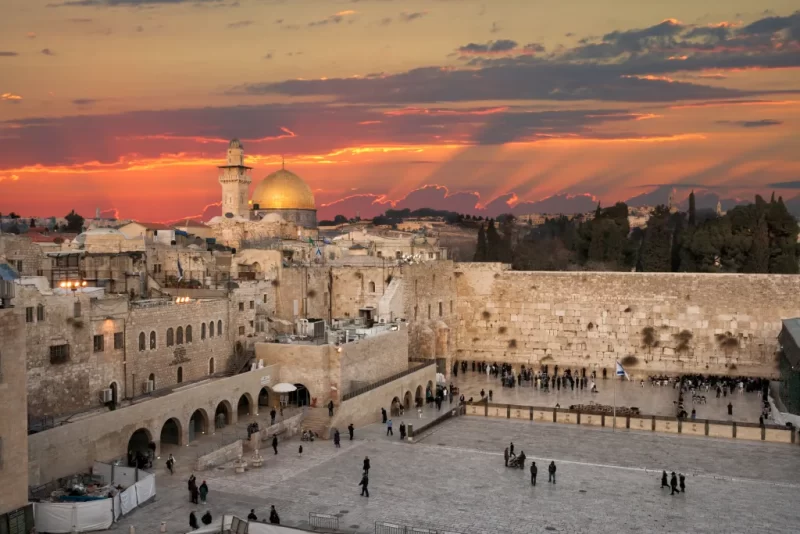
    Thus the religious significance and sensitivity of Temple Mount cannot be underestimated. Fortunately, as things stand Non-Muslims are not permitted to enter the two structures, while Jews are only allowed to pray at the Western Wall that runs along the side of the hill and is thought to be a remnant of the Second Temple. However, many Jews see the building of a “Third Temple” in Jerusalem as an object of longing and a symbol of future redemption, as it would announce the arrival of a new Messiah who would unite the flock and lead them to salvation. Incidentally, the promised land would incorporate the whole of Palestine, along with parts of Turkey, Syria, Iraq, Saudi Arabia and Kuwait.

    But before its construction can be undertaken, it would require purification of the site and of the construction crew. That would, however, only be feasible, by sacrificing a red heifer, specifically bred to meet stringent biblical requirements. It would be required to be burnt alive at the Mount of Olives, adjacent to the Al Aqsa Mosque, and its ashes used to consecrate the holy ground and the people. The stuff of hopes and dreams for a tiny minority, with little hope of fulfilment in the modern world, or so one thought.

    These cows represent a tangible step towards the construction of the Temple and fulfilment of the prophecy.  The next obvious step in this tragedy will be the demolition of the Haram al-Sharif, for which dry rehearsals have already been undertaken. The consequences of such a step in the region are not difficult to visualise, but will it stop the extremists? Very unlikely.
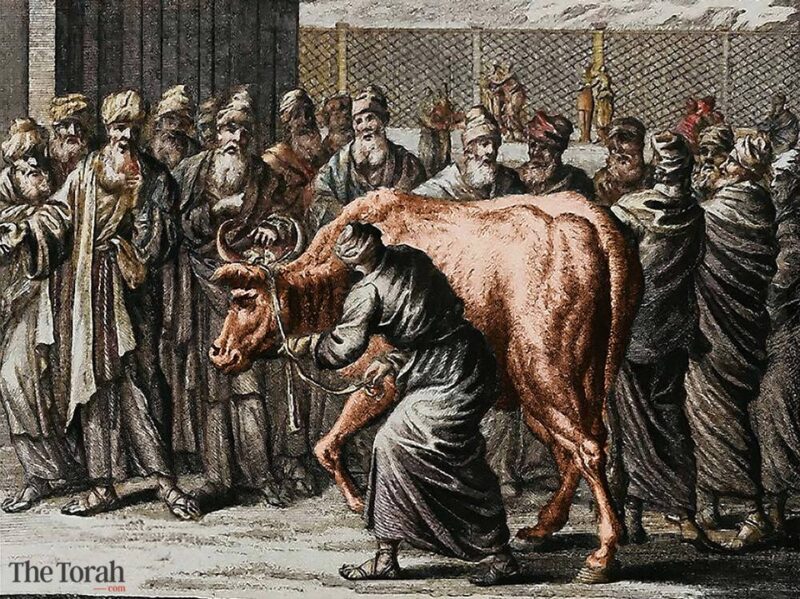
    However, in September 2022, an unprincipled collaboration between extreme Zionist religious leaders, Right-Wing Christian Evangelicals and the present Israeli Government allowed for five red heifers to be flown from Texas to Israel. Ironically enough, despite the Evangelicals being well-known for their antisemitic beliefs. Brought in as pets, to avoid existing restrictions on livestock, they are now kept in an archaeological park in Shiloh, an illegal Israeli settlement, near the Palestinian city of Nablus. These cows represent a tangible step towards the construction of the Temple and fulfilment of the prophecy.  The next obvious step in this tragedy will be the demolition of the Haram al-Sharif, for which dry rehearsals have already been undertaken. The consequences of such a step in the region are not difficult to visualise, but will it stop the extremists? Very unlikely.

    As Israel digs itself into a deeper hole, in the belief that it can kill its way to success, it finds that this year its GDP has collapsed from 4.8% in 2022 to 1.5%, with over 46000 small businesses having shut down. By some estimates, between 500,000 to 1 million Israelis have permanently emigrated. In addition, it finds itself short of weapons, ammunition, tanks and manpower as heavy casualties in the ongoing conflict have taken their toll. Yet, its arrogant leadership refuses to pay heed to that one cardinal rule about tackling insurgencies; they are a political problem and can only be resolved politically.

    The question that it raises for us is do we really need such friends, and more importantly, are our commercial interests so important that we are willing to forego all that we hold sacred?

    Clearly, if Israel refuses to change direction its days are numbered. After all its most steadfast ally, the United States, can only support so many losing causes. With Ukraine on the brink, an ascending Russo-China coalition to deal with and Taiwan increasingly under threat, an intransigent Benjamin Netanyahu is a liability, who may well find himself the target of a drone, be it American or Iranian. This is very likely despite Trump’s victory to become the 47th President of the United States. The question that it raises for us is do we really need such friends, and more importantly, are our commercial interests so important that we are willing to forego all that we hold sacred?

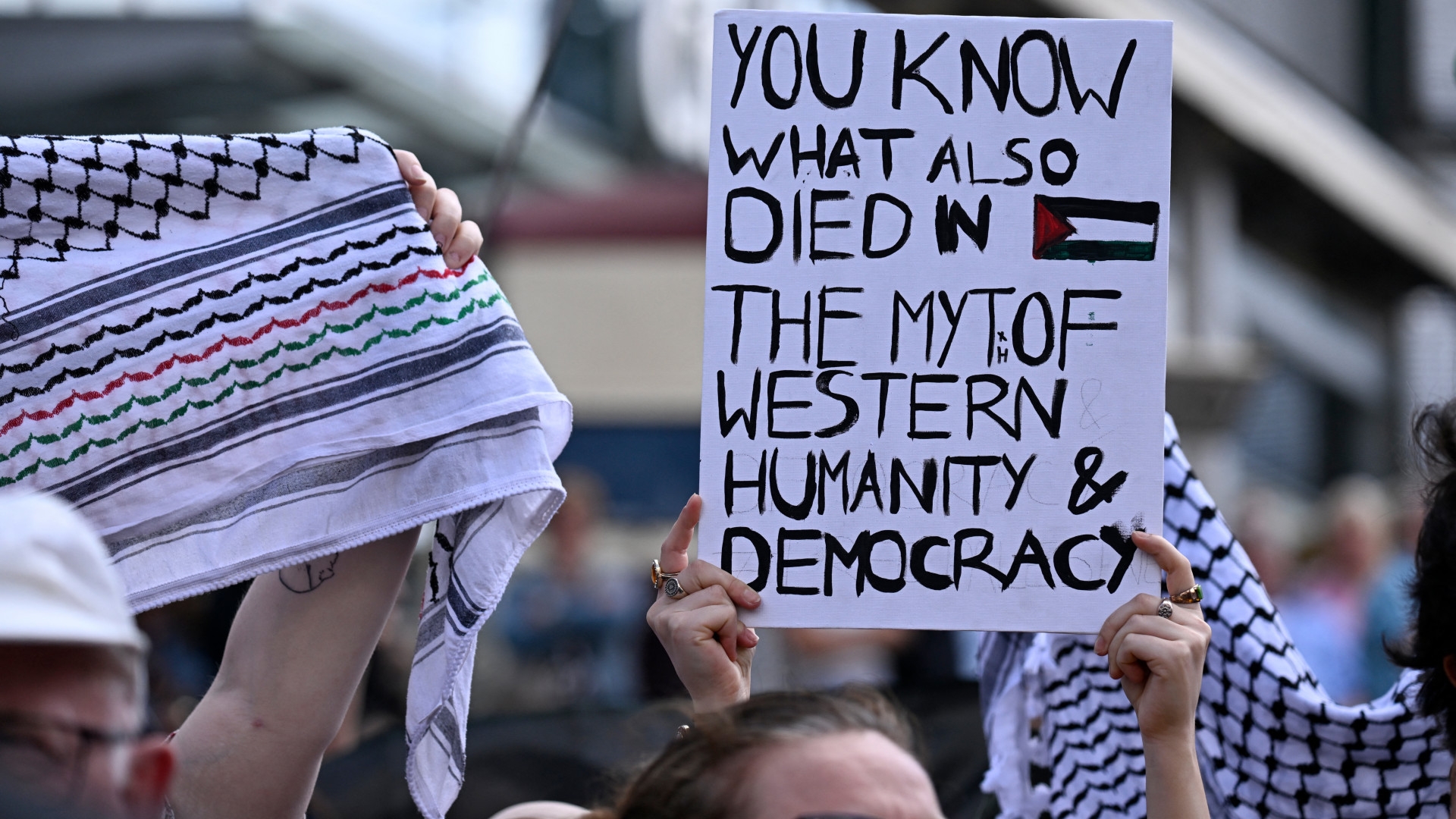
    Feature Image Credit: Middle East Eye
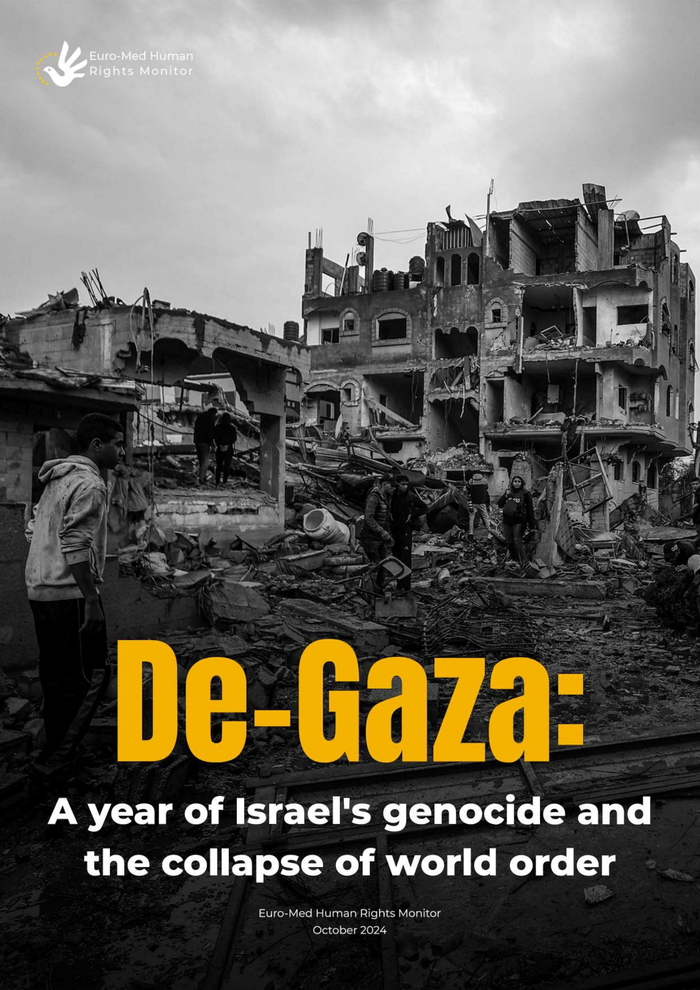
    Image – De Gaza: reliefweb.int
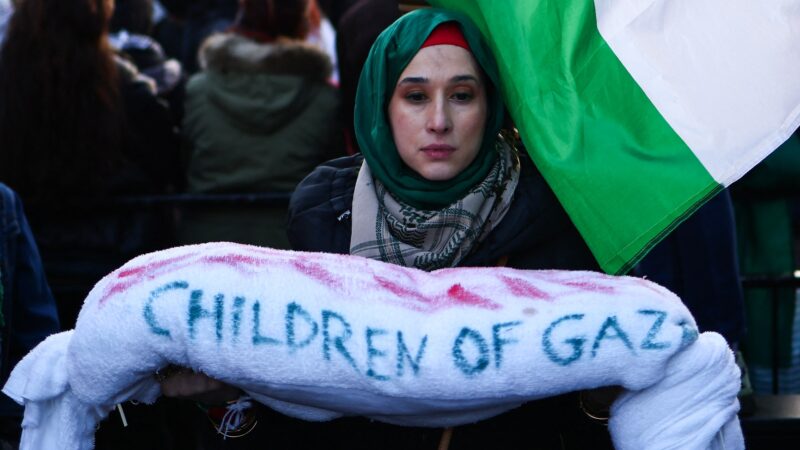
    Children of Gaza Image Credit: Middle East Eye – How Israel’s Genocide in Gaza sparked a protest movement in the UK.
    Wailing Wall and Al Aqsa Mosque: Tourist Israel
    Red Heifer Sacrifice Ritual Image: thetorah.com
  • MYANMAR:  READING THE TEA LEAVES

    MYANMAR: READING THE TEA LEAVES

    On 21 November 2023, India’s Ministry of External Affairs advised Indian citizens to avoid nonessential travel to Myanmar, given the evolving security situation in that country. It further advised that those already living in Myanmar should take precautions and avoid travel to regions affected by violence[i]. Earlier in the same month, UN Secretary-General António Guterres had expressed deep concern at the expansion of conflict in Myanmar[ii] . Both messages highlight the increasingly fragile situation in Myanmar, where two million people are displaced and over 286,000 similarly affected after the current upsurge in fighting[iii].


    Operation 1027 and its Implications

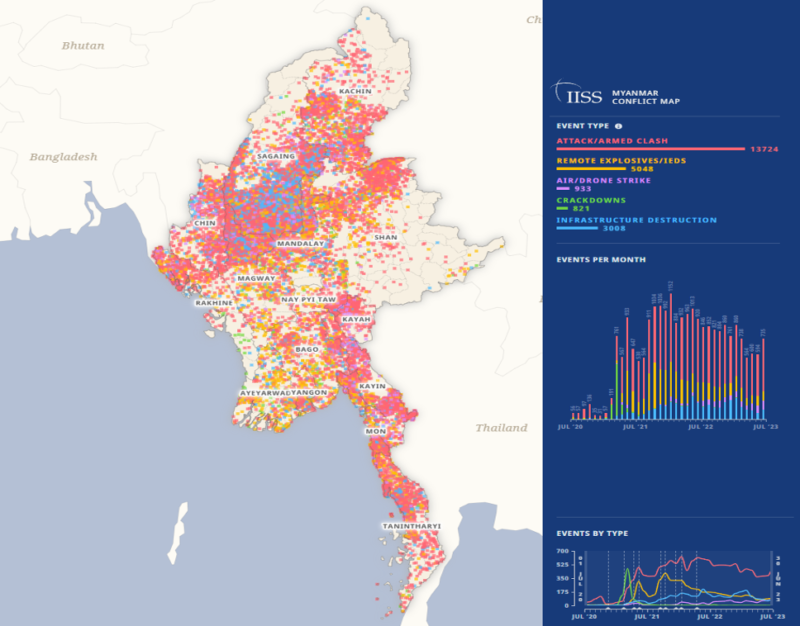
    The map published by the International Institute for Strategic Studies lists the number and type of violent events countrywide until July 2023. Since then, there has been a spike in the level of violence. Most prominent has been the coordinated attack on 27 October on Tatmadaw (Myanmar Army) posts in the Northern portion of Myanmar’s Shan state (see map), near the Chinese border by three Ethnic Armed Organisations (EAOs), assisted by other Peoples’ Defence Militias (PDFs). As per Richard Horsey of the International Crisis Group[i], the attacks, dubbed ‘Operation 1027’ (after the date they commenced), involved several thousand experienced, well-armed fighters attacking multiple army posts simultaneously. These troops owed allegiance to three major EAOs – the Myanmar National Democratic Alliance Army (MNDAA), the Ta’ang National Liberation Army (TNLA) and the Arakan Army ( AA), comprising different ethnicities ( Kokang, Ta’ang and Arakanese, respectively). Of the three, the first two are based in Shan state in the East, while the AA, as the name denotes, is based in Rakhine on Myanmar’s West coast, bordering some portion of the Chittagong Division of Bangladesh. Within two weeks, these three armies dubbed the Three Brotherhood Alliance, had seized several towns along the Chinese border, overrun military bases and captured large stocks of munitions. Specifically, to quote the Asia Times…the key border posts of Chin Swe Haw and Mong Ko were seized along with 80 military and police bases. More than 120 military bases have since been overrun, and sizeable amounts of arms and ammunition seized, including reportedly several 14.5 heavy machine guns (HMGs)…[ii]. ISP Myanmar, a Myanmarese think tank based in Thailand, notes that resupply columns are being ambushed on the main artery from Mandalay, around the area of Kyaukme, as shown on the map below[iii].

    Operation 1027 has created significant disruptions in the Myanmar-China border trade. The current offensive aims to eradicate online gambling and scam call operations from various casinos in the northern portion of  Shan and Kayin states bordering China and Thailand, an objective shared by the Myanmar Government, which is under pressure from China on this matter. Nationals from these countries, along with Chinese criminals, have been identified for their involvement in such illegal activity in concert with local pro-government militias. The rebels’ aim could likely be to gain China’s favour and wrest territory from Tatmadaw’s control[i]. To avoid the bloodshed, many Myanmar nationals are attempting to cross into China. China, whose proposed projects under the China-Myanmar Economic Corridor (CMEC) run through these regions in Northern Shan state, has since called for a ceasefire on this border[ii]. Noteworthy for military analysts, however, is the well-coordinated planning and execution displayed in these successful attacks, demonstrating the growing strength and assertiveness of the EAOs and PDFs operating over large swathes of territory.

     In concert with Operation 1027, EAOs have been equally active in other parts of Myanmar. The Sagaing region North of Mandalay bordering Manipur and Nagaland is witnessing fresh fighting[iii]. A Myanmar Army spokesman is quoted as having admitted that troops were under “heavy assaults from a significant number of armed rebel soldiers” in Shan state in the North, Kayah state in the East and Rakhine state in the West[iv]. In Rakhine, a year-long ceasefire between the Arakan Army and Tatmadaw collapsed, and fighting recommenced. In Kayah state bordering Thailand, a video clip (verified by Reuters) shows wounded Tatmadaw soldiers surrendering to the rebels who offer medical treatment to them. Fighting rages around the state capital, Loikaw, from which the UN has evacuated its personnel[v]. Heavy fighting has taken place in Chin state. The Junta has declared martial law in certain towns in Shan, Chin and Kayah states and Sagaing region.

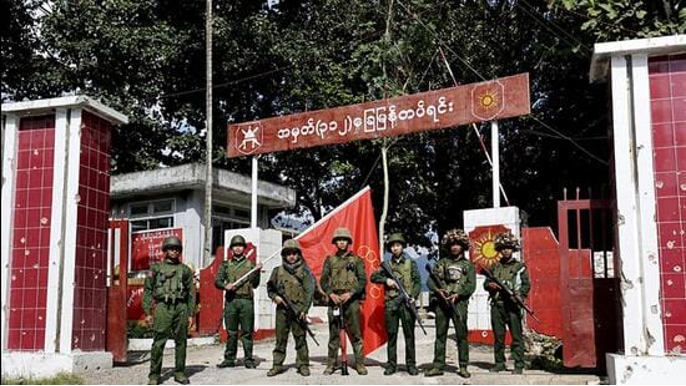
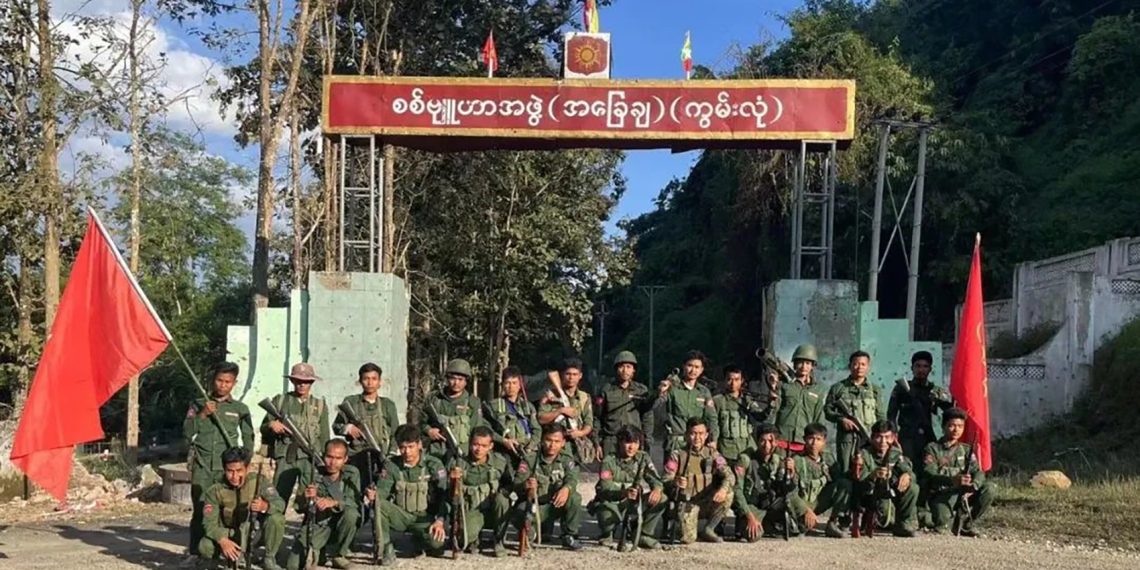
    Members of the Myanmar National Democratic Alliance Army pose for a photograph in front of the seized army’s infantry battalion in Kunlong township in Shan state, Myanmar, on 12 November. (AP). Courtesy: Rezaul H Laskar, Hindustan Times 15 November 2023.

    India’s Concerns

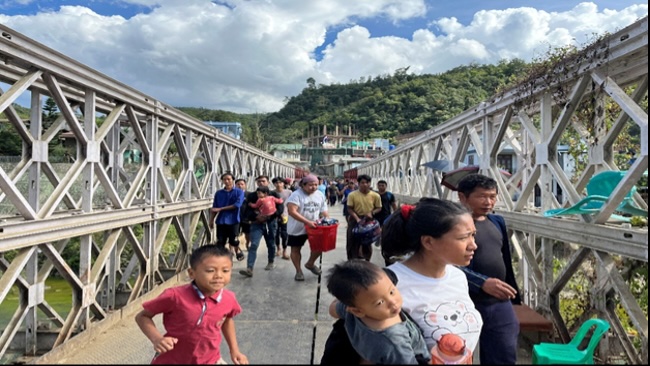
    With the Sagaing region bordering Nagaland and Manipur and Chin state bordering Manipur and Mizoram, the upsurge in violence has become a pressing concern for India, which is already grappling with the crisis in Manipur that has a linkage with Myanmar. In the current crisis in mid-November, Chin rebels overran two Tatmadaw posts on the India-Myanmar border in villages close to the Myanmar border township of Rikhawdar. This is adjacent to India’s Land Customs Station (LCS) at Zokhawthar. The Tiau River forms the boundary crossed by a Bailey bridge (picture below).

    Picture:  Courtesy Reuters

    A fresh flow of refugees (estimates from four to five thousand) has now crossed over to the Indian side to escape the fighting as the Tatmadaw attempts to retake these posts. This influx is in addition to those who crossed over earlier during the coup in February 2021. The capitulation of the Tatmadaw in these bases has also resulted in a unique situation; 74 Myanmar soldiers fled to India with their weapons and surrendered to the Indian authorities, who, at the request of the Myanmar Government, facilitated their return[i].

    All the above issues highlight the highly volatile climate in Myanmar, necessitating the Indian government’s advisory. Sufficient reportage exists to show that the rebel forces under the National Unity Government (NUG) are steadily gaining ground; Gen Min Aung Hlaing, Chairman of the State Administrative Council (SAC) and  de facto head of state conceded early this year that only 198 of the 330 townships are “100 per cent stable,” while the remainder required “security attention.”[ii] This is close to fifty per cent of the country. Clearly, the civil war is entering a more intense phase.

    State of the NUG

     The dynamism of the NUG can be gauged by its creative methods to raise revenues to support its war aims. Some of these mechanisms, based essentially on the buyers’ ( including the diaspora’s) good faith, are zero-interest bonds, real estate auctions of land (including government land taken from civilians – a lakeside villa appropriated by Gen Hlaing was auctioned some time ago), proposed condominiums for later construction, auctioning of mining rights and leases, lotteries, donations and tax collection. It provides primary education, health, justice and law and order in areas under its control. It has launched a digital currency that is run through the open-source blockchain Stellar network73, used through its digital wallet app, NUGPay. It uses commercial quadcopter drones for logistics, has commenced weapons production to include 60mm and 90mm mortars, and is experimenting with 3D printing[iii].

    The NUG’s success in creating such an infrastructure despite the SAC’s depredations and the victories of its forces on the ground over the last two years is testimony to the support it enjoys among the ordinary people, bolstered by sophisticated information operations. The latter includes a Policy Paper of 2021[iv], which enunciates NUG’s efforts to become more inclusive. A beginning has been made by appointing a Rohingya, Aung Kyaw Moe, to a ministerial post. His appointment as the NUG’s Deputy Human Rights Minister is a signal to others, including the UN whose Special Rapporteur for human rights in Myanmar, Tom Andrews, stated this year that ..’ Min Aung Hlaing, who led the genocidal campaign, is now at the head of an illegal and illegitimate military junta that is attacking civilian populations throughout Myanmar. He must be brought to justice and made to answer his crimes…[v]. The NUG Policy Paper promises to bring perpetrators of crimes against Rohingyas to justice and grant citizenship rights to all based on parentage or birth in Myanmar. It also speaks of developing a comprehensive repatriation plan for Rohingyas who have fled Myanmar. Resolving this issue will remove a significant obstacle in ties with Bangladesh, which shelters over one million Rohingyas while looking to curb activities of militant organisations like the Arakan Rohingya Salvation Army (ARSA). The ARSA operates from both sides of the border, using tunnels to move cadres to and fro and has frequently resorted to terrorism.

    Crystal Gazing

    What, then does the future hold for the SAC? The regime is facing multiple sanctions from the West. Citing ongoing violence, it had earlier announced the postponement of elections planned for August 2023 and continues with the state of emergency. It, however, seeks to exploit its geography as an Indian Ocean littoral and land bridge between South and South East Asia to gain strategic advantage. Trade with Russia has increased, and MOUs on cooperation in various infrastructure projects, including nuclear and natural energy, have been signed. Though the CMEC is now moving at a snail’s pace with many impediments and under constant security threats, none of its projects have been cancelled[vi] as has happened elsewhere. Russia and China are also the leading suppliers of advanced weapon systems to Myanmar. Military cooperation has been extended to naval exercises; this month, Myanmar held a three-day maritime security exercise’ with the Russian Navy from 06 November in the Andaman Sea for the first time. Again, on 28 November, two Chinese warships and a resupply vessel have docked in Yangon on a ‘goodwill visit’ to be followed up with exercises. Despite such signalling, there is no guarantee how much support these two countries would provide in an increasingly uncertain climate.

    India’s policy has been one of non-interference in Myanmar’s affairs. It has been feeling its way through the deepening crisis in that country that originated with the coup over two years ago. Government-to-government cooperation continues, with visits by senior Indian dignitaries on essential occasions. Though India does not support the NUG, looking beyond and planning for multiple outcomes is prudent.

    India’s priority is to have peace on the border with Myanmar. Instability here has directly impacted the internal security and societal dynamics of at least two border states. For securing the border, an advanced intelligent fencing system of 100 km along the border ‘is in the pipeline’ while a little over 6 Km has been physically fenced around the border township of Moreh in Manipur[vii]. Fencing the entire 1643 km long border is unlikely to find favour for multiple reasons – costs, physical difficulty, and social and political implications, especially when ethnic kin live on both sides with a Free Movement Regime (FMR) in place that permits movement up to 16 Km inside.

    The other way of securing the border will be through cooperation between the three affected parties – India, the SAC and insurgent groups operating in the vicinity. It is here that India’s leverages can come into play – the goodwill built up with local communities by sheltering and providing succour to those who have come across, and non-interference with activities of the Tatmadaw, including assisting as in the case of the fleeing soldiers. Considering that peace on the border will benefit all three parties, communication at the local level with the insurgents through intermediaries and parallel government-to-government interaction can ensure that guarantees for the same are obtained. This can be combined with rehabilitation projects for those displaced, with Indian assistance.

    Looking beyond the immediate, the difficulty in providing any prognosis for Myanmar should not obscure the fact that it remains among India’s most important neighbours and a vital cog of our Act East policy. With peace prevailing, its role in the development of our North East will only increase, as an overall assessment of the Kaladan Multi-Modal Transit Transport Project’s potential shows. A stable, peaceful and multi-ethnic Myanmar will always remain a  priority for India. In the interim, the need is to contemplate multiple outcomes and plan for eventualities, favourable or otherwise.


    Notes

    [i] ‘29 Myanmarese soldiers repatriated from Mizoram amid border tension’ Statesman News Service Aizawl 20 November 2023.

    [ii] ‘Sustaining Funding for Myanmar’s Spring Revolution’    Stimson Policy Paper  Zachary Abuza   May 17, 2023

    [iii] Ibid.

    [iv] ‘ Policy Position on the Rohingya in Rakhine State’ Republic of the Union of Myanmar National Unity Government June 03 2021.

    [v] ‘UN expert demands accountability for the Rohingya and an end to ‘paralysis of indifference’’ United Nations Human Rights Office of the High Commissioner,  press release 24  August 2023.

    [vi] ‘The Dwindling Prospects For Russian and Chinese-Backed Infrastructure Projects in Myanmar’ Syah Vaghji

    The Diplomat November 09, 2023

    [vii] Government of India Ministry of Home Affairs Annual Report 2022-23  Chapter 3  Border Management para 3.21


    Feature Image: Brotherhood Alliance fighters are seen at the entrance of a regime Army base in Kunlong on Nov 12, 2023/MNDAA – www.irrawaddy.com


  • Hamas Attack – What really happened on 7th October? – Sifting truth from propaganda

    Hamas Attack – What really happened on 7th October? – Sifting truth from propaganda

    As Gaza is under a catostrophic military assault by Israeli forces it is important to analyse the trigger for the Israeli assault – the Hamas attack of October 7th. Evidence is now emerging that up to half the Israelis killed were combatants; that Israeli forces were responsible for some of their own civilian deaths; and that Tel Aviv disseminated false ‘Hamas atrocities’ stories to justify its devastating air assault on Palestinian civilians in Gaza. This article, a persuasive analysis, was published earlier in The Cradle.

    Two weeks after the Hamas breakout assault on Israel on 7 October, a clearer picture of what happened – who died, and who killed – is now beginning to emerge.

    Instead of the wholescale massacre of civilians claimed by Israel, incomplete figures published by the Hebrew newspaper Haaretz show that almost half the Israelis killed that day were in fact combatants – soldiers or police.

    In the interim, two weeks of blanket western media reporting that Hamas allegedly killed around 1,400 Israeli civilians during its 7 October military attack has served to inflame emotions and create the climate for Israel’s unconstrained destruction of the Gaza Strip and its civilian population.

    Accounts of the Israeli death toll have been filtered and shaped to suggest that a wholesale civilian massacre occurred that day, with babies, children, and women the main targets of a terror attack.

    Now, detailed statistics on the casualties released by the Israeli daily Haaretz paint a starkly different picture. As of 23 October, the news outlet has released information on 683 Israelis killed during the Hamas-led offensive, including their names and locations of their deaths on 7 October.

    Of these, 331 casualties – or 48.4 percent – have been confirmed to be soldiers and police officers, many of them female. Another 13 are described as rescue service members, and the remaining 339 are ostensibly considered to be civilians.

    While this list is not comprehensive and only accounts for roughly half of Israel’s stated death toll, almost half of those killed in the melee are clearly identified as Israeli combatants.

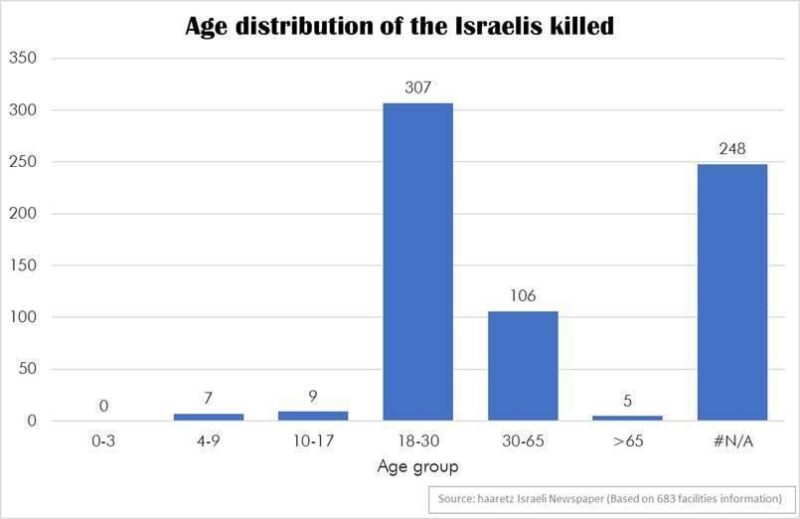
    There are also so far no recorded deaths of children under the age of three, which throws into question the Israeli narrative that babies were targeted by Palestinian resistance fighters. Of the 683 total casualties reported thus far, seven were between the ages of 4 and 7, and nine between the ages of 10 and 17. The remaining 667 casualties appear to be adults.


    Age Distribution of the Israelis killed during Hamas’ October 7 operation (as of 23 October)
    The numbers and proportion of Palestinian civilians and children among those killed by Israeli bombardment over the past two weeks – over 5,791 killed, including 2,360 children and 1,292 women, and more than 18,000 injured – are far higher than any of these Israeli figures from the events of 7 October.

    Revisiting the scene

    The daring Hamas-led military operation, codenamed Al-Aqsa Flood, unfolded with a dramatic dawn raid at approximately 6:30 AM (Palestine time) on 7 October. This was accompanied by a cacophony of sirens breaking the silence of occupied Jerusalem, signaling the start of what became an extraordinary event in the occupation state’s 75-year history.

    As per the spokesperson of Hamas’ armed wing, the Al-Qassam Brigades, around 1,500 Palestinian fighters crossed the formidable Gaza-Israel separation barrier.

    However, this breakout was not limited to Hamas forces alone; numerous armed fighters belonging to other factions such as Palestinian Islamic Jihad (PIJ) later breached the armistice line, along with some Palestinians unaffiliated with any organized militia.

    As it became apparent this was no ordinary resistance operation, hundreds of videos quickly flooded social media, most of which have been viewed by The Cradle, depicting dead Israeli troops and settlers, fierce gunfire battles between various parties, and Israelis being taken captive into Gaza.

    These videos were either taken on the phones of Israelis, or were released by Palestinian fighters filming their own operation. It wasn’t until hours later that more gruesome and downright dubious allegations began to surface.

    Unsubstantiated allegations of ‘Hamas atrocities’

    Aviva Klompas, a former speechwriter for the Israeli mission to the UN, was the first Israeli of note to spread the claim that there were reports of “Israeli girls being raped and their bodies dragged through the street.

    She posted this on X at 9:18 PM (Palestine time), on 7 October, although an op-ed Klompa published with Newsweek at 12:28 AM (Palestine time), on 8 October, made no mention of any sexual violence.

    Klompas is also the co-founder of Boundless Israel, a “think-action tank” that works “to revitalize Israel education and take bold collective action to combat Jew-hatred.” An “unapologetically Zionist” charitable group that works to promote Israeli narratives on social media.

    The one case touted as proof of rape was that of a young German-Israeli woman named Shani Louk, who was filmed face down in the back of a pickup truck and was widely assumed dead.

    It was unclear whether the fighters filmed with Louk in the Gaza-bound vehicle were members of Hamas, as they do not sport the uniforms or insignia of the Al-Qassam troops identifiable in other Hamas videos – some even wore casual civilian clothing and sandals.

    Later, her mother claimed to have evidence that her daughter was still alive, but had suffered a severe head wound. This rings true with information released by Hamas that indicated Louk was being treated for her injuries at an unspecified Gaza hospital.

    Complicating matters further, on the day these rape allegations arose, Israelis would not have had access to this information. Their armed forces had not yet entered many, if not most, of the areas liberated by the resistance and were still engaged in armed clashes with them on multiple fronts.

    Nevertheless, these rape claims took on a life of their own, with even US President Joe Biden alleging, during a speech days later, that Israeli women were “raped, assaulted, paraded as trophies” by Hamas fighters. It is important to note that The Forward’s article on 11 October reported that the Israeli military acknowledged they had no evidence of such allegations at that point.

    When the army later made its own allegations of decapitations, foot amputations, and rape, Reuters pointed out that “the military personnel overseeing the identification process didn’t present any forensic evidence in the form of pictures or medical records.” To date, there is no credible evidence of these atrocities that has been presented.

    Other outrageous allegations, such as the story of Hamas “beheading 40 babies‘ made headlines and the front pages of countless western news outlets. Even Biden claimed to have seen “confirmed photos of terrorists beheading babies.” The claims trace back to Israeli reserve settler and soldier David Ben Zion, who has previously incited violent riots against Palestinians and called for the West Bank town of Huwara to be wiped out. No evidence was ever produced to support these claims and the White House itself confirmed later that Joe Biden had never seen such photos.

    The Hamas plan

    There is little to no credible evidence that Palestinian fighters had a plan to – or deliberately sought to – kill or harm unarmed Israeli civilians on 7 October. From the available footage, we witness them engaging primarily with armed Israeli forces, accounting for the deaths of hundreds of occupation soldiers. As Qassam Brigades’ Spokesman Abu Obeida made clear on 12 October:

    Al-Aqsa Flood operation aimed to destroy the Gaza Division (an Israeli army unit on Gaza’s borders) which was attacked at 15 points, followed by attacking 10 further military intervention points. We attacked the Zikim site and several other settlements outside the Gaza Division headquarters.

    Abu Obeida and other resistance officials claims that the other key objective of their operation was to take Israeli prisoners that they could exchange for the approximately 5,300 Palestinian prisoners held in Israeli detention centers, many of whom are women and children.

    Hamas Deputy Head of the Political Bureau of Saleh Al-Arouri, in an interview after the operation, stressed: “We have a large and qualitative number and senior officers. All we can say now is that the freedom of our prisoners is at the doorstep.”

    Both sides play this game: Since the start of its military assault on Gaza, Israel has rounded up and imprisoned more than 1,200 Palestinians in the occupied West Bank. To date there have been 38 prisoner exchange deals between the resistance factions and Tel Aviv – deals that Israelis often resist to the very last minute.

    While these kinds of testimonies trickle out, reports are emerging that Israeli authorities have dialed up the mistreatment, torture, and even killing of Palestinian prisoners in their custody – a violation of the Geneva Conventions, which ironically, a non-state actor like Hamas appears to have followed to the letter.

    In relation to the events of 7 October, there are certainly some videos depicting possibly unarmed Israelis, killed in their vehicles or at entrances to facilities, so that Palestinian troops could gain access.

    There are also videos which show the fighters engaging in shootouts with armed Israeli forces, where there were unarmed Israelis taking cover in between, in addition to videos of fighters shooting toward houses and throwing grenades into fortified areas. Eyewitness testimony also suggests grenades were thrown into bomb shelters, though by whom is unclear.

    Even at the Israeli “peace rave”, which has been cited as the single deadliest attack committed by Palestinian fighters during their operation, videos emerged that appeared to show Israeli forces opening fire through a crowd of unarmed civilians, toward targets they believed to be Hamas members. ABC News also reported that an Israeli tank had headed to the site of the festival.

    An Israeli massacre in Kibbutz Be’eri?

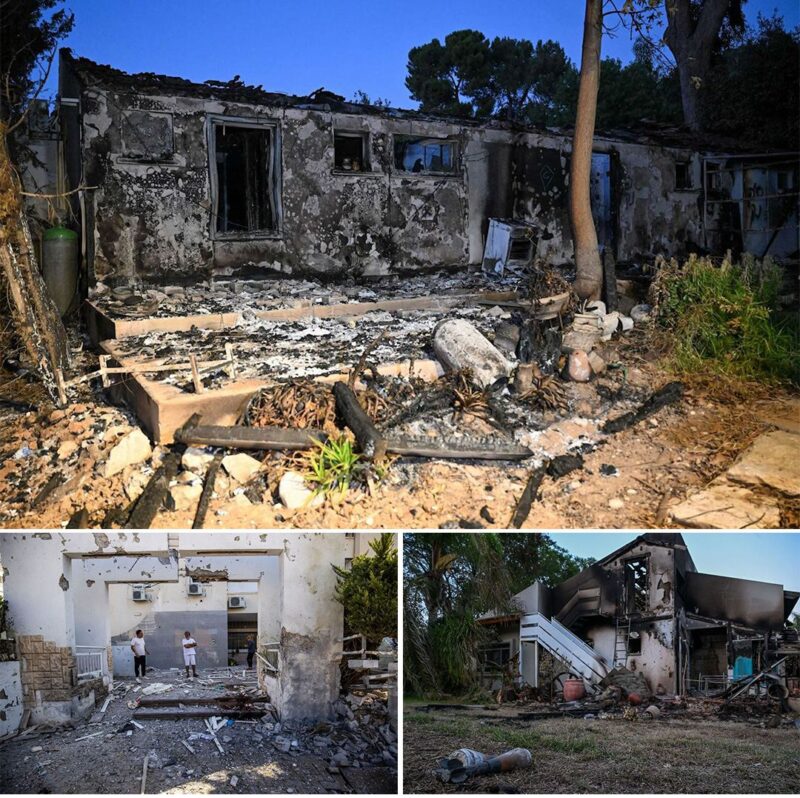
    In its report on the events at Be’eri Kibbutz, ABC News photographed artillery pieces resembling Israeli munitions outside a bombed-out home. The reporter, David Muir, mentioned that Hamas fighters, covered in plastic bags, were found in the aftermath.

    Additionally, videos of the scene show homes that appear to have been struck by munitions that Hamas fighters did not possess. Muir reported that about 14 people were held hostage in a building by Palestinian fighters.

    A Hebrew-language Haaretz article published on 20 October, which only appears in English in a must-read Mondoweiss article, paints a very different story of what went down in Be’eri that day. A Kibbutz resident who had been away from his home – whose partner was killed in the melee – reveals stunning new details:

    His voice trembles when his partner, who was besieged in her home shelter at the time, comes to mind. According to him, only on Monday night (9 October) and only after the commanders in the field made difficult decisions — including shelling houses with all their occupants inside in order to eliminate the terrorists along with the hostages — did the IDF complete the takeover of the kibbutz. The price was terrible: at least 112 Be’eri people were killed. Others were kidnapped. Yesterday, 11 days after the massacre, the bodies of a mother and her son were discovered in one of the destroyed houses. It is believed that more bodies are still lying in the rubble.”

    Photo evidence of the destruction in Be’eri corroborates his account. Only the heavy munitions of the Israeli army could have destroyed residential homes in this manner.
    Aftermath or Be’eri Kibbutz after the fire power of the two sides cease

    Hamas behaviors: Evidence vs allegations

    Yasmin Porat, a survivor from Kibbutz Be’eri, said in an interview for an Israeli radio-show, hosted by state-broadcaster Kan, that Israeli forces “eliminated everyone, including the hostages,” going on to state that “there was very, very heavy crossfire” and even noted tank shelling.

    Porat had attended the Nova rave and testified to the humane treatment throughout different interviews she conducted with Israeli media. She explained that when she was held prisoner, the Hamas fighters “guarded us”, telling her in Hebrew to “Look at me well, we’re not going to kill you. We want to take you to Gaza. We are not going to kill you. So be calm, you’re not going to die.” She also added the following:

    They give us something to drink here and there. When they see we are nervous they calm us down. It was very frightening but no one treated us violently. Luckily nothing happened to me like what I heard in the media.

    Increasingly, and to the horror of some Israeli officials and news outlets, Israeli eyewitnesses and survivors of the bloodshed are testifying that they were treated well by Palestinian fighters. On 24 October, Israeli state broadcaster Kan bemoaned the fact that prisoner Yocheved Lifshitz, released by Hamas the day before, was allowed to make statements live on air.

    As she was handed over to Red Cross intermediaries, the elderly Israeli female captive was caught on camera turning back to squeeze the hand of her Hamas captor in her last goodbyes. Lifshitz’s live broadcast, in which she spoke about her two-week ordeal, “humanized” her Hamas captors even further as she recounted her daily life with the fighters:

    “They were very friendly toward us. They took care of us. We were given medicine and were treated. One of the men with us was badly injured in a motorbike accident. Their (Hamas) paramedics looked after his wounds, he was given medicine and antibiotics. The people were friendly. They kept the place very clean. They were very concerned about us.

    More questions than answers

    It is essential to recognize that in many reports by western journalists on the ground, the majority of information regarding the actions of Hamas fighters comes from the Israeli army – an active participant in the conflict.

    Emerging evidence now indicates that there is a high probability, especially due to the scale of the infrastructural damage, that Israeli military forces could have deliberately killed captives, fired on incorrect targets, or mistaken Israelis for Palestinians in their firefights. If the only source of information for a serious claim made is the Israeli army, then it has to be taken into account that they have reason to conceal cases of friendly fire.

    Israeli friendly fire was rampant, even in the days that followed, from an army with very little actual combat experience. In the city of Ashkelon (Askalan) on 8 October, Israeli soldiers shot dead and shouted insults at the body of a man they believed to have been a Hamas fighter, yet later realized they had executed a fellow Israeli. This is just one of three such examples of friendly fire in one day, resulting in the killing of Israelis by their own troops.

    Amid the fog of war, parties to the conflict have different perspectives on what occurred during the initial raid and its aftermath. It’s not disputed that Palestinian armed groups inflicted significant losses on the Israeli military, but there will be plenty of ongoing debate regarding everything else in the weeks and months to come.

    An independent, impartial, international investigation is urgently needed, one that has access to information from all sides involved in the conflict. Neither the Israelis nor the Americans will agree to this, which itself suggests that Tel Aviv has much to conceal.

    In the meantime, Palestinian civilians in Gaza endure ongoing, indiscriminate attacks with the most sophisticated heavy weapons in existence, living under the persistent threat of forced and potentially irreversible displacement. This Israeli air blitz was made possible only by the flood of unsubstantiated ‘Hamas atrocities’ stories that media began to circulate on and after 7 October.


    The views expressed in this article do not necessarily reflect those of TPF.

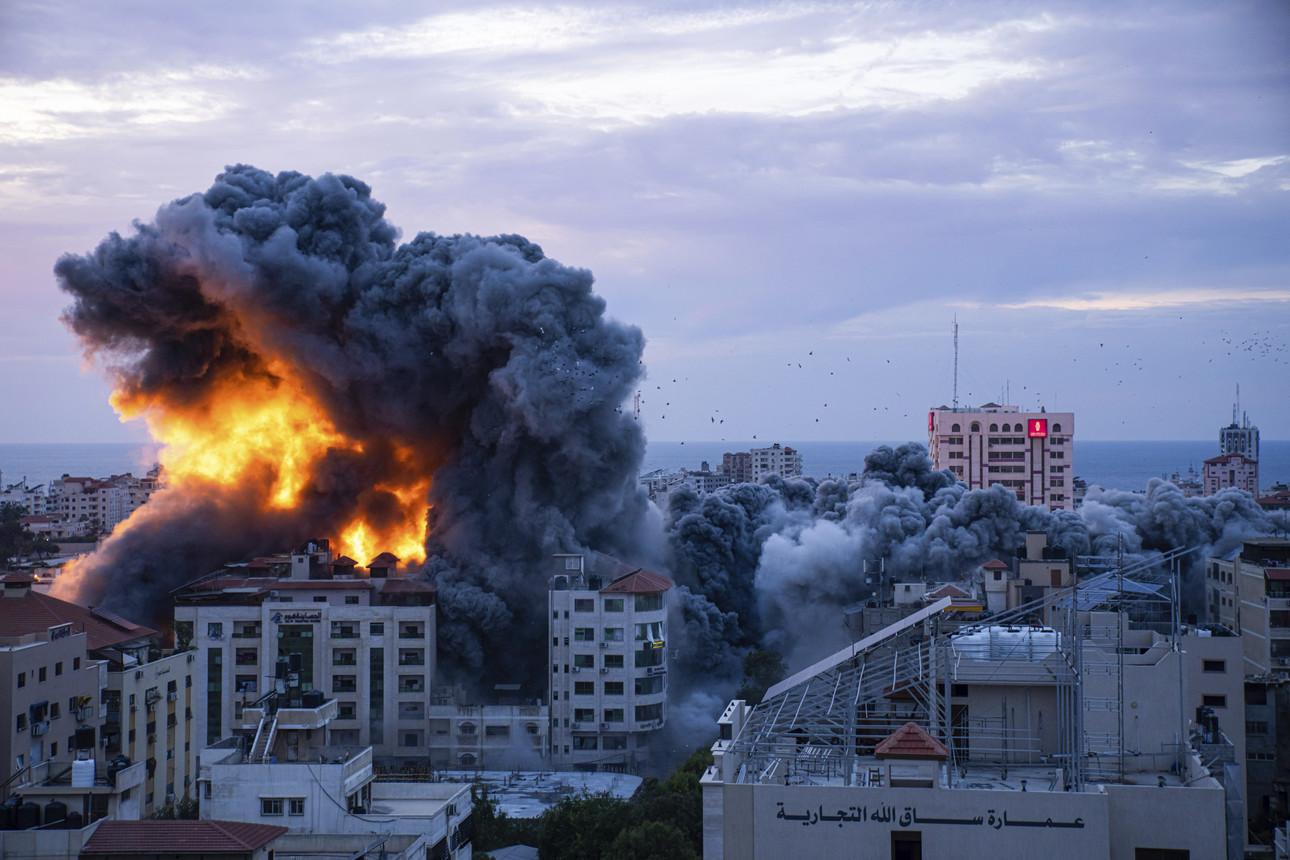
    Feature Image: Gaza under attack – Politico

  • The Impact of Domestic Politics on Foreign Policy: The Colombian Case Study

    The Impact of Domestic Politics on Foreign Policy: The Colombian Case Study

    Introduction

    Colombia is amongst the world’s highly polarised states and has endured conflict for decades. The country witnessed around 50 years of armed struggle between militant groups, the government, and the drug cartels and has seen various forms of human rights violations in these years. The country saw more than 220,000 people killed in the conflict, roughly 25000 kidnapped or disappeared and more than 5 million displaced citizens (García-Perdomo, Harlow & Brown, 2022). However, after much pressure from the people and the government, the guerrilla factions and the ruling party convened to sign a peace agreement that essentially brought the active warring factions to a pause. On November 24, 2016, the Revolutionary Armed Forces of Colombia – People’s Army, or FARC, signed a landmark peace agreement, which also saw the militants present a public apology to the people of Colombia for their violent actions (Georgi, 2022).

    Since the end of the Second World War, Colombia has seen various governments adopt different stances and approaches to their foreign policies. Multiple domestic actors – state and non-state- have strongly influenced the country’s diplomacy. For example, between 1998 – 2002, Colombia moved from the narrative of remaining a failed state and developed ties with the US (Monroy & Sanchez, 2017). The Republic of Colombia has had 17 presidents since 1946, most of whom belong to Right-Wing conservative parties. The current President, Gustavo Francisco Petro Urrego, is the first President from a liberal and leftist political party (Tickner, 2022, 8:10) in decades. The country has never had a progressive-left leader in its political history, and his government has been making waves on all fronts concerning ties with neighbouring countries, attempting to resolve the internal conflict, and dealing with economic disparities within the population.

    A state’s foreign policy primarily focuses on interactions with other states and international actors and is essential to its political agenda. Given the interdependence of these two domains, domestic politics play a vital role in determining a state’s foreign policy. Foreign policy refers to a state’s approach and actions internationally. In contrast, domestic politics refers to the political processes, institutions, and actors within a state that affect the country’s policies. This essay uses Colombia as a case study to investigate how the country’s domestic politics and conflicts have affected its foreign policy. The timeline under revision is from the end of the Second World War to the present.

    This paper will look at the following factors as critical points of discussion. Determining the success of a policy is done by evaluating its efficiency and the evident improvement of situations. The paper will examine 1. How has the evolution of state leadership impacted Colombia’s foreign policy? 2. What role did the insurgents and drug lords play in this scenario? The state leadership (Hey, 1997), the insurgents, and the drug lords are critical players in Colombia’s political landscape and the evolution of its foreign policy. King, Keohane and Verba (1994, p.76) define causality as “a theoretical concept independent of the data used to learn about it”. It is difficult to draw causal inferences in a limited paper. Still, by examining the players mentioned earlier, this paper hopes to attract inferences between domestic politics and the direction of the country’s foreign policy.

    State Leadership and Foreign Policy

    There is a crisp scent of dependency theory when exploring literature about the foreign policies of Latin American countries (Hey, 1997). Similarly, Colombia – a state that witnessed long years of violent conflicts, deaths, kidnappings and illegal drug production continued on the same path as the rest of the countries in the continent. Significant economic disparities and multiple right-wing presidencies saw the inequality between people grow larger and larger (Hey, 1997). These were all critical factors in shaping how the country’s foreign policy presented itself to the world. After the end of the Second World War, Colombia maintained a low profile with respect to its foreign policy (Drekonja-Kornat, 1983). However, Colombia did have a traditional foreign policy – as in a Ministry to oversee relations and maintain ties with neighbouring countries, especially since border disagreements were high. Colombia had closer ties with the US than its immediate neighbouring states. At the same time, there appeared to be a consensus on the state leadership directing policies to suit principles of capitalistic democracy, free trade and markets; Colombia’s external affairs seemed to feed off of international support, especially from the United States of America. The US, in its quest to spread its capitalist democracy, assisted the various presidencies with aid and other means to combat guerrilla movements and insurgent activities. In turn, Colombia helped the US in the Korean War and stood by the US during the Cold War years, too. Drekonja-Kornat (1983) says Colombia was the only Latin American Country involved in the Korean conflict. During Turbay’s presidency, the US-Colombia ties grew closer, and US assistance helped establish his regime further (Hey, 1997). He held office from 1978 – 1982.

    The state’s leadership, in return, adopted and often tailored policies to suit strategic and international partners, particularly the US. Examples of presidencies adopting such policies include supporting the US stance on drugs (Hey, 1997), committing to recognise threats and terrorist activities as adjudged by the US and the EU, etc. (United States Department of State, 2021). Colombia’s constant internal security dilemma accentuates the existence of a dependency theory of Foreign Policy.

    Impact of the Internal Conflict on Colombia’s Foreign Policy

    The insurgents, guerrilla groups, and drug cartels played a role in shaping the foreign policy of Colombia. The entry of drugs into neighbouring countries, particularly the US, brought an international player into Colombia’s domestic issues (Gomez-Suarez & Newman, 2013). The United States desperately tried to solve the drug menace, which led to fighting the drug cartels and networks. America aided and supported the governments in curbing the cartel’s activities and eliminating insurgents who pushed for a more communist ideology, primarily in the Cold War period. Colombia’s alignment with the US on account of the Cold War influenced its domestic politics, which had a more significant say in shaping the country’s foreign policy. The United States of America is Colombia’s largest aid donor; listed below are some of the aid packages received by Colombia:

    1. The US has provided more than $1 billion in direct and indirect support for implementing peace in Colombia since 2016. (United States Department of State, 2021).
    2. The US provided roughly $700 million to assist Colombia with the Venezuelan migrant crisis and host approximately 1.8 million refugees in Colombia. (United States Department of State, 2021).

    Viewing the case from a realist perspective, much of Colombia’s foreign affairs has been dictated by the ebbs and flow of the insurgency. With Colombia’s development and domestic affairs requiring external support, it lacked the necessary flexibility to implement social development schemes as dependency on external aid was high (Monroy & Sanchez, 2017). Colombia became an instrument of the American War on Drugs, almost a pawn to the American foreign policy in Latin America (Tickner, 2011).

    While examining the history of how the state’s leadership handled its foreign policy directives and its domestic issues, there is space for some leniency. Many attempts to broker a peace agreement between the insurgents and the state were met with strong reluctance from the general public and a lack of participation from insurgent groups. Furthermore, corruption in various levels of government offices withheld any progress that could have been made. One could interpret the constant repetition of right-wing presidencies as people’s reluctance to move away from conservative rules, much to the dismay of insurgents, ultimately rendered the public most affected in the struggle for domestic power in the country.

    The Way Forward

    Gustavo Petro became the first leftist President of Colombia on June 19, 2022, in decades (Freeman, 2023). His Presidential victory also marked the first-ever Afro-Colombian, Francia Marquez, to take office as Vice President. Unlike his liberal predecessors, the change in power was smooth from his rightist counterparts. As a leftist, there were questions about his merit and reputation as the country’s leftists were primarily likened to insurgents and militants. While the 2016 Peace Accords dismantled and disarmed most militants from the Fuerzas Armadas Revolucionarias de Colombia or FARC, the associations took longer to change.

    President Petro, however, is having quite the start to office. He is leading a policy of ‘Total Peace’, an effort to include all factions and players in the internal conflict and arrive at an end to the insurgency; his presidency plans to shift Colombia’s economic dependency on trade from the US, fossil fuels and the illicit drug trade to a more sustainable approach (Freeman, 2023), that would be similar to the Green Theory. One can interpret his actions as playing on both sides of the solid and historical US-Colombia ties (Santa Eulalia, 2022). Owing to the associations with his left-leaning tendencies, his moves are somewhat open to more scrutiny by the public. After all, no incumbent President has been re-elected to office in the last 15 elections (Freeman, 2023).

    A significant part behind his election to office has been the general public’s displeasure at rising economic inequalities between people, the inability of the previous government to provide and implement social welfare schemes and the financial toll caused by inactivity during the Covid-19 pandemic. While Drekonja-Konrat (1986) argues that most Latin-American countries can shape their foreign policies to the extent that it doesn’t hurt US interests, Petro is challenging the very notion of keeping his voters happy (Santa Eulalia, 2022). The truth in the details is that they are pretty co-dependent; Colombia needs the support of the US in tackling drug issues and the matter of the guerrilla militant groups, while the US views Colombia as a key strategic partner in the region. Accordingly, Petro has to carefully cater to his vote-bank’s anti-Americanism and yet maintain cordial ties with the US. It is a fragile line to tread, but the room to navigate and keep the US and the public happy is also quite small. Political revisionism is prevalent, given Petro is trying to appease both sides of support, constantly showing evident links as to how a country’s domestic politics can affect its foreign policy.

    References

    Drekonja-Kornat., G. (1983). Colombia: Learning the Foreign Policy Process, Journal of Inter-American Studies and World Affairs, 25(2). Pp- 229-250.

    Drekonja-Kornat., G. (1986). The rise of Latin America’s foreign policy: Between hegemony and autonomy. Latin American Research Review, 21(1), 239-259.

    Freeman, W. (February 2023). Colombia tries a transformative Left Turn, Council on Foreign Relations. Retrieved from: https://www.cfr.org/article/colombia-tries-transformative-left-turn

    García-Perdomo, V.,  Harlow, S. & Brown, D. K., (2022). Framing the Colombian Peace Process: Between Peace and War Journalism, Journalism Practice.

    Georgie, R. (2022). Peace that antagonises: Reading Colombia’s peace process as a hegemonic crisis, Security Dialogue, pp – 1-19.

    Gomez-Suarez, A. & Newman, J., (2013). Safeguarding Political Guarantees in the Colombian Peace Process: have Santos and FARC learnt the lessons from the past?, Third World Quarterly, 34(5), pp – 819-837.

    Hey, J. A. K. (1997). Three Building Blocks of a Theory of Latin American Foreign Policy, Third World Quarterly, 18(4), pp -631-658.

    King, G., Keohane, R.O, & Verba, S. (1994). Designing Social Inquiry: Scientific Inference in Qualitative Research.Princeton, NJ, Princeton University Press.

    Monroy, M. C. & Sánchez, F. (2017) Foreign Policy Analysis and the Making of Plan Colombia, Global Society, 31(2), pp – 245-271.

    Santaeulilah, I. (October 2022). Petro Playing Both Sides in Colombia-US Relations, El Pais. Retrieved from: https://english.elpais.com/international/2022-10-26/petro-playing-both-sides-in-colombia-us-relations.html

    Feature Image Credit: Foreign Policy