Category: Civil-Military Relations

  • Accountability A Must for Armed Forces

    Accountability A Must for Armed Forces

    Kamal Davar                                                                                                            March 29, 2019/Op-Ed

    In democracies the world over, institutions are constitutionally mandated to serve their nation in consonance with the nation’s aspirations and objectives. An institution exists because of and for the nation, and not the other way around. Legally and logically, all institutions are accountable to the constitution from which they derive their responsibilities and strength.

    In India the image of most institutions over the years, since the country’s independence, has taken a beating with regard to their equity, performance, professional integrity — at least in public perception. However, if there is one institution which has unquestionably retained its awe and respect in the nation’s acuity and, equally, its emotions, it’s the Indian Armed Forces.

    Through challenging times faced by the nation since the violent 1947 Partition, India’s armed forces have acquitted themselves with the highest professionalism, uncommon valour and sacrifices to uphold the integrity and honour of the nation. However, events of the past month, namely, the Pulwama terrorist strike and India’s retaliatory air operations in Pakistan’s Balakot have raised significant points in the minds of some security analysts, the foreign media and even some doubting Thomases in India regarding the results of the military action. The dividing line between military transparency vis-a-vis military secrecy has been much debated.

    A few skeptics and some learned ones too have asked: Does the unique respect of the nation towards its armed forces make the latter remain in the comfort zone of its cocoon, answerable to no one but themselves? It is essential, in keeping with the glorious reputation of India’s tri-services, that doubts in the minds of anyone and anywhere are amply answered in the larger interests of the nation and the armed forces themselves.

    The defence forces exist to defend the country from external and internal aggression, to preserve and further national interests — something that they have consistently achieved with matchless sacrifices, aplomb and victories for the nation. However, it is equally important that wherever shortcomings in their operations surface, those must not be pushed under the carpet and ignored on some fuzzy notions of misplaced pride, secrecy or political considerations under pressure from the ruling establishment. Operational security considerations also must be given their due importance for the elements of surprise and secrecy substantially govern success in military operations.

    The dastardly Pakistan-inspired and supported terrorist strike on February 14, 2019, on a CRPF convoy in Pulwama in Jammu and Kashmir resulted in more than 40 fatalities. That this tragedy is attributable to a serious intelligence failure, shoddy road clearance drills besides the faulty decision to dispatch such huge numbers of paramilitary personnel by road and not by air (as now ordered) cannot be denied by security professionals anywhere. That India altered the counter-terror policy paradigm by launching retributive aerial attacks deep inside Pakistani territory was indeed a welcome change and, resultantly, would have sent the correct signal to a terrorism-sponsoring Pakistan.

    The Indian Air Force’s deep strike and the resultant casualties in and damage caused to Jaish-e-Mohammed’s training camp in Balakot in Pakistan’s Khyber-Pakhtunkhwa province and the next day’s shallow aerial counter strike in the Poonch-Naushera sector by Pakistan would have thrown up many lessons for India’s security hierarchy. That these lessons are addressed with alacrity and the seriousness they demand requires no elaboration.

    Even in a democracy where transparency is essential in certain policy matters, the media, especially the over-noisy electronic media, has to absorb the fact that strategies and tactics, operational details, targeting and timings, employment of new weapons and platforms, strengths and weaknesses must not be discussed in the public domain. However, at an opportune time, the official arm of the government/services can and must share relevant details with the public which do not compromise national security. Equally, lapses, where emerging, even within the security forces must be analysed in great depth for future improvements.

    Post the Kargil War, the Vajpayee government had, very appropriately, carried out a comprehensive review of India’s higher defence management under the aegis of the Kargil Review Committee (KRC) and the Group of Ministers (GoM). The KRC and the GoM had done a remarkable job and some of the security organisations now in place owe their existence to them. Though India was clearly victorious in the Kargil War, the government at that time did not hesitate to discuss openly whatever shortcomings in the defence structure there were, dispensing the garb of national security or jingoistic patriotism! In the US, it is commonplace for serving generals/admirals to depose and testify before congressional committees on matters pertaining to national security. Accountability to the nation is thus a very normal hallmark in all democracies.

    As the world’s largest democracy and an aspiring global player, India has to conduct itself like one. Consequently, all its institutions have to be scrupulously accountable to the nation’s Constitution and not to personalities or political dispensations. The Indian armed forces are held in near-reverence and affection by the nation, necessitating them to always display professional acumen, moral courage and integrity of the highest order. As the last bastion of the state, the three services, both in peace and war, must continue to serve the nation as only they can and never, ever compromise on the values of truth, honour and valour. For retaining their high-pedestal-esteem in a democratic set-up, the armed forces must also accept that they are no holy cows either and should welcome any legitimate queries from the government or the public as regards their functioning or performance as long as operational security considerations are not compromised.

    Equally, responsible people in the nation must acknowledge the simple fact that merely questioning the government or any institution on matters pertaining to national security is not being anti-national!

    Lt Gen Kamal Davar is an Indian Army veteran and is former chief of India’s Defence Intelligence Agency. He is a visiting distinguished fellow at the TPF.

    This article was published earlier on March 24th, 2019, on The Asian Age.
    Image Credit

  • Disempowering the soldier

    Disempowering the soldier

    Deepak Sinha                                                                                          December 02, 2018 : Commentary

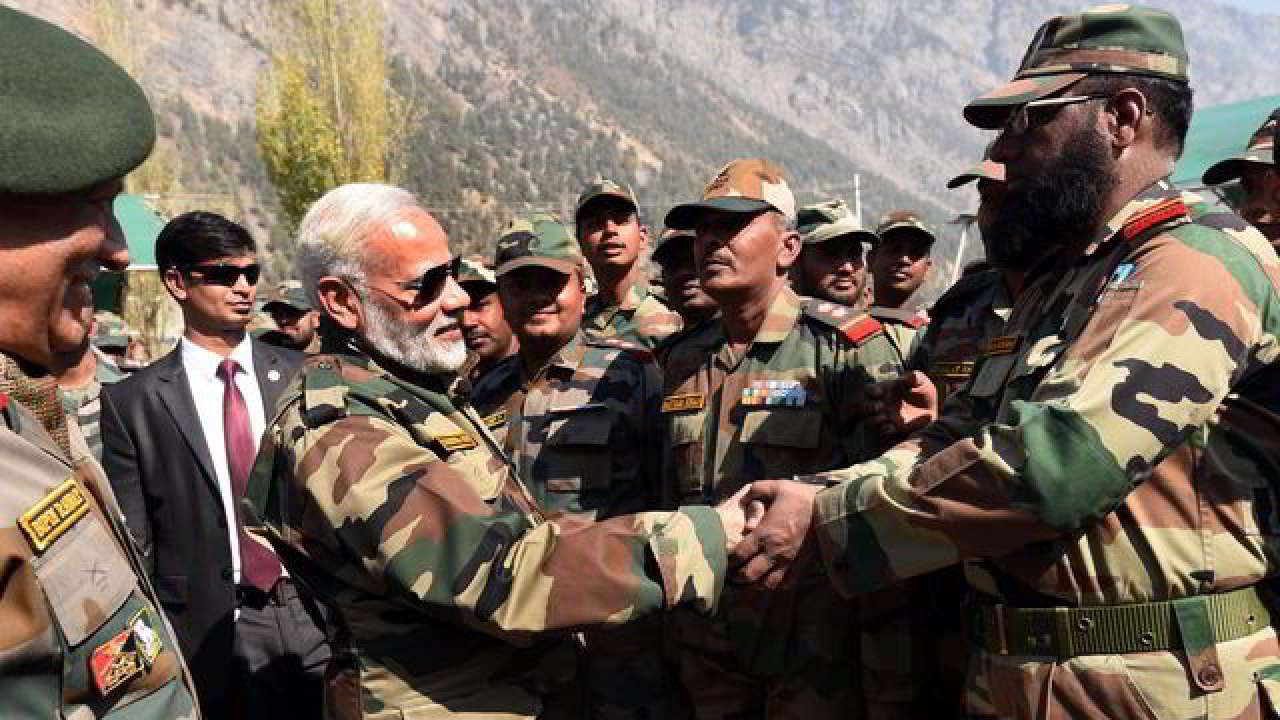
    With election fever having gripped major parts of the country, television coverage of Prime Minister Narendra Modi hitting the poll trail is common, as also his constant reference to the so-called “surgical strikes” in his speeches. It is obvious that through his words of sympathy and support for the sacrifice and efforts of the military, he is intent on furthering his reputation as a firm and pro-active leader. But despite semantics and bombast, his Government continues with unabated ferocity in its agenda to disempower and dismember the military. Among a host of other issues, take the case of the Armed Forces Tribunals (AFT), another important institution that has been in the line of fire by this Government over the past year.

    It was just about a decade ago when the Parliament, in its wisdom, transformed the military justice system by enacting the Armed Forces Tribunal Act, 2007, in order to address the serious lacunae in the existing system where justice was dispensed within the military. As per its website, it provided for the “adjudication or trial of disputes and complaints with respect to commission, appointments, enrolments and conditions of service in respect of persons subject to the Army Act, 1950, The Navy Act, 1957 and the Air Force Act, 1950.”

    More importantly, it also provided for “appeals arising out of orders, findings or sentences of courts — martial held under the said Acts and for matters connected therewith or incidental thereto.” In addition, it also adjudicates cases pertaining to military veterans and their heirs in issues relating to service matters. The AFT also has a distinct advantage since appeals against its findings can be made directly to the Supreme Court, thereby speeding up the judicial process for the affected individuals and the Government.

    The critical role played by the AFT can best be understood in context of the fact that the Armed Forces being hierarchical organisations steeped in tradition, demand unquestionable loyalty and implicit obedience to orders from its rank and file. In this paternalistic and excessively conservative environment if, for any reason, an individual finds himself on the wrong side of the track, be it with regard to personnel or disciplinary issues, his superior officer becomes the prosecutor, jury and judge — all rolled in one.

    While this provides for a quick dispensation of justice, undoubtedly extremely important in certain circumstances, it may not necessarily be unbiased or provide for an impartial or just resolution of the issue. The establishment of the AFT, thus, provided for an extremely important element in the military justice system. It gave all ranks an opportunity to approach an independent authority if they felt that they had not received justice at the hands of their superior officers for whatever reason.

    Besides the principal Bench in New Delhi, the AFT has regional benches in 10 other cities across the country. While Delhi, Lucknow and Chandigarh have three Benches each, all other centres have a Bench each, a total of 17 Benches. Each Bench comprises of a judicial member and an administrative member. The judicial members are retired High Court judges and administrative members are retired members of the Armed Forces who have held the rank of Major General/ equivalent or above for a period of three years or more.

    It demands no great intelligence to conclude that the judicial member is appointed based on his experience and knowledge of law and functioning of the criminal justice system. The administrative member is selected based on his long and distinguished service in the military and knowledge in associated matters.

    However, over the past year while members have retired at regular intervals on completion of the laid down tenures, new appointments have not been forthcoming with a result that presently, of the authorised 35 members for 17 Benches, there are a total of only seven judicial members and eight administrative members presently nominated to the AFT. This implies that the Armed Forces Tribunals is presently functioning at less than 40 per cent of its strength.

    Another five members, including three administrative members, will retire by May 2019, which would make the Armed Forces Tribunals virtually non-functional, if new members are not appointed. For all intents and purposes, circumstances leading to the prevailing state of affairs cannot be attributed to the lack of suitably-qualified judges or service officers. But it clearly points towards a deliberate attempt by the appointing authority and the Ministry of Defence to nullify their effectiveness at the cost of servicemen and veterans alike.

    It is a matter of public record that there have been numerous occasions on which the various Benches of the AFT have ruled against the stand of the Ministry, thereby causing much embarrassment and humiliation to the Ministry. As per reports in the media as on date, the Ministry of Defence has a total of over 7,000 appeals against judgements of the AFT pending in the Supreme Court.

    Obviously, the Defence Secretary finds himself in an unenviable position and can hardly be happy with this state of affairs, especially given the fact that he is a member of the selection committee that appoints members to the Armed Forces Tribunals. This attempt to curtail the effectiveness of the AFT could, therefore, well be because of this, which makes it a clear case of conflict of interest. Incidentally, a petition is under consideration of the Punjab and Haryana High Court since 2012 on this very issue and the need to place the AFT under the Ministry of Law instead.

    However, a more disturbing reason could be that the Government’s attempt to introduce new rules through the Finance Bill 2017 were stalled when it was stayed by the Supreme Court in its judgment of February 9, 2018, in the matter of Kudrat Sandhu versus the Union of India.

    As per the new rules, the appointment of administrative members was to be no longer restricted to the military, but was also open to others with at least 20 years of public service in such fields as economics and finance. Clearly, expecting non-military members to be conversant with military traditions and customs, procedures and conditions of service was not only impracticable, to say the least, but also made no sense. Obviously, this was nothing but a brazen and unashamed attempt to add to the sinecures available for retiring bureaucrats, which given their bent of mind, would result in the Ministry of Defence getting things their way from their own erstwhile colleagues.

    Whether the Armed Forces Tribunals has been brought to its knees by the deliberate actions of unconscionable bureaucrats or utter lack of empathy of politicians is of little concern. The truth is, by curtailing the effectiveness of the Armed Forces Tribunals, the Government is destroying the military justice system which is a disservice to serving and retired personnel. Moreover, it is denying them justice that is their due, given that they have no other legal recourse available.

    The writer is a military veteran, a Consultant with the Observer Research Foundation and Visiting Senior Fellow with The Peninsula Foundation, Chennai. This article was published earlier in ‘The Pioneer’ on November 30, 2018.

  • Avoiding the Ideology trap: Learning from History

    Avoiding the Ideology trap: Learning from History

    Deepak Sinha                                                                                       November 23, 2018: Commentary

    Alexandre Dumas once wrote that “all generalizations are dangerous, even this one.” While there is much wisdom in his words, there are also circumstances when sweeping generalizations are not only unavoidable, but also simply reflect the truth. The widespread prevalence of social media and 24 x 7 news channels have empowered individuals by ensuring that not only is information, analysis and opinion available at the click of a button but also that his or her voice is heard, sometimes with telling effect, as the ongoing ‘#MeToo’ movement has shown, both in India and abroad. While empowerment of the individual is a positive development for our democracy, it has also upended governance structures, as it allows unelected individuals and groups to stall progress or any attempt to change the status quo.

    Moreover, unprincipled and unaccountable elements have used such channels to spread vicious lies and propaganda that allows them to organize and indulge in bullying, intimidation and even violence to achieve their own nefarious ends. Political parties too have seen this as a useful tool to dominate the public narrative and occupy mind space. A perfect example is what we were witness to in Gujarat recently where large number of innocent labourers from Bihar and Uttar Pradesh were threatened with violence and hounded out, ostensibly by a local politician, because of an alleged heinous criminal act on the part of one unidentified individual.

    While what we saw in Gujarat was at the extreme end of the spectrum, and was clearly criminal in nature, a more insidious and harmful impact of social media is the constant attempt to question and vilify decision makers and leaders, without necessarily being fully aware of all the facts. Such criticism, apart from creating fissures and uncertainty within an organization, also tends to severely constrain leaders from taking initiatives that fall within their ambit and are necessary if progress is to be made.

    Interestingly, one group who appear to be the torch bearers at the forefront of this “criticism tsunami”, if one can call it that, are military veterans. There are those among them who are extremely critical of the manner in which this government has treated the Armed Forces, with some justification one may add, and are appalled by the seeming subservience of the top brass. There are also those, in fairly substantial numbers, who tend to be extremely conservative in their outlook and view all issues through the prism of nationalism and, for all intents and purposes, are allied to the present governments’ ultra- nationalistic plank. Indeed, there are many among them who have taken the plunge into politics and are members of the BJP, with one former Chief reportedly having even joined the RSS. When you add to this the fact that our adversaries spare no effort at feeding misinformation aimed at polarizing the military community and civil society, there is little doubt that the military finds itself a veritable minefield of clashing ideologies and attitudes through which it has to tread exceedingly cautiously.

    To be fair, much of the criticism against the Forces has been brought on by patently silly attempts of those at the helm to grab headlines and credit to inveigle themselves into the good books of the governing dispension, probably in the hope of post- retirement sinecures. This is not something new, though what differentiates it from earlier times is this governments’ ill-concealed and voracious appetite to take advantage of these officers to politicize much of what the military does in the hope of deriving advantage against its political opponents. Sadly, it has also got into the habit of appropriating military infrastructure for use by the public to win votes, without bothering about the impact of such a step on the military. For example, while military veterans are barred from using military hospitals except in some circumstances, and are therefore covered by the Ex Servicemen Health Scheme, the Government has recently permitted all those covered by CGHS to utilize facilities at Service Hospitals. With an additional 50 Crores personnel to be catered for where will all serving personnel and their dependents go?

    The recent celebration of “Parakram Parv”, a three day commemoration of the cross-border punitive strikes in retaliation to the terror attack against the Uri military camp in which 17 soldiers were killed and scores injured, is another recent example. Without downplaying the significance of the cross-border strikes, probably a far more appropriate manner of honouring the forces, if the Prime Minister indeed genuinely appreciates their contribution, would have been for him to have taken the initiative to get back home the fifty four soldiers still held as Prisoners of War by Pakistan since the 1971 Indo-Pak War. Their continued incarceration, with no attempts by successive governments or civil society for their release, is a matter of national shame that reflects poorly on each and every one of us.

    This brings us to the elephant in the room that must be seen for what it is. It is well known fact that our military’s exemplary record of remaining apolitical is what differentiates it from all other militaries in the region. Individual ideologies and beliefs just have no place in the military’s firmament and politicians of all persuasions have been kept at arms- length, though one must also admit that most political parties have reciprocated similarly and kept their distance from the military as well. Unfortunately, the unsubtle attempt by the current dispensation to foist its ideology amongst the military rank and file, attempting to use “deep selection” among the higher ranks and indirectly through the veteran community that is enamoured of its ultra – nationalistic agenda, and all that it implies, appears to be showing nascent signs of putting down roots. This is an extremely dangerous trend that needs to be dealt with ruthlessly if we are to maintain our military’s neutrality and inclusive character. It seems the time has now come for including a provision within the Service Rules for an appropriate “cooling off” period before any soldier can join either a political party or involve himself in politics. This is particularly so for those leaving in the higher ranks.

    The unedifying manner in which this government has dealt with the Armed Forces over the past four years, whether it be in its dealings with veterans or its refusal to adhere to long standing norms, customs and traditions, has led to increasing antipathy among the rank and file that is clearly reflected in some of their actions that have embarrassed the senior hierarchy and the MOD and shown them in poor light. Seven hundred personnel individually petitioning the Supreme Court on their apprehensions of being victimized while deployed in operations, serving officers publicly criticizing policy directions issued by Army Headquarters on social media and the non-implementation of policy directions issued by the MOD, as has happened in nearly all military cantonments with regard to providing open access to the public, are examples that should be cause for worry. All of this has adversely affected morale, which can also be gauged from the most telling example of an officer having reportedly applied for premature retirement on grounds that his conditions of service have been violated by the down- gradation of the military. That his application was rejected is no cause for optimism.

    The situation is hardly likely to improve given the reported fact that the government is once again attempting, surreptitiously and without appropriate consultation with the military leadership, to look for a method by which it can prevent the Cantonment Boards from taking back bungalows from their present owners on expiry of the 99 year lease period, as required vide the Cantonment Act 2006. One reported solution being considered is to replace the ex officio appointment of the Local Military Authority as President of the Cantonment Board by an elected representative to supposedly further its “democratization” A move that would be violative of the Cantonment Board Act, not that such statutory provisions have stopped it before, especially keeping in mind that some extremely influential people have obtained ownership of these leased bungalows.

    Finally, it should be a matter of great concern that amongst a host of other issues, the Service Chiefs have also quietly acquiesced to the appointment of Mr. Doval, the National Security Advisor, as the de-facto Commander-in-Chief, despite lacking both the constitutional authority and the credentials to hold such an appointment. The irony cannot be missed given that the Services themselves seem reluctant to accept the appointment of a Chief of Defence Staff fearing loss of power.

    By conceding their authority the Chiefs have placed the Services in a very tenuous position which can impact their professional standing and functioning in the future. They would do well to study the case of the German Armed Forces, the Reichswehr, formed post the First World War, as an apolitical and professional force. However it rapidly deteriorated after it was ideologically suborned and converted into the Wehrmacht, the unified armed forces of Nazi Germany. This happened largely in part due to the acquiescence of the High Command to orders that were wholly unconstitutional and undemocratic and partly due to the fierce loyalty of some to Nazi ideology. Our hierarchy must not let themselves be lulled into a state of complacency but hold firm on retaining customs and traditions that have allowed our military to occupy the preeminent position that it does in the hearts and minds of our citizens.

    This article was published earlier in Times of India.

    Brigadier Deepak Sinha is a Visiting Senior Fellow at TPF. The views expressed are his own.

  • Women In Indian Armed Forces

    Women In Indian Armed Forces

    Center for Women’s Studies & Department of History
    Women’s Christian College, Chennai
    & The Peninsula Foundation, Chennai

    cordially invite you to the Inauguration of the

    National Seminar

    Women in Indian Armed Forces:
    Changing Contexts and Transformations

    On 8th March 2018 at 9.00 a.m.

    at the Auditorium (Centenary Building)

    Inaugural Address

    Dr. C. Joshua Thomas

    Coordinator, ASEAN Studies Centre &, Deputy Director,

    ICSSR North Eastern Regional Centre, NEHU Campus, Meghalaya

    Keynote Address

    Air Marshal (Retd.) Dr. M. Matheswaran

    Former Deputy Chief, Integrated Defence Staff (Air),

    South Block, Govt of India, New Delhi

    Chairman The Peninsula Foundation, Chennai

    Special Address

    Lt. Gen. (Retd.) Vinod G. Khandare

    Former Director General Defence Intelligence Agency, New Delhi

    Sponsored by

    Indian Council for Social Science Research,

    New Delhi & Southern Regional Centre, Hyderabad

    Events Snaps

    [sc name=”donte”]