The coronavirus pandemic is the biggest disruptive global health threat in more than a century. The economic, political, and social life of people in all countries has been adversely affected as never before. This new strain of the coronavirus has posed significant challenges to people, researchers, medical fraternity, and governments across the world. It poses serious health risk to the elderly and has stressed national health systems significantly. The development of a vaccine, despite global efforts, is not likely to be available any time before mid 2021. The Peninsula Foundation, through two doctors Ms Keerthika Gnanasegaran and Ms Vishnupriya Rajasegaran have put together complete information on the Coronavirus in simple and easy to understand details. Ms Avanti A Srinivasan, a high school student describes her experience and opinion of the crisis.
Download Full Paper
Category: Briefing Paper
-

Coronavirus: Fighting The Invisible Enemy
-
Then & Now: A Reflective Study of Development Initiatives in Bangladesh
Yamuna Matheswaran March 31, 2019/Analysis
Towards the end of 2010, I travelled to Bangladesh with the rest of my graduate school cohort to study various developmental approaches within the country’s healthcare, garment, banking, and agricultural sectors. It was an enlightening trip–one that allowed me to understand not only the intricacies of international development but to also gain a more nuanced perspective of the country as a whole.
“To understand Bangladesh, you have to understand the war.”
– Omar Rahman, Professor, Independent University, Bangladesh
Scores of Bangladeshis lost their lives in the struggle for independence in 1971 in what was then known as East Pakistan, and nearly 10 million crossed the border into India as the war waged on. They had no army, minimal weaponry and, realistically speaking, not much of a chance for survival against the genocidal tactics employed by the Pakistani Army–actions that its allies, the United States and China, refused to condemn. They fought back, however, and in doing so displayed the same extraordinary resilience that was demonstrated by its students during the Bengali Language Movement of 1952. On 16 December 1971, the new nation of Bangladesh was born.

A street in Dhaka ©YamunaMatheswaran Taking a bus ride through the cacophonic streets of Dhaka, thoughts raced through my mind: how simultaneously similar and different Bangladesh was from my own home country of India, how accommodating its people were, and how–despite growing up in congested Indian cities–Dhaka’s traffic was the craziest thing I’d ever seen. It still is. After all, Dhaka has a density of 47,400 people per sq. km, and around 37,000 cars are said to be added to its roads every year.
In 2017, Bangladesh’s population stood at approx. 164 million compared to 152 million in 2010. But the population growth rate has been in steady decline since 1986, and the implementation of various developmental approaches have contributed significantly to that decline. (Population Data from World Bank)
An Overview of the Facts
Bangladesh has its share of problems, and then some. For starters, there is the tangible dilemma of overpopulation. But unlike India, which is well on its way to becoming the most populated country on the planet, the total fertility rate in Bangladesh has been successfully lowered from nearly 7 births per woman in the late 60s to 2.104 in 2016. Even so, Dhaka remains one of the world’s most densely populated cities. And with increased longevity, concerns have arisen over the lack of facilities and infrastructure required to care for the country’s growing elderly population.
All around Dhaka, construction sites are aplenty, and dust from these sites worsens the already noxious city air. It’s no surprise then that Bangladesh experiences issues of environmental degradation, while also being susceptible to the devastating impacts of climate change. Scores of people, including millions whose livelihoods depend upon agriculture, have been affected by the frequent cyclones, floods and droughts.

Illustration ©YamunaMatheswaran The drainage systems aren’t too different from the ones in Indian cities, and heavy rains even for brief periods can disrupt normal life and cause flooding and waterlogging. Setbacks with the electricity supply, cases of arsenic poisoning in groundwater and ineffective methods of trash disposal are some of the issues that constitute the miscellany of Bangladesh’s woes. Political tensions, attacks on journalists and widespread problems of corruption hinder effective governance of the nation.
In spite of these modern-day problems, Bangladesh is on the right track to eliminating extreme poverty by 2030. According to data from the World Bank, the percentage of the population living in extreme poverty ($1.90, 2011 PPP) fell below 14% in recent years, compared to over 40% in 1991-92. And while it still ranks among the poorest highly populated countries in the world, the GDP growth rate of Bangladesh hit an astounding 7.86% in 2018.
In its less-than-fifty-years of existence, Bangladesh has pioneered breakthroughs in the fields of public health and microfinance, passed noteworthy drug policies, significantly improved aspects of agricultural production, and achieved unprecedented growth in its GDP largely attributed to the development of its garment industry. Notably, it has attained these goals by incorporating its women into the national economy by means of several women-centric initiatives. Institutions such as icddr,b, BRAC, and Proshika are models of the kind of development that is directed by the locals and is, hence, ultimately more sustainable.
The Microfinance Revolution
After Mohammad Yunus founded Grameen Bank in 1982, microfinance became a phenomenon in the developing world, providing small loans free of collateral, lifting thousands of people out of poverty and making businesspersons out of the extremely poor.

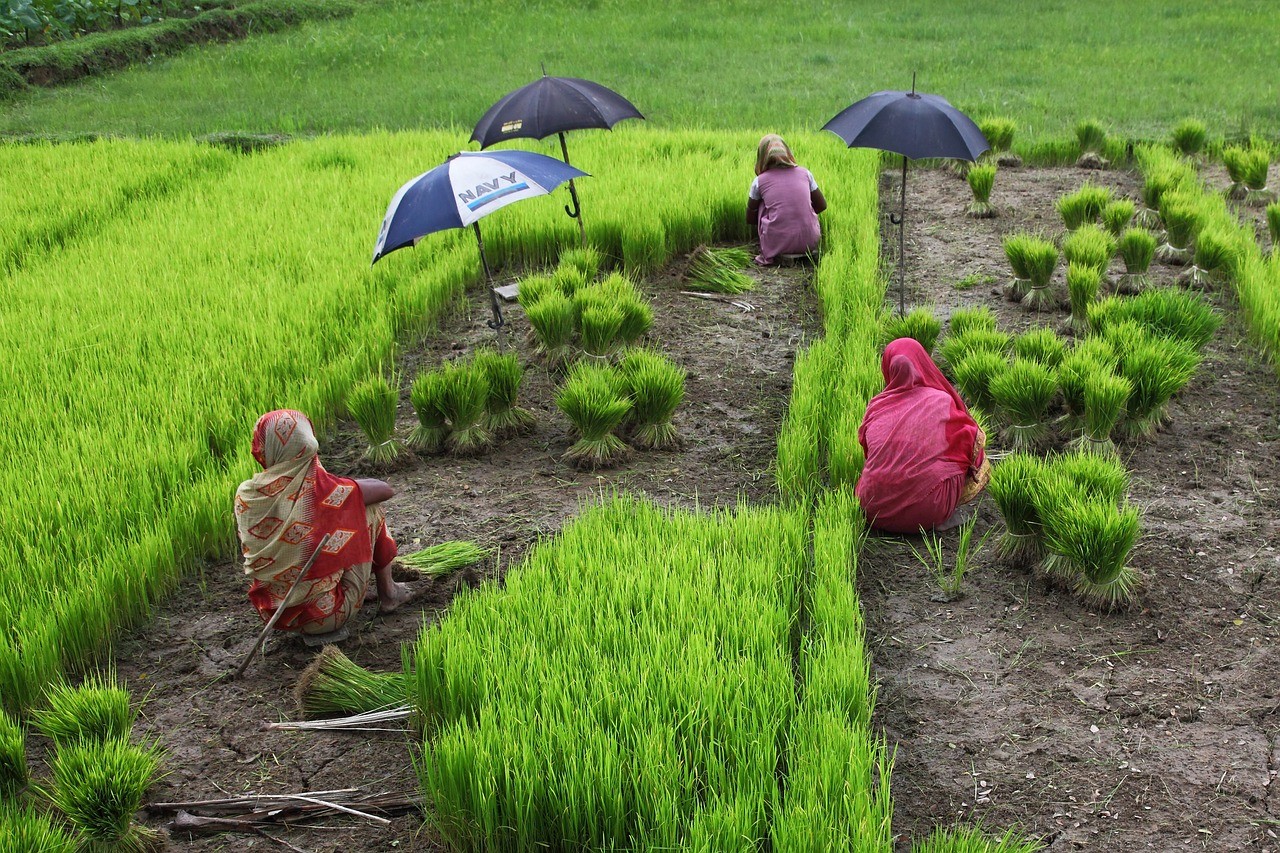
Women working in rice fields ©pixabay Over the years, however, the field has been tainted by reports of corruption and mismanagement. Criticism has focused on the fact that loans are frequently issued to the poor with the sole purpose of reaping profits, thus overlooking the necessary supplementary steps. Does the borrower have a plan for increasing income generation with the help of the loan? Do they have the necessary qualities/resources for said business plan? Is the money in actuality utilised in income generating projects or elsewhere? Often borrowers, who are ill-educated about the various facets of microcredit loans, make use of the newly acquired capital to purchase goods, pay school fees, etc. With no increment in revenues, they inevitably enter into a vicious cycle of debt, and are forced to undertake another loan in order to repay the previous one. MFI collection agents and their coercion tactics have also been listed as a reason for an increase in suicides among borrowers.
In contrast, Gonoshasthaya Kendra’s seasonal loans, which require the borrowers to start making repayments after the harvest, seem more logical. Nonetheless, researchers have pointed out that although microfinance might not have a transformative effect on the lives of people, it does have a positive impact. For one, increasing reliability of and access to credit leads to an increased sense of agency and freedom in one’s life.
Pioneering Healthcare Initiatives
From facilitating the local manufacture of drugs to offering affordable health insurance to poorer sections of society, Bangladesh has made extraordinary advancements in the public health sector.
Set up in 1972, Gonoshasthaya Kendra (GK) was the first health centre in newly independent Bangladesh. It was established by Dr Zafrullah Chowdhury with the aim of making basic healthcare accessible to the rural population. Dr Chowdhury was also instrumental in the conceptualisation of the breakthrough National Drug Policy of 1982, which ensured the safety, availability and affordability of essential drugs. GK’s services have since expanded beyond affordable primary healthcare to include work education, nutrition, agricultural cooperatives, disaster management, rehabilitation and women’s empowerment. Hygiene and sanitation in many of GK’s wards has been a persistent issue however, and poses high threats of nosocomial infections.

Routine checkup at a village health camp in Savar ©YamunaMatheswaran The International Centre for Diarrhoeal Disease Research, Bangladesh (icddr,b) originated in 1960 as the Cholera Research Laboratory in the sub-district of Matlab and was officially named icddr,b in 1978. Primarily a research institute, it has been credited with playing a key role in the discovery of oral rehydration therapy (ORS) to combat cholera and diarrhoea, the latter being a leading cause of infant mortality. The institute also focuses on neonatal care, treatments for tuberculosis, malaria and HIV/AIDS, and carries out meticulous demographic surveillance. At the time working on rotavirus vaccine trials, icddr,b’s clinical studies have since contributed to the development of affordable rotavirus vaccines. The institute relies on the funding it receives from several donors, since government expenditure on healthcare (as percentage of total GDP and budget) has reduced to a point where it is the lowest among 21 Asian countries, according to a 2018 United Nations survey.
Cleanliness and technological resources of icddr,b’s hospital in Dhaka appeared to be far better than that of the GK hospital in Savar. However, doctors at icddr,b were quick to commend GK on its effective performance. It’s a matter of concern for GK, though, that a number of its students that graduate from its university, Gono Bishwabidyalay, choose to work for other institutions/hospitals, either for economic reasons or to pursue further specialization or be able to contribute to the research arena, leading to a shortage of doctors.
The Façade of the Fashion Industry
Bangladesh is the world’s second largest exporter of readymade apparel, second only to China. Garments constitute 80% of the nation’s earnings from exports, and in 2015, Bangladesh exported clothing worth over $26 billion, mainly to Europe and the United States.
The garment industry has revolutionised Bangladesh’s economy and significantly impacted its society. A large majority of its workers are female; increased economic freedom has led to women bearing fewer children, thus contributing to declining fertility rates and tackling the dilemma of overpopulation. From the looks of it, it seemed like a win-win situation: the garment industry employed numerous people in developing countries, increased foreign investment and was responsible for an increase in the annual GDP growth rate. International brands now paid a fraction of the production costs that they used to, while oblivious buyers continued shopping at Zara, Forever 21, Russell Europe and Walmart, unaware that they were paying starkly different prices for clothes that had all been manufactured under the roof of the same factory.

A garment factory in Bangladesh ©YamunaMatheswaran But the entire world got a reality check with the tragic Rana Plaza building collapse in 2013, which claimed 1,134 lives and was termed a “mass industrial homicide”. But long before that horrifying incident, workers had already been calling for liveable wages and safer work environments, and other deadly incidents had led to periodic loss of lives.
On 12 December 2010, on our way to the airport, we drove past one of Bangladesh’s export processing zones and caught a glimpse of what appeared to be a peaceful protest against delays in the implementation of a wage hike. We later came to learn that the protest had turned violent, claiming at least three lives and leaving dozens of people injured.
The factory we visited at the time, Knit Asia Ltd., boasted good working conditions and facilities including a free childcare centre and regular fire drills. It was one of Bangladesh’s leading garment manufacturers, and also owned the largest biological effluent treatment plant in the country. However, that is more the exception than the norm.
In 2010, Bangladesh’s garment workers received the lowest wages in the world – as little as $45 per month. That amounted to a measly $0.25 an hour, when compared to the hourly wages of $0.48 and $0.57 earned by workers in China and India at the time, respectively. From what I garnered, it cost Russell Europe $3 to manufacture a polo shirt in 2010, which was then sold for approximately $7.
The profit made from the sale of a single piece of the polo shirt exceeded the factory worker’s daily wage.
In 2019, minimum wage for garment workers in Bangladesh is approximately $95 (or 8,000Tk) a month. It was not enough to make a decent living then, and it still isn’t today, and workers are still fighting to be paid a living wage. Since consumer demand dictates how the garment industry functions, we as buyers have a responsibility to utilise this power to generate awareness and take a stand against inhumane practices by choosing ethical brands over fast fashion.
The Role of Women in Development
“Bangladesh shows what happens if you take women seriously as agents of development. It not only halved the rate of fertility within a generation, but also increased women’s influence within their own households. For the first time, wives controlled the size of families.” – Out of the Basket, The Economist (3 Nov 2012)

A village microfinance meeting ©YamunaMatheswaran The role of women in mainstream Bangladeshi society is a contradiction of sorts. Women are the principal participants in the microfinance sector, a majority of the paramedics that work in villages are female, and they constitute 80% of the workers in garment factories. Nearly every institution that we came into contact with – BRAC, GK, icddr,b, Proshika – had a project that focussed on empowering rural women. However, like in other countries rooted in patriarchy, sexual harassment is rampant, female enrolment rate in universities is low, and women do not enjoy the same freedom and social stature as men.
Regardless, the empowerment of women is crucial to development. It has been demonstrated that women are more likely than men to spend their incomes/loans on the welfare of the entire family as opposed to squandering it on nonessential goods. Increasing women’s access to education and economic security also results in reduced birth rates, which ultimately alleviates myriad issues associated with overpopulation.
To Harbour a Dream
Upon the conclusion of our study tour, what stood out to me most was the hospitality of the people who went out of their way to ensure that we were comfortable and well-fed at all times, with plenty of tea and biscuits between meals. To this day, I remember my experience of travelling around Bangladesh fondly. The lessons that it has taught me in the field of development – about what works as well as what doesn’t – remain invaluable. Considering the number of NGOs that are at work in Bangladesh – reportedly over 2,500 – I wonder if collaboration might render them more effective.

En route ©YamunaMatheswaran Nevertheless, this land that has been twice occupied and weathered innumerable floods and famines is a prime example of what locally pioneered methods of just and sustainable development can achieve.
Working with iDE during the last few days of our tour provided the most tangible example of how something as simple and affordable as a treadle pump can truly empower families. How I’d love to hear that the bottle gourd-growing couple eventually realized their dream of travelling abroad! But the essential part is the fact that one is prepared to harbour a dream.
Yamuna Matheswaran is a freelance writer, artist, and technical editor at TPF. She has a Master’s degree in International Studies from the University of Denver and is currently based in New Delhi.
-
Changing Paradigms of Political Canvas in Sri Lanka
The intransigent ethno-political emotional divide amongst the Sri Lankan society of 1980s manifested into a bloodiest insurgency with the Tamil separatists almost succeeding in carving out a separate Tamil Elam in the North and Eastern regions of the island nation. The political divide at that juncture was result of a racial cleavage between the Sinhala majority and oppressed Tamil minority which prompted the later to rebel in the face of socio-economic denials of all kinds.
It was India who came to rescue of the Sri Lankan government of the day in 1987 to ensure territorial integrity of the country even at the cost of negative political repercussions within India. The India had to pay the price of this political outreach to Sri Lanka with life of Rajiv Gandhi, the prime minister who went out of way to help them in their hour of crisis. The deeply indebted Sinhala dominated Sri Lanka of 80s seem to be chartering a different trajectory now with self serving opportunist afflictions due to inducements of easy money from extra regional players, especially China.
While encashing the apparent Chinese benevolence, the gullible Sri Lankan politicians seem to have ignored the basic dictum that ‘there are no free lunches’ in this world. And the slip is showing wherein the Sri Lankan political dispensation seems to have compromised on their territorial integrity by leasing out Habantota port and 15000 acres of land in lieu of repayment of Chinese loans. A precedence has been set for more such sovereign compromises in times to come for which India had fought a bloody battle against their own co ethnic insurgents.
The motive of the ongoing political drama appears to be focused on facilitating the Chinese cause even if it amounts to tempering with the constitutional jurisprudence. Indeed, there is a paradigm shift in political thinking with its doctrine of development through Chinese support which has obvious inherent centrifugal tendencies as against focus on internal economic consolidation. Instead of reclaiming the lost politico-economic ground to China post Habantota episode, a major part of Sri Lankan polity seem to be under compulsion to toe the Chinese lines due to debt diplomacy so cleverly orchestrated by the Chinese.
The close scrutiny of Sri Lankan political conduct in the past hinges on the non accommodation of rival ethnic, social or political groups within the Sri Lankan society which seem to continue even today in some form or other. Earlier it was based on ethnic rivalry between Sinhala and Tamils, and now it is intra Sinhala dispensation vying for more political and money power in a political set up with opportunist tendencies. Despite a vibrant democratic political dispensation to take care of well being of its subjects, the island nation has witnessed spells of changing political priorities and concomitant societal upheavals in the recent times. The military driven turbulent ethno- political complexion of 80s gave way to consolidation of socio-political synergies alongside resolving the internal security issues for almost three decades.
Subsequently, in the aftermath of subjugation of Tamil insurgency in 2009, the priorities changed to the much needed economic development of the nation. However, the tourist predominant economy had woeful inadequacies of infrastructure and public conveniences to tap the potential of the nation at par with other international tourist destinations close by. To do that, there was no money due to prolonged war effort which in turn prompted Sri Lankan polity to look outwards paving way for externally influenced politico-economic opportunism.
Chinese concept of BRI suited both China as well as the Sri Lanka as a mutually beneficial mechanism to take care of each other’s interests. The BRI concept envisages development of communication and transportation net work, industrial and power corridors as part of Chinese grand game for their global economic expansion. As far as China is concerned all the countries in the Indian Ocean are important for Chinese geo political matrix as a response mechanism for the security of her economic interests. Chinese conduct when hyphenated with their ‘’String of Pearls in the Indian Ocean’’, and their defiant politico-military stance in the South China Sea speaks of their seriousness and sensitivities of their interest in the Indo Pacific region. Sri Lanka happens to be in a pivotal position to serve the Chinese geo political interests.
In the given circumstances, close affiliation with the China is a win -win situation for Sri Lanka for their economic buoyancy and a politically strong anchor to stand by their side in the time of crisis. However, there are also apprehensions of negative fallouts of new found political bonhomie with an outsider with prospects of disturbing existing stable regional political equilibrium fully aligned with socio- cultural emotional bind of Indian legacy. Accordingly, there is an emerging pattern of an internal political divide amongst Sri Lankan parties and individuals believing in encashing the pragmatic opportunism as against continuation of stability through India centric regional cohesiveness.
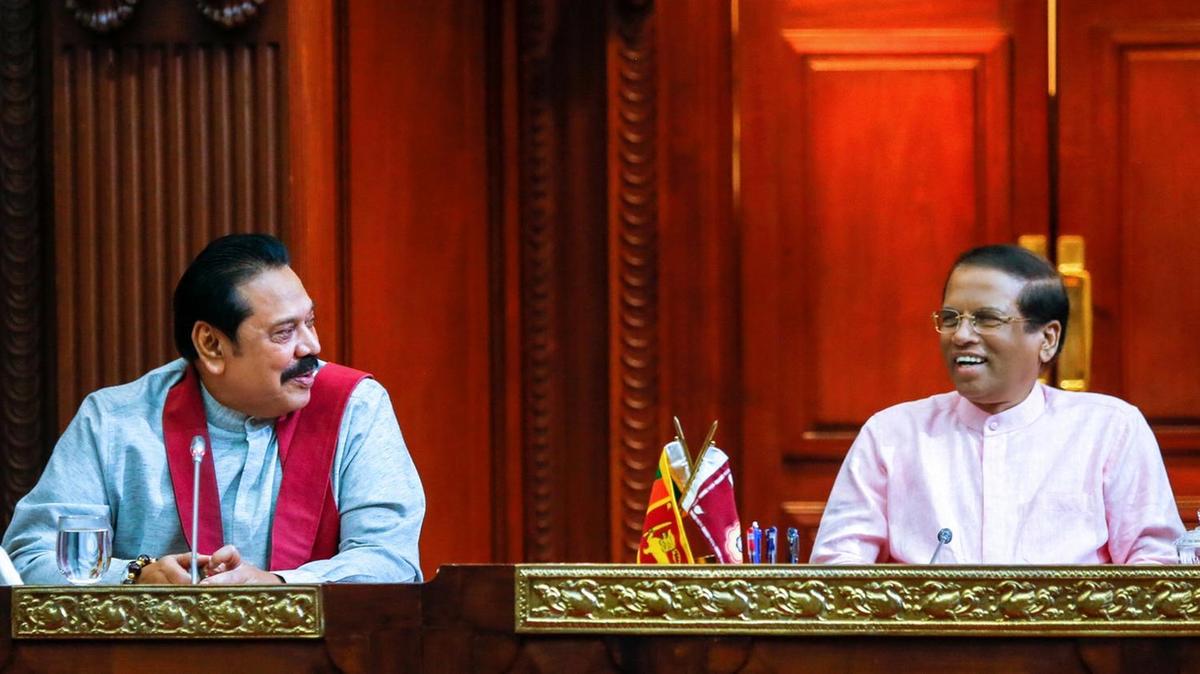
The Mahindra Rajpaksha during his premiership was given loans worth $ 6 billion for various infrastructural projects including Hambantota port. Later the dept trap diplomacy of China got highlighted in their demand of ownership of the port plus land adjacent to it. It, surely, has exposed the dubious ways of China which has prompted number of recipients of Chinese benevolence to revisit their commitments with them as regards to BRI scheme. Sri Lankan civil society is ceased with this Chinese conduct and there is a resistance to encouraging Chinese intrusion into Sri Lankan affairs beyond a point.
The opponent Ranil Wickremasinghe, is known to be a proponent of the Indian lobby who had, recently , cancelled housing project of more than 50,000 houses in North and Eastern Tamil areas given earlier to China in favour of Indian companies. The Rajapaksha was brought back as the prime minister by the president through an untenable political move leaving the country in a political chaos. The parliament was dissolved paving way for fresh elections. However, the Supreme Court ruled against this unconstitutional move by the president. It was probably done as Rajapakshe, like his previous tenure, would facilitate better relationship with the China looking at their current political compulsions and national interests.
What is happening in the Sri Lankan political canvas seem to have imprints of pro India vs pro China lobbies. The fact that there is an outstanding loan of almost $ 5 billion despite handing over the Hambantota port to them, China may be pulling the strings to bring in a political dispensation favourable to them to do their bidding. The way the democratic norms are being flouted do indicate a desperate situation precipitated by the looming economic catastrophe waiting to happen.
The military geography of Sri Lanka has bestowed her with a unique location to take care of the most vulnerable security concerns of China with 70% of trade and 90% of energy supplies passing through the Indian Ocean. Therefore, it is obvious that China is here to stay as a permanent feature and to do that they seem to have acquired a substantial political space in the Sri Lanka. Whereas, the Sri Lanka seem to have lost out on her autonomy to some extent as there is a probability of China dictating their terms when they find the policies are not in sync with Chinese interests.
The likely Chinese naval presence at Hambantota port barely few hundred miles from Indian shores is a security concern for India. The Chinese politico-military afflictions in Sri Lanka is likely to prompt the western powers also to further enhance their military presence closer to the Indian shores. It, obviously, would impact the Indian security matrix with the extra regional players milling around in the areas of Indian influence all this time. The new nomenclature of ‘Indo Pacific ‘ referring to erstwhile IOR and Asia Pacific is manifestation new US maritime doctrine as a response mechanism to Chinese geo political expansion. The increase in the US sponsored military diplomacy in the region and revival of Quad are all indicative of new global strategic grand games being unfolded closer to the Indian shores.
India has no choice but to upgrade her military capabilities to take care of the inimical developments around her periphery both on land as well as maritime domain. It warrants looking beyond defensive doctrines and acquire offensive capabilities for optimum power projection in the areas of concern, besides defence of the island territories and international maritime obligations. Given the distances from the main land and bottle necks for shipping, China would always be militarily vulnerable in the Indian Ocean. It stands to an advantage for India which need to be factored in the design of the military doctrine and its political strategic outreach.
The Sri Lanka needs to recall that they stand integrated today due to unflinching support by India in their hour of crisis and sacrifices made by the Indian soldiers to hold their country together. They should also appreciate that the India continues to be the stabilizing factor for Sri Lanka and a friend in need. China on other hand is here to exploit the Sri Lankan geographical space for their geo political motives sans any benevolent emotional connect. In fact, China has already usurped their strategically located land through their manipulative ways. If the Sri Lankan polity has not understood their game plan then they should be prepared for more such disintegrating moves as part of their dubious debt diplomacy. The Sri Lanka is in economic crisis and stands vulnerable which is reflective in their recent political conduct. In that, there seem to be tell tale signs of Chinese complicity in the ongoing happenings in the Sri Lankan political space which is not a good news.
India, obviously, has not been pro active enough to sense the aspirations of her neighbours and propensity of China to exploit the political deficit on the strength of her deep pockets and liberal military outreach. The Sri Lanka has a great significance for Indian security and we need to take all the possible measures to neutralize the Chinese foot prints in the island nation. India fortunately has a large influence in the Sri Lankan society and reckonable political leverages which needs to be nurtured and exploited in our national interests. India as a responsible regional country need to go all out to extend a helping hand to Sri Lanka in her testing times as their political stability is essential to the Indian strategic interests.
Lt Gen Rameshwar Yadav is an Indian Army veteran and former Director General, Infantry. The views expressed are his own. This article was published earlier in https://cenjows.gov.in/article-detail?id=122