Introduction
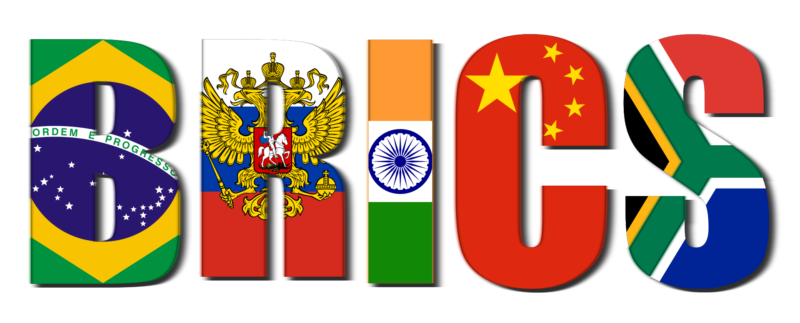
In an era marked by profound geopolitical transformations and the gradual erosion of the Western-dominated liberal world order, emerging multilateral institutions have emerged as crucial pillars for safeguarding state sovereignty. The BRICS coalition and the SCO represent more than mere economic or regional partnerships– they embody a new paradigm of multilateralism that prioritises sovereign equality, non-interference, and consensus-based decision-making. As traditional multilateral institutions struggle to adapt to contemporary power dynamics, these alternative frameworks offer developing countries pathways to maintain autonomy while engaging meaningfully in global governance.

The significance of these institutions extends beyond their immediate membership. They represent what scholars term “non-Western multilateralism”- a system of international cooperation that explicitly challenges the hegemonic tendencies of Western-led institutions while promoting a more inclusive and equitable global order. This emerging multilateral architecture does not seek to destroy existing institutions, but rather create parallel frameworks that better reflect the interests and values of the Global South.
The Crisis of Traditional Multilateralism
The contemporary crisis of multilateralism stems from structural imbalances that have persisted since the establishment of the post-World War II international order. Traditional institutions such as the IMF, the World Bank, and the UNSC reflect power distributions that no longer reflect current global realities. The Global South, which represents over 80% of the world’s population, remains underrepresented in decision-making despite its growing economic significance.
This crisis has been further aggravated by the instrumentalisation of multilateral institutions by dominant powers. The “weaponisation of finance” through unilateral sanctions and conditional lending has prompted developing countries to seek alternatives that respect their sovereignty. Recent developments, including the blocking of Russian assets and the use of SWIFT as a political tool, have demonstrated how traditional financial architecture can be used to coerce sovereign states. Moreover, the decline of American hegemony has created what scholars describe as a “multipolar reality” without corresponding multilateral adaptation. The US, while maintaining significant capabilities, faces increasing challenges to its global leadership from rising powers, internal polarisation and diminished moral authority. This hegemonic transition has created space for alternative arrangements to emerge and flourish.
BRICS: Institutional Innovation and Economic Sovereignty
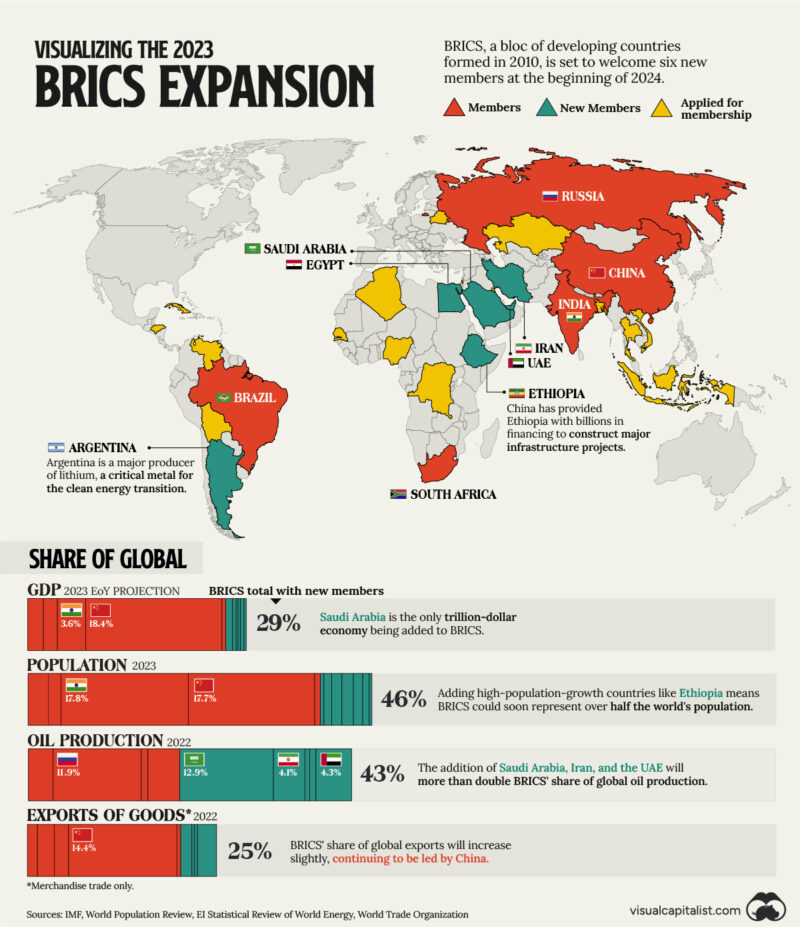
BRICS has evolved from an economic concept to a comprehensive institutional framework that challenges Western financial dominance through concrete initiatives. The New Development Bank (NDB), established in 2014 with $100 billion in authorised capital, provides infrastructure financing without the political conditionalities typically imposed by Western institutions. Unlike the World Bank or the IMF, the NDB operates on the principle of equal governance, with founding members maintaining equal voting rights regardless of their economic contributions. The bank’s commitment to financial sovereignty is evidenced by its promotion of local currency lending, reducing dependence on the US Dollar and enhancing monetary autonomy for member states. Since its establishment, the NDB has approved over $32.8 billion across 96 projects, extending beyond the original BRICS members to include countries like Bangladesh, the UAE, Egypt, and Algeria. This expansion demonstrates the institution’s growing appeal as an alternative development finance mechanism.
The Contingent Reserve Arrangement (CRA)[1], BRICS $100 billion financial safety net, further exemplifies this sovereignty-preserving approach. Unlike IMF bailout programs that typically require structural adjustment policies, the CRA provides emergency liquidity support without compromising domestic policy autonomy. This mechanism reflects BRICS’ broader commitment to “sovereign equality”- the principle that all states, regardless of size or power, possess equal rights in international affairs. BRICS has also pioneered what can be termed “multipolarity without hegemony”[2]. Unlike traditional power blocs dominated by a single leader, BRCIS operates through consensus-based decision-making, preventing any member from imposing its will on others. This approach has enabled the organisation to survive even amid tensions between members, such as the China-India border disputes, demonstrating institutional resilience.
SCO: Security and Sovereignty in Eurasia
The Shanghai Cooperation Organisation presents a different but complementary model of sovereignty-preserving multilateralism. Founded in 2001 and now encompassing ten full members from Kazakhstan to Iran, the SCO operates under the “Shanghai Spirit”- a framework emphasising mutual trust, mutual benefit, equality, and respect for civilisational diversity. This principle explicitly rejects hegemonic behaviour and promotes what member states call “sovereign equality”. The SCO’s approach to security cooperation illustrates how multilateralism can enhance rather than diminish sovereignty. Unlike NATO’s collective security model, which subordinates national decision-making to alliance commitments, the SCO’s Regional Anti-Terrorist Structure (RATS) operates through voluntary coordination and information-sharing while respecting member states’ autonomous security policies. This flexibility allows diverse political systems- from China’s one-party rule to India’s democracy- to cooperate without ideological convergence.

Recent SCO initiatives further demonstrate this sovereignty-preserving orientation. The organisation’s condemnation of Israeli airstrikes on Qatar in 2025 emphasised violations of sovereignty and territorial integrity, reaffirming members’ commitment to the UN Charter and international law. Similarly, the SCO’s consistent opposition to unilateral sanctions and “use of force” reflects its members’ shared experience of external pressure and desire for autonomous development. The proposed SCO Development Bank, approved during the 2025 Tianjin Summit, represents the organisation’s evolution toward comprehensive economic cooperation while maintaining its sovereignty-centric principles. This institution aims to reduce dependence on Western-controlled financial mechanisms.
Beyond BRICS and SCO: The Emerging Multipolar Architecture
The significance of BRICS and SCO extends beyond their individual contributions, encompassing their role in fostering a broader “alternative multilateral order”. This emerging architecture is characterised by overlapping institutional arrangements that provide developing countries with multiple options for international cooperation. The intersection between BRICS and SCO- with China, Russia, India and Iran participating in both organisations-creates synergies that multiply their collective influence. This networked approach to multilateralism offers several advantages for sovereignty preservation.
First, it provides “institutional balancing” against Western dominance without creating rigid opposing blocs. Countries can selectively engage with different institutions based on their specific interests and needs, maintaining strategic autonomy while benefiting from multilateral cooperation. Second, the proliferation of alternative institutions creates competitive pressure on traditional multilateral organisations to reform. The success of the NDB and AIIB has prompted the World Bank to reconsider its lending practices, while BRICS expansion has encouraged greater Global South representation in G20 deliberations. Third, these institutions promote what scholars term “civilisational diversity” by accommodating different political systems and development models without imposing uniform standards. This approach contrasts sharply with the liberal internationalist emphasis on convergence toward Western norms and institutions.
Challenges Ahead
Despite their achievements, BRICS and SCO face significant challenges that constrain their effectiveness as sovereignty safeguards. Internal heterogeneity presents the most fundamental obstacle. BRICS encompasses liberal democracies, authoritarian systems, and hybrid regimes with vastly different economic structures and foreign policy priorities. This diversity, while philosophically valuable, complicates coordination on specific issues and limits the depth of integration possible.
The organisation also suffers from what critics describe as “institutional impersonation”, rather than genuine innovation. The NDB, despite its rhetoric of alternative development finance, continues to rely heavily on US Dollar funding and has yet to break from neoliberal lending paradigms fundamentally. Similarly, the SCO’s expansion has diluted its cohesion without proportionally enhancing its capabilities.
Geopolitical tensions among members pose additional challenges. China-India border disputes, Russia-Iran competition in Central Asia and Brazil’s complex relationship with both Washington and Beijing create centrifugal forces that limit institutional effectiveness. The organisations’ consensus-based decision-making, while respecting sovereignty, can also enable paralysis when member interests diverge significantly. Moreover, these institutions seem primarily reactive rather than proactive in their approach to global governance, except for the SCO. They struggle to develop comprehensive solutions to transnational challenges such as climate change, cross-border terrorism, pandemic response, or financial instability.
Implications for Global Governance
The rise of BRICS, SCO and similar institutions signals a fundamental transformation in global governance architecture. Rather than replacing existing institutions, they are creating a phenomenon of competitive multilateralism, a system where multiple institutional frameworks compete for legitimacy and membership. This competition has both positive and negative implications for international cooperation. On the positive side, institutional competition encourages innovation and responsiveness to members’ needs. The success of alternative development banks has prompted traditional institutions to reform their practices and increase the representation of developing countries. Competition also gives smaller states greater bargaining power by offering alternative forums to address their concerns.
However, competitive multilateralism also risks fragmenting global governance and reducing its effectiveness in addressing transnational challenges. If great powers increasingly retreat into separate institutional ecosystems, the coordination necessary to manage global problems may become more difficult. The Ukraine conflict has already demonstrated how geopolitical divisions can paralyse international institutions and hinder collective responses to security threats.
The success of these institutions lies in creating alternatives to traditional development finance, providing platforms for South-South cooperation and articulating alternative visions of international order for contemporary global governance. However, their ultimate impact will depend on their ability to transcend their current limitations and develop more sophisticated approaches to balancing the preservation of sovereignty with practical international cooperation. Their continued evolution will significantly influence whether the emerging multipolar world becomes characterised by cooperation or competition, inclusion and fragmentation.
Notes:
[1]Wso, A.A. & Mahmood, R.M. (2025). The Role of BRICS in Reshaping the Global Order: Confronting Western Hegemony in a Multipolar World. European Scientific Journal, ESJ, 21 (17), 24. https://doi.org/10.19044/esj.2025.v21n17p24
[2] ibid