Category: Australia, New Zealand & the Pacific

  • An Asia-Pacific NATO: fanning the flames of war

    An Asia-Pacific NATO: fanning the flames of war


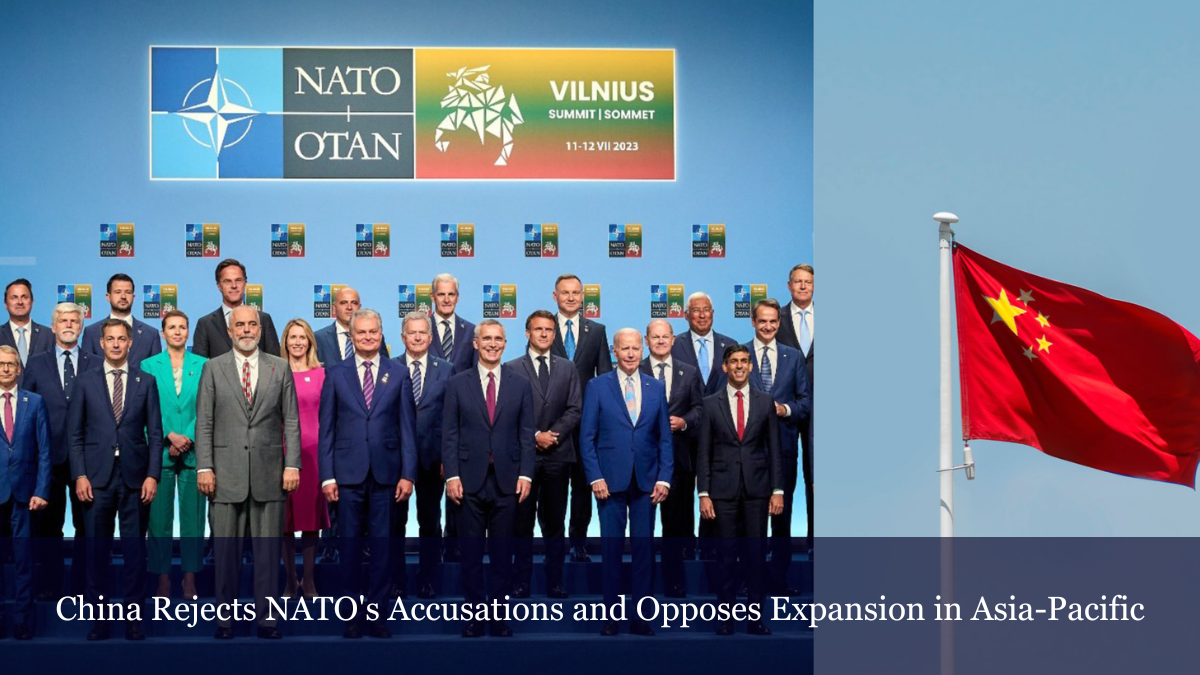
    Former President Trump sidelined NATO to such an extent that European members were disillusioned with American leadership and NATO was in a state of fragmentation. With Biden’s presidency unleashing its Ukraine strategy and war against Russia, NATO has solidified with blind subservience to American leadership. Building on imagined threats from Russia and China, the US is now seeking to make a NATO alliance format for security across Asia as well. On the eve of the 33rd summit at Vilnius on 11-12 July 2023, Türkiye dropped its objections for Sweden to become the 33rd member of NATO, abandoning its 150-year tradition of proud neutrality and peace in favour of war-mongering. With an eye on Asia, the summit invited four Asian countries – Japan, South Korea, Australia, and New Zealand – as observers at the summit. The summit statement is, as expected, replete with anti-Russian rhetoric but more importantly extensive in its focus on the ‘China threat’ thus paving the way for NATO’s role in Asia. Jeffrey Sachs, in a speech in Australia in early July (reproduced below), has warned forcefully about the peril that NATO poses to global peace and security.                                           – TPF Editorial Team

    “My country, the U.S., is unrecognisable. I’m not sure who runs the country. I do not believe it is the president.”, says Jeffrey Sachs in a speech at a Saving Humanity and Planet Earth (SHAPE) seminar, Melbourne, Australia. “U.S. actions are putting us on a path to war with China in the same way that U.S. actions did in Ukraine.”

    “the idea of opening NATO offices in Asia is mind-boggling in its foolishness. Please tell the Japanese to stop this reckless action.”

    Jeffrey Sachs
    Speech to Shape (Saving Humanity and Planet Earth)
    July 5, 2023

    Good afternoon to everybody. I want to thank you for inviting me and to thank SHAPE for its leadership. I just had the privilege to listen to Alison Broinowski and Chung-in Moon. We have been treated to brilliant and insightful statements. I absolutely agree with all that has been said. The world has gone mad but especially the Anglo-Saxon world, I’m afraid. I don’t know whether there is any sense in our little English-speaking corner of the world. I’m of course speaking of the United States, UK, Canada, Australia and New Zealand.

    There’s something profoundly disheartening about the politics of our countries right now. The deep madness, I’m afraid, is British Imperial thinking that has been taken over by the United States. My country, the U.S., is unrecognisable now compared even to 20 or 30 years ago. I’m not sure, to tell you the truth, who runs the country. I do not believe it is the president of the United States right now. We are run by generals, by our security establishment. The public is privy to nothing. The lies that are told about foreign policy are daily and pervasive by a mainstream media that I can barely listen to or read anymore. The New York Times, Washington Post, Wall Street Journal and the main television outlets are 100 per cent repeating government propaganda by the day, and it’s almost impossible to break through.

    it’s about a madness of the United States to keep U.S. hegemony, a militarised foreign policy dominated by the thinking of generals who are mediocre intellects, personally greedy, and without any sense because their only modus operandi is to make war.

    What is this about? Well, as you’ve heard, it’s about a madness of the United States to keep U.S. hegemony, a militarised foreign policy dominated by the thinking of generals who are mediocre intellects, personally greedy, and without any sense because their only modus operandi is to make war.

    And they are cheer-led by Britain, which is unfortunately, in my adult life, increasingly pathetic in being a cheerleader for the United States for U.S. hegemony and for war. Whatever the U.S. says, Britain will say it ten times more enthusiastically. The U.K. leadership could not love the war in Ukraine more. It is the great Second Crimean War for the British media and for the British political leadership.

    Now, how Australia and New Zealand fall for this idiocy is really a deep question for me and for you. People should know better. But I’m afraid that it is the Five Eyes and the security establishment that told the politicians, to the extent that the politicians are involved in this, ‘well this is how we have to do it’. This is our Security State and I don’t think our politicians necessarily have much role in this. By the way, the public has no role in U.S. foreign policy at all. We have no debate, no discussion, no deliberation, no debates over voting the hundred, now $113 billion, but in fact much more money spent on the Ukraine War.

    So far there’s not been an hour of organised debate even in the Congress on this, much less in the public, but my guess is that your security establishment is really the driver of this in Australia, and they explain to the Prime Minister and others: ‘you know this is the utmost National Security, and this is what America has told us. Let us, your security apparatus, explain what we’re seeing. Of course, you cannot divulge this to the broader public, but this is, at the essence, a struggle for survival in the world’.

    Everything I see myself, and I’m now 43 years in this activity as an economic advisor all over the world, suggests that this message is nonsense. One thing that would be interesting for people to look at, in order to understand these developments, is a very telling article by a former colleague of mine at Harvard, Ambassador Robert Blackwell and Ashley Tellis, written for the Council on Foreign Relations in March 2015. I want to read a couple excerpts from it because it laid out the plan of what’s happening right now pretty directly. This is how things work in the U.S., in which future plans are laid out to the establishment in such reports.

    “Since its founding, the United States has consistently pursued a grand strategy focused on acquiring and maintaining preeminent power over various rivals. First on the North American continent, then in the Western Hemisphere, and finally, globally. Preserving U.S. primacy in the global system ought to remain the central objective of U.S. grand strategy in the 21st century.”    

     – Robert Blackwill and Ashley Tellis in a March 2015 article for Council on Foreign Relations.

    We’re basically told in 2015 what’s going to happen in US-China relations. The deterioration of relations was planned — it’s not ad hoc. So, here’s what Blackwell and Tellis wrote in 2015. First, “Since its founding, the United States has consistently pursued a grand strategy focused on acquiring and maintaining preeminent power over various rivals. First on the North American continent, then in the Western Hemisphere, and finally, globally.” And then they argue that “preserving U.S. primacy in the global system ought to remain the central objective of U.S. grand strategy in the 21st century.”

    So, what’s the U.S. goal? The goal is very straightforward, it is the primacy of the United States globally. Blackwell and Tellis lay out the game plan for China. They tell us what to do.

    Here’s the list, though I’m only excerpting: “Creating new preferential trading arrangements among U.S. friends and allies to increase their mutual gains through instruments that consciously exclude China.” This is the game that Obama already started with TPP, though he couldn’t get it through domestic political opposition. Second, “create, in partnership with U.S. allies, a technology control regime vis-à-vis Beijing,” to block China’s strategic capabilities. Third, build up “power-political capacities of U.S. friends and allies on China’s periphery,” and “improving the capability of U.S. military forces to effectively project power along the Asian rimlands despite any Chinese opposition.”

    This foreshadowing of US policies by way of the Council on Foreign Relations (CFR) is well-known in recent history.

    What I find especially remarkable about this list is that it was made in 2015. It’s the step-by-step plan of action actually being carried out. This foreshadowing of US policies by way of the Council on Foreign Relations (CFR) is well-known in recent history. In 1997 in the CFR’s journal Foreign Affairs, Zbigniew Brzezinski laid out with precision the intended timeline for NATO enlargement and specifically the intention to include Ukraine in that NATO enlargement. Of course, that NATO enlargement plan has led us directly to the Ukraine War, which is indeed a proxy Russia-US war over NATO enlargement.

    Now the friends and geniuses that brought you the Ukraine War are on their way to bringing you a new war in your neighbourhood. As Professor Moon noted, the North Atlantic Treaty Organization is starting to open its offices in East Asia, which is not exactly the North Atlantic.

    So, this is where we are. It’s not absolutely simple to see through for one main reason, at least in the U.S. I’m not sure what it’s like in Australia but I expect that it’s pretty much the same as in the U.S., where we have no honesty or public deliberation about any of this. The policies are owned entirely by the security establishment, the military-industrial complex, the network of “think tanks” which are in fact non-think tanks in Washington, with almost all funded by the military-industrial complex.

    The military-industrial complex and its corporate lobby have taken over the East Coast universities where I teach. I taught at Harvard for more than 20 years, and now I teach at Columbia University. The influence of the intelligence agencies on the campuses is unprecedented, in my experience. All of this has happened without much public notice, almost a silent coup. There is no debate, no public politics, no honesty, no documents revealed. Everything is secret, confidential and a bit mysterious. Since I happen to be an economist who engages with the heads of state and ministers around the world, I hear a lot of things and see a lot of things that help me to pierce through the official “narratives” and pervasive lies.

    You will not find any of this in our public discourse. And just a word, if I may, about the Ukraine War. The war was completely predictable, and resulted from a U.S. plan for hegemony based on NATO enlargement that dates back to the early 1990’s. The U.S. strategy was to bring Ukraine into the U.S. military orbit. Brzezinski, again in 1997 in his book The Global Chess Board, laid out the strategy. Russia without Ukraine is nothing, he argued. Ukraine, he wrote, is the geographical pivot for Eurasia. Interestingly, Brzezinski warned American policymakers to ensure that they don’t push Russia and China into an alliance. In fact, that would be so antithetical to U.S. interests that Brzezinski clearly believed that it would never happen. But it has, because U.S. foreign policy is incompetent as well as profoundly dangerous and misconceived.

    During 1990-91, I happen to have been an advisor to Gorbachev, and during 1991-94, to Boris Yeltsin and Leonid Kuchma, spanning the late days of perestroika and the early days of Russian and Ukrainian independence after the dissolution of the Soviet Union. I watched very closely what was happening. I saw that the United States was absolutely uninterested in any way in helping Russia to stabilise.

    The idea of the U.S. security establishment from the early 1990s was U.S.-led unipolarity or U.S. hegemony. In the early 1990s, the U.S. rejected measures to help stabilise the Soviet economy and then the Russian economy, while it also began planning NATO enlargement, in direct contradiction to what the U.S. and Germany had promised Gorbachev and Yeltsin. So, the issue of NATO enlargement, including to Ukraine, is part of a U.S. game plan that started in the early 1990s, and eventually led to the Ukraine war.

    By the way, the U.S. was deeply involved in the overthrow of Ukraine’s pro-Russian president in 2014. Yes, this was a coup, and to an important extent, a regime change operation of the United States. I happen to have seen a part of it, and I know that U.S. money poured into supporting the Maidan. Such U.S. meddling was disgusting and destabilising, and all part of the game plan to enlarge NATO to Ukraine and Georgia.

    When one looks at the map it’s indeed Brzezinski’s 1997 idea: surround Russia in the Black Sea region. Ukraine, Romania, Bulgaria, Turkey and Georgia would all be members of NATO. That would be the end of Russian power projection in the Eastern Mediterranean and the Middle East. So it went for these “security” geniuses.

    Putin put forward diplomatic responses that were repeatedly rejected by the U.S. and its NATO allies, including the Minsk II Agreement endorsed by the U.N Security Council, but then ignored by Ukraine.

    On December 17, 2021, Putin put on the table a perfectly reasonable document as the basis for negotiation, A Draft U.S.-Russia Security Agreement. At the core was Russia’s call for an end to NATO expansion. Tragically, the U.S. blew it off. I called the White House at the end of December 2021, spoke with one of our top security officials, and pleaded, “Negotiate. Stop the NATO enlargement. You have a chance to avoid war.” Of course, to no avail. The United States’ formal response to Putin was that NATO enlargement was non-negotiable with Russia, a matter in which Russia has absolutely no say.

    This is a mind-boggling way to pursue foreign affairs because it is a direct road to war. I hope everybody understands this war in Ukraine was close to ending as early as March 2022 with a negotiated agreement just one month after Russia invaded on February 24th. The negotiated agreement was stopped by the U.S. because it was based on Ukraine’s neutrality. The U.S. told Ukraine to fight on, end negotiations, and reject neutrality.

    And so we are in a war that continues to escalate towards possible nuclear war, which is what would happen if Russia were to suffer deep defeats on the battlefield. Russia is not losing on the battlefield just now, but if it did, it would likely escalate to nuclear war. Russia is not going to be pushed out of the Donbas and Crimea and meekly go home with apologies. Russia is going to escalate if it needs to escalate. So, we are right now in a spiral that is extremely dangerous.

    Japan plays utterly into this spiral. And Australia does as well. It’s so sad to watch Australia accepting to be used in this reckless way. To pay a fortune for new military bases in a reckless, provocative, and costly way, that will feed the U.S. military-industrial complex while weighing heavily on Australia.
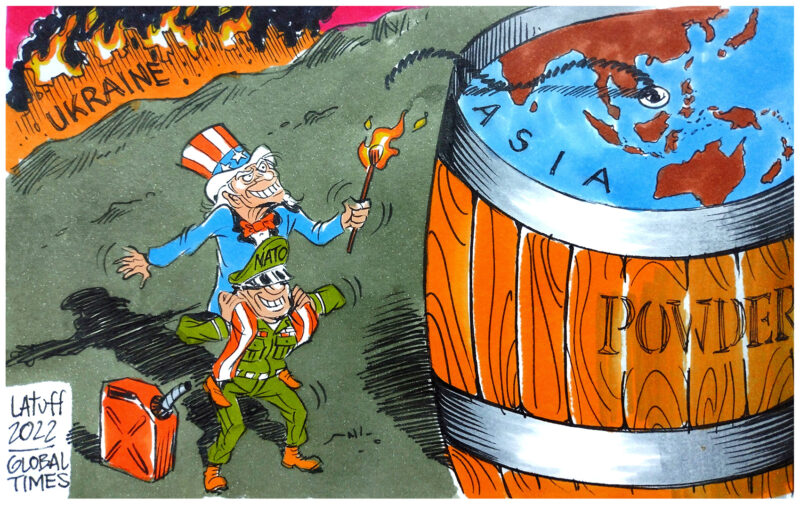
     

    Such U.S. actions are putting us on a path to war with China in the same way that U.S. actions did in Ukraine. Only an Asia-Pacific war would be even more disastrous. The whole idea of the U.S. and its allies fighting China is mind-boggling in its implications, its stupidity and its recklessness. All of this is utterly divorced from Australia’s real security interests. China is not a threat to Australia. It is not a threat to the world.

    I don’t know of a single Chinese overseas invasion in its history, by the way, except when the Mongols briefly ruled China and tried to invade Japan. Other than the Mongol invasion, defeated by a typhoon, China has not launched overseas wars. It’s just not part of China’s statecraft, nor would such wars be in China’s national interest.

    What worries me about the world is a deeply neurotic United States (in)security leadership that aims to be number one, but that can’t be number one in the way that it believes. This is pathetic, yet is applauded each day in London, a place that still dreams of the glory of global empire from a long bygone era.

    RCEP is the correct concept for the region to bring together China, Korea, Japan, the ten ASEAN countries, Australia and New Zealand in a coherent framework, especially around the climate challenge, energy policy, trade policy, and infrastructure and investment policy. A well-functioning RCEP would do a world of good, not only for the 15 countries in RCEP but for the entire world.

    Permit me, in conclusion, to take one minute to say what should be done.

    First, the war in Ukraine could end the day Biden steps up and says NATO will not enlarge to Ukraine. The basis for a negotiated security arrangement has been there for 30 years, but has been rejected so far by the U.S.

    Second, the idea of opening NATO offices in Asia is mind-boggling in its foolishness. Please tell the Japanese to stop this reckless action.

    Third, the U.S. approach to arming Taiwan is profoundly dangerous, provocative and deliberately so.

    Fourth, what is needed most in the Asia-Pacific is regional dialogue amongst Asia-Pacific nations.

    Fifth, the Asia-Pacific should build on RCEP [Regional Comprehensive Economic Partnership Agreement]. RCEP is the correct concept for the region to bring together China, Korea, Japan, the ten ASEAN countries, Australia and New Zealand in a coherent framework, especially around the climate challenge, energy policy, trade policy, and infrastructure and investment policy. A well-functioning RCEP would do a world of good, not only for the 15 countries in RCEP but for the entire world.

    Sorry to have run on so long but it’s so important what SHAPE is doing. You’re completely on the right track and all best wishes to your efforts.


    This transcript of Jeffrey Sach’s speech was published earlier in Pearls and Irritations.

    Feature Image Credit: bnn.network

    Cartoon Credit: Global Times
  • China’s Expanding Presence in the Pacific Islands

    China’s Expanding Presence in the Pacific Islands

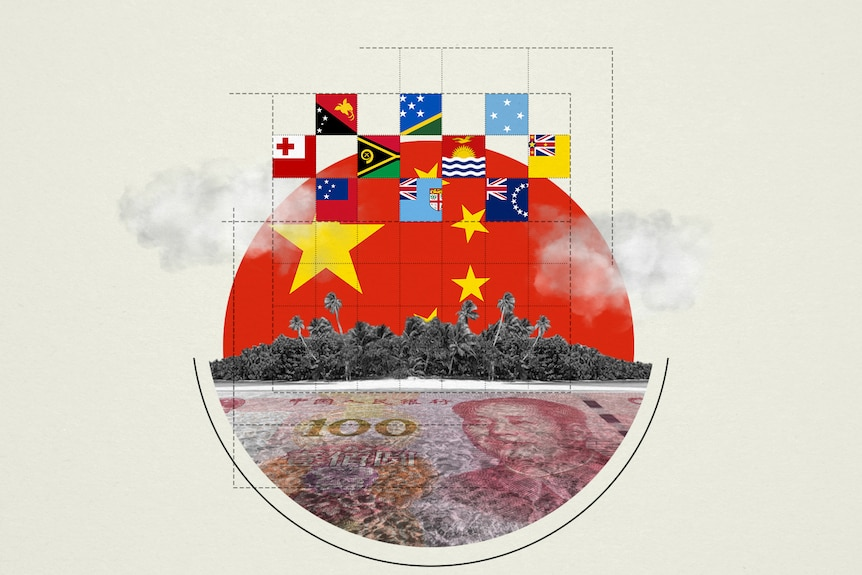
    The Pacific Island Countries (PICs) have received increasing attention recently as they continue to be centres of geopolitical tension between China and western powers – the USA, Australia, and New Zealand. The island nations are generally grouped into three distinct regions, namely – Micronesia, Melanesia and Polynesia, on the basis of their physical and human geography. They possess some of the largest Exclusive Economic Zones (EEZs) in the world spanning about 30 million sq km (11.6 million sq miles) of the ocean despite their small size and limited population. 

    The Chinese efforts to secure a strong military presence in the Pacific Island Countries could not only enable it to achieve ‘Blue Navy Status’ but also counter this overwhelming US military presence surrounding it.

    The economic potential of these Exclusive Economic Zones, which are rich in fisheries, energy, minerals and other marine resources, is so immense that these nations prefer to be regarded as the Big Ocean States, rather than the Small Island States. In the past, the islands have functioned as launchpads and laboratories, playing crucial roles in power rivalries due to their location and geography¹. With China endeavouring to spread its power and influence to achieve Great Power status, it is natural that it set its sights on areas which have been traditionally dominated by Western powers. Increased Chinese presence in the Pacific Islands is aimed at ending the United States unchallenged influence in the region and to enable suitable backups in a potential conflict over Taiwan. The US presently has 53 overseas military bases across Japan and South Korea, in close proximity to the Chinese mainland as opposed to China’s only overseas military base in Djibouti. Thus, the Chinese efforts to secure a strong military presence in the Pacific Island Countries could not only enable it to achieve ‘Blue Navy Status’ but also counter this overwhelming US military presence surrounding it.

    Economic Factors and China’s Strategy

    The economic attractiveness of the Pacific Islands also includes access to its trade and shipping routes.  On the diplomatic front, these nations tend to serve as a vote bank at forums like the United Nations and can help Beijing in its ambition to further isolate Taiwan. Additionally, stronger relations would help in advancing China’s ambitious Belt and Road Initiative while also enhancing its image as a reliable partner and viable alternative to other major powers, especially the US and Australia.

    China has had ties with the Pacific Islands since the 1970s but many island nations’ official diplomatic recognition of Taiwan continued to be a major hurdle throughout these years. Through continued economic assistance, China has succeeded in getting diplomatic recognition from 10 out of the 14 Pacific Islands. Presently, only four countries namely Tuvalu, Palau, Marshall Islands and Nauru recognise Taiwan, with Kiribati being the latest nation to withdraw its recognition in September 2019. The success of the Chinese approach can be seen in the fact that they have successfully secured Belt and Road cooperation MOUs with all the 10 PICs and have signed the Belt and Road cooperation plans with Papua New Guinea (PNG) and Vanuatu. As per the fact sheet released by the Chinese government, China and the PICs have continued to expand cooperation in more than 20 different areas, which include trade, investment, ocean affairs, environmental protection, disaster prevention and mitigation, poverty alleviation, health care, education, tourism, sports and culture. 

    Significant progress in China – PIC relations was seen with the establishment of the China-Pacific Island Countries Economic Development and Cooperation Forum in 2001, which functions as the highest-level dialogue mechanism between the countries in the fields of economy and trade. In November 2014, Chinese President Xi Jinping paid a state visit to Fiji where he held a group meeting with the PIC head of states. An agreement was signed to establish a strategic partnership and these ties were elevated to a comprehensive strategic partnership featuring mutual respect and common development in November 2018, during President Xi Jinping’s visit to PNG. One of the more recent developments is the China-Pacific Island Countries Foreign Ministers’ Meeting held in October 2021, which resulted in the Joint Statement of China-Pacific Island Countries Foreign Ministers’ Meeting.

    Attention towards climate change action has given China a strong foothold amidst rising frustration among the PICs about the Western powers’ proclivity to focus on geopolitical concerns without sparing sufficient attention to the island country’s paramount needs and concerns. 

    The major success of the Chinese strategy with regards to the Pacific Island nations can be found in their harnessing of pressing issues like climate change, environment, agricultural development, infrastructure and rising sea levels which have been largely neglected by traditional powers. From providing yearly financial assistance to the Secretariat of the Pacific Regional Environment Programme (SPREP) since 1998, the Chinese government has taken efforts to address and assist the PICs in tackling climate change and achieving sustainable development. April 2022 saw the launch of the China-Pacific Island Countries Climate Change Cooperation Centre in the Shandong Province of China. The Chinese have strengthened renewable energy cooperation with the PICs and have facilitated the construction of hydro-power stations in countries like PNG and Fiji. This attention towards climate change action has given China a strong foothold amidst rising frustration among the PICs about the Western powers’ proclivity to focus on geopolitical concerns without sparing sufficient attention to the island country’s paramount needs and concerns. 

    Infrastructure Strategy – BRI Model

    Infrastructure development has been another avenue where the Chinese have shown significant enthusiasm. Several important connectivity projects have been executed in the PICs including the Independence Boulevard in PNG, Malakula island highway in Vanuatu, renovation of Tonga national road, and Pohnpei highway in Micronesia. Aside from providing much needed support in a variety of fields, the Chinese approach to the Pacific islands as a collective entity has helped acknowledge the group as having a combined identity and decision-making capability. Addressing issues which have only been previously discussed on a bilateral basis also provides the PIC with enhanced political strength and purpose, because despite all their differences, most of the countries share similar needs and requirements. 

    Chinese efforts to establish a strong military presence in the region were in 2018, when the Australian press reported that China had requested the right to establish a permanent military presence in Vanuatu, situated less than 2,000 kilometres from Australian territory. However, no formal agreement was drafted. The then Prime Minister of Vanuatu strongly denied that any such talks had taken place and assured the local and international community that there would be no Chinese military presence in the country. A similar report was released by the Australian press in the same year alleging that China held a keen interest in refurbishing a port on Manus Island in Papua New Guinea which had previously functioned as the site of an Allied naval base during World War II. The claims were dismissed when the PNG government contracted Australia and the United States to redevelop the port instead. 

    The Chinese efforts finally materialized in the form of the China – Solomon Islands Security Pact in April 2022. As per the terms of the pact, permission is granted to the Chinese navy to dock and refuel in the Solomon Islands, laying the groundwork for a facility that could be expanded over time. The pact allows the Solomon Islands to seek Chinese assistance when required to maintain social order and stability. The pact has been understood by several scholars as a way for China to establish a permanent military presence gradually under the guise of performing this role. The security pact came at a time when international attention was already on the growing closeness of China and the Pacific Island nations following the leak of two draft documents “China-Pacific Island Countries (PICs) Common Development Vision”, and “China-Pacific Islands Five-Year Action Plan on Common Development (2022-2026)” at the start of 2022. 

    USA’s Response

    In the face of China’s rising threat, the United States released its Indo-Pacific Strategy in February 2022 which emphasized the importance of the Pacific Islands to the United States. Along with the “Partners in the Blue Pacific” initiative, it reiterated its commitment to cement itself as a dominant power in the region. However, definitive action on a large scale was taken only in late May when the Chinese Foreign Minister, Wang Yi, embarked on a 10-day visit to the region attempting to secure a comprehensive framework agreement with engagements on multiple fronts with the PICs. Although the attempt was unsuccessful, Wang, during his visit, travelled to eight countries (the Solomon Islands, Kiribati, Samoa, Fiji, Tonga, Vanuatu, Papua New Guinea and Timor-Leste) and held virtual meetings with three additional nations (Cook Islands, Niue and the Federated States of Micronesia), ultimately signing 52 bilateral treaties. Although the Chinese foreign minister stressed the country’s commitment and intent for long-term engagement in the region, news of the framework agreement sparked great controversy. The Pacific Island nations could not reach a unanimous decision on signing this agreement and decided to deliberate the matter at the PIF meeting. However, this decision to postpone discussions was disadvantageous to China as the PIF has membership from both New Zealand and Australia both of which were sure to put up strong opposition to the signing of this agreement. Perhaps foreseeing this, the agreement was soon withdrawn after which China immediately released a Position Paper on Mutual Respect and Common Development ² with Pacific Island Countries, which offers 15 “visions and proposals” for deepening China’s engagement in the region. The security issues (China sought to train local police forces, conduct mapping of sensitive marine areas, and play a role in the cyber security of the nations) that had caused much controversy were only mentioned briefly within the paper with much of the focus pointed notably towards political and economic issues. Wang, as part of his visit, also hosted the second round of the China-Pacific Island Countries Foreign Ministers Meeting in Fiji where he delivered the Secretary General of the Chinese Communist, Party Xi Jinping’s written remarks on China’s continued support. 

    Swift responses came about on May 31, when US President Biden and New Zealand Prime Minister Jacinda Ardern issued a joint statement that highlighted the two countries’ shared commitment to the Pacific Islands. The statement also expressed their concern over the China – Solomon Islands Security Pact and warned against “the establishment of a persistent military presence in the Pacific by a state that does not share our values or security interest.” ⁴ Australian Foreign Minister Penny Wong embarked on a similar visit to Fiji, Samoa and Tonga in early June to reinforce Canberra’s commitments to its neighbours. 

    Despite these advancements, public response to the Chinese visit and in a broader sense, to China’s growing footprint in the region was largely negative. Domestic response in Kiribati was lukewarm due to the wariness stemming from rumours that surfaced in 2021 about China’s plans to upgrade a World War II airstrip in the country, which is likely to damage the country’s already strained fish stocks. The announcement that Fiji would become a founding member of the U.S. led Indo- Pacific Economic Framework by President Frank Bainimaram immediately prior to Wang’s visit reflected wariness about China’s future presence in the area. Additionally, despite signing the security pact, Solomon Islands Prime Minister Sogavare’s support for Beijing gave rise to worries that China would now be in a position “to prop up an unpopular regime and undermine the democratic processes in the name of maintaining social order” among his critics. However, the most vocal voice of protest was that of David Panuelo, the president of the Federated States of Micronesia, who called upon his fellow Pacific Island leaders to reject China’s offers of a comprehensive framework agreement calling it “the single-most game-changing proposed agreement in the Pacific in any of our lifetimes.” ³ The lack of transparency during Wong’s visit drew further criticism with the strict regulation of foreign journalists and ban on direct questions. It eventually led the Media Association of the Solomon Islands to issue a boycott notice to its members, urging them to skip the press event in protest of these restrictions.

    Concerns have also arisen due to China’s reputation for extremely stringent terms of lending and what the West accuses as ‘debt trap’ policy. 60 percent of all Chinese loans are offered at commercial rates rather than concessional rates with extremely short repayment periods – usually less than 10 years. Additionally, the confidentiality clauses (borrowing countries cannot reveal terms of the loan provided or in some cases the very existence of the loan), stabilization clause (lender can demand immediate repayment of loan in case of significant change in the borrowing country’s laws like labour or environment policies), cross-default clause (contract can be terminated and full and immediate repayment can be demanded if the borrowing country defaults on any of its other lenders), political clause ( termination or acceleration of repayment if the borrower acts against China) as well as holding Chinese projects in the country as collateral which are characteristic of Chinese loans are also worrying. The lack of public access to the China – Solomon Islands security pact document and similar documents is also unsettling. 

    Demand for addressing Climatology threats and not Geopolitics

    Chinese interest in the region has served as an efficient bargaining chip for the Pacific Islands to secure their key security interests.

    The geopolitical competition brewing in the region has been a topic of discussion at the Pacific Islands Forum (PIF). Its members include Australia, New Zealand, the Republic of the Marshall Islands, Palau, Tuvalu and Nauru in addition to the other Pacific Island Nations. Kiribati’s withdrawal from the Forum on July 9 led to debates on China’s influence on this decision among the opposition parties in the country. However, the government cited the failure to adhere to previous engagements, which in turn threatened equal respect and position accorded to the members of the forum as a reason for this move. The PIF meetings conducted between July 11 and July 14 gave ample opportunity for traditionally influential powers like the US and Australia to promise stronger support for the region. US Vice President Kamala Harris addressed the forum as a special invitee announcing two new embassies in Kiribati and the Solomon Islands. She also pledged to triple current aid levels (up to 60 million dollars per year for 10 years) to help combat illegal fishing, enhance maritime security and tackle climate change, after decades of stalled funding as well as a return of peace corps volunteers to Fiji, Tonga, Samoa and Vanuatu. Australia’s remarks ran along similar lines i.e.; pledges of greater support for the climate change agenda of its neighbours.

    Chinese interest in the region has served as an efficient bargaining chip for the Pacific Islands to secure their key security interests. Using this geopolitical competition to its favour could be the way forward for these island nations whose very existence is threatened by rising sea levels. As Dame Meg Taylor, former secretary-general of the Pacific Islands Forum states, the process is already underway. “In general, Forum members view China’s increased actions in the region as a positive development, one that offers greater options for financing and development opportunities — both directly in partnership with China, and indirectly through the increased competition in our region.”

    The most recent PIF meeting concluded with the island nations declaring a climate emergency and making it clear that climate action would be the most preferred front for engagement with all powers including China, US and Australia. Although the western powers, especially Australia had previously pledged to take climate action, the Pacific Island nations had expressed disappointment that the targets for phasing out of carbon emissions had not been met. Thus, greater realignment towards taking definitive climate action would be the next step in relations with the Pacific Islands.  As Fiji’s Bainimarama put it, “Geopolitical point-scoring means less than little to anyone whose community is slipping beneath the rising seas. With jobs being lost to the pandemic, and families being impacted by the rapid rise in the price of commodities, their greatest concern isn’t geopolitics — it’s climate change.”

    It is vital that the Pacific Island Countries band together to maintain solidarity, leverage the opportunities afforded to them due to competition brought about by China’s increased interest in the region and show solidarity in light of the unifying, clarifying priority for all Pacific leaders, which is survival. 

    The effects of climate change are already manifesting in “countries like Vanuatu, Fiji, Solomon Islands, Tonga which are no longer facing category five (severe tropical) cyclones once every 10 years, it’s once every two or three years.” Rising sea levels have allowed salt water to rise through the ground in countries like the Marshall Islands and Tuvalu, which pollute the existing fresh water sources. As former Kiribati President Anote Tong explains in an interview to The Drum, “climate change is not some hypothetical future threat – his islands may not be habitable by 2060.” Thus, it is vital that the Pacific Island Countries band together to maintain solidarity, leverage the opportunities afforded to them due to competition brought about by China’s increased interest in the region and show solidarity in light of the unifying, clarifying priority for all Pacific leaders, which is survival. 

    REFERENCES : 

    1. Dirk H. R. Spennemann (1992) The politics of heritage: Second world war remains on central Pacific Islands, The Pacific Review, 5:3, 278-290, DOI: 10.1080/09512749208718990 
    2. “China’s Position Paper on Mutual Respect and Common Development with Pacific Island Countries.” China’s Position Paper on Mutual Respect and Common Development with Pacific Island Countries, www.fmprc.gov.cn, 30 May 2022, https://www.fmprc.gov.cn/eng/zxxx_662805/202205/t20220531_10694923.html.
    3. Panuelo, D. (2022). DocumentCloud. Retrieved 1 August 2022, from https://www.documentcloud.org/documents/22037013-letter-from-h-e-david-w-panuelo-to-pacific-island-leaders-may-20-2022-signed
    4. The United States Government. (2022, May 31). United States – Aotearoa new zealand joint statement. The White House. Retrieved August 1, 2022, from https://www.whitehouse.gov/briefing-room/statements-releases/2022/05/31/united-states-aotearoa-new-zealand-joint-statement/ 
  • Quad 2.0: Can it be a win-win for the four Democracies

    Quad 2.0: Can it be a win-win for the four Democracies

    China’s GDP expanded from USD 6 trillion in 2010 to USD 14.3 trillion in 2019. It has had exponential growth over the last three decades, with an average GDP growth rate of 9.23% from 1989 to 2020. Although the impact of the COVID pandemic pushed its GDP into decline and negative (-6.80%) in the first quarter of 2020, it has rebounded with a growth of 5% in the third quarter. It’s military spending, officially, is more than three times that of India, unofficially maybe five times or more. China has become one of the key players in the Indo-Pacific as a significant part of its economic activities depend on this region.

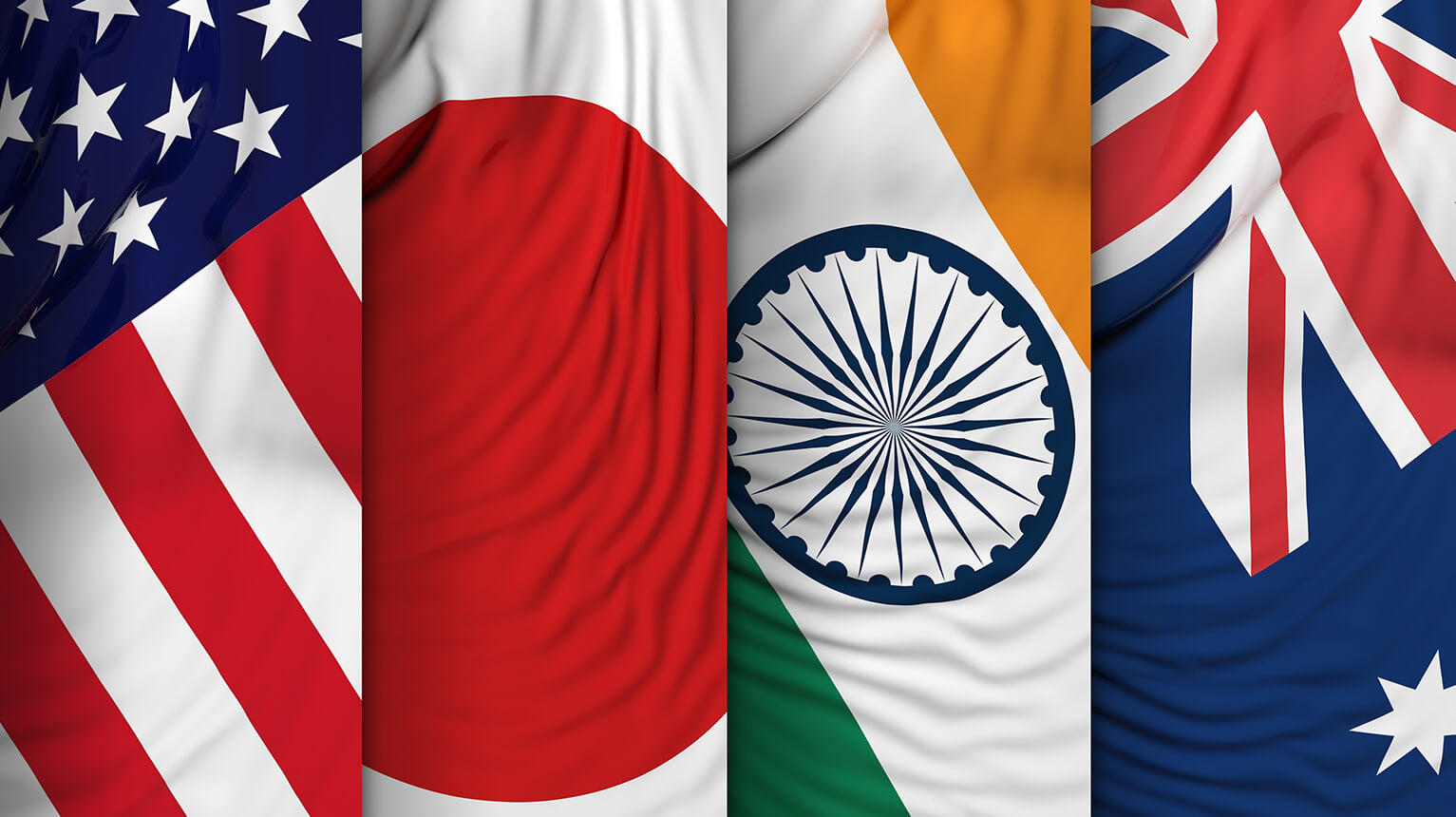
    The Indo-Pacific has replaced the Trans-Atlantic as the epicentre of global politics. Its importance to the global order is multifarious. In economic terms, one half of the world’s commercial influx goes through the Indo-Pacific sea routes and the Indian Ocean carries two-thirds of global oil shipments. Besides, a few of the biggest military spenders are part of the region. China’s hostile actions and policies have agitated the US, Japan, Australia and India. A shared concern over the expansion of China’s political and military clout was fundamental to the revival of the Quadrilateral Security Dialogue (Quad 2.0), on the sidelines of the ASEAN summit in Manila, in 2017.

    Quad is seen as cooperation between four large democracies that share the idea of an open and inclusive Indo-Pacific

    There is growing speculation over what the re-emergence of the Quad means. On the one hand, it is seen as cooperation between four large democracies that share the idea of an open and inclusive Indo-Pacific; on the other, a strategic alliance towards keeping China’s assertive actions in check.

    The Quad: Overcoming Intransigence

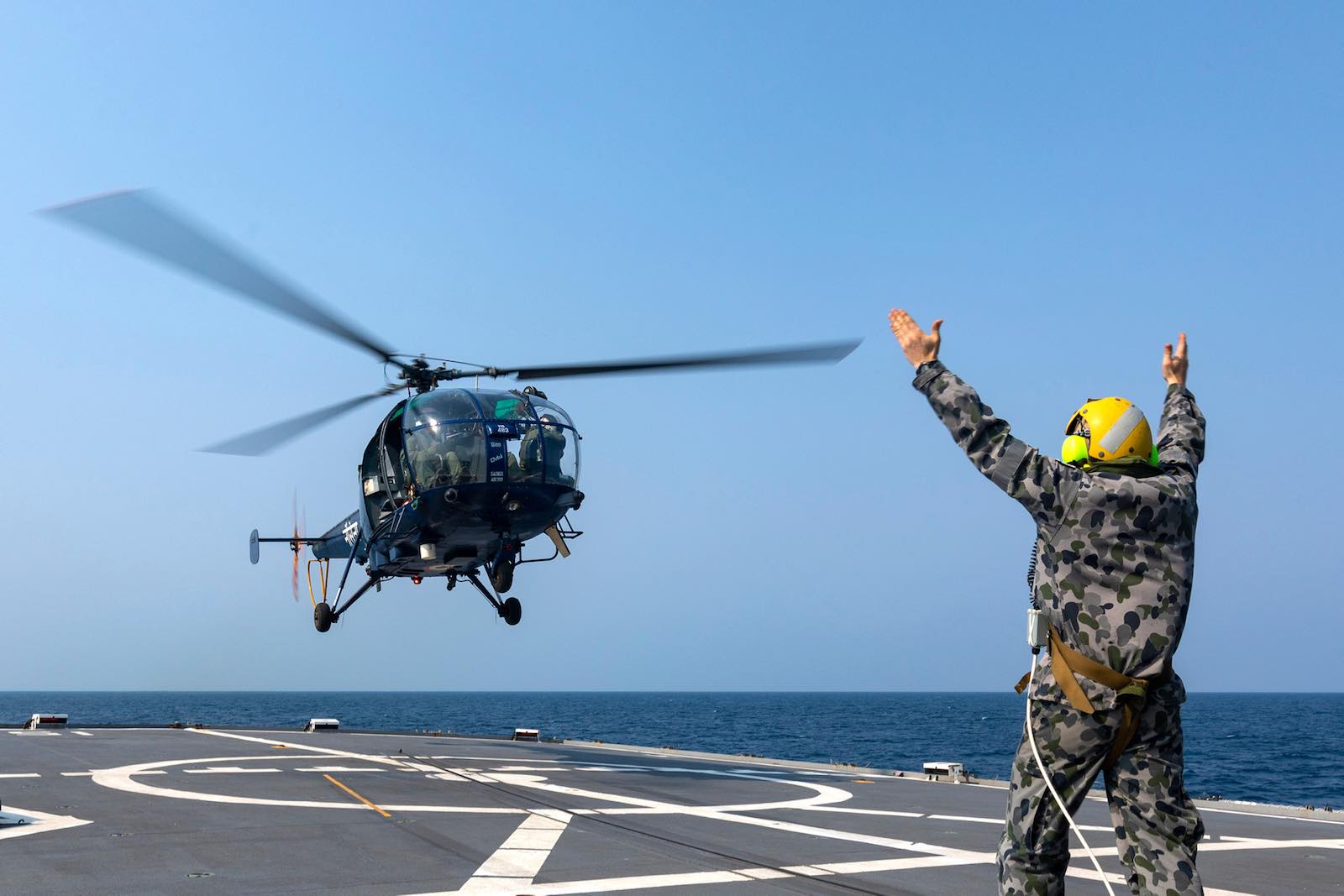
    The Quad is a mechanism that enables a dialogue on regional security issues between the four countries. Its revival, this year, reflects an intersection of strategic interests: that of an open and inclusive Indo-Pacific and a rules-based international order. The Quad came together in November for the naval exercise – Exercise Malabar – in two phases, in the Bay of Bengal and the Arabian Sea. The exercise, in its 24th edition, is the biggest so far and has sent significant strategic signalling to China.

    The Quad should be considered less as a formal alliance and more as a mechanism built on existing bilateral and trilateral partnerships between the four countries. It first emerged as a cooperative response to the 2004 tsunami, when the four navies were involved in providing humanitarian and disaster relief. Despite strong support from Japan and the US to formalise the group, it disbanded with Australia and India backing out in 2007, due to concerns about China’s reaction to the grouping. This gave rise to multilateral partnerships among the four countries.

    Between the four democracies, there are three trilateral and six bilateral partnerships. Trilaterally, Japan, India and Australia first came together in 2015 to discuss shared concerns over maritime security in the Indo-Pacific Region and freedom of navigation in the South China Sea. More recently, the three countries agreed to develop a supply chain resilience program for the Indo-Pacific Region amid growing recognition of their excessive, economic reliance on China.

    Bilaterally, the US and India signed the Basic Exchange and Cooperation Agreement (BECA) on October 27 that gives India access to American geospatial intelligence that will be useful for precision guidance of its missiles. Further, India-Australia ties have strengthened over the last few years with their initial 2+2 dialogue in 2017 and with Australian participation in India’s Milan exercise in 2018, focusing on interoperability between navies in the region.

    China and the Quad

    Over the years, the Indo-Pacific has emerged as a region of strategic importance. As China expands into the region, its actions have created tensions with the Quad members.

    Sino-Indian relations:  India-China relations have touched rock-bottom since the clashes on the LAC in Ladakh.  China’s intrusions and violations along the LAC have been backed up by significant massing of PLA forces, for the first time in 40 years. India’s strong actions at the LAC and subsequent sanctions and banning of Chinese IT applications have signalled that India is not shy of escalating its response. China’s actions are seen as part of its coercive strategy to India’s refusal to back China on BRI, and its vehement opposition to CPEC. It sees India’s closeness to the USA and its coordination in the Quad as a threat to China’s strategic interests.

    China’s increasing influence in the Indian Ocean Region (IOR) has raised India’s concerns. It has always been wary of ties between Beijing and Islamabad, which intensified with the launch of the China-Pakistan Economic Corridor (CPEC) in 2013. The Chinese-operated Gwadar port off the Arabian Sea in Pakistan, which can be used by the Chinese navy to establish a submarine presence in the region, did not rest well with India. Such a port would also help China with its ‘Malacca Dilemma’. Other ports of such concern are Hambantota in Sri Lanka and Kyaukphyu in Myanmar. Though China claims these ports are of economic significance, these are also militarily strategic ports that give it an advantage in the IOR.

    In light of these issues, a revived and active Quad will benefit India’s strategic interests. The partnership could affect China in two ways. First, China would face increased competition in the IOR from India that now works with strong allies. Second, with the recent imposition of the technology ban, China stands to lose a large market for its products.

     Japan-China relations: Over the past few years, the situation in the South China Sea (SCS) has worsened with China’s land reclamation activities and militarisation of islands. Japan sees the South China Sea as key to its security because of its crucial sea lanes vital to its trade and economic health. It is also wary of China’s ability to influence the energy supply chains, which East Asia is dependent on, and the PLA’s movement in the Indo-Pacific region that could affect regional security.

    Despite its renewed trade with China and the recent signing of the RCEP, increased tensions in the SCS has forced Japan to support revival of the Quad. China’s increased naval and air activities in the South China Sea makes the Quad and its possible expansion into Quad Plus even more relevant for Japan.

    China-Australia relations: Australia backed out of the Quad in 2007 primarily because it was concerned about how China would view it, and the possible impact it might have on their bilateral trade. By 2017, China became Australia’s top export destination, and this trend has continued through 2019, pushing Australia into a dangerous economic dependency with China. Further, Australia’s 2016 White Paper called out China for its coercive behaviour in the Indo-Pacific, identifying the South China Sea and the Southern Pacific as vital strategic regions.

    Australia’s economic dependence on China is high and this is unlikely to change despite the strong statements from prime minister Morrison.  Australia’s strong stand against China is also seen as emanating from American pressure. Australia actively supports Quad as it sees an increasingly powerful China working to change the world order. Australia is also a member of the newly signed RCEP, the new economic grouping that will be dominated by China. While Australia has hedged its economic interests by signing the RCEP, its strategic and security priorities are linked to the Quad.

    China-US relations:  China’s rising military power is now seen as a threat to American power and the liberal world order. Since 2011, American strategies and policies have focussed more on the Indo-Pacific. This shift in focus has strengthened its ties with Japan, Australia and India. Tensions between the US and China have increased since then and the 2018 trade war not only aggravated their relations but also kept the rest of the world on an edge.

    With a strong Quad partnership, the US expects to regain and strengthen its influence in the Indo-Pacific. For China already hit hard by the US trade war, more setbacks will accentuate the problems. Moreover, with a more focused Quad led by the US, China’s efforts to project its power and influence in the Indo-Pacific region will come under pressure.

     Conclusion

     A few aspects about the Quad remain unclear. First, its intent is still uncertain because the respective countries have to evaluate their relations with China if they want to make the bloc official. Second, if it were to be official, to what extent would it serve the interests of the member countries? Third, is the Quad a concert of democracies to contain China? Last, will it coordinate with other members in the Indo-Pacific region, that is will Quad translate into Quad Plus?

    China’s actions have managed to bring the four countries closer.  China, however, has scored a success when the RCEP (Regional Comprehensive Economic Partnership), the world’s largest plurilateral trade agreement was signed on November 15th. Both Japan and Australia are members of the RCEP. Many see this as a setback for India and America, and an important building block in a new world order, in which China calls the shots all over Asia. It puts in doubt the viability of SCRI (Supply Chain Resilience Initiative), an effort by Quad members to create an alternative to Chinese domination of supply chains.

    The nature of China’s challenge to the global order and the Indo-Pacific is geoeconomics in design, as evidenced by its Belt and Road Initiative and its recent success in RCEP. The Quad will need to go beyond security cooperation.

    While security and military cooperation will help in checking China’s aggressive approach, it must be recognised that this alone will be an incomplete strategy. The nature of China’s challenge to the global order and the Indo-Pacific is geoeconomics in design, as evidenced by its Belt and Road Initiative and its recent success in RCEP. The Quad will need to go beyond security cooperation.

    The conclusion of RCEP maybe China’s gain, but it is important to recognise the fact that ASEAN is the main driver of RCEP. In attempting to balance China, ASEAN and Japan have kept the door open for India to re-join the RCEP. It is possible that the US, under the Biden presidency, may revive the TPP (now proposed by Japan as CATPP, Comprehensive and Progressive Agreement on Trans-Pacific Partnership), which could balance the RCEP. The Quad, in this context, will continue to be very relevant for peace and security in the Indo-Pacific.


  • India-Australia Strategic Partnership: Leveraging Aerospace Capacity

    India-Australia Strategic Partnership: Leveraging Aerospace Capacity

    Category : India India’s, Military, India-Australia Relations
    Title : India-Australia strategic partnership: Leveraging aerospace capacity
    Author : M Matheswaran 02-06-2020

    The forthcoming virtual summit between Indian Prime Minister Narendra Modi and Australian Prime Minister Scott Morrison assumes considerable significance for an India-Australia strategic partnership, particularly as it comes against the backdrop of heightened friction with China for both countries. Enhanced defence cooperation between the two countries could be an important signal to Beijing of the costs of overly assertive strategic behaviour – whether in the Himalaya or in trade. For some years, defence cooperation has largely focused on the naval relationship. Now is the time for enhanced air-power cooperation.

    Read More