Author: Sunod Jacob

  • Multilateralism in the Indian Ocean Region

    Multilateralism in the Indian Ocean Region

    A number of multilateral initiatives have emerged in the last two decades in the Indian Ocean Region. The composition has been varied, comprising of inside powers, some comprise of a combination of inside and outside powers, given the geographical construct of the region. Their efficiency has been varied. As such, trends indicate that the older, post-world war II multilateral institutions are gradually losing relevance. Newer coalitions appear to hold promise, some to deal with the foregoing challenges and other to facilitate economic aspirations. Dr Sunod Jacob makes an assessment of multilateralism contributing to an inclusive rule based order in the IOR.

    This article is being published as a chapter in the book titled – “Foreign Policy Perspectives for Sri Lanka 2021”.
    Image Credit: Photo by Kyle Glenn on Unsplash.

    Download Full Paper

    The Law of Armed Conflict and its continuing relevance to the South Asian Region

  • The Law of Armed Conflict and its continuing relevance to the South Asian Region

    The Law of Armed Conflict and its continuing relevance to the South Asian Region

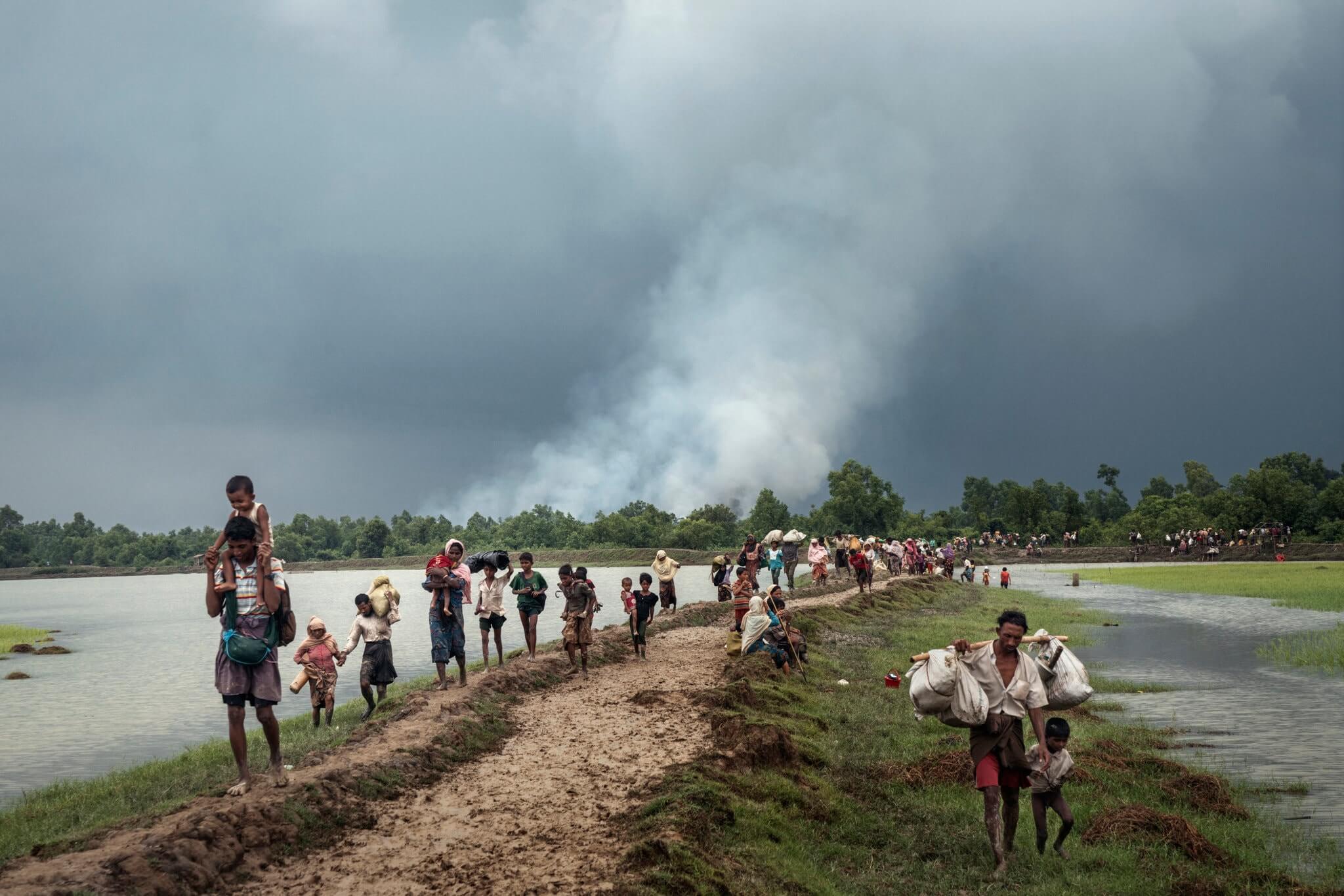
    The South Asian region has had its share of recent historical experiences with large scale violations as well as allegations of large scale violations of international humanitarian law (IHL).2 This applies as much to instances of international and non-international armed conflict as it does to the situations created by new threats to peace and security such as terrorism. Memories of some of these unfortunate events have not faded over the years. For the sake of convenience, the paper is divided into two parts. The first part elaborates specific examples of IHL related issues in South Asia and also deals with some of the major thematic issues in the context of the region. The second part highlights the challenges to IHL application and implementation in this region. The conclusion summarizes the main strands in IHL’s relevance to the South Asian context. The most interesting aspect of our enquiry that stares us in the face is the fact that IHL related issues apply to almost all South Asian countries. The degree of intensity may differ but the fact remains that acts that attract universally applicable IHL provisions are found aplenty in the region.

    Image Credit: New York Times

    Download Full Paper

    The Law of Armed Conflict and its continuing relevance to the South Asian Region

  • Post-Millennium Trends in the Global Energy Security

    Post-Millennium Trends in the Global Energy Security

    The concept of energy security has been at the front and center of many important changes in international relations and international law since the 1970s. While the 1970s witnessed a series of international and domestic contests and cooperation on energy security, in the recent past the situation has been slightly different. In particular the speed of evolution and the fleshing out of the scope and content of energy security has been quite dramatic. The period from 2000 to 2019 has been transformational in multiple ways in respect of the evolution of the concept of energy security, including power structures where sources of military and economic power are not necessarily overlapping. The simultaneous transformation of Russia, India, France, Japan, Germany and UK as multi-regional powers having pockets of influence much beyond their immediate neighborhood is underway. In essence, the North-South divide and East-West geographical construct and post World War 2 multilateralism are losing relevance. A deep study of these changes is required and the first two decades of the twenty first century offer a useful time frame. The book is an attempt to encapsulate the trends indicative of this emerging energy security architecture.

  • US-China Trade Wars on IPR and what it means for India

    US-China Trade Wars on IPR and what it means for India

    Each incumbent in the White House since the entry of PR China into the WTO in 2001 has agonized over the protections provided by the Communist state to intellectual property rights. As China’s capacities increased and as Chinese enterprises continued to operate in an unrestrained fashion, the US Government along with other European countries raised the pressure on Beijing to change its behaviour. They refused to accept at face value Chinese protestations that these actions were compliant with WTO provisions. US responses covered the entire range of domestic law actions, bilateral pacts and approaching the WTO. A study of these actions, with the benefit of hindsight, shows it was lacking in both scope and determination. US President Donald Trump’s efforts which sparked the trade war has been the most dramatic and effective till date. Both US and China agree that their IPR differences are fundamental in nature and will be addressed in its entirety in the second phase. In this regard, the cat and mouse legal games being witnessed in the case of Huawei and its 5G ambitions  deservec scrutiny. Simultaneously the Trump Administration has doubled down on the WTO and reduced its dispute settlement body into a pale shadow of its original self. India is also a target of US actions on the IPR front, albeit of a lesser degree compared to PR China. WTO case law is instructive and there are lessons to be learned even outside of the US-China trade dispupte framework. In terms of the impact of the US-China IPR differences on India, three broad dimensions can be identified. The first one pertains to the WTO regime and other regional trade arrangements. Second, India needs to brace for further action at the WIPO and on the larger question of what US withdrawal from multilateral bodies means for the rest of the international community. Thirdly, Indian Government and companies need to try and leverage the opportunities that maybe created by China’s reforms in the IPR  fieldincluding the Pilot Free Trade Zone at Shanghai.

    Download Full Research Paper

    This paper is also published in AALCO journal.