Author: Rupal Anand

  • Authoritarian Persistence in West Asia and North Africa

    Authoritarian Persistence in West Asia and North Africa

    [powerkit_button size=”lg” style=”info” block=”false” url=”https://admin.thepeninsula.org.in/wp-content/uploads/2022/04/Rupal-Anand_Authoritarian-Persistence-in-West-Asia-and-North-Africa_compressed-1.pdf” target=”_blank” nofollow=”false”]
    Download
    [/powerkit_button]

    Abstract:

    The robustness of coercive apparatus in West Asia and North Africa has been a result of a culmination of factors over the years. The paper looks at three such arguments – those based on cultural and religious exceptionalism which look at Islam’s inhospitality towards democratization. Here, the author contends that such arguments overlook the fact that Islam is not monolithic, and varies too widely by context and time to remain a static, uniformed religious obstacle to democratic transition. Second, the paper looks at the framework of the rentier theory where the argument has been supported by looking at three primary features of the framework – first, the lack of taxation and the subsequent absence of democratic obligation; second, the presence of heavy security apparatus; and lastly, the lack of any credible political opposition. Finally, the paper looks at the institutional and political systems in the region where the presence of strong patron-client networks and the loyalty of the elite groups towards the regime present a considerable obstacle to the realization of democratic reforms.

    Introduction:

    The robustness of coercive apparatus in West Asia and North Africa has been a result of restrictive political participation and the lack of representative institutions. Two primary features that have come to characterize the authoritarian regimes of the region are the nature of states’ rent economy and the rampant patrimonialism and the associated patron-client networks.

    Over the years, single-party regimes in the region have been seen as more capable of containing elite fragmentation and surviving challenges caused by the economic crisis and political difficulties. Patronage-based economic liberalization in various countries, including Egypt, Syria, and Tunisia have further provided the resources necessary for authoritarian incumbents to create new bases for support. The states have witnessed the emergence of electoral and political party laws, particularly designed to undermine democracy, accompanied by limited press freedom and widespread electoral fraud. In Egypt and Iraq, democratic instincts were thwarted in the post-colonial period by the refusal of the states’ elite class to address the societies’ social needs, leading to declining standards of living and the subsequent violent protests.

    [powerkit_button size=”lg” style=”info” block=”true” url=”https://admin.thepeninsula.org.in/wp-content/uploads/2022/04/Rupal-Anand_Authoritarian-Persistence-in-West-Asia-and-North-Africa_compressed-1.pdf” target=”_blank” nofollow=”false”]
    Read the Full Paper
    [/powerkit_button]

  • Book Review: The Entrepreneurial State: Debunking Public vs. Private Sector Myths

    Book Review: The Entrepreneurial State: Debunking Public vs. Private Sector Myths


    Book Name: The Entrepreneurial State: Debunking Public vs. Private Sector Myths
    Author: Mariana Mazzucato
    Publisher: Anthem Press (10 June 2013)
    Page Count: 266
    Price: INR 2,020.00


    Written against the backdrop of the recovery period of the financial crisis of 2008, Mariano Mazzucato’s ‘The Entrepreneurial State’, came at a critical point, arguing against the widely accepted belief of the self-correcting nature of the markets, and the austere state measures of limited intervention, which in the case of the financial crisis, referred to injecting large sums of capital in banks to rescue them from collapsing. The book is an expanded version of a 2011 report which laid down policy proposals for the UK government post the crisis.

    Divided into ten chapters, the book focuses on the need for the institutionalization of innovation and lays down two main arguments. First, state investment is a necessary pre-condition for any long-term innovation, and growth, and requires a steady flow of funds. Arguing that governments must move beyond spending solely on infrastructural development, Professor Mazzucato extensively explains how the state and the industry are interwoven together, and cannot be looked at, in isolation. She draws her examples from a wide spectrum of industries in the United States, covering the pharmaceutical companies, to big tech companies, while also linking the state and industry to public schools, and foreign and defence policies of the United States.

    Second, the book argues that the companies funded by the state should return a part of their profit to the state for investment in other innovative technologies. Here, it is important to note that while the book has been targeted by neo-liberals for suggesting socialization through increased state intervention in the market, the author, however, does not question the right of private companies to accumulate profits, and asks only a proportion of it to be redistributed to the state for further investment.

    A major part of the book is devoted to addressing the illusion that entrepreneurship and innovation come from the private sector alone. Debunking this myth, Professor Mazzucato cites extensive evidence of impatient venture capitalists who have historically depended upon the government support for expensive and ambiguous investment risk, and of companies that have historically preferred to repurchase their shares to increase their stock prices instead of investing in research. She highlights the role of the Defense Advanced Research Project Agency (DARPA) in the US which was set up to provide the country with technological superiority. Arguing that the agency played a critical role in funding computer and internet technology, she illustrates how its contribution to the success of companies in the Silicon Valley, is often overlooked by institutions seeking to get away from the long arm of the state’.

    The author draws inspiration from Keynes’ advocacy of increased government expenditures, and Karl Polanyi’s research on central organization and state’s policies of controlled interventionism, where he argued that it was the state-imposed conditions that made a conducive environment for markets to come into existence. She also draws some of her important arguments from Schumpeter’s idea of entrepreneurial innovation and experimentation which paves the way for innovation by constantly destroying the old ones. Throughout her book, Mazzucato argues for a symbiosis of Keynesian fiscal spending, and Schumpeter’s investments in innovation.

    The book challenges the widely promoted concept of a free market based on limited state intervention, by the United States. Claiming that the US has itself invested heavily into its research and industrial sector, the author looks into the role played by programs and agencies like DARPA, Small Business Innovation Research (required large companies to designate a proportion of their funding to small for-profit firms), the Orphan Drug Act (provides tax incentives, subsidies, and intellectual and marketing rights to small firms dedicated to developing products for the treatment of rare diseases) and the National Nanotechnology Initiative. Further, after comparing the data of several countries, the author argues that states like Portugal and Italy are lagging not because of high state presence, but rather due to lack of state investment in research and development.

    The author builds up her argument upon the foundation that the state lacks confidence in its abilities to fund innovation. She argues that an increasing number of research and financial institutions have wrongfully come to regard the state as the ‘enemy of the enterprise’, which should be kept away from meddling in the market to ensure efficiency. Although she does briefly mention that the citizens are often unaware of how their taxes foster innovation, her analysis does not delve into the reason behind the state’s lack of confidence in itself, making it difficult for the reader to grasp the reason behind the state’s as well as the society’s lack of trust in a public-funded healthcare system, despite most new radical drugs have been coming out of public labs.

    Writing on the importance of green technology, Mazzucato holds that any ‘green revolution’ would depend upon an active risk-taking state. While comparing the green economic policies of China, Brazil, the US, and Europe, she elucidates how the state investment banks in China and Brazil act as a major source of funding for clean and solar technology. On the other hand, Europe’s approach to clean technology funding has been weakened by its attempt to present ‘green’ investments as a trade-off for growth, consequently resulting in a lack of support.

    Towards the latter part of her book, Professor Mazzucato presents her hypothesis of the risk-taking state, where both the state, and the market are interwoven to generate growth, and innovation. Her proposal is supported by numerous examples of state-sponsored innovative technology which emerged in the last century, implying that the state may have always been entrepreneurial. However, she argues that countries like India have performed worse than others because of their over-expenditure on several small firms, which have low productivity and output. The focus of state investment, thus, should be placed not on its quantity, but rather on its distribution amongst different sectors of the economy.

    Mazzucato claims that since the traditional tax system cannot provide the state with funds to invest in the innovation system because of tax avoidance and evasion, she suggests a three-step framework to support state-funded innovation. First, the state should extract royalties from the application of a technology that was funded by the state itself, which should be put into a ‘national innovation fund’ for future investment. Second, the state should put conditions on the loans it offers, a part of which should be returned to the state when the company starts to earn profits. And finally, she argues for the establishment of a State Investment Bank, like those in China and Brazil.

    The relevance of her hypothesis increases significantly as one witness the market value of Apple moving past the mark of $3 trillion, and surpassing the GDP of countries like the UK, Italy, Brazil, and Russia.[i] The author debunks the overestimated role of the big private companies like Apple and Google being at the forefront of generating innovative technologies by themselves alone. In doing so, she argues that Apple has received state funds from various channels, including direct investments in their early stage of development under the government programs like the Small Business Innovation Research; through access to technologies that emerged primarily because of state funding; and through the tax policies which benefit the company. Most of the elements used by the Apple, including high-speed internet, SIRI, touch-screen displays have been a result of risky investments by the state.

    Scholars[ii] have argued that the book does not consider the ‘productivity paradox’, which reflects low productivity in times of emerging innovative technologies, as during the IT revolution of the 1970s in the United States. However, it is important to note, that Mazzucato argues against the endogenous growth theory, where the output is taken as a function of capital, and labour, with technology assumed as an exogenous variable. She targets the theory for assuming certainty in growth after investment in technology, and research and development. Taking inspiration from Schumpeter, she asserts that investment in technology and innovation involves high uncertainty, and the growth, thus, cannot be measured using a linear model like the endogenous theory, which does not take into account the social factors responsible for growth (education, design, training, etc.).

    One of the limitations of the book is its lack of analysis on the underlying structural inequality and the impact of technological change on income disparities. Instead of delving further into controversies of value creation, the author cites an example of the wage-disparity between Apple’s broader employee base and its top executives and observes that the process of innovation can go ahead simultaneously with inequality. In the case of Apple, the products of which are considered as global commodities, a major part of the workforce come from countries providing cheap labour. These offshore jobs mostly take place in the low-wage manufacturing industries, and the resulting profit margins are counted as ‘value added’ generated within the United States[iii]. While Mazzucato argues for redistribution of profit between Apple and the US government, her analysis ignores the role played by the globalized workforce in generating the said profits.

    Lastly, the case for a risk-taking entrepreneurial state has been made solely based on politically stable, high-income countries of the West. The author does not address whether high-scale state investments would be viable in situations where governments’ primary focus is placed on maintaining domestic stability and security, as in the case of Afghanistan, Somalia, or Yemen. Thus, one cannot be fully convinced about whether the prescribed model would fit well into the low-income countries of the South, many of which continue to witness high levels of instability, corruption, and violence.

    Overall, in using over three hundred different sources, Professor Mazzucato’s book provides the reader with an extensive critical insight into the working of the state, and the industry. By addressing the various myths associated with industries in each of her chapters, the author makes the reader question the fundamentals of the free-market system and makes one interrogate the existence of such a system. The book also attempts at breaking the cultural hegemony of the United States, by challenging their mainstream narrative of high-scale privatization and limited government presence. By covering a vast ground of industries, the book pushes the reader to delve into further research to investigate the role of the state in funding other technologies and innovations.


    [i] Bursztynsky, J. (2020, August 19). Apple becomesfirst U.S. company to reach a $2 trillion market cap. Retrieved August 20, 2020, from https://www.cnbc.com/2020/08/19/apple-reaches-2-trillion-market-cap.html  and Smith, Zachary Snowdon. (2022, Jan 03). Apple becomes 1st company worth $ 3 trillion – Greater than the GDP OF UK. Retrieved March 08, 2022, from https://www.forbes.com/sites/zacharysmith/2022/01/03/apple-becomes-1st-company-worth-3-trillion-greater-than-the-gdp-of-the-uk/?sh=6142c7b25603

    [ii] Pradella, L. (2016). The Entrepreneurial State by Mariana Mazzucato: A critical engagement. Competition & Change, 21(1), 61-69. doi:10.1177/1024529416678084

    [iii] Greg Linden, Jason Dedrick, and Kenneth L. Kraemer, Innovation and Job Creation in a Global Economy: The Case of Apple’s iPod, Personal Computing Industry Center, UC Irvine, January 2009, http://pcic.merage.uci.edu, 2.


    Feature Image Credit: Mariana Mazzucato Quartz

  • Book Review: Political Violence in South and Southeast Asia: Critical Perspectives

    Book Review: Political Violence in South and Southeast Asia: Critical Perspectives


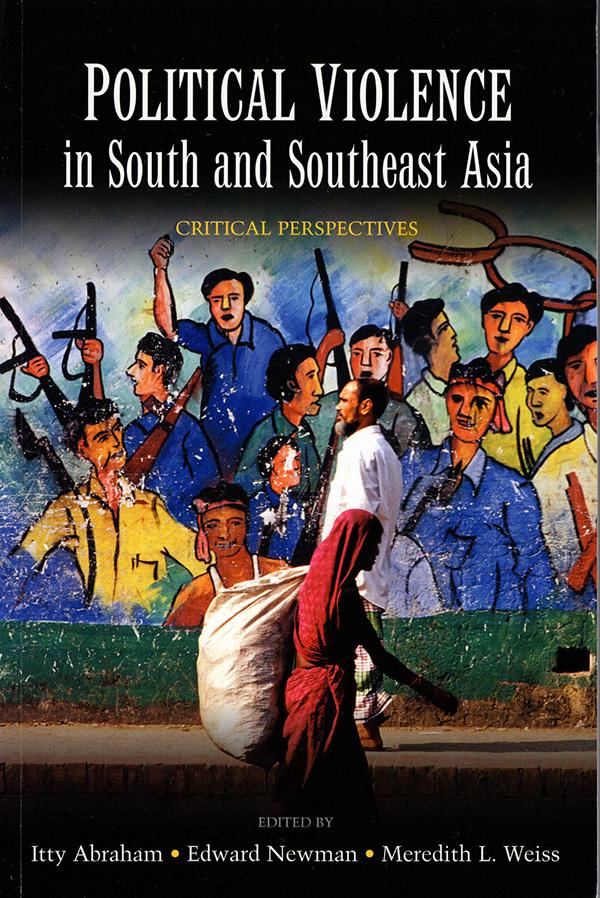
    Political Violence in South and Southeast Asia: Critical Perspectives
    Editor: Itty Abraham, Edward Newman, Meredith L. Weiss
    Publisher: UNU Press, Tokyo, 2010. 224 Pages


    Written against the framework of persistent threats to human security, ‘Political Violence in South and Southeast Asia: Critical Perspectives’ is a volume of extreme relevance and consequence. The book brings together numerous political scientists and anthropologists with in-depth knowledge of the socio-political environment of the two regions. It aims at understanding the interaction between violent and non-violent politics, and in doing so, it defines political violence as consequential and strategic, as opposed to spontaneous and senseless. Intending to shift the narrative of understanding violence solely from the standpoint of terrorism, the book develops a critical understanding of violence by dwelling on its social and structural context.

    Divided into eight distinct chapters, the book takes cognizance of both state and non-state actors in a violent landscape. While concentrating on the local events of political violence in countries of South and Southeast Asia, the authors underline the significance of identities and the process of their consolidation, the character of states, geographic borders, external influences, and patterns of rebellion, in determining the manifestations of political violence.

    Arguing that the theories of economic greed, grievance, regime type, and state collapse are guilty of facile claims and problematic conceptualization of political violence, the authors critique the narrow construction of the concept and the premature assumptions regarding its victims and perpetrators. In doing so, they focus on exploring the aims, approaches, consequences, and conceptual dimensions of such violence, without dwelling deep into the causes of the same. In analyzing the different brands of violence, the authors place their focus on assassinations, riots, pogroms, ethnic cleansing, and genocides in the two regions.

    In his first chapter, Sankaran Krishna compares the assassinations of two political leaders in India – Mohandas Gandhi, and Rajiv Gandhi.  The author presents a key argument underlining the changing moral economy of political killing in South Asia. Highlighting the context in which the two killings took place, Krishna argues that assassinations in the region have shifted from being carried out in the name of a larger cause or principle (Godse’s idea of saving India) to ‘a consequence of a blowback’ – which represented India’s choice of active participation in the Sri Lankan civil war, in the case of Rajiv Gandhi. Buttressing his argument, the author also takes into account the killings of Benazir Bhutto and Indira Gandhi.  He does, however, present an uncomfortable and curious narrative by viewing these assassinations as attempts of suicide. Claiming that Gandhi’s insistence on fasting until death and refusal to be protected by the state, and Rajiv and Indira Gandhi’s deliberate lax in their security were rehearsals for eventual suicides, the author makes rather unsettling and complex arguments, one, defining Gandhi’s killing as a moral assassination, and two, by dwelling deep into the writings of Godse and portraying him as a man of rationality against the mainstream narrative of associating him solely with terrorism.

    Later, presenting one of the central arguments of the book, Paul Brass, in his chapter on forms of collective and state violence in South Asia, argues against violence being defined as senseless. Asserting that all kinds of violence have their strategic purpose, he lays down the critical concept of an Institutionalised Riot System, arguing that riots are systematic and organised. Claiming that riot production consists of different stages, which are usually analogous to a staged production of drama, Brass states that the first stage is that of rehearsal, followed by enactment, and interpretation. While the rehearsal stage consists of those who arouse sentiments, consisting of politicians, ‘respectable’ group of university professors, and the lower ‘unrespectable’ groups of informants, local party workers, and journalists, the stage of enactment consists of false and inflammatory media reports. It brings together, on the one hand, university professors and students forming a part of the local crowd, and on the other hand, criminals recruited to burn, loot and kill. The final stage of interpretation and explanation is especially crucial to understanding the sustenance of such violence, which involves attempts at making the riot appear as spontaneous, as opposed to planned. What is witnessed is an active shift in responsibility to those who are not directly involved in riots, and even those who vehemently oppose the idea of rioting. The author substantiates his claims by associating the Riot System with examples from Northern India, particularly citing the killings in Meerut in 1982 and 1987.

    The second half of the book is majorly devoted to a comparative approach to study mass violence and the impact of external influences in the region. The authors, in their respective chapters, provide detailed empirical evidence by dwelling deep into the case studies of different countries. Geoffrey Robinson, in his chapter, identifies three distinct ways in which the countries of Southeast Asia have witnessed violence. The states are either defined as principal perpetrators, as in the case of Indonesia in East Timor and the regime of Khmer Rouge in Cambodia; or as facilitating violence through propaganda and militia or inaction during mass violence, as with the case of Indonesia during the 1965-66 massacre. Finally, the state, according to Robinson, has also served as a vital link in the formation and spread of violent societal norms and modes of political action. He identifies the patterns and correlations between a level of violence and the character of states. An argument is made that because the military is designed to organize violence, any state where the military had an active role in the past has experienced more violence, as in the individual cases of Thailand, Philippines, Indonesia, or Burma. On the other hand, religious and ethnic violence, including riots, occurs almost always in newly democratizing states.

    While Naureen Chowdhury Fink points out the contestations surrounding the borders of Bangladesh, Natasha Hamilton-Hart lays down the extent of external influences on political violence in Southeast Asia. She identifies the first wave of such influence, in the form of overt support to principal perpetrators, starting with the large-scale military support by China and the Soviet Union to the Vietnamese communists after the conflict escalated to open warfare involving American troops from 1964. Citing the United States military support and its deliberate silence during the massacre in Indonesia, the author identifies a direct link between the United States and the ongoing political violence in Indonesia. She also cites the US’ support to the Philippine government’s suppression of the rebellion, and to non-communist insurgent groups in Cambodia, and the Western support to Khmer Rouge – where lethal weapons from China, the US, and the UK flooded the country. In citing these examples, the author presents the extent to which external support has been instrumental in sustaining violence in the region.  Later, external support is reported to have taken the form of training of police, militaries, insurgents, and other actors, along with a provision of intelligence and logistical support.

    Vince Boudreau, in his chapter on recruitment and attack in Southeast Asian collective violence, argues that the patterns of collective violence in the region are influenced by trade-offs between efforts to recruit supporters and strike at adversaries. He also identifies a correlation between the nature of violence and the mode and strategies used for targeting the victims. A riot, for example, even when purposely produced by professionals – will likely be less discriminate than a coordinated attack by guerrillas; or a bomb detonated in a marketplace will likely be less discriminating than one thrown into a church. Identifying five such degrees of discrimination, Boudreau ranks them in an order of descending brutality – from indiscriminate attacks to indiscriminate categorical violence which employs a strategy designed to hit anyone who belongs to a particular socio-cultural category. Then comes to discriminate functional, referring to a strategy that targets individuals playing a particular occupational or political role, followed by the third strategy – discriminate personal, implying attacks on specific individuals based on something they have done, and lastly attacks on property.

    Finally, towards the end of the book, an argument is made regarding the totalizing logic of sovereignty of the state, where the author takes into account different political movements and illustrates how these movements are perceived as subversive irrespective of their motive. The argument implies that the ideological movements because they embody a critique of the state, are much more difficult for the state to subsume without violence.

    By adopting a comparative approach to study violence perpetrated by both, state and non-state actors, the book successfully underlines the conceptual similarities that exist within the societies, with regards to patterns and dimensions of violence. Because the book employs detailed contemporary evidence in explaining its critical concepts, it becomes a rather pertinent reading providing a wide scope for further analysis of similar events. Further, it successfully illustrates the correlations that exist between the character of states and the level and modes of violence, and in the reviewer’s opinion, can successfully go beyond the regions of South and Southeast Asia, to explain behavioural politics in more violent societies of West Asia and Africa.

  • Understanding the Syrian Civil War through Galtung’s Conflict Theory

    Understanding the Syrian Civil War through Galtung’s Conflict Theory

    Introduction

    As the founder of the discipline of Peace and Conflict Studies, Johan Vincent Galtung has outspokenly advocated for a world without nuclear weapons and has placed the focus of his research on scientific terminologies and methods to understand and deal with conflicts. Having coined the term “peace research”, Galtung has devoted much of his time in formulating the influential and unique ‘transcend approach’, wherein the focus is on peace, rather than security. He has advocated for a model that is holistic and is based on deep understanding and dialogue with one party at a time.

    Having coined the term “peace research”, Galtung has devoted much of his time in formulating the influential and unique ‘transcend approach’, wherein the focus is on peace, rather than security.

    The underlying cause of any violence, according to Galtung, is an unresolved conflict, one that has not been transformed or transcended, due to the existence of incompatible goals. If the goals are among the four basic needs of survival, well-being, identity, or freedom, the conflict is then concluded to be deep, and most difficult to resolve if left unattended. It is important to remember that a conflict does not progress linearly, but rather goes around in a circle, through a cycle of non-violence, to violence, then to post-violence, and likely back to violence again if it fails to be resolved.

    The escalation of a conflict to a violent level is largely a result of disequilibrium among the actors or parties involved, leading to polarization and dehumanization of the Other, and finally reflected in their aggression, the output of which is violence. What follows violence is traumatization, and consequently acts of revenge (Galtung, 2010), leading the cycle of conflict back to its first level.

    Galtung’s Notion of Conflict

    Johan Galtung, in his book, ‘Peace by Peaceful Means (1996)’, defined conflict as a “triadic construct” (pg.71), consisting of three important factors – Attitudes, Behaviour, and Contradictions.

    While both, Attitudes (A) and Contradiction (B), reflect the latent, subconscious level of conflict, Behaviour (B), on the other hand, is always manifest and reflects how people consciously act when confronted with contradictions and hostile attitudes and assumptions. Behaviour may thus be seen as an act of violence, both physical and verbal.

    Attitudes and assumptions may include the person’s perceptions about an actor or an institution; his/her emotions – how s/he feels about the actor/institution involved; and what s/he wants or expects from the given actor/institution. Thus, attitudes may include sexist beliefs about women or discriminatory attitudes towards minorities.

    Contradictions, on the other hand, refer to the content of the conflict, the incompatibility between the goals. It may include a territorial dispute between two or more actors over a single piece of territory, as in the case of Israel and Palestine, or as in the case of multiple parties laying claim to the same group of islets in the South China Sea. In the case of structural or indirect conflict, the contradictions may refer to the disequilibrium in the positions of parties involved, as in the case of inequality between different classes.

    A conflict, according to Galtung, could start from any of the three points of the triangle. It could start from point (A), wherein the actor’s hostile attitude could be in disharmony with those of other actors, leading to contradiction, and later reflected in violent behaviour.  A conflict may also start from point (B), where the actors involved may develop capacities or inclination towards negative/aggressive behaviour, which may get stimulated when a contradiction comes along.

    Galtung further divides the conflicts into actor/direct conflicts and structural/ indirect conflicts. The main point of departure between the two lies in their categorization into manifest, and latent levels. In a direct conflict, both attitudes and contradictions are manifest, that is, they are conscious and overt, the actor being aware of them at all times.

    However, the same does not apply when one takes into account the structural or indirect conflicts. Here, both attitudes and contradictions are latent, that is, they are subconscious and the actor is unaware of them. This is not to say that the contradictions or the incompatibilities are non-existent, rather only that the actor involved finds himself/herself completely unaware of such contradictions.

    Types of Violence

    While stating that the two types of violence – Direct and Structural, are to be considered as the starting point of any strategy for a peaceful resolution, Galtung also defined a third category of violence, namely, the Cultural Violence.

    Direct violence is an event that is often quick and visible, reflecting the capabilities and intentions of actors to engage in a conflict. It includes a victim and a perpetrator and can be seen explicitly in societies. Structural violence, on the other hand, is a process that is slow and often invisible. It refers to the injustice and inequality built into the structural institutions of the society. It is reflective of a position “higher up or lower down in a hierarchy of exploitation-repression-alienation” (Galtung 2012, pg.12), where the parties involved are determined either to keep the hierarchy intact or to completely obliterate it.

    An example of structural violence, as seen from a top-down approach would include colonial aspirations of the European nations. In the case of India and the British empire, the aggression from top existed in the form of material exploitation at the hands of the latter. It became visible once the natives demonstrated their will to oppose colonialism and break the hierarchy of exploitation. The same holds for the Indian caste system, wherein the structural violence, in the form of exploitation and marginalization, has remained intact because of the capability of those higher up, namely the Brahmins, to maintain the disequilibrium in positions between themselves and the communities they perceive to be lower than them.

    The Indian caste system, wherein the structural violence, in the form of exploitation and marginalization, has remained intact because of the capability of those higher up, namely the Brahmins, to maintain the disequilibrium in positions between themselves and the communities they perceive to be lower than them.

    Cultural violence refers to those “aspects of culture that can be used to legitimize or justify both, structural and direct violence” (Galtung: 1990, pg.291). It renders the use of violence as acceptable in society and makes it okay for actors to use violence without making them feel guilty. In a brilliant example, Galtung talks about how the internalization of culture makes it morally easier for actors to employ violence, such as in the interpretation in case of murder on behalf of one’s country being seen as right (Galtung: 1990, pg.292). In the case of direct and structural violence faced by immigrants, it is the culture that allows for such violence to be tolerated. The cultural violence, in this case, justifies the indirect and direct violence by dehumanizing the immigrants and portraying them as thugs or aliens. It allows societies to tolerate policies of forced child-separation while continuing to deny them equitable means of living.

    Escalation of conflicts into violence

    Violence is most often an outcome of deprivation of needs. The more basic and non-negotiable the needs, the likelier chance there is for aggression to come into existence. While classifying the basic needs into four broad categories of survival, welfare, freedom, and identity, Galtung warns his readers against prioritizing any one need over the others. To put survival above freedom and identity, would result in repression and alienation (Galtung, 1985), failing to end structural and cultural violence.

    When the goal of an actor (A) is incompatible with that of an actor (B), such that it obstructs the attainment of the goal by the actor (B), the pursuit of such goals would then most likely result in frustration among both actors, the consequence of which would be a polarisation of the two extremes. Polarisation would imply a zero-sum game, where the scope of transcendence is low, and the likely outcome is a position of no compromise. Because the contradiction in goals is absolute, the victory of the actor (A) would thus necessarily imply the loss of actor (B).

    Polarisation, accompanied by the dehumanization of the Other, may galvanize into hostility and hatred, manifesting itself into aggressive behaviour, finally resulting in escalation. The conflict, however, does not stop at violence. What follows violence, is traumatization of the victims harmed by violence, breeding acts of revenge (Galtung 2010, pg.16).

    In an actor conflict, the polarization between the two sides can almost immediately lead to direct violence. This is because actor (A), who has incompatible goals with actor (B), can easily identify the object/ subject of obstruction of attainment of its goals. Therefore, what follows is violent behaviour by actor (A) towards actor (B).

    On the other hand, in a structural conflict, polarisation may result in acute disequilibrium between rank positions of members in a society. However, Galtung in his essay on the “Structural Theory of Aggression” argues that violence is unlikely to occur unless all methods of maintaining equilibrium have been tried and unless culture facilitates violence wherein those lower down are constantly reminded of their position and their consequent mistreatment (Galtung 1964, pg.99).

    A system of injustice or inequity which refuses to break the hierarchy of oppression and exploitation would likely result in frustration, the outburst of which would be reflected in the form of violence. The often-visible Naxalite violence in India can be seen as a result of deep-rooted structural violence, wherein the parties involved have suffered exploitation and marginalization due to unequal economic development and inequitable distribution of resources for years.

    the genocide that took place against the members of the Rohingya community in Myanmar is a crude example of direct violence. 

    On the other hand, the genocide that took place against the members of the Rohingya community in Myanmar is a crude example of direct violence. They claimed to have been living in the State since the 9th century but were eventually labelled as Bangladeshi Immigrants. Years of discrimination (structural violence) and hatred (attitudes, assumptions/ cultural violence) led to their ethnic cleansing (direct violence). They were murdered, raped, and evicted from their homeland. It only took one law, which rendered them stateless, for the majority of Myanmar to consider them as sub-humans, and readily accept the atrocities committed against them.

    Syrian Conflict through Galtung’s Conflict Theory

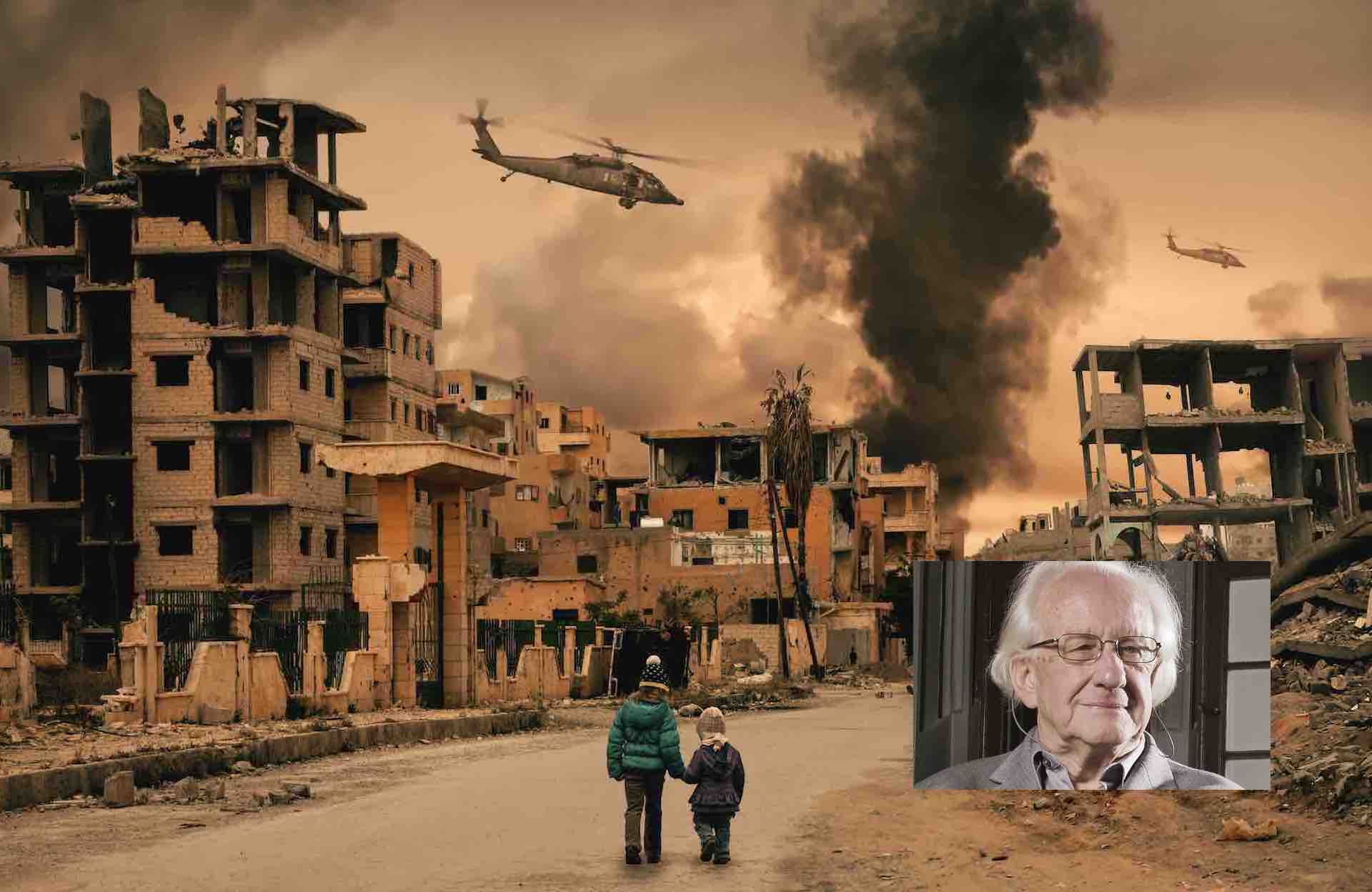
    The civil war in Syria is, unfortunately, an example of one of the bloodiest conflicts of this century. The war is often seen as a result of the outburst of pro-democracy protests in 2011, under the appellation of the Arab Spring.

    However, when approached from Galtung’s conflict theory, the conflict can be divided into three categories of violence. First, what we have been witnessing is the horror of direct violence in Syria, as a consequence of years of repression, facilitated by the government’s violent response towards the peaceful protesters in 2011. Second, the structural violence in the form of decades of economic restraints and systemic corruption, which exacerbated the existing poverty and inequality amongst the citizens.  Further, four years of drought between 2006 and 2011, and the consequent failed economic policies forced 2 million to 3 million Syrians into abject poverty (Polk, 2013). The dwindling Syrian economy and infrastructure finally led to the deprivation of the basic need of welfare and threatened their need for survival, resulting in frustration. Third is the cultural violence that has helped in sustaining the ongoing violence, in the form of distortion, denial, and dehumanization of the victims of violence has helped Assad and his foreign allies in continuing the mass murder of Syrians. Here, the sanitization of language is of key importance, where the attempts of distortion of reality often end up in changing the moral colour of violence, as argued by Galtung, wherein violence from being unacceptable starts to be tolerated without question.

    Direct Violence in Syria

    Syrians have been victims of decades-long political repression, in the form of restrictions on freedom of speech and expression, torture and enforced disappearances. The political institutions have historically been unstable, with three military coups taking places in 1949 alone followed by one more in 1954, in addition to the Ba’athist-led coups of 1963 and 1966. The Syrian security forces (Mukhabarat) are known to have detained citizens without proper warrants even before 2010, many of whom have reportedly been tortured in prisons (Human Rights Watch, 2010). In their attempts to keep the hierarchy of power relations intact, the centralised institutions are known to clamp down on any public demonstrations, with frequent arrests and employment of state violence.

    several actors are involved in perpetrating the more visible, direct violence, and it is clear that the Syrian conflict cannot be looked at as a conflict solely between the state and armed rebellion groups.

    In 2011, fifteen school-going children, all under the age of seventeen, were reportedly arrested and tortured for writing anti-graffiti on a wall, leading to the protests of 2011. The government responded by opening fire on the peaceful protestors, killing four civilians (Macleod, 2011). More than 400,000 people have died because of the Syrian conflict since 2011, with 5 million seeking refuge abroad and over 6 million displaced internally (World Bank). This section identifies several actors involved in perpetrating the more visible, direct violence, and contends that the Syrian conflict cannot be looked at as a conflict solely between the state and armed rebellion groups. It would also be myopic to look at the conflict entirely from the perspective of sectarian divisions, given that each rebellion group has a different motive, and is being backed by several different actors.

    While soldiers supporting the Syrian president and the opposition armed groups continue to remain prominent actors, recent years have seen the rise of Islamic State, Al-Qaeda and their affiliated members. The war has also seen a large-scale presence of two categories of foreign actors – those supporting the Syrian regime (Iran, and Russia), and those who continue to be the key rebel supporters (US, Turkey, and Saudi Arabia). All of these actors have their motives and intentions of being engaged in the war. While Iran sees Syria as its primary ally and a transit point for Hezbollah, Russia thinks of Syria as its last remaining stronghold. The United States and Saudi Arabia, on the other hand, are driven by their intentions to maintain the regional balance of power away from the Iranian axis of influence. Meanwhile, Turkey continues to battle the spill-over effect of the thousands of Syrian refugees who continue to cross over the border to Turkey.

    The anti-government groups based in Ghouta, including Jaysh al-Islam, Ahrar al-Sham and Faylaq al-Rahmane, have killed and mutilated hundreds of civilians in indiscriminate attacks on Damascus. These armed groups have also regularly arrested and tortured civilians in Douma, including members of religious minority groups. Hay’at Tahrir al-Sham (HTS), an Al-Qaeda affiliate present in Idlib, has carried out arrests and kidnappings that targeted local political opponents and journalists, while also continuously interfering with humanitarian access and aid distribution in areas under its control (CSIS).

    Cultural Violence in Syria

    The cultural violence in Syria, like elsewhere, is most often perpetrated in the form of sanitization of language, where years of structural violence are termed as mere discrimination, and where civilians are seen as mere targets to be killed. A few years ago, in an attempt of distorting reality, the Russian media described a Syrian documentary on Helmet volunteers in Aleppo as a “thinly disguised Al Qaeda promotional vehicle” (Hamad, 2018).  Such attempts of distortion aim at normalizing even the most brutal violence. In the case of Russia, these attempts help in legitimizing its airstrikes, even when the number of civilians that have been killed in these strikes surpass the number of the ISIS members it sought to target. According to a report, approximately four thousand civilians have been killed by Russian airstrikes as opposed to 2758 ISIS members (Armstrong & Richter, 2016).

    Additionally, cultural violence in the form of ideology and religion has helped to sustain violence in the region. Religion, here, has acted as a form of cultural violence, where the fight is between the ‘Chosen’ and the ‘Unchosen’. In Syria, this fight has taken the form of sectarian divisions between the minority Alawi community and the majority Sunni population. The legitimisation of violence at the hands of the state is rooted in its fight against ‘extremism’, which depends upon the promulgation of the narrative that all rebel forces have the same ulterior motive -of building an intolerant Islamic caliphate. State’s reliance on its alleged effort to curb extremism has allowed its forces to justify the use of heavy artillery, the bombardment of residential places, and the subsequent massacres. Another factor that helps explain the sustenance of violence, is its normalization – where violence is seen as natural, and a part of everyday life. Decades of repression in Syria have helped to normalize torture, and rampant arrests and restrictions.

    Structural Violence in Syria

    While countries continue to witness the horrors of visible atrocities and war crimes, the underlying layers of structural violence continue to buttress the egregious brutality which is often more direct, and physical. Although the war is often seen as a result of the outburst of pro-democracy protests in 2011, a close examination of the country’s socio-economic structures would enable one to get a detailed insight into the underlying layers of frustration caused due to large-scale poverty, inequality, and marginalisation.

    One would also find that the relatively peaceful structure, which existed before the protests of 2011, was held intact largely due to the existence of single-party dominance, where one actor (Hafez al-Assad, and later Bashar al-Assad) held all power and authority, while those existing in lower ranks of society continued to lack resources, as well as opportunities to challenge the dominant power. The injustice and inequality built into the structural institutions of the Syrian society can be referred to, what has been called as the ‘structural violence’, by Johan Galtung. The violence, here, is reflective of a position “higher up or lower down in a hierarchy of exploitation-repression-alienation”, where the parties involved are determined either to keep the hierarchy intact or to completely obliterate it.

    In the case of Syria, the deprivation of the most basic and non-negotiable needs, which threatened the citizens’ need for survival, has been the primary cause for aggression to come into existence. The factors that, thus, led to the conflict in Syria can be seen rooted in years of repression, poverty, and lack of representative institutions, which manifested in the form of protests, or the Arab Spring of 2011. The Syrian economic crisis has existed long before the commencement of the civil war. Since the beginning of the economic crisis, Syria’s institutional structures have failed to meet the rising needs and rights of its population. In the 1980s, the country was trapped in a downward spiral of a fiscal crisis, as a result of large-scale drought, and due to both, domestic and external factors. The crisis led to high food deficit, and an increase in the cost of living, leading to a rise in patronage networks which provided small circles of elites with profitable businesses. These networks became increasingly popular in real estate and land management, leaving out large sectors of Syria underdeveloped. While the country witnessed a decreasing overall debt and a noticeable rise in the GDP in the 2000s, large sections of the population were excluded from benefitting from these growth rates due to differences in wage rates and declining job opportunities. Increasing inequality was reflected in a paper published by the UNDP, which claimed that 65.6% of all labour in Syria belonged to the informal sector in 2010, with Aleppo and Idlib ranking first with over 75% of their workforce belonging to the informal sector (UNDP, 2018).

    Years of conflict have exacerbated the economic crisis, pushing both the state and its citizens, into chaos, with more than 80 per cent of the Syrian population living below the poverty line, with an unemployment rate of at least 55 per cent in 2018.

    Additionally, the oil revenues fell from more than 14% of GDP in the early 2000s to about 4% in 2010 due to depleting reserves. According to a report, overall poverty in Syria in 2007 impacted 33.6% of the population, of which 12.3% were estimated to be living under extreme poverty. Noting the degree of inequality in Syria in 1997, the report found out that the lower 20% of the population had a share of only 8% in expenditure, while the richest 20% of the population share about 41% of the expenditure (Abu-Ismail, Abdel-Gadir & El-Laithy). Moreover, the widely disputed region of North-Eastern Syria witnessed highest levels of inequality in 2007, in addition to deprivation of living standards, and worst levels of illiteracy, and access to safe water, just four years before the outbreak of the civil war. The unequal access to resources was also starkly reflected in the housing situation of the country before the war, where over 40% of the population lived under informal housing conditions, – through squatting, or on lands obtained without legal contracts (Goulden, 2011).

    Years of conflict have exacerbated the economic crisis, pushing both the state and its citizens, into chaos, with more than 80 per cent of the Syrian population living below the poverty line, with an unemployment rate of at least 55 per cent in 2018. With most of the business networks now being controlled by the selected few elites, the population at large continues to suffer the brunt of both structural, and direct violence.

    Conclusion

    This paper has attempted to explain the theory of conflict, as proposed by Johan Galtung. In doing so, it has referred to six primary sources of the author. It has taken into account Galtung’s two triangles of conflict. First, the attitudes-behaviour-contradiction triangle, which seeks to explain the notion of conflict, and demonstrates how a conflict consists of all three, with attitudes and contradictions existing at the latent level, manifesting themselves into violent behaviour which is conscious and visible. The second triangle divides violence into three broad categories of direct violence, structural violence, and cultural violence, and demonstrates how the latter two facilitate and bring about direct violence. This paper has also attempted to employ Galtung’s theory of conflict to explain the civil war in Syria, where it has identified the three categories of violence and has tried to apply the theory into practice. The conflict, which started with citizens demanding their basic needs and rights has been sustained over the years by the involvement of foreign states, and increased state brutality which has been responded to by an increasingly similar, if not equal, force by the rebellion groups. The country, now, witnesses itself entangled in a cycle of conflict, where the war has led to steep economic deterioration, political repression, and physical violence, which in turn has led to further widespread cataclysm.


    References

    Abu-Ismail, K., Abdel-Gadir, A., & El-Laithy, H. (n.d.). Arab Development Challenges Report Background Paper 2011/15. Retrieved September 28, 2020, from https://www.undp.org/content/dam/rbas/doc/poverty/BG_15_Poverty%20and%20Inequality%20in%20Syria_FeB.pdf
    Armstrong, M., & Richter, F. (2016, October 20). Infographic: People Killed By Russian Airstrikes In Syria. Retrieved September 30, 2020, from https://www.statista.com/chart/6311/people-killed-by-russian-airstrikes-in-syria/
    CSIS. (n.d.). Hay’at Tahrir al-Sham (HTS). Retrieved September 28, 2020, from https://www.csis.org/programs/transnational-threats-project/terrorism-backgrounders/hayat-tahrir-al-sham-hts
    Employment and Livelihood Support in Syria: UNDP in Syria. (2018, August). Retrieved September 28, 2020, from https://www.sy.undp.org/content/syria/en/home/library/Employment_and_Livelihood_Support_in_Syria.html
    Galtung, J. (1964). A Structural Theory of Aggression. Journal of Peace Research, 1(2), 95-119. doi:10.1177/002234336400100203
    Galtung, J. (1985). Twenty-Five Years of Peace Research: Ten Challenges and Some Responses. Journal of Peace Research, 22(2), 141-158. doi:10.1177/002234338502200205
    Galtung, J. (1990). Cultural Violence. Journal of Peace Research, 27(3), 291-305. doi:10.1177/0022343390027003005
    Galtung, J. (1996). Conflict Theory. In Peace by peaceful means: Peace and conflict, developmentment and civilization(pp. 71-73). Thousand Oaks, CA: Sage.
    Galtung, J. (2010). Peace by peaceful conflict transformation – the TRANSCEND approach. In C. Webel & J. Galtung (Authors), Handbook of peace and conflict studies (pp. 15-16). London: Routledge.
    Galtung, J. (2012). Peace and Conflict Studies as Political Activity. In T. Matyók, J. Senehi, & S. Byrne (Authors), Critical issues in peace and conflict studies: Theory, practice, and pedagogy (pp. 12-13). Lanham, Maryland.: Lexington Books.
    Goulden, R. (2011). Housing, Inequality, and Economic Change in Syria. British Journal of Middle Eastern Studies,38(2), 187-202. doi:10.1080/13530194.2011.581817
    Hamad, S. (2018, March 09). The dehumanisation of Syria’s victims facilitates war crimes. Retrieved July 26, 2020, from https://www.trtworld.com/opinion/the-dehumanisation-of-syria-s-victims-facilitates-war-crimes-15802
    Human Rights Watch. (2010, July 16). Syria: Al-Asad’s Decade in Power Marked by Repression. Retrieved September 28, 2020, from https://www.hrw.org/news/2010/07/16/syria-al-asads-decade-power-marked-repression
    Polk, W. (2013, December 10). Understanding Syria: From Pre-Civil War to Post-Assad. Retrieved July 26, 2020, from https://www.theatlantic.com/international/archive/2013/12/understanding-syria-from-pre-civil-war-to-post-assad/281989/
    Macleod, H. (2011, April 26). How schoolboys began the Syrian revolution. Retrieved September 30, 2020, from https://www.cbsnews.com/news/how-schoolboys-began-the-syrian-revolution/
    Massari, P. (2013, September 10). Religion and Conflict in Syria. Retrieved July 26, 2020, from https://hds.harvard.edu/news/2013/09/10/religion-and-conflict-syria
    World Bank. (n.d.). The World Bank In Syrian Arab Republic. Retrieved September 30, 2020, from https://www.worldbank.org/en/country/syria/overview
     
    Image: Adobe Stock
     

  • Poverty, Inequality, and Marginalisation as Forms of Structural Violence in Pre-Conflict Syria

    Poverty, Inequality, and Marginalisation as Forms of Structural Violence in Pre-Conflict Syria

    The injustice and inequality built into the structural institutions of the Syrian society can be referred to, what has been called as the ‘structural violence’, by the well-known Norwegian sociologist, Johan Galtung.  

    The ongoing civil war in Syria that has resulted in large-scale loss of lives, and forced displacement of millions across the region, is being seen as one of the bloodiest conflicts of this century. While countries continue to witness the horrors of visible atrocities and war crimes, the underlying layers of structural and cultural violence continue to buttress the egregious brutality which is often more direct, and physical.


    Although the war is often seen as a result of the outburst of pro-democracy protests in 2011, a close examination of the country’s socio-economic structures would enable one to get a detailed insight into the underlying layers of frustration caused due to large-scale poverty, inequality, and marginalisation. One would also find that the relatively peaceful structure, which existed before the protests of 2011, was held intact largely due to the existence of single-party dominance, where one actor (Hafez al-Assad, and later Bashar al-Assad) held all power and authority, while those existing in lower ranks of society continued to lack resources, as well as opportunities to challenge the dominant power.

    The Syrian economic crisis has existed long before the commencement of the civil war.

    The injustice and inequality built into the structural institutions of the Syrian society can be referred to, what has been called as the ‘structural violence’, by the well-known Norwegian sociologist, Johan Galtung.  The violence, here, is reflective of a position “higher up or lower down in a hierarchy of exploitation-repression-alienation”, where the parties involved are determined either to keep the hierarchy intact or to completely obliterate it. In the case of Syria, the deprivation of the most basic and non-negotiable needs, which threatened the citizens’ need for survival, has been the primary cause for aggression to come into existence. The factors that, thus, led to the conflict in Syria can be seen rooted in years of repression, poverty, and lack of representative institutions, which manifested in the form of protests, or the Arab Spring of 2011.

    The Syrian economic crisis has existed long before the commencement of the civil war. Since the beginning of the economic crisis, Syria’s institutional structures have failed to meet the rising needs and rights of its population. In the 1980s, the country was trapped in a downward spiral of a fiscal crisis, as a result of large-scale drought, and due to both, domestic and external factors. The crisis led to high food deficit, and an increase in the cost of living, leading to a rise in patronage networks which provided small circles of elites with profitable businesses. These networks became increasingly popular in real estate and land management, leaving out large sectors of Syria underdeveloped.

    While the country witnessed a decreasing overall debt and a noticeable rise in the GDP in the 2000s, large sections of the population were excluded from benefitting from these growth rates due to differences in wage rates and declining job opportunities. Increasing inequality was reflected in a paper published by the UNDP, which claimed that 65.6% of all labour in Syria belonged to the informal sector in 2010, with Aleppo and Idlib ranking first with over 75% of their workforce belonging to the informal sector. Further, the four years of drought between 2006 and 2011, and the consequent failed economic policies led to a significant decline in the agricultural sector’s output, forcing 2 million to 3 million Syrians into abject poverty.

    Additionally, the oil revenues fell from more than 14% of GDP in the early 2000s to about 4% in 2010 due to depleting reserves. According to a report, overall poverty in Syria in 2007 impacted 33.6% of the population, of which 12.3% were estimated to be living under extreme poverty. Noting the degree of inequality in Syria in 1997, the report found out that the lower 20% of the population had a share of only 8% in expenditure, while the richest 20% of the population share about 41% of the expenditure. The degree of inequality further decreased in 2004. Moreover, the widely disputed region of North-Eastern Syria witnessed highest levels of inequality in 2007, in addition to deprivation of living standards, and worst levels of illiteracy, and access to safe water, just four years before the outbreak of the civil war. The unequal access to resources was also starkly reflected in the housing situation of the country before the war, where over 40% of the population lived under informal housing conditions, – through squatting, or on lands obtained without legal contracts.

    In addition to the economic crisis, Syrians have been the victims of decades-long political repression, in the form of restrictions on freedom of expression, torture, and enforced disappearances. The political institutions have historically been unstable, with three military coups taking place in 1949 alone, followed by one more in 1954, in addition to the Ba’athist-led coups of 1963 and 1966. The Syrian security forces (Mukhabarat) are known to have detained citizens without proper warrants even before 2010, many of whom have reportedly been tortured in prisons. In their attempts to keep the hierarchy of power relations intact, the centralised institutions are known to clamp down on any public demonstrations, with frequent arrests and employment of state violence.

    The conflict which started with citizens demanding their basic needs and rights has been sustained over the years by the involvement of foreign states, and increased state brutality which has been responded to by an increasingly similar, if not equal, force by the rebellion groups.

    Years of conflict have exacerbated the economic crisis, pushing both the state and its citizens, into chaos, with more than 80 per cent of the Syrian population living below the poverty line, with an unemployment rate of at least 55 per cent in 2018. With most of the business networks now being controlled by the selected few elites, the population at large continues to suffer the brunt of both structural, and direct violence.

    The conflict which started with citizens demanding their basic needs and rights has been sustained over the years by the involvement of foreign states, and increased state brutality which has been responded to by an increasingly similar, if not equal, force by the rebellion groups. The country, now, witnesses itself entangled in a cycle of conflict, where the war has led to steep economic deterioration, political repression, and physical violence, which in turn has led to further widespread cataclysm.

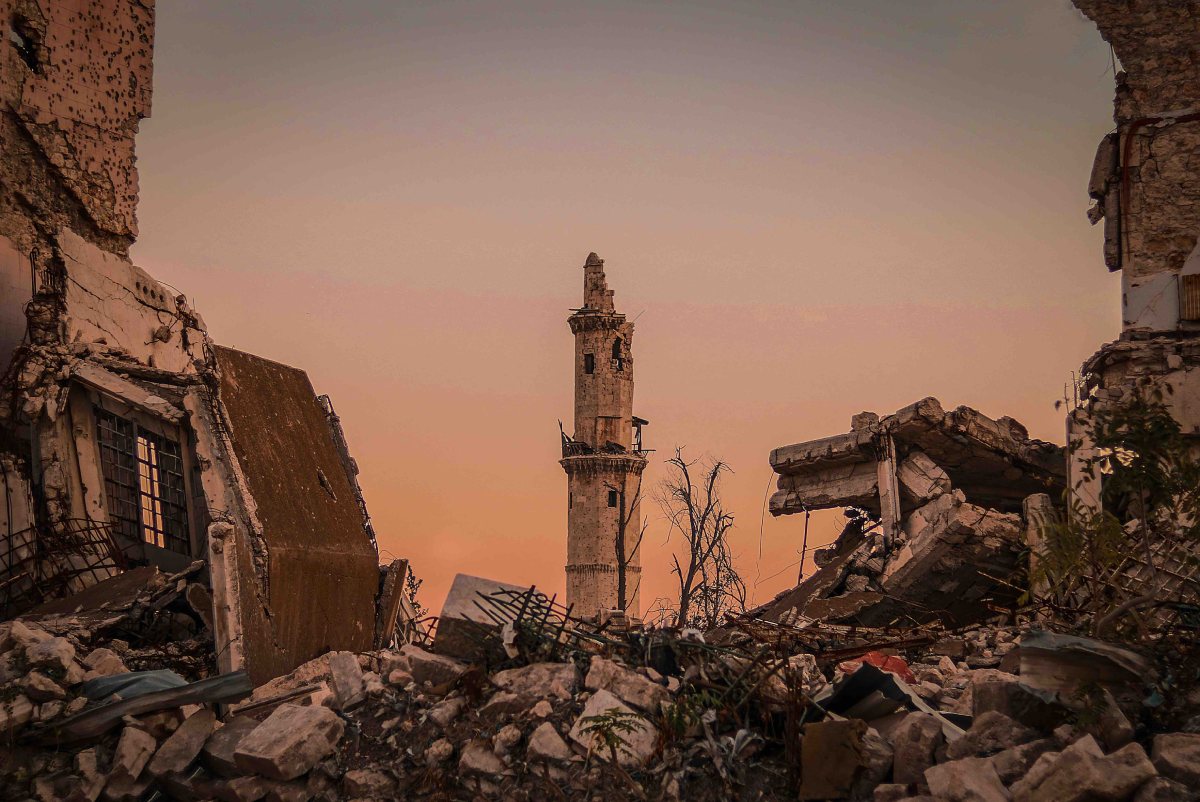
    Image Credit: Photo – Aleppo-Syria destruction in 2019 and  Syria Map – Adobe Stock