Author: Renuka Paul

  • Local Protests: A New Status-Quo in Political Lifestyle?

    Local Protests: A New Status-Quo in Political Lifestyle?

    Hong Kong and Chile convulse, Lebanon possibly spiralling into a civil strife, and sanctions induced discontent paralysing Iran, a pattern of global protests is increasingly evident. The global political landscape is currently marked by frequent mass protests, and this wave is geographically much broader and unfolding in countries at different stages of development. Unlike earlier protest movements that aimed at radical political change and revolutionising the existing order, the modern demands abandon this narrative of overthrowing the system instead aiming for democratisation of the established institutions. In other words, the anti-government protests cropping up in various parts are not trying to dismantle the democratic structures but to redefine its scope and depth.

    New Wave of Protests – questioning inept governance

    In contrast to the previous waves of uprising like the Pink Tide in Latin America or the Arab Spring, that was spreading in a particular region with similar agenda, the recent protests are occurring in different zones and is marked by the uniqueness of initial triggers and demands put forth by the protestors. In Lebanon, the discontent was sparked by regressive taxes proposed (mainly Whatsapp tax) but turned into massive demonstrations, transcending sects and classes, calling for a technocratic government in the backdrop of sectarian political regime, widespread corruption and mishandling of the economy. The Yellow Vest movement in France originally against the fuel tax snowballed into nationwide protests to address the socio economic inequalities, stemming from high unemployment and stagnating economy. Protests in Chile against hiked transport fares escalated to countrywide riots revealing the dissatisfaction with the pro rich growth, heavily privatised welfare system and pro market regime. On observation, these isolated protests by themselves can be a defining feature of the current wave of protests, different from the previous waves that were characterised by common contestations.

    Despite being unrelated events with independent agendas, the countries undergoing mass protests share similar trends of inequality and economic downturns. Further scrutiny beyond the seemingly small initial triggers reveal an evident pattern of economic anger and insecurity in these nations. Experts have suggested that Hong Kong’s pro democracy movement is also fuelled by wide income inequality (highest among developed nations), especially in the last 45 years since its handover to the Chinese. The Latin American region, witnessing the most number of countries breaking into sustained protests, is the world’s most unequal zone. In addition to inequality, sustained unrest in states like Colombia, Catalonia to Iraq and Egypt, the protests are driven by slowing economic growth, mounting public debt and austerity measures. Even in populist and authoritarian regimes, citizens are demanding an end to corruption and restoration of democratic rule of law. For instance, long serving, extremely popular, leftist leader Evo Morales was forced to resign in Bolivia after protests erupted accusing him of undermining democracy to extent his rule. There are increasing clashes against repressive democracy in Russia, and revolts against autocrats in Slovenia and Czech Republic.

    Leaderless or smart mobilization?

    Interestingly, a majority of the modern protests are leaderless, led by students and youth. In Hong Kong, the protests are gaining momentum through the active involvement of the students while in Chile the unrest for systematic change was ignited after school students launched a campaign to end the 4 percent subway fare increase. Niall Ferguson noted that this demographic trend of the young leading the demonstrations is a repeat of the 1960s, which like the present had an excess of educated youth over the number of available jobs. Another similarity amongst the protests is the urban-centric mass unrest. According to migration theorists, uncontrolled urbanisation resulting in rural to urban movements is a major cause for the ongoing demonstrations. Pushed into informal settlements in cities, often ignored by authorities and without basic social coverage, the urban area becomes a ground for discontent. For instance, in Haiti the protests began due to gasoline and food scarcity. Therefore, the socio-economic marginalisation of the urban poor is a significant yet overlooked factor that drives people to the streets. This is also compounded by a lack of faith in the government. More than the poor state policies adopted and prevalent corruption, in some protesting nations, there is deep distrust among the citizens. Hong Kongers believe that their government does not have legitimate powers over Beijing, and in countries like Lebanon, Chile or Ecuador, reversal of the initial triggers did not stop the dissenters from demanding a new government.

    The youth bulge and the shrinking economic opportunities only partly explains the global protests. The reach and accessibility of social media and free messaging apps have exploded in the past decade. In addition to acting as a medium to organise and sustain mass protests, these channels are also used to express political frustrations. Unlike before when media had a monopoly over mass reach, individuals and groups have the capacity to mobilise and garner support over specific issues. While the protests seem unconnected, it is possible to see a copycat element in the way protests are carried out. The coverage of news and faster reach makes it possible for protestors to adopt methods of action that were successful elsewhere. It is also harder for states to contain and repress dissenting voices. Thus, the spread of communicative technology and social platforms offer a conducive environment for protests. 

    Social Media enables activism

    The ability of electronic media to break down physical barriers and bring more events to global audiences might be increasing the visibility of protests, which would have otherwise remained local. Data from GEDLT Project, which has been tracking protests around the world from the past 40 years, reveals that the frequency of protests has not significantly increased. However, the intensity and the length of protests have improved. Despite a spike in these political activities wherein citizens are actively mobilising to pursue their demands, there has been a decline in the success rate of protests. A recent study highlights the staggering decline in success rate of protests from 70 percent in 1990s to 30 percent in 2010. Some highlight the “smart” methods adopted by regimes to prevent and suppress clashes like reinforcing loyalty of the elite, infiltrating and dividing the opposition, etc. For instance, in Lebanon, the initially united protests has created anti protest groups that supports the Hezbollah. Governments are also adopting a strategy of blaming foreigners and outsiders to reinforce support from the public. For instance, China is building a narrative of US backed forces disrupting Hong Kong to get an advantage in the ongoing trade war, which has strengthened after US signed a Hong Kong Human Rights and Democracy law. Iran’s authorities are also blaming outsiders, especially the US, for the violence that ensued after state raising gasoline prices by 50 percent.

    Overall, there is an influx in political activism. Global unrests are now spreading and have significant implications for countries everywhere. With electronic media and its potential for mobilisation, it is now easier to bring issues to national discourse. However, while the willingness and ability of mass political activism to recur and cause disruptions have increased manyfold, its success rates have decreased. It may be said that the political frustrations and the current protests will not bring a major transformation in the political structures but rather it is a new status quo in the nature of political lifestyles.  

    Renuka Paul is a Research Analyst with TPF. She holds a masters in Public Policy.

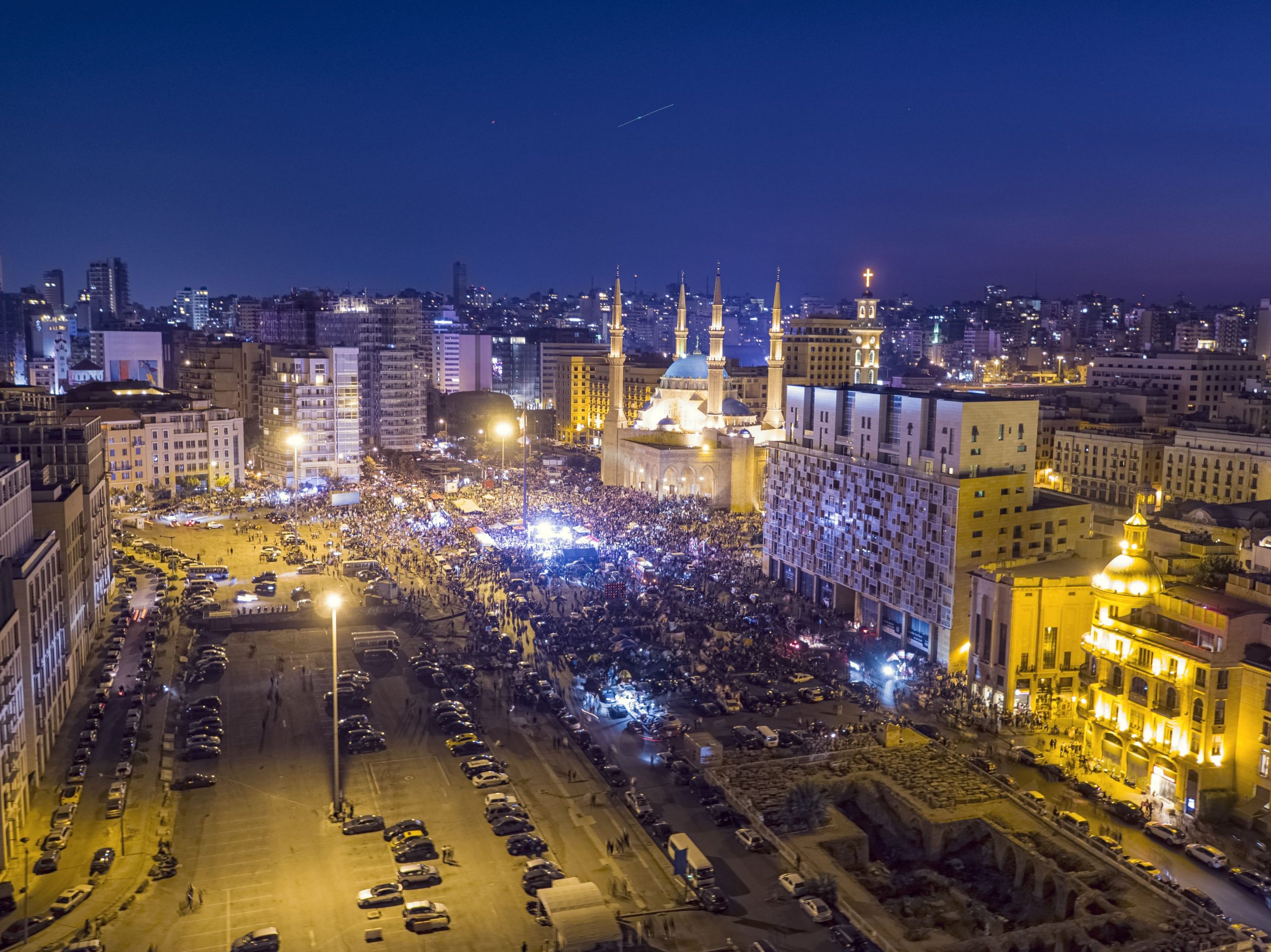
    Image: Aerial night shot of Beirut Downtown, Lebanon during protest against Government, Lebanese revolution – Phot by Ramzi – Licensed from www.stock.adobe.com
  • Chennai’s Water Stress:  Urgent Need for Effective Water Security

    Chennai’s Water Stress: Urgent Need for Effective Water Security

    In Chennai, while the demand for water has been rising steeply with rapid urbanisation and growing population, water supply has been hit hard due to monsoon failures, over-exploitation of groundwater, heat waves and inadequate infrastructure. Following poor rainfall since 2018, all four major drinking water sources (four lakes) in the city dried up holding less than 1 percent of their capacities, aggravating the city’s water gap. The summer 2019 water crisis in Chennai has revealed the scale and magnitude of the water challenge, which can be viewed from two angles- one that is caused from a lack of safe water provisions and the other due to scarcity of available water resources.

    In Tamil Nadu, over 95 percent of surface water and 80 percent of groundwater have been utilised, with the per capita availability of water merely 900 cubic meters against a national average of 2200 cubic meters. Additionally, the state is, almost entirely, dependent on rainfall to restore its water resources. Erratic monsoon, therefore, create acute water shortage and droughts in the state. Further, Chennai being a coastal city, there is a high run off rate.

    Water Shortage – Man made Crisis

    Of the total water available, 75 percent of the available water is utilised for agriculture, leaving very little for industrial and personal consumption. The shortage has led to many unregulated private borewells and groundwater extraction. Others have resorted to private tankers who charge exorbitantly, in the absence of alternatives. While the coping costs is only 1 percent of the total income for high income groups, it is 15 percent for middle income groups and 40-50 percent for low income groups. To level the burden, state’s interventions are indispensable and all attempts towards regulating rates have failed due to tanker lobbies.

    In the absence of proper legislation, there has been an 85 percent decline of groundwater levels. Depleting groundwater level and intrusion of seawater have significantly reduced the water quality as well. Additionally, the state needs to build storage facilities and prevent water runoff, evident from the failure of at storing excessive water from 2015 flood which flowed back to the sea. The authorities have also ignored the illegal encroachment and excessive migration of people. An estimated 8,20,000 people live in slums, often without access to a consistent water supply. Poor infrastructure to retain water and low water holding capacity of soil have also affected green water within the soil that supports food and biomass production.

    The water shortage have spilled over to other dimensions as well. The unbalanced emphasis on the supply side issues has created water rage and incidents of local arguments over conservation methods, utilisation patterns, etc. Small businesses, schools, restaurants and others have evolved their own methods to tackle the crisis. Corporates encouraged work from home, many skipped daily wages waiting for water delivery and Chennai Metro temporarily stopped air conditioning in non-peak hours. The water disruptions also affected production, increased input costs and reduced investments in the city.

    Need for Active State Intervention

    Since water is a state subject, its management remains the responsibility of state government. The evident and growing water scarcity immediately demanded policy interventions and action programmes from the Tamil Nadu government. To tackle the high prices charged by tankers, the Municipal Administration hired water tankers for supplying water to the public and demanded that people refuse services of those charging steep rates. However, the Chennai Metro Water Supply and Sewerage Board was delivering 500 million litres, less than half of the city’s needs. In such a scenario, authorities should instead actively regulate the prices and penalise defaulters.

    Water Supply Scheme in Chennai has been approved under JNNURM for improving and strengthening water supply within the city. However, leak detection and rectification is only part of Phase 6 of the scheme. This needs to be prioritised to prevent water wastage. Further, proposal to extend basic amenities to unserved areas under the scheme is still pending. To stop the complete dependence on rainwater, the administration has taken up the construction of a third desalination plant, financed through a KFW loan and AMRUT funds. A Request for Interest has also been issued for setting up three small scale Seawater Reverse Osmosis desalination plants of 10MLD each. However, many argue that desalination should be the last resort since it is expensive, energy intensive and environmentally damaging. Instead, the government should restore and rejuvenate water bodies in the city (currently there are over 100 such bodies each ranging between 2-50 acres), currently polluted with untreated waste, plastic and water hyacinths. There should also be regulations in place to prevent encroachment and pollution of water boundaries by humans.

    To have a sustainable system, rainwater harvesting was made mandatory since 2003, requiring buildings to install rooftop water catchment system and collect rainwater. However, poor implementation and maintenance have proved this measure ineffective. Local and state buildings should lead in rainwater harvesting. Following this, there should be regular checks and local bodies should provide assistance in maintaining these structures. The government is also engaging with NGOs and experts to desilt rivers to improve storage capacity in time for North East monsoons. While the measure is not an immediate fix, it is a long term measure. Though CMWSSB has pushed for desilting, many suggested plans are yet to be approved by the Water Resources Department. Even approved projects are prolonged and poorly managed. For instance, 1.93 lakhs cubic metres of silt are yet to be cleared in Porur lake, the process is yet to begin at Cholavaram lake, etc.

    On a careful observation, it can be established that most efforts currently employed address supply side issues like desalination, mismanagement, restoring water sources, etc. While supply oriented approaches are necessary, it is dependent on availability of water that is largely a product of nature and climate. The demand for water, however, is largely dependent on humans, directly impacted by the population size, industrial use patterns, water efficiency, etc. Hence, there is a need to equally focus on demand management measures, to formulate proper policies for water security.

    TN government has rejected the pricing of agricultural electricity consumption stating that it will burden the farmers and raise food prices. However, the state should actively try to reduce water consumption through irrigation, by measures like fixed timing for supply of power (used to pump groundwater), training farmers on water conservation methods, encouraging efficient irrigation techniques(drip irrigation or spray irrigation instead of flood irrigation), etc.

    Data intensive Analysis should guide Effective Policy Formulation and Implementation

    With wide spread experience of water scarcity and data projecting a situation normalising drought, it is the right time to adopt water conservation methods and push for change to limited water use lifestyle. Cape Town, that faced a similar situation, successfully implemented behavioural nudges to reduce water use. Most effective nudges included offering conservation feedback to users on their performance in relation to neighbours, and creating Water Maps that highlighted areas compliant with the targets. Further, reuse of water should be encouraged for landscaping, flushing toilets, etc.

    More importantly, to develop ideal policies and evolve schemes, there is a need for water accounting to track and understand the extent of water scarcity, check inter basin river transfers for better negotiations and make trade-offs with other states, improve preparedness for emergencies, etc. There should also be public water audits on institutions, laws, public and private usages, etc for transparency and accountability.

    Currently, water is managed by multiple agencies – one to handle encroachment, one for lake rejuvenation, another for pollution control, and so on- with overlapping responsibilities and little coordination between them. For responsible and accountable water governance, these bodies should be under an integrated agency. Overall, the demand side measures should equally be managed by the state. Towards this, the model of city’s development should be altered to distribute migration across the state, especially to areas that receive higher annual rainfall and have abundant water sources. In addition to reducing the water stress faced by the city, it will hinder the overcrowding in Chennai’s urban space and bring equitable development across the state.

    Renuka Paul is a Research Analyst with ‘The Peninsula Foundation’.

    Photo by Adhithya Srinivasan on Unsplash

  • Hong Kong’s Pro-Democracy Movement and the Chinese Conundrum

    Hong Kong’s Pro-Democracy Movement and the Chinese Conundrum

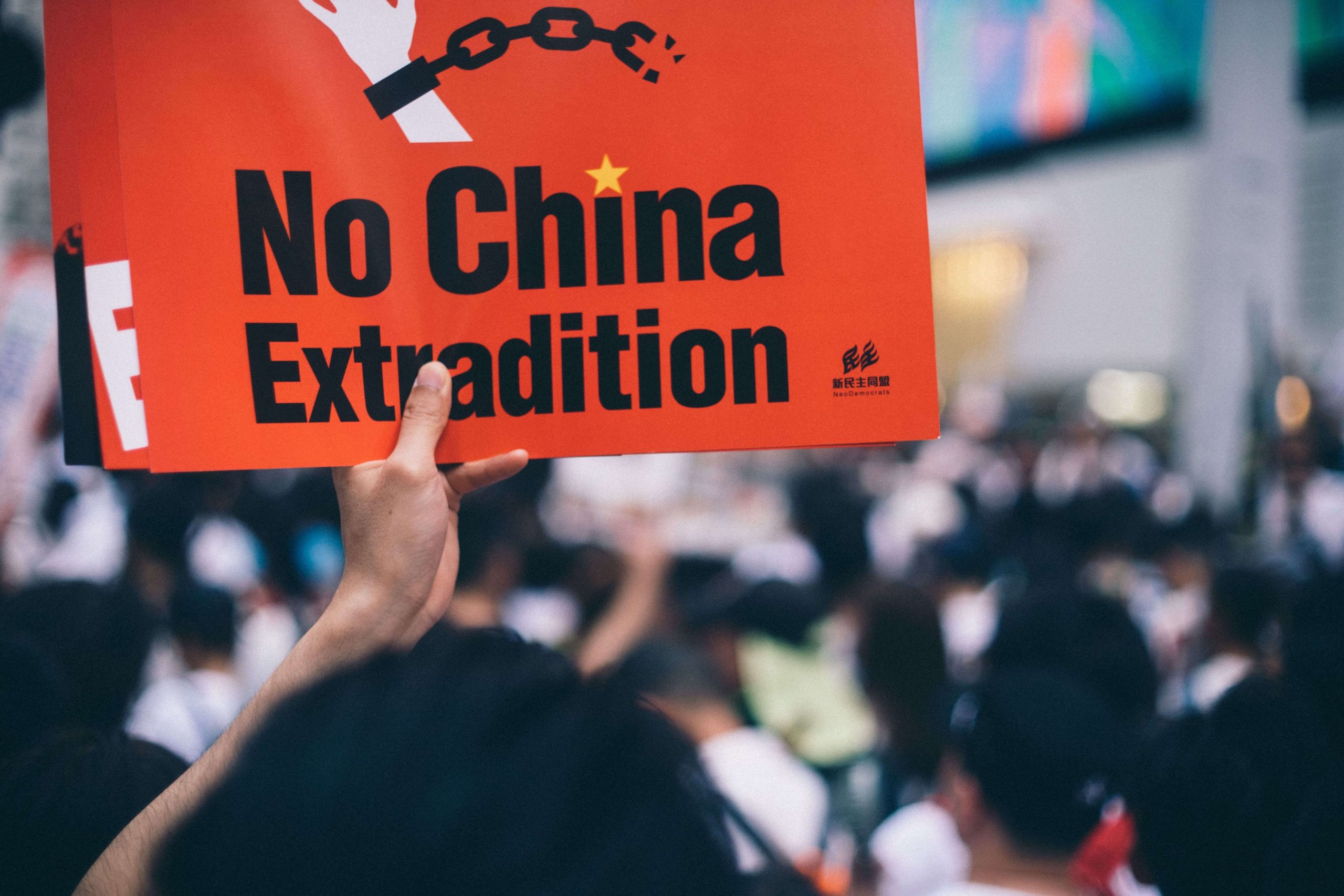
    The protest that erupted in Hong Kong since early June, triggered by stark objections to the extradition bill, has spiraled into a pro-democracy movement in the region. Beyond the political situation, the widespread, leaderless yet organised demonstrations reveal deep social and economic frustrations of the Hong Kongers. As the unrest enters its fourth month, the course of the events in the upcoming days also remains crucial for People’s Republic of China that is gearing up for its 70thanniversary on 1stOctober. With the rest of the world keenly observing Beijing’s measures, China seems to be in a conundrum, often changing its reactionary responses towards Hong Kong.

    Despite wide opposition, the pro-China Legislative Council (LegCo) in Hong Kong passed an extradition bill, usurping the democratic members presiding the bills committee.  While the current laws permit Hong Kong to extradite people upon legislature’s approval, the government introduced the bill claiming that it was unfeasible and could alert targets to flee before proper action. Eventually, following massive protests, the bill was suspended as people claimed that the proposed changes allowing Hong Kongers to be tried in mainland China will erode the region’s autonomy and freedom. Dissidents asserted that the Chinese legal system is opaque and often subordinate to the political structures, not always respectful of the rule of law. Although the citizens succeeded in removing the bill, the protests gained momentum towards larger demands of democracy.

    In 1997, when the British returned Hong Kong to China, Beijing allowed the region to retain a high degree of independence, with the mainland responsible only for defence and diplomacy. Although “one country, two systems”, set to expire in 2047, states political and economic autonomy, only 40 of the 70 LegCo members are directly elected by the people (others nominated by business houses mostly pro-China)  and the Chief Executive is appointed by a 1200 member committee, approved by China. Over the years, multiple protests for democracy have been observed in Hong Kong due the uncertainty post 2047 and increasing Chinese influence, like the Umbrella Movement in 2014. Currently, the discontent with the largely pro-China administration and its failure to represent the Hong Kongers, galvanised by the extradition bill, refuelled the pro-democracy movement in Hong Kong now primarily demanding free election of Hong Kong’s leader and LegCo, withdrawal of the suspended extradition bill and stepping down of Carrie Lam (present Chief Executive).

    The longest and largest unrest in Hong Kong since reunifying with the mainland seems to be spreading to include all sections of the population including lawmakers, civil servants, and even business houses. Mostly led by youth below 30 years, the movement has evolved to be a fight for the future of Hong Kong. Unlike older Hong Kongers, the younger generation did not grow up in a British colony and does not identify with the mainland, manifesting no pride in returning to the Chinese regime. According to Hong Kong University Public Opinion Program, the number of people expressing pride in being a Chinese citizen is at a record low, with an overwhelming majority identifying as Hong Kongers rather than Chinese. Despite being (seemingly) a leaderless rebellion, the sense of desperation and fear of Hong Kong losing its autonomy are powering the movement. While the driverless protests prevent protestors from becoming state targets, the nature of the crisis can easily turn violent and escalate since there is no set course of action, such as breaking into the legislature, shutting the city’s subways and airports, etc.  Many suggest that the protest is constantly gainingmomentumas the political frustration is also fuelled by socio-economic issues. Studies have revealed wide income disparities, especially in the last 45 years. Hong Kong has emerged as the most unequal nation amongst developed nations with the highest Gini coefficient- 0.539 (2017).  After Hong Kong was returned to China, it was hit by the Asian Financial Crisis in 1997 and SARS threat in 2003, worsening recession and unemployment, eventually leading to higher integration with the mainland in terms of trade and investment. As the GDP fell from an average rate of 5.1 percent in 1977-1997 to 2.6 percent in 1997-2017, the wealth gap widened as well. The younger generation equates the blame of poor economic opportunities, rising income inequality and reduced upward mobility to the pro China initiatives of the Hong Kong administration, which is not directly elected by the people. Aging population, low minimum wages, skyrocketing real estate, etc require immediate government policies to tackle the resulting social issues. In the absence of appropriate government action, the demand for a democratic government that acts in Hong Kong’s interests have strengthened.

    Interestingly, the official Chinese response to the Hong Kong situation has been constantly evolving over the course of the protests. Initially, the unrest was hardly covered in Chinese media and traces of Hong Kong incidents were censored from the mainland’s social media platforms. Further, the Chinese state downplayed the number of protestors, claiming that majority of the public in Hong Kong were in favour of the introduced extradition bill. As the movement gained momentum, Beijing portrayed the protestors as a radical, violent minority. Eventually, as pro-democracy demands were raised, Chinese official statements were released comparing the agitation to a “colour revolution”, a term used to highlight a direct threat to Chinese party and its authority. Since then, police force and violence have heightened, and paramilitary forces amassing in the nearest city of Shenzhen has been reported. Following this, Beijing signalled that it has a responsibility to intervene as the Hong Kong administration’s capacity to h andle the situations seems ineffective. In parallel, Hong Kong’s administration repeatedly stressed that the ongoing demonstrations are disrupting the economy, a strategy to undermine support to the protestors.  Additionally, Beijing have also claimed that foreign “black hands” are operating and funding the revolution, since pro democratic leaders were photographed with US leaders and protestors defaced the national symbol at central liaison office (Chinese representative authority in Hong Kong). Overall, this narrative seems to actively reduce positive sentiments towards Hong Kong protestors in the mainland. Moreover, Chinese origin accounts on social media have been found propagating a campaign against the dissenters. Twitter suspended over 2,00,000 accounts, and Facebook removed 7 pages, 3 groups and 5 accounts on account of depicting protestors as violent criminals or terrorist aimed at influencing public opinion around the globe. For directly connecting to younger masses, Beijing has also roped in popular figures like Jackie Chan and pop singers. However, despite these hard and soft measures, China has largely failed in curbing the ongoing crisis.

    The varying responses to contain the rebellion highlight Chinese helplessness. Beijing’s long term strategy of subtly eroding Hong Kong’s autonomy has effectively been defeated. Ruthlessly crushing pro-democracy demands, as it did in Tiananmen Square protests, will undermine China’s carefully constructed role as a responsible state actor. Moreover, unlike the Tiananmen protestors, Hong Kongers have no allegiance to the mainland and are conditioned to certain levels of freedom. Suppressing their rights and removing its current level of autonomy will work against China and could further create tensions in Taiwan, prompting the island to declare real independence. Furthermore, it will invite international repercussions as UK has already announced diplomatic retaliation if the Sino British declaration is not honoured by the Chinese and US has hinted that the special privileges it extends to Hong Kong will be reconsidered if its status is changed. Despite Hong Kong’s declining significance to Beijing, it still handles  75 percent of offshore RMB payments and 63 percent of FDI into China. However, failure to quell the protests will hamper China’s image of invincibility and imply that Beijing caved in against mob action. This will weaken national pride amongst mainlanders, from which the Communist Party derives its strength. China seems to be caught in a tough spot, between one that wants to achieve stability by instituting leadership change and upholding one country two systems approach with integrity, and one that wants to portray itself as an ambitious rising power with unquestionable strength.

    Renuka Paul is Research Analyst with The Peninsula Foundation.

    Image Credit: Photo by Joseph Chan on Unsplash.