Author: Mohan Guruswamy

  • China’s People Crisis

    China’s People Crisis

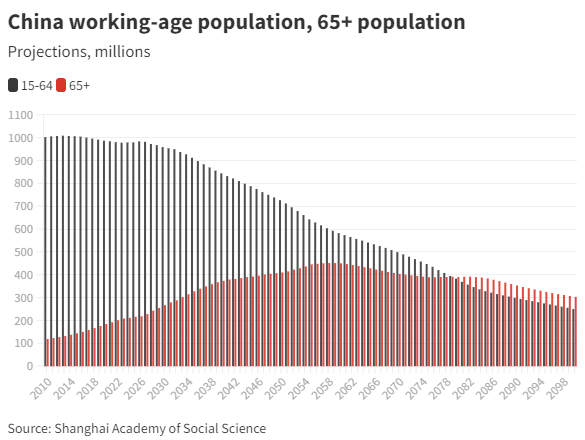
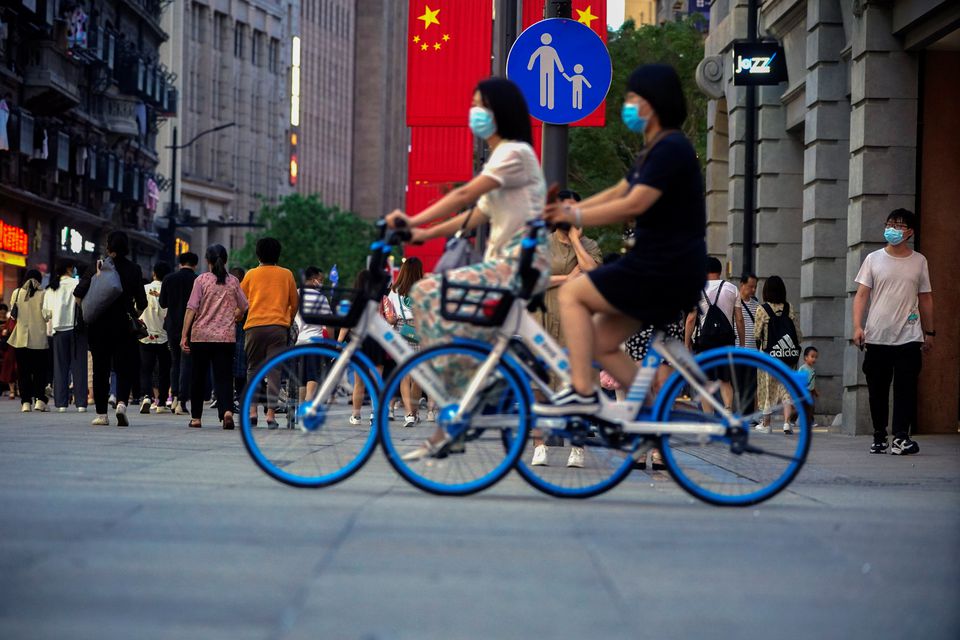
    For the first time in sixty years, China’s population has fallen. The population in 2022 – 1.4118 billion – fell by 850,000 from 2021. Its national birth rate has fallen to 6.77 births per thousand people.
    Deaths have also outnumbered births for the first time last year in China. It logged its highest death rate since 1976 – 7.37 deaths per 1,000 people, up from 7.18 the previous year.
    China has now hit an impenetrable economic wall. The People’s Republic has a people crisis – it has now stopped growing and is getting old. The reason is paradoxical. China’s one-child policy worked exceedingly well for it in the past. By preventing almost 400 million births since 1979, it gave the Chinese greater prosperity. It is estimated that between 1980 and 2010, the effect of a favourable population age structure accounted for between 15% and 25% of per capita GDP growth.
    That bonus with the demographic dividend has now ended. China’s population was expected to stabilise in 2030 at 1.391 billion, moving at a slow crawl from 1.330 billion in 2010. But it has hit that spot seven years ahead. In 2050, China is projected to decline to 1.203 billion.
    The flattening population and its somewhat unfavourable demographic profile have been causing concern in China for some years now. In 2013, the Communist Party of China’s Central Committee allowed couples to have a second child if one parent was an only child. But Chinese families have gotten used to one child existence. The demographic wall is not going to be crossed, and China’s workforce is not growing anymore.
    Whereas China added as many as 90 million individuals to its workforce from 2005 to 2015, in the decade from 2015, it will, at present trends, add only 5 million. In 2010, there were 116 million people aged 20 to 24. By 2020, the number will fall by 20% to 94 million. The size of the young population aged 20-24 will only be 67 million by 2030, less than 60% of the figure in 2010.
    One immediate consequence of this slowdown is that by 2030 the cohort aged above 60 years will increase from the present 180 million to 360 million. The other immediate economic consequence is that its savings rate will decline precipitously.
    As a nation climbs the economic ladder, people inevitably live longer. But old age is also more expensive. For instance, in the US, the old actually consume more than the rest due to medical expenses. Either they support themselves or their families have to support them. Apart from low consumption in the first few years of life, consumption is reasonably constant over the life cycle. But while income is earned and output produced, in the working life between 20 and 65 years, it is not so before and after. This ratio of working-age and non-working-age cohorts is called the dependency ratio.
    As Indian, African and (surprise, surprise) American dependency ratios turn increasingly favourable in the coming decades, China’s will go downhill and it will join Europe and Japan as the world’s aged societies.
    In comparison, in 2021, the United States recorded 11.06 births per 1,000 people, and in the United Kingdom, 10.08 births. The birth rate for the same year in India, which is poised to overtake China as the world’s most populous country, was 16.42.
    China’s total fertility rate – the average number of children born to each woman – is among the lowest in the world, at only 1.4. In contrast, the developed world average is 1.7. China’s replacement rate – the rate at which the number of births and deaths are balanced – is 2.1, as against India’s 2.5. At purchasing power parity, China’s per capita income is just a fifth or less of other large economies. At the same time, China’s fertility level is far below that of the US, UK or France (all around 2.0), and is on par with those of Russia, Japan, Germany and Italy – all countries with sharply declining populations. This is a big reason why Germany so readily accepted to take about a million refugees from Syria and Libya.
    Over the next 20 years, China’s ratio of workers to retirees will drop precipitously from roughly 5:1 today to just 2:1. Such a big change implies that the tax burden for each working-age person must rise by more than 150%. This assumes that the government will maintain its current level of tax revenue. In addition, mounting expenditure on pensions and healthcare will put China in a difficult position. If the government demands that taxpayers pay more, the public will demand better scrutiny of how their dollars are collected and spent. This could very well open the floodgates of challenges to the Communist Party.
    Can China succeed to get out of the low growth rate cycle? The conditions now are against it. The cost of rearing a child in China has increased hugely. The state may require more children, but most families will find the costs unaffordable. This is mainly because China is now a predominantly middle-class nation.
    How will this policy reversal pan out for China? Demographers give three scenarios. The highest outcome will mean 1.43 billion in 2050, while the more plausible outcome will be between 1.35- 1.37 billion. Either way, it is not going to alter the future much for China. It will become old before it becomes rich.
    Feature Image Credit: Reuters
    Graph Credit: World Economic Forum
  • BRICS Real Value: One Step Towards New World Order

    BRICS Real Value: One Step Towards New World Order

    While “BRICS” has been a frequently occurring acronym in our discourse in recent years, not many seem to have grasped the reality of Brics and its actual utility.

    The post-Cold War era has seen the economic and political rise of a host of nations — Brazil, China and India being foremost among them. Since 2000 and the advent of Vladimir Putin, Russia has with some help from soaring oil prices made impressive economic gains. The new South Africa, based equally on the industrial inheritance of the robust but unequal and exploitative apartheid regime and the bounty of nature, now finds itself as an advancing economic power. Unlike Nigeria, which has frittered its oil wealth and has been looted by its native kleptocracy, South Africa has been a relative symbol of responsible government and probity in public life. Each one of these nations is now a major economic player and some already have bigger GDPs than many countries in the Group of Seven. Together, in the next two decades, Brics is likely to outstrip the G-7.

    [powerkit_button size=”lg” style=”info” block=”true” url=”https://www.deccanchronicle.com/opinion/columnists/270722/mohan-guruswamy-brics-real-value-one-step-towards-new-world-orde.html” target=”_blank” nofollow=”false”]
    Read More
    [/powerkit_button]

  • India’s Indian Ocean and the Imperative for a Strong Indian Navy

    India’s Indian Ocean and the Imperative for a Strong Indian Navy

    “A good navy is not a provocation to war. It is the surest guarantee of peace!”
    The Indian Ocean has been at the centre of world history ever since we know it. Man originated in Africa, probably somewhere in the Olduvai Gorge in present-day Tanzania – where Homo Erectus lived 1.2 million years ago and where the first traces of Homo Sapiens, our more recent ancestors having evolved only about 200,000 years ago. First phonetic languages evolved around 100, 000 years ago. The migration of mankind out of Africa began almost 60000 years ago. But we don’t call the Indian Ocean the African Ocean because the first recorded activity over it began only about 3000 years ago.
    Three great early recorded activities of this period come to mind. The first is the Indus Valley Civilization. It was a Bronze Age civilization (3300–1300 BCE; mature period 2600–1900 BCE) in the northwestern region of the Indian subcontinent. Along with Ancient Egypt and Mesopotamia, it was one of three early civilizations of the Old World, and of the three the most widespread.
    The Indus civilization’s economy appears to have depended significantly on trade, which was facilitated by major advances in transport technology. It may have been the first civilization to use wheeled transport. These advances may have included bullock carts that are identical to those seen throughout South Asia today, as well as boats. Most of these boats were probably small, flat-bottomed craft, perhaps driven by sail, similar to those one can see on the Indus River today; however, there is secondary evidence of sea-going craft.
    Archaeologists have discovered a massive, dredged canal and what they regard as a docking facility at the coastal city of Lothal now in Gujarat. Judging from the dispersal of Indus civilization artifacts, the trade networks, economically, integrated a huge area, including portions of Afghanistan, the coastal regions of Persia, northern and western India, and Mesopotamia. There is some evidence that trade contacts extended to Crete and possibly to Egypt.
    There was an extensive maritime trade network operating between the Harappan and Mesopotamian civilizations as early as the middle Harappan Phase, with much commerce being handled by “middlemen merchants from Dilmun” (modern Bahrain and Failaka located in the Persian Gulf). Such long-distance sea trade became feasible with the innovative development of plank-built watercraft, equipped with a single central mast supporting a sail of woven rushes or cloth.
    The second great economic activity was Slavery. Slavery can be traced back to the earliest records, such as the Code of Hammurabi (c. 1760 BC), which refers to it as an established institution. Slavery is rare among hunter-gatherer populations, as it is developed as a system of social stratification. Slavery typically also requires a shortage of labour and a surplus of land to be viable. Bits and pieces from history indicate that Arabs enslaved over 150 million African people and at least 50 million from other parts of the world.  Later they also converted Africans into Islam, causing a complete social and financial collapse of the entire African continent apart from wealth attributed to a few regional African kings who became wealthy in the trade and encouraged it.
    The third great economic activity was seafaring evidenced by migration. The island of Madagascar, the largest in the Indian Ocean, lies some 250 miles (400 km) from Africa and 4000 miles (6400 km) from Indonesia. New findings, published in the American Journal of Human Genetics, show that the human inhabitants of Madagascar are unique – amazingly, half of their genetic lineages derive from settlers from the region of Borneo, with the other half from East Africa. It is believed that the migration from the Sunda Islands began around 200 BC.
    Linguists have established that the origins of the language spoken in Madagascar, Malagasy, suggested Indonesian connections, because its closest relative is the Maanyan language, spoken in southern Borneo. The Gods were also kind and gave the IOR the weather conditions that helped in evolving seaborne trade and intercourse. The sea surface current and prevailing wind structure in and over the Indian Ocean favoured seafarers in their endeavour and sailings in the Indian Ocean from the southern tip of Africa (Cape of Good Hope) during the month of May. After the entry into the Indian Ocean, the seafarers continued to sail in the northerly direction along the coastline of Africa (aided by the strong Somali Current and the East Arabian Current) towards the Arabian Sea.
    The physical environmental conditions over the sea and the external prevailing weather helped the seafarers reach places up to the west coast of India. As this sea surface current extend towards the east coast of India, the sailors were greatly assisted by the surface current as they sailed along. During November, when the East Indian Winter wind reverses in its direction and begins to blow from the northeast, the sailors prepare for their return journey. The winds that generate the waves contribute to the reduction in the otherwise required travel time for the sailings between any given two points of departure and arrival. The natural and external forces help the sailors make their journey/expedition more economical and energy-efficient.
    Clearly, the region was a hub of all kinds of economic activity. Then came the Petroleum Age. And things changed as never before. The Spice trade, the Silk trade, and the China trade all paled into insignificance. The use of Coal as a ship fuel enlarged distances and volumes of cargo. Oil made even longer journeys and greater volumes possible.
    Petroleum is the lifeblood of modern society. It’s a relatively new activity, but its advent has transformed our world as few things have. Petroleum, in one form or another, has been used since ancient times. According to Herodotus more than 4000 years ago, asphalt was used in the construction of the walls and towers of Babylon; there were oil pits near Babylon, and a pitch spring on Zacynthus.
    Great quantities of it were found on the banks of the river Issus, one of the tributaries of the Euphrates. Ancient Persian tablets indicate the medicinal and lighting uses of petroleum in the upper levels of their society. By 347 AD, oil was produced from bamboo-drilled wells in China. Early British explorers to Myanmar documented a flourishing oil extraction industry based in Yenangyaung, that in 1795 had hundreds of hand-dug wells under production.
    Oil is now the single most important driver of world economics, politics and technology.  The rise in importance was due to the invention of the internal combustion engine, the rise in commercial aviation, and the importance of petroleum to industrial organic chemistry, particularly the synthesis of plastics, fertilizers, solvents, adhesives and pesticides. Today, oil contributes 3% of the global GDP.
    In 1847, the process to distill kerosene from petroleum was invented by James Young. He noticed natural petroleum seepage in the Riddings colliery at Alfreton, Derbyshire from which he distilled a light thin oil suitable for use as lamp oil, at the same time obtaining a thicker oil suitable for lubricating machinery. In 1848 Young set up a small business refining the crude oil.
    Today the world’s biggest stand-alone refinery is the Reliance refinery at Jamnagar with a refining capacity of about 1.5 million barrels a day. The Essar refinery at Jamnagar refines a further 0.5 million barrels a day. Together they make Jamnagar one of the world’s great refining centers. India’s number one export item is Petroleum products, mostly Petrol and Diesel. India now exports the equivalent of about 615,000 barrels a day. In 2020, petroleum exports accounted for $25.3 billion of our total exports of $291.8 billion in the same year.
    India imported $77 billion worth of oil in the year 2020-21 and more than half of this comes from countries in the IOR. Iraq’s share is 22.4%, Saudi Arabia’s share is 18.8%, UAE’s share is 10.8%, and Kuwait’s 5%. The IOR is India’s lifeline and lifeblood. If the line is blocked we will suffer hugely, if the blood gets anaemic we will suffer hugely. India just cannot afford anything to go wrong here.
    The sea lanes in the Indian Ocean are considered among the most strategically important in the world—according to the Journal of the Indian Ocean Region, more than 80 percent of the world’s seaborne trade in oil transits through the Indian Ocean choke points, with 40 percent passing through the Strait of Hormuz, 35 percent through the Strait of Malacca and 8 percent through the Bab el-Mandab Strait.
    But it’s not just about sea-lanes and trade. More than half the world’s armed conflicts are presently located in the Indian Ocean region, while the waters are also home to continually evolving strategic developments including the competing rises of China and India, the potential nuclear confrontation between India and Pakistan, the US interventions in Iraq and Afghanistan, Islamist terrorism, incidents of piracy in and around the Horn of Africa, and management of diminishing fishery resources.
    As a result of all this, almost all the world’s major powers have deployed substantial military forces in the Indian Ocean region. For example, in addition to maintaining expeditionary forces in Iraq, the US 5th Fleet is headquartered in Bahrain, and uses the island of Diego Garcia as a major air-naval base and logistics hub for its Indian Ocean operations. In addition, the United States has deployed several major naval task forces there, including Combined Task Force 152 (currently operated by the Kuwait Navy), which is focusing on illicit non-state actors in the Arabian Gulf, and Combined Task Force 150 (currently commanded by the Pakistan Navy), which is tasked with Maritime Security Operations (MSO) outside the Arabian Gulf with an Area of Responsibility (AOR) covering the Red Sea, Gulf of Aden, Indian Ocean and the Gulf of Oman. France, meanwhile, is perhaps the last of the major European powers to maintain a significant presence in the north and southwest Indian Ocean quadrants, with naval bases in Djibouti, Reunion, and Abu Dhabi.
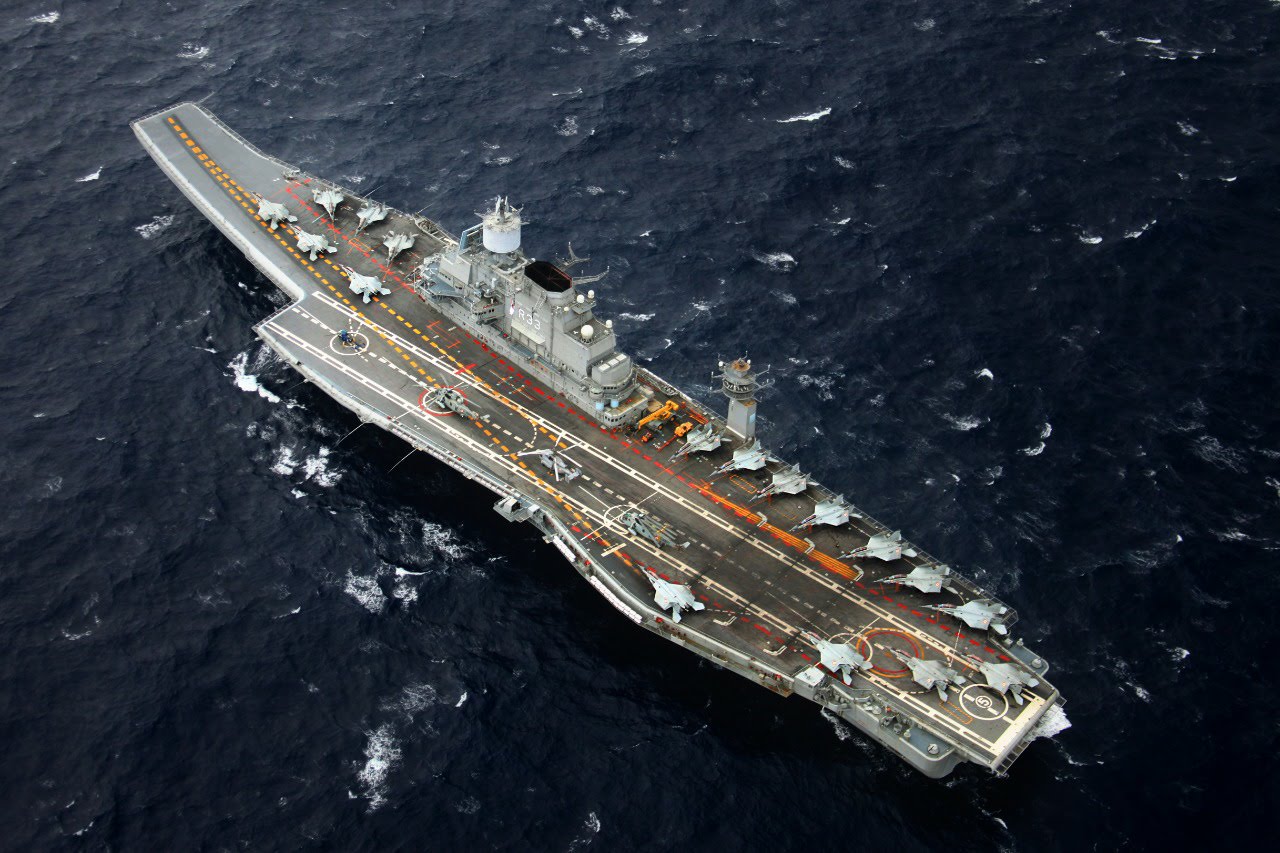
    And, of course, China and India both also have genuine aspirations of developing blue water naval capabilities through the development and acquisition of aircraft carriers and an aggressive modernization and expansion programme.
    China’s aggressive soft power diplomacy has widely been seen as arguably the most important element in shaping the Indian Ocean strategic environment, transforming the entire region’s dynamics. By providing large loans on generous repayment terms, investing in major infrastructure projects such as the building of roads, dams, ports, power plants, and railways, and offering military assistance and political support in the UN Security Council through its veto powers, China has secured considerable goodwill and influence among countries in the Indian Ocean region.
    And the list of countries that are coming within China’s strategic orbit appears to be growing. Sri Lanka, which has seen China replace Japan as its largest donor, is a case in point—China was no doubt instrumental in ensuring that Sri Lanka was granted dialogue partner status in the Shanghai Cooperation Organization (SCO).
    To the west, Kenya offers another example of how China has been bolstering its influence in the Indian Ocean. The shift was underscored in a leaked US diplomatic cable from February 2010 that was recently published by WikiLeaks. In it, US Ambassador to Kenya Michael Ranneberger highlighted the decline of US influence in East Africa’s economic hub, saying: ‘We expect China’s engagement in Kenya to continue growing given Kenya’s strategic location…If oil or gas is found in Kenya, this engagement will likely grow even faster. Kenya’s leadership may be tempted to move close to China in an effort to shield itself from Western, and principally US pressure to reform.’
    The rise of China as the world’s greatest exporter, its largest manufacturing nation and its great economic appetite poses a new set of challenges. At a meeting of South-East Asian nations in 2010, China’s foreign minister Yang Jiechi, facing a barrage of complaints about his country’s behaviour in the region, blurted out the sort of thing polite leaders usually prefer to leave unsaid. “China is a big country,” he pointed out, “and other countries are small countries and that is just a fact.”
    Indeed it is, and China is big not merely in terms of territory and population, but also in military might. Its Communist Party is presiding over the world’s largest military build-up. And that is just a fact, too—one that the rest of the world has to come to terms with.
    China’s defence budget has almost certainly experienced double-digit growth for two decades. According to SIPRI, a research institute, annual defence spending rose from over $30 billion in 2000, $120 billion in 2010 to almost $229.4 billion in 2021. SIPRI usually adds about 50% to the official figure that China gives for its defence spending, because even basic military items such as research and development are kept off budget. Including those items would imply total military spending in 2021, based on the latest announcement from Beijing, would be around $287.8 billion.
    This is not a sum India can match and the last thing we need to get caught in is a numbers game. A one-party dictatorship will always be able to outspend us, even if our GDPs get closer.
    But history tells us again and again that victory is not assured by superiority in numbers and even technology. If that were to be so, Alexander should have been defeated at Gaugamela, Babur at Panipat, Wellington at Waterloo, Russia at Leningrad, Britain in the Falklands, and above all Vietnam who defeated three of the world’s leading powers – France, the USA and China – in succession. I don’t have to tell you that victory is more a result of strategy and tactics. Numbers do matter, but numbers are not all. Technology does matter, but technology alone cannot assure you of victory. It’s always mind over matter. You know these things better than most of us. You also know what to do. As the old saying goes: “When the going gets tough, the tough get going!”
    That said, the threat from China should not be exaggerated. There are three limiting factors. First, unlike the former Soviet Union, China has a vital national interest in the stability of the global economic system. Its military leaders constantly stress that the development of what is still only a middle-income country with a lot of very poor people takes precedence over military ambition. The increase in its military spending reflects the growth of the economy, rather than an expanding share of national income. For many years China has steadily spent the same proportion of GDP on defence (a bit over 1.7%, whereas America spend about 3.7% in the year 2020-21).
    The real test of China’s willingness to keep military spending constant will come when China’s headlong economic growth starts to slow further. But in the past form, China’s leaders will continue to worry more about internal threats to their control than external ones. In 2020, the Chinese spending on internal security was $212 billion. With a rapidly ageing population, it is also a good bet that meeting the demand for better health care will become a higher priority than maintaining military spending.
    Like all the other great powers, China faces a choice of guns and butter or more appropriately walking sticks. But till then it is: Nervi belli pecunia infinita or unlimited money is the muscle of war.
    India on the other hand will keep growing long after China has stopped growing. Its youthful population and present growth trends indicate the accumulation of the world’s largest middle class in India. India’s growth is projected to continue well past 2050. In fact so big will this become, that India during this period will increasingly power world economic growth, and not China. In 2050, India is projected to have a population of 1.64 billion and of these 1.3 billion will belong to the middle and upper classes. The lower classes will be constant at around 300 million, as it is now.
    India already has the world’s third-largest GDP. Many economists prophesize that in 2050 it will be India that will be the world’s biggest economy, not China. In per capita terms, we might still be poorer, but in over GDP terms, we will be bigger.
    According to a study by IHS Markit, a subsidiary of S&P Global, India will be the world’s third-largest economy by 2030. Indian GDP in 2030 is projected to be $8.4 trillion. China, in second place, will have a GDP of $ 33.7 trillion and the US $ 30.4 trillion. As we say in India, aap key muh mein ghee aur shakhar.  Both incidentally now deemed bad for health.
    Now comes the dilemma for India. Robert Kaplan writes: “As the United States and China become great power rivals, the direction in which India tilts could determine the course of geo-politics in Eurasia in the 21st century. India, in other words, looms at the ultimate pivot state.” At another time Mahan noted that India, located in the centre of the Indian Ocean littoral, is critical for the seaward penetration of both the Middle-east and China.
    Now if one were an Indian planner, he or she would be looking at the China Pakistan axis with askance. India has had conflicts and still perceives threats from both, jointly and severally. The Tibetan desert, once intended to be India’s buffer against the north now has become China’s buffer against India. The planner will not be looking at all if he or she were not looking at the Indian Ocean as a theatre. After all, it is also China’s lifeline and its lifeblood flows here.
    Now if one were a Chinese planner, he or she would be looking with concern over India’s growth and increasing ability to project power in the IOR. The planner will also note what experts are saying about India’s growth trajectory. That it will be growing long after China gets walking sticks. That it is the ultimate pivot state in the grand struggle for primacy between the West led by the USA and Japan, and China.
    What will this planner be thinking particularly given the huge economic and military asymmetry between China and India now? Tacitus tells it most pithily. That peace can come through strength or Si vis pacem para bellum. While China has ratcheted up its show of assertiveness in recent years, India has been quietly preparing for a parity to prevent war. Often parity does not have to be equality in numbers. The fear of pain disproportionate to the possible gains, and the ability of the smaller in numbers side to do so in itself confer parity.
    There is a certain equilibrium in Sino-Indian affairs that make recourse to force extremely improbable. Both modern states are inheritors of age-old traditions and the wisdom of the ages. Both now read their semaphores well and know how much of the sword must be unsheathed to send a message. This ability will ensure the swords remain recessed and for the plowshares to be out at work.
    Finally, I would be remiss if I did not say something about the centrality of the Indian Navy to our future. Nothing says it better than what Theodore Roosevelt said a century ago: “A good Navy is not a provocation to war. It is the surest guarantee of peace!”
    Featured Image Credit: Indian Navy
  • Religion and Governance: An Important Lesson from India’s History

    Religion and Governance: An Important Lesson from India’s History

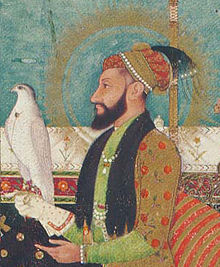
    The fortunes of India had irrevocably changed on May 29, 1658, when two Indian armies clashed on the dusty fields of Samugarh, near Agra. India’s history changed forever. Aurangzeb’s victory over his brother Dara Shikoh marked the beginning of Islamic bigotry in India that not only alienated the Hindus but also the much more moderate Sufis and Shias as well.

    Aurangzeb’s narrow Sunni beliefs were to make India the hotbed of Muslim fundamentalists, long before the Wahabis of Saudi Arabia sponsored the fanatics of the Taliban and the Islamic State. It was not only a battle for the Mughal throne but also a battle for the very soul of India

    Aurangzeb’s victory here and other successful campaigns resulted in the creation of the greatest and biggest imperial India till then. But the seeds of India’s collapse were sowed.

    In 1620 India had the world’s greatest national income, over a third of it, and was its greatest military power as well. It was the envy of Europe. The European traders came to seek Indian goods for their markets. But no sooner was the iron hand of Aurangzeb no more that his imperial India began to disintegrate. The iron hand that ruled by dividing rather than uniting and that sought to impose a hierarchy by theological preferences gave rise to much discordance. But for Aurangzeb, Shivaji Bhonsle might have remained a minor western Indian feudatory? There are important lessons to be learned from all this for those who rule and seek to rule India.

    The weakening central rule and profit-seeking peripheral kingdoms allowed European trading posts to be established. Weakening regimes led to the trading posts raising armed guards. Soon the overseas trading companies began warring each other and with so many minor states now free to make their destinies joining hands with one or the other it was the Europeans who got gradually got established. The Anglo-French wars of the Carnatic were fought by Indian armies beefed up by trading company levies. The East India Company of the British ultimately prevailed and the French, Dutch, Portuguese and Danish got reduced to pockets.

    A hundred years later, in 1757, the era of total foreign supremacy over India began when the East India Company’s troops drawn from South India and officered by English company executives defeated the army of Nawab Siraj-ud-Daulah at Plassey (Palashi) in Bengal, with the now usual mix of superior drilling, resolute leadership and a bit of treachery. At a crucial time, Mir Jaffar and his troops crossed over. India lay prostrate before Robert Clive.

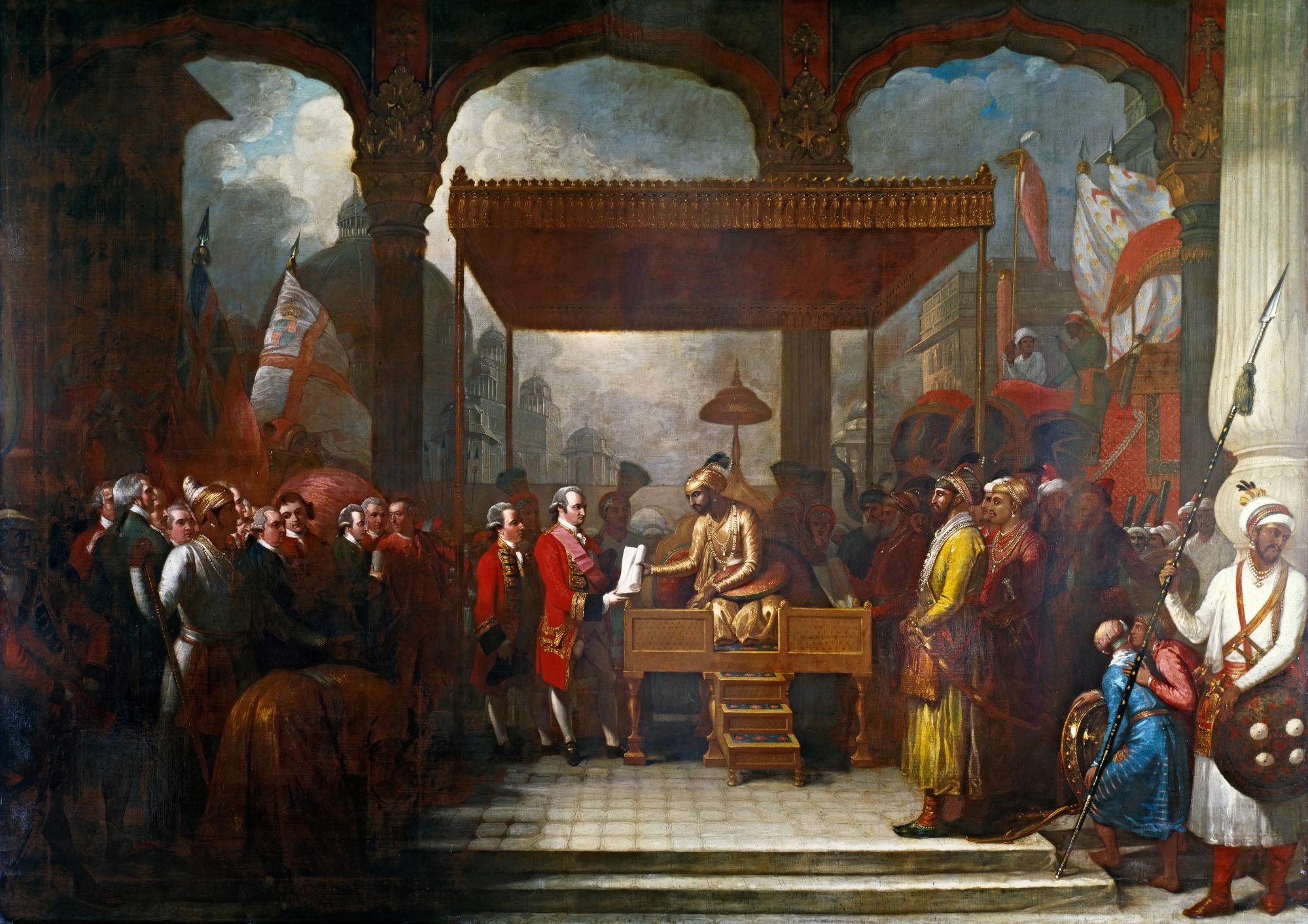
    Within a decade, on August 12, 1765, Clive obtained a firman from the then Mughal Emperor, Shah Alam, granting the Diwani of Bengal, Bihar, and Odisha to the Company. A Muslim contemporary indignantly exclaims that so great a “transaction was done and finished in less time than would have been taken up in the sale of a jackass”. By this deed the Company became the real sovereign ruler of 30 million people, yielding a revenue of four millions sterling. The John Company grew from strength to strength, and by 1857 the Grand Mughal was reduced to his fort conducting poetry soirees. It was the golden age of Urdu poetry.

    The events of 1857 led to the formal establishment of India as a directly ruled colony of the British empire. It was yet another epochal event. India changed, for the better and for the worse. Once again India absorbed from outsiders, as it absorbed from the Dravidians, Aryans, Greeks, Persians, Kushans, Afghans, Uzbeks, and all those who came to seek their fortunes here. The British were the only ones who came to take away its vast wealth in a systematic manner. The wealth taken from India to a great extent financed the Industrial Revolution in England.

    From then to another epochal year ending with seven took ninety years. In 1947, India became independent. Its GDP is now the world’s third-biggest. In a few decades, it could conceivably become its biggest. But have we learned any lessons from history?

    Given its abject failures on the economic front, the BJP/RSS regime in New Delhi is now pushing India towards a Hindutva nationhood, by seeking to victimise a minority for the perceived wrongs and slights of the past. An intolerant religion can never be the basis of nationhood and national unity in India. The legacy of Aurangzeb tells us that. Aurangzeb had created the greatest empire that India had seen since Ashoka the Great. But it didn’t take very long for it to dissipate. In the hundred years that followed, a foreign mercantile company gained control over all of India.

    The BJP under Narendra Modi might keep gaining electoral dominion over all or most of India. But has the BJP learned any lessons from history? Does the PM  want to become the Hindu Aurangzeb? What is worrisome is that we know well that history is not Narendra Modi’s forte.


    This article was published earlier in Deccan Chronicle. The opinions expressed in the article are the author’s personal views and do not reflect TPF’s institutional position or analysis.

    Featured Image: Shah Alam conveying the grant of the Diwani to Lord Clive. en.wikipedia.org

  • Bengal’s thinking is clear: will rest of India follow?

    Bengal’s thinking is clear: will rest of India follow?

    The second wave of Covid-19 began on February 10 when India reported 11,000 new cases. In the next 50 days, the daily average was 22,000 cases. In the following 10 days the daily average touched 89,800. We are now adding over 400,000 a day. India has never been engulfed by a crisis of this order.

    We are woefully short of hospital beds, oxygen, Remdesivir and Tocli-zumab, vaccines, ambulances and sadly even space in our crematoria. The growth and spread are expected to scale to almost a million a day. In two months, India has become the world’s basket case. Yet, on January 28 this year, speaking to the World Economic Forum in Davos, Prime Minister Narendra Modi showed a blissful and disturbing ignorance of the perfect storm looming. The committee of scientists monitoring the virus warned the PMO of the gathering storm. He was not interested. He was crowing about his perceived “achievement” of beating back the much-mutated “Chinese virus”. He was so wrong, and the country is paying a huge price. There is no Modi image of competence left.

     Prime Minister Modi’s inability to defend India against the second Covid-19 wave, and his inability to cajole the Chinese from withdrawing from areas they occupied in Ladakh now make him an easy target.

    The elections to the four states and Puducherry, which he was so focused on, have been his undoing. He began campaigning on February 5 and 7 in Assam and West Bengal. After that he addressed 20 more rallies in West Bengal and six more in Assam. He also addressed 10 rallies in Tamil Nadu, three in Kerala and one in Puducherry, in all around 40 giant rallies criss-crossing across in IAF Boeings. I wouldn’t even hazard the true cost to the exchequer, but I have heard it said the PM himself is liable to a charge of Rs 6 per air km. Other costs are borne by the PMO.  But the cost is not important. The time spent on huckstering is important. He lost almost a month campaigning, instead of managing the engulfing crisis. I always had a low opinion of his intellect, but even he could have surmised the risks posed to the nation by the renewed pandemic. Clearly, he factored winning West Bengal was more important and worth the cost. Mr Modi himself cheerfully paraphrased what Gopal Krishna Gokhale said almost 100 years ago: “What Bengal thinks today, India thinks tomorrow”!

    West Bengal has unambiguously expressed what it is thinking. It has rejected Mr Modi and his message and campaign-style, lock, stock and barrel. A subservient Election Commission helpfully broke up West Bengal’s polls into eight phases starting March 27 and closing April 29. During this period the daily Covid-19 cases rose in West Bengal from 812 to 17,403. Breaking it into eight phases didn’t help the BJP either. It lost in every phase and got double digits only in four. West Bengal has a sizable Muslim electorate and Mr Modi didn’t mince words in targeting them by making it appear they were Mamata Banerjee’s personal votebank. He didn’t bother to even conceal what he thought of them. His electoral style touched a new low, even by his standards and most certainly by the standards expected of a PM, when he jibed her by catcalling “Didi-O-Didi”. Urban Bengal responded to this by defeating the BJP soundly in all urban constituencies. There is a message here. All over the country the BJP and RSS have strong urban bases, but urban and urbane Bengal administered a resounding slap to gutter politics. With no record to show, Mr Modi’s politics are nothing but that now.

    There was no surprise in Assam. The BJP was returned by almost the same margin as in 2016, getting a majority with the AGP’s nine seats. The Congress lacked a visible local leadership who could match wits with the BJP’s Hemanta Biswa Sarma. Tamil Nadu was as expected. The two so-called national parties were clinging to crumbs thrown by the two so-called Dravidian parties. In Kerala, Pinrayi Vijayan showed why he’s India’s topmost and only surviving commissar. The DMK’s Stalin made no bones about what he thinks of Mr Modi’s Hindu and Hindi-centric politics. The Modi government used every means, including ED raids, to slow down Stalin. The ED even raided Stalin’s daughter.

    So where does our politics go from here? One clear conclusion is that both the BJP and Congress were dealt severe blows. It’s interesting the BJP’s campaigns were entirely shouldered by Narendra Modi and Amit Shah. None of the other top BJP leaders even bothered to show up anywhere. What shouldn’t be missed is that the Raksha Mantri, a former BJP president, was the first from the party to congratulate Mamata Banerjee. In Assam, Mr Sarma’s supporters have gone public crediting the victory to their leader. Mr Sarma has already fired a shot across Sarbananda Sonowal’s bow, saying he was no longer interested in being just a minister in someone’s Cabinet. The numbers might work for him, as he needs just a dozen MLAs to cross over and give Assam a new government. Mr Sarma was a Congress satrap till Rahul Gandhi insulted him by playing with his dog rather than listening to him. Rahul will be all ears now.

    Mamata Banerjee’s stunning victory puts her squarely on the centre stage of Opposition politics. Joining her there will be Lalu Prasad Yadav, released on bail by the Supreme Court despite the government’s strenuous objections. Tejashwi Yadav has shown he’s capable of leading a party when the RJD came so close to upstaging the BJP-JDU alliance in Bihar. Rajasthan’s Ashok Gehlot and Punjab’s Amarinder Singh have emerged as fairly independent Congress satraps. Uddhav Thackeray has shrugged off the Shiv Sena’s pariah status by providing Maharashtra with good leadership and a penchant for making politics the art of the possible. In Telangana, KCR has put the BJP in its place by a resounding win in Nagarjunasagar after its surprise showing in the Dubbaka and GHMC polls. YSRC scored a resounding win in Tirupati with the BJP candidate, a retired chief secretary, losing her deposit. The anti-BJP lineup now has seven chief ministers, excluding Naveen Patnaik. Seven CMs will mean the election and propaganda machines can be kept well-greased and the powder kegs dry and replenished. Prime Minister Modi’s inability to defend India against the second Covid-19 wave, and his inability to cajole the Chinese from withdrawing from areas they occupied in Ladakh now make him an easy target. The Gujarat model has been long exposed as bogus. There is light seen at the end of the tunnel.

    Image Credit: Patrika.com
  • India, China, and Arunachal Pradesh

    India, China, and Arunachal Pradesh

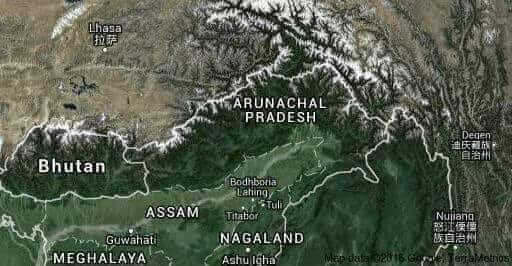
    The satellite picture below brilliantly depicts the geographical separation of Arunachal Pradesh (called Lower Tibet by the Chinese) and Tibet. The McMahon Line more or less runs along the crest line of the Himalayas.

    The Chinese have never been quite explicit on how much of Arunachal they seek.  I once saw an official map displayed in a travel agents office in Lhasa that showed only the Tawang tract as Chinese territory. In other maps they have their border running along the foothills, which means all of Arunachal.

    The Chinese have based their specific claim on the territory on the premise that Tawang was administered from Lhasa, and the contiguous areas owed allegiance to the Dalai Lama, the spiritual and temporal ruler of Tibet. Then the Chinese must also consider this. Sikkim till into the 19th century a vassal of Tibet and Darjeeling was forcibly taken from it by the British! By extending this logic could they realistically stake a claim for Sikkim and Darjeeling? Of course not. It would be preposterous. History has moved on. The times have changed. For the 21st century to be stable 20th century borders must be stable, whatever be our yearnings.

    At the crux of this issue is the larger question of the national identities of the two nations and when and how they evolved. The Imperial India of the Mughals spanned from Afghanistan to Bengal but did not go very much below the Godavari in the South. The Imperial India of the British incorporated all of today’s India, Pakistan and Bangladesh, but had no Afghanistan, not for want of trying. It was the British who for the first time brought Assam into India in 1826 when they defeated Burma and formalized the annexation with the treaty of Yandabo.

    It was only in 1886 that the British first forayed out of the Brahmaputra valley when they sent out a punitive expedition into the Lohit valley in pursuit of marauding tribesmen who began raiding the new tea gardens. Apparently the area was neither under Chinese or Tibetan control for there were no protests either from the Dalai Lama or the Chinese Amban in Lhasa. Soon the British stayed put.

    Tibet remained in self imposed isolation and the race to be first into Lhasa became the greatest challenge for explorers and adventurers in the second half of the 19th century. Not the least among these were the spies of the Survey of India, the legendary pundits. The most renowned of these was the Sarat Chandra Das whose books on Tibet are still avidly read today. As the adventurers, often military officers masquerading as explorers began visiting Tibet the British in India began worrying. Reports that the most well-known of Czarist Russia’s military explorers, Col. Grombchevsky was sighted in Tibet had Lord Curzon, the Governor General of India most worried.

    In 1903 Curzon decided to send a military expedition into Tibet led by Grombchevsky’s old antagonist, Col. Francis Younghusband. A brigade strong mixed force of Gurkhas and Tommies went over the Nathu La into the Chumbi valley and advanced unhindered till Shigatse. A Tibetan military force met them there but offered what can only be described as passive resistance. Not a shot was fired back as the British Indian troops rained bullets on them. It was a forerunner to Jallianwalla Bagh. From Shigatse Younghusband made a leisurely march into Lhasa. The British got the Tibetans to agree to end their isolation and having extracted trade concessions withdrew in 1904, the way they came.

    In 1907 Britain and Russia formally agreed that it was in their interests to leave Tibet “in that state of isolation from which, till recently, she has shown no intention to depart.” It may be of interest to the reader to know that the Great Game nevertheless continued. In 1907 Col. Mannerheim then of the Russian Army, later Field Marshal Mannerheim and first President of Finland, led a horseback expedition from Kyrgyzstan to Harbin on China’s northeast to identify a route for the cavalry.

    The next important year was 1913 when the Tibetans declared independence after the collapse of the Qing dynasty and the establishment of a Republic in China under Sun Yat Sen. They attacked and drove the Chinese garrisons in Tibet into India over the Nathu La. Also in 1913 the British convened the Simla Conference to demarcate the India-Tibet border. The British proposed the 1914 McMahon Line, as we know it. The Tibetans accepted it. The Chinese Amban however initialed the agreement under protest. But his protest seemed mostly about the British negotiating directly with Tibet as a sovereign state and not over the McMahon Line as such.

    Things moved on then. In 1935 at the insistence of Sir Olaf Caroe ICS, then Deputy Secretary in the Foreign Department, the McMahon Line was notified. In 1944 JP Mills ICS established British Indian administration in NEFA, but excluding Tawang which continued to be administered by the Lhasa appointed head lama at Tawang despite the fact that it lay well below the McMahon Line. This was largely because Henry Twynam, the Governor of Assam lost his nerve and did not want to provoke the Tibetans. In 1947 the Dalai Lama (the same gentleman who is now in Dharamshala) sent the newly independent India a note laying claim to some districts in NEFA/Arunachal.

    On October 7, 1950 the Chinese attacked the Tibetans at seven places on their frontier and made known their intention of reasserting control over all of Tibet. As if in response on February 16, 1951 Major Relangnao ‘Bob’ Khating IFAS raised the India tricolor in Tawang and took over the administration of the tract. The point of this narration is to bring home the fact that India’s claim over Arunachal Pradesh doesn’t rest on any great historical tradition or cultural affinity. We are there because the British went there. But then the Chinese have no basis whatsoever to stake a claim, besides a few dreamy cartographic enlargements of the notion of China among some of the hangers-on in the Qing emperor’s court. The important thing now is that we have been there for over a hundred years and that settles the issue.

    Arunachal Pradesh has a very interesting population mix. Only less than 10% of its population is Tibetan. Indo-Mongoloid tribes account for 68% of the population. The rest are migrants from Nagaland and Assam. As far as religious affinities go Hindus are the biggest group with 37%, followed by 36% animists, 13% Buddhists. Recent census figures suggest a spurt in Christianity, possibly induced by pocketbook proselytizing. In all there are 21 major tribal groups and over 100 ethnically distinct sub-groupings, speaking over 50 distinct languages and dialects. The population of about a million is spread out over 17 towns and 3649 villages. With the exception of a few villages of Monpas who live north of the McMahon Line, it is an ethnically compact and contiguous area.

    In fact in future boundary negotiations India could make a case for inclusion of the few Monpa villages left behind north of the McMahon Line? Many knowledgeable observers suggest that the area south of the Huangpo/Brahmaputra from the Pemako gorge till it enters the Subansiri division of Arunachal would be a logical boundary as the raging and hence un-fordable and unbridgeable river ensures hardly any Chinese administrative presence in the area.

    It is true that historically India never had a direct border with Tibet till the British took Kumaon and Garhwal from Nepal in 1846 and extended its domain over Arunachal in 1886. On the other hand the formidable Himalayas were always culturally a part of India and formed a natural barrier against ingress from the north, whether Tibetan or Chinese. But times have moved and technology and mankind’s great engineering powers now make it possible for even the most hostile terrain to be subjugated. The Himalayas are no longer the barrier they once were. As China and India emerge as the world’s great economies and powers can India possibly allow China a strategic trans-Himalayan space just a few miles from the plains?

    The view from the Chinese side about what exactly constitutes China is no less confused. Apparently like the British, the Manchu’s who ruled China from the 17th to the early 20th century had a policy of staking claim to the lands that lay ahead of their frontiers in order to provide themselves with military buffers. In a recent article in the China Review magazine, Professor Ge Jianxiong, Director of the Institute of Chinese Historical Geography at Fudan University in Shanghai writes: “to claim that Tibet has always been a part of China since the Tang dynasty; the fact that the Qinghai-Tibetan plateau subsequently became a part of the Chinese dynasties does not substantiate such a claim.” Ge also notes that prior to 1912 when the Republic of China was established the idea of China was not clearly conceptualized. Even during the late Qing period (Manchu) the term China would on occasion refer to the Qing state including all the territory that fell within the boundaries of the Qing Empire. At other times it would be taken to refer to only the eighteen interior provinces excluding Manchuria, Inner Mongolia, Tibet and Sinkiang.

    Professor Ge further adds that the notions of “Greater China” were based entirely on the “one-sided views of Qing court records that were written for the courts self-aggrandizement.” Ge criticizes those who feel that the more they exaggerate the territory of historical China the more “patriotic” they are. In this context I would like to recall a recent conversation I had with the then Chinese Ambassador to India, Sun Yuxi. Ambassador Sun said that while he was soundly castigated in India for his unintended comment, he gained a major constituency in China. The mandarins in the Beijing would do well to take heed to Ge Jianxiong’s advice: “If China really wishes to rise peacefully and be on solid footing in the future, we must understand the sum of our history and learn from our experiences.” The same holds true for the babus in South Block and ‘the having writ move on’ media pundits. If we don’t then we know who will be laughing!


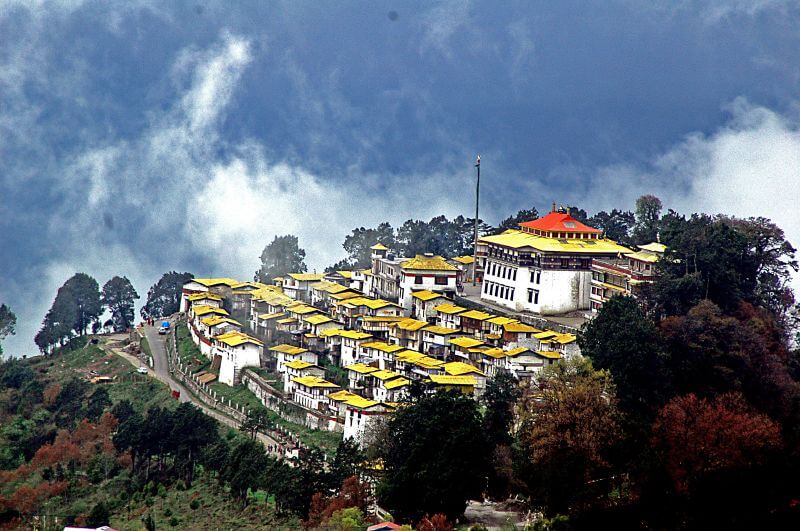
    Image Credit: Tawang Monastery

  • Living Next to China: India’s Economic Challenge

    Living Next to China: India’s Economic Challenge

    Abstract

    Hampered by declining economic growth, India needs to take bold and practical economic measures to overcome the adverse impact of the coronavirus pandemic, compounded by past economic blunders such as the demonetisation and the haphazard implementation of the GST regime. Mohan Guruswamy analyses that the seeds of the current economic slide were sown by the UPA II regime by its populist measures that were wasteful, unproductive, and reduced capital expenditure. Non action by the NDA governments on these issues has made it worse. He argues that India must not shy away from recourse to deficit financing to overcome the current unprecedented challenges faced by the economy on account of the Covid-19 disruption. India needs to increase its stimulus package from a mere 0.3% of the GDP to at least 10% to boost economic revival and growth. India’s reserves of $490 billion ($530 billion as of recent figures) is available to be tapped for economic revival. The measures must focus on addressing the severe impact on weaker sections of the society such as the poor, lower middle-class, and the farmers.

    The Covid2019 shock hit all world economies and has caused a serious contraction in all of them. Ironically, in the advanced economies like the USA, UK, Japan, and others, it exposed their intrinsic strengths with highly evolved social security systems by and large being able to absorb the labor displacement and the ability to quickly put together a fiscal fight back plan. Even China has been able to quickly recover its pole position as the worlds leading exporter and industrial production center. In India, Covid2019 exposed our co-morbidities, and has further opened the traditional faultlines, with the large unorganized labor cohort bearing the brunt of the costs. At last count the CMIE estimates over 130 million daily wagers in the urban centers being rendered jobless and homeless.[i] India’s economy which has been in distress for most of the last decade in now seriously stricken.

    When India’s economic history is written in some future date, and when a serious examination is done of when India lost its way to its ‘tryst with destiny’, the decade of 2010-20 will be highlighted.

    When India’s economic history is written in some future date, and when a serious examination is done of when India lost its way to its ‘tryst with destiny’, the decade of 2010-20 will be highlighted. The facts speak for themselves. India’s real GDP growth was at its peak in March 2010 when it scaled 13.3%.  The nominal GDP at that point was over 16.1%. The nominal GDP in September 2019 was at 6.3%, it’s lowest in the decade. Since then the downward trend is evident and we are now scraping the bottom at about a real GDP growth rate of 4.5%, this too with the push of an arguably inflationary methodology. Our previous CEA, Arvind Subramaniam, estimated that India’s GDP growth is overestimated by at least 2.5%. BJP MP and economist Subramaniam Swamy was even more pessimistic. He estimated it to be 1.5%.

    The decline in the promise is amply evident by the change in the make up of the economy during this decade.  In 2010 Agriculture contributed 17.5% of GDP, while Industry contributed 30.2% and Services 45.4%.  In 2019 that has become 15.6%, 26.5% and 48.5% respectively.  The share of industry has been sliding.  This is the typical profile of a post-industrial economy.  The irony of India becoming post-industrial without having industrialized must not be missed.

    Decline in Capital Investment

    The most significant cause for the decline of growth is the decline in capital investment.  It was 39.8% of GDP in 2010 and is now a good 10% lower.  Clearly without an increase of capital investment, one cannot hope for more industrialization and hence higher growth.  What we have seen in this decade is the huge increase in Services, which now mostly means increase in Public Administration and informal services like pakora sellers.

    In 2010 it seemed we were well on track.  But now we are struggling to get past $3 trillion, and the $5 trillion rendezvous that Modi promised by 2024 will have to wait longer.

    At the turn of the century, as China’s GDP began its great leap forward (from about $1.2 trillion in 2010 to $14.2 trillion in 2019), was also a heady moment for India whose GDP of $470 billion began a break from the sub 5% level of most of the 1990’s to the rates we became familiar with in the recent past (to hit a peak stride of 10.7% in 2010). At that point in time, if growth rates kept creeping up, we could have conceivably gone past $30 trillion by 2050. But for that the growth rate should consistently be above 7%. It seemed so feasible then.  In 2010 it seemed we were well on track.  But now we are struggling to get past $3 trillion, and the $5 trillion rendezvous that Modi promised by 2024 will have to wait longer.

    To be fair to Modi and the NDA, the decline began early in the second term of the UPA when capital expenditure growth had begun tapering off.  Dr. Manmohan Singh is too canny an economist to have missed that.  But UPA II also coincided with the increasing assertion of populist tendencies encouraged by the Congress President and her extra-Constitutional National Advisory Council. The decline in the share of capital expenditure was accompanied by a huge expansion in subsidies, most of them unmerited.  Instead of an increase in expenditure on education and healthcare, we saw a huge expansion in subsidies to the middle and upper classes like on LPG and motor fuels. Even fertilizer subsidies, which mainly flow to middle and large farmers with irrigated farmlands, saw a great upward leap.  Clearly the money for this came from the reduction in capital expenditure.  Modi’s fault in the years since 2014 is that he did nothing to reverse the trend, and only inflicted more hardship by his foolish demonetization and ill-conceived GST rollout.

    The realities are indeed stark.  The savings/GDP ratio has been in a declining trend since 2011 and Modi has been unable to reverse it.  Consequently, the tax/GDP ratio and the investment/GDP ratio have also been declining.  The rate of economic growth has been suspect and all objective indicators point to it being padded up. The drivers of economic growth such as capital expenditure is dismal.  Projects funded by banks have declined by over half since 2014 to less than Rs.600 billion in 2018-19.  Projects funded by the market have dropped to rock bottom.  Subsequently the manufacturing/GDP ratio is now at 15%.  Corporate profits/GDP ratio is now at a 15-year-old low at about 2.7%.  You cannot have adequate job creation if these are dipping.  Declining rural labor wage indices testify to this.

    Between October 2007 and October 2013 rural wages in the agricultural and non-agricultural sectors grew at 17% and 15%, respectively.  Since November 2014, however, agricultural and non-agricultural sector wages grew at only 5.6% and 6.5%, respectively. In 2019 average rural wage growth has further fallen to 3.1%.[ii]

    Bharat and India Divide

    It is very clear now that the urban lane has been moving well in India.  Indeed, so well that an Oxfam study revealed that that as much as 73% of the growth during the last five years accrued to just 1% of the population.[iii] This does not mean it is just the tycoons of Bombay and Delhi who are cornering the gains.  Government now employs close to 25 million persons, and these have now become a high-income enclave.  The number of persons in the private and organized sector is about another ten million. In all this high-income enclave numbers not more than 175-200 million (using the thumb rule of five per family).  Much of the consumption we tend to laud is restricted to just these.

    The simple fact that the share of Agriculture is now about 15.6% of GDP and falling, while still being the source of sustenance for almost 60% of the population reveals the stark reality.  A vast section of India is being left behind even as India races to become a major global economy.

    Agriculture is still the mainstay of employment.  Way back in 1880 the Indian Famine Commission “had observed that India had too many people cultivating too little land”.  This about encapsulates the current situation also.  While as a percentage the farmers and farmworkers have reduced as a part of the work force, in absolute terms they have almost tripled since 1947.  This has led to a permanent depression in comparative wages but has also led to a decline in per farmer production due to fragmentation of holdings.  The average farm size is now less than an acre and it keeps further fragmenting every generation.[iv] The beggaring of the farming community is inevitable.  The only solution to this is the massive re-direction of the workforce into less skilled vocations such as construction.

    The simple fact that the share of Agriculture is now about 15.6% of GDP and falling, while still being the source of sustenance for almost 60% of the population reveals the stark reality.  A vast section of India is being left behind even as India races to become a major global economy.

    As the decade ends, the Bharat and India divide have never been more vivid.  Our social scientists are still unable to fix a handle to this because the class, cultural and ethnic divides still eludes a neat theoretical construct.  Yet there can be little disagreement that there are two broad parts to this gigantic country and one part is being left behind.  The distance between the two only increased from 2010 to 2020.  This is indeed the lost decade.  Recovering from this will take long and will be painful.  If we take too long, we might have used up a good bit of the ‘demographic dividend’ and the demographic window of opportunity.  The ageing of India will be upon us by 2050[v].

    Covid-19 Impact – Increasing Economic Disparities 

    In the recent months the onslaught of the Covid2019 induced lockdown has been quite relentless.  From 2004-2014 India’s GDP grew at an average of 7.8%.  At its peak it went past 10% in 2010-11 Then it started slowing down.  The new government was unable to return to the old growth rates because it did not care to learn from the experiences of the previous regime, which began to spend more on giveaways, misguidedly thinking it was welfare economics, and took the accelerator off capital expenditure.  Even though capital expenditure is driven in India by government spending, this government spending is very different from subsidies and giveaways.  Subsidies generally tend to be misdirected with the already well-off garnering most of it.  Minimum Support Prices (MSP) are a huge annual subsidy[vi]and 90% of it accrues to the states of Punjab, Haryana, and the coastal region of Andhra Pradesh.  Fertilizer subsidies tend to accumulate to the advantage of large and medium farmers or to about a quarter of all land holdings.  Ditto for free power.  The only welfare expenditure to benefit farmers is investment in irrigation, rural infrastructure, and social welfare like education and health.  Unfortunately, this has been on the decline.  This has exacerbated disparities, both local and regional.  With capital expenditures declining, job creation suffered and the inevitable slowdown of GDP growth happened.  As we started diving, the government inflicted the so-called Demonetization adding to our woes.  Just as things began to look up, the Covid2019 pandemic overtook us.

    Now the only dispute on national income is how much will be the contraction.  The Finance Ministry hopes there won’t be any. The IMF has officially said it will be 4.5%.  The rating agencies predict a contraction of 6.8%, while many more are suggesting something closer to 10%.  How do we deal with is now?  The government of India has tended to be “conservative” in its outlook and has made no serious suggestion on economic stimulus.  What it calls a stimulus is actually not a stimulus. The problem is more philosophical.

    The divide between the Keynesians and the Chicago school is as intense and often antagonistic as the Sunni-Shia, Catholic-Protestant or Thenkalai-Vadakalai Iyengar divides.

    Keynesian economics is a theory that says the government should increase demand to boost growth. Keynesians believe consumer demand is the primary driving force in an economy.  As a result, the theory supports expansionary fiscal policy.  The Chicago School is a neoclassical economic school of thought that originated at the University of Chicago in the 1930s.  The main tenets of the Chicago School are that free markets best allocate resources in an economy and that minimal or zero government intervention is best for economic prosperity.  They abhor fiscal deficits.

    Inadequate Stimulus Package 

    The instruments used to beat countries like India into submission are ratings agencies such as Moody’s, which just downgraded India.  We shouldn’t lose too much sleep over it.  India is a hardly a borrower abroad and is more of a lender holding $490 billion as reserves.

    The only reason why the actual stimulus package is only Rs.63K crs is the obsession with fiscal deficits by Chicago economists such as Raghuram Rajan and his former student the hapless Krishnamurthy Subramaniam, the present CEA. They are true disciples of the Washington Consensus to judge countries like India by the fiscal deficit size.  The instruments used to beat countries like India into submission are ratings agencies such as Moody’s, which just downgraded India.  We shouldn’t lose too much sleep over it.  India is a hardly a borrower abroad and is more of a lender holding $490 billion as reserves.

    That is why the CEA when asked about a big stimulus said: “There are no free lunches!” That’s exactly what Milton Friedman said. But they quite happily ignore the biggest deficit financed economy in the world is the USA.  Raghuram Rajan told Rahul Gandhi on his videoconference that a stimulus of Rs.65K crores would suffice in the present situation[vii]. The Nobel Laureate Abhijit Bhattacharya and former CEA Arvind Subramaniam suggest a stimulus package like the USA or Japan[viii].  The USA has just announced a stimulus of over $3.5 trillion or over 15% of GDP.  Modi’s stimulus is a mere 0.3% of GDP.

    What is ‘Fiscal Deficit?’ A fiscal deficit occurs when a government’s total expenditures exceed the revenue that it generates, excluding money from borrowings.  Deficit differs from debt, which is an accumulation of yearly deficits.

    Many serious economists regard fiscal deficits as a positive economic event.  For instance, the great John Maynard Keynes believed that deficits help countries climb out of economic recession.  On the other hand, fiscal conservatives feel that governments should avoid deficits in favor of balanced budgets.

    India’s debt/GDP ratio is by contrast a modest 62% and yet it intends to pump in a mere 0.3% of GDP as stimulus.

    The fastest growing economies in the world, and now its biggest – USA, China, Japan and most of Western Europe – have the highest debt/GDP ratios.  Japan’s debt/GDP is over 253% before the latest stimulus of 20% of GDP.  China’s debt is now over 180% of its GDP.  The USAs debt/GDP is close to 105% yet it is raising $3 trillion as debt to get it out of the Covid2019 quagmire.  India’s debt/GDP ratio is by contrast a modest 62% and yet it intends to pump in a mere 0.3% of GDP as stimulus.

    Pump priming the economy by borrowing per se is not bad.  It is not putting the debt to good use that is bad.  Nations prosper when they use debt for worthwhile capital expenditure with assured returns and social cost benefits.  But we in India have borrowed to give it away as subsidies and to hide the high cost of government.  To give an analogy, if a family has to make a choice of borrowing money to fund the children’s education or to support the man’s drinking habit, the rational choice is obvious. The children’s education will have a long-term payback, while the booze gives instant gratification. But unfortunately, our governments have always been making the wrong choices.

    If borrowed money is used productively and creates growth and prosperity, it must be welcomed.  What we want to hear from the government is not about fiscal deficit targets, but economic growth, value addition, employment, and investment targets.  Our governments have hopelessly been missing all these targets.

    Modi’s Options – Need for Bold Decisions

    So, what can Modi do now to get us out of this quagmire?  If the regime abhors a stimulus financed by deficit financing there are other options that can be exercised.  But he is hamstrung with a weak economic management team with novices as the two key players, the Finance Minister and RBI governor.

    India has over $490 billion nesting abroad earning ridiculously low interest.  Even if a tenth of this is monetized for injection into the national economy, it will mean more than Rs.3.5 lakh crores.  At last count the RBI had about Rs.9.6 lakh crores as reserves.  This is money to be used in a financial emergency.  We are now in an emergency like we have never encountered or foresaw before. Even a third of this or about Rs.3.2 lakh crores is about five times the present plan.

    There is money in the trees, and all it needs is a good shake up to pick the fruits. The pain of the lockdown must not be borne by the poor alone.  The government can easily target 5% of GDP or about Rs.10L crores for the recovery fund as an immediately achievable goal.

    There are other sources of funds also, but tapping these will entail political courage and sacrifices. Our cumulative government wages and pension bill amounts to about 11.4% of GDP.  After exempting the military and paramilitary, which is mostly under active deployment, we can target 1% of GDP by just by cancelling annual leave and LTC, and rolling back a few DA increases.

    The government can also sequester a fixed percentage from bank deposits, say 5% of deposits between Rs.10-100 lakhs and 15-20% from bigger deposits for tax-free interest-bearing bonds in exchange.  The ten big private companies alone have cash reserves of over Rs.10 lakh crores[ix].

    There is money in the trees, and all it needs is a good shake up to pick the fruits. The pain of the lockdown must not be borne by the poor alone.  The government can easily target 5% of GDP or about Rs.10L crores for the recovery fund as an immediately achievable goal.

    This money can be used to immediately begin a Universal Basic Income scheme, by transferring a sum of Rs.5000 pm into the Jan Dhan accounts for the duration of the financial emergency; fund GST concessions to move the auto and engineering sectors in particular; begin emergency rural reconstruction projects to generate millions of new jobs and get our core infrastructure sectors like steel, cement and transportation moving again.

    Getting money to move India again is not a huge problem.  What comes in between are the philosophical blinkers.  Call it Chicago economics or the Gujarati mindset.

    Notes

    [i] https://www.businesstoday.in/sectors/jobs/india-unemployment-rate-hits-26-amid-lockdown-14-crore-lose-employment-cmie/story/401707.html

    [ii] https://www.financialexpress.com/economy/farm-wages-growth-fell-to-a-four-quarter-low-in-q3-fy-20/1789235/

    [iii] https://economictimes.indiatimes.com/news/economy/indicators/wealth-of-indias-richest-1-more-than-4-times-of-total-for-70-poorest-oxfam/articleshow/73416122.cms?from=mdr#:~:text=Wealth%20of%20India’s%20richest%201%25%20more%20than%204%2Dtimes%20of,total%20for%2070%25%20poorest%3A%20Oxfam&text=The%20Oxfam%20report%20further%20said,particularly%20poor%20women%20and%20girls.

    [iv] https://www.prsindia.org/policy/discussion-papers/state-agriculture-india

    140 million hectares of land is used as agricultural area, as of 2012-13.  Over the years, this area has been fragmented into smaller pieces of land.  As seen in Table 3, the number of marginal land holdings (less than one hectare) increased from 36 million in 1971 to 93 million in 2011.  Marginal and small land holdings face several issues, such as problems with using mechanization and irrigation techniques.

    [v] https://economictimes.indiatimes.com/news/politics-and-nation/demographic-time-bomb-young-india-ageing-much-faster-than-expected/articleshow/65382889.cms

    [vi] https://www.thehindubusinessline.com/opinion/all-you-wanted-to-know-about-minimum-support-price/article7342789.ece

    [vii] https://www.hindustantimes.com/india-news/in-video-conversation-with-rahul-rajan-suggests-65k-crore-aid-for-poor/story-CtrtvW6HErR16L9m1t9wHP.html

    [viii] https://economictimes.indiatimes.com/news/economy/policy/rahul-gandhi-in-conversation-with-abhijit-banerjee-india-needs-a-bigger-stimulus-package-like-us-japan-to-revive-economy/videoshow/75549770.cms

    [ix] https://www.screener.in/screens/2551/Cash-Rich-Companies/


    Image credit: Adobe Stock

  • India’s Agriculture: The Failure of the Success

    India’s Agriculture: The Failure of the Success

    It was around the mid-1960s when the Paddock brothers, Paul and William, the ‘prophets of doom’, predicted that in another decade, recurring famines and an acute shortage of food grains would push India towards disaster. Stanford University Professor Paul R. Ehrlich in his 1968 best selling book The Population Bomb warned of the mass starvation of humans in the 1970s and 1980s in countries like India due to over population.

    Their prophecies were based on a rising shortage of food because of droughts, which forced India to import 10 million tonnes of grain in 1965-66 and a similar amount a year before. Little did they know that thanks to quick adoption of a new technology by Indian farmers, the country would more than double its annual wheat production from 11.28 million tonnes in 1962-63 to more than twice that within ten years to 24.99 million tonnes. It was 71.26 million tonnes in 2007. Similarly rice production also grew spectacularly from 34.48 million tonnes to almost 90 million tonnes in 2007.

    Total food grains production in India reached an all-time high of 251.12 million tonnes (MT) in FY15. Rice and wheat production in the country stood at 102.54 MT and 90.78 MT, respectively. India is among the 15 leading exporters of agricultural products in the world. The value of which was Rs.1.31 lakh crores in FY15.

    India is among the 15 leading exporters of agricultural products in the world. The value of which was Rs.1.31 lakh crores in FY15.

    Despite its falling share of GDP, agriculture plays a vital role in India’s economy. Over 58 per cent of the rural households depend on agriculture as their principal means of livelihood. Census 2011 says there are 118.9 million cultivators across the country or 24.6 per cent of the total workforce of over 481 million. In addition there are 144 million persons employed as agricultural laborers. If we add the number of cultivators and agricultural laborers, it would be around 263 million or 22 percent of the population. As per estimates by the Central Statistics Office (CSO), the share of agriculture and allied sectors (including agriculture, livestock, forestry and fishery) was 16.1 per cent of the Gross Value Added (GVA) during 2014–15 at 2011–12 prices. This about sums up what ails our Agriculture- its contribution to the GDP is fast dwindling, now about 13.7 per cent, and it still sustains almost 60 per cent of the population.

    If we add the number of cultivators and agricultural laborers, it would be around 263 million or 22 percent of the population. As per estimates by the Central Statistics Office (CSO), the share of agriculture and allied sectors (including agriculture, livestock, forestry and fishery) was 16.1 per cent of the Gross Value Added (GVA) during 2014–15 at 2011–12 prices.

    With 157.35 million hectares, India holds the world’s second largest agricultural land area. India has about 20 agro-climatic regions, and all 15 major climates in the world exist here. Consequently it is a large producer of a wide variety of foods. India is the world’s largest producer of spices, pulses, milk, tea, cashew and jute; and the second largest producer of wheat, rice, fruits and vegetables, sugarcane, cotton and oilseeds. Further, India is 2nd in global production of fruits and vegetables, and is the largest producer of mango and banana. It also has the highest productivity of grapes in the world. Agricultural export constitutes 10 per cent of the country’s exports and is the fourth-largest exported principal commodity.
    According to the Agriculture Census, only 58.1 million hectares of land was actually irrigated in India. Of this 38 percent was from surface water and 62 per cent was from groundwater. India has the world’s largest groundwater well equipped irrigation system.

    There is a flipside to this great Indian agriculture story.The Indian subcontinent boasts nearly half the world’s hungry people. Half of all children under five years of age in South Asia are malnourished, which is more than even sub-Saharan Africa.

    More than 65 per cent of the farmland consists of marginal and small farms less than one hectare in size. Moreover, because of population growth, the average farm size has been decreasing. The average size of operational holdings has almost halved since 1970 to 1.05 ha. Approximately 92 million households or 490 million people are dependent on marginal or small farm holdings as per the 2001 census. This translates into 60 per cent of rural population or 42 per cent of total population.

    Approximately 92 million households or 490 million people are dependent on marginal or small farm holdings as per the 2001 census.

    About 70 per cent of India lives in rural areas and all-weather roads do not connect about 40 per cent of rural habitations. Lack of proper transport facility and inadequate post harvesting methods, food processing and transportation of foodstuffs has meant an annual wastage of Rs. 50,000 crores, out of an out of about Rs.370, 000 crores.

    There is a pronounced bias in the government’s procurement policy, with Punjab, Haryana, coastal AP and western UP accounting for the bulk (83.51 per cent) of the procurement. The food subsidy bill has increased from Rs. 24500 crores in 1990-91 to Rs. 1.75 lakh crores in 2001-02 to Rs. 2.31 lakh crores in 2016. Instead of being the buyer of last resort FCI has become the preferred buyer for the farmers. The government policy has resulted in mountains of food-grains coinciding with starvation deaths. A few regions of concentrated rural prosperity.

    The total subsidy provided to agricultural consumers by way of fertilizers and free power has quadrupled from Rs. 73000 crores in 1992-93, to Rs. 3.04 lakh crores now. While the subsidy was launched to reach the lower rung farmers, it has mostly benefited the well-off farmers. Free power has also meant a huge pressure on depleting groundwater resources.
    These huge subsidies come at a cost. Thus, public investment in agriculture, in real terms, had witnessed a steady decline from the Sixth Five-Year Plan onwards. With the exception of the Tenth Plan, public investment has consistently declined in real terms (at 1999-2000 prices) from Rs.64, 012 crores during the Sixth Plan (1980-85) to Rs 52,107 crores during the Seventh Plan (1985-90), Rs 45,565 crores during the Eighth Plan (1992-97) and about Rs 42,226 crores during Ninth Plan (1997-2002).

    With the exception of the Tenth Plan, public investment has consistently declined in real terms (at 1999-2000 prices) from Rs.64, 012 crores during the Sixth Plan (1980-85) to Rs 52,107 crores during the Seventh Plan (1985-90), Rs 45,565 crores during the Eighth Plan (1992-97) and about Rs 42,226 crores during Ninth Plan (1997-2002).

    Share of agriculture in total Gross Capital Formation (GCF) at 93-94 prices has halved from 15.44 per cent to 7.0 per cent in 2000-01. In 2001-02 almost half of the amount allocated to irrigation was actually spent on power generation. While it makes more economic sense to focus on minor irrigation schemes, major and medium irrigation projects have accounted for more than three fourth of the planned funds
    By 2050, India’s population is expected to reach 1.7 billion, which will then be equivalent to nearly that of China and the US combined. A fundamental question then is can India feed 1.7 billion people properly? In the four decades starting 1965-66, wheat production in Punjab and Haryana has risen nine-fold, while rice production increased by more than 30 times. These two states and parts of Andhra Pradesh and Uttar Pradesh now not only produce enough to feed the country but to leave a significant surplus for export.

    Since food production is no longer the issue, putting economic power into the hands of the vast rural poor becomes the issue. The first focus should be on separating them from their smallholdings by offering more gainful vocations.

    Farm outputs in India in recent years have been setting new records. It has gone up from 208 MT in 2005-06 to an estimated 251 MT in 2014-15. Even accounting for population growth during this period, the country would need probably around 225 to 230 MT to feed its people. There is one huge paradox implicit in this. Record food production is depressing prices. No wonder farmers with marketable surpluses are restive.

    India is producing enough food to feed its people, now and in the foreseeable future. Since food production is no longer the issue, putting economic power into the hands of the vast rural poor becomes the issue. The first focus should be on separating them from their smallholdings by offering more gainful vocations. With the level of skills prevailing, only the construction sector can immediately absorb the tens of millions that will be released. Government must step up its expenditures for infrastructure and habitations to create a demand for labor. The land released can be consolidated into larger holdings by easy credit to facilitate accumulation of smaller holdings to create more productive farms.

    Finally the entire government machinery geared to controlling food prices to satisfy the urban population should be dismantled. If a farmer has to buy a motorcycle or even a tractor he pays globally comparative prices, why should he make food available to the modern and industrial sector at the worlds lowest prices?
    Why should Bharat have to feed India at its cost?

    Image: Kanyakumari farm lands during onset of monsoon. 


  • Think tanks’ role growing: Is that a good thing?

    Think tanks’ role growing: Is that a good thing?

    Category : Education/Think tanks/Policy Research

    Title : Think tank’s role growing: Is that a good thing?

    Author : Mohan Guruswamy 20.01.2020

    The word “think tank” owes its origins to John F. Kennedy, America’s 35th President, who collected a group of top intellectuals in his White House – people like McGeorge Bundy, Robert S. McNamara, John Kenneth Galbraith, Arthur Schlesinger and Ted Sorenson, among others, to give him counsel on issues from time to time. In India, while the number of think tanks are now increasing, neither the government nor the think tanks have a culture of serious and in-depth research that would aid government’s policy making. Mohan Guruswamy analyses the think tanks and their culture in India.

    Read More

  • Winds of Climate Change Blow across South Asia

    Winds of Climate Change Blow across South Asia

    The India-Pakistan enmity is possibly the world’s most intractable and obdurate, with a mutual misreading of history made extremely volatile with the brandishing of nuclear weapons. Despite having two giant militaries at each others’ throats, the more immediate existential challenges that India and Pakistan face are related to how climate change and misuse of common natural resources have combined to confront both together. It is not the militaries which will determine our fates, but the degree of cooperation the two nations can summon. Our problems are common and perhaps India and Pakistan will find the good sense to act together?

    Looking at the climate change challenges Pakistan and India face together, collective action — as unlikely as it seems — may just be what is needed to secure the lives and livelihoods of future generations.

    According to climate researchers at Germanwatch, Pakistan ranks eighth on the Global Climate Risk Index, with over 145 catastrophic events — heat waves, droughts and floods — reported in the past 20 years. On the other hand, India ranks among the top 20 vulnerable countries in terms of climate risk. Pakistan is home to around 47 per cent of the Indus Basin, and India to around 39 per cent. The Indus Waters Treaty has been in effect since 1960. The recent political bickering aside, the Indus Waters Treaty has managed to survive the test of time, yet fails to comprehensively address climate change. Then again, at the time it was enacted, many of the stark realities we know today were not understood.

    According to the Pakistan Council of Research in Water Resources, Pakistan officially crossed the water scarcity line in 2005. The United Nations Development Programme and the Pakistan Council of Research in Water Resources have issued warnings about the upcoming scarcity of groundwater in just six years.

    According to some estimates, Pakistan is the fourth-largest user of its groundwater and over 70 per cent of drinking requirements and 50 per cent of irrigation needs are met through groundwater extraction. Due to excessive pumping, it is estimated that water tables could fall by as much as 20 per cent by 2025.

    South Asia is drained by the Indus, Ganga and Brahmaputra river basins, which collectively form the Indo-Gangetic Basin (IGB) and include some of the highest-yielding aquifers of the world. The aquifers associated with these river basins cross the international borders of the contiguous South Asian countries, forming numerous trans-boundary aquifers, including the Indus basin aquifers (between India and Pakistan), Ganga and Brahmaputra basin aquifers (between Bangladesh and India), the aquifers of the tributaries to the Ganga (between Nepal and India), the aquifers of the tributaries to the Brahmaputra (between Bhutan and India, and between India and Bangladesh).

    At the beginning of every hydrologic year, 4,000 billion cubic meters (bcm) water enters the South Asian hydrological systems, of which almost half is lost by poorly understood and un-quantified processes (such as overland flow, surface discharge through rivers to the oceans, submarine groundwater discharge and evaporation). The annual groundwater withdrawals in the region are estimated to exceed 340 bcm, and represent the most voluminous use of groundwater in the world. South Asia faces an acute shortage of drinking water and other usable waters in many areas, as it is seeing a rapid rise in water demand and change in societal water use pattern because of accelerated urbanisation and changes in lifestyle. In many urban and rural areas of the region, surface waters have been historically used as receptacles of sewage and industrial waste, rendering them unfit for domestic use, prompting a switch to groundwater and rainwater sources to meet drinking and agricultural water needs. At present, about 60–80 per cen
    t of the domestic water supplies across South Asia are met by groundwater.

    Irrigation accounts for 85 per cent of groundwater withdrawals and is considered to be the main contributor to groundwater depletion with the maximum possible groundwater footprint seen in the Gangetic aquifers.

    Among the main contributors to water stress in India and Pakistan are poor water resource management and poor water service delivery, including irrigation and drainage services. Moreover, the lack of reliable water data, subsequent analysis and consequent poor planning and allocation is leading to environmentally unviable methods of water withdrawal, causing an alarming reduction in groundwater.

    In both countries, water stress is attributed first and foremost to the massive population growth. Another cause is the lack of sufficient urban water treatment facilities, which prevent the usability of river water for drinking and irrigation.

    Air pollution contributes substantially to premature mortality and disease burden globally, with a greater impact in low-income and middle-income countries than in high-income countries. The northern plains of South Asia has one of the highest exposure levels to air pollution globally.

    The major components of air pollution are ambient particulate matter pollution, household air pollution, and to a smaller extent ozone in the troposphere, the lowest layer of atmosphere. The major sources of ambient particulate matter pollution are coal burning for thermal power production, industry emissions, construction activity and brick kilns, transport vehicles, road dust, residential and commercial biomass burning, waste burning, agricultural stubble burning, and diesel generators.

    In India and Pakistan, farm residues are burnt after harvesting in October to November, which affects the air quality of the region. In Pakistan, most of the rice cultivation takes place in Punjab, and the same is true for India’s Punjab due to suitable climatic conditions for the crop. In both countries, stubble burning is the key cause of smog. According to India’s new and renewable energy sources ministry, India’s Punjab contributes 44-51 million tonnes of residue annually. According to the estimates, paddy areas burnt every year in Indian Punjab and Haryana are 12.68 million hectares and 2.08 million hectares respectively. According to a study, farmers burn 30-90 per cent of residue, which contributes to the smog formation, not just in the immediate region, but the entire Indo-Gangetic plain. With air pollution levels lurking in the “extremely poor” band for almost half the year, the northern regions of South Asia may not be able to host healthy populations for very long.

    The number of deaths attributable to ambient particulate matter pollution in India in 2017 was 0·67 million and the number attributable to household air pollution was 0·48 million. The number of deaths due to ambient particulate matter pollution in Pakistan in 2017 was 60,000.

    Climate change over 3,000 years ago destroyed the Indus Valley Civilisation and it went into oblivion, leaving behind traces of what befell the people here before. The next few decades are extremely critical. Can we summon some good sense to survive or go the way of the Meluhans? The verses of Allama Iqbal, albeit in another context, still hold true: Watan ki fiqr kar nadaan museebat aane wali hai/ Teri barbadiyon ke mashware hain aasmanon mein…/ Na samjhoge tou mit jaoge Hindustan walon/ Tumari daastan tak bhi na hoge daastanon mein. (Think of the homeland, O ignorant one! Hard times are coming./Conspiracies for your destruction are afoot in the heavens./You will be finished if you do not care to understand, O ye people of India!/Even the mention of your being will disappear from the world’s chronicles).

    The author is a prolific commentator on economic, security, and China issues. He is a Trustee/Governing Council member of TPF.

    This article was published earlier in Deccan Chronicle.

    Image source: www.pri.org