Author: Mohan Guruswamy

  • A P J Abdul Kalam – People’s President

    A P J Abdul Kalam – People’s President

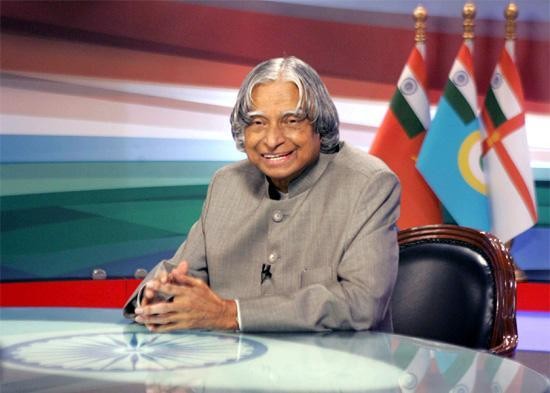
    The country remembers President A P J Abdul Kalam, the people’s president on his 10th death anniversary. APJ Abdul Kalam captured the imagination of young people like no other president had before. He made us believe in ourselves and think the sky was never too high. He dreamed of things that never were and wondered why not? As a nation, we constantly come up short, but that did not deter Kalam. He made it his life mission to exhort the young to greatness. India’s young will miss him.
    July 27th is the death anniversary of former President APJ ABDUL KALAM. He died this day seven years ago. He died on his feet while delivering a lecture at the Indian Institute of Management, Shillong, exhorting young people to a new vision of India to the end.
    Avul Pakir Jainulabdeen Abdul Kalam had little in common with his predecessors. He did not have the educational attainments of Radhakrishnan, Zakir Hussain and Sharma, who were genuine PhDs from top-notch institutions. Kalam just had a science degree and an aeronautical engineering diploma from Madras University. He did not have the political training of Presidents like Rajendra Prasad, VV Giri and Pranab Mukherjee, whose political and constitutional understanding was tested in politically uncertain times. His entire professional lifetime was spent in the Defence Research and Development Organisation (DRDO).
    The DRDO has not exactly distinguished itself in any great way. The sum of its failures is far greater than its achievements. Some its failures are most notable. The Arjun main battle tank is still bumbling along. The nuclear submarine project, delivered decades too late, still faces uncertainty. The Light Combat Aircraft is just the late combat aircraft; so late that it will be obsolete when it enters service in the next decade. Even the 5.56 mm basic infantry combat weapon is a bit of a dud, requiring the frequent import of AK-47 rifles, much to the delight of Delhi’s arms agents.
    Kalam had earned a reputation as the father of India’s missile program. That might be so, but the offspring are nothing worth writing home about. Our missile program is so far behind times that even the North Koreans, a woebegone and desolate country where people still die of starvation, are ahead of us. Like the Pakistanis, even we would have been better off buying North Korean missiles like the Nodong (Pak name Ghauri), like the Pakistanis have. Many also credit Kalam as being the father of India’s nuclear weapons program. That program has, mercifully, had little to do with the DRDO and is almost entirely an Atomic Energy Commission (AEC) show.
    There is much that is admirable about Kalam. He was honest to the core. He was erudite. He knew Sanskrit. He translated the Thirukural from Tamil into English. He was a nationalist with few peers. He only lived for India.
    What then was Kalam’s kamaal? Clearly, Kalam was no Werner von Braun, who designed the Nazi V-1 and V-2 rockets and then led America’s manned flight foray into space with Alan Shepard’s sub-orbital flight. He most certainly is no Kurchatkov, who pioneered the Soviet Union’s nuclear weapons program. But he inspired by his sense of hope and ambition.
    Yet he is clearly among the best of the Presidents we have had, particularly in recent times. I had the pleasure of being invited by him a few times for one-on-one discussions on Bihar, a state with which he was particularly concerned. He publicly asked several times: “How can India move forward, leaving behind Bihar?” There is much that is admirable about Kalam. He was honest to the core. He was erudite. He knew Sanskrit. He translated the Thirukural from Tamil into English. He was a nationalist with few peers. He only lived for India.
    He was also a bachelor and so with no offspring like Zail Singh’s grandson, who shot pigeons in the Rashtrapati Bhavan, or R.Venkatraman’s NRI daughter, who plonked herself there to collect money for her NGO, or like Shankar Dayal Sharma’s grandson, Manu Sharma, who stands convicted of murdering Jessica Lal. The less said for Pratibha Patil, the better. Ramnath Kovind and Draupadi Murmu carry the burden of millennia of oppression and ostracism with quiet dignity, but little more.
    But for a modest man with mostly modest achievements, APJ Abdul Kalam captured the imagination of young people like no other president had before. He made us believe in ourselves and think the sky was never too high. He dreamed of things that never were and wondered why not? As a nation, we constantly come up short, but that did not deter Kalam. He made it his life mission to exhort the young to greatness. India’s young will miss him.
    Opinions expressed are the author’s own.
  • Intelligence: The Crux of Targetted Assassinations

    Intelligence: The Crux of Targetted Assassinations

    The USA has followed targetted assassination strategy since WW II days. It has cooped its allies such as Israel, Australia, and the UK. Targetted killings in the Middle East has been led by Israel with active intelligence support by the USA. With modern ISR capabilities, targets can be monitored or looked for on 24/7 basis for all 365 days of the year. A world that is integrated by common communications protocols and digital standards for ease of normal business becomes vulnerable to intelligence agencies by the same process of commonality. 


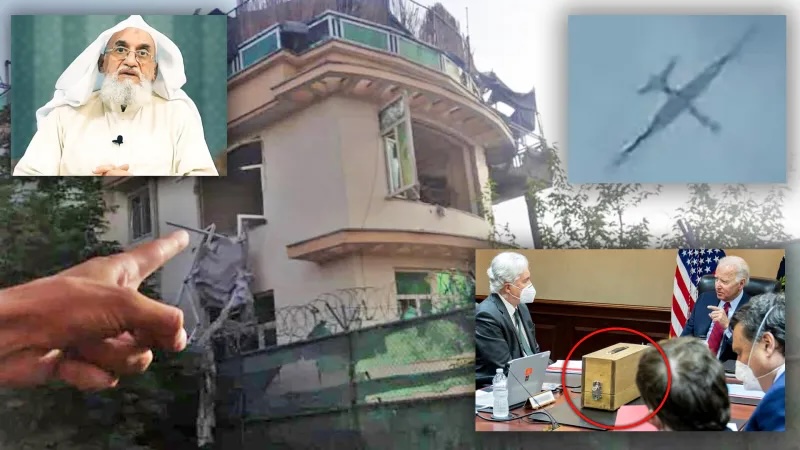
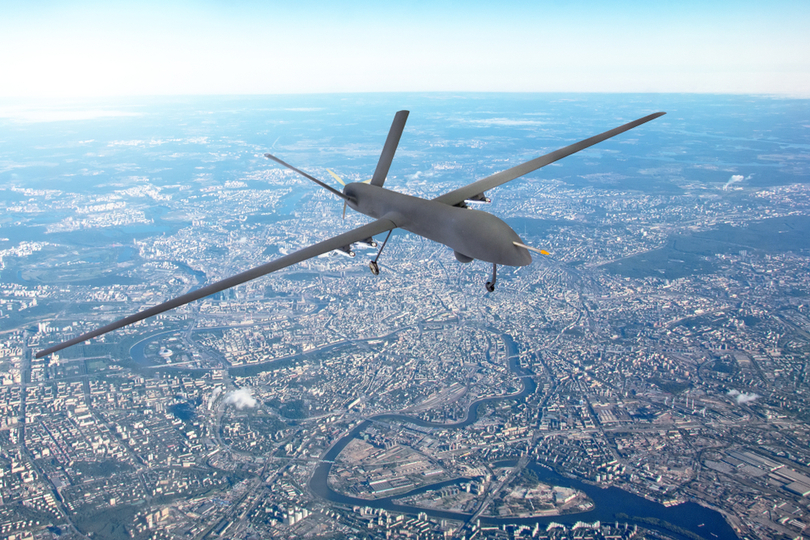
    On July 31, 2022, Osama bin Laden’s successor as the global head of Al Qaeda, Ayman al-Zawahiri, stepped out onto the balcony of his Taliban safe house in Kabul’s tony Wazir Akbar Khan area to catch a breath of fresh air and a bit of sunshine. About 40,000 feet above an American Predator B (aka Reaper MQ-9) drone, loitering to get a glimpse of him, caught him in its camera, and after its operators in Nevada, USA confirmed it with facial identification technology, ordered it to fire its single Hellfire R9X missile. The Hellfire is a small 100 lbs and five feet long air-to-ground missile (AGM) that races down a reflected laser beam with unerring accuracy. It costs about $ 150,000. The R9X, which was developed at the express request of Barack Obama, who wanted to minimise collateral damage due to an explosive charge, is a kinetic weapon that unsheathes multiple blades from its fuselage as it approaches the target at almost 900 mph like a whirling swordsman. Al-Zawahiri didn’t stand a chance.

    The USA and some other countries have bevvies of space satellites orbiting at preselected trajectories to watch over areas of interest. These satellites not only listen to targets but also track them and identify faces and vehicles by their plates. Osama bin Laden never looked up while on his morning walk at his Abbottabad residence but he was recognised by his height and the length of his shadow at the time of the day and by his gait. Al-Zawahari was either careless or underestimated America’s appetite for his head. He still had a $ 25 million reward, appetising enough for any informants.

    The number of active mobile phones worldwide exceeded 15 billion, which means that many people have more than a couple. Of these 7.2 billion are smartphones connecting people with huge reservoirs of information and content. India has 1.28 billion and China has 1.9 billion phones. The USA follows with 327 million and a dysfunctional country like Pakistan has 125 million. Even in countries with little semblance of a government or a state, like Somalia and Afghanistan or Mali or Libya, there are functioning mobile phone networks.

    As of June 30, 2021, there were about 4.86 billion internet users worldwide. Of these 44.8% were in Asia, 21.5% in Europe and 11.4% in all of North America. India was one of the last countries operating a telegraph service and as of end 2021, even that is in the past. Literally, it’s all up in the air now.

    But since data exchanged on cellular and internet networks fly through the ether and not as pulses racing through copper wires, they are easier to net by electronic interception. But these nets catch them in huge numbers. This is where the supercomputers come in. The messages that are netted every moment are run through sieves of sophisticated and complex computer programs that can simultaneously decode, detect and unravel, and by further analyzing the incoming and outgoing patterns of calls and data transfers for the sending and receiving terminals or phones, can with a fair probability of accuracy tell the agency seeking information about what is going on and who is up to what?

    The problem is that since this information also goes through mobile phone networks and Internet Service Providers (ISP), and the data actually gets decoded from electronic blips into voice and digital data, the private players too can gain access to such information.

    A few years ago we had the case of the infamous Amar Singh CDs, which titillated so many with their graphic content and low-brow conversations featuring the likes of Anil Ambani, Jayaprada, Bipasha Basu and some others. Then we had the episode of the Radia tapes where we were privy to the machinations of Tata’s corporate lobbyist in the national capital fixing policy, positioning ministers and string-pulling media stars. But more useful than this, a mobile phone, by nature of its technology, is also a personalised GPS indicator. It tells them where that phone is at any instant it is on. The Al Qaeda terrorist and US citizen Anwar el-Awlaki was blasted by a Hellfire missile fired from a CIA Predator drone flying over Yemen with the coordinates provided by Awlaki’s mobile phone.

    Since a mobile phone is usually with you it tells the network ( and other interested parties) where you are or were, and even where you are headed. If you are on a certain street since it reveals where exactly you are and the direction of your movement, it can tell you where the next pizza place is or where and what is on sale. This is also a breach of privacy, but often useful to you. But if you are up to no good, then a switched-on mobile phone is a certain giveaway.

    That’s what gave away Osama bin Laden in the end. A momentary indiscretion by a trusted courier and bodyguard and a name gleaned from a long-ago water-boarding session was all it took. To know what happened next see “Zero Dark Thirty” by Katherine Bigelow (now on Netflix and YouTube).

    The NSA is all hi-tech. NSA collects intelligence from four geostationary satellites. These satellites track and monitor millions of conversations and the NSA’s banks of high-speed supercomputers process all these messages for certain phrases and patterns of conversations to decide if the persons at either end were worthy of further interest.

    The NSA’s eavesdropping mission includes radio broadcasting, both from various organisations and individuals, the internet, telephone calls, and other intercepted forms of communication. Its secure communications mission includes military, diplomatic, and all other sensitive, confidential or secret government communications. The NSA is all hi-tech. NSA collects intelligence from four geostationary satellites. These satellites track and monitor millions of conversations and the NSA’s banks of high-speed supercomputers process all these messages for certain phrases and patterns of conversations to decide if the persons at either end were worthy of further interest. Link this information with the data from the CIA’s spinning satellites watching the movements of groups, individuals and vehicles, and you have a broad picture of what the people are doing.

    According to the Washington Post, “every day, collections systems at the National Security Agency intercept and store 1.7 billion e-mails, phone calls and other types of communications.” The NSA and CIA together comprise the greatest intelligence-gathering effort in the world. The overall U.S. intelligence budget is now declared to be $62.8 billion.


    Feature Image Credit: E-International Relations

    Article Image Credit: www.twz.com


  • Elections 2024: Modi up a steep & slippery Slope

    Elections 2024: Modi up a steep & slippery Slope


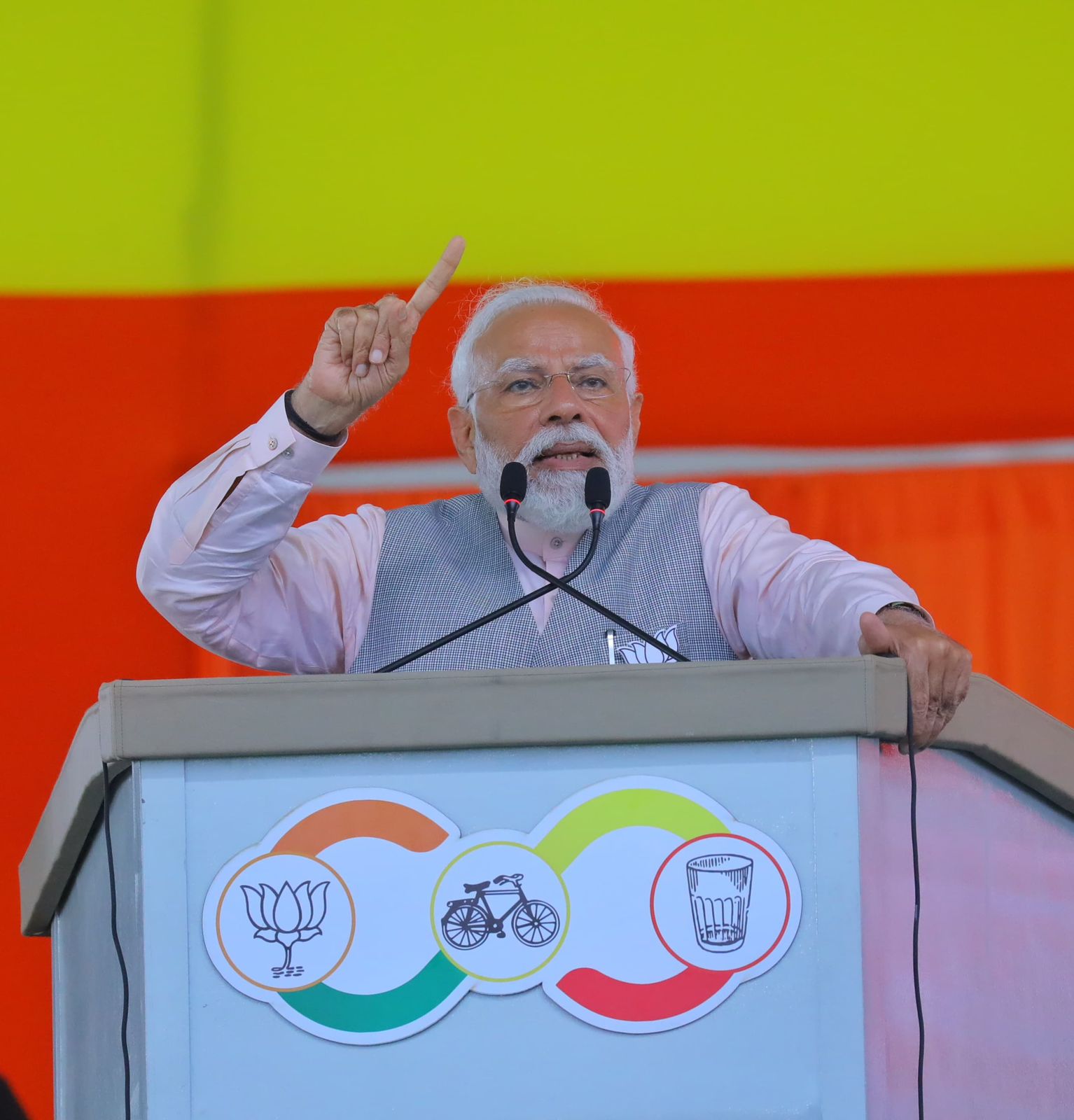
    Be it a democracy or a dictatorship, governments are almost always changed by throwing out the incumbent. The former is called a democratic transition and the latter is inevitably a revolution. Even if it is, as usually is the case, more of the same. India’s electoral process that begins on April 19 will be concluded on June 4 when the results are announced. Most psephologists, commentators, astrologers and bazar gossips are sanguine that Prime Minister Narendra Modi will be easily re-elected to a third successive term. I do not agree with that sanguinity.I think Mr Modi has a hard hill to climb and the slope may be too steep and slippery for him. Look at the objective reality. In 2019, the BJP won 303 seats or almost 56 per cent of the Lok Sabha with 37.4 per cent of the popular vote. This skew is how it usually is in a first-past-the-post system. Even a minority mandate translates into an overwhelming outcome. But the problem with the BJP mandate is that it is concentrated in a minority of states. The saffron mandate is restricted almost entirely to the large Hindi-speaking states (202/235), as well as Maharashtra (41/48) and Karnataka (25/28). It got 268 out of its 303 in just this concentration. Winning these states is not the issue for the BJP. Repeating this performance is.


    Read More

  • India’s National River Linking Project: Will it work or end up a Disaster?

    India’s National River Linking Project: Will it work or end up a Disaster?

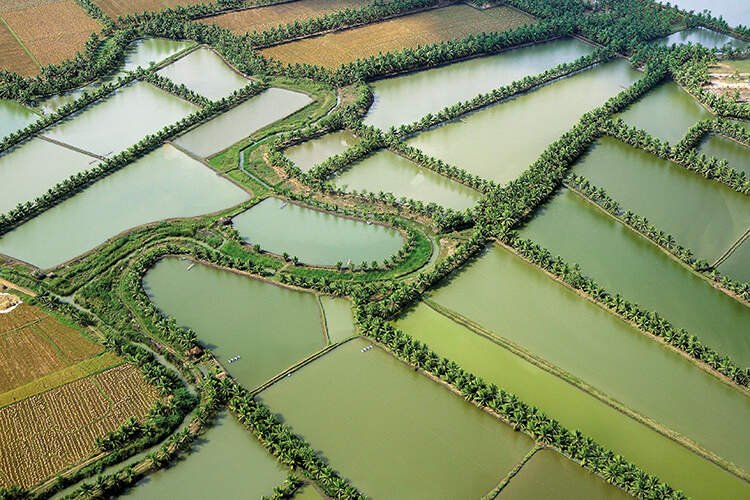
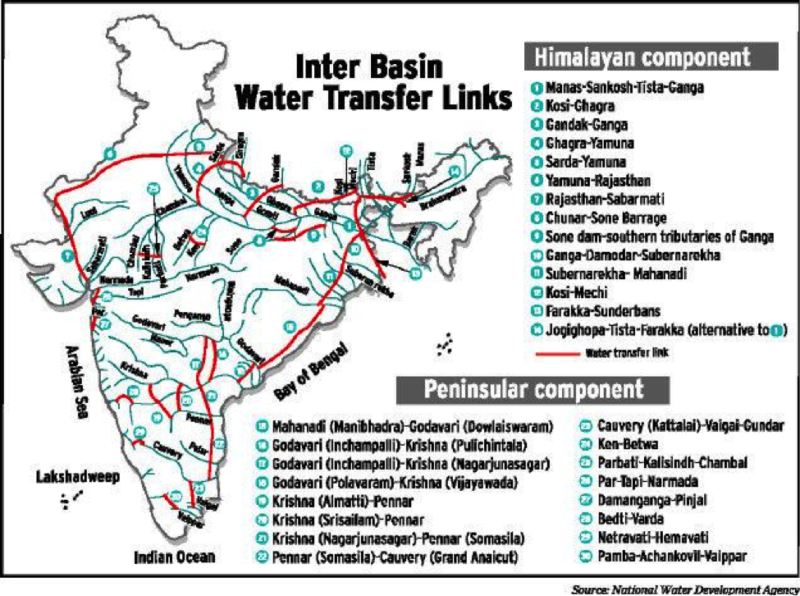
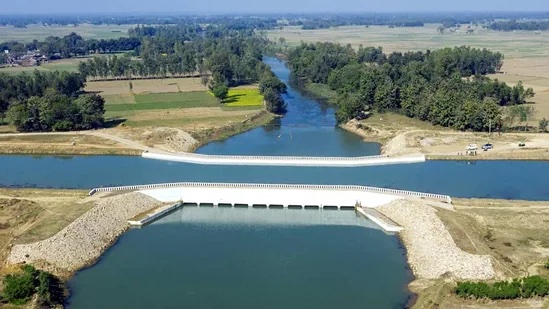
    In October, India’s ambitious scheme to build a 230-kilometre canal between the Ken and Betwa rivers was finally approved. It’s the first of many projects planned for implementation under the National River Linking Project (NRLP), which aims to connect 37 Himalayan and peninsular rivers across the country via some 3,000 reservoirs and 15,000 kilometres of dams and canals. The government has touted the NRLP, which was first mooted more than four decades ago, as the solution to drought-proofing the country. But new research suggests the US$168 billion project could actually make the drought worse. 

    – From a study by the ‘Geographical‘ – Dec 2023.


    I keep hearing that Modiji is going to unveil the often-spoken and then shelved Rivers Link Up Scheme as his grand vision to enrich the farmers and unite India. In a country where almost two-thirds of the agricultural acreage is rainfed, water is wealth. Telangana has shown the way. Once India’s driest region has in just eight years been transformed into another granary of India. Three years ago, he had promised to double farmers’ incomes by 2022, and he has clearly failed. He now needs a big stunt. With elections due in 2024, he doesn’t even have to show any delivery. A promise will do for now.

    This is also a Sangh Parivar favourite, and I am quite sure the nation will once again set out to undertake history’s greatest civil engineering project by seeking to link all our major rivers. It will irretrievably change India. If it works, it will bring water to almost every parched inch of land and just about every parched throat in the land.

    On the other hand, if it doesn’t work, Indian civilization as it exists even now might then be headed the way of the Indus Valley or Mesopotamian civilizations destroyed by a vengeful nature, for interfering with nature is also a two-edged sword. If the Aswan High Dam turned the ravaging Nile into a saviour, the constant diversion of the rivers feeding Lake Baikal have turned it into a fast-receding and highly polluted inland sea, ranking it as one of the world’s greatest ecological disasters. Even in the USA, though the dams across the mighty Colorado have turned it into a ditch when it enters Mexico, California is still starved for water.

    I am not competent to comment on these matters, and I will leave this debate for the technically competent and our perennial ecological Pooh-Bahs. But the lack of this very debate is cause for concern. It is true that the idea of linking up our rivers has been afloat for a long time. Sir Arthur Cotton was the first to propose it in the 1800’s. The late KL Rao, considered by many to be an outstanding irrigation engineer and a former Union Minister for Irrigation, revived this proposal in the late 60’s by suggesting the linking of the Ganges and Cauvery rivers. It was followed in 1977 by the more elaborate and gargantuan concept of garland canals linking the major rivers, thought up by a former airline pilot, Captain Dinshaw Dastur. Morarji Desai was an enthusiastic supporter of this plan.

    The return of Indira Gandhi in 1980 sent the idea back into dormancy, where it lay all these years, till President APJ Abdul Kalam revived it on the eve of the Independence Day address to the nation in 2002. It is well known that Presidents of India only read out what the Prime Ministers give them, and hence, the ownership title of Captain Dastur’s original idea clearly was vested with Atal Behari Vajpayee.

    India’s acute water problem is widely known. Over sixty per cent of our cropped areas are still rain-fed, much too abjectly dependent on the vagaries of the monsoon. The high incidence of poverty in certain regions largely coincides with the source of irrigation, clearly suggesting that water for irrigation is integral to the elimination of poverty. In 1950-51, when Jawaharlal Nehru embarked on the great expansion of irrigation by building the “temples of modern India” by laying great dams across our rivers at places like Bhakra Nangal, Damodar Valley and Nagarjunasagar, only 17.4% or 21 million hectares of the cropped area of 133 million hectares was irrigated. That figure rose to almost 35% by the late 80s, and much of this was a consequence of the huge investment by the government in irrigation, amounting to almost Rs. 50,000 crores.

    Ironically enough, this also coincided with the period when water and land revenue rates began to steeply decline to reach today’s zero level. Like in the case of power, it seems that once the activity ceased to be profitable to the State, investment too tapered off.

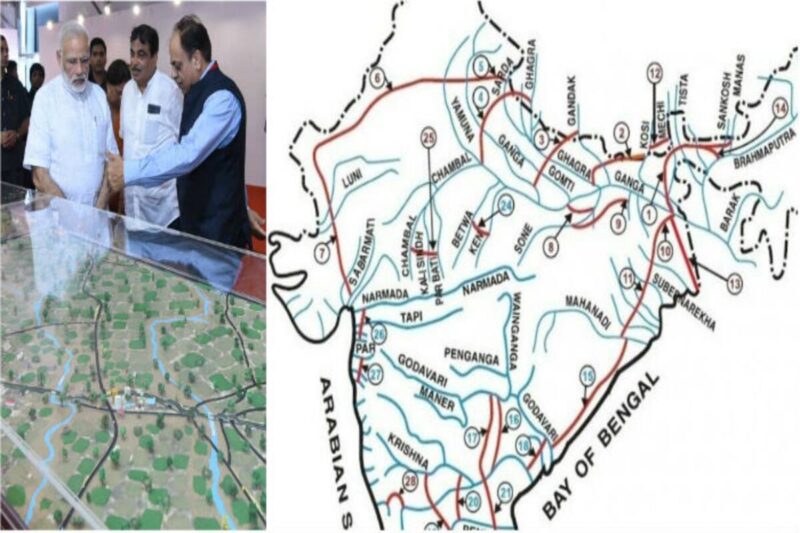
    The scheme is humongous. It will link the Brahmaputra and Ganges with the Mahanadi, Godavari and Krishna, which in turn will connect to the Pennar and Cauvery. On the other side of the country, it will connect the Ganges, Yamuna, with the Narmada, traversing in part the supposed route of the mythical Saraswathi. This last link has many political and mystical benefits, too.

    There are many smaller links as well, such as joining the Ken and Betwa rivers in MP, the Kosi with the Gandak in UP, and the Parbati, Kalisindh and Chambal rivers in Rajasthan. The project, when completed, will consist of 30 links, with 36 dams and 10,800 km of canals diverting 174,000 million cubic meters of water. Just look at the bucks that will go into this big bang. It was estimated to cost Rs. 560,000 crores in 2002 and entail the spending of almost 2% of our GNP for the next ten years. Now, it will cost twice or more than that, but our GDP is now three times more, and it might be more affordable and, hence, more tempting to attempt.

    The order to get going with the project was the output of a Supreme Court bench made up of then Chief Justice BN Kirpal and Justices KG Balakrishnan and Arjit Pasayat, which was hearing a PIL filed by the Dravida Peravai, an obscure Tamil activist group. The learned Supreme Court sought the assistance of a Senior Advocate, Mr Ranjit Kumar, and acknowledging his advice, recorded: “The learned Amicus Curiae has drawn our attention to Entry 56 List of the 7th Schedule to the Constitution of India and contends that the interlinking of the inter-State rivers can be done by the Parliament and he further contends that even some of the States are now concerned with the phenomena of drought in one part of the country, while there is flood in other parts and disputes arising amongst the egalitarian States relating to sharing of water. He submits that not only these disputes would come to an end but also the pollution levels in the rivers will be drastically decreased, once there is sufficient water in different rivers because of their inter-linking.”

    The only problem with this formulation is that neither the learned Amicus Curiae nor the learned Supreme Court are quite so learned as to come to such sweeping conclusions.

    Feature Image Credit: geographical.co.uk

    Opinions expressed are that of the author and do not reflect TPF’s position on the issue.

  • Amid India-China friction, we need to set real LAC

    Amid India-China friction, we need to set real LAC

    We have two outstanding issues between India and China. The larger one is about the large tracts of territory in Ladakh and Arunachal Pradesh. These two territorial disputes are not going to be resolved even in the foreseeable long term. Hence, Deng Xiaoping sagaciously suggested to Rajiv Gandhi in their 1988 meeting in Beijing that it was best left to history. A hundred years ago, the situations in both countries and their frontiers were very different. What they will be after another hundred years can be anybody’s guess?
    The urgent and pressing dispute on hand is the issue of the two LACs. These LACs frequently overlap. The term Line of Actual Control, or LAC, was first used by then Chinese PM Zhou Enlai in November 1959 when he wrote to his India’s Prime Minister Jawaharlal Nehru defining it as “the so-called McMahon Line in the east and the line up to which each side exercises actual control in the west”. Nehru rejected this line even after the events of 1962. By this time, he was also saddled with a parliamentary resolution pledging to recover all territories occupied by China. Interestingly, this LAC did not change very much even after 1962.


    Read more…

  • Un-crowding India’s Capital and Decentralising of Power

    Un-crowding India’s Capital and Decentralising of Power

    Dispersing offices across the nation will not only decongest Delhi, but will also become economic drivers that will modernise smaller towns.

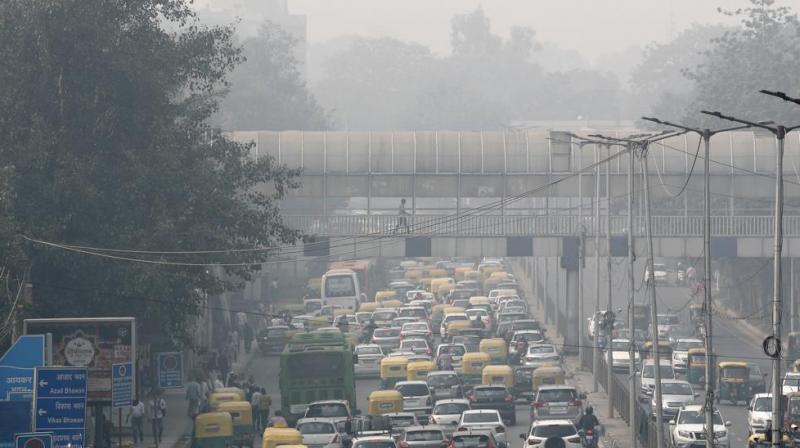
    One of the early textbooks I read on Political Economy started with a scenario set in Sao Paulo, Brazil, a city with huge traffic problems in the 1970s and 1980s, with a traffic jam at a major intersection on a hot summer day that turns into a gridlock, and then leads to people abandoning their cars, unable to bear the severe heat, only aggravating the problems. This then leads to outbreaks of road rage, fistfights and soon into a welter of riots and inflicting a severe breakdown of law and order, that then spreads to others parts of Brazil. But Sao Paulo still functions. I think India is now a better candidate to revolution coming out of a traffic jam.

    [powerkit_button size=”lg” style=”info” block=”true” url=”https://www.asianage.com/opinion/columnists/240723/mohan-guruswamy-un-crowding-indias-capital-and-decentralising-of-power.html” target=”_blank” nofollow=”false”]
    Read More
    [/powerkit_button]

  • Let’s move from Unitary State to Union of States

    Let’s move from Unitary State to Union of States

    The delimitation exercise now underway will reduce the weightage in Parliament of the states that did better.

    India’s Union of States has reached a critical impasse. Its diversity bound together by the Constitution that was meant to make us a modern, democratic and secular state based on equality and equal availability of justice, education, healthcare and social services, and division of government based on functions is now under grave challenge. India was never intended to be a saffron-hued monochromatic state, but a multi-ethnic, multi-cultural and multi-lingual state whose diversity made it a nation as never before. Its demographics compound its problems by threatening to swamp the non-Hindi/Hindutva belt into a saffronised dominion.

    [powerkit_button size=”lg” style=”info” block=”true” url=”https://www.asianage.com/opinion/columnists/050623/mohan-guruswamy-lets-move-from-unitary-state-to-union-of-states.html” target=”_blank” nofollow=”false”]
    Read More
    [/powerkit_button]

  • The myth of Magna Carta: The struggle still goes on

    The myth of Magna Carta: The struggle still goes on

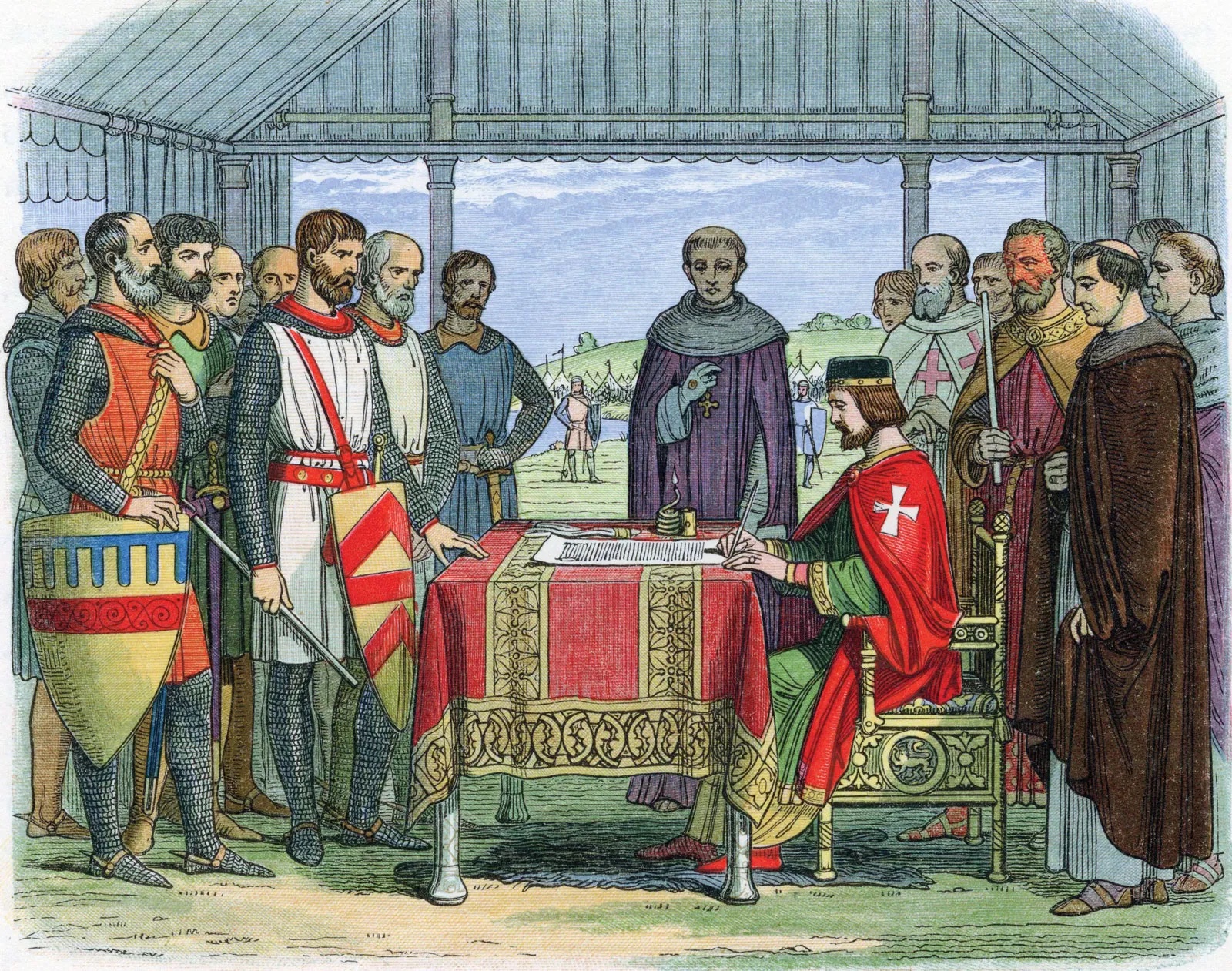
    The rise of democratic, elected Parliaments in England and Scotland just 50 years after the Magna Carta is not a coincidence but a consequence of that demand to share power. It is from the Magna Carta that the English writ of habeas corpus evolved, safeguarding individuals and their freedoms against unjust and unlawful imprisonment with the right to appeal.

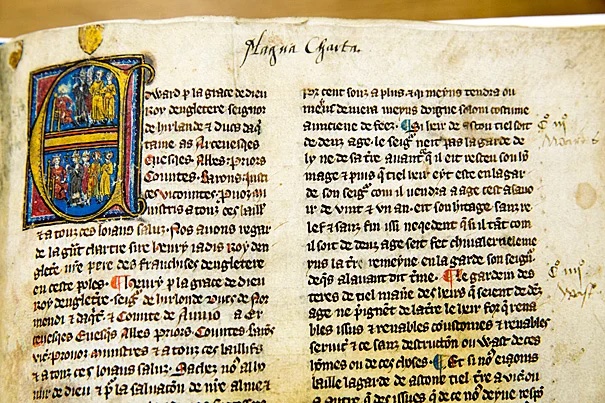
    We now take our liberties and rights for granted, and the way of life it guarantees us is inherent. But what we now have has come after a long evolution process, and often they flowed out of something else quite unintended. The Magna Carta is a case in point. The English-speaking world recently celebrated over 800 years of the Magna Carta or Great Charter, which is synonymous with fundamental rights and the rule of law that are the cornerstones of modern democracy. Much of the world believes the Magna Carta came out of an eruption of a long-suppressed yearning among ordinary people for protection against the monarch and nobility. But it is not so.

    The Magna Carta was thus not a grand demand for equality, basic freedoms or the rule of law, but just a narrow demand for restricting the ruler’s powers, to ring-fence the interests of the elite.


    It came out of an intra-elite struggle between 40 barons and their ruler. England’s King John had emptied the royal treasuries in a fruitless war with France, and the barons were unwilling to meet his demands for higher taxes. The consequence was the Magna Carta — to protect the barons from the King’s demands. The demand to be judged by their peers was another protection. It was not meant for ordinary people, but only for barons. The Magna Carta was thus not a grand demand for equality, basic freedoms or the rule of law, but just a narrow demand for restricting the ruler’s powers, to ring-fence the interests of the elite.

    But the Magna Carta’s myth endured and was invoked whenever and wherever people struggled against injustice and freedom. Mahatma Gandhi invoked it in South Africa when he fought for racial equality, and emancipators and freedom fighters like Nelson Mandela, Jawaharlal Nehru, Ho Chi Minh, Fidel Castro and Martin Luther King Jr invoked it when they were being tried for sedition by oppressive regimes. Like the English barons, they too were arguing for limiting the oppressive and unjust powers of rulers, but not just for themselves and their peers, but for all their peoples. The story of modern democracy is about the long journey from the rights of a few to the rights of all.

    Another myth that endures is that the twin notions of democracy and the rule of law somehow originated with the Magna Carta. The fact is that the King rejected the Magna Carta soon after it was presented to him. But John avoided the consequences of the barons’ indignation by dying and thereby perpetuating the myth.

    The first democracies long preceded the 1215 Magna Carta. As early as the sixth century BC several “independent republics” existed in India as sanghas and ganas. Their main characteristics were a raja, elected or hereditary, and a deliberative assembly. These assemblies met regularly and passed laws pertaining to finances, administration and justice. The raja and other officials obeyed the decisions of these assemblies. While these assemblies mostly comprised the nobility and landowners, in some cases they included all free men. But the Brahminical system prevailed, in that the monarch always had to be a Kshatriya. While Licchavis, who held sway over the Kathmandu Valley in today’s Nepal and a major part of northern Bihar, were governed by an assembly of about 7,000 rajas, who in turn were the heads of all major families, others like the Shakyas, the clan to which Gautama Buddha belonged, had assemblies open to all people, rich or poor, and noble or common.

    Socrates and his pupil, Plato, deliberated and expounded on the role of a citizen within a community and laid down the foundations of the political philosophy that flourished in Athens and spread to most of the world in the next two and a half millennia.

    The greatest contribution to the evolution of democracy as a philosophy was in Athens, where great philosophers like Socrates, Plato, and Aristotle lit up public discourse with their brilliance and original thinking. Socrates and his pupil, Plato, deliberated and expounded on the role of a citizen within a community and laid down the foundations of the political philosophy that flourished in Athens and spread to most of the world in the next two and a half millennia. Aristotle, who counted among his students Alexander the Great, dwelt more on systems of government and who first qualified liberty as the fundamental principle of democracy.

    Aristotle wrote in Politics: “Now a fundamental principle of the democratic form of constitution is liberty — that is what is usually asserted, implying that only under this constitution do men participate in liberty, for they assert this as the aim of every democracy. But one factor of liberty is to govern and be governed in turn; for the popular principle of justice is to have equality according to number, not worth, and if this is the principle of justice prevailing, the multitude must of necessity be sovereign and the decision of the majority must be final and must constitute justice, for they say that each citizen must have an equal share; so it results that in democracies the poor are more powerful than the rich, because there are more of them, and whatever is decided by the majority is sovereign.”

    This principle that “whatever is decided by the majority is sovereign” has always had to contend with the rights of individuals. In the US, created after a great debate among the founding fathers as a democracy, it was by majority will that slavery flourished till the Civil War. It took another century before equal rights for black people became the majority will. This constant struggle for individual rights against the will of the collective has been the central story of the evolution of the modern democratic state.  Free India, by contrast, provided for all these rights and liberties from the beginning in its Constitution. The Magna Carta, because it sought to limit the powers of the ruler, perhaps still has a place in our hearts and minds. To most citizens in democratic states, our life is also a constant struggle against the assertion of collective will to trample individual liberties or the rights of smaller groups.

    This principle that “whatever is decided by the majority is sovereign” has always had to contend with the rights of individuals.

    The rise of democratic, elected Parliaments in England and Scotland just 50 years after the Magna Carta is not a coincidence but a consequence of that demand to share power. It is from the Magna Carta that the English writ of habeas corpus evolved, safeguarding individuals and their freedoms against unjust and unlawful imprisonment with the right to appeal. It is from this emergence of petitioning for the production of the body that Parliaments in due course became to be increasingly used as a forum to address all the concerns and grievances of ordinary people.

    Thus, whatever be Magna Carta’s first intent, its consequences greatly expanded over centuries into a charter, which guarantees individual liberties, equality and justice to all, irrespective of race, religion and class. But that struggle is far from over. It goes on, and only its forms change as human values and means change.

    This article was published earlier in the Asian Age.

    Feature Image Credit: Britannica


  • Indus Waters: Yawning Gap Between Threat and Reality

    Indus Waters: Yawning Gap Between Threat and Reality

    World Bank brokered the IWT between India and Pak after many years of intense negotiations to allocate the waters of the Indus river basin

    The Narendra Modi government has decided to start talks with Pakistan on the Indus Waters Treaty, and rightly so. After the Uri incident, Prime Minister Narendra Modi had said that “blood and water cannot flow together”. The reality, however, is that while flow of blood can be stopped, the water will continue to flow. The geography makes it next to impossible for the waters from the Indus, Chenab and Jhelum. Yet there is reason to revisit this treaty, because of Pakistan’s persistent misuse of the provisions of the IWT that enable it to adopt a dog in the manger attitude to prevent or delay any development of hydel projects on the three rivers that is permitted by the treaty. This must stop.

    The Indus rivers system has a total drainage area exceeding 11,165,000 sq. km. Its estimated annual flow stands at around 207 km3, making it the twenty-first largest river in the world in terms of annual flow. It is also Pakistan’s sole means of sustenance. The British had constructed a complex canal system to irrigate the Punjab region of Pakistan. Partition had left a large part of this infrastructure within Pakistan.

    [powerkit_button size=”lg” style=”info” block=”true” url=”https://www.asianage.com/opinion/columnists/070323/mohan-guruswamy-indus-waters-yawning-gap-between-threat-and-reality.html” target=”_blank” nofollow=”false”]
    Read More
    [/powerkit_button]

  • The Rivers Linking Scheme: Will it Work or End up a Disaster?

    The Rivers Linking Scheme: Will it Work or End up a Disaster?

    I keep hearing that Modiji is going to unveil the often-spoken and then shelved Rivers Link Up Scheme as his grand vision to enrich the farmers and unite India. In a country where almost two-thirds of the agricultural acreage is rainfed, water is wealth. Telangana has shown the way. Once India’s driest region has in just eight years been transformed into another granary of India. Three years ago he had promised to double farmer’s incomes by 2022 and has clearly failed. He now needs a big stunt. With elections due in 2024, he doesn’t even have to show any delivery. A promise will do for now.

    This is also a Sangh Parivar favourite and I am quite sure the nation will once again set out to undertake history’s greatest civil engineering project by seeking to link all our major rivers. It will irretrievably change India. If it works, it will bring water to almost every parched inch of land and just about every parched throat in the land.

    On the other hand, if it doesn’t work, Indian civilization as it exists even now might then be headed the way of the Indus valley or Mesopotamian civilizations destroyed by a vengeful nature, for interfering with nature is also a two-edged sword. If the Aswan High Dam turned the ravaging Nile into a saviour, the constant diversion of the rivers feeding Lake Baikal has turned it into a fast-receding and highly polluted inland sea ranking it as one of the world’s greatest ecological disasters. Even in the USA, though the dams across mighty Colorado have turned it into a ditch when it enters Mexico, California is still starved for water.

    I am not competent to comment on these matters and I will leave this debate for the technically competent and our perennial ecological Pooh-Bahs. But the lack of this very debate is cause for concern. It is true that the idea of linking up our rivers has been afloat for a long time. Sir Arthur Cotton was the first to propose it in the 1800s. The late KL Rao, considered by many to be an outstanding irrigation engineer and a former Union Minister for Irrigation, revived this proposal in the late 60s by suggesting the linking of the Ganges and Cauvery rivers. It was followed in 1977 by the more elaborate and gargantuan concept of garland canals linking the major rivers, thought up by a former airline pilot, Captain Dinshaw Dastur. Morarji Desai was an enthusiastic supporter of this plan.

    The return of Indira Gandhi in 1980 sent the idea back into dormancy, where it lay all these years, till President APJ Abdul Kalam revived it in his eve of the Independence Day address to the nation in 2002. It is well known that Presidents of India only read out what the Prime Ministers give them and hence the ownership title of Captain Dastur’s original idea clearly was vested with Atal Behari Vajpayee.

    That India has an acute water problem is widely known. Over sixty per cent of our cropped areas are still rain-fed, much too abjectly dependent on the vagaries of the monsoon. The high incidence of poverty in certain regions largely coincides with the source of irrigation, clearly suggesting that water for irrigation is integral to the elimination of poverty. In 1950-51 when Jawaharlal Nehru embarked on the great expansion of irrigation by building the “temples of modern India” by laying great dams across our rivers at places like Bhakra Nangal, Damodar Valley and Nagarjunasagar only 17.4% or 21 million hectares of the cropped area of 133 million hectares was irrigated. That figure rose to almost 35% by the late 80s and much of this was a consequence of the huge investment by the government in irrigation, amounting to almost Rs.50, 000 crores.

    Ironically enough this also coincided with the period when water and land revenue rates began to steeply decline to touch today’s nothing level. Like in the case of power, it seems that once the activity ceased to be profitable to the State, investment too tapered off.

    The scheme is humongous. It will link the Brahmaputra and Ganges with the Mahanadi, Godavari and Krishna, which in turn will connect to the Pennar and Cauvery. On the other side of the country, it will connect the Ganges, Yamuna with the Narmada traversing in part the supposed route of the mythical Saraswathi. This last link has many political and mystical benefits too.

    There are many smaller links as well such as joining the Ken and Betwa rivers in MP, the Kosi with the Gandak in UP, and the Parbati, Kalisindh and Chambal rivers in Rajasthan. The project when completed will consist of 30 links, with 36 dams and 10,800 km of canals diverting 174,000 million cubic meters of water. Just look at the bucks that will go into this big bang. It was estimated to cost Rs. 560,000 crores in 2002 and entail the spending of almost 2% of our GNP for the next ten years. Now it will cost twice or more than that, but our GDP is now three times more, and it might be more affordable, and hence more tempting to attempt.

    The order to get going with the project was the output of a Supreme Court bench made up of then Chief Justice BN Kirpal, and Justices KG Balakrishnan and Arjit Pasayat, which was hearing a PIL filed by the Dravida Peervai an obscure Tamil activist group. The learned Supreme Court sought the assistance of a Senior Advocate, Mr Ranjit Kumar, and acknowledging his advice recorded: “The learned Amicus Curiae has drawn our attention to Entry 56 List of the 7th Schedule to the Constitution of India and contends that the interlinking of the inter-State rivers can be done by the Parliament and he further contends that even some of the States are now concerned with the phenomena of drought in one part of the country, while there is flood in other parts and disputes arising amongst the egalitarian States relating to sharing of water. He submits that not only these disputes would come to an end but also the pollution levels in the rivers will be drastically decreased, once there is sufficient water in different rivers because of their interlinking.”

    The only problem with this formulation is that neither the learned Amicus Curiae nor the learned Supreme Court is quite so learned as to come to such sweeping conclusions.


    Feature Image Credit: Hindustan Times


    This article was published earlier in deccanchronicle.com