Author: Mikhail Molchanov

  • The End of War in Ukraine: A Tough Road Ahead

    The End of War in Ukraine: A Tough Road Ahead

    The war, which began when NATO leaders dismissed Russia’s demand for security guarantees from the West, was intended as a way for Russia to reclaim its power and prestige on the global stage while strengthening its security in the region. Neither of these objectives has been achieved, nor will they be with Ukraine’s defeat. The war quickly escalated into a proxy conflict between Moscow and the collective West, with significant losses on both sides.

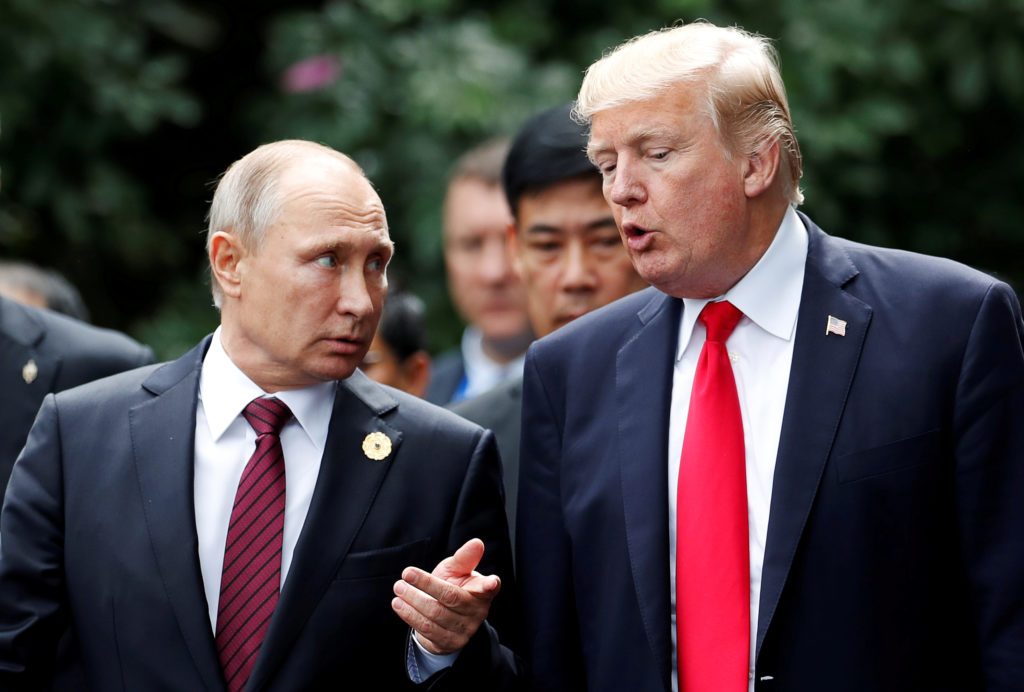
    Given that President Putin has recently signed an order to draft 160,000 additional soldiers with the goal of “finishing off” the Ukrainian resistance, the Russia-Ukraine war is far from a definitive resolution. Nonetheless, it is never too early to begin considering the options for a successful post-war settlement and the potential to transform the US-advocated ceasefire (if it ever materializes) into a lasting peace.
     

    Unfortunately, neither side of the conflict has presented anything even remotely resembling a plan for a sustainable, acceptable post-war settlement. The war, which began when NATO leaders dismissed Russia’s demand for security guarantees from the West, was intended as a way for Russia to reclaim its power and prestige on the global stage while strengthening its security in the region. Neither of these objectives has been achieved, nor will they be with Ukraine’s defeat. The war quickly escalated into a proxy conflict between Moscow and the collective West, with significant losses on both sides. Russia’s international security situation is now worse than it was before the war began, and this will remain the case for some time, regardless of what happens in Ukraine.

    Ukraine, in fact, is fighting a losing battle. Its leaders are sacrificing the country in the midst of a geopolitical rivalry involving Russia, Europe, and the USA. If Ukraine accepts a Trump-mediated deal with Russia, it will lose four regions occupied by Russian forces since 2022, agree to the annexation of Crimea, and abandon any hopes of NATO membership in the future. If Ukraine is defeated on the battlefield, it will lose its independence and be forced to submit to what Russian leaders refer to as demilitarization and denazification—essentially, a regime change and the reconstitution of Ukrainian governance.

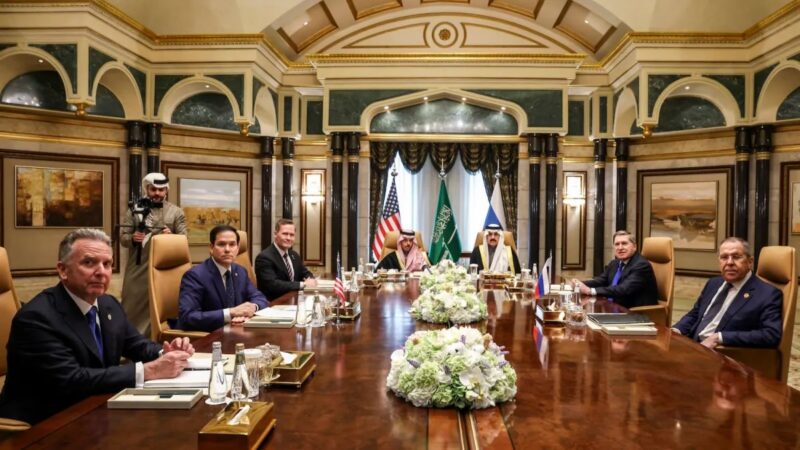
    With no realistic prospect of pushing Russian forces out of the country and with the increasing likelihood of an exploitative “resources plus infrastructure” deal imposed by Washington, Ukraine risks losing not only its state sovereignty but any semblance of international agency. If Ukraine’s role in a post-war settlement, as envisioned in the Saudi negotiations, is reduced to either a Russian-occupied territory or a de facto resource colony of the United States, such a “settlement” would merely serve as an interlude between two wars, offering no lasting resolution to the conflict.

    As the Kremlin proposes placing Ukraine under external governance and the White House demands control over all of Ukraine’s natural resource income for several years—along with a perpetual share of that revenue—the process of transforming Ukraine into a non-self-governing territory accelerates. However, Russia also faces setbacks. Despite Putin’s efforts to halt NATO’s expansion and push the alliance back to its 1997 military posture, NATO has grown closer to Russia’s borders, with formerly neutral Sweden and Finland joining the alliance in direct response to Russia’s invasion of Ukraine. Trump’s previous alignment with Putin prompted EU leaders to agree to a substantial €800 billion increase in defence spending, while French President Macron proposed extending France’s nuclear deterrent to protect all of Europe from potential Russian threats. This may lead to France positioning its nuclear-capable jets in Poland or Estonia, and its ballistic-missile submarines in the Baltic Sea. The British nuclear deterrent is already committed to NATO policy, and it is not unimaginable that some or all of the UK’s nuclear submarines could be deployed closer to Russia’s borders. A UK contribution to a European nuclear umbrella, along with the creation of a low-yield variant of existing nuclear capabilities, would further erode Russia’s already fragile security.

    Putin’s proposal for the external governance of Ukraine reveals Russia’s deep vulnerabilities, which the full occupation of Ukraine would soon expose. A collapse of Ukrainian statehood and the need to occupy the entire country would require Russia to maintain an occupation force of several hundred thousand troops, while also assuming responsibility for law enforcement, security, state administration, essential services, and more. Rebuilding Ukraine’s devastated southeast would cost billions of dollars, and efforts to restore the entire former Ukrainian nation are simply beyond Russia’s capacity. Meanwhile, the guerrilla warfare that the Ukrainians will inevitably intensify in response to Russia’s territorial expansion will further drain the occupiers’ resources.

    The end of the war would mark a slowdown in the military-industrial complex that has driven Russia’s economic growth in recent years. Additionally, the ongoing militarization of society, the rise of nationalist totalitarianism, and the enormous costs of occupying the “new territories” highlight the Pyrrhic nature of Russia’s supposed “victory.”

    Despite the Kremlin’s bravado, Russia’s economy and society have been significantly weakened by the war. With the key interest rate at 21 percent, annual inflation at 10 percent, dwindling welfare fund reserves, and an estimated 0.5 to 0.8 million casualties (killed and wounded) on the battlefield, it’s unclear how much longer Putin can stave off economic decline and maintain reluctant public support for his administration. The end of the war would mark a slowdown in the military-industrial complex that has driven Russia’s economic growth in recent years. Additionally, the ongoing militarization of society, the rise of nationalist totalitarianism, and the enormous costs of occupying the “new territories” highlight the Pyrrhic nature of Russia’s supposed “victory.” The best possible settlement from Russia’s perspective—leaving a rump Ukraine that is independent, self-sufficient, and friendly—is simply out of reach. The remaining options will only delay the inevitable second round of hostilities.

    Finally, the Western proposals for post-war settlements are either unsustainable or outright counterproductive. This is perplexing, given that the war has cost Europe dearly, and it should be in the EU’s interest to see it end as soon as possible. While predictions of seeing the Russian economy in tatters have not materialized, Europe now faces an imminent financial crisis. With the EU economy growing by less than 1 percent in 2024, while Russia’s economy grows 4.5 times faster, it’s time for those like President Macron of France—who advocate continuing the war with extensive European military and financial support—to reconsider their stance.

    However, this is not happening. Instead, EU leaders are urging Russia to agree to an “immediate and unconditional ceasefire on equal terms, with full implementation,” under the threat of new sanctions and the redoubling of Europe’s support for Ukraine.

    This approach is counterproductive and likely to strengthen Russia’s resolve. Beyond the fact that continued support for Ukraine’s war effort will further strain the already fragile budgets of the supporting states, insisting that Ukraine fight to the bitter end is both practically and morally indefensible. At the same time, abandoning Ukraine to face Russia alone could lead to the collapse of Ukrainian statehood. In either case, the collective West loses.

    A negotiated settlement, as proposed by President Trump, is a lesser evil under the current circumstances. Yes, it’s a suboptimal solution that could embolden Putin, harm Ukraine, deepen the divide between Russia and Europe, and create new challenges for international security.

    Yet, the preservation of Ukrainian statehood would be ensured. Death and destruction would cease. Europe’s economy would recover, and the global economy would see a boost. The risk of nuclear war in Europe would fade away. The need for European citizens to stockpile 72 hours’ worth of supplies, as per the European Commission’s recent guidance, might become less of a priority for the already-intimidated European citizens.

    European leaders should consider working alongside Trump, Putin, and Zelensky to craft a balanced, negotiated solution that accounts for the interests of all sides. Even if everyone must make sacrifices, it is better than losing everything. 

    While any path out of this war will be difficult, the strategy of threatening Russia with harsher sanctions, forming “coalitions of the willing,” and creating EU nuclear-armed forces will not make it any easier. Instead, European leaders should consider working alongside Trump, Putin, and Zelensky to craft a balanced, negotiated solution that accounts for the interests of all sides. Even if everyone must make sacrifices, it is better than losing everything.

    Feature Image Credit: www.pbs.org
  • The Russia-Ukraine War: Putin’s Reasons, Objectives and the Way Out

    The Russia-Ukraine War: Putin’s Reasons, Objectives and the Way Out

    In 3 weeks since Russia’s president, Putin ordered on February 24 this year, a “special military operation” against Ukraine, many questions were asked on his reasons and goals.

    Putin answered those questions in the early morning address to the nation on February 24. He referred to Russia’s particular concern and anxiety over the NATO expansion to the east and the US policy of containment of Russia through the military “settlement” of the Ukrainian territory. Transformation of Ukraine, historically a part of the Russian state, into an “anti-Russia” controlled and guided by the U.S. was nothing less, in Putin’s view than a real threat to Russia’s very existence.

    Putin went on to mention Ukraine’s use of armed forces against the pro-Russian separatists in Donbas, the potential threat that the Ukrainian nationalists could present for Russia-annexed Crimea, and Kyiv’s desire to acquire nuclear weapons. “Russia’s clash with these forces is inevitable.”

    This was the start of Russia’s war on Ukraine. Few of us believed it would actually happen, but it did, nonetheless. Let’s start by trying to understand, why.

    Russia’s red lines

    According to John Mearsheimer, the West, and especially America, is principally responsible for the current crisis, which actually started at NATO’s Bucharest summit in April 2008, with the US pushing the alliance to announce a plan for Ukraine and Georgia’s prospective membership. Russian leaders characterized the move as an existential threat to Russia and promises to thwart it. Putin warned the West then and there: “if Ukraine joins NATO, it will do so without Crimea and the eastern regions. It will simply fall apart.”

    Nobody listened, or paid attention, thus underscoring the second point from Putin’s pre-invasion speech: the West no longer treats Russia as a great power and will do whatever it deems necessary without taking heed of Russia’s legitimate interests. Instead, Ukraine was actively encouraged to expand its collaboration with NATO and crush the pro-Russian rebellion in Donbas by force. The U.S. and NATO supplied lethal weapons for Ukraine’s civil war, trained its armed forces and turned a blind eye to reports of atrocities that Kyiv and Kyiv-affiliated militias had committed in the region.

    Ukraine started hosting joint land-based and naval exercises with NATO countries, effectively blocking Russia’s Black Sea fleet in its base in Sevastopol. In July 2021, Ukraine and America co-hosted a major naval exercise in the Black Sea region involving navies from 32 countries. In November 2021, the U.S. conducted its annual Global Thunder 22 exercises, which included strategic aviation practising nuclear strikes against Russia over the Black Sea and only 20 km from Russia’s borders. In parallel to that, Ukraine’s Deputy Minister of Defense announced his country’s aspirations to put as many US/NATO training centers in Ukraine as possible, which effectively amounted to a request for additional U.S. military personnel in the country.

    As John Mearsheimer observed, Ukraine was fast becoming a de facto member of NATO. It wanted to use NATO’s rearmaments and the US political and strategic back-up to crush the separatist rebellion in Donbas and ensure “de-occupation and reintegration” of Crimea, now an integral part of the Russian Federation, by all necessary means, not excluding “military measures.” Russia’s fears of NATO’s ballistic missiles appearing on the Ukraine-Russia border, within 7-8 minutes of flying time to Moscow no longer seemed overly exaggerated. Putin described such a potentiality as NATO’s holding a knife to Russia’s throat and made an explicit connection between Ukraine’s aspirations of NATO membership and Kyiv’s plan to return Donbas and Crimea by force. Both were equally unacceptable.

    Russia’s goals

    According to the Russian leader, if Ukraine joined NATO, it would be tempted to implement its “de-occupation strategy” for Crimea through the use of force. NATO would then be obliged to help Ukraine under its Article V mutual defence clause. “This means that there will be a military confrontation between Russia and NATO,” Putin said. Such a war would soon turn nuclear. The Kremlin came to a conclusion that a pre-emptive strike on Ukraine was the only way to stave off a future Russia-NATO war over Crimea.

    We haven’t seen it coming. It was hard to anticipate because Ukraine’s turning away from Russia and drawing closer to NATO did not start yesterday. Ukraine’s Yavoriv training ground hosted the first joint manoeuvres with NATO back in 1995. In 1997, Ukraine and NATO signed the Charter on a Distinctive Partnership. In 2000, the Ukrainian parliament ratified the Status of Forces Agreement, which enabled the stationing of NATO troops on Ukrainian soil. In 2002, Ukraine’s goal of eventual NATO membership was first voiced by its President; that goal has since become a part of the country’s official foreign policy doctrine. Ukraine’s forces took part in numerous NATO-led operations and missions over the years, from Bosnia to Kosovo to Afghanistan to Iraq. And Russia observed all of these developments over the period of near 20 years with calm and reserve, leaving an impression that Ukraine is free to proceed as it wants.

    Moscow’s calm evaporated after Ukraine’s Maidan revolution of 2014 deposed Russia-leaning president Yanukovych and, through the revolutionary powers’ first acts, indicated a clear break with the last memories of the Russian influence. Symbolically, the very first move was to strip the Russian language of its semi-official status in the areas where significant numbers of Russian-speaking minorities lived. A clear indication was given as to the status of the Russian Black Sea Fleet naval base in Sevastopol – the new powers would prefer the Russian navy relocate to Russia proper at its earliest convenience. Plans were underway to offer these naval facilities to NATO.

    Putin moved on to annex Crimea, which, in his view, was an act of strategic necessity. He apparently anticipated Ukraine’s eventually acquiescing to the fact.

    It did not happen. Instead, Ukraine grew more nationalistic, and a significant number of its nationalists embraced anti-Russianism together with far-right politics and symbology. Hence, the Russian goals in the present war include “de-Nazification,” which must be read as Ukraine’s abandonment of anti-Russian nationalism and return to the quasi-Soviet ideology of “one people” with Russians and Belarusians. In other words, Russia would seek to reaffirm, if not impose, a version of the Ukrainian identity that was supported through both the imperial and the Soviet times — Ukrainians as a junior kinfolk to the Russian “older brother.”

    The way out

    With Ukraine’s capital Kyiv under assault and the southern port of Mariupol nearing utter destruction, calls for peace have intensified on all sides, including from Russia’s most important backers in China. Unfortunately, the search for a working compromise has not yet started in earnest. Ukraine’s original position at peace talks focused on the immediate withdrawal of all Russian troops from all of Ukraine, Crimea and Donbas included. From the Russian perspective, that would be equal to capitulation and surrender of a part of its own territory (Crimea), plus legal denunciation of a friendship and support treaty just concluded with Donbas.

    Russia’s present terms for ending the war are equally unrealistic. They include Ukraine’s adoption of a neutral status and the abandonment of its hopes for NATO membership; acknowledgement of the Russian sovereignty over Crimea and the independence of separatist regions in the country’s east; and demilitarization. The objective of the regime change, disguised by the “de-Nazification” rhetoric, has not been voiced much as of recent.

    Given the very fact of the ongoing war with Russia, the demand for demilitarization is clearly a non-starter. Russia’s insistence on Ukraine’s constitutional neutrality could, perhaps, be taken back to Ukraine’s parliament for a serious discussion; however, a ceasefire must be reached first for such a discussion to happen. As for Ukraine’s acknowledgement of Russia’s sovereignty over Crimea or independence of Donbas, these Russia-pushed items look more like the terms of surrender and cannot form the basis of a peace agreement.

    A more plausible ground for a compromise could be the two states’ mutual pledge to refrain from all attempts to solve any outstanding issues by force in the future. That would stop short from Ukraine’s recognition of either Crimea or Donbas but would assure Russia that Ukraine has no plans to regain the lost territories by force. Russia would need to withdraw its army from all areas of Ukraine proper. Ukraine would have to accept that its fight for the return of Crimea and Donbas would now be restricted in its choice of means to mostly diplomatic and legal instruments. The assurances of a non-aligned, non-bloc status that Ukraine could give to Russia should be matched with Russia’s assurances of full compensation for the losses that this war inflicted on Ukraine’s economy and society. While such a compromise will most probably draw the rage of hawkish nationalists on both sides, it might actually form the foundation of a peace agreement that everyone needs.

    Image Credits:

    Feature Image: www.militarytimes.com

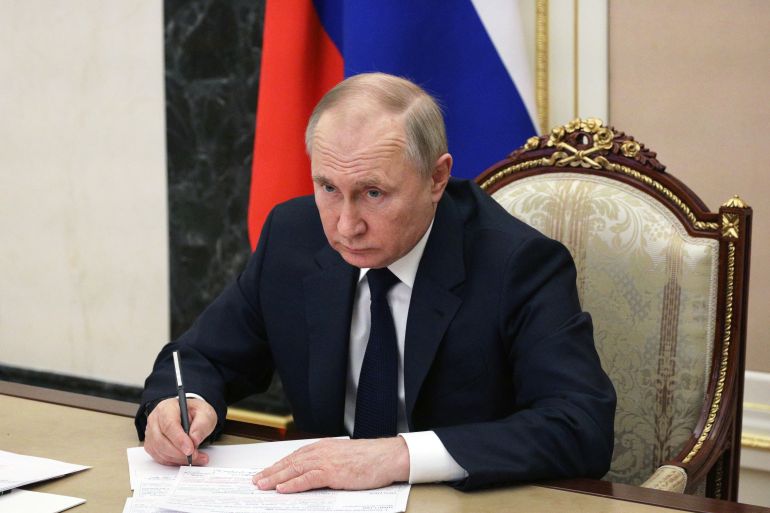
    Putin Image: Al Jazeera

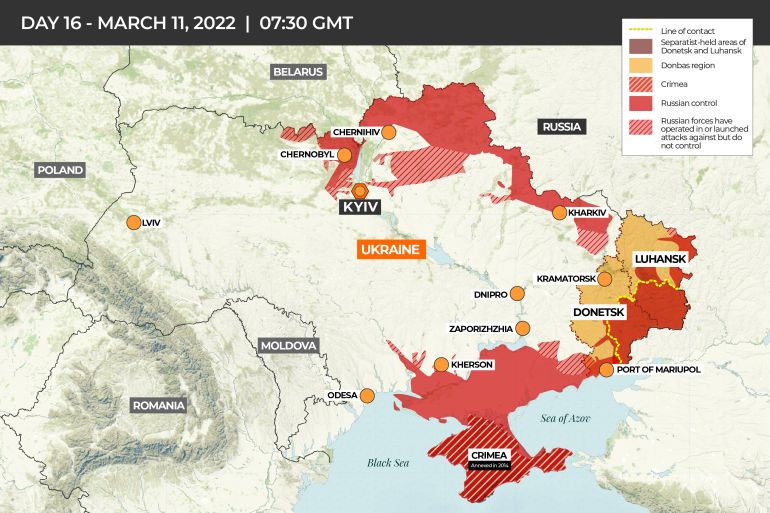
    Map: Al Jazeera