Author: Manjari Balu

  • Venezuela’s Collapsing Economy: Victim of Geopolitical Games

    Venezuela’s Collapsing Economy: Victim of Geopolitical Games

    Manjari Balu and M Matheswaran                                                                     June 23, 2019/Analysis

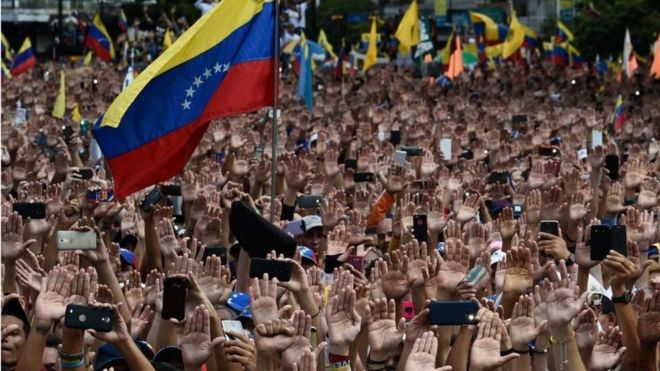
    The collapse of Latin America’s oil-rich country, Venezuela, epitomises the probable debacle of a socialist regime while the geopolitical strategies espouse the power struggle at the cost of the economy. After the death of Hugo Chavez in 2013, Nicolas Maduro, the hand-picked successor of Chavez took overthe office to preserve the “petrostate” status of Venezuela.  USA, backed by Brazil, Canada and many other countries, have recognized the opposition led by Juan Guaido as the interim president and have questioned the legitimacy of the Maduro government. Venezuela’seconomy depends to the extent of 95 per cent on oil exports and the dwindling oil prices in 2014 deepened the latent crisis, an inevitable consequence for a socialist government with illiberal economic agendas. Chavizmo rose to fame with a brand of Bolivarian revolution that promised to reduce poverty and deter the US in interfering in the country’s functioning.

    Economic Collapse: Paradox of Largest Oil Reserves and Economic Mismanagement

    Venezuela is a prime example of what economic mismanagement, impractical socialist measures, and corruption can do to a country that is wealthy with natural resources. At 300, 878 million barrels of proven oil reserves, Venezuela has the largest amount of proven oil reserves in the world. The country’s economy is largely tied to its oil wealth and was one of the richest in Latin America until a few years ago. Economic collapse has led to a huge humanitarian crisisunseen in the country’s modern history. IMF has predicted that Venezuela’s inflation rate will reach 10 million per cent in 2019, becoming one of the worst cases of hyperinflation in modern history.

    TheTransformation Index that evaluates the political and economic transformation of a country, has ranked Venezuela 110 out of 129 nations with a score of 3.27 out of 10. In addition to criticizing the poor state of the economy, it also reported that the state-sanctioned crime rates have spiralled. The current catastrophic economic crisis and political chaos is the result of a pervasive economic mismanagement and an economy rooted in a single commodity, petroleum.

    Inflation was 1,30,000 per cent in 2018 and the economy has contractedby 22.5 per cent, indicating the dire status of the economy. The economic future of the country continues to be bleak and the debate has converged to the geopolitical relevance of the issue. Data on money supply is a key element to understand the inflation rates in an economy and Venezuela has refused to publish money supply data in the past years. A recent data suggests that  12 trillion BsF (Bolivares Fuertes) were printed exposing the economic ruination.

    Initial denial by the Venezuelan government about the crisis never let aid flow in, recent acceptance of humanitarian aidhas tripled the aid budget. With poor socio-economic indicators as a major challenge, Venezuela is further saddled with huge external debt as a problem to be solved by the new dispensation, be it Maduro led government or any other successor. Currently, Venezuela’s external debt stands at  150 per cent of the total GDP.

    American Sanctions, Food Imports, and Falling Aid

    Few consider the problem to be homegrown in Venezuelaand many blame the US for artificially creating the hyperinflation.  The US justified the economic sanctions to bring down Maduro regime and accused him to have caused upheavals since 2014 and the controversies besieging election manipulation by Maduro’s party substantiate the allegation. Political funding for a coup against the regime change in Venezuela was extensively promoted by the Bush administration. The protraction of political interest led to imposition of anti-democratic sanctions,  and reiterates the hegemonic strategy that the US continues to pursue.

    The recent economic sanctions imposed on the state-owned oil company, Petroleos de Venezuela SA (PdVSA)  by the US has exacerbated Venezuela’s problems in its oil production- the output is expected to fall by 33 per cent in 2019. Investigation of Venezuela’s oil production before and after the economic sanctions suggests the production has been on downtrend even before the sanctions.  

    Private investments and productivity in agriculture dropped alarmingly as the socialist government led by Chavez nationalized agribusiness and industries and encouraged food imports.  Seventy per cent of the food requirements were met by imports. According to the United States Department of Agriculture, Venezuela is one of the potential markets for the US to export agricultural produce, and accounted for 21 per cent of total agricultural imports of Venezuela. However, as the economy collapsed, over-dependence on imports for food began to tell. In 2016, food imports fell by 72 per cent and reports state that people have lost an average of 8.6 kgs of weight due to food scarcity.


    China’s Extractive Relationship with Venezuela

    Majority of the loans are from China and Russia and their servicing or repayments are tied with its oil revenue. It is estimated that Venezuela owes around 13.5 billion USD to China as of 2019. Under Chavez leadership, China and Venezuela laid a financial foundation by crafting  “China-Venezuela Joint fund” known as the FCCV. The central bank of China alone loaned 42.5 billion US dollars from 2007-2012 to Venezuela. The compounded bilateral interest incentivized China to support even when the Venezuelan economy faltered in 2014. China further escalated its commercial interest byloaning a sum of $4 billion as cash for oil deal paying little attention to the projected contraction in the Venezuelan economy. In the year 2017, Maduro announced ambitious planning to spend 70 percent of the total budget on social schemes to address food scarcity. While the quixotic socialist paradigm was impressive during Chavez’s tenure the public soon realized the huge dent made in the economy by imprudent  social spending.

    The defensive lending strategy adopted by China post Maduro’s electoral victory shifted the focus of investments to oil and oil-related infrastructure. Although China’s recent intervention in Venezuela’s domestic affairs is evident from the endorsement for Maduro,  oil supply has always been its priority over political rivalry in Venezuela. As China became more sceptical about Venezuela’s ability to repay the loans because of low oil production and the adverse impact of US sanctions, its capital flow to Venezuela shrunk.  Maduro had viewed relations with China to be based on ideological common ground, but China was focused on leveraging its abundant resources, which, in turn, contributed to the crippling of the economy of Venezuela. This asymmetric relationship between Venezuela and China thwarted expectations of Maduro to acquire more credit from China.

    For China, endorsing Maduro is not an option as far as its economic interest is concerned; increasing rebellion of Venezuelan people portends a threat to the Maduro government that could bring in democracy in Venezuela, which could make it a potential defaulter of past debts. The Chinese government is considered culpable for Venezuela’s crisis by many American policymakers, and are accused to have followedthe “debt trap diplomacy”. The investment strategy in Venezuela resembles the Angola model- Chinese government extends credit tied with oil. However, in the case of Venezuela, China is bearing the cost of overestimating the performance of Venezuelan economy.

    Russia’s All-Weather Ties

    As we see a pragmatic China becaming more cautious about the failing economy of Venezuela, Russia’s interest and the relationship go beyond just the commercial narrative. Russia ties with Venezuela are deep-rooted since the time of Chavez, and it has continued to bolster the failing Venezuelan apparatus for clear geopolitical reasons. Vladimir Putin has invested strongly on  Russia’s international image and prestige, especially while rebuilding Russia post the Yeltsin years. The first credit line of arms relations between Russia and Venezuelawas signed in 2006. Although the export of military equipment to Venezuela have reduced drastically by nearly 96 per cent in the past few years, Venezuela has been the largest buyer of Russian arms in the Western Hemisphere with a total estimate of $4 billion during Chavez years. Russia has made consistent efforts to support Maduro by deploying military presence in Caracas even as Venezuela’s economy took a downturn.

    Chavez and Putin deepened their political ties on common grounds of  supporting a multipolar world order, and Chavez expected tangible benefits for Venezuela out of this agreement. Oil deals between both the countries advanced asRussia’s largest crude oil producer, Rosneft, partnered with PdVSA for several projects. Rosneft holds 40 percent shares and plays an instrumental role in pivoting Russia’s foreign policy through sound investments in the West. Venezuela agreed to commit 49.9 percent of its share in Citgo, American subsidiary company in exchange for credit from Rosneft. Russian emphasis on the “strategic” importance of the alliance with Venezuela reveals Russia’s intention to strengthen its geopolitical presence in USA’s backyard. Putin’s domestic political image has become sharper with his strategic take on Venezuela.

    However, sanctions on Venezuela has severely restricted the ability of Rosneft to borrow or invest, thus escalating tensions between Russia and the US.  Much like in Syria, Putin has sent a strong signal to the US by deploying a small contingent of Russian military personnel in Venezuela.

    Pawn on the Chessboard of Great Power Politics

    Venezuela has become the strategic battlegroundfor geopolitical struggle between the USA, Russia, and China. Collapse of the Venezuelan economy does not augur well for China in the long-term. However, China will look to strengthen its ties with Venezuela through economic support as its energy needs have a critical link with Venezuela. USA’s ‘Manroe Doctrine’ and its ‘Roosevelt Corollary’  has fiercely opposed any external powers’ strategic presence in the Western Hemisphere. This policy has led the USA to be an interventionist in Latin American countriessince the 1960s. Not much has changed since then. Chavez’s Venezuela has been a major opponent of US hegemony  Putin’s Russia is looking to strengthen its presence in South America, and support to Venezuela forms the lynchpin of this strategy. While international community looks for peaceful resolution of the rapidly deteriorating situation in Venezuela, geopolitical competition of external players has ensured  power tussle continues in Venezuela. Political Victory of either Maduro or opposition would represent the triumph of their Global supporters, Russia or the USA.  The socialist seed sown by Hugo Chavez is haunting Venezuela with a dented economy and a crisis in leadership. The “Petrostate” desperately needs economic reforms and international support to rebuild its economy. Structural reforms to remove the bottlenecks of growth in the post-crisis period and opportune investments in potential areas would rescue Venezuela in the following years.

    Manjari Balu is a Research Analyst at ‘The Peninsula Foundation’.

    Air Marshal M Matheswaran (retd) is the President of TPF.

    Image Credit: BBC News
  • India’s Farm Distress: Priority and a Challenge for the New Government

    India’s Farm Distress: Priority and a Challenge for the New Government

    Manjari Balu                                                                                                         May 30, 2019/Analysis

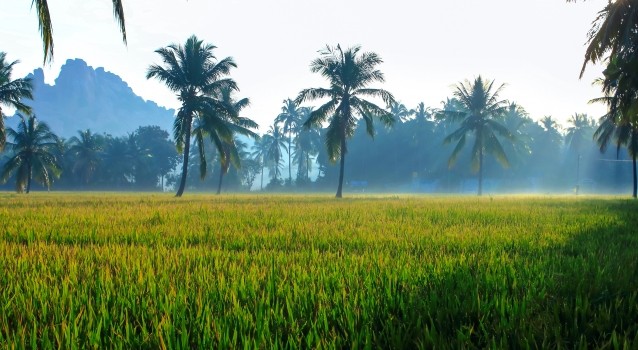
    A deliberate campaigning strategy of the National Democratic Alliance (NDA) led by Prime Minister Narendra Modi has yielded an expected victory in the 2019 Lok Sabha election. The election season had sparked off many appealing promises; one of them pertains to, agriculture, the most critical sector of the Indian economy. The agriculture sector contributes to 12.2 % of the GDP (it has fallen from 17.6% in 2004-05 to 12.2% in 2016-17) for the year 2017-2018 and roughly employs 50 % of the total workforce. The agrarian structure continues to suffer while political parties competed on the delusory promises during the campaigns. NDA government with a special focus on agrarian society has branded its promise to double each marginal farmer’s income by 2022. A pedestrian cash transferscheme has been propelled during the interim budget to provide INR 6000 (per year) to all the marginal farmers who hold less than 2 hectares of land. A valid scepticism about the promise stems out of the fact that there exist an unavailability of data about the farmers’ income and all the political parties refuse to talk about the farmers’ current income. Cash transfer scheme being an attempt to mollify the accumulated antipathy among the public especially farming community has to be scrutinized and put under the radar for substantial discussion.

    Agriculture Distress and the Marginal Farmer

    According to last published NSSO figures for the years 2012-13, farmers’ income averaged out to INR 6,424. Extrapolating the past data to arrive at the 2018-19 income using Compound Annual Growth Rate (CAGR) to the nominal gross value added components of agriculture, cash transfer of 6000 would account for merely 6 % of the total farmers’ income. The Chief Economic Advisor claimed that the annual transfer to marginal farmers would be 17 %, an assertion backed with no clarification. The nebulous methodology to estimate income seems to question the effectiveness of such a policy instrument to address the perennial agricultural distress.

     The agrarian economy has been volatile over the past few years and the well-being of the farmers have always been the litmus test to review the performance of the sector. Around 87 % of the farmers are small and marginal farmers with less than 2 hectares of land holding, this figure seems to be swelling- indicating an objective failure of the land consolidation reforms in the past few years.

     There is a steady decline in the population engaged in agriculture to the total percentage of employment since the beginning of the independence. Displacement of agriculture labours to other sectors is inevitable if there is a gradual policy shift to mechanization of agriculture and capital formation, the eventual effect of the investment is ought to be reflected in the productivity. But between the years 2011 and 2015, agriculture workforce declined by 12.6 million, and the labour force increased by 14 million but total employmentin the economy increased only by 12 million. The incongruity in the figures proves the inability of the nonfarm sector to absorb residual workers out of work. Further, it is erroneous to premise the out of work farm labourers as an ultimate result of only innovation in agriculture. Status of unemployment has to be confessed and measures to provide employment has to be prioritized. It is apparent that the incumbent administration is resorting to the same banal and anodyne prescriptions that preceded it in its attempt to curry favour with the agricultural voter base, which had been promised employment during the 2014 election.

    The incessant crisis is evident from the past records of famers’ suicide data published by National Crime Records Bureau; however, the report faces severe criticisms for underreporting deaths. Though there are various socio psychological reasons for suicides, indebtedness has been considered the primary cause of death. A mere addition of cash transfer might marginally ameliorate farmers’ debts but heavy dependence on informal credit system requires the government to resolve the gaps in current credit system.

    Policy Challenge – Dealing with the Debt Problem

     The Debt Asset Ratio (DAR) indicates the quantum of indebtedness among farmers, since 1990 the ratio has increased at an astounding rate of 630 % in 2013. One commonly posited explanation for the skyrocketing DAR is the excessive informal borrowings by the farmers while the asset value remains stagnant. The perpetual ignorance by the government to address the structural issues over decades pushed the farmers to demonstrate a protest and subsequently resulted in the electoral setbacks of BJP post the protest.

    The apprehension is beyond agricultural and institutional policies, food inflation rates have fallen from 12.9 percent from 2013-14 to 0.13 percent in 2018. Even though the low inflation rates benefit the consumers in general- it would also imply the low food prices would be way below the input costs and return on private investment would be less if not non-existent. Government’s efforts have had little effect on keeping the inflation at a steady rate; the extreme movements of the inflation rates exacerbated the condition of the agrarian economy. The Government has announced to fix Minimum Support Price (MSP) at 50 % above the cost of production as per the recommendation of agricultural scientist Dr.Swaminathan. However, the recent protest placed a demand to change the method of arriving at the MSP figure. Pseudo free market behaviour from the government side has altered the market structure and mostly worked against the welfare of the marginal farmers. While the APMC (Agricultural Produce Marketing Committee) controls the MSP, the small farmers are expected to reach out to the market with a higher transaction cost and end up with much lower revenue. The state has failed to acknowledge the governance failure and continues to place MSP in an equivocal position in every budget. Cash transfers schemes have been placed in the budget with a similar ambiguity in terms of its impact on agricultural productivity and growth. There is a paucity of literature that provides a lucid explanation for execution of cash transfer. A recent study conducted in the rural parts of poor Indian states with 3,800 samples concluded that only 13% of the respondents preferred cash transfer over public health care facilities. Though it is not as same as providing cash transfer to farmers, similar schemes in the past have failed to create a sanguine impression and has made the beneficiaries dubious about such ambitious policies. The sample is also not a true representation of the agrarian community, sector which has been victimized for decades and would vote for short term benefits that risks stagnant productivity and falling workforce.

    The Paradox of Indian Agriculture

    Indian agriculture faces many challenges and is a paradox. India has the second largest area of 159 million hectares in the world as arable land, next only to the United States.  India is the second largest producer of Rice, Wheat, fruits and vegetables. India is the largest producer of bananas and mangoes. Export of agricultural products have ben growing at over 4% year on year. Despite all this there has been great volatility in agricultural economy over the last decade. Growth has been uneven, marginal farmers find farming becoming very uneconomical, and there has been significant decline in marginal farm holdings from 2.27 hectares in 2002 to 1.07 hectares in 2015. While big farmers have sustained themselves well, it is the marginal farmers who have continued to face increasing stress. While many encouraging policies and financial support schemes have been announced, in reality the implementation has been ineffective if not shoddy. Most planned investments and financial assistance have not reached the desired target populace.

     Investment in agriculture GDP has declined from 3.3 % in 1980-81 to 2.9 % in 2013-2014 while the subsidies on fertilizers has increased by 15 times in the same time frame after adjusting to inflation. Fertilizers subsidy accounts to 47 % of the total subsidy in the budget for the year 2017-2018 and amounts to almost Rs.70,000 crore.  Shenggen Fan and Ashok Gulati in their landmark studyto compare relative benefits of investments versus subsidies used a well-established statistical method ‘multi-equation system’. For every 10 lakh invested in agriculture pulled 328 people out of poverty and every one rupee spent on Research & Development increased the agriculture GDP by Rs11.20. The study also suggests that the inefficient input subsidies have actually been more counterproductive by hindering new investments and choking agriculture growth. Member of NITI Aayog and a renowned agronomist, Ramesh Chand had commented that research and development spend in India is not far behind China, a statement that calls for a reality check. For two decades India’s R&D spending as a percentage of GDP has been around 0.6 % while China spends around 2.1 % and Israel with the highest percentage if 4.2%. In absolute terms India invests 5 times lower than China and Israel. An effort on research & development is rather ostensible given less attention in the budget allocation.

    Conclusion : Need for Effective Policy Actions

     There is a conspicuous need for the government to assess the impact of cash transfer to farmers as a policy with various dimensions. The extent to which it can reconcile the distress in farming sector has to be scientifically proved to justify the quantum of investment for execution.  Heavily subsidized agriculture and loan waiver always helped with political victory but the fundamental crisis has been unceasing. Even an elementary study on trends in agriculture seems to highlight that it requires prompt moves and strong long term goals. Policies’ pertaining to agriculture has to be a parcel of broader strategies. Tactics of transferring cash with minimal sanction from experts reserves its place only as a political expediency.

    Marginal farmers and fragmented landholdings are the bottlenecks that prevent effective modernisation of Indian agriculture. The government will need to play a major role in evolving policies that create inclusive solutions to overcome the problems of marginal farmers. Agriculture in India continues to be in the grips of manual and subsistence farming without farm mechanisation or technological inputs. Average landholdings have shrunk from 2.28 hectares in 1970 to 1.08 hectare in 2015 (NABARD). Promoting cooperative farming will allow small and marginal farmers to take advantage of their family labour. Corporate farming, meanwhile, could allow economies of scale to kick in at lower thresholds.

    Yet again, hollow electioneering masquerades as policy with the advent of the great festival of democracy.  Now that the new government is in power, it is time that agriculture is given the due attention it deserves with a long-term strategy to resolve the problems of marginal farmers, fragmented land holdings, and the urgent need for rapid modernisation of agriculture and a national policy on water resources management.

    Manjari Balu is a Research Analyst at ‘The Peninsula Foundation”. She holds a degree in economics. Opinions expressed are the author’s own.

    Photo by Nandhu Kumar on Unsplash

  • Evaluating the Impact of Demonetisation: Between Fact and Fiction

    Evaluating the Impact of Demonetisation: Between Fact and Fiction

    Manjari Balu                                                                                        Apr 10, 2019/Analysis

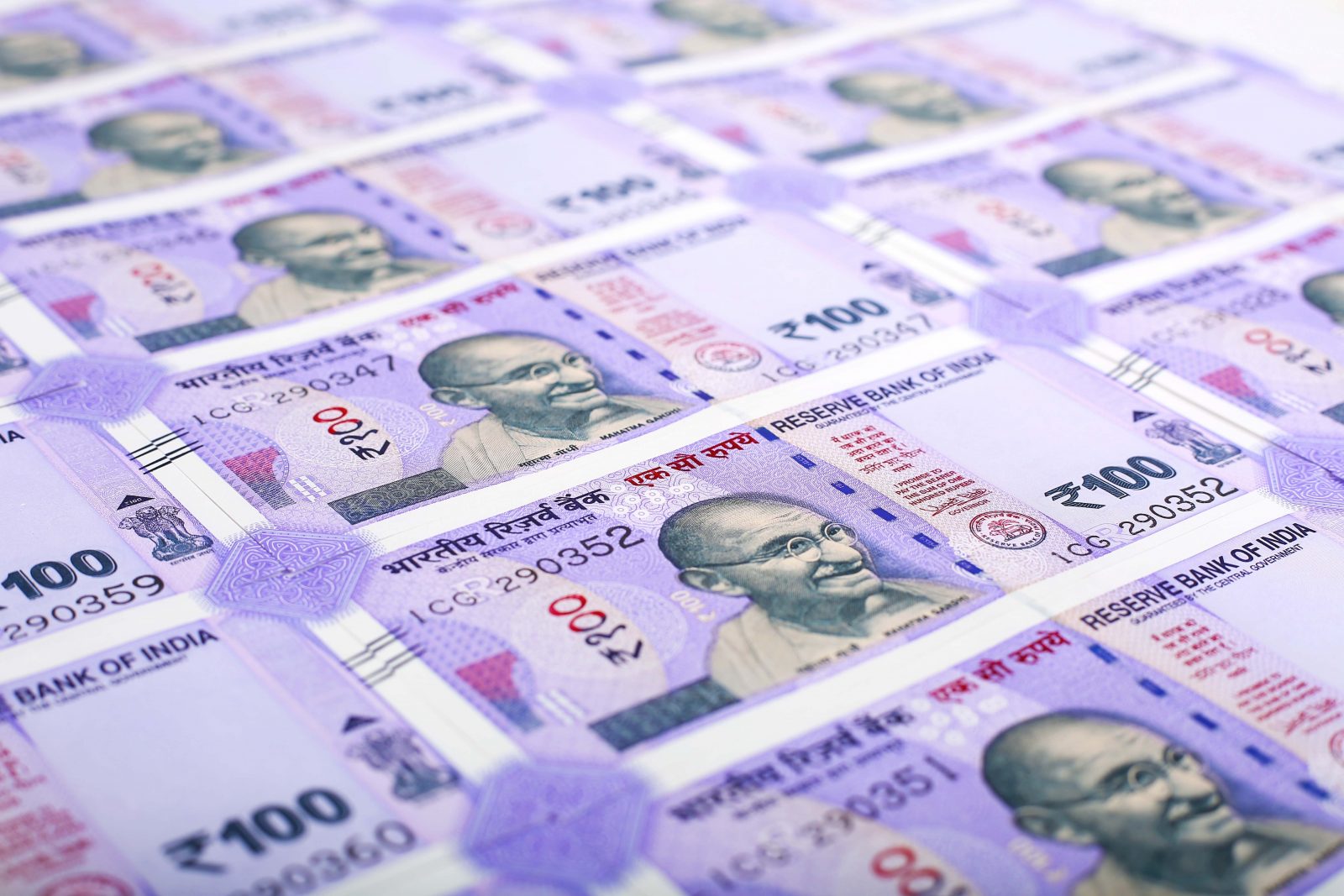
    In democratic societies, economic policy often becomes hostage to electoral politics, devolving into quixotic pledges that are optimised for securing votes rather than social welfare.  Qualifying as a polemical issue that has been most widely discussed, the 2016 shock therapy through demonetisation of 86 per cent of all Indian currency in circulation, is arguably a case in point. In a democratic polity, the political manifestos transcend to the policies to impress the masses paying minimal attention to market efficiency, rather, gain is considered a windfall. Intuitively, there are few factors that determine the eligibility of a policy to qualify in mass politics.  The magnitude of the people affected by the policy, the organized structure of the people, and the kind of effect it has on the masses. It could be direct or indirect and short or long run depending on the execution of the policy.

    The narratives have been changed from the original proclamation of extirpating black money and choking the funding for terrorism to tout for a cashless economy and digital payments as promoted by the relentless advertisements and social media campaigns.

    Theoretically, proscribing a country’s currency for a short period by ceasing the value of the same is considered to be one of the strategies to deal with black money. History has, however, proven that demonetisation must be accompanied with a structured treatment to the economy as fall in inflation becomes intractable and aggregate demand tends to attenuate.

    As per the Global corruption perception index, India is ranked 81stposition by Transparency International, an agency that adopts a specific methodology to evaluate the level of corruption in different countries. India has shown an improvement in score and for the first time, China has been assessed to have more corruption than India.

    Though the score seems to be encouraging, a comparative analysis shows that developing countries have been taking up legislative measures bolstered with government initiatives and transfer of knowledge about corruption. Vanuatu, The Solomon Island and South Korea have improved their score by encouraging citizen partnership, passed various anti-corruption laws and pushed for social reforms to combat corruption.

    The intent to strike the shadow economy through demonetisation had a substantial effect on the informal economy too. The loss suffered due to a cashless economy especially by the informal sector eclipsed the expected result of a reduction in the shadow economy. Further, the fundamental proposition to withdraw currency for a short period is premised on the assumption that there is a definite relationship between the currency in circulation and the so-called “shadow economy”. A simple glance at the data of different countries’ currency to GDP (Gross Domestic Product) ratios and shadow economy figures illustrates the misconception. There are countries with higher currency to GDP ratios than India but records smaller shadow economy – likewise, some countries have larger shadow economy despite lower currency to GDP figures. This is because black money is seldom held in cash. It is often converted to high-value items like real estate, diamonds, gold, films, etc. Also, the high-value stakeholders, politicians being the ironical suspect, have evolved to absorb the black money and have been scot free even post-demonetization.

    Countering terrorism by making the fake currency illegal was the second claim that has been appreciated by the public. Terror incidents are a menace to people especially in conflicted areas, zones with extremisms and other local terror groups. While contemplating the effects of demonetization to counter the terror incidence, the Terrorism Index suggests that the index has increased to 7.57 in 2017 from 7.53 in 2016. There is no conspicuous result relating to terrorism if such a radical decision was intended to control terrorist incidence.

    A thorough study entitled ‘Cash and the Economy: Evidence from India’s Demonetisation’ conducted at Harvard University used economic modelling techniques and satellite data to find that India’s demonetisation led to a contraction in ATM withdrawals and had an effect on both the formal and informal sector. The cross-sectional analysis of the districts recorded the reaction to the shock was uncertain and the withdrawal quantum changed with the proportion of the informal economy.  The informal economy is estimated to account for 81 per cent of total employment and 44 per cent of total output which pertains to cash-intensive transaction. While the GDP rate has not fluctuated, the estimates for employment has caused a reduction in the national economic activity of roughly 3 percentage points in November and December 2016. There is a widespread opinion from various technocrats about the excess cost of executing demonetisation over the actually proposed benefit. In political terms, however, the policy has borne significant payoffs for the current establishment.

    One point of evidence for this claim is the manner in which the decision was made. Reports reveal that the government made the decision to demonetise despite stiff opposition from the RBI board, meaning that leaders were alerted to the potential economic pitfalls prior to introducing the shock. It is likely that the prospect of political gains prevailed over economic ones, especially given that the current establishment exhibits a penchant for such conduct – similar tensions between economic and electoral considerations have been observed with respect to the calculation of GDP and the proposed methodology by Central Statistical Organization.

    A slump in growth rate was expected on the account of demonetisation but India seems to be consistently growing. However, this does not harbinger a steady state of development. Agriculture sector accounts for almost 50 per cent of the total workforce experienced a severe deprivation due to their dependence on cash. Further, growth in real investment also plunged in the fourth quarter of 2016-17 which collapsed the rate of industrial credit in the last two quarters following demonetisation. An analysis from the Economic Survey 2016-17 volume 2 suggests no economy has experienced a 7 per cent growth rate with low investment and high levels of unemployment. This validates the contention posted by the economists regarding the methodology of GDP metric calculation.

    Literature states that there is an internal paradox that is associated with the response of people in the informal sector. An unequivocal inference is hard to be drawn about the response due to the power hierarchies within the informal economy. Analysing informal labour and informal capital, factors of informal economy would help us identify the nuances of the effect. The informal capital faces the hardship of a cash crunch and exploits the informal labour during the crisis. Further, absence of a system to control the squeezing of labour corroborates the inefficiency of the state to mollify the situation.

    There is an undeniable defilement of economy in the short run post-demonetisation, however, comment on the long run effects have to be reserved to the time when there is maximum accessibility of data. The ruling establishment has, indeed, managed to spin the policy as relying on the patriotic duty of its citizens in aiding their Prime Minister’s efforts to flush out black money from the economy. If one were to assume policymakers to be rational actors, it would stand to reason that demonetisation was done to avail electoral payoffs, even as broader society incurs a reduction, willingly, in social welfare. Unfortunately, India’s demonetisation bears testimony to a glaring ailment of all democracies – that bad economics can be good politics.

    Manjari Balu is a Research Analyst at TPF. She holds a degree in economics.