Author: M A Kalam

  • Migrant or native, we are all out of Africa

    Migrant or native, we are all out of Africa

    No human group can make a concerted claim as regards nativism and try to make an ‘other’ an immigrant, foreigner or outsider

    Why, and how, does Mizoram get involved in the ongoing ethnic (and religious) strife that has been on for over three months in Manipur? The Kukis and Zomis in Manipur are ethnically related to the Mizos, the dominant community in Mizoram. The Mizos, in turn, are ethnically related to the Chins in Myanmar and the Kuki-Chins in Bangladesh.

    Together they all belong to the greater Zo community, speak a similar language, have common ancestry and parallels as regards their cultures and traditions. These latter groups are predominantly Christian and hence have a strong bond with the Mizos in Mizoram, a ‘Christian state’, like Nagaland. The Chief Minister of Mizoram, Zoramthanga, is a Mizo.

    In Manipur, the Meiteis, a Hindu community, are the majority and overwhelmingly numerically dominant. But it is interesting that the Meiteis are found in small numbers in Mizoram too, and many have started fleeing from the state. A similar fleeing of the Kukis from Manipur to Mizoram has happened. Also, there are the Naga groups in different pockets of Manipur. The neighbouring state of Nagaland has 17 officially recognised Naga groups.

    It is exasperating, and quite disquieting, to note the presence of ethnic groups that are dominant in one state, being minorities in a neighbouring state. Such existence has given rise to very foreboding situations and added to the already prevailing ethnic conflicts in India’s North-East.

    It is not just that the Indian states in the region share common borders. There are international borders too in the area, as Bangladesh and Myanmar adjoin the Indian states. Different communities/tribes/groups of people have lived in the regions that are the focus of our discussion for aeons. Such inter-state and international habitations of ethnic groups across states/countries are come across elsewhere in the world too.

    One of the most interesting and classic instances of a single ethnic group, who regard themselves as a single nation, and inhabit more than one country, is that of the Bedouin (found in Syria, Algeria, Morocco, Libya, Egypt, Israel, and so on). Such situations come about because free-ranging groups of people, or partially or fully settled groups of people, got divided into different states or countries because of the coming in of boundaries and division of territories.

    What would have been the scenario if these borders between states and countries had not come up? We would undoubtedly have diverse groups living in enclaves, either quite separated or adjoining each other either as small groups or larger ones, but sans the borders dividing them; the question of majority/minority or dominance/subservience would not, probably, have had the same kind of meaning or effect as has happened due to the drawing of borders between states and countries.

    Borders that formed between enclaves of diverse inhabitants and made groups of people dominant and/or majority groups have resulted in hegemony, where the traditions, customs, practices, and mores of that group have gained significance. These traditions and customs prevail extensively when compared to the practices of the smaller groups in that same area. Invariably, the dominant group makes claims to being the ‘original inhabitants’ and the ‘natives’ of the state/country concerned.

    Quite often co-habitants develop similar institutions and social and cultural practices despite the differences and diversity between them, and this is quite apparent in multicultural societies. Amitav Ghosh argues that “it is … the vitality of the place itself that creates commonalities between the people who dwell in it, no matter what their origin” (The Nutmeg’s Curse, page 221). But sadly, it is the differences that often come to the fore, and similarities remain latent.

    Here, it is pertinent for us to dwell on the facets of claims that groups make as regards being the autochthons and natives of a given state/country. By extension, the non-dominant groups are labelled ‘immigrants’, ‘foreigners’, and ‘outsiders’. Prior to ‘Out of Africa’, and the spread of Homo sapiens to the different parts of the world, somewhere between 80,000 and 50,000 years ago, there were no fully evolved human beings in any part of the world. Subsequent to a group of them leaving Africa, different parts of the Earth got populated gradually.

    All the physiognomic and phenotypical differences that we find among humans today, including skin colour, hair texture, and colour of the eyes came about as a result of where people settled.

    To put it tersely, no human group can make a concerted claim as regards nativism and try to make an ‘other’ an immigrant, foreigner or outsider. Ghosh endorses this when he says “Except for one small part of Africa, nowhere on Earth can people be said to be truly native, in the sense of having come into being on that soil” (The Nutmeg’s Curse, page 221).


    This article was published earlier in Deccan Herald.

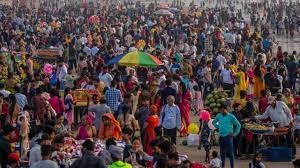
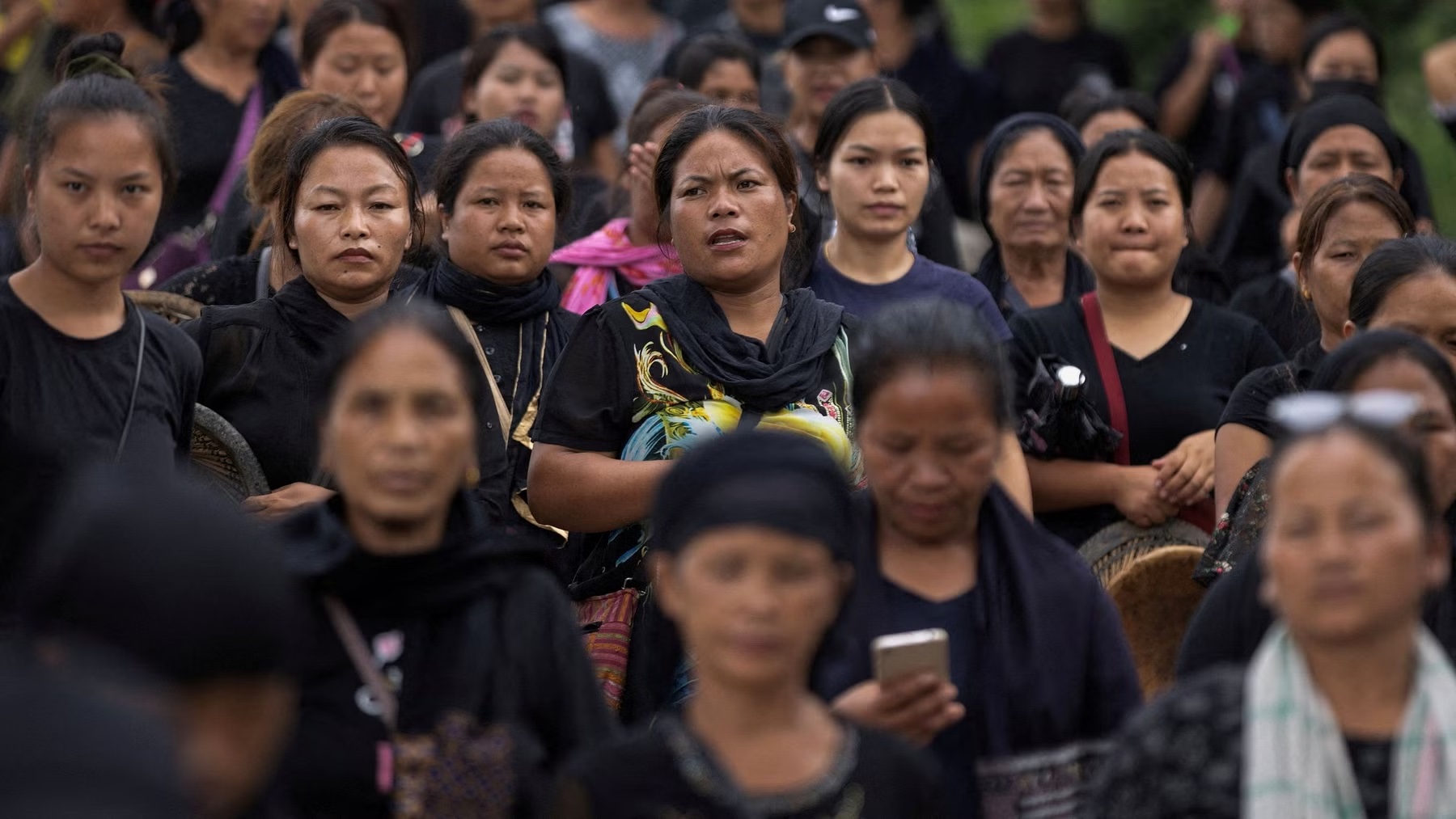
    Feature Image:Kuki women leave after attending a protest against the alleged sexual assault of two tribal women, in Churachandpur district in Manipur. Credit: Retuers Photo

     

  • Uniform Civil Code | What Kind of Uniformity, Whose Code?

    Uniform Civil Code | What Kind of Uniformity, Whose Code?

    Should India’s linguistic diversity too be given a short shrift, as has been happening for years in promoting Hindi in preference to 21 other scheduled languages?

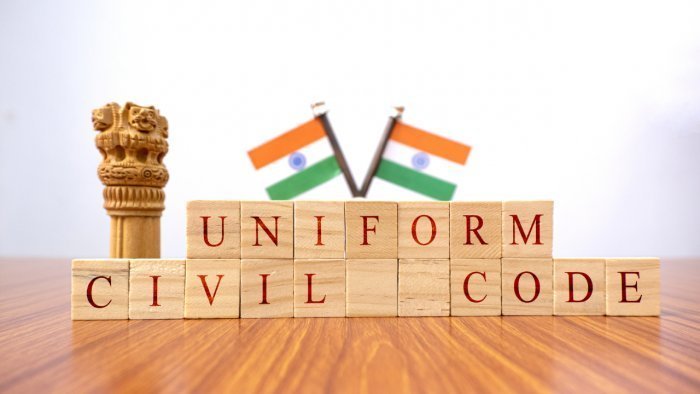
    Though we do not have, as pointed out in this Deccan Herald opinion article, a draft Bill or a white paper on the Uniform Civil Code (UCC), there is a raging debate, as well as fear in many quarters, as to the intention of the ruling Bharatiya Janata Party (BJP) as expressed in the pronouncements of Prime Minister Narendra Modi concerning the UCC.

    Quite forthrightly, Nobel Laureate Amartya Sen used decidedly strong words when he said, “I saw in the papers today that there should not be any further delay in implementation of Uniform Civil Code. Where did such a stupid thing come from? We have been without UCC for thousands of years and can also be without it in future”. Further, he asserted, “Hindu Rastra cannot be the only way in which the country can progress and one should look at these questions with a broader outlook. Certainly, there is an attempt to use… misuse the Hindu religion”.

    [powerkit_button size=”lg” style=”info” block=”true” url=”https://www.deccanherald.com/opinion/uniform-civil-code-what-kind-of-uniformity-whose-code-1238537.html” target=”_blank” nofollow=”false”]
    Read More
    [/powerkit_button]


  • What Might be Leading to the Rise of Conflict in Man-Woman Relationship

    What Might be Leading to the Rise of Conflict in Man-Woman Relationship

    Today due to the educational, economic and social changes, the erstwhile restricted spaces in terms of exclusive residential habitations and private caste-determined spaces are not functional any more. As a result, interactions between different caste and religious groups have indeed changed and increased.

    During recent times the collective conscience of civil society and the public, in general, has been severely shaken due to the occurrence of a number of bone-chilling incidents wherein husbands, boyfriends, or live-in male partners have brutally killed the women they cohabited with. These incidents have not just been plain killings but have led to the ruthless dismembering of the bodies of the women killed. The killers have done various things post the killings from refrigerating the dismembered pieces to throwing them into a tandoor. One wonders if apartment buildings have aided in providing privacy and anonymity that would not have been possible otherwise to indulge in such acts.

    [powerkit_button size=”lg” style=”info” block=”true” url=”https://www.moneycontrol.com/news/opinion/what-might-be-leading-to-the-rise-of-conflict-in-man-woman-relationship-10795141.html” target=”_blank” nofollow=”false”]
    Read More
    [/powerkit_button]

  • Caste Census: India’s Affirmative Action Policy is Based on 90+ Years Old Data

    Caste Census: India’s Affirmative Action Policy is Based on 90+ Years Old Data

    “The data that we have for all castes as well as the Other Backward Classes is from the 1931 census. The population of the OBCs at that time was about 52 percent of the total population of India”.

    Congress president Mallikarjun Kharge is the latest to join the band of politicians and activists advocating caste census. However, the Bharatiya Janata Party-led central government has so far stonewalled all pleas and comes across as definitely averse to the idea. Before we delve into the ostensible reasons for the reluctance, a quick look at the genesis and history of the census in India.

    The census exercise was launched by the colonial government for various stated (and unstated) reasons in the realm of social engineering for their strategy of governance during the second half of the nineteenth century.

    Sociologist Michael Mann in his book South Asia’s Modern History avowed that the census exercise was more telling of the administrative needs of the British than of the social reality for the people of British India.

    [powerkit_button size=”lg” style=”info” block=”true” url=”]https://www.moneycontrol.com/news/opinion/caste-census-indias-affirmative-action-policy-is-based-on-90-years-old-data-10463611.html” target=”_blank” nofollow=”false”]
    Read More
    [/powerkit_button]

  • Colonial exploitation included heritage theft, and that continues to this day

    Colonial exploitation included heritage theft, and that continues to this day

    Museums and private collectors in the West have prided themselves on the vast collections of heritage treasures, antiquities, and archaeological and epigraphic treasures from across the world. In truth, these are stolen treasures from the non-western world enabled by colonialism and imperialism. It is time the victim nations work towards global policies to ensure these treasures are returned to their original owners. This is truly a massive public policy challenge in global governance and for a fair, equitable, multi-polar world. Professor M A Kalam looks at the continuing theft of India’s heritage treasures.


    The whole idea of establishing a colony was to exploit the resources there and enrich the home coffers. And all colonials—irrespective of whether they were British, Danes, Dutch, Italians, Belgians, Portuguese, Spanish, or American—indulged in this exercise and over a period turned it into a fine art. As ill luck would have it, a host of countries in many parts of the world were less developed than these colonials, particularly in terms of technology, but were very rich and well-endowed in terms of resources of various kinds. Though they possessed natural wealth, they lacked adequate technology and hence were not in a position to resist the onslaught and machinations of different kinds of the technologically-advanced colonials. The resource-rich countries were, in the main, in Asia, Africa and Latin America. Highly developed naval vessels and a state-driven overpowering desire to explore resources in different regions of the world enabled the colonials to adopt different strategies for befriending and subsequently subjugating the peoples of the resource-rich areas.

    Genesis Of Exploitation

    Because of her tremendous naval power, Britain spread its net of exploration quite wide in South Asia and Africa. In India, the British came in as traders established the East India Company and then gradually started flexing their arms and took control of administration and became the rulers of the country. Though they allowed some pockets to be “ruled” by rajas, maharajas, nizams and nawabs, these provinces were not independent in the real sense of the term but were virtually servile to the British, if not their minions, in many ways. That is how the genesis of exploitation took shape in India. Subsequently, there were myriad ways in which colonial exploitation occurred—physical exploitation of the people including sexual abuse and exploitation of labour was one of the forms of that

    Other ways of exploitation were the draining of different kinds of agricultural and forest resources; these included: jute, cotton, sugar, tea, coffee and wheat. The goods developed in British factories were sold back in India for rich benefits. Also, commercial crops like tea, coffee, indigo, opium, cotton, jute, sugarcane and oilseed were introduced and these had impacted their profits tremendously but had different environmental implications in different regions of the country, as plantations always do, due the exercise of clear felling of the forests in almost all cases of extensive plantation activities.

    Repatriating The Kohinoor

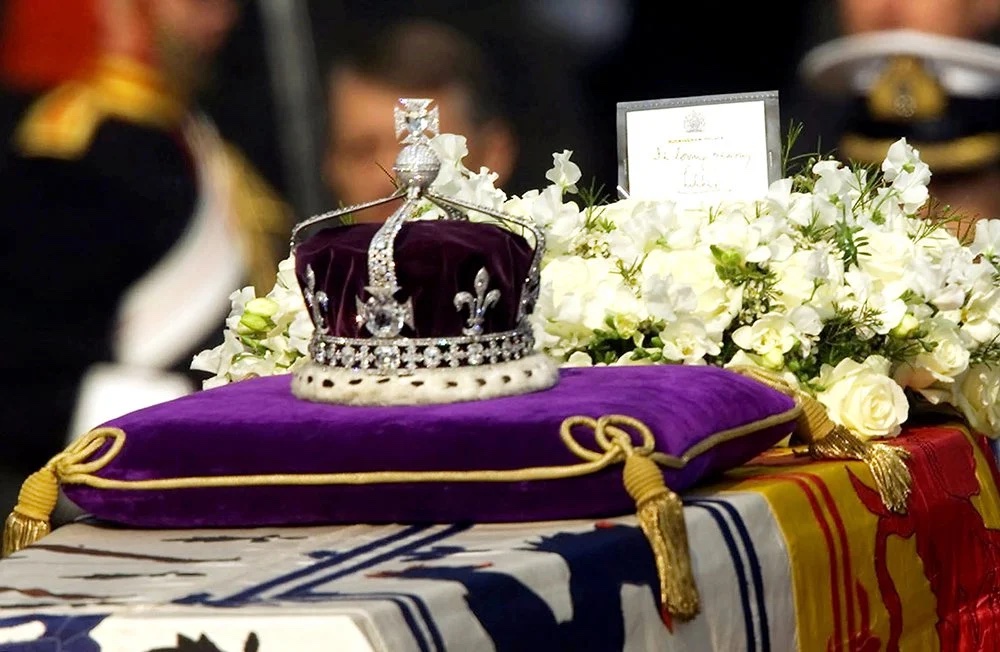
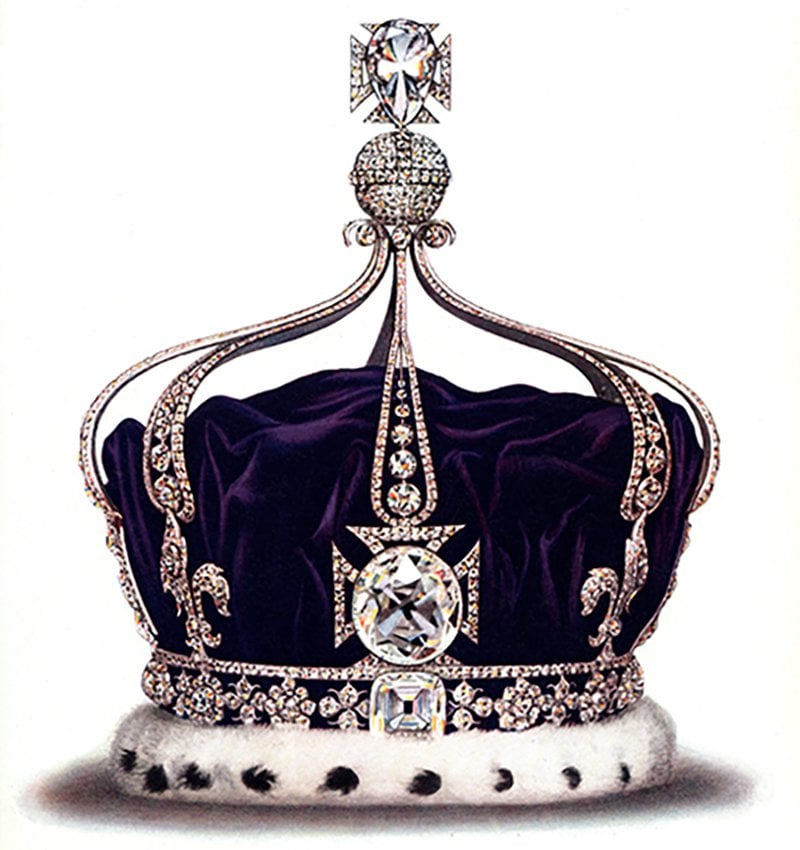
    To top it all, regarding exploitation, was the brazen way in which India’s heritage wealth, antiquities and artefacts, were exported to their home bases, by the colonials, to unabashedly adorn their own museums and galleries. Many of these artefacts were stolen without any hesitation. Today it is being argued that one of the most famous diamonds in the world, the Kohinoor, was not necessarily snatched from the people of India but was offered on a platter to the British as part of the peace treaty of Lahore by the king of Punjab Maharaja Dalip Singh. Arm-twisting gets another name in diplomatic parlance—offer. And the British have the temerity to continue to adorn their crown with the Kohinoor though they refrained from its display on the head of the recently crowned queen, the wife of King Charles III during the latter’s coronation, in a rare diplomatic courtesy, apparently not to provoke the sensibility of the Indian delegation attending the coronation.

    As Rishi Sunak is more loyal than the queen, there is no chance of him taking the initiative in repatriating to India the Kohinoor or the innumerable other artefacts that were stolen/snatched from India and today adorn the British Museum and many other of their galleries.

    Last week the Standing Committee on Transport, Tourism and Culture headed by YSR Congress MP Vijay Sai Reddy, adopted the Report ‘Heritage Theft – The Illegal Trade in Indian Antiquities and the Challenges of Retrieving and Safeguarding Our Tangible Cultural Heritage’. The Committee conferred with the Culture Ministry officials who apparently think that while efforts were being made to bring back the stolen antiquities from different foreign locations, the case of Kohinoor diamond is “contentious since it was surrendered by Maharaja Dalip Singh as part of the 1849 peace treaty with the British”.

    Reversing Colonial Exploitation

    To recapitulate and also to highlight the way in which different forms of exploitation occurred, we can argue that in the first instance, it was human exploitation wherein there was sexual abuse, killings and decimation of populations. The second way was the exploitation of the agricultural and natural resources which can be conceived of as resources that were “consumables” and “non-durables”. The third was the exploitation of the heritage wealth that falls in the realm of non-consumables and durables.

    So, today, when we explore measures that could be thought of in terms of “getting back” things and reversing the impact that colonial exploitation had on India, we can think of some strategies: in the case of the first two, that is human exploitation and the draining of consumables, there can only be reparations if the Britishers’ conscience pricks them enough; or at least unqualified apologies. But in the case of the third, that is the loss of heritage wealth, there can, and should indeed be repatriation of the stolen antiquities.

    A host of “art dealers” in different parts of the country are smuggling out artefacts and antiquities from India, particularly from ancient temples, and at times from museums, on a large scale. Only a fraction of this comes to light.

    Now, talking about the loss of heritage wealth, we also have to bring into the picture the fact that it is happening, quite rampantly, even today though the colonials left the shores years back on India becoming independent. A host of “art dealers” (read thieves) in different parts of the country are smuggling out artefacts and antiquities from India, particularly from ancient temples, and at times from museums, on a large scale. Only a fraction of this comes to light when these items are exhibited in galleries and museums in different parts of the world; often times these are hidden in private collections. India is trying to regain some of this heritage wealth but there seem to be obstacles, at times quite unsurmountable, of the diplomatic and other kinds. Let us hope the Standing Committee on Transport, Tourism and Culture succeeds in its exertions.


    A version of this article was published earlier in moneycontrol.com

    Feature Image Credit: Kohinoor Diamond in Queen’s Crown, now safely kept in the Tower of London. smithsonianmag.com 

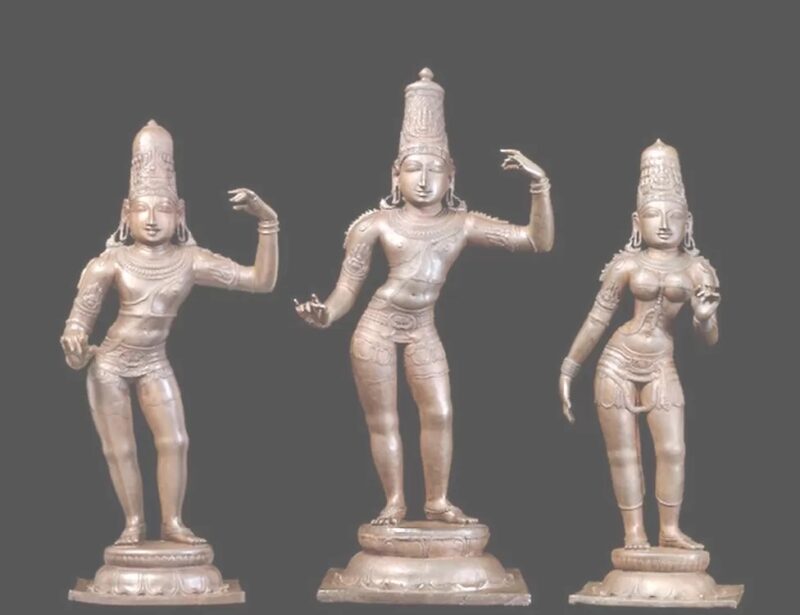
    Picture of Idols: The three 15th century ‘panchaloga’ idols of Shri Rama, Sita, and Laxman were stolen in 1978 from a Vijaynagara era temple (15th Century) in Anandamangalam village in Tamilnadu, India. These were identified and finally restored to India by the UK government in 2020. www.bbc.com


  • Citizenship Renouncers are the New Colonials. Call them ‘Desi’ Colonials

    Citizenship Renouncers are the New Colonials. Call them ‘Desi’ Colonials

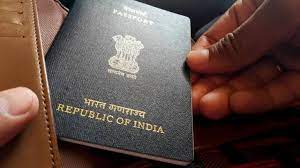
    These are the ones who have enjoyed the best of everything in the country – highly subsidised education all through their schooling and college years, high-grade training in the top institutions, and might have gone abroad with State support and scholarships

    Irrespective of what all colonialism does, or does not, the most devastating thing that happens to a colonised country is that its resources are depleted to the extent that it borders on plunder. India, indisputably, happens to be one of the classic cases of having bled to a high degree due to the avarice of the British. The kind of exploitation that occurred in India has been multi-dimensional and multi-hued, wherein the colonisers filled their coffers to please and enrich their royalty, king, queen and the crown.

    During colonialism, and even after the independence of the former colonies, a different kind of exploitative process was in place whereby chunks of humans from the colonies were ‘recruited’ at low wages for underclass jobs in the ammunition factories, textile mills, railways and road transport, in the mother country of the colonials, not to talk of the other forms of ‘recruitment’ as slaves and indenture labour for other colonies.

    [powerkit_button size=”lg” style=”info” block=”true” url=”https://www.moneycontrol.com/news/opinion/citizenship-renouncers-are-the-new-colonials-call-them-desi-colonials-10353731.html” target=”_blank” nofollow=”false”]
    Read More
    [/powerkit_button]

  • Does Same-Sex Marriage ‘Rock Societal Values’?

    Does Same-Sex Marriage ‘Rock Societal Values’?

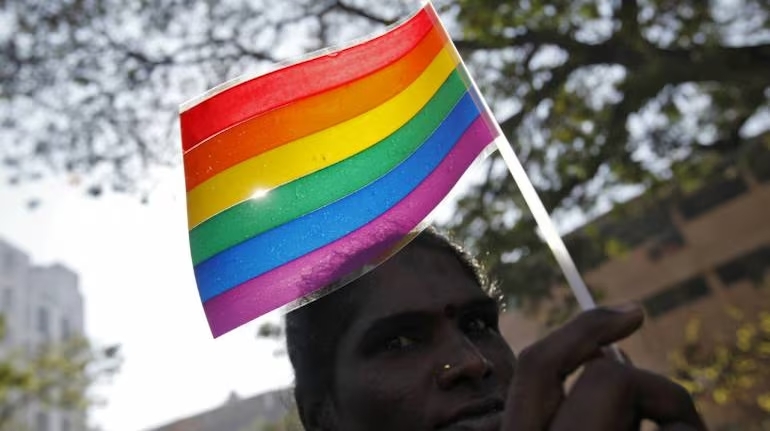
    More than 30 countries have legalised same-sex marriages. Democracies around the world have gone to lengths to accommodate practices of their various constituents and sub-nationalities that make up their countries, even if they earlier had unitary or uniform practices

    Irrespective of whether one is a votary (and staunch believer) of either of the theories – evolution or creation – human society, undoubtedly, evolved and subscribed to unitary customs and practices in its initial and early development. From the primordial lack of any form of marital ties, the institution of marriage took form in myriad ways in different societies in diverse settings, and depending on the local ecological, socio-cultural and economic conditions and backdrops, distinctive marital practices emerged. The societies concerned did accept such practices and over time these got legitimised.

    What is to be emphasised here is that as societies grew, the levels of social and cultural practices started taking different shapes, often in the wake of economic changes and developments. It was inevitable for the smooth functioning of the societies to adapt to these various emerging marital practices and adjust to them. The debate, and consternation in certain quarters, both “official” and social, that is being “encountered” today as regards same-sex marriage is bordering on resistance and stone-walling.

    [powerkit_button size=”lg” style=”info” block=”true” url=”https://www.moneycontrol.com/news/opinion/does-same-sex-marriage-rock-societal-values-10258071.html” target=”_blank” nofollow=”false”]
    Read More
    [/powerkit_button]

  • Bihar’s Prohibition is Not Working. Historically it Seldom Does

    Bihar’s Prohibition is Not Working. Historically it Seldom Does

    Many states in India have introduced and then rescinded prohibition after struggling with the aftermath of such an action, including the ravages of death and various instantaneous ailments due to the consumption of illicit liquor.

    The recent illicit liquor tragedy in Bihar has proved, if proof is needed yet again, that banning alcohol has seldom had the desired results. Besides, historically, delusional zeal and overwhelming optimism embedded in false notions of success, by themselves, have never yielded any positive returns as regards the banning of alcoholic drinks.

    The catastrophe in the present case linked to the consumption of hooch (derived from hoochinoo, a word used by the Tlingit, a native ethnic group from Alaska) is not an isolated incident nor is it uncommon in India. Many hooch-related deaths have occurred in quite a widespread way through the length and breadth of India, particularly so in states where sale and, by extension, drinking alcohol, is forbidden by law.

    [powerkit_button size=”lg” style=”info” block=”true” url=”https://www.moneycontrol.com/news/opinion/bihars-prohibition-is-not-working-historically-it-seldom-does-9746851.html” target=”_self” nofollow=”false”]
    Read More
    [/powerkit_button]

  • Undue focus on Hindi can lead to National Isolation and International Seclusion

    Undue focus on Hindi can lead to National Isolation and International Seclusion

    The Committee of Parliament on Official Language’s recommendations that Hindi replace English as the sole language of instruction in central institutions, and that regional languages be used in state universities and other non-central educational institutions will have far-reaching adverse consequences

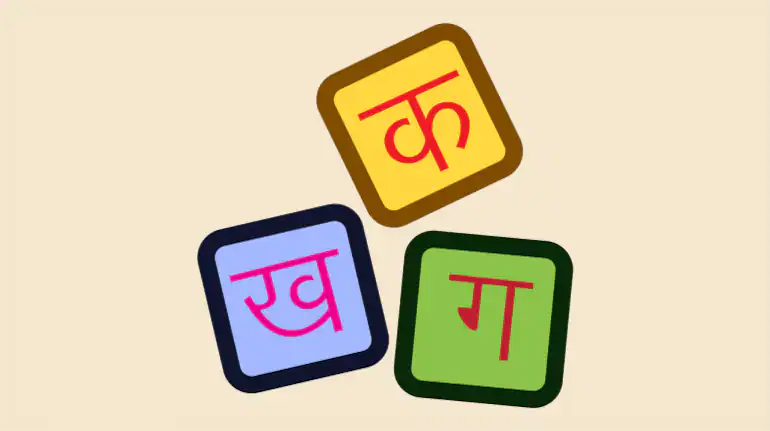
    Contrary to what is frequently bandied about in certain influential political circles, and nationalist Right-wing cliques, India does not have a national language. The Eighth Schedule of the Constitution of India has a list of 22 languages, which are all designated as ‘official languages’. Hindi is one of those, and so is English.

    It is disconcerting that in the official website of the Committee of Parliament on Official Language we come across the following nomenclature: “Department of Official Language – MHA”! How come? What has happened to the 22 listed and designated languages as official languages that the singular ‘language’ has been adopted here?

    [powerkit_button size=”lg” style=”info” block=”true” url=”https://www.moneycontrol.com/news/opinion/education-undue-focus-on-hindi-can-lead-to-national-isolation-international-seclusion-9392441.html” target=”_blank” nofollow=”false”]
    Read More
    [/powerkit_button]

  • Higher Judiciary Needs to Take More Suo Motu Action

    Higher Judiciary Needs to Take More Suo Motu Action

    The higher judiciary must proactively exercise its powers to intervene suo motu to deal with a spate of incidents that rip the country’s social and communal fabric.

    On 14 June, six former judges of the Supreme Court and different high courts, along with six senior advocates, urged the Supreme Court to take suo motu action on the recent cases of bulldozing and demolition of houses of protestors against the remarks about the Prophet made by spokespersons of the Bharatiya Janata Party.

    In the appeal, directly addressing state actions in Uttar Pradesh, the letter states:

    [I]n its role as custodian of the Constitution, we … urge the Hon’ble Supreme Court to take immediate suo motu action to arrest the deteriorating law and order situation in Uttar Pradesh, specifically involving the high-handedness of the police and state authorities, and the brutal clampdown on the fundamental rights of citizens…

    We hope and trust the Supreme Court will rise to the occasion and not let the citizens and the Constitution down at this critical juncture.

    This may seem like an unprecedented appeal coming from legal luminaries, but action by the Supreme Court is well within the judicial realm, as the higher judiciary in India has the mandate to initiate proceedings on its own, without being petitioned by a claimant or party.

    [powerkit_button size=”lg” style=”info” block=”true” url=”https://www.theindiaforum.in/article/higher-judiciary-needs-take-more-suo-motu-action” target=”_blank” nofollow=”false”]
    Read More
    [/powerkit_button]