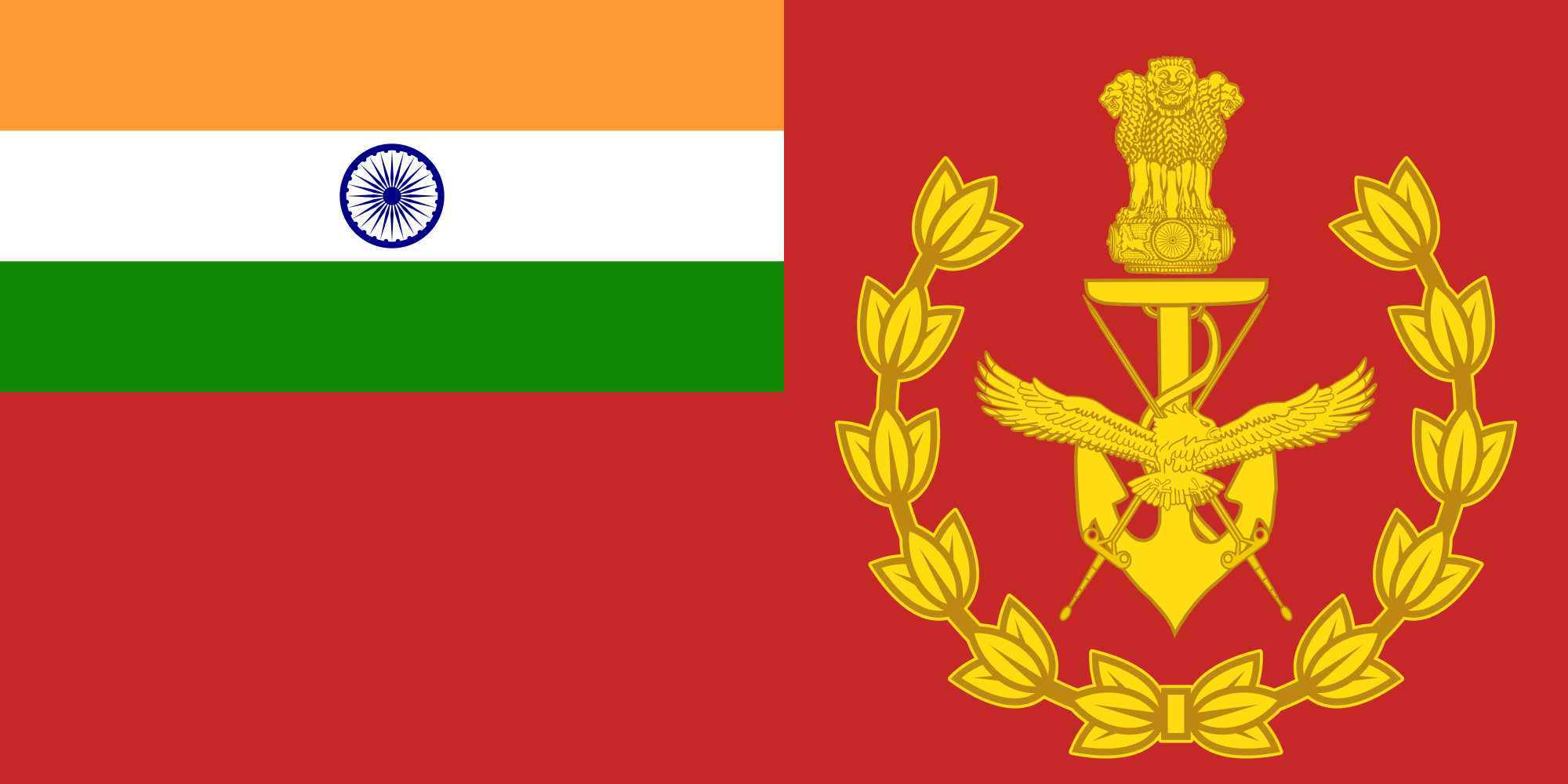
The Year 2020 ushered in a momentous reform for higher defence management (HDM) in India with the government implementing PM Narendra Modi’s announcement made earlier from the ramparts of the Red Fort on 15th Aug 2019, on establishing the institution of the Chief of Defence Staff (CDS). Retiring Army Chief General Bipin Rawat, not surprisingly, was appointed as the first CDS of the Indian Armed Forces. The unique honour brings with it myriad challenges lying ahead for the new appointee.
To those at home and abroad who are accustomed to the working of governments of all political hues in India it should not be a surprise that this critically vital appointment took over 18 years to materialise. To recall, as part of the many HDM reforms this appointment was also approved by the NDA led Vajpayee government way back in 2001, after the 1999 Kargil War, based on the recommendations of the Subramanyam led Kargil Review Committee (KRC). Bureaucratic sluggishness, lack of will among different political dispensations as also the fact that there could be indifference on matters of even national security broadly explain the long delay. Thus, the Modi government deserves full credit for institutionalizing the long overdue appointment of the CDS. However, the designated role of CDS, the status and the government charter laying down all the details are still being worked out.
Chief of the Defence Staff (CDS)
As promulgated by the government, the CDS will be a ‘four star’ officer and will be considered as the ‘first among equals’ in relation to the chiefs of the Army, Navy and the Air Force. He will be the permanent Chairman of the Chiefs of Staff Committee (COSC) and can serve till 65 years of age. KRC recommended that CDS appropriately should be a ‘five star officer’ considering his onerous responsibilities and role.
Now that the government has given the green signal for the CDS to commence functioning to provide the desired levels of integration in all tri-service matters including policy, operational, training, communications, logistical aspects and so on, the CDS will be confronted with myriad challenges in achieving his onerous missions. Apart from an unwavering encouragement support from the Prime Minister’s Office (PMO) and the Ministry of Defence (MOD), the CDS will require more than a willing assistance from the three services to truly get-off the ground. As is natural and customary, no service likes to shed its resources and time honoured responsibilities to newer organizations. Having raised the Defence Intelligence Agency (DIA) way back in 2002, as a result of the same KRC recommendations, I am more than aware of the reluctance of the three Services to shed some of their assets and roles which will now be managed by the CDS. Thus, General Rawat will have to orchestrate extracting resources from the three Services for the new organizations, formations and units directly under his command being raised, with tact and sensitivity.
Re-organisation of MOD: an analysis
The MOD, till recently,functioned with four departments namely the Departments of Defence (DOD), Defence Production, Defence Research and Development as well as Ex Servicemen Welfare – each headed by a Secretary – ranked officer. On 30th Dec 2019, the government promulgated a gazette notification establishing the fifth department to be called the Department of Military Affairs (DMA) to be headed by the newly appointed CDS. The Rules of Business existing since 1961 and reallocation of certain responsibilities with the Defence Secretary have been modified though this has also invited adverse comments from defence analysts in India on the ground that the desired level of responsibilities had not been given to the CDS.
In the last many years, right from the acceptance of the KRC and its approval by LK Advani led Group of Ministers and subsequently by the Vajpayee government in 2001, it had been accepted by all that the CDS was urgently required as a major reform of India’s higher defence management. The CDS was required to provide single-point professional military advice to the political leadership. However, what apparently has happened now is that the CDS will be providing his advice to the Defence Minister only and not to both the Prime Minister and Defence Minister. Many see in this, a case of bureaucratic play to reduce the importance of the CDS.
In the orders recently issued by the government, four key responsibilities have been taken away from the DOD under the Defence Secretary and now put under the DMA which includes the three services and their headquarters, the Territorial Army and works relating to the army, navy and the air force. Non-capital purchases and promoting jointness in procurement, operations, training, communications, logistics (including repairs and maintenance) and encouraging use of indigenous equipment and platforms will be in the CDS charter.
Entry 1 of the amended charter for the DOD states that “Defence of India and every part thereof including defence policy and preparation for defence and all such acts as may be conducive in times of war to its prosecution and after its termination to effective demobilization” will be with the Defence Secretary. This has apparently been done to ensure the primacy of the civil bureaucracy. Why can’t the responsibility of defence policy and the mandate for defence of India not rest with the Defence Minister if this charter, was to be kept away from the CDS?
Why can’t the responsibility of defence policy and the mandate for defence of India not rest with the Defence Minister if this charter, was to be kept away from the CDS?
The other amendment is in the field of defence purchases where the earlier formulation of “procurement exclusive to the defence services” has been altered to “capital acquisition exclusive to the defence services.” This means that big-ticket acquisitions will be in the Defence Secretary’s ambit creating an impression of paucity of faith in the CDS in this matter.
The existing HQ Integrated Defence Staff could have been the backbone for this new integrated structure within the MOD brining about cost-effectiveness as well.
The Department of Military Affairs will have a structure that rightly includes civilian bureaucracy as well. The CDS will be assisted by two joint secretaries and a dozen deputy secretary level officers. Ideally not only the CDS but the entire MOD should have seen complete integration of the civil bureaucracy with the military. The existing HQ Integrated Defence Staff could have been the backbone for this new integrated structure within the MOD brining about cost-effectiveness as well. Military and civil officers should be working in various departments of the MOD in unison. The Defence Secretary could have been retained, as the coordinator of all the departments. The DMA could have been headed by a Secretary level Vice Chief of the Defence Staff (VCDS) to enable the CDS, in the MOD, to concentrate primarily on critical strategic issues for advising the Prime Minister and Defence Minister on macro-management of defence strategy.
The Defence Secretary’s charter also includes military cantonments, veterinary and military farms, land acquisition for defence, Border Roads Organisation, purchasing food items for defence and even the Canteen Stores Department – virtually covering all issues and portfolios related to financial expenditure and management! Surprisingly, even the management of the National Defence College (NDC) and the Institute of Defence Studies has been kept with the Defence Secretary!
The DMA could have been headed by a Secretary level Vice Chief of the Defence Staff (VCDS) to enable the CDS, in the MOD, to concentrate primarily on critical strategic issues for advising the Prime Minister and Defence Minister on macro-management of defence strategy.
Theatre commands
One of the critical issues, after the establishment of the CDS system, would be the widely discussed recommendation that integrated inter-service theatre commands should be established to exercise control over all operations in each theatre as practiced in many nations of the world including US and China. Currently the three services have their own operational commands that make for a total of 17 command HQs. In addition, the Indian Armed Forces through HQ IDS have under their control only one tri-service command headquarters, namely the Andaman and Nicobar Command (ANC). The Strategic Forces Command (SFC), though led, manned and operated primarily by personnel from the three services have their ultimate command authority vested in the Nuclear Command Authority directly under the PM/National Security Council.
The CDS has been tasked with the responsibility of restructuring military commands for optimal utilization of resources by bringing in jointness in operations through the establishment of joint theatre commands. However, many Indian analysts opine that the armed forces should commence this integration after coursing out exhaustive trials initially for one command headquarters. The significant change must be analysed in its entirety and not rushed through. It may be prudent to adopt ‘best practices’ of some other formidable armed forces in the world and suitably adapt them for our own challenges and genius. Theatre commands, once finally agreed to, can be implemented in a graduated manner employing the incremental concept. In the services even with the current structures, far greater jointness in operational doctrines and plans, training, communications and logistics should be ensured first to establish synergy.
Theatre commands, once finally agreed to, can be implemented in a graduated manner employing the incremental concept.
The newly appointed CDS at a recently conducted press conference outlined the likely contours of the envisaged theatre commands. He stated that two integrated commands, namely the Air Defence Command and the Peninsular Command respectively will be raised in the coming year while they will endeavour to raise the first theatre command by 2022. Preliminary studies on the geographical and operational spans for five theatre commands along the northern and western borders are underway. In addition, the services are also carrying out an in-depth study to examine if Jammu and Kashmir should have a separate theatre command.
The Air Defence Command will be integrating all air defence assets including air defence missiles with the three services, coastal guns, air defence radars and air surveillance systems presently held with the three services. In view of potent air and ballistic missile threats from India’s adversaries, the Air Defence Command, to be headed by an air force officer, will assume critical significance in terms of its efficacy.
The Peninsular Command which, some naval officers want to call the Indian Ocean Command will look to merging the western and eastern naval commands. This command to be headed by a naval officer would be given dedicated air force assets and army troops. It would work to ensure India’s maritime security interests in the Indian Ocean region, both on the western and eastern sea-boards, and would also acquire the capably of conducting amphibious operations.
National Security Doctrine
As one of his top priorities, the CDS must have the Government Issue a National Security Doctrine which lays down a well-conceived and comprehensive strategic policy for the nation in the short, mid and long term perspective. It will be primarily an articulation of the nation’s overall vision and strategic intent. This document should naturally have both the non-classified and classified objectives which can be disseminated on a ‘need to know’ basis among concerned institutions and personalities in the country. The existing HQ IDS have endeavoured in the past to produce perspective plans for the Indian Armed Forces and have the requisite expertise to produce such policy documents for approval by the government.
HQrs Andaman and Nicobar Command and newer agencies
As mentioned earlier, the Indian Armed Forces have under their direct ambit only one tri-service command, namely HQ ANC. This Command HQ is of critical significance for its role in dominating the sea-lanes of the Indian Ocean and preventing the ever-assertive PLA Navy from indulging in mischief in these waters. The CDS would no doubt accord adequate attention to a further strengthening of the strategic combat capabilities of HQ ANC for handling maritime challenges that will only multiply on India’s eastern seaboard and in the entire Indo-Pacific region.
For CDS challenges emanating from the entire spectrum of warfare encompassing all domains are a priority. The CDS will also be overseeing the establishment of the recently sanctioned Cyber and Special Forces agencies besides the Defence Space Agency. These entities in the years ahead could qualify for being upgraded to the levels of Command HQs. As widely known, the domains of cyber and space are the battlegrounds of the future – and there the foresighted Chinese have stolen a march even over hi-tech western agencies including those of the US. India, despite being an IT super power, has still a long way to go to bridge the gap between itself and China in this aspect.
CDS: Nuclear Military Adviser
The CDS will now be overseeing the functioning of the SFC far more intimately than was done earlier by the COSC as he has also been designated as the Nuclear Military Adviser to the government. The presence of a senior military officer in the Nuclear Command Authority is a step in the right direction for he would be able to provide the necessary expertise and fillip to the nation’s nuclear preparedness. The CDS may wish to advise the government to review its entire Nuclear Doctrine and revisit the policies of “No-First Use” and “Massive Retaliation”. Also, it may be necessary to re-examine whether India should go in for the development of tactical nuclear weapons for limiting a nuclear exchange. India’s two adversaries, China and Pakistan, are both reckonable nuclear powers and India’s nuclear preparedness has, therefore, to match up to them.
Defence budgets and inter service prioritization
It is a strategic truism that the Indian Armed Forces have to be prepared to confront a “two-front war”. Mandated to provide integrated “single-point military advice” to the government, the CDS will have to rise above service loyalties and professionally prioritize conflicting inter-service requirements in the larger interests of the nation. This assumes greater significance in the current scenario where the combat capabilities of the Indian Armed Forces have to be accorded substantial accretions in an environment of great financial strain facing the nation. The volatile situation in West Asia will be greatly impacting the energy security of India and this will further tax India’s currently faltering economy. Thus, the first test for the newly appointed CDS will have to be to convince the financially stressed government to make larger allocations in the capital budget for speedy acquisition of much needed modern weapon systems. As is known, India’s depleting fighter aircraft and submarine fleets, other deficiencies in other platforms, various types of ammunition and spares, force-multipliers etc need concerted attention. Last year’s defence budget had been allocated merely 1.49 per cent of the GDP whereas successive parliamentary committees have recommended at least 3 per cent of the GDP to be assigned for defence. Unfortunately, even this year’s recently announced defence budget has been dismal – considering the big-ticket acquisitions required by the armed forces.
In the current charter issued by the government, any big-ticket acquisitions will remain in the Defence Secretary’s purview and thus final negotiations with foreign collaborators, Indian Defence Public Sector Undertakings or Indian private industry would rest with the DOD and the Defence Secretary. Delays as earlier are likely to occur. With “Make in India” and “Start-up India” initiatives not yet taking off, the government needs to revisit these areas involving the CDS institution.
Coordination with civil agencies
One of the tasks that can do with better handling is improving the coordination between the armed forces and other civilian governmental agencies who are, also handling various other aspects of national security. The CDS structure now will be an important institution to improve coordination between the MHA, MOD, NSAB and NSC Real-time information or intelligence sharing between the Defence Intelligence Agency (DIA) and the other national intelligence agencies like the Intelligence Bureau, Research and Analysis Wing, National Technical Research Organisation and other newer intelligence that had come up in the last few years will hopefully improve. However, to start with, the CDS must put the Service Intelligence Directorates of the three services directly under command of the DIA for better effectiveness in the exacting intelligence domain.
Recommendations: overall mandate for CDS
The CDS has been formally appointed and his role enunciated and as the appointment matures in the immediate future, a further refinement of his responsibilities should be undertaken. These should include the following: –
- The CDS should be designated as the Principal Defence Advisor to the Prime Minister (through the Defence Minister) on all matters pertaining to India’s national security.
- The CDS should provide an overarching ‘strategic vision’ to the government and be responsible for all strategic planning for the armed forces, including all war plans and contingency planning. During peacetime, preparedness for future operations, in the strategic domain, should be one of the prime responsibilities of the CDS. He will have to synergize the mission and assets of the three services in various theatres to achieve the nation’s strategic objectives.
- The CDS must be made responsible for overall financial planning, budgetary allocations and force structuring for the three services.
- The CDS should oversee the preparation of the annual Defence Intelligence Estimate which obtains requisite strategic intelligence inputs for overall defence planning.
- The establishment of theatre commands, the functioning of other tri-service commands like the Strategic Forces Command, Andaman and Nicobar Command and others which may come up in the future like the Air Defence, Cyber, Space and Special Forces Commands must get the utmost attention of the CDS.
Conclusion
The coming years in an increasingly troubled world and especially in our volatile neighbourhood portend diverse and formidable challenges to India’s security and economic resurgence. Consequently, an earnest effort must be made to meet them. A major HDM reform like the recent establishment of the CDS edifice goes a long way in the optimal utilization of India’s resources for defence and enhancing its operational preparedness across the entire spectrum of warfare. All new institutions at their start do face various problems and the office of the CDS will be no exception. But it must get whole-hearted support from the PMO, MOD and the three services themselves in successfully fulfilling the onerous responsibilities and roles assigned to it.
Views expressed are the author’s own.
This article was published earlier in Chanakya.