Author: Kamal Davar

  • “And Now to some serious Governance”

    “And Now to some serious Governance”

    A time comes for each leader and government to rise above pettiness, discarding ill will and hatred towards all. For the BJP, now uniquely in its third term, this is the time to show the nation that it is a party with a difference. For the opposition equally, this is the time to cooperate with the government on critical issues impacting the country.  


    Since my retirement from active service, I have avoided politics and political writings like the plague, but the avoidable happenings of the past few months have caused me, like am sanguine would have to millions of our countrymen, pain and a sense of despair.

    India has conducted over 18   general elections to its Parliament since 1952 with a lot of fury and vibrancy, but the Lok Sabha 2024 general elections were indeed an example of abysmally low-level politics transcending our better senses.

            How the world’s largest democracy indulged in its Lok Sabha 2024 elections was hardly complimenting to it considering the unquestionable fact that among the emerging nations in the world, call it from the Global South, the conduct of our elections showed some among those participating in poor light. Between competing political parties, enlightened debates and mutual civility were sadly lacking.   India has conducted over 18   general elections to its Parliament since 1952 with a lot of fury and vibrancy, but the Lok Sabha 2024 general elections were indeed an example of abysmally low-level politics transcending our better senses. India, which carries a fair amount of moral authority and is considered an example of a true and vibrant democracy, cannot let its hallowed image be sullied attributable to the selfish electoral games of some of its political leaders. The party in power at the Centre, the principal Opposition party and all those regional parties at the helm in the states have to display adequate maturity and a modicum of propriety and civility towards each other and not politicize each and every aspect of governance or national issues impacting India. The opposition, as it shows the mirror to the government on critical issues of governance, must not criticise each and every act of the government as a matter of routine.
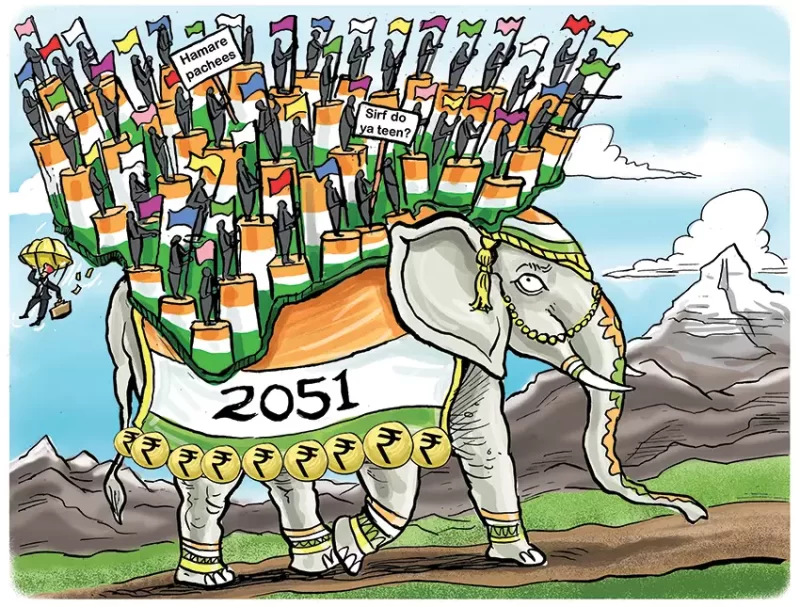
             With the outcome of the general elections now done and dusted and the previous BJP government back in power, albeit with a clear reduction in its seats tally from 303 down to 240, it must get down to the exacting business of good governance from the Centre. That the same government, with its experience of the last ten continuous years in power, fielding more or less the same faces in the Cabinet in critical ministries and importantly serviced by the same bureaucrats should have, relatively speaking, not such an arduous task in governance. However, the thrust for fair, equitable, and sensitive handling of all critical matters across the nation has to come from the top political leadership. All our states must never feel discrimination by the Centre, especially in financial allocations urgently required for developmental works and disaster management. Additionally, the new government must take stern measures to keep rising inflation and unnecessary governmental expenditure under check before the economy takes a severe nose-dive.

             The Modi government, with the continuous experience of the last ten years, will have more than a good idea of the systemic improvements required and about areas needing additional financial resources and effort. It is unnecessary to worry too much about criticisms from the opposition but to carry on regardless in developmental works, without fear or favour, and with impartiality towards all the states in the true spirit of federalism. A time comes for each leader and government to rise above pettiness, discarding ill will and hatred towards all. For the BJP, now uniquely in its third term, this is the time to show the nation that it is a party with a difference. For the opposition equally, this is the time to cooperate with the government on critical issues impacting the country.

             New Delhi’s hands will be full of the nation’s diverse and formidable challenges, requiring attention and effectiveness. On the foreign policy front, India will have to walk the tightrope of maintaining strategic autonomy and sustaining its good relations with both the US and Russia. However, as it determinedly confronts an overly assertive China, India needs to use its economic clout and sophisticated diplomacy to get its South Asian neighbourhood closer to it and each other, avoiding the debt trap diplomacy and financial machinations of China.

    The number of terror-related incidents in J&K has gone up substantially in the last three months, and Pakistan will have to be kinetically chastened.

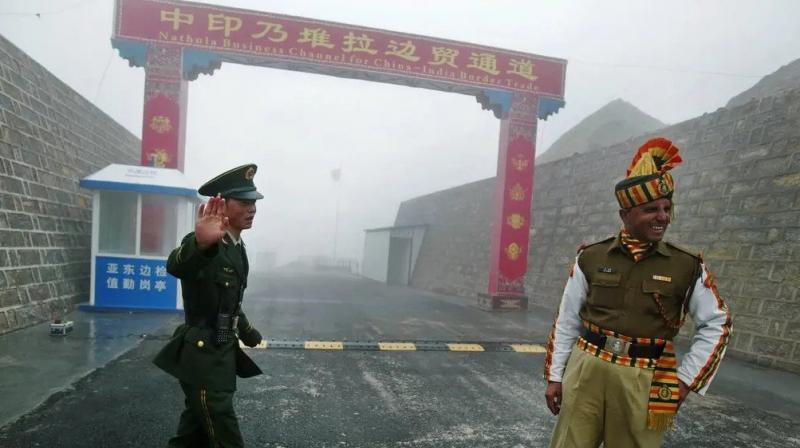
          India must, at the appropriate level, convey to China that their confrontationist attitude towards us will be harmful to the Chinese, too and may propel India to rethink its existing Tibet policy. Nevertheless, India must maintain the utmost vigil along the 3485 km Line of Actual Control/ IB, which it shares with  China. Meanwhile, Pakistan once again needs to be cautioned against stepping up terror activities in J&K  or elsewhere in the Indian hinterland. India is in full knowledge of Pakistan’s many fault lines. Still, it has refrained from exploiting these, and Pakistan must also cooperate in ensuring a peaceful and prosperous South Asian neighbourhood independent of China’s wily stratagems. The number of terror-related incidents in J&K has gone up substantially in the last three months, and Pakistan will have to be kinetically chastened.

    Meanwhile, India’s preparations to successfully improve its security capabilities to confront a two-front war must go ahead with realism and an unfailing determination. Measures to augment capital expenditure for major defence acquisitions must be identified. Transformative defence reforms like the introduction of integrated theatre commands will need the attention of the Centre. In addition, India must take all steps to restore peace in our restive NE states.

             The Modi government has come in for some criticism abroad on its human rights record and dealings with its Muslim population. This unjust criticism must be dealt with judiciously and with maturity. India’s overall inclusiveness and celebration of its diversity are unique examples for the entire world, especially the nations of the Global South. We must never deviate or be even seen to shift from this noble orientation.

    Reduction of the yawning gap between the countless ultra-rich and those millions in abject poverty is essential as we boast of becoming the 5th largest economy in the world. The many human indices where we are faltering also need to be addressed.

             As economic strength is the pillar that propels and sustains progress, the Modi government must take measures to improve our economic health. Reduction of the yawning gap between the countless ultra-rich and those millions in abject poverty is essential as we boast of becoming the 5th largest economy in the world. The many human indices where we are faltering also need to be addressed.

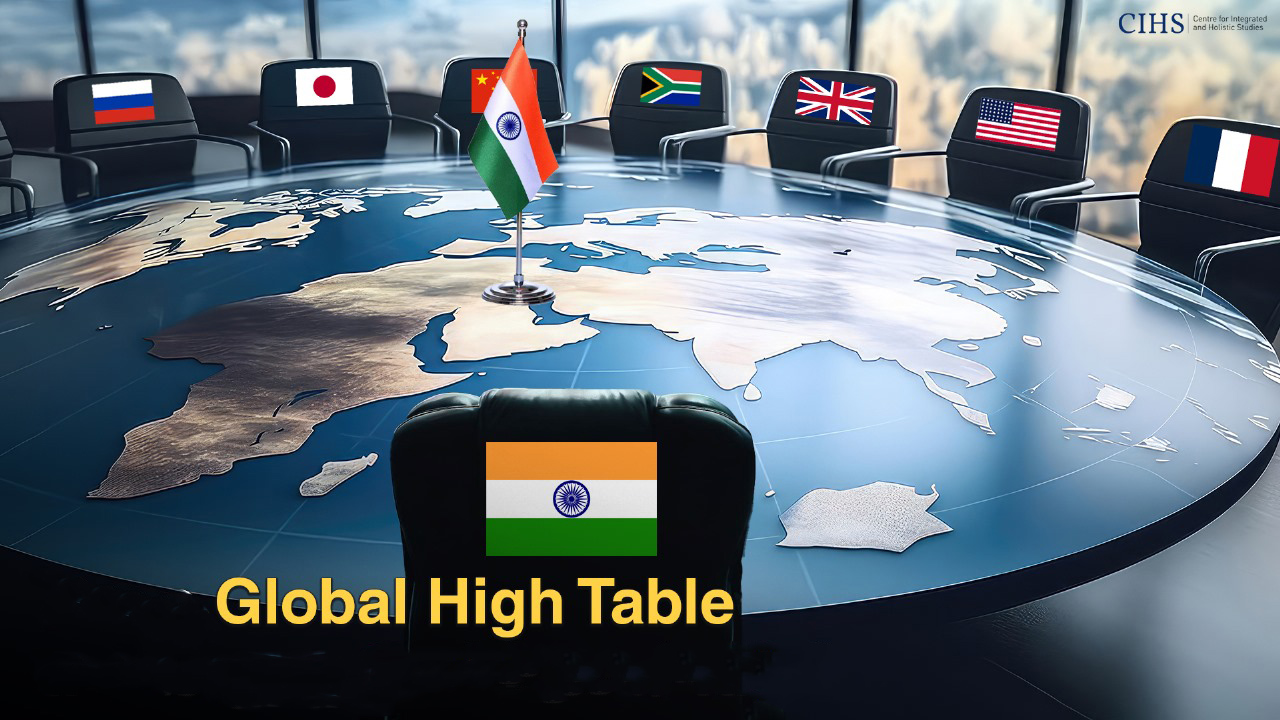
             By all yardsticks, India is deservingly on the cusp of acquiring a seat on the global high table. Let us not squander away this golden opportunity by internal squabbling but instead work together in addressing crucial issues that affect our nation; we must seize this opportunity.

    Feature Image Credit:  vskbharat.com    

    Cartoon Credit: Times of India
  • Kamal Davar | Raging turmoil in Myanmar poses security threat to India’s Northeast

    Kamal Davar | Raging turmoil in Myanmar poses security threat to India’s Northeast

    The turmoil in neighbouring Myanmar that is almost turning into a civil war has prompted the Government of India to decide that the country’s border with Myanmar will be covered by barbed fencing, much like the India-Bangladesh border. The states of Arunachal Pradesh, Nagaland, Manipur and Mizoram share a 1,643-km border with Myanmar. There is also a rethink on the free movement agreement with Myanmar that allows people living 16 km on either side unfettered cross-border movement on the production of border passes. The fierce fighting raging in Myanmar has led to deep security concerns in India, besides the large influx of refugees, which will be a natural outcome of this turmoil.

    India’s Northeast, often regarded as a “distant frontier” is also described in the government’s Vision Document 2020 as a “rainbow country”. It is surrounded by Bangladesh, Bhutan, China, Nepal and Myanmar. It includes the “seven sisters” — Arunachal Pradesh, Assam, Manipur, Meghalaya, Mizoram, Nagaland and Tripura. Sikkim too is seen as a part of this region. It has wide disparity in cultures, customs, languages and traditions. A host of geopolitical, historical, political and social conflicts have afflicted this region for years and posed both external and internal security challenges to this country. Geographically distant and economic disparities have further widened the chasm between the Northeast with the rest of India.


    Read more…

  • What IAF Needs to Transform into to Develop as an Aerospace Power

    What IAF Needs to Transform into to Develop as an Aerospace Power

    Pakistan has also enunciated a “first-use” nuclear option against India, that cannot be taken lightly.

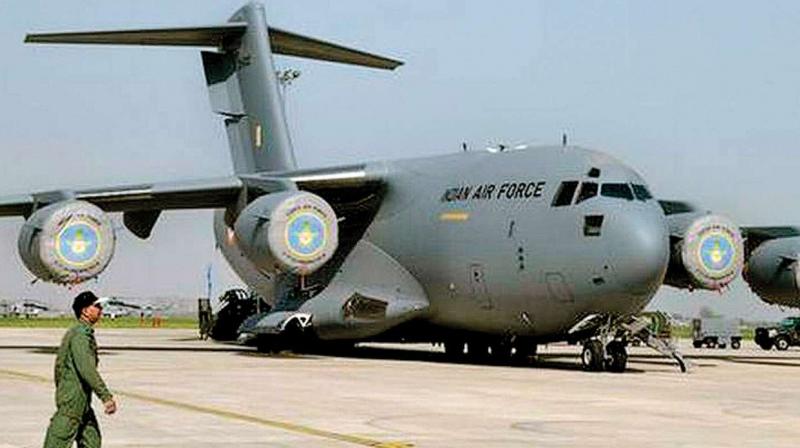
    For the Indian Air Force to truly live up to its motto of “Touching the Skies with Glory”, some critical transformational imperatives are needed. While the IAF is sincerely trying to move from air power to being an aerospace power, these imperatives have to be implemented with vision and alacrity. Faced with China’s rapidly growing military assertiveness and its unbridled ambitions, supplanted by a traditionally hostile Pakistan, the challenge to the IAF by both nations, individually and collusively, in the aerospace domain are indeed formidable. Aerospace is unquestionably the domain of the future.

    [powerkit_button size=”lg” style=”info” block=”true” url=”https://www.asianage.com/opinion/columnists/250723/kamal-davar-what-iaf-needs-to-transform-into-to-develop-as-an-aerospace-power.html” target=”_blank” nofollow=”false”]
    Read More
    [/powerkit_button]

  • The Quagmire of Afghanistan… as Kabul, Kandahar in a Power Tussle

    The Quagmire of Afghanistan… as Kabul, Kandahar in a Power Tussle

    Afghanistan is now at the brink of a humanitarian disaster.

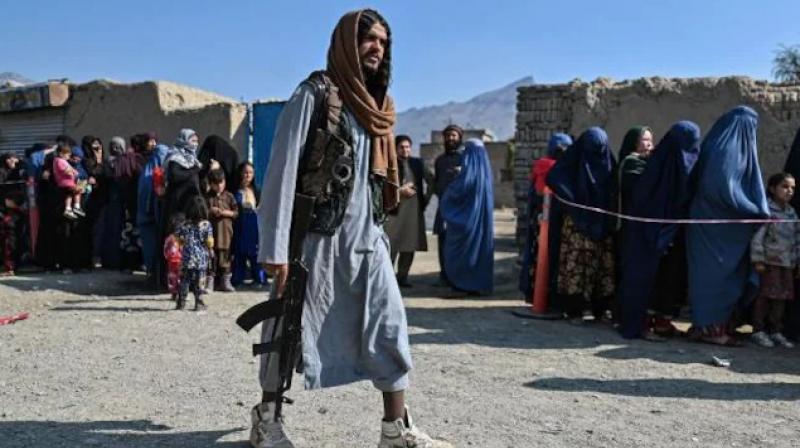
    Down the ages, Afghanistan, the land where many “Great Games” have been enacted, continues to baffle its rulers and neighbours as it brings misery to its impoverished and fratricidal strife-torn suffering people. In the past two years, it has been ruled by its own fundamentalist regime, the Taliban, with no succour to its people but added fatalities, hunger and deprivation, besides the growing abuse of human rights.

    Afghanistan is now at the brink of a humanitarian disaster. The hasty, inglorious American exit in August 2021 has contributed nothing but political instability for a people already plagued by various ethnic diversities. That the Taliban have reneged on most of its promises given to the US and the international community prior to the American exit, especially on freedom of speech, democracy and women’s rights is a cause of much turmoil within Afghanistan itself, apart from causing dismay to the nation’s well-wishers abroad.

    [powerkit_button size=”lg” style=”info” block=”true” url=”https://www.asianage.com/opinion/columnists/200623/kamal-davar-the-quagmire-of-afghanistan-as-kabul-kandahar-in-a-power-tussle.html” target=”_blank” nofollow=”false”]
    Read More
    [/powerkit_button]

  • India and the New Geopolitical Churnings

    India and the New Geopolitical Churnings

    In an interdependent world, India must manage both its internal pressures and external challenges with vision, a sense of balance and determination. The coming years project immense promise for India in diverse fields of human endeavour. Let’s capitalize on our innate strengths and an inclusive vision for all in our great nation and be a beacon for humanity.

    “Ukraine today may be East Asia tomorrow.”

    — Japanese PM Fumio Kishida at the 2022 Shangri La Dialogue

    Historically speaking, there usually remains an uneasy consistency in the geopolitical world order as the strategic interests of nations are not given easy alterability. Nevertheless, the traumatic geopolitical churning witnessed by the world in the last three years has no parallels since the end of World War II in 1945. Even by conservative standards, the overall impact on the world—political, economic, social and diplomatic— has been unmistakably tectonic.

    As all nations, including the major powers, endeavour to absorb the cataclysmic effects of the events of the last three years, the early months of 2023 also display a susceptibility for this adverse impact continuing in relations between nations and severe economic and health challenges remaining to the fore threatening the overall worsening of the established global order. It brooks no elaboration to state that the current and likely continuing geopolitical differences in the world community will drive geo-economic warfare and vastly augment the risk of multi-domain conflicts. By any standards, the future in geopolitical churns across the globe remains steeped in uncertainty!

    Recent Traumatic Events And Geopolitical Churnings

    The end of 2019 witnessed a global catastrophe with the outbreak of Covid19 pandemic also known as the coronavirus pandemic. Originating from the Chinese city of Wuhan, it could not be contained there and quickly spread to other Asian nations and in a few months from early 2020, virtually engulfed the entire globe. Reportedly, till date, this virus has affected 676 million cases causing over 6.88 million deaths. According to the WHO, this virus still exists in many parts of the globe in some form or the other. This Black Swan event affected the global economy, politics, health, ecology and environment besides adversely affecting many other aspects of life as never before. The globe is still reeling under the adverse impact of this virus.

    [powerkit_button size=”lg” style=”info” block=”true” url=”https://www.dsalert.org/DSA-Editions/2023/May/DSA_May-2023_Lt_Gen_Kamal_Davar_(Retd).pdf” target=”_blank” nofollow=”false”]
    Read More
    [/powerkit_button]

  • Punjab: On The Boil Again

    Punjab: On The Boil Again

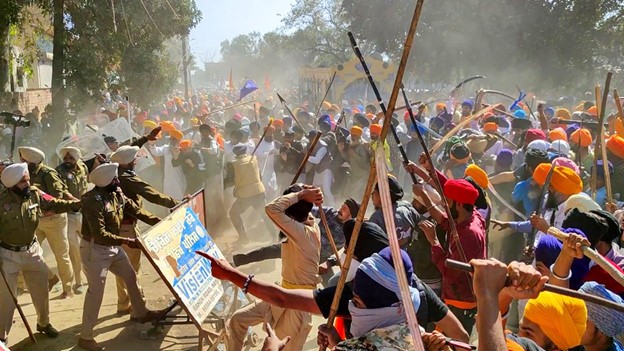
    Punjab—the land of saints and seers, the granary of India, nursery of the nation’s exceptionally gallant soldiers and outstanding sportspersons— appears to be once again, sliding to the brink of militancy largely attributed to religion-based secessionist motivations of a few extremists. That it is also fuelled by Pakistan’s sinister Inter Services Intelligence (ISI) and its well-funded stooges abroad brooks no elaboration.

    It will be prudent to recall that in the late 70s, Pakistan’s military dictator President Gen Zia-ul-Haq had conceived his infamous K-2 strategy (Kashmir and Khalistan) to foment trouble in two of India’s strategic border states of Kashmir and Punjab. Since then, till date, Pakistan has relentlessly strived to plant the seeds of terrorism, religious strife and lawlessness in these border regions. That turmoil and militancy did affect Punjab also in the 80s cannot be denied. Ultimately, the patriotism of the sturdy Sikhs coupled with firm handling by the Centre and state governments and embellished by strong and effective state police leadership under officers like Julio Ribeiro and KPS Gill had curbed the insurgency in Punjab. Those dark days did throw up vital lessons for all stakeholders to imbibe and implement to prevent such recurrences. But as usually happens with most establishments, a sense of déjà vu takes over till the next crisis occurs! The current state in Punjab is no exception.

    [powerkit_button size=”lg” style=”info” block=”true” url=”https://chanakyaforum.com/punjab-on-the-boil-again/” target=”_blank” nofollow=”false”]
    Read More
    [/powerkit_button]

  • Time to be firm tackling Dragon on LAC Standoff & Human Rights

    Time to be firm tackling Dragon on LAC Standoff & Human Rights

    Both nations, according to reports, now have between 50,000 to 60,000 troops deployed along the LAC in Ladakh.

    The last couple of years, in particular, have seen the world torn apart by both the Covid-19 catastrophe and the emergence of a new Cold War. Nations have been pursuing their own selfish agendas on the global stage unmindful of the uncalled-for destruction of weaker societies with misery and turmoil being inflicted on the hapless. After Russia’s invasion of Ukraine eight months ago, a conflict which threatens to escalate into a nuclear dimension, the world is yet to see any signs of a resolution. India, which is located in easily one of the world’s most geopolitically stressed regions, has its own share of diverse challenges, threatening its security and well-being, largely attributable to the hegemonistic and an overly assertive China.

    [powerkit_button size=”lg” style=”info” block=”true” url=”https://www.asianage.com/opinion/columnists/111022/kamal-davar-time-to-be-firm-tackling-dragon-on-lac-standoff-human-rights.html” target=”_blank” nofollow=”false”]
    Read more
    [/powerkit_button]

  • The Curious Case of Indian Silence over damning UN Human Rights Report on China

    The Curious Case of Indian Silence over damning UN Human Rights Report on China

    Not surprisingly, India has not come out with any condemnation of China for its atrocities in Xinjiang, a classic example of India in recent times trying to steer clear of global contestations.

    Down the ages, the phenomenon of imperial overreach has been prevalent across the world.  The evils for which it gets perpetrated would, by and large, be known to those who succumbed to it for supposedly national aspirations, religious fervour or even self-glory by some megalomaniacs!

    That the country relentlessly aspiring with rapidity to be the next global superpower, China, can be unquestionably placed in the category of an imperialist power brooks no emphasis. China thus, without remorse or any humanitarian considerations pursues its ambitions of forcible, bordering on evil, integration of people of all faiths and regions in its vast nation. Its threat of military intervention in tiny Taiwan in recent months bespeaks China’s hegemonistic ambitions.

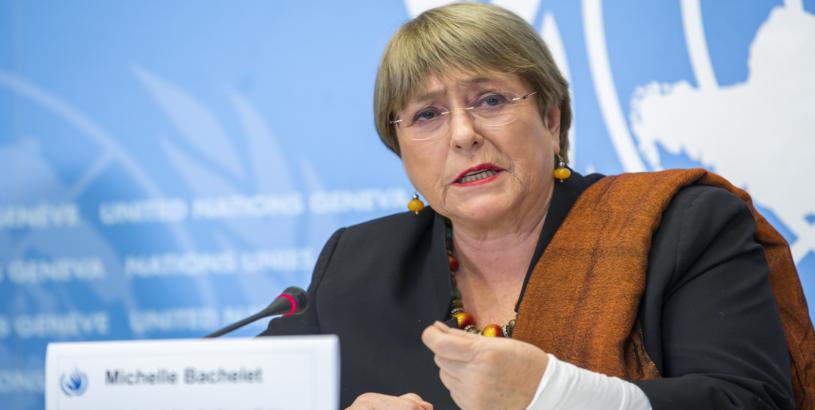
    Though rather late, the UN has rightly condemned China’s woeful human-rights record in its restive Xinjiang province where for the last many years, China has been committing genocide on its Muslim minorities, the Uyghur and Turkic communities. That the world, at large, and the Islamic nations, in particular, have cast a blind eye on this monumental human tragedy conveys, unmistakably, how the sheer pursuit of mere national interests dwarfs humanitarian considerations elsewhere. The significance of the UN Report on Human Rights just released, accordingly, cannot be understated.

    [powerkit_button size=”lg” style=”info” block=”true” url=”https://www.southasiamonitor.org/index.php/indo-pacific-china-watch/curious-case-indian-silence-over-damning-un-human-rights-report-china” target=”_blank” nofollow=”false”]
    Read More
    [/powerkit_button]

  • Indian Armed Forces @75: The Challenges Ahead

    Indian Armed Forces @75: The Challenges Ahead

    India overall, since 1947, has done reasonably well in keeping at bay the many diverse security challenges which came its way. However, the strategic and military lessons from our confrontations, since 1947, must never be forgotten.

    As India completes 75 years of its independence from 200 years of British yoke, there is much to celebrate about and equally much to introspect. Revisiting the functioning with stark honesty of all its institutions and governance structures will produce realistic mid-course corrections and suggest better paths for the nation to traverse. The Indian Armed Forces, unquestionably, one of the few institutions of the nation, which has lived up to its assigned responsibilities with elan and the desired results has much to be proud of. Nevertheless, many emerging aspects, nuances of the nation’s security and well-being have to be factored in and pursued earnestly with vision and resolve. For the nation’s honour, its Armed Forces can never be found wanting.

    By any standards, India is located in one of the most geo-politically troubled regions of the world. That it is surrounded by two consistently anti-India neighbours, China and Pakistan, both individually and collusively posing threats, only aggravates the formidable challenges it has to confront for its security. Both these nations being nuclear powers, synergistically anti-India, also adept at asymmetric warfare makes India’s strategic challenges mind-boggling.

    [powerkit_button size=”lg” style=”info” block=”true” url=”https://thedailyguardian.com/indian-armed-forces-75-the-challenges-ahead/” target=”_blank” nofollow=”false”]
    Read More
    [/powerkit_button]


  • At 75, A time to Celebrate and Introspect

    At 75, A time to Celebrate and Introspect

    As modern, democratic India turns 75, it is indeed a time for celebration and introspection

    Addressing the historic session of the Constituent Assembly on the night of 14-15 August 1947, at the cusp of India’s independence, Jawaharlal Nehru voiced the yearning of millions of Indians when, in his matchless eloquence, he declared: “Long years ago, we made a tryst with destiny, and now the time comes when we shall redeem our pledge…At the stroke of the midnight hour, when the world sleeps, India will awake to life and freedom”.

    In what’s considered to be one of the finest speeches of the last century, Nehru also voiced the aspiration of Gandhiji, that their work would not be over till they wiped “every tear from every eye,” adding “this is no time for petty and destructive criticism, no time for ill-will or blaming others. We have to build the noble mansion of free India where all her children may dwell.”

    [powerkit_button size=”lg” style=”info” block=”true” url=”https://www.deccanherald.com/opinion/in-perspective/at-75-a-time-to-celebrate-and-introspect-1136410.html” target=”_blank” nofollow=”false”]
    Read More
    [/powerkit_button]