Author: Kalyani S K

  • The Geopolitical Significance of Chabahar Port to India 

    The Geopolitical Significance of Chabahar Port to India 

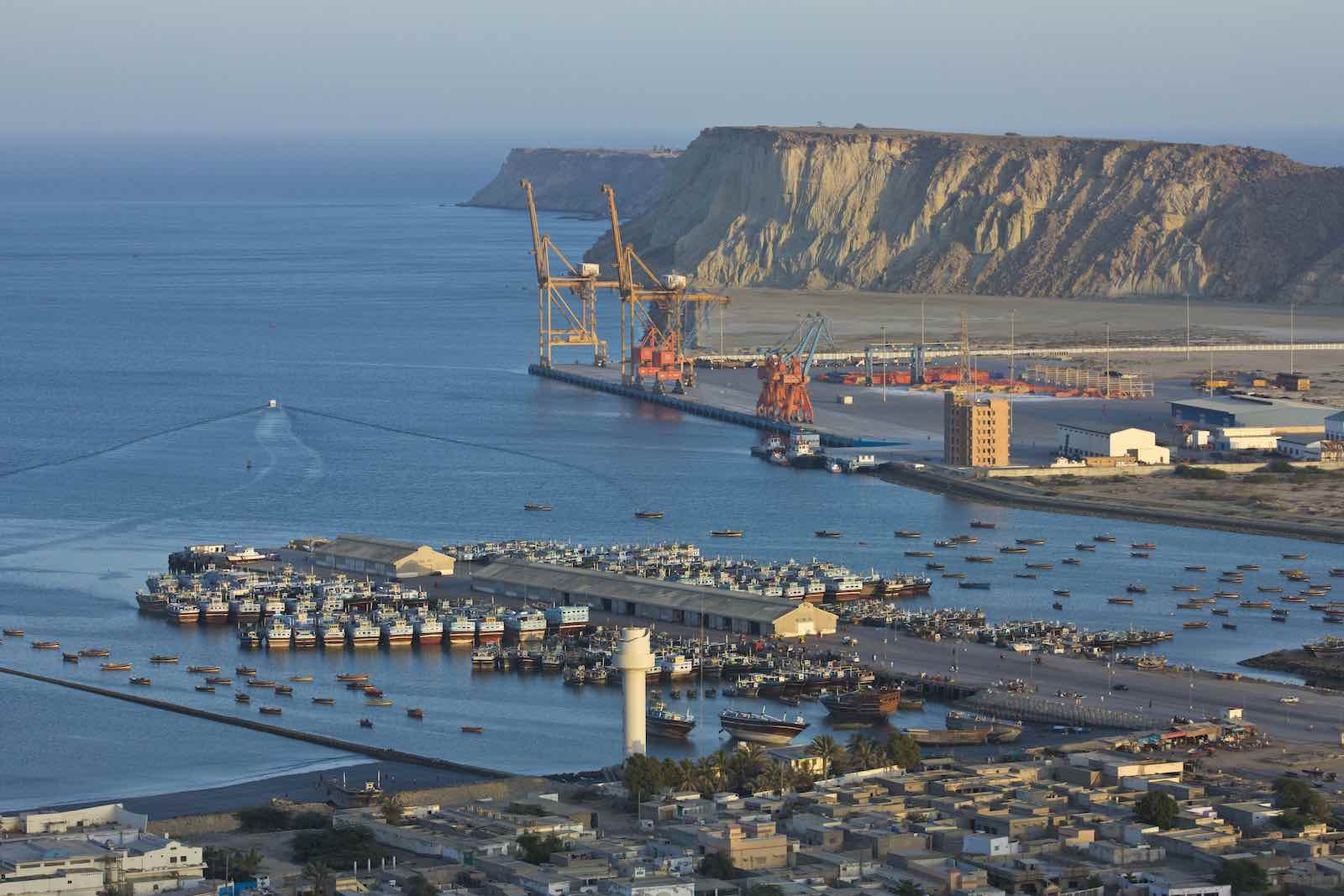
    The port of Chabahar is a seaport in south-eastern Iran, located on the Gulf of Oman, at the mouth of the Strait of Hormuz. It is situated in Sistan-va-Baluchestan, one of Iran’s least developed provinces. Contrary to Bandar Abbas, the busiest port in Iran, Chabahar is a deep-water port with direct access to the Indian Ocean that is outside the Hormuz Strait. It is Iran’s only seaport and consists of two separate ports called Shahid Beheshti and Shahid Kalantari. The last Shah of Iran proposed the port’s development in 1973. Work in Chabahar began when the Shah of Iran, Reza Pahlavi, was in power. The Iranian Revolution of 1979 hindered the development of this port. Following the 1979 Islamic revolution, US firms involved in various infrastructure investments fled the country. The new government took on these projects. The port of Chabahar grew in importance during the Iran-Iraq war of 1983 when ships were hesitant to enter the Strait of Hormuz. The port’s first phase opened during the Iran-Iraq war, when Iran began shifting maritime trade up the east coast toward the Pakistani border to reduce the reliance on Persian Gulf ports which were susceptible to attack by the Iraq Air Force. Chabahar is substantial for its fishing industry and will serve as a major trade hub designed to connect South Asia, Central Asia, and the Middle East. Chabahar can emerge as a potential global trading hub – and an arena for geopolitical competition. Chabahar is vital for both India and Iran to reduce their dependence on the Suez Canal for transporting cargo to Europe. Chabahar is a strategic port from an Indian perspective. Apart from being easily accessible from India’s western coasts, it serves several important functions. For starters, by having access to the port, India can reduce its commute time to Central Asia by one-third. Second, a link between Afghanistan and India could be built without going through Pakistan and this could help the already established diplomatic, security and economic relationship between New Delhi and Kabul. Third, India gains road access to four cities in Afghanistan via Chabahar: Herat, Kandahar, Kabul, and Mazar-e-Sharif. This will help India strengthen its trade with Afghanistan (“Chabahar and Beyond” 2016). However, the Taliban’s return to power in 2021 gives rise to a certain level of uncertainty. The current geopolitical environment, both regional and global, creates opportunities for India to overcome possible uncertainties.

    New Delhi views Chabahar port as a means of bypassing Pakistan’s land routes to gain access to the Afghan and Central Asian markets.

    Being one of the world’s fastest-growing economies, expansion of trade relations and access to new markets is a necessity for India. As an investor, New Delhi views Chabahar port as a means of bypassing Pakistan’s land routes to gain access to the Afghan and Central Asian markets. Pakistan’s Gwadar port is one possible route for India to access Central Asian markets, India has long aimed for alternative routes due to its adversarial relationship with Pakistan (“Chabahar Port: A Step toward Connectivity for India and Afghanistan,” n.d.). Additionally, the port will strengthen relations between India and Iran, which may help counterbalance strong Sino-Pakistani cooperation. According to the Minister of Foreign Affairs (MEA), India and Iran share close historical and civilizational ties, “Our bilateral relations are marked by strong linkages across institutions, cultures and people-to-people ties,” the MEA said in a statement. Afghanistan also seeks to explore new trade routes to reach international markets. It aims to reduce its dependence on Pakistan, which handles most of the Afghan trade due to the country’s landlocked status. 

    Afghanistan is crucial for India’s ‘neighbourhood first’ strategy. India assisted Afghanistan in becoming a full member state of SAARC in 2007. It signed a Preferential Trade Agreement with Kabul in 2003 following the establishment of the interim government post the US’s intervention in 2001. Under the North-South Transport Corridor framework, India, Afghanistan, and Iran signed the Chabahar port agreement in 2003, allowing all three countries to use the Chabahar port as a trade hub. India is working on constructing the Chabahar port primarily to compete with the Gwadar port project and to connect it to Russia’s International North-South Transport Corridor (INSTC). India has already built a 218-km-long road from Delaram to Zaranj (“India Completes Zaranj-Delaram Highway in Afghanistan” 2008) and now plans to connect this road to Chabahar port and deliver goods through this route. India is also keen on using the Chabahar port to connect the oil-rich Central Asian countries by road connectivity via the Milak (Iran) and Zaranj-Dilaram (Afghanistan) roads. For India, the port, which is only 940 kilometers from Mundra in Gujarat, is about more than just facilitating the flow of trade with Afghanistan. Rather, the development of Chabahar is a crucial component of the country’s grand strategy to connect with Central Asia. India’s justification for wanting to develop the Chabahar Port goes beyond its interest in Afghanistan. Enhancing regional trade and connectivity as well as thwarting China’s expanding influence in the Indian Ocean are other top priorities for Indian foreign policy (“What Are India, Iran, and Afghanistan’s Benefits from the Chabahar Port Agreement? Manohar Parrikar Institute for Defense Studies and Analyses,” n.d.).

    Geopolitical Challenges

    The port of Chabahar will be of little use if Afghanistan is not stable. Indian interest in the Chabahar Port, therefore, continues to be closely linked to the geopolitical changes the region is currently experiencing.

    The competition for regional dominance between India and China can be seen in the development of ports in the regions. Indian involvement in the Chabahar port is important in securing India’s interest in the region. A calculative China will seize any opportunity that India might present in the port facility. If China moves in, Indian investments in the Chabahar port may be unfavorably affected (Pant and Mehta, 2018). A significant barrier is the complex nature of India-Iran relations, in which the former does not hold a privileged position. Given India’s priorities in the Middle East, it is unlikely that the relationship with Iran could compete with the comprehensive partnership that China and Pakistan share, which includes a strong defence and security arrangement. Iran may find it challenging to ignore or exclude China, its largest foreign investor, from the Chabahar project. Additionally, China has successfully completed several infrastructure projects in Iran, including the Tehran Metro, and has allocated US$ 1.5 billion through its EXIM Bank for the electrification of the Tehran-Mashhad railway line (“$1.5b China Loan for Iranian Rail Project” 2017).

    Peace and stability in Afghanistan will also impact the performance of the Chabahar Port. The tumultuous security situation in Afghanistan could jeopardise trilateral efforts between India, Iran, and Afghanistan to operate the Chabahar Port facility. And finally, the port of Chabahar will be of little use if Afghanistan is not stable. Indian interest in the Chabahar Port, therefore, continues to be closely linked to the geopolitical changes the region is currently experiencing.

    References

    “$1.5b China Loan for Iranian Rail Project.” 2017. Financial Tribune. July 25, 2017. https://financialtribune.com/articles/economy-domestic-economy/68986/update-15b-china-loan-for-iranian-rail-project.

    Amirthan, Shawn. 2016. “What Are India, Iran, and Afghanistan’s Benefits from the Chabahar Port Agreement?” Strategic Analysis 41 (1): 87–93. https://doi.org/10.1080/09700161.2016.1249184.

    “Chabahar and Beyond.” 2016. Www.thehindubusinessline.com. May 25, 2016. https://www.thehindubusinessline.com/opinion/editorial/chabahar-and-beyond/article8646239.ece.

    “Chabahar Port: A Step toward Connectivity for India and Afghanistan.” n.d. Thediplomat.com. https://thediplomat.com/2019/07/chabahar-port-a-step-toward-connectivity-for-india-and-afghanistan/.

    “India Completes Zaranj-Delaram Highway in Afghanistan.” 2008. Development News from Afghanistan, August 24, 2008. https://afghandevnews.wordpress.com/2008/08/24/india-completes-zaranj-delaram-highway-in-afghanistan/.

    Pant, Harsh V., and Ketan Mehta. 2018. “India in Chabahar.” Asian Survey 58 (4): 660–78. https://doi.org/10.1525/as.2018.58.4.660.

    “What Are India, Iran, and Afghanistan’s Benefits from the Chabahar Port Agreement? Manohar Parrikar Institute for Defence Studies and Analyses.” n.d. Idsa.in. https://idsa.in/strategicanalysis/40_1/india-iran-and-afghanistans-benefits-from-the-chabahar-port-agreement.

    Featured Image Credit: Lowy Institute
  • Economic Relevance of Quad as a Regional Strategic Forum

    Economic Relevance of Quad as a Regional Strategic Forum

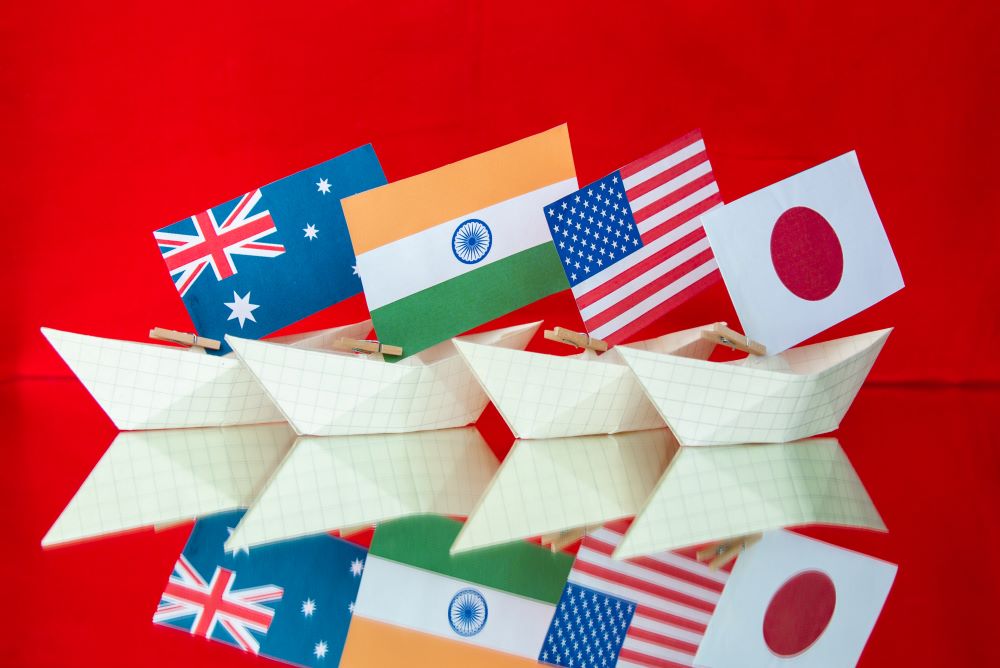
    The QUAD, a grouping of the United States, Japan, India, and Australia, began as a “Tsunami Core Group,” an impromptu group formed in response to the devastating Boxing Day tsunami of 2004. This core group brought together the four nations to swiftly mobilise and coordinate multilateral disaster relief and humanitarian assistance operations. The first meeting of the initial QUAD took place in May 2007 during the ASEAN Regional Forum (ARF) meeting in Manila. The meeting was characterised as an “informal grouping” that discussed themes of mutual interest to the dialogue participants (Buchan & Rimland, 2020). The group was established to deal with the immediate challenges posed by the tsunami and was never intended to become permanent. However, early cooperative efforts sparked a debate about QUAD’s overarching goal. When Australia withdrew from the QUAD in 2008, it ceased to exist. It was revived in 2017 against the backdrop of an increasingly assertive Chinese posture, and the emergence of the idea of the Indo-Pacific as a single maritime zone.

    The first QUAD meeting, after its revival, happened on 12 November 2017, when the four ‘like-minded’ partners discussed seven key issues: the rules-based order in Asia; freedom of navigation and overflight in the maritime commons; respect for international law; enhancing connectivity; maritime security; the North Korean threat and non-proliferation; and terrorism (Jain, 2022). The QUAD aims to bring diverse perspectives together in a shared vision for a free and open Indo-Pacific, and it strives for a region that is free, open, inclusive, healthy, and anchored in democratic values.

    Economic Potential

    There are numerous reasons to increase economic engagement within the QUAD nations—the four countries, with a combined population of over 1.8 billion people, represent a quarter of the world’s population and over $30 trillion in GDP. In 2018, trade between the four countries totalled more than $440 billion, with nearly $6 trillion in trade with the rest of the world. QUAD intends to use both public and private resources to construct high-quality infrastructure in the Indo-Pacific region. According to the MEA’s website, since 2015, QUAD partners have invested more than $48 billion in regional infrastructure development. The commitment of the QUAD to regional infrastructure development can be strengthened by integrating India into the existing ‘Australia-Japan-US Trilateral Infrastructure Partnership’ and by broadening their reach into the Indo-Pacific region (“Fact Sheet: QUAD Leaders’ Summit,” n.d.). Except for India and the United States, the remaining two countries are also Regional Comprehensive Economic Partnership (RCEP) members. This shows that, notwithstanding territorial and security differences, trade and commerce are still the primary focus (“Economic Dimension Key to QUAD Success”, 2021). Further, the Covid-19 pandemic has harmed the global economy, including the QUAD nations, in areas ranging from employment to investment. Thus, by bolstering their economic ties for greater freedom and cooperation, the group will facilitate a faster recovery from the pandemic’s effects.

    The Indian Ocean, not the Indo-Pacific, is central to India’s vision. In the short term, India’s engagement with the Indo-Pacific framework will be primarily diplomatic and economic and will be constrained by the Indian Ocean’s strategic primacy and constraints on its sea-power projection

    QUAD and the Indian Economy

    India’s strong economic ties with the QUAD economies are reflected in its bilateral trade volume with each member. During 2019-2020, these three economies accounted for 15% of India’s total trade. The United States contributes the most with 11%, followed by Japan and Australia, with 2.15 and 1.6 per cent, respectively. Further, India already has a free-trade agreement with Japan, which was implemented in 2011, and negotiations with Australia and the United States are ongoing. India can now use this critical multilateral forum to help facilitate trade negotiations and increase economic activity with member economies (“Economic Dimension Key to QUAD Success” 2021).

    According to Lunev and Shavlay (2018), the emergence of China, the expansion of India’s economic and strategic clout, and, most importantly, the growing importance of the Indian Ocean as a strategic trade route carrying nearly two-thirds of global oil shipments and a third of bulk cargo, have entailed a shift in the security architecture from the Asia-Pacific to the Indo-Pacific. These factors have contributed to the rise of regional stakeholders advocating for a free and open Indo-Pacific, resulting in the re-establishment of the QUAD. However, India’s maritime interests and strategies are at odds with those of the other QUAD members. The Indian Ocean, not the Indo-Pacific, is central to India’s vision. In the short term, India’s engagement with the Indo-Pacific framework will be primarily diplomatic and economic and will be constrained by the Indian Ocean’s strategic primacy and constraints on its sea-power projection.

    The South and East China Seas, the Western Pacific, and the Indian Ocean are of particular concern to the United States and Japan. Unless and until these disagreements are resolved, QUAD’s effectiveness as an entity will be called into question

    Tokyo Summit 

    The Tokyo Summit is the QUAD Leaders’ fourth interaction since their first virtual meeting in March 2021, in-person Summit in Washington DC in September 2021, and virtual meeting in March 2022. The Tokyo Summit took place against the backdrop of the ongoing Russia-Ukraine conflict and its repercussions. The joint statement issued following the QUAD summit in Tokyo on May 24, 2022, is more comprehensive than the first three summits. It has attempted to clarify the broad framework for cooperation by outlining eight specific areas. These include Peace and Stability; Covid-19 and Global Health Security; Infrastructure; Climate; Cybersecurity; Critical and Emerging Technologies; QUAD Fellowship; Space; and Maritime Domain Awareness and Humanitarian Assistance and Disaster Relief (HADR) (Luthra, n.d.). A comprehensive QUAD joint statement and the launch of the Indo-Pacific Economic Framework (IPEF) are key developments of the Tokyo summit. QUAD leaders also announced a maritime initiative to combat illegal fishing at the Tokyo summit, and a pledge to invest $50 billion in infrastructure in the Indo-Pacific to combat China’s growing power (“QUAD Joint Leaders’ Statement”, 2022).

    The QUAD has long been criticised for lacking a common purpose or a substantive agenda. Furthermore, none of the objectives cited as reasons for bringing the four states together are unique to the QUAD. Other actors and institutions in the region already exist for these purposes.  Thus, there is a need for QUAD partners to better articulate their distinct rationale for cooperation and collaborative efforts.

    India is a key player due to its naval power and strategic location, and should thus be an active participant. However, there are differences in areas of interest among the QUAD nations, complicating its effectiveness. The South and East China Seas, the Western Pacific, and the Indian Ocean are of particular concern to the United States and Japan. Unless and until these disagreements are resolved, QUAD’s effectiveness as an entity will be called into question. While India is frequently portrayed as the holdout — and has recently been the most vocal — objections have come from other countries as well. The potential impact on Sino-Australian relations continues to make some in Australia nervous. Beijing’s reaction has factored into American caution as well, as has the preference for a trilateral format (Madan, 2017).  

    India requires investment, attractive financing for infrastructure, technology, and access to key raw materials, particularly rare earth elements, among the QUAD nations. QUAD’s other members are looking for market access and dependable investment destinations. Broadening QUAD’s current strategic focus to strengthen economic ties under the partnership’s auspices would be a win-win situation for all countries involved in such a scenario.

    Bibliography

    Buchan, P., & Rimland, B. (2020). Defining the diamond: The past, present, and future of the quadrilateral security dialogue. Defining the Diamond: The Past, Present, and Future of the Quadrilateral Security Dialogue | Center for Strategic and International Studies. Retrieved July 22, 2022, from https://www.csis.org/analysis/defining-diamond-past-present-and-future-quadrilateral-security-dialogue 

    “Economic Dimension Key to Quad Success.” 2021. The Statesman. February 23, 2021. https://www.thestatesman.com/opinion/economic-dimension-key-quad-success-1502953752.html.

    “Fact Sheet: Quad Leaders’ Summit.” n.d. Www.mea.gov.in. https://www.mea.gov.in/bilateral-documents.htm?dtl/34319/Fact+Sheet+Quad+Leaders+Summit.

    JAIN, Purnendra. 2022. “India’s Changing Approach to the Quadrilateral Security Dialogue.” East Asian Policy 14 (01): 56–70. https://doi.org/10.1142/s1793930522000046.

    Lunev, Sergey, and Ellina Shavlay. 2018. “Russia and India in the Indo-Pacific.” Asian Politics & Policy 10 (4): 713–31. https://doi.org/10.1111/aspp.12430.

    Luthra, Girish. n.d. “Forward from the Tokyo Quad Summit and IPEF.” ORF. https://www.orfonline.org/expert-speak/forward-from-the-tokyo-quad-summit-and-ipef/.

    Madan, Tanvi. 2017. “The Rise, Fall, and Rebirth of the ‘Quad.’” War on the Rocks. November 16, 2017. https://warontherocks.com/2017/11/rise-fall-rebirth-quad/.

    “Quad Joint Leaders’ Statement.” 2022. The White House. May 24, 2022. https://www.whitehouse.gov/briefing-room/statements-releases/2022/05/24/quad-joint-leaders-statement/.

    Rahman, Mohammad Masudur, Chanwahn Kim, and Prabir De. 2020. “Indo-Pacific Cooperation: What Do Trade Simulations Indicate?” Journal of Economic Structures 9 (1). https://doi.org/10.1186/s40008-020-00222-4.

    Feature Image Credits: Resilinc