Author: Ambassador G Parthasarathy IFS (Retd)

  • China Tightening its grip on Indian Ocean

    China Tightening its grip on Indian Ocean

    Category : International Affairs/China

    Title : China Tightening its grip on Indian Ocean

    Author : G Parthasarathy 10-02-2020

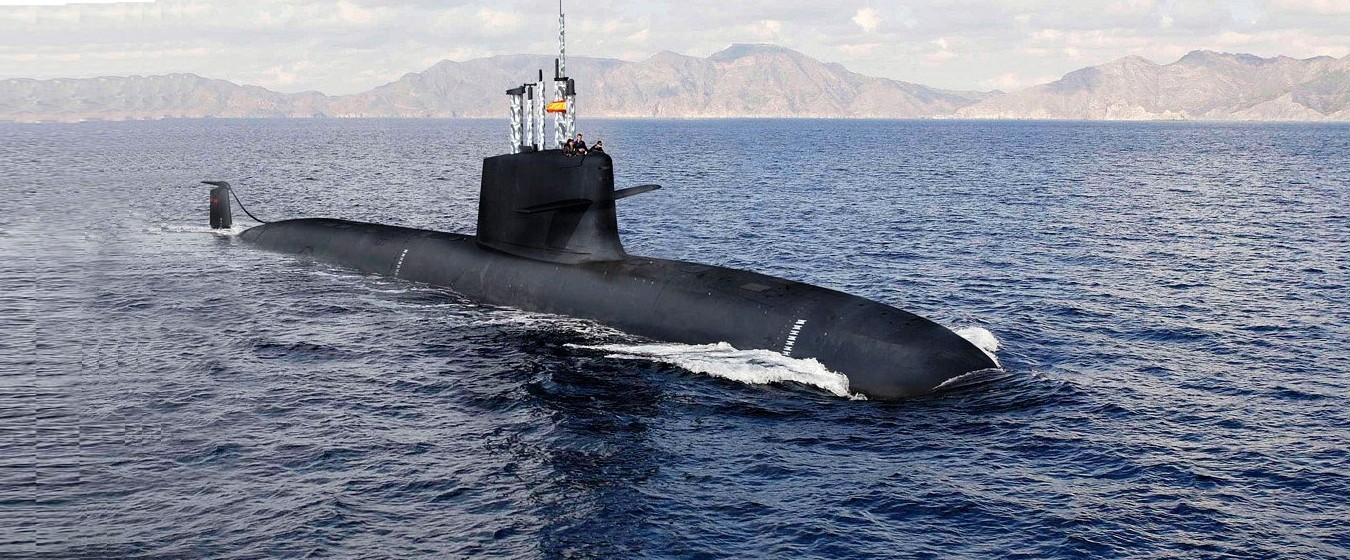
    In comparison to India, China has moved ahead to strengthen its maritime ties with countries across the Indian Ocean. With the expansion of its submarine fleet and commissioning of its aircraft carriers and fifth generation aircraft, China has augmented its naval strength significantly. Ambassador G Parthasarathy looks at China’s expanding profile in the Indian Ocean and India’s response.

    Read More

  • New challenges of global terrorism

    New challenges of global terrorism

    G Parthasarathy                                                                                                  May 23, 2019/Opinion

    The people of Sri Lanka have shown courage, wisdom and resilience in recovering from the traumatic effects of the country’s brutal ethnic conflict between 1983 and 2010. An estimated 47,000 Tamil civilians, 27,000 LTTE members, 50,000 Sinhala civilians, 23,790 Sri Lankan soldiers and 1,500 members of the Indian Peace Keeping Force laid down their lives, during the conflict.

    he Sri Lankan ethnic conflict, however, did not affect the lives of “Indian Tamils” in Southern Sri Lanka, whose ancestors had migrated, as plantation workers, during British rule. There have, however, been recent incidents of religious tensions between the Sinhala Buddhist clergy and radicalised elements in the Muslim minority. Sri Lanka’s relatively small Christian minority, which is peaceful and relatively affluent, had steered clear of getting drawn into any ethnic conflict.

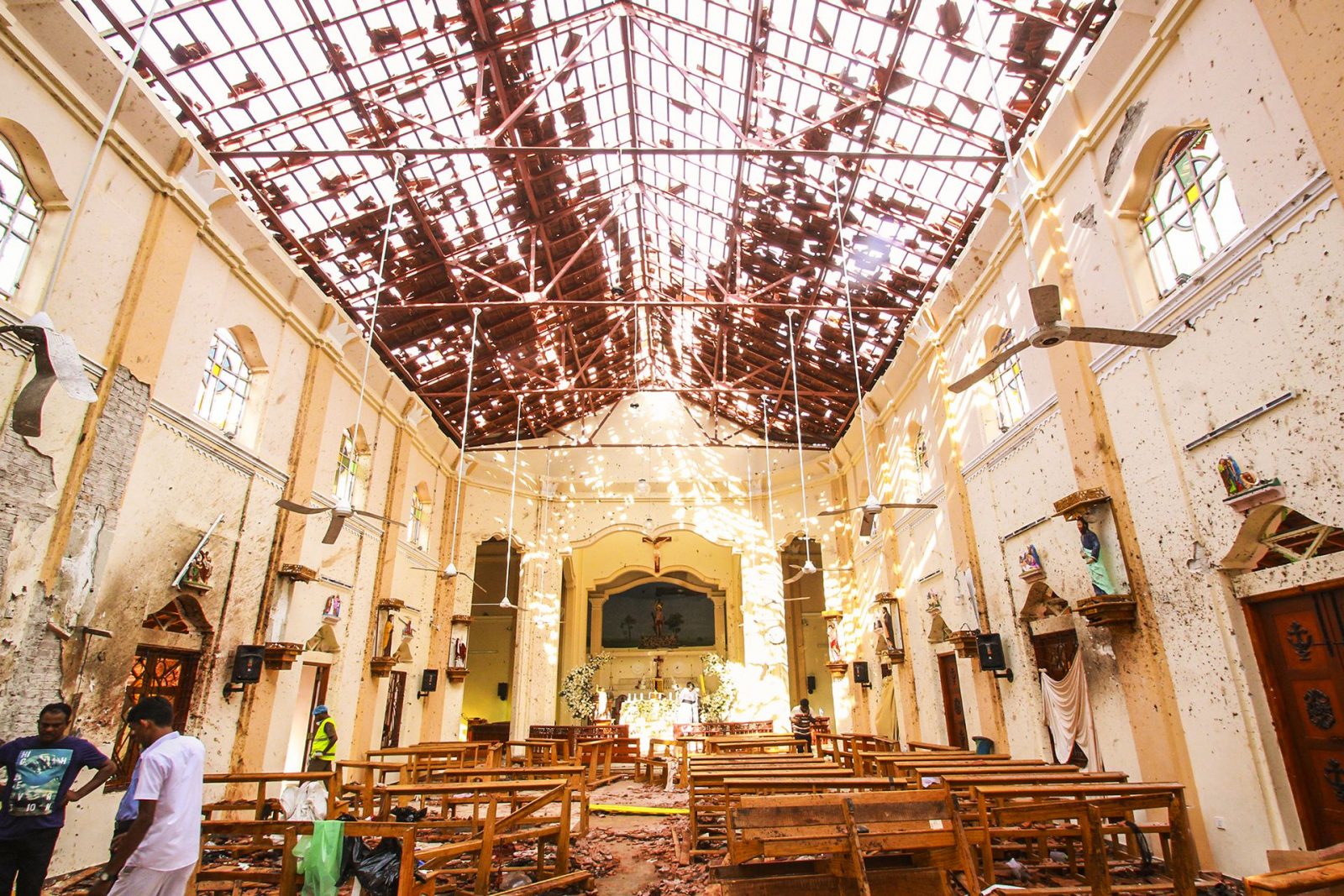
    In these circumstances, the world was shocked to learn that in the midst of holy Easter Sunday church services on April 21, churches in Colombo, Negombo and even the eastern port of Tamil dominated Batticaloa, were hit by bomb explosions.

    Three hotels housing a large number of western tourists in Colombo were also targeted. As many as 253 innocent people perished in the carnage.

    The “Islamic State of Iraq and Syria” (ISIS) soon claimed responsibility for the attack, contradicting President Trump’s claims that the terrorist outfit had been “100 per cent” crushed in Syria. It soon emerged that the mastermind behind the blasts was a rabidly fundamentalist Sri Lankan Tamil, Maulvi Mohammad Zahran Hashim, who was from the town of Kathankudy, in Sri Lanka’s Tamil dominated eastern province.

    Indian intelligence agencies had provided timely warnings to the Sri Lankan Government about an impending terrorist strike by the ISIS. These warnings were not seriously taken note of by the Sri Lanka Government. It is, however, imperative that India keeps in touch discreetly with the Sri Lankan Government. We are evidently seeing the beginnings of long-term internal and regional problems and challenges, as ISIS members disperse and regroup, after being ousted from Iraq and Syria, like Al Qaeda and the Taliban did, after American militarily intervention in Afghanistan.

    As the ISIS targets in Sri Lanka were the country’s peaceful Christian community and western (Christian) tourists, the bomb attacks sent ripples across the West, as the attacks came soon after the massacre of Muslims in New Zealand, during their Sunday prayers.

    Radicalisation drive

    Sri Lanka’s Muslim community, which has done well economically in the Island, has lived in peace with both Buddhist Sinhalas and Hindu Tamils. Recent studies, however, indicate that some years before the bombings, sections of Tamil Muslims from the eastern province were getting radicalised in Saudi Arabia and other Gulf Arab countries.

    Zahran Hashim was one of those so influenced by radical Islamist practices and beliefs. Cutting across ethnic differences, Hashim made common cause with Sinhala Muslims, including two sons of a Muslim business tycoon in Colombo, who had been deeply influenced by the ISIS. Both the sons died in suicide bomb blasts, even as the wife of another bomber detonated explosives in a suicide bombing the same day, resulting in the deaths of three police personnel.

    The Sri Lanka bomb blasts were thus executed by young radicalised Sri Lankan Muslims, cutting across the ethnic divide. Moreover, there are now signs that an estimated 75-100 Indian Muslims, who were with the ISIS in Syria, have dispersed and chosen escape routes, including through Afghanistan and Pakistan. Hashim has also reportedly established close institutional links with a counterpart group in Coimbatore and with people in other parts of Tamil Nadu and Kerala.

    There are now indications that after being forced out of Iraq and Syria, ISIS fighters have now dispersed across Asia, Africa and even to parts of Europe. While the Osama bin Laden-led Al Qaeda made it clear that its struggle was against “Jews and Crusaders,” the ISIS targets all non-Muslims, as was evident from its brutal killings of Indians in Iraq. Moreover, the Al Qaeda operated primarily out of Afghanistan and Pakistan, apart from select Arab countries. Al Qaeda’s leadership was predominantly Arab. It had very few members from other parts of the world.

    The ISIS poses a much more serious challenge to India than the Al Qaeda ever did, primarily because it has recruited its fighters from countries across Europe, Asia and Africa. President George Bush praised India because not a single Indian joined or backed Al Qaeda. But, things are different with ISIS, which regards India as a part of the “Islamic State of Khorasan”. Over 100 Indians are estimated to have joined the ISIS.

    Extending its reach

    The reach of ISIS across India is evident from its links with extremists in Kashmir, apart from those established in the recent past, in Tamil Nadu and Kerala. Radicalisation in our southern States poses new and serious security challenges. ISIS also acknowledges its links with associates, across India’s maritime frontiers in Malaysia, Thailand, the Philippines, Myanmar, Indonesia, Maldives, Saudi Arabia and the UAE. It also has a growing presence in Afghanistan and Pakistan.

    India will also have to take note of the distinct possibility of ISIS attempting to take advantage of tensions arising out of the Rohingya refugee crisis. A senior Myanmar official recently revealed that even as ISIS was losing influence in Iraq and Syria, its supporters were moving into Myanmar’s Rakhine State, where Rohingyas reside. Many Rohingya refugees, now in Bangladesh, could well make common cause with ISIS and with members of Pakistani backed militant outfits like the Jamat-ul-Mujahideen, to destabilise the situation along the common borders of India, Bangladesh and Myanmar. Pakistan has had an abiding interest in destabilising the Sheikh Hasina-led Government in Bangladesh.

    Apart from having to deal with continuing Pakistan sponsored terrorism, India will now also have to keep a watch on challenges that would likely arise from the ISIS, with its emerging presence in the southern States. Like in Sri Lanka, ISIS activities could target selected sections of the population in India, while seeking to radicalise them. They will pose a challenge to internal security in India. Finally, Pakistan could be expected to use the challenges posed by ISIS, to absolve itself of responsibility on actions of its trained jihadis, on Indian soil and in Bangladesh. These issues will hopefully receive careful attention after the general elections.

    The writer is a former High Commissioner to Pakistan. He is a Trustee and Visiting Distinguished fellow of TPF.

    This article was published earlier in The Hindu: BusinessLine.

    Image Credit-Getty through Vox.

  • China grows, and grows

    China grows, and grows

    G Parthasarathy                                                                                       Apr 11, 2019/Commentary

    One of the most remarkable developments in recent decades has been the rise of China, spearheaded since 1978 by the visionary leadership and economic reforms of Deng Xiaoping. China registered the highest rate of economic growth in history, growing at an average rate of 9.5% annually, for over three decades. This followed the earlier rise of Japan between 1950 and 1989, with an average growth rate of 6.7%. Deng transformed a country crippled by centralised planning and state control of industries into a more decentralised economy, with increasing involvement of private initiative. This era saw market reforms leading to a surge in exports, with China emerging as the largest exporter in the world. China’s private sector today controls around 80% of its industry and virtually the entire agricultural sector. State farms today employ barely 1% of agricultural labour. There are 658 billionaires in China, which is ruled by a ‘Communist’ party, as against 584 in the US, ruled by Trump’s right-wing Republican Party.

    President Xi Jinping has emerged as China’s unquestioned leader, seeking to match Xiaoping. Among Xi’s ‘mantras’ to achieve his ambitions is the now famous Belt and Road (OBOR) project, involving the use of Chinese construction companies, which have huge surplus capacities. These companies did a stupendous job in China over the past three decades and have surplus capacity, including labour and machinery, arising from the relatively small number of projects yet to be undertaken. The Belt and Road Initiative is not only involved in building roads and bridges, but also railways, ports, dams, power stations and other infrastructure across 68 countries, spanning Asia, Africa and Europe. Estimates of total investments envisaged for these projects vary from $1 trillion to $1.3 trillion. The primary focus is on the Eurasian landmass.

    The main source of concern in India, however, pertains to Chinese projects across the Indian Ocean. While the OBOR focuses primarily on the construction of roads, bridges, electrical power projects and dams, the terms for such assistance are opaque. Relatively small attention is paid to developing indigenous skills and capacities for operations and maintenance. The terms of interest and repayment are far less generous than the vastly concessional assistance provided by institutions like World Bank and Asian Development Bank, or bilaterally by countries like Japan and Germany. The net result of this ‘generosity’ is that a number of developing countries, beguiled by Chinese protestations of altruistic assistance, soon find themselves handing over substantial tracts of territory and natural resources to the Chinese, with little development of indigenous expertise.

    India’s western Indian Ocean neighbourhood remains a primary source of concern about Chinese intentions. Using its aid as leverage, China has secured its first military base in the East African Port of Djibouti. China has, in turn, undertaken work on port facilities, construction of two airports and a rail line from Djibouti across landlocked Ethiopia. In neighbouring Kenya, China’s involvement in the strategic port of Mombasa and construction of a rail line, linking the port to the capital Nairobi, have also raised eyebrows internationally. There are growing apprehensions in Kenya that it would soon be unable to repay and be forced to make ‘concessions’ on the management and use of the port. China is the largest lender to Kenya, with debt liabilities reportedly amounting to about $42 billion.

    Reckless spending by the government of former President Abdulla Yameen in the Maldives has resulted in the country acquiring a debt of $3 billion on account of the usual Chinese infrastructure mix of roads, bridges, airports and housing. The newly elected government of President Ibrahim Solih has been more circumspect about such projects. Sri Lanka, too, when unable to repay its debts, was forced to concede substantial control of the Hambantota Port, with a 99-year lease to China. It was also compelled to allow Chinese N-submarines to berth in Colombo.

    Pakistan and Myanmar are inevitably going to experience similar dilemmas. The $62 billion CPEC involves road, rail, mining, port, power sector and agricultural projects, under conditions not known even to parliamentary committees and the country’s Central Bank. With its foreign exchange reserves dwindling and its pleas for an IMF bailout dependent on the goodwill of the US and its allies, Pakistan is faced with very difficult choices on economic management and its backing for groups like the Taliban and the JeM.

    Apart from developing and virtually taking over the Gwadar Port, China is set to build up Pakistan’s navy with the supply of four ‘most advanced’ warships and eight submarines by 2028. At the same time, an isolated Myanmar faces virtual Chinese blackmail to accept Beijing’s ‘aid’ to build a highly unpopular and ecologically dangerous hydroelectric project in the face of strong public protest. This will be part of a Chinese economic corridor linking its Yunnan province with Myanmar’s Kyaukpyu Port.

    The OBOR project has multiple aims. India cannot, however, overlook the fact that it is geared to establish Chinese domination of vital lanes of communication and oil supplies in the Indian Ocean. Responding to India’s concerns voiced over two decades ago, a Chinese admiral arrogantly remarked: ‘The Indian Ocean is not India’s Ocean.’ China’s designs have serious implications for the maritime security of not only India, but also several partner states, ranging from the US and Japan to Indonesia, Malaysia, Vietnam and South Korea.

    Ambassador G Parthasarathy is a former High Commissioner of India in Pakistan, and is a Distinguished Fellow and Trustee of TPF. Views expressed are the author’s own.

    This article was earlier published in The Tribune.

    Photo by zhang kaiyv from Pexels.

  • Advantage India, after Balakot air strike

    Advantage India, after Balakot air strike

    G Parthasarathy                                                                                     March 8, 2019/Op-Ed

    After the precision air strikes by the Indian Air Force on the small town of Balakot in Pakistan’s Khyber Pakhtunkhwa Province, public attention in India is now focused on bringing the leaders of the Jaish-e- Mohammed, including Jaish Supremo Maulana Masood Azhar to justice.

    Ironically, Azhar would not have been such a threat today if we did not cravenly release him after being blackmailed, during the Kandahar hijacking of IC 814. Those then released, included terrorists like Omar Syed Sheikh, who funded the 9/11 hijackers in the US and murdered American journalist Daniel Pearl.

    Recurring pattern

    The mass killing of Indians in terrorist strikes organised by the ISI has been a continuing feature of Pakistani policies, since the Mumbai bomb blasts on March 12, 1993. People seem to forget that 253 people were killed and 713 injured in the terrorist strikes in Mumbai in 1993. These killings were organised by the then ISI Chief Lt. General Javed Nasir, who incidentally enjoyed the patronage of Nawaz Sharif for years.

    The mastermind of the 1993 bomb blasts, Dawood Ibrahim, lives under heavy security protection, in the elite locality of Clifton in Karachi. There is conclusive evidence that the attack on India’s Parliament in December 13, 2001 was organised by Maulana Masood Azhar’s Jaish-e-Mohammed.

    A former ISI Chief Lt. General Javed Akhtar admitted this, in March 2004, in Pakistan’s Parliament. In the Kargil conflict in 1999, 527 Indian soldiers had been killed and 453 wounded, which was ostensibly designed to disrupt India’s supply lines to its forces in Siachen.

    When the Jaish-e-Mohammed, thereafter, briefly receded into the background, the ISI backed Lashkar-e-Taiba mounted yet another terrorist attack on November 26, 2008 on Mumbai, when 139 Indians died and 256 were injured. This received huge international attention, as the casualties included citizens of countries like US, UK, France, Germany and Israel.

    Yet, within a few months, we were back to a “Composite Dialogue” with Pakistan, after the Sharm el Sheikh Summit, where the focus of attention was not the 26/11 terrorist strike on Mumbai, but unfounded Pakistani allegations of Indian involvement in the freedom struggle in Baluchistan! Sadly, this was a manifestation of Indian diplomacy, at its worst.

    The Balakot Air Strikes by IAF Mirage 2000 aircraft was marked by the use of precision guided Israeli Spice 2000 bombs, which function with deadly accuracy. There is now conclusive evidence that the target was a Jaish-e-Mohammed Madrassa, which was badly damaged.

    Hundreds of Jaish Jihadis, preparing for “martyrdom” in Jammu and Kashmir, were motivated and trained in Balakot, for “Jihad” in Kashmir. The training was embellished with promises of an after life in a heavenly abode. Our government would, however, have been better advised, if unverified claims of hundreds of casualties were not prematurely made, or publicised.

    What will, however, please our Russian friends, is the fact that an upgraded frontline American F-16 equipped with highly sophisticated AAM-RAM missiles, was shot down by a 1970s-1980s vintage, Russian Mig 21 BIS of the IAF. This incident again exposed the notorious inefficiency of our Defence Ministry, which has delayed a proposal for modernisation of the IAF’s fighter fleet for over two decades.

    Successive Defence Ministers must accept constitutional responsibility for the cavalier manner the entire issue of modernisation of our fighter fleet has been handled. More importantly, the decision-making organisational structure in our Defence Ministry, dominated by a generalist bureaucracy, needs to be drastically restructured and reformed.

    Pakistan should be made to realise that India’s air strike in Balakot marks only the beginnings of a new approach, which India will now undertake.

    Upgrade covert actions

    Firstly, it is time for decision-makers in New Delhi to realise that our covert actions capabilities on foreign soil need to be upgraded. I had occasion to recently read a book by journalist Sandeep Unnithan, due for release shortly, on how Prime Minister Indira Gandhi personally supervised covert actions in Bangladesh in 1971, which virtually destroyed maritime communications facilities there, even before the conflict started in December 1971.

    The Israelis spent years developing capabilities to seek out the perpetrators of the Second World War “Holocaust,” across the world. Their Iranian rivals have developed similar capabilities, which one saw recently, when Iran responded to a terrorist attack from Pakistani soil, which killed 29 Iranian Revolutionary Guards, near the border between Pakistani Baluchistan and the Sunni majority Iranian Province of Sistan-Baluchistan, where the port of Chabahar is located.

    In an almost immediate Iranian counter-strike, across the border, over eight Pakistani soldiers were killed and a large number injured.

    The time for developing capabilities for counter-strikes is now ripe. The global political, diplomatic and economic scenario in India and Pakistan has changed drastically, over the past two decades.

    Pakistan remains, in international perspectives, an economically bankrupt and politically dysfunctional country, which is ostensibly democratic, but run by a military elite, which is given to promoting religious extremism across its neighbourhood. Its actions, like hosting Osama bin Laden secretly for over a decade, promoting Taliban extremism in Afghanistan and using internationally discredited terrorist groups for Jihad abroad, have irreparably sullied its international image and reliability.

    Islamabad is addicted to seeking doles from rich Arab neighbours, China and international financial institutions like the IMF, Asian Development Bank and the World Bank. Pakistan is constantly dependent on these countries and international institutions, for its economic survival.

    In contrast, India is seen today as a country with the fastest growing economy in the world, which is increasingly attractive for foreign investment. India is at peace and enjoys excellent relations with all countries (except Pakistan) in its Indian Ocean neighbourhood.

    It has multiple free trade and comprehensive economic cooperation agreements within SAARC and with members of Bimstec and Asean. There are, likewise, Comprehensive Economic Cooperation Agreements with South Korea and Japan.

    Across its western maritime frontiers, India is the only country, which enjoys excellent relations at the same time, with the oil rich Arab Gulf States, Iran and Israel. Prime Minister Narendra Modi has publicly expressed India’s thanks for American understanding and support in recent days.

    These developments now need, in course of time, to be augmented by moves to engage people in Pakistan, making it clear that India wishes them well.

    They have to be made to realise that their present miseries are the result of actions by a power hungry and rogue army, which is undermining democracy and leading the country to economic disaster and international isolation.

    Ambassador G Parthasarathy IFS (Retd) is a former High Commissioner in Pakistan, and is a Trustee of ‘The Peninsula Foundation’. Views expressed are author’s own.

    This article was published earlier in ‘The Hindu-Businessline‘. 

    Image Credit
  • Poll Trail in India’s Backyard

    Poll Trail in India’s Backyard

    This article was published earlier in ‘The Tribune’.

    A DEVELOPMENT that has received scant notice in global politics is the democratisation of South Asia, where elected governments rule all the regional countries. An alliance of Maoists and the Communist Party (UML) was voted to power in Nepal in November-December 2017. Scheduled elections were held this year in Bhutan, where the enlightened monarchy voluntarily ceded power to elected governments. Pakistan saw a change in government recently, when the Imran Khan-led Tehreeq-e-Insaf party was voted to power, though there is evidence that the victory was ‘facilitated’ by the army. The Maldives saw a welcome change in government, with opposition parties joining hands to nominate the soft-spoken Ibrahim Mohammed Solih, to oust the authoritarian and anti-India government of President Abdullah Yameen.

    Bangladesh is now headed for general election on December 30. This will be followed by the General Election in India next year. Presidential elections are also scheduled in Afghanistan next year. Interestingly, it is President Ghani who is determined to hold these elections next year. The Trump administration, however, seems keen to thrust a government with Taliban participation on the Afghan people, to facilitate the expeditious withdrawal of its troops from Afghanistan, instead of backing a constitutionally mandated election.

    After going through the traumatic experience of having its elected government arbitrarily dismissed and its legislature dissolved by President Sirisena, Sri Lanka has seen its elected government and parliament being restored, with the judiciary asserting its constitutional authority. Presidential and parliamentary elections in Sri Lanka are scheduled in 2020. But given the continuing personal and policy differences between President Sirisena and PM Wickremesinghe, the island nation appears headed for uncertain times politically and economically in coming months.

    Developments in South Asia will also be seriously affected by what transpires in the elections in Bangladesh, the results of which will have a bearing on the security of India’s Northeast. The results could shape the contours of Pakistan-sponsored terrorism against India, by groups operating from Bangladesh. India has seen a vast improvement in relations with Bangladesh during the past decade, because of the cooperation and understanding of the Awami League government headed by Sheikh Hasina.

    The last decade saw the resolution of the long-pending problem of demarcation of India’s borders with Bangladesh and exchange of enclaves, which was completed in 2016. Likewise, the demarcation of the maritime boundary with Bangladesh was completed, with a UN tribunal awarding Bangladesh 19,467 sq km of the disputed 25,602 sq km in the Bay of Bengal. Sheikh Hasina’s two terms in office in recent years have also seen a remarkable strengthening of anti-terrorism cooperation with India. This involved firm action against Indian separatist groups, which were provided a haven by Khaleda Zia and her Bangladesh National Party, with Pakistani involvement. India and Bangladesh have acted jointly against Pakistan-sponsored terrorism on their soil by measures like the decision not to participate in the SAARC Summit to be held in Islamabad.

    India’s economic cooperation with Bangladesh has increased substantially in recent years, with projects for the supply of over 3600 MW hydroelectric and thermal power by India. This has been accompanied by substantial expansion in road and rail communication links. Moreover, under Sheikh Hasina’s leadership, Bangladesh achieved an unprecedented rise in economic growth, with a threefold increase in per capita income and a reduction of people living below the poverty line, from 19 per cent to 9 per cent. Bangladesh is no longer classified as a ‘least developed country’. A booming textile industry and moves to step up growth in areas like pharmaceuticals and IT have spurred optimism that Bangladesh could soon reach a 9 per cent growth rate.

    Hasina has virtually decimated her rival Khaleda and her party. Also, the formidable Jamat-e-Islami has been banned from participating in elections. Khaleda is in jail, convicted on charges of corruption. Accusations of authoritarianism against Sheikh Hasina have, however, resulted in the forging of opposition unity. The octogenarian Dr Kamal Hossain, who played a leading role in the Bangladesh freedom struggle and became a close associate of Sheikh Mujibur Rahman, engineered this development. The opposition parties, including Khaleda’s BNP and members of the Jamat-e-Islami, have joined this alliance, labelled as the Jatiya Oikya Front (National Unity Front), to take on the Awami League. Pakistan has maintained close ties with the BNP and Jamat-e-Islami.

    Sheikh Hasina has welcomed Chinese assistance, including financing of important projects. China has committed $38 billion in loans, though Bangladesh officials have made it clear that they have no intention of walking into a debt trap, like Pakistan and Sri Lanka. But Bangladesh has welcomed Chinese efforts to find an amicable solution to the Rohingya issue. Sheikh Hasina has averred that Bangladesh will not get involved in US-China rivalries, stating: ‘Our foreign policy is very clear. We want friendly relations with everyone. What China and US are doing is between them.’ But China let the cat out of the bag about its preferences in Bangladesh, when Khaleda met President Xi in 2016 during his visit to Bangladesh. A press note by the Chinese embassy in Dhaka noted: ‘President Xi Jinping appreciated that the BNP has firmly maintained a friendly policy towards China for years.’ Despite protestations of ‘non-interference’, China has given indications of its involvement in the internal politics of Sri Lanka and the Maldives, where Chinese and Pakistani preferences have been identical. Sheikh Hasina and the Awami League are approaching the electorate with a creditable record on economic development. The challenge by a united opposition can’t, however, be ignored.

    Ambassador G Parthasarathy is a former diplomat and a prolific commentator on geopolitics. He is a trustee of TPF. The views expressed are his own.

    Note: Since the time this article was published, Bangladesh went to polls and Sheikh Hasina has won a land-slide victory. This is bound to have a very positive impact on the region, and on India-Bangladesh relations in particular – TPF research team.

  • Assess Pakistan’s Sincerity to end cross-border Terror

    Assess Pakistan’s Sincerity to end cross-border Terror

    Published earlier in ‘The New Indian Express’.

    It is unfortunate that the solemnity of events marking the 10th anniversary of the barbarous terrorist attack on Mumbai, by the Lashkar-e-Taiba (LeT) was negated, by the hype and drama surrounding Indian participation in the opening of the Sikh holy shrine in Kartarpur. The Israelis sought out and arrested, or eliminated those German Nazis responsible for the holocaust of Jews during World War II. Even those Nazi War Criminals living in countries as far off as Argentina were sought out, eliminated, or brought to justice. Those responsible for, or involved in, the Mumbai massacres of March 12, 1993 and November 26, 2008, ranging from Dawood Ibrahim to Lashkar military commander Zakiur Rehman Lakhvi, live comfortably in Pakistan.

    Imran Khan, like other Pakistani leaders, has resorted to the usual Pakistani excuses, citing absence of evidence and “lack of cooperation” by India as being responsible for their inability to prosecute the perpetrators of the Mumbai attacks. But former chief of Pakistan’s Federal Investigative Agency Tariq Khosa exposed such ploys in an article in the Dawn newspaper in 2015. He was, however, later compelled to retract. Khosa acknowledged that the Commander and Deputy Commander of the 26/11 terrorists were traced and arrested. He averred that the investigations led to the FIA obtaining detailed evidence about the import and transportation from Japan to Lahore, of the fishing trawler used by the terrorists.

    The money trails were followed and linked to an accused in Pakistan, who was arrested. A couple of foreign-based financiers were also brought to trial. The room in Karachi from which the operation was commanded and controlled was located and the communications equipment used retrieved.

    The sheer brazenness of Pakistani denials of involvement was also evident from evidence available in the trial in Chicago of two persons of Pakistani origin, David Coleman Headley (born Daood Sayed Gilani) and Tahawwur Hussain Rana. They received long prison terms and the trial proceedings reveal the extent of Pakistani involvement in the planning and execution of the 26/11 strike. The so-called ‘trial’ of Lakhvi was a farce. The then ISI chief Lt Gen Shuja Pasha periodically visited Lakhvi in jail. His wife was allowed freely to meet him and their new baby was born while Lakhvi was in jail. Lakhvi is now a free man and continues his role in the LeT.

    Every time a new ruler emerges in Pakistan, his “friends” in India issue loud calls about why we should immediately enter into a serious dialogue with the new messiah, because of the goodwill towards India that he claims he has. Imran Khan is no exception. People seem to forget that Imran, popularly known as ‘Taliban Khan’, has been elected to office, thanks to the support of the powerful army. Under international economic pressure, the army is now trying to persuade the world that it oozes goodwill for India. We should interact with the military and civilian establishment in Pakistan to first assess how sincere they are in eliminating cross-border terrorism. Imran has realistically recognised that any formal dialogue can commence only after General Elections in India in 2019.


    Ambassador G Parthasarathy is a former diplomat and a prolific commentator on Geopolitics. He is a Trustee of TPF. The views expressed are the author’s own,


  • A step closer to N-triad deterrent

    A step closer to N-triad deterrent

    PM Modi announced with justifiable national pride on November 6 that India’s first nuclear-propelled submarine, INS Arihant, commissioned in 2016, was now operational as an integral part of its nuclear deterrent. India earlier had the capabilities to launch nuclear weapons from the air, mounted largely on its Mirage 2000 and Jaguar, and by land-based missiles, ranging from Agni 1 (700-900 km) to Agni 5 missiles (5,500 km). Its aim has been to develop a ‘credible nuclear deterrent’, with capabilities to deliver nuclear weapons from multiple locations to strategic areas in its nuclear-armed neighbours, China and Pakistan.

    Arihant provides India with a capability to hit either neighbour from 300 m under the sea. The sea-based missiles envisaged for this purpose are Sagarika (750 km range) and K-4 (3,500 km). While land-based missile sites can be destroyed, a submarine-based deterrent is virtually impregnable against a missile attack. India is the only country with a sea-based N-deterrent, which is not a Permanent Member of the UNSC. India will soon operationalise a second nuclear submarine (Arighat), and is expected to have a fleet of four by 2022.

    According to US Federation of Nuclear Scientists, India currently possesses 130-140 nuclear weapons, while Pakistan has 140-150 and China 280. While India tested its first nuclear weapons in 1998, Pakistan’s first test was in 1990, on Chinese soil.

    In a recent book, Thomas Reed, a US nuclear weapons designer and former Secretary of the US air force, stated that China’s ‘Pakistan nuclear connection’ can be explained in the following words: ‘India was China’s enemy and Pakistan was India’s enemy. The Chinese did a massive training of Pakistani scientists, brought them to China for lectures, even gave them the design of the CHIC-4 device, which was a weapon that was easy to build — a model for export.’ Gary Milhollin, another expert, remarked: ‘Without China’s help, Pakistan’s bomb would not exist.’ China has also provided Pakistan the designs of its nuclear weapons, upgraded its ‘inverters’ for producing enriched uranium in Kahuta and provided it with plutonium reactors to build tactical nuclear weapons in Khushab and Fatehjang. Pakistan’s ballistic and cruise missiles are replicas of Chinese missiles.

    India’s N-doctrine stated that its weapons would only be used in retaliation against a major attack on Indian territory, or on its forces anywhere, in which nuclear, chemical or biological weapons are used. But Pakistan does not have a formal doctrine. The long time head of its Nuclear Command Authority, Lt Gen Khalid Kidwai, however, said over a decade ago that Pakistan’s nuclear weapons were ‘aimed solely at India’ and Pakistan would use nuclear weapons if India conquered a large part of Pakistan’s territory, or destroyed a large part of its land and air forces. He also held out the possibility of the use of weapons if India tried to ‘economically strangle’ it, or pushed it to political destabilisation. Pakistan’s statements in recent years have, however, indicated that it would not be averse to using tactical nuclear weapons in a conventional conflict with India.

    China, like India, also had proclaimed that it would not be the first to use nuclear weapons. But it has been ambiguous if this applied to India. China has maintained a measure of ambiguity on its ‘no-first-use’ pledge. This became evident when China’s foreign ministry spokesman (in 2004) rejected a suggestion from External Affairs Minister Natwar Singh that both countries should adopt a ‘common’ nuclear doctrine. Subsequent discussions between Indian and Chinese experts have suggested that China maintains deliberate ambiguity on its doctrine when it comes to dealing with India. Many ask if this is meant to signal to Pakistan that China will come to its aid in any nuclear exchange Pakistan may have with India, even if initiated by Pakistan. This ambiguity adds to India’s determination to strengthen its ‘triad’ of land, air and sea-based nuclear weapons. Agni 5 missiles can target China’s populous east coast. Within the next four years, we would have an adequate sea-based deterrent to deter China from holding out credible nuclear assurances to Pakistan that it would intervene should India choose to respond to use, or threats of use, of tactical weapons by Pakistan.

    While India has a streamlined nuclear command structure headed by the PM and Cabinet Committee on Security, it needs to revamp the archaic structure of its Ministry of Defence (MoD). The key military figure in the command structure is the Chairman of the Joint Chiefs of Staff Committee, who generally holds office for less than a year; hardly enough time for him to become familiar with the complexities of the command. Repeated proposals, including from defence committees and task forces, recommending the appointment of a full-time Chief or Defence Staff, or Chairman Chiefs of Staff Committee, who will hold charge of the command and report to the political authority, have gathered dust in the offices of the MoD bureaucracy.

    The MoD needs to be reorganised. Recommendations for such change, even from the Parliament Standing Committee of Defence, lie unimplemented. We recently acquired our desperately needed first batch of artillery guns after the ’80s’ Bofors controversy. This happened even as detailed designs for 155 mm Howitzers provided by Sweden were gathering dust for two decades. There is also surely something wrong if it takes over a decade to acquire fighter aircraft, even as the IAF is facing a shortage of around 30 per cent in the sanctioned strength.

    Ambassador G Parthasarathy  IFS (Retd) is the former High Commissioner to Pakistan and is a trustee of TPF. 

    This Op-Ed was published earlier in ‘The Tribune’ on November 15th.