Author: Dharika Athray

  • Side-lining of Palestine Issue:  Threat to Palestinian Rights and Self-determination

    Side-lining of Palestine Issue: Threat to Palestinian Rights and Self-determination

    Over the years, the international concern for the resolution of the Palestinian conflict has been diminishing. Israel has consistently dodged the core issue of returning Palestinian lands (West Bank) they occupied in 1967. Instead, it has continued to create new settlements in the occupied territories. Israel, obviously, has no intention of returning to pre-1967 boundaries; this was clear when the current Prime Minister of Israel, Benjamin Netanyahu, announced his plan to annex the West Bank in May 2020.

    Image Credit: The New Arab
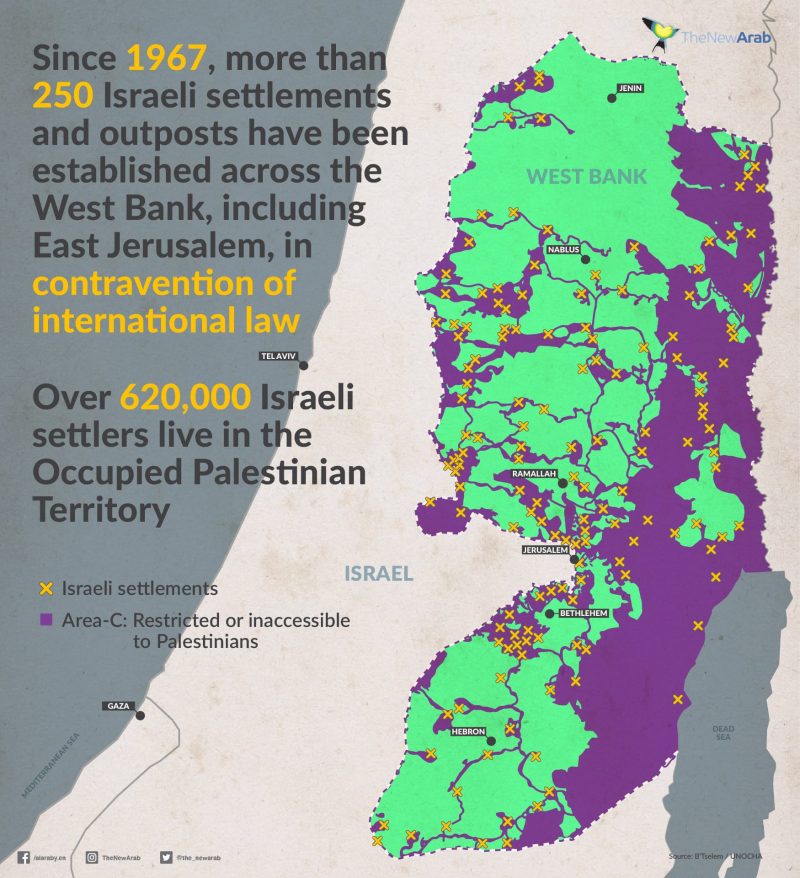
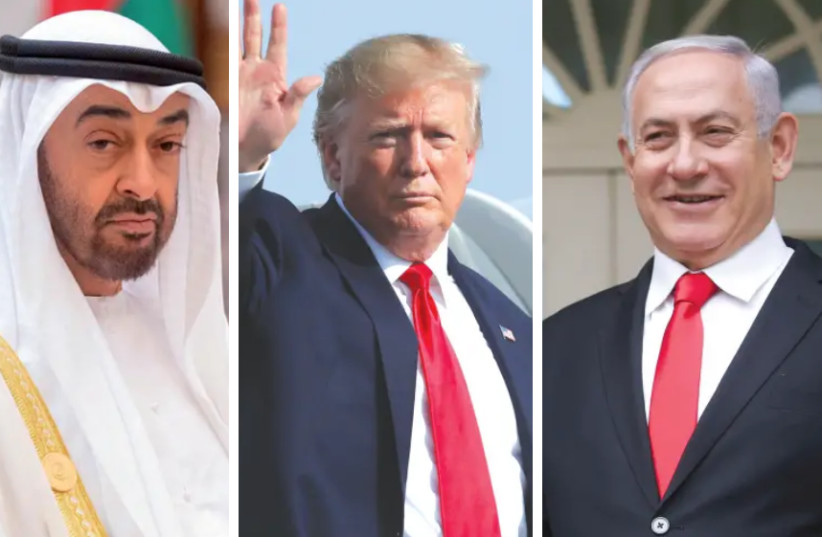
    He deferred its implementation as the normalisation of relations with the United Arab Emirates (UAE) gathered momentum. However, Netanyahu indicated that Israel will “never give up our rights to our land.” (Al Jazeera 2020). The situation and the perception created now is such that not annexing the West Bank would appear to be a concession from Israel.

    As the Arab countries are taking a realistic view in placing their national interests first, Palestine is no longer a priority issue for them.

    This paper looks at how the Palestinian issue is gradually side-lined over the last few decades by the international community. There are four factors that have contributed to this development. First is the increase in conflicts in the Arab world, which has led to fragmentation and disunity in their approach to the resolution of the conflict. As the Arab countries are taking a realistic view in placing their national interests first, Palestine is no longer a priority issue for them. Second is the realisation of the fact that Oslo deal was unfair to start with and how under the guise of negotiations Israel continued to expand settlements and limit any prospect of sovereignty for the Palestinians. The Palestinian authorities hung on to the Oslo deal even though it was flawed, leading to decades of standstill in negotiations. Third, with the rise of the militant groups around the time of 9/11, the Palestinian cause has lost significant sympathies, and Israel’s violent response is seemingly more reasonable in the views of the international community. Fourth, the United States has supported Israel consistently in many issues, keeping Israel on the safe side in international and regional politics, shielding it from any proactive criticism.

    A look at the brief history of the conflict is necessary to explore the four factors mentioned above.

    Brief History of the Conflict
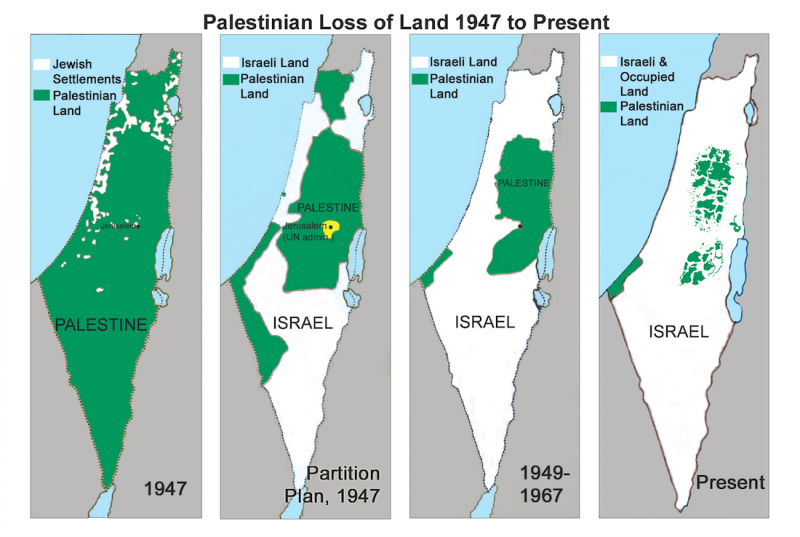
    Palestine was part of the Ottoman Empire until its defeat and collapse World War I. The area became a British protectorate as the result of the armistice of 1919. It coincided with the persecution of the  Jews due to the rise of anti-Semitism across Europe. The 1917 Balfour Declaration by the British government promised the Jews a national home in Palestine. This decision failed to factor the rights of the Palestinians who have lived there for millenniums. Jews began migrating to Palestine in huge numbers despite vehement protestations from the Palestinians leading to the now perennial Israel-Palestinian dispute. As Britain vacated the region post-1945, it abdicated its moral responsibility and left the resolution of the dispute to the United Nations (UN). The withdrawal of the colonial powers and the ensuing chaos in the regions vacated by them is a recurring pattern in decolonization history. The UN tried to divide Palestine into two states; Israel and Palestine, with Jerusalem as a joint capital and an international zone. Neighbouring Arab countries saw this as a residual form of colonialism and went to war in 1948. The war resulted in the catastrophic displacement of thousands of Palestinians. This catastrophe is remembered as Nakba, a day with a lot of historical sentiment across the Arab World (Chomsky and Pappé 2015). Israel won but did not control Gaza or the West Bank. Israel occupied these areas in the six-day war in June 1967. The occupation of the West Bank continues till today, whereas Gaza is now under Hamas. Coupled with all this, there are massive human rights violations against the Palestinians. This includes humiliating Palestinians at checkpoints, arresting without trial, arresting Palestinian children etc. (Chomsky, and Pappé 2015). Moreover, when Palestinians file reports about being harassed by Israeli citizens, it does not get any attention as the conviction rate is only 3% (Oxfam 2019).

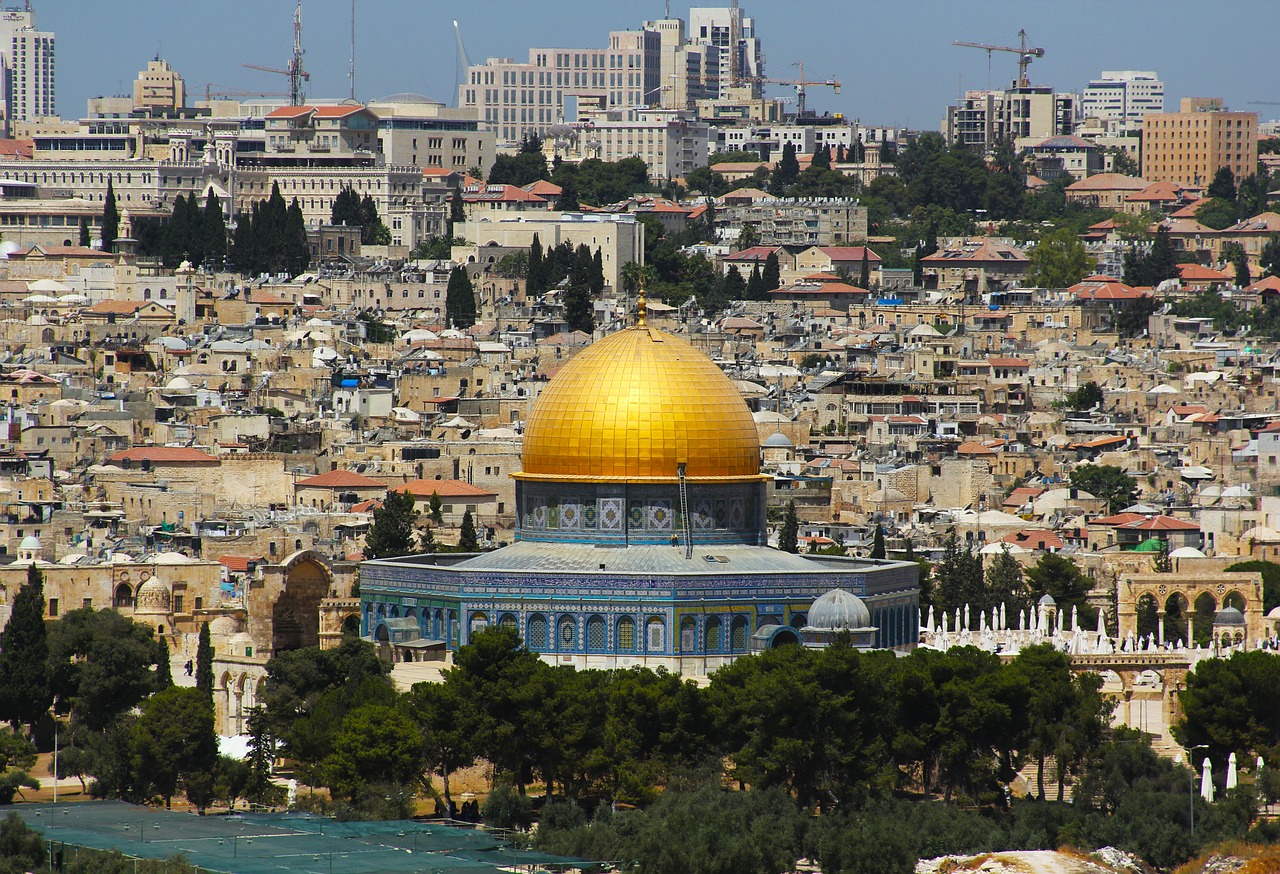
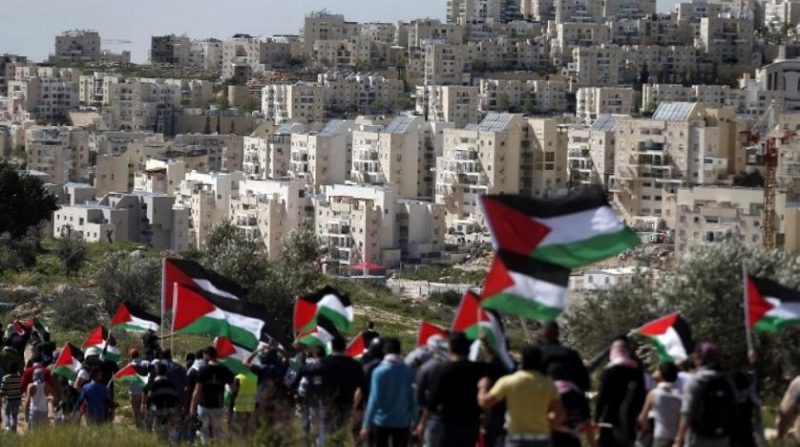
    One of the prime demands of the Palestinian struggle is a return to the borders of 1967; so that Palestine can exercise full sovereignty over Gaza and the West Bank. However, Gaza has been economically cut off because Hamas controls it, and there is a huge blockade against it making life in Gaza difficult and miserable. Hamas also attacks Israel, and this has always led the Israel Defence Forces (IDF) into retaliating. Whereas on the West Bank, there are thousands of settlements by Israel, virtually pushing Palestinians out. This settlement strategy is seen as a deliberate move to counter the demographic threat from the larger number of Palestinians inside Israel (Chomsky and Pappé 2015). The obsession with demographic re-engineering has been fundamental to Israel, and it does not intend to change its policy. It also couples this with closing Palestinian places, reducing the Palestinian economic structures present in East Jerusalem (Arafeh et al. 2017) etc. There are currently 8 million Israeli citizens of which 1.2 million are Palestinians (“Palestinian Citizens Of Israel” 2020). They are treated as second-class citizens and many of them are engaged in menial labour

    The fractures in Arab Unity  

    All the West Asian and North African countries were initially pro-Palestine during the cold-war and decolonization era. This could be associated with the Pan-Arab notion present during that period. Many Arab countries had recently secured independence, and the Palestinian injustice was still fresh in their memory. However, losing consistently in these wars was also a demotivator and blow to them; fiscally and otherwise. In the last few decades, several countries have established ties with Israel; Egypt in 1979, Jordan in 1994. This is also the time Pan-Arab spirit declined, and increased conflicts began to emerge amongst many West Asian and North African countries.

    These political conflicts include; countries taking sides in the Iran-Iraq war, funding proxy wars, taking sides on the invasion of Iraq, etc. Furthermore, security threats have been perceived to be heightened in many West Asian and North African countries due to the rise of religious radicalization and the rise of terrorist groups. Arab league relations have also been strained for various reasons, including the Syrian Civil War and over its membership (Reuters 2020).

    More importantly, Saudi Arabia and Iran have their cold war. The United States has exaggerated the Iranian threat, and both Saudi Arabia and Iran covertly fund proxy civil wars across West Asia, be it Yemen or Syria.

    Israel has emerged as a technological and military power in the region. Netanyahu says, “we believe in peace out of strength and we believe in alliances born out of Israel’s value as a technological, financial, defence, and intelligence powerhouse” (The Times of Israel 2020).  Many Arab countries may, therefore, find value in Israel’s technological capabilities. Parallelly, economic conditions in many Arab countries are worsening. Under these circumstances, with deep distrust amongst many Arab states and incentive for countries to be friendly with Israel, normalization of relations with Israel is taking place.

    Arab countries are putting their national interest first, and if the Palestinian issue is seen as an obstruction they have no qualms about relegating it to a side-issue.

    However, a majority of the Arab and Gulf countries still do not officially recognize Israel. This is where the significance of the UAE-Israel and Bahrain-Israel deal comes in. The United States uses these factions within West Asia and North Africa to pursue its agenda with Jared Kushner pushing for normalization. The United Arab Emirates and Bahrain announced decisions to normalize relations with Israel on 12th August and 12th September 2020, respectively. Many of the West Asian countries, Saudi Arabia, in particular, are close allies of the United States. As the USA nudges these countries with incentives,  Palestinian sovereignty or a fair peace treaty no longer seems to be a precondition to establishing ties with Israel. Arab countries are putting their national interest first, and if the Palestinian issue is seen as an obstruction they have no qualms about relegating it to a side-issue.

    Support for Palestine still exists, but it comes in fragments from different countries. It is important to remember that there is no coalition; no pressure; no one group that consistently fights for it.

    Long Term Effects of a Flawed Deal

    One will always remember the picture of the handshake between Yasser Arafat and Yitzhak Rabin facilitated by Bill Clinton while signing the Oslo Accords at Camp David. The Oslo Accords were an extremely publicized affair, and many proclaimed that peace to the decades-old conflict had been reached, but this was far from the truth.

    When the accord was signed in 1993, the Palestine Liberation Organization (PLO) was already weak. Additionally, there was also a general reduction of support for the PLO among Palestinians, as seen by the eruption of the first intifada, which was initially spontaneous (Hassan 2011).

    Image Credit: Aljazeera
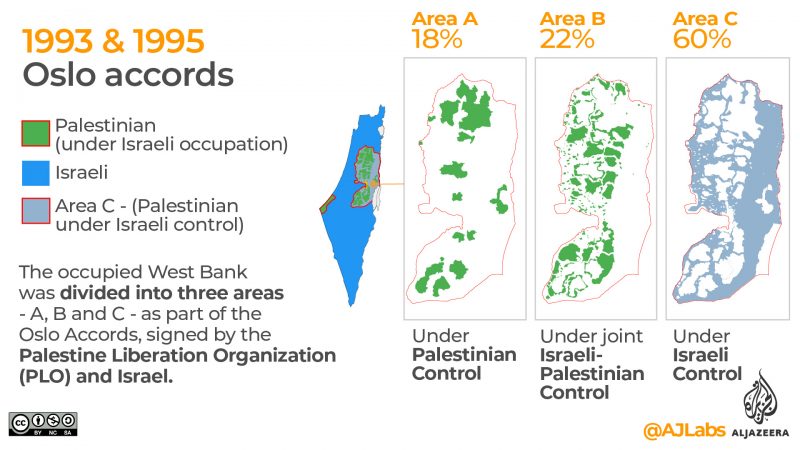
    The Oslo accords had several terms and clauses, but it mainly called for the recognition between Israel and the PLO. The accord also stipulated that Israel would end its occupation in Gaza and certain parts of the West Bank (Oxfam 2019). There would be an interim self-governance strategy and, eventually, a shift of power in Gaza and West Bank to the Palestinian Authority (Hassan 2011). An interim period was given so that both sides would have time to “gain trust” with one another.

    The accord showed an ambiguity regarding when Israel would withdraw from Gaza. It did not recognize Israel’s occupation, and neither did it speak of the Palestinian refugees.

    However, there were many flaws with the deal from the beginning. The accord showed an ambiguity regarding when Israel would withdraw from Gaza. It did not recognize Israel’s occupation, and neither did it speak of the Palestinian refugees (Hassan 2011). There was no stringent enforcement of the deal and having no third party accountability also rendered Palestinians vulnerable, as is evident. Furthermore, the Oslo accords did not condemn or mention the human rights violations against the Palestinians (Oxfam 2019).  The flawed nature of the deal began to show signs of rupture from the early days as accounts speak of how, as early as 1994, after the accords were signed, the IDF still had control over most of the West Bank and made no plans to move and were hovering around the edge of Ramallah (Tolan 2018). The fundamental issue here was that the Oslo Accord was signed by two unequal partners with Israel displaying dominant power.

    Therefore, while the buzz around the accords was still on, in reality, Israel continued policing Palestinians and establishing settlements in the West Bank area.

    No matter the initial motive, the Oslo accord, in 2020, can be analyzed as a distraction and cover-up by Israel while they continued their settlements. There is evidence supporting this as today there are 600,000 settlers in West Bank compared to 115,600 in 1993 (Oxfam 2019).

    Another significant issue is that Mahmoud Abbas and the Palestinian Authority (PA) have no framework other than the failed and biased Oslo accords. Owing to the proclamation that this accord would end the conflict, the PA became stuck in this framework. The way forward, as said by researcher Victor Kattan is that “The PA must produce a concrete vision of the state it wants to establish” (Arafeh et al.2017).  This lack of vision by the leaders is one of the reasons for the stagnation in the negotiations. Till today, Abbas and PA threaten to quit the accords and routinely proclaim that the Oslo deal is no longer valid. However, this should have come decades ago, during the second intifada in the year 2000, which illustrated that the Oslo accords were unfavourable towards the Palestinians. It shows the PA’s failure as a representative body, and their approval rate by the Palestinian public has reduced drastically.

    There have been talks to solve the dispute after Oslo deal, for instance, the Taba Summit. However, none have gained the clout or effort that the Oslo deal garnered.

    Militancy

    Ever since the attack of 9/11, the conversation surrounding militancy has increased. Invasion of Afghanistan and Iraq by the United States, a world power, ensured that the world knew the stance of the West on militancy.

    Militancy and violent retaliation by the Palestinians armed groups have been major issues, and the world witnessed the Munich massacre of the Israeli Olympic team in 1972. Furthermore, there have been Palestinian militant factions, which is where organizations such as Hamas come in. The first intifada led to Hamas’ formation and the second intifada helped Hamas gain clout (Uslu and Karatas 2020). Hamas has been deemed a terrorist organization by the United States, the European Union, because of its fundamentalist ideology and use of violence. This also led to the Palestinian struggle to lose sympathies of the international community due to its wariness of militant groups. Hamas takes a more “hard-line” approach towards Israel and is infamous for its rocket attacks against Israel from Gaza and suicide bombings (Uslu and Karatas 2020).  Israel and Hamas are also very wary of negotiating with each other. So far, the only talks between the two groups have been to swap prisoners.

    Many have criticized Hamas for the use of violence, however, Israel and other states cannot condemn the violence being deployed by Hamas, while Israel itself consistently shows violent behaviour towards the Palestinians. Hamas gained clout after the intifadas showed the deplorable conditions of the Palestinians in the occupied territories and Gaza. Termination of aid to Gaza on account of peoples’ support to Hamas has created more problems in terms of economy and livelihood. In the end, it is Palestinian people who suffer the most.

    Pro-Israel Policies of the United States  

    The United States is a close ally of Israel; technologically, financially, and otherwise. Israel, too, provides intelligence and acts as the “eye” of the United States from the West Asian region. The US-Israel relationship was instrumental in limiting the erstwhile Soviet Union’s influence in West Asia during the cold war (Beauchamp 2018). Much of the aid the United States gives to Israel is military aid, and as an important defence ally, Israel receives state-of-the-art weapon systems and intelligence sharing (Congressional Research Service 2019). The US has played a critical role in Israel’s emergence as a technology power and a major arms exporter.

    The United States has used its veto in the security council several times to protect Israel, including when the UN looked at taking action to prevent  Israel’s invasion of Lebanon and to stop the construction of walls inside the West Bank (Zunes 2012).

    The Israel caucus and lobby in the United States is powerful and many pro-Israeli outfits/individuals are major funding sources for Congressional elections (Cook 2018). The American Israel Public Affairs Committee (AIPAC) has financially backed people in the congress, which has influenced the decisions made by many lawmakers. For instance, billionaire, Sheldon Adelson, funded 82 million dollars to Republican’s election and is known for his pro-Israel sentiments. He even pushed for the USA embassy to be moved to Jerusalem from Tel-Aviv and has also proven to be unconcerned about giving Palestinians voting rights in Israel (McGreal 2018).

    The Donald Trump administration has taken the support for Israel one step further. Trump supports Israel in controversial issues that many shy away from addressing due to the politics in West Asia and Palestine’s historical symbolization. Trump came up with a peace deal for Israel and Palestine which was criticized severely and rejected by Palestine as the negotiations did not involve them (Holmes et al. 2020). The fact that Trump did not involve Palestinians in the negotiation shows how one-sided and utterly dismissive he is of the Palestinian authorities and people. The refusal of the right to return for Palestinian refugees, keeping Jerusalem as an undivided capital of Israel, recognizing Israeli settlements are among many reasons why the deal is flawed. The United States also brokered two peace deals in West Asia, the UAE-Israel peace deal first, followed by the Bahrain-Israel deal. It has also has been pushing other Arab countries to normalize relations with Israel (Barrington and Williams 2020).
    The Trump administration also shifted the United States embassy to a contested and occupied Jerusalem in 2018. All the more, this ultimately recognized and legitimised Israel’s occupation of the West Bank. After Trump’s announcement to shift the embassy, Israel’s housing minister declared that Israel was developing 14,000 “new settlement units” in Jerusalem (Arafeh et al. 2017). Mohamoud Abbas also asserted that the United States could not be a reliable mediator after shifting capital to Jerusalem. However, the United States has continued to meddle and create a one-sided mediated plan (Arafeh et al. 2017).

    Trump has also continued to cut out aid for Palestine, which has severe repercussions for Gaza’s already poorly funded city. In 2018, after Palestinians Authorities blamed Trump for being partial, he cut 200 million dollars in economic aid and cut funding to the United Nations Relief Work Agency (UNRWA), the primary network in helping Palestinian refugees (Holmes 2020).

    During the US presidential elections, Netanyahu appealed to evangelical supporters in the United States. In a virtual conference, he said that Trump might give him the green-light to annex certain parts of the West Bank that have religious significance in the Bible (Ravid 2020). The President-Elect Joe Biden has clearly highlighted that he would review these decisions, recognise Palestinians’ right to self-determination and adopt a more balanced approach.

    It is evident that the Trump administration has played a significant role in side-lining the Palestinian issue.

    Looking Ahead

    The Palestine problem has stretched far too long, with many “negotiations” that have failed to address the historical injustice done to the Palestinians. Amidst all this, clashes continue between protestors in Gaza and Israeli forces. While there are mass casualties and acts of aggression on both sides, there is no denial of how poorly Israel has treated Palestinians over the decades. Furthermore, most issues regarding Palestine have been put on the back-burner, however, the Arab League stepped up to condemn the unfair Trump Peace Deal, which is the bare minimum it could have done.

    There needs to be more initiative from the side of the PA to have a more concrete plan for the future of Palestinian sovereignty. The PA is also dominated by older elites, but with changing aspirations of the Palestinians, there need to be more women and younger people in the body.

    Additionally, for Palestinian sovereignty to be achieved, there has to be a major restructuring of the PA. It is clear that PA has been stripped of its power over the years and afflicted with corruption, has not improved the Palestinians’ situation. There needs to be more initiative from the side of the PA to have a more concrete plan for the future of Palestinian sovereignty. The PA is also dominated by older elites, but with changing aspirations of the Palestinians, there need to be more women and younger people in the body.

    There is some importance given to Palestine in the United Nations such as making Palestine as a presiding chair for the G77 or the United Nations Security Council Resolution 2334, which says that “altering the demographic composition, character, and status of the Palestinian Territory occupied since 1967, including East Jerusalem… (is) in violation of international humanitarian law” (SC Res 2334 2016). However, voting pro-Palestinian at some UN resolutions, having Palestinian authorities come over, and reiterating a “two-state solution” is no longer enough. Furthermore, different countries use this issue as a political tool to show their “sentiments.” Instead, there needs to be more proactive international collaboration to fight for Palestinian rights consistently. The Palestinian issue is a fundamental human rights issue and should be urgently addressed before the already minimal fragments of Palestine disappear under Israel.

    References
    “Palestinian Citizens Of Israel”. Institute For Middle East Understanding, 2020, https://imeu.org/topic/category/palestinian-citizens-of-israel. Accessed 25 Sept 2020.
    Al Jazeera. “Netanyahu Says West Bank Annexation Plans Still ‘On The Table’”. 2020,   https://www.aljazeera.com/news/2020/08/13/netanyahu-says-west-bank-annexation-plans-still-on-the-table/. Accessed 12 Sept 2020.
    Arafeh, Nur et al. “Trump, Jerusalem, And The Future Of Palestine – Al-Shabaka”. Al-Shabaka, 2017, https://al-shabaka.org/roundtables/trump-jerusalem-future-palestine/. Accessed 6 Sept 2020.
    Arroyo, Carmen. “Palestinian Children, The True Victims Of The Conflict”. The Wire, 2020, https://thewire.in/world/palestinian-children-true-victims-conflict-israel. Accessed 5 Sept 2020.
    Barrington, Lisa, and Dan Williams. “After UAE-Israel Breakthrough, Kushner Pushes Other Arabs To Go Next”. Reuters, 2020, https://www.reuters.com/article/us-israel-gulf-usa/after-uae-israel-breakthrough-kushner-pushes-other-arabs-to-go-next-idUSKBN25S5QC. Accessed 20 Sept 2020.
    Beauchamp, Zack. “Why Are The US And Israel So Friendly?”. Vox, 2018, https://www.vox.com/2018/11/20/18080080/israel-palestine-us-alliance. Accessed 16 Sept 2020.
    Chomsky, Noam, and Ilan Pappé. On Palestine. Haymarket Books, 2015.
    Congressional Research Service. U.S. Foreign Aid To Israel. Congressional Research Service, Washington D.C, 2019.
    Cook, Jonathan. “Under Trump, The Israel Lobby Is A Hydra With Many Heads”. Middle East Eye, 2018, https://www.middleeasteye.net/opinion/under-trump-israel-lobby-hydra-many-heads. Accessed 7 Sept 2020.
    Hassan, Shamir. “Oslo Accords: The Genesis and Consequences for Palestine.” Social Scientist, vol. 39, no. 7/8, 2011, pp. 65–72. JSTOR, www.jstor.org/stable/41289422. Accessed 30 Sept. 2020.
    Holmes, Oliver et al. “Trump Unveils Middle East Peace Plan With No Palestinian Support”. The Guardian, 2020, https://www.theguardian.com/world/2020/jan/28/donald-trump-middle-east-peace-plan-israel-netanyahu-palestinians. Accessed 1 Sept 2020.
    Holmes, Oliver. “US To Give Palestinians $5M In Coronavirus Aid – 1% Of What Trump Cut”. The Guardian, 2020, https://www.theguardian.com/world/2020/apr/17/us-aid-palestinians-coronavirus-trump-cut. Accessed 22 Sept 2020.
    McGreal, Chris. “Sheldon Adelson: The Casino Mogul Driving Trump’s Middle East Policy”. The Guardian, 2018, https://www.theguardian.com/us-news/2018/jun/08/sheldon-adelson-trump-middle-east-policy. Accessed 17 Sept 2020.
    Oxfam. From Failed To Fair Learning From The Oslo Accords To Foster A New Rights-Based Approach To Peace For Palestinians And Israelis. Oxfam, Oxford, 2019, pp. 3-24, https://oxfamilibrary.openrepository.com/bitstream/handle/10546/620904/bp-failed-to-fair-oslo-accords-011119-en.pdf. Accessed 6 Sept 2020.
    Ravid, Barak. “Netanyahu Presses Trump By Lobbying U.S. Evangelicals To Back Annexation”. Axios, 2020, Accessed 29 Sept 2020.
    Reuters. “No Consensus Yet For Syria Return: Arab League Chief”. 2020, https://in.reuters.com/article/us-mideast-crisis-syria-arabs/no-consensus-yet-for-syria-return-arab-league-chief-idUSKCN1Q014R. Accessed 15 Sept 2020.
    SC Res 2234, UNSC, UN Doc S/RES/2334 (23 December 2016) < https://www.un.org/webcast/pdfs/SRES2334-2016.pdf> accessed 15 September 2020
    The Times of Israel. “PM Said Seeking To Formalize Relations With Saudi Arabia Before Next Election”. 2020, https://www.timesofisrael.com/pm-said-seeking-to-formalize-relations-with-saudi-arabi-before-next-election/. Accessed 24 Sept 2020.
    Tolan, Sandy. “Was Oslo Doomed From The Start?”. The Nation, 2018, https://www.thenation.com/article/archive/was-oslo-doomed-from-the-start/. Accessed 17 Sept 2020.
    Uslu, Nasuh, and Ibrahim Karataş. “Evaluating Hamas’ Struggle in Palestine.” Insight Turkey, vol. 22, no. 1, 2020, pp. 109–124. JSTOR, www.jstor.org/stable/26921171. Accessed 30 Sept. 2020.
    Zunes, Stephen. “Putting The UN Veto In Perspective”. Huffpost, 2012, https://www.huffpost.com/entry/syria-russia-un-veto_b_1267495?guccounter=1. Accessed 21 Sept 2020.
  • UAE-Israel Deal: An Analysis of its Regional Impact

    UAE-Israel Deal: An Analysis of its Regional Impact

    Introduction

    The recently brokered Abraham Accords Peace Agreement between the United Arab Emirates and Israel marks the beginning of the potential shift in West Asia’s existing power relations. Driven by their security interests, and in an attempt to amplify their power projections in the region, the two countries have come together, in what is being seen, as an opposition to the Iranian axis of influence. Although the normalization of relations with Israel marks a huge setback for the possibility of a Palestinian Statehood, several Arab countries are expected to jump on the bandwagon, with Bahrain having already concluded a treaty after UAE. This article highlights the eclectic mix of reactions from various players in West Asia and the potential opportunities and setbacks it brings with itself.

    Palestine

     Several countries held strongly pro-Palestine policies during the Cold War and decolonization period. However, in the last few decades, many have established ties with Israel; Egypt in 1979, and Jordan in1994 and now UAE and Bahrain in 2020. That being said, majority of the Arab and Gulf countries still officially do not recognize Israel. The United Arab Emirates announced its decision to normalize relations with Israel on 12th August 2020. There are many reasons why UAE and Bahrain decided to establish diplomatic relations with Israel; according to some analysts it is to counter Iran’s influence in the region, but for some it is also to establish trade and business contacts.

    However, do these developments indicate that countries in the Arab world are moving gradually into accepting Israel’s occupation of Palestinian lands as ‘fait accompli’? A significant development that needs to be recognised is the fact that many West Asian countries no longer demand the return of Palestinian lands as a precondition to normalizing ties with Israel.

    The Palestinians in the West Bank and Gaza have strongly criticised the deal and see it as betrayal of their rights and cause by the international community.

    It is long-known that Israel will not return to pre-1967 boundaries; in May 2020 Benjamin Netanyahu explicitly stated his plan to annex the West Bank. He has, however, postponed the implementation of his decision, probably indefinitely, in the interests of the deal that is likely to benefit Israel greatly.

    The Palestinians in the West Bank and Gaza have strongly criticised the deal and see it as betrayal of their rights and cause by the international community.  Banners  displaying “Treason” and “No to normalization with the occupier’ have come up across the region.  The Palestinian Authority, in very obvious response, have rejected the deals. These accords, as they rightly fear, affect the future of Palestinian sovereignty and legitimize Israel’s occupation.

    Turkey  

     President Recep Tayyip Erdogan sees himself as the champion of Muslims ever since he came to power in 2002. Under Erdogan, Turkey has pursued a clear pro-Palestinian stance. Turkey has indeed provided aid to Palestine at various times, including during COVID-19. It has criticized Trump’s peace plan for the Israel-Palestine conflict, for ignoring Palestinians’ legitimate rights. Not surprisingly, Turkey is clearly unhappy with UAE’s and Bahrain’s steps to normalize ties with Israel. Turkey has threatened with the option of halting diplomatic relations with UAE over the deal.

    However, for Palestinians Turkey’s statements ring hypocritical and hallow. Turkey was one of the earliest and the first Muslim majority state to recognize Israel in 1949. Turkey and Israel have a long history of intelligence cooperation. Even in the current situation, Turkey is focused more on dealing with the UAE on this issue, rather than Israel. Nevertheless, speaking for Palestinian rights in the international forum is equally important. In that respect, Turkey’s voice in support of the Palestinian cause is an important one.

    Saudi Arabia

     Saudi Arabia, long seen as the champion of Islamic nations, particularly in view of the fact that it is home to the two holiest shrines of Islam. Therefore, this peace agreement is a shock to the conservatives who form the majority in the Kingdom. This move by the UAE is seen as going along with the Jewish regime that denies the rights of the Palestinian Muslims. However, the Foreign Minister, Faisal bin Farhan Al Saud said the deal could be seen as positive, but his country will not normalize relations until peace is signed with the Palestinians,  within the framework of the Arab Peace Initiative.  Saudi Arabia’s track record of its unwavering support to the Palestinian cause from the days of the Yom Kippur war, also known as Ramadan War, makes the nation’s stance on the ‘Abraham Accords’ more influential than any other Gulf country. The advocacy for Palestinian state runs deep in the Saudi people. As a result, Saudi leadership’s slightest inclination towards the agreement could spark unrest among its citizens.

    The current regime under the Crown Prince of Saudi Arabia, Mohammed bin Salman (MBS), who is a very capable leader compared to his predecessors because of his broader outlook to mend diplomatic ties with the regional enemies, yields an element of uncertainty as he may be inclined towards the accord. The political and ideological differences between the people of Saudi and their leader might spark cynicism towards the government; hence, support for the accord is implausible in the short term.

    Israel, which shares the Red Sea coastline with the country and is a major player in technology innovations in the region, makes it an ideal ally for the Kingdom.

    The idea, however, is not wholly inconceivable because of MBS’s Vision 2030. Upon ascending the throne, the Crown Prince has constructed an elaborate plan to detach the Kingdom’s dependence on its natural resources and focus on bringing in diverse investments into the country. One of the main plans is to develop the Red Sea Coastline by exploiting its tourism prospects by building a smart city. Israel, which shares the Red Sea coastline with the country and is a major player in technology innovations in the region, makes it an ideal ally for the Kingdom. One of the other factors that could generate a coalition between Saudi Arabia and Israel is their common enemy, Iran.

    If MBS does accept the accord, it may not come as a surprise, but that does not warrant the fact that there is a high possibility of the decision shocking many conservative and religious establishments.  In retrospect, that could give birth to the “new” Saudi Arabia that the crown prince has promised to build.

    Qatar

    Qatar, which is considered the most developed state in the Gulf region, is in the middle of a diplomatic standoff with the regional players. Its dispute with the two major states, Saudi Arabia and UAE, has made the state go out of its way to establish diplomatic ties with parties that are not particularly approved by the GCC. The state has not given any official statement on the accord, but it’s closeness with Iran may be taken as an unofficial veto to the accord in itself. Qatar’s close relationship with the US and Iran has been a subject of debate ever since the Gulf crisis, but the state has somehow managed not to let the relationship cut across each other. This particular agreement with Israel orchestrated by the Trump government could pressure Qatar to push and resolve its issues with the UAE.

    Like any other Arab country, Qatar has advocated for the Palestinian state. It took it a little further by investing in the Gaza Strip, funding welfare payments to the coastal territory. One can suspect that the Emirati’s decision to form a coalition with the Israeli state will only deepen the ties between Qatar and Palestine.

    Though the Qatar government has been silent about the accord, Doha based news media, Al Jazeera has not shied away from raising concerns regarding the agreement. It even went to the extent of calling the accord ‘PR stunt’ initiated by the UAE. It’s support to Palestine and capitalisation of the hashtag ‘normalization as betrayal’ have received a lot of criticism from those countries that support the agreement. Qatar has always been hostile to Israel’s treatment towards the Palestinian state but has managed to have practical relations with Israel.

    Iran  

    As the world witnesses the coming together of the United Arab Emirates and Israel, two of the former adversaries, it comes as no surprise that Iran has been aggressively lashing out against the deal. With Iran still reeling under the economic pressure of the US sanctions, President Rouhani has called the deal a ‘betrayal’, aimed at satisfying the United States at a time when President Trump prepares himself to run in the national election in November. The leader of Iran-backed Hezbollah has also condemned the deal on similar grounds. Iran’s disapproval stems from two main factors – first, from its support for the Palestinian statehood; and second, more realistically, due to the increasing influence of Israel-United States nexus in the region and consequently its declining axis of influence. Iran’s insecurity is speculated to have stemmed from the confluence of actors that oppose the Islamic Republic’s attempts to establish its hegemony in the region. The confluence opens up the possibility of shifting the regional balance of power in favour of Israel, and Saudi Arabia, under the shadow of the United States. While Saudi Arabia and Israel do not yet have an official diplomatic relationship, various reports suggesting backdoor diplomacy between the two countries have surfaced over the years. The common factor bringing the two countries together has most often been assumed as the perceived threat from Iran.

    Iran and UAE, on the other hand, while maintaining a meaningful trade relationship, continue to have persistent sources of bilateral tension.

    On the other hand, while Iran and Israel have often been engaged in rhetoric of bellicose jingoism towards one another, it is essential to note that both the countries maintained a friendly relationship before the Iranian revolution of 1979, with Iran being the second Muslim country recognizing the state of Israel.

    Iran and UAE, on the other hand, while maintaining a meaningful trade relationship, continue to have persistent sources of bilateral tension, one of which is the unresolved territorial dispute over the islands of Greater Tunb, Lesser Tunb, and Abu Musa, which lie near the critical Strait of Hormuz, providing access to key shipping lanes. Despite UAE’s historical claims over their sovereignty, the islands that were forcefully occupied by Iran continue to be a strain in the relationship between the two countries. A second irritant is a growing relationship between UAE and the United States, with the former becoming one of the largest importers of US weapons and providing the US with military bases and intelligence on Iran. Worried about the growing Iranian aggression, the country has maintained a strong security relationship with the United States and has often supported the UNSC resolutions to bar sensitive materials and technology to Iran.

    Yemen

    The conflict in Yemen that began to unravel with the spread of Arab Spring in 2011 has resulted in an unprecedented loss of civilian lives across the country, making Yemen one of the world’s worst humanitarian crises. The Israel-UAE deal, which reflects the beginning of normalization of ties between Arab countries and Israel, cannot be seen in isolation from the region’s larger volatile landscape. The Peace Treaty, as it is being termed, brings with itself a plethora of threats that seek to shift the existing power relations, without aiming at the cessation of violence. UAE’s increasing outreach must be looked at in the context of its increasingly interventionist policies, especially in Yemen. The deal may ultimately lead to more interference and militarization in Yemen, prolonging the prospects for conflict resolution, and sustaining hostile conditions.

    Varied responses to the deal can be seen with the Yemeni government, and the Houthis, an armed group championing Yemen’s Zaidi Shia Muslim minority, coming out in opposition to the deal in a bid to continue their support for Palestine. On the other hand, it comes as no surprise that members of the Southern Transitional Council (southern separatists), which gets its support from the UAE, have applauded the treaty to build cooperation between UAE and Israel.

    Interest and interference in Yemen are of tremendous strategic significance to both Israel and UAE.

    Interest and interference in Yemen are of tremendous strategic significance to both Israel and UAE. In a show of its strengthening military projection, UAE seized control of the Yemeni island of Socotra, located in the Indian Ocean,allegedly allowing Israel to establish its presence in the region. The archipelago sits at a crucial strategic position en-route to Bab el-Mandeb, providing access to key shipping lanes.

    On the other hand, while there exists no diplomatic relationship between Yemen and Israel, the latter has often been seen intervening in the ongoing conflict in Yemen, “under the pretext of defending its interests in the Red Sea and the Strait of Bab-El-Mandeb”. With a military base already constructed at Emba Soira in Eritrea, Israel continues to increase its strategic presence across the Strait. Further, as speculations about the possible Houthi-Iran cooperation spread across the region, Israel’s surveillance centres continue to monitor the armed group’s actions and other actors in Yemen.

    Conclusion

    Palestine is a very sensitive and rousing issue for most of the citizens in West Asia. It is a shared memory of betrayal and expulsion; indeed, many politicians in West Asia use Palestine as an element in their speech and citizens also use it during slogans referring to Palestine protests.

    That being said, these deals are coming at a time when Israel is increasing its hawkish behaviour towards the Palestinians. Once the annexation happens, one cannot help but wonder how it could change the landscape of West Asia. Thus far, the progress made is the mild indication of some major players in the region favouring the accord.  Analysts suspect that the support for the accord will gain momentum in the long-term side-tracking religious, cultural and social identities to maintain diplomatic relations for economic growth.  If all countries, therefore, become friendly with Israel, will the annexation only receive loud threats with no actions?

    This study is put together by Dharika Athray, Rupal Anand, and Vrinda Aiyaswamy. All of them are Research Interns at TPF.

  • Lebanon’s Food Security Crisis

    Lebanon’s Food Security Crisis

    Security has been a buzzword in the arena of International Politics since the Cold War, and this is widely recognized to be the subject’s genesis as articulated by Barry Buzan and Lene Hansen in their book, The Evolution of International Security Studies. The traditional view of security as largely related to military is the aspect that is given the most prominent focus in discourses on the subject. However, since the 1990s, “societal security” and concepts related to people are broader and sub-concepts such as food security have gained in importance. Food security looks at how much food is available, the access and affordability of food to all people in a country. Food security is also the ability of the country to keep sufficient food available during tough times, such as inflation, disasters, and other such hardships. The Food Climate Research Network speaks of the five factors of food security; availability of food, access to food, utilization of food, stability, and malnutrition. Perhaps food security is one of the most essential forms of security, as the lack of food leads to starvation. This is the reason one hears of bread riots and bread in many protest slogans; ‘bread’ symbolizes food security and represents people’s survival. The economic meltdown of Lebanon and the failure of governance has created a human catastrophe of instability and poverty. The recent Beirut explosion has highlighted not only the failure of the government but a complete breakdown of safety and social security for its common citizens. Under the current circumstances, Lebanon’s food security situation is a major cause for concern.

    Hikes in Food Prices

    Lebanon today is a country with massive debt, income inequality, with much of its revenue going towards servicing of national debts. In addition, Lebanon has been facing high inflation for the last few months, making it very difficult for families to access food. As a result, basic food items are overpriced and in short supply; for instance, a pat of butter costs 9.4 Euros.  Meat, fruits and other commodities have become luxuries for most Lebanese citizens. There are huge breadlines across Lebanon, and many grocery stores cannot afford to buy food to sell to consumers. The COVID-19 crisis has compounded the economic crisis. Prices of eight basic food items have increased by 56%. Lebanon’s food crisis is so grave that parents are bartering their children’s toys and furniture for food online.

     Economic collapse and Food Security

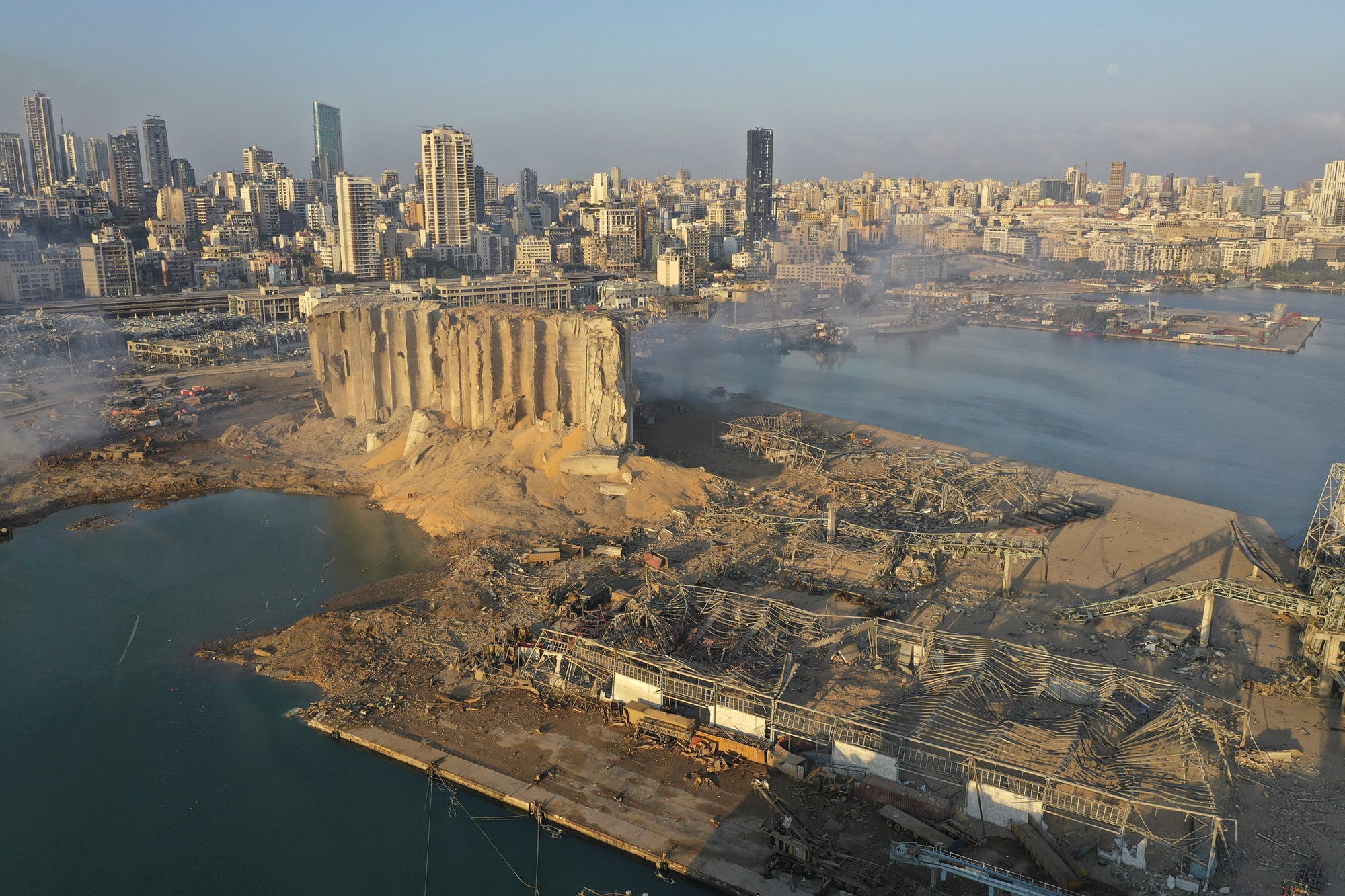
    The most circulated pictures over the last few weeks on media are of the explosion in Beirut and the spillage of grains. This blast occurred because of the unsafe storage of ammonium nitrate and has led to the death of over 200 people, with over 6,000 injured so far. There are many still missing. For Lebanon, this is a triple layer of burden, as the country is fighting a mismanaged economy, a pandemic, and now the horrific aftermath of the explosion. Post the explosion, many countries and global institutions have rushed emergency support by providing minimal aid and funding to facilitate fast recovery from this catastrophe.  While the world has come together to help Lebanon, the situation remains grim because of the shortage of various necessities like medicine and food. The second-largest port in Lebanon, Tripoli has some storage of flour; however, this suffices to cover just one month’s requirements. Beirut port, the largest in Lebanon, is virtually unusable because of the blast. The port infrastructure is severely damaged, thus hurting imports. Lebanon is a country that relies hugely on imports; it imports 85% of its food from outside, making this a major crisis . By one estimate the blast has destroyed 120,000 metric tons of grains, and this could affect food availability as well as sky-rocketing of food prices. The United Nations Food Program reiterated that Lebanon is in a grim situation regarding food security. The current assessment is that the grains can sustain them for less than a month.

    Grim Outlook and Tough Challenges

    The looming food security crisis is a direct fall-out of the economic collapse and multiple crises facing the country. Discontent with the government in Lebanon is not new, since the protests have been on since last October. The explosion and its resulting loss of life and property have triggered waves of protests again, forcing Hassan Diab, the Prime Minister of Lebanon, to step down from his office on 10th August. Decades of poor governance, entrenched kleptocracy, corrupt political class, criminal negligence, incompetence and economic mismanagement have led to the current catastrophe. The former economy minister, Nasser Saidi, says that ‘Lebanon is on the brink of the abyss of depression, with GDP declining by 25% this year, growing unemployment, hyperinflation, and humanitarian disaster with poverty exceeding half the population. The growing food crisis and poverty could lead to famine conditions’. The government will need to address income inequality, large-scale corruption, and the role of foreign players in contributing to the economic collapse.  Financial institutions and other creditors, more often foreign powers, need to suspend debt repayments and allow the Lebanese economy to recoup; since a considerable portion of the revenue goes into debt servicing, which is unsustainable for long.  International funding agencies, while sympathetic to the common peoples’ plight, are hesitant to go ahead with aid due to the poor governance track record of the political class. By some estimates, they put the immediate requirement for humanitarian aid and the cost of rebuilding essential infrastructure post the blast at USD 15 billion. This pales compared to the even bigger mess in the financial system. Ghazi Wazni, the country’s finance minister who quit with the rest of the government last week, has put the total losses in the banking system at $83 billion, and a black hole in the central banking system of $50 billion. The people are displaying discontent over the sectarian politics that have afflicted the country for decades and are the root cause of endemic corruption. Last year’s protests led to a new government in December, which was forced to resign post the explosion.

    Amidst the political crisis, food security is increasingly the major problem in Lebanon for months now. The blast has left 300,000 people homeless.  International Organizations and Civil Society Organizations, Ukraine, Russia, and the United States are enabling and mobilizing food supplies.

    Poverty is the immediate concern; there are already one million Lebanese in poverty, with the likelihood of more than half of the Lebanese population falling into poverty. Food shortages will most likely result in starvation, malnutrition, and death. Looking at the five tenets of food security mentioned above, Lebanon satisfies neither of the five criteria. Lebanon is an example of how decades of factional strife, warlordism, corruption, and power in the hands of the kleptocratic elite can push a country and its people into the abyss of poverty. While resolving Lebanon’s food security crisis is possible through immediate international aid and support, resolving the larger problem of its economic mess and humanitarian catastrophe will need international intervention.