Author: Arun Kumar

  • India is not the Fastest Growing Big Economy

    India is not the Fastest Growing Big Economy

    A closer look at recent data on GDP shows that the numbers are flawed and recovery is incomplete

    The Provisional Estimates of Annual National Income in 2021-22 just released show that GDP grew 8.7% in real terms and 19.5% in nominal terms (including inflation). It makes India the fastest-growing major economy in the world. Further, the real economy is 1.51% larger than it was in 2019-20, just before the…

    [powerkit_button size=”lg” style=”info” block=”true” url=”https://www.thehindu.com/opinion/lead/india-is-not-the-fastest-growing-big-economy/article65515195.ece” target=”_self” nofollow=”false”]
    Read More
    [/powerkit_button]

  • The Inefficiencies of India’s Justice System

    The Inefficiencies of India’s Justice System

    The present system of justice delivery is inefficient precisely because it is meant to be manipulated by our rulers to achieve their goals.

    Aryan Khan’s case reflects what is wrong in India’s system of justice. He was caught for allegedly being part of a nexus with international or national drug dealers. Much hype followed since he is the son of a mega movie star. Media, political parties and the general public presented, commented and followed the case.

    As suddenly as the case erupted, it has been closed with the argument that no narcotic drugs were found. It is common knowledge that drugs flow in parties like the one that was planned on the ship. But, here a particular group of youngsters were targeted and it was not a general raid. What was the plan?

    Message and Extortion

    A Minister in the Maharashtra government accused the agency of using such cases for extortion. He was later arrested for having dealings with the family of a notorious don. If the allegations against him are true, he would know about use of drugs and the ways of functioning of the agency involved. So, his allegations about extortion are likely to be correct. The question then is, who was the real target and has a deal been struck?

    The public will never get to know the truth but, what an inefficient way of doing things. It cannot be that some officer initiated the case on his own for extortion and harassment of a high profile person. Could the extortion not have been done quietly without media hype and public exposure? Mafia is known to extort without advertising their action. For the powers that be, it was also necessary to send a message to their detractors. The case is symptomatic of what the system is capable of.

    [powerkit_button size=”lg” style=”info” block=”true” url=”https://thewire.in/political-economy/the-inefficiencies-of-indias-justice-system” target=”_blank” nofollow=”false”]
    Read More
    [/powerkit_button]

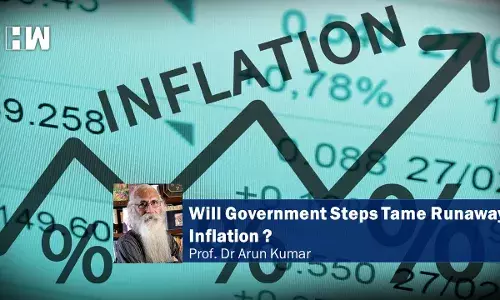
  • Will Government Steps Tame Runaway Inflation?

    Will Government Steps Tame Runaway Inflation?

    “The steps announced by the government are only a first step. Prices of essentials have to be brought down (not just rate of inflation) and wages indexed to inflation”

    WPI rising at 15.08% in April 2022 has set alarm bells ringing in the government. Not only has the WPI been rising at above 10% per annum for over 13 months, but it has also been rising faster since February 2022. In other words, it has accelerated. Of course, the war in Ukraine has impacted it but it had been rising rapidly prior to that. In November 2021 it had risen by 14.87%. It moderated a little till January 2022 and then again rose.

    In November 2021 the government had cut taxes on petro goods to bring down their prices. Now the government has again cut these taxes in the hope of moderating inflation. By restricting the exports of wheat and sugar it seeks to lower their prices. Additionally, it has acted to lower the prices of basics like steel, cement and plastics. These steps should help moderate inflation. The issue is how much and whether it will benefit the citizens, especially the marginalized ones?

    Acceleration and Generalization to all Commodities.

    When indirect taxes are levied on basic items of production, they feed into the price of all other products. For instance, if the price of energy rises, since it is used in all production, the price of all products rises – there is a generalized price rise. If the tax on diesel is raised, transport costs, cost of running pumps in the fields and electricity generated using diesel rise. Similar is the case with coal, cement, steel and plastics. So, one way of lowering the rate of inflation is to reduce taxes on these basics.

    [powerkit_button size=”lg” style=”info” block=”true” url=”https://hwnews.in/business-finance/business/will-government-steps-tame-runaway-inflation-1353302/” target=”_blank” nofollow=”false”]
    Read More
    [/powerkit_button]

  • How Do We Make the Wheels of the Police and Criminal Justice System Run Faster?

    How Do We Make the Wheels of the Police and Criminal Justice System Run Faster?

    The system of law enforcement in India encourages illegality and checks it only when it is in the interest of the rulers.

    The end of April 2022 saw three significant news items about justice delivery in the nation.

    Attorney General K.K. Venugopal said that 4.8 crore cases are in the courts and it had become a hopeless situation since “… litigants’ fundamental right to speedy justice lay in tatters …”.

    The Chief Justice of India, at the conference of chief ministers and Chief Justices, said that courts are burdened since the executive and the legislature are not doing their job.

    Finally, Barpeta District Court Judge while granting bail to Gujarat MLA Jignesh Mevani castigated police functioning. He appealed to the high court to “prevent registration of false FIRs like the present one… Otherwise, our state will become a police state.” He suggested that policemen be required to wear body cameras and CCTV cameras installed in police vehicles to prevent fake encounters and registration of false cases.

    These three news items are interlinked. A large number of cases in the courts are a result of the lack of proper functioning of the executive, poorly drafted laws, and worse, their misuse. The Mevani case points to the registration of a false case. Anticipating that he may get bail, a false case was lodged in advance to arrest him as soon as he got bail.

    Clearly, politics was at play which ended up wasting the time of the judiciary and the executive. The case was perhaps meant to send a signal to other opponents of the ruling dispensation, and as the judge noted, it weakens the “hard earned democracy”.

    [powerkit_button size=”lg” style=”info” block=”true” url=”https://thewire.in/government/how-do-we-make-the-wheels-of-the-police-and-criminal-justice-system-run-faster” target=”_blank” nofollow=”false”]
    Read More
    [/powerkit_button]
  • Idiocy of Automation and Electronic Processing: Are we ready for it?

    Idiocy of Automation and Electronic Processing: Are we ready for it?

    Getting a passport and driver’s license has indeed been simplified for the net savvy but it is not so simple for those who are not net and computer savvy.

    Automation and electronic processing via the net are becoming ubiquitous. E-banking and E-commerce have gained wide acceptance in society, especially during the last two years when mobility was restricted due to the pandemic and periodic lockdowns. Many, especially the young, are trading in shares and investing through the net. Crypto trading is entirely on the net – even youngsters who are not so well-off are into it. Identification via Aadhar is via the net. The income tax return is being filed electronically. The government is promoting digitization in a big way. Businesses in India are following through and moving towards automation and digitization. But is society ready for it?

    Getting a passport, a driving license, paying a fine for a traffic violation, etc. are now possible via the net. Some feel that this has reduced corruption. Theoretically, this should displace the middle man who is often a conduit for the bribe to be paid to the officialdom during public dealing. All this sounds great but has it simplified the life of the average citizen? Many educated Indians are still afraid of automation since they are unable to cope with it. It is an unknown and they fear making a mistake.

    [powerkit_button size=”lg” style=”info” block=”true” url=”https://hwnews.in/news/opinion/idiocy-of-automation-and-electronic-processing-are-we-ready-for-it-1351322?infinitescroll=1″ target=”_blank” nofollow=”false”]
    Read More
    [/powerkit_button]
  • Cryptos and CBDC: Is the RBI on the Right Track?

    Cryptos and CBDC: Is the RBI on the Right Track?

    “The history of money is entering a new chapter”. The RBI needs to heed this caution and not be defensive.

    Cryptocurrency will be discouraged by the government was the message from the FM during the budget discussion in parliament. There will be heavy taxation and no relief in capital gains for past losses. But, India has to contend with growing use of cryptos in these uncertain times. Russian kleptocrats are reportedly using cryptos to evade sanctions. Ukraine which has been a center for cryptos trading due to its lax rules is now using them to get funds.

    President Joe Biden recently signed an executive order requiring government agencies to assess use of digital currency and cryptos due to their growing importance. The Indian authorities have also been trying to bring legislation to deal with the issue since October 2021. Would the US clarifying its position help India also decide on cryptos?

    The SC has asked the government to clarify its position on the legality of cryptos. The FM in the Budget 2022-23 proposed taxing the capital gains and crypto transactions but did not declare them illegal. The RBI Governor was more expansive in February when he highlighted three things. First, “Private cryptocurrencies are a big threat to our financial and macroeconomic stability”. Second, investors are “investing at their own risk” and finally, “these cryptocurrencies have no underlying (asset)… not even a tulip”. Subsequently, a RBI Deputy Governor called cryptos worse than a Ponzi scheme and suggested that they not be “legitimized”. It is only recently that the RBI has announced that it will float Central Bank Digital Currency (CBDC)

    Difficult to Declare Cryptos Illegal

    The governor calling cryptos as cryptocurrency has unintentionally identified them as a currency. His statements indicate RBI’s worry about its place in the economy’s financial system as cryptos proliferate and become more widely used. This threat emerges from the decentralized character of cryptos based on the Blockchain technology which the Central Banks cannot regulate and which enables enterprising private entities (like, Satoshi Nakamoto initiated Bitcoins in 2009) to float cryptos which can function as assets and money.

    The total valuation of cryptos recently was upward of $2 trillion – more than the value of gold held globally. Undoubtedly, this impacts the financial systems and sovereignty of nations. So, the RBI rather than be defensive needs to think through how to deal with cryptos.

    Cryptos which operate via the net can be banned only if all nations come together. Even then, tax havens may allow cryptos to function defying the global agreement. They have been facilitating flight of capital and illegality in spite of pressures from powerful nations.

    The genie is out of the bottle. The total valuation of cryptos recently was upward of $2 trillion – more than the value of gold held globally. Undoubtedly, this impacts the financial systems and sovereignty of nations. So, the RBI rather than be defensive needs to think through how to deal with cryptos.

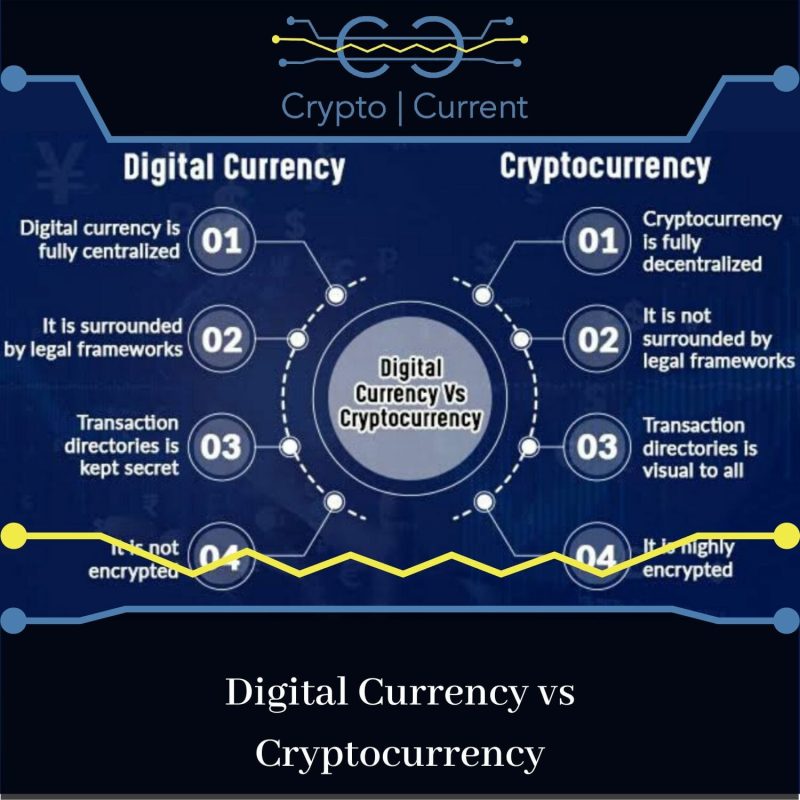
    Cryptos as Currency

    Source: Crypto-current.co

    Will a CBDC help tackle the emerging problem? Indeed not, since it can only be a fiat currency and not a crypto. However, cryptos can function as money. This difference needs to be understood.

    A currency is a token used in market transactions. Historically, not only paper money but cows and copper coins have been used as tokens since they are useful in themselves. But paper currency is useless till the government declares it to be a fiat currency. Everyone by consensus then accepts it at the value printed on it.

    So, paper currency with little use value derives its value from state backing and not any underlying commodity. Cryptos are a string of numbers in a computer programme and are even more worthless. And, without state backing. So, how do they become acceptable as tokens for exchange?

    Their acceptability to the rich enables them to act as money. Paintings with little use value have high valuations because the collectivity of the rich agrees to it. Cryptos are like that.

    Bitcoin, the most prominent crypto, has been designed to become expensive. Its total number is limited to 21 million and progressively it requires more and more of computer power and energy to produce (called mining like, for gold). As the cost of producing the Bitcoin has risen, its price has increased. This has led to speculative investment which drives the price higher, attracting more people to join. So, since 2009, in spite of wildly fluctuating prices, they have yielded high returns making speculation successful.

    Unlike the Tulip Mania

    The statement that cryptos have no underlying asset, not even a tulip refers to the time when tulip prices rose dramatically before they collapsed. But, tulips could not be used as tokens, while cryptos can be used via the internet. Also, the supply of tulips could expand rapidly as its price went up but the number of Bitcoins is limited.

    So, cryptos acquire value and become an asset which can be transacted via the net. This enables them to function as money. True, transactions using Bitcoins are difficult due to their underlying protocol, but other simpler cryptos are available.

    The different degrees of difficulties underlying cryptos arises from the problem of `double spending’. Fiat currency whether in physical or electronic form has the property that once it is spent, it cannot be spent again, except fraudulently, because it is no more with the spender. But, a software on a computer can be repeatedly used.

    Blockchain and encryption solved the problem by devising protocols like, the `proof of work’ and `proof of stake’. They enable the use of cryptos for transactions. The former protocol is difficult. The latter is simpler but prone to hacking and fraud. Today, thousands of different kinds of cryptos exist – Bitcoin like cryptos, Alt coins and Stable coins. Some of them may be fraudulent and people have lost money.

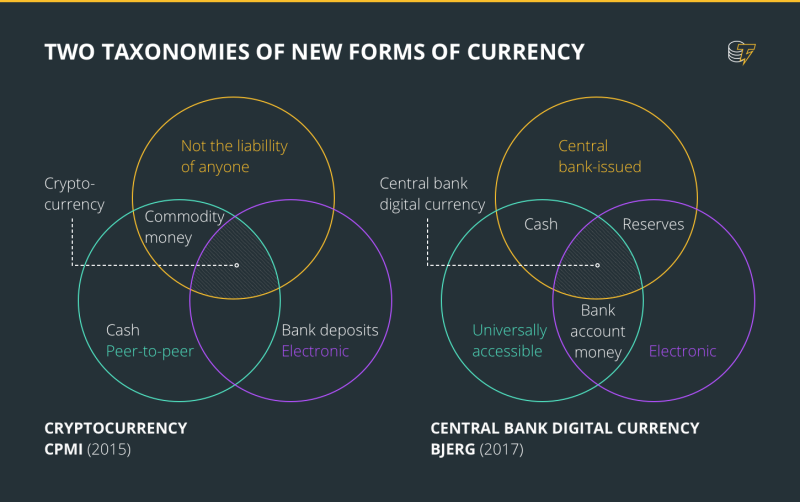
    CBDC, Unlike Cryptos

    Source: cointelegraph.com

    Blockchain enables decentralization. That is, everyone on the crypto platform has a say. But, the Central Banks would not want that. Further, they would want a fiat currency to be exclusively issued and controlled by them. But the protocols mentioned above theoretically enable everyone to `mine’ and create currency. So, for CBDC to be in central control, solve the `double spending’ problem and be a crypto (not just a digital version of currency) seems impossible.

    A centralized CBDC will require RBI to validate each transaction – something it does not do presently. Once a currency note is issued, RBI does not keep track of its use in transactions. Keeping track will be horrendously complex which could make the crypto like CBDC unusable unless new secure protocols are designed. No wonder, according to IMF MD, “… around 100 countries are exploring CBDCs at one level or another. Some researching, some testing, and a few already distributing CBDC to the public. … the IMF is deeply involved in it ..”

    Conclusion

    Issuing CBDCs will not only be complicated but presently cannot be a substitute for cryptos which will eventually be used as money. This will impact the functioning of the Central Banks and commercial banks. Further, it is now too late to ban cryptos unless there is global coordination which seems unlikely. The rich who benefit from cryptos will oppose banning them. Can the US work out a solution? The IMF MD has said, “The history of money is entering a new chapter”. The RBI needs to heed this caution and not be defensive.


    Slightly shortened version of this article was published earlier in The Hindu.

    Feature Image Credit: doralfamilyjournal.com


  • Sanctions on Russia Are a Tool That Must Be Calibrated Like Any Other

    Sanctions on Russia Are a Tool That Must Be Calibrated Like Any Other

    If de-dollarisation occurs, the impact will be felt wide and far. Severe sanctions are a double-edged sword which will impact every nation.

    Russia’s invasion of Ukraine has been condemned by the majority of countries in the United Nations. NATO has not intervened militarily since that runs the danger of a wider conflagration with the possible use of nuclear weapons. So, instead, the NATO powers have supplied Ukrainian forces with weapons and imposed severe sanctions on Russia. Evermore sanctions are announced every week.

    It was said that this would degrade Russia’s capacity to wage war by freezing its assets held in Western banks. Also, its earnings through trade would decline and impoverish it. It was also argued that the Russians would be hurt through multiple channels – higher inflation, the inability of its citizens to get dollars, a collapse in prices of financial assets, like, shares and so on.

    Thus, while Russia is attacking militarily, the West is hitting back through economic means. Further, there is also a cyber and media component to the war. It is perhaps the first war on multiple fronts. Will the Russians be hurt enough to stop the war? Can one draw lessons from the sanctions against Iran?

    [powerkit_button size=”lg” style=”info” block=”true” url=”https://thewire.in/economy/sanctions-on-russia-are-a-tool-that-must-be-calibrated-like-any-other” target=”_blank” nofollow=”false”]
    Read More
    [/powerkit_button]
  • Giveaways & Elections: Short-termism to the Fore

    Giveaways & Elections: Short-termism to the Fore

    BJP and AAP are the two winners in the just concluded crucial Assembly elections. The scale of victory of these two parties surprised most analysts. In UP after three decades, a ruling party won, overcoming severe anti-incumbency. There are accusations of the rigging of the EVMs but this can’t be proved when VVPAT slips are not being fully counted. Even if they were to be counted, fraud could have been committed in other ways and this could become an endless exercise. AAP, a new kid on the block, won on the promise of change from the terribly corrupt politics of the moribund established parties.

    Delivery is Important

    So, the ruling BJP won because it said that it had brought about a change in the lives of the common people while AAP won on the promise of bringing about change in their lives. What is this change that was so attractive to the people?

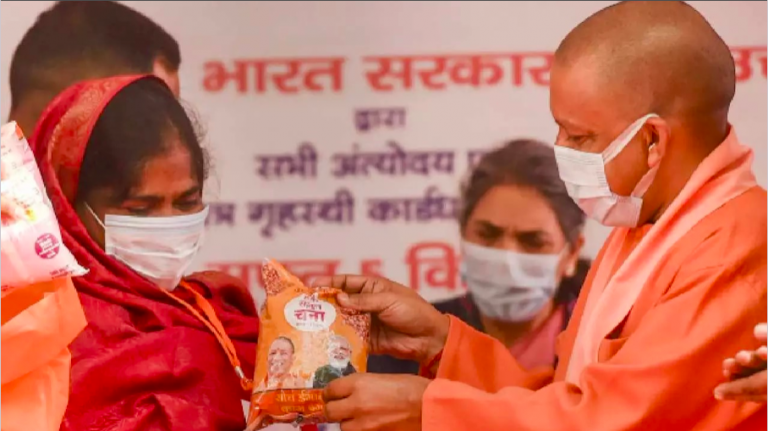
    BJP faced anti-incumbency due to high inflation, youth unemployment, farmers’ discontent, COVID mismanagement, etc. But its cadres went door to door to point to the Rs. 6000 is given to farmers, free grains, etc. to households, money for toilets and houses, etc. The beneficiaries from these schemes are called `Labhartis’ by the pundits. The opposition also promised various things if they came to power but obviously, a bird in hand is better than two in the bush. Also, the credibility of the opposition parties in UP is low since they delivered little when they were in power earlier. Finally, public memory is short. Many of the schemes that are listed as achievements by the present government were initiated by the earlier regimes.

    [powerkit_button size=”lg” style=”info” block=”true” url=”https://thepublicindia.com/2022/03/14/giveaways-elections-short-termism-to-the-fore/” target=”_blank” nofollow=”false”]
    Read More
    [/powerkit_button]
  • Sanctions on Russia: How will they play out?

    Sanctions on Russia: How will they play out?

    The rich nations supporting Ukraine in its war with Russia have imposed sanctions on the latter. They cannot intervene militarily directly since that would lead to a much wider conflagration and a possible catastrophic Third World War, as the Russian Foreign Minister has warned. The North Atlantic Treaty Organization realizes that and has not sent its troops to Ukraine, in spite of pleadings by the Ukrainian government. Instead, it is providing arms and other support to Ukraine to resist the invasion. The situation remains dangerous and tricky.

    Sanctions are supposed to punish the Russians for their aggression. It won’t halt the war but will it hurt the Russians enough that they will regret the invasion and not embark on future adventures? If the war drags on the costs could mount. This could lead to pressures for a regime change in Moscow and that may lead to a ratcheting up of the war. If sanctions are successful, will it be a lesson to China? Severe sanctions against Iran (0.3 per cent of the World’s Gross Domestic Product [GDP]) did not bring it to its knees. Given that the Russian economy is bigger (1.7 per cent of the World’s GDP) and much more advanced technologically, its economy may be much less impacted.

    [powerkit_button size=”lg” style=”info” block=”true” url=”https://theleaflet.in/sanctions-on-russia-how-will-they-play-out/” target=”_blank” nofollow=”false”]
    Read More
    [/powerkit_button]

  • FCRA, NGOs and the Question of Which Foreign Funding Is in National Interest

    FCRA, NGOs and the Question of Which Foreign Funding Is in National Interest

    Foreign interests and influences come with foreign capital and these are far stronger than what the funds flowing to NGOs bring with them.

    The Foreign Contribution (Regulation) Act (FCRA) registration or license that enables the licensees to get foreign funds has either not been renewed or cancelled for many non-governmental organisations or NGOs.
    Problems created for of one of the best known of them, Missionaries of Charity, drew international attention and criticism since the organisation has been doing yeoman’s work in giving succour to the poor. Under pressure, permission was restored for the organisation and along with it the FCRA of prestigious institutions like IIT Delhi and JNU were also restored.

    Why did all this happen in the first place?


    Read More