Author: Arun Kumar

  • A Taxing Tale: Assessing the Impact of Six Years of GST

    A Taxing Tale: Assessing the Impact of Six Years of GST

    Goods and Services Tax (GST) stands at a critical juncture six years after its implementation. Despite promising enormous benefits, it has fallen short and led to a decline in economic growth, especially for the unorganised sector.

    Goods and Services Tax (GST) has completed six years since it was launched on the midnight of June 30, 2017. It was billed as India’s second freedom. In a repetition of the then Parliament’s midnight meeting on August 14, 1947, the Parliament met dramatically in 2017 to hear the Prime Minister announce the launch of GST.

    It was said that the fragmented Indian market would be unified into one and a parallel was drawn with 1947, when free India had come together as a union of states.

    [powerkit_button size=”lg” style=”info” block=”true” url=”https://theleaflet.in/a-taxing-tale-assessing-the-impact-of-six-years-of-gst/#:~:text=Goods%20and%20Services%20Tax%20(GST,especially%20for%20the%20unorganised%20sector.” target=”_blank” nofollow=”false”]
    Read More
    [/powerkit_button]

  • Indian Ruler’s Predicament Limits their Understanding of Education’s Wider Role

    Indian Ruler’s Predicament Limits their Understanding of Education’s Wider Role

    Mr. Fadnavis, Dy. CM of Maharashtra has exhorted the youth to come forward in foiling the attempts of urban naxals from getting into universities. Since anyone differing from the establishment is being called urban naxal these days, this is a call to curb dissent in the
    universities.

    Earlier, Delhi’s Lt. Governor V K Saxena is reported to have said, “… degreeyan toh padahi ke kharch ki raseedein hoti hain. …” (… degrees are mere receipts of money spent on studies …). This was in response to the Delhi CM, Kejriwal’s reported barb that India needs an “… educated PM for the nation’s well-being”.  So, the educational qualifications of leaders have become an issue.

    These statements reflect the current Indian rulers’ skewed vision of education. For one dissent is not acceptable and for the other education is only about money spent and not the larger role it plays in society.

    [powerkit_button size=”lg” style=”info” block=”true” url=”https://hwnews.in/news/opinion/indian-rulers-predicament-limits-their-understanding-of-educations-wider-role/” target=”_blank” nofollow=”false”]
    Read More
    [/powerkit_button]

  • The Asymmetric Indo-US Technology Agreement Points to India’s Weak R&D Culture

    The Asymmetric Indo-US Technology Agreement Points to India’s Weak R&D Culture

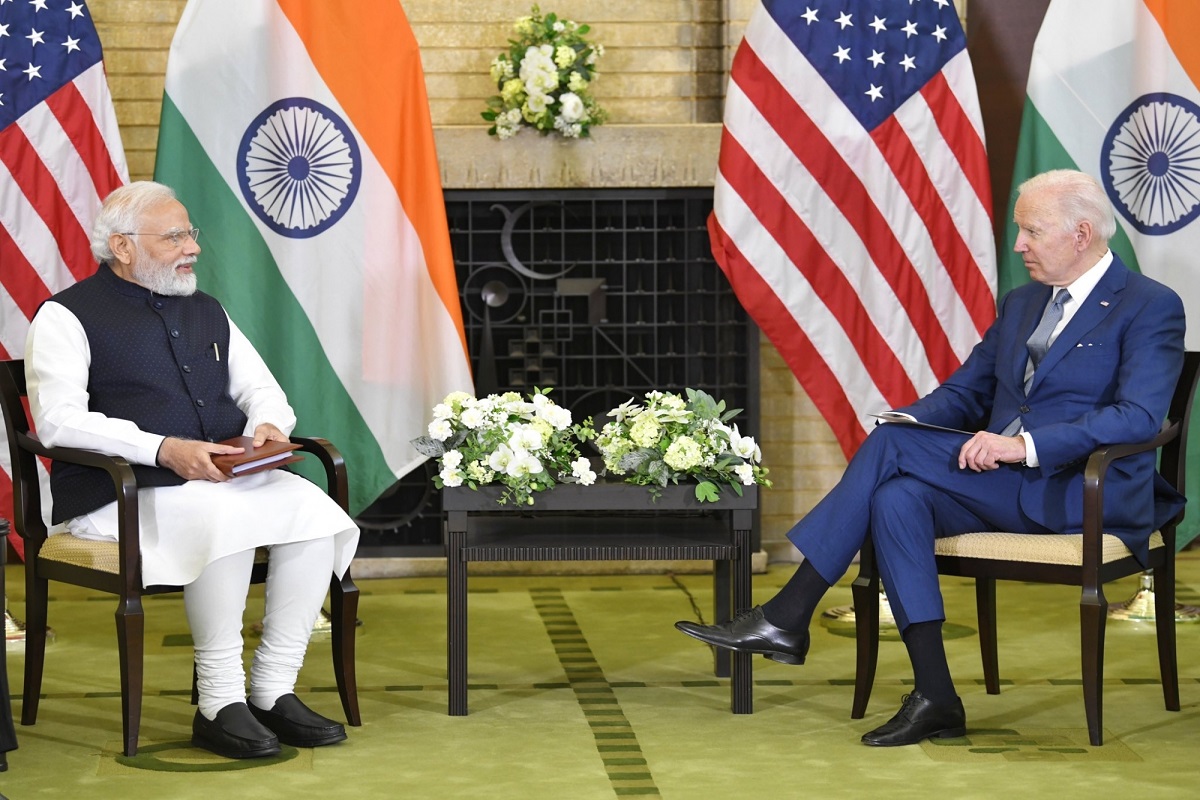
    Prime Minister Narendra Modi’s state visit to the USA resulted in four significant agreements and the visit is hailed as one of very important gains for India and Indo-US strategic partnership. The focus has been on defence industrial and technology partnership. Media and many strategic experts are seeing the agreements as major breakthroughs for technology transfers to India, reflecting a very superficial analysis and a lack of understanding of what really entails technology transfer. Professor Arun Kumar sees these agreements as a sign of India’s technological weakness and USA’s smart manoeuvring to leverage India for long-term defence and technology client. The visit has yielded major business gains for USA’s military industrial complex and the silicon valley. Post the euphoria of the visit, Arun Kumar says its time for India to carefully evaluate the relevant technology and strategic policy angles.


    The Indo-US joint statement issued a few days back says that the two governments will “facilitate greater technology sharing, co-development and co-production opportunities between the US and the Indian industry, government and academic institutions.” This has been hailed as the creation of a new technology bridge that will reshape relations between the two countries

    General Electric (GE) is offering to give 80% of the technology required for the F414 jet engine, which will be co-produced with Hindustan Aeronautics Limited (HAL). In 2012, when the negotiations had started, GE had offered India 58%. India needs this engine for the Light Combat Aircraft Mark 2 (LCA Mk2) jets.

    The Indian Air Force has been using LCA Mk1A but is not particularly happy with it. It asked for improvements in it. Kaveri, the indigenous engine for the LCA under development since 1986, has not been successful. The engine development has failed to reach the first flight.

    So, India has been using the F404 engine in the LCA Mk1, which is 40 years old. The F414 is also a 30-year-old vintage engine. GE is said to be offering 12 key technologies required in modern jet engine manufacturing which India has not been able to master over the last 40 years. The US has moved on to more powerful fighter jet engines with newer technologies, like the Pratt & Whitney F135 and GE XA100.

    India is being allowed into the US-led critical mineral club. It will acquire the highly rated MQ-9B high-altitude long-endurance unmanned aerial vehicles. Micron Technologies will set up a semiconductor assembly and test facility in Gujarat by 2024, where it is hoped that the chips will eventually be manufactured. The investment deal of $2.75 billion is sweetened with the Union government giving 50% and Gujarat contributing 20%. India is also being allowed into the US-led critical mineral club.

    There will be cooperation in space exploration and India will join the US-led Artemis Accords. ISRO and NASA will collaborate and an Indian astronaut will be sent to the International Space Station. INDUS-X will be launched for joint innovation in defence technologies. Global universities will be enabled to set up campuses in each other’s countries, whatever it may imply for atmanirbharta.

    What does it amount to?

    The list is impressive. But, is it not one-sided, with India getting technologies it has not been able to develop by itself.

    Though the latest technology is not being given by the US, what is offered is superior to what India currently has. So, it is not just optics. But the real test will be how much India’s technological capability will get upgraded.

    Discussing the New Economic Policies launched in 1991, the diplomat got riled at my complaining that the US was offering us potato chips and fizz drinks but not high technology, and shouted, “Technology is a house we have built and we will never let you enter it.”

    What is being offered is a far cry from what one senior US diplomat had told me at a dinner in 1992. Discussing the New Economic Policies launched in 1991, the diplomat got riled at my complaining that the US was offering us potato chips and fizz drinks but not high technology, and shouted, “Technology is a house we have built and we will never let you enter it.”

    Everyone present there was stunned, but that was the reality.

    The issue is, does making a product in India mean a transfer of technology to Indians? Will it enable India to develop the next level of technology?

    India has assembled and produced MiG-21 jets since the 1960s and Su-30MKI jets since the 1990s. But most critical parts of the Su-30 come from Russia. India set up the Mishra Dhatu Nigam in 1973 to produce the critical alloys needed and production started in 1982, but self-sufficiency in critical alloys has not been achieved.

    So, production using borrowed technology does not mean absorption and development of the technology. Technology development requires ‘know-how’ and ‘know-why’.

    When an item is produced, we can see how it is produced and then copy that. But we also need to know how it is being done and importantly, why something is being done in a certain way. Advanced technology owners don’t share this knowledge with others.

    Technology is a moving frontier

    There are three levels of technology at any given point in time – high, intermediate, and low.

    The high technology of yesterday becomes the intermediate technology of today and the low technology of tomorrow. So, if India now produces what the advanced countries produced in the 1950s, it produces the low-technology products of today (say, coal and bicycles).

    If India produces what was produced in the advanced countries in the 1980s (say, cars and colour TV), it produces the intermediate technology products of today. It is not to say that some high technology is not used in low and intermediate-technology production.

    The high technologies of today are aerospace, nanotechnology, AI, microchips and so on. India is lagging behind in these technologies, like in producing passenger aircraft, sending people into space, making microchips, quantum computing, and so on.

    The advanced countries do not part with these technologies. The World Trade Organisation, with its provisions for TRIPS and TRIMS (Trade-Related Aspects of Intellectual Property Rights and Trade-Related Investment Measures), consolidated the hold of advanced countries on intermediate and low technologies that can be acquired by paying royalties. But high technology is closely held and not shared.

    Advancements in technology

    So, how can nations that lag behind in technology catch up with advanced nations? The Nobel laureate Kenneth Arrow pointed to ‘learning by doing’ – the idea that in the process of production, one learns.

    So, the use of a product does not automatically lead to the capacity to produce it, unless the technology is absorbed and developed. That requires R&D.

    Schumpeter suggested that technology moves through stages of invention, innovation and adaptation. So, the use of a product does not automatically lead to the capacity to produce it, unless the technology is absorbed and developed. That requires R&D.

    Flying the latest Airbus A321neo does not mean we can produce it. Hundreds of MiG-21 and Su-30 have been produced in India. But we have not been able to produce fighter jet engines, and India’s Kaveri engine is not yet successful. We routinely use laptops and mobile phones, and they are also assembled in India, but it does not mean that we can produce microchips or hard disks.

    Enormous resources are required to do R&D for advanced technologies and to produce them at an industrial scale. It requires a whole environment which is often missing in developing countries and certainly in India.

    Enormous resources are required to do R&D for advanced technologies and to produce them at an industrial scale. It requires a whole environment which is often missing in developing countries and certainly in India.

    Production at an experimental level can take place. In 1973, I produced epitaxial thin films for my graduate work. But producing them at an industrial scale is a different ballgame. Experts have been brought from the US, but that has not helped since high technology is now largely a collective endeavour.

    For more complex technologies, say, aerospace or complex software, there is ‘learning by using’. When an aircraft crashes or malware infects software, it is the producer who learns from the failure, not the user. Again, the R&D environment is important.

    In brief, using a product does not mean we can produce it. Further, producing some items does not mean that we can develop them further. Both require R&D capabilities, which thrive in a culture of research. That is why developing countries suffer from the ‘disadvantage of a late start’.

    A need for a focus on research and development

    R&D culture thrives when innovation is encouraged. Government policies are crucial since they determine whether the free flow of ideas is enabled or not. Also of crucial importance is whether thought leaders or sycophants are appointed to lead institutions, whether criticism is welcomed or suppressed, and whether the government changes its policies often under pressure from vested interests.

    Unstable policies increase the risk of doing research, thereby undermining it and dissuading the industry. The result is the repeated import of technology.

    The software policy of 1987, by opening the sector up to international firms, undermined whatever little research was being carried out then and turned most companies in the field into importers of foreign products, and later into manpower suppliers. Some of these companies became highly profitable, but have they produced any world-class software that is used in daily life?

    Expenditure on R&D is an indication of the priority accorded to it. India spends a lowly 0.75% of its GDP on R&D. Neither the government nor the private sector prioritises it. Businesses find it easier to manipulate policies using cronyism. Those who are close to the rulers do not need to innovate, while others know that they will lose out. So, neither focus on R&D.

    Innovation also depends on the availability of associated technologies – it creates an environment. An example is Silicon Valley, which has been at the forefront of innovation. It has also happened around universities where a lot of research capabilities have developed and synergy between business and academia becomes possible.

    This requires both parties to be attuned to research. In India, around some of the best-known universities like Delhi University, Allahabad University and Jawaharlal Nehru University, coaching institutions have mushroomed and not innovative businesses. None of these institutions are producing any great research, nor do businesses require research if they can import technology.

    A feudal setup

    Technology is an idea. In India, most authority figures don’t like being questioned. For instance, bright students asking questions are seen as troublemakers in most schools. The emphasis is largely on completing coursework for examinations. Learning is by rote, with most students unable to absorb the material taught.

    So, most examinations have standard questions requiring reproduction of what is taught in the class, rather than application of what is learned. My students at JNU pleaded against open-book exams. Our class of physics in 1967 had toppers from various higher secondary boards. We chose physics over IIT. We rebelled against such teaching and initiated reform, but ultimately most of us left physics – a huge loss to the subject.

    Advances in knowledge require critiquing its existing state – that is, by challenging the orthodoxy and status quo. So, the creative independent thinkers who generate socially relevant knowledge also challenge the authorities at their institutions and get characterised as troublemakers. The authorities largely curb autonomy within the institution and that curtails innovativeness.

    In brief, dissent – which is the essence of knowledge generation – is treated as a malaise to be eliminated. These are the manifestations of a feudal and hierarchical society which limits the advancement of ideas. Another crucial aspect of generating ideas is learning to accept failure. The Michelson–Morley experiment was successful in proving that there is no aether only after hundreds of failed experiments.

    Conclusion

    The willingness of the US to provide India with some technology without expecting reciprocity is gratifying. Such magnanimity has not been shown earlier and it is obviously for political (strategic) reasons. The asymmetry underlines our inability to develop technology on our own. The US is not giving India cutting-edge technologies that could make us a Vishwaguru.

    India needs to address its weakness in R&D. As in the past, co-producing a jet engine, flying drones or packaging and testing chips will not get us to the next level of technology, and we will remain dependent on imports later on.

    This can be corrected only through a fundamental change in our R&D culture that would enable technology absorption and development. That would require granting autonomy to academia and getting out of the feudal mindset that presently undermines scientific temper and hobbles our system of education.


    This article was published earlier in thewire.in

    Feature Image Credit: thestatesman.com

     

  • Rs 2,000 Banknotes and the Mysteries of This Mini-Demonetisation

    Rs 2,000 Banknotes and the Mysteries of This Mini-Demonetisation

    None of the arguments that the RBI has given to justify the move are valid.

    In a sudden though not unexpected move, currency notes of denomination Rs 2,000 are being withdrawn from circulation. This is announced via a notification released by the Reserve Bank of India and not the government (as at the time of demonetisation). These notes are not being withdrawn from circulation, but actually, they will stop circulating right away given that they will have to be deposited in a bank or exchanged for lower denomination notes.

    So, no one will accept these notes in transactions which is as good as being withdrawn from circulation. This will create confusion in the public for a while.

    Further, as transactions face problems, especially for small businesses – producers and traders – the economy will be impacted.

    Arguments Given

    The RBI press release gives the logic of the move.

    First, the objective of introducing these notes at the time of demonetisation was met as smaller denomination notes became available in larger numbers. It is argued that the availability of these smaller notes is adequate.

    [powerkit_button size=”lg” style=”info” block=”true” url=”https://thewire.in/economy/rs-2000-rbi-demonetisation” target=”_blank” nofollow=”false”]
    Read More
    [/powerkit_button]

  • Inculcating Pride In the People: Can This Be The Way Forward?

    Inculcating Pride In the People: Can This Be The Way Forward?

    Atmanirbharta, self-reliance, is a complex idea. India has strived for it since its Independence. Colonial rule had caused a deterioration in India’s socio-economic conditions which led to mass poverty.

    In a recent interview, Mr. Nripen Mishra, Chairperson of the Committee to construct the Ram Janmabhumi Temple said, `Our youth are very sensitive to the call that India must become a big power  … I think we have to inject this … the temple as one more reason for being proud’.

    Clearly, the ruling establishment has set a goal of inculcating a sense of pride among the citizens, especially the youth. Building the grand Ram Janambhumi Temple is one more way of doing that. So were the building of the tallest statue, a grand Central vista, Parliament House, etc..

    Atmanirbharta and Vishwaguru

    The slogans of Atmanirbharta and India as Vishwaguru have been used continuously to inculcate pride. The package of Rs. 22 lakh crore announced in May 2020 soon after the start of the pandemic was called Atmanirbhar. Greater self-reliance is sought by raising customs duties since at least 2017. Reminds one of the 1960s ideas that Indian industries need protection from imports. India is currently heavily dependent on the import of armament. So, indigenous defense production is sought to be increased to reduce this dependence and also to enable exports to earn foreign exchange.

    But, if we are dependent on others for critical supplies, are we already Vishwaguru? Maybe atmanirbharta could make us Vishwaguru in the future. Are we doing the right things to achieve it

    The `Vishwa guru’ status is currently claimed on the basis of soft power, like, yoga and film music. In economic terms we claim to be the fastest-growing large economy and that our production has surpassed that of our colonial master, Britain, to make us the 5th largest world economy. But the true measure of prosperity is per capita income which is abysmally low. For the poor and unemployed what does being vishwaguru mean?

    Premature claims of being vishwaguru breed complacency. Do other nations accept our claim? In January 2021 at WEF the PM announced that the world could learn from India how to handle the pandemic. By March, the country suffered grievously in the second wave.

    Self-Reliance

    Atmanirbharta, self-reliance, is a complex idea. India has strived for it since its Independence. Colonial rule had caused a deterioration in India’s socio-economic conditions which led to mass poverty. India lagged way behind the advanced countries in 1947. To gain independence, the national movement used the idea of self-reliance to raise people’s consciousness against colonization. Gandhi suggested `Swaraj’ or self-rule and said, `There are no people on earth who would not prefer their own bad government to the good government of an alien power’. This idea persisted among the leadership after independence since India had to contend with neo-colonialism and given its backwardness, India depended on other nations for aid, technology, etc.

    The notion of self-reliance had to be differently interpreted in a different context. In a globalizing world, it may be in the nation’s interest to import in a big way and exchange ideas with others. But, if other nations try to capture their markets, as they often do, self-reliance may require protecting the home market.

    Globalization and Atmanirbharta

    Is globalization consistent with Atmanirbharta? Colonization was also globalization. Political independence does not imply insularity but the ability to deal with other nations to serve the national interest. India gained considerable autonomy in policy to pursue a path in its self-interest through industrialization, development of social and physical infrastructure, etc. The public sector and a reasonable technology base were developed to gain a modicum of economic independence. Pressures from the international financial institutions to follow their agenda or to allow consumerism were warded off till 1980.

    The big shift came in 1991 with the new economic policies which were imposed by the IMF as conditionalities. Atmanirbharta which was slowly eroded post the mid-1970s got breached.

    Can Borrowing Lead to Atmanirbharta?

    In a globalizing world, dealing with other nations as equals requires a rapid generation of technology and socially relevant knowledge. This is not possible without a strong education and R&D infrastructure which we are lacking in.

    The government has reversed direction since 2017 and is attempting greater self-reliance. But, is the strategy for achieving it right? In a globalizing world, dealing with other nations as equals requires a rapid generation of technology and socially relevant knowledge. This is not possible without a strong education and R&D infrastructure which we are lacking in. The government claims that the National Education Policy (NEP) 2020 will help in this direction. But its emphasis on inviting the top foreign universities to come to India, something UGC is pushing, can only further undermine indigenous strengths.

    Schemes to get foreign faculty and borrow syllabi from foreign universities have existed but they undermine Indian academia’s autonomy. India has long had faculty members who earned their degrees abroad. If that could not impart dynamism to Indian institutions would the recent steps succeed? The idea that originality can be copied is a contradiction in terms. Even if some good foreign Universities do come, they can only be a shadow of the original.

    It would also relegate Indian institutions and academia to second-rate status. Foreign faculty will only come on privileged terms not available to Indian academics. The lesson for good students would be to go abroad and from there return to Indian institutions. That would deprive Indian institutions of good students for research thereby adversely impacting research in India. Further, India has its own unique problems that are unlikely to be the concerns of foreign institutions and academics.

    The change in focus of Indian institutions would further undermine the generation of relevant knowledge, the absence of which has been a cause of the lack of dynamism in Indian institutions. Indian academics have largely been `derived’ intellectuals, borrowing ideas from the West and recycling them in India. This trend would be reinforced to the detriment of those who were generating socially relevant knowledge because their work would be largely characterized as not of international standard and discounted in recruitment and promotions.

    The disadvantage of a Late Start

    It could be argued that one should not reinvent the wheel; therefore, there is no harm in borrowing ideas from abroad. In growth literature it is called `advantage of a late start’ – technology already developed becomes available to the late starters. A pre-requisite for this strategy to succeed, in a fast changing world, is a strong research environment in the borrowing country. Without that the borrowing country could become permanently dependent, leading to a `disadvantage of a late start’. This is true for most developing countries, including India.

    With NEP 2020, a new experiment has started without addressing the root cause of the failure of earlier policies. Our institutions of higher learning operate in a feudal mode where the autonomy and originality of academics are undermined.

    In India with every pay commission, steps to strengthen teaching and research in institutions of higher education were put into place but they have not delivered in the absence of basic reforms. With NEP 2020, a new experiment has started without addressing the root cause of the failure of earlier policies. Our institutions of higher learning operate in a feudal mode where the autonomy and originality of academics are undermined. Independence in thought is seen as a malaise to be eliminated little realizing that that is the key to new knowledge generation. No wonder, those Indians who deliver when in foreign institutions fail to do so working in India.


    In brief, borrowing from abroad without changing the systems in the country will not lead to atmanirbharta. The deficiencies in our education system need to be rectified before the strategy to borrow can succeed. Are we not putting the cart before the horse when the leadership talks of atmanirbharta while doing everything to curtail originality in thought and seeking compliance with their diktats?

    The slogan of Vishwaguru and atmanirbharta have not yet instilled pride in the nation, how will building a big temple do so? Will the poor and unemployed become proud citizens forgetting their misery? During the colonial period, perhaps religiosity was greater but pride was missing.

    This article was published earlier in hwnews.in
    Views expressed are author’s own.

    Feature Image Credit: newslaundry.com

    Students in Foreign University Image: business-standard.com


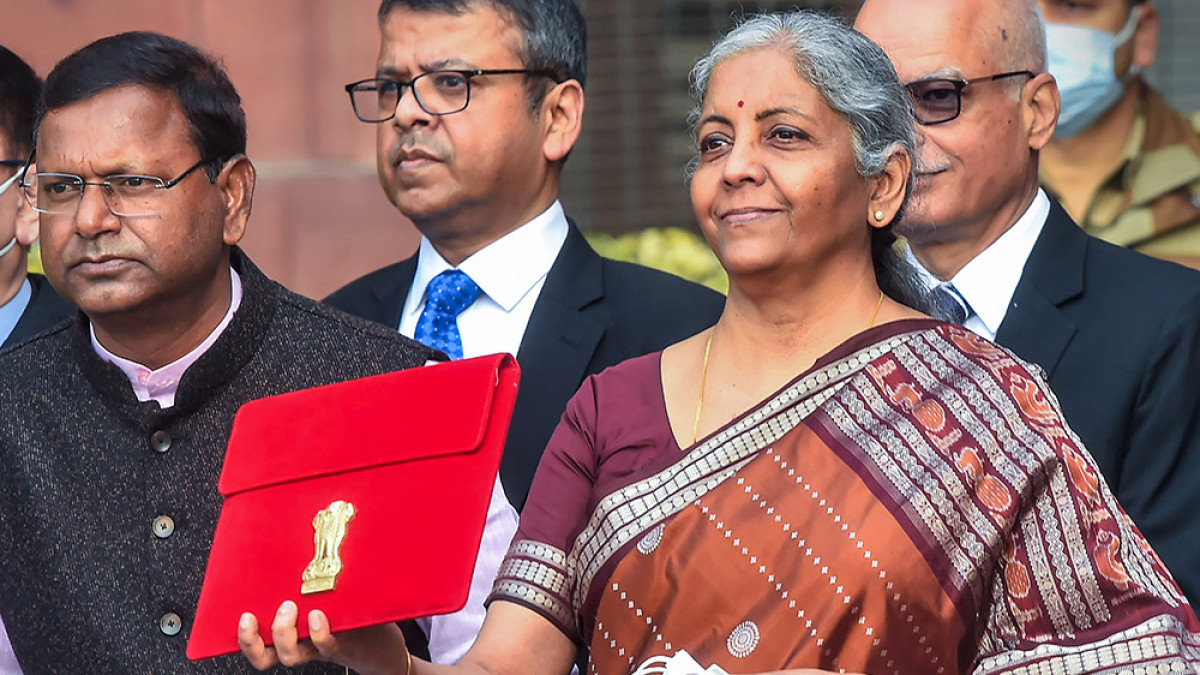
  • Analyzing the Union Budget 2023-24 to Unravel its Underlying Strategy

    Analyzing the Union Budget 2023-24 to Unravel its Underlying Strategy

    Introduction

    Any budget is complex consisting of many things of varying importance. Often, people focus on things of their direct interest but miss the wider implications that affect them indirectly and may undo any benefit they may get directly. Thus, it is not only important to look at the trees but also the forest. So, it is important to analyse the Macroeconomic strategy of the budget.

    Further, the budget is based on three things. First, analysis of the current economic situation, second, the scenario likely to prevail in the coming year and finally, what direction policy makers may want to give to the economy. It also needs to be kept in mind that there are lags. Announcements do not mean that what is being said will immediately happen. Even after implementation begins, it takes time for the results to follow. But it is always possible that the expected results may not follow due to a variety of reasons.

    Thus, a budget needs to be analysed both for its short term and long term impact. Any contradictions between the short and the long term policies leads to their failure. For the country, the long term is critical but politically the ruling party may find the short terms gains more compelling. This article attempted to present an analysis of the Union Budget 2023-24 with these features in mind.

    Current Economic Challenges

    There are internal and external challenges facing the economy. Externally, the ongoing war in Ukraine and the `New Cold War’ are adding to India’s problems. Nothing much can be done with regard to these except making the economy more resilient. A stronger economy will be able to better deal with the external challenges.

    [powerkit_button size=”lg” style=”info” block=”true” url=”http://mainstreamweekly.net/article13125.html” target=”_blank” nofollow=”false”]
    Read More
    [/powerkit_button]

  • Challenges of the Indian Economy and Banking Under the Sway of Global Capital

    Challenges of the Indian Economy and Banking Under the Sway of Global Capital

    Introduction

    In a modern day capitalist society, finance (vitta) is of crucial importance. It can help the individuals but also marginalize them since finance is not only complex but becoming more so and even educated people barely understand it. So, most people follow the herd mentality and often that leads to mistakes.

    Any analysis of the world of finance in India requires one to understand the nature of the current Indian Economy and its changing philosophical moorings. The problem is compounded by the rapidly changing technology in the world which is hard to keep track of, even for the experts, much less for the common person. Before one has understood the implications of a technology a new one arrives. For instance, in India, the advent of plastic cards has been quickly overtaken by electronic transactions and now the cryptos are threatening banks and even Central Banks.

    Thus, the financial sector itself faces unprecedented challenges with new financial instruments appearing in rapid succession. Since their impact on the financial system is little understood, risk has increased and that is leading to growing instability. To take care of the risks in the system newer instruments have emerged and they add to the instability. For instance, the global financial crisis of 2007-09 was triggered by the sub-prime crisis, growth of shadow banking, Credit Default Swaps, etc.

    So, the issues facing the world of finance today need to be understood in both the global context and historically.

    [powerkit_button size=”lg” style=”info” block=”true” url=”http://mainstreamweekly.net/article12971.html” target=”_blank” nofollow=”false”]
    Read More
    [/powerkit_button]

  • On China and Economy, Dialogue Is the Need of the Hour

    On China and Economy, Dialogue Is the Need of the Hour

    The strength of democracy is that debate and dialogue provide society with a self-corrective mechanism.

    The news of Chinese transgression in Tawang on December 9 is disturbing. The opposition has repeatedly demanded a discussion in the parliament but the government has not agreed. The government’s stock reply is that the matter should not be politicised and that we should have full faith in our army and our brave soldiers.

    This is diversionary since no one is saying that our soldiers are at fault or are not fighting valiantly. The issue is about policy and India’s political stance vis-à-vis China because of which the brave soldiers are suffering. A full discussion in parliament will help clear the air in this regard.

    [powerkit_button size=”lg” style=”info” block=”true” url=”https://thewire.in/rights/china-economy-dialogue-debate-democracy” target=”_blank” nofollow=”false”]
    Read More
    [/powerkit_button]

  • RBI Affidavit on Demonetisation Obfuscates Rather than Clarifying

    RBI Affidavit on Demonetisation Obfuscates Rather than Clarifying

    Demonetisation is an example of a needless policy which failed because of lack of consultation and inadequate understanding of the issues. It led to a policy-induced crisis that deeply impacted the nation: all because democracy was not allowed its full play.

    In a vibrant democracy, critique of policy a) makes for a) better policies, and b) helps correct mistakes as they occur. Official spokespersons will always argue that the government is doing the best under given circumstances. But today, the world is changing so fast that mistakes will occur because the past may not be a guide for the future. Further, full information is not available even about the present. So, policies are made in an uncertain environment, leading to heightened risk of policy failure. Democracy provides the self-correcting mechanism when mistakes occur.

    While genuine mistakes will occur, there is a class of decisions based on misperceptions and inadequate consultation that go horribly wrong. Demonetisation is an example of a needless policy which failed because of lack of consultation and inadequate understanding of the issues. It led to a policy-induced crisis that deeply impacted the nation: all because democracy was not allowed its full play.

    Demonetisation case in court

    Soon after demonetisation was launched many challenged the decision in the courts because it was patently unfair to the marginalised who suffered hugely from it. The Supreme Court has now taken up this case, when six years have elapsed and the policy cannot now be reversed. It will be no relief to those who died or lost out. Compensation cannot be given because it would be hard to estimate who lost how much. Even if compensation is ordered by the court, citizens will only pay themselves through the government. The permanent damage to the economy cannot be restored.

    [powerkit_button size=”md” style=”info” block=”true” url=”https://theleaflet.in/rbi-affidavit-on-demonetisation-obfuscates-rather-than-clarifying/” target=”_blank” nofollow=”false”]
    Read More
    [/powerkit_button]

  • For Democracy to be real and vibrant it needs  people with impeccable Integrity at the Helm

    For Democracy to be real and vibrant it needs people with impeccable Integrity at the Helm

    Democracy at its core is the power of the people. But all over the world, it is becoming anything but that. Truly the fear is that democracy is dying, as most nations that call themselves democracies are in effect controlled by capitalist oligarchs and majoritarian fascists. The power of money and vested interests have vitiated democratic processes worldwide. Michael Hudson calls the USA, once the beacon of democracy, a deep state controlled by three main oligarchic groups: Military Industrial Complex (MIC); Oil, Gas, and Mining (OGAM); and Finance, Insurance, and Real Estate (FIRE).  Add the new emerging giant group – Big Tech – as the fourth. The UK, the world’s oldest parliamentary system, is in shambles as a democracy. India, seen as the world’s largest democracy, is heading the majoritarian way. Majoritarianism is not democracy but tyranny. This is what the Father of the Nation had to say about democracy at the height of the freedom struggle:

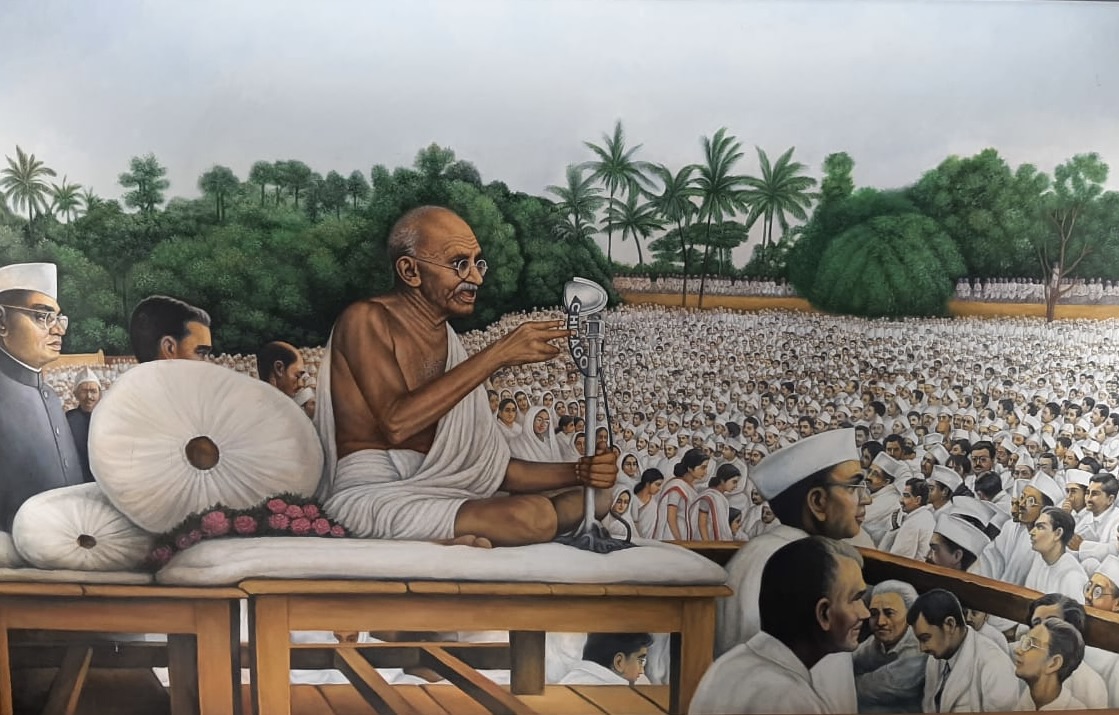
    My notion of democracy is that under it the weakest should have the same opportunity as the strongest….No country in the world today shows any but patronising regard for the weak….Western democracy, as it functions today, is diluted fascism….True democracy cannot be worked by twenty men sitting at the centre. It has to be worked from below by the people of every village.”    – Mahatma Gandhi

    His words could not have been more apt for the times we live in. This quote is placed in the Sabarmati Ashram. One wonders how many take a moment to stop by to read it carefully and take in the import of his words. The Mahatma is the shining example of personal integrity, character, and moral courage. Since democracy is primarily driven by people and politics, it is vital that those at the helm of governance display impeccable integrity to ensure real democracy.

    Professor Arun Kumar PhD, an eminent economist and our adjunct Distinguished Fellow, writes eloquently on the subject and says ‘absence of persons with impeccable integrity is the bane of India’s democracy’. TPF is happy to republish this article.

    A version of this article was published earlier in theleaflet.in

    TPF Editorial Team


    Gandhiji said that institutions reflect what the people are, and that they cannot function as they are intended to unless those manning them are people of integrity.


    A Supreme Court Constitution bench recently said that the Chief Election Commissioner should be one “with character” and who would not get “bulldozed” – a self-evident truth. Further, it suggested that the selection committee for the post should consist of an independent person like the Chief Justice of India (‘CJI’). It added that people and bureaucrats like the former Chief Election Commissioner late T.N. Seshan, who could act independently, “happen once in a while”.

    Perhaps without meaning to, these comments indict the election commissioners appointed since Seshan’s time. Therefore, they have given voice to recent public concerns about the independence of the institution.

    Integrity of Constitutional authorities

    Will the CJI’s presence in the committee to appoint the Election Commissioners make a difference? The CJI is a member of the committee to appoint the Director of the Central Bureau of Investigation (‘CBI’). But the Supreme Court itself has called the CBI a “caged parrot”. The problem arises since the party in power would prefer a sympathetic person as an Election Commissioner, not an independent person.

    The appointment of Supreme Court judges has become contentious, with the judges and the Union Law Minister currently at loggerheads. Judges themselves have talked of pressures and counter pressures from within and from the government. Appointments of some who are seen to be inconvenient have been withheld. Earlier this week, a division bench of the Supreme Court mentioned that by delaying appointments, good people are dissuaded from becoming judges. It is suspected that the appointment of certain judges is delayed so that they do not become CJI in due course of time. It appears that pliability is a desirable attribute to becoming a judge.

    The Supreme Court, by raising the issue of the appointment of the Election Commissioner, has also brought into question the integrity of the Prime Minister (‘PM’), who is key to the appointment. Thus, doubt has been raised about the country’s constitutional authorities, including the judiciary. The executive, in any case, does the bidding of the political masters. So, where are the people of integrity in the corridors of power in India?

    Defining integrity

    Institutions can run as they ought to only if they are manned by people with integrity. Its absence from the top down is a societal challenge. Mahatma Gandhi in ‘Hind Swaraj’ (Indian Home Rule), more than a century back, said, “As are the people, so is their Parliament.” Since the Parliament is key to the functioning of a democracy, this flaw afflicts institutions down the line.

    PMs heading the government are political persons. Since politics is about power, they try everything to keep themselves and their party in power. Their election depends on the support of vested interests who fund both them and their party and therefore, dominate the working of the party. So, staying in power is a high stake business which requires manipulation of the systems in their favour.

    The Supreme Court, by raising the issue of appointment of the Election Commissioner, has brought into question the integrity of the Prime Minister, who is key to the appointment. Thus, doubt has been raised about the country’s constitutional authorities, including the judiciary. 

    There is then a separation of the interest of the nation, and of the party and its head, the PM. Consequently, for the party, integrity means that which serves its interest, which is not necessarily what the nation needs. This separation is what Gandhi implies in Hind Swaraj. No wonder, it is only a rare PM who has the moral integrity to select independent people for important Constitutional positions like the Election Commission and the judiciary.

    Politicians go through years of such conditioning before becoming PMs and it becomes their second nature. It cannot be expected to change upon becoming the PM. The opposition in a democracy is supposed to check the misuse of power. But the leaders of the opposition also go through the same conditioning as leaders of the ruling party and therefore, act no differently. Politicians often pride themselves on managing conflicts by making compromises and accepting the manipulation of power. So, politicians take a pliable stand, based on the chair they occupy – in power or out of it.

    Gandhi on parliamentary democracy

    Gandhi, commenting on the British Parliamentary democracy in Hind Swaraj, wrote, “The Prime Minister is more concerned about his power than about the welfare of Parliament … [and] upon securing the success of his party.” He added that they may be considered to be honest “because they do not take what is generally known as bribes… [but] …they certainly bribe the people with honours.” Therefore, “… they neither have real honesty nor a living conscience”.

    Regarding the Members of Parliament who could keep the PM in check, he wrote, “… Members are hypocritical and selfish. Each thinks of his own little interest. … Members vote for their party without a thought.” Regarding the media, another institution that could help check misuse of public authority by creating public awareness, he wrote that they “are often dishonest. The same fact is differently interpreted … according to the party in whose interest they are edited.” Gandhi was also scathing about the legal profession when he wrote, “… the profession teaches immorality …”.

    Gandhi was pointing to the fundamental flaws in the functioning of democracies. It also applies in the current Indian context. He was pointing to weak public accountability of those in power since public awareness was low. The public has little choice but to accept the existing imperfect political system. The British Parliamentary democracy may be the best available system, but it is highly flawed and its defects appear more starkly in weak democracies like that in India.

    We may be called the largest democracy in the world and we have succeeded in preserving it in the last 75 years, but it is frayed, as made clear by the current political problems facing us.

    Feudal attitudes and democracy

    Indian democracy’s weakness is a result of the persistence of feudal consciousness among a majority who easily accept authority. This is true even in institutions of higher education, where people are expected to be the most conscious. Most of these institutions are headed by academics with a bureaucratised mindset, who expect compliance and treat dissent as a malaise to be eradicated. In turn, they yield to politicians and bureaucrats.

    A feudal system has its own concept of integrity. The ruler’s interest is broadly the nation’s interest. This congruity breaks in a parliamentary democracy where the consciousness is feudal. In such a case, integrity as defined by national interest is likely to be subverted, as is visible in India.

    In 1947, India with its feudal consciousness ingrained and copied parliamentary democracy, not because people were ready for it, but because the leadership desired it since they wanted to copy Western modernity. People blindly accepted it since it came from their leaders, not because they understood it. Liberality at the top frayed post mid-1960s, as retaining power became more difficult and leaders turned increasingly authoritarian. So, while retaining the façade of democracy, it increasingly got hollowed out.

    In 1947, India with its feudal consciousness ingrained and copied parliamentary democracy, not because people were ready for it, but because the leadership desired it since they wanted to copy Western modernity. People blindly accepted it since it came from their leaders, not because they understood it.

    The political economy also pushed policies that marginalised the majority in the interest of the few. The black economy grew rapidly, making elections formalistic and draining them of their representational character. Most importantly, the rulers realized that neither the people ask for liberality nor do they demand accountability from leadership.

    Need for accountability at the top

    Accountability has to come from the top, whether in politics or in the government or the courts. It is not going to automatically come about without public pressure. A few freebies are enough to divert public attention. So, is accountability a luxury when basic issues are many?

    The lack of integrity in public life is costly. The nation’s energy is diverted. Reforms favouring the marginalised are circumvented. Laws are framed ostensibly to improve matters, but when the spirit is not willing they fail to deliver. Perfect laws are not possible, since human ingenuity can circumvent any law. The result is more complex laws and growing cynicism.

    What Gandhi pointed out is playing itself out in India. He said institutions reflect what the people are, and that they cannot function as they are intended to unless those manning them are people of integrity. But, can people with integrity emerge when it is missing all around, feudal consciousness pervades and people bend to authority?

    Reform requires us to resolve the contradiction between parliamentary democracy and the prevailing feudal consciousness. This cannot happen from above. It requires the transformation of the people’s consciousness – Gandhi’s unfinished agenda.


    Opinions expressed are those of the author.

    Feature Image Credit: Gandhi in a public address – Painting at Sabarmati Ashram.