Author: Arun Kumar

  • The Centre is notional, the States the real entities

    The Centre is notional, the States the real entities

    Utilisation of the country’s resources needs to be decided jointly by the Centre and the States. The changed political situation after the general election makes this feasible.

    The results of the general election 2024 have thrown up a surprise. They portend greater democratisation in the country, with the regional parties doing well. These parties will share space on the ruling party benches as well as on the Opposition side in Parliament. This will help strengthen federalism, which is so crucial for a diverse nation such as India. It was badly fraying until recently.
    Centre-State relations became contentious during the general election campaign. The idea of’ 400 par’, ‘one nation, one election’, and the Prime Minister threatening that the corrupt (i.e., Opposition leaders) would soon be in jail were perceived as threats to the Opposition-ruled States.
    The Opposition-ruled States have been complaining about step-motherly treatment by the Centre. Protests have been held in Delhi and the State capitals. The Supreme Court of India has said that ‘a steady stream of States are compelled to approach it against the Centre’. Kerala has complained about the inadequate transfer of resources, Karnataka about drought relief and West Bengal about funds for the Mahatma Gandhi National Rural Employment Guarantee Scheme (MGNREGS). The attempt seems to be to show the Opposition-ruled States in a bad light.
    The Supreme Court, expressing its helplessness, recently said that Centre-State issues need to be sorted out amicably. When the Bharatiya Janata Party came to power in 2014, it had talked of cooperative federalism. The introduction of the Goods and Services Tax (GST) in 2017 was an example of this when some States that had reservations about it eventually agreed to its rollout. But that was the last of it. With federalism fraying, discord has grown between the Centre and the Opposition-ruled States.
    There is huge diversity among the States—Assam is unlike Gujarat, and Himachal Pradesh is very different from Tamil Nadu. A common approach is not conducive to the progress of such diverse States. They need greater autonomy to address their issues in their own unique ways. This is both democracy and federalism. So, a dominant Centre forcing its will on the States, leading to the deterioration in Centre-State relations, does not augur well for India.

    Financing and conflict is one issue
    States face three broad kinds of issues. Some of them can be dealt with by each State without impacting other States, such as education, health, and social services. But infrastructure and water sharing require States to come to an agreement. Issues such as currency and defence require a common approach. The last two kinds of issues require a higher authority, in the form of the Centre, to bring about coordination and optimality.
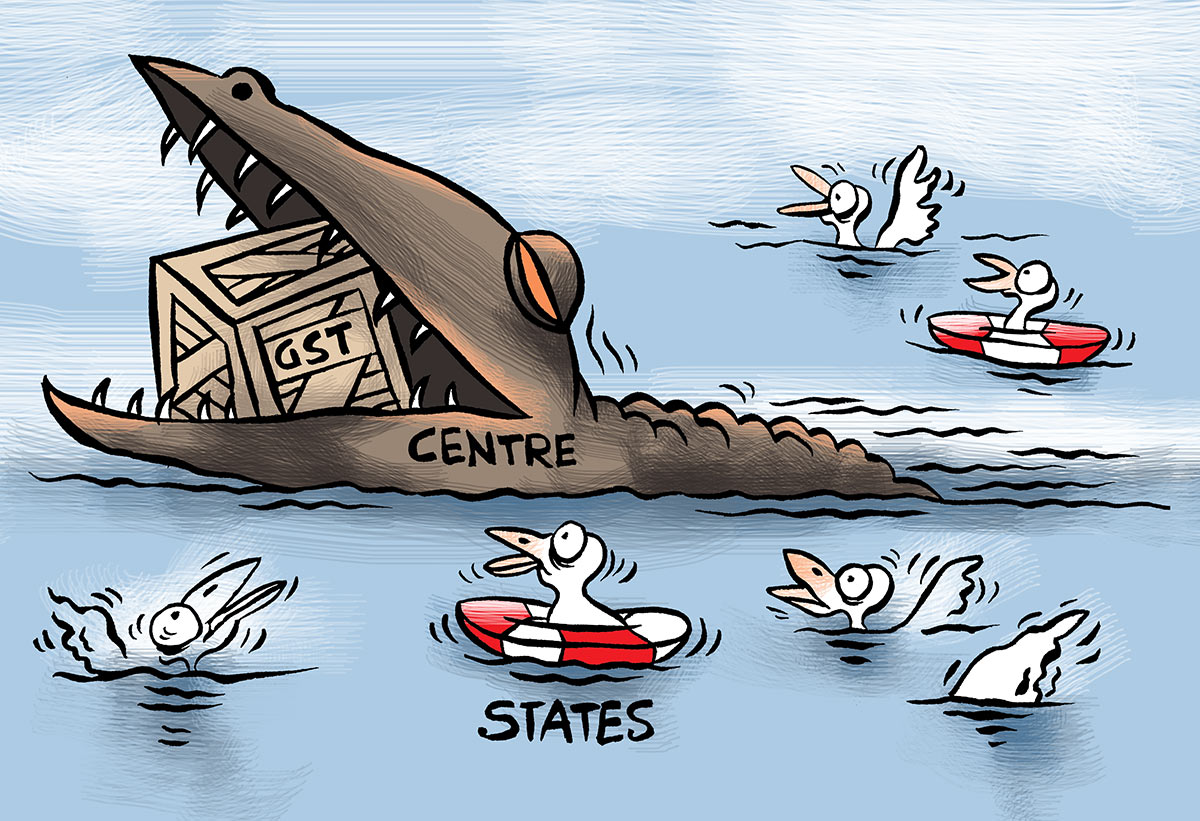
    Expenditures have to be financed to achieve goals, and that results in conflict. Revenue has to be raised through taxes, non-tax sources and borrowings. The Centre has been given a predominant role in raising resources due to its efficiency in collecting taxes centrally. Among the major taxes, personal income tax (PIT), corporation tax, customs duty and excise duty are collected by the Centre. GST is collected by both the Centre and the States and shared. So, the Centre controls most of the resources, and they have to be devolved to the States to enable them to fulfil their responsibilities.

    The Centre sets up the Commission and has mostly set its terms of reference. This introduces a bias in favour of the Centre and becomes a source of conflict between the Centre and the States.

    A Finance Commission is appointed to decide on the devolution of funds from the Centre to the States and the share of each State. The Centre sets up the Commission and has mostly set its terms of reference. This introduces a bias in favour of the Centre and becomes a source of conflict between the Centre and the States. Further, there has been an implicit bias in the Commissions that the States are not fiscally responsible. This reflects the Centre’s bias — that the States are not doing what they should and that they make undue demands on the Centre.
    The States also pitch their demands high to try and get a larger share of the revenues. They tend to show lower revenue collection and higher expenditures in the hope that there will be a greater allocation from the Commission. The Commission becomes an arbiter, and the States the supplicants.

    Inter-State tussles, Centre-State relations
    The States cannot have a common position as they are at different stages of development and with vastly different resource positions. The rich States have more resources, while the poor ones need more resources in order to develop faster and also play catch up. So, the Finance Commission is supposed to devolve proportionately more funds to the poorer States. Unfortunately, despite the efforts of the 15 Finance Commissions so far, the gap still remains wide.
    The rich States, which contribute more and get proportionately less, have resented this. What they forget is that the poorer States provide them the market, which enables them to grow faster. The poorer States also lose much of their savings which leak out to the rich States, accelerating their development. It is often said that as Mumbai contributes a bulk of the corporate and income taxes, it should get more. But this is because Mumbai is the financial capital. So, the big corporations are based there and pay their tax in Mumbai. More revenue is contributed in an accounting sense, and not that production is taking place in Mumbai.
    The Centre allocates resources to the States in two ways. First, on account of the Finance Commission award. Second, the Centre is notional, while the States are real. So, all expenditures by the Centre are in some State. The amount spent in each State is also a transfer. This becomes another source of conflict. Expenditures lead to jobs and prosperity in a State. Benefits accrue in proportion to the funds spent. As a result, each State wants more expenditure in its territory. The Centre can play politics in the allocation of schemes and projects. For instance, it is accused of favouring Gujarat and Uttar Pradesh. The Opposition-ruled States have for long complained of step-motherly treatment.
    To get more resources, the States have to fall in line with the Centre’s diktat. This has taken a new form when the call is for a ‘double engine ki sarkar’, i.e. for the same political party to be governing at the Centre and the States. It is an admission that the Opposition-ruled States will be at a disadvantage. This undermines the autonomy of the States and also weakens federalism.

    State autonomy is not to be confused with freedom to do anything. It is circumscribed by the need to function within a national framework for the wider good. It implies a fine balance between the common and the diverse.

    Issues in federalism
    The Sixteenth Finance Commission has begun work. It should try to reverse fraying federalism and strengthen the spirit of India as a ‘Union of States’. This is not only a political task but also an economic one. The Commission could suggest that there is even-handed treatment of all the States by the Centre and also less friction among the rich and poor States when proportionately more resources are transferred to poor States so as to keep rising inequality in check.
    The issue of governance, both at the Centre and in the States, needs to be flagged. It determines investment productivity and the pace of development. Corruption and cronyism lead to resources being wasted and a loss of social welfare.
    To reduce the domination of the Centre over the States, the devolution of resources from the Centre to the States could be raised substantially from its current level of 41%. The Centre’s role could be curtailed. For instance, the Public Distribution System and MGNREG Scheme are joint schemes, but the Centre asserts that it be given credit. It has penalised States that have not done so.

    The Centre is notional and constitutionally created, while States and local bodies are the real entities where economic activity occurs and resources are generated.

    The Centre’s undue assertiveness undermines federalism. Funds with the Centre are public funds collected from the States and spent in the States. The Centre is notional and constitutionally created, while States and local bodies are the real entities where economic activity occurs and resources are generated. The States have agreed to the Centre’s constitutional position, but that does not make them supplicants for their own funds.

    It is time that the utilisation of the country’s resources is jointly decided by the Centre and the States on the basis of being equal partners. This has become more feasible with the changed political situation after the results of the 2024 general election.


    This article was published earlier in The Hindu.

    Feature Image Credit: rediff.com
     

  • West Asian moves and countermoves: Challenges of them spinning out of control

    West Asian moves and countermoves: Challenges of them spinning out of control

    What will the complex calculus of the new Middle East crisis resolve into, and what will be the impact on India?

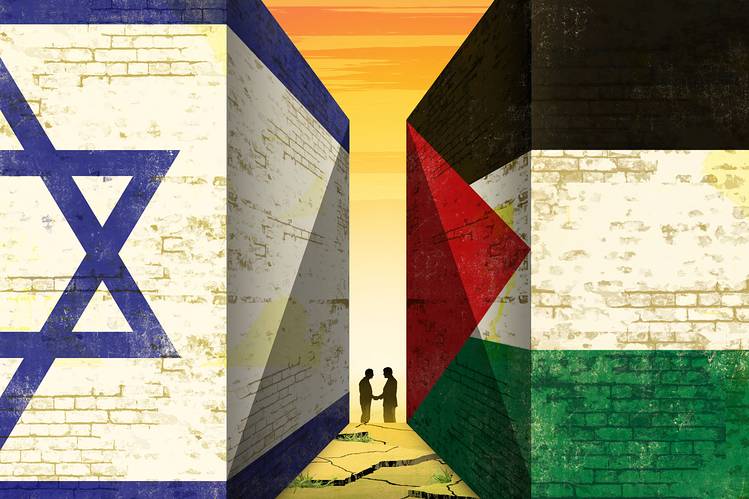
    ISRAEL has succeeded in diverting world attention from Gaza and Hamas to Iran. This is similar to how Hamas, in October 2023, successfully short-circuited US efforts at normalising relations between the Arab states and Israel under the Abrahams Accord.

    These moves and countermoves are ratcheting up the intensity of conflict in West Asia with serious global implications, including for India. The Indian approach seems to be similar to that in the case of the conflict in Ukraine— to play both sides.

    Countermoves

    Iran’s attack on Israeli soil is unprecedented. It is a response to the Israeli attack on its consulate in Syria on April 1, killing some of its top army commanders. It had warned of a retaliation and that gave Israel and its partners, the US, the UK, etc., time to prepare.

    The US had already moved its forces and prepared its allies in the region to shoot down the projectiles from Iran. Even Jordan apparently participated in this. Israel could take care of the projectiles that managed to reach its territory. So, 99 percent of the projectiles were shot down in the air and there was little damage in Israel.

    The Indian approach seems to be similar to that in the case of the conflict in Ukraine— to play both sides.

    It provided a sense of victory to Israel, the US and their allies. This was US President Joe Biden’s message to Israeli Prime Minister Benjamin Netanyahu and to forestall any immediate Israeli retaliation.

    Did Iran need 15 days to prepare to attack Israel? Could it not have used many more than 300 projectiles to attack to overwhelm Israeli defences? Could the Iranian allies like the Hezbollah in Lebanon and the Houthis in Yemen not have fired a much larger number of projectiles?

    Clearly, Iran was making a show of avenging an attack on them but did not want to hit Israel. It did not want to provoke an attack on its territory from the much superior US and Israeli forces.

    The Iranian foreign minister stated in a press conference after the attack that the US, Turkey and some Arab neighbours were given advance information about the limited attack. The US has denied that it had advance information.

    Not only were 15 days given to Israel to prepare its defence, the timing of the attack was also conveyed in advance. The drones, which would take six–seven hours to reach Israel, and cruise missiles, which would take two–three hours, were bound to be neutralised given the advance preparations.

    Only ballistic missiles, which take only a few minutes to traverse the distance that exists between Israel and Iran, were a serious challenge, but due to the advanced notice and preparation, even they got neutralised.

    The Iranian army briefing after the attack also mentioned that the attack was a limited one and had achieved its objective and no more attacks would occur unless Israel attacked its territory. Thus, the Iranian attack was for show and not effect.

    The US and the G7 that met in the aftermath of the Iranian attack while condemning the Iranian attack suggested that Israel had won and that it should not retaliate against Iran.

    Some even argue that this presents an opportunity to take out Iran’s nuclear establishments and cripple its nuclear bomb capability.

    Indeed, Israel’s attack on the embassy in Syria was meant to draw the US and other allies into unequivocally supporting Israel. That support had been dwindling due to the ongoing genocide in Gaza which was inflaming world opinion. Israel has succeeded in this aim. Today, the attention has shifted from genocide in Gaza to the global implications of a wider war in West Asia.

    Pressures escalating

    The US, while saying it does not want an escalation and that it would not support an Israeli strike, has also said its support to Israel is “ironclad”. Just as Israel has defied US advice to avoid civilian casualties in Gaza and allow more humanitarian aid to enter, it can defy the current US advice to not escalate the conflict.

    Israel could attack, secure in the fact that the US and the allies would defend it if Iran retaliates substantially in response to the Israeli retaliation.

    Will Israel oblige by not attacking Iran? The ultra-right in Israel is pressurising the government to retaliate. They have been a part of the growing problem created by the displacement of Palestinians from the West Bank, coming up of new settlements and aggressive assertions in Jerusalem. All this has led to rising Palestinian resentment.

    Many Israelis and conservative Republicans in the US are arguing for Israeli retaliation. The Israeli war cabinet said the conflict is “not over yet” and we will “extract a price”.

    Even the moderate leader Benny Gantz wants retaliation, though at a time of Israel’s choosing. The ultras argue that Iran has crossed a red line by attacking Israeli soil and it must pay for that.

    Some even argue that this presents an opportunity to take out Iran’s nuclear establishments and cripple its nuclear bomb capability.

    Hamas’s action was a result of perceived subjugation and atrocities by Israel over a long period, which could not have been anticipated by Israel and the US.

    But, there are limits to such actions since there are other players who may be forced to intervene. Also, it could lead to a wider conflict in West Asia. The Sunni nations, though not allies of Iran, may also be forced to act. Already, some of these US allies have prohibited the use of their air space by the US.

    Limits of shadow fights

    Israel has a huge network of intelligence in not only Gaza but all over West Asia. It has been able to kill its opponents’ leaders in Gaza, Lebanon, Iran, Iraq and Syria. Recently, it could kill the sons and grandsons of Hamas leader.

    But, the October 7 attack by Hamas in Israel and Hamas still being able to fight in Gaza six months later lays bare the limits of their intelligence. The extensive network of tunnels in Gaza, the troop strength of Hamas and Israel’s inability to get hostages released for six months also point to the same limitation.

    All this points to the limits of shadow fighting in international relations. Hamas’s attack on October 7 destroyed an equilibrium because it was willing to accept the massive death and destruction in Gaza.

    Israel’s attack on the embassy in Syria knowing that Iranians would retaliate has further shifted the out-of-equilibrium position. These instabilities are feeding into each other since one cannot anticipate what nations may do under uncertainty no matter how well a powerful nation may plan.

    Hamas’s action was a result of perceived subjugation and atrocities by Israel over a long period, which could not have been anticipated by Israel and the US.

    The attack on the embassy in Syria was also unanticipated and a result of Israel’s perception that Iran is behind the Hamas, Hezbollah and Houthis. Iran’s attack on Israel is also a result of its perception of having been attacked on its soil which required an attack on Israeli soil.

    Conclusion: Rising global challenges

    Now that the world is divided into two blocs, the situation has become more worrisome. Iran is a part of the bloc consisting of Russia and China. It has been supplying drones to Russia for its war in Ukraine. Even though this bloc may not want a second front, it cannot but stand with Iran in case of a Western bloc attack on Iran.

    Its stand on the issue will be a crucial determinant of what happens next. The stance of G7 and NATO will be vital since they have been unsuccessfully trying to restrain Israel. Military mobilisation will rise in key nations. The beneficiary will be the military-industrial complex.

    War in West Asia will impact the petroleum products market. If Iran is attacked and it blocks the Hormuz Strait or attacks oil tankers, petro-goods prices will rise. Shipping through the Suez has already been impacted and may face further disruption.

    India imports 85 percent of its petroleum requirements so the outgo of foreign exchange may increase leading to a deterioration in the balance of payments (BOP), weakening of the Indian rupee and higher inflation.

    Thus, the post-pandemic easing of supply bottlenecks may reappear and create inflation globally, disrupting many economies.

    India imports 85 percent of its petroleum requirements so the outgo of foreign exchange may increase leading to a deterioration in the balance of payments (BOP), weakening of the Indian rupee and higher inflation.

    Foreign investments may slow down. A substantial number of Indians working in West Asia may be forced to return and that will reduce repatriation by non-resident Indians.

    Thus, capital flows may be impacted and further aggravate the BOP. India would need to prepare for these challenges in the midst of the fraught election season where the leadership’s attention is not where it should be.


    This article was published earlier in The Leaflet.

    Feature Image Credit: Wall Street Journal.

  • An Individual’s Guarantee As Party Manifesto Weakens Democracy, Feeds Instability, Uncertainty

    An Individual’s Guarantee As Party Manifesto Weakens Democracy, Feeds Instability, Uncertainty

    The last decade points to the individualisation of decision making in India leading to huge problems. As can be expected, these go unmentioned in the manifesto – after all the manifesto is supposed to create a feel good factor in the nation. The end result of ‘Modi’s guarantee’ could be contrary to the promises.

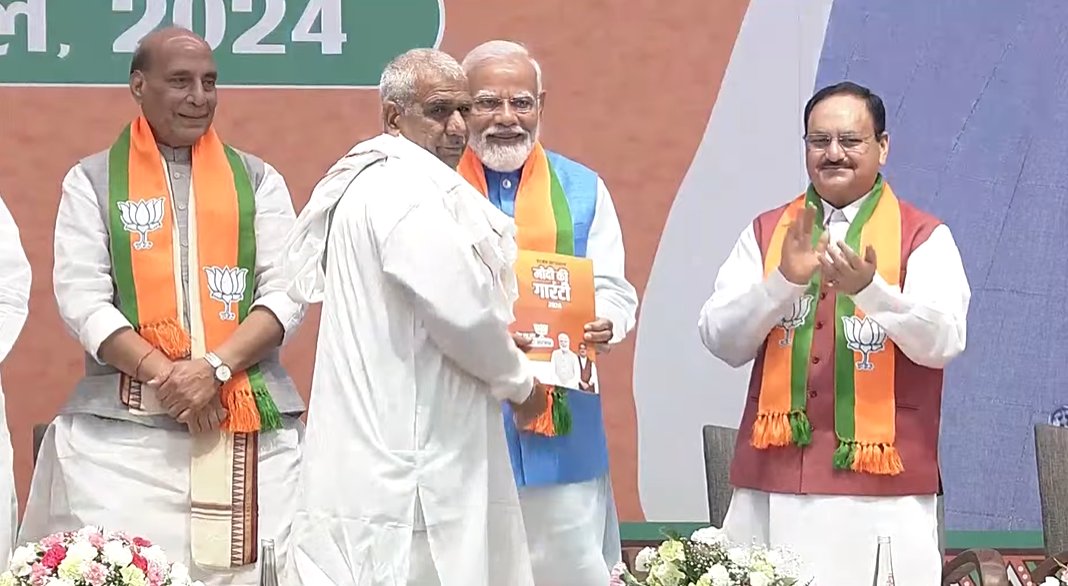
    The Bharatiya Janata Party’s (BJP’s) manifesto titled “Modi ki Guarantee 2024” promises much. It implies a guarantee that soon all will be well because of Narendra Modi. It reflects a) the state of affairs in the BJP and b) its reading of people’s mood.

    It implies that people have more faith in Modi than in the party. Does this reflect the failure of the party? Like in a presidential form of election, vote is sought in the name of a leader, Modi.

    The contrast with the Congress manifesto, titled, `Nyay Patra’, promising justice to all, is stark. The BJP manifesto too promises justice. But, one depends on faith in an individual’s guarantee while the other seeks to deliver through strengthening society’s institutional setting. The instrumentality proposed by the two political parties is diametrically opposite.


    Read More

  • GDP data for Q3 2023–24: The mystery of a robust growth

    GDP data for Q3 2023–24: The mystery of a robust growth

    Recently released GDP figures have sprung a surprise, baffled experts and overturned the government’s own data and projections. What could be the reason

    GROSS Domestic Product (GDP) figures have sprung a surprise— showing a growth of 8.4 percent in Quarter 3 of 2023–24, on top of the previous two quarter’s growth of 8.2 percent and 8.1 percent.

    The annual growth for 2023–24 is projected at 7.6 percent. But given the growth rates in the first three quarters, it is likely to be above 8 percent, unless the economy decelerates sharply in Q4, of which there is little sign.

    The surprise

    Experts are embarrassed that how could they be so far off. In December 2023, the Reserve Bank of India (RBI) had upped its projected growth rate from 6.5 percent to 7 percent.

    Various foreign credit rating agencies had revised the expected growth rate to only around 6.5 percent. The International Monetary Fund (IMF) expected a 6.3 percent rate of growth.


    Read more…


    Read more…

  • Electoral bonds: No solution to illegal political funding

    Electoral bonds: No solution to illegal political funding

    How do donations via electoral bonds funded by legal or illegal money help curb undue influence on policy makers? Electoral bonds provide an additional of such funds

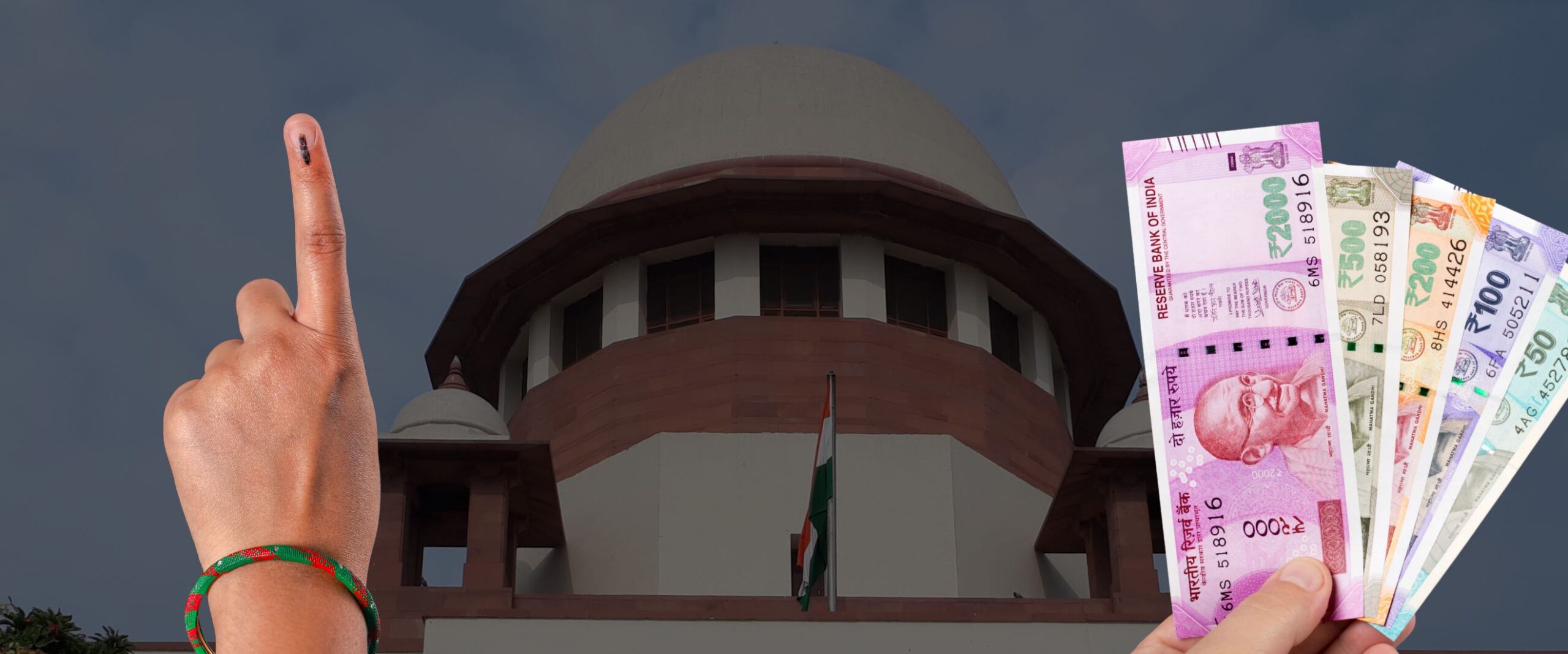
    THE Union Government initiated the Electoral Bonds scheme, which was announced in the Union Budget 2017–18, on January 2, 2018. The aim was “to cleanse the system of political funding in the country”. While many other issues are also germane, the moot question is will this goal be achieved.

    These are bearer bonds that private entities can buy from a designated bank (presently the State Bank of India) and donate them to a political party. They are supposedly an anonymous way of donating funds to political parties, since the identity of the donor is not disclosed. The bonds become available around the time of elections, presumably to provide ‘legitimate’ funds to political parties.

    Data shows that most of the funds go to the ruling party and help them consolidate their hold over power.


    Read more…

  • How viable is Gandhi’s village today?

    How viable is Gandhi’s village today?

    In a deeply troubled world, M.K. Gandhi’s vision for the village may offer a viable alternative, but is it too idealistic a solution?

    THE world is in flux. Climate change-induced extreme weather events such as cyclones, forest fires, droughts, and unseasonal heavy rains have increased in number and intensity. Old wars are becoming chronic and new ones are breaking out at a worrying pace. Inequality is becoming even more extreme, which is clearly visible.

    The world is looking for an alternative. Could Gandhian thought provide a way out?

    In this context, the Gramshilpi programme of Gujarat Vidyapith, based on Gandhian thought, is worth studying to understand whether a non-violent development path based on a bottom-up approach can provide a viable alternative.

    The author Neelam Gupta, a journalist by trade, was commissioned by Gujarat Vidyapith to study the programme and write about it. The book under review is the result of that effort.

    Gandhi, in Hind Swaraj, calling Western Civilisation “evil”, said that Indian civilisation could provide an alternative. He suggested that the alienating Western education system had to be replaced by ‘nai talim’ (new education).

    He set up Gujarat Vidyapith in Ahmedabad in 1920 to teach an alternative curriculum in tune with his conception of education. He believed that this could lead to more meaningful higher education in India. If it succeeded, it could be replicated and change India’s education system.

    The Gramshilpi programme of Gujarat Vidyapith based on Gandhian thought is worth studying to understand whether a non-violent development path based on a bottom up approach can provide a viable alternative.

    Did he succeed?

    In a world that is increasingly following the principles of marketisation that run contrary to Gandhian principles, the experiment has faced huge difficulties.

    Between 1920 and 1965–70, around 100 youth who graduated from the Vidyapith went to remote and backward areas and lit the flame of new thinking. After 1965–70, even though the number of graduates increased, fewer and fewer of them went to the villages and, finally, the flow stopped.

    The Vidyapith becoming a University Grants Commission (UGC) institution in the 1960s changed the composition of teachers as they had to be selected as per the UGC norms and often were not in tune with Gandhian ideas.

    The emergence of foreign-funded non-governmental organisations (NGOs) engaging in projects-based work changed the attitude of the students. They did not want to stay in the villages to bring about change through collective endeavours. Students from the villages who came to the cities did not want to go back. Even their parents did not want them to return to the villages.

    Start of the programme

    The triumvirate of Arun Dave, Sudershan Ayengar and Rajendra Khimani was in place in Vidyapith in 2005. They felt that an attempt should be made to change the thinking of the youth via appropriate training.

    The result was the start of the Gramshilpi Yojana in 2007. The Centre for Environment Education was also roped into the scheme since it had been working in the rural areas. The programme design evolved over the next five years to take its final shape.

    The scheme had three important components. First, the gramshilpi (literally village sculptor, as in, shaper of the village) would stay in a village of his choice for the rest of his life. Second, their expenses of stay would be borne by the village. Third, Gujarat Vidyapith would always stand by the gramshilpi. The goal of the scheme was to transform the village as per Gandhi’s vision of Gram Swaraj.

    Author’s experience

    The author has produced the book based on an extensive survey of the work of the Vidyapith and visits to the villages of the gramshilpis. The project started in 2018. She wanted to understand the motivation of these people who were foregoing a comfortable city life for one of struggle in a village.

    She faced difficulties in assessing the impact of the work of gramshilpis since there was no primary or secondary data. The gramshilpis did not remember the details of the work done earlier and language was a barrier in talking with the villagers to get their perspective.

    The Vidyapith assigned Praveen Dulera to travel with the author and help her. This, to an extent, helped overcome the language barrier. However, the villagers were often reluctant to talk or could not explain what they had in their minds.

    Gandhi, in Hind Swaraj, calling Western Civilisation “evil”, said that Indian civilisation could provide an alternative. He suggested that the alienating Western education system had to be replaced by ‘nai talim’ (new education).

    Three to four days were spent in the village of each gramshilpi. The author felt this was inadequate to interview the gramshilpi, and meet the villagers and the officials to get their feedback and perspective.

    Achievements of the programme

    Some of the achievements of the programme listed by the author are:

    a) Decrease in the dropout rate of children

    b) Higher retention by children

    c) Change in the way teachers teach

    d) Parents understanding the importance of education, especially for girls

    e) Positive impact on the life of abandoned children

    f) Reduction in poverty as a result of mixed cropping

    g) Reduction in indebtedness and suicide among farmers

    h) Improvement in the status of farmers as their income increased.

    This is an impressive list of impacts on the life of the villages where gramshilpis were working.

    The gramshilpis and their work

    Between 2007 and 2015, 52 people came to join the Gramshilpi programme, 37 took instructions, but only 10 became gramshilpis. Most left within two to three years, and a few were found to be unsuitable and asked to withdraw. Those who left did so since economic security was not assured and life would be one of struggle.

    Most of the pages of the book describe the experiences of the gramshilpis. It emerged that there was no one model of development that the gramshilpis followed since the situation faced by each of them varied from village to village. So, the programme for each had to be tailor-made to the prevailing village conditions.

    The work of nine of the gramshilpis is described in detail. Their personal challenges, the village situation and the challenges, and how they were met are well described.

    So, who are these courageous and determined people?

    Jaldeep Thakur and Dashrath Vaghela are based in North Gujarat in areas close to the Rajasthan desert. These are poor and backward areas. Ashok Chaudhury, Ghanshyam Rana, Jettsi Rathor, Gautam Chaudhury, Neelam Patel and Mohan Mahala are based in South Gujarat, which has plenty of rain and is hilly. This is also the area from where Gandhi emerged. Radha Krishna is based in Agra district of Uttar Pradesh.

    Assessment of the programme

    The author says that though the programme is only 13 years old, the period is long enough to assess it. The most important issue was, how much has the programme enhanced peoples’ awareness? Especially since the idea underlying the programme was to do social work via social involvement.

    She finds that the inspiration to join the programme came from Gandhi’s thought which the gramshilpis became aware of in the Vidyapeeth. The training turned the idea into a resolve to go to the villages. Broadly speaking, the gramshilpis worked on two fronts— social and economic.

    The emergence of foreign funded non-governmental organisations (NGOs) engaging in projects-based work changed the attitude of the students. They did not want to stay in the villages to bring about change through collective endeavours. 

    The education of children was a major component of social activity. Not only did this impact the children, but even the attitude of the parents changed. The educational programme was based on Gandhi’s nai talim.

    But the author rues that the education did not prepare the children to work in the forest and in agriculture and, through that make a living.

    Health and cleanliness was another important social issue. However, the author says that consciousness about keeping the entire village clean could not be created. On the health front also, there was a limited success, with women continuing to suffer and superstition (andhvishwas) persisting. Limited success was achieved in improving nutrition and reducing addiction to drinking and smoking.

    The work on the economic front helped improve family incomes and the way work was traditionally done. For instance, farming changed to mixed cropping. Consequently, indebtedness decreased.

    Adulteration of mustard oil decreased when one Radhakrishan set up a mill at home and sold the oil at a lower profit margin. Other suppliers changed their approach. A person named Jaldeep set up a women’s milk cooperative, which gave women self-confidence, and this changed the attitude of the entire village. Violence towards women declined, and in Gandhi’s words, ‘the mute got a voice’.

    Other economic activities included making pickles, producing organic manure, preparing youth for facing interviews for jobs, forming youth self-help groups for farming and creating minor irrigation facilities.

    However, the author points out that while the farmers came together, they did not get organised. Further, due to rising expectations, marketisation, taking of loans and changes in food habits increased.

    Conservation of water could not be made a part of good practices. Rather than making people independent, many became dependent on the gramshilpis for help. Though in some villages, the situation of women improved in totality, they remained at the margins.

    The author asks, “Gramshilpis have done great work, but why are there deficiencies?”

    She identifies several causes. Setting up trusts by gramshilpis for their work made the villagers dependent on outside donations.

    Next, she identifies several shortcomings in the training imparted to gramshilpis. First, they needed more hands-on experience in village life. Second, gramshilpis were not trained in self-assessment. They did not keep a diary of their work which could help them assess their progress and failures. Thus, they did not prepare an annual report. They did not often remember what they had done earlier. Third, they were not trained to become economically self-sufficient in the village. Finally, they did not develop a holistic perspective of village life.

    Conservation of water could not be made a part of good practices. Rather than making people independent, many became dependent on the gramshilpis for help. Though in some villages the situation of women improved in totality they remained at the margins.

    The author also points to the positives of the programme. First, the autonomy that the gramshilpis had in pursuing their goals. This helped in commitment, creativity, self-correction and leadership.

    Second, the flexibility of the programme. Gujarat Vidyapith kept changing its view as difficulties arose. For instance, initially, it had decided to support the gramshilpis for two years only, but later as difficulties arose, this period was extended.

    Third, guidance from Vidyapith was always available in case of difficulties. Three meetings of all gramshilpis are held annually to collectively exchange ideas and assess the difficulties.

    The author says that at the end of the process, she could appreciate the importance of Gandhi’s work. She also understood that with commitment and principles, even in today’s materialistic world, educated youth can work in the villages with the idea of service.

    Further, if the basis of development is swavalamban and atmanirbharta, solutions to the country’s and world’s problems can be found.

    The author says that at the end of the process, she could appreciate the importance of Gandhi’s work. She also understood that with commitment and principles even in today’s materialistic world, educated youth can work in the villages with the idea of service.

    The author offers constructive suggestions to improve the programme. These relate to improvements in training, arrangements for stay in the village, how to organise and create cooperatives, creation of leadership among women and how to improve marketing skills.

    There are also suggestions regarding education, health, nutrition, protection of the environment and an increase in local production.

    The book is about the difficulties in the present-day world in fulfilling Gandhi’s idea of creating swaraj due to the dominant process of marketisation. So, it is a must-read for all those interested in alternatives to the present systems.


    This Review was published earlier in theleaflet.in 

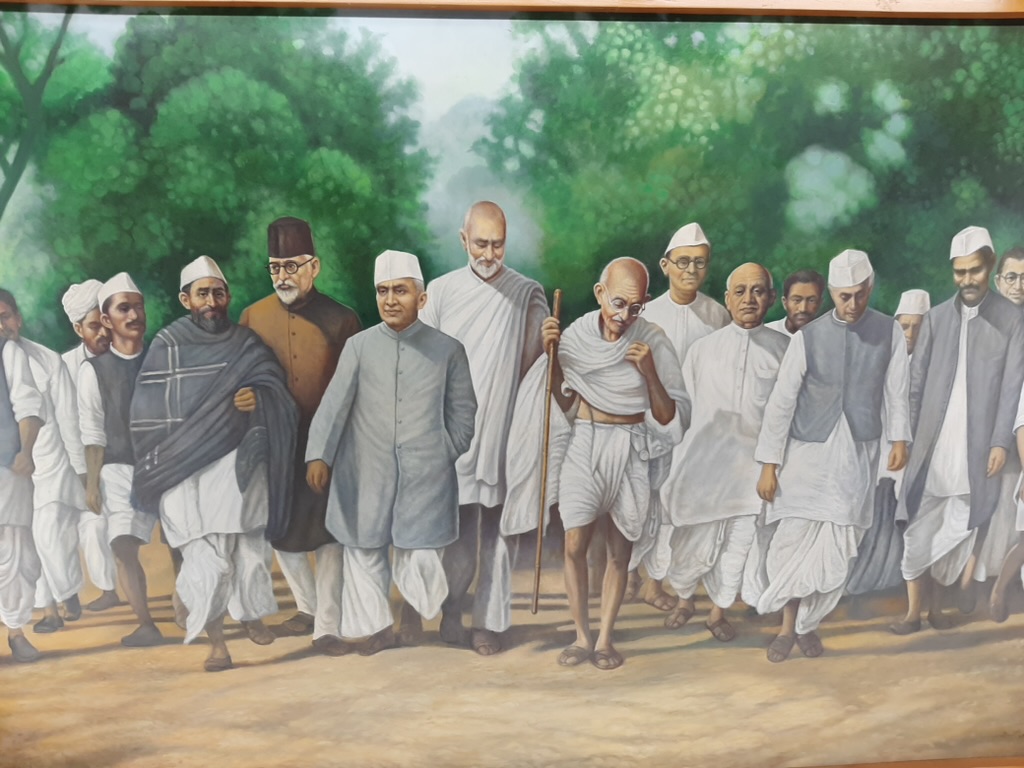
    Feature Image Photo: from Sabarmati Ashram Museum

  • Technological Challenges to Becoming a Developed Country by 2047

    Technological Challenges to Becoming a Developed Country by 2047

    For a developed India, bulkier investment and technological changes are required to keep up in the race with other developed nations. In doing so, the country should not be afraid of failure. After all, Chandrayaan 3 was made possible by the lessons from the failure of Chandrayaan 2.

    THE Prime Minister has set the goal of India becoming a developed country by 2047.

    On the way, India’s Gross Domestic Product (GDP) is soon going to surpass that of Germany and Japan, if the current official rates of growth are maintained.

    In today’s world, projecting five years or 24 years ahead is fraught with challenges. Who could have foreseen the Covid pandemic in 2020 and the war in Ukraine in 2022?

    Successful landing of Chandrayaan 3 near the South Pole of the Moon is undoubtedly a great achievement for the nation. But that does not make India a developed nation.

    Major challenges confront the nation, such as providing good education and healthcare. This can only be achieved if the number of schools and health facilities in rural and semi-rural areas is increased substantially.

    [powerkit_button size=”lg” style=”info” block=”true” url=”https://theleaflet.in/technological-challenges-to-becoming-a-developed-country-by-2047/” target=”_blank” nofollow=”false”]
    Read More
    [/powerkit_button]

  • G20’s New Delhi Declaration: Serving the Interest of the Global Landlords

    G20’s New Delhi Declaration: Serving the Interest of the Global Landlords

    The Delhi declaration’s achievement is preservation of the interest of the global elite (including the Indian elite). The global landlords enabled it while paying lip service to global good.

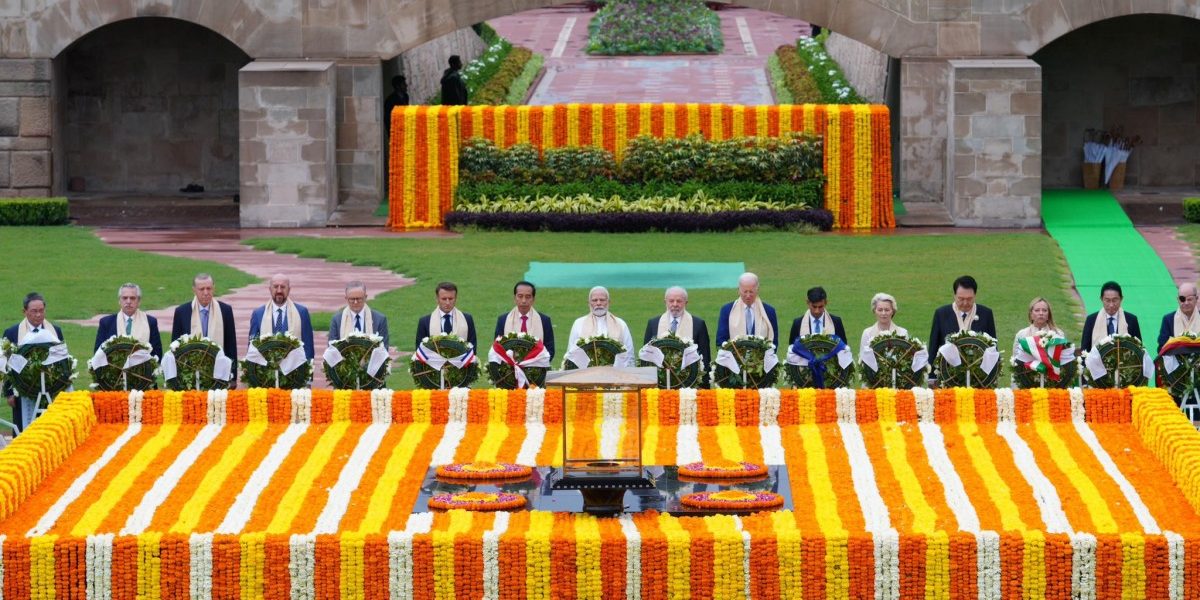
    The G20 summit in India ended on a high note with a New Delhi Declaration. This is a matter of immense satisfaction for the prime minister personally and for his entire team which had to struggle to arrive at a consensus among the warring elements of the grouping. It highlights India’s present pole position in the global order. Other nations are trying to draw it into their sphere of influence, or at least trying to prevent it from getting closer to the other side.

    India’s advantage is a result of the continuing Ukraine war and the aggravating Cold War between the G7 and China-Russia combine. It has required deft manoeuvring, more so because of India’s political problems with China which resulted in its president giving the meeting a miss. This caused considerable consternation, given China’s economic and political clout.

    [powerkit_button size=”lg” style=”info” block=”true” url=”https://thewire.in/world/g20s-new-delhi-declaration-serving-the-interest-of-the-global-landlords” target=”_blank” nofollow=”false”]
    Read More
    [/powerkit_button]

  • Social and Economic Aspects of Caste Survey in Bihar

    Social and Economic Aspects of Caste Survey in Bihar

    The need for caste census today is because after independence we adopted the top-down development model. It was thought that the development benefits would flow from the upper strata to the lower ones. But this hope has been belied with the well-off capturing most of the benefits, leaving little for the marginalized sections who are lagging behind in development.
    ————-

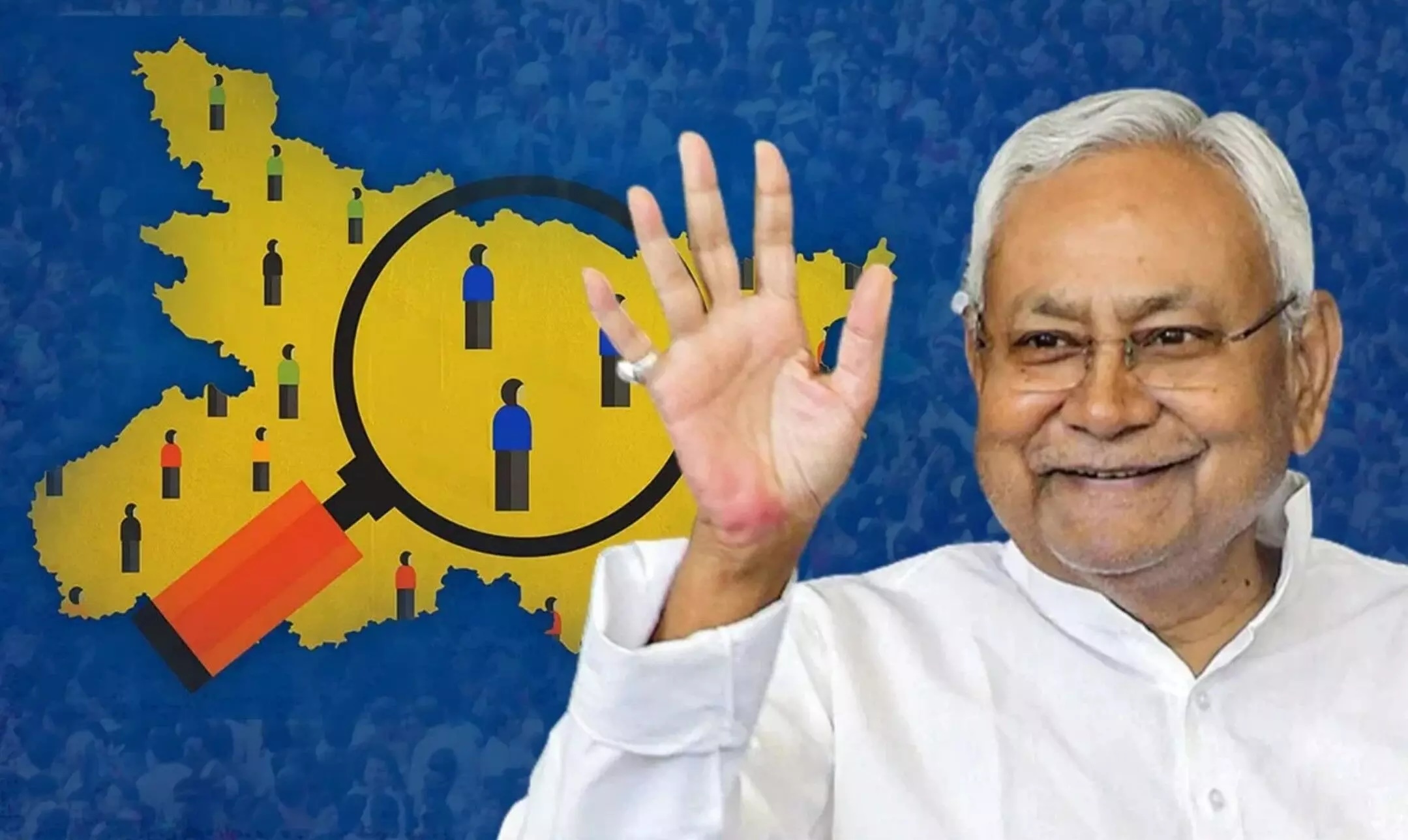
    The release of the figures of the caste survey in Bihar has immediately led to the heating up of politics in the entire country. There is a demand for conducting a caste survey in many states, including Uttar Pradesh, Madhya Pradesh, Rajasthan and Maharashtra. In Karnataka, the demand is to make public the data of the caste survey conducted in 2015.

    Poverty and Population Increase

    According to the Bihar survey report, the largest population in the state belongs to the extremely backward class (EBC), constituting about 36 per cent of the total population. While the Report clarifies the situation in Bihar, it does not tell us the situation in the entire country. That would require a national survey. Therefore, now the pressure will increase on the Central Government to conduct and make public the data at the national level. That is the only way the caste composition of the total population can be known. This is required to make policies which can enable equitable shares in employment and education for different sections of the population.

    The increase in the proportion of extremely backward classes in the total population of Bihar should have been expected because of the prevailing poverty among them. Those who are poor have more children due to several reasons, like lack of education and awareness. Most importantly, for their social security in old age. The poor do not have savings; hence children constitute their old-age social security. They have more children to ensure at least one child survives till their old age. Also, more children mean more earning hands in the family. As people become more prosperous, people produce fewer children. The economic condition of the middle class and the well-off are relatively better, so they have fewer children, and their population grows less.

    The question arises: what is the likely consequence? Upper caste people are worried that since extremely backward castes constitute a higher proportion of the population, their demand for reservation will increase.

    Growing Unemployment a Crucial Factor

    I believe that if we had given more importance in employment and education to the extremely backward castes from the beginning, today’s situation would not have arisen. Reservation makes no difference if jobs are available in sufficient numbers. Reservation becomes critical when employment generation is weak. When there is a lack of adequate employment, a dispute arises over reservations as to who will get how much employment. At present, due to large unemployment among the educated youth and few available government jobs, the demand for reservations has increased.

    The problem has been growing because, after independence, we have adopted the top-down and trickle-down policy. The result has been that the upper sections of society have cornered most of the benefits while the marginalized sections have received very little benefits. Disparities have grown, and so have expectations, thereby raising the level of conflict in society. The use of more advanced technology in every sector has displaced labour and contributed to increasing unemployment. The Agriculture sector, which has the most employment (46%) in our country, has seen increased use of tractors, harvester combines, threshers, potato digging machines, etc., thereby reducing the need for employment and displacing workers. This is also true of manufacturing and services, like banking.

    Impact of Government Policies

    The government is also fueling this change by promoting the growth of the capital-intensive organized sector at the expense of the unorganized sector (which employs 94% of the workers). For example, the government reduced the tax rates on the corporate sector and rolled out the PLA scheme while cutting allocations to the National Rural Employment Guarantee Scheme. Allocations to education and health sectors have also been kept low and cut, even though both these sectors generate more employment. Due to these policies, most of the investments are being made in big projects, like railway freight corridors, where human labour is being replaced by big machines.

    The result is rising inequality, frustration, alienation and sharpening social conflict. Therefore, the parties pursuing social justice politics for the lower classes and the people themselves have been demanding greater reservation for the backward castes according to their proportion in the population. With Bihar’s caste survey becoming public, the demand for conducting such surveys in other states and nationally will become more vociferous. The demand will also arise that the maximum limit of reservation, which is fixed at 50 per cent by the Supreme Court, should be increased. But reservations will be only for a few million jobs while the need is for work for tens of millions. So, the real issue is the generation of enough employment and good education for the children of the poor.

    Political Implications

    Opponents of caste surveys argue that castes with a lower proportion in the population will start competing to increase their population by bypassing family planning policies. But I don’t accept this. Around the world, as family prosperity increases and education levels rise, people have fewer children. The well-off families with less share in the population are already sending their children abroad for education and employment, which may accelerate.

    Bihar’s caste survey data is bound to impact national politics. All political parties would like to use it in their own way, and Mandal-Kamandal politics will intensify in the country. But, the situation for BJP has changed compared to the 1990s since in the last few elections, it has wooed the votes of backward castes. The issue of reservation and demand for an increase in the maximum prescribed reservation limit will intensify. The ruling party will be reluctant, but in view of the electoral arithmetic, it will also not oppose it vociferously. It will hope that the Supreme Court will not agree to increase the limit. Further, it will try to divert the public attention towards issues like Sanatan dharma, terrorism and threats from China-Pakistan.
    The lesson is that when socially correct policies are not implemented in a timely manner, social strife and alienation spread, and the nation is forced to implement sub-optimal policies.

    This is a translation of the article in Hindi published earlier in Amar Ujala.

  • Development Gone ‘Rogue’ and the High Flood in Delhi

    Development Gone ‘Rogue’ and the High Flood in Delhi

    Development has come to be equated only with growing production and higher GDP growth. This is sought to be achieved via hugely expensive and environmentally damaging urbanisation, the effect of which Delhi is reeling from.

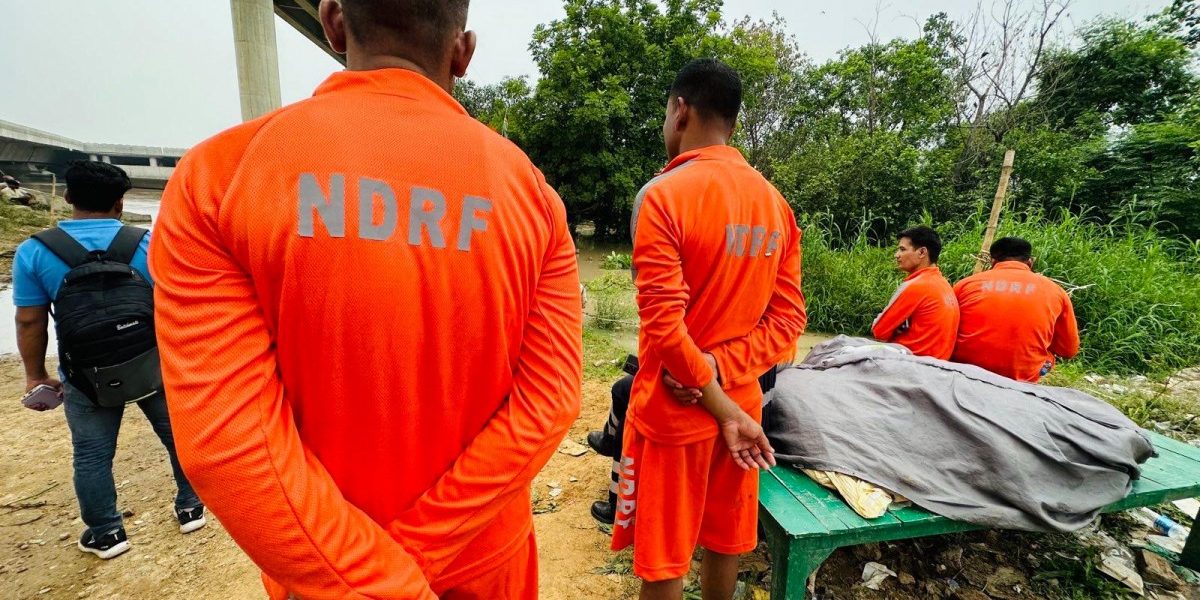
    Over the past few weeks, many parts of North India have faced severe flooding, landslides and deaths. The unprecedented floods in Delhi have brought this crisis to national and international attention. The water level in the river Yamuna reached a record high of 208.66 metres, much above the last great flood in Delhi in 1978 – when it had reached 207.49 metres. Yamuna, before it changed its course, used to flow by the ramparts of the Red Fort and once again has arrived there. It has led to the flooding of several projects of ‘development’ – water treatment plants, the arterial ring road, rich and poor residential areas, drainage, etc.

    [powerkit_button size=”lg” style=”info” block=”true” url=”https://thewire.in/environment/development-rogue-flood-delhi” target=”_blank” nofollow=”false”]
    Read More
    [/powerkit_button]