Author: Professor Andrei Korobkov, PhD

  • Russia: The Migration Dimension of the War in Ukraine

    Russia: The Migration Dimension of the War in Ukraine

    Abstract

    The Russian invasion of Ukraine on February 24, 2022 has drastically changed both the internal situation in the Russian Federation (RF) and the country’s relationship with the international community. The impact of these developments is multidimensional and has a significant human dimension, including the formation of new migration flows marked by high shares of young people, males, and members of various elite groups. The elite migrant flow generally includes four major categories of migrants: academic personnel, highly skilled workers (including representatives of professional, business, creative, and athletic elites), students, and so-called investment migrants.

    Economic Impact

    Shrinking economic output1 and the withdrawal of numerous transnational companies from the RF have threatened the jobs and livelihoods of a large segment of the Russian population, hurting first and foremost its elite segments. Indeed, the introduction of new sanctions cut the long-term international ties established in the economic, political, academic, artistic, and athletic spheres, to name just a few, impacting the lives of millions of people, chief among them the representatives of various professional, business, academic, cultural, and athletic elites.

    This negative impact has been aggravated by both the transborder transfers of transnational corporations’ offices and the flight of numerous Russian businesses, as well as individual enterpreneurs, to locations outside the RF. These movements, mostly economically and professionally motivated, have been supplemented by the emigration of people opposing the war as a matter of principle.

    Second Wave Exceeds First

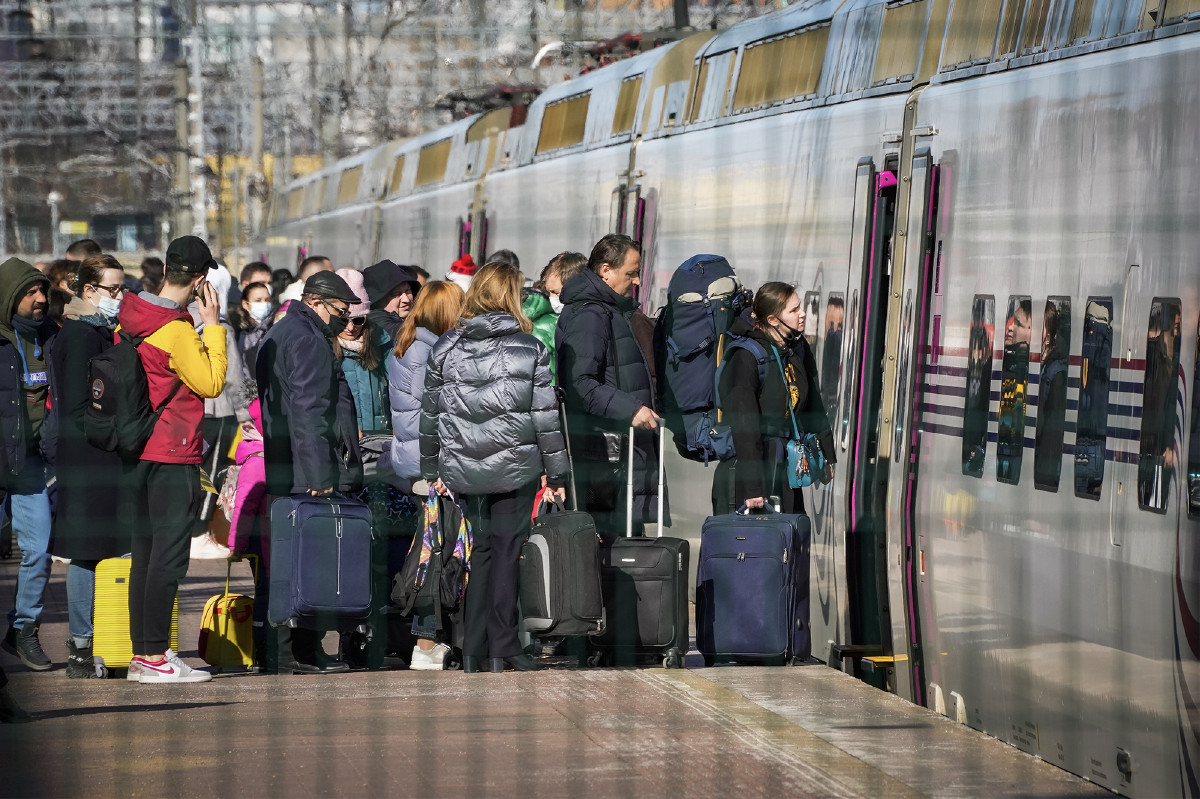
    The second wave of emigration, significantly larger than the first, formed as a direct consequence of the declaration by Russian President Vladimir Putin on September 21 of a 300,000-strong “partial” mobilization and the subsequent announcement by RF Defense Minister Sergei Shoigu that up to 25 million Russian citizens might be eligible for mobilization orders—an announcement that de facto involved in the war the majority of the RF’s population (between the potential reservists and their family members). These developments and the subsequent mishandling of the mobilization process, marked by disorganization and numerous widely reported instances of corruption and abuse, acted as additional push factors of migration, which took on an increasingly politicized character.

    Thus, the migration flow in 2022 has essentially consisted of two—separate and consecutive—subflows. These are far from the only large-scale population movements in post-Soviet Russian history: they follow the “brain drain” of the 1990s and the smaller in scale but consistent population movements of the first two decades of the current century. Yet there are huge differences between the current developments and previous trends.

    Historical Perspective

    Russia saw its position in the global migration chain change drastically after the dissolution of the USSR in 1991. In its aftermath, the RF quickly became an active participant in the globalization process, following the general trend among those states that were previously the centers of multinational empires: the United Kingdom, France, Spain, Portugal, the Netherlands, Belgium, and especially the territorially contiguous empires (Germany, Austria, and Turkey) have received, since their empires’ collapse, considerable migrant flows of two major types. The first wave was the permanent—and mostly politically motivated—return migration of the representatives of the former “imperial” nation to their ethnic homelands (the Britons, French, Spaniards, Turks, etc.). They were soon followed by migrants from developing countries—primarily the former colonies of the metropole. These were people who spoke its language, knew its culture, and could rely on the support there of their long-established ethnic diasporas.

    As a result, Russia—previously one of the most isolated countries in the world—quickly became, after 1991, the center of a vast Eurasian migration system that was one of the four largest in the world (alongside those in North America; Western Europe; and the Middle East, centered on the Persian Gulf). By 2010, more than 12 million RF residents (about 8.5% of its population) had been born outside the country. In 2015, Russia ranked third in the world—after India and Mexico—in terms of its number of emigrants: 10.5 million.2 While most of these migrants moved within the post-Soviet space, in 1991–2005 alone, more than 1.3 million Russian citizens obtained permits for permanent emigration to the West.3 Overall, the number of those who were born in Russia but currently live in countries outside the former USSR is estimated at approximately 3,000,000.4

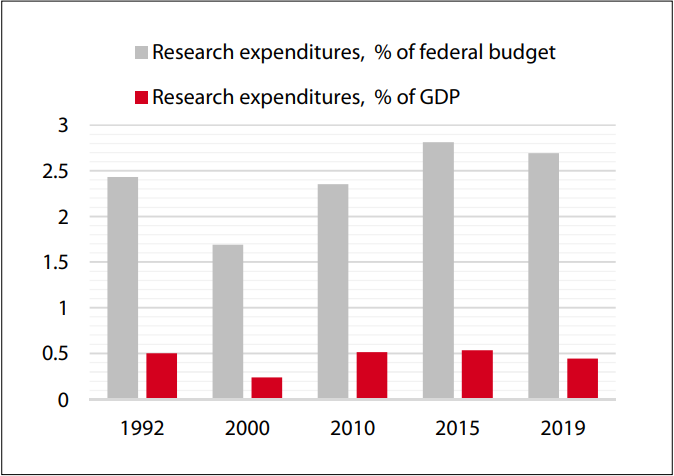
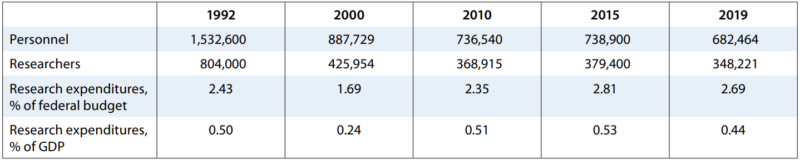
    This flow was generated by both the “pull” and “push” factors of migration. In the case of emigration outside the post-Soviet region, an important role was played by the liberalization of the migration regime and the emergence of opportunities to work and study abroad; higher living standards; prospects for professional growth; and the genearally welcoming atmosphere for Russian scholars, students, and professionals at that time. “Push” factors included the economic and political instability in Russia, specifically the rapid degradation of Russian state-run industry and of the academic sphere. Research expenditure as a share of Russian GDP was 0.50% in 1992 and 0.24% in 2000 (representing 2.43% and 1.69% of the federal budget, respectively). During this period (1992–2000), the number of those employed by the academic institutions fell from 1,532,000 to 887,729 (a 42% drop), while the number of researchers declined from 804,000 to 425,954 (a 47% drop).5

    With the economic and political stabilization of the early Putin years, budgetary expenditures increased, peaking in 2015 at 2.81% of the federal budget (0.53% of GDP).

    These processes led to the formation of significant elite Russian diasporas in the major receiving countries. Already by 2010–11, more than 660,000 university educated Russians were living abroad, putting the RF into the category of states with large elite diasporas (300,000 to 1,000,000 migrants with a university degree)—along with such countries as Mexico, South Korea, Vietnam, Iran, Taiwan, Morocco, and Colombia.6 Of particular importance was the massive emigration of Russian scholars and educators: I previously estimated the size of this elite diaspora at about 300,000–350,000 in 2012, including, as of 2015, approximately 56,000 students studying abroad. The academic flow was heavily dominated by basic and technical sciences experts, while specialists in social sciences and the humanities accounted for just 6.1% of the total in 2002–03.7 The flow was also skewed geographically toward the two highly developed Global North regions of North America and Western Europe, which respectively accounted for 30.4% and 42.4% of the intellectual migration flow. The largest receiving countries were the United States (28.7%) and Germany (19%); these two states also held first and second place, respectively, among receiving countries in practically all academic subfields.8

    With the economic and political stabilization of the early Putin years, budgetary expenditures increased, peaking in 2015 at 2.81% of the federal budget (0.53% of GDP). This served to slow down the academic personnel decline and the elite outflow: between 2000 and 2019, the number of those employed in the academic sphere declined from 887,729 to 682,464 (or by 23.1%), while the number of researchers fell from 425,954 to 348,221 (or by 18.2%9 —see Figures 1a and 1b below and Table 1 on p. 11). While the number of Russian students studying abroad remained relatively stable at 50,000–60,000, the RF during that period rebuilt its position as one of the leading hubs for international students—ranking sixth in the world behind the US, the UK, Australia, France, and Germany.10 Their numbers grew steadily, from 153,800 in 2010/2011 to 298,000 in the 2019/2020 academic year.11

    Figure 1a: Russian R&D Dynamics, 1992–2019: Personnel (mln.)
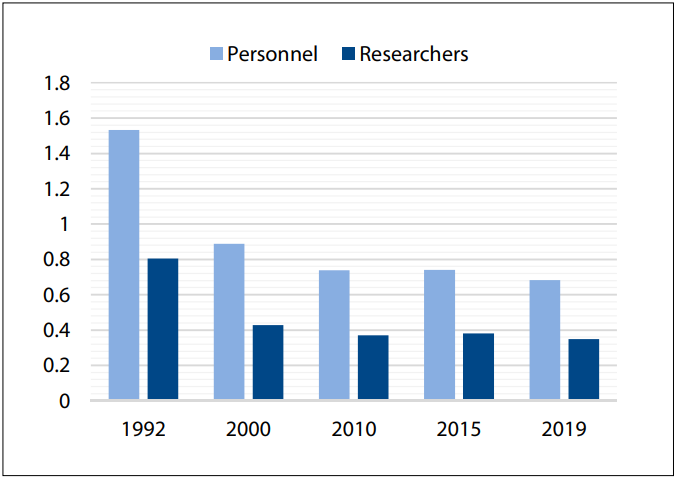
    Figure 1b: Russian R&D Dynamics, 1992–2019: Expenditures
    Source: Federal’naia sluzhba gosudarstvennoi statistiki, “Rossiia v Tsifrakh—2020,” 2021, https://gks.ru/bgd/regl/b20_11/Main.htm; Federal’naia sluzhba gosudarstvennoi statistiki, Rossiiskii Statisticheskii ezhegodnik 2009 (Moscow, 2009), 543, 553; Federal’naia sluzhba gosudarstvennoi statistiki, Rossiiskii Statisticheskii ezhegodnik 2020 (Moscow, 2020), 495–6, https://rosstat.gov.ru/storage/mediabank/Ejegodnik_2020.pdf; Gosudarstvennyi komitet Rossiiskoi Federatsii po statistike, Rossiiskii Statisticheskii ezhegodnik 2003 (Moscow, 2003), 531.

    Russia, while losing its elite migrants to the more developed countries of the Global North, was at least partially substituting for their loss with immigration from less developed states, primarily those in the post-Soviet space.

    Overall, it could be concluded that Russia transformed in the early 2000s from the country in deep economic and social crisis—and source of massive elite outflows— that it had been in the 1990s into a state with a moderate level of development that played multiple roles in the world migration chain: both sending and receiving migrants as well as acting as a migrant transit country. Russia, while losing its elite migrants to the more developed countries of the Global North, was at least partially substituting for their loss with immigration from less developed states, primarily those in the post-Soviet space. The impact of the “pull” factors of migration increased, while that of the “push” factors decreased, at least in relative terms.

    After the Invasion

    This multiplicity of roles was for the most part retained by the RF after the first invasion of Ukraine in 2014 (even under the conditions of the expanding sanctions
    regime) and during the general decline of migration activity worldwide as a result of COVID-19 restrictions. Yet the events of 2022 have drastically changed the migration environment, returning it to a crisis level, with the “push” factors of migration (such as the deteriorating political situation, sharp disagreements with governmental policies among certain segments of society, the unwillingness of many to serve in the RF military, the fear of losing jobs and sources of income, etc.) coming to the forefront.

    When it comes to the contrast between current migration flows and previous post-Soviet flows, the following points should be noted:

    • The 2022 migration waves are defined primarily by “push” factors, which have frequently forced people to leave even in the absence of adequate preparation
      (previous experience of work or study abroad, personal or professional networks) or clear prospects in destination countries.
    • Migration in 2022 is frequently directed toward smaller and economically weaker countries than in the 1990s, including those in Eastern Europe, the post-Soviet space (Central Asia, the Caucasus), and the Persian Gulf, as well as Turkey and Mongolia. This may lead to the reversal of the trends that have dominated (especially elite) migration patterns in Central Eurasia for the last three decades. This reversal, which has important symbolic value, may create significant long-term labor-market and demographic problems for the RF.
    • In contrast to previous migration waves, the current ones are marked by their hectic, spontaneous character and the heavy presence in the flow of young people working in the IT and business sectors, who are relatively flexible and could either seek jobs or create private-sector businesses. At the same time, there is also a significant share of people, especially within the academic bloc, who hold Humanities and Social Sciences degrees and have very limited prospects of finding jobs that correspond to their qualifications. Thus, even under the current crisis conditions, substantial return migration can be expected.
    • In 2022, movement is further complicated by the heritage of the COVID-19 pandemic and the new limitations resulting from the 2022 sanctions— these are related to the blocking of RF-issued credit cards, the break-up of direct transportation links with most European countries, complications with getting visas, and frequently prohibitive airfare rates. An additional complication is presented by the recent proposals, in a number of Western countries, to arrest RF citizens or confiscate their property.
    • A particular feature of the 2022 flows has been their “explosive,” emergency character, marked by very high intensity in the initial weeks and a relatively
      quick decline thereafter.

    There also exist visible differences between the flow that followed the developments of February 2022 and the flow that followed the events of September 2022. In particular,

    • A noticeable discrepancy exists in terms of their scale and gender structure. The first flow was on the order of 100,000–150,000 people and was relatively balanced in gender terms, frequently including whole families with children. The second, which followed Putin’s mobilization announcement, has been heavily dominated by young males. This in itself poses significant problems for Russia’s demographic and economic future.
    • The first flow was directed, first and foremost, toward all the countries neighboring Russia. The current one, meanwhile, is taking place under the conditions of
      changing public attitudes and governmental policies toward RF citizens, even those who oppose Putin’s actions. This dynamic could lead to general change in the direction of migration flows.
    • The flow of the first half of 2022 was marked by heavy presence of foreign citizens and people with dual citizenship or other legal status, who moved to the countries where they held such status. The participants in the current flow, who are primarily RF citizens, face additional legal problems in receiving countries by comparison.
    • The original flow included large numbers of people who worked in the RF offices of transnational companies that relocated, along with their personnel, to other countries. These people had some social guarantees, had experience of work for a TNC, and could rely on their companies’ support. People emigrating in the newest waves lack these opportunities.
    • The large-scale arrival of migrants in countries with relatively weak infrastructure and limited economic capacity (the states of the Baltic, the Transcaucasus, and Central Asia) has put significant pressure on these states’ economies and labor markets. Successive waves of migrants will therefore increasingly  encounter competition, economic hardship, and negative public attitudes.

    While there exist huge discrepancies in the estimates of migration flows made by various entities—both governmental agencies and non-governmental organization —in Russia as well as the receiving states, it is clear that the most recent flow has been much larger than the one in the first half of 2022. The most frequently cited figure is on the order of 700,000 people.12 How-ever, a major problem is that most estimates rely on the statistical data of the national border guard services, which report the number of border crossings in a particular period of time without accounting for repeat crossings, return migration, movement to the third countries, “shuttle” activities, irregular migration, etc.13 Because of these limitations, it is likely that the overall number of migrants in the “second wave” is currently in the range of 350,000–450,000. Thus, the overall number of migrants who have left the RF in the two urgent and chaotic waves of 2022 can be estimated at about 500,000. Even this figure represents a substantial potential loss for a country—particularly one like Russia that was already experiencing population decline.14 It is a special concern considering the skewed gender, age, and qualification structure of those currently leaving the RF.

    Table 1: Russian R&D Dynamics, 1992–2019
    Source: Federal’naia sluzhba gosudarstvennoi statistiki, “Rossiia v Tsifrakh—2020,” 2021, https://gks.ru/bgd/regl/b20_11/Main.htm; Federal’naia sluzhba gosudarstvennoi statistiki, Rossiiskii Statisticheskii ezhegodnik 2009 (Moscow, 2009), 543, 553; Federal’naia sluzhba gosudarstvennoi statistiki, Rossiiskii Statisticheskii ezhegodnik 2020 (Moscow, 2020), 495–6, https://rosstat.gov.ru/storage/mediabank/Ejegodnik_2020.pdf; Gosudarstvennyi komitet Rossiiskoi Federatsii po statistike, Rossiiskii Statisticheskii ezhegodnik 2003 (Moscow, 2003), 531.

    While these factors represent some very important arguments for putting an immediate end to the military action, it is clear that demographic, labor market, and socio-economic considerations are of minor significance for Vladimir Putin. More than that, following Alexander Lukashenka’s example in Belarus following the protests there in 2020, the RF leadership could perceive the current migration outflows as politically useful, ridding it of opponents to the war and regime and further weakening the country’s civil society. Thus, the disastrous 2022 policies might continue, aggravating both the domestic socio-economic situation and the RF’s position in the world.

    References:

    1. In particular, Russia’s industrial output in September 2022 was 9% of that in September 2021 (Federal’naia Sluzhba Gosudarstvennoi Statistiki, “Operativnye Pokazateli,” 2022, https://rosstat.gov.ru/).
    2. United Nations Department of Economic and Social Affairs, Population Division, Trends in International Migration Stock: The 2015 Revi- sion (New York: United Nations, 2015).
    3. Anatolii Vishnevskii, , Naseleniie Rossii 2003-2004: Odinnadtsatyi-dvenadtsatyi ezhegodnyi demograficheskii doklad (Moscow: Nauka, 2006), 325.
    4. “‘Meduza’ ob emigratsii iz Rossii,” Demoscope 945–6 (17–30 May 2022), http://www.demoscope.ru/weekly/2022/0945/gazeta01.php.
    5. Federal’naia sluzhba gosudarstvennoi statistiki, “Rossiia v Tsifrakh—2020,” 2021, https://gks.ru/bgd/regl/b20_11/Main.htm; Gosudarst- vennyi komitet Rossiiskoi Federatsii po statistike, Rossiiskii Statisticheskii ezhegodnik 2003 (Moscow, 2003),
    6. This group is second to that of countries with extra-large diasporas (more than 1,000,000 people). As of 2015, that group included India (2,080,000), China (1,655,000), the Philippines, the UK, and See Irina Dezhina, Evgeny Kuznetsov, and Andrei Korobkov, Raz- vitie Sotrudnichestva s Russkoiazychnoi Diasporoi: Opyt, Problemy, Perspektivy (Moscow, 2015), http://russiancouncil.ru/upload/Report- Scidiaspora-23-Rus.pdf, 18.
    7. V. Korobkov and Zh. A. Zaionchkovskaya, “Russian Brain Drain: Myths and Reality,” Communist and Post-Communist Studies 45, no. 3-4 (September-December 2012): 332.
    8. , 335–6. See also Andrei Korobkov, “Russian Academic Diaspora: Its Scale, Dynamics, Structural Characteristics, and Ties to the RF,” in Migration from the Newly Independent States: 25 Years After the Collapse of the USSR, ed. Mikhail Denisenko, Salvatore Strozza, and Matthew Light (New York: Springer, 2020), 299–322.
    9. Federal’naia sluzhba gosudarstvennoi statistiki, “Rossiia v Tsifrakh—2020;” Federal’naia sluzhba gosudarstvennoi statistiki, Rossiiskii Stat- isticheskii ezhegodnik 2020 (Moscow, 2020), 495–6, https://rosstat.gov.ru/storage/mediabank/Ejegodnik_2020.pdf.
    10. “Mezhdunarodnye studenty,” Unipage, 2019, https://unipage.net/ru/student_statistics.
    11. Federal’naia sluzhba gosudarstvennoi statistiki, “Rossiia v Tsifrakh—2020;” Federal’naia sluzhba gosudarstvennoi statistiki, Rossiiskii Stat- isticheskii ezhegodnik 2020, 206, https://rosstat.gov.ru/storage/mediabank/Ejegodnik_2020.pdf.
    12. See, for instance, “Forbes: posle ob”iavleniia mobilizatsii Rossiiu pokinuli primerno 700 chelovek,” Kommersant, October 4, 2022, https://www.kommersant.ru/doc/5594533.
    13. For example, the Interior Ministry of Kazakhstan reported at the beginning of October that in the wake of the mobilization announcement by Vladimir Putin on September 21, 2022, more than 200,000 people had crossed the country’s border with Russia, of whom just seven had been deported back to the At the same time, this report noted that 147,000 of them had already left Kazakhstan within a period of less than two weeks. See Mikhail Rodionov, “V Kazakhstan s 21 sentiabria v”ekhali bolee 200 tysiach rossiian. Deportirovali semerykh,” Gazeta. ru, October 4 2022, https://www.gazeta.ru/politics/2022/10/04/15571807.shtml.
    14. In 2019, the fertility rate in Russia was 1.504. See Federal’naia sluzhba gosudarstvennoi statistiki, “Rossiia v Tsifrakh—2020;” Federal’naia sluzhba gosudarstvennoi statistiki, Rossiiskii Statisticheskii ezhegodnik 2020, 103.

    This article was originally published at the Center for Security Studies (CSS)

    Featured Image Credits: Politico
  • International Migration in Pandemic Times: Disrupted Links, Remittances and Migrantophobia

    International Migration in Pandemic Times: Disrupted Links, Remittances and Migrantophobia

    The COVID-19 pandemic has severely limited international migration due to border closures and has forced millions of people to return home. According to expert estimates, the pandemic reduced the number of international migrants by the middle of 2020 by about 2 million people: to 281 million people instead of the expected 283 million people.

    In 2020, immigration to the countries of the Organisation for Economic Cooperation and Development (OECD) was half what it had been in 2019; in Canada the number of immigrants decreased by 45%, and in Australia – by 70%.

    To compensate the negative impact on its economy, Canada launched a recruitment programme to bring in 400,000 immigrants in 2021, 2022 and 2023. The number of migrants who came to Saudi Arabia decreased by 90%.

    The pandemic partly realised a hypothetical situation long idealised among migrantophobes: “how much better it would be if the migrants went back where they came from.” Although some, rather than all migrants returned to their homelands, the host countries were able to really feel what it was like to do without them.

    COVID-19 has greatly affected territorial mobility both between countries and regions, and within specifi c states. As a result, migration fl ows and remittances declined, accompanied by a rise in migrantophobia and xenophobia in the main destination countries. These crises overlapped with the fact that migration has been a major political issue in North America and Europe over the past years.


    Click here for the Valdai Discussion Club Report

  • Will the US Revert to ‘Just like in Grand Ma’s Time’ Again?

    Will the US Revert to ‘Just like in Grand Ma’s Time’ Again?

    Category : International Affairs/USA

    Title : Will the US Revert to ‘Just like in Grand Ma’s Time’ Again?

    Author : Andrei Korobkov 11-02-2020

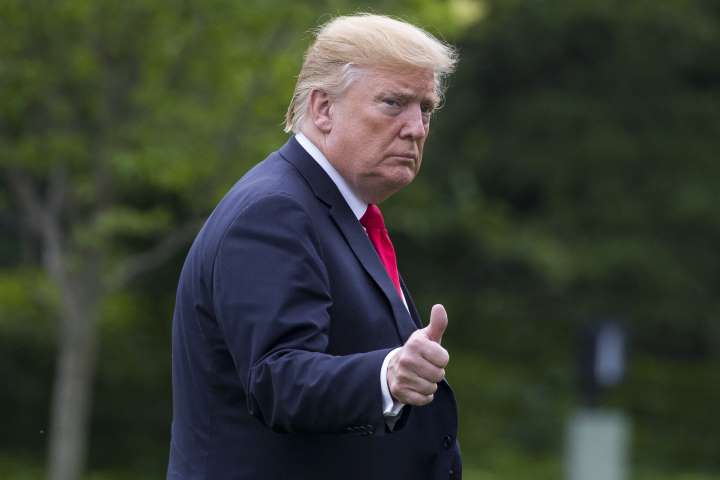
    Donald Trump’s opponents persist in their delusion that his arrival to power was an accident, and if they manage to throw him out of office, history will resume its natural course, and everything will be just like in grandma’s time again. This is a battle between the views of Washington’s elite and the general public resulting in a systemwide crisis. Should the elite further refuse to recognise how serious the crisis has become, and if they will not acquiesce to curtail their ambition and search for compromise, it will be disastrous for the United States and the rest of the world, argues Andrei Korobkov.

    Read More

  • The Chinese diaspora in Europe: Serving the motherland from abroad

    The Chinese diaspora in Europe: Serving the motherland from abroad

    Andrei V Korobkov, Nikolaj A Sluka, and Pavel N Ivanov                          May 31, 2019/Analysis

    Europe, one of the largest immigration systems of the world, is experiencing currently a test of strength under pressure coming from a powerful new wave of migrants from the Muslim countries of the Middle East and North Africa (MENA) caused to a large extent by the Arab Spring.

    According to Eurostat, arrivals from the Middle East to the EU were estimated at 1.5 million in 2015 and 1.8 million, in 2016. With the accumulation of economic problems and the escalating ethnic tensions in many countries of the region, demands are intensifying for a strict limitation of immigration and the reorientation of migration policy towards the primary acceptance of highly qualified migrants while limiting simultaneously the admission of practically all other categories of immigrants, including refugees. During his term in office, Nicolas Sarcozi, the former President of France, spoke, in particular, of the need to switch from «suffered» to «chosen» immigration.

    Regardless of the growing realization of the problem’s acuteness by political elites, no effective measures have been introduced yet to deal with it. As a result, criticisms of European migration policies are intensifying. The problem cannot be limited to migration and minorities issues. These are not synonymous with poverty, unemployment, social frustration, and aggression that the Brits, for example, view as the root causes of pogroms in their cities, while considering white youngsters (chavs) as their main perpetrators. The crises also hurt representatives of the middle class, deepening the gap between them and the rich. This does not resolve the problems related to the integration and adaptation strategies, multiculturalism, cluster and dispersed settlement, and the links of those with the issue of social mobility or the lack of the latter.

    The challenge of multiculturalism still remains a headache for many Western European governments as well as for the supporters of tolerance and multiculturalism concepts in general.

    The challenge of multiculturalism still remains a headache for many Western European governments as well as for the supporters of tolerance and multiculturalism concepts in general. Prior to the start of the June 2018 EU leaders’ emergency summit, dedicated to the issues of migration, the French President Emmanuel Macron stated that the EU migration crisis has been transformed into a political one.

    With this background, immigration to Europe from China remains to a large degree an invisible one. This is explained partially by the different scale of the incoming migration flows as well as by their origins. In 2016, the Chinese comprised just 3% of 76 million international immigrants residing in Europe. While the huge potential scale of the Middle Kingdom’s population mobility is well understood, that country traditionally prefers to act «in the shadow zone.»

    In contrast to Muslim immigration, caused to a large extent by the Arab Spring and thus having a forced, push character in the countries of emigration, the Chinese immigration could be characterized as a product of a merger of the ideologies of the receiving states, relying on the concept of multiculturalism, and the sending country, pursuing the «going out» policy.

    With a relatively long history of Chinese immigration to Europe, experts concentrate their attention on its most recent wave, the so-called New Immigration that started at the inception of China’s economic reforms and the policies of Openness. This migration wave is marked by a balanced gender structure and high shares of younger age cohorts, well educated and highly qualified people, aiming at the assimilation within the European societies, allowing them to find a job within the prestigious segments of labor market. This migration wave has significantly boosted and qualititatively transformed the process of the ethnic diaspora formation in the region. Exactly this New Migration is defining the main quantitative parameters of the diasporaand is responsible for the formation of the «model ethnic minority» stereotype that has become deeply ingrained in American public consciousness.

    There also exists another “shadow” component of this migration flow represented by the industrial workers and service personnel who as a group have quite different demographic parameters and are marked by the relatively low levels of educational achievement, well being, and language proficiency. This latter group also includes undocumented migrants. This is a different and quite poorly explored up to this point area of research.

    The emergence of deep fracture lines separating the host countries’ native populations and the politically and socially deprived immigrants who differ in language and religion – the concept defined in classical Political Science as mutually reinforcing cleavages – is less likely in this situation, marked by quite heterogeneous structure of the immigration flow.

    The fact that the main immigration flow is centered on a relatively narrow group of receiving states reinforces contrasts in the territorial distribution of the Chinese diaspora in Europe.

    The fact that the main immigration flow is centered on a relatively narrow group of receiving states reinforces contrasts in the territorial distribution of the Chinese diaspora in Europe. Its overall numerical strength has an expressed meridian gradient, declining in the West-East direction, and nearly directly correlates to the geography of the economically developed and populous countries. More than 98% of the diaspora is located in just 10 countries, while 50% lives in the UK and France. Large Chinese communities have been formed in Germany and the Netherlands as well as in Italy and Spain — the latter being the countries that have relatively recently offered amnesties for illegal immigrants. On this background, less visible are the countries of Northern and, especially, Eastern Europe, that for the first time opened their borders for Chinese immigration just in the 1990s. The exception represent just Hungary and Romania, having a relatively higher share of the Chinese in their modern immigration flow structure.

    The «Chinaization of Europe» issue is acquiring a partially local character in the context of escalating leadership struggle among the world’s major powers in the framework of transition to the third global integration cycle. It is important that China is viewing emigration in the context of its «going out» strategy and in combination with other «soft power» mechanisms, involving the cooperation with European states in various fields — economic, investment projects, research and development, educational, socio-cultural etc. More than that: official Beijing is incrementally cutting on the projects that were designed to promote migrants’ repatriation or aimed at the replenishment of the human capital reserves, and is transiting to a large scale «Serve the Motherland from Abroad» stategy. The main task is to form the China-centered interlayer as a factor of state influence in host countries with high levels of ethnic communities’ concentrations. In the future, the representatives of such influence groups are expected to become deeply ingraned into the social, political, and economic life of the receiving countries in order to be able to lobby China’s interests in case of necessity. Thus the main emphasis will be made on preserving and strengthening the diaspora’s national consciousness, promoting China’s future global political and economic superiority.

    Andrei Korobkov is Professor of Political Science and International Relations at Middle Tennesse State University, USA. He is a non-resident, visiting Distinguished Fellow at TPF.

    Nikolaj A Sluka is Professor of Geography at Moscow State University, Russia.

    Pavel N Ivanov is pursuing his MS (Geography) at Fudan University, Shanghai, China.

    This article is published earlier in BRE Review of University of TURKU.

    Photo by Vladislav Vasnetsov from Pexels

  • Will Venezuelan Parliamentary Elections End the Deadlock?

    Will Venezuelan Parliamentary Elections End the Deadlock?

    Andrei Korobkov                                                                                   March 05, 2019/Analysis

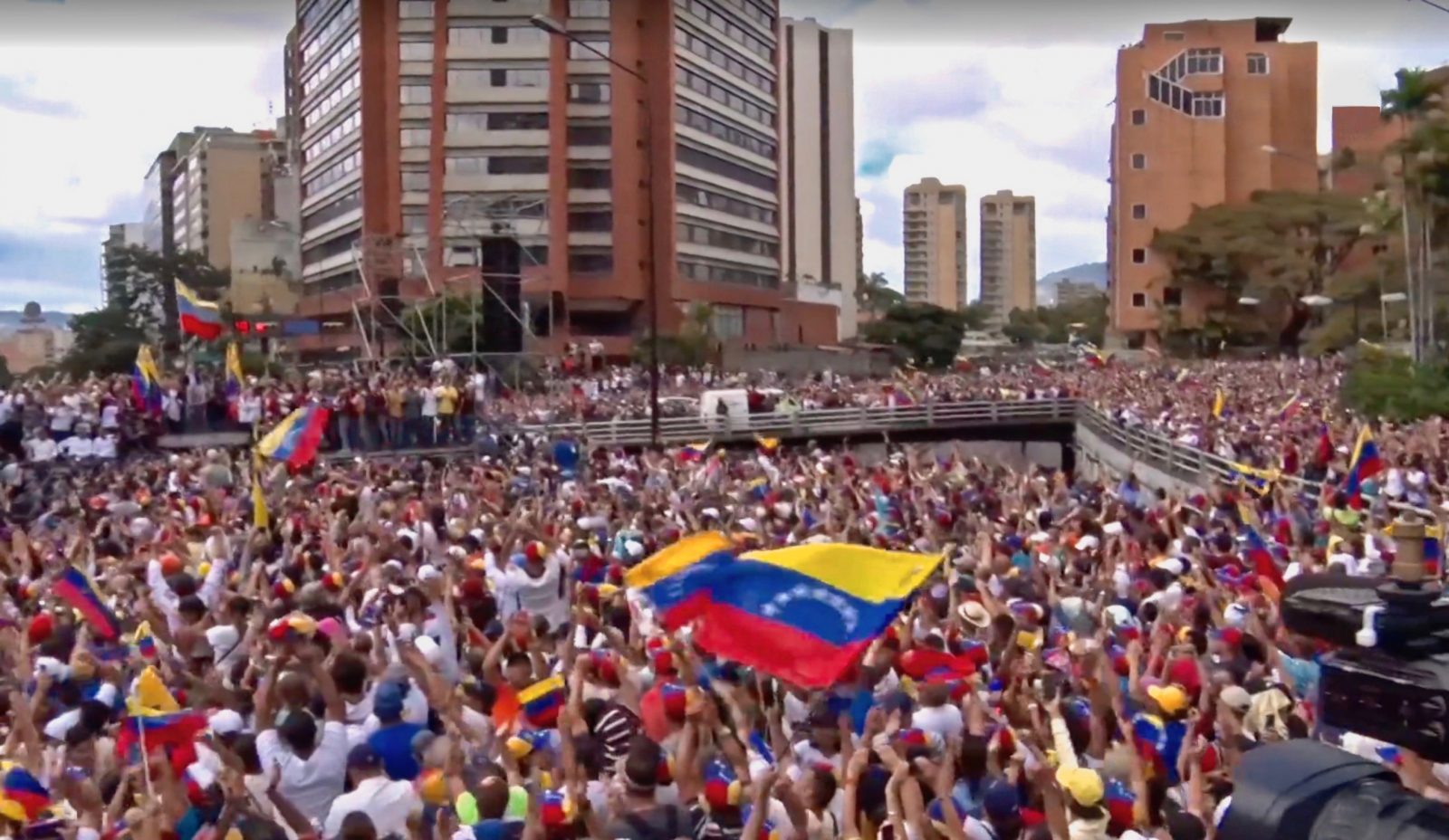
    The crisis in Venezuela grows more complex with each passing day. At first, President Nicolas Maduro declared that he was willing to consider the possibility of early parliamentary elections. But it is clear that this proposal is absolutely unacceptable for the opposition, which already wields a majority in the legislature and has the US firmly behind it. The opposition is urging the President to resign and takes a dim view of an early presidential election, no matter how rapidly it can be organized. The “interim president” appointed by parliament, Juan Guaido, is counting on the West’s financial and political support. He is feeling increasingly confident now that the US has frozen Venezuela’s government bank accounts and announced that the pretender president would be given control of them. This means that the government will immediately lose $7 billion deposited in US banks and another $11 billion in expected revenues from 2019 oil sales. Given that, Guaido, dizzy as he is with what he sees as his success, is unlikely to be willing to agree to serious talks or compromises, although he can suggest holding simultaneous presidential and parliamentary elections. Maduro, for his part, is not going to surrender and has already issued a warning that the growing confrontation and the mounting Western interference in his country’s internal affairs could lead to a civil war.

    There are a number of reasons why the current crisis in Venezuela is of such great interest and may have far-reaching political consequences. The US has always regarded Latin America as its backyard where it is free to lay down the law and punish disobedient. The 1823 Monroe Doctrine, in effect, introduced a “limited sovereignty” model that became increasingly pertinent during the Cold War.

     The United States has made huge investments in Latin American economies; Latin elites have been educated in the US for generations; the Americans have trained Latin militaries and supplied them with arms for centuries. The region is highly dependent on the US technologically. Besides, Venezuela is one of America’s main oil suppliers. The Americans are exasperated not only by the demonstrative independence of Venezuelan foreign policy but also by the 20 years of leftist reforms under the Chavez and Maduro governments. The same is true of the increasingly noticeable political, economic and military presence of Russia and China in the country. Of no small importance, too, is Venezuela’s good relationship with Cuba.After the Cold War, the Americans initially decided to at least formally follow the rules and refrain from toppling democratically elected governments in the region. Instead they used other, more flexible methods to influence the situation in individual Latin American countries. The exceptions were the abortive coup attempts in Honduras in 2009 and Venezuela (against Chavez) in 2002. From this point of view, the attempt to displace Maduro is relatively out of step with the new US policy in the region and may signal yet another revision of regional strategy.

    One more specific feature of the current situation in Venezuela is that the US line consists of an eclectic array of approaches that the US has used in a number of Latin American countries over the last 60 years. The contras’ failed landing in the Bay of Pigs in 1961 is one notorious example. A more obscure aspect of the story is how the CIA thought about the operation. After all, no one expected that the team in question would be able to launch a large-scale operation and fight Fidel Castro’s government. The plan was for them to dig in on a limited territory, proclaim an alternative government that would be immediately recognized by Washington, and request US troops be sent in to “support the legitimate government.” The gambit was a scandalous failure, but the “alternative government” idea is still alive and being used in Caracas in the form of a constitutional coup.

    Another precedent was set in Chile in 1973. Older people remember well the TV footage of well-fed and clearly not overworked housewives banging pots and pans at protests in Santiago and shouting that they were starving. The same tactics are being used today. The US has introduced economic sanctions and is intentionally destabilizing the economic situation in a country that has already been weakened by the government’s experiments with “Bolivarian socialism” to accuse Maduro of being an ineffective leader and to arouse popular disaffection. (But even today, Maduro’s opponents are failing to turn the lower strata that form the majority in that developing country against him: these people remember that it was Chavez and Maduro after him who gave them access to education and healthcare and enabled them to enjoy far better living standards).

    A third model still in the works is based on the 1989 Panama operation. If the first two options don’t work, outbursts of violence will be provoked through assassination attempts against opposition leaders or assaults on US nationals. This would lay the groundwork for a US invasion under the pretext of restoring law and order and guaranteeing the safety of US citizens.

    The first two models have been tested in Venezuela, without much success. The question is whether the third option will be attempted. This also raises two more interesting questions. Latin American coups usually become possible if military leaders turn on the government, but in Venezuela they continue to support Maduro. Moreover, it was the military who saved Hugo Chavez in 2002 and thwarted the coup masterminded from outside the country. The question is whether this support endures and whether the US succeeds in offering military leaders enough “carrots” for them to change their outlook.

    The second question concerns the US president. Donald Trump took over two years ago with his coterie of right-wing political reformers determined to fundamentally alter both America’s domestic and foreign policy. In the foreign policy arena, this new approach was based on renouncing interventionism, shifting emphasis towards domestic growth, acknowledging that the center of the world system was migrating from the northern Atlantic Ocean to the Pacific, and recognizing China as the major geopolitical threat to the United States. The last point implies that the US must create a new system aimed at containing China, which, in turn, requires better relations with Russia as a counterweight to China, the start of tariff wars against the PRC, and the destabilization of the WTO and the free trade system as a whole, which allegedly are more beneficial for China than for the United States. But, seen by the US elite (and not without reason) as a systemic threat, Trump is under continuous attack and unable to implement many of these ideas (with the greatest obstacles put in the way of his attempts to improve US-Russia relations). Gradually, the majority of the right-wing reformers left his administration (the biggest loss was the departure of Steve Bannon and Sebastian Gorka) to be replaced by traditional neocons and interventionists like John Bolton, the current national security advisor.

    Along with the loss of Republican control of the House of Representatives in November 2018, the approach of the presidential primaries, growing stock market volatility, relatively low presidential approval ratings, and unending attacks on Trump from the political establishment and the “elite” press, this is strengthening the hand of those who are urging the president to stage a “small victorious war” of his own. After all, Trump is still the only US president in two generations who has not yet launched a single new military intervention. Meanwhile, Trump himself is between a rock and a hard place, as he is being pressured by both the traditional US right, who dream of the US flexing its military might and toppling the disobedient regime, and the Democrats, who hope to force the president to break his election promises, mire him in a protracted military conflict and thus discredit and politically weaken him ahead of his re-election campaign.

    The current situation has yet another, broader international dimension. The international community is divided over Venezuela. The United States is supported by Canada, Brazil, and many European and Latin American countries. But that is a far cry from unity. Many right-wing governments in Europe, including Italy, whose government is very close to Trump ideologically, have been skeptical of attempts to give Venezuela away to a different suitor.

    An even more important factor is that the new leftist president of Mexico, Andres Manuel Lopez Obrador, is well aware of the possibility that Mexico will be the next target, if a constitutional coup is allowed to happen in Venezuela. Moreover, opposing Trump is a win-win for any Mexican politician amid the growing US-Mexican friction over immigration, tariffs, and much else. President Erdogan in Turkey is thinking along the same lines.

    Most important, of course, is the stance taken by Russia and China. Both have actively cooperated with Venezuela in recent years, with Chinese investment in the Venezuelan economy exceeding Russia’s by almost 400 percent. Nevertheless, China is very cautious about its moves, as it is currently under pressure from the US and unwilling to furnish Trump with another pretext to accuse it of growing expansionism.

    This is why the initiative in supporting President Maduro will most likely remain in Russian hands. Though inferior to China in terms of investment, Russia is the main arms supplier to Venezuela (with sales totaling $12 billion). Russia has also invested heavily in Venezuela’s oil industry and a number of other sectors.Thus, the current situation includes many unknowns linked to actors’ moves both in Venezuela and the United States, as well as Russia, China and a number of other countries. As such, both the course of the conflict and its outcome can be of global importance, influencing, among other things, the prospect of whether the US reverts to its traditional imperial interventionism or opts for a somewhat different policy.

    The course of this crisis and its outcome may also have serious impact on the domestic political situation in the United States. The potential for a “controlled crisis” looms large in this situation, because the chances of a political provocation aimed at drawing the Trump administration into a military conflict are sufficiently high. Therefore, the dynamics of the Venezuelan drama may decide the fate of both Maduro and Trump himself in the long run.

    Dr Andrei Korobkov is Professor of Political Science at the Middle Tennessee State University, and is Non-Resident Visiting Distinguished Fellow at TPF. This article is the English translation of the original published earlier in Valdai Discussion Club.

    The views expressed are the author’s own.