Author: Anatol Lieven

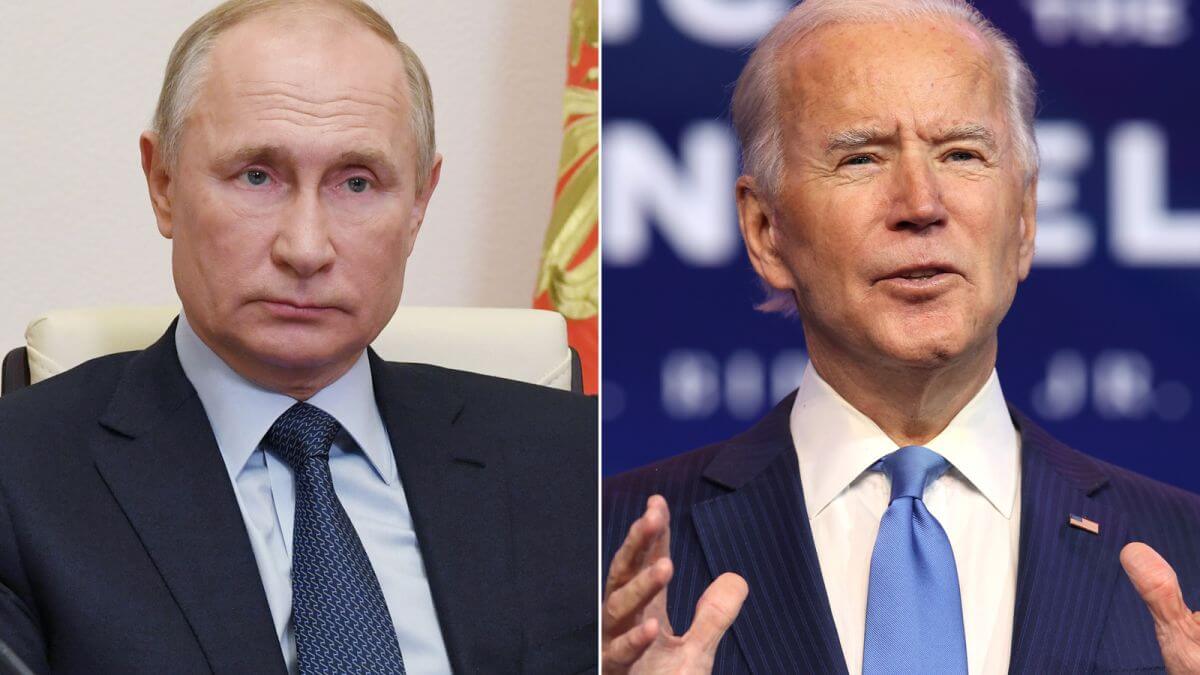
  • Calling Putin a ‘killer’ with ‘no soul’ is not exactly diplomatic finesse

    Calling Putin a ‘killer’ with ‘no soul’ is not exactly diplomatic finesse

    Category: External Article – ‘Responsible Statecraft’

    Title: Calling Putin “a killer” is not exactly diplomatic finesse

    Author: Anatol Lieven

    The Biden administration has created an completely unnecessary confrontation with Russia at a time when reasonable working relations with Moscow are extremely important for achieving two immediate and key administration goals: rejoining the nuclear agreement with Iran, and a peace settlement in Afghanistan facilitating U.S. military withdrawal from that country and an end to America’s longest war.


    Read More

  • What Putin nemesis Alexei Navalny is, and what he is not

    What Putin nemesis Alexei Navalny is, and what he is not

    Anatol Lieven highlights America’s blundering tendency to view world personalities in typically American lens, ignoring the realities of them being citizens of their countries and focusing on their national interests . He uses the examples of Russia’s Navalny and Myanmar’s Aung San Suu Kyi to make his point emphatically. His analysis is relevant to other countries as well. 

    This article was published earlier in Responsible Statecraft

    It is very human and natural to admire courage and resolution — these are qualities that Russian opposition leader Alexei Navalny possesses to a quite remarkable degree. It is also natural to sympathize with suffering — and Navalny has suffered and very nearly died for his beliefs and goals. And of course it is natural to feel disgust with the increasingly criminal behavior of the Putin administration in Russia.

    However, admiration, sympathy and disgust are emotions, not arguments or analysis, and should be employed with great caution in the formulation of state policy.

    In his confirmation hearings, now-Secretary of State Anthony Blinken pledged Biden administration support for Navalny and called him “a voice for millions and millions of Russians.” Statements by the U.S. embassy in Moscow on the Navalny movement have come very close to calling for the end of the present Russian government.

    Recent weeks have seen a tremendous outpouring of American sympathy for Navalny and his movement against the Putin administration. In his confirmation hearings, now-Secretary of State Anthony Blinken pledged Biden administration support for Navalny and called him “a voice for millions and millions of Russians.” Statements by the U.S. embassy in Moscow on the Navalny movement have come very close to calling for the end of the present Russian government. The semi-official American Radio Free Europe/Radio Liberty is openly and passionately supportive of Navalny’s movement. Richard Haas, President of the Council on Foreign Relations, proposed that Navalny be awarded the Nobel Peace Prize.

    Such overt U.S. support is not wise. In the first place, it may actually hurt the cause of progressive reform in Russia. The Russian government, like those of Iran and China, has relentlessly propagated the idea that the opposition is being backed if not bankrolled by Washington in order to weaken their countries; and indeed, Russian liberals have done themselves terrible damage by allowing themselves to be cast as representatives of the West, not of the Russian people.

    The second, very familiar problem is the hypocrisy involved. In the latest volume of President Obama’s memoirs, “A Promised Land,” he describes how Hillary Clinton — who relentlessly presented herself in public as an advocate of spreading democracy — argued that Washington should support Egyptian President Hosni Mubarak’s brutal 2011 crackdown on Arab Spring opposition protests on the grounds that he was a U.S. ally and his fall would lead to chaos and Islamist revolution. In her early public statements, as well, she warned against hastening Mubarak’s exit.

    In proposing Navalny for the Nobel Peace Prize, Haas seems to have forgotten the last time the honor was given to an opposition politician.

    An even greater problem presents itself when one looks at the actual politics of some of the opposition figures who draw such waves of American and Western enthusiasm. In proposing Navalny for the Nobel Peace Prize, Haas seems to have forgotten the last time the honor was given to an opposition politician. The award to Aung San Suu Kyi in 1991 was supposed to be for “her non-violent struggle for democracy and human rights… one of the most extraordinary examples of civil courage in Asia in recent decades.”

    After Suu Kyi joined the government in Myanmar she’s been damned in the West for her failure to prevent or condemn the savage state persecution of Myanmar’s Rohingya minority, and most of her human rights awards (though not the Nobel prize itself) have been revoked.

    After Suu Kyi joined the government in Myanmar she’s been damned in the West for her failure to prevent or condemn the savage state persecution of Myanmar’s Rohingya minority, and most of her human rights awards (though not the Nobel prize itself) have been revoked. What her previous Western admirers are not doing — what they almost never do — is to ask themselves why they so completely misunderstood her before.

    But she is a Burmese politician, not a Western democratic leader, and in building her up as a liberal heroine, the Western media and activists willfully ignored not just the political realities of Myanmar, but her own Burmese nationalist antecedents.  

    (Just in the last 48 hours, Suu Kyi has been detained in an apparent military takeover of her democratically elected government and Biden is predictably mulling over his options for reviewing sanctions and taking “appropriate action.”)

    Like Navalny, Suu Kyi is indeed an exceptionally brave and determined human being and in her way a fine leader; just as Navalny might make a fine Russian president. But she is a Burmese politician, not a Western democratic leader, and in building her up as a liberal heroine, the Western media and activists willfully ignored not just the political realities of Myanmar, but her own Burmese nationalist antecedents.

    There are two factors at work here. The first is a basic human one. Courage, like hard work and self-sacrifice, is a quality that it is humanly impossible not to admire, but the possession of it says absolutely nothing at all about the goals to which they are put. All the leaders of the ghastly totalitarian revolutions of the 20th century were exceptionally brave and determined men.

    The second factor relates to some enduring and seemingly incorrigible flaws in most Western reporting and analysis. One of them is the tendency to personalize issues, whereby “Putin” is used as a synonym for the whole Russian state, and “Navalny” is now being presented as a synonym for the entire, enormously disparate Russian opposition. The merest glance at the groups represented at the pro-Navalny demonstrations reveals that together with genuine liberal democrats, there are also numerous Communists and extreme nationalists whose anti-Western positions are much more extreme and reckless than those of Putin himself. As Aleksandr Baunov of the Carnegie Moscow Centre has written:

    Saturday’s protests were undeniably anti-regime, anti-elite and anti-corruption but not necessarily liberal, pro-Western and pro-democracy. It’s not surprising that such protests frighten not only the authorities, but also successful members of society: even those who don’t consider themselves supporters of the regime.

    In their blind demonization of Putin, and consequent sanctification of Navalny, Western commentators seem to be implicitly assuming that should Navalny win power (which he almost certainly will not), Russia’s foreign policy would change radically in a pro-Western direction. This is nonsense. Navalny’s supporters are backing him out of (entirely justified) fury at Russian state corruption, lawlessness, and economic failure, not to change foreign policy. Every independent opinion poll has suggested that Putin’s foreign and security policies have enjoyed overwhelming public support; and above all, there is very little in Navalny’s own record to suggest that he would change them.

    As a 2013 essay by Robert Coalson in The Atlantic documented, Navalny supported the Russian war with Georgia in 2008. He has expressed strongly ethno-nationalist attitudes towards the Caucasian minorities in Russia, and previously made opposition to illegal immigration a key part of his platform. In October 2014 he suggested to a reporter that if he became president he would not return Crimea, which was annexed by Russia earlier that year, to Ukraine (though he also said in that same interview that, “It’s not in the interests of Russians to seize neighboring republics, it’s in their interests to fight corruption, alcoholism and so on — to solve internal problems.”

    Rather like Donald Trump concerning American interventionism, Navalny has strongly condemned Russian military intervention in the Middle East on the grounds of cost and irrelevance to real Russian interests; but (as with Trump), that does not necessarily say much about what he would actually do if in power. Apart from anything else, Russia, like the U.S., has a foreign and security establishment “Blob” with firmly established and deeply held collective views on Russia’s vital interests.

    It is to remind Americans that he is a Russian politician, not an American one; that he will respond to Russian realities, not Washington fantasies; and that in the end, U.S. administrations will have to deal with whatever government is in power in Moscow.

    To recall this is not to condemn Navalny. It is to remind Americans that he is a Russian politician, not an American one; that he will respond to Russian realities, not Washington fantasies; and that in the end, U.S. administrations will have to deal with whatever government is in power in Moscow. Russian governments will defend Russian interests, along lines that are mostly quite predictable if one knows Russian history and culture. The sooner we realize this, and stop setting up plaster saints in the hope that they will perform miracles, the better for U.S. foreign policy overall.


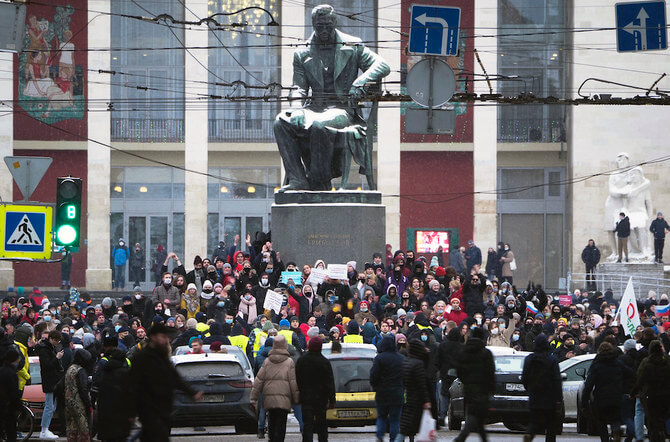
    Feature Image – Protesters gather near a monument of Russian playwright Alexander Griboyedov during a protest against the jailing of opposition leader Alexei Navalny in St. Petersburg, Russia, Sunday, Jan. 31, 2021. www.arabnews.com
    Image – 
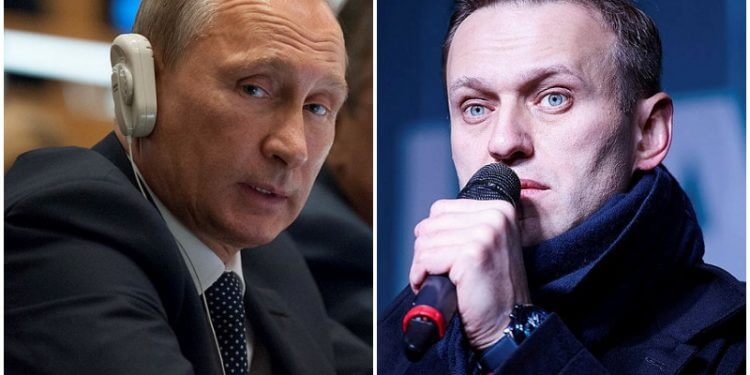
    Navalny and Putin: www.hilltimes.com
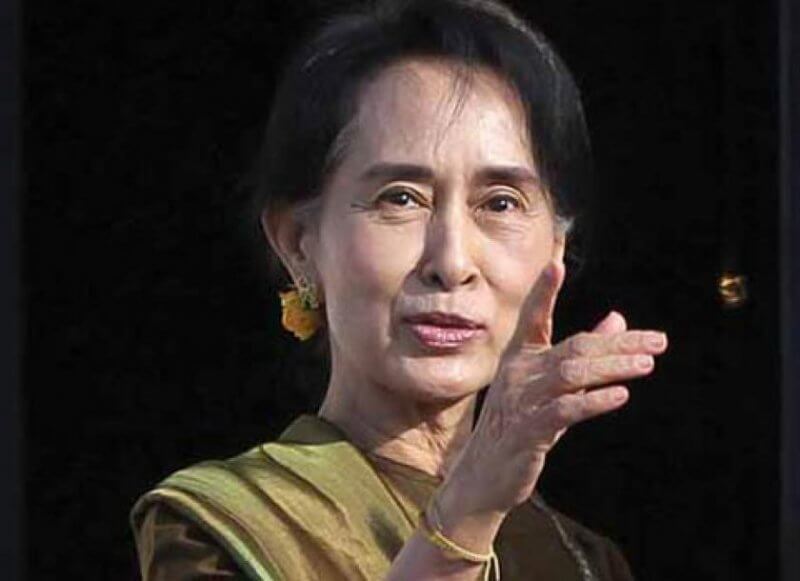
    Image – Aung San Suu Kyi: www.mmtimes.com

  • US strategists lost empathy, along with their wars

    US strategists lost empathy, along with their wars

    This article was published earlier in Responsible Statecraft.

    The great realist thinker Hans Morgenthau stated that a fundamental ethical duty of the statesman is the cultivation of empathy: the ability through study to see the world through the eyes of rival state elites. Empathy in this sense is not identical with sympathy. Thus, George Kennan’s deep understanding of Stalinism led to an absolute hostility to that system.

    This kind of empathy has very valuable consequences for foreign policy. It makes for an accurate assessment of another state establishment’s goals based on its own thoughts, rather than a picture of those goals generated by one’s own fears and hopes; above all, it permits one to identify the difference between the vital and secondary interests of a rival country as that country’s rulers see them.

    A vital interest is one on which a state will not compromise unless faced with irresistible military or economic pressure. Otherwise, it will resist to the very limit of its ability, including, if necessary, by war. A statesman who sets out to challenge another state’s vital interests must therefore be sure not only that his or her country possesses this overwhelming power, but that it is prepared actually to use it.

    Geopolitical power is really, in the end, local and relative: it is the power that a state is willing to bring to bear in a particular place or on a particular issue relative to the power that a rival state will bring to bear. Furthermore, the degree of the willingness to mobilize and use power and to make sacrifices depends ultimately on whether the issue concerned is believed to be a vital national interest. If it is only a secondary interest, then it is one on which the statesman should be prepared to make concessions and seek compromise.

    The first step in this process of empathy is simply to listen to what the other side says. This however is not in itself enough, for they may of course be exaggerating an issue’s importance as a bluff or a negotiating gambit. It is therefore also necessary to study in depth the history, politics and culture of the country concerned. Thus, despite what Chinese officials say, we might doubt that they would actually go to war if Taiwan declares independence. A study of modern Chinese history, and of the importance of nationalism to the legitimacy of the Chinese state, makes clear that they are not bluffing.

    What makes this search for understanding easier is that foreign and security establishments generally hold historically-derived doctrines about their country’s vital interests that are relatively easy to identify given study and an open mind.

    The greatest enemy of an open mind and a capacity for empathy is self-righteousness. One aspect of self-righteousness is a confusion between basic moral commitments and the inevitable moral compromises forced upon state representatives trying to defend their country’s interests in a morally flawed and chaotic world.

    The morality of Western policymakers lies in their commitment to Western democracy, and their renunciation of absolutely immoral means: notably the mass murder of civilians. This commitment however, while it may restrain Western democracies from the most evil actions, does not confer some kind of innate innocence on their conduct of policy.

    This is especially true of the Middle East where I have worked for a number of years. Given the nature of this region, any outside state, democratic or otherwise, seeking to play an important role there will inevitably be compelled to engage in certain immoral actions — including alliances with corrupt and murderous dictatorships. What Western policymakers can, however, be blamed for is the pretense that because our systems are democratic, this somehow in itself makes these immoral actions better than those same actions when engaged in by other states.

    The least excusable Western failure of empathy since the end of the Cold War has been with regard to Russia because — by contrast to some Middle East countries, let alone North Korea — the attitudes and beliefs of the Russian establishment are not hard to understand, at least for anyone with a minimal grasp of Russian history and culture. Moreover, the realism of Russian policymakers fits the mindset of many American security officials.

    The vital interests of Russia are adhered to by the Russian establishment as a whole. They consist chiefly of a belief that Russia must be one pole of a multipolar world — not a superpower, but a great power with real international influence. Also: that Russia must retain predominant influence on the territory of the former Soviet Union, that any rival alliance must be excluded, and that international order depends on the preservation of existing states. In addition, as with any political system, there is a commitment to the existing Russian political order and a determination that any change in it must not be directed from outside.

    There are obvious tensions between some of these Russian interests and secondary U.S. interests, but on one issue — the danger from Sunni Islamist extremism and terrorism — a vital interest of Russia is completely identical with our own. Because of this danger, U.S. administrations, like the Russians, have often supported existing authoritarian Muslim states for fear that their overthrow would lead to chaos and the triumph of Islamist extremism.

    In Syria, Russia followed the policy of the U.S. in Algeria 20 years earlier — and indeed in its support for General Abdel Fattah al-Sisi in Egypt today. Russian fears of an ISIS takeover of Syria if the state collapsed were echoed in briefings to President Obama by the CIA. Yet a Western narrative has emerged of Russia engaging in wicked support for “brutal dictatorships” in the Middle East, and that this policy in turn is linked not to fear of Islamist extremism, but implacable anti-Americanism and reckless geopolitical ambition.

    Straightforward Western prejudices (now dignified with the abominable euphemism of “narratives”) are part of the reason for these false perceptions derived from the Cold War. The collapse of Communism, however, also led to a growth in Western hubris that led Western policymakers to fail either to listen to their Russian colleagues when they stated Russia’s vital interests, or to study Russia in sufficient depth to understand that they were not bluffing but really meant what they said. Instead, you had the tragicomic picture of American officials lecturing Russian officials on the “real” interests of Russia.

    As a result, U.S. and British officials ignored Russian warnings that if Washington persisted in trying to extend NATO membership to Georgia and Ukraine, Russia would fight. And when Russia did fight — albeit in a very limited way — this was taken as a sign not of a Western failure to listen, but of Russian “madness,” aggression, and evil. Though if one thinks of the Monroe Doctrine, Russian concerns in this regard should hardly be incomprehensible to an American official. It should also have been easy enough to accept the Russian point that this was a vital interest for the sake of which Moscow was prepared to make very important concessions to Washington on other issues.

    Instead, the United States establishment embroiled itself in confrontations with Russia, only to recognize at the last moment in Georgia in 2008 and Ukraine in 2014 that these countries were not in fact American vital interests, and that the U.S. was not prepared to fight to defend them. An additional danger therefore in refusing to study other countries’ vital interests is that it makes it more difficult to think seriously about your own. We had better hope that in dealing with the vastly more formidable challenge of China our policy elites will engage in real study, eschew self-righteousness, and identify and not attack the vital interests of China, as long as Beijing does not seek to attack our own.

    This article is republished with the permission of the author and Quincy Institute.
    Image credit: Pexels