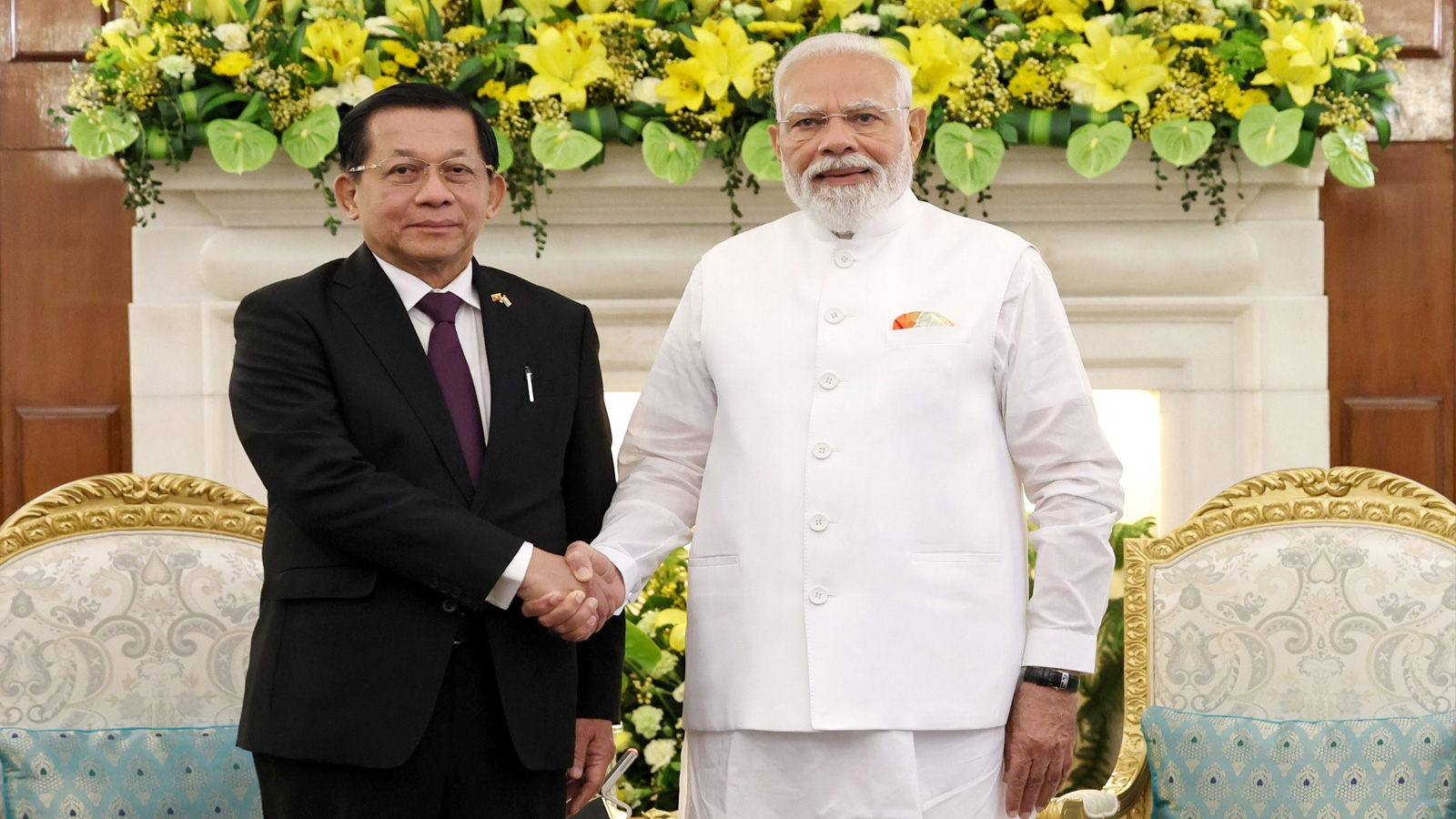
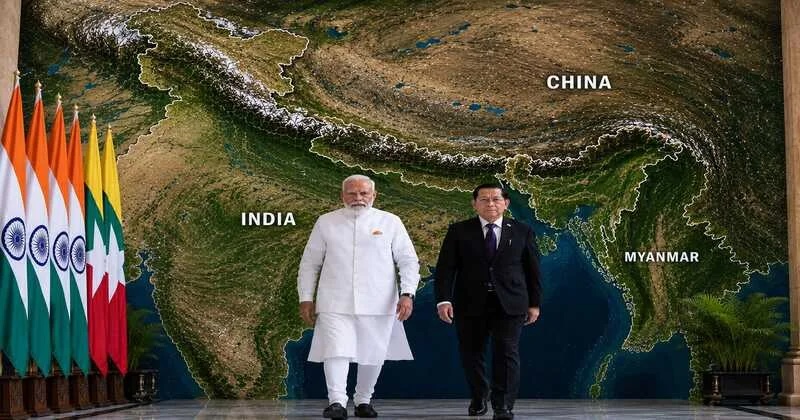
For Indians researching security issues in the Northeast, three recent developments in Myanmar have once again put the spotlight on the situation there. The first is a May 2026 report by Human Rights Watch (HRW) that pieces together eyewitness accounts of the killing of at least 170 Rohingya men, women, and children, with many others likely injured, in Hoyyar Siri village in Buthidaung township in Northern Rakhine on 02 May 2024[i]. The second is an account of another influx of Chin refugees into Mizoram in May 2026, following the Tatmadaw’s capture of Falam town in Chin state (adjoining Mizoram and Manipur).[ii] The third is the recently concluded visit of Myanmar President (formerly General) U Min Aung Hlaing to India from May 30 to June 03, 2026. According to the initial press release of the Ministry of External Affairs, ‘…he will be accompanied by a high-level delegation comprising several Cabinet Ministers, senior officials and business leaders. This will be the first visit of President U Min Aung Hlaing to India in his current capacity.’ The three events encompass a spectrum of issues that impact India’s relations with Myanmar, broader regional security, and India’s Act East Policy.
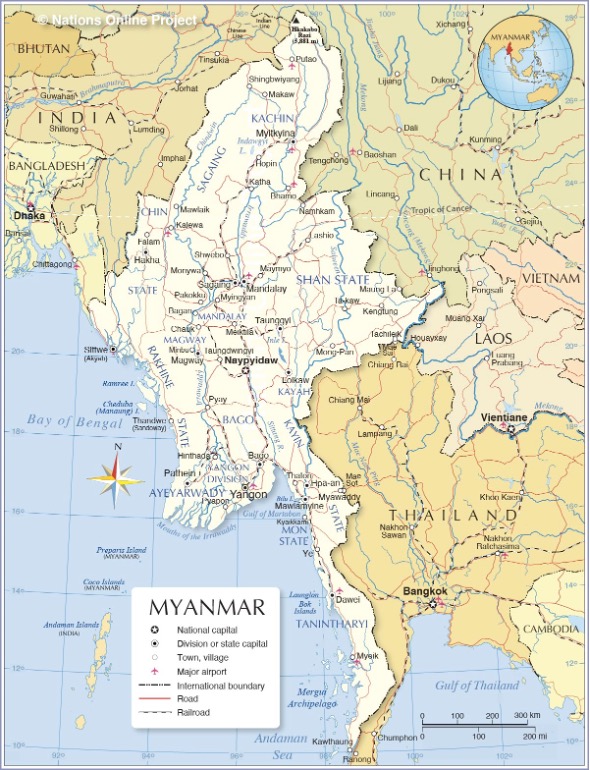
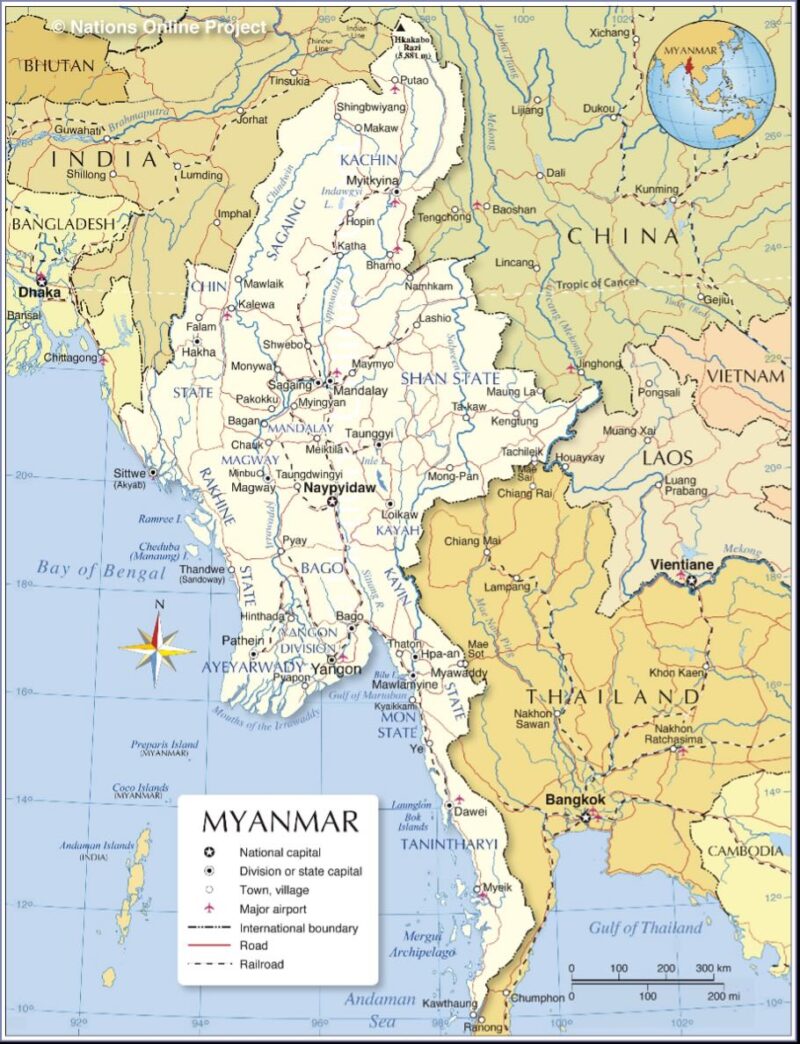
Map: Courtesy – Nations online Project
Myanmar is the bridge connecting Northeast India to Southeast Asia. If geographically included in Southeast Asia, it would be the region’s largest country, with 135 officially recognised ethnicities and a population of over 52 million (2003 census)[iii]. Myanmar is more than four and a half times larger in area than its Western neighbour, Bangladesh, yet has roughly one third of its population. Myanmar is a vital component of India’s Act East policy
Outline Economic Situation
Myanmar’s parliamentary elections were held from Dec 25 to Jan 26, with the Junta-supported Union Solidarity and Development Party (USDP) winning an overwhelming majority, further consolidating the military’s hold over the state apparatus. As a result of the USDP being perceived as a proxy for the military regime, the continuing clampdowns on civil liberties at home and the visibly close ties with Russia, most sanctions imposed earlier by the West on the military government remain in place. The nexus between Myanmar’s military and Iran, which is rumoured to be supplying drone parts to the Tatmadaw, has also reinforced the West’s perception of the Junta[iv].
The pressure of sanctions was intensified by the impact of the war in Ukraine and compounded by energy shocks from the current West Asian crisis. According to the Lowy Institute, ‘Myanmar has probably been affected more than any other country in Southeast Asia — both in terms of the lack of access to fuel, and also the rising prices… Myanmar is the only country in Southeast Asia whose economy has not recovered to its 2019 pre-COVID levels[v]. With fuel prices having increased more than threefold and deepening scarcity in rural areas, the economy is in a downward spiral, accelerated by power outages, a shortage of essentials such as fertiliser (due to cutbacks by exporters like China), and an overall lack of investment. As per figures of the Asian Development Bank (ADB), ‘…GDP has declined by a cumulative 16 per cent since 2020, with growth falling 2.2 per cent in fiscal year 2025 alone. Inflation has been consistently high, reaching 29 per cent in 2024 and 25 per cent in 2025.[vi] Today, Myanmar has the highest inflation rate in the whole of Southeast Asia[vii].
Currency: One of the most significant issues for the economy is the agreement between the Central Bank of Myanmar and the People’s Bank of China to link the Kyat and Renminbi digitally[viii]. This would bypass the international SWIFT banking system and convert Kyats directly to Renminbi, reducing dependence on the dollar. This move effectively ties Myanmar’s economy to China’s, with attendant consequences, especially regarding sovereignty.
The Security Situation
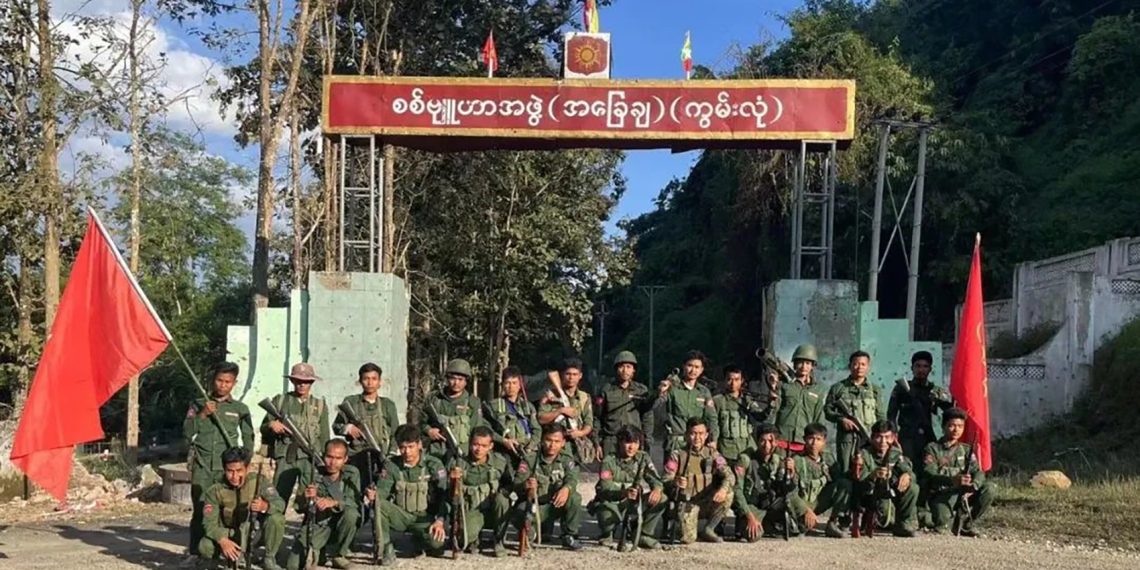
The civil war between the Tatmadaw and ethnic armies continues unabated in a see-saw fashion. It is taking a toll on the military, which is in the process of updating its conscription lists. According to a May 2026 report, around 13 million citizens have been found fit for conscription, and about 120,000 individuals have been recruited since the Conscription Law was enacted in February 2024[ix].
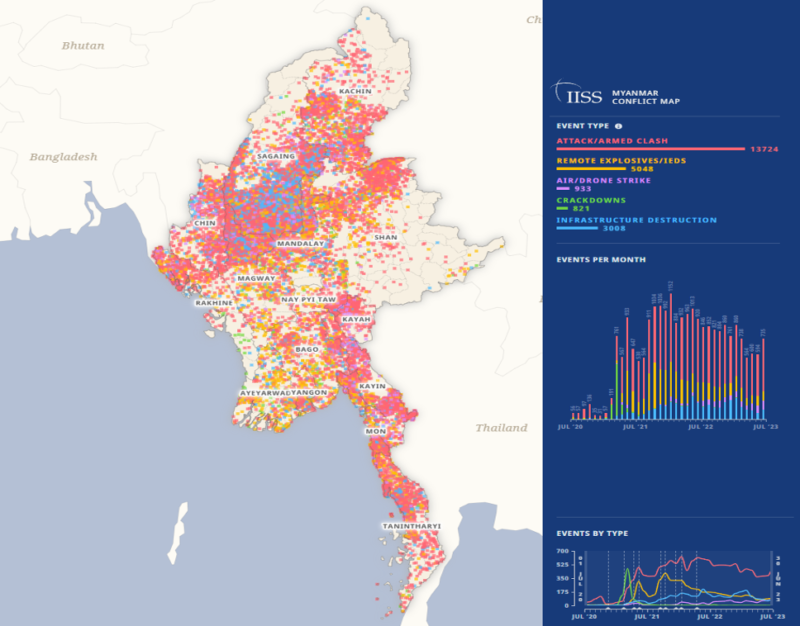
Since its reverses after the launch of ‘Operation 1027’ on 27 October 2023 (an offensive by the Three Brotherhood Alliance (3BTA), composed of three Ethnic Armed Organisations (EAOs) in Shan state bordering China, with tacit Chinese approval for rooting out the scam centres there, the Junta has managed to claw back territory. After 15 months, it is in full control of an important central artery, the Mandalay Myitkyina Road and the connected towns in the Sagaing region[x] (see map on first page). With the capture of Myitkyina, the capital of Kachin state, the Junta is inducting fresh troops and equipment into Kachin. Seeing this, the regional EAO, the Kachin Independent Army (KIA), is reported to have gone on the defensive[xi]. The Junta also continues to hold the important ports of Kyaukphyu (the mouth of the China-Myanmar Economic Corridor) and Sittwe (the gateway of the India-built Kaladan Multimodal Port Project), both in Rakhine, though Sittwe is blockaded on land by the AA and is being supplied by air and sea.
Elsewhere, too, the Tatmadaw has gone on the offensive. It has launched an offensive on multiple fronts to retake the trading hub of Maw Taung, which borders Thailand in the Thantharyi region (see map below) and has been under the control of the Karen National Liberation Army (KNLA) since November 2025.
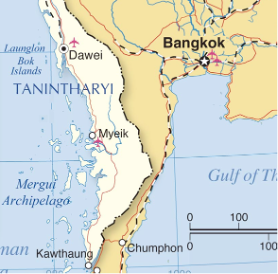
Note: Location of Maw Taung is approximate and not to scale. Map: Courtesy – Nations online Project.
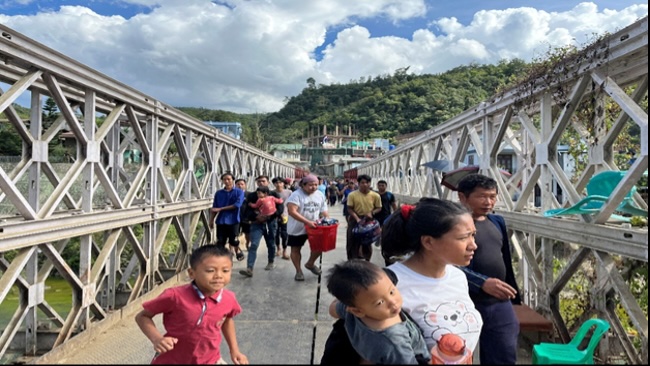
As mentioned earlier, Falam, where Chin state’s only airport is located, was captured by the Tatmadaw in April 2026. With the Tatmadaw aiming to reestablish control over the Myanmar-Mizoram border crossings, the Myanmar border town of Rikhawdar would be the next objective (see map). This could spark another influx of refugees into India’s Zokhawthar. Even today, after the May 2026 influx of Chins into Zokhawthar, residents claim that refugees now outnumber the local residents there[xii].
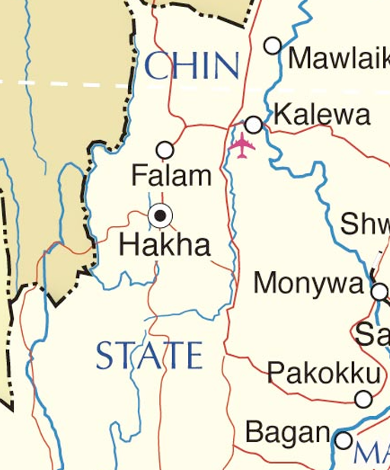
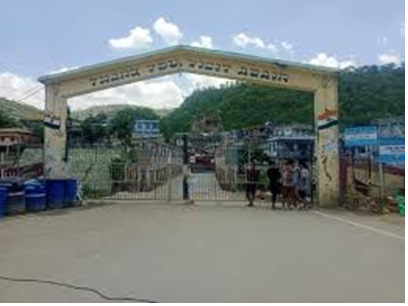
Visual of Zokhawthar border gate. Map: Courtesy – Nations Online Project.
Overall, the Tatmadaw has enhanced its capabilities with assistance from its main benefactors, China and Russia, enabling it to conduct offensive operations across the country. In the short- to medium-term, any overthrow of the regime by EAOs aligned with the opposition National Unity Government (NUG) appears unlikely, despite the EAOs still controlling substantial portions of territory in various regions.
Interestingly, the NUG continues to retain Myanmar’s seat in the UN. It has recently cleared pending UN membership dues of around one million dollars using existing funds and public contributions[xiii], a symbol of the support they still generate.
Outside Influences
Myanmar is one state in the Bay of Bengal where Russia, China and the USA have specific, sometimes overlapping and frequently competing interests. Gen (now President) Hlaing has visited Russia seven times to date. Russia is a major supplier of weapons to Myanmar and is rumoured to have shared intelligence with the Tatmadaw, even as it continues cooperation in the energy sphere, including nuclear energy. In February 2026, it signed a five-year military cooperation agreement with Myanmar to protect its territorial integrity and strengthen national sovereignty and security, as per Defence Minister Sergei Shoigu during his visit to Naypyidaw[xiv], further consolidating ties with the Junta. Russia, therefore, has no interest in regime change.
China continues with its on-off strategy of support to the Tatmadaw and the rebels, stopping aid when its own interests, especially along the China-Myanmar Economic Corridor (CMEC), are threatened. China supported the EAOs in cleaning up the scam centres on the border when the Tatmadaw was unable to do so. Its role in subordinating Myanmar’s economy has already been mentioned. The release of Aung San Suu Kyi from prison to house arrest days after Chinese Foreign Minister Wang Yi’s visit in the last week of April is being interpreted as another sign of Chinese influence over the Junta[xv]. Also, between 2021 and 2023, it has supplied around $ 267 million worth of weapons to the Junta[xvi]. Thus far, it has shown no interest in engineering regime change. China appears to be working towards better border security, securing Myanmar’s rare earth supply chains to Yunnan, and making economic investments in that country. Its other objective is access to the Bay of Bengal. Towards this end, it practices ‘selective intervention through multi-actor engagement, ceasefire management, security outsourcing and border pressure. Though it speaks the language of non-interference, China is actively shaping developments in its neighbour to advance its strategic interests in the Indo-Pacific...’[xvii]
The USA has drastically reduced assistance by nearly $1.1 billion since 2025[xviii], but lifted some sanctions on Myanmar companies. The Junta is interested in repairing relations with the US and has hired a Washington, D.C., lobbying firm for around $3 million per year to that end[xix]. The US has shown interest in the rare earth deposits in Kachin state, which are currently being mined by China and, in value terms, account for 60% of Chinese imports – though the process for moving the minerals out of Myanmar remains unclear, as do the prospects for future cooperation. However, it is apparent that the US, like China, increasingly views Myanmar (and Bangladesh) through the Indo-Pacific lens and would endeavour to expand its influence in myriad ways, including using aid as a lever to consolidate further in the Bay of Bengal region and limit Chinese influence.
The Rohingya Factor
There is increasingly palpable discontent among the Rohingya. Many still attempt to enter Malaysia (which is reported to hold over 200,000 Rohingya) by sea. Inside refugee camps in Bangladesh, cuts in food rations, overall shortages and depredations by militias /criminal gangs, including killings, torture and abductions, have worsened the law-and-order situation[xx]. Hierarchies, some of them criminal, run daily lives here through enforced diktats. Recently, triggered by the death of a youth, the Rohingya Gen Z organised themselves in protest by carrying out a coordinated online campaign in the camp, challenging self-styled community leaders. As observed by a journalist,’…for the first time in years, a segment of the Rohingya community is not just reacting to events, it is attempting to shape them’[xxi]
Rohingya militancy is getting increasingly better organised. Four known groups operate across the Myanmar-Bangladesh border and in settlements – the Arakan Rohingya Salvation Army (ARSA), Rohingya Solidarity Organisation (RSO), Arakan Rohingya Army (ARA), and Rohingya Islami Mahaz (RIM)[xxii]. The Junta frequently employs ARSA to fight the Arakan Army (AA), which ARSA regards as its main enemy. The AA’s self-propagated doctrine, ‘The Way of Rakhita’[xxiii] with its four pillars- Nationalism, Militarism, Historical Criticism and Pragmatism, has varying interpretations. It could denote inclusiveness and a broader national identity, safeguarding the nation, revisiting past errors, and preparing for the future in a practical way – which might include reconciliation with the Rohingya. Equally, it might indicate a narrow focus on an exclusive Arakan identity, backed by military force and a willingness to deal with anyone supporting such goals, which bodes ill for future prospects for the Rohingya and Myanmar-Bangladesh ties. With relief aid for Rohingyas progressively reducing and unrest in the camps barely contained, Bangladesh’s social fabric is coming under increasing strain. This is fuelled by the spillover of activities of such terrorist groups into Bangladesh, which finds its policy options in Myanmar increasingly restricted as outside powers come to terms with the Junta. The fallout of the Rohingya and Chin refugee crisis remains of prime concern for India, which shares borders with both countries, warranting greater vigilance by Indian border guarding forces and dynamic updation of internal security schemes, co-opting the latest technologies.
Views of the NUG: The NUG, Myanmar’s shadow government, recently announced a new council in a statement titled ‘Announcement by the Steering Council for the Emergence of a Federal Democratic Union (SCEF) ‘ on its website. A line on ‘inclusiveness’ states ‘…Furthermore, we are committed to protecting and promoting the diverse identities of all ethnic nationalities residing within member states and units of the Union, and to firmly building a new Federal Democratic Union composed of states that fully guarantee equality among nationalities and the right to self-determination. However, as mentioned earlier, the question of the NUG coming to power remains moot, as does the issue of implementing such a contentious agenda in a nation with a well-documented history of ethnic violence and discrimination.
India and Myanmar
Despite the 2021 coup and the overthrow of Aung San Suu Kyi’s government, India has continued to adhere to its principle of non-interference in the affairs of neighbouring states. Accordingly, it has maintained bilateral relations with the Junta. Following February 2021, as a large number of Myanmarese Chins sought refuge with their kin in Mizoram (and some in Manipur, where ethnic strife between Meiteis and other tribal groups continues), India had to formulate a uniform policy to address this issue, incorporating humanitarian aspects, local sensitivities and security concerns. This has since been done.
To ensure peace at the local level and prevent disruption to work on its two-decade-old Kaladan Multimodal Port Project (KMMPP), which links Kolkata to Mizoram (via Sittwe onto Paletwa on the Kaladan River and thence onward to Zorinpui in Mizoram by road, bypassing Bangladesh), India resorted to a tactical outreach that included an unofficial meeting between an Indian Member of Parliament and Myanmar rebel groups[xxiv]. This was further expanded by opening a dialogue in Delhi in late 2024 with the concerned EAOs in Chin and Rakhine, as well as representatives of the NUG and the Junta. Ultimately, separate meetings were held with each group; India advocated for a ‘Myanmar-led, and Myanmar-owned’ solution, thereby reiterating its policy of non-interference.
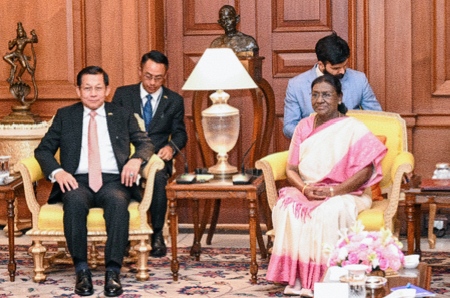
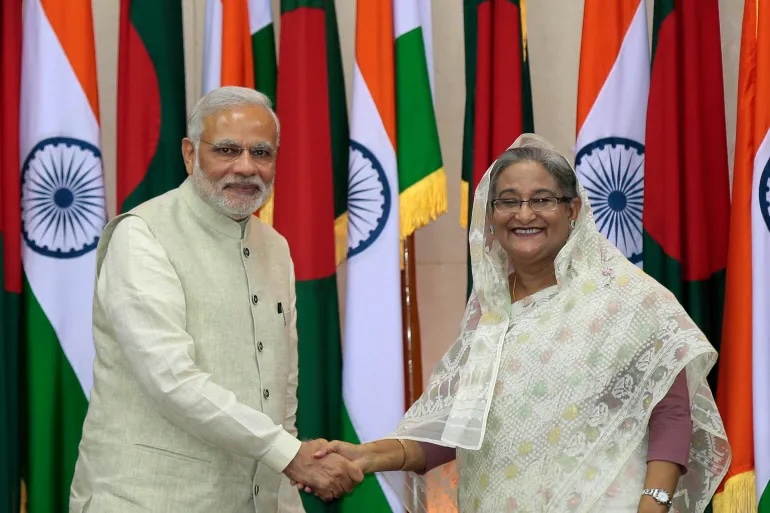
President Hlaing’s visit to Delhi in June 2026 may have been partly inspired by an appreciation of India’s articulation of the above (non-threatening) policy. Some opine that the primary objective of this visit was to bolster the regime[xxv]‘s legitimacy. That said, the briefing by the Foreign Secretary after President Hlaing’s meeting with Prime Minister Modi indicates that Myanmar has broadly agreed to accommodate India’s major security concerns, notably an ‘assurance that Myanmar’s territory would not be permitted to be used against India’s security interests’[xxvi]. India further emphasised the importance of stability and peace in Myanmar for the security of its Northeast along the 1,643-km-long border. Discussions on cooperation in defence and security, critical minerals and rare earth and connectivity projects were also held. It is hoped that these interactions will lead to visible improvements in border security.
India’s contribution to various facets of Myanmar’s development (as with its other neighbours in South Asia) is vividly illustrated in the note on bilateral relations posted on the website of the Indian Embassy in Yangon. While discussion on defence cooperation during the recent visit was limited to aspects of training, capacity building, institution building, and UN peacekeeping, the larger issue of cooperation in the Bay of Bengal and the Indo-Pacific was addressed during the visit of India’s naval Chief, Admiral DK Tripathi, to Yangon in May 2026. This included strengthening existing arrangements for joint exercises, patrolling, hydrographic surveys, training exchanges, and staff talks. With increasing Chinese naval activity in the Bay of Bengal, India-Myanmar naval cooperation is likely to become increasingly important for India, especially given China’s majority shareholding in Kyaukphyu port at the mouth of the China-Myanmar Economic Corridor (CMEC) and the rumoured infrastructure build-up in the Coco Islands[xxvii].
Conclusion
Internally in turmoil, Myanmar, as a neighbour, is becoming increasingly important to India. Great power competition, increasing Chinese inroads into that country and its impact on India’s security remain prime concerns. This necessitates realistic, sustained engagement with the ruling regime. Another factor is the future of India’s substantial investments in infrastructure projects in Myanmar, such as the Trans-Asian Highway and the KMMPP. Of these, the KMMPP, which was initiated in 2007-2008, was estimated to cost around Rs 3,200 crore four years ago [xxviii]. Yet even now, the Paletwa port on the Kaladan river remains in the hands of the AA. This also requires India to maintain engagement with rebel groups.
Overall, India needs to retain leverage with all parties in Myanmar without being perceived as an inimical neighbour. Only then will its border be secured and the vision of Act East, which includes developing the Northeast as a springboard towards Southeast Asia, be actualised.
References:
[i] ‘Skeletons and Skulls Scattered Everywhere’ Arakan Army Massacre of Rohingya Muslims in Hoyyar Siri, Myanmar 18 May 2026.
[ii] ‘Over 800 Myanmar refugees enter Mizoram amid Fears of fresh Junta offensive’ The Assam Tribune 17 May 2026.
[iii] Website of the Embassy of the Republic of the Union of Myanmar, New Delhi.
[iv] ‘New resistance alliance built to win Myanmar’s civil war’ Dan Swift and Sean Turnell Asia Times 15 April 2026.
[v] Podcast ‘Myanmar at a crossroads: Five years after the coup’ by Hunter Marston, Sean Turnell The Lowy Institute 22 May 2026.
[vi] Myanmar’s Economy Faces Grim Outlook Under New Government ‘ Ambassador Scot Marciel Bower Group Asia 23 April 2026.
[vii] Inflation Forecast 2026 South East Asia (from TheGlobalEconomy.com)
[viii] ‘Myanmar at a crossroads: Five years after the coup’ Podcast by Hunter Marston and Sean Turnell , Lowy Institute 22 May 2026.
[ix] ‘New Myanmar Regime Tightens Forcible Conscription Covering 13 Million Citizens’ Myo Pyae The Irrawady 18 May 2026.
[x] ‘Myanmar Regime Takes Full Control of Mandalay–Myitkina Road to Kachin’ The Irrawady 08 May 2026.
[xi] ‘KIA Announces Shift to Defensive Strategy as Regime Troops Pour into Kachin State’ The Irrawaddy
May 19, 2026.
[xii] ‘‘Over 800 Myanmar refugees enter Mizoram amid Fears of fresh Junta offensive’ The Assam Tribune 17 May 2026.
[xiii] ‘NUG-funded payments secure Myanmar’s UN voting rights through 2026’ Mizzima News 11 February 2026.
[xiv] ‘Russia and Myanmar Sign Military Cooperation Agreement’ AFP 03 Feb 2026.
[xv] ‘Optics Over Outcomes: Myanmar’s Diplomatic Rehabilitation and India’s Tightrope’ Sreeparna Benerjee Observer Research Forum 13 May 2026.
[xvi] ‘Tatmadaw Moves to Re-Establish Control Over The India-Myanmar Border’ Afiya Ibnath Ayshi Bangladesh Defence Journal 14 May 2026.
[xvii] ‘
[xviii] ‘The Cut of USAID Programs in Burma’ Gemma Nailer The Borgen Project 17 January 2026.
[xix] ‘Myanmar’s military rulers hire Trump ally for US$50,000 a month to lobby Washington’ Maria Siow South China Morning Post 07 May 2026.
[xx] On Myanmar (Substack) 11 May 2026
[xxi] ‘Rohingya Gen-Z breaks the silence’ Shafiur Rehman Dhaka Tribune 13 May 2026.
[xxii] ‘Southeast Asia and the Rohingya Militant Threat ‘ Jasminder Singh The Diplomat 19 February 2026.
[xxiii] ‘Understanding the Philosophy of the Way of Rakhita’ Rhee Rakha Global Arakan Network 22 August 2025.
[xxiv] ‘Mizoram MP meets Myanmar militants in push to speed up work on key connectivity project’. Isaac Zoramsanga, The Print 01 March 2024.
[xxv] ‘What the Myanmar President’s visit means for New Delhi’ Takhellambam Jagjit Singh The Statesman 01 June 2026.
[xxvi] ‘Won’t allow our territory to be used against India’s interests: Myanmar’ Shubhajit Roy Indian Express 02 June 2026.
[xxvii] Operationalising the East: India’s Naval Engagement with Myanmar’s Sreeparna Banerjee ORF 20 May 2026.
[xxviii] ‘India-Myanmar Kaladan project’s completion hangs in limbo’ Yeshi Seli The New Indian Express 05 June 2022.
Feature Image Credit: ddindia.co.in





 TPF Occasional Paper