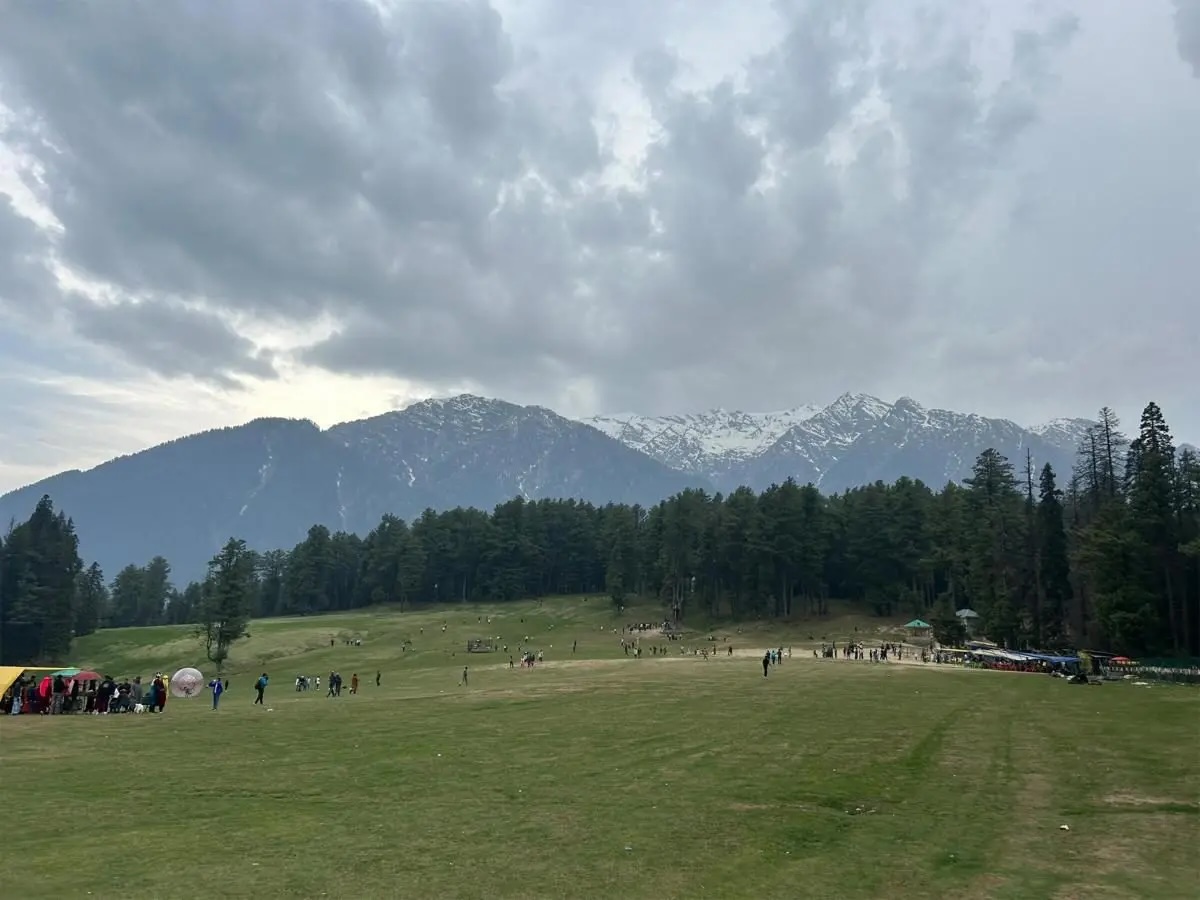
The recent deadly terror attack on April 22 in Phalgham, near the Baisaran Valley, in which 26 innocent people were killed and more than a dozen others injured, has served as a stark reminder that external threats—particularly Pakistan-backed terrorism—remain a grave challenge to the region’s hard-won stability.
Jammu and Kashmir is witnessing a remarkable and unprecedented political shift. In a development that would have seemed unimaginable a few years ago, many separatist groups, historically associated with anti-India activities, have abandoned their secessionist stance and re-entered the democratic mainstream. This transformation is not sudden—it reflects years of sustained government outreach, targeted policy reforms, and a persistent invitation to dialogue. Together, these efforts have fostered an environment of relative peace, reshaping public sentiment and political engagement across the valley. However, the recent deadly terror attack on April 22 in Phalgham, near the Baisaran Valley, in which 26 innocent people were killed and more than a dozen others injured, has served as a stark reminder that external threats—particularly Pakistan-backed terrorism—remain a grave challenge to the region’s hard-won stability.
In a significant turn of events in April 2024, key factions of the Hurriyat Conference, such as the J&K Tahreeqi Isteqlal and J&K Tahreek-l-Istiqamat, publicly renounced separatism and embraced the democratic process. Their decision marks a critical shift in the political discourse of the region, challenging long-standing narratives of alienation and conflict. Union Home Minister Amit Shah hailed this move, declaring, “Under the Modi government, separatism is breathing its last, and the triumph of unity is echoing across Kashmir.” The reintegration of these groups into the democratic fold indicates the success of New Delhi’s long-term outreach and governance initiatives, as well as the strengthening of its position on the global stage regarding Jammu & Kashmir.
the candidacy of individuals such as Sayar Ahmad Reshi (Kulgam), Aijaz Ahmad Mir (Zainapora), Talat Majeed (Pulwama), Mohammad Sikandar Malik (Bandipora), and Farooq Ahmad Genie (Beerwah) sent a powerful message—both domestically and internationally—of a growing trust in democratic processes and a shift away from violence.
The 2024 Assembly elections further illustrated this transformation. Over 25 former militants, separatists, and members of the banned Jamaat-e-Islami contested as independent candidates. Although none of them secured a win, the candidacy of individuals such as Sayar Ahmad Reshi (Kulgam), Aijaz Ahmad Mir (Zainapora), Talat Majeed (Pulwama), Mohammad Sikandar Malik (Bandipora), and Farooq Ahmad Genie (Beerwah) sent a powerful message—both domestically and internationally—of a growing trust in democratic processes and a shift away from violence.
Central to this transformation is the 2019 abrogation of Article 370. While Article 370 did not cause terrorism, it fostered a psychological and political sense of separateness. Its existence reinforced a feeling of isolation, suggesting that Jammu and Kashmir was distinct from the rest of India and that its political destiny remained unsettled, thereby encouraging subnational identity and sentiments of exclusion. Local political elites often exploited this narrative of exclusivity and exceptionalism for their political objectives, constantly telling people that Jammu and Kashmir had a “special relationship” with the Union of India, having its own constitution, flag, and national anthem. This exacerbated the sense of alienation and fueled anti-India sentiment.
Article 370 served as a protective shield for corrupt politicians and bureaucrats from central investigation agencies, as it limited the powers of these agencies, allowing corruption to flourish unabatedly. On the global stage, Article 370 was utilised as a geostrategic tool against India.
Moreover, domestically, the real benefits of Article 370 never reached the common people. Instead, it supported the interests of a few influential political families, such as the likes of the Muftis and the Abdullahs, etc., while the ordinary citizen continued to face hardship and underdevelopment. Additionally, Article 370 served as a protective shield for corrupt politicians and bureaucrats from central investigation agencies, as it limited the powers of these agencies, allowing corruption to flourish unabatedly. On the global stage, Article 370 was utilised as a geostrategic tool against India. References to Jammu & Kashmir’s semi-autonomous status and its separate flag and constitution created a misleading impression internationally—that it was some foreign territory under Indian occupation. Many significant powers often utilised this narrative to exert pressure on India and further their geopolitical objectives.
Since its removal, the region has witnessed measurable progress. Terrorist incidents have plummeted by 81%—from 228 in 2018 to just 43 in 2023. Civilian and security force casualties have similarly declined. Stone pelting, once a near-daily occurrence, has disappeared entirely, with 2,654 such incidents in 2010 dropping to zero by 2023. Hartals and forced shutdowns have become a thing of the past. Educational outcomes have also improved. The number of colleges has risen from 94 to 147. Prestigious institutions such as IIT, IIM, and AIIMS have been established. Medical colleges increased from four to eleven, and the region now boasts 15 nursing colleges. Medical seat availability has grown from 500 to over 1,300.
The region’s Gross State Domestic Product (GSDP) has more than doubled—from ₹1 lakh crore in 2014–15 to ₹2.27 lakh crore in 2022–23. In tourism, a record 2.36 crore visitors arrived in 2024, including over 65,000 foreign tourists.
Economically, Jammu and Kashmir is undergoing a boom. Investments surged from ₹297 crore in 2019–20 to ₹2,153 crore in 2022–23, with another ₹6,000 crore in the pipeline. The region’s Gross State Domestic Product (GSDP) has more than doubled—from ₹1 lakh crore in 2014–15 to ₹2.27 lakh crore in 2022–23. In tourism, a record 2.36 crore visitors arrived in 2024, including over 65,000 foreign tourists. Global events like the G20 Tourism Working Group meeting and the Legends League Cricket (LLC) have put Jammu and Kashmir on the international map. Infrastructure development is progressing rapidly. Mega projects such as the USBRL Tunnel 50, Z-Morh Tunnel, and the iconic Chenab Rail Bridge—the highest in the world—are transforming connectivity. The Vande Bharat train now connects Katra with Srinagar. Symbolising civic normalcy, the Muharram procession returned to Srinagar in 2024 after a 34-year ban.
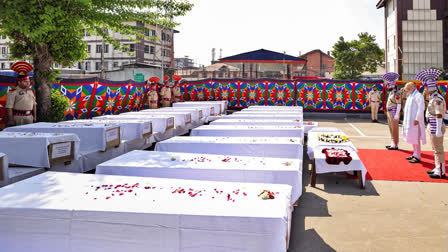
However, the recent Pahalgam terror attack is a stark reminder that Pakistan continues to act as the primary external disruptor of peace and progress in Jammu & Kashmir. Despite the undeniable local yearning for peace and development, Pakistan’s strategic objective to “bleed India with a thousand cuts” remains unchanged. Its support for terrorism and infiltration undermines the region’s stability.
Pakistan’s proxy war not only attempts to destabilise India but also hampers the development trajectory of Jammu & Kashmir, which had been flourishing in education, infrastructure, and economic growth.
The attack, which targeted civilians and spread fear among tourists, has had immediate consequences: many tourists have cancelled bookings, impacting the Valley’s booming tourism sector. It reflects how Pakistan’s proxy war not only attempts to destabilise India but also hampers the development trajectory of Jammu & Kashmir, which had been flourishing in education, infrastructure, and economic growth.
While local recruitment into militancy has declined and radicalisation has significantly reduced, Pakistan’s designs persist. Security agencies have reported the presence of 35–40 foreign terrorists operating in small groups in the Jammu division, with recent attacks in Reasi, Kathua, and Kishtwar proving that infiltration is now affecting eight out of ten districts. New Delhi must now recalibrate its approach. While the ecosystem-based strategy addressing governance, development, and security has yielded positive outcomes, the Pakistan problem requires a distinct strategic lens. Counterterrorism efforts must be intensified, international diplomacy must expose Pakistan’s continued support for terror, and internal resilience must be strengthened to protect gains made post-Article 370.
In conclusion, nearly six years after the abrogation of Article 370, Jammu & Kashmir has indeed embarked on a transformative journey. But the road ahead must account for persistent external threats. The people of the region overwhelmingly desire peace, progress, and integration—but Pakistan’s continued interference demands a more robust, strategic, and multidimensional response.
Leave a Reply